Category: Uncategorized

  • New Version of NMEA 0183 Released

    The National Marine Electronics Association (NMEA) has released a significantly updated version of NMEA 0183, its well-known standard that enables the interfacing of marine electronics, reports the Martime Executive. Version 4.10 will improve boating safety and navigation through updates and expansions of various electronic communications “sentences” pertaining to a number of navigation and communications devices, including Galileo satellite receivers and Automatic Identification Systems (AIS).

    NMEA 0183 defines electrical requirements, data transmission protocol and timing, and specific sentence formats for a 4800-baud serial data bus. Version 4.10 affects shipboard, non-shipboard, and land-based equipment as well as networks for maritime and other industry use. The standard has been expanded to include Galileo. Many of the existing GNSS sentences have been extended to accommodate Galileo and future GNSS improvements.

    Version 4.10 replaces V 4.00, created in 2008. The new version is backward-compatible to V 2.00.

    Read more about the changes here.

  • Samsung Buys CSR’s Mobile Chip Technology

    Samsung Electronics Co. has acquired the mobile-technology business of U.K.-based Cambridge Silicon Radio PLC for $310 million. The agreement includes patents to the firm’s Bluetooth, Wi-Fi, and GPS location innovations. Samsung said the move would allow its semiconductor unit to strengthen its line-up of mobile-device processors.

    Samsung competes for business from other handset makers against the chip-makers Qualcomm, Texas Instruments and Intel, reports BBC News. The firm’s chips are used in its Galaxy handsets as well as Apple’s iPhones and iPads.

    Joep van Buerden, CSR’s chief executive, said his firm offered important technologies, but was aware of a trend in which larger firms were acting to integrate many functions into a single chipset, reducing demand for specialist parts, BBC News reported.

    “I believe under Samsung’s ownership the handset operations will be in a better place to prosper in the global handset market,” Buerden said. “I would like to thank all our colleagues who will be transferring to Samsung for their outstanding service.”

    CCS Insight analyst Geoff Blaber pointed out in a Yahoo! article that Samsung’s move came soon after the acquisition of Nanoradio, a Swedish Wi-Fi chipset company, which happened June 1. “It underlines Samsung’s commitment to strengthening its vertical advantage by extending silicon capability most notably in Wi-Fi and GPS,” he said.

    About 310 members of CSR’s technology and handset team will move over to the South Korean firm.

    SiRF founder Kanwar Chadha, who had been with CSR for three years after its acquisition of SiRF in June 2009, left CSR earlier this summer and is rumored to be starting a new venture.

  • First Positioning Results Using Galileo Announced

    A team of Canadian and German researchers have obtained precise three-dimensional positions using measurements from the four prototype Galileo satellites now in orbit.

    The two In-Orbit Validation (IOV) satellites launched in October 2011 joined the two Galileo In-Orbit Validation Element (GIOVE) satellites launched in 2005 and 2008, forming a mini-constellation. For a few hours on certain days, signals from all four satellites could be received by state-of-the-art multi-frequency, multi-constellation GNSS receivers. The researchers used the GIOVE plus IOV satellite observations made by a Trimble Navigation NetR9 receiver operated at the University of New Brunswick in Fredericton, Canada, together with precise orbit and clock data derived from observations collected on the COoperative Network for GIOVE Observation (CONGO) to obtain receiver positions converging to an accuracy of a few centimeters.

    An article describing the researchers’ procedure and results obtained will appear in the September issue of GPS World.

  • GPS Business Outlook, GNSS Industry Future Assessment

    GPS World magazine has opened the first State of the Industry Survey for completion by GNSS industry members; the interactive form is found at env-gpsworld-integration.kinsta.cloud/industrysurvey. The results of the Survey, compiled and analyzed, will appear in the September issue of the magazine, as the very first State of the Industry Report, accompanied by an economic study titled “GNSS and the Economy: Scenarios for the World and Some Implications for the Industry.”

    Participation in the survey is open to all members of the GNSS community; however, it is necessarily focused on industry, not academia or government.  Its core questions address business outlook, issues of business concern, revenue ranges, and GNSS products supplied, specified, or purchased. 

    The State of the Industry report in the September issue will draw from the survey to cover such topics as:

    The global economy and how it affects business in each GNSS sector: Customers’ availability of capital to invest is top-of-mind for most industry professionals, whether designers, manufacturers, integrators, suppliers/dealers, or end users.

    Industry confidence in the road ahead: is the prolonged recession over, or still ongoing? Are customers expanding aggressively or proceeding cautiously?

    Investment for return: how are suppliers implementing their business outlook? What priority do they allocate to cutting expenses, maintaining current sources of revenue, increasing sales to core clients, developing new customers, R&D for new products or services, exploring mergers or acquisitions or IPOs — or something else?

    Issues of concern: to what extent do industry leaders take into account pricing and competion; GNSS jamming, spoofing, other RF interference; compatibility or interoperability issues among GNSSs; funding for satellite system development or modernization; funding for application development; Manufacturer readiness for coming new GNSS constellations; and compatibility/interoperability issues with open-architecture non-GNSS positioning systems.

    The State of the Industry survey is now live at env-gpsworld-integration.kinsta.cloud/industrysurvey. It will remain live until July 31.

    The State of the Industry Report will receive wide distribution, to the full subscription base of both print and digital magazine, and bonus distribution at ION-GNSS in Nashville, Tennessee (September), InterGeo in Hanover, Germany (October), and other outlets.

    Prize Drawing. Incentives for participation in the survey include entry into a drawing for an iPad3, a pair of tickets to GPS World’s Leadership Dinner in Nashville during ION-GNSS, a surprise offering, and coffee-shop gift cards. A majority of the questions must be answered to qualify for the prize drawing. As the survey is business-focused, some non-industry community members in academia or government may find that they cannot answer many of the questions. Their participation is still encouraged, even if they do not qualify for the drawing.

  • GITA Begins New Era

    The Geospatial Information & Technology Association (GITA) announced the transition of GITA to an all volunteer organization officially begins at the close of business Friday, June 29, 2012. The following Monday, the association will enter a new phase of its existence, one that will be marked by a focus on virtual, on-line education and less of a dependence on resource-heavy conferences.

    According to Executive Director Bob Samborski, it means the following for GITA members?

    • You will continue to receive the GITA News Hub without interruption.
    • Existing memberships in GITA will continue and individuals will be contacted at the time of their next renewal.
    • GITA is reaching out to each of its current chapters to determine how each of these local organizations can move forward. Any currently active chapter can continue to operate as usual under the auspices of GITA’s non-profit status.
    • Options for realigning GITA’s administrative and IT infrastructure in a cost-effective way are being researched. Because the current staff of GITA will end full–time employment on Friday, normal communication channels (phone calls and emails) will be changed.
    • More information about the transition will be made available in the near future in the News Hub and on the GITA website.

    Samborksi writes:

    “It is important for everyone to know that GITA will continue to function as a professional, non-profit educational association. The Board of Directors will continue to explore new ways to add value to GITA membership and consider options for managing potential future educational events. More content and learning will become available online. And, as the association transitions to a volunteer-driven organization, active participation from our members in GITA activities will be sought.”

    “While I personally will not be an employee of GITA after Friday, I will continue to serve the association as a volunteer during the period of transition. If you would like to contribute your time and effort to helping to redesign GITA, please just let me know! I will be reachable at my usual email address for the foreseeable future: [email protected].”

    “Finally, I look forward to contacting our individual and corporate members, chapter officers, international affiliates and other important constituents in the next few days as we wind down this chapter of GITA. I will offer a few more details about what the future holds for GITA, as well as some personal comments about my 24 years of service to the association.”

    “Until then, sincere thanks to everyone who reads the GITA News Hub. I wish you the best in your geospatial endeavors.”


  • Telmap Launches Parking Space Locator on the Telmap Mobile Location Companion

    Telmap announced a partnership with Decell, a leading provider of traffic information including real-time road status and related transportation services. By collaborating with Decell, Telmap is now able to provide a unique navigation service to its users in Israel by providing them with real-time information on available parking spaces with regards to the users’ location.

    According to the announcement, this innovative service is currently available to subscribers using the Telmap Mobile Location Platform on all four leading Israeli cellular operators (Orange, Pelephone, Cellcom and Hot Mobile). Users can at any time get recommendations on parking lots with available vacancies relative to their current proximity. Currently this service is available in a selection of car parks in Tel Aviv and in the coming weeks it will be expanded to include cooperation in dozens of car parks across the country.

    “We are always seeking to provide added-value services to our users who are on-the-go and we classify finding a parking space as one of the recurring tasks that we all encounter while on-the-go. Our collaboration with Decell in Israel aims to provide a functional, innovative and substantially useful solution that empowers the Telmap user to find a parking spot on demand.” – Motti Kushnir, Chief Marketing Officer

    Telmap reports that Decell is Telmap’s premium traffic information and services provider in Israel for the past four years. Decell’s traffic services are designed to shorten drivers’ arrival time to their final destination as much as possible. Real-time data regarding the availability of parking lots holds a great value to drivers by saving time not only on the roads, but throughout their entire journey.

    “We are very proud to present another unique service in cooperation with Telmap. Relevant information regarding parking spaces at any given time is a natural completion to Decell’s rich real-time traffic data. As a premium traffic information provider, Decell constantly expands its offering and promotes the best experience for drivers.”- Jonathan Silverberg, CEO of Decell

  • VUEWorks and CitySourced Announce Plans for a More Powerful Citizen Request Application

    VUEWorks and CitySourced announced plans to form a broad strategic partnership that would use their complementary strengths and expertise to enhance their GIS-based mobile and web applications that enable citizens to report concerns, opinions, and requests directly to the government.


    According to the announcement, VUEWorks and CitySourced intend to jointly create market-leading mobile products and services designed to offer citizens and governmental agencies an unrivalled choice and opportunity. As each company would focus on its core competencies, the partnership would create the opportunity for rapid time to market execution. Additionally, VUEWorks® and CitySourced plan to work together to integrate key assets and create completely new service offerings, while extending established products and services to new markets.

    Under the partnership:

    • VUEWorks and CitySourced will collaborate on joint marketing initiatives and a shared development roadmap to align on the future evolution of mobile products.
    • CitySourced content and application store will be integrated with VUEWorks for a more compelling consumer experience.
    • VUEWorks is able to provide its existing citizen portal to customers desiring a lightweight solution while now being able to offer a more robust citizen facing mobile application to meet the business needs of the municipalities we serve.

    “We are excited about this partnership with CitySourced,” said Allen Ibaugh, CEO of VUEWorks. “VUEWorks and CitySourced will combine our strengths to deliver incredible expertise in software innovation and a proven ability to execute. The CitySourced-VUEWorks partnership provides an end-to-end solution from problem identification to operations and maintenance.”

    “We’re very excited to partner with VueWorks to offer an integrated service,” said Jason Kiesel, CEO of CitySourced. “Municipalities want to unify work processes, while continuing to increase services to citizens; our two companies are working towards this end goal by using our resident facing mobile app to create services requests directly within VueWorks. We plan to roll out this reporting solution to municipalities nationwide and abroad.”


  • Military Student Turns Passion for GIS Technology into a Career


    American Sentinel University reports that U.S. Army Sgt. Scott Fierro first fell in love with Geographic Information Systems (GIS) technology during the Army’s Advanced Individual Training at the National Geospatial Intelligence Agency. Since then, he has dedicated himself to learning as much about GIS as possible. That’s why Fierro, 30, from Tampa, Fla., decided to earn his online GIS degree from American Sentinel University using his military education benefits.

    “I chose American Sentinel because it is an accredited school that offers a competitive and challenging Bachelor of Science Geographic Information Systems degree program. I love that it’s online because I move frequently and the flexible online format afforded me the ability to earn my degree and maintain a career,” says Fierro.

    Despite working up to 45 hours a week and traveling around 160 days a year, American Sentinel says that Fierro found a way to finish his online class assignments.

    “Time management is a big key to my success. Earning my degree and working full time has made for some long days, but it just requires being diligent in your time management and planning ahead for your course work,” he says.

    At American Sentinel, Fierro learned skills in high-level digital mapping, data capture, visualization, analysis and geospatial literacy. The college-level knowledge enhanced his ability to analyze, interpret and effectively communicate spatial data sets to U.S. Army and civilian audiences.

    Through Fierro’s course work, interaction with classmates and input from real-world faculty, he says that he learned how to prepare for a higher level of professional and team responsibility, while gaining a deeper understanding of how GIS data can be put to meaningful use in the military and for civilian contractors.

    “As a GIS student at American Sentinel, Scott was exposed to geo-processing, integration of remote sensing date, spatial analysis, high-level systems and solving research problems,” says Devon Cancilla, Ph.D., dean, business and technology at American Sentinel University. “Our students learn how to manipulate and display geographic data, interpret and use geographic information in scientific contexts that are increasingly used in mainstream industries around the world.”

    Using GIS in the Army

    Fierro is assigned to the Army Geospatial Center (AGC) and works with the Buckeye program (high resolution aerial imagery and optical remote sensing technology).

    At his post, he collects, processes and makes data usable. He also beta tested Socet GXP (digital software to determine the geometric properties of objects from photographic images) version 3.0, 3.1 and the latest release, version 3.2. The sergeant is currently working with geospatial imagery software solutions provider, ENVI to develop training software for the Department of Defense.

    He says his biggest accomplishment came in March 2010 when he worked with major civilian contractors to get the Buckeye imagery placed onto the largest and most well-known imagery server in the intelligence community, Web-based Access and Retrieval Portal (WARP).

    “This brought Buckeye into the eyes and fairly easy access of over one million users, where prior to this it was only well known and routinely used by maybe 200,000 people,” says Fierro.

    The Value of GIS

    As Fierro evaluates his future, he realizes GIS is a valuable career field.

    “It is tied into everything now,” he says.

    Police and fire departments use it to maximize efficiency in response times and target high-risk areas to implement action. State, county and city governments use it for planning roads, water and power. Commercial companies, from oil giants like Exxon to retail stores such as Wal-Mart and McDonalds, have GIS specialists working for them.

    Fierro notes that thanks to smartphones and Google Maps that everyone is now using GIS. But no one knows what it is. He likes it that way.

    “The fun part of that is they don’t have to know. They just have to understand and/or use simplistic level tools like MapQuest, a Garmin GPS or Google Earth,” adds Fierro.

  • Averna Introduces Portable, Multi-Channel RF Recorder for GNSS Applications

    Averna Introduces Portable, Multi-Channel RF Recorder for GNSS Applications

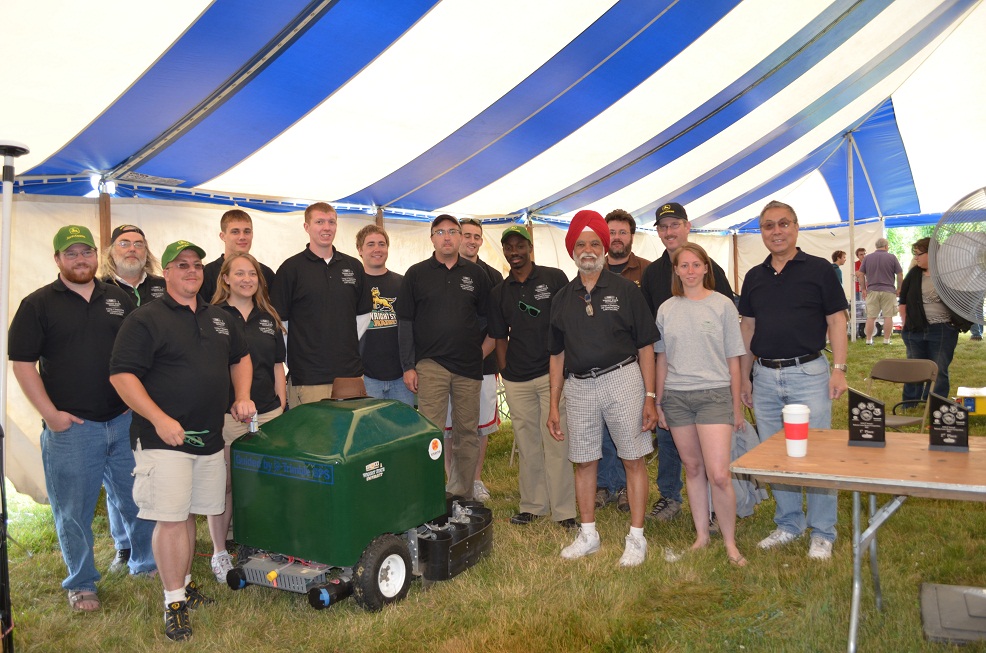
    Photo: AvernaAverna, developer of test solutions and services for communications and electronics device makers, announces the availability of a field-ready multi-channel RF Recorder for RF applications covering 330 MHz to 2.5 GHz.

    The Averna RP-5300 RF Recorder is an advanced tool for both field testing and performance testing, Averna said. With 50 MHz of recording bandwidth at 16-bits, it can record multiple GNSS signals in up to two bands (L1, L2, L5), such as GPS or GLONASS. Its compact size and integrated display was designed for field operation.

    Wireless products need to perform well in the complicated and difficult-to-predict RF environments found in the real world. Simulators can bring the design up to a certain point in the development process, but Averna’s RF Recorder captures all the multi-path, interference and general degradation of signals that end-users will experience. Capturing the segment of spectrum of interest, from minutes to hours, allows a technician to return to the lab with data necessary to diagnose and solve the problem, while building a library of environments to harden their products for the future, Averna said.

    “Recording live, impaired, RF signals of interest in the field, without demodulation or alteration, reduces the need for traditional field-testing of RF receivers,” said Brendan Wolfe, director of product management at Averna. “We are thrilled to bring to the GNSS market a portable and high-fidelity multi-channel RF recorder designed for the optimal capture of real-life RF environments.”

    The RP-5300 comes preloaded with Averna’s RF Studio Recorder. RF Studio is workflow software for making trouble-free RF recordings, managing collected data, and analyzing or playing back collected RF environments. With RF Studio Recorder, the intended signals are captured during and after a recording session without the need for RF experts on site, Averna said.

    Key features include:

    • 50 MHz recording bandwidth to capture multi-GNSS signals
    • Two channels to capture signals operating at different frequencies
    • Up to 11 hours of recording time with external RAID (2×50 MHz channels @ 16-bit-depth)
    • Field-ready with an integrated touchscreen display, ruggedized chassis and compact size
    • Simple field setup, intuitive user interface and test-case profiles

    For customers interested in a complete solution of RF recording to playback, Averna recommends the Averna RP-5300 Series be paired with the Averna URT-5000, a world-class RF Player and Signal Generator.

  • 2012 CoreLogic Storm Surge Report Reveals more than 4 Million U.S. Homes at Risk

    CoreLogic released its annual Storm Surge Report detailing exposure of single-family homes to storm-surge damage within several predefined geographic areas in the United States. The 2012 CoreLogic Storm Surge Report provides the first-ever property-level analysis of residential property risk along the Atlantic and Gulf Coasts broken down by region and by individual state, in addition to a snapshot of risk within previously reported major metro areas.

    According to the announcement, this year’s report indicates that just over four million homes in the U.S. along the Atlantic and Gulf Coasts are at risk of hurricane-driven storm-surge damage, with more than $700 billion in total property exposure. In the Atlantic Coast region alone, there are approximately 2.2 million homes at risk, valued at more than $500 billion. Total exposure along the Gulf Coast is nearly $200 billion, with just under 1.8 million homes at risk for potential storm-surge damage.

    “Though more frequently impacted states like Florida, Texas and Louisiana get the most attention when it comes to hurricane vulnerability and destruction, Hurricane Irene made it very clear last summer that hurricane risk is not confined to the southern parts of the country,” said Dr. Howard Botts, vice president and director of database development for CoreLogic Spatial Solutions. “That’s why we felt it was important this year to highlight storm-surge risk in a brand new way to establish a better understanding of exposure throughout the states that are most at risk of a direct hurricane hit. As we got a glimpse of during Irene, our 2012 report shows even a Category 1 storm could cause property damage in the billions along the northeastern Atlantic Coast and force major metropolitan areas to shut down or evacuate.”

    CoreLogic reported they generated the Storm Surge Report using the company’s extensive database of parcels to identify the properties that fall within the perimeter of each category of the storm-surge inundation polygon. A parcel is the individual property associated with an address, and is the most granular way to analyze properties exposed to natural hazards. To determine residential exposure value, the proprietary CoreLogic storm-surge model was paired with the company’s industry-leading database of residential valuations for structures at the parcel level. CoreLogic identified every property contained within each category of the storm surge polygon and matched the structure valuation for each residence. Valuations for individual geographic areas were then totaled by hurricane category. The final results depict the value of the total residential properties as of April 2012 exposed to each potential storm surge event.

    A full list of all Core Based Statistical Areas (CBSAs) at risk for storm-surge damage, as well as the top ten zip code areas at risk associated with each CBSA, is available at http://www.corelogic.com/about-us/researchtrends/2012-storm-surge-cbsa-fact-tables.aspx. Maps detailing storm surge risk are also available for all CBSAs upon request.

    According to the announcement, CoreLogic developed the Storm Surge Report to enhance understanding of the additional risk that storm surge poses to homes located in areas prone to tropical storms.  Storm surge is triggered primarily by the high winds and low pressure associated with hurricanes, which cause water to amass inside a storm as it moves across the ocean before releasing as a powerful rush overland when the hurricane moves onshore.  In addition to the property damage and potential lives lost to flooding, the speed and force associated with storm-surge waves can significantly increase geographic and economic impact in hurricane disaster areas.

    “The data we compile is useful for insurance providers and financial services companies, to help them better understand potential exposure to damage for homes—particularly those that do not fall into designated FEMA Special Flood Hazard Areas,” said Botts.  “Homeowners who live outside of high risk flood zones are not required to carry flood insurance under the National Flood Insurance Program (NFIP), and may not be fully aware of the risk storm surge poses to their home or property.  When a storm strikes the coast, storm-surge flooding can inundate homes far inland and cause significant losses from powerful surge waters, damaging debris and standing water left behind.”

    According to the 2012 report, Florida tops the list of states with the highest total number of properties at risk of being impacted by the effects of storm-surge risk at approximately 1.4 million homes and with the highest total potential exposure to damage at more than $188 billion. Louisiana ranks second in total properties at risk with nearly 500,000, while New York is second in total value of coastal properties possibly exposed at $111 billion.  Differences in the rankings between the total number of properties and total property value at risk are due to varying levels of home values, trends in primary residence versus, vacation homes, and population density between the states throughout the Atlantic and Gulf regions.

    At the metro-level, cities examined in the analysis include New York, N.Y.; Virginia Beach, Va.; Miami, Fla.; New Orleans, La.; Tampa, Fla.; Boston, Mass.; Houston, Texas; Cape Coral, Fla.; Jacksonville, Fla.; Charleston, N.C.; Bradenton, Fla.; Philadelphia, Pa.; Mobile, Ala. and Corpus Christi, Texas. According to the U.S. Census Bureau, two of the top five and five of the top 20 most densely populated cities in the U.S. are located along either the Gulf or Atlantic Coast.  The report reveals that the 10 cities with the highest total potential exposure to storm-surge damage represent more than two million properties, with total property value at risk exceeding $420 billion.  The New York City metropolitan area, which encompasses northern New Jersey and Long Island as well, contains both the highest total number of properties as well as the highest financial exposure of properties at risk, with estimated values at more than $168 billion.

    “The summer of 2011 gave us some startling insight into the damage that even a weak storm can cause in the New York City metro area,” said Botts. “Hurricane Irene was downgraded to a tropical storm as it passed through New Jersey and New York City, but the impact of the storm was still estimated at as much as $6 billion.  Economic losses mounted swiftly as businesses shuttered, the New York City mass transit system came to a sudden halt and emergency response teams were called into action to prepare for the worst.”

    CoreLogic said it’s important to note is that the total properties and structural values included in the CoreLogic analysis are based on all homes that could potentially be damaged from hurricane-driven storm surge, and are not meant to infer that a single storm or storms in a specific hurricane season will result in these damage totals.

    This is the third annual CoreLogic Storm Surge Report. The report complements the Federal Emergency Management Agency (FEMA) flood zone information to provide a comprehensive picture of potential damage exposure at the property level, as many properties located outside designated flood zones are still at risk for storm-surge damage.

    To request storm surge data for a particular zip code, CBSA or county not detailed in the report, or for a complete copy of the 2012 CoreLogic Storm Surge Report, visit http://www.corelogic.com/about-us/researchtrends/2012-storm-surge-report.aspx.
  • Wright State Wins 2012 ION Robotic Lawn Mower Competition

    Wright State Wins 2012 ION Robotic Lawn Mower Competition


    Photo: The Institute of Navigation (ION)

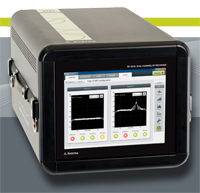
    The Institute of Navigation (ION) announces that Wright State University won top prize at the ninth annual 2012 Robotic Lawn Mower Competition held May 31 – June 2 at Siebenthaler’s Beaver Valley Garden Center in Dayton, Ohio.

    Sponsored by the Institute of Navigation Satellite Division and the Air Force Research Laboratory (AFRL) Sensors Directorate, the ION Annual Robotic Lawn Mower Competition is a national event for college and university students, future engineers and problem solvers, that challenges them to design and operate a robotic, unmanned lawn mower using the art and science of navigation to rapidly and accurately mow a field of grass.

    Eleven teams participated during the three day competition, each using unique design approaches. Teams included students and faculty advisors from Auburn University, Auburn, Alabama; Case Western Reserve University, Cleveland, Ohio; University of Florida, Gainesville, Florida (two teams); California State University, Fullerton, Fullerton, California; Miami University, Oxford, Ohio; University of Michigan Dearborn, Dearborn, Michigan; University of North Florida, Jacksonville, Florida; Syracuse University, Syracuse, New York; Southern Polytechnic State University, Marietta, Georgia; and Wright State University, Dayton, Ohio.

    The 2012 ION Robotic Lawn Mower Competition consisted of two separate categories: Basic Autonomous Mowing (Static) and Advanced Autonomous Mowing (Dynamic). The teams were judged in each category based on their total scores; 80% of the total score was  based on the mowing competition and 20% of the total score was based on the presentation and report.

    First place in the advanced Dynamic Competition, with $15,000 in prize money, was awarded to Wright State University, Dayton, Ohio. Second place in the Dynamic Competition, with $10,000 in prize money, was awarded to Miami University, Oxford, Ohio. Third place in the Dynamic Competition, with $5,000 in prize money, was awarded to Case Western Reserve University, Cleveland, Ohio.

    First place in the beginning Static Competition was awarded to the California State University, Fullerton, California. Second place prize in the Static Competition was awarded to the Syracuse University, Syracuse, New York. Third place in the Static Competition was awarded to the University of Michigan, Dearborn, Dearborn, Michigan.

    In addition to The Institute of Navigation Satellite Division and the Air Force Research Laboratory, sponsors included Honeywell, John Deere, The Joint Services Data Exchange, Northrop Grumman and Siebenthaler’s Garden Center.

    The Tenth Annual ION Robotic Lawn Mower Competition will be held May 30 – June 1, 2013, in Dayton, Ohio.