Category: Uncategorized

  • Groundwater Drop at ‘Alarming’ Rate in Middle East

    Already strained by water scarcity and political tensions, the arid Middle East region along the Tigris and Euphrates rivers is losing water reserves at a rapid pace.

    Scientists uncovered the water depletion by conducting one of the first comprehensive and publicly available sets of hydrological measurements of the area. Over a seven-year period beginning in 2003, sections of Turkey, Syria, Iraq and Iran lost 144 cubic kilometers (117 million acre feet) of water — about the equivalent of all the water in the Dead Sea. The scientists attribute the bulk of the loss — some 60 percent — to pumping of water from underground reservoirs.

    Using measurements from the Gravity Recovery and Climate Experiment (GRACE) satellites, researchers at the University of California, Irvine, NASA and the National Center for Atmospheric Research have identified the Tigris and Euphrates River Basin as having the second fastest rate of groundwater storage loss, after India. In the Middle Eastern region, “GRACE data show an alarming rate of decrease in total water storage,” the scientists report in a paper accepted for publication in Water Resources Research, a journal of the American Geophysical Union. The study will publish on 15 February.

    The GRACE mission, which NASA launched in 2002 to measure the earth’s local gravitational pull from space, is providing a global picture of trends in water storage, said Jay Famiglietti, principle investigator of the new study and a hydrologist and UC Irvine professor of Earth System Science.

    GRACE is “like having a giant scale in the sky,” he said. Within a region, rising or falling water reserves alter the Earth’s mass in a particular region, influencing how strong the local gravitational attraction is. By periodically measuring the gravity regionally, the satellites provide information about how much each region’s water storage changes over time.

    “GRACE is really the only way we can estimate groundwater storage changes from space right now,” Famiglietti said. “Whenever you do international work, it’s exceedingly difficult to obtain data from different countries. For political, economic, or security reasons, neighbors don’t want each other to know how much water they’re using. In regions like the Middle East, where data are relatively inaccessible, satellite observations are one of the few options.”

    The 754,000-square-kilometer (291,000-square-mile) Tigris and Euphrates basin jumped out as a hotspot when UC Irvine researchers looked at the global water ups and down, Famiglietti said. Within the seven-year period of GRACE data they analyzed, he and his colleagues calculated that water storage in the region shrunk by an average of 20 cubic km (16 million acre feet) a year. “This rate of water loss is among the largest liquid freshwater losses on the continents,” the authors wrote in the study, noting it was especially striking after a drought afflicted the region in 2007. Meanwhile, the region’s demand for fresh water is rising, Famiglietti noted.

    From the satellite measurements of decreasing water storage, he and his colleagues calculated that about one-fifth of the observed water losses resulted from soil drying up and snowpack shrinking, partly in response to the 2007 drought. Loss of surface water from lakes and reservoirs reservoirs accounted for about another fifth of the decline. Looking at those results and the GRACE data, they determined that the majority of water loss – approximately 90 cubic km (73 million acre feet) over the seven-year period – was due to reduced groundwater.

    When a drought shrinks the available surface water supply, irrigators and others turn to groundwater, Famiglietti said. The Iraqi government drilled about 1,000 wells in response to the 2007 drought, but that doesn’t include the numerous private wells that landowners very likely drilled as well.

    Water management is a complex issue in the Middle East, “an area that already is dealing with limited water resources and competing stakeholders,” said Kate Voss, lead author of the study and a water policy fellow with the University of California’s Center for Hydrological Modeling in Irvine, which Famiglietti directs.

    Turkey controls the Tigris and Euphrates headwaters, as well as the reservoirs and infrastructure of Turkey’s Greater Anatolia Project, which dictates how much water flows downstream into Syria and Iraq, the researchers note. And due to different interpretations of international laws, the Tigris and Euphrates basin does not have coordinated water management. Turkey’s control of how much water flows into neighboring countries has already caused tension, such as during the 2007 drought, when Turkey continued to divert water to irrigate agricultural land, the scientists state.

    “That decline in streamflow put a lot of pressure on northern Iraq,” said Voss. “Both the UN and anecdotal reports from area residents note that once streamflow declined, this northern region of Iraq had to switch to groundwater. In an already fragile social, economic and political environment, this did not help the situation.”

    Famiglietti, Voss and two colleagues from UC Irvine are visiting another Middle Eastern region beginning on 18 February, on a “science diplomacy” trip to Israel, Palestine and Jordan. One goal of the trip is to simply raise awareness and share their data about groundwater depletion, which is also a serious issue in the three countries they will visit. While the researchers hope to establish collaborations with local groups to measure aquifers on site, the trip is also a chance for the American scientists to learn about some of the water-efficiency practices in arid regions, Famiglietti said.

    “They just do not have that much water to begin with, and they’re in a part of the world that will be experiencing less rainfall with climate change. Those dry areas are getting dryer,” Famiglietti said. “They and everyone else in the world’s arid regions need to manage their available water resources as best they can.”
  • Esri User Conference to Highlight More than 700 Maps

    Map Gallery submissions for the 2013 Esri International User Conference, July 8–12, in San Diego, California, are now open. At last year’s event, Esri featured more than 700 maps from users around the world and across virtually every industry. All submitted maps are considered for one of several cartographic awards and are screened for possible publication in an upcoming edition of the Esri Map Book. Last year’s winners included:

    • Jesse Nett of the USDA Forest Service (Best Overall Winner)
    • Jeannett Phillips of the Chickasaw Nation (UC People’s Choice Award Winner)
    • David Frank of the City of Santa Clarita (Most Unique)

    Map Gallery submissions close on May 31.

  • Anti-Jam Protection by Antenna

    Anti-Jam Protection by Antenna

    Figure 6. Outdoor jamming test campaign.
    Figure 6. Outdoor jamming test campaign.

    Conception, Realization, Evaluation of a Seven-Element GNSS CRPA

    By Frederic Leveau, Solene Boucher, Erwan Goron, and Herve Lattard

    A controlled radiated pattern antenna can be an effective way to protect GPS receivers against jamming. A new CRPA, composed of seven elements, works on the E5a, E5b, E6, L2, and L1 bandwidths. This article reports on radiation pattern measurements of the array in a test facility.

    Controlled radiation pattern antenna (CRPA) technique is considered to be the best GPS pre-correlation protection technique against interference. It consists of an antenna array and a processing unit that performs a phase-destructive sum of the incoming interference signals, this process being equivalent to making nulls towards interferers in the array radiation pattern.

    Considering the growing Galileo system and the possible interest of the French Ministry of Defense in the Public Regulated Service (PRS) , a prospective study was undertaken to develop an array compatible with GPS M-code, Galileo PRS, and aeronautical radionavigation signals in the E5 bandwidth. The French Expertise & Procurement Defence Agency (DGA) awarded the French company SATIMO a feasibility contract to design, conceive, realize, and evaluate a circular array composed of seven elementary patch antennas (see Figure 1).

    figure1_chart
    Figure 1. CRPA unit receiving satellite and jammer signals.
    Product Features

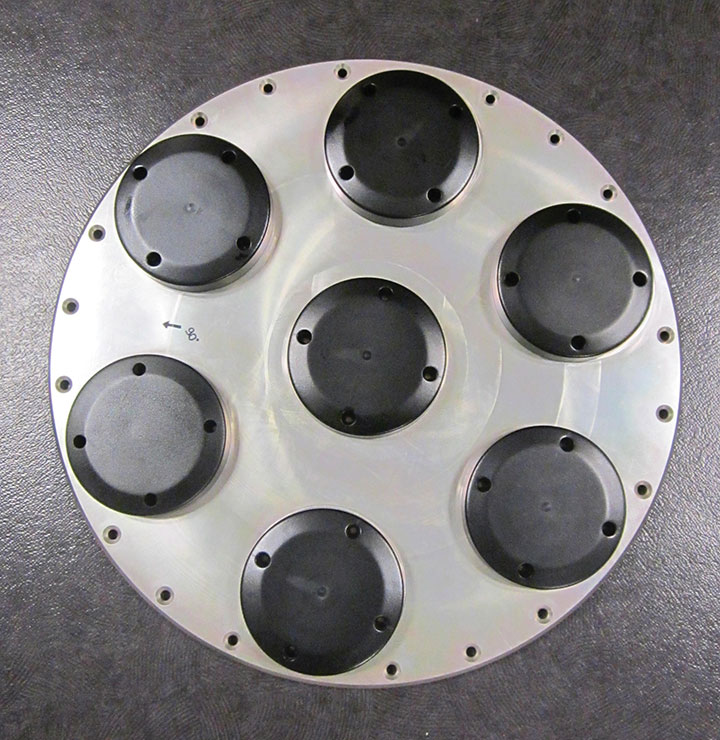
    SATIMO, a company specializing in R&D for antennas and in innovative antenna test ranges, has since developed this GPS-Galileo CRPA antenna, shown below.

    Figure 2. New CRPA developed by SATIMO.
    New CRPA developed by SATIMO.

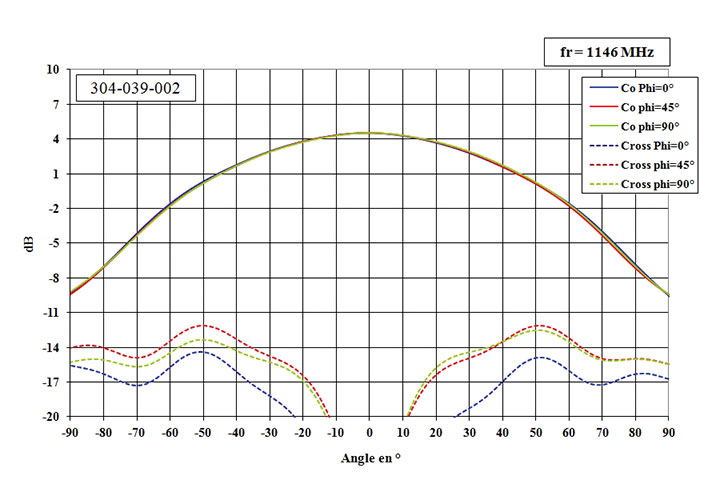
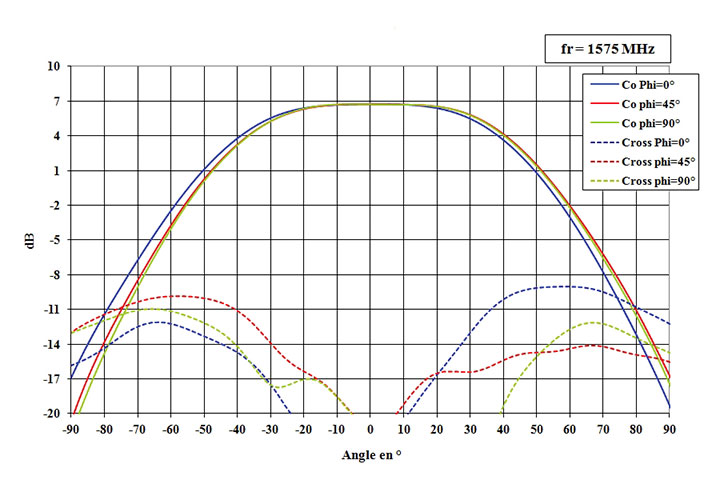
    The CRPA consists  of seven elementary patches covering E5a, E5b, L2, E6, L2, and L1 frequency bandwidths, using microstrip multilayer technology. Each element is housed in a 9-centimeter (diameter) by 2-centimeter (height) radome, connector excluded. In that volume, a space provision has been reserved to include a low-noise amplifier (LNA) and two filters for a sharp out-of-band rejection. As a consequence, it is possible to configure three types of arrays: passive without filters, passive with two passband filters, and finally active (including a LNA, with a gain > 26dB, NF<0.9dB) with two passband filters. The maximum gain levels in these configurations are from 3.6 dBi to 29.8 dBi. For radiation patterns, see Figure 2.

    Figure 3. CRPA radiation patterns.
    Figure 2A. CRPA radiation patterns.
    Figure 3B. CRPA radiation patterns.
    Figure 2B. CRPA radiation patterns.

    The design of the single element has been optimized to control the deviations of each patch antenna when included in a seven-element array.

    To limit mutual coupling with respect to the array dimensions, the distance between the elements’ phase centers has been chosen close to 0.7 λ at L1 frequency. This value results in a 36.5-centimeter (diameter) array. The standalone antenna and the CRPA antenna have been validated through an environmental testing campaign.

    Product Development

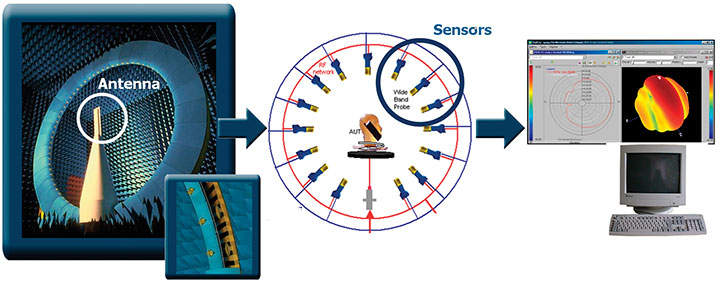
    The usual iterative tuning and the optimization process for prototyping have been performed on SATIMO’s arch test range. This test facility indeed significantly reduces the time required to characterize the antenna-under-test (AUT) radiation pattern, in comparison with classical anechoic chamber test facilities.

    More precisely, the arch test range instantaneously scans the field in one whole site angle cross-section plane, whereas the legacy systems mechanically scan the same cross-section plane by rotating the AUT for each incremental angle value. The spatial sampling of the near-field radiated by the AUT, thanks to a large number of probes along the arch surrounding it, enables a significant savings in time. The near-field results in the current plane can be displayed in real-time on a computer screen. Then, the rotation of AUT around its axis is automatically controlled by the measurement system, and a new acquisition is performed for each new cross-section plane. A Fourier transform computation is eventually applied to the 3D near-field to get the far-field radiation pattern.

    The radiating characterization of the CRPA has been performed with a SATIMO SG24 system. With such a system, we have measured the complete 3D radiation patterns of each single element in less than 40 minutes per antenna.

    Evaluation

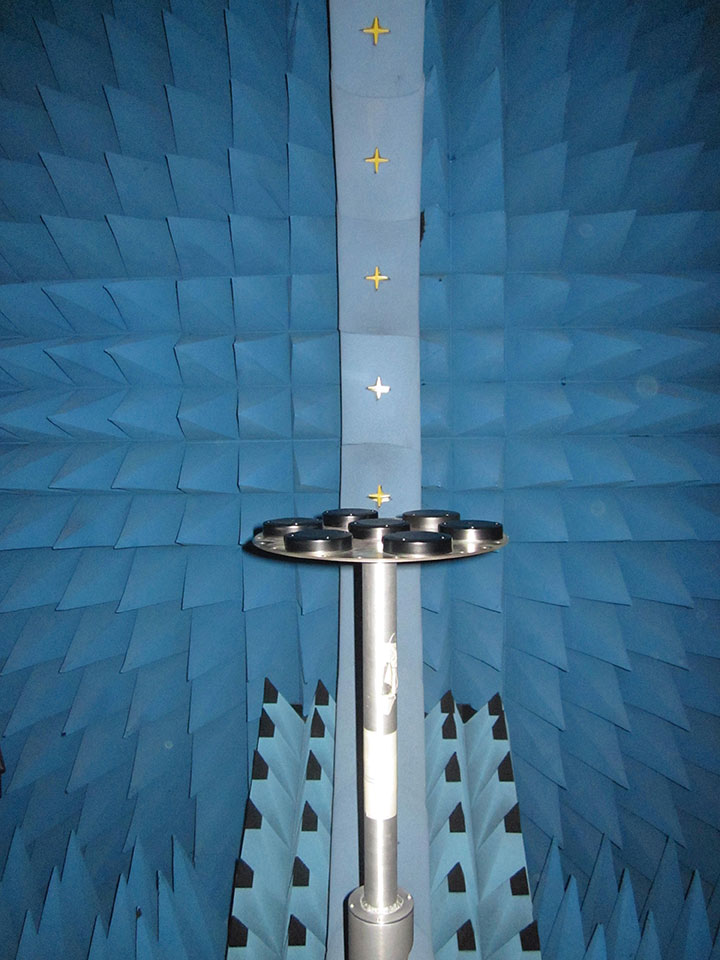
    The evaluation of the CRPA array was performed with this test bed in SATIMO’s facility (see photos below). The process  begain with measuring an element alone on a ground plane, in order to extract the gain, the axial ratio, the aperture angle, the matching values, and every feature that defines a fixed-radiation pattern antenna. The evaluation secondly consisted of characterizing the array, that is, extracting the gain and the phase of each element in the array, with respect to a reference element. To implement such a reference anytime during the near-field acquisition process, the arch test range (Figure 3) is very powerful, because all the probes constantly point at the center of the array, despite AUT’s motions. On the contrary, the need for such a reference makes measurements difficult in anechoic chambers, which often require canceling out misalignments, thanks to specific motions that must be taken into account in the computations.

    Figure 4. CRPA in measurements.
    CRPA in measurements.
    Figure 4. CRPA in measurements.
    CRPA in measurements.
    Fig5
    Figure 3. Arch test range working principle.
    Uses

    Functional tests are another important part of the CRPA unit evaluation. Usually, two kind of tests can be conducted: outdoors or in anechoic chamber.

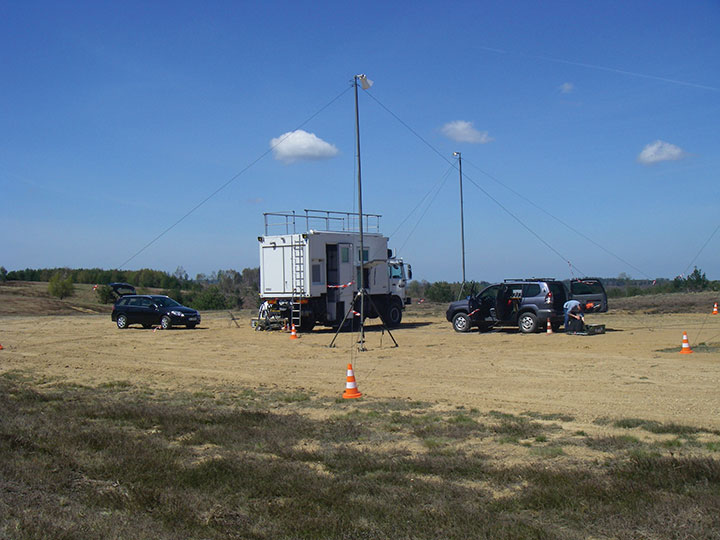
    Classical Tests. DGA plans to perform outdoor test campaigns by utilizing an array placed on the roof of an all-terrain vehicle (see photo). The array will be connected to a CRPA GPS processing unit and to a receiver in the vehicle. Some interferers will be located along the trajectory of the vehicle, according to various scenarios defining their waveforms and their power levels. The CRPA capability to reject those interferers can then be assessed. These kinds of outdoor tests naturally suit CRPA’s processing unit and array characterization, as they involve radiated GPS and interfering signals. However, these kinds of tests are not reproducible and are quite complicated to set up.

    Figure 6. Outdoor jamming test campaign.
    Outdoor jamming test campaign.

    Some tests in anechoic chambers could be an alternative in order to obtain reproducible test results, but in that case, transmitting GPS constellation signals indoor becomes a challenge. An option could be the use of a GPS signal simulator, but this means a unique direction of arrival of GPS signals. Moreover, no dynamic trajectory could be done.

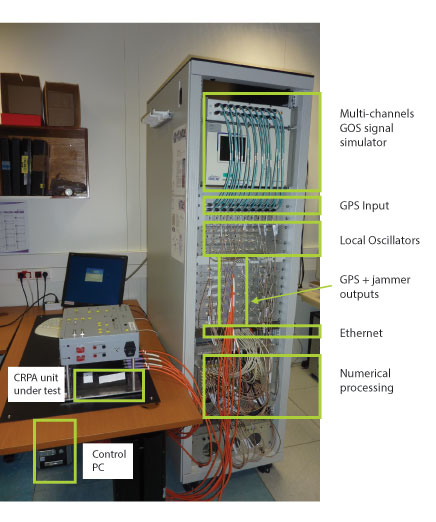
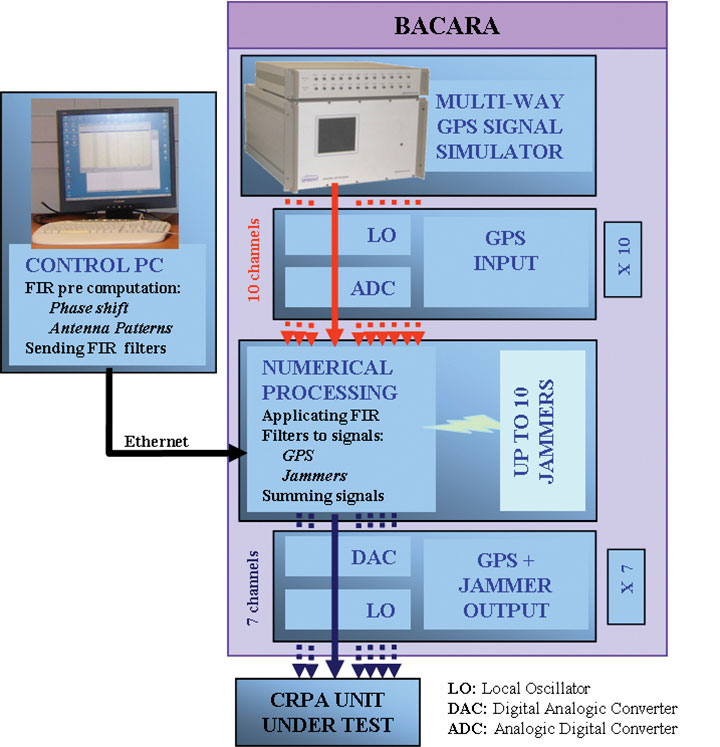
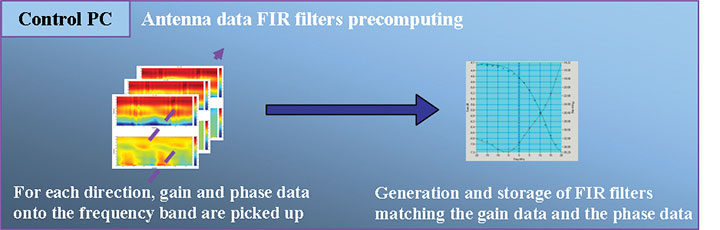
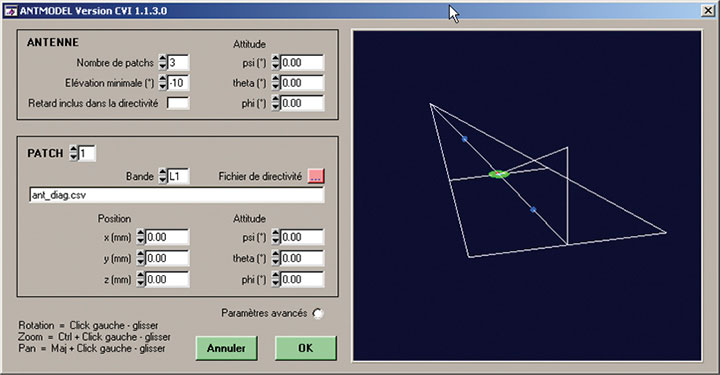
    New Test Bed. DGA recently acquired a test bed, developed by INEO Defense, that enables evaluating CRPA units in conducted mode, for example. There is no longer a need to radiate either GPS signals or interfering signals. The purpose of this test bed, called BAnc de Caractérisation des Antennes Réseaux Antibrouillage (BACARA), or test bed to characterize anti-jamming antenna arrays (Figure 4 and Figure 5), is to replace the array and simulate its GPS and jamming environment. This means that it is able to create elementary antenna phase delays and gains resulting from the array geometry, by using finite impulse response (FIR) filters (Figure 6). This is the reason why this test bed must be fed with the array phase and gain measurement results obtained with the arch test range.

    Figure 7. BACARA test bed.
    Figure 4. BACARA test bed.
    Figure 8. BACARA working principle.
    Figure 5. BACARA working principle.
    Figure 8. BACARA working principle.
    Figure 6. BACARA working principle.

    Alternatively, these results can be obtained with traditional anechoic chamber measurements. 10 channels of a multi-channel GPS simulator, each one matched with a satellite, are used by the test bed. Thus, BACARA coherently sums GPS constellation simulator output channels and interfering signals, so as to accurately simulate the array’s behavior in the laboratory. As a result, for any CRPA processing unit, it is possible to compare the array’s impact on a processing unit with an ideal array being composed of perfect elementary antennas.

    Unfortunately, BACARA currently operates on L1 or L2, but not on the E6 and E5 bandwidths. On the other hand, this test bed is able to simulate dynamic trajectories, with the mobile positions and attitudes. Up to 10 internal jammers with various waveforms can be set up, and their power levels over time are computed by software like Warfare or Matlab. A numerical calibration allows some transparency of the test bed for CRPA units under test.

    Figure 10.  BACARA graphical user interface.
    Figure 7. BACARA graphical user interface.
    Figure 11. Examples of available simulated array geometry.
    Figure 8. Examples of available simulated array geometry.
    Conclusion

    SATIMO, a company specializing in electromagnetic field measurements in the microwave frequency range and part of the Microwave Vision Group, has developed an array for the reception of M-code, PRS, and aeronautical radionavigation signals. This antenna array has been fully evaluated and qualified through electrical and environmental tests. The measurement methods have enabled the company to demonstrate the feasibility of the performances expected. Functional evaluations restricted to GPS are still under way. To do so, DGA will utilize its complementary outdoor and indoor test means, especially its laboratory test bed BACARA, as a tool to precisely evaluate GPS CRPA units.


    Frederic Leveau works at the French MoD (DGA Information Superiority) as a radionavigation expert. His main interests are Galileo PRS prospective studies and developments and the integration of CRPA systems within French platforms.

    Solene Boucher works at the French MoD (DGA Information Superiority) as a radionavigation expert. Her main interests are Galileo PRS prospective studies and developments. She is also responsible for the test bed BACARA.

    Erwan Goron is an engineer at SATIMO Industries (Microwave Vision Group). His main activity is antenna conception.

    Herve Lattard is an engineer at SATIMO Industries (Microwave Vision Group). His main activity is antenna conception.

  • All About GNSS Interferences: How to Defend, Monitor, and Report

    Original Broadcast Date:   Thursday, January 31, 2013

    Summary:

    Highway Patrols monitor highways and catch those who violate speed limits. There is no serious monitoring of GNSS bands. GNSS bands are routinely intentionally or un-intentionally violated. This webinar focuses on GNSS interference awareness and how to defend, monitor, and report such interferences.

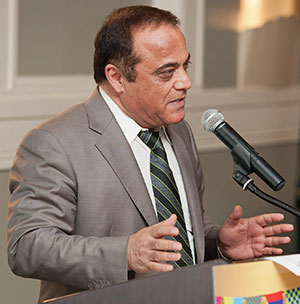
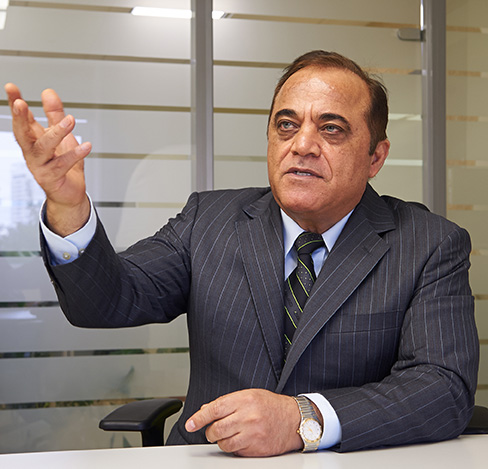
    Javad Ashjaee
    Javad Ashjaee

    Speaker:
    Javad Ashjaee
    President and CEO, JAVAD GNSS

    Javad Ashjaee received his  Ph.D. in electrical engineering from the University of Iowa. He was chairman of the Computer Engineering Department, Tehran University of Technology, 1976-1981. He began his GPS engineering career at Trimble Navigation, 1981–1986. Founder and president of Ashtech Inc., 1986–1995, the company that produced the first integrated GPS-GLONASS receivers; founder and CEO of Javad Positioning Systems, 1996–2000, which he sold to Topcon Corporation. He founded JAVAD GNSS in 2007, and is currently president and CEO. In 2010, the company introduced the integrated geodetic receiver TRIUMPH-VS, with a GNSS Interference Analyzer, capable of tracking current and next-generation signals of GPS, GLONASS, QZSS, and Galileo signals. In 2011, the company introduced a LightSquared-compatible GNSS receiver.


    Moderator:
    Alan Cameron
    Publisher – GPS World
  • RITA Seeks Experienced Electronics Engineer

    The Research and Innovative Technology Administration (RITA) seeks an experienced Electronics Engineer interested in joining the Office of Positioning, Navigation, and Timing (PNT).  RITA coordinates the U.S. Department of Transportation’s (DOT) research programs and is charged with advancing rigorous analysis and the deployment of cross-cutting technologies to improve our Nation’s transportation system.  RITA serves as the lead Administration representing DOT on PNT matters, including development of departmental positions on PNT and spectrum policy and protection, and is responsible for representing and supporting the civil Departments and Agencies in PNT systems analysis and coordination, including PNT requirements and architectural development.

    In this challenging role, you will serve as the program manager for the inland (terrestrial) segment of the Nationwide Differential Global Positioning System (NDGPS) Program and serve as the lead for radio frequency spectrum management and analysis functions in support of DOT’s technical requirements and policy development.

    As the NDGPS Program Manager, you will be responsible for the technical, cost and schedule performance of the NDGPS, as managed currently through the United States Coast Guard under a Memorandum of Agreement, and serve as the chair of the NDGPS Policy and Implementation Team.

    You also will lead radio frequency spectrum management and analysis tasks in close coordination with other DOT Operating Administrations and the National Telecommunications and Information Administration (NTIA).  You will provide expert advice specifically on issues of harmful radio frequency interference and operational degradation to DOT operations and planned operations, and serve as DOT’s representative to the Interdepartmental Radio Advisory Committee (IRAC).

    If you or someone you know has the experience and a demonstrable record of proven results, I encourage you or them to apply to this Washington, D.C.-based position.  We are looking for a diverse pool of qualified candidates

    The announcement is posted to the Public and to Merit Promotion eligible applicants on www.usajobs.opm.gov.  Please know that Merit Promotion announcements are the vehicle through which Federal employees generally apply for Federal positions.

    View job details.

    Open Period –  Thursday, December 13, 2012 to Monday, December 24, 2012

  • Indoor Navigation


    Original Broadcast Date: 12/13/12

    Summary: This is the next frontier for personal and machine navigation — and many are out there now, working diligently on it.  In just one example, a new chip fuses input from several sensors, using the best combination at any given time to maximize coverage and accuracy while keeping power draw to a minimum. This produces continuous position availability in indoor environments, as demonstrated by performance measurements in real-world test environments.

    The senior product manager responsible for this development joins us to talk about the inner workings and the outer manifestations of this new solution.

    Speakers:

    J. Blake Bullock

    J. Blake Bullock, GNSS and indoor positioning, Samsung
    J. Blake Bullock was senior product manager responsible for CSR’s next generation of GNSS solutions. He is now at Samsung System LSI Business and is responsible for GNSS and indoor positioning solutions. He holds a M.Sc. degree in geomatics engineering from the University of Calgary, an MBA from Arizona State University, and several patents in LBS and navigation.

    manikantanManikantan Parameswaran, Senior Application Specialist, Spirent
    Manikantan Parameswaranis currently a Senior Application Specialist for Spirent’s 8100-Location test product segment. Manikantan initially joined Spirent in 2006 as a development engineer and has worked on a variety of different A-GPS protocols and technologies. He holds a B.S in Computer Engineering from Drexel University, Pennsylvania, USA.


    chrisgatesChris Gates, VP Corporate Strategy, NextNav
    With more than 15 years of experience in finance and telecommunications, Gates joined NextNav from SkyTerra Communications, an integrated satellite-terrestrial communications company where he served as VP — Strategy; extensive experience in wireless and wireline communications; he began his career with Chase Securities in their M&A group. Christian holds a Bachelor of Arts from Dartmouth College.

    Dave HuntingfordDave Huntingford, Director of Product Management, Location Products, CSR
    A 15 year veteran of the location business, Dave is responsible for the location product portfolio at CSR and its expansion into GNSS, Wireless Hybrid and MEMS motion capabilities. Previously he served with SiRF and Motorola GPS. He holds a B.S from University of Hertfordshire, UK.


    Moderator:
    Alan Cameron, Editor & Publisher, GPS World

  • GPS World Launches iPad App

    Apple iPad owners now have the convenience of reading GPS World on their devices. GPS World has made available a free application that provides an interactive version of GPS World at your fingertips, access to digital back issues, and an RSS feed with the latest in GNSS industry news.

    Downloading the app is free and simple. Search GPS World in the App Store, or go to http://itunes.com/apps/GPSWorldHD.


  • Directions 2013: Dealing with interference

    Javad Ashjaee (Photo: Javad GNSS)
    Javad Ashjaee (Photo: Javad GNSS)
    A Proactive Approach for More Efficient Spectrum Use

    In my vision of the future of GNSS, I see a pressing need to manage radio-frequency spectrum more efficiently. This will drive the creation of official standards for GNSS receivers, and better design of those receivers with better filters at lower cost, to protect against out-of-band and near-band interference. This in turn will enable user to undertake widespread monitoring and reporting of in-band interference, and create the freedom for many technologies to explore wider and more productive use of all bands of the radio-frequency spectrum.

    Spectrum Management

    As a consequence of unprecedented technological development on all fronts and in many fields, the radio-frequency spectrum is very congested. All countries, and the United States in particular, must find ways to use this spectrum more efficiently. Licenses for spectrum bands are very expensive, and special interest groups do all they can to secure ownership of any part of the spectrum and to prevent others from competing with them. There is an intense struggle going on, both behind the scenes and in the public arena; it has been called “the spectrum wars.” These involve big companies, very high stakes, politicians, and special interest groups. The Federal Communications Commission (FCC) seems caught, powerless, in the crossfire between these powerhouses.

    GNSS Interference

    GNSS interference exists everywhere and comes from many different sources, identified and unidentified, intentional or unintentional. The 1-dB effect on GNSS of the proposed LightSquared signal is negligible compared to what already exists. The reason that the LightSquared plan encountered so much opposition was not because of its effect on GNSS. It was because of its effect on the competing business models of large companies and special interest groups.
    With the tools that we have created and embedded in our receivers, everyone can easily see that widespread interference already exists in most places, especially in cities, and  that interferences can easily be monitored and automatically reported. It seems no organization has ownership of regularly monitoring interferences on these bands and taking corrective actions. This is partly because the tools to easily monitor and report interferences did not exist earlier.

    GNSS Receivers

    Current GNSS receivers on the market and in use around the world rely on inadequate designs. The technology does in fact exist to overcome out-of-band interference problems such as LightSquared and many others commonly encountered in today’s congested radio-frequency environment. There is no reason to prohibit others from using bands near GNSS; this just makes spectrum use inefficient. Continued shipping of inadequate, inefficient receivers by current manufacturers only increases and compounds the problems encountered by users.

    There are standards for manufacturing countless industrial goods — for example, something as ordinary as car tires or — but there is no standard for building GNSS receivers that will be used in critical applications.

    So far, the FCC has been silent on this topic, and has not established guidelines for GNSS receivers that are used in critical applications. The civilian users of GNSS, such as the U.S. National Geodetic Survey, the U.S. Geological Survey, the Federal Aviation Administration, and so on, have criteria for all sorts of little equipment, but there is no criteria for GNSS receivers that they claim are so important for their job.

    Instead of taking the proactive and productive approach of putting filters into the receivers that they use, these organizations advocate keeping spectrum bands adjacent to GNSS off-limits to other users.  Manufacturers do not see any reason to make better receivers while such a powerful lobby protects them.

    Interference monitoring and reporting is strongly desirable for places such as GNSS reference stations, or for users to see the interferences before they start a jog that they are tracking on their GPS-enabled personal training device — just as pilots check the weather before they take off.

    Special Interest Groups, Politics, and Blind Followers

    The problem that LightSquared encountered was that its proposal impacted the business models of special interest groups. Although we — that is, JAVAD GNSS in presentations before the FCC in Washington DC — showed that other interferences exist in cities, the FCC did not care, and GNSS magazine editors did not care. They just blindly followed what the special interest groups had planned for them.

    Brad Parkinson, in his article “PNT for the Nation: Three Key Attributes and Nine Druthers” in the October issue of GPS World, did not even hint at guidelines for building GNSS receivers. This is similar to formulating guideline on how to build and clean the roads while having no guidelines on how to build tires that are going to ride on the roads.

    In Parkinson’s long list of recommendations, there was no mention at all that we need to build better GNSS receivers and be able to monitor interferences. There are guidelines and standards for how build every little item, but none for GNSS receivers that are claimed to be so essential for our security and prosperity.

    Military GPS receivers do not have protection against even one particular type of interference such as that posed by LightSquared — and the suggested approach was to bomb such interferences, which most admit that of course cannot be done. This is a bad attitude. The cost of a filter in a receiver is almost nothing. A precision bomb costs millions if you factor in development costs, and deployment and delivery puts the full cost even higher.

    The case is similar for GNSS receivers used in commercial airplanes. Instead of pushing for a better GNSS receiver design, the FAA simply hopes that interference does not happen.

    Conclusion

    These are my predictions — and my strongest possible recommendations — for the future of GNSS.

    • The FCC will create standards for GNSS receivers.
    • GNSS manufacturers will be forced to build better receivers.
    • GNSS users will benefit from better receivers at a lower cost.
    • Interference monitoring and reporting will become a desirable feature of GNSS receivers.
    • Bands near the GNSS spectrum will be freed for more efficient use by all types of productive technology.

    I am proud to be a part of the efforts to make these happen, against all odds.


    Javad Ashjaee received his  Ph.D. in electrical engineering from the University of Iowa. He was chairman of the Computer Engineering Department, Tehran University of Technology, 1976-1981. He began his GPS engineering career at Trimble Navigation, 1981–1986. Founder and president of Ashtech Inc., 1986–1995, the company that produced the first integrated GPS-GLONASS receivers; founder and CEO of Javad Positioning Systems, 1996–2000, which he sold to Topcon Corporation. He founded JAVAD GNSS in 2007, and is currently president and CEO. In 2010, the company introduced the integrated geodetic receiver TRIUMPH-VS, with a GNSS Interference Analyzer, capable of tracking current and next-generation signals of GPS, GLONASS, QZSS, and Galileo signals. In 2011, the company introduced a LightSquared-compatible GNSS receiver.

  • Leica Releases Locata-Enabled Satellite+Terrestrial Mining System

    Locata Corporation announced today that its integration partner, Leica Geosystems Mining, has begun to sell — and ship to their global mining customers — a Locata-powered positioning systems that it calls “the world’s first.”

    The Leica Jps (the Jigsaw Positioning System powered by Locata) integrates GNSS and Locata’s ground-based GPS-like networks. The result is a seamless and a completely new “GPS everywhere” experience for Leica’s customers, the company said. This new capability is now in use at Newmont’s Boddington Gold Mine, northwest of Boddington, Western Australia. The mine has published an independent article describing the LocataNet and Jps systems deployed for the mine’s drill rig fleet. It reported that drill rig up-time and efficiency have skyrocketed to unprecedented levels since the Jps system was commissioned.

    Locata-enabled nonstop positioning brings benefits to machine automation in mining because Locata fills in the many gaps in GPS signal availability experienced in an open-cut mine, Leica said. The Leica Jps ensures a reliable and transparent experience for users with demanding machine guidance applications because it uses all available signals, satellite-based or Locata, without interruption.

    “The Locata-based Jps is therefore the world’s first system which can justly be considered as ‘a backup for GPS’,” reads a Leica Geosystems statement. “Real-world operational performance, which is being reported by Jps customers, can only be described as ‘spectacular’.”

    “Since deploying the Locata-powered Jps at Newmont Boddington Gold, there has been an increase in operational machine guidance availability of almost 23 percent – from 75 percent up to 98 percent,” said Brendon Lilly, product manager, Leica Geosystems Mining. “Newmont Boddington Gold is so happy with the results that they have turned off their GPS-only solutions altogether, and now rely solely (and successfully) on Jps alone. They have already installed Jps on 11 drills and intend to equip their entire high-precision fleet.”

    “The ROI we offer our clients through the Jigsaw Positioning System is extraordinary. Market trends indicate CAPEX is in decline, so the parameters mines use to justify expenditure have become far more demanding,” said Stefana Vella, global marketing manager, Leica Geosystems Mining. “The unprecedented production levels and machine control uptime that result directly from using the Locata-powered Jps very quickly justifies the purchase of the system. Furthermore, it aids the justification of expenditure on the high-precision machine guidance systems themselves, for, when operated with the Jps, the ROI increases exponentially. Even in today’s market, it isn’t a difficult decision to make.”

    Many mines around the world use machine guidance systems for drills, shovels, excavators, dozers, graders and more to execute the site plan work in real-time. This tight automation dramatically improves efficiency and productivity. At the core of these machine guidance systems are GPS-style receivers that provide vital positioning information, using the satellite signals to calculate a 3D position.

    Unfortunately, in most open-pit environments satellite signals become obstructed, which slows or temporarily halts production. As pits become deeper the problems become worse, drastically reducing the number of satellites the receiver can “see” to achieve GPS-style positioning. In the past, mines and other machine automation users had no choice other than to resort to much less efficient alternatives, such as manual surveying. Reduced satellite visibility therefore negated the considerable investment and operational efficiencies gained from modern machine guidance systems. The key to virtually eliminate these issues is Locata’s new “GPS-backup or replacement” capability, Leica Geosystems said.

    Locata’s Locatalite device is a ground-based transmitter that generates a GPS-like signal. LocataLites deployed around the pit rim can ensure almost 100 percent positioning coverage. Locata signals “fill-in” the GPS holes with a signal that is processed by the Jps in exactly the same way that GPS signals are. Locata is the only technology in the world that can do this. By backing up their GPS-based systems, mines have an always-on positioning network that works if satellite signals are unavailable in the pit due to physical or man-made obstructions. Jps LocataLites can be permanently positioned on site or moved at will, ensuring a mine’s Jps Locata network can be set up where and when needed.

    “We all rely on electricity from public sources, but in areas where outages occur companies invest in backup generators,” said Nunzio Gambale, CEO and co-founder of Locata. “It’s exactly the same scenario for mining companies, where they are dependent on GPS. Locata gives you a GPS backup ‘generator’ – a world-first capability which is clearly a game-changer for the whole industry. Before Locata became available mines simply had to suffer through a slow-down when GPS-based systems became flaky. Leica Geosystems had the vision early on to recognize the enormous benefits provided by our technology advancements. They threw their corporate weight behind intensive product development, carefully integrating Locata technology into their world-first Jigsaw mining solutions. It’s a marriage made in heaven, and Jps customers will be the ones who really reap the rewards of Leica’s outstanding first-mover effort. There won’t be any ‘GPS doesn’t work here’ excuses in the future.”

    John Carr, senior technical specialist at Newmont Boddington Gold Mine, puts it this way: “Look, it’s really this simple. If Locata had not invented the technology to help fix the GPS issues in a deep pit scenario I may as well have gone back home, started breeding pit ponies and sharpened up the picks and shovels… Open Cut Mines, just like everyone else that depends heavily on satellite navigation, are already hitting the wall at the outer limits of GPS technology. With Locata, we’ve virtually eliminated everyday GNSS signal challenges. And now we also have our own backup in place in case of a more significant or longer-term failure.”

  • Logistics, GIS and Disaster Response, Post-Sandy

    An exercise in planning for months proves timely in light of Hurricane Sandy

    By Art Kalinski

    I was going to write about the increasing presence of social media at GEOINT 2012, but I’ll cover that next month since Hurricane Sandy made an exercise I attended last week more significant in its timeliness.

    The Disaster Response Integrative Logistics Exercise was a joint effort of the Institute for Defense & Business and Lockheed Martin. Heading up the effort was retired U.S. Ambassador David Litt of the IDB and Corey Cook of Lockheed Martin. The almost week-long event was held at the Lockheed Martin Lighthouse located in Suffolk, Virginia, near Norfolk. The 65,000-square-foot high-technology facility is designed for experimentation and prototyping using analysis, modeling and simulation. It’s a reconfigurable command and control operations laboratory that permits participants to test and analyze concepts in a gaming environment.

    The stated purpose of the disaster response exercise was: “Given the nature, frequency, location and severity of disasters, inter-organizational collaboration – to include the private sector – is becoming increasingly critical to the efficiency and effectiveness of logistics in disaster responses.”  The exercise involved more than a 100 participants from the private sector, government agencies, non-profit organizations, and military services. Lou Kratz, Vice president and managing director, Logistics and Sustainment, Corporate Engineering & Technology for Lockheed Martin, stated that “Today’s crisis response efforts generally struggle with effective logistics collaboration among the multiple public and private stakeholders engaged. With our 21st-century logistics capabilities and global resources available from the public sector and private organizations, together we can develop solutions that will help our communities and businesses recover more quickly and effectively after a crisis.”

    And collaborate we did! The list of participants was quite extensive and quite diverse. To give you a sense of the attendees, here is a partial list of organizations represented:

    • commercial companies included DHL, Maersk, Florida Power and Light, Fluor, Home Depot, Walmart
    • federal government agencies included FEMA, DHS, GSA, HHS, USAID, State Department
    • military organizations included NAVSUP, NORTHCOM, USACE, USAF, USMC, USN, SOUTHCOM, National Defense University, USCG, NORTHCOM
    • NGOs included United Nations agencies, the Red Cross, Operation Blessing, Catholic Relief Services and many more.

    Conference attendance was significantly impacted by Hurricane Sandy, which also highlighted its timeliness.  FEMA, USAID, USACE, and the Red Cross, who were confirmed attendees and were instrumental in the development of the DRIL exercise, were deployed to Hurricane Sandy just hours before the start of the event. Fortunately, attendance to the DRIL by multiple organizations and substitute personnel was still robust, allowing for a highly successful exercise.

    Some of the exercise objectives included defining and understanding different agency logistics capabilities, leadership structures, institutional and regulatory obstacles, differences in cultures, missions and operating procedures while developing metrics to evaluate performance in disaster response efforts. To accomplish the objectives, all the participants were organized into four integrated teams that were then separated at times into functional teams and then reassembled with representatives speaking for each team to the entire group of attendees.

    Since this was the first exercise of its type, it was a learning experience for all involved and focused on the basics of personnel interactions and group consensus.  Each participant had access to his or her own computer, common computer resources and pre-developed exercise parameters. There were many artificial assumptions presented to the teams, and the team members made even more assumptions and guesses as they worked through the individual scenarios. Most of the exercise consisted of reviewing the effects of Category 5 hurricanes hitting the Dominican Republic, South Florida and Virginia, so there was a domestic as well as international impact. We participated in our groups, listening to individual team members with specialized knowledge and experience, then prioritized the delivery of needed resources and services. As the exercises ramped up, there were many animated discussions in which basics such as water, food, shelter, medical, electric power and transportation infrastructure were prioritized and justification documented.

    I made several observations to myself as the exercises progressed. First, there are definite cultural differences between federal, military, NGO and commercial agencies. Not bad differences, just different. Second, individual personalities can steer the group dynamics and outcomes. And third, situational awareness is critical to effective disaster response. Geospatial technology was not part of this first exercise, but would clearly have been valuable to provide a common operational picture. That level of complexity would not have been practical for this initial exercise, but it does lead me to the “Solutions” room next to the main exercise area.

    In a space adjacent to the main exercise room was a “Solutions” room that showcased potentially helpful technologies. The room was open to exercise participants toward the tail end of the week. It consisted of a diverse assortment of commercial and government solutions that addressed some of the issues  the teams struggled with during the week. Examples include a new computer-based system developed by the Navy Supply Systems Command (NAVSUP) that is similar to the commercial Kayak flight search system. The Transportation Exploitation Tool (TET) was explained to me by Greg Butler, division director, NAVSUP GLS Transportation, who initiated the effort. He explained that all too often resources are wasted flying parts or personnel on dedicated aircraft that are duplicate trips of other aircraft or ships with available space traveling to the same location. The new geospatial network scheduling system optimizes transportation resources across all branches of service and already saved the Navy $23M on a $750k investment.

    Lockheed Martin displayed several technologies, including communications and data management technologies. One of the most interesting was its Hybrid Aircraft that was initially developed for military use. However, its ability to transport equipment and supplies efficiently to undeveloped sites while providing a persistent platform for communications and to collect and download imagery makes it a valuable asset for emergency response activities.  To learn more, view the following video.

    A representative from NATO explained the NATO Civil-Military Fusion Center, including a map library and custom services. Several exhibitors demonstrated the use of social media, which can be a very valuable and timely source of information to build situational awareness during emergencies. A company I work with, Soft Power Solutions, integrates GIS resources such as Google, USGS, ortho and oblique imagery married to geographically placed social media to build situational awareness that is quite robust. It was especially dramatic that during demonstrations, a 7.2 earthquake was reported off the coast of Guatemala.  One could easily see the growing number of tweets that almost immediately confirmed the earthquake and level of damage. Here is a ShakeMap generated by USGS within minutes of the earthquake showing the level of impact on the Guatemalan coast (shown in yellow).

    One of the exercise objectives was to develop metrics that would evaluate performance in disaster response efforts. There were many metrics developed that one would expect – roads open, electricity restored, utilities restored, etc. However, the one informal metric that was developed through personal experience of Florida emergency responders was the “Waffle House” metric. Waffle House is a ubiquitous restaurant chain with locations throughout the southeast. The Florida responders observed that driving from one county’s Waffle House to another open Waffle House was a good indicator that the location was in OK shape.  Since a Waffle House needs minimal staffing and utilities compared to larger restaurants, it was a good indicator as to how bad conditions were in the location. Perhaps someone will develop a “Waffle House Open” type GIS layer as a metric to “okayness.”  Sounds like a good thesis for a GIS graduate student.

    Everyone who participated was enthusiastic about conducting another similar exercise. Planning is already underway to make that happen. I, for one, feel that this kind of exercise can have a significant positive impact on future disasters because it builds face-to-face relationships that are so valuable during actual events. I’m going to do what I can to help with a geospatial aspect in future exercises.