Category: Uncategorized

  • Thank you for registering

    Thank you for registering for the upcoming webinar, Geospatial Transformation: Bridging the Gap from Field to 2030sponsored by Trimble.

    A link to the live event will be sent to you two hours before the event. Your personalized event URL will be automatically generated by the ON24 system. To ensure receipt of the email, please whitelist this email address by adding it to your contacts: [email protected].

    This presentation will begin at 1 p.m. EDT on Thursday, March 26. A recording will also be sent to you the following day so you can watch it on-demand.

    Audience members may arrive 15 minutes prior to live time. If you have any questions, please contact event producer Alicia LoPresti  at [email protected].

  • Topcon and Fixposition announce collaboration for integrated tech

    Topcon and Fixposition announce collaboration for integrated tech

    Topcon Positioning Systems and Fixposition have agreed to collaborate on integrated technology for future product offerings. The agreement was announced at Geo Week 2026 in Denver, Colorado.

    “Topcon provides high-precision GNSS positioning technologies for geomatics, construction and agriculture applications worldwide,” explained Ron Oberlander, head of the Topcon Geomatics Platform. “Working with companies such as Fixposition — specialists in visual RTK (real-time kinematic) and visual-aided positioning   helps create added value for our customers.

    According to Topcon, its customers are increasingly working in environments where satellite connection can be challenging, such as dense urban environments, and need consistent, reliable positioning to maintain productivity. Fixposition offers technology that augments satellite positioning, beneficial for users even while working inside structures and in indoor-outdoor transitions, without disrupting workflows by combining RTK GNSS with artificial intelligence to ensure position accuracy. “We see this AI-enabled technology as an innovative integration with our next-generation GNSS solutions,” Oberlander said.

    “We’re proud to supply Fixposition’s xFusion, vision and multi-modality fusion positioning technology to support Topcon’s next-generation GNSS solutions,” said Zhenzhong Su, CEO and co-founder of Fixposition. “We look forward to bringing this new solution to market — helping surveying professionals across geomatics, construction and agriculture deliver faster results and get more done without compromising quality, even in GNSS-challenging environments.”

    Fixposition has been integrating Topcon RTK corrections into its Vision-RTK sensors since 2023, when the companies announced an agreement providing Fixposition customers in North America and Europe with access to the Topnet Live RTK corrections service network.

  • Thank you for registering

    Thank you for registering for the upcoming webinar, “GNSS Anti-Jamming and Anti-Spoofing Technology Explained” sponsored by Calian.

    A link to the live event will be sent to you two hours before the event. Your personalized event URL will be automatically generated by the ON24 system. To ensure receipt of the email, please whitelist this email address by adding it to your contacts: [email protected].

    This presentation will begin at 2 p.m. EST on Thursday, February 26. A recording will also be sent to you the following day so you can watch it on-demand.

    Audience members may arrive 15 minutes prior to live time. If you have any questions, please contact event producer Alicia LoPresti  at [email protected].

  • GPS World launches major website redesign

    GPS World launches major website redesign

    GPS World has officially launched a redesigned website that introduces a range of new features aimed at improving the reader experience while also expanding advertising capabilities.

    Several new features have been implemented to increase engagement.

    Registered users can now create reading lists, allowing them to save articles and organize content into custom lists. They also can select the topics they are most interested in to generate a personalized content feed within their dashboard, ensuring they see the content they care about most. These topic selections also help drive additional content recommendations on article pages, further enhancing reader engagement. In addition, registered users can manage their newsletter and magazine subscriptions directly from their user dashboard.

    One major new feature available to all users, regardless of registration status, is the ability to listen to articles. GPS World editors can generate audio using an AI-based text-to-speech platform, which places an audio widget directly on article pages so users can listen to content in full. The homepage also includes a section highlighting the most recent articles with audio, complete with a customizable message from the editors or advertisers.

    The new features and improvements introduced with the redesign can be grouped into reader-focused and advertiser-focused enhancements.

    Reader-focused features include:

    • Listenable content
    • Reading lists
    • Personalized content feeds
    • Subscription management

    Advertiser-focused features include:

    • New ad zones throughout the site
    • Sellable audio messages for listenable content
    • Ideal functionality for surveys, gated whitepapers, and other custom content

    Registration on gpsworld.com is completely free and takes less than a minute. Current GPS World subscribers will have their customer information automatically connected to their GPS World website account.

    For more information, visit gpsworld.com.

  • Trimble and Volatus improve precision and safety in BVLOS drone deliveries in Canada

    Trimble and Volatus improve precision and safety in BVLOS drone deliveries in Canada

    Volatus Aerospace has integrated the Trimble PX-1 RTX solution into its commercial delivery drone service to achieve accurate and robust positioning and heading.

    The Trimble module provides Volatus’ clients with a turnkey solution for highly-accurate aerial data acquisition and fully-remote drone operations in real-world missions, including beyond visual line of sight (BVLOS).

    The Trimble PX-1 RTX uses Trimble’s CenterPoint RTX corrections along with compact, high-performance GNSS-inertial hardware to deliver real-time, centimeter-level positioning and highly precise inertial-derived true heading measurements. This technology reduces operational risks associated with poor sensor performance or magnetic interference by providing enhanced positioning redundancy.

    Volatus must meet strict guidelines addressing airspace entry and exit, altitude and speed, and communication and remote identification when taking off from and landing at the Edmonton International Airport in Alberta, Canada. The flight corridor approved by Transport Canada and Nav Canada requires them to land and takeoff with precision, while staying at 50-feet altitude when crossing airplane arrival routes.

    Trimble PX-1 RTX’s precise positioning capabilities address crucial accuracy challenges for takeoff and landing, while supporting an exact flight altitude and positioning within the flight corridor. This capability enaables Volatus to remain compliant with the controlled airspace authorization from Nav Canada, a non-profit that operates the country’s civil air navigation system.

    The Trimble PX-1 RTX solution is available through Trimble sales channels.

  • GNSS increasingly essential for Indonesia

    GNSS increasingly essential for Indonesia

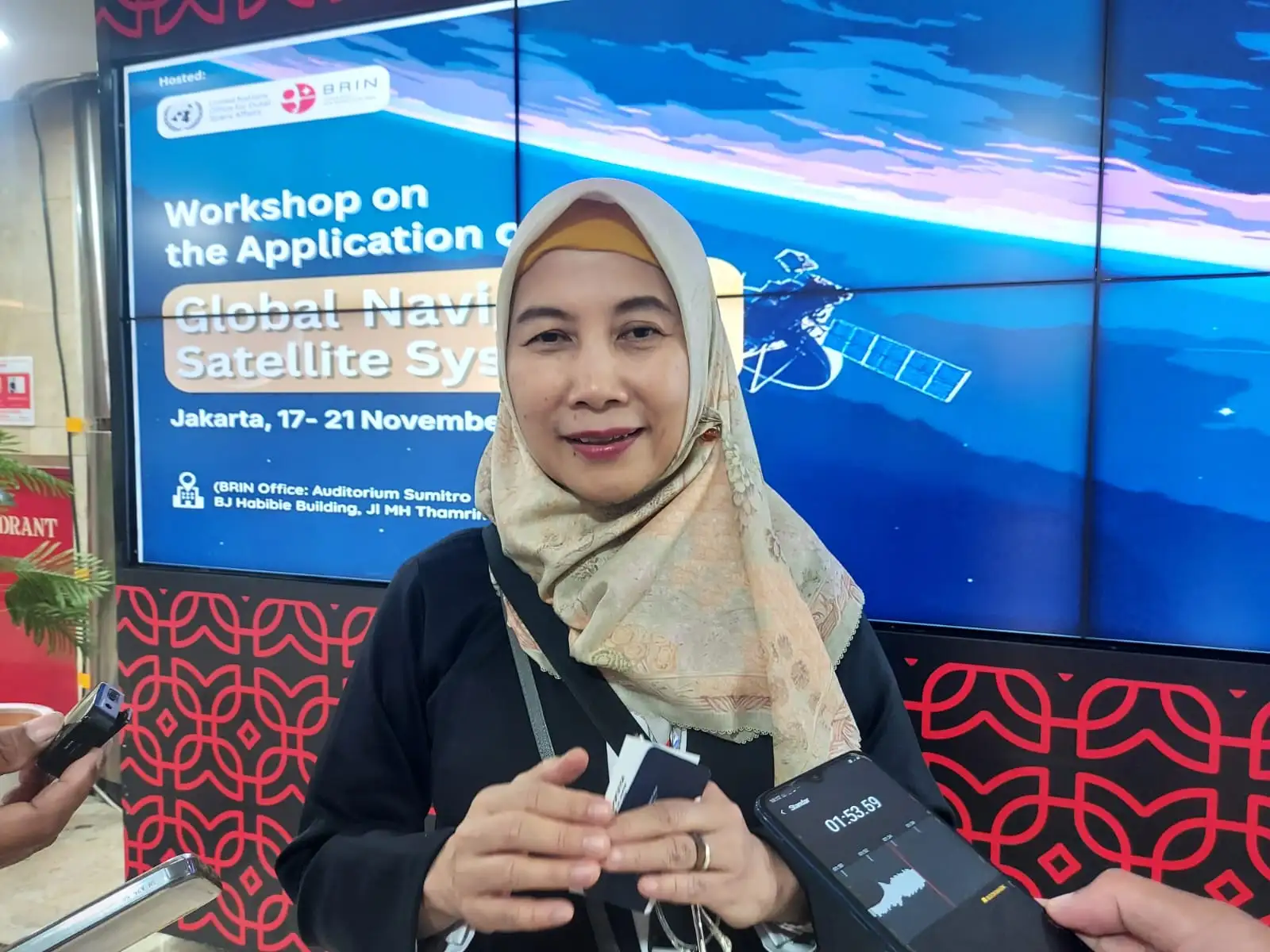
    The 2025 Global Navigation Satellite Systems (GNSS) Workshop in Jakarta, Indonesia, emphasized one important message: navigation satellite data has become a fundamental necessity in modern life, yet Indonesia remains completely dependent on systems owned by other countries.

    The workshop was held by the National Research and Innovation Agency (BRIN) in collaboration with the University of Indonesia (UI) and the United Nations Office for Outer Space Affairs (UNOOSA), at the BJ Habibie BRIN Building, Nov. 17–21.

    “Indonesia cannot just be a market. In the future, we must also become a producer of satellite services and have our own satellite industry.”

    Navigation satellites are a “silent technology” whose contribution is rarely recognized, yet they support almost all location- and time-based activities, explained Rr. Erna Sri Adiningsih, director of the Secretariat of the Indonesian Space Agency (INASA). “When we use Google Maps, search for addresses, find directions or positions, everything relies on data from navigation satellites,” she said. Even robotics, drones, aviation systems, and global time synchronization operate thanks to satellite navigation services.

    Therefore, she emphasized that disruptions to the navigation system would have direct implications for public activities. “If a navigation satellite operator stops operating or malfunctions, most of our communication devices will cease to function. Time won’t synchronize, location won’t be read, and robotics and drones won’t operate,” she said.

    Adiningsih added that the workshop is crucial for connecting operators with users. “We want to ensure that the needs of users from various countries are understood,” she said.

    The 2025 GNSS Workshop is a strategic platform for bringing together the GNSS operator community with national stakeholders such as the Ministry of Transportation, AirNav Indonesia, academia and the industrial sector. BRIN itself operates the experimental A1, A2 and A3 satellites, but does not yet have a navigation satellite.

    Crucial time for increased capacity

    Indonesia, Adiningsih said, is at a crucial point in increasing its capacity. Despite having the capability to build micro-satellites for earth monitoring and privately operated communications satellites, navigation satellite technology requires mastery of a different system. “Indonesia has never built a navigation satellite. We are still in the stage of utilizing the data, not building the satellites,” she said.

    Augmentation. The development of navigation augmentation systems for aviation, drones and maritime transportation currently relies on ground-based equipment managed by the Geospatial Information Agency (BIG). These are expensive and have limited coverage. “If we use a satellite system, one system can be used across the entire region without having to install ground-based equipment,” Adiningsih said.

    Therefore, Indonesia requires integrated policies and support from various ministries and agencies. The national space program already has a clear direction through Space Policy 2045, including a target for technological independence. “Indonesia cannot just be a market. In the future, we must also become a producer of satellite services and have our own satellite industry,” she emphasized.

    Adiningsih hopes that the five-day workshop will not only serve as a forum for sharing experiences but also open up opportunities for international collaboration in the development of satellite navigation technology and systems. “With humanity’s increasing dependence on satellite data, Indonesia must begin building its capabilities so that it is not completely dependent on other countries,” she said.


  • Red Cat proves drone software for GPS-denied navigation

    Red Cat proves drone software for GPS-denied navigation

    Red Cat Holdings, a U.S.-based provider of advanced all-domain drone and robotic solutions for defense and national security, has successfully flight tested its Black Widow drone equipped with Palantir Technologies Visual Navigation (VNav) Software.

    The test demonstrated that the Black Widow drone — part of the U.S. Army’s Short Range Reconnaissance (SRR) program of record — can navigate in GPS-denied conditions using Palantir’s visual-based navigation software. This marks the first known commercial demonstration of visual navigation software on a drone already accepted into a U.S. Army program.

    “This is a breakthrough moment not just for Red Cat, but for the tactical needs of the Department of War,” said Jeff Thompson, CEO of Red Cat. “Every battlefield is a GPS-denied environment, and this successful test shows that Red Cat and Palantir are delivering a software-driven solution the Army can rely on. It requires no new hardware, is ready to deploy today, and gives warfighters the edge in contested environments. It also signals our evolution into a full-stack defense technology platform, with expected margin expansion and strong revenue potential in 2026.”

    VNav uses edge-based sensor fusion to generate real-time position estimates from visual cues and inertial data, enabling navigation in denied or degraded environments. Over a multi-day series of tests, Red Cat and Palantir engineers evaluated VNav across nominal and GPS-denied conditions, including high-speed and low-altitude flights.

    Read more about how VNav works in this Palantir blog.

    The testing sequence validated:

    • Full integration of VNav with the Black Widow flight controller, including compatibility with GPS-assisted operation
    • Accurate navigation in simulated GPS-denied environments
    • Reliable operation at altitudes as low as 150 feet AGL and speeds up to 16 mph
    • Robust performance in twilight and extremely low-light conditions
    • A simulated reconnaissance mission with dynamic flight parameters, completed successfully without GPS or human input

    The results helped define a preliminary performance envelope for VNav on the Black Widow system. The final mission demonstrated VNav’s ability to navigate a complete ISR mission profile, including cruising to a target, descending for surveillance, flying local waypoints, and returning, all without GPS and with continuous positional awareness.

    Palantir engineers reported that VNav achieved a mean positional error of approximately 7 meters over a 2.7-kilometer route. No additional hardware was required for any of the flights, as VNav runs entirely on the Black Widow’s existing onboard sensors.

    “Palantir Visual Navigation performed well in real-world conditions,” said Akash Jain, president and CTO, Palantir USG. “This demonstrates our approach to visual navigation in disrupted environments –– delivering intelligent software that adapts, scales across platforms like Black Widow, and supports the Army’s integrated operating systems.”

    Red Cat and Palantir are working toward a formal Army demonstration and full productized VNav capability for all fielded Black Widow systems.

  • Airwayz unveils dynamic UTM update and wins INDI3 research award

    Airwayz unveils dynamic UTM update and wins INDI3 research award

    Airwayz, an AI-based unmanned traffic management company, has released a new version of its Dynamic UTM service and was awarded a research contract under the third round of the Israel National Drone Initiative (INDI3) research programs.

    The new version introduces significant advancements in automation, intelligence and efficiency, providing clearer situational awareness, mitigating air risks and reducing the cognitive workload for airspace managers and drone operators, the company said.

    “With the new version of the Dynamic UTM, we’ve refined intelligence, usability and automation to deliver real operational value — from planning and approval to execution and debriefing — while paving the way toward autonomous airspace management of the future,” said Yair Yosef, co-founder and chief product officer of Airwayz.

    The updated system enhances workflow efficiency, communication across airspace layers and data-driven decision-making, enabling authorities to manage more missions simultaneously, safely and with greater precision, the company said.

    It now provides periodic analytics and insights for authorities such as ports, airports and airspace regulators — offering visibility into trends like traffic density, mission types and operational loads. These insights support resource planning, safety strategies and potential future monetization models. Data is compiled periodically, such as monthly or at customized intervals, turning operational data into actionable intelligence.

    The updated interface and AI-driven logic provide a more intuitive experience that enhances situational awareness and decision confidence, enabling users to focus on outcomes rather than system complexity, Airwayz said.

    The company also upgraded its Airwayz Airplan platform, the mission management tool for drone operators.

    New features include an improved drone database that speeds up flight request submissions, improves UTM communication and delivers more accurate mission statistics; duplicate flight requests that replicate recurring missions in seconds, saving more than 75% of submission time; and updates to existing flights that allow real-time changes to active or scheduled missions without cancellation.

    The company’s next evolution will focus on “democratizing tactical airspace command and control,” extending from strategic oversight to mission-level defense and security.

    The company also was awarded a grant to research UTM technologies and procedures as part of the INDI project, a joint venture led by the Israel Innovation Authority and partnering agencies.

  • KYOCERA AVX launches LDS cap antenna for Iridium satellite IoT applications

    KYOCERA AVX launches LDS cap antenna for Iridium satellite IoT applications

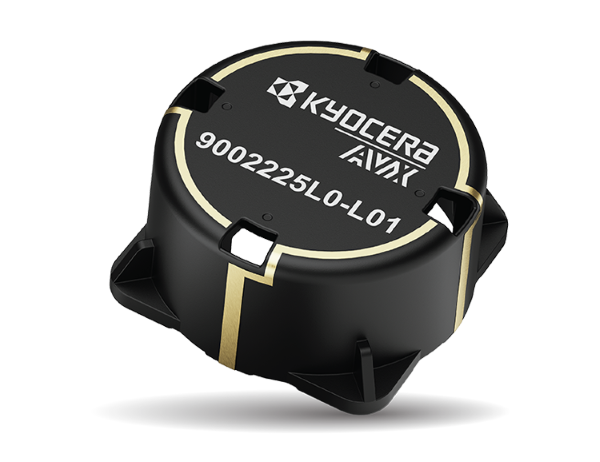
    KYOCERA AVX has launched an LDS cap antenna and evaluation board optimized for Iridium satellite IoT applications and designated as Iridium Qualified Antenna products for Iridium Certus 9704 modules.

    The antenna was developed to provide Iridium with an embedded antenna optimized for low-Earth-orbit (LEO) satellites used to provide seamless connectivity and data exchange for IoT devices anywhere in the world. The new LDS cap antenna developed for Iridium outperforms the ceramic patch antennas traditionally used in these applications.

    Manufactured using laser direct structuring (LDS) technology — an efficient process for creating complex, compact, lightweight, wide-bandwidth, and high-gain 3D antenna designs on myriad substrates — the new LDS cap antenna is smaller and lighter than ceramic patch antennas and exhibits excellent right-hand circular polarization (RHCP) and superior gain from zenith to horizon, which maximizes satellite visibility and reliability and is especially beneficial for improving the connectivity of LEO satellites at low elevation angles. It also exhibits wider bandwidth and higher radiation efficiency than patch antennas.

    The new KYOCERA AVX LDS cap antenna developed for Iridium supports GNSS (1,559–1,610MHz) and Iridium (1,616–1626.5MHz) frequencies with ~2dBi peak gain and 60% efficiency, and delivers reliable performance in challenging environments, including over metal. It’s rated for 4W power handling, 50Ω feed point impedance, and operating temperatures extending from -40° to +85°C. It’s also proven to withstand exposure to high temperatures, high humidity, and salt spray, compliant with the latest RoHS and REACH directives, and packaged and shipped on tape and reel for automated assembly with reflow soldering.

    The on-board antenna has a small, lightweight form factor with a unique design that measures 35.7 mm in diameter and 17.98 mm high, weighs 6.85g, facilitates easy SMT assembly, and allows device manufacturers to locate components on its underside, saving space on the main PCB board.

    The new antenna is expressly designed for satellite connectivity, targeted for satellite IoT applications, and well-suited for applications including telematics, asset tracking, remote monitoring, smart farming and smart city applications. Earlier this year, it was shortlisted for Electronic Specifier’s Electronics Excellence Awards in the passive product category.

  • Quectel-Swift partnership now includes RTK corrections

    Quectel-Swift partnership now includes RTK corrections

    Quectel Wireless Solutions is partnering with Swift Navigation to deliver Quectel’s Real-Time Kinematic (RTK) Correction Solution, which enables cost-effective, centimeter-level positioning accuracy for a new generation of IoT applications.

    In January, the companies announced integration of Swift’s Skylark Precise Positioning Service with Quectel’s high-precision GNSS modules.

    The collaboration allows Quectel to simplify the complexities of high-precision GNSS by bundling its RTK modules and antennas with Swift’s Skylark Precise Positioning Service, offering equipment manufacturers a streamlined, end-to-end solution for RTK adoption and deployment.

    Partnering with Swift enables Quectel to tailor solutions for specific applications, helping equipment manufacturers simplify the complexities of RTK adoption and deployment. The Quectel RTK Correction Solution is designed to support a wide range of mass-market applications, including robotics, automotive, micro-mobility, precision agriculture, surveying, and mining.

  • Thank you for registering

    Thank you for registering for the upcoming webinar, “Resiliency in space: developing space technologies that endure” sponsored by Hexagon | NovAtel.

    A link to the live event will be sent to you two hours before the event. Your personalized event URL will be automatically generated by the ON24 system. To ensure receipt of the email, please whitelist this email address by adding it to your contacts: [email protected].

    This presentation will begin at 1 p.m. EST on Thursday, November 20. A recording will also be sent to you the following day so you can watch it on-demand.

    Audience members may arrive 15 minutes prior to live time. If you have any questions, please contact event producer Halle Reid at [email protected].

  • Lower SWaP PNT protection from Hexagon | NovAtel

    Lower SWaP PNT protection from Hexagon | NovAtel

    The newest member of the proven GAJT team means you can protect all your platforms from jamming. Light and small, it’s the best protection per gram you can get. You can even get it as an integrated enclosure (one piece) or a federated solution (separated anti-jam electronics and CRPA), so it is ideal for small platforms, like UAVs.

    Click here to learn more.