Category: Uncategorized

  • Thank you for registering

    Thank you for registering for the upcoming webinar, “Unlocking the Power of LEO Constellations: Testing and Performance with Xona, Trimble, and Safran” sponsored by Safran Federal Systems.

    A link to the live event will be sent to you two hours before the event. Your personalized event URL will be automatically generated by the ON24 system. To ensure receipt of the email, please whitelist this email address by adding it to your contacts: [email protected].

    This presentation will begin at 1 p.m. EST on Thursday, November 6. A recording will also be sent to you the following day so you can watch it on-demand.

    Audience members may arrive 15 minutes prior to live time. If you have any questions, please contact event producer Halle Reid at [email protected].

  • Thank you for registering

    Thank you for registering for the upcoming webinar, “Building a Layered Future: Resilient GNSS Alternatives That Complement, Not Compete, with GPS” sponsored by NextNav.

    A link to the live event will be sent to you two hours before the event. Your personalized event URL will be automatically generated by the ON24 system. To ensure receipt of the email, please whitelist this email address by adding it to your contacts: [email protected].

    This presentation will begin at 2 p.m. EDT on Thursday, October 23. A recording will also be sent to you the following day so you can watch it on-demand.

    Audience members may arrive 15 minutes prior to live time. If you have any questions, please contact event producer Halle Reid at [email protected].

  • TSR unveils tactical drone system with 3-hour flight time

    TSR unveils tactical drone system with 3-hour flight time

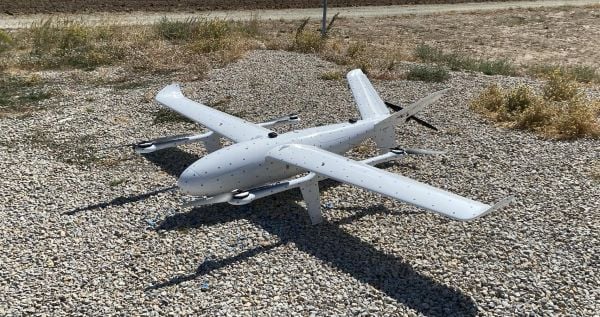
    TSR Inc. (Tactical Surveillance Reconnaissance) has launched the AVRIO series autonomous drone systems — cutting-edge European-made unmanned aircraft designed to redefine aerial surveillance, reconnaissance, and precision-strike capabilities.

    The AVRIO family, which includes the Falcox and Nebris platforms, delivers unmatched performance and resilience for defense, security and critical infrastructure missions, according to TSR. The company designed the AVRIO series for a wide range of defense and homeland-security missions, including:

    • Border security and coastal defense
    • Rapid-response reconnaissance and force protection
    • Counter-UAS operations using RF seeker payloads
    • Critical infrastructure protection and disaster-response intelligence.

    “The AVRIO series combines European aerospace engineering with U.S.-based deployment and support, giving governments and security agencies a next-generation toolset for ISR and tactical defense,” said Rick Clarke, CEO of Safe Room Designs/TSR Inc. “This is autonomous aerial defense, reinvented.”

    Specifications of the AVRIO

    • ISR (intelligence, surveillance, reconnaissance). Real-time EO/IR video, day/night operations, target tracking and identification.
    • Quick-launch and versatility. Vertical takeoff and landing, <1-minute preparation, runway-independent operation, and mission abort/return-to-base features.
    • Extended reach. Endurance of up to three hours and a range of up to 30 km, depending on payload and mission configuration.
    • Precision engagement. Options for smart munition payloads with precision super-quick impact fuzes and effective 15 m radius, plus anti-personnel and armor-piercing warheads.
    • Resilient design. Low radar cross section, GNSS-denied operation, MIL-STD-810G-qualified ground control, and operational temperature from –20 °C to +50 °C.
    • Naval and special missions. Capable of surface-mine detection, sweeping operations, and beyond-line-of-sight (BLOS) intelligence gathering.

    TSR is now accepting government and defense-sector inquiries for the AVRIO Falcox and AVRIO Nebris systems. For detailed specifications, demonstrations, or procurement discussions, contact TSR.

  • Teledyne to buy TransponderTech from Saab

    Teledyne to buy TransponderTech from Saab

    Saab will divest Saab TransponderTech AB, which is being acquired by FLIR Systems AB, a subsidiary of Teledyne Technologies Inc. Completion of the divestment is subject to certain conditions that are expected to be fulfilled by the end of 2025.

    TransponderTech is a leader in Safety Of Life At Sea (SOLAS)-certified communications and navigation solutions for commercial maritime, military and airborne applications.

    TransponderTech’s solutions include advanced GNSS technologies, which FLIR expects to integrate into its commercial maritime products. Based in Linköping, Sweden, TransponderTech also provides Automatic Identification System (AIS) and VHF Data Exchange System (VDES) solutions. The company is known for high-quality products that perform reliably in challenging conditions.

    “Integrating TransponderTech’s advanced AIS, VDES and GNSS technologies into our commercial maritime products strengthens our ability to deliver secure, reliable and globally connected navigation solutions,” said Grégoire Outters, vice president of Teledyne FLIR Maritime and Raymarine. “This acquisition will directly enhance our safety, efficiency and operational reach of our customers at sea.”

    The divestment is in line with Saab’s strategy to increase its focus on core areas of its business and, upon closing, Saab will divest 100 percent of its shares in Saab TransponderTech AB.

  • Transport Canada approves Volatus Aerospace automated drone service

    Transport Canada approves Volatus Aerospace automated drone service

    Transport Canada has issued a Special Flight Operations Certificate (SFOC) to Volatus Aerospace Inc., authorizing the company to conduct beyond visual line of sight (BVLOS) drone operations using MatrixSpace’s radar technology integrated with Kongsberg Geospatial’s IRIS Terminal platform.

    The certification allows Volatus to use MatrixSpace‘s compact, low-power radar system that can detect smaller aircraft including other drones. The technology is integrated with Kongsberg’s airspace awareness software and operated through Volatus’ remote Operations Control Center.

    The system enables automated drone-in-a-box networks, distributed monitoring operations and autonomous services that require continuous detect-and-avoid capabilities. Market research indicates the global drone-in-a-box sector was valued at approximately $1 billion in 2024 and is projected to reach $5 billion to $9 billion by the early 2030s, representing annual growth rates of 20% to 23%.

    Volatus previously held nationwide SFOCs for BVLOS operations in low-risk airspace, atypical airspace, high-altitude missions and nighttime operations. The new certification expands the company’s ability to provide automated drone services for infrastructure security, utilities monitoring, industrial inspection, forestry operations, wildfire monitoring and environmental oversight.

    The company has previously conducted approved BVLOS medical delivery operations at Halton Healthcare in Ontario. According to the comapny, the new certification builds on those capabilities by incorporating the detect-and-avoid system for broader commercial deployment.

  • UAV Navigation, Septentrio to enhance anti-jamming capabilities for UAVs

    UAV Navigation, Septentrio to enhance anti-jamming capabilities for UAVs

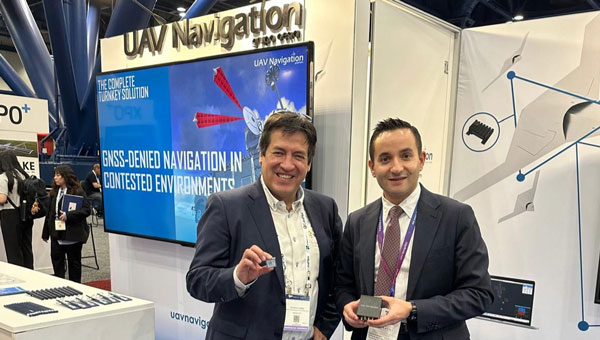
    UAV Navigation-Grupo Oesía has collaborated with Septentrio, a division of Hexagon, to enhance navigation resilience for unmanned aircraft systems. The partnership focuses on ensuring compatibility between UAV Navigation’s guidance, navigation and control systems and Septentrio’s GNSS receivers.

    The collaboration integrates Septentrio’s high-precision real-time kinematic (RTK) capabilities with AIM+ anti-jamming and anti-spoofing technology. The anti-spoofing protection utilizes the Galileo Open Service Navigation Message Authentication (OSNMA) service alongside Septentrio’s proprietary algorithms to defend against signal interference and manipulation.

    UAV Navigation’s flight control system now automatically detects when a Septentrio OSNMA-enabled receiver is connected and prioritizes its data within the navigation logic. This integration demonstrates the interoperability capabilities of the Spanish company’s systems while providing enhanced protection against GNSS jamming and spoofing threats.

    Both companies seek to advance secure, reliable and high-precision navigation solutions for unmanned systems operating in challenging electromagnetic environments. The integration aims to maintain navigation accuracy and mission effectiveness when traditional GNSS signals face interference or manipulation.

  • Silicon Sensing, Psionic partner to advance GNSS-denied navigation

    Silicon Sensing, Psionic partner to advance GNSS-denied navigation

    Silicon Sensing gyro to support GNSS-denied navigation from Psionic SurePath system

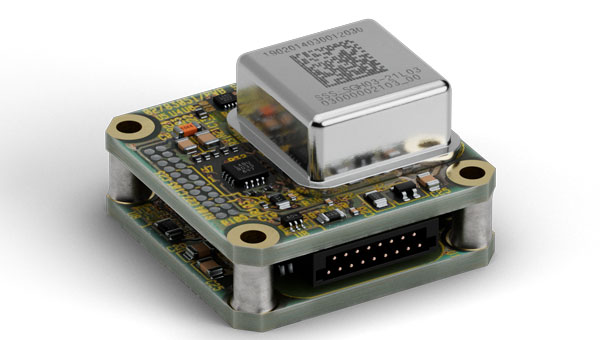
    Silicon Sensing Systems has been contracted by Psionic Inc. to supply the CRH03 tactical-grade gyroscope to equip its SurePath navigation system.

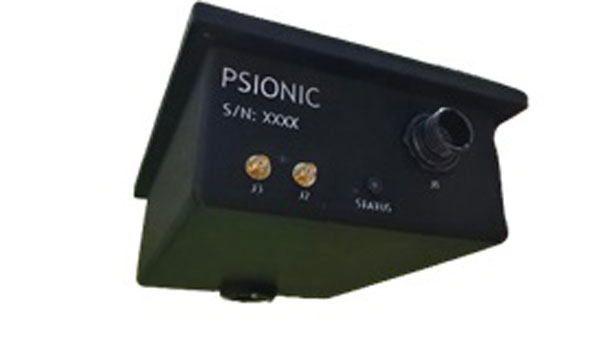
    SurePath is a completely self-contained navigation solution developed to solve the growing issue, across many platform types, of effective navigation over extended periods in GNSS-denied or contested environments. SurePath’s navigational capability is based on proprietary doppler laser technology, developed initially by NASA, to support autonomous lunar navigation and landing. Able to capture real-time 3D velocity to precisely determine location, SurePath’s unique, mission-critical operational capabilities render it RF invisible and undetectable – it cannot be jammed, spoofed, or defeated.

    Photo:
    The Surepath navigation solution

    The Silicon Sensing CRH03 gyro will serve as an ultra-precise heading sensor, providing constant azimuth data to the SurePath solution filter and bringing critical improvements to heading calculations over time. 

    “Precise azimuth control and sensor data are crucial for accurate navigation and overall system functionality in GNSS-denied and contested situations,” said Sean McCormack, senior vice president at Psionic. “SurePath will integrate the data from the CRH03 into our proprietary filtering techniques to deliver enhanced capability to our end user.”

    The CRH03 is a tactical-grade, stand-alone, micro electro-mechanical system (MEMS) gyroscope that delivers exceptional bias instability, angle random walk and low noise performance. Available in five rate ranges:  ±10°/s, ±25°/s, ±100°/s, ±200°/s, ±400°/s, this all-silicon unit has comparable bias characteristic to far larger and less rugged fibre-optic (FOG) and dynamically-tuned gyroscopes (DTG).

  • U-blox to be bought by Advent International

    U-blox to be bought by Advent International

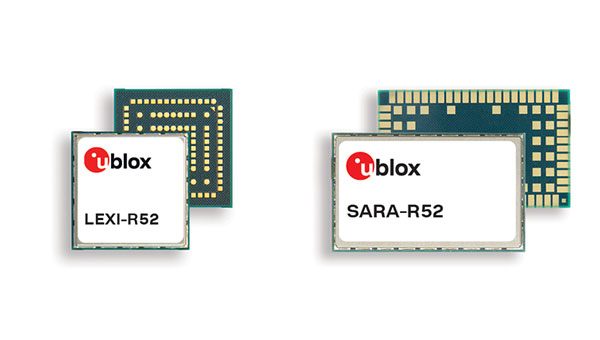
    U-blox has entered into a binding transaction agreement with ZI Zenith, a subsidiary of Advent International, for $1.3 billion. Under the agreement, ZI Zenith will launch a public tender offer to acquire all publicly held registered shares of u-blox at a price of CHF 135.00 per share in cash.

    Founded in 1997 as a spin-off from the Swiss Federal Institute of Technology in Zurich, u-blox is best known for its affordable and accessible modules that combine microcontrollers, wireless connectivity, and multi-constellation GNSS receivers. Its communications products have also ensured it a slice of the Internet of Things (IoT) market — the company recorded a net profit of SFr101.8 million (around $126 million) in 2021.

    “U-blox is a recognized leader in high-performance positioning and short-range communication technology solutions. We are excited about the opportunity to partner with the u-blox management team and co-founders, and support this innovative technology champion through its next chapter of growth,” said Ronald Ayles, managing partner at Advent. “We are deeply committed to invest in the long-term success of u-blox, using our extensive experience and resources in automotive and industrial end-markets to accelerate innovation and expand its global reach. Advent has a long and successful track record of partnering with founders and management teams to deliver sustainable value creation.”

    The offer represents a 53% premium to the undisturbed volume-weighted average share price of the last 6 months until August 14, 2025, and a 32% premium to the undisturbed volume-weighted average share price of the last 60 trading days of u-blox shares until August 14, 2025, before the media first reported on a potential transaction.

    U-blox’s board of directors has unanimously concluded that the transaction is in the best interests of the company, its shareholders and other stakeholders. It therefore recommends that shareholders accept the offer and has committed, along with the management team, to tender all their shares.

    The board’s recommendation is supported by an independent fairness opinion stating that the offer price is fair from a financial point of view. In addition, u-blox’s largest individual shareholder, SEO Master Fund LP, holding approximately 9% of the outstanding shares, has committed to tender all of its shares.

    The tender offer is subject to terms and conditions as well as regulatory approvals customary for this type of transaction and is expected to be settled within the next six months. The intention is to then delist u-blox shares from the SIX Swiss Exchange.

    The pre-announcement of the offer, which has been published today, is available at www.takeover.ch and www.zenith-offer.com and includes the material terms and conditions of the public tender offer.
  • Airwayz powers real-time drone tracking for safe, efficient BVLOS deliveries

    Airwayz powers real-time drone tracking for safe, efficient BVLOS deliveries

    The Federal Aviation Administration’s new Beyond Visual Line of Sight (BVLOS) framework, incorporating Part 108 and Part 146, establishes a regulatory pathway for safe and scalable drone operations. This framework is expected to accelerate the integration of both drone deliveries and air taxis into everyday transportation networks. What was once a conceptual vision has now become an actionable roadmap, supported by technology that enables safe and collaborative use of lower airspace.

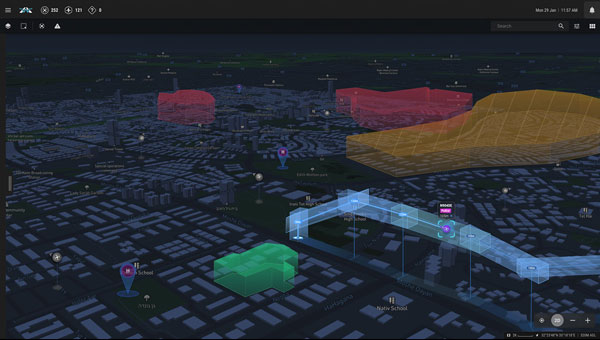
    Airwayz offers an artificial intelligence–driven unmanned traffic management (UTM) and U-Space Service Provider (USSP) system designed to coordinate multiple drone operators sharing the same airspace. Unlike static management systems, Airwayz’ platform provides fully dynamic airspace allocation and routing, allowing multiple fleets to operate simultaneously without interference. The system is capable of validating and approving flights, as well as suggesting updated routes, within approximately five seconds. This enables continuous, real-time decision-making in response to changing conditions.

    Autonomous Decision-Making and Human Oversight

    The Airwayz UTM constantly monitors the airspace for both manned and unmanned aircraft, dynamically adjusting flights to reduce the risk of collision. Using autonomous rerouting capabilities, the system can alter a drone’s course mid-flight if safety conditions change. Although much of the operation can occur without manual intervention, human operators retain the authority to override automated decisions, ensuring an added layer of accountability. This approach shortens approval times, avoids dedicating airspace to only one operator, and streamlines operations for complex missions.

    Central to the Airwayz UTM/USSP is a focus on safety. The system evaluates environmental and operational risks by monitoring nearby aerial activity, weather patterns, and other critical factors. When potential hazards are detected, it recommends the most effective course of action to avoid incidents. These recommendations can involve route changes while the drone is already in flight, ensuring that missions can be completed without compromising safety.

    By enabling fully dynamic and responsive airspace management, Airwayz UTM allows drones to travel between any two points at any time, provided flights are reported to and coordinated through the system. Continuous monitoring during both pre-flight and in-flight phases ensures that adjustments can be made immediately when risks emerge. This flexibility increases the commercial capacity of the airspace, while maintaining safety as the primary priority.

    Temporary U-Space for Specific Operations

    For short-term events or limited-duration needs, Airwayz employs a “temporary U-Space” approach. These temporary zones can be quickly established to manage high-priority or ad-hoc operations and are dismantled once no longer necessary. AI algorithms analyze and predict flight paths, assess the reliability of those predictions, and adjust the boundaries of the temporary U-Space according to risk levels. In low-risk scenarios, boundaries can be minimized to allow more concurrent aircraft, while higher-risk situations trigger expanded safety zones.

  • Septentrio teams up with Gateworks, broadening its mosaic ecosystem

    Septentrio teams up with Gateworks, broadening its mosaic ecosystem

    Septentrio is collaborating with Gateworks Corporation, a US-based manufacturer of high-quality single board computers. Gateworks is now bringing its first Septentrio-based product to market, a new M.2 card called GW16160, which provides reliable high-accuracy positioning powered by the mosaic-X5 GNSS module.

    The mosaic-X5 module is a multi-frequency, multi-constellation receiver renowned for its high level of resilience to GNSS jamming and spoofing, thanks to the built-in AIM+ (Advanced Interference Mitigation) technology. It also features a suite of GNSS+ algorithms that ensure robust positioning of rugged systems operating in challenging industrial environments.

    The GW16160 card with mosaic-X5 is a high-quality positioning solution for autonomous robots, UAVs and industrial mission-critical applications.

    Designed and manufactured in the USA, the GW16160 allows engineers to integrate high-accuracy GNSS into edge systems without bulky external receivers or complex RF design. This ultra-low power card features an M.2 A/E-Key interface with USB 2.0 connectivity for plug-and-play integration. 

  • MySky ECO and Airwayz to develop long-range UAV system

    MySky ECO and Airwayz to develop long-range UAV system

    Collaboration includes support from Space Florida and Israel Innovation Authority

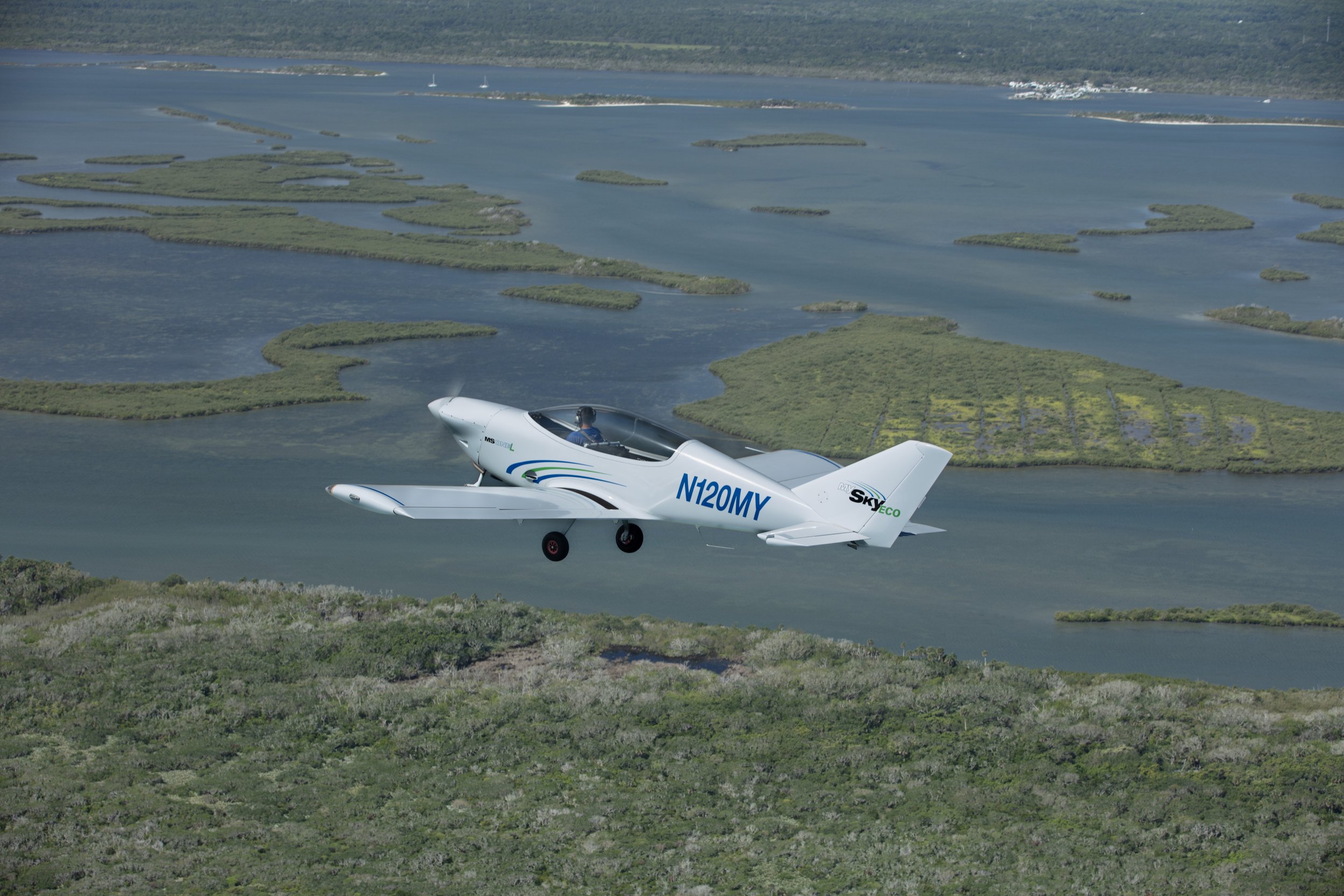
    MySky ECO, a U.S.-based leader in efficient aviation, and Airwayz, a global leader in Unmanned Traffic Management (UTM) technology, have launched a joint venture to develop a next-generation long-range UAV system.

    The project was selected for funding by the Space FloridaIsrael Innovation Partnership Program and is designed to demonstrate a fully autonomous drone platform capable of Beyond Visual Line of Sight (BVLOS) operations in regulated and complex airspaces across the United States.

    The companies share a common mission to prove that unmanned aircraft can operate safely and efficiently alongside traditional aviation in real-world, high-traffic environments.

    The system will integrate MySky’s MS-1D UAV platform, derived from its eco-efficient light aircraft technology, with Airwayz’ AI-based UTM software. The Airwayz platform enables real-time coordination of multiple drone fleets, dynamic airspace management, and safe coexistence with manned aircraft, enabled with strategic and tactical deconfliction capabilities.

    Development is already underway, with flight testing targeted at the end of the year. The system will be evaluated across multiple high-impact use cases — including medical and organ transport, emergency and package delivery, search and rescue, and border reconnaissance — requiring a long-range, high-speed drone capable of operating from short or unimproved runway environments.