Category: Uncategorized

  • NASA completes third phase of UAS airspace testing

    NASA completes third phase of UAS airspace testing

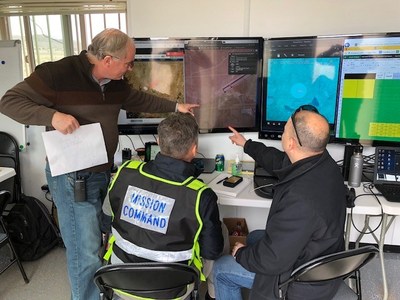
    The Nevada Institute for Autonomous Systems (NIAS) and its NASA Unmanned Traffic Management (UTM) partners flew multiple unmanned aerial systems over a week-long testing period at the Nevada UAS Test Site at the Reno-Stead Airport.

    NASA UTM Testing. Credit: NIAS. (PRNewsfoto/Nevada Institute for Autonomous)

    This third phase of NASA’s UAS testing (TCL 3) again focused on airspace management technologies that will enable the safe integration of UAS into the national airspace.

    NASA provided a Flight Information Management System (FIMS) research platform that will serve as a future prototype system for the U.S. Federal Aviation Administration (FAA) to use to coordinate with unmanned service suppliers operating throughout the nation.

    Research areas of emphasis during the testing included UAS ground-control interfacing to locally manage operations, communication, navigation, surveillance, human factors, data exchange, network solutions and beyond-visual-line-of-sight (BVLOS) architecture.

    On media day, a team from the Reno Fire Department simulated an incident with a victim experiencing severe blood loss and who needed an immediate transfusion. A multi-rotor UAS from Drone America was equipped with a container that held an actual packet of blood to be transported via drone in Nevada.

    High winds and frigid temperatures tested both the drone and those on the ground, but the drone successfully landed in the designated landing area so that firefighters could retrieve the blood packet and begin the faux-transfusion.

    The partners not only demonstrated drone flight capability, but also tested UAS traffic mapping and sensor and radar technology, all of which were connected through a NASA UAS Service Supplier (USS) network to NASA Ames.

    Technology Capability Levels

    NASA’s near-term goal is the development and demonstration of a possible future UTM system that could safely enable low-altitude airspace and UAS operations. Working alongside many committed government, industry and academic partners, NASA is leading the research, development and testing that is taking place in a series of activities called “Technology Capability Levels (TCL)”, each increasing in complexity.

    UTM TCL1 concluded field testing in August 2015 and is undergoing additional testing at an FAA site. Technologies in this activity addressed operations for agriculture, firefighting and infrastructure monitoring, with a focus on geofencing, altitude “rules of the road” and scheduling of vehicle trajectories.

    UTM TCL2, completed in October 2016, leveraged TCL1 results and focused on beyond visual line-of-sight operations in sparsely populated areas. Researchers tested technologies that allowed dynamic adjustments to availability of airspace and contingency management.

    UTM TCL3, just completed, leveraged TCL2 results and focused on testing technologies that maintain safe spacing between cooperative (responsive) and non-cooperative (non-responsive) UAS over moderately populated areas.

    UTM TCL4, with dates to be determined, will leverage TCL3 results and focus on UAS operations in higher density urban areas for tasks such as news gathering and package delivery. It will also test technologies that could be used to manage large-scale contingencies.

    NASA’s UTM technologies research and development is taking place in collaboration with the FAA. Results of research in the form of airspace integration requirements are expected to be transferred from NASA to the FAA in 2019 for the FAA’s further testing.

    “Advanced flight and highly technical scenarios like drone detection, surveillance of critical infrastructure aerial package delivery of critical first responder medical supplies, to the important NASA data interoperability protocols that will eventually form the backbone of the UTM system, we focused heavily on communications, navigation and surveillance to produce critical data for the NASA TCL 3 Campaign,” said Chris Walach, the senior director of NIAS and the FAA-designated Nevada UAS Test Site. “Our Nevada teammates did an amazing job working together to successfully complete the first series of major testing for NASA’s TCL 3 Campaign.”

  • Intergeo 2018 to focus on geoinformation, digitalization

    Intergeo 2018 to focus on geoinformation, digitalization

    The theme for this year’s Intergeo, taking place Oct. 16-18 in Frankfurt, Germany, is “Geoinformation — The DNA of digitalization.”

    According to event organizers, this year’s event will focus on the digital transformation of business and society. The event, hosted by the German Society for Geodesy, Geoinformation and Land Management (DVW), will contextualize key developments and scenarios for a geoinformation-based digital future.

    “Over the course of three days, the spotlight will be placed on the products, solutions, know-how, innovations and visions behind geoinformation in the era of digitalization,” said Professor Hansjörg Kutterer, president of DVW. “And we confidently label geoinformation the DNA of digitalization. After all, in the same way as humans are shaped by their genes, geoinformation is steering the digital revolution.”

    Intergeo 2018 will feature 130 speakers, with each day of the show beginning with keynote speeches. Among the keynote speakers are Kutterer; Professor Jürgen Döldner from the Hasso Plattner Institute in Potsdam, Germany; and Ron Bisio from Trimble.

    In addition, more than 600 companies will be exhibiting at the show.

  • Bentley Systems to celebrate Year in Infrastructure in October

    Bentley Systems’ Year in Infrastructure 2018 Conference will be held Oct. 15-18 in London at the Hilton London Metropole.

    Bentley Systems is a global provider of comprehensive software solutions for advancing infrastructure.

    Presented by Bentley Institute, the conference is a global gathering of leading industry executives and prominent thought leaders in the design, construction and operations of the world’s infrastructure. The theme of this year’s conference is “Going Digital: Advancements in Infrastructure.”

    The conference features nearly 70 speakers and more than 50 informative sessions, including keynotes by leading industry experts, interactive workshops, forums, panel discussions and product demonstrations. Attendees can visit the Technology Pavilion, which features exhibits and presentations from Bentley Systems and its strategic partners Microsoft, Siemens, Topcon and Bureau Veritas.

    On the first day of the conference, Bentley Institute will host Digital Advancement Academies, featuring presentations and interactive discussions with subject matter experts who provide insights and best practices in their areas of expertise including reality modeling, BIM strategy and constructioneering.

    The conference also includes the selection and announcement of the winners of Bentley’s Year in Infrastructure 2018 Awards (formerly known as the Be Inspired Awards), which honors the extraordinary infrastructure projects by users of Bentley software throughout the world.

    During six industry-focused forums featured during the conference — Buildings and Campuses, Digital Cities, Industrial Infrastructure, Rail and Transit, Roads and Bridges, and Utilities and Water — more than 55 awards finalists will present their projects to independent panels of jurors, more than 100 members of the press, and conference attendees.

    From those presentations, winners are selected by the jurors, and will be announced at the conclusion of the conference on Oct. 18 during an evening ceremony and gala.

    Aret Garip, technical director for WSP, attended Bentley’s conference last year in Singapore to represent WSP’s One Blackfriars project in London, which was chosen as an awards finalist.

    “The conference has been truly inspiring and educational,” Garip said. “It’s a great event to learn about the latest tech in engineering design software and an opportunity to meet the creative, intelligent people who develop new tools to make it easier for us to design buildings.”

    In October 2019, the Year in Infrastructure Conference will return to the Marina Bay Sands Expo and Convention Centre in Singapore.

  • Aspen and Sensurion team on commercial UAV avionics

    Aspen Avionics and Sensurion Aerospace have entered a co-development partnership to bring certified avionics to the burgeoning UAS and unmanned air-taxi marketplace.

    The companies are focusing on U.S. Federal Aviation Administration (FAA) certified autopilots, communications, navigation and surveillance systems for small, medium and large UAS, including future cargo and passenger carrying aircraft.

    With revenue estimates for commercial drone operations exceeding $100B in the next 10 years, and the demand for UAS with certified avionics filling a large gap between hobby drones and military platforms, this partnership will create jobs and fill the void in commercial UAS avionics.

    The current UAS operational environment needs to evolve to meet, what experts believe, is the next great global innovation — unmanned air-taxi and personal vehicles.

    Initial product development from the team will include an autopilot/flight controller, FAA Technical Standard Order (TSO) authorized GPS/GNSS and surveillance systems, including ADS-B.

    “The real winners in this partnership are the UAS users, system integrators and manufacturers,” said Aspen President and CEO John Uczekaj, a 30-year veteran of the certified avionics industry. “Our consumers demand adaptability and a certifiable pedigree that can help get them to market quickly, operate with an extreme level of safety and include innovative architectures that combine certified avionics with today’s flying drone service/IoT data platforms, and near future cargo movers and people haulers.”

    “Our UAS customer’s return on investment calculations turn profitable most quickly when they can operate beyond visual line of sight,” said Sensurion CEO Captain Joe Burns. “What they are asking for are proven systems that do not cost a fortune, meet governing authority standards, are able to evolve with the pace of global digitization, and most importantly offer a safer integration path into our airspace. Our roadmap is clear. We are combining the talents, agility and pedigree from two industry leaders, to bring UAS consumers what they want, with a value proposition that puts safe drone technology to work across many industries.”

  • SpaceDataHighway starts full Copernicus service

    The Airbus-operated SpaceDataHighway has begun regularly relaying data from the Sentinel-2A satellite, after the successful end of the commissioning period.

    SpaceDataHighway-WThis marks the start of the SpaceDataHighway service using all four Copernicus Sentinel satellites and the beginning of a new era for space-based imagery users.

    The first two sets of Earth-observing Copernicus Sentinels-1A and -1B and -2A and -2B are signed up to this service as SpaceDataHighway’s anchor customers under an agreement between the European Union and the European Space Agency (ESA) as owners of the Copernicus programme, and Airbus as the owner and commercial operator of SpaceDataHighway.

    Since using the SpaceDataHighway, the Sentinel-1 constellation has increased the amount of data it produces by about 50%. The service is also able to bring operational added-value to Sentinel-1 users by greatly improving the data timeliness for observations outside Europe. This is an important asset for users, especially when it comes to the routine monitoring of remote areas in the domain of maritime applications or assessment of natural disasters and first line response for emergency.

    The SpaceDataHighway is the world’s first “optical fibre in the sky” based on cutting-edge laser technology. It will be a unique system of satellites permanently fixed over a network of ground stations, with the first — EDRS-A — already in space.

    Each day, it can relay up to 40 terabytes of data acquired by observation satellites, UAVs and manned aircraft, at a rate of 1.8 gigabits per second.

    The relay satellites are designed to lock on to low-orbiting satellites via laser and collect their data as they travel thousands of kilometres below, scanning Earth. SpaceDataHighway then immediately sends the collected data down to Europe from its higher position hovering in geostationary orbit, acting as a go-between.

    This process allows the lower satellites to continuously downlink the information they are gathering, instead of having to store it until they travel over their own ground station. That way, they can send down more data, more quickly.

    The SpaceDataHighway is a public-private partnership between ESA and Airbus, with the laser terminals developed by Tesat-Spacecom and the DLR German Space Administration. EDRS-A, the first SpaceDataHighway relay satellite launched in January 2016, offers coverage from the American East Coast to India. A second satellite will be launched in 2018.

    It will double the system’s capacity and extend the coverage and redundancy of the system. Airbus is willing to expand the SpaceDataHighway with a third node, EDRS-D, to be positioned over the Asia-Pacific region.

  • Research Online: Navigation augmentation based on LEO communication satellite constellations

    Presented at ION International Technical Meeting 2018

    The main objective of this work is to investigation the feasibility and performances of LEO communication satellite constellations as potential navigation augmentation platforms. The further examination of the existing and upcoming LEO communication satellite constellations has been conducted, such as Iridium, Globalstar, Teledesic, One Web, Boeing, SpaceX, Samsung, etc. The comprehensive performances of LEOs for navigation augmentation are evaluated and analyzed in terms of constellation characteristics, footprint, coverage, signal strength, dilution of precision (DOP, including GDOP, PDOP, VDOP, HDOP), and number of in-view satellites, with comparison of these to the current GPS, Galileo and BeiDou systems. The results showed that LEOs present superior performances compared with GNSS systems, and demonstrate promises as navigation augmentation platforms for challenging environments.

    Moreover, the real-time signal-aided navigation method is explored, from user geometry and signal ranging errors to position errors. Then, we proposed a navigation system based on signals of opportunity from LEO platform. The proposed system relay on a terrestrial benchmark network consists of several monitoring stations with time synchronization. It would acquire the downlink communication signal from LEO platforms, and then estimate the time difference of arrival (TDOA) between stations with a correlation-based blind detection algorithm. The TDOA estimations and geographical position information are utilized to develop the time-delay-based spatio-temporal distribution model, which can determine the user’s position by matching the model with its estimated TDOA values. The proposed navigation system can operate stand-alone and facilitates the integration of communication and navigation system.

  • 2018 Simulator Buyers Guide

    2018 Simulator Buyers Guide

    GPS World’s 7th annual Simulator Buyers Guide features tools, devices and software from leading providers.


    CAST NAVIGATION IFEN GMBH JACKSON LABS TECHNOLOGY INC.
    RACELOGIC SKYDEL SPIRENT FEDERAL SYSTEMS
    SYNTONY GNSS TALEN-X OROLIA/SPECTRACOM

    CAST NAVIGATION

    CAST-5000 GPS wavefront generator
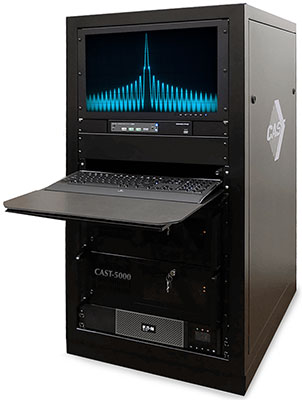
    The CAST-5000 produces a single coherent wavefront of GPS RF signals to provide repeatable testing in the laboratory environment or anechoic chamber. The basic system generates four independent, coherent simulations that reference a single point and is upgradeable to support seven elements for CRPA testing. With an intercard carrier- phase error of less than 1 millimeter, the CAST-5000 is extremely accurate.

    The system generates a wavefront of GPS when its GPS RF generator cards are operated in a ganged configuration. Each generator card provides a set of GPS satellites coherent with the overall configuration. Several RF generator cards may be utilized together, ensuring phase coherence among the bank of signal generator cards.

    The CAST-5000 Controlled Reception Pattern Antenna (CRPA) tester allows a full end-to-end test of the antenna system. The CRPA antenna, antenna electronics and the GPS receiver can be tested as a unit with or without radiating signals.

    Features

    • Generates single coherent wavefront of GPS
    • 6-DOF motion generation capability
    • Complete SV constellation editing
    • Post-mission processing via ICD-GPS-150/153
    • Differential/relative navigation
    • Antenna pattern modeling
    • Waypoint navigation
    • RAIM events
    • Multipath modeling
    • Spoofer simulation
    • Satellite clock errors
    • External trajectory input
    • External ephemeris and almanac
    • Several iono and tropo models
    • Modifiable navigation message
    • Modeled selective availability
    • Time-tagged satellite events
    • Selectable host vehicle parameters

    www.castnav.com
    Phone: 978 858-0130
    Email: [email protected]


    IFEN GMBH

    NCS Titan and NavX-NCS Essential Simulators

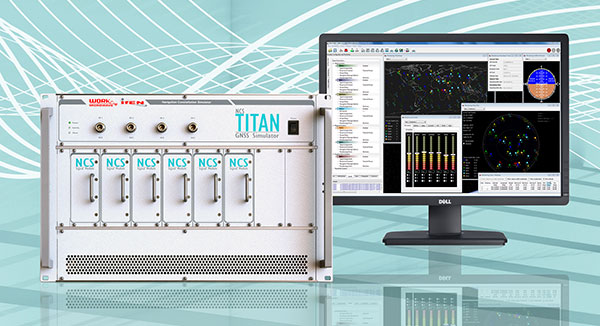
    NCS TITAN GNSS Simulator
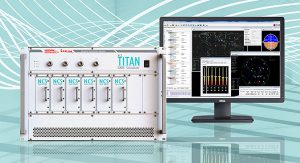
    The NCS TITAN GNSS simulator is a leading-edge satellite navigation testing and R&D solution. It is fully capable of multi-constellation and multi-frequency simulation for a wide range of GNSS applications. The NCS TITAN GNSS simulator consists of the TITAN RF signal generation unit and NCS Control Center navigation simulation software (on MS Windows and Linux OS).

    The NCS TITAN is flexible and offers exceptional performance. With up to 256 channels and up to 4 RF outputs per chassis, the extra complexity and cost of using additional signal generators or intricate architectures involving several hardware boxes is minimized. For customers with advanced simulation needs, several TITAN units can be combined (CRPA testing with 8, 12 or 16 RF outputs at several frequencies simultaneously).

    The NCS TITAN GNSS simulator provides all current and future signals for GPS, GLONASS, Galileo, BeiDou, NavIC/IRNSS, QZSS, SBAS L1 and L5 in one box. All signals are available using a flexible licensing scheme.

    NavX-NCS Essential Simulator

    The NavX-NCS Essential is an easy-to-use multi-constellation GNSS simulator focused on R&D, system integration and production testing for single-frequency applications such as consumer, automotive and location-based services (LBS) applications.
    The NavX-NCS Essential provides unique capabilities, including emulating various vehicle motion sensors for today’s multi-sensor vehicle navigation systems. It offers integration with Google Earth (for accurate trajectory visualization), superior high-dynamic range (for indoor and urban canyon simulation) and Assisted-GPS (A-GNSS) performance test case support.

    www.ifen.com
    Email: [email protected]
    Phone: +49 8121 223820


    JACKSON LABS TECHNOLOGY INC.

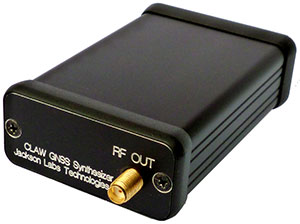
    CLAW 18-channel real-time GPS simulator for manufacturing testing, laboratory and desktop simulation applications
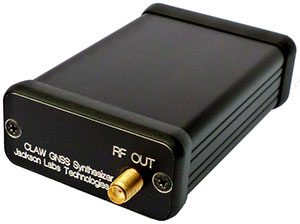
    The CLAW simulator operates as a fully stand-alone simulator with multipath simulation capability, external real-time NMEA to GPS-RF transcoding capability, sub 5-ns UTC time-encoding accuracy. It can work either from internally stored motion files, a fixed-position, externally applied NMEA stimulus input, or controlled via a Jackson Labs Windows application. The CLAW allows comprehensive scenarios to be set up inACKcluding uploading of custom almanac and ephemerides via RINEX import, and full control of simulation time and date making it easy to simulate GPS events such as leap seconds and week 1023 rollover events. The highly accurate simulator can be used as an embedded module to transcode modern GNSS or inertial navigation system (INS) position, navigation and timing signals including SAASM and M-code into legacy GPS RF signals. This capability allows retrofitting any existing legacy GPS receiver to the latest Assured-PNT capability. It can also be used as a GPS firewall to automatically detect and mitigate spoofing and jamming events.

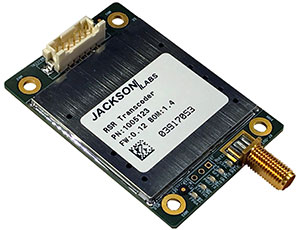
    RSR transcoder GPS simulator for retrofitting existing legacy GPS equipment to any GNSS, INS and atomic holdover capability
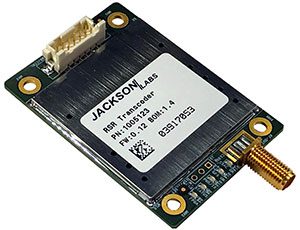
    The size of a postage stamp, the RSR Transcoder is based on the Jackson Labs CLAW simulator technology and is designed to be integrated into systems requiring retrofit of existing GPS legacy equipment with INS and atomic clock holdover capability, as well as the latest GNSS capability such as Galileo, GLONASS, BeiDou, SAASM, M-code and CSAC technology. Because the RSR Transcoder is fully self-contained, it also can work as a generic stand-alone GPS simulator for manufacturing environments or laboratory use. It is compatible with various external MIL-STD GPS receivers for glueless integration into existing vehicles by replacing the existing GPS antenna with the RSR Transcoder connected to an external GNSS receiver and optional high-performance INS. The RSR Transcoders ability to convert latest-generation GNSS receiver NMEA information into legacy GPS RF signals can also be used to upgrade low-performance legacy GPS receivers with modern –167 dBm and SBAS tracking capability for indoor reception and increased PNT accuracy in challenged environments.

    Said Jackson, (702) 233-1334
    www.jackson-labs.com


    RACELOGIC

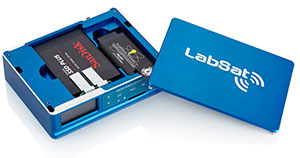
    LabSat 3 Wideband
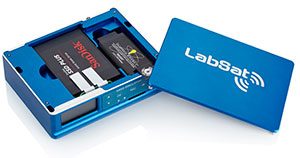
    LabSat is a cost-effective and intuitive GNSS simulator.

    New to the LabSat range of GNSS record and replay devices is LabSat 3 Wideband, which continues with the established reliability, cost-effectiveness, and simplicity of operation that are the benchmarks of the LabSat system.

    A recording bandwidth of 56 MHz allows for the capture of a very wide range of live-sky satellite signals:

    • GPS: L1 / L2 / L5
    • GLONASS: L1 / L2 / L3
    • BeiDou: B1 / B2 / B3
    • QZSS: L1 / L2 / L5
    • Galileo: E1 / E1a / E5a / E5b / E6
    • IRNSS: L5
    • SBAS: WAAS / EGNOS / GAGAN / MSAS / SDCMx

    Depending on the desired bandwidth, recording resolution can be set to 2, 4, or 6 bit. Check out the GNSS frequency guide on the LabSat website — labsat.co.uk — to see exactly which signals can be recorded and at which resolution.

    Even with this greatly increased capacity over the original LabSat 3, the new simulator remains extremely easy to use: one-touch recording, no connection to PC required, battery powered for up to two hours, and with a removable 1-TB solid-state hard drive that can be replaced in no time, the LabSat 3 Wideband is convenient to use. It measures a compact 167 x 128 x 46 millimeters and weighs 1.2 kilograms.

    The LabSat 3 Wideband can now be controlled via a web browser. Easily accessed via the Ethernet connection, the HTML interface graphically displays bandwidth, center frequency and signal capture.

    An online demonstration of this is also available on the LabSat website.

    www.labsat.co.uk
    Phone: +44 (0)1280 823803


    SKYDEL

    SDX: Software-Defined GNSS Simulator
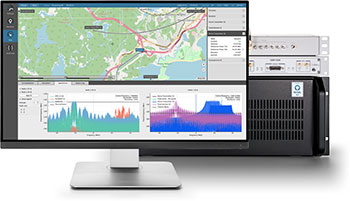
    SDX uses GPU-accelerated computing and software-defined radios (SDR) to create an advanced and fully-featured GNSS simulator. SDX is available as a complete turnkey system or software only, from simple test benches to 32 RF outputs test systems. The software-defined approach offers many benefits:

    • COTS hardware offers economies of scale and eliminates dependency upon dedicated hardware platforms
    • Generic hardware enables users to repurpose their equipment for different projects.
    • Uncompromised performance with high dynamics and accuracy
    • Record user interactions and export them as scripts to automate complex use cases intuitively. The export feature reduces the learning curve for advanced concepts
    • Advanced signal customization (signal signature, private encryption, etc.)

    SDX key features

    SDX is ideal for design and validation of GNSS receivers, complex integration, academic research, NAVWAR and test engineering. Applications include radiated emissions testing in anechoic chambers, CRPA testing, receiver testing under interference (jamming and spoofing), aerospace and automotive scenarios, RTK and more. Skydel engineering and research teams offer direct support to clients to ensure prompt deployment and integration, or to review advanced customization requirements.

    • Multi-constellation (GPS, GLONASS, Galileo, BeiDou, SBAS), multi-frequency (upper and lower L-band) support
    • Selectable RF, IF frequency and IQ File Data
    • Encrypted GPS codes
    • Fully-integrated jammers (static or moving) with more than 120-dB jamming-to-signal ratio
    • Multipath
    • Additive pseudorange ramps
    • Message modification and corruption
    • 1000-Hz update rate and high dynamics
    • Space (LEO-GEO), air and ground vehicle with 6DoF trajectories
    • Hardware-in-the-loop (HIL) integration
    • Raw data logging
    • Real-time receiver deviation analysis
    • Powerful and simple API
    • On-the-fly reconfiguration
    • Multiple simulator synchronization


    SPIRENT FEDERAL SYSTEMS

    GSS9000, CRPA Test System, GSS6450, GSS200D
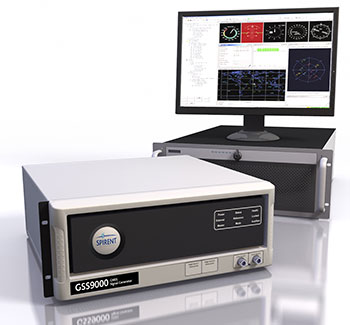
    Spirent Federal provides test equipment that covers all applications, including research and development, integration/verification and production testing.

    GSS9000

    The Spirent GSS9000 Multi-Frequency, Multi-GNSS RF Constellation Simulator can simulate signals from all GNSS
and regional navigation systems. The GSS9000 offers a four-fold increase
in RF signal iteration rate (SIR) over Spirent’s GSS8000 simulator. The GSS9000 SIR is 1000 Hz (1 ms), enabling higher dynamic simulations with more accuracy and fidelity. It includes support for restricted and classified signals as well as advanced capabilities for ultra-high dynamics. Users can evaluate the resilience of navigation systems to interference and spoofing attacks, and have the flexibility to reconfigure constellations, channels and frequencies between test runs or test cases.

    CRPA test system

    Spirent’s Controlled Reception Pattern Antenna (CRPA) Test System generates both GNSS and interference signals. Users can control multiple antenna elements. Null-steering and space/time adaptive CRPA testing are both supported by this comprehensive approach.

    GSS6450

    The GSS6450 RF Record Playback System (RPS) takes RF recording and playback systems to a new level of performance and flexibility, while being housed in a small (8.5 x 7.8 x 3 inch) portable case. The GSS6450 can record any GNSS signals currently available with bit depths up to 16 bits (I&Q) and bandwidths of up to 50 MHz. The flexible product structure allows the system complexity to grow with the user’s testing needs.

    GSS200D

    The GSS200D is an end-to-end solution that builds up a complete picture of interference activity at the site of interest. It continuously monitors the GNSS frequency bands for interference, and then captures them for analysis. The GSS200D supports multi-frequency applications.

    Jeff Martin, [email protected]
    Kalani Needham, [email protected]
    Tyson Gurney, [email protected]

    Spirent Federal Systems
    1402 W. State Rd.
    Pleasant Grove, UT 84062

    www.spirentfederal.com
    [email protected]
    phone: 801-785-1448
    fax: 801-785-1294


    SYNTONY GNSS

    CONSTELLATOR, ECHO
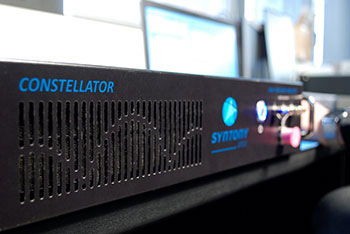
    Constellator is a high-end GNSS simulator capable of supporting all constellation signals available today and tomorrow and providing a high level of service: standalone mode (on ground and in space), hardware-in-the-loop mode with very small latency and high internal frequency update (1 kHz), multi-frequency, up to 200 channels, all typical synchronization interfaces, and the ability to generate any additional signal for realistic simulation (jamming, spoofing, multipath, etc.).

    The Constellator product is available in different ranges, from an entry-level unit supporting L1C/A up to a six-signal-frequencies/200 channels rack, supporting the most demanding configurations.

    Constellator is used extensively in the aeronautic, space and defense industries, where the requirements are highly demanding. Constellator has been carefully evaluated and selected by major industrial companies and agencies worldwide, and is used to test aircraft receivers, spacecraft, launchers and similar systems for defense and armies. Particularly in the space domain, Constellator implements the most accurate models (earth gravity, drag, etc.) needed to achieve “meter-precision” in standalone mode around a complete orbit.

    Constellator is based on modern, powerful software-defined radio (SDR) systems, which make it capable of extreme adaptability and upgradeability after purchase, even without any hardware upgrade. Though a high-end simulator, it is cost-effective because of its software-based architecture; instead of requiring one RF stage per signal, it requires just one per frequency band used.

    The Echo Record and Playback unit allows users to record real-life signals and environments and replay them in the laboratory, which is always more realistic than any simulation.

    Echo is typically used to replay predefined complex and very long realistic scenarios, avoiding the need to use costly satellite simulators for long-run tests or for production tests.

    Echo offers three RF channels of 100-Mhz bandwidth each, 16 bits I, 16 bits Q, and more than 10 hours of record and replay duration. As such, it is high-end record/replay equipment, offering high-end replay fidelity.

    www.syntony-gnss.com
    Email: François Goudenove, chief sales officer, [email protected] (ask François for the contacts of distributors in the U.S., Europe, India, China, South Korea, Japan.)
    Phone: +33.5.81.319.919


    TALEN-X

    BroadSim and PANACEA
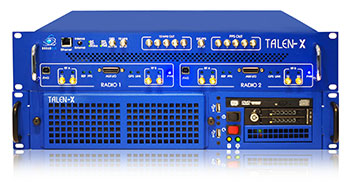
    BroadSimSoftware-defined GNSS simulator

    • Intuitive control using Skydel’s SDX software interface
    • Model true and spoofed signals
    • Generate high-fidelity jamming and interference signals
    • Utilize 4 RF outputs with multiple simultaneous constellations
    • Generate and simulate multiple signal types
    • GPS: L1 (C, C/A, P, Y, AES-M), L2 (C, P, Y, AES-M), L5
    • GLONASS: G1, G2
    • Galileo: E1, E5a/b
    • BeiDou: B1, B2
    • SBAS

    PANACEA

    Autonomous PNT performance and vulnerability test suite

    • Simultaneously control, collect and analyze data from up to 32 units under test (UUT) in real time
    • Compatible with 100+ different receiver brands
    • Manages receiver communication, standardizes output for easy post-test analysis
    • Time synchronization to live-sky
    • Simulate dynamic scenarios with parameters such as jamming patterns, motions, power loss, delays and more

    www.talen-x.com
    Email: [email protected]

    OROLIA/SPECTRACOM

    All constellations, all frequencies
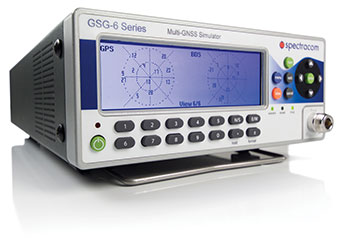
    For users responsible for mission-critical positioning, navigation and timing (PNT) applications, the Spectracom GSG series of GPS/GNSS simulators is an essential tool to evaluate risk of jamming, spoofing or other threats.

    Spectracom GSG-5/6 series simulators are an easy-to-use and feature-rich way to harden GPS-based systems without the limitations of testing from “live sky” signals. The Spectracom platform approach allows users to buy only what they need today and upgrade later. The adaptability of the GNSS RF generation platform can extend to applications for intelligent repeating.

    Test solutions

    • Position accuracy and dynamic range/sensitivity
    • Simulate movements/trajectories anywhere on or above Earth
    • Sensitivity to GPS impairments: loss of satellites, multipath, atmospheric conditions, interference, jamming and spoofing
    • Conducted or over-the-air RF
    • GPS time-transfer accuracy
    • Effect of leap-second transition
    • Multi-constellation testing
    • Modernization signals/frequencies
    • Keyless military SAASM, dual-frequency and survey-grade receiver testing
    • Application packages for RTK, CRPA (controlled radiation pattern antennas)
    • Hardware-in-the-loop integration
    • Test solutions for eCall and ERA-GLONASS

    Infrastructure possibilities

    • Zone-based indoor location (intelligent repeating)
    • Pseudolite applications

    The GSG-6 Series 64-channel multi-frequency, advanced GNSS simulator is powerful enough for any cutting-edge test program. GPS, GLONASS, Galileo, Beidou, QZSS and NAVIC (IRNSS) signals are available across multiple frequencies. It is designed for military, research and professional applications.

    The GSG-5 Series 16-channel multi-constellation L1-band GNSS simulator is designed for commercial development/integration programs. For users developing commercial products with GNSS capability, the GSG-5 will shorten test programs with confidence.

    The GSG-51 single-channel signal generator is designed for one purpose — fast, simple go/no-go manufacturing test and validation, ensuring the manufacturing line is operating at full capacity with confidence in quality.

    spectracom.com
    E-mail: [email protected]
    Phone: +1-585-321-5800
  • Software-based GNSS receiver available on Cadence digital signal processor

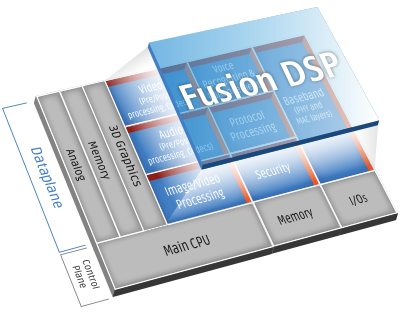
    A software-based GNSS receiver from Galileo Satellite Navigation (GSN) is now available for the Cadence Tensilica Fusion F1 digital signal processor (DSP).

    The software-based GNSS receiver allows customers to add full GPS functionality with design flexibility and long-term upgradeability at a minimal cost, low power and no physical size to today’s cost-sensitive internet of things (IoT) applications, according to Cadence Design Systems.

    To get the lowest possible power, GSN accelerated the performance of its GPS software receiver by creating several custom instructions to run on the Tensilica Fusion F1 DSP. As a result, the GPS software requires less than 110 MHz for full 12-satellite functionality.

    Additionally, with this software-based solution, customers can reduce the overall processor requirements to meet less-demanding location-based use cases such as asset tracking.

    “The Tensilica Fusion F1 DSP delivers outstanding performance for the implementation of our GNSS receivers, providing a low-power footprint required for IoT applications,” said Eli Ariel, CEO at GSN. “This enables customers to easily upgrade their Fusion F1 DSP-based designs to future satellite systems such as Beidou, GLONASS and Galileo via software. By leveraging several customized instructions in the Fusion F1 DSP, we were able to keep the required processor speed at the same frequency compared to DSPs with more than three times the processing power.”

    “GSN’s software-based approach for GNSS allows our Fusion F1 DSP customers to precisely scale their GNSS receiver requirements to meet their applications needs,” said Gerard Andrews, group director marketing, at Cadence. “The availability of GSN’s technology on this low-power DSP platform allows our customers to add location-based services at minimal cost and power.”

    The Tensilica Fusion F1 DSP offers low-energy, high-performance control and signal processing for a broad segment of IoT/wearable markets. This highly configurable architecture is specifically designed to excel at always-on processing that requires a merged controller plus DSP, ultra-low energy and a small footprint.

    The DSP is efficient in running the narrowband wireless communications standards typically associated with IoT device communications, including protocols such as Bluetooth Low Energy, Thread and Zigbee using IEEE 802.15.4, Wi-Fi 802.11n and 802.11ah and GNSS.

  • FAA expands drone airspace authorization program

    The Federal Aviation Administration (FAA) is expanding tests of an automated system that will ultimately provide near real-time processing of airspace authorization requests for unmanned aircraft (UAS) operators nationwide.

    FAA Acting Administrator Dan Elwell announced the expansion at the third annual UAS Symposium, which kicked off on March 6 in Baltimore.

    Under the FAA’s Part 107 small drone rule, operators must secure approval from the agency to operate in any airspace controlled by an air traffic facility. To facilitate those approvals, the agency deployed the prototype Low Altitude Authorization and Notification Capability (LAANC) at several air traffic facilities in November 2017 to evaluate the feasibility of a fully automated solution enabled by data sharing.

    Based on the prototype’s success, the agency will now conduct a nationwide beta test beginning April 30 that will deploy LAANC incrementally at nearly 300 air traffic facilities covering approximately 500 airports. The final deployment will begin on Sept. 13.

    Drone operators using LAANC can receive near real-time airspace authorizations. This dramatically decreases the wait experienced using the manual authorization process and allows operators to quickly plan their flights. Air traffic controllers also can see where planned drone operations will take place.

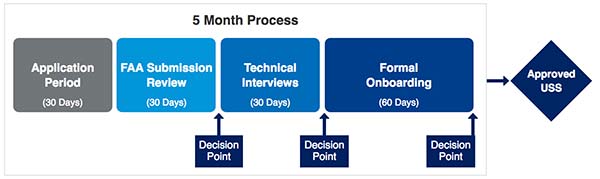
    Beginning April 16, the FAA also will consider agreements with additional entities to provide LAANC services. Currently, there are four providers — AirMap, Project Wing, Rockwell Collins and Skyward. Applications must be made by May 16.


    Interested parties can find information on the application process here. This is not a standard government acquisition; there is no Screening Information Request (SIR) or Request for Proposal (RFP) related to this effort.

    LAANC uses airspace data provided through UAS facility maps. The maps show the maximum altitude around airports where the FAA may authorize operations under Part 107. LAANC gives drone operators the ability to interact with the maps and provide automatic notification and authorization requests to the FAA. It is an important step in developing the Unmanned Aircraft Systems Traffic Management System (UTM).

  • Raytheon, NOAA win award for unmanned hurricane tracker

    Raytheon, NOAA win award for unmanned hurricane tracker

    Raytheon Company and the National Oceanic and Atmospheric Administration received Aviation Week magazine’s Laureate Award for using the Raytheon Coyote unmanned aerial vehicle (UAV) to provide near-real-time, potentially life-saving data during hurricanes.

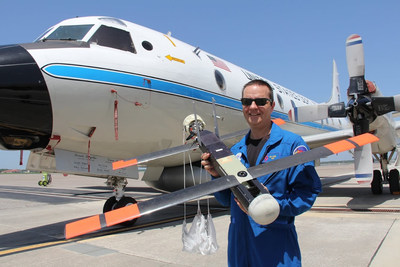
    Joseph Cione, hurricane researcher at NOAA’s Atlantic Oceanographic and Meteorological Laboratory and principal investigator of NOAA’s Coyote project, holds the UAV in front of NOAA’s P-3 aircraft at MacDill Air Force Base in Tampa, Florida. (Photo: National Oceanic and Atmospheric Administration) (PRNewsfoto/Raytheon Company)

    Developed for the military, Coyote is a small, expendable UAV that’s air- or ground-launched into environments too dangerous for manned aircraft. The system can fly for more than an hour and up to 50 miles from its host aircraft.


    Learn more about the Coyote in this February 2016 GPS World article.


    “Weather forecasters are able to better understand storm behavior and improve hurricane models based on the real-time information provided by our Coyotes,” said Thomas Bussing, Raytheon vice president of Advanced Missile Systems. “Coyote UAVs are collecting and delivering robust storm data that could ultimately save lives.”

    In 2017, NOAA researchers deployed six Coyote UAVs to track and model Hurricane Maria. Launched from a NOAA WP-3D Orion hurricane hunter aircraft, the Coyotes flew directly into the storm, giving researchers an unprecedented view of Maria.

    Traditional weather instruments are dropped from planes and capture only a snapshot of storm behavior, but Coyote’s winged design allowed it to linger and return to key areas of a hurricane to gather more data and transmit it near-real-time to researchers.

    “We think unmanned technologies that explore dangerous and difficult to observe regions of the storm may improve our physical understanding, provide enhanced situational awareness and might ultimately improve the accuracy of hurricane intensity forecasts in the future,” said Joseph Cione, a hurricane researcher at NOAA’s Atlantic Oceanographic and Meteorological Laboratory and principal investigator of NOAA’s Coyote project. “The Coyotes we deployed in Hurricane Maria collected critical, continuous observations in the lower part of the hurricane, an area impossible to reach with manned aircraft.”

    The Coyote UAV was first deployed in 2014, when NOAA launched four of the systems into Hurricane Edouard, a Category 3 storm. Scientists on board the aircraft collected meteorological data in both the eye of the storm and the surrounding eye wall.

  • Blade Runner 2049 special effects powered by Esri CityEngine get Oscar nod

    UPDATE: Denis Villeneuve’s Blade Runner 2049 took home the Oscar for Achievement in Visual Effects on March 4. Visual effects supervisors John Nelson, Paul Lambert, and Richard R. Hoover, plus special effects supervisor Gerd Nefzer, took the stage to accept the award.


    Framestore, a visual arts studio in Montréal, Québec, has received an Oscar nomination for Best Visual Effects made possible, in part, by Esri CityEngine.

    Designers at Framestore used the software to create a detailed futuristic city based on present-day Las Vegas for the movie Blade Runner 2049.

    “We were tasked in creating a futuristic Las Vegas for the year 2049. We had to fly over the main strip of Vegas on a long sequence shot,” said Didier Muanza, lead environment TD, Framestore. “CityEngine seemed to be the best choice to help us generate a modern-day model of Vegas, which was used as the base for the futuristic version.”

    Esri CityEngine is a sophisticated 3D modeling software used in professions such as urban planning and architecture as well as film and other entertainment industries. Esri is a global spatial analytics company.

    Framestore designers used CityEngine for only one month, yet generated a set that was 6.759 kilometers long and 4 kilometers wide and included more than 1,400 buildings. Realistic textures were based on aerial and oblique photos of the Las Vegas main strip.


    Blade Runner 2049 has already received the BAFTA award for Special Visual Effects. The 2018 Academy Awards ceremony takes place Sunday.

  • Talen-X’s anechoic chamber simulator generates multi-GNSS signals

    Photo: Talen-X
    Photo: Talen-X

    In mid-2017, Talen-X and Skydel engineers began to conceptualize a GNSS simulation system emanating from their BroadSim platform for the purpose of fortifying anechoic chambers.

    Over the next six months, Talen-X and Skydel designed, built, tested and delivered an anechoic chamber simulator capable of simultaneously generating multi-GNSS jamming and spoofing signals.

    BroadSim Anechoic can be used to support a wide variety of operational tests.

    “Our new Anechoic Chamber solution will radically change the way in which mission critical platforms and systems are tested because we are enabling our customers to create real-world threats,” said Talen-X Chief Technology Officer Tim Erbes said. “Not only will BroadSim Anechoic be able to emulate real-world threat scenarios, it will be easier than ever before to create and simulate these environments.”

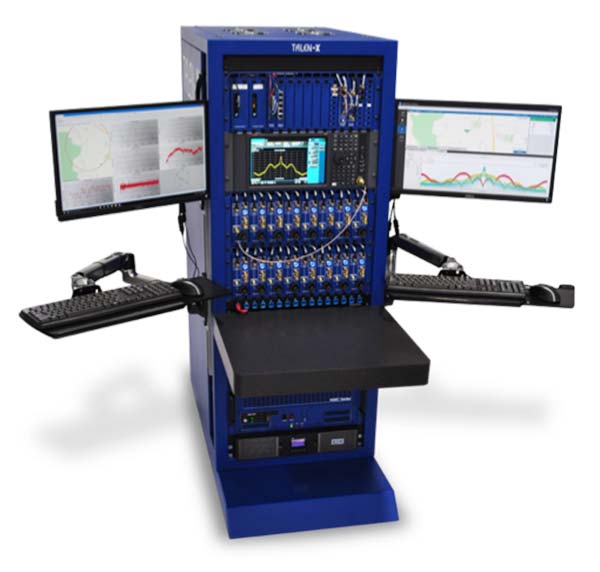
    BroadSim Anechoic is used to test GNSS spoofing and jamming in an anechoic chamber. The BroadSim Controller is at the heart of the system running Skydel’s SDX software suite. Using SDX, users can create advanced scenarios that include both jamming and spoofing signals.

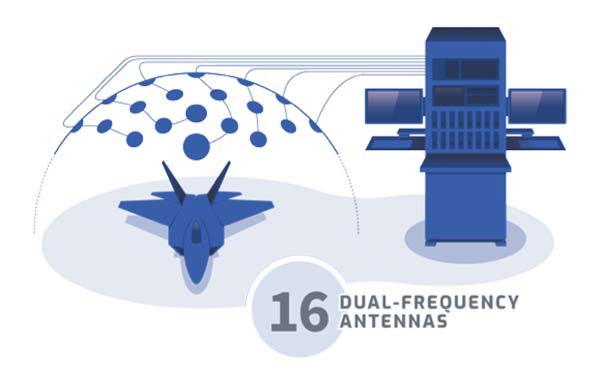
    The 16 software-defined radios (SDRs) each with dual transmit ports (32 total outputs) can be configured to output GNSS or jamming signals, giving users flexibility to run test after test. The transmit chains include the hardware to power 16 dual-frequency antennas. The included GNSS receivers allow users to monitor the environment inside the chamber, providing confidence that tests are running correctly.

    The BroadSim Anechoic can also be used in controlled radiation pattern antenna (CRPA) testing. Many ground-, airborne- and water-based platforms are transitioning to using CRPAs because of their added jamming resiliency and significant tracking advantages in degraded environments.

    Validation and real-world testing is critical to understanding and characterizing the mitigation these antennas can add in highly degraded areas. By using BroadSim Anechoic, users have the ability to create representative jammers with real-world characteristics (modulations, frequencies, angles, power levels, etc).

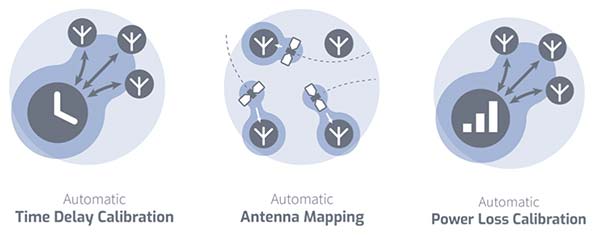
    “Skydel developed an innovative approach for time offset calibration between multiple transmitting antenna using a COTS Software-Defined Radio (SDR),” said Skydel Solutions Chief Technology Officer, Iurie Ilie. “This approach allows for very precise measurements and adjustments (better than 100ps) to be done automatically before simulation start. At the same time, transmitting signal power is automatically adjusted to keep the power offset at receiving antenna better than 0.1dB.”

    BroadSim Anechoic takes advantage of state-of-the-art software defined radios (SDR) for RF up-converting while signal IQ generation is done using high performance commercial-off-the-shelf (COTS) graphics-processing units (GPU). The ability to generate the IQ data in software (using the GPU) as opposed to hardware (FPGA) significantly reduces the cost while maximizing capability, value, and time to market.

    BroadSim Anechoic has the capability of powering up to 16-dual frequency antennas requiring 32 RF transmit outputs. The architecture used for this system required the ability to receive signals in a manner such that precise processing could be done on the receive signal.

    The SDR selected for this application has one receiver channel for every transmit channel giving BroadSim Anechoic 32 RF receive ports. Innovative software techniques have been developed enabling the accurate time and power calibration for each antenna transmit chain using the SDR receive ports.

    Images: Talen-X