Tag: aviation

  • Call for Participation: Round 2 of NGS Kinematic GPS Challenge

    NOAA’s National Geodetic Survey (NGS) is conducting a 12-year project, called Gravity for the Redefinition of the American Vertical Datum (GRAV-D), to redefine the vertical datum of the United States by flying airborne gravity missions. The accuracy of the resulting vertical datum depends directly on the quality of the aircraft’s GNSS position solutions.

    In August 2010, NGS issued a Kinematic GPS Challenge to seek community input on the best practices for processing this large positioning data volume. Ten international groups answered the call, submitting 16 different position solutions calculated with a variety of software and techniques. However, the majority of solutions were corrupted by a characteristic “sawtooth” pattern which was tracked back to the aircraft receiver used in the initial challenge; for this challenge reissue, a second onboard GNSS receiver is used.  Also in this new call for participation, inertial measurement unit (IMU) data are made available for joint GPS+IMU processing.

    “To further facilitate our software and method development, we invite interested researchers and practitioners to compute and submit solutions from samples of actual GRAV-D data,” said Gerry Mader and Theresa Diehl, NGS, in an invitation email. “In this new call, NGS requests that all participants submit a GPS-only solution utilizing the new aircraft GPS data. For those able to process with IMU data, we request additional submission of a second IMU+GPS solution. NGS would like to receive all solutions by April 1, 2013.

    “This is a strictly voluntary exercise for those interested in such a comparison and we will share our results with the participants. We are also interested in possibly co-authoring a publication with the participants on the topic if results are significant.”

    Detailed information on the challenge is available here:

    Those interested in participating should read through the PDF (link above), then email Gerry Mader (gerald.l.mader at noaa.gov) and Theresa Diehl (theresa.diehl at noaa.gov) with any questions.

  • GPS Autopilot Copter Marketed to Consumers

    DJI, developer and manufacturer of UAV systems, today announced the launch of the Phantom, the company’s first easy-to-fly, consumer quadcopter. Accorrding to DJI, before the Phantom, building and flying multi-rotor aircraft was a complex task only performed by professionals and extreme hobbyists.  With the Phantom, DJI brings professional-level multi-rotor flight control technology to the average person by incorporating DJI’s intelligent, GPS-based autopilot system into the Phantom. This provides for simple, ultra-stable and reliable flight characteristics right out of the box. Priced at $679, the Phantom is also half the price of competing units that require complex building and soldering to assemble.

    The Phantom comes with a remote-control unit containing pre-programmed autopilot parameters and a GoPro camera mount, making aerial cinematography easy for almost anyone, the company said. With the built-in DJI Naza-M autopilot system with GPS module, the Phantom has both GPS Attitude and Attitude Control Mode. Pilots can switch between the two modes to achieve particular flight experiences. Also incorporated are safety parameters, such as a failsafe feature that will bring the Phantom back to its take-off point and land itself if it loses signal from the remote control unit for any reason.

    Features of the Phantom:

    • Highly integrated design with high intensity orientation-aiding LED indicators
    • Ready-to-fly right out of the box – no programming needed
    • Stable and easy to fly with agile performance
    • Multiple flight modes, including GPS position hold
    • Intelligent Orientation Control (IOC)
    • Failsafe and auto go-home/landing
    • Camera mount included for GoPro.

    “DJI has always been at the forefront of both UAV flight control systems and innovative airframe technology,” stated Colin Guinn, CEO of DJI North America.  “The PHANTOM is more than an evolution of our existing technology, it is a quantum leap forward in bringing professional-level, multi-rotor aircrafts to the average consumer.”

  • Unmanned Innovation Autopilots Integrate VectorNav IMU into Its INS/GPS

    Unmanned Innovation, a provider of Development Platforms for unmanned aircraft systems (UAS), announced that it has partnered with VectorNav Technologies to integrate VectorNav’s VN-100 inertial measurement unit (IMU) into its os-Series Autopilots. Unmanned Innovation’s os-Series Autopilots offer a customizable solution that enables rapid prototyping and cost-effective production of fixed-wing, helicopter, multi-rotor, and custom configuration UAS. Unmanned Innovation has integrated VectorNav’s VN-100 miniature, calibrated MEMS-based, surface-mount IMU to provide customers the option of a fully calibrated and thoroughly tested IMU.

    Unmanned Innovation’s os-Series Autopilots, made commercially available for the first time in November 2012, combine modular hardware with an open architecture, making each autopilot a development platform.

    The os-Series Autopilots are offered in multiple form factors with features tailored for various vehicles, payloads, and applications. Each os-Series Autopilot is a complete integrated solution and contains an INS/GPS with air data incorporating the VectorNav VN-100, a datalink radio, payload interfaces, and a Linux computer within one miniature package, starting at 32 grams. The os-Series Autopilots come with professionally written flight control and mission software that Unmanned Innovation provides under a royalty-free license that allows for easy modification, extension, and inclusion in proprietary products.

    The partnership between the two companies began during AUVSI’s Unmanned Systems North America 2012 conference in August, where Unmanned Innovation was introduced to VectorNav’s VN-100 and recognized it as an attractive alternative to its existing inertial measurement sensors due to its small form factor, low-cost, and high-precision calibration. Unmanned Innovation’s flexible architecture allowed for quick integration of the VN-100 and VectorNav provided custom firmware with a faster update rate to make the IMU compatible with Unmanned Innovation’s requirements.

    The VN-100 IMU, calibrated for bias, scale factor and misalignment errors at room temperature or over the entire thermal operating range of the sensor increased the accuracy of the os-Series Autopilot navigation solution. After a short development cycle, testing and verification, VectorNav’s VN-100 IMUs are now fully integrated within Unmanned Innovation’s os-Series Autopilots. The complete os-Series product line is shipping to customers in the USA and abroad and is free of ITAR restrictions.

    “We are very pleased to be working with Unmanned Innovation on their os-Series Autopilot, which we find to be a very unique and high-value product that fills a significant gap in this market,” said John Brashear, VectorNav’s president. “We hope that the VN-100 adds to this value by allowing Unmanned Innovation to focus on its strengths improving the os-Series while securing a long-term, dependable sensing solution and partnership with our company.”

  • Locata Tests Lead to Air Force Contract for Non-GPS Positioning System

    Locata Corporation today announced the U.S. Air Force (USAF) has signed a sole-source, multi-year, multi-million dollar contract to install the U.S. military’s first revolutionary ground-based LocataNet positioning system at the White Sands Missile Range in New Mexico. The USAF will field Locata’s new technology for extremely accurate “reference truth” positioning across a vast area of White Sands when GPS is being completely jammed.

    In a recent USAF technical report, the need for a new non-GPS based positioning capability was described by the 746th Test Squadron as the key component for “the realization of the new ‘gold standard truth system’ for the increasingly demanding test and evaluation of future navigation systems for the U.S. Department of Defense.” Locata is the new technology now contracted to enable this capability for the USAF’s future truth reference, the Ultra High-Accuracy Reference System (UHARS).

    The report documented extensive testing of Locata’s new capabilities when a LocataNet covering 1,350 square miles (3,500 square kms) was first deployed at White Sands. The USAF and the 746th Test Squadron proved a LocataNet can accurately position USAF aircraft over a large area when GPS is denied. Locata delivered accurate independent positioning as good as, or better than, the USAF’s current CIGTF Reference System (CRS). The Locata non-GPS based positioning capability is core to the UHARS that will now replace the CRS in 2014.

    After the exhaustive aircraft testing, the USAF concluded that the Locata system had not only met the extremely demanding contractual tracking and positioning requirements, but actually exceeded them on many points. Some of the milestones documented and confirmed by the USAF included:

    • The USAF report documented LocataNet position accuracy of 2.5 inches (6cm) horizontally and 6 inches (15 cm) vertically – about the size of a dollar bill – for aircraft flying at a distance of 30 miles (50km) at up to 350 mph (550 km/hr) at 25,000 feet, without GPS.
    • Throughout the period of the testing, the entire White Sands network achieved nanosecond-accurate synchronization within several minutes of the LocataNet being activated, and remained synchronized even during severe weather until turned off at the end of each test.
    • The USAF tests showed that a stock standard Locata transmitter – the same unit used in commercial applications like mining – could have an amplifier attached to easily boost signals for long-range reception. By attaching a simple, inexpensive 10 watt amplifier, the USAF proved that Locata signals could be acquired and tracked by aircraft at distances of up to 60 miles (100 km). Longer distances could be enabled by attaching higher-powered amplifiers.
    • Before to the White Sands flight trials, commercial Locata systems had only been used to position ground-based vehicles, such as cars, trucks, bulldozers and drill rigs in local areas. For the USAF tests, however, the Locata system needed to function under dynamic aircraft operating maneuvers, including banking, angular and linear accelerations, airspeeds up to 300 knots (560 km/hr), and altitudes up to 30,000 feet above sea level. The required aircraft performance was verified in the real-world testing.
    • The USAF required Locata to design, prototype and then deliver aircraft-certified antennas for use on both the Locata ground-based transmitters and the USAF aircraft. Locata worked with Cooper Antennas Ltd. of Marlow in Buckinghamshire, United Kingdom, to produce an aircraft-certified version of Locata’s new quadrifilar helix antenna design. The Cooper manufactured antennas were used throughout the tests with excellent results, and confirmed Locata’s research and analysis.

    “Locata Corp delivered a LocataNet for use in our October 2011 technical demonstration on White Sands Missile Range that provided time and position truth, independent of GPS, that was better than 18 cm (6 inches) per axis while flying at 15,000 and 20,000 foot above mean sea level profiles,” said Christopher Morin, technical director for the 746 Test Squadron. “The solutions provided by the LocataNet were within the accuracy tolerance of the squadron’s CIGTF Reference System and met our threshold objectives. Further analysis has shown that if we optimize the LocataNet deployment, characterize its errors and tightly couple its range and carrier-phase measurements with the other GPS and inertial components on the UHARS pallet into the UHARS solution post-processing software, I am confident we will be able to meet our 5-cm (2-inch) per axis truth reference objective. I am very pleased with the LocataNet’s demonstrated ability to produce an accurate, dynamic truth reference from the relatively static implementation they had already deployed in the mining industry.”

    “Locata products developed and sold by important commercial partners like Hexagon and Leica Geosystems have already shown our new technology is a game-changer for positioning over industrial-sized areas,” said Nunzio Gambale, CEO and co-founder of Locata. “However, proving Locata can provide the USAF with centimeter-accurate non-GPS positioning over a vast military area when GPS is jammed instantly elevates our technology achievements into a completely new league. It’s important to grasp the scale of what we’ve done here. The 2,500 square mile LocataNet at White Sands will be 74 times the size of Manhattan Island. It must be clear, our ability to deliver centimeter-level (inch-level) positioning over an area that large, without using GPS satellites, is both unique and totally revolutionary. No one else on Earth can do this. Many valuable industrial and consumer apps will now be built around our amazing inventions, created by Locata’s co-founder David Small and our brilliant engineers.”

    “This contract makes it clear you are witnessing the arrival of one of the most important technology developments for the future of the entire positioning industry,” Gambale declared.

    Under this new contract Locata will provide the USAF with Locata receivers and LocataLite transmitters to blanket 2,500 square miles (6,500 sq km) of the White Sands Range. Locata will also:

    a)     deliver extended hardware warranty, along with ongoing Locata software and firmware upgrades, through to the year 2025;

    b)     supply multi-year support for the installation, fielding and testing of Locata networks; and

    c)     provide long-term consultation and expert technical advice to ensure optimal operational performance of the USAF’s fielded LocataNet systems.

  • GPS Tracking Devices Approved for Use on Cargo Airlines

    GTX Corp, which makes customizable, patented two-way GPS solutions, has announced the approval of a custom designed GPS tracking device for use on the cargo airlines AirNet and Cargolux. The custom configured device will be made available as an add-on service to customers of MNX, a provider of expedited transportation and logistics services, to provide a new level of visibility and control for high value and mission critical shipments.

    “We have been working diligently with AirNet and Cargolux to gain the necessary approvals to bring this one-of-a-kind offering to market. We are very pleased to see this day finally come to fruition,” said Patrick Bertagna, GTX Corp cChairman and CEO. “Over the next few weeks we will work closely with the MNX team to formulate a domestic and international deployment strategy to introduce this offering to MNX customers around the world.”

    Designed for customers that ship high value, time or temperature sensitive materials, the technology is well-suited for customers in the life sciences industry. The GPS solution will bring extra security to sensitive shipments, including the transportation of items such as organs, blood, tissue, medications, clinical trial samples and medical devices.

    “The GTX Corp tracking platform gives us the ability to better identify and resolve any unforeseen challenges throughout the entire transport and gives our customers added confidence and peace of mind that their shipment is secure at every step,” said Scott Cannon, MNX CEO. “By providing our clients with real-time tracking of their shipments, MNX will offer an unmatched layer of service, security, temperature integrity and reliability.”

    The GPS device transmits the latitude and longitude, speed, bearing, altitude and temperature of the plane or vehicle carrying the shipment. The device and GTX platform also provide an easy-to-use customer interface with live shipment tracking and geo-fencing capabilities, allowing customers to know exactly when their mission critical shipments depart and arrive in key destinations. The GTX device is small and light weight (comparable to the size of a standard garage door opener), making it easy to insert in even the smallest packages.

    “We realize the capability to track valuable shipments with such detail is especially important to the life sciences industry, especially as this industry continues to expand so rapidly,” said Bertagna.

    AirNet, a leading domestic specialty cargo airline specializing in life sciences transportation, and Cargolux, one of the leading scheduled all-cargo airlines, were among the first airlines to conduct a thorough testing process to certify the GTX device, while MNX and GTX continue collaborating to expand the use of the offering to other partner airlines.

  • Butler Offers Lear 35/36 STC for WAAS with Garmin Nav System

    Butler National Corporation, which specializes in the aerospace sector of structural modification, maintenance, repair, and overhaul, announces issuance of the Supplemental Type Certificate (STC)  for installation of the new Garmin GTN series of navigators that provide GPS, navigation, and communications. The installation is for GTN 750 navigators in the Learjet Models 35/35A/36/36A with the FC-200 autopilot and the Learjet Model 24.

    The Garmin GTN series features intuitive touchscreen controls and a large-screen display that give Learjet pilots unprecedented access to high-resolution mapping, graphical flight planning, and geo-referenced charting, among many other features. The installation also features new GPS roll-steering that allows seamless navigation operations with turn anticipation and waypoint sequencing interfaced to the autopilot.

    “This approval offers a significant and economical avionics upgrade for the Lear 30 series airplanes,” said Clark Stewart, president and CEO of Butler. “The STC for the new Garmin GTN series allows us to tap into a sizeable upgrade market for retrofit of flight management systems. The Garmin GTN upgrade provides significant functionality upgrades, including WAAS GPS approaches and roll-steering interface to the autopilot.”

    “We have designed the installation to provide cost-effective options to meet the various Learjet operator requirements. We will be offering the GTN Learjet installations through our avionics facility Kings Avionics starting under $100,000,” commented Craig Stewart, Aerospace division president.

    Butler National Corporation operates in the Aerospace and Services business segments. The Aerospace segment focuses on the manufacturing of support systems for commercial and military aircraft including the Butler National TSD for the Boeing 737 and 747 Classic aircraft, switching equipment for Boeing McDonnell Douglas Aircraft, weapon control systems for Boeing Helicopter, and performance enhancement structural modifications for Learjet, Cessna, Dassault, and Beechcraft business aircraft.

  • NovAtel Announces New SPAN MEMS Enclosed Receiver

    Photo: NovAtel
    Photo: NovAtel

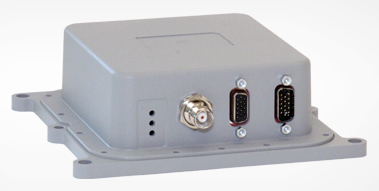
    Today at Intergeo, NovAtel Inc., NovAtel announced the addition of a new commercially exportable single-enclosure SPAN MEMS receiver to its line of SPAN GNSS/INS products. Available in the first quarter of 2013, the low-power, lightweight SPAN MEMS enclosure incorporates a diminutive Micro Electromechanical Systems (MEMS) Inertial Measurement Unit (IMU) and a NovAtel high-precision OEM615 GNSS/INS SPAN receiver to provide continuously available position, velocity and attitude (roll, pitch and yaw) in a small, single-unit form factor, the company announced.

    “This product ensures we meet crucial price/performance and size/weight requirements for our customers,” Jason Hamilton, director of Marketing at NovAtel, said. He added, “By integrating this IMU with our powerful OEM6 GNSS/INS SPAN engine, which provides many advanced positioning options such as AdVance RTK, ALIGN heading technology and RAIM, we are able to offer a GNSS/INS solution for a wide range of applications.”

    The lightweight SPAN MEMS enclosure provides a rugged housing for demanding applications. Serial and USB communication interfaces plus several I/O options support additional peripherals. An embedded wheel sensor interface is also available to enhance GNSS outage bridging capabilities. Tight coupling of the GNSS and inertial technologies enables continuous, robust positioning in difficult environments where satellite signals are unreliable or unavailable for short periods of time.

    This product will be available as an integrated single-enclosure SPAN solution, enclosed standalone IMU for use with external SPAN-enabled receivers, and as an OEM component.

    Shipments of the new receiver start Q1 2013 with OEM availability Q4 2012. A limited supply of enclosure evaluation units will be available in Q4 for integrators looking to get a head start on their projects.

  • Septentrio Announces First GNSS Receiver with Full Support of TerraStar Services

    Septentrio announces the full support of TERRASTAR wide-area differential and Precise Point Positioning (PPP) capabilities in some of its receivers. The Septentrio AsteRx2eL is an all-in-view dual-frequency GPS/GLONASS receiver, featuring an integrated L-band modem to receive TERRASTAR data transmitted by satellite and field-proven dm-accurate positioning using this data. AsteRx2eL also features GNSS+ technology, a unique combination of industrial grade performance algorithms, to better serve high-precision positioning needs even in the most severe conditions, Septentrio said.

    Support of TERRASTAR-M and TERRASTAR-D allows precise position calculation anywhere on the globe, Septentrio said. TERRASTAR services achieve accuracy levels down to 10 cm without the use of extra communication such as radio or mobile. Powered by TERRASTAR services, AsteRx2eL provides a high level of flexibility for consistent dm-level accuracy everywhere on earth and cm-level where local RTK corrections are available. Septentrio multi-constellation receivers will provide position accuracy and high-availability independently of local infrastructure for the various applications in any of the markets that they traditionally serve:

    • Land and aerial survey and mapping
    • Machine control for agriculture, construction and mining
    • Precise navigation for land, sea and air

    ‘The introduction of support for TERRASTAR offers our customers an important additional option for accurate positioning, notably in the absence of local infrastructure,” Peter Grognard, founder and CEO of Septentrio Satellite Navigation, said. “It has been a pleasure for us at Septentrio to closely collaborate with the great team at TERRASTAR to develop and deliver a strong new value proposition with robust industrial performance everywhere on the globe.”

  • Trimble Introduces Compact Receiver for Mobile Positioning Applications


    Trimble has introduced at the ION GNSS Conference in Nashville the Trimble BD920-W3G receiver and communication module. As part of Trimble’s GNSS OEM portfolio, the new compact module features centimeter-level, real-time kinematic (RTK) positioning capabilities coupled with Wi-Fi, Bluetooth and cellular that deliver flexible communication options for precise, mobile positioning. The BD920-W3G module’s connectivity and configuration ease allow system integrators and OEMs to easily add GNSS centimeter-level positioning to specialized or custom hardware solutions, Trimble said.

    “The OEM and system integrator communities demand high performance, reliability and support for their positioning solutions,” said Dale Hermann, director of marketing and sales. “The Trimble BD920-W3G delivers the latest in GNSS and communication technology in an easy-to-integrate form factor for demanding conditions and applications such as field computing, port automation, and lightweight robotic or unmanned vehicles.”

    The Trimble BD920-W3G module has been designed for applications requiring centimeter accuracy in a compact package. By integrating wireless communications on the same module, the task of receiving and transmitting data such as RTK corrections is greatly simplified. A single intuitive Web interface allows a variety of use cases to be supported. In addition to GNSS base and rover setups with Wi-Fi or UMTS modem, the module also allows simultaneous customer access to the Internet.

    The dual-frequency GPS/GLONASS BD920-W3G provides customers with a more integrated product that can reduce their integration effort and time to market. Wireless communications and Ethernet connectivity are available on the module to allow high-speed data transfer and configuration via standard Web browsers. USB and RS232 are also supported. By tightly integrating communications and GNSS receiver, integrators can reduce costs and integration complexity, the company said.

    The Trimble BD920-W3G is expected to be available in the first quarter of 2013 through Trimble’s Precision GNSS + Inertial sales channel worldwide. The BD920-W3G can be viewed in 3D on Trimble’s 3D Warehouse by SketchUp. OEMs and integrators can also download a 3D model into their applications. For more information, visit www.trimble.com/gnss-inertial.

  • L-3 Demonstrates TruTrak Evolution Type II SAASM GPS Receiver


    L-3 Interstate Electronics Corporation (IEC) conducted an operational demonstration of its new TruTrak Evolution (TTE) Type II Selective Availability Anti-Spoofing Module (SAASM) GPS receiver at AUVSI’s Unmanned Systems North America 2012 conference, held last week in Las Vegas. The demonstration highlighted the new TruTrak receiver’s multi-use capabilities as a high-performing Ground-Based GPS Receiver Applications Module (GB-GRAM) for use on UAS platforms and precision weapons.

    The TTE offers native Inertial Measurement Unit (IMU) and external oscillator interfaces, user processor, reconfigurable input/output (I/O) and front end, and easy roadmap migration from SAASM to NextGen GPS YMCA modernized technology. Its TTE Type II architecture supports the integration of multiple sensors to simplify all-source navigation solutions for GPS-denied environments. The adaptable architecture allows developers to quickly integrate new sensors without a hardware change, while providing industry-leading core GPS receiver performance and easy migration to NextGen modernized GPS.

    “The TTE Type II highlights L-3 IEC’s integrated SAASM/NextGen GPS M-Code roadmap, providing another innovative path in the development of a Common GPS Module,” said Ric Pozo, general manager and vice president of navigation systems at L-3 IEC. “It allows SAASM- based P(Y) and modernized YMCA multichip modules to share a common circuit card assembly, making this a very flexible solution for drop-in GPS receiver replacement and low-risk integration.”

    L-3’s TTE Type II provides features required by multiple applications, including a small form factor, high performance, and both passive and active antennas. The TTE Type II adopts the common GB-GRAM Type II electrical and physical interfaces, but with expandable I/O to support a wide range of requirements for ground, air, weapon, and projectile needs.

  • Drone Hack: Spoofing Attack Demonstration on a Civilian Unmanned Aerial Vehicle

    By Daniel Shepard, Jahshan A. Bhatti, and Todd E. Humphreys

    
    Unmanned aerial vehicle (uav) used in the spoofing tests; owned by the University of Texas.

     A radio signal sent from a half-mile away deceived the GPS receiver of a UAV into thinking that it was rising straight up. In this way, the UAV’s dependence on civil GPS allowed the spoofer operator to force the UAV vertically downward in dramatic fashion as part of multiple capture demonstrations.

    In December 2011, Iran captured a U.S. Central Intelligence Agency (CIA) surveillance drone with only minor damage to the undercarriage of the drone, likely due to a rough landing when captured. An Iranian engineer claimed in an interview that “Iran managed to jam the drone’s communication links to American operators” causing the drone to shift into an autopilot mode that relies solely on GPS to guide itself back to its home base in Afghanistan. With the drone in this state, the Iranian engineer claimed that “Iran spoofed the drone’s GPS system with false coordinates, fooling it into thinking it was close to home and landing into Iran’s clutches.”

    Although the Iranian claims are highly questionable, this incident left many unanswered questions as to the security of GPS systems on unmanned aerial vehicles (UAVs). The CIA drone should have been guiding itself based on the encrypted military GPS signals, which would be incredibly difficult to spoof. However, some experts have conjectured that simultaneous jamming of the military signals and spoofing of the civilian signals might have worked if the drone had been programmed to fall back on the civilian GPS signals in the event that the military signals were jammed. This raises the question: How difficult would it be to spoof a UAV guiding itself based on civilian GPS signals?

    FAA Modernization Act

    In February of this year, Congress passed the FAA Modernization and Reform Act of 2012. According to the Library of Congress summary, this act “requires the Secretary [of Transportation] to develop a plan to accelerate safely the integration by September 30, 2015, of civil unmanned aircraft systems (UASes, or drones) into the national airspace system … [and] determine if certain drones may operate safely in the national airspace system before completion of the plan.”

    Such civilian UAVs would be primarily guided by civil GPS, which has been shown to be readily spoofable in the lab. This would create a significant potential hazard in the national airspace if the problem of civil GPS spoofing is not fixed. Thousands of civilian UAVs (operated by postal services, police departments, research institutions, and others) could populate the skies in only a few years while still being vulnerable to remote hijacking via GPS spoofing. The passing of the FAA Modernization Act further emphasizes the need to examine the vulnerability of UAVs to GPS spoofing.

    Test

    On invitation of the Department of Homeland Security (DHS), unclassified spoofing tests against a UAV were performed at White Sands Missile Range (WSMR) on June 19, 2012 during the DHS GYPSY test exercise. These tests demonstrated the capability of a spoofer, built by the University of Texas (UT) Radionavigation Lab, to commandeer a civilian UAV by influencing the position-velocity-time (PVT) solution of the UAV’s GPS receiver.

    The Spoofer. The civil GPS spoofer used for these tests is an advanced version of the spoofer reported in “Assessing the Spoofing Threat,” GPS World, January 2009. A schematic representation of the spoofer is shown in Figure 1. It is the only spoofer reported in open literature to date that is capable of precisely aligning the spreading codes and navigation data of its counterfeit signals with those of the authentic GPS signals. Such alignment capability allows the spoofer to carry out a sophisticated spoofing attack in which no obvious clues remain to suggest that an attack is underway.


    Figure 1. This spooler is capable of precisely aligning the spreading code and navigation data of its counterfeit signals with GPS signals.

    The spoofer is implemented on a portable software-defined radio platform with a digital signal processor (DSP) at its core. This platform comprises:

    • A radio frequency (RF) front-end that down-mixes and digitizes GPS L1 and L2 frequencies
    • A DSP board that performs acquisition and tracking of GPS L1 C/A, calculates a navigation solution, predicts the L1 C/A databits, and produces a consistent set of up to 14 spoofed GPS L1 C/A signals with a user-controlled fictitious implied navigation and timing solution.
    • An RF back-end with a digital attenuator that converts the digital samples of the spoofed signals from the DSP to analog output at the GPS L1 frequency with a user-controlled broadcast power.
    • A single-board computer that handles communication between the spoofer and a remote computer over the Internet.

    The spoofer works by first acquiring and tracking GPS L1 C/A and L2C signals to obtain a navigation solution. It then enters its “feedback” mode, in which it produces a counterfeit, data-free feedback GPS signal that is summed with its own antenna input. The feedback signal is tracked by the spoofer and used to calibrate the delay between production of the digitized spoofed signal and output of the analog spoofed signal. This is necessary because the delay is non-deterministic on start-up of the receiver, although it stays constant thereafter.

    After feedback calibration is complete and enough time has elapsed to build up a navigation data bit library, the spoofer is ready to begin an attack. Initially, it produces signals that are aligned to within a few meters with the authentic signals at the location of the target antenna but have low enough power that they remain far below the target receiver’s noise floor. The spoofer then raises the power of the spoofed signals slightly above that of the authentic signals. At this point, the spoofer has taken control of the victim receiver’s tracking loops and can slowly lead the spoofed signals away from the authentic signals, carrying the receiver’s tracking loops with it.  The target receiver can be considered completely captured when either of the following are true:

    • each spoofed signal has shifted by 2 µs relative to the authentic signals, or
    • each spoofed signal is at least 10 dB more powerful than the corresponding authentic signal.

    The latter option ensures that there is no significant interaction between authentic and spoofed signals by simultaneously jamming and spoofing.
    The UT spoofer and attack strategy have been tested against a wide variety of civil GPS receivers and have always been successful in commandeering the target receiver.

    Test UAV.  The spoofing tests targeted a University-of-Texas-owned Hornet Mini UAV supplied by Adaptive Flight, which is shown in the  opening photo. The Hornet Mini is roughly five feet long and weighs about 10 pounds when fully loaded. The Mini’s sophisticated avionics package loosely couples an altimeter, magnetometer, and a MEMS IMU package to a GPS receiver via an extended Kalman filter.

    The Hornet Mini is representative of UAVs used by law enforcement. Thus, the results of the spoofing tests with the Mini also apply to other similarly-designed UAVs, including those used in most civil applications, whose navigation systems are centered on civil GPS. It should be noted that no special alterations were made to the Hornet Mini for this test – it was in its “as sold” or “stock” configuration.

    Setup. A schematic of the setup used for the spoofing tests against the civil UAV at WSMR appears in Figure 2. The spoofer was located on a hilltop with the receive antenna on the far side of the hilltop from the transmit antenna as shown in Figure 3. The UAV site was located in a sandy basin approximately 620 meters from the transmit antenna.


    Figure 2. Schematic of the test setup.


    Figure 3. Aerial view of the test site showing the spoofer location on a hilltop and the UAV site 0.62 kilometers away.

    Procedure. The UAV was commanded by its ground controller to hover approximately 60 feet above ground level at the UAV site. After the initial ground control command was sent, the UAV maintained its hovering position automatically based on the navigation solution of its extended Kalman filter, which is based in part on GPS. At this point in the test procedure, the spoofed signals were not being broadcast: the UAV was only under the influence of the authentic GPS signals.

    The spoofer was then commanded to begin transmitting spoofed signals. To ensure seamless capture of the UAV’s GPS unit, the code phases of the spoofed signals were aligned to within meters of the authentic signals at the location of the UAV’s GPS antenna. The spoofed signals overpowered their authentic counterparts and instantly captured the tracking loops within the UAV’s GPS receiver.

    Immediately after capture, the spoofer induced a false velocity and corresponding position change in the UAV’s GPS receiver, drawing the position reported by the UAV’s extended Kalman filter away from the UAV’s commanded hover position. To compensate, the UAV’s flight controller responded by moving in the opposite direction. A safety pilot was on hand to prevent the UAV from drifting out of control.  This was necessary because by commandeering the UAV’s GPS receiver, the spoofer operator effectively breaks the UAV autopilot’s feedback control loop. The spoofer operator must now act as an operator-in-the-loop, which requires real-time, meter-level knowledge of the UAV’s true location.

    Results. Between tests WSMR and UT, the spoofer demonstrated short-term 3-dimensional control of the UAV. Thus, we conclude that it is indeed possible to hijack a civil UAV — in this case, a fairly sophisticated one — by civil GPS spoofing.

    Interestingly, the Hornet Mini relies only on its altimeter for direct measurements of its vertical position; the GPS-measured vertical position is ignored. This can be done with reasonable accuracy because of the Hornet Mini’s short flight endurance (~20 minutes). However, the GPS vertical velocity does affect the extended Kalman filter’s vertical coordinate estimate because the filter propagates GPS velocity measurements through a UAV dynamics model to form an a priori vertical estimate that gets updated with the altimeter measurements. This dependence on GPS velocity allowed the spoofer operator to force the UAV vertically downward in dramatic fashion in the final three capture demonstrations.

    Developing a full spoofer-based control system for a UAV is a difficult problem that, in addition to the requirement for real-time true position feedback, requires the spoofer to model the UAV’s feedback control behavior and to estimate the UAV’s desired path. Causing a UAV to spin out of control and crash is not difficult with a spoofer, but fine-grained control certainly is.

    Implications

    These tests have demonstrated that civilian UAVs will be vulnerable to control by malefactors with a civil GPS spoofer looking to hijack or crash these UAVs unless their vulnerability to GPS spoofing is addressed. There are several reasons why someone may want to spoof a drone including fear over drones invading people’s privacy. This poses a significant safety concern that could result in mid-air collisions with other aerial vehicles or buildings, not to mention loss of property.

    Constructing from scratch a sophisticated GPS spoofer like the one developed by UT is not easy, nor is it within the capability of the average anonymous hacker. It is orders of magnitude harder than developing a GNSS jammer. Nonetheless, the trend toward software-defined GNSS receivers for research and development, where receiver functionality is defined entirely in software downstream of the A/D converter, has significantly lowered the bar to spoofer development in recent years.

    As a point of reference, we estimate that there are more than 100 researchers in universities around the globe who are well-enough versed in software-defined GPS that they could develop a sophisticated spoofer from scratch with a year of dedicated effort. More worrisome is the fact that one does not have to build a sophisticated spoofer like ours, capable of aligning its signals precisely with authentic signals at the location of a chosen target, to spoof a civil GPS receiver. A low-cost off-the-shelf GPS signal simulator would not permit the kind of seamless attack we carried out, but would be adequate to confuse and disrupt the navigation system of a commercial UAV.

    Fixing the Problem

    There is no quick, easy, and cheap fix for the civil GPS spoofing problem. Moreover, not even the most effective GPS spoofing defenses are foolproof. Nonetheless, there are many possible remedies to the spoofing problem that, while not foolproof, would vastly improve civil GPS security. These defenses can be broken up into two categories: cryptographic and non-cryptographic defenses.

    Cryptographic defenses come primarily in two forms, spread-spectrum security codes (SSSC) and navigation message authentication (NMA), depending on whether the unpredictable digital signature is placed on the spread-spectrum code or the navigation data. These cryptographic signatures could be placed on WAAS signals or existing or future GPS signals to provide authentication of the source of the WAAS or GPS signals. A cryptographic defense implemented with appropriate checks to protect against certain variants of spoofing attacks, described in “Straight Talk on Anti-Spoofing,” GPS World, January 2012, would significantly raise the bar for a would-be spoofer. Several proposals for cryptographic methods are currently on the table including a proposal by Logan Scott to place SSSC signatures on GPS L1C signals that will be broadcast by GPS Block III satellites. However, the current proposals for civil GPS cryptographic authentication schemes are still at least several years away from implementation and have a 5-minute window between authentications of each individual GPS signal. These proposals have currently gained no ground in being implemented because of a lack of dedicated funds for development and implementation.

    There are also a number of promising non-cryptographic techniques for civil GPS spoofing detection that include jamming-to-noise power detectors (J/N meters), correlation profile anomaly defenses, and antenna-based defenses. J/N meters are simple and easily-implementable and would prevent a spoofer from simultaneous jamming and spoofing. However, a J/N sensor will not typically detect a spoofing attack in which the spoofed signals are only slightly more powerful than their authentic counterparts. The inclusion of a J/N meter does ensure that the authentic signals will also be visible as a corruption to the correlation curve during a spoofing attack, due to the difficulty of nulling out the authentic signal. This allows correlation profile anomaly defenses to be viable. However, these methods suffer from the difficulty of distinguishing multipath effects from a spoofing attack, particularly in mobile receivers. Antenna-based defenses also present an attractive option for anti-spoofing, but most of these methods require additional hardware (multiple antennas) and cost. One promising new antenna-based defense is currently under development at Cornell University that does not require multiple antennas. This defense involves an extension of the signal spatial correlation technque developed by the University of Calgary PLAN group. However, this technique is still under development, and receivers implementing this technique would likely be several times more expensive than current receivers.

    For details on potential spoofing defenses, see Todd Humphrey’s congressional testimony in “The System.”

    Recommendations

    We recommend that for non-recreational operation in the national airspace, civil UAVs exceeding 18 pounds be required to employ navigation systems that are spoof-resistant. Spoof resistance will be defined through a series of four canned attack scenarios that can be recreated in a laboratory setting. A navigation system is declared spoof-resistant if, for each attack scenario, the system is either unaffected by or able to detect the spoofing attack. Spoofing detection combined with an appropriate GPS-denied mode for the UAV to fall back on will significantly increase the difficulty of mounting a successful spoofing attack.

    Additionally, civil GPS receivers in many critical infrastructures (communications networks, financial trade centers, and the power grid) are also vulnerable to civil GPS spoofing. These critical infrastructures primarily rely on GPS for timing, which is also susceptible to manipulation with varying consequences depending on the application. A discussion of power grid vulnerabilities to GPS spoofing is given in “Going Up Against Time” in this issue of the magazine on page 34. We also recommend that GPS-based timing or navigation systems having a non-trivial role in systems designated by DHS as national critical infrastructure be required to be spoof-resistant.

    Finally, we recommend that funding be committed for development and implementation of a cryptographic authentication signature in one of the existing or forthcoming civil GPS signals. The signature should at minimum take the form of a digital signature interleaved into the navigation message stream of the WAAS signals. A better plan would be to interleave the signature into the CNAV or CNAV2 GPS navigation message stream. The best plan for implementing a cryptographic authentication signature would be to implement the signature as an SSSC interleaved into the spreading code of the L1C data channel. Inclusion of a cryptographic signature would greatly aid manufacturers in developing receivers that are spoof-resistant.

    Manufacturers

    The Hornet Mini UAV carries a µ-blox GPS receiver.


    Daniel P. Shepard is pursuing M.S. and Ph.D. degrees in aerospace engineering at the University of Texas (UT) at Austin. He is a member of the Radionavigation Laboratory.

    Jahshan A. Bhatti is pursuing a Ph.D. in aerospace engineering and engineering mechanics at UT and is a member of the Radionavigation Laboratory.

    Todd E. Humphreys is an assistant professor of aerospace engineering and engineering mechanics at UT and director of the Radionavigation Laboratory. He received a Ph.D. in aerospace engineering from Cornell University.