Tag: Carlson Software

  • Launchpad: Software updates, defense radar, fleet tracking and more

    Launchpad: Software updates, defense radar, fleet tracking and more

    A roundup of recent products in the GNSS and inertial positioning industry from the October 2024 issue of GPS World magazine.


    SURVEYING & MAPPING

    Updated CAD Software
    With enhanced features and workflow improvements

    Topcon Positioning Systems has released a new version of its computer-aided design (CAD) software suite, formerly known as MAGNET. With enhanced features and workflow improvements to the Office, Field and Tools modules, version 9 is also renamed under the Topcon software suite as the business retires the MAGNET brand.

    The software is designed for professionals such as surveyors, engineers, modelers, estimators and project managers, aiming to improve productivity through integrated software capabilities and workflows. It can be used as standalone, office-based CAD software or as a cloud-connected solution that integrates field and office operations with Topcon or Sokkia survey instruments. The platform offers user-friendly and versatile configurations suitable for various applications.

    Topcon Office version 9 introduces new options for working with digital terrain models (DTMs), spot elevations and offset capabilities, enhancing versatility when handling 2D or 3D data sets. Improvements in Topcon Field include better productivity and stake reporting capabilities, advanced resection functionality for unknown control points and a new offset routine for creating points that are not observable with a total station. Both Field and Office modules now support direct import and export with 12D XML file formats.

    Subscribers to the AllDayRTK high accuracy positioning network can now directly import and export RINEX data into Topcon Tools with a current Plus or RINEX subscription. Version 9 of Topcon Tools also features improved coordinate system functions, new traverse calculations, viewing options and enhanced functionality for working with data in tabular view for reporting.

    Topcon Positioning Systems, topconpositioning.com
    4D Scanner
    For AEC professionals

    The PIX4Dcatch smartphone scanning application is now compatible with the Bad Elf FlexGNSS receiver. This integration is designed for professionals in the architecture, engineering and construction (AEC) industries.

    PIX4Dcatch is a comprehensive 3D scanning and AR visualization tool that combines photogrammetry, lidar technology and real-time kinematic (RTK) positioning for precise results.

    The Bad Elf Flex GNSS receiver offers scalable accuracy and flexibility. In its standard configuration, it provides 30-60 cm real-time accuracy for GIS applications. Its daily token model allows users to unlock full RTK workflow for 24-hour periods, achieving 1 cm horizontal accuracy when needed. For users requiring consistent high accuracy, an upgrade to the Bad Elf Flex Extreme is available for permanent RTK capabilities.

    By combining PIX4Dcatch with the Bad Elf Flex GNSS receiver, surveying, construction and building professionals can now create highly accurate 3D models using mobile smartphone scanning technology. The resulting scans can be exported to CAD/GIS platforms for inspection, sharing and collaboration among project stakeholders.

    Bad Elf, bad-elf.com

    UAV
    With an integrated bathymetric system
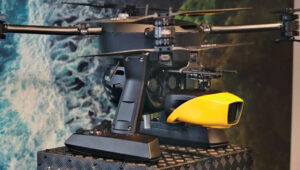
    The YellowScan Navigator bathymetric system has been integrated into Xer Technologies’ UAVs. This collaboration aims to enhance UAVs’ capabilities for conducting long-range bathymetric surveys and underwater inspections, which are essential in various fields such as environmental monitoring, coastal management and infrastructure development.

    The integrated system allows users to collect high-resolution and accurate bathymetric data, even in challenging aquatic environments. YellowScan’s green laser lidar technology is a key component of this system, providing precise underwater mapping capabilities. Xer Technologies’ UAVs are designed for extended flight durations and can operate for more than two hours, facilitating coverage of larger survey areas in a single mission. This feature is particularly beneficial for projects that require extensive data collection over vast aquatic regions.

    The YellowScan Navigator can achieve a precision of 3 cm and can operate at a maximum altitude of 100 m above ground level. The laser has a range of up to 120 m and features a scanner field-of-view of 44°. It weighs 3.7 kg.

    Xer Technologies, xer-tech.com

    Sonar Series
    For underwater applications
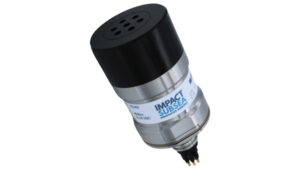
    The ISS360 Sonar Series is a range of imaging sonars designed for underwater applications. This series provides a full 360° field of vision and can detect objects at distances of up to 90 m to 100 m. The ISS360 utilizes compressed high-intensity radar pulse (CHIRP) acoustics to provide image clarity and quality.

    The ISS360 operates within a frequency range of 600 kHz to 900 kHz, offering an angular resolution of 2.2° at 700 kHz and a range resolution of 2.5 mm at lower ranges. The sonar is housed in durable titanium material, providing a depth rating of 4,000 m as standard, with an option available for a 6,000 m rating. Additionally, it has a low power consumption of 3.6 watts, making it efficient for prolonged use.

    The CHIRP acoustics enable adjustable frequency bandwidth for optimized performance in various conditions.

    Its inductive coupling design eliminates the need for slip rings, significantly improving the longevity of the device. For those needing additional data, an optional attitude reference system provides pitch and roll measurements. The sonar comes equipped with seaView software for easy operation, as well as a software development kit (SDK) for custom integrations.

    The series includes two main models: the standard ISS360, which is suitable for a wide range of applications, and the ISS360HD, which offers higher angular resolution and range capability for more demanding operations.

    Impact Subsea, impactsubsea.com


    Machine Control

    Farming Management System
    With an API link
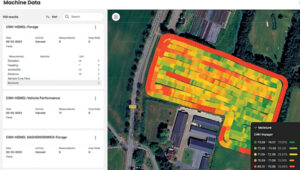
    CropX and CNH Industrial have launched a new digital connection to enhance precision farming and sustainability. This integration establishes an application programming interface (API) link between CropX’s agronomic farm management system and CNH’s Case IH and New Holland Agriculture equipment.

    The new connection streamlines data transfer from CNH machinery to CropX, enabling automated data visualization, record-keeping, planning and variable-rate applications. This comprehensive data transfer covers a wide range of farming activities, including planting, application and harvesting, with specific data points varying based on the equipment type.

    Within the CropX platform, this information is presented in user-friendly tables and maps that can be overlaid with other data layers. This feature allows farmers and agronomic advisers to easily extract valuable insights for improved decision-making. Furthermore, the integration facilitates the creation of variable rate application maps for fertilization and seeding, utilizing advanced agronomic tools within CropX’s system.

    CropX, cropx.com

    Agricultural UAV
    For crop and data management

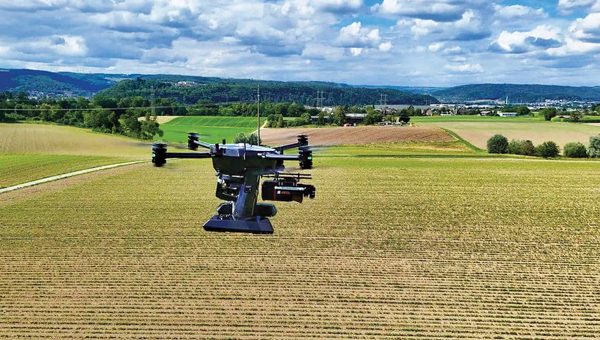
    The Tesseract Ag Drone is an agricultural drone designed to improve crop and data management for farmers.

    This U.S.-made drone utilizes computer vision and optical technologies to offer farmers detailed, real-time information about their fields. With its comprehensive suite of functionalities, the Tesseract Ag Drone enables farmers to quickly identify pests, monitor weed growth, assess crop and soil health, track weather impacts and observe crop development.

    When paired with the Tesseract Synthesis Software, the drone’s software can transform raw data into actionable insights, allowing farmers to make informed decisions using tools powered by artificial intelligence. The centralized data management system is designed to streamline collaboration among farm teams, fostering teamwork and improving overall productivity.

    Tesseract Ventures, tesseractventures.io


    Transportation

    Fleet Tracking Platform
    Designed to improve operational efficiency

    CerebrumX Labs and Onward Fleet Solutions have partnered to improve fleet management through advanced data analytics and artificial intelligence (AI). This collaboration integrates CerebrumX’s augmented deep learning platform (ADLP) with Onward’s comprehensive fleet management system, offering fleet operators insights into their vehicles and operations.

    The partnership leverages real-time data and robust reporting to enhance operational efficiency, reduce costs and improve driver safety. CerebrumX’s ADLP offers live fleet tracking, ensuring constant visibility of vehicle locations.

    Additionally, it analyzes trip histories to uncover patterns in driver behavior and vehicle usage for fleet managers to make data-driven decisions. Users can also generate customized reports to help optimize various aspects of fleet management, including driver safety protocols, vehicle maintenance and fuel efficiency.

    The system integrates AI to process vast amounts of data from electric and connected vehicles to provide crucial insights into asset performance, energy consumption and maintenance requirements. This capability is particularly valuable for optimizing electric vehicle charging schedules, improving battery life and supporting the broader transition to greener transportation solutions.

    Onward Fleet Solutions, onwardfleet.com


    UAV

    Aerial Imagery Solution
    With Updated Features
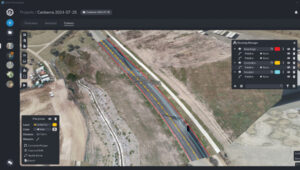
    PhotoCapture version 2 is a photogrammetry and aerial imagery solution designed for aerial imaging professionals, surveyors, engineers and other applications that require highly accurate UAV data.

    The new Photocapture Standalone Basic features a new Windows-based foundation with simple installation, a faster user interface, overlap adjustment, more available projections and faster overall photogrammetry processing speed.

    PhotoCapture Standalone Advanced adds the Survey Canvas, which allows manipulation of processed point cloud data such as stockpile volume calculations, the drawing of linework, surfaces and more, all within the PhotoCapture program. New to the PhotoCapture Survey Canvas in version 2 is the View Site feature for viewing changes on sites over time, as well as the ability to remove moving objects.

    PhotoCapture Standalone Advanced also now offers lidar colorization and processing, allowing the integration of lidar and photogrammetry data. Drawing on the strengths of each technology, this new feature creates more accurate and more visually appealing point cloud outputs.

    Carlson’s PhotoCapture Web version offers a completely online solution utilizing cloud computing for processing power and featuring all the functionality of Carlson PhotoCapture Standalone Advanced.

    Carlson Software, carlsonsw.com

    UAV Lidar System
    With long-range capabilities and heavy payload capacity
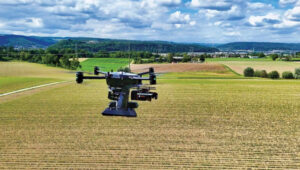
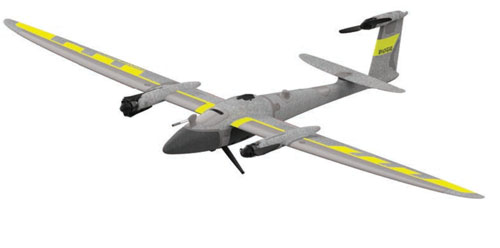
    GeoCue and Xer Technologies AG have integrated GeoCue’s TrueView 720 lidar and imagery sensor with the Xer X8 UAV platform.

    The integration represents an advancement in aerial operations, particularly for mapping and inspecting large, challenging terrains. By combining the long-range capabilities and heavy payload capacity of the Xer X8 with the high-quality point cloud and imagery data collection of the TrueView 720, this solution allows operators to manage and monitor vast areas with precision and efficiency.

    Xer Technologies, xer-tech.com

    Map Processing Software
    Designed for construction, mining and urban planning
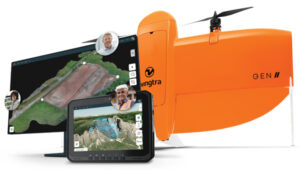
    The WingtraCLOUD software platform now features map processing capabilities to streamline the integration of aerial insights into industries such as construction, mining and urban planning.

    The latest updates seek to help engineering firms and users transition more smoothly from UAV data to actionable insights. By consolidating all stages of aerial data management — from mission planning to insight sharing — into a single platform, WingtraCLOUD eliminates the need for multiple complex tools to simplify workflows.

    This software is designed to reduce errors, prevent rework and accelerate project timelines, leading to increased productivity across key industries.

    With WingtraCLOUD, large-scale mapping projects can be completed quickly. This rapid processing capability is ideal for industries such as construction, where it helps avoid costly delays and resource waste, and in mining, where it enhances safety through quick highwall inspections. In disaster scenarios, WingtraCLOUD’s fast mapping capabilities can aid in efficiently directing resources.

    Wingtra, wingtra.com

    Compact UAV
    Equipped with a 1/2-inch image sensor
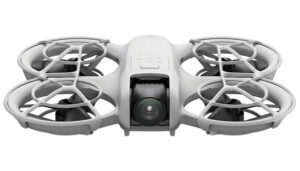
    The DJI Neo is a lightweight compact UAV designed to make aerial photography and videography more accessible.

    DJI Neo can be fully controlled without a remote, allowing for palm-based launches and landings. It features AI subject tracking and QuickShots, offering 4K ultra-stabilized video with a flight time of up to 18 minutes.

    The Neo is equipped with a 1/2-inch image sensor capable of capturing 12MP stills and 4K UHD video at 30 fps. DJI’s powerful stabilization algorithms, including RockSteady and HorizonBalancing, ensure smooth and stable footage even in challenging conditions.

    The Neo includes 22 GB of internal storage, capable of saving up to 40 minutes of 4 K / 30 fps video. It supports wireless file transfer to smartphones and easy audio recording through the DJI Fly app.

    DJI, dji.com

    IMU
    For precise navigation and stabilization
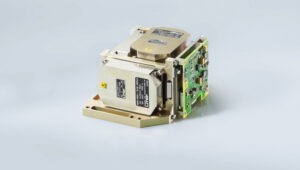
    LITEF fiber optic gyroscope (FOG) inertial measurement units (IMUs) are designed for precise navigation and stabilization in various applications such as UAVs. These units feature a comprehensive sensor suite, incorporating three gyroscope axes for rotational measurement and three accelerometer axes for linear acceleration detection. This configuration ensures accurate tracking of an object’s movement in three-dimensional space.

    The IMUs include processing electronics, power supply and input/output interfaces to streamline installation and operation, making them ideal for complex navigation tasks.

    For applications demanding even higher precision, LITEF offers the option to integrate GPS and GNSS receivers with their IMUs. This fusion of inertial and satellite-based navigation technologies is designed to enhance overall system performance, providing more robust and accurate positioning data.

    LITEF, litef.de


    OEM

    GNSS Receiver
    With Xona PULSAR functionality
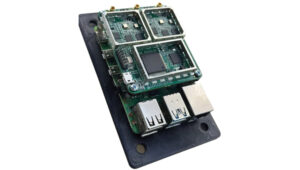
    Locus Lock has partnered with Xona Space Systems to develop a GNSS receiver that uses Xona’s multi-frequency PULSAR service. Locus Lock aims to provide a robust software-defined GNSS receiver suited for both commercial and military applications.

    Xona’s PULSAR service will be delivered via a constellation of low-Earth orbit (LEO) satellites, which orbit the Earth approximately 20 times closer than GNSS satellites, according to the company. This proximity allows PULSAR to offer higher signal power and a modernized signal design to offer improved multipath mitigation, higher accuracy and increased protection against radio frequency interference and spoofing compared to current GNSS systems.

    The technology is suitable for a wide range of applications, including vehicles navigating dense urban areas, agriculture and construction, UAVs, high-speed aircraft and defense applications. Locus Lock’s GNSS software stack can be deployed on existing customer computational infrastructure, ranging from small embedded devices to larger centralized computers. This flexibility allows for adaptation and configuration of the software to suit specific deployed environments.

    The system features inertially-aided carrier-phase differential GNSS (CDGNSS) for maintaining precision in challenging ecosystems, advanced interference mitigation and detection technology to ensure authentic GNSS signals are received and the dual-antenna, triple-frequency RadioLion RF front-end for capturing raw GNSS signals. These features offer signal situational awareness, anti-spoofing and interference mitigation.

    Locus Lock, locuslock.com

    Dual-Band Receiver Board
    With integrated IMU
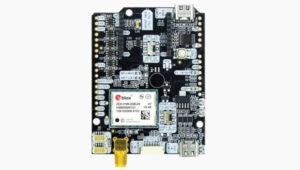
    The simpleRTK2B Fusion GNSS RTK dual-band receiver board is a positioning solution that leverages the u-blox ZED-F9R module to provide highly accurate location data.

    This board delivers centimeter-level positioning accuracy, making it suitable for applications requiring precise location information. One of its key features is the integrated inertial measurement unit (IMU), which allows the board to provide full attitude data using a single antenna. This capability is particularly beneficial for compact and resource-constrained systems.

    The board’s design makes it suitable for small, unmanned ground vehicles (UGVs) and slow-moving ground robotics platforms. These applications can greatly benefit from the board’s high-precision positioning and attitude information, enabling more accurate navigation and control.

    The simpleRTK2B Fusion board can be seamlessly integrated with various popular development platforms. It can serve as an external GNSS RTK receiver for autopilot systems and is compatible with both Pixhawk and Ardupilot-based autopilots, enhancing their positioning capabilities with its centimeter-accurate data.

    ArduSimple, ardusimple.com


    Defense

    Rugged Ground Control Station
    For commercial and defense applications
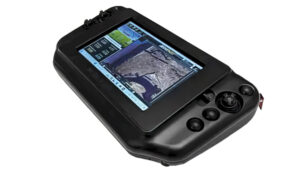
    The Controller Pro is a ground control station (GCS) technology for UAVs and robotics. It seeks to address the growing demand for compact, powerful and versatile control solutions in both commercial and defense sectors.

    The 8-inch Controller Pro boasts a rugged design with an IP65 rating, ensuring durability and protection against dust and water ingress. Equipped with Intel Core i3, i5 and i7 processors, the Controller Pro offers robust performance for mission-critical operations, enabling smooth handling of complex control tasks and real-time data processing. Additionally, the integration of Windows 11 enhances the system’s flexibility and compatibility with various software solutions, allowing for multi-application performance.

    The Controller Pro can be used for surveying, inspection and delivery services. Its rugged design and U.S. National Defense Authorization Act (NDAA) compliance make it ideal for military and law enforcement applications, such as reconnaissance and tactical operations.

    Additionally, its radio-agnostic feature allows it to work with various communication systems, enhancing its versatility across different platforms and missions.

    Mobilicom, mobilicom.com

    Aerial Reconnaissance and Elimination System
    With integrated AI technology
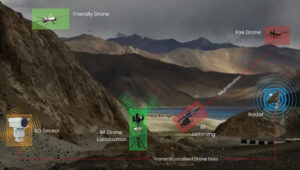
    The Aerial Reconnaissance and Elimination System (ARIES) is designed to enhance situational awareness and counter emerging threats.

    ARIES utilizes AI to detect, classify and respond to threats in real time. The system’s AI continuously adapts to new threats across multiple domains without requiring manual updates to improve situational awareness and accelerate decision-making for military personnel.

    The system can detect and track UAVs beyond visual line of sight (BVLOS). This capability extends the range and effectiveness of counter-unmanned aerial system (C-UAS) operations, providing early warning and enabling rapid response to potential threats.

    ARIES seamlessly integrates with existing defense infrastructure, which eliminates the need for frequent manual system updates and seeks to improve overall mission success rates.

    The system has been successfully demonstrated to key Department of Defense (DOD) stakeholders, showcasing its potential to enhance counter-UAS operations. During the demonstration, ARIES offered critical, real-time intelligence for swift decision-making in response to UAV incursions.

    Skylark Labs, skylarklabs.ai

    Quadcopter UAS
    Department of Defense Blue UAS-certified
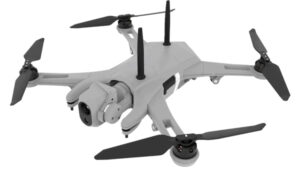
    The Teal 2 is a multirotor unmanned aerial system (UAS) designed for military, government and commercial applications. Designed, built and serviced entirely in the United States, the Teal 2 is Department of Defense (DOD) Blue UAS-certified, ensuring it meets stringent standards for government use.

    Its compact and rugged design allows for easy transport and rapid deployment, as it can be folded and carried in a rucksack. Additionally, the modular construction of the Teal 2 facilitates easy repair and reconfiguration in the field, enabling operators to adapt the system to their specific mission needs.

    The UAS weighs 1.25 kg, can reach maximum speeds of 10 m/s and has a flight time exceeding 30 minutes. It is equipped with the FLIR Hadron 640R electro-optical/infrared (EO/IR) sensor system, which includes a dual-axis gimbal for stable imaging. This thermal imaging system excels in nighttime operations, allowing operators to identify and track targets even in complete darkness.

    The Teal 2 supports advanced operational features such as multi-vehicle command and control, which allows for 360° target views or multi-target surveillance. It employs AES-256 encryption for secure data transmission and communication. Powered by the Snapdragon 845 processor, the Teal 2 is also compatible with Athena AI, designed to enhance its capabilities in target recognition and battle tracking.

    Red Cat Holdings, redcat.red

    Radar System
    Designed for C-UAS and BVLOS flights
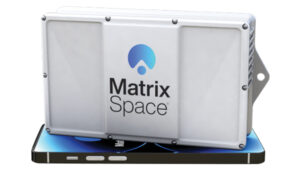
    This radar system is designed to enhance situational awareness for counter unmanned aircraft system (C-UAS) operations and beyond visual line of sight (BVLOS) flights. The system, which has received Federal Communications Commission (FCC) authorization, is now being distributed to commercial and public sectors in the United States and to certain international markets.

    The system aims to deliver precise detection of both airborne and ground-based objects under various conditions. Its compact design allows for integration into existing infrastructures without the need for extensive setup or specialized training.

    The MatrixSpace Radar is part of an open architecture platform, facilitating integration with various industry-standard systems for unmanned traffic management (UTM), command and control, counter-UAS measures, and traffic and video surveillance systems. This approach aims to offer a unified view for operators to improve the coordination and management of airspace activities.

    MatrixSpace, matrixspace.com
  • Launchpad: Mobile mapping, timing modules and UAVs

    Launchpad: Mobile mapping, timing modules and UAVs

    A roundup of recent products in the GNSS and inertial positioning industry from the July 2023 issue of GPS World magazine.


    TIMING

    Image: Hexagon

    PTP Firmware
    To synchronize accurate time from GNSS

    The 7.09.00 firmware with a precise timing protocol (PTP) feature enables users to synchronize accurate time from GNSS with other devices and sensors on a shared network. The 7.09.00 firmware’s PTP feature brings stable timing to a user’s other sensor systems connected through a local network to best support positioning, navigation and timing (PNT) and automotive and autonomous applications. The firmware includes SPAN GNSS+INS technology improvements — including a secondary INS solution for built-in redundancy and reliability in challenging conditions. The enhancements are available on all OEM7 cards and enclosures, including all PwrPak7 and CPT7 enclosure variants. The 7.09.00 firmware also features improvements to the time to first fix, a secondary SPAN solution for a more accurate and reliable GNSS+INS output and more. The 7.09.00 firmware is not for precision agriculture applications and is not supported on NovAtel’s SMART antenna products.
    Hexagon | NovAtel, novatel.com

    Image: Furuno

    Timing Antenna
    A multi-GNSS and high-performance device

    The AU-500 antenna is suitable for time synchronization applications. It supports all constellations in the L1 and L5 bands, including GPS, QZSS, GLONASS, Galileo, BeiDou, and NavIC. A built-in noise filter eliminates interference in the vicinity of 1.5 GHz caused by 4G/LTE mobile base stations as well as other radio waves that can adversely affect GNSS reception. The antenna is equipped with lightening protection and features a high-quality polymer radome that prevents snow accumulation. It is also waterproof and dustproof in compliance with IP67. The AU-500 achieves the best performance in time accuracy and robustness fundamental in critical infrastructure, when combined with Furuno’s GNSS receiver, GT-100. The antenna will be available this month.
    Furuno, furuno.com

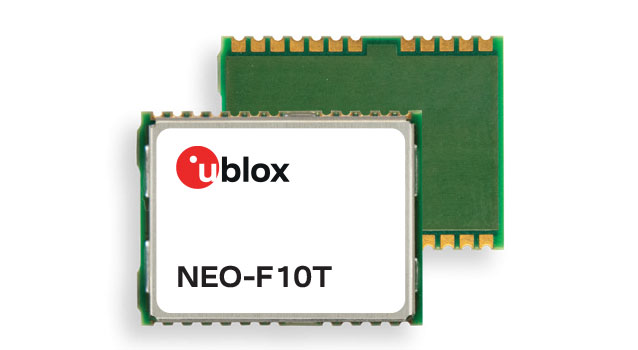
    The u-blox NEO-F10T (Image: u-blox)

    Timing Module
    Dual-band and secure for 5G communications

    The NEO-F10T offers nanosecond-level timing accuracy, meeting the stringent timing requirements for 5G communications. It is compliant with the u-blox NEO form factor (12.2 mm x 16 mm), allowing space-constrained designs to be realized without the need to compromise on size. The NEO-F10T is the successor to the NEO-M8T module, providing an easy upgrade path to dual-band timing technology. This allows NEO-M8T users to access nanosecond-level timing accuracy and enhanced security. Dual-band technology mitigates ionospheric errors and greatly reduces timing errors, without the need of an external GNSS correction service. Additionally, when within the operational area of a satellite-based augmentation system (SBAS), the NEO-F10T offers the possibility to improve the timing performance by using the ionospheric corrections provided by the SBAS system.
    The NEO-F10T supports all four GNSS and L1/L5/E5a configurations, simplifying global deployments. It includes advanced security features such as secure boot, secure interfaces, configuration lock and T-RAIM to provide the highest-level timing integrity and ensure reliable, uninterrupted service.
    u-blox, u-blox.com


    MOBILE

    Image: Unicore Communications
    Image: Unicore Communications

    GNSS RTK Module
    A high precision module for multiple applications

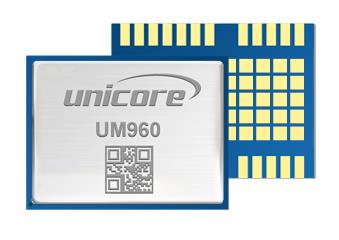
    The UM960 module can be used for a wide range of applications, such as robotic mowers, deformation monitoring, UAVs, handheld GIS, and more. It features a high position fix rate and provides accurate and reliable GNSS positioning data. The UM960 module supports BDS B1I/B2I/B3I/B1c/B2a, GPS L1/L2/L5, Galileo E1/E5b/E5a, GLONASS G1/G2, and QZSS L1/L2/L5. The module also has 1,408 channels. In addition to its small size, the UM960 features low power consumption — less than 450 mW. The UM960 also supports single point positioning and real-time kinematic (RTK) positioning data output at 20 Hz.
    Unicore Communications, unicore.euTualcom

    CRPA System
    A GPS/GNSS anti-jamming system

    This system eliminates interference by applying novel beam forming techniques. With an 8-array CRPA antenna, the system can assure the normal operation of a GNSS receiver in the presence of multiple jamming sources. The anti-jam GNSS CRPA system can be deployed using various configurations and operates with civil and military GPS receivers for land, sea, air platforms (including unmanned aerial systems), and fixed installations. The device has an embedded GNSS receiver that supports all satellite constellations. The device is lightweight and compact. It requires minimal integration training and easily integrates into new or legacy platforms. The antenna also offers assured positioning, navigation and timing.
    Tualcom, tualcom.com

    KP Vehicle Antenna

    IoT Antennas
    Rugged and designed to enhance connectivity

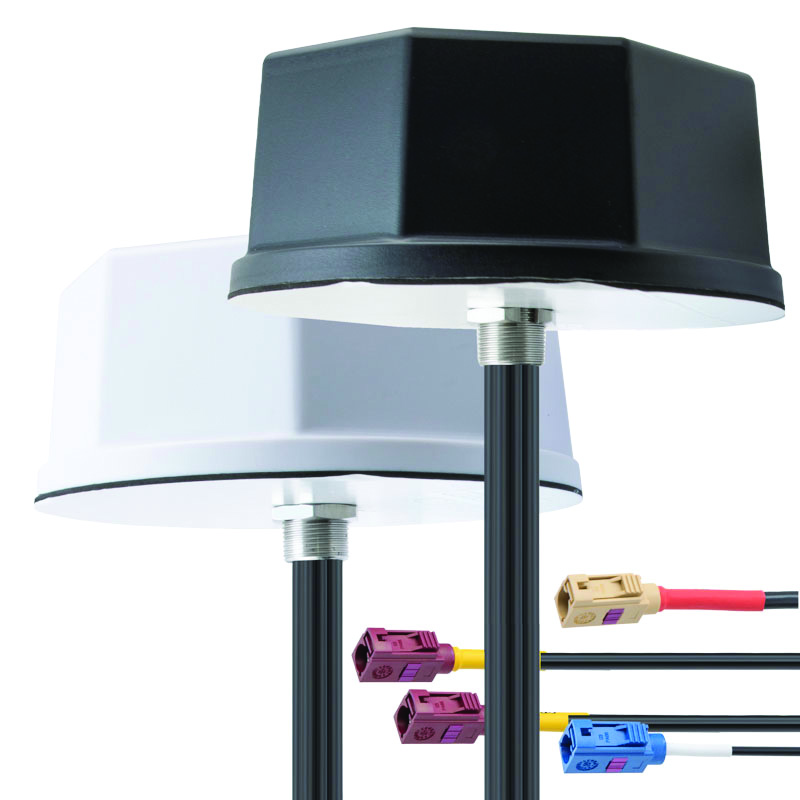
    KP Performance Antennas’ internet of things (IoT) multiband combination antennas are designed to enhance connectivity for vehicle fleets and base stations. The IoT multiband combination antennas have dedicated ports for cellular, Wi-Fi and GPS bands. They are also indoor and outdoor IP69K rated and can withstand harsh environmental conditions, such as extreme temperatures, water and dust. The antennas are suitable for transportation emergency response and agriculture applications. The IoT multiband combination antennas are in-stock and available now.
    KP Performance Antennas, kpperformance.com

    Image: Tallysman Wireless

    Smart Antennas
    With integrated technology for centimeter-accuracy

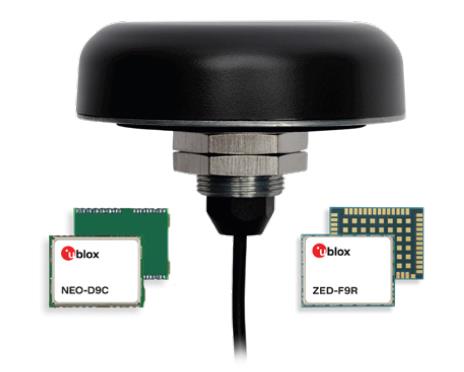
    PointPerfect PPP-RTK augmented smart antennas combine the ZED-F9R high precision GNSS and the NEO-D9S L-band receivers from u-blox and Tallysman Accutenna technology. The multi-band (L1/L2 or L1/L5) architecture removes ionospheric errors, and the multi-stage enhanced XF filtering improves noise immunity while relying on the dual-feed Accutenna element to mitigate multi-path signal interference rejection. Some versions of the new smart antenna solutions include an inertial measurement unit (for dead reckoning) and an integrated L-band corrections receiver to ensure operation beyond terrestrial network reach. The PointPerfect GNSS augmentation service is now available in North America, Europe and parts of Asia Pacific.
    Tallysman Wireless, tallysman.com/u-blox, u-blox.com


    SURVEYING & MAPPING

    Photo:

    Airborne Laser Scanner
    Suitable for mapping applications

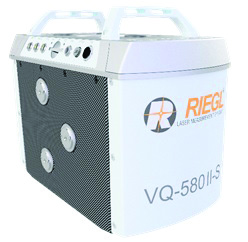
    The compact and lightweight VQ-580 II-S meets the increasing requirements of compact laser scanners for medium- and wide-area mapping as well as for corridor mapping. The successor of the VQ-580 II airborne laser scanner, provides a maximum measurement range of 2.45 m. It can be integrated with gyro-stabilized mounts as well as into the VQX-1 Wing Pod. It features high accuracy ranging based on waveform-lidar technology. The VQ-580 II-S also has a mechanical and electrical interface for inertial measurement unit (IMU)/GNSS integration.
    RIEGL, rieglusa.com

    Photo:

    Tablet and GNSS Solution
    For surveying applications

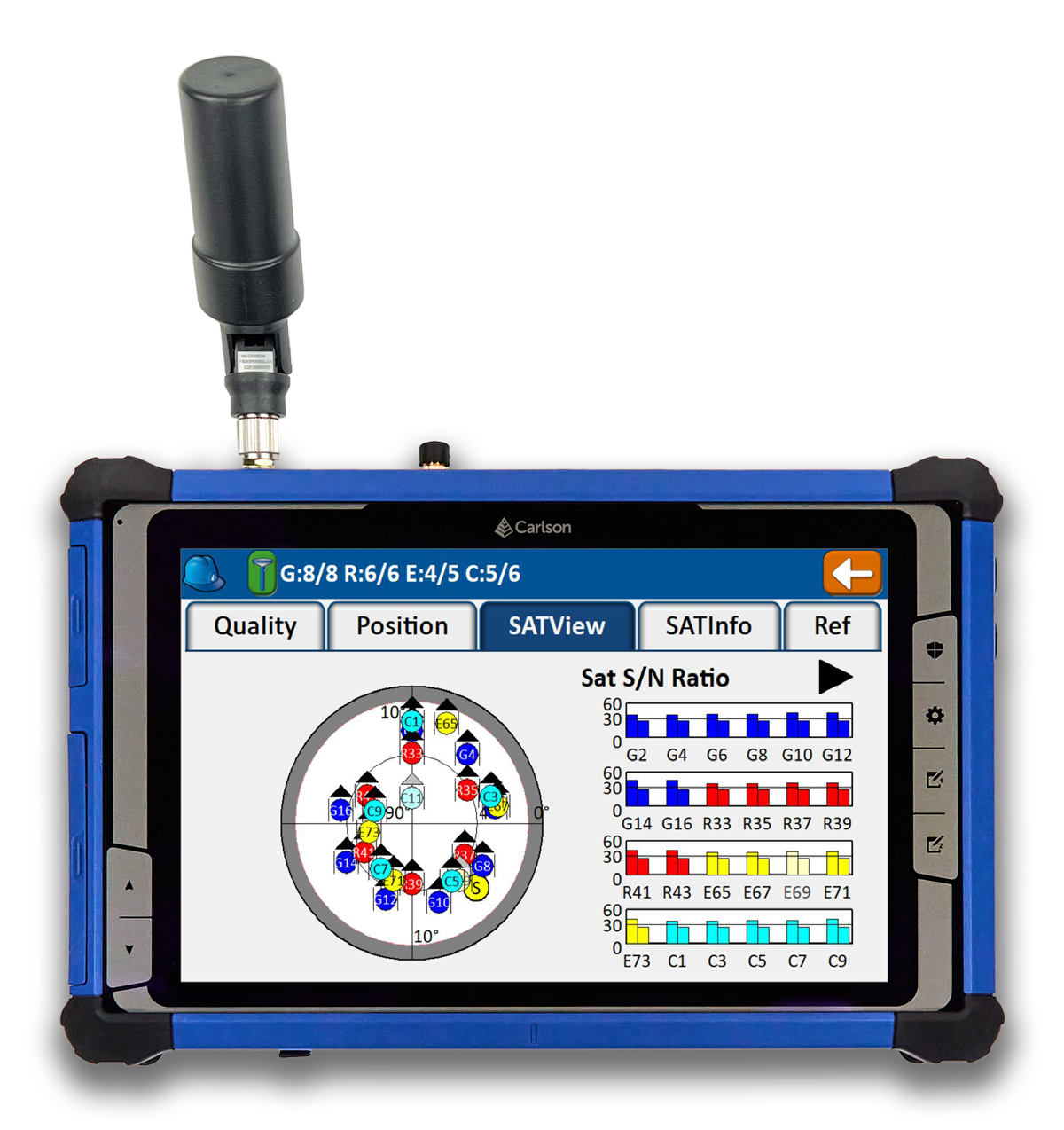
    The RT5 rugged tablet data collector and the RTk5 GNSS solution, which integrate the form factor of the RT5 with real-time kinematic GNSS performance, are suitable for land surveyors, engineers, GIS professionals, and users in need of advanced GNSS positioning with an RTK rover. The RT5 is designed for surveying, stakeouts, construction layout and GIS mapping, and is bundled with Carlson SurvPC — the Windows-based data collection program. The RT5 can run SurvPC with Esri OEM for use in the field. The RTk5 adds an advanced GNSS solution to the RT5, enabling accuracy in a compact, light and versatile package. It comes with a custom-built pole and cradle, a survey-grade antenna, and a small portable helix antenna for handheld GNSS use.
    Carlson Software, carlsonsw.comDJI Enterprise

    Lidar and RGB Solution
    Suitable for aerial surveying

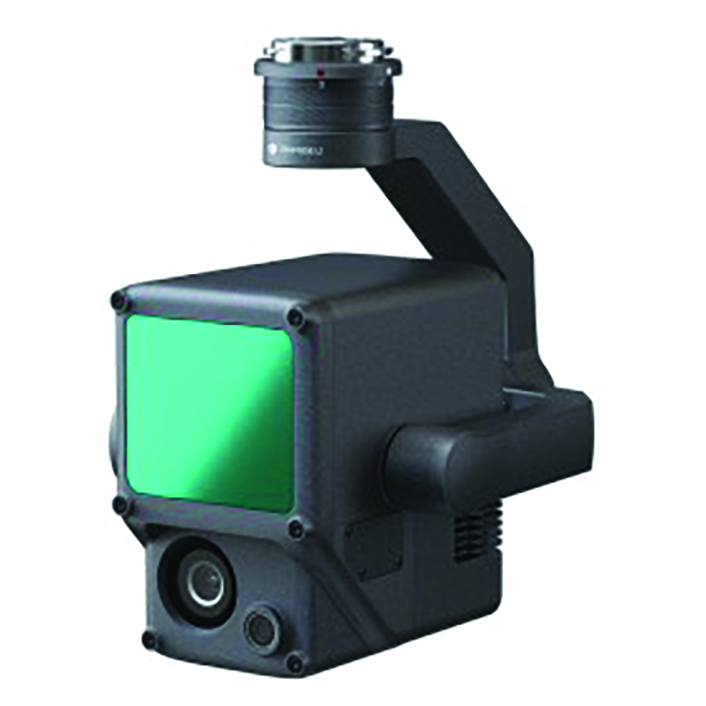
    The Zenmuse L1 integrates a Livox lidar module, a high-accuracy inertial measurement unit (IMU), and a camera with a 1 in CMOS on a 3-axis stabilized gimbal. When used with Matrice 300 real-time kinematic (RTK) and DJI Terra, the L1 forms a complete solution that gives users real-time 3D data, capturing the details of complex structures and delivering highly accurate reconstructed models. Users can render centimeter-accurate reconstructions with the high-accuracy IMU, a vision sensor for positioning accuracy, and the incorporation of GNSS data. The solution’s IP54 rating allows the L1 to be operated in rainy or foggy environments. The lidar module’s active scanning method enables users to fly at night.
    DJI Enterprise, enterprise.dji.com

    Mapping Platform
    Real-time, crowd-sourced map data

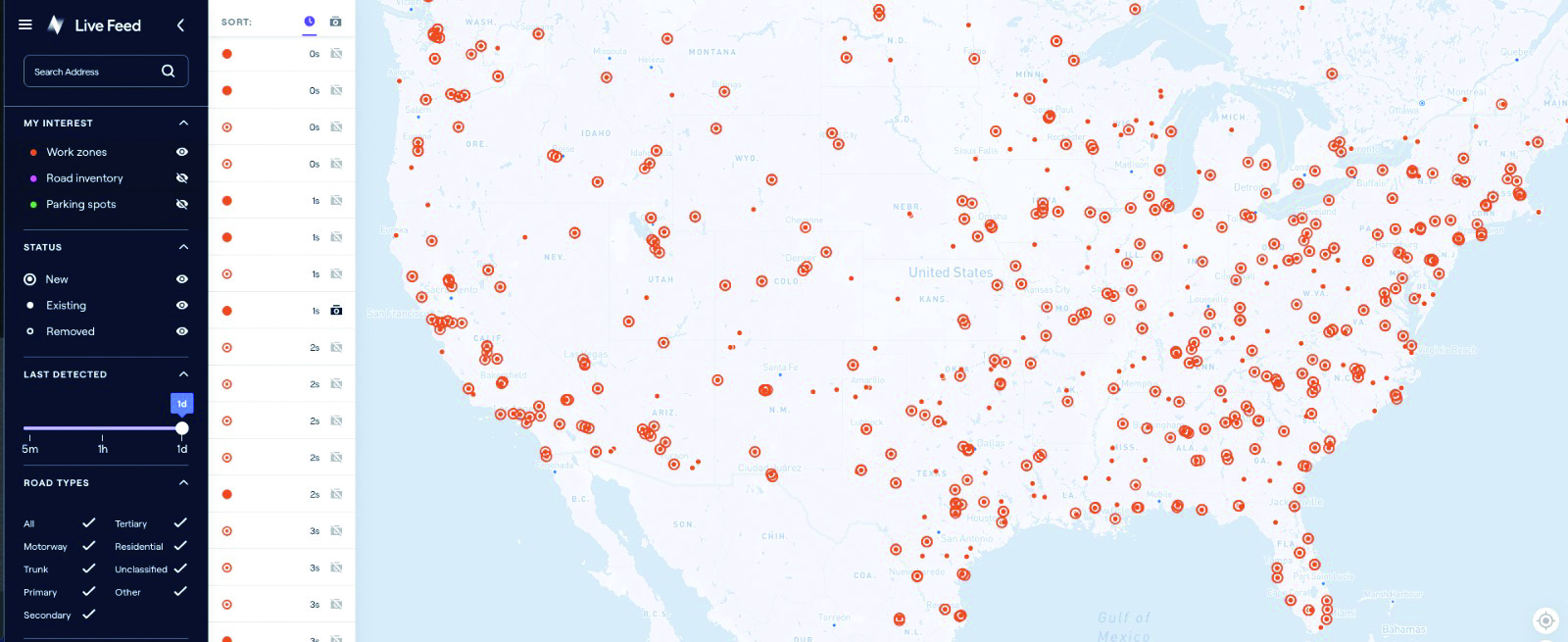
    CityStream Live is a real-time mapping (RTM) platform that enables the mobility industry — including connected vehicles, maps, mobility services, digital twins or smart city applications — to access a continuous stream of crowdsourced road data. This platform provides real-time data on nearly every road across the United States at a reduced cost. Utilizing a crowdsourcing network and artificial intelligence software, CityStream Live offers users and developers a live data feed to increase situational awareness, enhance driving capabilities, increase safety and more. By combining massive data aggregation with real-time data curation, CityStream Live is the first platform to deliver road data streams in real time and at scale, supporting several urban and highway use cases.
    Nexar, us.getnexar.com

    Leica iCON gps 160 (Image: Leica Geosystems)
    Leica iCON gps 160 (Image: Leica Geosystems)

    Smart Antenna
    Contains features that increase productivity on construction sites

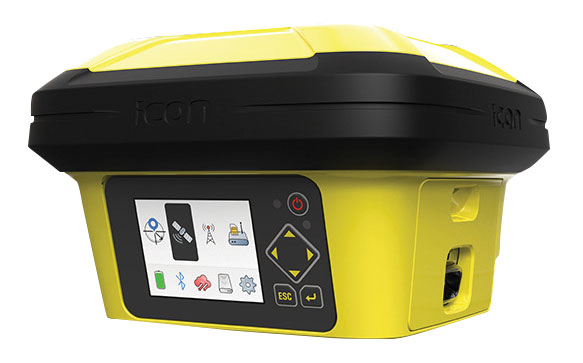
    The iCON gps 160 is a versatile solution for various applications. It can be used as a base station, as a rover or for machine guidance. The device is a modernization and enhancement of the successful Leica iCON gps 60, which has been well accepted in the market. The result is a smaller, more compact GNSS antenna with additional features and a larger display for ease of use. The Leica iCON gps 160 is particularly suited to complex construction environments with different GNSS requirements because the ability to switch between the different applications is at the users’ fingertips. Besides checking grade, cut and fill, stakeout points and lines, users can also benefit from using this solution for basic-level GNSS machine guidance. It has an integrated color display, a user-friendly interface, smart setup wizards and an intuitive construction-specific workflow to help contractors get the most out of their investment from day one. Size and weight reductions make the iCON gps 160 easy to handle, while the latest GNSS and communication technologies improve data reception.
    Leica Geosystems, leica-geosystems.com


    UAVPhoto:

    Positioning Solution
    For UAV delivery applications

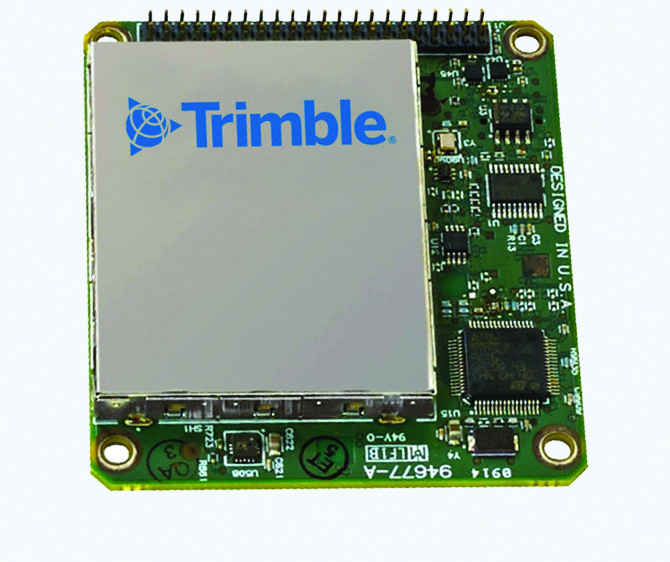
    The PX-1 RTX is designed for accurate, robust positioning and heading for commercial UAV delivery applications. This solution enables UAV integration companies to add precise positioning capabilities so operators can plan and execute takeoff, navigation and landing tasks as UAV delivery advances to take on more challenging operations. The PX-1 RTX leverages CenterPoint RTX corrections and small, high-performance GNSS-inertial hardware to provide real-time, centimeter-level positioning and accurate inertial-derived true heading measurements. This solution allows operators precise control of UAVs during takeoff and landing to tackle more demanding operations in tight or partially obstructed spaces. It also minimizes operational risks from poor sensor performance or magnetic interference by ensuring greater positioning redundancy, which is especially important as commercial UAV delivery operations venture into difficult urban and suburban environments.
    Trimble Applanix, applanix.com

    Certification Reference Guide
    A guide for the AAM industry

    Business and government leaders, engineers, members of the media and any user with an interest in the future of flight can use the Honeywell State of UAS and UAM Certification Guide to help navigate and communicate the complexities of vehicle certification and operational approval across multiple vehicle segments. Industry professionals can access the living document online at aerospace.honeywell.com/us/en/products-and-services/industry/urban-air-mobility. The certification reference guide summarizes evolving Federal Aviation Administration and European Union Aviation Safety Agency rules across multiple advanced air mobility (AAM) segments. It also links to documents that AAM professionals can reference to better understand detailed certification requirements.
    Honeywell Aerospace, aerospace.honeywell.com

    Photo:
    Image: A2Z Drone Delivery

    Delivery UAV
    Suitable for aerial mapping, UAV inspection, forestry services, search and rescue operations, water sample collection, offshore deliveries, mining, and more

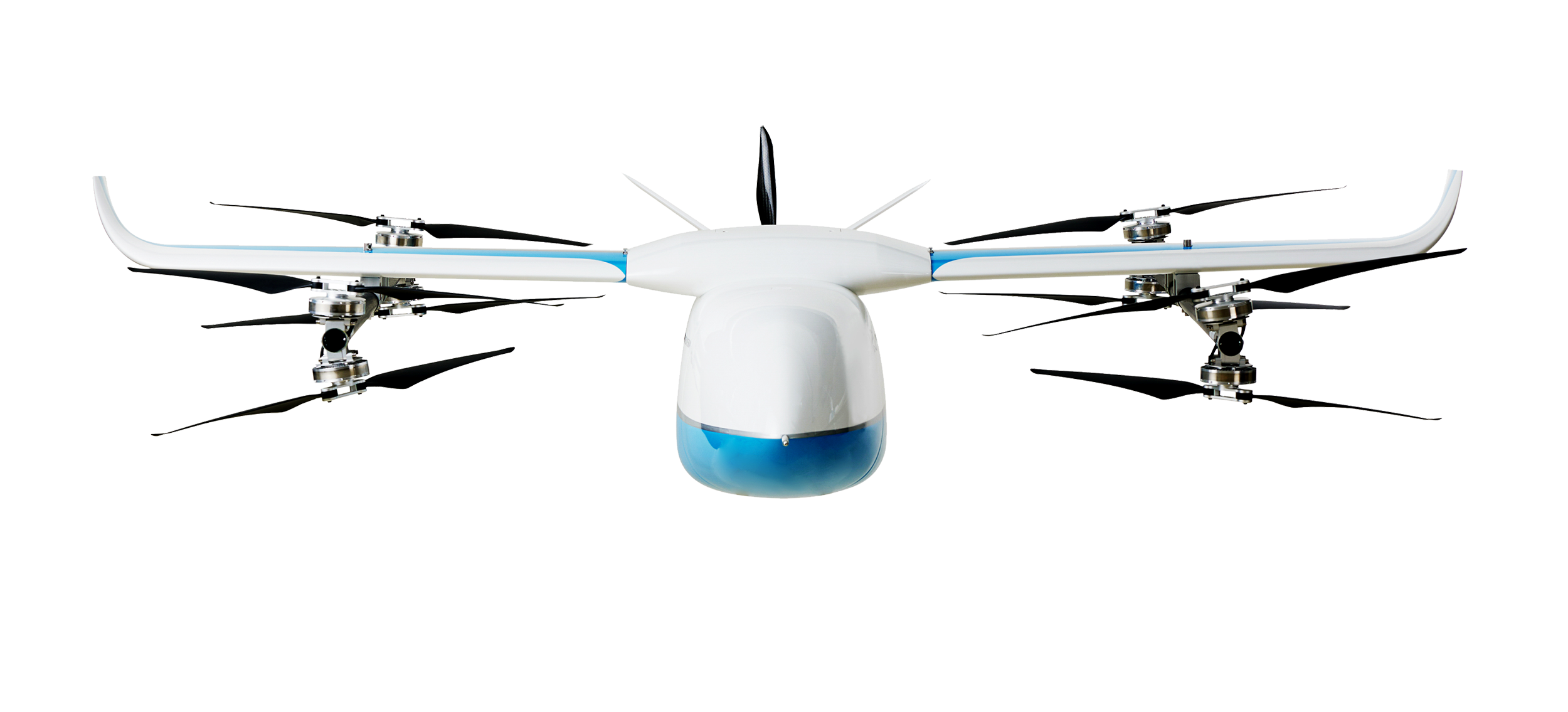
    The RDSX Pelican leverages a hybrid vertical takeoff and landing (VTOL) airframe with no control surfaces to combine the reliability and flight stability of a multirotor platform, with the extended range of a fixed-wing craft. With no ailerons, elevator, or rudder, the Pelican’s durable design eliminates common points of failure and extends operational time between maintenance overhauls. Designed to meet the 55 lb takeoff weight limitation for Federal Aviation Administration Part 107 compliance, the Pelican can carry payloads of 5 kg on missions up to 40 km, roundtrip. The Pelican can be optimized for extended range operations or to deliver payloads from altitude with the company’s RDS2 UAV delivery winch. Available in multiple configurations, the RDSX Pelican can be customized for an array of missions. The Pelican enables deliveries from altitude where spinning propellers are kept far from people and property, mitigating consumer privacy concerns of low-flying UAVs while abating intrusive rotor noise. Alternatively, for missions in which the UAV can safely land at its destination, a simple servo-release mechanism can release payloads and expand the Pelican’s payload capacity.
    A2Z Drone Delivery, a2zdronedelivery.com

    UAS
    Suitable for mapping applications

    The Trinity Pro UAS features Quantum-Skynode autopilot, using a Linux mission computer. This provides additional onboard computing power, increased internal storage, versatility and interoperability. Included in the Trinity Pro system is QBase 3D operations software. As the Trinity Pro is built on the Trinity F90+ UAS, its new capabilities include planning functions for missions requiring takeoff and landing at different locations, allowing for efficient and safe long corridor flights and beyond visual line of sight operations. The platform also incorporates advanced self-diagnostics to ensure safe operation. The UAS now includes an enhanced terrain- following system. Additionally, improvements to trigger point calculations results in improved image overlap and higher data quality. The Trinity Pro features automatic wind simulation for crash avoidance in bad weather and a linear approach for landing. The UAS is equipped with a downfacing lidar scanner that provides highly accurate ground avoidance and landing control. The system features USB-C ports for faster data transfer. The Trinity Pro is protected against dust and water damage and features increased wind limits of up to 14 m/s in cruise mode and 11 m/s during hover.
    Quantum Systems, quantum-systems.com

  • Carlson Software releases multi-application tablet and GNSS solution

    Carlson Software releases multi-application tablet and GNSS solution

    Photo:
    Image: Carlson Software

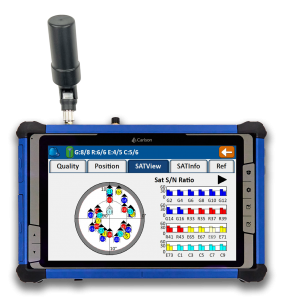
    Carlson Software has released the RT5 rugged tablet data collector and the RTk5 GNSS solution, which integrates the form factor of the RT5 with real-time kinematic GNSS performance.

    The Carlson RT5 is designed for surveying, stake-outs, construction layout and GIS mapping, and is bundled with Carlson SurvPC — the Windows-based data collection program. The RT5 can run SurvPC with Esri OEM for use in the field.

    The Carlson RTk5 adds an advanced GNSS solution to the RT5, enabling accuracy in a compact, light and versatile package. It comes with a custom-built pole and cradle, a survey-grade antenna, and a small portable helix antenna for handheld GNSS use. It is suitable for land surveyors, engineers, GIS professionals, and users in need of advanced GNSS positioning with an RTK rover.

  • Carlson joins with Autel on professional UAS package

    Carlson joins with Autel on professional UAS package

    The Autel EVO II Pro RTK UAS. (Photo: Autel Robotics)
    The Autel EVO II Pro RTK UAS. (Photo: Autel Robotics)

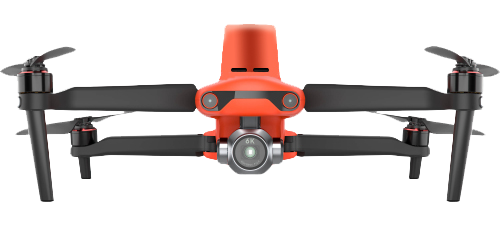
    Carlson Software and Autel Robotics are partnering on the Autel EVO II Pro Series drone to provide drone operators with the opportunity to use the full suite of Carlson’s software and hardware solutions.

    “We can take you through the entire project lifecycle, from setting your ground control points with a BRx7 GNSS receiver and RT4 data collector with SurvPC field software to the actual drone flight to the photo processing on your computer or in the cloud, all the way through to processing that data, creating linework, surfaces, and finished plans in CAD with our powerful, industry-standard office software,” said Derek Roché, Carlson regional manager.

    Carlson’s tools for UAS professionals include:

    • Carlson PhotoCapture, a standalone or cloud-based photogrammetry software to create point clouds, orthoimages, surfaces and more from drone photo data
    • Carlson Point Cloud office software, which provides powerful tools such as bare-earth and automated feature extraction for point clouds
    • Carlson’s suite of CAD office software, including the Carlson Survey program to create finished CAD files and plans
    • Carlson BRx7 GNSS receiver, which can be used both to accurately place ground-control points and as a base to provide corrections to an Autel EVO II Pro RTK drone through Carlson’s Listen-Listen network.

    “The workflow capabilities Carlson already has in place present an excellent choice for land development professionals, and now with the addition of the Autel EVO II series to handle the aerial data collection, we’re proud to offer the most comprehensive option in the industry today.”

    In 2015, Autel Robotics released its first-generation UAS product: the X-STAR. The success of the X-STAR and the subsequent EVO II series allowed Autel Robotics to quickly build a reputation in U.S. markets. With the introduction of the EVO II series and platform in 2020, Autel Robotics will push its folding UAS to new heights in performance and application.

    Carlson specializes in land surveying, construction, engineering, mining, machine control, and CSI solutions for professionals worldwide. In business since 1983, Carlson’s approach has always been to provide its customers with the most efficient, specialized, and powerful tools possible, backed by the best free, unlimited support in the industry.

    Visit Carlson’s Autel EVO II RTK product page here, or find your Carlson sales representative or authorized dealer here.

  • Software simplifies surveying with both GPS and total station

    Software simplifies surveying with both GPS and total station

    Photo: Carlson Software
    Photo: Carlson Software

    A module for SurvCE version 6 software enables surveying with mixed brands of GNSS receivers and total stations. SurvCE is a data-collection software package from Carlson Software. SurvPC Hybrid + provides driver support for numerous devices, allowing the surveyor to interface with both types.

    Features of SurvPC Hybrid+ include:

    Follow Me. An alternative to optical tracking, Follow Me continuously turns the total station towards the prism using the location as determined using GNSS. This eliminates stray reflectors and lengthy searches.

    Smart Lock. The software will automatically detect when a user is slowing to take a measurement and lock on the prism so that it’s ready to go.

    Smart Staking. With smart staking, it will no longer be necessary to maintain optical tracking during stakeout. Stakeout directions are kept fresh using the GNSS receiver as the surveyor approaches a stakeout point. When close to the point, the total station will automatically turn and lock on the prism for the final staking precision needed.

    Cross Check. SurvCE will automatically cross-check the total station and positions determined using GNSS and warn the surveyor when they differ.

    Backup Tracking. With backup tracking, SurvCE will automatically show the position determined using GNSS on the map when the total station isn’t locked.

    Hybrid-Resection. Easy hybrid-resection allows for setup anywhere using positions determined using GNSS to calculate the total station occupied point and orientation. Measurements from the GPS and total station are time-synchronized for an accurate and simple one-tap resection measurement.

    Auto-Localize. Simplify setup by seamlessly auto-localizing the GPS receiver as total-station points are stored.

    Easy Setup Wizard. The easy setup wizard walks users through setup using auto-localization, hybrid resection or hybrid localization, then finishes with a cross-check for quick project start.

  • Carlson introduces BRx7 redesigned GNSS receiver

    Carlson introduces BRx7 redesigned GNSS receiver

    Photo: Carlson Software
    Photo: Carlson Software

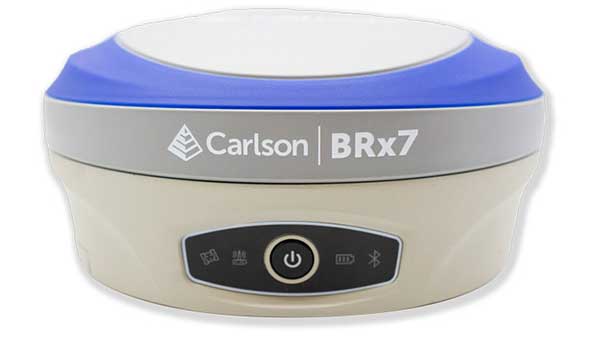
    Carlson Software is now offering its next-generation multi-frequency, multi-GNSS BRx7 smart antenna.

    The BRx7 is a full redesign of Carlson’s flagship GNSS receiver, delivering high-level specifications, performance and value for surveyors, contractors, engineers and GIS professionals.

    Weighing 2.8 pounds with batteries, the BRx7 saves time and increases productivity by accurately compensating for tilt. It comes standard with dual, hot-swappable batteries for 11+ hours of uninterrupted efficiency. The BRx7 provides 800+ channels, 8gb of memory, and is designed with a rugged, compact IP67-rated housing.

    Best-in-class RTK performance is provided by the Athena GNSS engine, supporting multi-frequency GPS, GLONASS, BeiDou, Galileo, QZSS, IRNSS and Atlas L-band capability. In addition, the BRx7 uses proprietary SureFix technology to provide a high-fidelity quality indicator of the RTK solution, allowing users an extremely high confidence in their current accuracy.

    The BRx7 provides RTK baselines up to 50 km with fast acquisition times when used with Carlson Listen-Listen, as well as UHF, spread spectrum, cellular, Bluetooth and Wi-Fi wireless communication.

    Well-suited to a variety of operating modes, the BRx7 can be deployed as a powerful base with additional access to BeiDou phase 3 satellites in a base-rover setup, or as a lightweight, powerful network rover.

    “The BRx7 represents the next generation of GNSS technology,” said Butch Herter, Carlson’s director of hardware development. “Through this total redesign in partnership with our manufacturer, Hemisphere GNSS, we’ve brought the technology and functionality above the competition while retaining the ease-of-use, durability, and superior support that Carlson is known for.”

    The smart antenna comes with a dual-band radio module that is capable of both 400 MHz and 900 MHz operation. This allows for the long range capability of the UHF 400 MHz signal plus the ability to switch to the 900 MHz frequency-hopping spread spectrum (FHSS) signal for better performance in noisy radio environments.

    The BRx7 introduces a new INS-based sensor-fusion platform to support enhanced tilted pole measurements for land survey applications. This new design allows for easy calibration, is immune to magnetic interference, and is extremely reliable in virtually any environment.

    “The BRx7 represents the advanced technology, durability, and ease-of-use that our customers have come to expect,” said Bruce Carlson, founder and president of Carlson Software. “By redesigning this system from the ground up, we are offering our customers both unparalleled performance and versatility, but also a value that’s unbeatable in the market today.”

    For more information about the Carlson BRx7, download the BRx7 brochure or contact your local Carlson representative or Carlson dealer at www.carlsonsw.com/where-to-purchase or call Carlson at 606-564-5028.

  • Carlson offers NR3 compact, lightweight GNSS receiver

    Carlson offers NR3 compact, lightweight GNSS receiver

    Photo: Carlson Software
    Photo: Carlson Software

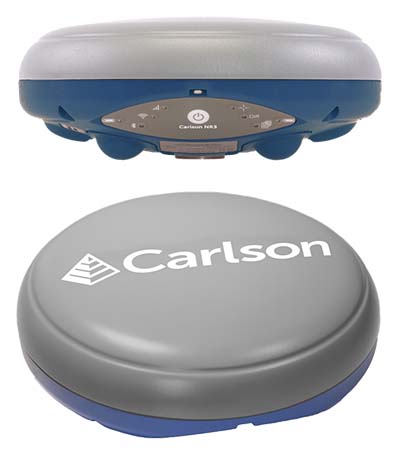
    Carlson Software has introduced a new four-constellation, three-frequency surveying receiver. The Carlson NR3 network rover weighs just under two pounds, but delivers highly reliable GNSS real-time kinematic (RTK) for land surveying, geospatial information systems (GIS) and other data-collection uses.

    Carlson Software President and Founder Bruce Carlson introduced the Carlson NR3 network rover at the company’s Grow With Us  User Conference 2019.

    Able to be used as a base or rover, the NR3 uses all four constellations — GPS, GLONASS, BeiDou and Galileo — and provides triple-frequency tracking on GPS, GlONASS and Galileo, the company said.

    Incorporating multipath and ionospheric detection, the NR3 maintains accuracy and continued operation despite shocks, vibration or other interference.

    According to the company, the NR3 is easy to mount and balance as it utilizes the optional Hybrid+ in Carlson SurvCE/PC that enables simultaneous interaction with GNSS and a robotic total station, the company said.

    ”The NR3 is Carlson’s answer for a lightweight – just 1.8 lbs. – network rover that can also be used in a base rover setup with Carlson’s Listen-Listen service,” said Butch Herter, Carlson’s director of Hardware Development. The Listen-Listen service allows base/rover operations via cellular modem for better correction transmission ranges compared to traditional terrestrial UHF radios.

    “It has hot swappable batteries and four come with the system that give it over a 20-hour runtime,” Herter added. “With the dual internal cell modem antennas, it maintains cell signal where others may not. When paired up with the Carlson CR2+ robot, it is the ideal companion receiver to use with the new SurvCE hybrid surveying system.”

    Produced by Septentrio with Carlson specifications, the Carlson NR3 has an integrated 4G LTE cellular modem, plus Wi-Fi and Bluetooth for modern wireless capabilities and is made to perform exceptionally in locations with bad visibility or interference.

  • Carlson offers Atlas GNSS Correction Service through SurvCE

    Carlson Software is now offering Atlas GNSS global correction service in the latest release of its data-collection software SurvCE.

    Using approximately 200 reference stations worldwide, Atlas produces its correction signals via L-Band satellites distributing coverage from 75° N to 75° S, ensuring Earth’s landmass is covered. Such ability makes it the most flexible service on the market to date, Carlson Software said.

    “Atlas equals or excels beyond the performance standards of other services and interfaces seamlessly with Carlson SurvCE to boot,” said Karl Nicholas, special projects director at Carlson Software.

    Atlas supports multiple RTK-capable GNSS receivers including the current Carlson BRx6. Through Carlson SurvCE’s library of compatible drivers, any third-party GNSS receiver using the Athena engine can also use Atlas.

    Capabilities

    • Positioning Accuracy: Atlas provides positioning accuracies down to 2 cm RMS in certain applications
    • Positioning Sustainability: Cutting-edge position quality maintenance in the absence of correction signals
    • Convergence Time: Industry-leading convergence times of 10 – 40 minutes

    Scalable Service Levels

    • H100: 100 cm 95 percent (50 cm RMS)
    • H30: 30 cm 95 percent (15 cm RMS)
    • H10: 8 cm 95 percent (4 cm RMS)

    Subscriptions to Atlas can be added to the Carlson BRx6 or other supported GNSS receiver when using SurvCE version 5.06 or later through a certified Carlson dealer or at carlsonsw.com/atlas.

  • Case study: Firms collaborate on product development

    Professional GNSS users now expect lightweight, easy-to-use receivers optimized for their particular workflows. Meanwhile, a streamlined manufacturing process means design and production of sophisticated instruments now takes months rather than years, and relies on global teams of networked specialists.

    Carlson Software approached Hemisphere GNSS in early 2015 with the goal of bringing a new GNSS receiver to market, one optimized for land surveyors with high precision, convenience, and small form factor. “We work closely with land surveyors, and we definitely saw a need,” said Carlson’s director of special projects Karl Nicholas. “Our clients were asking for smaller, lighter receivers. We also felt that a new receiver could be better optimized to work with the multiple satellite constellations now available, and with the array of RTK solutions that surveyors use routinely.”

    Hemisphere recognized that a new lightweight receiver would also serve its own marine clients well, especially if it was optimized to work with the company’s Atlas GNSS Global Correction Service as both rover and base station.

    The S321 smart antenna by Hemisphere GNSS.
    The S321 by Hemisphere GNSS. Photo: Hemisphere

    Carlson focuses on computer-assisted design (CAD) software, field data collection, and machine control products for land surveying, civil engineering, construction, and mining. Through the partnership, Hemisphere gained access to a deep knowledge base of how surveyors work with GNSS in real-world conditions, and how to optimize a new receiver for fieldwork of all kinds.

    This aided decisions about interface, form factor, and features. Project dialog between the two companies identified specifications for particular functions and features, as prototypes became available for testing and feedback.

    Specifications included:

    Compact and Durable. A form factor for a smaller receiver had already been developed. “Our hardware design and manufacturing division in China presented a hardware design that we really liked, so we didn’t have to redesign from scratch in that area,” explained Hemisphere senior product manager Lyle Geck. “We were able to move ahead with only minor modifications.”

    Carlson tested rigorously before signing off on the hardware design. “I put mine on top of a two-meter pole and dropped it onto concrete and dirt, and I also tried it out in wet weather — worked fine!” recalled Nicholas.

    Multiple Constellations. “We now have a receiver that works seamlessly right now with GPS, GLONASS, and the Chinese BeiDou system,” added Nicholas. “And when Europe’s Galileo system becomes available, we’ll be ready for it too.”

    RTK, Correction Sources. Hemisphere’s Athena RTK engine, is designed to process the new signals with high-accuracy performance. In addition to traditional RTK correction methods using NTRIP and UHF/900 MHz radios, Hemisphere also provides Atlas, its own L-band correction service: subscription-based, flexible, available over the Earth’s landmass, from approximately 200 reference stations, providing up to sub-decimeter accuracies via L-band satellites or over the Internet.

    The new receiver was also designed with a built-in UHF radio, and multiple wireless communication ports to enable corrections via radio, cellular modem, Wi-Fi, Bluetooth, or serial connections.

    Base Station Capacity.
    The receiver can serve as both rover and base station. “For our marine clients, this receiver is actually more likely to be used as a base station,” said Geck, typically set up in a port for construction or other maritime operations. Not a closed system, it works with Atlas, other protocols like TrimTalk, and with external radios that can be connected as needed.

    Productivity.
    For surveyors, Carlson specified a compass and a tilt sensor so the receiver knows if the pole is vertical, how it’s oriented horizontally, and how to correct for those factors. It works for stakeouts and recovering points; the unit directs the user to the next point graphically, saving time.

    For surveyors in obstructed areas, position reliability will often degrade. “Surveyors are aware of this, but it’s hard to compensate when they don’t have information about just what’s happening with accuracy.” SureFix uses proprietary algorithms and various inputs to give a quality indicator for particular points, for confidence when shooting in difficult multipath conditions, or telling a surveyor to slow down to get the required precision. This improves fieldwork and can eliminate trips back to the field to correct errors.

    Carlson Software leveraged its 30+ years in land surveying, while Hemisphere GNSS added manufacturing experience and GNSS and RTK expertise. The result is a compact receiver, BRx6 from the former and S321 from the latter, tuned for the requirements and workflows of customers’ daily projects.

  • Carlson Mining supports haul trucks


    Carlson Mining 2016 has improvements and added support for AutoCAD 2016 and the new IntelliCAD 8.1. The improvements span the four mining modules: Basic Mining, Geology, Surface Mining, and Underground Mining.

    An upgrade to the Haul Truck Cycle Analysis command now accounts for mixed fleets, delay points and 3D playback of trucks along the haul route.

    In the Underground Mining module, support has been added for multi-level mining with the addition of level labels, allowing the processing of overlapping mine panels with ease.

  • Carlson SurvCE 5.0 Improvements on Display at INTERGEO

    Advanced control for multiple rod heights and prism offsets.
    Advanced control for multiple rod heights and prism offsets.

    Carlson Software experts will be demonstrating the newest abilities of the 5.0 version of SurvCE, its data-collection software, at INTERGEO, being held in Stuttgart, Germany, Sept. 15-17. Carlson will have two stands: indoors at  C8.017 (Hall 8) and outdoors at FG.004.

    SurvCE v. 5.0 software is scheduled to be officially released and available for download following extensive testing and after final enhancements are completed in October. Those buying a new license of SurvCE 4.0 software between now and the release of SurvCE 5.0 will receive an automatic upgrade to 5.0.

    SurvCE 5.0 focuses on speed and power.  A new memory allocator empowers users to do more, faster, opening large drawing and coordinate files with ease.

    Mission Planning user-defined list for obstruction masking.
    Mission Planning user-defined list for obstruction masking.

    Other top new improvements include the following:

    • Enhanced GNSS tilt sensor (IMU) for confirmation of level and the taking of measurements with tilted GPS/GNSS poles (works with selected GNSS such as Stonex and CHC in addition to Carlson);
    • All-new GNSS Mission Planning, which will include GLONASS mission planning;
    • Newly designed two-step stakeout procedure now intuitively and accurately guides the user to his point, delivering easy to follow navigation that shifts to proximity information as he gets close to target;
    • And map-picked, cursor-displayed stakeout and one-pick measurement options.

    CarlsonSurvCE2015Box3DFeaturing hundreds of additions and improvements, Carlson SurvCE 5.0 continues to support the widest range of popular and new release RTK GPS and conventional/robotic total stations of any other data collection software on the market.

    “SurvCE 5.0 is incorporating new emerging technologies like IMU support, while still providing its renowned friendly user environment,” says Jesus Latova, SurvCE product director. “Simplicity and safety are our main focus in developing these new features, together with continuing the extensive instrument support capacity of SurvCE.”

    Carlson SurvCE is both powerful and easy to use, providing users with the options to collect data as they prefer. SurvCE 5.0 will be available in nearly two dozen languages. These include: English, Chinese, Croatian, Czech, Dutch, Finnish, French, German, Greek, Hungarian, Italian, Korean, Polish, Portuguese, Romanian, Russian, Serbian, Spanish, Swediish, Tagalog, and Turkish.

    Hardware from Carlson SoftwareAlso visit the Carlson outside stand (F.004, outside Hall 8) at Intergeo to see and sample its hardware options, produced to work specifically with its popular software. These will include the rugged, fast, and popular Surveyor2 data collector, the BRx5 GNSS receiver, and other equipment recommended by Carlson.

    For more information about SurvCE 5.0 and additional Carlson Software offerings, call 606-564-5028 (U.S.) or +31 36 750 1781 in the Netherlands and ask for your local Carlson representative.

  • Carlson Software Releases Surveyor2 Handheld

    Carlson Software Releases Surveyor2 Handheld

    Carlson Surveyor2
    Carlson Surveyor2

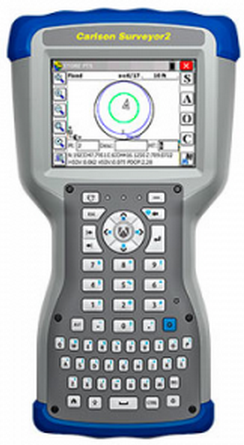
    Carlson Software has released the Carlson Surveyor2, the newest model in its Carlson Surveyor line of data collectors. The Surveyor2 is paired with Carlson’s software to provide a powerful, complete solution for surveying, stake out, construction layout, and GIS mapping, the company said.

    Designed and manufactured by Juniper Systems, the Carlson Surveyor2 is built to withstand the harshest conditions, with an IP68 rating for dust and water and superb durability when dropped or exposed to cold, heat or other rugged environments.

    With minimal increase in weight compared to the original Surveyor, the Surveyor2 offers greater memory and data storage, a faster, 1.0-GHz processor, and significantly improved Bluetooth range — up to 1,500 feet. The data collector also features a new QWERTY keyboard with large buttons for easy data entry, enhanced battery power with 20+ hours of runtime, and a larger, brighter display, providing excellent visibility in any lighting conditions.

    The Surveyor2 runs Windows Embedded Handheld 6.5.3 and can be purchased with Carlson SurvCE 4.0, Carlson’s powerful data collection software. SurvCE offers exceptional usability, with a tab-based menu and advanced graphics for easy-to-use functionality, the company said.

    “The Surveyor2 and SurvCE together create an advanced solution for surveying applications, while maintaining simplicity and ease-of-use,” said Debbie Trolson, geomatics market manager at Juniper Systems. “The Surveyor2 offers significant improvements over its predecessor, providing surveyors with the features they need to perform their work productively and effectively.”

    The Surveyor2 was previewed at INTERGEO 2014.