Q: What is the GNSS/PNT industry “Issue of the Year”?
Jose Angel Avila Rodriguez, signal and security implementation engineer, European Space Agency
A: The growth of PNT applications has been impressive and will continue. Assurance of PNT will thus gain an ever-increasing role, in both the security and the civil domains.
For GNSS, the key PNT contributor, there is in addition another challenge: its piece in the PNT cake will be contested by newcomers, such as telecom networks. Whether we will continue talking about A-GNSS or instead talk about Assisted 5G, with GNSS in that case taking on the role of signal of opportunity — that will depend on today’s decisions about future GNSS upgrades, the modernized versions of Galileo second generation, GPS III, and Beidou/Compass III, that will be flying around 2040.
Gyles Panther, president and CTO, Tallysman Wireless, Inc.
A: The key issues for PNT going forward, and into the indefinite future, are simply stated: availability and accuracy. Re-deployment of the eLoran infrastructure is a no-brainer. A potentially highly negative step would be the introduction of communication services within the mobile satellite L-band downlink frequency band (1525 MHz to 1559 MHz). Multi-constellational receivers track a much larger number of satellites and better disposed SVs (space vehicles) provide a lower horizontal DOP and hence greater accuracy.
Finally, GNSS needs to be defended against interference both intentional and accidental. Why on earth would we want to damage something that is providing so much utility to mankind?
Europe’s next two Galileo navigation satellites have touched down in Europe’s Spaceport in French Guiana ahead of the launch of a quartet by Ariane 5 at the end of this year (scheduled for Dec. 12).
Galileos 19 and 20 left Luxembourg Airport on a Boeing 747 cargo jet on the morning of Sept. 18, arriving at Cayenne — Félix Eboué Airport in French Guiana that evening.
Safely cocooned within protective air-conditioned containers, the pair were offloaded and driven to the cleanroom environment of the preparation building within the space centre.
A Galileo satellite in its protective container is unloaded from its cargo plane after landing in French Guiana Sept. 18. (Photo: ESA)
This building will remain their home as preparations for their launch proceeds, with the next two Galileos due to join them later this month.
The satellites join the first elements of their customised Ariane 5 at the centre — including its cryogenic main stage and half-shell payload fairing — which were delivered by ship the week before.
Galileo is Europe’s own satellite navigation system, providing an array of positioning, navigation and timing services to Europe and the world.
A further eight Galileo “Batch 3” satellites were ordered last June, to supplement the 26 built so far.
A Galileo satellite is driven to the Guiana Space Centre following its arrival on Sept. 18. (Photo: ESA)
With 18 satellites now in orbit, Galileo began initial services on Dec. 15, 2016, the first step towards full operations.
Further launches will continue to build the constellation, which will gradually improve performance and availability worldwide.
Arianespace will launch four new satellites for the Galileo constellation, using two Ariane 62 versions of the next-generation Ariane 6 rocket from the Guiana Space Center in French Guiana.
The Ariane 62 rocket. (Image: Arianespace)
The contract will be conducted by the European Space Agency (ESA) on behalf of the European Commission (DG Growth) and the European Union.
This is the first ESA first contract to use the company’s new rocket.
Stéphane Israël, Arianespace chief executive officer, and Paul Verhoef, director of Navigation at the European Space Agency (ESA), signed the launch contract for four new satellites to join the European satellite navigation system Galileo. The contract will be conducted by ESA on behalf of the European Commission (DG Growth).
These launches are planned between the end of 2020 and mid-2021, using two Ariane 62 launchers — the configuration of Europe’s new-generation launch vehicle that is best suited for the targeted orbit. The contract also provides for the possibility of using the Soyuz launch vehicle from the Guiana Space Center, if needed.
Both missions will carry a pair of Galileo spacecraft to continue the constellation deployment for Europe’s satellite-based navigation system. The satellites, each weighing approximately 750 kg, will be placed in medium earth orbit (MEO) at an altitude of 23,222 kilometers and be part of the Galileo satellite navigation constellation.
An ESA video about Ariane 6 is below:
Galileo is the first joint infrastructure financed by the European Union, which also will be the owner. The Galileo system incorporates innovative technologies developed in Europe for the greater benefit of citizens worldwide.
A total of 18 Galileo satellites already are in orbit. Fourteen of these satellites were launched two at a time by Soyuz launchers, with the last four orbited on a single Ariane 5 ES mission in November 2016. Two more Ariane 5 ES missions are planned on December 12, 2017 and in the summer of 2018.
Following the signing of this latest contract, Stéphane Israël, CEO of Arianespace, issued this statement:
“Arianespace is especially proud to have won this first launch contract for the Ariane 6 from its loyal customers and partners, the European Commission (DG Growth) and ESA. We are very pleased to have earned this expression of trust from the European Commission; by choosing to continue the deployment of the Galileo constellation with two Ariane 62 launches, they become the first confirmed customer for our next-generation heavy launcher, which is slated to make its initial flight in the summer of 2020. Through this decision, which adds two additional launches to follow the already-scheduled Ariane 5 ES flights, the European Commission and ESA are clearly indicating a key commitment to Arianespace’s next generation of launchers, which reaffirms more than ever its mission to ensure Europe’s autonomous access to space.”
Enclosed in its protective container, Galileo Full Operational Capability (FOC) Flight Model 21 (FM21) is seen departing ESA’s ESTEC Test Centre on Aug. 24. Photos courtesy of the European Space Agency
News from the European Space Agency
The last of 22 Galileo satellites has departed the European Space Agency’s (ESA) Test Centre in the Netherlands. This concludes the single longest and largest scale test campaign in the establishment’s history, ESA said.
Cocooned in a protective container for its journey — equipped with air conditioning, temperature control and shock absorbers — the final Galileo satellite left the establishment by lorry on Aug. 24.
ESA’s Test Centre at ESTEC in Noordwijk, the Netherlands, houses a collection of test equipment to simulate all aspects of spaceflight. It is operated for ESA by private company European Test Services (ETS) B.V.
In May 2013, the Test Centre began testing the first of 22 Galileo “Full Operational Capability” (FOC) satellites, having previously performed the same function for the very first Galileo “In-Orbit Validation” satellite under a separate contract.
Pictured is a Galileo Full Operational Capability satellite being removed from the Phenix thermal vacuum chamber after a fortnight-long “hot and cold” vacuum test.
The Galileo FOC satellites had their platforms built by OHB System AG in Germany, incorporating navigation payloads coming from Surrey Satellite Technology Ltd. in the United Kingdom. They then traveled on to ESTEC to be subjected to the equivalent vibration, acoustic noise, vacuum and temperature extremes that they will experience for real during their launch and orbit, plus testing of their radio systems.
With a steady stream of satellites coming off the production line, the challenge for the combined ETS and OHB team overseeing Galileo testing was to put them through all necessary tests on a rapid and efficient basis, while also keeping the Test Centre accessible to other European missions requiring its unique services.
A total of 14 FOC satellites have since joined the first four IOV satellites in orbit, forming an 18-strong constellation that began Initial Services to global users on Dec. 15, 2016. The next four FOC satellites are scheduled for launch on an Ariane on Dec. 5.
Europe’s Galileo navigation satellites orbit 23 222 km above Earth to provide positioning, navigation and timing information all across the globe.
“For the first time in more than four years, there are no Galileo satellites in the Test Centre, but hopefully this will not be the end of our association with the programme,” said Jörg Selle, managing director for ETS. “The contract for making the next eight Galileo satellites — known as Batch 3 — was also awarded to OHB last June, and ETS will be bidding for the contract to test these satellites too.”
“The availability of the ETS facilities in ESTEC have substantially contributed to the programme,” said Paul Verhoef, ESA director of the Galileo Programme and navigation-related activities. “We thank ETS for their professionalism and support over this extended period.”
The final Galileo travelled back to OHB in Germany for some final refurbishment ahead of its launch together with another three satellites in December.
The European Space Agency (ESA) and the U.S. National Aeronautics and Space Administration (NASA) are conducting a joint GPS/Galileo space receiver experiment onboard the International Space Station (ISS). This will be the first time that a combined GPS/Galileo receiver will operate in space.
The project aims to demonstrate the robustness of a combined GPS/Galileo waveform uploaded to NfASA hardware already operating in the challenging space environment: the Space Communications and Navigation (SCaN) software-defined radio testbed.
Testing activities include analysis of the GPS/Galileo signal and onboard position/velocity/time (PVT) performance; processing of code- and carrier-phase GPS/Galileo raw data for precise orbit determination (POD); and validating the added value of a space-borne dual-GNSS receiver compared to a single-system receiver under the same conditions.
This collaboration was initiated in 2014 and a Technical Understanding was signed in 2016.
Many new space applications may not be possible if constrained to using the limited signal availability associated with any single constellation of GNSS satellites.
This research therefore seeks to demonstrate the enhanced capabilities brought by the use of satellites from two or more GNSS constellations in the space domain. The net result will be more resilient space operations, greater mission flexibility, and enhanced PVT performance.
The project is currently in the testing and verification phase, and it is expected that the final implementation of the combined GPS/Galileo waveform on NASA’s SCaN Testbed on-board the ISS will be completed in September/October 2017, so that the initial operations of the first combined GPS/Galileo receiver in space can start in the October/November 2017 timeframe.
The researchers plan to present preliminary results at the UN International Committee on GNSS (ICG)-12 in Kyoto, Japan in December.
From ESA’s side, ESOC’s Navigation Support Office (NavSO) and ESTEC Experts for Radio Navigation Systems and Techniques (TEC-ESN) are involved in this project.
The overall project management from ESA’s side and POD aspects are covered by NavSO, and ESTEC’s Technical Directorate is in charge of the Galileo waveform development and implementation of the SW on the FPGA in cooperation with NASA. This activity is done with technical support from industry participants such as Qascom. Industry participation is a vital component as new markets for multi-GNSS receivers and complex space applications continue to emerge.
From NASA’s side, the project is sponsored by the Space Communications and Navigation (SCaN) Program within the Human Exploration and Operations Mission Directorate (HEOMD) at NASA Headquarters in Washington D.C. Integration and experimentation activities are being performed by the NASA Glenn Research Center.
NASA has initiated an international effort within the ICG to develop a fully interoperable multi-GNSS Space Service Volume (SSV), where a combination of constellation services will be available well above low-Earth orbit (LEO) to support newly emerging geostationary Earth orbit (GEO) and high-Earth orbit (HEO) missions — ranging from more precise station keeping to extend GEO belt capacity and maneuver recovery to enabling formation flyers and satellite servicing operations.
WERNER ENDERLE is head of Navigation Office, Ground Systems Engineering Department at the European Space Operations Centre of the European Space Agency.
JAMES J. MILLER is deputy director, Policy & Strategic Communications – Space Communications and Navigation in the Human Exploration and Operations Mission Directorate at NASA headquarters.
Anomalous GPS Signals from SVN49
By Fabio Dovis, Nicola Linty, Mattia Berardo, Calogero Cristodaro, Alex Minetto, Lam Nguyen Hong, Marco Pini, Gianluca Falco, Emanuela Falletti, Davide Margaria, Gianluca Marucco, Beatrice Motella, Mario Nicola and Micaela Troglia Gamba
Researchers at the Navigation Signal Analysis and Simulation (NavSAS) Group of the Politecnico di Torino detected in mid-May the presence of anomalous spikes in the L1 signal spectrum. The origin of the spikes was identified to be transmission of a non-standard code from a non-operational GPS satellite (GPS IIF-9, SVN49). Here we report on signal observations and address possible impacts on GNSS signal processing.
On May 17, 2017, during outdoor data collection, NavSAS researchers detected two spikes in the L1 spectrum, with sufficient power to be clearly visible on a display processing raw digital samples at the receiver’s intermediate frequency.
An initial check looked for a possible interfering source in the experimental set-up, since it was quite complex with multiple pieces of electronic equipment. The likelihood of this source was soon dispelled as the same kind of spectrum was visible on a spectrum analyzer (SA) connected to an active survey-grade GNSS antenna on the lab roof; results shown in FIGURE 1.
The spectrum is centered at 1575.42 MHz, with the SA set to a frequency span of 5 MHz. Connecting the SA to different survey-grade antennas on the roof, we found no remarkable differences. The spikes continued to appear on subsequent days, becoming clearly visible around 13:00 UTC and disappearing around 19:00 UTC.
Figure 1. L1 Spectrum of the received signal at 16:51 (Central European Summer Time; 14:51 UTC) on May 19, 2017, at the NavSAS Lab, Torino (located at 45°03’54.98767″ N, 7°39’32.28920″ E, 311.9667 meters).
Exclusion of Terrestrial Sources. The 24-hour repetition period of the phenomenon, along with the shape of the spectrum, could indicate the presence of a signal anomaly from a GNSS satellite. In a battery of tests, we probed the L1 spectrum in a wider area using assorted equipment.
For various reasons, we ended up focusing on a non-operational satellite: SVN49, launched March 24, 2009. We concluded that transmission of a non-standard code (NSC) from this satellite was the origin of the problem in the L1 spectrum.
Transmission of NSCs for testing purposes is foreseen in the GPS Interface Specification, IS-GPS-200. GPS satellites can switch off regular broadcasts of C/A code and P/Y code and transmit a non-standard C/A code and non-standard Y code.
Such operation is intended to protect users from receiving and utilizing erroneous satellite signals in case of unhealthy conditions on the spacecraft. Strictly speaking, this case cannot be formally considered as an “anomaly,” because the transmission of non-standard codes is documented in the IS-GPS-200.
Therefore, the transmission of an NSC can be considered a normal operation in itself, though it may reflect a problem with the transmitting satellite.
In this case the choice of the spreading sequence, which is likely a square wave, allowed the total power of the signal to be concentrated in just a few spectral components, thus originating continuous-wave-like in-band signals.
The distribution of the harmonics, the main components of which are at ±500 kHz, and the presence of the odd harmonics only, matches an earlier case in 2006 of a transmission of an NSC modulated as a binary-phase-shift-keying (BPSK) sequence with alternating logical 0s and 1s, transmitted at the C/A code chipping rate (Rc=1.023 megachips per second). The hypothesis of the BPSK with Rc=1.023 megachips per second spreading signal has been verified by simulation.
However, the NSC is designed to have negligible effect on tracking other healthy GPS satellite signals. Nonetheless, an NSC transmission can have a non-negligible impact in performance of user equipment.
When a GPS satellite is switched to NSC mode, a receiver immediately loses its capability to track that satellite signal. This is not the case with SVN49, as it is currently declared non-operational. However, due to the modified code sequence, a further effect is possible: the NSC introduces irregular components at a sustained level in the GPS signal spectrum.
According to Notice Advisory to Navstar Users (NANU) 2017001, SVN49 was broadcasting standard signals as PRN04 (though set unhealthy) since the beginning of the year; NANU 2017042 announced that PRN04 was to be re-allocated to SVN38 on May 18.
This switch matches the dates when we started to see the spikes, since, probably, SVN49 started that day to use the “square wave” for the spreading.
Implementing the square wave local code, it has been possible to successfully acquire and track the NSC.
The real-time software receiver N-Gene has been forced to acquire and track in real time the signal coming from SVN49. The receiver decoded the navigation message transmitted by SVN49, which exhibits a regular format, even if marked with an unhealthy flag.
Impact on Receiver Processing. Interference with harmonic components such as those generated by the use of a square wave could strongly impact a GNSS receiver in the acquisition and tracking blocks, because the interference power is dispersed over the whole search space by the correlation with the local code, compromising the acquisition accuracy and impacting other functional blocks.
The impact of interference spectral lines depends on their location within the frequency band. This is due to the almost periodic nature of the GNSS signals. The spectrum of a GNSS signal has components spaced at multiples of the inverse of the code period (for example, 1 kHz for GPS C/A code) with different power allocated to each component depending on the shape of the code spectrum.
The effect is larger in the case of matching of the interference spectral components with the ones of the GNSS signal. Furthermore, in this case, the strongest harmonics are close to the L1 carrier frequency and are not mitigated by the front-end filter since they fall within its narrow bandwidth.
The overall GNSS scenario has changed a lot recently. Galileo and BeiDou are also present, and Galileo signals, due to the different structure and code periods, have spectral lines spaced at 0.25 kHz. The frequency modulation of the interfering signal due to the variable Doppler shift is thus even more likely to hit some of the spectral components of these signals.
We are investigating further to assess the impact of the interfering signal from SVN49 on Galileo-based high accuracy applications.
U.S. Air Force Response
The 2nd Space Operations Squadron is performing maintenance on a presently non-operational satellite. SVN49 is broadcasting non-standard C/A and non-standard Y codes as described in IS-GPS-200. Space professionals continue to conduct safe and responsible command and control of the constellation to continue to provide accuracy that exceeds established system requirements.
As always, GPS users who experience issues should address them through the appropriate channels: military users should contact DSN 560-2541, commercial 719-567-2541 while civilian users should contact the U.S. Coast Guard Navigation Center at 703-313-5900.
Very Respectfully,
Nicholas J. Mercurio, Capt., USAF Director, 14th Air Force/JFCC SPACE Public Affairs
After four years of work, the European Space Agency (ESA) team tasked with keeping the world informed on the status of the Galileo satellite navigation system has formally passed on its responsibility to a European Union agency.
This shift is part of a wider transfer of responsibilities, as this month see the official handover of the running of the Galileo system from ESA to the European Global Navigation Satellite System Agency (GSA).
“Our job — working with the European Commission and GSA — has been to inform Galileo users in an official, transparent way of any system changes that could affect Galileo satellites,” explains Rafael Lucas Rodriguez, ESA’s Galileo services engineering manager.
“Keeping our users in the picture on planned activities that might lead to satellite unavailability, or any unplanned outages, has helped them to plan their own test activities around Galileo signals and to prepare future products.”
The very first Notice Advisory to Galileo Users (NAGU) was issued in June 2013, just three months after the first Galileo positioning fix was achieved, to a then small community of researchers and industrial users, interested in making tests with the newborn four-satellite constellation.
A total of 189 NAGUs were issued under ESA oversight in the last four years, as the constellation grew to its current 18 satellites. The user base increased dramatically from 86 to 774 registered users on the European GNSS Service Centre website as companies worked to prepare Galileo-ready products and then, on 15 December 2016, Galileo’s Initial Services began operating.
GSC web portal 2013.
Throughout this period, the NAGUs, published on the website of the European GNSS Service Centre and sent to subscribers via email, gave the user community a reliable overview of Galileo’s overall status and that of individual satellites.
NAGUs are issued as new satellites are launched and when satellites become ready for service provision, or to give advance warning of signal unavailability owing to planned maintenance or testing activities, or to notify users of unplanned outages and then to inform them when satellites become active again.
“Broadcom is a regular consumer of the NAGUs released by the Galileo Service Centre,” says Javier de Salas, R&D Director at GNSS receiver chipset manufacturer Broadcom.
“Not only do they help us to organise our engineering activities and tests but, more importantly, they are used as input into our orbit prediction engine for our Long Term Orbits products, which in turn are used by hundreds of millions of consumers worldwide.”
Rafael Lucas of the ESA team adds, “Around a dozen people at ESA worked to begin defining, setting up and operationalising the NAGU process, modelled after the well-established Notice Advisory to Navstar Users of GPS.
The invisible signals that Europe’s Galileo satellites are beaming down to the world are officially award-winning: the team behind their design has won the European Inventor Award, run by the European Patent Office, reports the European Space Agency.
Just like the Galileo satellites and their globe-spanning ground stations, the Galileo signals themselves needed to be designed, having to pack multiple Galileo services aimed at different classes of users within the limited frequency bands allocated for the system by the International Telecommunications Union.
This task was accomplished by the Galileo Signal Task Force, a multinational group of experts who came up with a pair of innovative signal modulation techniques.
This team was led by Spanish engineer José Ángel Ávila Rodríguez – now part of ESA’s Galileo team – and his French colleague Laurent Lestarquit from France’s CNES space agency, sharing in the European Patent Office’s European Inventor Award 2017.
The team also includes German Günter Hein, formerly head of the department studying the evolution of EGNOS and Galileo for ESA, as well as Belgian Engineer Lionel Ries, now in ESA’s technical directorate, as well as French CNES engineer Jean-Luc Issler.
“When the nations of Europe work together, the whole world benefits,” said José.
With 18 satellites now in orbit, Galileo began Initial Services on 15 December 2016, so the two signals the team devised are now everyday reality.
They took as their inspiration the GPS system, with signal shapes first designed back in the 1960s, but first fulfilling user needs today.
The first signal technique is called Alternative Binary Offset Carrier modulation, or ‘AltBOC’ for short, combining four separate signals into one large ones – resulting in the largest bandwidth navigation signal ever transmitted.
When used in its full performance AltBOC can support precision scientific applications such as geodetic measurements and seismic monitoring.
The second modulation method, called Composite Binary Offset Carrier or ‘CBOC’, results in a signal for use by the mass market, possessing both narrowband and wideband components.
The result is a signal that can work well with low-end receivers – such as those found in current smartphones – while the wideband component ‘future proofs’ the signal, allowing manufacturers to extend mass market receiver performance in the future.
The other goal CBOC had to match was to be interoperable with GPS signals, allowing receivers to use both sets of signals at once on a seamless basis.
With China planning to use a comparable CBOC-style solution for their Beidou satnav satellites, the resulting Galileo E1 Open Signal is set to become the new standard for mass market applications for the foreseeable future.
The European Space Agency (ESA) has signed a contract with Thales Alenia Space for an upgrade to Europe’s EGNOS satellite navigation augmentation system, which underpins the safety-critical use of satnav across Europe, according to ESA.
Designed by ESA and being exploited by Europe’s GNSS Agency (GSA), the European Geostationary Navigation Overlay Service (EGNOS) improves the precision of GPS signals over most European territory, while also providing continuous and reliable updates on the “integrity” of these GPS signals.
A network of ground monitoring stations throughout Europe performs an independent measurement of GPS signals, so that corrections can be calculated, and then passed to users immediately via a trio of geostationary satellites.
The result is that the EGNOS-augmented signals are guaranteed to meet the extremely high performance standards set out by the International Civil Aviation Organisation standard, adapted for Europe by Eurocontrol, the European Organisation for the Safety of Air Navigation.
Paul Verhoef, ESA director of the Galileo Program, and Philippe Blatt, VP Thales Alenia Space France, sign on June 6 a contract for an upgrade of EGNOS.
Paul Verhoef, ESA’s director of the Galileo programme and navigation-related activities, signed the contract at ESA Headquarters in Paris with Philippe Blatt, vice president of Thales Alenia Space France.
ESA is performing the procurement of EGNOS Version 2.4.2 under the overall program authority of the GSA, which oversees both EGNOS and Europe’s Galileo satellite navigation system.
Two upgraded EGNOS releases will be provided over the course of the development: EGNOS V2.4.2I and EGNOS V2.4.2A.
The releases will resolve various obsolescence issues related to EGNOS’s central processing facility, based in Toulouse, France — which generates the corrections and integrity information to be broadcast across the European continent — to ensure continuity of EGNOS services into the future, including safety-of-life services, to an ever-expanding community of users.
The new contract includes:
a refreshment and enhancement of the Central Processing Facility design without algorithm modification
an optimized qualification process
a guarantee of full compliance to safety-critical software development requirements
the performance of end-to-end verification activities extending to the three geostationary satellites used by the system
ensuring compliance to a new set of technical requirements and international standards.
José Ángel Ávila Rodríguez (left)) and Laurent Lestarquit holding a satellite model. (Credit: ESA)
The engineering team behind the signal technology underpinning Europe’s Galileo satellite navigation system has reached the final of this year’s European Inventor Award, run by the European Patent Office, reported the European Space Agency.
The team is led by Spanish engineer José Ángel Ávila Rodríguez — now part of ESA’s Galileo team — and his French colleague Laurent Lestarquit from France’s CNES space agency.
The team also includes German Günter Hein, formerly head of the department studying the evolution of EGNOS and Galileo for ESA, as well as Belgian Engineer Lionel Ries, now in ESA’s technical directorate, as well as French CNES engineer Jean-Luc Issler.
The engineers, who had previously worked together as members of the multinational Galileo Signal Task Force, came up with a pair of innovative signal modulation techniques to pack multiple Galileo signals together, simultaneously serving different sets of users while boosting signal performance and robustness. Both innovations have been adopted by Galileo and are in use today.
The first technique, called Alternative Binary Offset Carrier modulation — AltBOC — combines four signals into one large one, resulting in the widest bandwidth navigation signal ever transmitted. Two of these signals are sitting on the one carrier, namely E5a, while the other two are on E5b.
“AltBOC is a way of transmitting four components in a very wide bandwidth signal, using a single radio frequency chain on the satellite in an intelligent way, where originally two chains would have been needed to transmit in two separate frequency bands (E5a and E5b),” explains José Ángel, now ESA’s global navigation satellite system evolution signal and security principal engineer for Galileo.
“The result is a frequency-rich signal that fundamentally improves positioning performance and robustness.
“AltBOC is interoperable with GPS in E5a/L5 and allows receiver manufacturers to process it as one very large signal – extending over the whole E5a and E5b range – or as two separate signals, one at each frequency carrier (E5a or E5b).
“AltBOC serves open service users in general. Moreover, when used in its full performance mode (E5a+E5b), it also facilitates geodetic and precision scientific applications such as gradual tectonic motion, or the use of accurate positioning on Earth — including proposed ‘reflectometry’ missions to make altimetry measurements from satnav signals reflected from Earth’s surface.
“But the application of AltBOC could go beyond the current use by providing accurate positioning to satellites in space thanks to its unique bandwidth characteristics.”
The European Space Agency (ESA) issued a press release addressing the Galileo clock failures reported Jan. 18. GPS World Innovation editor Richard Langley provided the following summary of the satellites and clocks involved, based on information we have received to date.
5 satellites affected: 3 IOVs, 2 FOCs
Total of 10 failures; 1 fixed; so 9 continuing failures
5 masers on IOV satellites
2 masers on FOC satellites but 1 of these fixed
3 rubidiums on FOC satellites
No satellite currently has fewer than 2 working clocks
The ESA press release provides additional details on the failures and actions being taken to address the problem.
Press Release from the European Space Agency
As first reported November 2016, anomalies have been noted in the atomic clocks serving Europe’s Galileo satellites.
Anomalies have occurred on five out of 18 Galileo satellites in orbit, although all satellites continue to operate well and the provision of Galileo Initial Services has not been affected.
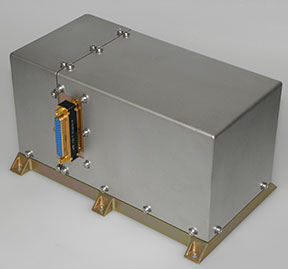
Highly accurate timing is core to satellite navigation. Each Galileo carries four atomic clocks to ensure strong, quadruple redundancy of the timing subsystem: two Rubidium Atomic Frequency Standard (RAFS) clocks and two Passive Hydrogen Maser (PHM) clocks.
The current Galileo constellation consists of 18 satellites in orbit, adding up to a total of 36 RAFS clocks and 36 PHM clocks.
Rubidium atomic clock, or RAF.
RAFS clocks
In recent months, a total of three RAFS clocks unexpectedly failed on Galileo satellites — all on Full Operational Capability (FOC) satellites, the latest Galileo model. These failures all seem to have a consistent signature, linked to probable short circuits, and possibly a particular test procedure performed on the ground, with investigations continuing to identify a root cause.
No RAFS clock failures have occurred aboard the four Galileo In Orbit Validation (IOV) satellites, the original Galileo model. In addition the RAFS clock on ESA’s very first test navigation satellite, GIOVE-A launched in 2005, has been checked, and was reactivated successfully.
Continuing investigations on the ground have identified potential weaknesses in the RAFS clock design, but no root cause has yet been yet established.
PHM Clocks
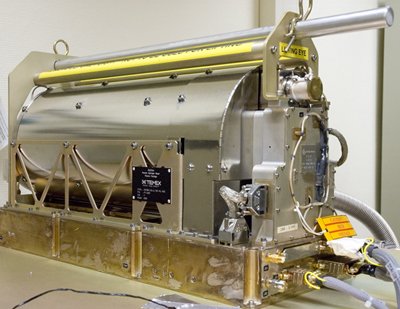
Passive hydrogen maser atomic clock of the type flown on Galileo, accurate to one second in three million years. (Photo: ESA)
In the past two years, there have been five PHM clock failures on the IOV satellites and one PHM failure on the FOC satellites.
These failures are better understood, linked to two apparent causes. One is a low margin on a particular parameter that leads, on some units, to a failure. The second is related to the fact that when some healthy PHM clocks are turned off for long periods, they do not restart because of a change in clock characteristics in orbit. To date, two PHM clocks have failed owing to the first mechanism, and four to the second.
Corrective Actions
For the remaining 33 RAFS clocks in orbit, the risk of failure is believed to be lower owing to different testing procedures on the ground before launch. In addition, new operational measures have been put in place to further mitigate the risk. All these measures have no effect on Galileo’s overall performance.
While investigations by ESA and its industrial partners are continuing, there is consensus that some refurbishment is required on the remaining RAFS clocks still to be launched on the eight Galileo satellites being constructed or tested, and awaiting launch.
For the remaining 30 PHM clocks working in orbit, operational procedures are being studied to significantly reduce the risk of future failure. These measures are being validated, ahead of their planned introduction in a few weeks.
Looking Forward
Overall, three out of four IOV satellites have experienced clock anomalies, and two out of 14 FOC satellites.
As ESA Director General Jan Woerner commented during his Jan. 18 press briefing, no individual Galileo satellite has experienced more than two clock failures, so the robust quadruple redundancy designed into the system means all 18 members of the constellation remain operational. This includes one satellite that supports only the Open Service for mass-market applications, and two satellites in elliptical orbits that are nevertheless expected to be reintegrated into the full constellation for use from these orbits.
Similarly, Galileo’s Initial Services, which began on Dec. 16, have been unaffected by these anomalies.
The impact of RAFS and PHM clock refurbishment on Galileo’s launch schedule is under study, but ESA is confident that the clock issues will be resolved and remains committed to launch the next four Galileo FOC satellites before the end of this year.
Director General Press Briefing
January 18, 2017
Clock problems are discussed at about the 12-minute mark, and in the Q&A portion started at the 52-minute mark.
At a Dec. 15 ceremony in Brussels titled “Galileo Goes Live,” two high officials of the European Commission issued the Galileo Initial Services Declaration.
The Declaration of Initial Services means that the Galileo satellites and ground infrastructure are now operationally ready. These signals will be highly accurate but not available all the time, since the constellation is not yet complete and users cannot always count on four satellites being visible at one time at all points on the Earth.
Simultaneously, the European GNSS Agency (GSA) awarded the Galileo Service Operator (GSOp) contract, with a value of up to 1.5 billion euros, to Spaceopal, a joint venture between Telespazio and the German Space Agency (DLR).
At the moment, the Galileo constellation consists of 18 satellites in orbit. However, two of these are in an orbit not totally useful for positioning and navigation. Four more, launched in November, may or may not have completed their on-orbit testing (a series of notice advisory to Galileo users or NAGUs appeared today relating to the flag status of each satellite, see details at the end of this story) but have not yet been integrated to the operational constellation. This is foreseen to take place in spring 2017.
During the initial phase, the first Galileo signals will be used in combination with other satellite navigation systems, like GPS. In coming years, new satellites will be launched to enlarge the constellation, gradually improving Galileo availability worldwide. The constellation is expected to be complete by 2020 when Galileo will reach full operational capacity (FOC) of 30 satellites: 24 satellites plus six orbital spares, intended to prevent any interruption in service.
“The announcement of Initial Services is the recognition that the effort, time and money invested by ESA and the Commission has succeeded, that the work of our engineers and other staff has paid off, that European industry can be proud of having delivered this fantastic system,” stated ESA Director general Jan Woerner.
Paul Verhoef, ESA’s Director of the Galileo Programme and Navigation-related Activities, added, “Today’s announcement marks the transition from a test system to one that is operational. We are proud to be a partner in the Galileo programme.
“Still, much work remains to be done. The entire constellation needs to be deployed, the ground infrastructure needs to be completed and the overall system needs to be tested and verified.
“In addition, together with the Commission we have started work on the second generation, and this is likely to be a long but rewarding adventure.”
Galileo Initial Services are managed by the European GNSS Agency (GSA). The overall Galileo programme is run by the European Commission, which has handed over the responsibility for the deployment of the system and technical support to operational tasks to the European Space Agency (ESA).
Operator Contract
The GSOp contract runs for 10 years and covers operation and maintenance of the Galileo satellite system and its committed performance level: in particular, the operations and control of the system, the logistics and maintenance of the systems and infrastructure as well as the user support services.
“With its emphasis on service performance, this contract will shape the future of Galileo. We look forward to building a strong partnership with Spaceopal as Galileo moves towards full operational capability under the responsibility of the GSA from January 2017,” said GSA Executive Director Carlo des Dorides.
Specifically, under GSA management the contract awarded to Spaceopal includes:
Secure operations of Galileo from two mission control centres (GCC), located in Germany and Italy, and the European GNSS Service Centre (GSC) for user support services in Spain;
Management of the Galileo Data Distribution Network (GDDN);
Integrated logistics support and maintenance for the entire space and ground infrastructure;
Monitoring of the system performance;
Support the completion of the Galileo infrastructure and associated launches.
Spaceopal has served as the contractor for Galileo operations since 2010 under the Galileo Full Operational Capability (FOC) Operations Framework Contract.
Products and Services
The first Galileo smartphone by Spanish company BQ is now available on the market, and other manufacturers are expected to follow suit. Application developers can now test their ideas on the basis of a real signal.
With this Declaration, Galileo will start to deliver, in conjunction with GPS, the following three types services free of charge. Their availability will improve as more satellites are launched.
The Open Service is a free mass-market service for users with enabled chipsets in, for instance, smartphones and car navigation systems. Fully interoperable with GPS, combined coverage will deliver more accurate and reliable positioning for users.
Galileo’s Public Regulated Service is an encrypted, robust service for government-authorised users such as civil protection, fire brigades and the police.
The Search and Rescue Service is Europe’s contribution to the long-running Cospas–Sarsat international emergency beacon location. The time between someone locating a distress beacon when lost at sea or in the wilderness will be reduced from up to three hours to just 10 minutes, with its location determined to within 5 km, rather than the previous 10 km.
Maroš Šefčovič, à gauche, et Elżbieta Bieńkowska.
Accolades and Encouragements
At the “Galileo Goes Live” ceremony in Brussels, EC Vice-President Maroš Šefčovič, responsible for the Energy Union, said: “Geo-localisation is at the heart of the ongoing digital revolution with new services that transform our daily lives. Galileo will increase geo-location precision ten-fold and enable the next generation of location-based technologies; such as autonomous cars, connected devices, or smart city services. Today I call on European entrepreneurs and say: imagine what you can do with Galileo — don’t wait, innovate!”
Commissioner Elżbieta Bieńkowska, responsible for Internal Market, Industry, Entrepreneurship and SMEs, said: “Galileo offering initial services is a major achievement for Europe and a first delivery of our recent Space Strategy. This is the result of a concerted effort to design and build the most accurate satellite navigation system in the world. It demonstrates the technological excellence of Europe, its know-how and its commitment to delivering space-based services and applications. No single European country could have done it alone.”
Canadian GNSS manufacturer NovAtel, a long-time participant in Europe’s space navigation programs, sent its congratulations to ESA, the EC and GSA upon the launch of Galileo Initial Services. President and CEO Michael Ritter stated, “Today’s declaration validates the confidence of the program’s supporters that Europe would join the world’s operators of global navigation satellite systems.”
NovAtel‘s receivers, antennas and certified ground-reference station receivers have supported Galileo signals in anticipation of the complete constellation. NovAtel now broadcasts Galileo Precise Point Positioning (PPP) corrections through its TerraStar correction services, and states that its OEM customers are already benefiting from the enhanced reliability, availability and accuracy the Galileo constellation adds to the GNSS.
Graham Purves, president and CEO of Veripos, a provider of global precise point positioning (PPP) correction services to the marine oil and gas industry, stated, “As a European company, we are particularly proud and excited about the opportunities the Galileo services create for our customers. The reliability and safety enhancements made possible through these new services allow Veripos to continue to expand the capabilities of our cutting edge safety critical positioning solutions.”
Veripos’s worldwide network of 80 reference stations already supports Galileo, enabling Veripos to deliver Galileo PPP corrections over satellite through products such as its commercially available Apex5 correction service. Veripos also offers Galileo support on its LD5 and LD56 GNSS receivers and Quantum software for industry leading high precision marine positioning solutions.
Advisory Updates
USABINIT NAGUs were issued for 11 satellites: 0101, 0102, 0103, 0203, 0204, 0205, 0206, 0208, 0209, 0210, and 0211. USABINIT, or Initially Usable, notifies users that a satellite is set healthy for the first time. 0104 had a power problem and is operating on E1 only. 0201 and 0202 were launched into lower orbits. 0207 and 0212-0214 are still undergoing commissioning and drifting to their designated orbital slots.
I write at an especially exciting moment for the Galileo satellite navigation system, as two flagship European programmes combine for the very first time.
Mid-November will see the very first Galileo launch using an Ariane 5 launcher from Europe’s Spaceport in French Guiana, in place of the Soyuz that has served the constellation up until now. Four instead of two Galileo satellites will be launched at a time: The number of satellites girding the globe will rise at a single stroke from 14 to 18.
Meanwhile, the European Union is set to declare Galileo operational for initial services at the end of this year, bringing the system to the point where it can finally start serving users.
Paul Verhoef, director of the Galileo Programme and Navigation-related Activities, European Space Agency.
When Galileo Meets Ariane
November’s launch has been years in the making, employing a specially customized variant of Europe’s heavy-lift workhorse rocket called the Ariane 5 ES (Evolution Storable) Galileo. It has more powerful lower stages and a reignitable upper stage, first used in 2008 to supply the low-Earth orbiting International Space Station.
This new launcher design, adapted beginning in 2012 for Galileo, will carry a lower mass payload — four fully-fuelled 738-kg Galileo satellites plus their supporting dispenser — but must haul it to the much higher altitude of medium-Earth orbit, 23,522 km.
This precisely targeted orbit actually lies 300 km above the Galileo constellation’s final working altitude, leaving Ariane’s upper stage in a stable graveyard orbit, while the quartet of satellites maneuver themselves down to their final height.
Satellites. The satellites continue unchanged from those preceding them: Galileo full operational-capability (FOC) satellites with platforms from OHB in Germany and navigation payloads from Surrey Satellite Technology Ltd in the UK.
All 14 FOC satellites follow the first four in-orbit validation (IOV) satellites launched in 2011 and 2012; these four validated overall Galileo system design with the first wholly European navigation fix in March 2013.
Carrier. The four-satellite dispenser, the interface between the satellites and its launcher, is a wholly new design by Airbus Defence and Space. Its first role is to hold the satellites safely in position during their orbital flight and then to gently release them in separate directions. Its structure has been specially tuned to prevent harmful oscillations being triggered by the vibration and noise of launch. Its design was validated using complex finite-element modeling software, followed by practical testing of the dispenser together with dummy satellites.
Launcher. Ariane’s interstage Vehicle Equipment Bay, hosting the rocket’s avionic brain, underwent a redesign to reduce mass. Engineers also had to take into account this Ariane ES version’s flight time, much longer than any of its predecessors, more than four hours in all.
This involved a reworking of the launcher’s electronics and thermal subsystems, to ensure it maintains an optimal operational environment throughout a ballistic coast phase of more than three hours, between two firings of its EPS storable propellant upper stage. Two further Ariane 5 SE Galileo flights are planned to follow, one each for the remaining orbital planes.
Members of the joint Galileo Launch and Early Operations Phase (LEOP) team at work in CNES Toulouse. A joint team from ESA and France’s CNES space agency oversee Galileo LEOPs – the initial switching on and checking and configuration of satellite systems. LEOP is run from either ESOC or CNES Toulouse, on an alternating basis. (Photo: ESA)
Ground Control. This launch will mark the first time that ESA carries out launch and early operations (LEOP) for four satellites simultaneously. Usually, simply shepherding a spacecraft through the first critical days in orbit is a demanding enough task. A combined team from ESA and France’s CNES space agency based in Toulouse will make contact, establish control, and then see the four satellites through their initial critical activities. Within the combined team, each position is paired with a counterpart from the other agency to provide three mixed shifts around the clock for these first crucial days. This same team has conducted all Galileo early operations to date alternately from Toulouse or ESA’s ESOC control center in Germany.
The work starts with an initial check of on-board health and attitude, progressing to ensure each satellite’s pair of 1 x 5-meter solar wings are deployed and tracking the Sun, and then to point their antennas back towards Earth. Next comes a series of thruster firings to set the satellites onto a drift course into their final orbit, at which point they can be handed over to the Galileo Control Centre in Oberpfaffenhofen, Germany, for routine operations, and to ESA’s Redu Centre in Belgium to commence a few months of detailed payload testing.
Galileo at Your Service
Around the same time as this key launch, GSAT-210 and GSAT-211, the two previous satellites launched in May of this year, will have completed their in-orbit testing, allowing them to be formally certified as operational members of the constellation. The four new satellites should follow them into operational status by mid-2017. However, the Galileo system will reach initial operational status without these latest six satellites. The European Commission on behalf of the European Union expects to declare the system operational and ready to offer initial services before the end of this year.
This will mark a major milestone in the programme, awaited by many citizens in Europe and around the globe. Everyone with a Galileo-enabled receiver will be able to benefit from improved positioning, supplementing the already operational GPS constellation. ESA and the European GNSS Agency (GSA) have been working with European manufacturers of mass-market satnav chips and receivers to ensure that their products are Galileo-ready, offering detailed laboratory testing to close the loop between Galileo and industry.
Transition. In parallel to the declaration of initial services, there will also be an institutional change, as the GSA takes up its role overseeing the exploitation of Galileo. At the start of 2017, the formal handover of Galileo infrastructure will be initiated, targeted to conclude by the middle of the year. This mission includes not only the Galileo satellites in space but also the far-flung ground stations located on every continent, essential to the continued high-performance operations of the Galileo system. It also includes the two European Galileo control centers, with the signals overseen from Fucino in Italy and the platforms monitored from Oberpfaffenhofen, plus the communication infrastructure connecting them all together.
In the history of ESA, a research and development agency, this kind of handover to an operational body is not unprecedented; the agency handed Europe’s Meteosat weather satellites over to the newly created Eumetsat organisation, and pioneering telecommunication satellites came under the control of Eutelsat and Inmarsat. However, the Galileo ground segment will hold a special place in ESA history as one of the most complicated developments it has ever undertaken, serving to maintain the signals from the satellites to a nanosecond-scale of performance.
ESA will maintain its role of system design authority and system procurement agent, continuing to support system exploitation as it prepares for the follow-on Galileo Second Generation (G2G) design, supported through the EU’s Horizon 2020 programme. For example, the current contract of Galileo’s ground support operator will end next year, so ESA is supporting the GSA in initiating the contractual process to select a replacement operator. This contract covers all the interaction between the ground segment elements which are vital to the system as a whole. Maintaining continuity of service with transition to the new operator will certainly present a big challenge to the entire team, but one we are confident of meeting.
Upgrade. In parallel, 2017 will see the upgrade of various elements of the Galileo Ground Segment to reinforce its robustness, including updated releases to the Galileo Control Segment overseeing the satellites and the Galileo Mission Segment, overseeing the navigation signals. A new release of elements of the Galileo Security Facility, for security monitoring of the system, as well as the secure Public Regulated Service, will be deployed at the two Galileo Security Monitoring Centres.
The Galileo Ground Segment will gain a sixth tracking telemetry and control facility, for monitoring the satellite platforms in Papeete, Tahiti, and additional processing chains for increased redundancy will be deployed across the Uplink Stations in Kourou, Reunion and Noumea used to update the navigation message information. Similar redundant chains will be finalized for all 15 current Galileo Sensor Stations, which perform continuous collection of Galileo signals to identify the tiniest clock error or satellite drift.
New Satellites. The production of the satellites themselves continues to maintain a steady rhythm, with a production line stretching from suppliers across Europe to OHB and SSTL and then to ESA’s ESTEC Test Centre in the Netherlands for acceptance testing, based on a wide range of simulated space tests. The acceptance of the next satellites to launch is scheduled for this year’s end. Along with the two more Ariane 5 launches to come — one in the second half of 2017 and another in 2018 — the current plan is to commission further launch services as well as additional satellites in order to have Galileo fully operational by 2020. For these launches, Galileo may be the first customer of the new Ariane-6 launch vehicle.
EGNOS. Along with the progress of Galileo, contracts are planned to cater for the further development of the ESA-designed European Geostationary Navigation Overlay Service, Europe’s first navigation system. EGNOS was certified for safety-of-life aviation use in 2011, and is managed by the European Commission through a contract with operator the European Satellite Services Provider, based in France. ESA will support the technical evolution of EGNOS version 3, intended as multi-constellation in nature, again through the Horizon 2020 framework.
Finally, ESA is also addressing the challenges of satellite navigation beyond Galileo through the creation of the Navigation Innovation and Support Programme (NAVISP), which will be proposed to Europe’s space ministers for approval in December. Applying ESA’s expertise from Galileo and EGNOS, the optional NAVISP will undertake research work in support of ESA Member States’ national objectives and industrial competitiveness in the upstream and downstream navigation sector, including the fusion of satellite navigation with various disruptive technologies and complementary positioning techniques.