Tag: GNSS receiver

  • Galileo declares Initial Services

    Galileo declares Initial Services

    At a Dec. 15 ceremony in Brussels titled “Galileo Goes Live,” two high officials of the European Commission issued the Galileo Initial Services Declaration.

    The Declaration of Initial Services means that the Galileo satellites and ground infrastructure are now operationally ready. These signals will be highly accurate but not available all the time, since the constellation is not yet complete and users cannot always count on four satellites being visible at one time at all points on the Earth.
    Simultaneously, the European GNSS Agency (GSA)  awarded the Galileo Service Operator (GSOp) contract, with a value of up to 1.5 billion euros, to Spaceopal, a joint venture between Telespazio and the German Space Agency (DLR).

    At the moment, the Galileo constellation consists of 18 satellites in orbit. However, two of these are in an orbit not totally useful for positioning and navigation. Four more, launched in November, may or may not have completed their on-orbit testing (a series of notice advisory to Galileo users or NAGUs appeared today relating to the flag status of each satellite, see details at the end of this story) but have not yet been integrated to the operational constellation. This is foreseen to take place in spring 2017.

    During the initial phase, the first Galileo signals will be used in combination with other satellite navigation systems, like GPS. In coming years, new satellites will be launched to enlarge the constellation, gradually improving Galileo availability worldwide. The constellation is expected to be complete by 2020 when Galileo will reach full operational capacity (FOC) of 30 satellites: 24 satellites plus six orbital spares, intended to prevent any interruption in service.

    “The announcement of Initial Services is the recognition that the effort, time and money invested by ESA and the Commission has succeeded, that the work of our engineers and other staff has paid off, that European industry can be proud of having delivered this fantastic system,” stated ESA Director general Jan Woerner.

    Paul Verhoef, ESA’s Director of the Galileo Programme and Navigation-related Activities, added, “Today’s announcement marks the transition from a test system to one that is operational. We are proud to be a partner in the Galileo programme.

    “Still, much work remains to be done. The entire constellation needs to be deployed, the ground infrastructure needs to be completed and the overall system needs to be tested and verified.

    “In addition, together with the Commission we have started work on the second generation, and this is likely to be a long but rewarding adventure.”

    Galileo Initial Services are managed by the European GNSS Agency (GSA). The overall Galileo programme is run by the European Commission, which has handed over the responsibility for the deployment of the system and technical support to operational tasks to the European Space Agency (ESA).

    Operator Contract

    The GSOp contract runs for 10 years and covers  operation and maintenance of the Galileo satellite system and its committed performance level: in particular, the operations and control of the system, the logistics and maintenance of the systems and infrastructure as well as the user support services.

    “With its emphasis on service performance, this contract will shape the future of Galileo. We look forward to building a strong partnership with Spaceopal as Galileo moves towards full operational capability under the responsibility of the GSA from January 2017,” said GSA Executive Director Carlo des Dorides.

    Specifically, under GSA management the contract awarded to Spaceopal includes:

    • Secure operations of Galileo from two mission control centres (GCC), located in Germany and Italy, and the European GNSS Service Centre (GSC) for user support services in Spain;
    • Management of the Galileo Data Distribution Network (GDDN);
    • Integrated logistics support and maintenance for the entire space and ground infrastructure;
    • Monitoring of the system performance;
    • Support the completion of the Galileo infrastructure and associated launches.

    Spaceopal has served as the contractor for Galileo operations since 2010 under the Galileo Full Operational Capability (FOC) Operations Framework Contract.

    Products and Services

    The first Galileo smartphone by Spanish company BQ is now available on the market, and other manufacturers are expected to follow suit. Application developers can now test their ideas on the basis of a real signal.

    With this Declaration, Galileo will start to deliver, in conjunction with GPS, the following three types services free of charge. Their availability will improve as more satellites are launched.

    The Open Service is a free mass-market service for users with enabled chipsets in, for instance, smartphones and car navigation systems. Fully interoperable with GPS, combined coverage will deliver more accurate and reliable positioning for users.

    Galileo’s Public Regulated Service is an encrypted, robust service for government-authorised users such as civil protection, fire brigades and the police.

    The Search and Rescue Service is Europe’s contribution to the long-running Cospas–Sarsat international emergency beacon location. The time between someone locating a distress beacon when lost at sea or in the wilderness will be reduced from up to three hours to just 10 minutes, with its location determined to within 5 km, rather than the previous 10 km.

    Maroš Šefčovič, à gauche, et Elżbieta Bieńkowska
    Maroš Šefčovič, à gauche, et Elżbieta Bieńkowska.


    Accolades and Encouragements

    At the “Galileo Goes Live” ceremony in Brussels, EC Vice-President Maroš Šefčovič, responsible for the Energy Union, said: “Geo-localisation is at the heart of the ongoing digital revolution with new services that transform our daily lives. Galileo will increase geo-location precision ten-fold and enable the next generation of location-based technologies; such as autonomous cars, connected devices, or smart city services. Today I call on European entrepreneurs and say: imagine what you can do with Galileo — don’t wait, innovate!”

    Commissioner Elżbieta Bieńkowska, responsible for Internal Market, Industry, Entrepreneurship and SMEs, said: “Galileo offering initial services is a major achievement for Europe and a first delivery of our recent Space Strategy. This is the result of a concerted effort to design and build the most accurate satellite navigation system in the world. It demonstrates the technological excellence of Europe, its know-how and its commitment to delivering space-based services and applications. No single European country could have done it alone.”

    Canadian GNSS manufacturer NovAtel,  a long-time participant in Europe’s space navigation programs, sent its congratulations to ESA, the EC and GSA upon the launch of Galileo Initial Services. President and CEO Michael Ritter stated, “Today’s declaration validates the confidence of the program’s supporters that Europe would join the world’s operators of global navigation satellite systems.”

    NovAtel‘s receivers, antennas and certified ground-reference station receivers have supported Galileo signals in anticipation of the complete constellation. NovAtel now broadcasts Galileo Precise Point Positioning (PPP) corrections through its TerraStar correction services, and states that its  OEM customers are already benefiting from the enhanced reliability, availability and accuracy the Galileo constellation adds to the GNSS.

    Graham Purves, president and CEO of Veripos, a provider of global precise point positioning (PPP) correction services to the marine oil and gas industry, stated, “As a European company, we are particularly proud and excited about the opportunities the Galileo services create for our customers. The reliability and safety enhancements made possible through these new services allow Veripos to continue to expand the capabilities of our cutting edge safety critical positioning solutions.”

    Veripos’s worldwide network of 80 reference stations already supports Galileo, enabling Veripos to deliver Galileo PPP corrections over satellite through products such as its commercially available Apex5 correction service. Veripos also offers Galileo support on its LD5 and LD56 GNSS receivers and Quantum software for industry leading high precision marine positioning solutions.

    Advisory Updates

    USABINIT NAGUs were issued for 11 satellites: 0101, 0102, 0103, 0203, 0204, 0205, 0206, 0208, 0209, 0210, and 0211. USABINIT, or Initially Usable, notifies users that a satellite is set healthy for the first time. 0104 had a power problem and is operating on E1 only. 0201 and 0202 were launched into lower orbits. 0207 and 0212-0214 are still undergoing commissioning and drifting to their designated orbital slots.
  • Septentrio provides low-power embedded GNSS for Xeos autonomous reference receiver

    Septentrio provides low-power embedded GNSS for Xeos autonomous reference receiver

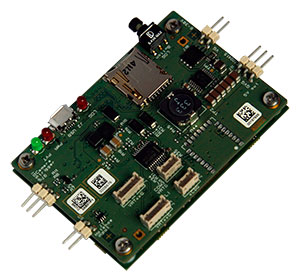
    The AsteRx-m UAS by Septentrio.
    The AsteRx-m UAS by Septentrio.

    Septentrio’s low-power AsteRx-m OEM GNSS board has been selected by Xeos Technologies for use in its new Resolute reference receivers. Designed for high-precision monitoring in low-power applications, the Resolute systems are aimed at structural monitoring and geodetic research in remote locations.

    Smaller than a standard credit card, the AsteRx-m board provides centimeter-level dual-frequency L1/L2 GNSS positioning while consuming less than 0.6 W. It incorporates Septentrio’s proprietary tracking and positioning algorithms, providing high accuracy and robust performance in difficult environments.

    The Xeos Resolute GNSS receiver is designed for applications such as critical infrastructure monitoring, subsidence monitoring and GPS geodesy in extreme polar environments. The small, lightweight and low-power monitoring station is suitable for solar-powered remote autonomous installations.

    In addition to the Septentrio AsteRx-m GNSS board, the Resolute system features dual SD card storage of GNSS data and multiple telemetry options such as Iridium, cellular, Wi-Fi and wireless mesh networks for monitoring, control and data transmission. The Xeos Resolute also features multiple interfaces including USB, RS-232, RS-485, CANBUS and SDI-12.

    “Field tests of the prototype Resolute stations have demonstrated reliable RTK centimeter-level performance for remote deformation monitoring,” said Paul Passmore, Xeos Technologies. “We look forward to presenting our test results at the American Geophysical Union Fall Meeting in San Francisco this week.”

    “Xeos Technologies’ Resolute autonomous polar monitoring system is an ideal application for the AsteRx-m technology,” said Neil Vancans, vice president of Septentrio Americas. “The compact AsteRx-m delivers reliable centimeter-level L1/L2 RTK at under 0.6 W in extreme climatic conditions.”

    “Building upon our polar Iridium telemetry products, we are teaming with Septentrio to offer a new line of high-performance, low-power GNSS products for remote applications” said Derek Inglis, president of Xeos Technologies.

  • Septentrio’s PolaRx5 updated with seismic monitoring, advanced CORS

    Septentrio’s PolaRx5 updated with seismic monitoring, advanced CORS

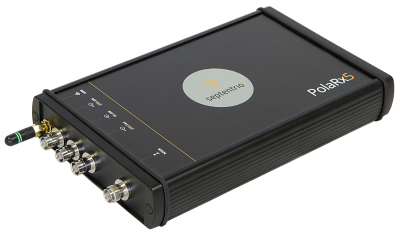
    The Septentrio PolaRx5 GNSS receiver.
    The Septentrio PolaRx5 GNSS receiver.

    Septentrio has released version 5.1.0 firmware for the PolaRx5 product line of GNSS reference receivers. The 5.1.0 firmware brings new features for file management, usability, security and seismic monitoring.

    Septentrio’s PolaRx5 product line of GNSS reference receivers includes the PolaRx5 for CORS and network operations, the PolaRx5TR for time and frequency transfer and the PolaRx5S for space weather applications.

    Improvements in precise point positioning (PPP) have opened the door on seismic monitoring using GNSS technology. As well as allowing precise measurement of long-term slow surface displacement, PolaRx5 now allows real-time recording of the high-frequency vibrations typically accompanying earthquakes. Firmware 5.1.0 introduces the support for on-board PPP and dynamic response tuned for seismic applications.

    The 5.1.0 firmware release brings greater logging efficiency to the PolaRx5 users. Storage integrity is crucial for many applications. Retransmitting data can be an expensive business, especially when using Iridium telemetry. To improve archival functionality, Septentrio has developed a storage integrity feature to retransmit only the data which has been lost in the initial transmission. This avoids the common and unnecessary overhead of retransmitting complete files.

    Preventing unauthorized access is a crucial aspect of cyber security. PolaRx5 product line is now equipped with firewall and IP filtering, SFTP and ssh keys. This complements and strengthens the user management and access level protection of the PolaRx5 product line.

    Various independent tests have shown PolaRx5 consistently ranks highest among GNSS receivers in many areas of measurement quality, including lowest measurement noise and fewest number of cycle slips, and this at the lowest power consumption on the market. The PolaRx5 products offer robust and high-quality GNSS tracking of GPS, GLONASS, Galileo and BeiDou as well as regional satellite systems including QZSS and IRNSS.

    Some of those who have recently deployed the PolaRx5 include the Oregon Department of Transport (DOT), UNAVCO, the Jet Propulsion Laboratory (JPL) and the SAPOS CORS network in Germany.

    “The 5.1.0 PolaRx5 firmware continues Septentrio’s commitment to its customers.” stated Francesca Clemente, PolaRx Product Manager. She continued: “The new features of the 5.1.0 firmware complement existing standard features of the PolaRx5 GNSS receivers such as Advanced Interference Mitigation technology (AIM+) and the web UI offering full user control and status to make PolaRx5 the most complete GNSS reference station on the market today.”

  • U-blox integrated antenna GNSS receiver eases embedded designs

    U-blox integrated antenna GNSS receiver eases embedded designs

    U-blox is introducing a new module designed to speed time to market for system developers of GNSS applications who have limited experience in RF and antenna design.

    The SAM-M8Q GNSS receiver with integrated antenna is housed in a tiny 15.5 by 15.5 by 6.3 millimeter package. It can be easily embedded in small devices that require location information, such as asset tracking and telematics systems, and generic automotive after-market applications, u-blox said.

    By using the latest u-blox M8 multi-GNSS receiver technology, the module is able to offer simultaneous reception of GPS, GLONASS, and Galileo satellite signals.

    Ultra-compact SAM-M8Q module.
    Ultra-compact SAM-M8Q module.

    The combination of an integrated wide-band antenna along with the module’s SAW filter and low-noise amplifier (LNA)architecture ensures that the SAM-M8Q receiver delivers robust performance in the presence of high frequency signals from other electronic equipment, such as cellular modems, which can cause interference.

    “The SAM-M8Q is intended for customers who don’t have much experience in RF and antenna design,” said Kim Kaisti, Director, Product Management, Product Center Positioning. He added, “It is aimed at applications that require an embedded antenna and where the surface mount package allows for easier assembly and installation in the end-equipment.”

    Samples of the SAM-M8Q will be available in mid-January 2017. The modules will be in full production in mid-February 2017.


  • Research: Accelerating GNSS software receivers

    Research: Accelerating GNSS software receivers

    By Carles Fernandez–Prades, Javier Arribas and Pau Closas, Centre Tecnologic de Telecomunicacions de Catalunya, Spain. Presented at ION GNSS+, September 2016.

    This paper addresses both the efficiency and the portability of a computer program in charge of the baseband signal processing of a GNSS receiver. Efficiency, in this context, refers to optimizing the speed and memory requirements of the software receiver. Specifically, the interest is focused on how fast the software receiver can process the incoming stream of raw signal samples and, in particular, if signal processing up to the position fix can be executed in real-time (and how many channels the host computer executing the receiver application can sustain in parallel).

    Diagram of Typical Code and carrier tracking loops in a GNSS receiver. Colored dotted-line boxes show functions implemented in SIMD technology. Lanes “16ic” are data streams whose items are complex numbers with real and imaginary components represented with 16-bit integers, whereas “32fc” indicates those with complex numbers with real and imaginary components in 32-bit floating point representation.
    Diagram of Typical Code and carrier tracking loops in a GNSS receiver. Colored dotted-line boxes show functions implemented in SIMD technology. Lanes “16ic” are data streams whose items are complex numbers with real and imaginary components represented with 16-bit integers, whereas “32fc” indicates those with complex numbers with real and imaginary components in 32-bit floating point representation.

    This is achieved by applying the concept of parallelization at different abstraction levels. The paper describes strategies based on task, data and instruction-level parallelism, as well as actual implementations released under an open source license and the results obtained with different commercially available computing platforms. At the same time, the proposed solution also addresses portability, understood as the usability of the same software in different computing environments.

  • Swift Navigation introduces Piksi Multi GNSS receiver at Intergeo 2016

    Swift Navigation debuted its newest product, Piksi Multi, at Intergeo 2016, which was held Sept. 11-13 in Hamburg, Germany. Piksi Multi is a multi-band, multi-constellation high-precision GNSS receiver for the mass market. A San Francisco-based startup, Swift Navigation introduced the first Piksi GNSS receiver in January.

  • Canada, US workshops focus on PNT threats

    Canada, US workshops focus on PNT threats

    Two workshops convened in recent weeks in the U.S. and Canadian capitals, respectively, sought to bring into focus looming threats to the nations’ positioning, navigation and timing capabilities and critical infrastructures. Some of the threats are pervasive — jamming and spoofing — and formed the general topic of the Canadian workshop. Some threats are specific — powerful terrestrial transmitters overwhelming GPS/GNSS receivers — and occasioned the U.S. gathering.

    Canada. In a first for Canada, the October 21 GNSS Vulnerabilities Innovation Policy (VIP) Workshop brought together 19 federal government departments as well as  provincial and municipal agencies and private sector companies.  U.S. State Dept. and Homeland Security gave presentations, as did the European Space Agency, Bell Canada, NovAtel and Spirent Communications.

    Integrity challenge for automotive positioning, presented by NovAtel
    Integrity challenge for automotive positioning, presented by NovAtel

    The workshop was sponsored by the the Federal Global Navigation Satellite Systems Coordination Board (FGCB), a government board with representations from various government departments and agencies. The GNSS Coordination Office (which organized the workshop) is hosted at Canada’s Ministry of Innovation, Science and Economic Development and sponsored by the FGCB members.

    Presentations covered such topics as Demonstration of the Geolocation of GPS Jammers, GNSS & the Telecom Sector, Detecting and Protecting Against GPS Cyberthreats, and Safety Critical, High Precision, GNSS Positioning for Autonomous Vehicles.

    United States. The U.S. Department of Transportation (DOT) hosted its fifth workshop on the GPS Adjacent-Band Compatibility Assessment effort on October 14. This lengthy, thorny and occasionally acrimonious process started out benignly enough in 2010 with the statement, “Demand for commercial spectrum to support broadband wireless communications has led the government to consider repurposing various radio frequencies, including the satellite communications bands next to GPS.”

    The workshop discussed the results from testing of various categories of GPS/GNSS receivers including aviation (non-certified), cellular, general location/navigation, high precision and networks, timing, and space-based receivers. The workshop also included a discussion on the development of use-case scenarios for these categories — which is where the going got heavy and differences of opinion truly emerged.

    DOT has posted all presentations from the workshop.  Scroll down to “October 2016 Workshop.”

    The furor stems from a renewed effort by Ligado, formerly known as LightSquared and now re-emergent from a 2-year bankruptcy process, to convert relatively inexpensive satellite-to-earth spectrum into very valuable terrestrial spectrum. The company stands to gain billions of dollars and secured rights from the process.

    Members of the DoT team presented the first results from the GPS Adjacent-Band Compatibility (ABC) Assessment, an effort to determine the power limits by frequency, or interference tolerance masks (ITM), needed to protect both existing and future GPS receivers. Test results indicated a need to limit interfering signals at different levels depending on the type of receiver being used. 80 receivers in six categories were tested: cellular, general location/navigation, general aviation, timing, high precision and space receivers. Certified and military receivers are undergoing separate tests.

    The tests of current receivers took place April 25–29 at White Sands Missile Range, New Mexico, using a 100 x 70 x 40 anechoic chamber. The signals used in the test included GPS L1 C/A-code, GPS L1 P-code, GPS L1C, GPS L1 M-code, GPS L2 P-code, SBAS L1, GLONASS L1 C, GLONASS L1 P, BeiDou B1I and Galileo E1 B/C. Tests were conducted within 100 megahertz on either side of the GPS L1 center frequency of 1575.42 using a 10-megahertz LTE signal and a narrow bandwidth 1-megahertz bandpass white noise signal.

    The tests were conducted for GPS and GNSS receivers processing signals in the 1559–1610 MHz Radionavigation Satellite Service (RNSS) frequency band, as well as receivers that process Mobile Satellite Service (MSS) signals in the 1525–1559 MHz band to receive differential GNSS corrections.

    The tests determined the power levels at which each device experienced a one-decibel degradation in the carrier-to-noise density ratio (CNR) at a particular frequency. The DoT team graphed results for each device. The recommended power limits were the lowest in frequencies closest to the GPS bands.

    The receivers most affected by the test transmissions were identified as high-precision receivers. They experienced interference at power levels as low as –90 to –95dBm at around 1550 MHz and –90 dBm at roughly 1610 MHz.

    highprecision-gps-l1-receiver-category

    The strictest limit for both the general aviation, general navigation/location, and timing receivers was a little below –80 dBm at about 1550 MHz, while space-based receivers were equally sensitive on both sides of the RNSS band with the toughest limit being about –85 dBm.

    FAA. The Federal Aviation Administration (FAA) has authority to set power and out-of-band emissions limits to meet aviation safety standards, and it had been thought that these limits might  address interference with other types of receivers as well. But the test results showed that “protecting the FAA-certified mask does not necessarily protect the rest of the receiver categories,” according to Hadi Wassaf, technical lead for GPS interference analysis at DoT’s Volpe Center.

    Use Cases. Ligado has proposed that position error as experienced by the user is a better guide to interference levels than degradation in the carrier-to-noise density ratio. The GPS community generally opposes this approach. The next step is the development of use cases. According to the test plan, use cases define the regions of operations for a receiver, and they identify applications that “that are vital to economic, public safety, scientific, and/or national security needs and any other factors supporting why this particular receiver model is important to be tested (e.g., quantity in use, economic impact, etc.).”

  • Buckeye Mountain, Trimble bring GPS to railways

    Railway technology company Buckeye Mountain and Trimble are working together to provide the railroad industry with advances in GPS solutions such as the Trimble PG200 GNSS receiver.

    The PG200 is a rugged, lightweight and portable receiver to use in rail and intermodal yards to identify safety zones. It also includes auto tracking on critical assets.

    Juno-T41_Grey_WEH_face-WTrimble has also been working with Buckeye Mountain to provide the railroad industry with mobile computing and AEI (railcar automatic equipment identification tags) products.

    Trimble’s Juno T41 R-AEI, an all-in-one rugged AEI reader, is a compatible platform for Buckeye Mountain’s AEI Quick Read application, a basic mobile application that reads AEI tags.

    The T41 keeps workers the required safety distance from railcars while the read range is very responsive.

  • Eos Positioning launches Arrow Gold high-accuracy GNSS receiver

    Eos Positioning launches Arrow Gold high-accuracy GNSS receiver

    Eos Positioning Systems has announced its most advanced high-accuracy Bluetooth GNSS receiver, the Arrow Gold. The Arrow Gold is the first high-accuracy iOS, Android and Windows Bluetooth GNSS receiver to implement all four constellations (GPS, GLONASS, Galileo, BeiDou), three frequencies (L1, L2, L5) and satellite-assisted RTK.

    arrow-gold-perspective-shadow-wThe Arrow Gold provides 1-cm real-time accuracy in more places, and on all iOS, Android, and Windows devices. The palm-sized Arrow Gold works with any data-collection app designed for iOS, Android or Windows, which means that apps like Esri Collector, Esri ArcPad, Survey123 and others work with Arrow Gold right out of the box.

    The Arrow Gold introduces an innovative RTK feature for poor cellphone coverage areas — SafeRTK. The SafeRTK feature uses satellite corrections to fill in when the user’s RTK network connection is lost. Even in populated urban areas, wireless connectivity has dead spots. For traditional RTK receivers, this is a deal-breaker. For the Arrow Gold, SafeRTK takes over when wireless coverage fails, allowing users to continue working with centimeter accuracy for up to 20 minutes, free of charge.

    Another pioneering feature of the Arrow Gold is 8-cm real-time accuracy anywhere in the world, at a revolutionary price point. On all iOS, Android and Windows devices, the Arrow Gold Basic delivers 8-cm real-time accuracy anywhere in the world using all four satellite constellations and the Atlas satellite correction service.

    The Arrow Gold is built for tough environments. It is palm-sized, waterproof, dust-proof and weighs under one pound. It works in the rain, dust, dirt and in rugged environments. The user can mount the Arrow Gold on a range pole or slide it in a vest pocket. The Arrow Gold’s long-range, rock-solid Bluetooth radio stays connected to your mobile device up to 1,000 meters away, and it’s field-replaceable rechargeable battery pack lasts all day.

    Owing to its support of all global satellite constellations (GPS, GLONASS, Galileo, BeiDou) and all planned satellite signals, the Arrow Gold will provide cutting-edge, high accuracy for the next decade, providing a return on investment (ROI) that will serve its users for years to come, Eos Positioning said. It doesn’t matter if user decides to switch from iOS to Android to Windows during the same project or years from now, the Arrow Gold has universal Bluetooth compatibility that supports all mobile devices for the forseeable future.

    The Arrow Gold is targeted at high-accuracy applications such as GIS, environmental, agriculture, electric/gas/water/telecom utilities, surveying, machine control, and federal/state/local government.

  • Swift Navigation offers multi-band, multi-constellation receiver

    Swift Navigation offers multi-band, multi-constellation receiver

    The Piksi Multi.
    The Piksi Multi.

    Swift Navigation has announced its newest product, Piksi Multi, a multi-band, multi-constellation high-precision GNSS receiver for the mass market.

    A San Francisco-based startup, Swift Navigation introduced the first Piksi GNSS receiver in January.

    Swift Navigation will be showing Piksi Multi at InterGeo Oct. 11-13 in Hamburg, Germany. The company’s booth is located in Hall A1, in the US Pavilion, booth #B1.061.

    Autonomous devices require precision navigation, especially those that perform critical functions. Swift Navigation solutions use real-time kinematics (RTK) technology, providing location solutions that are 100 times more accurate than traditional GPS.

    Piksi Multi supports GPS L1/L2 and is hardware-ready for GLONASS G1/G2, BeiDou B1/B2, Galileo E1/E5b, QZSS L1/L2 and SBAS. Multiple signal bands enable convergence times measured in seconds, not minutes. Multiple satellite constellations enhance availability in new environments.

    The Piksi Multi with an evaluation board.
    The Piksi Multi with an evaluation board.

    The Piksi Multi Evaluation Kit also has been upgraded with all-new components. The new kit contains two Piksi Multi GNSS modules, two integrator-friendly evaluation boards, two GNSS survey-grade antennas, two high-performance radios, so that it can deliver best-in-class reliability and range — well over 10 kilometers — and all of the accessories required for rapid prototyping and integration.

    Swift Navigation expects Piksi Multi to ship in early in the first quarter of 2017. The company is accepting pre-orders in its online store at www.swiftnav.com.

    Piksi Multi is an open platform. It enables customers to run Linux OS on its second core, allowing them to quickly prototype and adopt their own applications in a well-known and widely used environment.

    Industries standing to benefit most from the new product include: autonomous vehicles, UAV, precision agriculture, robotics, space, survey and control and R&D applications requiring precise positioning.

    Swift Navigation was built on the notion that highly-precise RTK solutions should be offered at an affordable price. Benefits of Piksi Multi for customers include:

    • Centimeter-level accuracy using RTK
    • Fast convergence times using multi-band
    • Robust positioning using onboard MEMS hardware
    • Open platform with onboard Linux
    • Rapid prototyping with a complete evaluation kit
    • Future-proof hardware with in-field software upgrades

    “With the launch of Piksi Multi, Swift is taking another huge step forward in delivering affordable and highly-precise GNSS technology,” said Swift Navigation CEO, Timothy Harris. “Piksi Multi will continue to revolutionize the autonomous devices category, which is growing at an unbelievable rate.”

  • Carlson releases BRx6 GNSS receiver for surveyors

    Carlson releases BRx6 GNSS receiver for surveyors

    Carlson Software has released the Carlson BRx6, a multi-GNSS, multi-frequency receiver. Each BRx6 contains a multi-constellation, multi-band 372-channel GNSS receiver, Athena RTK technology and an integrated Atlas L-band receiver.

    PositionIT-Carlson-620x620-e1464842339861In addition, the BRx6 contains electronic sensors that measure tilt, direction (electronic compass) and acceleration, supporting Carlson SurvCE’s advanced features such as LDL (live digital level or e-bubble), leveling tolerance, auto by level, tilted-pole correction and advanced stakeout features.

    SurvCE contains sophisticated checks for compass and acceleration anomalies to ensure accuracy.
    Designed for use by surveyors, contractors, builders and engineers, the Carlson BRx6 delivers the high positional accuracy at an affordable price.

    Manufactured to Carlson’s exacting specifications by Hemisphere GNSS, the BRx6 provides robust performance and high precision in a compact and rugged package, Carlson said. With multiple wireless communication ports and an open GNSS interface, the BRx6 can be used as a precise base station or as a lightweight and easy-to-use rover.

    The BRx6 receiver is powered by an Athena RTK (real-time kinematic) engine. RTK corrections can be received over UHF radio, cell modem, Wi-Fi, Bluetooth or serial connection.

    The BRx6 also works as a base and rover with the new Carlson Listen-Listen cloud-based low latency RTK correction delivery service. The Carlson Listen-Listen service taps the built-in cell modem and reduces the need for UHF radio communication.

    Multiple RTK rovers of any type can “talk to” a single BRx6 base by cell modem or Wi-Fi hot spot over extreme long distances. It reduces or eliminates dependency on VRS systems. Listen-Listen is provided on a free, 30-day trial basis with each BRx6 base and rover package purchased.

    The BRx6 receiver can also be used with the subscription-based Atlas service, Hemisphere’s industry leading global correction service provided over L-band communication satellites and the internet.

    When this service is included in an upcoming release of Carlson SurvCE, BRx6 users can achieve sub-decimeter positioning performance anywhere on earth, without the need for a fixed base station, a virtual reference network or other communication infrastructure.

    The BRx6 can be purchased as either a rover or as a base/rover package. The base/Rover package includes two BRx6 GNSS receivers, two hard-sided carrying cases, four BRx6 batteries with two chargers, one GPS tribrach and one tribrach adapter, and two Carlson GPS receiver poles. The Rover package includes the BRx6 GNSS receiver, carrying case, two BRx6 batteries with charger, and cables. The BRx6 rover is available as a network rover (GSM cell modem only) or as a complete rover with UHF radio and GSM cell modem.

    The Carlson BRx6 GNSS receiver is designed to work seamlessly with most data collectors including Carlson’s rugged and popular data collectors: the Carlson MINI2, the Carlson Surveyor2 and the Carlson RT3ruggedized tablet.

  • Expert Opinions: Buyers’ need for GNSS receiver testing, certification

    Expert Opinions: Buyers’ need for GNSS receiver testing, certification

    Q: Buyers get little guidance as to how specific receivers react to interference, particularly in critical infrastructure. Is there a need for receiver testing and certification along the lines of Underwriters Laboratories to guide purchase and acquisition?

    Logan Scott President, LSC
    Logan Scott, President, LSC

    A: Exhaustive “seven-nines” testing and verification is expensive, takes a long time and stymies innovation. Yet simple and pragmatic testing can reveal faults very quickly. Numerous receivers fail to recognize that interference is occurring and/or produce hazardously misleading position with no warning to the user. Simple algorithms can detect problems quickly, and receivers should implement them. UL-style testing would reveal gross deficiencies in receivers and would provide a basis for selecting receivers.


    Dana-Goward
    Dana Goward, President, Resilient Navigation and Timing Foundation

    A: Whether it’s a circular saw or a GNSS receiver, safe use of a tool requires understanding its capabilities and how to use it. I have heard all kinds of reports of the wrong type of receiver being used for critical applications. An authoritative process that clarifies receiver capabilities and appropriate use would greatly help buyers educate themselves. Ultimately, it would make us all safer.


    Tony Murfin, Contributing Editor, Professional OEM & UAV, GPS World
    Tony Murfin, Contributing Editor, Professional OEM & UAV, GPS World

    A: Most high-end receiver manufacturers have worked for many years on GNSS interference resilience. Jamming incidents have pushed manufacturers harder for solutions because customers demand more. We don’t need legislation; market pressure alone continues to bring about better interference solutions. If you’re using a low-end receiver, it’s probably somewhat processor- and memory-constrained, so it’s hard to build in better signal processing. Time will inevitably fix this problem; in the meantime buy a better receiver.