Tag: indoor positioning

  • u-blox Launches Indoor/Outdoor Positioning Module with 3D Sensors

    The new NEO-M8L Automotive Dead Reckoning (ADR) module by u-blox has integrated motion, direction and elevation sensors. The module integrates gyro and accelerometer with u‑blox’ GNSS platform u-blox M8 to achieve high indoor/outdoor positioning performance for road vehicle and high-accuracy navigation applications.

    In addition to accessing the integrated module’s gyro and accelerometer data, accident reconstruction systems can provide the location of an accident to facilitate insurance claims even if a collision occurs in a tunnel or park house. High-end navigation devices are able to guide drivers through tunnels of several kilometers because of the accuracy of u-blox’ ADR system. Stolen vehicles can be located instantly due to continuous monitoring of sensor data and storage of location in non-volatile memory.

    “Devices for usage-based insurance, stolen vehicle recovery, road pricing, fleet management, emergency services, and vehicle navigation depend on reliable, uninterrupted positioning including tunnels, park houses and stacked highways,” said Thomas Nigg, vice president of product strategy at u-blox. “The NEO-M8L is the ideal solution for all road vehicle based applications, able to calculate a position in all circumstances based on its own internal sensors, regardless of satellite visibility and end-device orientation.”

    The NEO-M8L module will be demonstrated at the u-blox stand at electronica 2014 in Munich, November 11-14, Hall A4 Stand 219.

    The compact module is 12.2 x 16.0 x 2.5 mm, requires minimum host integration resulting in no risk, is low cost, and provides fast time-to-market design, u-blox said. With uncritical orientation of the installed module, odometer function and autonomous data logging, it is an all-in-one solution for all road vehicle applications requiring reliable and uninterrupted position in challenging environments such as urban canyons, tunnels and underground parking.

    The NEO-M8L embeds u-blox’ 3D Automotive Dead Reckoning (3D ADR) chip technology. Using the vehicle’s speed information and the module’s onboard sensors enables accurate positioning in three dimensions, even when satellite signals are completely lost and the end-device installation is not horizontal, u-blox said. An odometer function, based on the ADR technology, also provides accurate and continuous distance traveled.

    The module is able to track all visible GNSS satellites including GPS, GLONASS, BeiDou, QZSS and all SBAS (European’s Galileo will be supported in a future firmware version). Concurrent reception of two GNSS systems is supported. The NEO-M8L module can output a position up to 20 times per second.

    The module uses u‑blox’ M8 GNSS chip and is available in Professional Product grade. This grade includes qualification according to the ISO16750 standard “Road vehicles — Environmental conditions and testing for electrical and electronic equipment” and manufacturing in ISO/TS 16949 automotive-certified factories.

    Samples and evaluation kits will be available in December 2014.

  • Indoor Location Has Major Growing Pains, but Big Upside

    A number of factors are holding the proximity marketing/indoor positioning markets back: standardization issues, consumer acceptance/privacy, retailer awareness and the technology itself. However, as one location executive put it, it may be the one way that retailers with brick and mortar stores can compete with Amazon and other online giants. 

    Indoor location and proximity marketing may be the way large and small brick and mortar stores can compete with online retailers in the future, said panelists at the New York Place conference, held July 22. But all of this indoor location market talk doesn’t mean much if consumers don’t find a need for it.

    “I am in an aisle at a grocery store and you sent me a coupon for cat food, and I don’t have a cat, I am not going to be interested. The retailer gets to own the data by providing a great experience to the consumer, not the spontaneous ‘you are in a store — here’s some information,’” said John Dempsey, Datalogix head of mobile and video.

    While having a broad picture of a consumer’s “mobile moment” is important, there is something to be said about bombarding a consumer with too many location-based applications, said Doug Kilponen, Wanderful Media chief operating officer. “There are a limited number of apps consumers are willing to have, but not 200 different ones. It’s one thing to have an app for say, Target, but trying to find out what is broadly available during shopping makes shopping too much work,” he said. “Trying to find out what’s available becomes too much work as there are too many options [for the consumer].”

    From a retailer’s perspective, they want consumer’s data, and will share it with partners, but they also want control, said Catherine Lindner, Shelfbucks chief marketing and merchant officer, who was an executive at Walgreens.  “If you think about your own shopping behavior, there is only a few places you actually go to and spend money — a grocer, drug store.  That retailer wants your data, and it makes sense,” she said.  “How do we spend the money to grow the business?  The idea that there is one bucket of money to transfer is not going to happen.”

    One company says that consumers don’t want to be “advertazed” by retailers. “Their job is to show you Calvin Klein, but sometimes there is not enough information or context.  They hijack moments, rather than create them,” said Scott Townsend, Urban Airstrip director of agency programs.

    Still, retailers are increasingly using indoor location as part of their mobile strategies. Jewelry chain Alex and Ani has three beacons in their Boston and New York stores, said Ryan Bonifacino, Alex and Ani vice president, digital strategy. “We really want to prove that this [indoor location] can really work.  We really want to get in front of people who wouldn’t have discovered us,” he said.

    Indoor Location Standardization? What Standardization?

    Like any new technology and market, industry standardization will have growing pains, and a lot of the problem may be with the retailers, said panel members. “There are issues with standardization. If Walmart puts a [indoor positioning] in to its store — they don’t care if it works anywhere else,” said Don Dodge, Google developer advocate.

    Indoor location is the classic chicken-before-the-egg situation, said Chris Goodall, Trusted Positioning founder and CEO. “There currently are no standards for indoor [positioning], maybe we need it.  Databases are not standardized,” he said.

    A lot of the reason that standardization has not be resolved is that no big application, the old killer app, has appeared. “Indoor is something that has not emerged yet, it’s a long tail story,” said Dan Ryan, ByteLight co-founder and CEO.  “Every location company is trying to build a network — and naturally attract developers.”

    Making Proximity and Indoor Location Relevant to Retailers 

    Some retail chains like Walgreens have used indoor positioning technology for years and are considered some of the major early adopters. However, making consumer-purchasing behavior data relevant to retailers is the only way for indoor marketing to take off.

    The concept of geofencing each store has been tested in several locations. One company envisions an image of a celebrity greeting consumers in a store with an offer. “Walgreens focused on not invading people’s privacy. But they basically asked users, what’s important to them when they walk into a store,” said aisle411 founder and CEO Nathan Pettyjohn. “[Bluetooth Low Energy] beacons can do this very elegantly.  When a consumer walks through a store, perhaps they see a celebrity popping out to greet them.”

    In many successful mobile marketing campaigns, all have a common theme — proximity components always enhance sales, said James Smith, Verve chief revenue officer.  “Every one of our studies says it drives sales. Sometimes we hear that geofences don’t work — my answer to that is they are in the wrong places,” he said. “A person can go into a place 15 days later and a beacon locks on them — the retailer is happy because it works. Consumers are more empowered because they have a research device in their hand to go where they want to go.”

    Case Study: Walkbase

    A Finland-based company is delivering market research to retailers that examines consumers’ in-store shopping behavior and loyalty patterns. Walkbase, which signed a deal with Helsinki airport operator Finavia, started in 2007 when it spun off from an indoor location company.

    “It’s a retail tool that analyzes indoor performance of marketing campaigns and [sales] conversion. It measures when consumers come into a store — do they bounce out or are they engaged?” said Juha Mattsson, Walkbase vice president, sales and marketing.  “A retailer can launch a campaign that is affected by a consumer’s indoor journey. Whether that is through coupons, or not, as some retailers don’t want that.”

    Mattsson says that the company is operating primarily in Europe — and is waiting for what indoor technologies will win. “It is just a matter of time before the market takes off. Retailers are very interested in these types of consumer spending analytics,” he said. “We will be launching a U.S. white paper on in-store optimization as it’s all about education. We also are rolling out a version 2.0 of our product in the third quarter.”

    In other LBS news:

    • According to published reports, Michael Halbherr, CEO of Nokia’s HERE mapping unit, will be stepping down. Halbherr, who is based in Berlin, steps down after eight years at the company.  As recently as 2012, HERE, then called Navteq, had been losing money but had stabilized recently. Cliff Fox, HERE senior vice president, will be acting CEO until a replacement is found.
    • I will be covering CTIA’s Super Mobility Week in Las Vegas, Sept. 8-11.  To arrange an interview with me for Wireless LBS Insider, or to submit press releases, contact me at [email protected].


  • Majority Support FCC Rule Requiring Carriers to Provide Accurate Indoor Locations

    A new survey of more than 1,000 consumers found a dramatic gap between the limited location requirements for cell-phone carriers and broad public expectations that wireless callers can be found by emergency responders if they dial 9-1-1 in an emergency.

    According to the survey, two-thirds of cell-phone owners (66 percent) thought that wireless companies could help emergency responders locate them at least to their block, if they call 9-1-1 from inside their homes. Only 6 percent of cell-phone owners correctly responded that the information would likely only be accurate to the neighborhood level or worse.

    When told that current FCC regulations do not require cell-phone carriers to provide an accurate location for callers inside buildings, 83 percent said it was very or critically important to public safety for the FCC to adopt a rule to require cell-phone companies to generate that information. Reinforcing those findings, 79 percent said the FCC should begin enforcing the rule within two years, with nearly half (46 percent) saying the FCC should begin enforcement immediately.

    “When people dial 9-1-1 on their cell phones, they think the operator can find their location to send help,” said Jamie Barnett, director of the Find Me 911 Coalition and former chief of the FCC’s Public Safety and Homeland Security Bureau. “Unfortunately, the carriers have chosen cheaper, less-effective location technologies, and people are dying because emergency responders can’t find them. If you call 9-1-1 on your cell phone inside or in an urban canyon, the carriers’ technologies will often fail to accurately locate that call. Happily, technologies exist now that can find callers indoors and save lives. The carriers’ responsibilities should match consumer expectations that they can be found when they dial 9-1-1 from indoors.”

    Survey respondents also said that they would be willing to vote with their wallets, with nearly two-thirds (63 percent) saying they would consider switching cell-phone companies to a provider who could more accurately and reliably find 9-1-1 callers.

    Among the survey’s findings:

    • Most think all wireless 9-1-1 calls can be found. By a 7-1 margin, respondents thought that emergency responders could find their cell phone’s location if they dialed 911 in an emergency (59.0 percent to 8.5 percent).
    • Indoor callers think 9-1-1 locations are accurate to the block or house level.  Two-thirds of respondents (66 percent) said that cell-phone companies would share location information accurate at least to their block, and 55 percent believed it would be accurate at least to their house if they called 9-1-1 while at home.
    • Cell phones are the most common way to reach 9-1-1. Of respondents who have dialed 911, 57 percent most recently used a cell phone, not a traditional land line.
    • Half of 9-1-1 calls come from indoors or urban canyons. On their last 911 call from a cell phone, half of the respondents were inside a physical building (42 percent) or in an urban canyon (8 percent), where GPS technology is not reliable.
    • Most deeply concerned over lack of indoor location requirements. More than two-thirds of respondents (69 percent) said they would be extremely or very concerned if they learned that cell-phone companies were not required to provide an accurate indoor location to emergency responders.
    • Proposed FCC rule is vital to public safety. A large majority (83 percent) said the proposed rule is critically or very important to public safety in their communities.
    • FCC should implement requirements of rule within two years. Four-fifths (79 percent) said the FCC should begin enforcing the rule within two years, with nearly half (46 percent) saying the FCC should begin enforcement immediately.
    • Most oppose any delay in indoor location requirements. A large majority (71 percent) oppose any delay in implementation of the FCC’s rule.
    • Consumers willing to switch companies for better 9-1-1 accuracy.  Nearly two-thirds (63 percent) would consider switching their cell provider to a company with a more accurate system for 911 callers, with one in three (30 percent) saying they would definitely or probably do so.

    According to FCC estimates, at least 10,000 lives a year could be saved by improvements in response time through the FCC’s proposed rule.

    The survey was conducted online among 1,048 adult cell-phone owners in the US from August 15-18, 2014.  The survey was conducted via SurveyMonkey.com using a custom audience sample selected from the site’s 30 million users.  The survey had a margin of error of +/- 3 percent at a 95 percent confidence level.

    Find Me 911 is an effort supported by more than 200,000 individuals, as well as national and local organizations. The individuals and organizations represent a broad range of 911 operators and first responders — emergency medical services personnel, fire fighters and police.  Find Me 911 seeks to ensure that the Federal Communications Commission (FCC) move forward quickly to establish a reasonable, measurable level of location accuracy for emergency calls made indoors, enabling first responders to locate emergency calls from wireless phones from all locations rapidly and efficiently.

  • Spirent Enhances Location Availability for VoLTE E911 Calls Indoors

    Spirent Enhances Location Availability for VoLTE E911 Calls Indoors

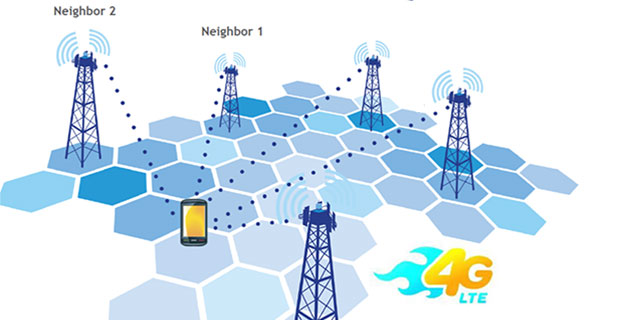
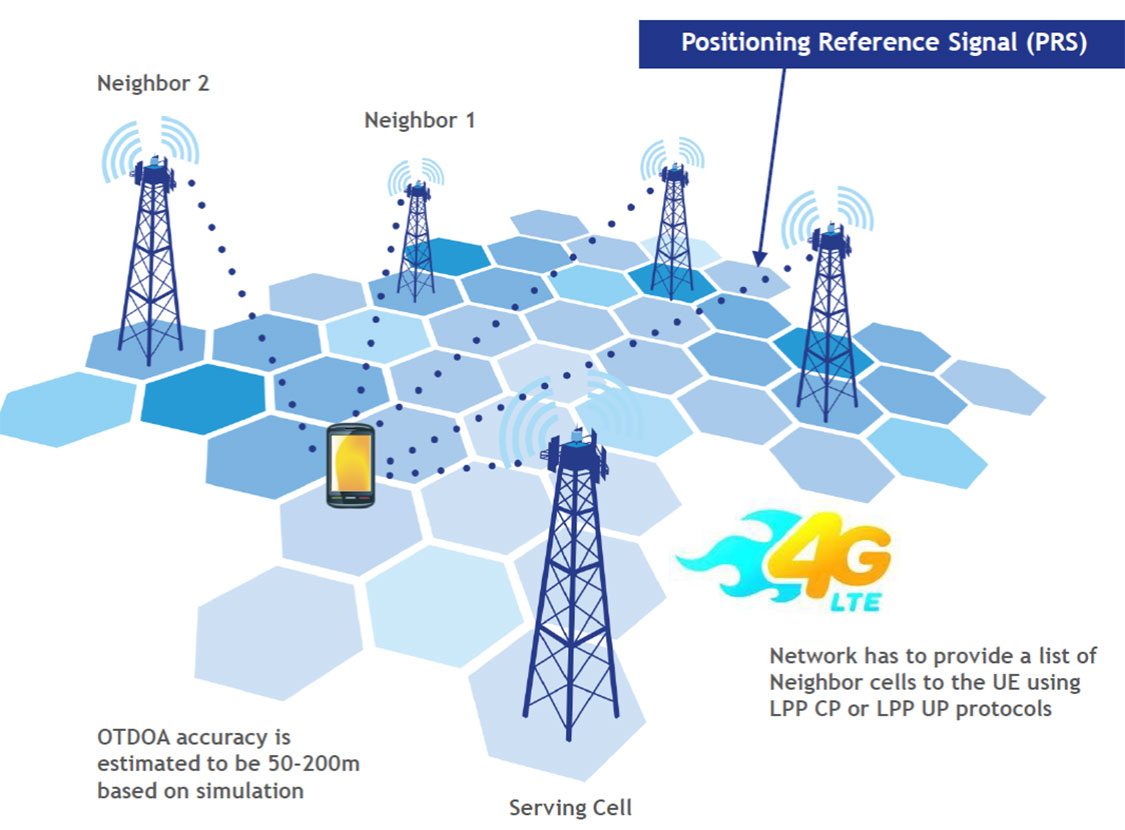
    Spirent Communications has announced major enhancements that will help improve location accuracy for E911 calls indoors. The additional test capabilities on Spirent’s 8100 Location Technology Solution (LTS) enable operators to deliver optimal location performance to support VoLTE E911 calling and to understand how LTE positioning technologies such as OTDOA can help meet the recently proposed Federal Communications Commission (FCC) regulations for E911 indoors.

    OTDOA accuracy is 50 to 200 meters.

    LTE brings a promise of improved location accuracy with new positioning technologies and their integration using hybrid techniques. Although established technologies such as A-GNSS (A-GPS and A-GLONASS) provides excellent performance in environments with a clear view of the sky, performance is often poor indoors, where detection of satellite signals is limited. In LTE, current standards support Observed Time Difference of Arrival (OTDOA), an advanced cellular positioning technology that can augment A-GNSS and provide a more accurate location fix for indoor scenarios.

    With large-scale VoLTE rollouts imminent, leading operators are confronted with the need for extensive and complex testing of LTE positioning technologies to ensure VoLTE E911 works well from day one. Additionally, the FCC, whose current E911 regulations apply only to outdoor environments, has proposed stringent indoor requirements as a response to increased mobile usage for emergency calls and lack of accurate positioning information on calls that originate indoors.

    “Roughly 70 percent of 911 calls are placed from wireless phones and a majority of these calls originate indoors, so there is a real urgency in providing better location accuracy for mobile users, wherever they are calling from,” said Nigel Wright, vice president at Spirent Communications. “Spirent is currently working with all the key industry players to evaluate OTDOA and its integration with other positioning technologies, and to enable operators to meet the location requirements for VoLTE E911 and the evolving FCC requirements.”

    Spirent 8100 LTS has won widespread acceptance as the leading platform for location testing in the wireless industry, and with this latest capability is now able to support OTDOA Position Calculation Function (PCF). Minimum performance testing for OTDOA looks only at the raw measurements from the device, whereas use of OTDOA PCF enables full verification of a device’s position accuracy performance. Recognizing its importance, leading carriers have established their own OTDOA positioning performance requirements beyond bare minimum standards. Ensuring that devices fully meet these requirements as well as the evolving FCC regulations for E911 requires comprehensive testing.

  • Mobile Location Data Accuracy Group to Develop Guidelines

    The Mobile Marketing Association (MMA), a global trade association for the mobile marketing industry, is forming a Mobile Location Data Accuracy Group. The focus of the group will be to eliminate any confusion around mobile location data and to improve the trust and confidence brand marketers and agencies have in mobile location advertising and the data that drives it.

    Simultaneously, the MMA is forming a Location Leadership Council that will be an industry “think tank” comprised of a merging together of thought leaders from the MMA’s Location and Privacy committees and experts in the various areas of location — marketing, technology, data and policy. Stemming from the council will be a number of working groups, the first of which is the Mobile Location Data Accuracy Group.

    The working group will expand on the previously launched Location Terminology Guide, in which the MMA Location Committee identified eight types of location data and signals, and ranked each according to the reach and accuracy of the data. The data and signals to be examined by the working group include (from most accurate to least):

    • Indoor positioning system
    • Bluetooth
    • GPS
    • Wi-Fi hotspots
    • Wi-Fi triangulation
    • Cell tower triangulation
    • IP address
    • User reported location

    Specifically the Mobile Location Data Accuracy Group will:

    1. Dig deeper into each of these data types and elaborate further on their appropriate uses and limitations.
    2. Develop and issue an RFI (Request for Information) to all location data vendors and validators that will establish criteria with which vendors can be aligned with the data types they use.
    3. Establish strict, standardized definitions with the MRC that vendors will be held accountable to and audited against.

    According to an April 2014 BIA/Kelsey study on local media spending, location targeted mobile advertising accounted for 40% of the $7.22 billion mobile ad spend in 2013, and is expected to grow to 52% of the $30.3 billion forecasted for 2018.

    “In order to scale mobile marketing specifically driven by location data, it is critical for the industry to come together to develop a common set of definitions of the types of location data available and how they are best used,” said Greg Stuart, CEO, MMA. “By agreeing to and abiding by a common set of best practices and guidelines, MMA members will be instrumental in driving the growth in the industry while assuring brand marketers of the measurable value derived from their mobile efforts.”

    With tighter definitions of location data, and the viable uses of such data, measuring results will be more consistent and reliable, the MMA said. These benchmarks will allow buyers to have a much clearer understanding of the data being used, and how it will impact their location-driven mobile advertising campaigns.

    Initial members of the group will include:

    • xAd – Monica Ho, SVP Marketing (co-chair)
    • Joule – Michael Lieberman, CEO (co-chair)
    • Factual – Vikas Gupta, Director of Marketing
    • ThinkNear – Brett Kohn, Director of Marketing
    • Mobiquity – James Meckley, CMO
    • Nielsen – Tom Eaton, VP, Client Services
    • MEC – Bav Panchal, Mobile
    • OpenX – Rob Kramer, GM, Mobile
    • Ubimo – Ran Ben-Yair, CEO
    • Verve – James Smith, CRO

    “Having this type of transparency into location data is a huge step forward that will allow us, as buyers, to invest in mobile with increased confidence,” said Michael Lieberman, CEO, Joule North America. “This program will, in large part, allow mobile marketing to truly scale and deliver measurable results for our clients around the world.”

    “We are committed to improving clarity and defining auditable standards for location data and ultimately all of location-based services. This will remove the barriers for brands and agencies to leverage the power of this unique mobile value proposition and improve their confidence in how and what to use,” said Monica Ho, SVP Marketing, xAd. “We are excited to work with the MMA and the industry in achieving standards that we believe will be critical for scaling the mobile marketing industry.”

    The Mobile Location Data Accuracy Group will be gathering the industry leaders to share initial definitions and use cases at the Location Data Accuracy Panel Session August 26 at the Crowne Plaza Times Square, New York, 6:30-9 p.m. The session will provide an opportunity for brands, agencies and key partners in the location advertising arena to meet and discuss opportunities ahead.


  • Who Will Win at Indoor Location?

    Janice Partyka
    Janice Partyka

    Where are bets on new technology being placed? Prominent venture capital (VC) firms are investing in companies with indoor location solutions. But with more than 50 companies to choose from and at least ten unique technologies, it is hard to judge who will make it into the winner’s circle. There is no early leader to put money on, and unlike other location-based markets like mapping, I expect this market to support many competitors and not be dominated by a few. The vertical markets that are ripe for indoor location have different needs for accuracy, cost and speed. Promising applications include retail, advertising, manufacturing, asset tracking, gaming, intelligence and public safety, but who knows what other applications will emerge. GPS has infiltrated everyday life in ways unimagined at its start.

    With no obvious front-runner technology, many companies hedge their bets and offer multiple technology solutions. With infrastructure already installed throughout the great indoors, the easiest solution may appear to be Wi-Fi triangulation. While the cost may be attractive, the accuracy is not precise enough for many apps. Other solutions include Wi-Fi fingerprinting, Bluetooth, sensors and beacons.

    Some companies are offering technologies outside of the mainstream. ByteLight provides a solution based on LED lights mounted in the ceiling that generate fast pulses that can’t be seen by people. A smartphone can detect the pulses and triangulate position by identifying different lights by pulse pattern. Indoor Atlas and Indoo.rs use sensors to detect Earth’s natural magnetic fields for positioning. Camera technology is being used by WhereLab and Omiimii. Object recognition software determines location.

    The accuracy requirements of applications will drive the choice of technologies. Low accuracy is more than 11 meters, and medium accuracy is six to ten meters. High accuracy is one to five meters. High-accuracy solutions are generally more expensive and require more infrastructure.

    Apple iBeacon Changes to Opt-Out

    Anything that Apple does garners attention, including iBeacon for indoor location, which uses low-energy Bluetooth to communicate to phones and computers. Apple has some showcases, including a few Eagle and Safeway grocery stores using the iBeacon to send marketing messages to customers. The Peeble smartwatch added iBeacon support and reportedly can zero in on a lost phone. iBeacon technology at some of the Virgin Atlantic gates can trigger an app to automatically display a boarding pass as a traveler approaches. BeHere automates classroom attendance.

    I often write about privacy issues, and so I wonder, where are the techno-privacy advocates challenging Apple on iBeacon? You would think that there would be a tangle of permissions required of users, including turning on the beacon and giving an app permission to locate the user and for receiving notifications. Apparently, Apple thought the permissions were unwieldy. Apple users had to opt-in to turn on iBeacon, but in March with the new iOS release, the default changed to opt-out.

    Apple users may be unaware that an app using iBeacon doesn’t need to be open to interact with the phone. If the Safeway app is installed, the user will receive messages from the store, even when the app isn’t running and phone screen is locked. Even though iBeacons don’t track users or collect data from them, I find this functionality to be unsettling.


    Advertising in Minority Report was very personal.
    Advertising in Minority Report was very personal.


    Stores are having trouble competing with online shopping and are looking for ways to interact with shoppers when they come through the door. That interaction might be loyalty points, greetings or personalized special offers. Only three percent of retailers currently have the ability to identify customers coming through their doors, according to a survey of top retailers by Boston Retail Partners. ABI Research predicts beacons will be installed at 30,000 locations worldwide by year’s end. If beacons alone can generate such widespread usage so quickly, it is easy to see why indoor positioning technology companies have been a magnet for VCs.

    Do you remember the scene in the movie Minority Report when Tom Cruise enters a clothing store? As Cruise passes by advertisements, they address him by name. Indoor location can get creepy.

  • Indoor Positioning Gaining Retail, Advertising Agency Notice

    Kevin Dennehy
    Kevin Dennehy

    Proximity and indoor positioning will grow as technology gets better — and consumers value its benefits. Attendees at the recent Place conference in New York had the opportunity to hear from companies who advocated Bluetooth, Wi-Fi and even magnetic positioning technology. In addition, several advertising agencies and retailers attended, showing that the nascent proximity/indoor location niche could be a major market in the next few years.

    NEW YORK — The potential for indoor positioning and proximity marketing is huge if even a fraction of overall retail sales are attributed to the information the technology gives to retailers, said panel members at the July 22 Place conference here.

    The indoor opportunity is huge as studies have shown that 70 percent to 89 percent of consumers use smartphones in stores to compare prices and shop for coupons, said Greg Sterling, Opus Research senior analyst. “About $20 to $50 billion of purchases were influenced at point-of-sale in stores. $500 billion of retail sales came without any premeditated product selections,” he said. “Even if a small fraction shifts to mobile devices, that’s an enormous amount of money.”

    Sterling said that despite consumers’ ambivalence to privacy issues, if they are guaranteed some sort of benefits to being tracked, they will opt-in. “72 percent said they don’t want tracking [without benefits]. That number goes up to 66.4 percent who say ‘yes’ if there are specific benefits — rewards and discounts,” he said. “It is about educating consumers [as to benefits of location-based advertising].”

    Technology improvements and retailer awareness in the last two years have made such mobile advertising agencies as Joule interesting in location as a data point beyond geofencing, said Michael Lieberman, company co-president.

    “I am biased as we are mobile agency, so for us, most of our clients are using location to identify buyers. Ideally, we see a device in multiple locations, we understand consumers’ behavior,” Lieberman said. “If I see you every morning at a Starbucks, you are a coffee drinker and I should target you that way. However, if you are trying to use location as a national campaign you will only get a percentage of accuracy — you are missing out on other information.”

    Right now, retailers have little idea how and why a consumer makes a purchase, Lieberman said. “The [important] point is in [indoor location’s] measurement — what happens in the store environment. You walk in store, make a purchase, right now we have no idea what they did to buy a product,” he said. “We are losing that piece — and it is a big gap in thinking. Everything about consumer path in that store determines a purchase. What’s valuable is the in-store data that gives you the most actionable information.”

    Location today is used for targeting, but not for the total consumer measurement that Facebook requires, said Doug Stotland, Facebook product marketing director. “IKEA recently ran a campaign in a local radius, they wanted to see who showed up in their parking lot,” Stotland said. “It’s really compelling when you look at the methodology — you want to see if people actually showed up at the store. The home run is how to tie it to what they actually buy.”

    Stotland said Facebook uses location information for targeting, but basically users tell the company where they live and that’s it. “We can do better than that — there is definitely a big opportunity there. The great thing about Facebook is that I am always logged in — there is no value for targeting if I am not.”

    In a case study session at Place, Korean telecom provider SK Telecom has been making inroads in indoor positioning markets for several years, said John Kim, SK Telecom senior business development manager. “While we are the number one mobile operator in Korea, like other companies, we were hitting saturation levels,” Kim said. “We found that location-based services for telecos are a key service, basing this on earlier tracking, navigation and security markets.”

    SK Telecom ran indoor positioning tests at Seoul National University Hospital, which has 1,360 beds, making it hard to find patients. Kim said younger indoor positioning users liked the service and found it easy to use. “We also found that it was difficult for active marketing — what does a hospital use to promote it? Two-for-one x-rays?” Kim said. “The service was also difficult for remote maintenance and support.

    Kim said that SK Telecom is installing the product as a test in a Seoul sports stadium and at the L’Oreal Madrid flagship store. “We are also partnering with [Herndon, Va.-based] APX to work in their Google Glass product to provide location information.”

    Overall, the upside of indoor location is huge, said Don Dodge, Google developer advocate. “Imagine if you can look at phone to know exactly what stores your family members are in at the mall. At CES, you have no idea where 15 to 20 of your friends are,” he said. “If my wife gives me a list of groceries, I can find them in certain areas and know what price they are. First responders, fire departments, can find their way around in a burning building — and find a safe way out.”

    Privacy: The Attack on Opt-In

    In a privacy panel, members put a dark cloud over the ubiquitous answer by many companies that consumer opt-in alleviates all concerns for the location industry.

    Amanda Koulousias, a Federal Trade Commission attorney, said Section Five of the FTC Act, which has been expanded to cover tracking users over a certain time, prohibits deceptive practices that are likely to mislead people acting reasonably.

    Privacy seems to be a hot topic for reporters. Kate Kaye, a panel member who is a reporter with Advertising Age, said that security issues around beacons and leakages is a story. She also said that the Associated Press recently ran a story critical of the new Verizon rewards program. “The story typifies the balance a lot of marketers are trying to straddle — how much information can we gather, and how do we not [anger] consumers. Verizon Wireless prompts you to join their loyalty rewards program, but you have to opt-in to their location data program,” she said.

    Privacy panel moderator Jules Polonetsky, Future of Privacy Forum executive director, said a way some companies get consumers to opt in to being tracked is just to say “download this app.”

    The location industry’s privacy issues are not going away — and the path for resolution isn’t clear, said Greg Turetsky, principal engineer in Intel’s wireless communications group. “The privacy issue is so complex legally, economically and socially, that I expect it will not be resolved any time soon,” he said.

    In other Place conference news:

    • Opus Research, the organizer of the conference, published a report on magnetic positioning, which has a unique footprint. The company contends that magnetic positioning, which can be complimented by other technologies, offers six-foot accuracy with 90 percent precision. In comparison, Bluetooth offers proximity, but not the blue dot solution magnetic positioning currently has. In addition, Opus believes that Wi-Fi positioning, which has 40-foot accuracy, needs too much support and is expensive.


  • Qualcomm Tops ABI’s GNSS IC Vendor Assessment, MediaTek Enters Top 3

    Qualcomm Tops ABI’s GNSS IC Vendor Assessment, MediaTek Enters Top 3

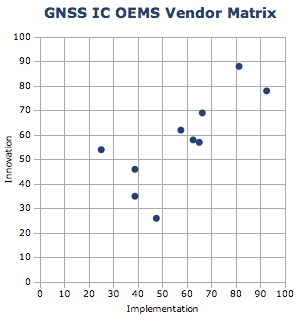
    GNSS-IC-WABI Research’s 2014 GNSS IC vendor matrix names Qualcomm as the leading GPS integrated circuit (IC) vendor, followed by Broadcom in second place. For the first time, MediaTek achieves a top three finish after another year of strong growth and robust shipments as a result of its targeted design strategy, ABI Research revealed in its “GNSS IC OEMs” report.

    The vendor matrix compares companies on 17 criteria across the broader categories of GNSS Innovation and Implementation. Qualcomm remains the dominant player with a strong ubiquitous location platform in IZat — this will be vital for success in high volume cellular handsets in 2015. It is also in a strong position to grow in other GNSS markets.

    Broadcom continues to compete aggressively through innovation, receiving the highest score for this category for yet another year. Already in 2014, Broadcom has announced its concurrent tri-band BCM 47531 IC and the BCM 4771 GNSS SoC designed for wearables, featuring a sensor hub and always-on capabilities. Finally, it has also announced its 5G Wi-Fi SoC, which supports its new proprietary FTM-based AccuLocate technology.

    u-blox has also moved up a position to fourth in this year’s assessment. It continues to grow revenue year-on-year, with little to suggest this will change in the coming year. It is also the first time u-blox has finished ahead of CSR, which was ranked fifth. CSR continues to transition and faces another arduous year in 2014. It will be 2015/16 when the effects of these tough decisions are proven out to be correct or not.

    MediaTek has now emerged as a major threat, taking third on innovation and 2012 market share rankings, following very impressive shipments of its combo ICs into local Chinese smartphone manufacturers. It is also strong on PNDs/recreational and cameras, with a growing presence in other markets. Its move to fully embedded GPS in 2013 should prove significant in driving market share in the future.

    Beyond this, STMicroelectronics also deserves a mention with its new Teseo III platform giving it significant design flexibility allowing it to compete aggressively in existing markets while expanding into new opportunities.

    Other companies discussed include:

    • Cambridge Silicon Radio (CSR)
    • Galileo Satellite Navigation
    • Intel Corporation
    • SkyTraq Technology, Inc.
    • Texas Instruments Inc.
  • Mid-Year Report on Location Market: Privacy, Google, and AT&T

    Half the year is over. It’s gone. Now it’s time to figure out where the location industry is going for the remainder of the year. One analyst (actually, several) believe that the industry, fueled by indoor location and place-based advertising, is around $14 billion right now — with no place to go but up — given some bump in consumer awareness. In other news in a busy month, Google bought Skybox Imaging for $500 million in cash.

    As the mid-point of 2014 arrives, with a few big location industry deals already consummated, there is a chance for industry executives to study what is going to be a strong niche market in the months ahead.

    One analyst believes a big location niche is indoor analytics and proximity marketing, which is defined as nearby a store or within a business. “The latter would include ads and coupons. We’ve estimated that roughly $3.5 billion of potentially $14 billion, or so, in 2014 U.S. mobile ad revenue, will be location-based [broadly defined],” said Greg Sterling, founder of Sterling Market Research. “Of that, about $1.4 billion will be ‘geofenced’ or nearby.”

    Sterling believes that the in-store component is still in an embryonic stage. “There are billions of dollars of coupons distributed every year, but most of that is still print. Some of that is in-store distribution and redemption,” he said. “A portion of that over time will migrate to mobile in or near stores.”

    Sterling said there are billions of dollars available from proximity marketing, but it will take time. He cites “Mapping the Indoor Marketing Opportunity,” a report he authored for Opus Research, that says the market for indoor location and place-based marketing/advertising will surpass $10 billion by 2018. (See a preview of the report here.)

    In a published report, Sterling admitted that he was nervous about the $10 billion number, but it may turn out that the figure could be conservative because of the software licensing from indoor markets.

    Sterling says that while indoor positioning has been important to the older location business, it is still in its early stages. The big deal is mobile, which has brought new attention and interest to location, he said. “Indoor location will feed mobile and online marketing with data and analytics as well as targeting opportunities,” he said.

    Many executives and analysts in the location industry have marginalized privacy issues; some even say it is dead with opt-in approval by consumers. However, privacy issues will continue to hamper the location industry, Sterling said.

    “Privacy is far from dead. Indeed, it’s on the rise, and a major issue that everyone in the location and mobile segments needs to tackle head on,” Sterling said. “Denial, delay and obfuscation will result in regulatory intervention and/or consumer fear/rejection.”

    In a blog, Sterling said that the San Francisco-based Philz Coffee chain no longer will be tracking customers after a local ABC affiliate revealed they were using Euclid retail analytics. Sterling said the ABC report acted as if it had uncovered a big government or corporate conspiracy.

    Sterling will be giving the keynote address at the Place Conference in New York on July 22 at the W Hotel. Topics include proximity marketing, indoor positioning markets, privacy and other location topics.

    Google Continues Location Industry Dominance with Acquisition

    Skybox-Google-logoGoogle enhanced its online mapping service by acquiring Mountain View, California-based Skybox Imaging for $500 million in cash. Sources say both Google and Facebook are purchasing satellite and drone companies in an attempt to expand into other market areas.

    One of the ways Google will be leveraging Skybox is in disaster relief and to improve Internet access in remote areas, something the company has been strongly pursuing.

    On its website, the five-year-old Skybox said that it plans also to share in the development of the burgeoning autonomous vehicle market and continue to design its own satellites.

    A Skybox satellite image of Tampa, Florida.
    A Skybox satellite image of Tampa, Florida.

    AT&T Expands Location Information Services

    AT&T’s new Location Information Services, which includes a security function and LBS, is expanding into more than 150 countries this summer in a pilot project. The Location Information Services are enabled through an API that can notify companies when their customers, who opt-in for the service, arrive in a new country.

    Some application examples, provided by AT&T, include credit card companies confirming customers have traveled to a new country as soon as a device is turned on; allowing the credit card company to either decline or approve purchases overseas; companies using the service to track the movement of equipment to prevent stolen property; and the ability for hospitality entities to offer restaurant and other suggestions to consumers based on their location.

    In other LBS news:

    • The new Amazon Fire Phone has GPS and location functions plus a new feature, Dynamic Perspective, which can be used for such built-in apps as maps and games. The phone is available on July 25, but Amazon is taking pre-orders. In the meantime, competitor Apple has a new iOS 8 feature that allows shoppers to enter their payment details on an m-commerce site by scanning their credit card with the camera on their mobile device, according to published reports. The operating system will use sensors to provide apps with indoor positioning data.
    • HERE acquired the mobile predictive analytics firm, Seattle-based Medio, earlier this month. The company plans to integrate Medio’s predictive analytics, in conjunction with its map platform, to customize LBS “prediction experiences” for consumers, according to published reports. These experiences (full disclosure, I hate it when companies use the word, “experience”) may include delivering restaurant or other information at a relevant time, such as around lunch. While no financial details were released, the deal is expected to close at the end of July.
    • Hundreds of businesses in Brixton, near London, will be integrating Apple’s iBeacon as part of the first networks for mobile payments, according to published reports. Businesses in Brixton are switching from currency payments to mobile payments by text. Previously, iBeacons have been used for proximity offers, advertisements and product information when a user is in a retail area. The mobile payment application allows users to quickly check out, reports say.
  • Tests Show Existing Tech Can Meet Proposed FCC Indoor 911 Accuracy

    fcc-logo_TAn independent study of indoor tests of a hybrid wireless location technology was submitted today to the Federal Communications Commission (FCC) by wireless location engineering firm TechnoCom. The study demonstrates that existing technologies can satisfy location requirements within the timeframe proposed by the FCC in its draft rule on indoor 911 accuracy for wireless calls, according to True Position, which commissioned TechnoCom to perform the testing.

    Multiple wireless carriers have challenged the technical feasibility of the proposed rule, claiming that existing technologies cannot satisfy the proposed accuracy requirements, with a spokesperson for the industry trade association claiming the rule represented “aspirational target setting.”

    The results filed today by TechnoCom disprove those assertions, showing that viable technology exists in the market today, True Position said.  According to TechnoCom’s findings, “The outcome is a current overall performance that readily meets the FCC’s proposed location performance threshold for indoor wireless E911 at the 67th percentile.  The demonstrated performance even comes very close to meeting the 50 meter threshold at 80%, which is intended for 5 years from adoption of the proposed rules.”

    Multiple other vendors have submitted filings to the FCC claiming that their technologies would also satisfy the requirements of the rule on the timeline proposed by the FCC.

    “These results should prove helpful to the FCC as it moves toward reaching a resolution on its proposed rule on indoor location requirements,” said Craig Waggy, CEO of True Position.  “We know that accurate location information is vitally important to American consumers, and that the FCC is intent on remedying the lack of wireless indoor location requirements for calls placed to 911 from wireless devices.”

    The tests were conducted using True Position’s commercially available Uplink Time Difference of Arrival (UTDOA) technology standalone, and a hybrid solution consisting of Assisted GPS (A-GPS) and UTDOA technologies, and included indoor testing in both urban and suburban environments in Wilmington, Delaware, and surrounding areas.

    For the testing, buildings of varying sizes, construction materials and use were selected by the independent firm, and a total of 62 test points were selected among 16 buildings. In all cases, the test buildings and test points remained anonymous to True Position until the conclusion of the testing and delivery of all results to the independent firm.

    In early 2013, TechnoCom conducted the indoor accuracy testing for the FCC’s Communications, Security, Reliability and Interoperability Council (CSRIC).  The same location and measurement methodologies were used in these tests.

    The FCC has estimated that 10,000 lives could be saved each year if calls made to 911 from wireless phones had accurate location information.

  • Indoor GNSS Positioning Research Employs Spectra Precision Equipment

    Researchers at Telecom SudParis are working on a solution to provide indoor continuity for GNSS positioning. The idea is to deploy a minimal transmission infrastructure in order to allow a standard receiver to measure pseudo-ranges and carrier phases, thus leading to an indoor accurate positioning. The infrastructure consists of a few antennas fed through optical fibers with a GNSS-like signal.

    Based in Paris, Telecom SudParis is a part of the Institut Mines-Telecom, an education and research institution in the fields of information and communication technology.

    Nel Samama
    Nel Samama

    To achieve positions accurate to a few decimeters, the locations of the various indoor antennas had to be accurately known.  This was achieved with the Spectra Precision FOCUS 8 total station in a local reference frame. In addition, in order to calculate the indoor positioning in WGS84 format, to achieve full compatibility with current outdoor GPS, a Spectra Precision ProMark 800 GNSS receiver was used to link the local reference frame and the GPS.  “ The accuracies of the FOCUS 8 and the ProMark 800 and their ease of use were invaluable to us,” said Nel Samama, lead researcher and Professor at the Institut Mines-Telecom.

    The International Conference on Indoor Positioning and Indoor Navigation (IPIN) 2012 and 2013 published the first results of the research, and the latest results will soon be published in a paper, “Repealite Based Indoor Positioning System Performance.”  The papers propose a new approach to indoor positioning: the repealite system. It aims at providing continuity of the positioning service through the use of GNSS-like signals, thus leading to a single technological means: a GNSS receiver, for both outdoors and indoors. A few error sources have been dealt with in order to reach sub-meter accuracy indoors, among which one has to cite multipath and near-far effects. The paper describes a way to reach indoor sub-meter accuracy and the practical current implementation of the system.