Tag: Norway

  • DNK offers program to protect ships from GNSS interference

    DNK offers program to protect ships from GNSS interference

    Norwegian insurer DNK will provide members with assured positioning, navigation and timing (A-PNT) services using Iridium Communications’ low-Earth orbit satellite network. DNK, Den Norske Krigsforsikring for Skib, specializes in war-risk insurance.

    The new program allows its clients to select systems from specialized technology vendors to protect against GNSS interference while qualifying for insurance premium rebates.

    The framework aligns with DNK’s aim of using digital technologies to safeguard Norwegian-owned or controlled vessels from war, terror, piracy and cyberattacks.

    “Over the past five years, we have seen a sharp increase in GNSS interference, especially in the Black Sea, the Baltic Sea and more recently, in the Persian Gulf and Red Sea,” said Svein Ringbakken, CEO at DNK.

    “GNSS signal interference can not only increase the risk of collision or grounding but also compromise critical safety systems. This program offers our members the opportunity to lower premiums by investing in cost-effective A-PNT solutions to maintain situational awareness, safety and positioning integrity.

    “This program will not only help members lower premiums and ensure the safety of their vessels but help us collect data we can share with owners, managers and other stakeholders operating in known and emerging conflict zones.”

    DNK evaluated alternative positioning frameworks based on Iridium’s global network of 66 low-Earth orbit (LEO) satellites. The vendors participating in the program offer subscription-based hardware systems with a configuration including an Above Deck Unit that transmits jamming and spoofing telemetry back to DNK, alongside an optional Below Deck Unit that provides real-time situational awareness directly to the vessel crew.

    “GNSS jamming and spoofing not only compromise situational awareness, the intentional manipulation of positioning data can also lead vessels into sanctioned or restricted zones,” said Alan Belardinelli, Project Manager at DNK. “After extensive research, DNK found that the Iridium signal, which is 1,000 times more powerful than GNSS signals, is significantly more difficult to disrupt, adding a significant layer of enhanced positioning resilience. Signal attacks can also play havoc with onboard digital systems that rely on GNSS to provide a source of timing, necessary for safe navigation and efficient operations.”

    The project has received formal support from Norwegian authorities, represented by Marianne Sivertsen Næss, Minister of Fisheries and Ocean Policy, alongside the Norwegian Shipowners’ Association, represented by Knut Arild Hareide, Chief Executive Officer.

    “PNT Iridium stands as a powerful and effective complement to GNSS, ensuring continuity for vessels when traditional signals are degraded or denied,” said Rohit Braggs, vice president of PNT at Iridium. “More importantly, it acts as a resilient ‘source of truth’ by providing assured timing and positioning that maritime systems can depend on, whether in open waters or bustling ports.”


  • Jammertest 2026 seeks applications for GNSS resilience demonstrations

    Jammertest 2026 seeks applications for GNSS resilience demonstrations

    Organizers of Jammertest, a large-scale trial of GNSS resilience technologies, is now open to applications. Jammertest 2026 will take place Sept. 14-18 in Norway.

    Application deadline is April 6. 

    Jammertest is an annual event held at Andøya, recognized as the largest open PNT/GNSS resilience testing event in the world. The event provides a unique opportunity to test the robustness of navigation and positioning systems. 

    For the fifth consecutive year, the Norwegian Public Roads Administration, Norwegian Communications Authority, Norwegian Defense Research Establishment, Norwegian Metrology Service, Norwegian Space Agency, Norwegian Mapping Authority, Avinor and Testnor will be organizing the event.

    Due to high demand, there will be an application process, and selected participants will be invited to attend. Jammertest partners reserve the right to select participants based on Norwegian national interest and needs.

    The application pertains to the entire organization and is not individual. This means that each organization only needs to submit one application.  

    To learn more about the application process, visit the Jammertest website.

  • Transportation: Norway to Build Deepest and Longest Tunnel

    Transportation: Norway to Build Deepest and Longest Tunnel

    Norway’s geography presents persistent transportation challenges. The country’s complex network of fjords, islands and mountainous terrain forces travelers to rely heavily on ferry systems and intricate routes that can significantly extend travel times between major population centers.

    Norway is building an underwater tunnel, one of Europe’s most ambitious engineering projects, which is expected to boost the country’s transport links and infrastructure. Project Rogfast is a 27 km tunnel that will run 392 m below sea level at its deepest point, connecting the cities of Stavanger, Haugesund and Bergen. Upon completion, it will be both the world’s longest and deepest road tunnel. The project is expected to reduce travel times between these major cities by approximately 50%, while eliminating dependence on weather-sensitive ferry connections.

    “Traveling in Norway takes time. Efficient roads like Rogfast are crucial for progress,” said Trond Valeur, vice president of Skanska Norway.

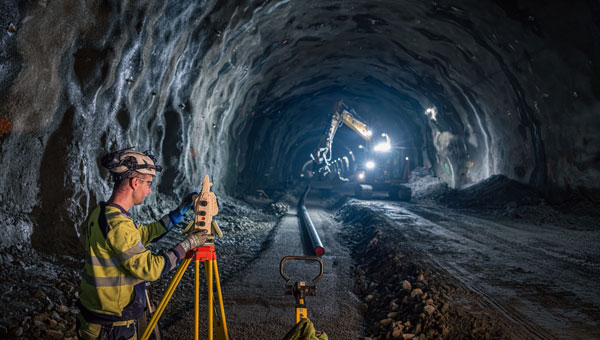
    Skanska serves as the primary contractor and is executing the project’s construction using a dual-approach method. Two separate teams are drilling and blasting from opposite ends of the tunnel route, with the objective of meeting in the center with a tolerance of 5 cm or less.

    When describing the challenge, Rolf Christian Kværnæs, head of Geomatics at Skanska Norway, said, “It’s like two people sitting across from each other, blindfolded, trying to touch fingers.”

    Why Precision Matters

    The financial and environmental costs of measurement errors in tunnel construction are substantial. According to project data, a deviation of just 10 cm in drilling and blasting operations results in one to two additional truckloads of material removal per session.

    “If we are 10 cm out of a lane, it will build up all the way down. It’s not sustainable or economical to do it twice,” said Anne Brit Moen, project manager at Skanska Norway.

    This precision requirement has prompted the use of continuous monitoring systems that track, verify and record each construction phase to reduce rework. The strict accuracy standards for this type of construction pose considerable technical difficulties. Because underground environments block GPS signals, alternative measurement methods are necessary to ensure precision over the extensive length of tunnels.

    Technology Integration in Extreme Environments

    The surveying team at Skanska depends on Hexagon’s technology daily to ensure precision is up to 5 cm and minimize errors. Hexagon acts as Skanska’s “eyes” underground, without which projects like Rogfast would be impossible.

    “Hexagon’s technology scans, checks and documents everything for us, so we know we don’t have to go back,” Valer said.

    The surveying teams conduct 12 to 18 measurement scans daily using total stations and laser scanners provided by Hexagon. These instruments continuously monitor the tunnel’s alignment and document progress to ensure adherence to design specifications.

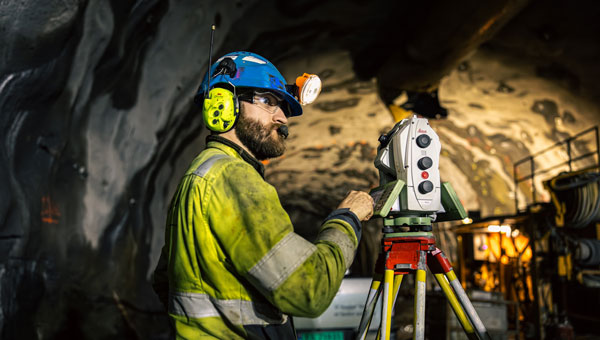
    The Skanska team is using several Leica Geosystems surveying instruments, including the Leica TS60 and Leica MS60 MultiStation. The Leica TS60 serves as an accurate total station, specifically designed for demanding precision applications such as underground construction.

    The Leica Nova MS60 MultiStation is a robotic total station that can measure points with an accuracy of 1 mm to 2 mm and capture 3D scans. This dual functionality combines traditional total station capabilities with integrated laser scanning, allowing the same instrument to perform both precise point measurements and comprehensive area documentation.

    In the Rogfast project, these total stations serve as the primary positioning reference system. They establish control networks throughout the tunnel construction, providing fixed reference points from which all other measurements are taken. The robotic capabilities enable automated target tracking and measurement, reducing human error and increasing efficiency in the confined underground environment.

    The hardware components work in conjunction with Hexagon’s data processing software, which manages the massive datasets generated by continuous scanning operations. Hexagon’s Geosystems division provides digital solutions that capture, measure and visualize the physical world, enabling data-driven transformation.

    The software processes raw measurement data into actionable information, comparing actual construction progress against design models and generating reports that identify areas requiring correction. This integration allows project managers to make real-time decisions based on accurate spatial data.

    Project Timeline and Scope

    Project Rogfast represents one of several major infrastructure initiatives designed to improve transportation efficiency across Norway’s challenging terrain. The tunnel’s completion, set for 2033, seeks to establish new technical benchmarks for subsea construction while addressing long-standing regional transportation limitations in Norway.

  • Hexagon supports Skanska in building subsea road tunnel in Norway

    Hexagon supports Skanska in building subsea road tunnel in Norway

    Hexagon’s surveying solutions are playing a key role in the construction of Project Rogfast, a 27-km subsea road tunnel in Norway that is set to be the longest and deepest of its kind. Running 392 m below sea level, the tunnel will link Stavanger, Haugesund and Bergen, aiming to cut travel time by up to 50% and strengthening economic connections in the oil and gas sector.

    The project, led by construction firm Skanska, presents unique engineering challenges, including tunneling from both ends with a final meeting point that allows for no more than a 5 cm margin of error. Even small misalignments could result in significant delays and costly rework. Skanska is using Hexagon’s portfolio of Leica Geosystems solutions to align machinery and validate measurements in real time, enabling precise tunneling under extreme conditions.

    Hexagon’s technologies are delivering measurable impact across the project by:

    • Enabling precise alignment with total stations, GPS, multistations and laser scanners.
    • Reducing rework, emissions, and cost through real-time data capture and validation.
    • Powering safe operations under extreme conditions, 392 m below sea level.

    “In a project like this, even a millimeter of misalignment can trigger cascading risks,” said Trond Valleur, vice president at Skanska. “Hexagon’s technology gives our teams the confidence to move forward with accuracy, efficiency and safety.”

    The Leica Nova MS60 MultiStation is a robotic total station that can measure points down to 1 mm to 2 mm and capture 3D scans. (Credit: Hexagon)
    The Leica Nova MS60 MultiStation is a robotic total station that can measure points down to 1 mm to 2 mm and capture 3D scans. (Credit: Hexagon)

    The collaboration reflects a partnership between Skanska and Hexagon that has spanned more than 30 years. The Skanska team is using several Leica Geosystems surveying instruments, including the Leica RTC360, Leica MS60 MultiStation, Leica AP20 AutoPole and Leica TS60.

  • Jammertest 2024 is underway

    Jammertest 2024 is underway

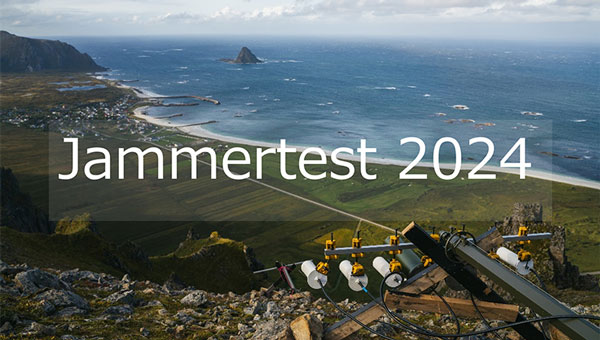
    JammerTest in Bleik, Andøya, Norway. (Photo: Septentrio)
    JammerTest in Bleik, Andøya, Norway. (Photo: David Jensen)

    GNSS jamming trials have begun on the Island of Andøya in Northwestern Norway as part of Jammertest 2024. This event features both simple and sophisticated staged spoofing and jamming attacks, allowing participants to identify potential strengths and weaknesses in their GNSS-based systems.

    The increasing frequency of jamming and spoofing incidents, particularly affecting Northern Norway and possibly linked to Russian activities, drives the demand for more resistant GNSS and non-GNSS-based contingency systems. In response, the Norwegian Defense Ministry has called for the development of alternative means of positioning, navigation, and timing (PNT) provisions to protect against GNSS jamming in maritime navigation.

    During Jammertest 2024, researchers from both public and private sectors are assessing how effectively existing and new technology systems can withstand jamming and spoofing attacks in real-world scenarios. One of the staged jamming attacks, taking place from Sept. 4-13, 2024, is occurring on two stretches of road near Bleik, a small coastal town on Andøya Island. This trial was approved by Norway’s National Communications Authority and is being carried out by the Public Roads Administration, Defense Research Institute, Norwegian Space Center, and other partners.

    Later in September 2024, the Defense Research Institute will conduct military jamming tests on Andøya, focusing on operational testing of military weapons systems and loss of GPS signals. Local inhabitants have been notified that they may experience relatively short-lived GNSS disruption during these trials, most of which will involve GPS jamming but not spoofing or meaconing.This year marks the third consecutive year that Jammertest is being held on Andøya, which is also the site of Norway’s Andøya Space Center.

    The event has garnered record-high interest worldwide, with more than 300 applicants for Jammertest 2024. During the 2023 edition, 264 comprehensive tests were conducted, exploring various topics such as sensor fusion, radio frequency interference (RFI) countermeasures, and combinations of GNSS with alternative positioning, navigation and timing (PNT) solutions

  • Furuno to participate in Jammertest 2024

    Furuno to participate in Jammertest 2024

    Photo: Furuno
    Photo: Furuno

    Furuno will participate in Jammertest 2024 in Andøya, Norway, from Sept. 9 to 13, 2024. This event is widely recognized as the world’s largest GNSS resilience testing event, providing a unique opportunity for companies to evaluate their GNSS receivers in real-world environments.

    Jammertest 2024 will expose participants’ GNSS receivers to jamming and spoofing signals, allowing companies to gather valuable data on their product tolerance levels. The event is organized by several Norwegian institutions, including the Norwegian Public Roads Administration, Norwegian Communications Authority and Norwegian Space Agency.

    Furuno will be testing its GT-100 timing multi-GNSS receiver module at the event. This module supports dual-frequency band reception in the L1 and L5 bands, making it suitable for critical infrastructure applications such as 5G mobile base stations, TV broadcasting and power grids.

    GT-100. (Photo: Furuno)
    GT-100. (Photo: Furuno)

    Key Features of GT-100:

    • Automatic mitigation of jamming and spoofing signals.
    • Real-time notification of jamming signal frequency and strength.
    • Ability to maintain L5 band signal reception if L1 band is lost.

    By participating in Jammertest 2024, Furuno aims to evaluate and analyze the GT-100’s resistance to jamming and spoofing in real-world conditions. The company plans to use the results further to enhance the robustness of its GNSS receiver technology, ultimately contributing to more resilient critical infrastructure systems.

  • Gundersen & Løken: Tracking the tip of the bucket

    Gundersen & Løken: Tracking the tip of the bucket

    Photo: Septentrio
    Image: Septentrio

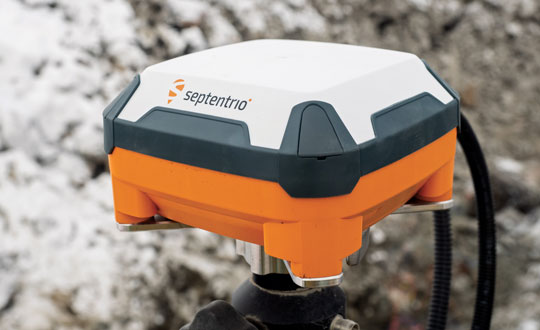
    Gundersen & Løken AS, in Oslo, Norway, founded in 1899, develops equipment for the construction industry. It uses Septentrio’s AntaRx in its Dig Pilot 3D machine guidance system, which it began to develop in 2007. The company is now launching the next-generation DigPilot to assist excavator drivers. Its DigPilot Terra user interface and graphics offer a wide range of functionalities for efficient earthwork. The development of DigPilot Terra is funded partly by Innovation Norway.

    DigPilot uses multi-axial CAN bus angle sensors on all moving parts — chassis, boom, arm and bucket — to calculate the position of the bucket tip with centimeter precision. The sensors are gyro-stabilized and hold firmware that predicts angles in the coming milliseconds based on angles from the previous milliseconds. These calculated angles are pushed to the computer in the cabin, which can visualize the bucket position in real-time.

    DigPilot is a two-antenna system. Until now, it relied on two Septentrio GNSS antennas installed on the rear of the excavator — one to determine the machine’s position and one to determine its heading. These data are fed to the Septentrio GNSS receiver (rover) inside the machine, which also receives correction data via internet or radio. The data from the GNSS rover is pushed to the computer in the cabin and, when combined with the angular sensor data, provides the exact coordinates of the bucket tip and the delta value of the finished project.

    Now, Septentrio’s AntaRx technology makes DigPilot’s installation simpler and more robust because the built-in GNSS rover in one of the rear antennas greatly reduces the amount of cabling and the number of connectors.

    I discussed DigPilot with Eric Floberg, the company’s managing director since 2019 when he took over from his father, and Erik Sørngård, the company’s R&D manager, who has been working with Septentrio products for 12 years.

    When did you start working with Septentrio on AntaRx for DigPilot? At what stage of deployment is it?

    Sørngård: We began to discuss features about four years ago. At that time, we had worked with other Septentrio products for eight years. So, they appreciated our cooperation and wanted to show us where their next stage in development was heading. Last year, they approached us again, to see whether we could start looking further into it.

    Floberg: We now have one system here for testing and we have experience from the previous Septentrio products, such as the rover GNSS receivers, which have always given us the best of accuracy. Of course, now, we see the potential to make our system more robust and simpler. As soon as we have sold out the existing Septentrio products, we will incorporate the AntaRx into our next-generation machine control system.

    Is DigPilot receiver-agnostic, even though you have a preference for the AntaRx?

    Floberg: All the connections, the cabling and the components themselves are exposed to very tough environments and stresses of different kinds, such as extreme temperatures and vibrations. So, reducing the number of components and connections and cabling would definitely give us a higher uptime, which is the most important thing for our end users.

    Having the antenna and the receiver in the same box means less cabling and easier installation, correct?

    Floberg: Definitely. The anti-theft aspect here is also very important. In certain parts of the world, you will appreciate the opportunity to easily remove it from your excavator or bulldozer when you leave at night.

    What are the key challenges?

    Floberg: This winter has been the toughest one in Norway in 30 years. We have also had the chance to do some testing in very low temperatures and harsh environments. When we see it work as well as it does, we feel very confident about it.

    What accuracy have you been getting?

    Sørngård: When it comes to machine control, we look at the end result on the tip of the bucket. We have several sensors, and we have to calibrate the machine accurately. The receiver is not the biggest contribution to the noise in the algorithms. We trust that the Septentrio receiver delivers accurate numbers, and we must push ourselves to make the rest of the system meet the same standards.

    Floberg: On 30-ton or 40-ton excavators with booms up to 10 meters long we are able to get sub-centimeter accuracy, but the tip of the bucket in such a machine is 1 in thick. Of course, there are many other factors, such as the wear and tear of the machine.

    Is DigPilot typically factory-installed or aftermarket?

    Floberg: We’ll do both. We are often called by the distributor — say, Volvo or Hitachi or Kobelco — to install an integrated system.

  • Winners announced from myEUspace competition

    Winners announced from myEUspace competition

    Image: EUSPA website
    Image: EUSPA website

    The European Union Agency for the Space Programme (EUSPA) has announced the winners of the first myEUspace track “Submission of an Idea.” This track consists of promising theoretical ideas that leverage EU space data and have high market potential. Winners received a cash prize of €10,000 each.

    The myEUspace competition is open to teams from all EU Member States plus Switzerland, Norway and Iceland. The competition offers a total prize of nearly €1 million and provides support to entrepreneurs throughout the entire innovation cycle, from early-stage start-ups to scale-ups.

    While the evaluation of the prototypes track is ongoing, the competition remains open for the last track, “Submission of Products.” Applications for the final track are due April 25.

    Depending on the maturity of the solution at the time of submission, entrepreneurs can compete and win in three different innovation areas: “Space My Life,” “Our Green Planet” and “Dive in Deep Tech.”

    See the full list of winners by area of innovation:

    “Our Green Planet”
    • Spillalert: Intuitive web interface for oil spills and blackwater tank detection
    • BugBit: Risk analysis platform for predicting and alerting of bark beetle outbreaks
    • Push4CleanAir: SaaS pollution monitoring platform
    • Detritus: Online platform and mobile app for waste-crime detection
    • Orioos: Autonomous robotic solution for monitoring woody perennial crops
    • Vantu: Van-lifers companion app to discover “off the beaten track” sites to camp for the night

    “Dive in Deep Tech”
    • DeGenS: Decentralized space-to-ground data availability for artificial intelligence (AI) using blockchain
    • Climate AI for Web3: Real-world portable climate API for virtual worlds powered by AI and satellite data
    • Latitudo Supersar: AI analysis, classification and interpretation of multi-sensor and multi-mission images
    • WhisperCash: Person to person payments via satellite for isolated regions
    • Kyck: Geospatial metaverse platform for exploring and sharing AR experiences in the physical world

    “Space My Life”
    • Foremca: Cryptographic methodology providing forensic digital proof
    • MicroPURA: Microbial Purity to detect levels of microbial contamination in the air
    • Space4CC: Monitoring actions to safeguard cultural heritage in conflict areas
    • Oasis City Lab: AI tool to track urban threats

  • Ottobots to make first-mile product deliveries in Oslo

    Ottobots to make first-mile product deliveries in Oslo

    Ottonomy.io partners with Posten Norge for first-mile supply chain automation with autonomous robots

    One of Europe’s largest postal services, Posten Norge, is testing the future of logistics delivery with Ottobots in Oslo.

    Ottobot maker Ottonomy.io is collaborating with Posten Norge AS and Holo on trials for automating first-mile delivery in an effort to pave the way for autonomous delivery. See the project page.

    The Posten Group is a post and logistics group that develops and provides post, communications and logistics services in Norway and the Nordic region. Holo is an implementer, integrator and operator of autonomous vehicles in the region.

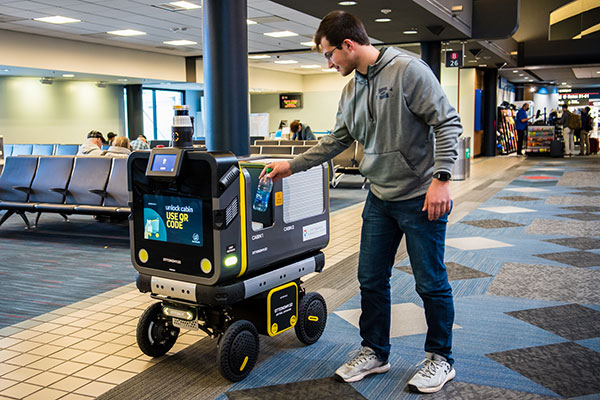
    An Ottobot delivers product orders to airport travelers. (Photo: Ottonomy)
    An Ottobot delivers product orders to airport travelers. (Photo: Ottonomy)

    The partnership with one of Europe’s largest logistics companies is oriented towards testing how autonomous robots can improve intra-logistics, especially in city centers. Posten Norge will be leveraging Ottobots for first-mile pick-ups, receiving and delivering goods for AMOI, a Nordic digital marketplace, from the busy Aker Brygge metropolitan area in Oslo.

    “Autonomous robots have previously been tested by other companies with the focus entirely on final delivery to the customer,” said Sven Richard Tønnessen from Posten’s Department of Emerging Technology. “We want to evaluate how robots can become part of Posten’s future logistics solutions.

    “This project, which utilizes both humans and robots, offers many new opportunities for increasing efficiency and productivity for our organization,” Tønnessen said. “We will continue to utilize our existing pool of human couriers for delivering goods to the customers, while the robot takes care of the intra-logistics part of the supply chain.”

    Conquering the First Mile

    The first mile has been a pain point for organizations in metropolitan areas. First-mile delivery involves moving products from the manufacturer’s or retailer’s warehouse to a central holding center. From this location, a carrier, shipping company or logistics partner picks up the products and takes it to the next leg in the destination.

    “The logistics with delivery vans at Aker Brygge is extremely demanding in terms of parking and time consuming,” said Kenneth Tjønndal Pettersen, Posten Norge. “Together with our partners, we want to test the various applications for autonomous technology, which can enable simpler logistics and reduced noise in the cityscape.”

    A recipient of the 2021 Sustainability Product of the Year award by Business Intelligent Awards, Ottobot will be used to determine how Posten Norge AS can increase sustainability and efficiency for the logistics supply chain in the future.

  • Safran develops inertial micro-sensor strategy

    Safran develops inertial micro-sensor strategy

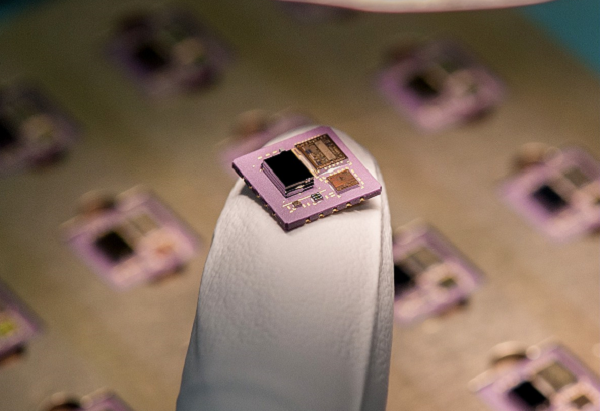
    An example of a MEMS. (Photo: Safran Colibrys)
    An example of a MEMS. (Photo: Safran Colibrys)

    Safran Electronics & Defense is taking a major step forward in its inertial navigation strategy by grouping two subsidiaries, Safran Colibrys (Switzerland) and the recently acquired Sensonor (Norway,) under a single banner, Safran Sensing Technologies.

    The similarities in expertise, market position, customers and technologies result in clear synergy between these two companies, which produce accelerometers, gyrometers and inertial measurement units (IMUs). The creation of Safran Sensing Technologies shows Safran’s commitment to developing its micro-sensor business through these two companies.

    The STIM380H inertial measurement unit. (Photo: Sensonor)
    The STIM380H inertial measurement unit. (Photo: Sensonor)

    The goal is to jointly offer a wider and comprehensive range of inertial technologies including vibrating sensors, optics and micro-electromechanical system (MEMS) for applications in aeronautics, defense, space and other industries.

    The two subsidiaries have already delivered more than 20 million MEMS sensors to the aeronautics, defense, space, transport, mobility and industry sectors. For example, MEMS are used in the control accelerometers of automobile airbags, in high temperature accelerometers for guiding drill heads, and in seismic sensors measuring the structural health of buildings or civil engineering works. They are also used in IMUs for civil, military and space vehicles.

    This change is part of a broader Safran Electronics & Defense strategy designed to strengthen the company’s position in the positioning, navigation and timing (PNT) market.

    The two entities have been renamed Safran Sensing Technologies Norway AS and Safran Sensing Technologies Switzerland SA, respectively.

  • Mass rescue operation takes place in Arctic Circle with Galileo SAR

    Mass rescue operation takes place in Arctic Circle with Galileo SAR

    The AMRO 2021 exercise tested the rescue of 200 cruise-ship passengers using Galileo SAR. (Photo: EUSPA)
    The AMRO 2021 exercise tested the rescue of 200 cruise-ship passengers using Galileo SAR. (Photo: EUSPA)

    News from the European Union Agency for the Space Programme (EUSPA)

    In freezing arctic waters 60 nautical miles off of Svalbard, a search-and-rescue enactment proved the capabilities of Galileo as a life-saving system.

    The Arctic Mass Rescue Operation (AMRO 2021) took place on Oct. 8, organized by the Norwegian authorities. The scenario surrounded a cruise ship that caught on fire with around 200 passengers onboard, located northwest of Spitsbergen far from roads, cabins, rescue crews and other infrastructure.

    The vessel’s crew activated a Galileo-enabled EPIRB compatible with Galileo’s Return Link Service. Once activated, it took only 2:20 minutes for the Galileo System to track down the ship with an accuracy below one kilometer and deliver an SOS acknowledgement to the active EPIRB.

    Once the Mission Control Centers received the distress signal and established the location, two Super Puma helicopters from the Governor of Svalbard, a Sea King from the 330 squadron of the Royal Norwegian Air Force, and a Norwegian coast guard support vessel were scrambled to support the massive evacuation of the passengers.

    ‘’The AMRO 2021 exercise was an excellent opportunity for the European Union Agency for the Space Programme to showcase the power of Galileo SAR and the robust performance of Galileo at high latitudes in comparison to other GNSS constellations,’’ said Guerric Pont, Head of Galileo Department at EUSPA.

    The Galileo RLS allows people in distress to receive an automatic acknowledgment that their signal has been picked up by the first responders. Galileo’s contribution to the Medium Earth Orbit Satellites Search and Rescue System (MEOSAR) — managed by the international COSPAS-SARSAT program — translates into 2,000 lives saved per year.

    In support of Galileo’s SAR operations, the Copernicus Marine Service provides authorities and rescue centers input such as wave height, sea current direction as well as and water temperature among others.

  • Trimble introduces VRS Now Correction Services to Norway

    Trimble introduces VRS Now Correction Services to Norway

    Trimble has expanded its VRS Now correction services across mainland Norway for a total European footprint of 2.5 million square kilometers.

    Logo: TrimbleTrimble has expanded its VRS Now correction services across mainland Norway and most outer islands.

    As part of an ongoing global correction service strategy, the company is adding more than 400,000 square kilometers (156,000 square miles) to its European footprint, which now totals 2.5 million square kilometers (975,000 square miles).

    VRS Now delivers reliable, easily accessible, centimeter-level accuracy that is ideal for professionals in the surveying, GIS and mapping, construction and agriculture industries, as well as many emerging autonomy applications in the automotive and robotics industries.

    The subscription service is brand agnostic and works with most GNSS receivers. It is supported by a global team of GNSS network specialists and customer service representatives around the world, ensuring users have a consistent, reliable, high-performing service whenever they need it.

    “Launching Trimble VRS Now services to Norway significantly expands our correction services footprint across Europe, offering a robust and reliable accuracy solution to farming, construction and mapping professionals across the region,” said Lisa Wetherbee, general manager of Trimble’s Advanced Positioning Division. “Trimble solutions are helping customers optimize workflows, improve productivity and deliver operational efficiency, while increasing user safety.”