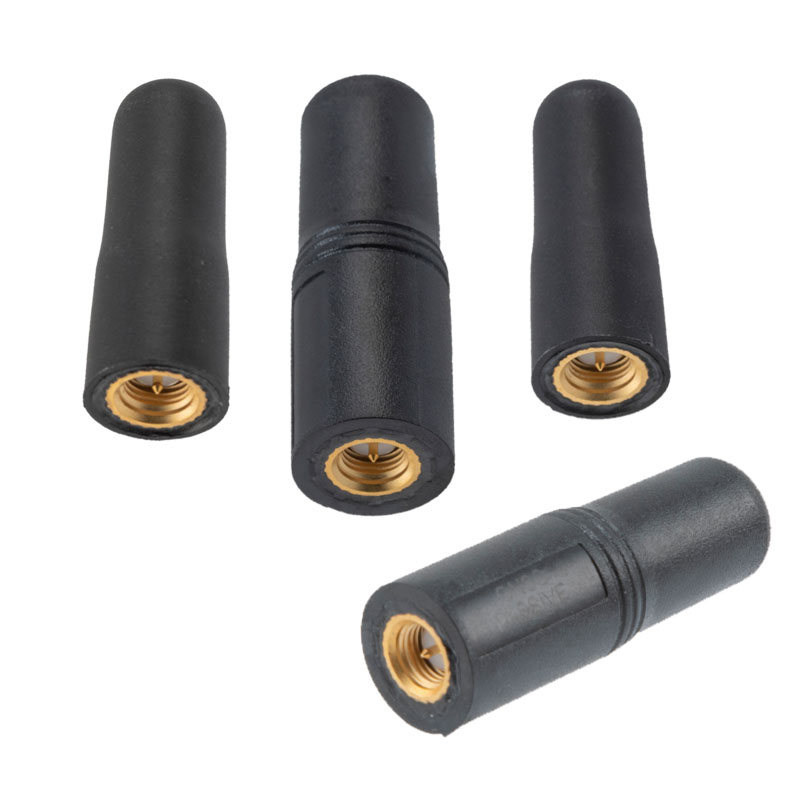
Pasternack has released a series of GNSS antennas that meet military specifications for use in several small form factor and mobile applications.
The mil-spec GNSS antennas are engineered for environmental performance according to the MIL-STD-810G standard and include multi-standard GPS L1, Galileo E1 and GLONASS options.
The MIL-STD-810G GNSS antennas are IP67 rated. They are available in passive and active versions and provide coverage from 1,597 MHz to 1,607 MHz. The GNSS antennas feature linear polarization for cross-polarized isolation, nominal gain options of -3 dBic and 10 dBic, and SMA mounts.
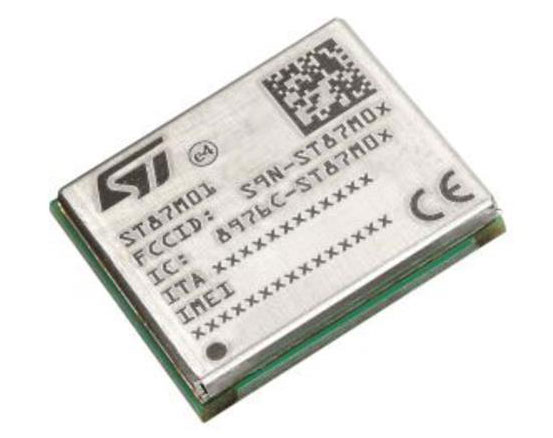
STMicroelectronics has released an ultra-compact, low-power, narrow-band internet of things (NB-IoT) industrial module with GNSS geo-location capabilities, the ST87M01. The fully programmable, certified LTE Cat NB2 NB-IoT industrial module covers worldwide cellular frequency bands and integrates advanced security features.
The ST87M01 is an integrated native GNSS receiver with multi-constellation access, which ensures enhanced and accurate localization. The module has a diminutive 10.6 mm x 12.8 mm land grid array footprint, making it suitable for applications where a small form factor is key.
The STM8701 offers flexibility for product developers, presenting a fully programmable IoT platform enabling users to embed their own code into the module for simple applications. A variety of protocol stacks are available to handle popular IoT use cases.
The ST87M01 targets wide-ranging IoT applications that require ultra-reliable low-power wide-area network connectivity and has ultra-low power consumption with less than 2 µA in low-power mode and transmit output power up to +23 dBm.
Suitable applications for the module include smart metering, smart grid, smart building, smart city and smart infrastructure applications, as well as industrial condition monitoring and factory automation, smart agriculture and environmental monitoring. The module can also be combined with a separate host microcontroller, permitting many more use cases.
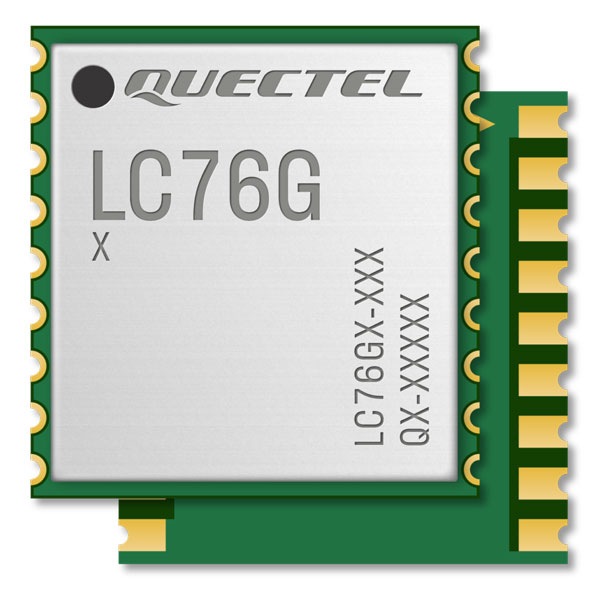
Quectel Wireless Solutions’ LC76G GNSS module has been named a Product of the Year byElectronic Products.The annual awardsrecognizeproducts that represent a significant advancement in technology or its application, an exceptionally innovative design, a substantial achievement in price/performance, improvements in design performance, and a potential for new product designs/opportunities.
Image: Quectel
The LC76G module is a compact, single-band, ultra-low power GNSS module thatfeaturesfast and accurate location performance. The module can concurrently receive and process signals from all satellite constellations including GPS, GLONASS, BeiDou, Galileo and QZSS.
Image: Quectel
The LC76G has an internal surface acoustic wave (SAW) filter and integrated low-noise amplifier (LNA), which can be connected directly to a passive patch antenna and provides filtering against unwanted interference. With a compact size of 10.1 mm × 9.7 mm × 2.4 mm, the footprint of the LC76G is compatible with other industry solutions, as well as Quectel’s legacy L76 and L76-LB modules.
The LC67G is designed for battery-operated, ultra-low power GNSS devices, such as wearable personal trackers, wildlife and livestock tracking, toll tags, portable container trackers, as well as several traditional markets such as shared mobility and low-cost asset trackers.
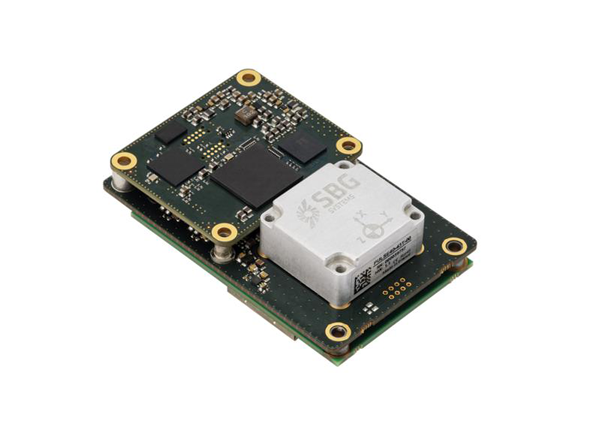
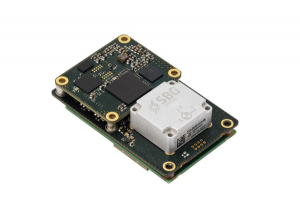
SBG Systems has released Quanta Plus, a GNSS-aided inertial navigation system (INS). Quanta Plus is a small, lightweight product, which can be easily integrated into survey systems with lidar or other third-party sensors.
The device combines a micro-electromechanical (MEMS) inertial measurement unit (IMU) with a resilient GNSS receiver to get reliable position and attitude, providing real-time kinematic (RTK) fixes.
Quanta Plus includes motion profiles, which enable users to optimize the sensor parameters to suit different use cases. The built-in precise time protocol server ensures sub-microsecond synchronization with external devices such as lidar. The device also has a built-in datalogger, Ethernet interface for easy integration, and a web configuration interface for simple setup and control.
The INS can be integrated with Qinertia, SBG System’s post-processing software. Qinertia improves the performance of acquired data during a mission using reliable RTK corrections from a wide range of continuously operating reference station networks, or by importing base-station data during the process.
Quanta Plus also improves the accuracy of the position and attitude using forward and backward processing and by integrating a tight coupling between GNSS and IMU data.
Quanta Plus is suitable for survey professionals or a navigation-dependent company seeking a robust navigation device. Specific solutions are available for integrators and OEMs who want to use Qinertia as a component in their application-specific data-processing solutions.
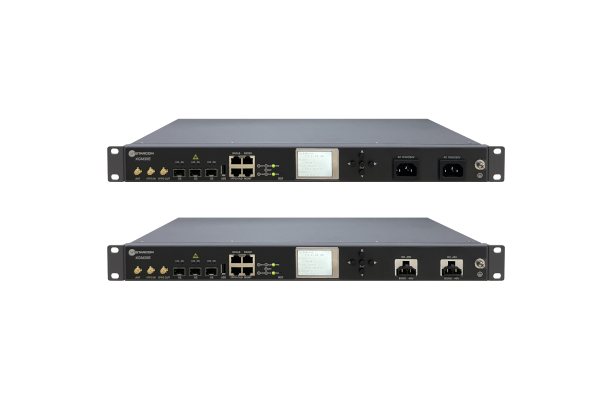
UTStarcom has launched the SyncRing XGM30E precision time protocol (PTP) grandmaster. The SyncRing XGM30E is designed for mobile networks and other applications requiring accurate time and frequency synchronization. It is an addition to the company’s SyncRing line of network synchronization equipment.
The SyncRing XGM30E is an indoor PTP grandmaster offering echo time accuracy of more than ±40 ns, which can meet the stringent timing requirements of demanding applications including 4G and 5G networks. The clock complies with the PTP IEEE 1588-2008 standard, supporting major ITU-T frequency and phase and time profiles.
SyncRing XGM30E supports synchronous Ethernet (SyncE) output on all service interfaces for accurate frequency synchronization, and SyncE input for enhanced time holdover operation during GNSS outages.
The grandmaster includes an indoor rack-mount design and power supply redundancy with AC or DC built-in options and has flexible management options. The SyncRing XGM30E is available now.
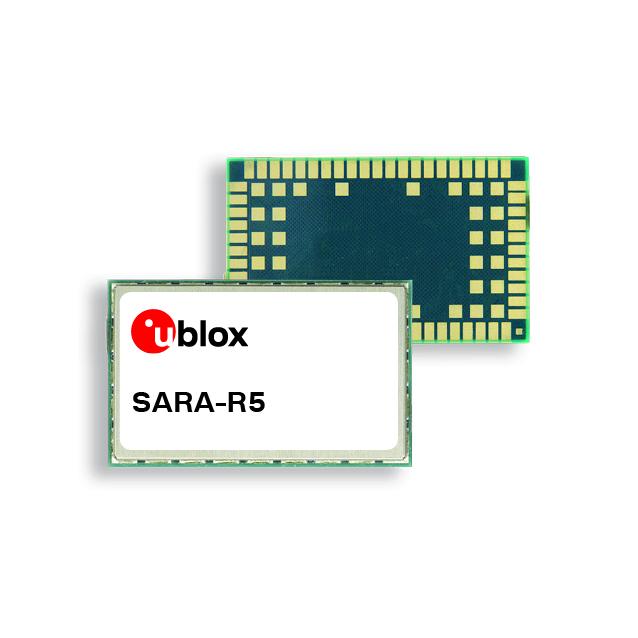
U-blox’s SARA-R5 series LTE-M module, based on the company’s low-power wide-area (LPWA) chipset, has been fully certified on all mobile network operators’ LTE-M networks in Japan. The module is the first u-blox internet of things (IoT) product to receive certification with all the Japanese operators.
The SARA-R5 series is 5G-ready and aimed at LPWA IoT applications such as industrial automation, sensor applications, connected health, metering, asset and vehicle tracing, and telematics. The module is also certified Microsoft Azure and qualified for IoT Core Amazon Web Services.
The SARA-R5 series has three product variants including the SARA-R500S-61B, the SARA-R510M8S-61B and the SARA-R510S-61B.
The SARA-R500S-61B offers standard LTE-M connectivity. The SARA-R510M8S-61B includes an integrated u-blox M8 GNSS receiver and a separate GNSS antenna interface, which provides reliable and accurate positioning data concurrent to LTE communication. This module is suitable for mobile applications such as automotive, fleet management and tracking, and telematics.
The SARA-R510S-61B is designed for low-battery powered applications including metering, security and surveillance, remote monitoring and more.
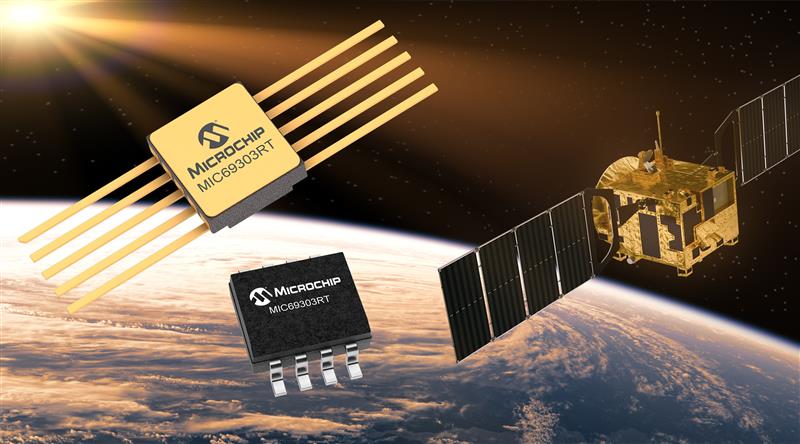
Microchip Technology has launched the MIC69303RT 3A Low-Dropout Voltage Regulator, a radiation-tolerant power management device for space application developers. This high-current, low-voltage device targets low-Earth orbit (LEO) space applications.
The MIC69303RT operates from a single low-voltage supply of 1.65 v to 5.5 v and can supply output voltages as low as 0.5 v at high currents. It offers high-precision and low dropout voltages of 500 mv under extreme conditions. The MIC69303RT is a companion power source solution for Microchip’s microcontrollers, such as the SAM71Q21RT and PolarFire field-programmable gate arrays.
This device is designed for harsh aerospace applications and remains operational in temperature ranges from -55 C to +125 C. It is offered in 8-pin and 10-pin package configurations with radiation tolerance up to 50 krad.
Additionally, the MIC69303RT is manufactured in compliance with MIL Class Q or Class V requirements, including screen testing, qualification testing and more.
The MIC69303RT is available for prototype sampling in both plastic and hermetic ceramic. The plastic MIC69303RT is compliant with high-reliability plastic quality flow derived from AEC-Q100 automotive requirements with specific additional tests necessary for space applications.
This device is available in limited sampling upon request.
On Jan. 3, Hexagon and Dayou announced the availability of TerraStar-X Enterprise test beds in Beijing, Shanghai, Anqing and Shenzhen for OEMs in the automotive and micro-mobility industries. Terra-Star-X Enterprise precise-point positioning corrections provide lane-level accuracy with fast convergence for autonomous vehicles and mass-market use.
The availability of the test beds follows the initial announcement by Hexagon’s Autonomy & Positioning division and Dayou of their partnership aiming to deliver GNSS correction services to the Chinese market. Users of autonomous platforms will now have a single correction service that works in China, North America and Europe.
OEMs in China can now leverage the test beds with consumer and automotive-grade GNSS receivers to design advanced driver assistance systems (ADAS), and other products, such as mobile applications, safety-critical solutions and more.
A Ukrainian intelligence assessment obtained by CNN and CBS reported an Iranian UAV downed in Ukraine contained technology from companies in the United States and other western countries. The White House has since launched an investigation as to how the technology — including semiconductors, GPS modules and engines — were obtained by Iran.
Screenshot: CBS video
The components removed from an Iranian Shahed-136 UAV totaled 52, 40 of which were manufactured by 13 different U.S. companies. The remaining components were manufactured by other western companies and companies based in Japan, Taiwan and China.The United States monitors exports and imposed restrictions and sanctions to prevent Iran from obtaining components for UAVs. Officials are now looking to enhance enforcement of the sanctions and are encouraging companies to monitor their supply chain, as well as identify third-party distributors who may be re-selling the technology to Iran.
U.S. companies are not alone in having to closely monitor their supply chains. U-blox, a Swiss semiconductor company, made a statement reinforcing its company policy, which bans the use of its technology in weapons. This was after u-blox GNSS modules were reportedly found in Russian UAVs.
On Jan. 5, FocalPoint announced an investment from GM Ventures, and collaboration with General Motors (GM), on the integration of next-generation GPS technology in the automotive industry. This collaboration will explore the deployment of electric and autonomous vehicles and aims to apply FocalPoint’s technologies into future vehicles produced by GM to make navigation more precise, especially in urban environments.
Image: FocalPoint
FocalPoint’s Supercorrelation is designed to increase positioning accuracy in urban environments and is highly resilient to spoofing attacks. It will be integrated into GM vehicles to provide more accurate navigation. The goal of the integration is to enhance and expand GM’s Super Cruise, and upcoming Ultra Cruise, hands-free, driving assistance technology.
Supercorrelation is already licensed to u-blox and is in advanced trials with other major manufacturers including Molten Ventures, Greshham House, Passion Capital, IQ Capital, Cambridge Angels and more.
California lawmakers have passed a bill prohibiting OEMs of autonomous vehicles from marketing their vehicles as ‘fully self-driving.’ This law went into effect Jan. 1.
This legislation was passed in mid-September of 2022 and states that manufacturers are prohibited from selling new passenger vehicles with autonomous driving features without fully disclosing their capabilities and limitations. Companies such as Tesla, and other OEMs in California, will no longer be able to market vehicles as ‘fully autonomous,’ as the new bill states that it is “considered a misleading advertisement.”
Any violation of the new legislation will be punished as an infraction. Based on this, it is unclear what the exact punishment will be for OEMs that violate this policy.
Senate Bill No. 1398 will be added to Section 24011.5 of California’s vehicle code. The full bill can be found here.
ASENSING, a Chinese positioning solutions company for autonomous vehicles, is ready to provide its navigation systems globally. The company already has more than 500,000 autonomous vehicles integrated with its navigation systems and is discussing global product expansion with major Western brands.
ASENSING is the first in series production of an automotive solution that combines IMU and GNSS, enabling it to develop an algorithm to maintain navigation accuracy at various temperatures. Its positioning solutions are designed for autonomous driving at L2 level and above and meet functional safety requirements.
ASENSING has received nominations from more than 20 OEMs to provide solutions for more than 70 vehicle models. Additionally, the company has partnerships with traditional brands such as SAIC, Geely, and Chery, as well as with new energy vehicle makers, including XPeng, Li Auto, and NIO.
The company has three global branches, in the United States, Germany, and Japan with plans to launch more smart plants in east and south China to accommodate for an influx of orders. ASENSING will exhibit its mass-produced positioning solutions at the Consumer Technology Association’s Consumer Electronics Show 2023 in Las Vegas, Nevada.