RIA Novosti is reporting that German firm Jena-Optronik GmbH has delivered an advanced star sensor to Russia’s Reshetnev Information Satellite Systems company (ISS), which will test and integrate it on a GLONASS navigation satellite, Reshetnev said on Wednesday.
The Astro APS sensor is part of the satellite’s altitude and orbit control system. It will help ensure that the GLONASS satellites maintain an accurate attitude in space.
The sensor will be installed on a GLONASS-M satellite under a 2011 agreement signed between Reshetnev ISS and Jena-Optronik GmbH. It has a single box design with low mass and low power consumption. If tests are successful, it will be integrated on other ISS spacecraft.
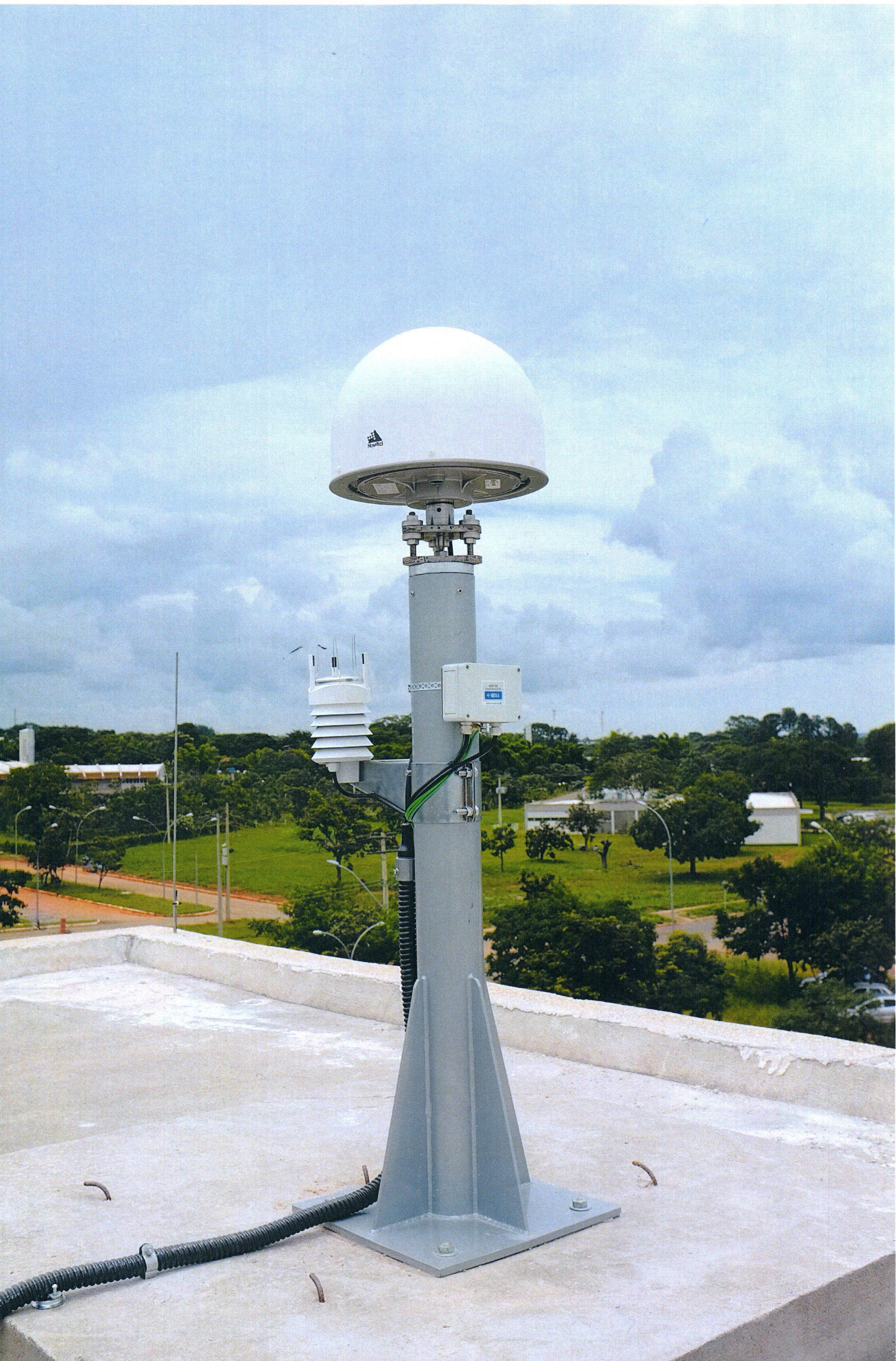
The Moscow Times is reporting that the first overseas GLONASS ground station for differential correction and monitoring was launched in Brasilia, Brazil, on Tuesday, citing information from the Russian Federal Space Agency (Roscosmos). The station will become the first correction point in the Western Hemisphere and will significantly improve the accuracy of GLONASS navigation signals, the agency said.
GLONASS stations will also be installed in the United States, according to Pravda.Ru. “GLONASS stations are to be installed in the U.S.. This will improve the accuracy of the system. In general, stations like these are planned to be located in more than 30 countries of the world. Most of the countries that received the offers for the installation of the stations responded positively.
“However, the process is slow because of the need to conclude appropriate intergovernmental agreements. The documents with Brazil were signed in 2012. Agreements with Spain, Indonesia and Australia will be finalized soon,” Pravda.Ru said.
The Brazilian SDCM station is located on the campus of the University of Brasilia.
According to tracking data from NORAD/JSpOC, GLONASS 743 experienced a delta-V maneuver on or about February 12 as it approached its new orbital position at Slot 8 in Plane 1.
Note that GLONASS 743 is not currently in service but will likely rejoin the active constellation once the move is completed, replacing GLONASS 701K in the broadcast almanac.
Although GLONASS 701K, the test GLONASS K1 satellite, is currently transmitting on frequency channel -5, it continues to be set unhealthy in the almanac.
Experts ensuring that aircraft can safely rely on satellite navigation across Europe and other parts of the globe met last week to share future plans, welcoming Russian and Indian representatives for the first time, reports the European Space Agency. More and more aircraft around the globe are using satnav augmentation, with special infrastructure sharpening signal accuracy and reliability across given geographical regions.
More than 50 specialists who oversee the world’s five regional satnav augmentation systems met in Toulouse, France, January 24-25 for the latest meeting of the Satellite-Based Augmentation Systems (SBAS) Interoperability Working Group (IWG). The gathering was the first to be attended by Russia’s space agency and the Indian Bureau of Civil Aviation, to discuss their own SBAS systems.
The meeting was jointly hosted by ESA’s European Geostationary Navigation Overlay System (EGNOS) and SBAS Division with the French space agency, CNES.
Satellite augmentation systems provide ground monitoring stations and satellite transponders to sharpen satnav accuracy and reliability across geographical regions. The resulting accuracy improvements, together with information on integrity, renders satnav suitable for the vertical (as well as horizontal) guidance of aircraft and a range of other precision applications.
Today, there are three certified SBAS operational worldwide: Europe has EGNOS, designed and developed by ESA, operated by the European Satellite Service Provider and owned by the European Commission. EGNOS was made available for general users in 2009 and for aircraft landing approaches since March 2011.
The U.S. has the Wide Area Augmentation System (WAAS), developed and operated by the Federal Aviation Administration (FAA), with an extension over Canada called CWAAS (Canadian WAAS). Japan has the Multi-functional Satellite Augmentation System (MSAS), developed and operated by Japan’s Civil Aviation Bureau.
Two more systems are being developed for future certification by the International Civil Aviation Authority: Russia’s System of Differential Correction and Monitoring (SDCM), under development by Roscosmos, and India’s GPS and Geo-Augmented Navigation (GAGAN) system, under development by Indian Civil Aviation and India’s ISRO space agency.
Representatives of these five systems were joined at this 24th IWG meeting by international organisations including Eurocontrol, the European Organisation for the Safety of Air Navigation. Current combined SBAS coverage.
Hexagon has entered into a definitive agreement to acquire all outstanding shares in Russia-based Navgeocom. The company is the largest distributor for Leica Geosystems, a Hexagon brand, in the Russian Federation.
Founded in 1997, Navgeocom has grown into one of the top-tier distributors of surveying and mapping products in Russia. The acquisition marks another step in Hexagon’s global distribution strategy, which aims to establish a strong direct presence in all key markets.
“Strategically, the acquisition of Navgeocom is a great fit for Hexagon and yet another step toward expanding our presence in Russia and Central Asia. Furthermore, Russia is entering into a phase of significant investment in transport infrastructure,” said Hexagon AB President and CEO Ola Rollén. “In addition to Russian highways, it includes significantly increasing the size of Moscow and surrounding its perimeter with a motorway, an expressway and high-speed rail system between Moscow and St. Petersburg, and an international transport passage programme between Europe and West China. Coupled with the acquisition, these projects provide substantial growth opportunities across Hexagon and improve our ability to serve customers in the Russian Federation.”
The transaction is subject to regulatory approval and customary closing conditions. The transaction is expected to close as of end of February 2013 and will contribute to Hexagon’s earnings. Excluding intercompany revenue, the company’s turnover for 2012 amounted to approximately 10 MEUR.
According to RIA Novosti, the launch of Russia’s second GLONASS-K satellite has been delayed until 2013 from its end-of-year launch date, Defense Ministry spokesman Col. Alexey Zolotukhin said on Monday.
“The launch has been postponed due to technical flaws in the Fregat booster made by the Lavochkin space company,” Zolotukhin said. The new date for the launch will be set at a state commission meeting on spacecraft testing after all the flaws have been fixed, Zolotukhin said.
A Soyuz-2.1b launch vehicle had previously been scheduled to lift off from the Plesetsk space center in northern Russia by the end of 2012.
The satellite will be tested in orbit through 2015 before it becomes operational.
General Designer of Russia’s GLONASS satellite navigation system Yuri Urlichich has been dismissed from his post in the wake of an embezzlement scandal, a spokesperson for RF Deputy Prime Minister Dmitry Rogozin, who is in charge of the military-industrial complex, told Itar-Tass.
Urlichich still holds the position of Director General of Russian Space Systems (RSS), but is no longer the chief designer of Russia’s GLONASS system.
The personnel decision is apparently related to a scandal involving embezzlement of 6.5 billion rubles ($200 million) of the GLONASS programs funds at RSS, Deputy Prime Minister Dmitry Rogozin told the RIA Novosti news service on Sunday. Rogozin heads the government’s military-industrial commission.
According to Igor Bozhkov, head of the Moscow Metro Internal Affairs Department, RSS’ initial contract with Russian space agency Roscosmos allowed the company several avenues for embezzlement.
No charges were reported against Urlichich or other GLONASS makers as of late Sunday.
The Washington Post is reporting that President Vladimir Putin’s chief of staff was aware of alleged embezzlement of state funds earmarked for GLONASS. Sergei Ivanov said he discussed the probe with police officials but didn’t speak publicly about it for several years, to prevent the culprits from covering up their deeds. Ivanov, a KGB veteran like Putin, said years in the spy service taught him to be sly with the enemy. As a former cabinet member, Ivanov previously oversaw the development of the GLONASS system.
The internal newspaper of ISS Reshetnev, Siberian Satellite, has reported on the status of current and future manufacturing of GLONASS satellites (loosely translated):
“A federal target program, approved by the Russian Government, has provided measures to maintain and develop the GLONASS system. The Reshetnev Company from 2012 to 2020 will manufacture 15 “Glonass-M” satellites and 22 “Glonass-K”. The work in this direction is taking place at ISS at full speed. Now the company is making space apparatus “Glonass-M” No. 50 [likely to be known as 750 once launched] and has signed contracts with related enterprises for the supply of equipment for a few more satellites in this series. [ISS] has already completed the manufacture of satellites “Glonass-M” No. 47, No. 48, No. 49. Routine tests confirmed compliance characteristics of their design and with operational documentation. The space vehicles have been put in the assembly shop for safekeeping. [ISS] has sent a next-generation navigation satellite “Glonass-K” No. 12L to the spaceport. A decision on the launch date of the navigation satellites will be made by Roscosmos after an analysis of the [state of the] GLONASS constellation.”
Note that there is a reserved launch slot for the GLONASS-K satellite at the Plesetsk Cosmodrome on 14 November.
Luch-5B, the second of a set of three geostationary satellites being launched to reactivate Roscosmos’s Luch Multifunctional Space Relay System, has been delivered to the Baikonur Cosmodrome. It arrived together with the Yamal-300K satellite in a single shipping container aboard an Antanov An-124-100 Ruslan flight from Krasnoyarsk.
This marked the first time that Information Satellite Systems – Reshetnev has used the special container, which is large enough to carry two middle-class spacecraft at one time. According to the company, sophisticated equipment fitted with a control system that helps monitor the environment inside the container helps avoid any chances of external damage or unwanted environmental impact during transportation.
Luch-5B is now undergoing preparations for launch.
The Luch system will be used to relay communications and telemetry between low-Earth-orbiting spacecraft, such as the the Russian segment of International Space Station, and Russian ground facilities.
The system’s satellites also carry transponders for the System for Differential Correction and Monitoring (SDCM), Russia’s satellite-based augmentation system. The transponders will broadcast GNSS corrections on the standard GPS L1 frequency using C/A PRN codes assigned by DoD’s Global Positioning Systems Directorate.
As previously reported, Luch-5A, which was launched on 11 December 2011, has been placed in an orbital slot at 95 degrees east longitude. It began transmitting corrections on July 12, 2012, using PRN code 140.
Luch-5B, scheduled for launch on September 7, 2012, will be positioned at 16 degrees west longitude.
Satellite Luch-5B in an anechoic chamber at ISS-Reshetnev.
Luch-5B, the second of a set of three geostationary satellites being launched to reactivate Roscosmos’s Luch Multifunctional Space Relay System, has been delivered to the Baikonur Cosmodrome. It arrived together with the Yamal-300K satellite in a single shipping container aboard an Antanov An-124-100 Ruslan flight from Krasnoyarsk.
This marked the first time that Information Satellite Systems – Reshetnev has used the special container, which is large enough to carry two middle-class spacecraft at one time. According to the company, sophisticated equipment fitted with a control system that helps monitor the environment inside the container helps avoid any chances of external damage or unwanted environmental impact during transportation.
Luch-5B is now undergoing preparations for launch.
The Luch system will be used to relay communications and telemetry between low-Earth-orbiting spacecraft, such as the the Russian segment of International Space Station, and Russian ground facilities.
The system’s satellites also carry transponders for the System for Differential Correction and Monitoring (SDCM), Russia’s satellite-based augmentation system. The transponders will broadcast GNSS corrections on the standard GPS L1 frequency using C/A PRN codes assigned by DoD’s Global Positioning Systems Directorate.
As previously reported, Luch-5A, which was launched on 11 December 2011, has been placed in an orbital slot at 95 degrees east longitude. It began transmitting corrections on July 12, 2012, using PRN code 140.
Luch-5B, scheduled for launch on September 7, 2012, will be positioned at 16 degrees west longitude.
Satellite Luch-5B in an anechoic chamber at ISS-Reshetnev.
Luch-5A, the Russian geostationary communications satellite that carries a System for Differential Correction and Monitoring (SDCM) transponder, has started transmitting GPS corrections according to Javad Ashjaee, CEO of Javad GNSS. He has reported that L1 signals using PRN code 140 have been received by Javad receivers today and used to compute code-differential positions. Only GPS corrections are being received currently, no GLONASS corrections.
As previously reported through CANSPACE, Luch-5A was recently repositioned to 95 degrees east longitude in an apparent switch of positions with Luch-5B, scheduled for launch later this year. Now, it appears, Luch-5A is using the PRN code previously assigned by the Global Positioning Systems Directorate to Luch-5B.
The Russian SBAS satellite, Luch-5A, has been repositioned so that its sub-satellite longitude is 95 degrees east. The satellite had been drifting from its original geostationary position at 58.5 degrees east longitude since about May 30.
The orbital slot of 95 degrees east had been previously announced for Luch-5B, so perhaps Luch-5A is switching positions with Luch-5B, which is scheduled for launch on August 30, although a recent Roscosmos presentation indicates the launch might not happen until October.
Luch-5A is the first of a set of three geostationary satellites being launched to reactivate Roscosmos’s Luch Multifunctional Space Relay System. The system will be used to relay communications and telemetry between low-Earth-orbiting spacecraft, such as the the Russian segment of International Space Station, and Russian ground facilities.
The satellites also carry transponders for the System for Differential Correction and Monitoring (SDCM), Russia’s satellite-based augmentation system. The transponders will broadcast GNSS corrections on the standard GPS L1 frequency using C/A PRN codes assigned by DoD’s Global Positioning Systems Directorate. Luch-5A was assigned PRN 125; Luch-5B, PRN 140; and Luch-5V (previously called Luch-4), PRN 141.