The first of two Galileo navigation satellites to be orbited on Arianespace’s May 24 Soyuz flight has been integrated on its payload dispenser system, marking a key step as preparations advance for this medium-lift mission from French Guiana.
Named “Danielė,” the Galileo 13 spacecraft was installed this week during activity inside the Spaceport’s S3B payload preparation facility. It is to be joined on the dispenser system by the mission’s other passenger, “Alizée” or Galileo 14, whose own installation is forthcoming, in a side-by-side arrangement.
The pair — each named after children who won a European Commission-organized painting competition in 2011 — are then to be mated atop Soyuz’ Fregat upper stage and encapsulated in the protective payload fairing. Prime contractor OHB System in Bremen, Germany produced the satellites, and their onboard payloads are supplied by UK-based Surrey Satellite Technology Limited (SSTL) – which is 99-percent owned by Airbus Defence and Space.
The Galileo FOC satellite “Danielė” is moved into position, then integrated on its payload dispenser at the Spaceport’s S3B payload preparation facility. (Photo: Arianespace)
“Danielė” and “Alizée” will become the 13th and 14th FOC (Full Operational Capability) spacecraft to join Europe’s Galileo navigation system, which was conceived to provide high-quality positioning, navigation and timing services under civilian control. Its FOC phase is managed and funded by the European Commission, with the European Space Agency (ESA) delegated as the design and procurement agent on the Commission’s behalf.
The May 24 flight is designated Flight VS15, and will be performed from the purpose-built ELS launch complex at Europe’s Spaceport. Arianespace’s Soyuz will carry out a nearly 3-hour, 48-minute mission to place its Galileo passengers into a targeted circular orbit at an altitude of 23,522 kilometers, inclined 57.394 degrees to the equator. Total payload lift performance is estimated at 1,599 kg.
Preparations for Arianespace’s upcoming mission have moved into the fueling phase for the next two Galileo navigation satellites, Galileo 13 and 14. The satellites will be sent into orbit by a medium-lift Soyuz on May 24 from the Spaceport in French Guiana.
Galileo 13 is fueled at the Spaceport for Arianespace’s May 24 mission with Soyuz.
As part of the process, the 13th in the series of Full Operational Capability (FOC) Galileo platforms (Galileo-FOC FM10) has been “topped off” in the Spaceport’s S3B payload preparation facility.
Galileo 13 is named for Lithuanian student Danielė — continuing the practice of designating Galileo spacecraft after youngsters who created space and aeronautics-related drawings that were selected by national juries in European Union member states.
Galileo’s FOC phase is funded and managed by the European Commission, which has designated the European Space Agency as the system’s design and procurement agent. Prime contractor OHB System in Bremen, Germany, produces the Galileo FOC satellites.
This month’s dual Galileo payload mission is designated Flight VS15 in Arianespace’s launcher family numbering system. It will be the 15th liftoff of the workhorse launcher from French Guiana since Soyuz’ introduction at the Spaceport in 2011.
Flight VS15 is one of up to 12 Arianespace missions targeted for 2016 with the company’s launcher family of the medium-lift Soyuz, heavy-lift Ariane 5 and lightweight Vega. So far this year, Arianespace has performed three launches: two with Ariane 5, and one utilizing Soyuz.
Another GLONASS-M satellite, designed and built by a team of Information Satellite Systems – Reshetnev Company, has been delivered to the Plesetsk cosmodrome.
Accompanied by the company’s technical team and housed in a dedicated high-technology container, it was shipped to the Yemelyanovo Airport of Krasnoyarsk and then flew to the Plesetsk cosmodrome aboard a cargo aircraft IL-76.
At the cosmodrome, ISS-Reshetnev technicians will begin preparing the satellite for its launch, which is expected to take place in late May.
China launched the 22nd BeiDou satellite into orbit on Tuesday. BeiDou-22 (or BeiDou-2 I6) was launched at 20:11 UTC (4:11 local time) by a Long March-3A rocket from the Xichang Satellite Launch Center.
China launched the 21st BeiDou satellite on Feb. 1, the second in a series of BeiDou launches schedule for 2016. The BeiDou constellation is planned to be completed in 2020.
The new satellite, the sixth BeiDou-2 IGSO, will be used to replenish the current operating regional system.
The satellite, after entering its designed work orbit and finishing in-orbit testing, will join others already in orbit and improve the stability of the system, preparing for BDS to offer global coverage.
A Long March-3A carrier rocket carrying the 22nd BeiDou satellite lifted off March 30.The 22nd BeiDou satellite is one in a series of launches planned this year.
The navigation satellite set to become the 16th in the Galileo constellation has been taken through a Europe-wide rehearsal for its launch and early operations in space.
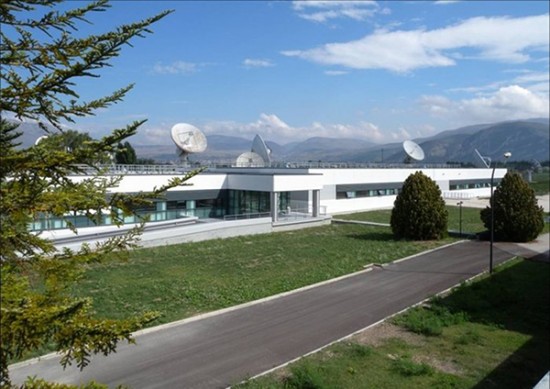
Sitting in the cleanroom environment of ESA’s ESTEC technology centre in Noordwijk, the Netherlands, the satellite was last week linked to a trio of sites across the continent: the Galileo control centres in Fucino, Italy and Oberpfaffenhofen, Germany, as well as ESA’s ESOC operations centre in Darmstadt, Germany.
Galileo’s Ground Control Segment (GCS) in the Oberpfaffenhofen Control Centre in Germany is in charge of overseeing the performance of the Galileo satellites. (Photo: ESA)
“These System Compatibility Test Campaigns (STSCs) occur on a regular basis,” explained Liviu Stefanov, lead Flight Operations Director for the next Galileo launch in May. “Last December saw a campaign using one of the two Galileo satellites due to be launched in May, while our February rehearsal used another satellite from the quadruplet being launched by Ariane 5 later this year. So with this most recent task, we have reached a frequency of three system tests in less than four months.”
A joint team from ESA and France’s CNES space agency oversee Galileo’s Launch and Early Operations Phase (LEOP) – the initial switching on and checking and configuration of satellite systems. LEOP is run from either ESOC or CNES Toulouse, on an alternating basis.
ESOC will host the LEOP team for the next launch of two Galileo satellites by Soyuz from French Guiana in May. Then the team will switch to Toulouse for the first launch of four Galileo satellites by Ariane 5, scheduled for this autumn.
Members of the joint Galileo Launch and Early Operations Phase (LEOP) team at work in CNES Toulouse. A joint team from ESA and France’s CNES space agency oversee Galileo LEOPs – the initial switching on and checking and configuration of satellite systems. LEOP is run from either ESOC or CNES Toulouse, on an alternating basis. (Photo: ESA)
Liviu added: “From our point of view, this SCTC was a useful final opportunity to try out communications with a satellite that is actually due to fly, before our next Galileo LEOP takes place for real.
“It is the last end-to-end test of the ground segment with a real satellite before the launch.”
“Communicating with and controlling satellites still on the ground is one of the essential exercises the LEOP team has to perform before launch,” said Christelle Crozat, lead Spacecraft Operations Manager for the next LEOP.
“It is an opportunity to test and validate the operational products with a satellite to identify and correct any issues of compatibility with the real hardware while the satellite is still ‘on Earth’. It is always a thrill for the operational engineers to interact with the satellite instead of the simulator.”
Money spent by European taxpayers on spacecraft operations represents an excellent investment in infrastructure and in high-tech, value-added jobs, with strong benefits flowing back to ESA Member State citizens. (Photo: ESA)
In practice, LEOP encapsulates crucial activities such as separation from the rocket’s upper stage, deployment of solar wings and first attitude acquisition, followed by the gradual configuration of the platform system for orbit manoeuvres and the mission to follow.
ESOC and CNES Toulouse both host their own functionally identical LEOP control centre. New Galileo satellites are launched on a regular basis: bringing them to life is demanding. Pooling this crucial responsibility between two agencies and two locations adds efficiency, delivering greater flexibility and redundancy.
“This efficiency has been demonstrated by the three successful LEOPs conducted over the course of last year, in March, September and December,” stressed Hervé Côme, Galileo LEOP Service Manager.
“It is also shown by the capability of CNES/ESOC to support the introduction of one additional Soyuz LEOP on a relatively short four-month notice, for this May.”
Once each LEOP is completed, control of the satellite platform is passed to the Oberpfaffenhofen control centre, with Fucino overseeing the navigation payloads and the positioning services they enable.
Galileo’s Ground Mission Segment in the Fucino Control Centre in Italy oversees Galileo navigation services and satellite payload operations. (Photo: ESA)
The countdown for the launch of of a rocket carrying Indian Regional Navigation Satellite Sytem-IRNSS-1F began at 9:30 a.m. local time at the Sriharikota rocket port in Andhra Pradesh, reports the New Indian Express.
The Polar Satellite Launch Vehicle (PSLV) is expected to blast off around 4 p.m. on Thursday, March 10, following a 54-hour 30-minute countdown.
“Like the countdowns for the flight of many other earlier rockets, the countdown is progressing smoothly,” a senior official of the Indian Space Research Organisation (ISRO) told the newspaper.
IRNSS-1F will be India’s sixth navigation satellite. It has a design life of 12 years and carries two payloads. The navigation payload will be operating in L5-band and S-band; the ranging payload consists of a C-band transponder (automatic receivers and transmitters of radio signals), which facilitates accurate determination of the range of the satellite.
A highly accurate Rubidium atomic clock is part of the navigation payload of the satellite. IRNSS-1F also carries Corner Cube Retro Reflectors for laser ranging.
To date India has launched five regional navigational satellites (IRNSS-1A, 1B, 1C, ID and 1E) as part of a constellation of seven satellites to provide accurate position information service to users across the country and the region, extending up to an area of 1,500 km.
The entire IRNSS constellation of seven satellites is planned to be completed in this year. The seventh satellite, IRNSS-1G, is expected to be launched in the second half of 2016. The full system comprises nine satellites — seven in orbit and two on the ground as standby.
The first satellite IRNSS-1A was launched in July 2013, the second IRNSS-1B in April 2014, the third In October 2014, the fourth in March 2015, and the fifth in January of this year.
According to ISRO, with the operationalisation of five IRNSS satellites, the proof of concept of an independent regional navigation satellite system over India has been demonstrated for the targeted position accuracy of better than 20 meters, 24 hours a day.
Another pair of Galileo navigation satellites is scheduled for launch by Soyuz rocket in May, ahead of a quartet on an Ariane 5 in the autumn, bringing the Galileo system a step closer to operational use.
The European Commission asked ESA to look into the feasibility of a Soyuz launch in the first half of the year to speed up the deployment of the constellation and to increase its robustness for delivering initial services.
One satellite is in storage at ESA’s technical centre in the Netherlands, having completed all its testing to clear it for flight, with another due to join it very soon.
The satellite platforms are built by OHB in Bremen, Germany, with their navigation payloads coming from Surrey Satellite Technology Ltd in the UK, using a steady stream of high-technology equipment sourced from all across Europe.
Once through testing, the satellites are flown to Europe’s Spaceport in French Guiana, to be launched two at a time on Soyuz rockets.
Cutaway view of the Soyuz rocket fairing carrying a pair of Galileo satellites, seen atop the Fregat upper stage that flies them most of the way to their intended medium-altitude orbit. (ESA illustration)
A total of 12 satellites has been deployed into orbit during the last four years — six in the last year alone.
The Galileo production line has attained a steady rhythm, as has the environmental testing, so six satellites are available for launch this year, more than were initially planned.
In the second half of the year, four satellites will be launched together for the very first time, on a customized “Ariane 5 ES Galileo.”
In development since 2012, it is based on the Ariane 5 ES (Evolution Storable), previously used to place ESA’s 20-tonne ATV vehicle into low orbit for resupplying the International Space Station.
This new variant will carry a lighter payload — four fueled 738 kg Galileo satellites plus their supporting dispenser — but will take it up to the much higher altitude around 23 222 km.
The target orbit is actually 300 km below the Galileo constellation’s final working altitude. This leaves Ariane’s upper stage in a stable ‘graveyard orbit’, while the four satellites maneuver themselves up to their operating position.
Following this first Ariane 5 flight, there should be 18 Galileo satellites in orbit.
A GLONASS-M satellite was launched into orbit on Feb. 7 at 03:21 Moscow time from the Plesetsk Cosmodrome spaceport, reports the Russian space agency Roscosmos. The Russian Defense Ministry successfully launched GLONASS-M 51 (known as 751 in orbit) aboard a Soyuz-2.1b rocket with a Fregat upper stage.
Three and a half hours after lift-off, the satellite separated from the upper stage and ground control established communications with it. The stable telemetry link shows that onboard satellite systems are functioning normally.
According to the telemetry data received from GLONASS-M 51, the satellite is in good health. With all its mechanical subsystems successfully deployed, the satellite completed Earth and Sun acquisition. The Moscow-based System Control System and ISS-Reshetnev’s Information and Computation Center have begun satellite’s performance check-out.
Status of the GLONASS constellation, shown here, indicates that the satellite is now in the commissioning phase.
GLONASS-M 51 will replace a GLONASS satellite now operating three years past its design life.
Based on the GLONASS system’s stable operation, there has been no need to launch new satellites to augment the system, said the satellite manufacturer. The most recent launch of a GLONASS satellite was performed in 2014.
Eight GLONASS-M navigation satellites are being stored at ISS-Reshetnev Company awaiting launch.
GLONASS orbital grouping provides a solution to problems of global positioning in the interests of the Russian Defense Ministry and civilian users. Access to civilian navigation signals of global navigation satellite system GLONASS is provided to Russian and foreign consumers free of charge and without restriction.
A GLONASS-M satellite is launched in February 2016. (Photo: Russian Ministry of Defense)
The U.S. Air Force successfully launched the 12th Boeing-built GPS IIF satellite aboard a United Launch Alliance Atlas V Evolved Expendable Launch Vehicle from Space Launch Complex 41, Cape Canaveral Air Force Station, Fla., at 8:38 a.m. EST (5:38 a.m. PST) on Feb. 5.
“Today’s launch is a significant achievement in the history of GPS, as we launch the last of the GPS IIF satellites to be delivered on-orbit,” said Lt. Gen. Samuel Greaves, Space and Missile Systems Center commander and Air Force program executive officer for space. “The GPS IIF satellite performance has been exceptional and is expected to be operational for years to come.”
“This milestone is the result of the remarkable relationship between SMC, our operators within the 14th Air Force and our ULA/Boeing industry partners. Their continued tenacity and dedication to mission success ensures we continue to maintain a robust satellite constellation with modernized, more resilient GPS capabilities,” said Greaves. “A job ‘Well Done!’”
According to Greaves, this mission demonstrates the Air Force’s continued intent to deliver pre-eminent space-based positioning, navigation and timing service to users around the globe. GPS IIF is critical to U.S. national security and to sustainment of the GPS constellation for civil, commercial, and military users. GPS IIF satellites play an integral part in the modernization efforts vigorously being pursued across space, ground and user equipment to provide stronger signals and improved resiliency in the GPS constellation.
“Today’s launch marks a momentous milestone in the history of the Global Positioning System. It is the twelfth and last GPS IIF satellite and closes out nearly 27 years of launches for the GPS Block II family of satellites,” said Col. Shawn Fairhurst, 45th Space Wing vice commander, who served as the Launch Decision Authority. “As the nation’s premier gateway to space, we are proud to be part of the team providing GPS and its capabilities to the world and look forward to the future as we begin preparation for the next generation of GPS III satellites. Together with the Space and Missile Systems Center and our industry partners, we make up one team delivering assured space launch and combat capabilities for the nation.”
An Airmen-led processing team at CCAFS has processed every satellite of the series since GPS IIF-1 launched here in May 2010.
The Boeing-built GPS IIF satellites provides improved accuracy through advanced atomic clocks, a longer design life than previous GPS satellites, and a new operational third civil signal (L5) that benefits commercial aviation and safety-of-life applications. It also continues to deploy the modernized capabilities that began with the GPS IIR-M satellites, including a more robust military signal.
GPS is the United States Department of Defense’s largest satellite constellation with 31-operational satellites on orbit.
Operated by Air Force Space Command’s 50th Space Wing at Schriever Air Force Base, located east of Colorado Springs, Colo., the GPS constellation provides precise positioning, navigation and timing services worldwide as a free service provided by the Air Force, seven days a week, 24-hours a day.
Space and Missile Systems Center, located at Los Angeles Air Force Base in El Segundo, Calif., is the U.S. Air Force’s center for acquiring and developing military space systems. Its portfolio includes GPS, military satellite communications, defense meteorological satellites, space launch and range systems, satellite control networks, space-based infrared systems and space situational awareness capabilities.
The U.S. Air Force plans to launch the 12th — and final — satellite in the Block IIF series of modernized GPS spacecraft this week. Originally scheduled to launch Feb. 3, the launch has been moved to Friday, Feb. 5. According to United Launch Alliance (ULA), the cause for the schedule slip was “concerns over the integrity of electrical connectors on the Atlas V booster.”
The Air Force has produced 12 IIF satellites, featuring new clocks, new civil and military signals, and other upgrades for enhanced accuracy and robustness. Currently, 31 GPS satellites are in operational service, including 11 Block IIF satellites and 20 spacecraft from previous generations.
The Air Force Second Space Operations Squadron (2SOPS) indicates that IIF-12 (SVN-70/PRN-32) will replace SVN-41/PRN-14 in the F plane, slot F1. SVN-41 will be re-phased from the F1 location to a newly defined F7 node (GLAN = 45°) once SVN-70 is set healthy.
Meanwhile, SVN-23/PRN-32 (IIA-10) will be taken out of the operational constellation before IIF-12’s launch and sent to Launch, Anomaly, Resolution, and Disposal Operations (LADO).
The Air Force’s twelfth Global Positioning System (GPS) IIF satellite is encapsulated inside an Atlas V 4-meter payload fairing. (Photo: ULA)
(Photo: ULA)
(Photo: ULA)
(Photo: ULA)
(Photo: ULA)
(Photo: ULA)
(Photo: ULA)
(Photo: ULA)
“SVN-23, launched on Nov. 26, 1990, has been an ‘Iron Bird’ workhorse in the E-plane and has successfully served the world’s GPS users for over 25 years,” said Rick Hamilton, CGSIC Executive Secretariat, in an email. “This is over 18 years past its designed service life, having operationally outlasted (and, in many cases, outperformed) its peers on-orbit due to the diligent efforts of the men and women of the U.S. Air Force.”
PRN-04 is tentatively scheduled for assignment to the first of the new generation of GPS-III satellites, available for launch sometime in 2017.
Date/Site/Launch Time: Wednesday, Feb. 03, 2016, from Space Launch Complex-41 at Cape Canaveral Air Force Station, Florida. The 19-minute launch window opens at 8:38 a.m. EST, and a ULA webcast will start at 8:18 a.m. EST.
Rocket/Payload: A United Launch Alliance Atlas V 401 will launch the GPS IIF-12 mission for the U.S. Air Force.
A Long March-3C carrier rocket carrying the 21st satellite for the BeiDou Navigation Satellite System lifts off from Xichang Satellite Launch Center,southwest China’s Sichuan Province, Feb. 1, 2016.
China has launched its 21st BeiDou satellite into orbit, according to Xinhua News Agency, the official press agency of the People’s Republic of China.
The launch took place at 3:29 p.m. Beijing Time (07:29 UTC) on Monday, Feb. 1.
Launched from Xichang Satellite Launch Center in the southwestern province of Sichuan, the satellite was boosted by a Long March-3C carrier rocket into medium Earth orbit (MEO).
A video of the launch appears here. Also, below is amateur video of the launch.
On Feb. 3, the Air Force plans to launch the 12th, and last, satellite in the Block IIF series of modernized GPS spacecraft. The Air Force has produced 12 IIF satellites, featuring new clocks, new civil and military signals, and other upgrades for enhanced accuracy and robustness.
Currently, 31 GPS satellites are in operational service, including 11 Block IIF satellites and 20 spacecraft from previous generations.
The Air Force Second Space Operations Squadron (2SOPS) indicates that IIF-12 (SVN-70/PRN-32) will replace SVN-41/PRN-14 in the F plane, slot F1. SVN-41 will be re-phased from the F1 location to a newly defined F7 node (GLAN = 45°) once SVN-70 is set healthy.
Meanwhile, SVN-23/PRN-32 (IIA-10) will be taken out of the operational constellation before IIF-12’s launch and sent to Launch, Anomaly, Resolution, and Disposal Operations (LADO).
“SVN-23, launched on Nov. 26, 1990, has been an ‘Iron Bird’ workhorse in the E-plane and has successfully served the world’s GPS users for over 25 years,” said Rick Hamilton, CGSIC Executive Secretariat, in an email. “This is over 18 years past its designed service life, having operationally outlasted (and, in many cases, outperformed) its peers on-orbit due to the diligent efforts of the men and women of the U.S. Air Force.”
PRN-04 is tentatively scheduled for assignment to the first of the new generation of GPS-III satellites, available for launch sometime in 2017.
Date/Site/Launch Time: Wednesday, Feb. 03, 2016, from Space Launch Complex-41 at Cape Canaveral Air Force Station, Florida. 18 minute launch window opens at 1347Z, 0847 EST.
Rocket/Payload: A United Launch Alliance Atlas V 401 will launch the GPS IIF-12 mission for the U.S. Air Force.