Tag: smartphone

  • u-blox Inside Explosion-Proof Smartphone

    u-blox Inside Explosion-Proof Smartphone

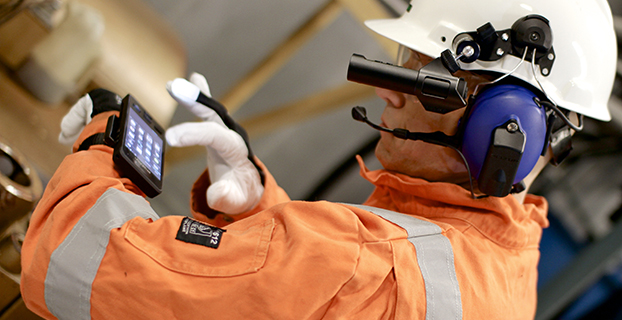
    Impact-X-docked-with-helmet-O
    Photo: u-blox

    Bartec Pixavi has launched the “Impact X intrinsically safe smartphone” based on u-blox’ rugged 3G cellular module technology designed for devices used in tough industrial and outdoor environments. Bartec Pixavi is a manufacturer of mobile devices used in hazardous or explosive environments such as oil platforms, mines and chemical plants.

    “Our Impact X smartphone is designed with the most robust, reliable and safe components available to ensure security and provide reliable connectivity to workers in potentially dangerous locations,” said Christian Rokseth, CEO of Bartec Pixavi. “We chose u-blox’ cellular module technology because of its industry-leading performance, excellent environmental tolerance and reliability.”

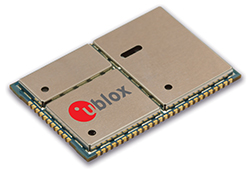
    u-blox LISA u230 module. Photo: u-blox
    u-blox LISA u230 module. Photo: u-blox

    The Impact X is CSA Class 1, Zone 1, IECEx and ATEX Zone 1 certified, explosion proof, waterproof and extremely ruggedized. At the heart of the Impact X is u-blox’ professional-grade LISA-U230 six-band 3G cellular module with 2G fallback capability. LISA modules also provide fully integrated access to u-blox GNSS receivers to enable advanced location-aware applications. Antenna diversity permits LISA-U2 modules to provide the highest data speeds.

    “The Impact X is an excellent example of a high-performance mobile device that demands performance well beyond what is provided by standard mobile phones,” said Armin Boeshenz, General Manager of u‑blox sales EMEA. “We are extremely pleased to be a key module supplier to demanding customers such as Bartec Pixavi as proof of our industry-leading quality and reliability.”

    u-blox LISA-U2 modules are suited for networks worldwide. Features include data-rates of up to 21.1 Mb/s (downlink), a rich set of Internet protocols, very small footprint, very low power consumption and extended operating temperature range of -40 to +85 degrees C.

  • Ready for Black Friday: Study Shows Americans Aware of In-Store Beacons

    A new Placecast poll indicates that nearly 118 million smartphone owners will be relying on their phones for holiday shopping this year. For smartphone owners who plan to do holiday shopping, three out of four will use their phones to find sales, comparison shop, take pictures of possible gifts, and make purchases.

    The survey also showed that American shoppers are very aware of in-store beacons, despite the fact that it is a relatively new technology; more than half (52 percent) of the cell phone/smartphone owners surveyed said they have heard of in-store beacons, and 15 percent have engaged with them.

    “Brands that embrace beacons are highly likely to see a spike in their sales in the coming shopping season and in general,” said Placecast CEO Alistair Goodman.

    Beacon technology is only one indoor location technology being pursued by retailers. Kevin Dennehy’s Wireless LBS Insider column from August, Indoor Location Has Major Growing Pains, but Big Upside, provides an overview.

    Conducted in October among more than 2,000 U.S. adults, this was the fifth survey in Placecast’s Alert Shopper series, one of the longest running research series around how consumers interact with various marketing and purchasing mechanisms. This year’s poll reveals the latest trends in mobile shopping and provides key insights for brands and technology providers on how to connect with the highly connected consumer this holiday season, when stakes are high. The poll was conducted online within the U.S. for Placecast by Harris Poll.

    According to the National Retail Federation (NRF), holiday spending will be up nearly 5 percent this year compared to last year, with the average person expected to spend about $800. The NRF reports that gift givers “plan to splurge” for holidays like Christmas, Kwanzaa, and Hanukah: “Consumers are spending more across the board on family, friends, co-workers, pets and even babysitters…Sales and discounts were listed as the most important factor.”

    “It’s not surprising that consumers are most influenced by sales and discounts; the question is, what is the best way to get these offers to them? Our survey looked at various ways brand can reach customers, and we found that reaching users on mobile while they are near stores, and using in-store technology — like beacons — are some of the best ways of reaching consumers who are looking for offers, or for more information to make a purchase,” said Goodman.

    Beacons are a small, low-cost piece of hardware installed in stores. They emit a signal (called Bluetooth low energy, or BLE) that can be targeted directly to phones. Beacons can bring the analytics and targeting capabilities of the online experience to physical stores — for example, sending a discount for perfume to a 40-year-old woman who has recently done an online search for scents.

    Because beacon technology is relatively new, the high awareness level discovered in this wave of the Alert Shopper series may seem surprising to the industry; the research team involved in data analysis for the Harris Nielsen poll explains the possible cause: “Consumers are clearly voting in favor of beacons due to stores promoting them and the value they deliver in couponing. While awareness seems high at 52 percent, this may be due to people wanting to identify with the coolness of new technologies, and certainly indicates huge promise for it. Minority Report is looking more and more like a reality than a movie,” said Kathryn Koegel, chief of Insights and Communications Steampunkt Collaborative.

    Goodman seconds this “halo effect” of new tech: “There could very well be a huge halo effect here, but nonetheless, one fact remains: we are all now assuming that there is technology in stores that can connect with our phones — whether it’s opening an app or getting a push notification. But the real art lies in delivering timely and useful ads and offers, not overwhelming the consumer, and making sure the promotions are targeted accurately.”

    The Alert Shopper V survey revealed that 15 percent of cell phone/smartphone owners had interacted with beacons. “Though this number is likely higher than the actual number of people who have interacted with in-store beacons, the fact that people are highly aware of them and think they interact with them bodes well for the technology,” said Koegel.

    The importance of in-store marketing was underscored by another data point from the Placecast survey; the top activity for Mobile Millennial females (women 18-34 who own a smartphone and plan on doing any holiday shopping this year) — when asked what they plan to use their smartphone for while holiday shopping this season — is searching for a coupon for a store they are already in, with over half (52 percent) looking to save money by checking their phones. The same percentage said they would use their smartphone to take a picture of a potential gift to text a friend or family member for their opinion (52 percent).

    The Alert Shopper Survey #5 revealed these key takeaways for brands and marketers this holiday season:

    • Phones are an integral part of the shopping process: among those who plan on doing any holiday shopping, 3 out of 4 smartphone owners plan to use their phones for some part of their gift-finding and buying experience.
    • Among all smartphone owners, searching for an item in a search engine to find a local retailer topped the list of mobile actions for holiday shopping this season, with 2 out of 5 (39 percent) saying they plan to use their smartphone for this; sending a picture of a potential gift to a friend or family member at a close second (38 percent), followed by searching for a coupon for the store they’re in (33 percent).
    • Mobile Millennials are the most active mobile shoppers this holiday season: Young men ages 18-34 (91 percent) and women ages 18-34 (85 percent) who own smartphones reported the highest percentages when asked if they plan to use their phones while shopping this holiday season; these Millennials make up about 25 percent of the United States population, outpacing Baby Boomers and Gen X (ages 28-38). Though they have not reached their peak spending potential, Millennials nonetheless control 21 percent of consumer discretionary purchases, which is estimated at over a trillion dollars in direct buying power and a huge influence on purchases by older generations (i.e., parents and grandparents).
    • Moms and dads with children under 18 in their household will be very active on mobile: 86 percent of dads plan to use their smartphones for holiday shopping this year. When asked what they will use their phones for the most popular answer among dads was “use my phone to look for an item in a search engine to find a local retailer.” Over half (54 percent) gave this answer. Three out of four (75 percent) mothers plan on using their smartphones for holiday shopping this year. While men are searching for retail locations, mobile moms selected “take pictures of potential gifts to text and get opinions from friends/family” as the top mobile activity, with nearly half (48 percent) saying they will do this.
  • ESNC University Challenge Recognizes Hail Suppression Project

    ENSC-university-award-hail
    © Peter Zentgraf

    A hail suppression project dubbed RO-BERTA by the University of Applied Sciences, Rosenheim (Germany), has been selected the winner of the European Satellite Navigation Competition’s (ESNC) University Challenge. Judged by an international expert jury, the University Challenge is a special prize to reward innovative ideas emerging from Europe’s universities.

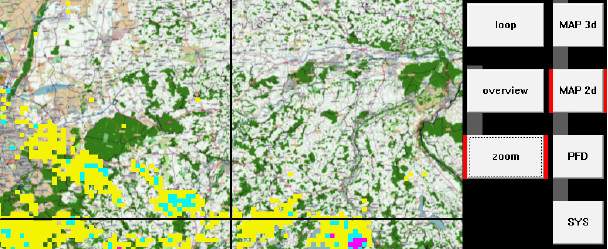
    The Hail Navigator system is designed to reduce damage caused by hail. Based on the premise of suppressing the formation of hail by injecting silver iodide into clouds, Hail Navigator combines navigation with a precipitation reporting system that can guide pilots to optimal locations for hail suppression missions.

    The system is complemented by weather observations (including precise times and locations) reported by local citizens via a smartphone app, which aids the validation of weather prediction models. These models constitute an important factor in deciding whether a hail suppression flight is necessary.

    The project team was awarded the prize on October 23 in Berlin at the ESNC Awards Ceremony. More than 300 guests attended, representing the top European players in the navigation sector. In addition to cash, the prize includes support through the GNSS Research & Applications Centre of Excellence (GRACE) and a free ticket to the Munich Satellite Navigation Summit 2015.

    “Winning this prize once again demonstrates that interdisciplinary cooperation is feasible and successful,” said Project Manager Peter Zentgraf. “The positive feedback the competition provides helps drive our many students to continue their dedicated work, which made it possible to reach our project goals.”

    Airbus Space & Defense won the regular ENSC competition.

  • Trimble Takes the Leap with GNSS Bluetooth Device

    Trimble Takes the Leap with GNSS Bluetooth Device

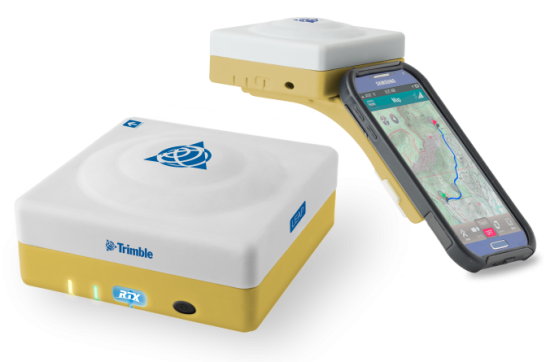
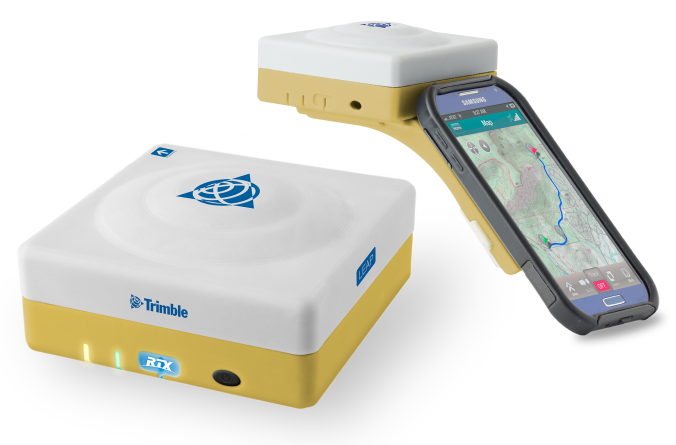
    The Trimble Leap, also shown with a smartphone. Photo: Trimble
    The Trimble Leap, also shown with a smartphone. Photo: Trimble

    Trimble is making available the Trimble Leap, a Trimble RTX compatible GNSS Bluetooth device. When enabled with the ViewPoint RTX correction service, Leap delivers submeter accuracy directly to the Terrain Navigator Pro (TNP) Mobile app for iOS and Android devices. The TNP Mobile app allows users to collect markers, tracks and geo-stamped photos in the field, and then sync all the GNSS data into the Terrain Navigator Pro office software.

    The TNP Mobile app enables users to:

    • Display and navigate routes created in TNP desktop.
    • Collect field data such as markers, tracks, photos, videos and audio clips.
    • Near real-time sync between phone and TNP map software via WiFi or cellular data connection.
    • View data on topo, aerial, and street maps downloaded to phone for offline use. Terrain Navigator Pro offers 1-meter aerial photos for the 48 contiguous United States. The seamless USGS topo graphic maps are based off 1:24K, 1:100K, 1:250K map scales. Alaska is 1:63K and 1:250K.
    • Access a compass and other geo-information such as lat/long, elevation, and direction on phone.
    • Collect data offline. The TNP mobile app uses the GPS built into the smartphones, so users can collect field data in areas without a cellular or data signal.

    Trimble Leap is compact and portable, weighing 9.5 ounces. It snaps to a smartphone or tablet to use as a handheld, can be mounted on a monopole or tripod, or can be magnet mounted to a vehicle. Leap has 16 hours of battery life and uses Bluetooth communication to connect to smart devices for ease of use and flexibility. An onboard micro SD card stores the GNSS observables data for use in the field or the office.

    A micro USB port can provide power to Trimble Leap for continuous fixed-mount applications, or it can be used with battery-booster products to extend field work. Trimble Leap is charged by a standard cell phone vehicle accessory charger, a USB connection to a PC, or from a USB AC adapter.

    Based on Trimble RTX (Real Time eXtended) technology, ViewPoint RTX delivers better than 1 meter horizontal accuracy 95 percent of the time without the use of a traditional RTK base station or virtual reference station network. ViewPoint RTX is delivered into the TNP Mobile app via cellular data network and is available nearly anywhere in the world.

    “Trimble Leap enhances the Terrain Navigator Pro solution by adding a simple way to collect submeter accurate geolocation data with standard Android or iOS devices. Adding accuracy to TNP’s robust field-to-office data collection solution provides a value-add where low-resolution collection is not sufficient. Trimble Leap with TNP Mobile is configured and operational in minutes with little training,” said Larry Fox, business area manager for Terrain Navigator Pro.

    Terrain Navigator Pro integrates powerful desktop mapping software, a cloud connected mobile data collection platform (compatible with GPS-enabled iOS and Android devices) and a robust Web portal. TNP users can plan projects in the office, collect data in the field and access projects from the Web—simultaneously. Geo-referenced data such as tracks, waypoints, photographs and video can be shared, updated in near real-time and displayed on the included topographic, aerial/satellite or street base maps.

  • Trimble Launches Leap, a GNSS Bluetooth Device

    The Trimble Leap, also shown with a smartphone.
    The Trimble Leap, also shown with a smartphone.

    Trimble is making available the Trimble Leap, a Trimble RTX compatible GNSS Bluetooth device. When enabled with the ViewPoint RTX correction service, Leap delivers submeter accuracy directly to the Terrain Navigator Pro (TNP) Mobile app for iOS and Android devices. The TNP Mobile app allows users to collect markers, tracks and geo-stamped photos in the field, and then sync all the GNSS data into the Terrain Navigator Pro office software.

    The TNP Mobile app enables users to:

    • Display and navigate routes created in TNP desktop.
    • Collect field data such as markers, tracks, photos, videos and audio clips.
    • Near real-time sync between phone and TNP map software via WiFi or cellular data connection.
    • View data on topo, aerial, and street maps downloaded to phone for offline use. Terrain Navigator Pro offers 1-meter aerial photos for the 48 contiguous United States. The seamless USGS topo graphic maps are based off 1:24K, 1:100K, 1:250K map scales. Alaska is 1:63K and 1:250K.
    • Access a compass and other geo-information such as lat/long, elevation, and direction on phone.
    • Collect data offline. The TNP mobile app uses the GPS built into the smartphones, so users can collect field data in areas without a cellular or data signal.

    Trimble Leap is compact and portable, weighing 9.5 ounces. It snaps to a smartphone or tablet to use as a handheld, can be mounted on a monopole or tripod, or can be magnet mounted to a vehicle. Leap has 16 hours of battery life and uses Bluetooth communication to connect to smart devices for ease of use and flexibility. An onboard micro SD card stores the GNSS observables data for use in the field or the office.

    A micro USB port can provide power to Trimble Leap for continuous fixed-mount applications, or it can be used with battery-booster products to extend field work. Trimble Leap is charged by a standard cell phone vehicle accessory charger, a USB connection to a PC, or from a USB AC adapter.

    Based on Trimble RTX (Real Time eXtended) technology, ViewPoint RTX delivers better than 1 meter horizontal accuracy 95 percent of the time without the use of a traditional RTK base station or virtual reference station network. ViewPoint RTX is delivered into the TNP Mobile app via cellular data network and is available nearly anywhere in the world.

    “Trimble Leap enhances the Terrain Navigator Pro solution by adding a simple way to collect submeter accurate geolocation data with standard Android or iOS devices. Adding accuracy to TNP’s robust field-to-office data collection solution provides a value-add where low-resolution collection is not sufficient. Trimble Leap with TNP Mobile is configured and operational in minutes with little training,” said Larry Fox, business area manager for Terrain Navigator Pro.

    Terrain Navigator Pro integrates powerful desktop mapping software, a cloud connected mobile data collection platform (compatible with GPS-enabled iOS and Android devices) and a robust Web portal. TNP users can plan projects in the office, collect data in the field and access projects from the Web—simultaneously. Geo-referenced data such as tracks, waypoints, photographs and video can be shared, updated in near real-time and displayed on the included topographic, aerial/satellite or street base maps.

  • Carlson GIS360 for Android Gives 3D Views on Site

    Carlson GIS360 Android app.
    Carlson GIS360 Android app.

    Carlson GIS360 for Android, new from Carlson Software and Carlson EMEA, is a mobile field GIS-GPS tool that uses both GIS and surveying technologies for field data collection. The app is designed to be easy to learn and easy to use, Carlson said.

    “Taking advantage of the graphics processing power of Android devices, GIS360 now includes an innovative 3D viewer so the user can see data and models in 3D on site,” said David Loescher, Carlson U.K. sales director and director of GIS360 development.

    In addition to allowing field crews to navigate maps and collect and report data in the field, GIS360 provides the data and fully rendered models of mines, earthworks and pipe networks that can be viewed in 3D. The software’s Siteview function uses the Android devices’ built-in GPS, compass and gyros to give the user the view of the site in front of him.

    Carlson GIS360 provides a wireless connection to any map server of choice, so users are never without a map. This saves considerable time and effort as field crews can verify that all of the data collected is accurate before leaving the site, Carlson said. No costly site revisits are necessary and no office work is needed.

    The software’s cloud options provide backup for users’ data, enabling it to be shared between field and office in real time. GIS360 goes beyond positioning with a range of tools for mobile workforce management, GPS data collection, tracking and asset maintenance.

    On an Android tablet or smartphone, Carlson GIS360 for Android can take GIS data anywhere. The built-in GPS and compass instantly calculate what the user is looking at and then displays the data automatically.

    “The GIS360 development team set out to make the collection of asset information easier and more efficient by combining the power of GIS360 with affordable Android devices,” added Loescher. “The result not only saves a lot of field time, but also makes the process far easier for everyone concerned.”

  • Carlson Launches GIS360 for Android at InterGeo

    Carlson-GIS-360-Android-PNG-1

    Carlson GIS360 for Android, introduced at InterGeo this week in Berlin, is a mobile field GIS-GPS tool that utilizes both GIS and surveying technologies for field data collection.

    “Taking advantage of the graphics processing power of Android devices, GIS360 now includes an innovative 3D viewer so the user can see data and models in 3D on site,” said David Loescher, Carlson U.K. sales director and director of GIS360 Development.

    In addition to allowing field crews to navigate maps and collect and report data all in the field, GIS360 provides the data and fully rendered models of mines, earthworks and pipe networks can that can be viewed in 3D. The software’s Siteview function uses the Android devices’ built-in GPS, compass and gyros to give the user the view of the site that is in front of him.

    Carlson GIS360 provides a wireless connection to any map server of choice, so users are never without a map. This saves considerable time and effort as field crews can verify that all of the data collected is accurate before leaving the site. No costly site revisits are necessary and no office work is needed.

    The software’s “cloud” options mean that users’ data is always backed up with the ability to share between field and office in real-time. GIS360 goes beyond just positioning as it includes a wide range of tools for mobile workforce management, GPS data collection, tracking and asset maintenance.

    Used on an Android tablet or smartphone, Carlson GIS360 for Android can take GIS data anywhere, Carlson said. The built-in GPS and compass instantly calculate what the user is looking at and then displays the data automatically.

    “The GIS360 development team set out to make the collection of asset information easier and more efficient by combining the power of GIS360 with affordable Android devices,” added Loescher. “The result not only saves a lot of field time, but also makes the process far easier for everyone concerned.”


  • Janam Introduces Powerful Rugged Tablet

    Janam Introduces Powerful Rugged Tablet


    Janam-xt1
    Photo: Janam Technologies LLC

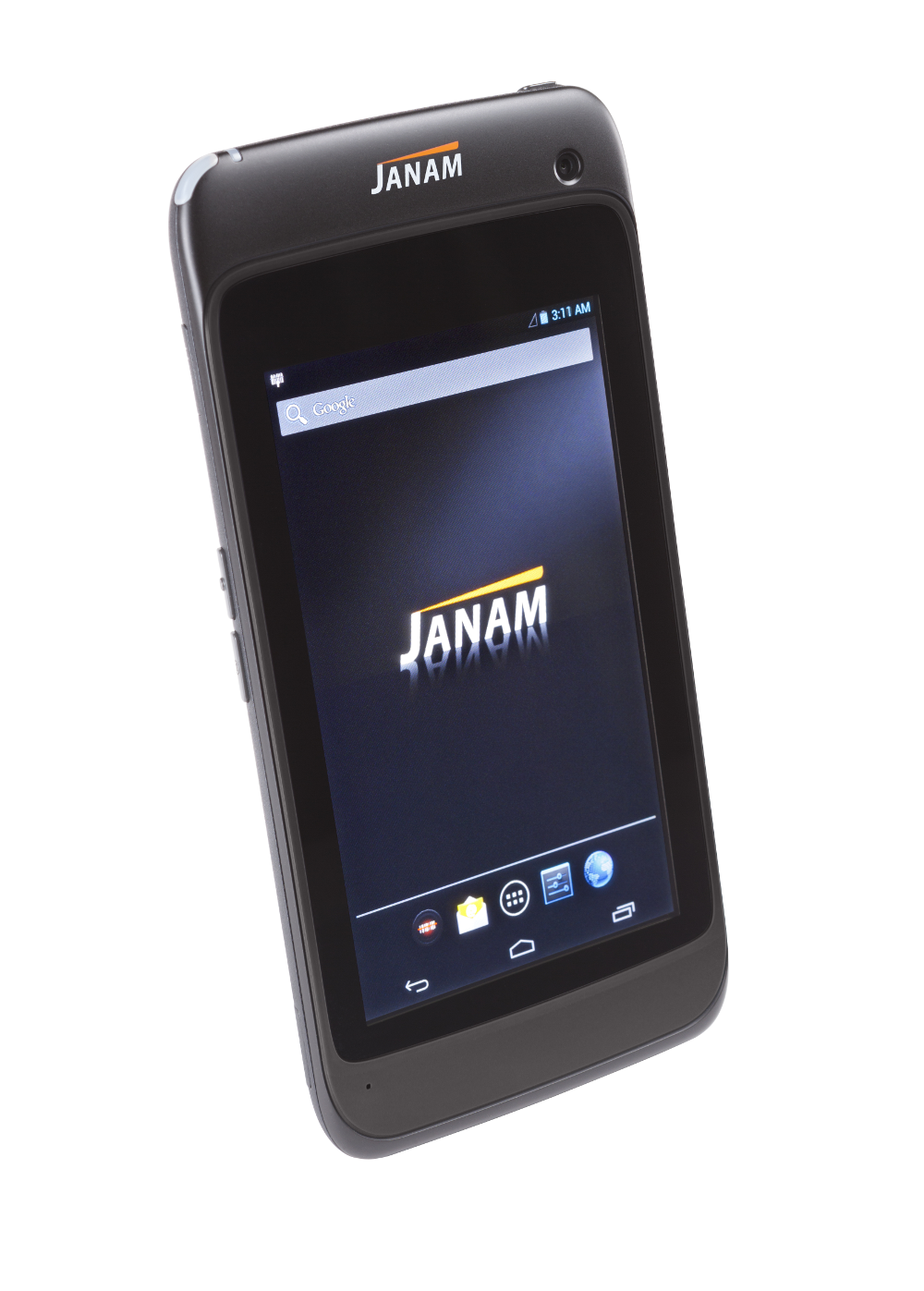
    Janam Technologies LLC, a provider of rugged mobile computers that scan barcodes and communicate wirelessly, has launched XT1, a powerful rugged tablet for the mobile workforce. The XT1 rugged mini-tablet is Janam’s first device to support the Android operating system, and is built to meet the diverse needs and demanding requirements of enterprise and government customers.

    The XT1 combines best-in-class technologies with a sleek and rugged form factor, providing mobile workers with the information they need to make better informed decisions, increase customer satisfaction, and improve operational efficiencies, the company said. Equipped with integrated 2D barcode scanning technology to eliminate the challenges often associated with camera scanners or bulky sled attachments, the XT1 is designed to improve worker productivity in field sales, field service, healthcare, hospitality and retail markets.

    “Many enterprise customers require more screen viewability than traditional PDAs or handheld computers offer, yet full-display rugged tablets are large, thick, heavy and unwieldy,” said Harry B. Lerner, CEO of Janam. “Janam resolves this dilemma. The XT1 blends cutting-edge technologies most often found in consumer phones with mission-critical key features that enterprises need such as ruggedness, sealing, barcode scanning and rapid battery recharging, among others. The result is a sleek, lightweight, rugged mini-tablet that delivers superior performance without sacrificing usability.”

    In addition to 4G-ready UMTS/HSDPA/HSUPA/GSM wireless wide-area network communication, the XT1 is equipped with 802.11a/b/g/n dual-band WLAN for access to the information mobile workers need to get the job done, inside and outside the four walls. With IP54 sealing and the ability to withstand repeated three-foot drops to concrete, the XT1 delivers the reliability needed to excel in the most demanding environments, Janam said.

    XT1 features include:
    Android 4.2 operating system
    TI OMAP4470 @ 1.5GHz
    5.9-inch WVGA TFT capacitive touchscreen
    High-performance 2D data capture
    Multiple 3-foot/1-meter drops to concrete
    IP54 sealing against environmental elements
    Embedded RFID and NFC capabilities
    Optional 3G/4G WWAN technology (UMTS/HSDPA/HSUPA/GSM)
    1GB RAM, 16GB ROM
    Wi-Fi 802.11a/b/g/n
    Bluetooth 4.0 (BLE)
    High-sensitivity GPS and Assisted GPS
    Motion sensing accelerometer
    Front/rear cameras
    User-accessible microSD card slot
    3.5mm headset jack
    MicroUSB connector
    3000mAh rechargeable LiIon battery

  • PND Shipments Fell to 22M Units, Despite Nav User Increase

    According to a new research report from the analyst firm Berg Insight, global shipments of personal navigation devices (PNDs) declined from 28 million units in 2012 to 22 million units in 2013. There are signs that the decline is slowing and some emerging markets still experience growth.

    However, on the whole, the PND market is set for a continued downturn on a global basis. Berg Insight forecasts that PND shipments will decline to only 10 million units worldwide in 2019.

    A number of developments are affecting the PND market. Retailers have reduced shelf space and marketing for PNDs in favor of other consumer electronics products. Competition from other navigation solutions, especially navigation apps, is also intensifying.

    Over time, PNDs will also face further competition from in-dash navigation systems as more car brands launch low-cost systems. Moreover, the installed base of PNDs is already high, and replacement cycles are likely to be prolonged since PNDs have matured considerably and many devices are now sold with lifetime map updates, giving users less reason to replace their existing devices as frequently.

    The user experience for handset-based navigation apps is now improving through better integration in the car. Some vendors have released NFC-enabled car mounts enabling the owner to configure the handset to turn on the GPS and launch a navigation app when the phone is placed in the mount. A majority of car manufacturers have also started to offer smartphone integration solutions that connect the vehicle’s infotainment system with the user’s smartphone via Bluetooth, Wi-Fi, USB or HDMI. It is then possible to display and control smartphone apps using the touchscreen and controls in the car.

    Higher smartphone adoption along with broader availability of low-cost and free navigation apps are important factors for the continued increase in usage of mobile navigation services worldwide. “The number of mobile subscribers worldwide using a turn-by-turn navigation app on their handset at least once per month grew from 150 million in 2012 to 180 million in 2013,” said André Malm, senior analyst, Berg Insight. He adds that in most markets, smartphones from major vendors now come bundled with free navigation apps.

    The leading navigation service providers on a global basis include Google, Apple, Telenav, Appello Systems, Nokia and Garmin. Examples of major local players include AutoNavi and Careland in China, SK Planet in South Korea, NAVITIME and ZENRIN in Japan, as well as Navitel and Yandex in Russia.

    Despite increasing competition from free navigation apps, many mobile operators are still marketing their own navigation services developed by companies such as Telenav, TeleCommunication Systems and Appello Systems. “App developers and operators are now trying to monetize navigation apps by introducing premium features and advertising,” said Malm. “Developers are also forced to reduce costs as competition increases, for instance by adopting OpenStreetMap data to reduce map licensing fees.”

  • Nokia Lumia Smartphones Offer High-End Imaging

    The Nokia Lumia 830.
    The Nokia Lumia 830.

    Microsoft Corp. has announced the Nokia Lumia 830, Lumia 735 and Lumia 730 Dual SIM smartphones running the latest Windows Phone 8.1 operating system, bringing industry-leading imaging technology to more affordable price levels.

    Microsoft also announced two new accessories that provide innovative ways for people to interact with their phones, plus the Lumia Denim update, which brings extra features and enhancements to existing Lumia smartphones.

    “Our strategy is to help people do more with stunning products that unite and showcase the best of Microsoft’s digital work and life experiences,” said Chris Weber, corporate vice president of Mobile Devices Sales at Microsoft. “The Lumia 830, Lumia 735 and Lumia 730 Dual SIM combine popular Microsoft services such as Skype, Microsoft Office and OneDrive with amazing Lumia innovations in design and imaging to bring experiences that people value, at prices they can afford.”

    The Lumia 830: The Affordable Flagship

    With a slim design, the Lumia 830 is what Microsoft calls an “affordable flagship” that delivers high-end innovations such as optical image stabilization and PureView imaging to more people. It captures high-quality images and videos, day or night, with a 10-megapixel PureView camera with ZEISS optics, Rich Recording and the thinnest optical image stabilization system to date on a Lumia.

    It delivers the best of Microsoft with pre-loaded Microsoft Office Mobile; the latest version of Windows Phone 8.1 with Lumia Denim; and OneDrive with 15 GB of free storage, allowing content to be synced and shared easily. It comes with flagship Lumia innovations such as integrated wireless charging in a sleek and light aluminum and polycarbonate design.

    Lumia 830 will begin rolling out globally this month.

    Lumia 730 Dual SIM and Lumia 735: Built for Skype and Selfies

    With wide-angle, front-facing cameras and a slim, pocketable style, the Lumia 730 Dual SIM and Lumia 735 let people easily capture and share more. The front-facing 5-megapixel camera is great for Skype video calls, letting people share more of the world around them or bring more family and friends into a call.

    With an offer for a free, three-month Skype Unlimited World1 subscription, it’s easier than ever to have an international voice call with friends and family on their mobile and landline phones, right from the Lumia 730 or Lumia 735. Plus, with the integration of one-tap Skype video call access during voice calls, people have even more ways to share their stories, no matter where they are.

    Lumia 730 Dual SIM and Lumia 735 will also begin rolling out globally this month, featuring a 2220 mAh battery, 8 GB of internal storage and 15 GB of free OneDrive storage. The Lumia 730 Dual SIM will be priced around 199 euros before taxes and subsidies, while the Lumia 735 with LTE/4G and wireless charging support will be priced around 219 euros before taxes and subsidies.

    New Accessories

    Microsoft Devices Group on Thursday also announced two new additions to the innovative Lumia accessories line:

    • The second-generation smart Wireless Charging Plate DT-903 makes the most convenient way to charge even better by intelligently alerting people when to charge and highlighting notifications with a subtle glow.
    • The Microsoft Screen-Sharing for Lumia Phones HD-10 lets people beam any content from their smartphone to an HDMI-enabled screen, easily and without content restrictions. It is good for reliving memories with friends and family or sharing presentations at work.

    Lumia Denim

    Lumia Denim combines the latest Windows Phone 8.1 update with exclusive experiences for Lumia smartphones. Lumia Denim also cements Microsoft’s leadership in imaging with the introduction of unique innovations in Lumia Camera that make the camera work faster and more intuitively. Coming as part of the Lumia Denim update to Lumia 930, Lumia Icon and Lumia 1520, Lumia Camera offers the following:

    • Speed. Never miss a moment with Lumia Camera and its fast camera startup and capture speeds. Take numerous photos with just milliseconds between shots.
    • High definition. Using Moment Capture, a long press of the camera button within the app automatically starts 4K-quality video recording at 24 frames per second. Each frame is of high image quality at 8.3 megapixels, allowing every single video frame to be selected and saved as a still image.
    • Intuitiveness. Get the best shot every time with Rich Capture, which simplifies picture-taking with auto HDR and Dynamic Flash. With Rich Capture, people can avoid the hassle of adjusting camera settings; they can shoot first and edit and select the perfect shot later.
    • Quality. Capture high-quality smartphone images in low light with the latest-generation imaging algorithms.

    Lumia Camera will initially roll out as an update with Lumia Denim for Lumia 930, Lumia Icon and Lumia 1520 and as an over-the-air update for Lumia 830 in Q4 2014. Lumia Denim will roll out as an over-the-air update to all the other Lumia Windows Phone 8 smartphones, following partner testing and approvals.


  • Live Event Webinar Follow-up: Answering Your Questions from the 2014 Esri Conference

    Live Event Webinar Follow-up: Answering Your Questions from the 2014 Esri Conference

    Booth2

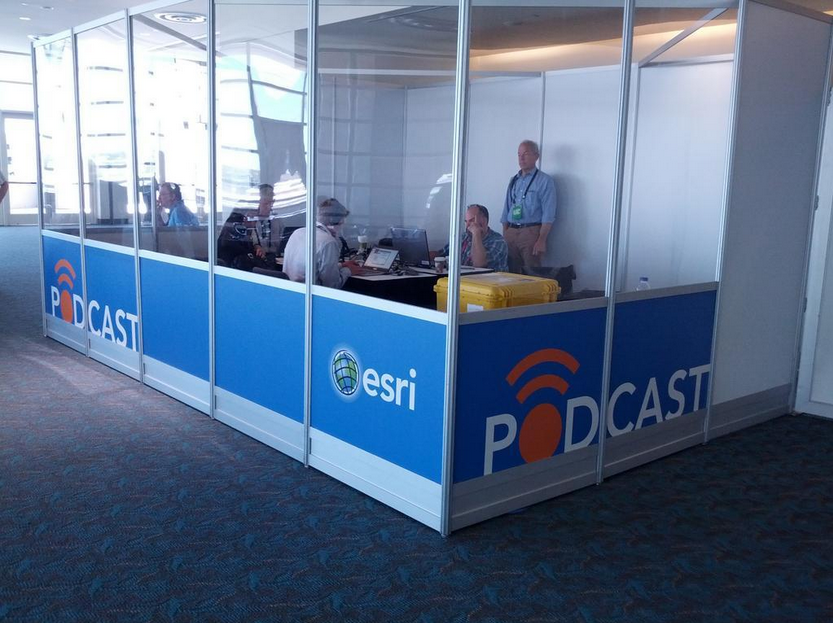
    A few weeks ago at the Esri 2014 International User conference in San Diego, California, we conducted our first live event webinar from a Plexiglas booth sitting among many of the 14,000+ attendees buzzing around inside the San Diego Convention Center.

    The webinar focused on high-precision GNSS on mobile devices (iOS/Android/Windows), unmanned aerial systems (UAS), and real-time GIS transactions. These are hot topics in the geospatial world, and that was confirmed when I received about 100 pre-webinar questions and more than 100 post-webinar questions.

    In my article this month, I’ll do my best to provide answers to the questions asked. If I don’t get to your question, or if you have another, please email me at [email protected].

    First of all, if you didn’t attend the webinar and would like to view the recording, you can register here and you’ll be provided a link to view it. It’s a great, interactive discussion. I grabbed Sharad Garg, iOS consultant, from the Esri show floor to talk about the intricacies and complexities of using GNSS receivers on iPads and iPhones. 

    Without further delay, following are some of the more popular pre- and post-webinar questions I received.

    Mobile Devices

    First, I’ll start with the questions about mobile devices and high-precision GNSS.

    1. Will Android be the dominant mobile tablet platform in the Enterprise?

    It’s hard to say. I recently met with a group of enterprise IT professionals and we were discussing this issue. Basically, the group was equally divided into thirds. One third were using Android. one third were using iOS, and one third were using Windows.

    Android advantages: Lots of mobile devices available that run Android.
    Android disadvantages: Open source = non-standard implementations, so app software may not run on every device; security concerns.

    iOS advantages: Consistent user interface, consistent software development environment, popularity of iPad and iPhone.
    iOS disadvantages: Closed ecosystem (very limited number of tablets); doesn’t interface to devices (such as GNSS) that haven’t been through the Apple certification process; security concerns.

    Windows advantages: Security; lots of legacy apps and utilities written for Windows.
    Windows disadvantages: Limited number of tablets being deployed based on Windows.

    For enterprise organizations, data security is a huge concern. Since Android is open source and gaining the most market share (at least in the consumer market), it’s got a target on its back for hackers. That’s the biggest concern I hear from corporate IT professionals. How will Android device developers address that, or will they? The consumer market for Android devices is exploding regardless of security. Do they even care about the enterprise market? Apparently Apple does as it recently signed an agreement with IBM to address the enterprise market, with IBM committing to deploying more than 100 enterprise solutions for iOS.

    Booth1
    Site of the webinar broadcast from the Esri UC.

    2. Which mobile platform is the most universal/easy to integrate with GNSS receivers?

    Out of the box, Windows and Windows Mobile devices are still the easiest to interface to external GNSS receivers for the average consumer. Using Bluetooth, serial or USB, NMEA (or proprietary binary) data flows easily via the device com port or virtual com port. If you’re using a Bluetooth interface, there is some inconsistency among mobile devices due to the different versions of Bluetooth management software used on mobile devices, but it’s workable, and worst case you can buy an inexpensive third-party Bluetooth software manager like BlueSoleil.

    With the use of an app such as Bluetooth GPS that allows you to select an external GNSS receiver, connecting your Android device to an external Bluetooth GNSS receiver is relatively painless.

    Apple products are the toughest to integrate with external GNSS receivers via Bluetooth. Each GNSS receiver has to be specifically designed with an Apple Bluetooth authentication chip and be subjected to the Apple certification process, which can be lengthy and costly. This is the reason why you see very few Bluetooth GNSS receivers available for Apple products. The good news is that once the GNSS receiver is approved, the Bluetooth connection happens automatically when the GNSS receiver is in range of the Apple device. No com port config, no baud rate to worry about, etc.

    3. What is available on Android that will make my smartphone a practical and useable tool that can assist in collecting professional data?

    First of all, you need to find a high-precision Bluetooth receiver to connect to your Android device. Then, establish the Bluetooth partnership between the Android and GNSS receiver (scan for Bluetooth devices, enter passcode, etc). Once you have that, download the Bluetooth GPS utility I mentioned above and it will allow you to select which GNSS device to use (external vs. internal). Once you’ve selected the external GNSS receiver and connected to it via Bluetooth, every location app on your Android device will use the high-precision GNSS receiver for location.

    This applies to an Android tablet or Samsung Galaxy phone. Take a look at this article to see how I ran RTK on a Samsung Galaxy using a Bluetooth RTK receiver.

    Today’s challenge is finding “professional” GIS data collection apps that run in the Android environment. There are a few, but the selection is limited. Esri has its Collector for ArcGIS app that runs on Android, but it requires an ArcGIS server backend or ArcGIS Online account. Other data collection apps like Fulcrum and Amigocloud run on Android as cloud-based services.

    4. Is there an actual GPS receiver within smartphones, or are they triangulating off of cell towers?

    There’s a GNSS receiver in virtually every smartphone manufactured. The GNSS chips are so cheap (a few dollars) compared to the functionality gained that it wouldn’t make sense not to design a GNSS receiver in a smartphone. Now, just because there’s a GNSS chip in each smartphone doesn’t mean it’s the only technology used for location. For example, Apple iOS uses multiple data sources to determine the location at any given time. It will use a combination of cellular triangulation, Wi-Fi IP address, and internal GNSS receiver and external GNSS.

    5. Which applications do you see requiring RTK accuracy within the mass-market applications?

    A couple of years ago at the GPS World Leadership Dinner at the ION GNSS conference in Nashville, Dr. Todd Humphreys of the University of Texas at Austin predicted that you’ll have RTK (real-time centimeter accuracy) capability on your smartphone by the year 2020. I agree with his prediction, and I think we’ll see inexpensive Bluetooth RTK “pucks” well before 2020, as I’ve written before.

    Often, I get the question raised above. Who needs RTK on a mobile phone?

    I can’t tell you any more than that in the early 1970s when GPS was first being conceived, not one could tell you what GPS would be used for today. I love the following quote from Steve Jobs: “People don’t know what they want until you show it to them.”

    6. Since many devices are complete systems with GNSS inside, do you see the direction of the industry moving towards remote “add-ons” like Bluetooth receivers?

    Bluetooth receivers are certainly trending, and it’s primarily driven by the explosion of powerful yet inexpensive tablets and smartphones in the past five years, starting with the iPad/iPhone, and now with Android devices and smartphones in general. People want to use their consumer devices in a professional capacity and some need high-precision GNSS receivers, so that’s driving the demand for “add-ons” like Bluetooth GNSS receivers, laser rangefinders, and more.

    Unmanned Aerial Systems

    Ok, let’s transition to some questions on UAS (such as UAV, drones).

    1. Do you see the FAA allowing simple operations for very low altitude UAV-sensors?

    It’s difficult to speculate what the FAA will implement, but I have to think, based on its past behavior, that the initial rules will be super-conservative with minimum requirements being that a licensed pilot will be required to operate the UAS in addition to strict equipment requirements.

    What’s going to be interesting to observe is what the FAA will do about the hundreds (maybe thousands) of UAS operators who will attempt (or are attempting) to “fly under the radar” and skirt the FAA rules. We’ve seen the FAA attempt (sometimes successfully and sometimes not) to crack down on some UAS operators whom it believes are violating the rules, but there have only been a handful of those cases.

    2. When do you think the FAA will release rules for commercial UAV users?

    The U.S. Congress-mandated deadline is September 2015. Some sources are doubting the FAA can meet that deadline.  The FAA UAS Integration Manager says they will.

    I wouldn’t be surprised if the FAA issued some guidelines in September 2015, but I seriously doubt they will publish the full set of rules by then.

    By the way, I attended an interesting UAS presentation at the AEC Summit prior to the Esri UC. You can see my write-up of it here.


    That’s it for now. I’ve got many more questions from the audience that I’ll address in upcoming newsletters. Stay tuned and feel free to email me directly at [email protected].

    Thanks and see you next time.

    Follow me on Twitter at https://twitter.com/GPSGIS_Eric


  • Europe Weighs Mandate of Galileo Chips in Mobile Phones

    The European Commission is considering a requirement for mobile phones, and perhaps other portable devices such as tablets, to be equipped with Galileo receivers that would automatically send location data as part of any emergency call to 112.

    E112 is a location-enhanced version of the 112 universal European emergency services number via telephone, equivalent to 911 in the United States, in which the telecoms operator receiving the call for help transmits location information to the emergency dispatch center, which has further connection to police, firefighters, medical, and other emergency services.

    A European Union Directive on E112 requires all mobile phone networks to provide emergency services with available information on the location of the caller. Currently this data is the cell id, which is of limited use in localising a call as, for example, in rural areas where the mobile cell may have a radius of two to twenty kilometres — not very helpful for police or medical emergency crews in finding someone in distress.

    Whether the Commission (EC) should mandate Galileo, or take a different option, is currently the subject of consultation.  The EC convoked a public hearing  in Brussels in May to chew over the pros and cons.

    Legal Obligation

    The Commission has a legal obligation to look at potential activities that can maximise the societal benefits of Europe’s huge investment in satellite navigation technologies such as Galileo and EGNOS. It is also tasked to assess how these technologies could reinforce Europe’s economic infrastructure. To me, the E112 mandate is a low-hanging fruit ready to be picked, and the majority of stakeholders who voiced an opinion at the hearing evinced great enthusiasm for the proposal.

    Interestingly, the regulatory route to achieve a mandated use of Galileo for E112 would be via a delegated act; the relevant radio equipment and telecommunication directives are already effectively in place. This means that if the Commission decides to mandate, it can do so without the need for further regulation.

    Mandating a specific GNSS system for a regional service of this type is not a new idea. Russia and China have both done so. As Richard Catmur of Spirent Communications put it: “We are not seeing Galileo being pushed like GLONASS and Beidou in the market. We need input from this forum.”

    Justyna Redelkiewicz of the European GNSS Agency (GSA) outlined some technical reasons for mandating Galileo. Over and above (yet to be fully proved) improved accuracy, availability. and a faster time to first fix, the likely inclusion of signal authentification in the Galileo open service would reduce any impact of spoofing — a very useful characteristic in what is essentially a safety-critical system.

    Johannes Vallesverd, who chairs the group within the European Conference of Postal and Telecommunications Administrations, Electronic Communications Committee tasked with delivering harmonisation of the 112 number across Europe, was also very positive: “We need to talk about how we could be saving lives Europe.” He advocated a proactive and rapid decision.

    This was reinforced by Gary Machado, CEO of the European Emergency Number Association (EENA). He estimated the annual economic cost of the delays induced by inaccurate location data at more than €4 billion across Europe. In contrast, the cost of implementing a system to relay GNSS location from equipped smart phones was of the order of €250 million. Economically, it is a no-brainer.

    Bruno Gagnou from Thales Alenia also thought that GNSS — and specifically Galileo — gives the right answer for E112 positioning. “The technology is reliable and accurate,” he said, “with obvious benefits for society. Lives will be saved, the security of citizens enhanced due to quicker intervention, and European industry will be supported.” He noted that this was also the experience in the United States when the enhanced 911 regulation was introduced.

    Gagnou thought that Galileo should be mandated in order to ensure a harmonised approach across Europe and avoid an anarchic, non-compliant deployment of technologies for E112. “EU emergency services should rely on EU technology,” he concluded. “EU citizens deserve the best E112 emergency service.” Galileo should be favoured, all mobile devices should be addressed, but this will require mandating. It seems to me that the Commission will agree with him.

    Quantum Navigation: Ultra-Cold Alternative to GNSS?

    Some potential future tech! The Quantum Timing, Navigation and Sensing Showcase at the UK’s National Physical Laboratory (NPL) in mid-May highlighted the possible use of quantum technology for highly accurate timekeeping and advanced, GNSS-independent, navigation. This so-called second quantum revolution’\ could make a big impact on the field of Timing, Navigation and Sensing (TNS) through technology based on ultra-cold, laser-cooled atoms.

    The meeting was organised by the UK’s Defence Science and Technology Laboratory (DSTL). It presented a number of research projects including a table-top quantum accelerometer designed to provide ultra-precise, highly reliable positional data for submerged submarines.

    As we know, GNSS does not work well underwater, so submarines navigate using accelerometers to register every twist and turn of the submerged vessel relative to its last surface GNSS fix.

    “Today, if a submarine goes a day without a GPS fix, we’ll have a navigation drift of the order of a kilometre when it surfaces,” said Neil Stansfield of DSTL. “A quantum accelerometer will reduce that to just one metre.”

    Once chilled to an ultra-cold state, the rubidium atoms in the accelerometer achieve a quantum state that is easily perturbed by an outside force. Another laser can then be used to track these perturbations and calculate the size of the outside force, and therefore the relative position.

    At present, such devices are only found in the laboratory, but research is pushing past classical physical limits towards optimal performance, as scientists investigate miniaturisation and the potential use of new materials to reduce costs and increase the practicality of the devices. Following land trials in late 2015, it is anticipated that a sea-going version will be demonstrated in a British sub during 2016.

    ”The defence industry often acts as a pioneer in the development of new technologies. The potential benefits of a future in which we can navigate by inner space rather than outer space will impact both the military and civilian world,” commented Neil Stansfield.

    Bob Cockshott from NPL said: “Whilst the most immediate applications are in the defence field, future quantum navigation technologies could also have significant civilian applications across a wide variety of activities, covering high frequency trading, network synchronisation, robust and ubiquitous navigation, geo-surveying, and mineral prospecting. With the first applications potentially ready for market in five years, now is the critical moment time to consider the opportunities provided by quantum.”

    Cockshott points out that chip-scale atomic clocks using similar principles are here now from Microsemi in the United States —  indeed, they have been integrated with GPS in some U.S. military applications — and can provide low-power, low-cost hold-over for timing applications. He expects to see European designs on the market within five years and a steady improvement in capability thereafter.

    “Cold atom accelerometers may also appear in high-value (probably military) applications within five years. These could form the basis of a quantum compass,” he predicts .

    GPS-like progression. He envisages something like the progression seen in GPS receivers from expensive military equipment to high-value professional users and then mass-market. DSTL and the UK’s Technology Strategy Board are working hard to get industrial suppliers of support equipment and of quantum devices working as quickly as possible to get these technologies to market, and consumer devices are certainly the ultimate aim.

    “I would see these technologies as complements to GNSS, at least in the short and medium term, providing hold-over in poor GNSS environments (such as urban canyons etc) and capability where GNSS will never work — in tunnels, for example,” comments Cockshott.

    Of course companies like Google would like to guide city dwellers through urban underground metro systems, switching seamlessly to GNSS when they step out into the open air. “The quantum compass will not of course provide position fixes, only information about positional changes from a known starting point,” he points out.

    However, in the long term, such gravity sensors combined with detailed maps of the Earth’s gravitational field may be able to provide GNSS-free positioning and navigation. Militaries are interested in this option because there is no known physics that could jam or spoof such sensors. “But it’s hard to see them matching the precision available from GNSS,” he concludes.

    Galileo First Fixers

    The European Space Agency (ESA)  handed out certificates to the first 50 global citizens to determine their position using only the Galileo system. They got responses from around the world.

    While half the applications for certificates came from Galileo’s home continent, Europe, others first-fixers came from Australia to Canada, Egypt to Vietnam.

    The first positioning fix using only Europe’s civil-owned navigation system took place at ESA’s Navigation Laboratory in Noordwijk, the Netherlands, on March 12,2013.

    The Galileo team knew of fixes being performed on an informal basis, so to mark the anniversary of the first positioning fix they decided to issue commemorative certificates to groups who had picked up the signals to perform their own fixes. Teams were asked to include details of the receiver they used, the start and finish of the fixes in Universal Time Coordinated (UTC), and a plot of their latitude/longitude positioning overlaid on a map.

    Italy turned out to be the single best represented country in Europe, with six separate fixes, followed closely by Germany and the UK with five  each. Several groups had achieved fixes on the same day as ESA in 2013.

    Most of the employed receivers were software-based radio systems, with signal processing performed by software on a computer linked to a radio-frequency front end. Professional receivers were also customised for the job.

    “Most of the applications were obtained with static receivers and simple position fixes with Galileo’s Open Service signals,” explains Galileo engineer Gaetano Galluzzo.

    Belgium’s Royal Military Academy performed Galileo’s first position fix at sea, aboard Belgian frigate Leopold-I, while sailing along the Norwegian coast.

    A German telecom company made use of the satellite signals for timing and network synchronisation – one of the most important applications of Galileo will be as a nanosecond-scale time source, enabling the effective synching of financial, power and data networks around the globe.

    Finally

    Talking of fixes – has anyone heard anything from Galileo GSAT0104 recently? According to the European GNSS Service Centre, the fourth IOV satellite is “unavailable until further notice.” The setting of unavailability may be due to in-orbit validation testing, as the website implies may be the case, but no further official statement has appeared, nor active user notifications (NAGUs) at http://www.gsc-europa.eu/system-status/user-notifications.

    There have been a number of NAGUs over the past couple of months concerning outages and, at different times, one or more of the Galileo satellites have been off line while this extended period of testing takes place.

    A bientôt, as they say in these parts.