Tag: tracking

  • Polaris Wireless launches 3D location platform for app developers

    Polaris Wireless launches 3D location platform for app developers

    Logo: Polaris WirelessPolaris Wireless, a provider of software-based wireless location solutions, announced the commercial availability of a high-accuracy carrier-independent 3D location platform for application developers. By integrating their applications to the new platform, developers can provide end users with pinpoint location, including indoors and in high-rise buildings with floor level accuracy, delivering enhanced situational awareness and improved operational efficiency, according to the company.

    Polaris Wireless has integrated its new platform with Orion Labs, Inc., a San Francisco-based company delivering instant and secure voice and location communication.

    The Polaris Wireless 3D location platform is cloud-based and is available to application developers via a standard Android and iOS SDK. It can locate devices on the vertical axis within 3 meters, floor level, utilizing all available signals and sensor measurements combined with the company’s patented algorithms. By operating independently, or “over the top,” of wireless carrier networks, the platform is “universal,” enabling applications to locate any device on any network.

    “Orion’s customers in hospitality, retail, healthcare, and public safety require pinpoint accuracy on a person’s location inside a building. Polaris Wireless’ platform helps us deliver that location capability, both for teams to see which floor they’re on or room they’re in, as well as to integrate location awareness with Orion Voice Bots and advanced AI-driven services,” said Jesse Robbins, Founder and CEO of Orion Labs.

    Orion will demonstrate its solution based on the Polaris Wireless 3D location platform at the International Wireless Communications Expo (IWCE) in Las Vegas March 4-8 in booth No. 3371.

    Polaris Wireless CEO, Manlio Allegra, will be participating in an IWCE panel titled “Impact of Enhanced Location Accuracy on Public Safety and 911 Services” on Wednesday, March 6 at 11:45 a.m.

  • New Bosch sensor for wearables improves GPS location tracking

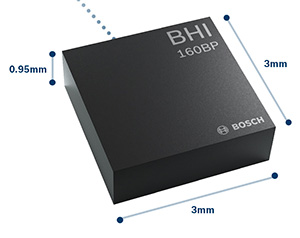
    The BHI160BP position tracking smart sensor. (Photo: Bosch Sensortec)
    The BHI160BP position tracking smart sensor. (Photo: Bosch Sensortec)

    Bosch Sensortec has released the BHI160BP, a position tracking smart sensor that uses integrated inertial sensors to improve GPS location tracking.

    Bosch will exhibit the new sensor at Electronica Munich, Nov. 13-16.

    When used with a GPS or GNSS module, the BHI160BP enables users to take full advantage of pedestrian position tracking with up to 80 percent saving in system power consumption compared with a typical GNSS-only solution, without compromising on accuracy, the company said.

    Users benefit from greatly extended battery life and longer charging intervals for wearable applications such as smartwatches and fitness trackers as well as mobile devices such as smartphones.

    The new position tracking approach is set to enable a new class of compact devices with even smaller batteries, Bosch claimed.

    The BHI160BP tracks a person’s position by intelligently applying an inertial-sensor-based algorithm for pedestrian dead reckoning. To maintain accuracy, it calculates the user’s relative location based on data collected from the inertial sensors and then recalibrates itself every few minutes to obtain the absolute position provided by the GNSS/GPS module. This means that the GNSS/GPS module can be kept in sleep mode for most of the time, which drastically reduces a device’s power consumption and extends its operating time.

    “Pedestrian position tracking is a crucial application for mobile applications; unfortunately, GPS modules can rapidly drain a device’s battery capacity — especially when the battery is as small as in wearable devices,” said Stefan Finkbeiner, CEO of Bosch Sensortec. “Our new position tracking smart sensor solves this problem and enables users to navigate reliably while extending the operation of GPS tracking in their devices from several hours up to several days.”

    With the BHI160BP, a device can maintain solid accuracy even when the GNSS signal is blocked or weak, such as near tall buildings or indoors, the company added. This ensures accurate pedestrian navigation at all times, even in shielded indoor areas such as subways, Bosch said.

    The BHI160BP is a new member of Bosch Sensortec’s BHI160 family and adds application-specific functionality for position tracking. It provides a ready-to-use solution that can be quickly and easily integrated into a system design without requiring an update to a new GNSS module, thereby significantly cutting time to market, Bosch said.

    While the current configuration is optimized for use with GNSS receivers (such as GPS), the BHI160BP can also support most of the common global localization technologies. According to the company, the BHI160BP can handle gesture recognition and 3D orientation, with 3D calculations performed by the sensor itself rather than by an application processor.

    The new BHI160BP draws 1.3 mA in active operation mode and integrates the company’s Fuser Core microcontroller and a six-axis inertial measurement unit. The BHI160BP offers a variety of customized virtual sensors, such as a calibrated accelerometer, orientation and wake-up gesture, within a single device. It BHI160BP can be extended by connecting additional physical sensors, such as a magnetometer, over a secondary interface.

    The new BHI160BP comes in a compact 3 x 3 x 0.95 mm³ LGA-package and is pin-to-pin compatible with the BHI160. It will be available via distribution in December.

  • U-blox offers location trackers with u-track toolset

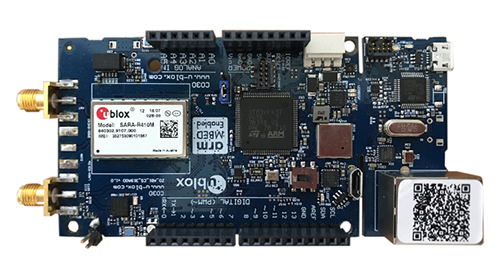
    Photo: u-blox
    Photo: u-blox

    U-blox has introduced a toolset comprising the u-track software and the C030-R410M application board.

    The toolset is a rapid-prototyping platform that lets product designers test and optimize the position accuracy and power consumption of wireless location tracking applications that use LTE-M and NB-IoT cellular networks, as well as GNSS technology. The toolset targets product engineers working on battery powered applications such as sport, people and asset trackers.

    An increasing number of battery powered consumer and industrial products feature integrated GNSS receivers. These products include virtual reality headsets, smart watches, and devices to track elderly people, containers or parcels.

    With the ongoing roll-out of low power wide-area cellular networks (LPWAN) such as LTE-M and NB-IoT technologies around the world and the extremely low power consumption they enable, the range of use cases for wireless location trackers is expected to expand further.

    Photo: u-blox
    Screenshot: u-blox

    “With today’s technology, product designers can now include optimized battery life in their applications,” said Florian Bousquet, product manager, Product Center Positioning, at u-blox.

    “We developed this toolset to give customers a quick and easy way to test the accuracy and the power consumption of their product ideas using the latest generation of our technology,” he said. “In many cases, they can replicate their applications and start testing the performance of different device configurations in under 15 minutes.”

    “The toolset offers access to the very latest technologies, from LTE-M and NB-IoT cellular communication to our proprietary Super-E mode (see video below) that delivers the best balance between power consumption and GNSS positioning performance,” he added.

    The u-track software runs from embedded firmware on the new u-blox C030-R410M application board. The board, specifically designed to rapidly prototype applications for the internet of things (IoT), includes an ultra-small, low-power u-blox ZOE-M8B GNSS receiver and a size-optimized SARA-R410M LTE-M/NB-IoT cellular communication module.

    Additionally, u-track includes a PC software application. Its user-friendly dashboard lets users log, retrieve, and visualize power consumption, accuracy, and other important values, such as the time it takes the GNSS receiver to calculate a position (time-to-first-fix, TTFF).

    The u-track and C030-R410M toolset will be showcased on Sept. 12-14 at Mobile World Congress Americas, u-blox Booth no S.2702.

  • Driver safety highlighted in new GPS tracking solution for fleets

    Teletrac Navman, a global software-as-a-service provider that leverages location-based technology for GPS tracking solutions, has launched its fully integrated Driver Safety Analytics Solution.

    Part of the Teletrac Navman Director platform, the safety analytics solution combines GPS tracking data and event replays, dashboard camera technology, driver scorecards and analytics on a single platform so fleet managers have all the information needed to reduce risks and implement safe driving practices across their fleets, the company said.

    “I have a full view into safety and the solution makes everything fact-based. Before I had perceptions of how my drivers behave on the road, but now I have proof,” said customer Bonnie Lantz, director at P&B Transportation. “I can see training needs and, of equal importance, our drivers’ incredible defensive driving when cars around them behave erratically. Our insurance company and drivers both wanted the cameras, and I expect it will save us money and give our whole fleet a better grasp on safety.”

    The Director Safety Analytics module provides insight into driver-specific and fleet-wide behavior to create a safety-focused culture, recognize and retain great drivers, and improve the insurance claims process. Features include:

    • The Integrated Event Viewer lets fleets simultaneously view driving event replays and unsafe behaviors on Google Maps, using GPS tracking data, and second-by-second Dashboard Camera video footage for quick response to and resolution of incidents.
    • Front-Facing Dashboard Cameras continuously record HD quality video footage, with recordings of all events stored in the cloud. In addition to getting a complete picture of events, footage can be used as supporting material in the event of an insurance claim and to protect against driver fault in accidents.
    • Driver Scorecards track and rank driver improvements over time for personalized training, in combination with event replay and live footage, and to recognize positive driver behaviors.
    • Reporting & Alerts measures speeding, harsh breaking, erratic cornering and other dangerous behaviors through GPS tracking and proactively alerts fleet managers. It lets fleet managers build dashboards around safety KPIs and do in-depth evaluation on fleet-wide and individual driver safety performance to easily communicate performance trends, create targeted improvement plans and build incentive programs that encourage safe driving.

    “We built this solution to give fleets absolutely everything they need to build a culture of safety,” said Daren Lauda, general manager of North America, Teletrac Navman. “The high-level fleet benchmarking is easy to drill down into to understand how individual drivers are performing. Add in the integrated telematics and corresponding video footage and fleet managers have a complete, real-life picture of safety to fuel individualized training, track progress and protect their drivers in incidents.”

  • US Supreme Court considers privacy — or not — of your location data

    The U.S. Supreme Court heard arguments last week on a case that could determine whether authorities can search cellphone location data without a warrant.

    In Carpenter v. U.S., the Court will eventually rule on whether the Fourth Amendment of the U.S. Constitution’s Bill of Rights, enacted in 1791 to safeguard citizens’ rights against unreasonable searches and seizures, extends to cover personal cellphone records tracking user location.

    The case began when police used records, obtained from a phone company and drawing on cell-tower location, to show that an individual’s cellphone was used in the vicinity of several armed robberies in Michigan and Ohio in 2010 and 2011.

    The appellants contend that the government had violated the Fourth Amendment when it collected their cellphone location records without a warrant. A federal appeals court ruled against the appeal, finding the Fourth Amendment doesn’t “yet” extend to cellphone location data.

    That court distinguished between the “content” of a communication and the “information necessary to send it.” The government can’t read letters or emails or listen to wiretapped conversation without a warrant, but it is entitled to the metadata used to send such content — in this case the phone company data showing in which tower’s cell area the phone was activated.

    “The business records here fall on the unprotected side of this line. Those records say nothing about the content of any calls,” the court ruled. “Instead the records include routing information, which the wireless providers gathered in the ordinary course of business.”

    The Supreme Court, in hearing the appeal on this decision, is expected to review — and possibly revise — its heretofore opinion that when users share information with a third party, such as a bank or telephone company, they lose the expectation that it will remain private. At question is whether cellphones have activated a new era of privacy expectations, in essence, whether legal doctrine needs to be subject to updates for the digital age.

    One tenet that no one questions is that cell phone users have no idea to what extent their phone companies know where they go and how long they stay there. Whether they care or not, or whether they are willing to sacrifice some amount of privacy for the convenience of cell phone access, remains to be seen. The limits for this have been explored but never completely settled, in controversies around Facebook’s (and others’) access to and use of customer data and profiles.

    Apple, Facebook, Google and Verizon have all filed an amicus (“friend of the court”) brief in Carpenter v. U.S. The tech gargantua seem to want, on the one hand, to discourage the possibility of government and law enforcement being able to access location data without a warrant, while also maintaining a clear and unencumbered route for themselves to use it. They argue that “Fourth Amendment doctrine must adapt to the changing realities of the digital era” and that “rigid analog-era rules should yield to consideration of reasonable expectations of privacy in the digital age.”

    After a related 2012 Supreme Court decision that attaching a GPS tracker to a car without a search warrant violated the Fourth Amendment, Justice Sonia Sotomayor wrote that the so-called third-party doctrine was “ill suited to the digital age” and that privacy case law should adapt to changes in society’s views that are occurring thanks to smartphones and other technology.

    For a summary of the arguments presented to the Court on November 29 in Carpenter v. U.S., see the SCOTUS blog here. Further developments in the case will appear on this page, and viewers may sign up for push updates as well.

    In 2008, GPS World published an editorial on this subject, in the guise of a parodized future film noir scenario, “The Call Tease Factor.” An expandable image appears at left. The essay opined that “Government agencies and police routinely tracked cell users’ location without a warrant or court oversight. . . . Challenges had faltered, and no one seemed to notice any more, or care much.”

    “Privacy, as least as far as location, no longer existed.”

  • New LTE tracker platform connects and locates objects

    New LTE tracker platform connects and locates objects

    LTE chipmaker Sequans Communications S.A. and semiconductor company STMicroelectronics have introduced CLOE, an LTE-connected tracker platform based on the integration of Sequans and ST technologies.

    An acronym of Connecting and Locating Objects Everywhere, CLOE combines the Internet-of-Things (IoT) technologies of two industry manufacturers into one comprehensive platform that simplifies the development of LTE-based IoT tracker devices for the full range of vertical markets, including logistics, consumer electronics and automotive.

    Specifically designed and optimized for OEMs and ODMs to add IoT tracking capability to their product offerings, CLOE integrates Sequans’ Monarch LTE Cat M1/NB1 chip and ST’s Teseo III GNSS chip for communications and satellite-based tracking performance.

    “CLOE targets multiple vertical markets with best-in-class performance for all of the important tracking measures: battery life, location accuracy, reachability, mobility and reporting periodicity,” said Antonio Radaelli, infotainment BU director at STMicroelectronics. “’Componentizing’ ST’s navigation technology and Sequans’ LTE modem technology makes CLOE an ideal platform to build trackers of all types — anything a developer can think of.”

    “The tight integration of ST’s latest-generation Teseo chip with our Monarch LTE chip results in a power-optimized, cost-effective, all-in-one solution to speed new IoT tracker devices to market in a very short time,” said Danny Kedar, vice president of Sequans’ IoT business unit. “CLOE delivers ultra reliable LTE connectivity with ultra-low-power consumption, and high performance GNSS and accelerometer performance, including lowest time to first fix.”

    CLOE Key Features

    • Turnkey cellular tracker solution for OEMs and ODMs, anywhere in the world
    • Chipset integrates PMU, LTE, GNSS, memories and MCU
    • First-to-market, operator-certified
    • LTE Cat M1/NB1 dual-category
    • Covers all worldwide LTE bands with a single hardware design
    • High GNSS accuracy and short time to first fix
    • Support for autonomous or server-based Assisted GPS (AGPS) for optimal time to fix
    • Designed to address multiple track & trace segments, including
      • Logistics
      • Consumer electronics
      • Automotive
    • Optimized for low power consumption and cost
    • Modular design includes GNSS, cellular connectivity, MEMS; can be expanded to include other sensors, Bluetooth and/or Wi-Fi.

    CLOE is designed and optimized for production based on a full bill of materials (BOM) that includes LTE, GNSS, accelerometer, power supply, battery management, LED and button management. The modular design enables copy/paste and optimizes BOM cost. CLOE is easily customizable.

  • Sierra Wireless offers LPWA module with GNSS

    Sierra Wireless offers LPWA module with GNSS

    Sierra Wireless, a provider of fully integrated device-to-cloud solutions for the Internet of Things (IoT), is offering global, dual-mode low-power wide-area (LPWA) cellular modules. The AirPrime WP77 smart wireless modules simplify LPWA deployments for customers developing products that need to connect to multiple networks where different LPWA technologies are supported.

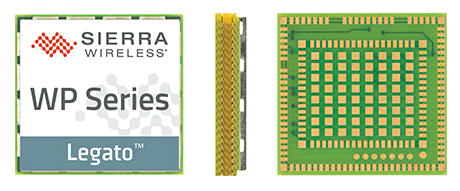
    The Sierra Wireless AirPrime WP Series.

    The WP series simplifies development for secure telematics and gateway applications, providing a dedicated application CPU core running the Linux-based open source Legato application framework.

    With integrated GNSS for tracking and location-based services, low-power modes and a comprehensive set of interfaces for connecting sensors and companion chips, including Wi-Fi and Bluetooth, customers can develop multi-service platforms for the transportation market, and use the WP77 for applications requiring low throughput and optimized power performance.

    The WP77 supports both LTE-M (Cat-M1) and NB-IoT (Cat-NB1) with optional 2G fallback, allowing customers to deploy the same device with multiple network operators worldwide. For those deploying in regions where 4G LTE coverage is not as widely available, 2G fallback ensures their devices stay connected to the network.

    ABI Research forecasts that cellular LPWA network technologies will begin to see rapid growth from 2018 onward as carriers upgrade their networks in 2017, however, carriers have varying plans and timelines for LTE-M and NB-IoT.

    “A module with dual-mode, global coverage will be very attractive for global equipment manufacturers, especially for applications such as telematics, metering, and location tracking, which we expect will lead the way for LPWA volume deployments,” said Dan Shey, managing director and vice president at ABI Research.

    With the commercialization of LTE-M and NB-IoT LPWA technologies, cellular is now a superior option for many IoT applications that were previously restricted to short-range technologies due to cost and battery life. LPWA technologies combine lower cost, broader coverage and better battery life with globally available and secure cellular networks and will connect millions more things to the Internet.

    “With the AirPrime WP77 modules, IoT developers have everything they need in a single module to quickly build low-power connected products that can be deployed anywhere in the world,” said Dan Schieler, senior vice president and general manager, Embedded Solutions, Sierra Wireless. “The integrated open source Legato platform and AirVantage cloud provide our customers with a proven device-to-cloud architecture to design innovative LPWA solutions that extend the IoT into new applications.”

  • GPS tracking device market expected to grow 2017 to 2023

    The GPS tracking device market is expected to exhibit significant growth potential between 2017 and 2023, according to a new report by Research and Markets.

    The key driving factors for the growth of the GPS tracking device market include the increase in sales of commercial vehicles, smaller size, affordable price and high return on investment. Moreover, the advent of cellular technology reduced the service cost, while the decline in GNSS/GPS IC makes inroads in cellphone that provide the scale of economies to GNSS/GPS module supplier.

    The report is titled GPS Tracking Device Market by Type, Deployment Type, Industry & Geography – Global Forecast to 2023.

    Other findings:

    • Transportation and logistics to hold the largest share of the overall GPS tracking device market.
    • APAC will be the fastest-growing market for GPS tracking device during the forecast period.

    Learn more here.

  • Sierra Wireless acquires GlobalTop’s GNSS embedded module business

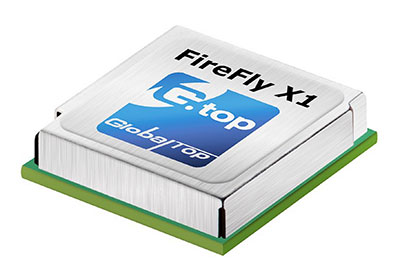
    The GlobalTop Firefly X1 GNSS module.
    The GlobalTop Firefly X1 GNSS module.

    Sierra Wireless, a provider of fully integrated device-to-cloud solutions for the Internet of Things, has completed the acquisition of GlobalTop Technology’s GNSS embedded module business for $3.2 million.

    GlobalTop’s GNSS embedded module portfolio will become part of the Sierra Wireless OEM Solutions product line, and the GNSS staff from GlobalTop will join Sierra Wireless.

    GlobalTop’s GNSS products generated $5 million in revenue in the last 12 months, and the business is break-even, Sierra Wireless said.

    “Building on our portfolio of cellular, Wi-Fi and Bluetooth modules, we will have additional products to offer to our customers in markets where positioning data is critical, including high-value asset tracking, telematics, drones and automotive,” said Dan Schieler, senior vice president and general manager of OEM Solutions for Sierra Wireless.

    The TitanX1 GNSS antenna.
    The TitanX1 GNSS antenna.

    GlobalTop GNSS modules include the Firefly, Ivory and Hummingbird series (GNSS standalone), and the Titan and Ladybird (GNSS with antenna). GlobalTop launched the Titan X1 module in February.

    “With a wide array of modules and established sales channels, as well as a proven engineering team, we believe that the GlobalTop GNSS business is an important addition to Sierra Wireless,” Schieler said.

  • Dragonfly narrowband IoT unveiled with GNSS option

    CEVA Inc., licensor of signal processing IP forconnected devices, and Hong Kong Applied Science and Technology Research Institute Company Limited (ASTRI) have introduced Dragonfly NB1, a comprehensive cost- and power-optimized NB-IoT solution aimed at streamlining the development of LTE IoT devices.

    Dragonfly NB1 leverages CEVA’s heritage of low-power DSPs and modem design and ASTRI’s experience in RF and IC Design technologies. Together, the companies have collaborated to produce a complete machine-to-machine (M2M) endpoint solution that offers best-in-class performance and power consumption, that is easily integrated into a system on chip (SoC).

    GMV Add-On for GNSS. CEVA and ASTRI have teamed up with GMV, a navigation system and solutions company, to offer an integrated GNSS solution for smart devices with location tracking of logistics, assets, wearables and more. The GNSS IP is available as an add-on software that runs on the CEVA-X1 together with NB-IoT and leverages ASTRI’s GNSS RF IP that is embedded into the solution.

    GMV’s software IP supports all four GNSS constellations: GPS, BeiDou, GLONASS and Galileo. The flexibility enabled by running the GNSS constellations fully in software on Dragonfly NB1 allows seamless switching between constellations when required or to run multiple constellations concurrently in order to improve resolution further and offer a truly global asset tracking solution.

    “Dragonfly NB1 with its multi-mode RF and dedicated IoT processor is a perfect match with GMV’s software GNSS product,” said Miguel Manuel Romay Merino, executive director of GNSS at GMV. “It provides full flexibility in using multiple constellations, either separately or concurrently to serve the various requirements specific to asset trackers, wearables and other IoT endpoint devices.”

    Dragonfly Features

    Dragonfly NB1 not only reduces the time taken to get NB-IoT products certified, but also provides low-power wide-area (LPWA) SoC designers with a flexible, software-upgradeable platform with key benefits in terms of die size and power consumption:

    • The Dragonfly NB1 solution is enabled by a single CEVA-X1 IoT processor, capable of running the complete PHY and protocol stack software for NB-IoT in addition to other associated workloads such as GNSS and sensing. It eliminates the need for additional processors and hardware accelerators in the SoC and allows in-the-field upgrades to Release 14 eNB-IoT and other future releases.
    • The CEVA-X1 IoT processor architecture includes specialized NB-IoT instructions and mechanisms to speed up PHY, MAC and encryption execution, further reducing clock speed and power consumption. It can also support other LPWA standards and workloads such as Cat-M1, LoRa, SigFox and voice.
    • The Dragonfly NB1 solution incorporates highly power-efficient multi-standard RF with embedded PA, LNA, DC-DC and DCXO technology for NB-IoT and GNSS (GPS and BeiDou), shortening development time and reducing the overall module bill of materials.

    Memory is a critical consideration for NB-IoT, as it directly influences the cost, silicon area and overall form factor of the module. Dragonfly NB1 is specifically designed to operate with embedded flash by incorporating an optimized low latency memory subsystem with a dedicated cache controller. The solution also includes a specialized security unit for a fully-trusted system.

    “In the coming years, NB-IoT will become the dominant technology for low power wide area connectivity. For most companies, understanding how to develop this technology is a daunting task,” said Michael Boukaya, Vice President and General Manager, Wireless Business Unit at CEVA. “To overcome this, we have worked relentlessly with ASTRI to develop a complete solution from the ground up, that removes the design burden and allows SoC designers to add NB-IoT connectivity to their product designs. We’re extremely excited to announce this solution and demonstrate our leadership in IP for NB-IoT.”

    “We’re pleased to partner with CEVA to address the cellular IoT market opportunity,” said Frank Tong, CEO at ASTRI. “Our joint development efforts have resulted in a highly-integrated modem solution with integrated RF that delivers outstanding performance and is power-optimized for the most rigorous NB-IoT use cases. We look forward to continuing our collaboration as we help our mutual customers get to market.”

    Reference silicon of the complete modem design — including embedded CMOS RF transceiver, advanced digital front-end, physical layer software and third-party protocol stack (MAC, RLC, PDCP, RRC and NAS) — will be available this June.

  • CalAmp’s fleet management devices aimed at connected vehicle market

    calamp-logo-WCalAmp, a provider of wireless products, services and solutions, is offering two new high-end telematics devices designed for connected vehicle applications anywhere in the world.

    The new devices address growing global market demand in Europe and Latin America for more connected vehicle technology options and enable a broad range of applications such as fleet management, usage-based insurance, crash notification, stolen vehicle recovery, vehicle finance and auto rental.

    New products include:

    • LMU-2640 – Designed for sophisticated fleet management applications, the LMU-2640 incorporates the flexibility of GSM/GPRS wireless communication along with highly sensitive GPS, a powerful processing engine and a triple-axis accelerometer that detects and communicates driver behavior. The LMU-2640 supports CalAmp’s Instant Crash Notification (ICN) services suite, delivered via email, SMS (text) or through an Application Programming Interface (API).
    • LMU-200 – Ideal for track-and-trace applications, the LMU-200 provides reliable, economical connectivity through GPRS wireless communication. The LMU-200 features highly sensitive GPS, motion detection, remote starter disable and built-in antennas that lower overall deployment cost and simplify installation. Built on CalAmp’s scalable hardware and device management platform suite, each product employs the company’s PEG on-board alert engine and processing environment as well as PULS over-the-air device management and maintenance application. These pioneering systems allow customers to leverage one platform to manage their entire portfolio including remote firmware updates regardless of the vehicle type or use case.

    “The introduction of these two new devices represents our ongoing, strategic investment in solutions that enable the connected vehicle ecosystem in key markets such as Europe and Latin America,” said Justin Schmid, senior vice president and general manager of the Telematics Systems business at CalAmp. “With CalAmp as a leading IoT enablement solutions provider with new technology and a growing product portfolio, customers in these regions now have more options to choose from whether they’re looking for a simple vehicle tracking option or a full solution to support complex mixed fleet applications.”

    CalAmp’s newest products are on display at booth #8.1B71 (Hall 8.1/Upper Level) at Mobile World Congress in Barcelona, Spain, Feb. 27–March 2.

  • U-blox integrated antenna GNSS receiver eases embedded designs

    U-blox integrated antenna GNSS receiver eases embedded designs

    U-blox is introducing a new module designed to speed time to market for system developers of GNSS applications who have limited experience in RF and antenna design.

    The SAM-M8Q GNSS receiver with integrated antenna is housed in a tiny 15.5 by 15.5 by 6.3 millimeter package. It can be easily embedded in small devices that require location information, such as asset tracking and telematics systems, and generic automotive after-market applications, u-blox said.

    By using the latest u-blox M8 multi-GNSS receiver technology, the module is able to offer simultaneous reception of GPS, GLONASS, and Galileo satellite signals.

    Ultra-compact SAM-M8Q module.
    Ultra-compact SAM-M8Q module.

    The combination of an integrated wide-band antenna along with the module’s SAW filter and low-noise amplifier (LNA)architecture ensures that the SAM-M8Q receiver delivers robust performance in the presence of high frequency signals from other electronic equipment, such as cellular modems, which can cause interference.

    “The SAM-M8Q is intended for customers who don’t have much experience in RF and antenna design,” said Kim Kaisti, Director, Product Management, Product Center Positioning. He added, “It is aimed at applications that require an embedded antenna and where the surface mount package allows for easier assembly and installation in the end-equipment.”

    Samples of the SAM-M8Q will be available in mid-January 2017. The modules will be in full production in mid-February 2017.