Tag: wearables

  • CES 2016: 3Plus launches smartwatch, connected wearables

    3Plus, a developer and manufacturer of smart wearable devices, will introduce four new connected products at CES 2016. The huge Consumer Electronics Show (CES) will be held in Las Vegas Jan. 6—9. The new 3Plus wearables line will be on display at CES 2016 in Tech West Sands Expo Booth  no. 72745, and the ShowStoppers press event on Jan. 6.

    From basic activity trackers to advanced smartwatches, all of the new 3Plus wearables track and record daily activity and sleep. They also use Bluetooth 4.0 to provide smartphone notifications such as calls, e-mails and text messages. They are compatible with both iOS and Android platforms and have corresponding mobile apps.

    “Today, a wristwatch is more than just a means to know what time it is and the day’s date,” remarked Jerry Galya, 3Plus vice president of sales. “Digital technology has taken wristwatches in a whole new direction and 3Plus is right at the forefront with many innovative technologies. Our newest wearables are available at a variety of affordable price points depending on what features you are interested in. From the most basic smartphone notifications and fitness tracking, to advanced heart rate monitoring and call answering, 3Plus offers it all.”

    The following 3Plus IoT wearables products will be introduced at CES 2016.

    3Plus Lite: This connected fitness wearable tracks steps taken, calories burned, distance traveled, duration of sleep and sleep cycles. It has daily life reminders such as when to wake up or take medicine. The 3Plus Lite features a power-efficient OLED display and has an IP67 rating, meaning it is totally protected against dust and water immersion up to three feet.

    3Plus Swipe HR: The 3Plus Swipe HR combines smartwatch with an activity tracker. It tracks steps, distance, and calories burned. It also keeps track of daily meals via MyFitnessPal, as well as sleep quality, including periods of deep sleep and restlessness. Other features include a 1.1-inch touchscreen display; heart-rate range alert; and automatic data sync to a smartphone without plugging in or pushing buttons, providing real-time access on a mobile app and notifications on the wrist.

    3Plus Touch Smartwatch: Activity tracking includes steps taken, calories burned, distance traveled, heart rate, quality of sleep, and sleep cycles. It even reminds the wearer when to take their medicine or when to eat. The OLED touchscreen display shows the time and date, and smartphone notifications including the name or number of incoming calls, with a built-in microphone for direct answering. Other features include a lightweight lithium-polymer battery with a two-week standby time.

    3Plus Time: The look of a traditional timepiece is coupled with digital capabilities. The dial of the 3Plus Time smartwatch measures time with big, bold Roman numeral hours, old-school hour and minute hands, and a digital OLED display for text, call and other smartphone notifications. Tracking activities include steps taken, calories burned, distance traveled, duration of sleep and deep-sleep time. It is available with a choice of a leather or stainless steel band.
  • OriginGPS Introduces Modules to Support GPS, GLONASS and BeiDou with MediaTek

    OriginGPS has launched a new family of products, the first of which is the ORG1510-MK Multi Micro Hornet, a fully integrated multi-GNSS (GPS, GLONASS and BeiDou) module. The miniature low-power architecture supports an update rate of up to 10 Hz and contains onboard flash. It is designed to provide a GNSS component to devices that require fully featured components with small footprints, such as UAVs designed to follow action sports and other fast-moving activities or wearables.

    OriginGPS released the Multi Micro Hornet (ORG1510-R01) in June, which tracks GPS and GLONASS, but not BeiDou. The ORG1510-R01 uses a SiRFstarV GNSS system on chip.

    The ORG1510-MK contains the MediaTek MT3333 chip, which supports a fast update position calculation rate. The chip also contains an onboard flash memory that does not erase when power is off. It consumes very little power with the use of both standby mode and backup mode, and, in advanced applications, a periodic mode that can turn the device on and off when in backup or standby.

    “The inclusion of MediaTek has enabled the creation of the most powerful GPS module on the market,” said Gal Jacobi, CEO of OriginGPS. “The ORG1510-MK’s tremendously fast update rate, low power consumption, miniature size and reliable accuracy makes it possible to track life’s most exciting and fast-paced activities without delay, battery drain, or clunky devices. It will be a meaningful engine of growth for OriginGPS in Asia Pacific and globally.”

    Key features of the New Multi Micro Hornet include:

    Rapid update rate and superior memory – The Multi Micro Hornet has an update rate of up to 10 Hz and onboard flash, supporting a significantly higher accuracy than the standard update rate of 1 Hz and low power consumption due to the module’s ability to store hours of data.

    Smallest size, highest performance – Despite the Multi Micro Hornet’s tiny size of 10 x 10 mm and height of 6.1 mm, the module offers superior sensitivity and outstanding performance, achieving rapid time to first fix (TTFF) of less than 1 second, accuracy within as little as 1 meter, and sensitivity at -165 dBm for two constellations simultaneously.

    High sensitivity and noise immunity – The ORG1510-MK continues to leverage OriginGPS’ patented and proprietary Noise Free Zone (NFZ) technology to ensure high sensitivity and noise immunity even under marginal signal conditions.

    Continuous connectivity with minimal power consumption – The low power consumption modes aided by MediaTek include a standby mode, during which the RF and baseband enter low power mode, and backup mode, during which the internal PMU turns off and only keeps the VRTC domain alive. For advanced applications, the module can periodically turn its operation on and off when in backup or standby mode.

    An intelligent design that shortens time to market – The Hornet family of GPS / GNSS antenna modules integrates a GNSS receiver and patch antenna in a single module. As a cornerstone of the OriginGPS portfolio, the ORG1510-MK pin-to-pin compatibility with the Micro and Nano Hornet modules ensures a seamless migration from GPS to GNSS and gives developers the ability to create new product offerings in the shortest time to market while minimizing costly design risks. Developers can simply connect it to a power source on a single layer PCB to begin integrating it into their designs.

    The ORG1510-MK module combines OriginGPS’ proprietary low-profile GNSS antenna with a dual-stage LNA, RF LDO, SAW filter, TCXO, RTC crystal and RF shield.

  • Baseband Technologies Granted Patent for Ultra Low-Power GPS Receiver

    Baseband Technologies Inc. has been issued a patent from the United States Patent and Trademark Office for its low-power satellite positioning innovation. U.S. Patent No. 9,116,234, titled “System, Method and Computer Program for a Low Power and Low Cost GNSS Receiver,” describes the technology and processes to significantly reduce the energy required to operate a GPS receiver.

    Baseband’s ultra low-power GPS receiver technology enables consumer electronics manufacturers to integrate its receiver into battery-powered wearable/Internet of Things (IoT) devices using hundreds of times less power than the traditional GPS chipsets.

    “With the wearable market projected to grow multiple times faster than smartphones and with GPS being one of the most requested features, there will be huge rewards for those manufacturers who can offer GPS functionality in their products without impacting the battery life or size,” said Francis Yuen, founder and CEO of Baseband. “For us, innovation is about connecting what is possible with what is valuable to our customers. This patent, in conjunction with others now pending, will enable Baseband to continue to offer ultra low-power positioning capabilities and customer-centric experiences across different market verticals.”

    “It is gratifying that the US Patent and Trademark Office has recognized both our invention and the intellectual property of this very promising technical advancement,” Yuen said. “This newly granted patent will certainly help in our current investment round as well as to fuel continued product development and innovation that will lead to even further advances in ultra low power positioning.”

  • GPS SmartSole Launches in Germany for Alzheimer’s Monitoring

    GPS SmartSole Launches in Germany for Alzheimer’s Monitoring

    Photo: GPS SmartSole

    GTX Corp, an IoT platform in the personal location GPS wearable and wandering-assistive-technology business, has completed a successful SmartSole pilot program transitioning into a commercial launch in Germany. SmartSoles also launched this month in the United Kingdom.

    GTX Corp has signed a reseller distribution agreement with Way4Net, a solution provider in geo-locating and tracking monitoring services. Way4Net placed its first commercial order, with scheduled delivery dates beginning this month and continuing monthly over the next six months.

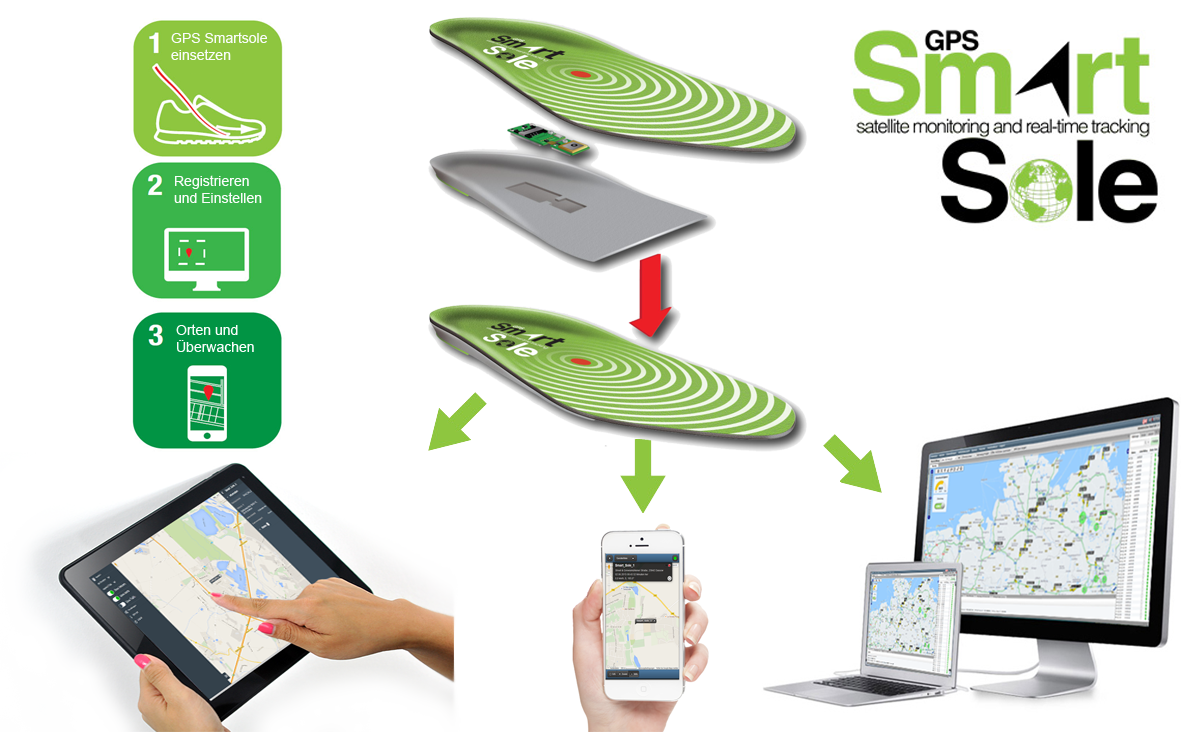
    GPS SmartSoles. GTX Corp’s flagship product, the GPS SmartSoles, are an unobtrusive monitoring and tracking solution for those who suffer from Alzheimer’s, dementia, autism, TBI and other memory disorders and have a tendency to wander.

    The SmartSoles are placed in the wearer’s shoes and contain a GPS tracking chip connected through a cellular network that sends a signal to GTX Corp’s proprietary IoT platform monitoring website or smartphone app, showing the exact location of the individual wearing them. They come in several trim to fit sizes for both men and women, are water resistant, made with the highest-quality electronic components and assembled in Rhode Island, U.S.A.

    The Dementia Problem. Germany has a population of 83 million people with approximately 1.6 million, or 2 percent of its population who are afflicted with dementia and Alzheimer’s. Just this week, German football legend Gerd Muller announced receiving treatment for Alzheimer’s disease. This disease is not limited only to the senior population — 24,000 people ages 45-65 are already diagnosed throughout Germany.

    Many people mistake dementia as a natural consequence of getting older, when it is actually the result of damage to brain cells that affect memory. Dementia affects close to 50 million people worldwide today with no cure for this syndrome on the horizon.

    “For us, the solution of GTX SmartSole is one of the best technologies to increase the quality of life of vulnerable people with the symptoms of dementia, Alzheimer’s, autism and other cognitive memory disorders,” said Eric Gnass, CEO of Way4Net. “We are very pleased to introduce this unique product on the German market.”

    Transition to Commercial Launch. “We are extremely pleased to have another successful pilot transition into a commercial launch and we are proud to partner with a well-entrenched company like Way4Net,” said Andrew Duncan, GTX Corp director of business development. “We are currently investing a lot of resources in Germany, which is where we design and manufacture our GPS and cellular chip, and have recently signed an M2M agreement with Telefonica Germany which will support our connectivity throughout Europe. Between our launch in Germany and launch last week in the U.K., I plan to stay in Europe for another two weeks working with our partners and chip manufactures on our next-gen SmartSole, expected out in early 2016.”

    The patented GPS SmartSoles, which were showcased in Munich at the Telefonica 2015 Innovation Conference Digital Innovation Day, were featured in AARP’s 2015 technology gear guide. They also came in second place — with Microsoft finishing first and Samsung taking third place — in the 2015 Wearables, Health, Fitness & Wellness category at CTIA’s Hot for the Holidays Awards competition.


  • Broadcom Offers New GNSS Chip for Internet of Things

    Broadcom-BCM47748-GNSS-Chip-WBroadcom Corporation has announced a new GNSS chip for Internet of Things (IoT) and wearable devices that simplifies integration of GNSS into low-cost products. The advanced chip enables devices such as fitness bands to deliver pinpoint location while consuming minimal power and in some cases can eliminate the need for a separate microcontroller (MCU).

    The Broadcom BCM47748 removes a bulk of the signal processing from the device MCU by calculating position, velocity and time (PVT) on-chip, delivering significant system power savings. The chip uses intelligent firmware to extend battery life while also maintaining accuracy in speed, distance and position for an enhanced user experience.


    Broadcom At ION GNSS+: Broadcom’s Stephen Mole is presenting on the topic of achieving low power consumption in wearables at ION GNSS+ 2015, taking place Sept. 14-18 at the Tampa Convention Center in Florida. Stephen will present during the A5 session, Applications using Consumer GNSS, on Friday, Sept. 18, at 9:40 a.m. inRoom 23.

    Read more about ION GNSS+ 2015 here.


    “Broadcom is extending its navigation leadership into the IoT ecosystem by helping customers deliver a premium location experience without compromising battery life or requiring a costly, power-hungry host processor,” said Prasan Pai, Broadcom senior director, Wireless Connectivity. “With more consumers demanding GNSS in a wider variety of applications, we see a tremendous opportunity to expand our reach into new devices with market-leading GNSS technology.”

    By absorbing location computations on-chip, Broadcom not only reduces power consumption but can also dramatically lower costs for original equipment manufacturers (OEMs) by replacing the device MCU and reducing board space. Additionally, firmware inside the BCM47748 automatically adapts to user activity and context, whether biking, walking or running, to provide precise location results to the user, enabling performance that is not sacrificed for power savings.

    Key features:

    • PVT computed on-chip
    • Integrated GNSS receiver with concurrent support for GPS and GLONASS, combined with accelerometer inputs to produce stable, accurate and low power speed and distance
    • Context engine and adaptive firmware to enable low power consumption for every activity and context without compromising accuracy
    • Ability to produce GNSS fixes with only 5mA current consumption in certain scenarios
    • MCU host interfaces include SPI, UART or I2C
    • Sensor interfaces include I2C master, SPI master, I2S, ADC and GPIO
    • Large on-chip memory for enhanced PVT accuracy and customer applications
    • Embedded processor with self-boot capability
    • Geofencing and lifelogging capabilities
    • 70 ball WLBGA package with 0.4mm ball pitch

    The Broadcom BCM47748 is currently sampling with customers. Evaluation kits and reference designs are also available.

  • sensewhere Secures Investment for Indoor Positioning

    sensewhere Secures Investment for Indoor Positioning

    sensewhere-tablet-W
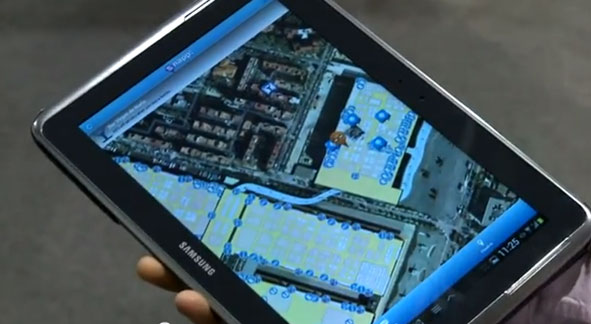
    sensewhere’s crowdsourcing technology enables precise location information, with no additional infrastructure, in areas where there is no or inaccurate GPS satellite data such as indoors or in tight urban areas.

    Tencent Holdings Ltd., a provider of Internet services in China, has completed a strategic investment in sensewhere Ltd., a provider of indoor location solutions based in Scotland. Tencent has also secured a license to use sensewhere indoor positioning software as part of its Tencent Map Location software development kit (SDK) that is available to numerous users across Tencent mobile platforms and mobile services of Tencent affiliate companies.

    The investment will help sensewhere develop potential partnerships in China’s mobile Internet space, deliver its mobile advertising service, fuel expansion of the company and its indoor location solutions. As part of the arrangements, sensewhere will be Tencent’s preferred vendor for location-based advertising services in China.

    “This investment by Tencent will be significant for the company and is an endorsement of our technology, strategy and ability to deliver low cost, highly scalable and highly accurate Universal indoor positioning,” said sensewhere CEO Rob Palfreyman. “I am thrilled with the collaboration, and having Tencent as a strategic investor will help take sensewhere to the next level and assist us growing our customer base, building new Location Based Services and investing further in R&D.”

    “The investment by Tencent highlights the advantage of sensewhere’s indoor positioning technology over other solutions and further cements our position as a leading Indoor Positioning System (IPS) provider,” said sensewhere Chairman Jim Devine. “The planned roll out of multiple services to millions of users across China and contiguous territories which incorporate sensewhere’s enabling technology represents a major step forward towards our goal of providing a truly global solution for indoor positioning.”

    sensewhere believes that its seamless, automatic solution for IPS and easy integration with mobile applications and devices will be the driving force behind emerging technologies, such as automatic beacon mapping, wearable technology, artificial intelligence, mobile advertising and using its live database to power next-generation location-based services.

    “We believe that a superior, universal indoor positioning technology will deeply influence how people interact with each other, and significantly change how companies communicate with consumers and conduct commerce indoor across online and offline platforms,” said Julian Ma, corporate vice president of Tencent in Mobile Internet Group. “sensewhere’s unique, highly scalable approach will greatly enhance Tencent Map’s indoor positioning capabilities and enable our users to navigate indoor in a much more accurate and convenient manner.”

    The video below explains sensewhere’s indoor location technology.

  • Antenova Launches Sinica Embedded Antenna for GNSS Devices

    Antenova Launches Sinica Embedded Antenna for GNSS Devices

    Antenova logoAntenova Ltd., manufacturer of antennas and RF antenna modules for M2M and the Internet of Things, has announced a new embedded GNSS antenna named Sinica, which operates on the 1559-1609 MHz satellite bands. The Sinica antenna uses a novel design approach and new materials to achieve high performance from an ultra low-profile antenna, Antenova said.

    Sinica is suitable for all positioning applications on the 1559-1609 MHz bands. It operates with all of the public satellite constellations — GPS, GLONASS, Baidou and Gallileo — which means it can provide accurate positioning combined with global coverage.

    The Sinica antenna is created from FR4 materials and new dielectric constant laminate substrates. It uses a new approach to antenna design, which has enabled the company to create an antenna with the high performance of a ceramic patch antenna, in a low profile part that can be placed neatly within a small printed circuit board, Antenova said.

    Sinica is designed for devices that need accurate positioning or tracking globally, which means it is suitable to use in drones, network devices and wearable electronics, or any other portable device or tracking application.

    Antenova’s product designers recently introduced the concept of “Design For Integration” (DFI), which considers how the antenna will operate when it is embedded with a manufacturer’s product. Antenova’s antennas are used within a customer’s design, so they are designed to provide superior RF performance from within the device, and to make the integration of the RF elements easier for the designer, the company said. In addition to this, Antenova provides its customers with technical support during the design, integration and testing phases.

    Earlier this year, Antenova announced three new families of antennas for the fast growing M2M, wireless and IoT sectors. Sinica belongs to the lamiiANT family of new antennas for these market sectors.

    The antennas are supplied on tape and reel and are available through distributors worldwide. Go to www.antenova-m2m.com for more details, or to request an evaluation board for the Sinica antenna.

  • OriginGPS Unveils Multi-GNSS Module with Antenna for Wearables

    OriginGPS Unveils Multi-GNSS Module with Antenna for Wearables

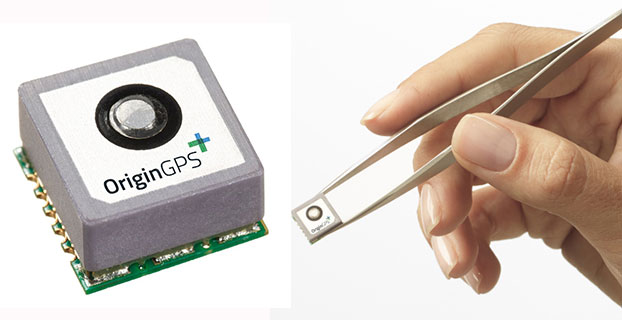
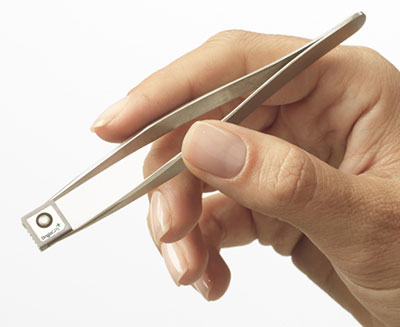
    The Multi Micro Hornet by OriginGPS was designed small with wearables in mind.
    The Multi Micro Hornet by OriginGPS was designed small with wearables in mind.

    OriginGPS has launched the Multi Micro Hornet, a tiny fully integrated multiple constellation antenna module. The innovative architecture packs functionality and high-quality components in a small space to improve wearables’ fashion and function, the company said.

    “A recent study by the European Global Navigation Satellite Systems Agency (GSA) showed that multi-constellation is becoming a standard feature in today’s user equipment,” said Gal Jacobi, CEO of OriginGPS. “Developers of wearables need modules with these features in the smallest size possible to be competitive in a market the GSA predicts will reach 14 million by 2023.”

    GPS World reported on the GSA market report in its April issue, and held a webinar on the report on April 16, which can be viewed for free.

    The Multi Micro Hornet is designed for devices that require a small form factor, low power consumption, and high sensitivity. In keeping with the company’s “Mini + Mighty” corporate mantra, OriginGPS has reduced the total volume in size by over 68 percent of other GNSS antenna modules without sacrificing performance, the company claims.

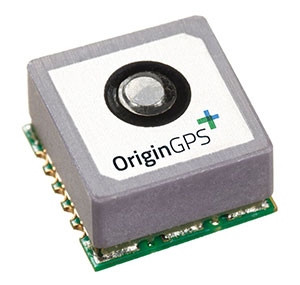
    The Multi Micro Hornet by OriginGPS.
    The Multi Micro Hornet by OriginGPS.

    The Multi Micro Hornet has features that will improve the navigation experience of wearables and other Internet of Things devices, including:

    • Small size, high performance: Despite its miniature outline of 10 x 10 mm and height of 5.9 mm, the Multi Micro Hornet module offers superior sensitivity and outstanding performance, achieving rapid Time To First Fix (TTFF) of less than one second, accuracy within as little as one meter, and sensitivity at -165 dBm by tracking both GPS and GLONASS constellations simultaneously.
    • High sensitivity and noise immunity: The Multi Micro Hornet continues to leverage OriginGPS’ patented and proprietary Noise Free Zone NFZ technology to ensure high sensitivity and noise immunity even under marginal signal conditions.
    • Reduced power consumption without compromising connectivity: It detects changes in context, temperature, and satellite signals to achieve a state of near continuous availability. By opportunistically updating its internal fine time, frequency and satellite ephemeris data, the Multi Micro Hornet is able to stay connected while consuming mere microwatts of battery power.
    • An intelligent design that shortens time to market: The Hornet family of GPS / GNSS antenna modules integrates a GNSS receiver and patch antenna in a single module. As a cornerstone of the OriginGPS portfolio, the Multi Micro Hornet’s pin-to-pin compatibility with the Micro and Nano Hornet modules ensures a seamless migration from GPS to GNSS and gives developers the ability to create new product offerings in the shortest time to market while minimizing costly design risks. Developers can connect it to a power source on a single layer PCB and be off and running.

    Additionally, the Multi Micro Hornet module combines OriginGPS’ proprietary low-profile GPS+GLONASS antenna with a dual-stage LNA, RF LDO, SAW filter, TCXO, RTC crystal and RF shield with SiRFstarV GNSS system on chip.

  • Affordable Wearables Strong in First Quarter before Apple Watch Debut

    The worldwide wearable device market recorded its eighth consecutive quarter of steady growth in the first quarter of 2015. According to the International Data Corporation (IDC) Worldwide Quarterly Wearable Device Tracker, vendors shipped a total of 11.4 million wearables in the first quarter, a 200 percent increase from the 3.8 million wearables shipped in the first quarter of 2014.

    “Bucking the post-holiday decline normally associated with the first quarter is a strong sign for the wearables market,” said Ramon Llamas, research manager, Wearables. “It demonstrates growing end-user interest and the vendors’ ability to deliver a diversity of devices and experiences. In addition, demand from emerging markets is on the rise and vendors are eager to meet these new opportunities.

    “What remains to be seen is how Apple’s arrival will change the landscape,” added Llamas. “The Apple Watch will likely become the device that other wearables will be measured against, fairly or not. This will force the competition to up their game in order to stay on the leading edge of the market.” The Apple Watch began shipping April 24.

    “As with any young market, price erosion has been quite drastic,” said Jitesh Ubrani, senior research analyst, Worldwide Mobile Device Trackers. “We now see over 40% of the devices priced under $100, and that’s one reason why the top 5 vendors have been able to grow their dominance from two thirds of the market in the first quarter of last year to three quarters this quarter. Despite this price erosion, Apple’s entrance with a product priced at the high end of the spectrum will test consumers’ willingness to pay a premium for a brand or product that is the center of attention.”

    Wearable Vendor Highlights

    Fitbit started 2015 the same way it ended 2014: as the clear market leader in the worldwide wearable device market. Fitbit’s first quarter shipments were driven by the release of three new devices (the Charge, Charge HR, and the Surge) along with continued demand for its older Flex wristband and One and Zip clip-on models. Separately, these address multiple segments of the market, from casual exerciser to committed athlete, and collectively leverage Fitbit’s behavior change engine to encourage activity.

    Xiaomi started off the year by blasting through the one million unit mark with its Mi Band for the first time, a significant feat made all the more impressive considering the device just started shipping during the second half of 2014. Similar to its smartphones, Xiaomi’s Mi Band was delivered primarily within its home country of China, but recent announcements point to more global aspirations for the company.

    Garmin’s wearable device portfolio spans multiple areas of health and fitness, including activity tracking, running, hiking, golfing, triathlons, and multi-sport. The majority of Garmin’s devices are GPS-enabled to track location and distance, and some leverage the company’s ConnectIQ third-party applications to record activity, show notifications, and news.

    Samsung’s fourth place finish came from worldwide demand for its Gear smartwatches. Since its debut in 2013, the Gear portfolio has diversified to include the Tizen-powered Gear, Gear 2, Gear Fit, Gear 2 Neo, Gear S, and the Android-Wear powered Gear Live. What has limited Samsung, however, is the ability for Gear devices to connect only with select high-end Samsung smartphones.

    Jawbone beat Pebble and Sony for fifth place, a result driven by the release of its UP MOVE and continued demand for its nearly year-old UP24. The company will release two new devices in the second quarter of 2015, with the similarly-functioning UP2 and the mobile payments-enabled UP3. The company maintained its design strategy of no displays, but again touted its predictive data engine to encourage healthier lifestyles.

    Top Five Wearables Vendors, Shipments, Market Share and Year-Over-Year Growth, Q1 2015 Data
    (Units in Millions)
    Vendor

    1Q15 Shipment Volumes

    1Q15 Market Share

    1Q14 Shipment Volumes

    1Q14 Market Share

    Year-over-year Change

    1. Fitbit

    3.9

    34.2%

    1.7

    44.7%

    129.4%

    2. Xiaomi

    2.8

    24.6%

    0

    0.0%

    N/A

    3. Garmin

    0.7

    6.1%

    0.3

    7.9%

    133.3%

    4. Samsung

    0.6

    5.3%

    0.3

    7.9%

    100.0%

    5. Jawbone

    0.5

    4.4%

    0.2

    5.3%

    150.0%

    Others

    2.9

    25.4%

    1.3

    34.2%

    123.1%

    Total

    11.4

    100.0%

    3.8

    100.0%

    200.0%

    Source: IDC Worldwide Quarterly Wearable Tracker, June 2, 2015

    Table Notes:
    • Data is subject to change.
    • Vendor shipments are branded device shipments and exclude OEM sales for all vendors.
    • The “Vendor” represents the current parent company (or holding company) for all brands owned and operated as subsidiary.
  • Telit, Agnik Join on IoT Apps, Big Data for Smart Devices

    Telit Wireless Solutions and Agnik are collaborating on Internet of Things (IoT) applications and Big Data analytics for connected devices in the auto, home and health industries. Agnik’s solutions expand the quality and quantity of integrated IoT apps and analytics available to customers and ecosystem partners of the industry-leading deviceWISE AEP.

    The rapid proliferation of smart devices and products makes it challenging to aggregate and manage all these different data sources and also requires that this trove of data is harnessed and analyzed to extract valuable insights that help companies make more informed business decisions. The Internet of Things is already starting to transform businesses around the world. For example, in the automotive industry Big Data analytics provide a better understanding of vehicle performance, automotive business, automotive risk management, and connect with customers at a deeper level to improve efficiency and brand-loyalty. In the home, Big Data solutions are helping to manage energy consumption, maintain security while allowing entry to repair services while the homeowner is away. Individuals are wearing quasi healthcare devices on their bodies night and day.

    Telit and Agnik are providing technology and analytics designed to make it easy for large and small companies to get onboard with the Internet of Things — reducing cost, time-to-market, complexity and risk versus trying to engineer a fragmented solution in house. At the core sits Telit’s Cloud-based deviceWISE, an application enablement platform for data acquisition, data and device management and data integration. In turn, Agnik converts the data from thousands of connected things into actionable business intelligence, delivered on custom web-based and mobile apps, and dashboards.

    “We are honored to welcome Agnik as a deviceWISE business partner. Agnik’s leading IoT apps and Big Data Analytics further expand the number of off-the-shelf deviceWISE Ready solutions that are available to customers, MNOs and partners worldwide,” said Gideon Rogovsky, SVP, sales and marketing of deviceWISE platform at Telit. “Telit is creating a growing ecosystem of world-class IoT solution providers — ranging from the device side to applications and analytics.”

    “We are pleased to collaborate with Telit and offer Agnik’s analytics-driven ecosystem of products and services to the deviceWISE AEP community,” said Hillol Kargupta, president of Agnik. “Agnik offers a comprehensive analytics platform for connected devices powered by our patented, onboard data-stream mining technology and wide range of distributed cloud-based analytics for consumer and commercial applications in connected environments.”

    Agnik’s suite of analytics software products provide a wide range of powerful onboard and cloud-based tools that transform data about vehicle performance and user experience into valuable insights, according to the company. The analytics help companies in the automotive industry connect with car owners at a deeper level.

    Agnik has also embarked upon a deep analytics driven path in the connected world of devices and products for industrial environments, home and health. Its collaboration with Telit will blend Agnik’s predictive data analytics capabilities with Telit’s device management infrastructure to develop a patchwork of insights into a holistic quilt of knowledge, from what would appear to be on the surface unrelated sources of information, devices, and products.

  • Cap-XX Launches 0.6mm Thinline Supercapacitors for Wearables

    Cap-XX Launches 0.6mm Thinline Supercapacitors for Wearables

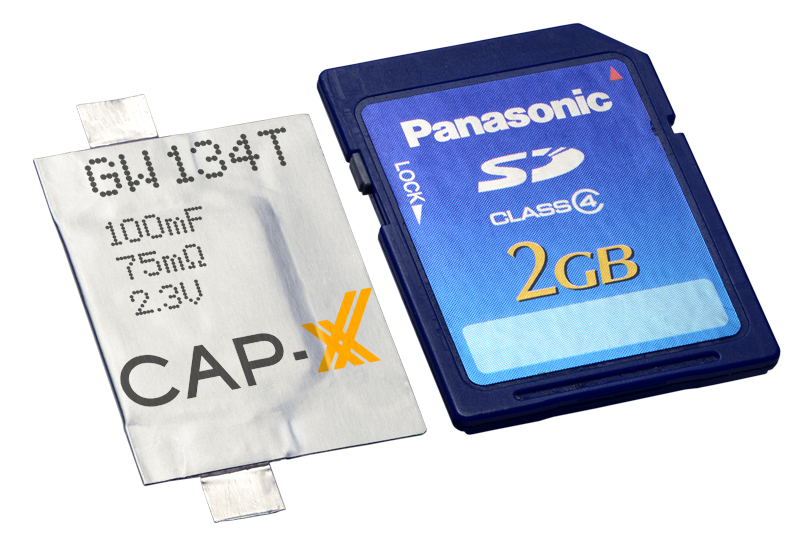
    Cap-XX Thinline Supercapacitor shown with an SD card.
    Cap-XX Thinline Supercapacitor shown with an SD card.

    Cap-XX, developer of flat supercapacitors for burst and back-up power in space-constrained electronic devices, has launched its Thinline series of single-cell supercapacitors. The thin (0.6-mm) supercapacitors were developed to address the size, weight and cost challenges of designing thin, sometimes disposable electronic devices for the Internet of Things (IoT).

    Examples include wearables (medical, fitness and health monitors, smartwatches, drug delivery systems), portables (active credit cards, smartphones, RFID tags), and connected electronics (smart homes and smart buildings, electronic shelf labels, wireless sensor networks).

    To reduce thickness and manufacturing costs, CAP-XX increased the power and energy density in its electrode materials to deliver equivalent performance in about half the volume, and eliminated the folded edges and copper terminals that contribute to thickness in its standard line supercapacitors. (For comparison, CAP-XX’s thinnest traditional single-cell supercapacitor is 1.10 mm.)

    Cap-XX Thinline supercapacitors support power requirements in IoT devices including GPS acquisition, wireless communication (Bluetooth, Bluetooth Smart, Zigbee, Z-Wave, Ant, active RFID), electronic paper and OLED displays, haptic or tactile feedback, vibration alerts, and injection or inhalation system delivery.

    Cap-XX supercapacitors benefit from a nanotechnology construction that stores electrical charge in engineered carbon electrodes on aluminium foil, to minimize resistance and maximize capacitance. The electrode construction packs the highest energy and power densities possible into thin, prismatic packages, the company said.

    Supercapacitors can handle peak power events, supporting batteries and energy harvesters configured to provide low-power current at maximum efficiency. This architecture allows designers to use smaller, cheaper, low-power batteries and extend their run-time and cycle life, or use intermittent ambient energy sources such as solar photovoltaic. Supercapacitors also enable ultra-quick device charging and wireless power transfer, and provide the backup needed for graceful shutdown and “last gasp” transmissions in mission-critical applications.

    The Thinline idea was born while working with a customer designing a disposable insulin pump. “We figured out how to eliminate materials and change some processes to reduce costs and thickness,” explained Anthony Kongats, Cap-XX CEO.

    Thinline works with thin-film, solid-state, and other low-power batteries such as coin cells/button cells, energy harvesting modules (solar, vibration/kinetic, RF, and other ambient energy sources), as well as inductive/wireless and cable/cradle fast-charging systems.

    Features of Thinline include:

    • Extremely thin, flexible packaging from 0.6mm (600µm) thick
    • Best-in-class power density and power output (up to 117kW / litre)
    • Ultra-low resistance, even at low temperatures (ESR from 16mΩ, 2x nominal at -40°C)
    • Excellent energy storage to support ambient/intermittent sources (up to 0.8Wh / litre)
    • High cell voltages to facilitate integration with primary batteries (up to 2.75V continuous)
    • Wide operating temperature range (from -40°C to +85°C)
    • Very low leakage current to maximize battery life and minimize losses (typically < 1µA)
    • Virtually unlimited charge-discharge cycle life

    Cap-XX Thinline supercapacitors are available in three footprints:

    • “A” series: 19.5mm x 20.0mm x 0.6 – 0.9mm thick, 60 – 180 mF, 45 – 200 mΩ
    • “W” series: 28.0mm x 20.2mm x 0.6 – 0.9mm thick, 100 – 300 mF, 24 – 120 mΩ
    • “S” series: 39.0mm x 20.2mm x 0.6 – 0.9mm thick, 180 – 540 mF, 16 – 75 mΩ

    Suggested retail price for all 0.6-mm cells is less than US$1 in large volumes. The 0.7 mm and 0.9 mm cells in each series have higher C/lower ESR and cost slightly more. All parts are available in a 2.3V / 70°C, or 2.75V / 85°C configuration. They can be assembled by soldering or welding (ultrasonic, laser or spot).

  • Antenova’s Tiny Weii Antenna Designed for Consumer Applications

    Antenova announces its first antenna for consumer applications — the tiny Weii 2.4-GHz ceramic antenna. Measuring 1 mm x 0.5 mm x 0.5 mm, the company believes the Weii could be the smallest antenna in the world.

    The new Weii miniature ceramic antenna is designed for 2.4-GHz, Bluetooth, Wi-Fi, Zigbee and industrial, scientific and medical (ISM) applications.

    While all of Antenova’s antennas and antenna module products are small surface mounted devices, this antenna is the smallest that Antenova has created so far. It is designed specifically for the consumer, Internet of Things (IoT) and machine-to-machine (M2M) markets.

    Colin Newman, Antenova’s director and vice president of sales, explains how Antenova has miniaturized the antenna. “Ceramic antennas offer low dielectric losses and high isolation. Our engineers have used this technology to greatly reduce the antenna volume without sacrificing performance. The challenge in building antennas for today’s small consumer devices is to achieve high isolation and frequency selectivity while maintaining good efficiency. This antenna is resistant to detuning from environmental effects, and combining this with its ultra-small size, makes it ideal for today’s wearable products.”

    The Weii is an omni-directional, surface-mount device (SMD) mounted dielectric antenna that can be used to add wireless connectivity to any small electronic device, such as wearables, headsets, medical devices, personal navigation devices, dongles and sensors.

    A ceramic antenna offers several advantages for these emerging applications. Its tiny footprint is designed for the new, scaled-down printed circuit boards (PCBs) that are being developed for consumer devices in M2M. It offers a highly efficient antenna that is powerful over indoor ranges, and that performs well when sited close to the human body, Antenova said.

    Antenova says it takes a unique approach to the design of antennas, which it calls “Design For Integration” (DFI). Because the antennas are always embedded within a customer’s design, the successful operation of the customer’s device depends upon obtaining the correct performance from the antenna when it is placed on the PCB; therefore, Antenova is designing its antennas with this difficult RF integration in mind.

    The Weii is designed to be easily integrated into all kinds of PCB designs and various ground plane sizes — it has been engineered so that it can simply be dropped into the design, using CAD footprint files, which are provided free of charge. To ensure that customers can harness the antenna successfully and achieve the optimal performance of the antenna, Antenova provides engineering assistance along with advice on RF design layout and the integration of the antenna, and customer support.

    The antennas are available through distributors worldwide. See www.antenova-m2m.com for more details, or to request a sample board for the Weii antenna.