Blog

  • TIGER Database Historical Perspective

    In my last two columns, I’ve made several references to geospatial data. Jon Sperling, Ph.D. GISP, wrote in and commented on the omission of the importance of TIGER data in the history of geospatial data development and commercialization. He made reference to a document he wrote that was published in 1995 regarding the development and maintenance of the TIGER database. I’ve decided to reprint his work, with his permission, as this week’s column. It gives keen insight into the early stages of TIGER. Albeit quite in-depth, it’s a fascinating read for gaining a historical perspective on geospatial data development.

    Keep in mind that this document was written in 1992 so there are references to initiatives, etc. that were subsequently developed and that you enjoy today.

    Sperling argues that our public investment in TIGER need not be just history but a pro-active means to leverage partnerships and new advances and innovations (e.g. synergistic links with national parcel data initiatives, local/state/federal data sharing and a national road network). Census still remains a pioneer in supporting and furthering geospatial science at all levels of our society for the betterment of our Nation’s communities.

    Dr. Sperling is currently a Senior Researcher of Geographic Information and Analysis at the Office of Policy, Development and Research for the U.S. Department of Housing and Urban Development. He has designed and led many innovative geospatial, addressing, and data integration efforts in coordination with local and state governments and the academic research community. Dr. Sperling was involved in the initial development of the Nation’s TIGER/Master Address File databases for the 1990 and 2000 Census, enabling digital spatial data sharing capabilities, and efforts to enhance its coordinate accuracy and data quality. Currently, he is working with university partners on a number of innovative research applications to enable sophisticated querying of unstructured text and tables using textual spatial references in the data.


    Jonathan Sperling, “Development and Maintenance of the TIGER Database: Experiences in Spatial Data Sharing at the U.S. Bureau of the Census,” in Harlan J. Onsrud and Gerard Rushton, eds., SHARING GEOGRAPHIC INFORMATION (New Brunswick, NJ: Center for Urban Policy Research). Copyright 1995 by Rutgers, The State University of New Jersey. Reprinted with permission.


    Development and Maintenance of the TIGER Database: Experiences in Spatial Data Sharing at the U.S. Bureau of the Census (1992)

    The U.S. Census Bureau has played, and will continue to play, a vital role in the development, maintenance, and sharing of spatial and attribute data for Geographic Information Systems (GISs) on the local, regional, national, and international levels. The Census Bureau’s development of shareable geographic data files, the GBF/DIME (Geographic Base File/Dual Independent Map Encoding) Files for the 1970 and 1980 censuses, and the TIGER (Topologically Integrated Geographic Encoding and Referencing) database for the 1990 census, have provided a major impetus to the rapid growth and diffusion of GIS technology. This chapter discusses the Census Bureau’s experiences in the spatial data sharing during these two file-building projects as well as from ongoing experiences in developing Memoranda of Understanding with federal and state agencies to update and improve the spatial and attribute data in TIGER. On the basis of these experiences, preliminary generalizations are made concerning the organizational issues that may facilitate or impede the future digital interchange of spatial data.

    Introduction

    The entrance and persistence of the nation’s lead statistical agency as a primary producer and user of both geographic and attribute data have grown out of practical but critical concerns (Tomasi 1990). The mandate to conduct a population and housing census of the entire nation and its territories every ten years, and then disseminate the resulting information  quickly and accurately, has led to the need to devise innovative ways of improving the collection, processing, and tabulation of data.  These improvements have aimed at four goals: increasing efficiency and timeliness, improving data quality, lowering costs, and providing new products for the data user.

    Over the past half century, the Census Bureau has pursued innovations and led the government and private sector in computerization, statistical sampling and interviewing techniques, data processing, quality control, and cartographic techniques, to name but a few (Anderson 1989).  The Census Bureau pioneered the first large-scale commercial user of the computer with UNIVAC 1 following the 1950 census and the development of the Film Optical Sensing Device for Input to Computers for the 1960 census.  The broad use of computer mapping by local governments and private firms was strongly influenced by the Census Bureau when it developed the GBF/DIME-Files for the 1970 and 1980 censuses and the TIGER System for the 1990 census.

    In addition to being one of the nation’s largest digital geographic databases — currently sixteen gigabytes — TIGER enables the automated spatial manipulation of census data for all legal and statistical entities in the United States and its territories.  Every state and local government now has the capability to create rudimentary GIS using small-area census data, publicly available extracts of the TIGER database – TIGER/Line  files – and the appropriate hardware and software.  More than 130 private vendors currently have the capability of processing TIGER/Line files, and the number is growing.

    In this respect, the development of the TIGER database may be the most important “data” file from the 1990 Census of Population and Housing.  The accessibility and widespread potential application of this innovation make it qualitatively different from earlier technological developments at the Census Bureau.  The TIGER database will be used not only internally to administer future censuses and surveys (see Marx 1986 for a basic rationale of the TIGER system) but externally to provide a major impetus to the development and sharing of integrated special information systems in the public and private sectors as well as the academic community.

    A common theme in the GIS literature, generated both within and outside the Census Bureau, has been the notion that although the Census Bureau developed its GBF/DIME-Files and TIGER database to meet internal Census Bureau needs, their existence has facilitated applications well beyond the scope of census-taking.  Perhaps analogous to the many commercial spin-offs that have been generated from wartime military innovations or the nation’s space program, the decennial census operation, conducted by the government’s largest non-military assemblage of people and resources, has been responsible for a number of innovations, some already outlined, that have had a major effect on the private sector and the academic research community.

    The Census Bureau’s recognition of these “consumer spin-offs” traditionally has never been well articulated or coordinated because most innovations have resulted from an internal production standpoint rather than a customer-oriented design.  Recent efforts toward building a national spatial data infrastructure and the Census Bureau’s adoption of the principles of Total Quality Management and Strategic Planning create the external and internal incentives, respectively, to stimulate a change in that design.  Paradoxically, however, the fiscal constraints of the 1990s and their impact on congressional funding, while often considered an incentive for data sharing, may also function as an impediment in the early developmental stages of new technologies.

    THE DEVELOPMENT OF SHAREABLE GEOGRAPHIC DATA FILES – GBF/DIME-File Development 1966-1982

    Many local agencies have been introduced to GIS by the Census Bureau through is various geographic base-building projects over the past twenty-five years.  The development of the Address Coding Guides (ACG) for the 1970 census and the GBF/DIME-Files for the final stages of the 1970 census and for large-scale use in the 1980 census were major steps toward full automation of the Census Bureau’s geographic support programs.  Althought the ACGs provided the building blocks for the later development of the GBF/DIME-Files, they lacked geographic coordinates and topological structure (Marx 1986).

    The design and development of these computer-readable files involved the active participation of federal, state, local, private and academic organizations.  The Census Use Study, a small-area data research group sponsored by the Census Bureau from 1966 to 1969, was instrumental in creating and diffusing knowledge about a system that represented map features numerically for processing by a computer to create a geographic base file (U.S. Bureau of the Census 1973).  The enhancement of this body of knowledge was of critical importance to the Census Bureau because it enabled the adoption of census-by-mail enumeration methodologies for the major urban centers of the United States.

    The change in enumeration procedures was a response to the increasing costs and difficulty of conducting a traditional door-to-door canvassing of the population, a growing and increasingly urban population living within areas having mail delivery by house-number/street-name address, and technical feasibility of linking such addresses with the geographic units used for data tabulations due to improvements in computer capabilities.  For the 1980 census, the GBF/DIME-Files were enhanced to cover 287 of the nation’s largest urban centers, representing more than 60 percent of the population but less than 2 percent of the nation’s land area (Carbaugh and Marx 1990).

    Data sharing during the 1970s.  The development of the ACGs and GBF/DIME-Files involved data sharing with more than 300 local planning agencies.  Sharing primarily took the form of converting analog data into a computer-readable format rather than digital exchange per se.  The long-term nature of these relationships provided the Census Bureau with intimate knowledge of the resources available to local agencies, the limitations of available data, and the willingess and ability of agencies to share data.  At the same time, local planning agencies and others, through their association with the Census Bureau, became increasingly aware of the potential computer mapping, automated address matching, and spatial data analysis to meet local needs (Sobel 1978).  These relationships played an important role in the later development of the TIGER system.

    Monetary and other incentives to the local agencies played a major role in the “data sharing” development of the ACGs and GBF/DIME-Files (Silver 1977).  In many cases, local agencies completed work under contract with the Census Bureau or with funding provided by the Department of Housing and Urban Development (HUD), and Federal Highway Administration (FHWA), and other federal, state, and local planning sources.  Sensitive to the fact that the development of the GBF/DIME-Files provided a practical solution to many needs of local governments, the Census Bureau offered to provide the computer programs, processing methodology, and clerical procedures for creating  and updating the file, as well as a free copy of the completed file, to each participating local agency.  The Census Bureau also offered to do the data keying and processing if agency resources were limited.  The promise of higher quality data when these files were used for taking and tabulating the 1970 and 1980 census provided a further incentive for data sharing.

    As a result of this process, the Census Bureau and local officials learned that the quality and currency of existing data used by planning agencies could not be taken for granted.  For example, many local communities relied on the knowledge of a few people for the location of dwellings, address-numbering systems often were not systematic, tax assessor sources sometimes did not meet the bureau’s quality standards, and data from different agencies often were inconsistent.  Because of these situations, the initial transition to address assignment via automated processes was difficult.

    The efforts of working with so many local agencies also challenged the Census Bureau.  During the file-building projects, there was turnover in project personnel and key decision makers in the local agencies as well as at the Census Bureau.  Some “champions” of the new methods were not reelected or moved on to other jobs.  The long-term benefits of building such files were not always apparent to public administrators.  Some administrators viewed the new computer technology as a threat to their role in the agency.  Also, during the 1970s, there was a general lack of understanding (personal computers had not yet been invented) and/or trust in the new computer technology and the ever-present fear of “big brother” mainframe computers held by a few large government agencies.  All these factors tended to hamper development activities and to result in considerable variation in the quality, time expended, and funds necessary to complete the GBF/DIME-Files.

    Data sharing during the 1980s.  Census Bureau funding of data collection and coding by local agencies to create the GBF/DIME-Files created precedents that would later affect the pre-1990 TIGER-building efforts.  The overall reductions in federal aid to cities and states during the 1980s provided an atmosphere of “less than cooperative initial attitudes” among many local agencies struggling with small staffs and fewer resources than they had in the 1970s.  Many agencies expected to be paid for their efforts.  These situations, and the perceived difficulties inherent in working with several hundred local agencies, contributed to the Census Bureau’s decision to do most of the map and address updates for the 1990 census in-house, albeit often based on materials supplied by local agencies.

    Changes in the original GBF/DIME-File format by local agencies exacerbated some early data-sharing efforts.  Many of the larger files that had been maintained by local agencies (e.g., New York City) had been adapted and enhanced to meet local planning and administrative needs.  Fiscal difficulties at the local level, time constraints on the Census Bureau, and the lack of additional programming staff in all agencies often precluded efforts to recreate the original file structure without losing the map and address updates.  In these cases, the feature and address range update work had to be redone manually by the Census Bureau from digital plots and databases.

    One of the general weaknesses of the GBF/DIME-Files was that they were limited geographically and, therefore, the ability to use the files on an ongoing basis was limited to large-scale users with on-line access to mainframe computers.  Relatively few of the original GBF/DIME-Files given to local governments were updated and maintained during the 1980’s. Even fewer of the locally updated files met Census Bureau standards for direct incorporation into the TIGER database. In practice, however, these updated GBF/DIME-Files provided the Census Bureau with its first challenge in the digital spatial data exchange at the local level.

    Digitized GBF/DIME-Files, attribute-rich but of mediocre
    coordinate accuracy, formed the cartographic base for 345 urban centers in the 1990 TIGER database. Absolute coordinate accuracy was not a primary concern in the development of the GBF/DIME-Files, as they were used primarily by the Census Bureau for geocoding rather than mapping purposes. Although their coordinate accuracy was well below that of the U.S. Geological Survey’s (USGS’s) Digital Line Graph (DLG) files derived from their 1:100,000-scale maps, these files represented features with all their respective feature names, address ranges, and 1980 geographic area codes in their correct relative location – sufficiently accurate for taking a census (Sobel 1986).

    Although the Census Bureau would have liked to provide an enhanced cartographic quality, the deadline pressures of an upcoming decennial census forced management to abandon initial plans to align this information to the USGS’s DLG files. Also, because of staff and time constraints, the files were sent to four private-sector contractors for digitizing of feature updates using Census Bureau-supplied updated 1980 census maps. The results from these arrangements were of mixed quality.

    TIGER Database Development, 1983-1990

    The institutional knowledge and experience gained from the development of the GBF/DIME-Files, further theoretical and conceptual advances in the field of mathematics (Corbett 1979 and White 1984), and the “enabling” availability of new and affordable technology, provided fertile ground for the Census Bureau’s next challenge: the development of the TIGER database for use in the 1990 census. Whereas the GBF/DIME-Files covered small noncontiguous portions of the United States and were developed initially without spatial or geographic references in their design, the TIGER database covered the entire nation and its territories and was grounded in a more rigorous conceptual model of topology and space (see Boundriault 1987; Kinnear 1987; Broome and Meixler 1990).

    Census Bureau/USGS cooperative agreement. In addition to data-sharing arrangements on the local level, the ability to complete the building of the TIGER database in time for the 1990 census was directly dependent on a landmark 1983 data-sharing agreement with the USGS. The USGS provided the Census Bureau with computer files of scanned versions of its 1:100,000-scale maps for the lower forty-eight states. In return, the Census Bureau assigned cartographic classification codes to the roads in these files. The resultant product formed the cartographic base for all areas outside the large urban centers covered by the GBF/DIME-Files, thereby enabling the Census Bureau to complete a coast-to-coast digital map base in time for the 1990 census (McKenzie and LaMacchia 1987).

    Interagency cooperation with the USGS was an experience that provided valuable lessons to the Census Bureau in particular, and a model for future cooperation between federal agencies in general. Following a successful Florida pilot project, high-level management in both agencies perceived that cooperation would result in a win-win situation. Each agency would be able to accelerate its individual map production programs and, in the process, they could develop the first “large-scale” digital map file of the United States. Early negotiations ensured that neither agency would feel it was bearing an unfair burden. A schedule of meetings on a regular basis ensured communications during all phases of the cooperative agreement. The challenge of meeting the Census Bureau’s decennial deadlines provided an added measure of incentive to “get the job done” and an ongoing requirement to measure progress.

    The U.S. Census Bureau/USGS cooperative agreement minimized duplication of effort in federal map automation activities and provided immediate short-term benefits to both agencies. The success of this cooperative venture demonstrated to the Department of Commerce, the Federal Office of Management and Budget (OMB), and the Congress that there were significant benefits to be derived from such activities. The success of this cooperative effort also resonated in the later development of the Federal Geographic Data Committee (FGDC) (OMB 1990), the growing impetus for further cooperative efforts in spatial data sharing, and the increasingly articulated vision of a national spatial data infrastructure (Marx 1992).

    Other success factors. The success of the TIGER System and the ability of the Census Bureau to overcome organizational inertia both within and outside the Census Bureau were due to a number of factors. There was a shared sense both within the Census Bureau and by the data-user public that change was needed in the geographic support process. A primary incentive for developing the TIGER database was the large number of inconsistencies between the statistical and geographic data products in the 1980 and earlier censuses, a product of the complex and clerically intensive preparation of maps, ACGs and GBF/DIME-Files, and geographic reference files (Marx 1986).

    The enormous political and economic ramifications of the decennial census made everyone a stakeholder in the process. The growing importance of the information sector of the economy and growing public demands for more accurate, cost-efficient, timely, and accessible data products helped to promote an environment receptive to the exchange of data, expertise, and experience with other governmental agencies at all levels, the private sector, and the academic community.

    Bureaucratic inertia was further overcome by staff commitment, expertise, and initiative with the Census Bureau’s Geography Division. The transition from traditional to automated mapping for the 1990 census required changes in the organization and planning of the Census Bureau’s mapping activities as well as in the requirements of staff in developing and incorporating new cartographic techniques and computer skills. Motivated by a decennial environment of schedules and fixed deadlines with no alternative to full automation for product delivery and a cooperative agreement with the USGS, the Census Bureau’s staff produced significant results in a relatively short time (Trainor 1990). The resources and skills gained from this experience, combined with a history of successful technical innovations at the Census Bureau, promoted a willingness to reach out and explore the potential for digital data sharing.

    Some criticisms. Countering these positive aspects are criticisms of the TIGER database, such as the relative poor coordinate accuracy of the roads in the major urban centers (the roads that came from the GBF/DIME-files used in lieu of USGS DLG file), lack of address range and ZIP Code improvements or expansion beyond the 345 GBF/DIME-File areas, and inconsistencies in the names and classifications of streets. Public complaints about the quality of the data in the TIGER database provided the Census Bureau and its parent agency, the Department of Commerce, with further verification of the wide applicability and importance of this database beyond the internal needs of the Census Bureau.

    Although valid, most of these situations were not critical for the taking of the 1990 census, the primary mission of the Census Bureau. In fact, many private consulting firms have taken advantage of these “problems” to repackage “new and improved” versions of the bureau’s publicly available extracts from the TIGER database: the TIGER/Line files. The Census Bureau is correcting many of these situations and will release future TIGER extract products with these updates and corrections.

    In general, the TIGER database continues the GBD/DIME-File tradition of being attribute-rich and current but with limited coordinate accuracy in the major urban centers. The USGS’s DLG files, on the other hand, have high “ground truth” accuracy for the features they show but have few attributes (DLG-Enhanced Files, once released, will improve on the latter). In addition, the DLG Files do not contain current information and the USGS has not been provided with the financial resources need to perform frequent, nationwide, and systematic updates. As stated previously, alternative methodologies for updating the files are being evaluated, including an initiative to accelerate the collection of base cartographic data using graphic or digital orthophoto quadrangles or aerial photography (FGDC 1992).

    ENHANCING THE TIGER DATABASE

    Since the completion of the TIGER database for the 1990 census, the Census Bureau has become increasingly aware of its vast potential as well as its current weaknesses. If viewed as a process rather than a product, the TIGER database provides an opportunity to improve statistical accuracy and data quality significantly. The updated address and geographic information systems in a growing number of public and private agencies and the databases of the U.S Postal Service (USPS) provide important means of enhancing the collection, processing, and tabulation of census data.

    The planned release of a new TIGER/Line extract by the Census Bureau containing extended address ranges and ZIP Codes for all areas with city-style mail delivery is significant, not only for the inherent value of the added data (there will be an increase in address range coverage from approximately 55 percent to 85 percent of all housing units in the United States), but because it represents new capabilities that never existed before. For the first time, the Census Bureau will be releasing value-added files for data users after the census that are not directly tied to the decennial statistical data products (however, they will be used for geocoding establishments in the intervening economic census). This precedent also is important in that it reflects a subtle change in the traditional once-a-decade data dissemination paradigm and opens new possibilities for future digital data exchanges. Perhaps, it also is indicative of the more customer-oriented approach mentioned earlier in this chapter.

    Because the Census Bureau was not intended to be the nation’s preeminent mapping agency, any data-sharing agreements to improve the TIGER database must be perceived by the overall organization as primarily benefitting the census-taking process. At this stage of planning for the 1992 and 1997 economic censuses and the 2000 decennial census, the Census Bureau has made an organizational commitment to the integration of the Census Bureau’s related Address Control File with the intercensal update and improvement of the TIGER database. This commitment, however, is dependent on the availability of resources.

    In the absence of a national updated map system, the U.S. Census Bureau has pursued a relatively high-cost mapping compilation strategy for the 1990 and previous censuses (Rhind 1991). Labor-intensive comparisons of reference sources, often of varying scale and quality, have been the primary means for updating census maps. In this respect, the Census Bureau has pursued and maintained close contacts and relationships with other federal agencies, state, regional, and local planning and transportation agencies, engineering firms, aerial survey companies, tax departments, utility firms, and a host of other public and private firms with current map and address reference source materials.

    The development of the TIGER System and other digital spatial and attribute databases, coupled with the proliferation of more powerful computer hardware and GIS software, allows data exchange to occur in a more sophisticated, more timely, and potentially more accurate and less costly manner. From a technical perspective, there appear to be few limits to the advance of this new mode of digital data exchange. According to Cooke (1995), the technical problems of data sharing have mostly been, or are in the process of being, solved. The non-technical components of data interchange may prove more daunting.

    Current Data-Sharing Plans

    Current data-sharing plans at the Census Bureau are twofold. On the one hand, the Census Bureau is investigating the possibility of national sources, predominantly federal agencies, that could provide the information to keep the feature and address-range information in the TIGER database up to date. Based on a report by the Government Accounting Office (GAO 1991), which stated that federal agencies increased their planned expenditures on GIS by about 60 percent between fiscal years 1990 and 1992, the likelihood of such exchanges is promising.

    At the national level, the Census Bureau has entered into or proposed data-sharing agreements with several large governmental or quasi-governmental agencies including the USGS, USPS, the Environmental Protection Agency (EPA), the Soil Conservation Service, the Federal Railroad Administration, the U.S. Army Corps. of Engineers, and the Federal Emergency Management Agency (FEMA). These efforts to improve the spatial and attribute data in the TIGER database are ongoing and likely will include several other agencies by mid-decade. As the coordination of GIS activities improves in the federal sector, bilateral agreements between agencies to improve the TIGER database will likely evolve into multi-agency agreements, as has already occurred at the state and local levels (see Murakami and Greenleaf 1992).

    The Census Bureau also is investigating possible mechanisms for the electronic interchange of updated geographic information with state, local, private, and academic organizations. The current preference of the Census Bureau is to coordinate these efforts and control quality at the state level rather than having to deal with conflicting data and different file formats from several thousand local governments, private agencies, universities, and other sources. Experience indicates, however, that this will not always be possible.

    Role of the FGDC in Data Sharing

    Increased GIS use by federal agencies as well as state and local agencies has led to renewed efforts to coordinate development, sharing, and dissemination of spatial data, primarily through the Federal Geographic Data Committee (FGDC). The FGDC, formed in late 1990 at the direction of the OMB in its Circular A-16 (OMB 1990), includes representatives of fourteen departments and independent agencies but has no direct authority, responsibility, or resources. Participation is voluntary, with decisions based on consensual agreement among its members. Given the current limits on availability of fiscal resources, several agencies have agreed to pursue cooperation in accelerating the 1:12,000-scale digital orthophoto program and the 1:24,000-scale digital quadrangle program. The Census Bureau is working on individual Memoranda of Understanding (MOU) with other federal agencies in the spirit of the FGDC and has agreed to cooperate with the USGS in devising a still more powerful data structure.

    In the long run, the FGDC may provide the vehicle necessary to transform institutional relationships within the federal government as well as with state and local governments, the private sector, and the academic community. The FGDC is making an increased effort to involve the non-federal community in its coordination work. Although the goals are lofty and the potential long-term benefits extraordinary, effective leadership at the highest levels and a concomitant commitment to the development of compatible standards will be necessary. In the absence of these developments, only significant short-term and real cost-saving benefits gained from data sharing by particular agencies will move the process forward toward a national digital spatial database.

    Significantly, in July 1992 the Census Bureau and the USGS signed an amendment to the original 1981 Memorandum of Understanding that commits both agencies to merging the current DLG and TIGER databases, including information resulting from partnerships with other agencies. The development of a shared database that combines the essential geographic information needed by both agencies to carry out their respective institutional mandates will have a profound effect in further stimulating the development of a national spatial data infrastructure in the United States.

    Intercensal Data-Sharing Projects, Post-1990

    Current data-sharing experiences at the Census Bureau have been exploratory, and the actual mechanisms and standards for digital data interchange are still in the process of being developed.  The Census Bureau is engaged in a number of activities to help promote digital data sharing during the 1990s.  These activities include conferences, participation in the FGDC initiative, MOUs with other federal, state, and local agencies, pilot projects, and the planning and imminent release of the prototype version of the TIGER/SDTS (Spatial Data Transfer Standard) file.

    Based on these forums and activities, the Census Bureau has begun to receive initial feedback on the non-technical impediments to and incentives for digital spatial data interchange.  The Census Bureau has provided its digital geographic and statistical data sets to the public at the cost of dissemination and as a public resource (OMB 1992).  Other public and private agencies, however, have different perspectives and regulations pertaining to their own data sets and on the updates they may perform.  Profit is a major concern of private companies, and public agencies also are looking to their products as a source of revenue.

    States and local agencies consistently have reported one or more of the following problems in trying to coordinate a GIS:

    •    Agencies wanting proprietary control of internal data

    •    Lack of resources in one department or institution affecting data requirements of another

    •    Archaic systems

    •    Managers and commissioner-level officials who know, or care, little about GIS

    •    Staff turnover

    •    Lack of commitment

    Once a state or local GIS is operational, the lack of overt incentives to expend the additional time and expense required to feed local updates into the TIGER/Line or SDTS formats for interchange become more apparent.  Ensuring the currency, accuracy, and quality of the TIGER database is an integral part of ensuring the accuracy and quality of the associated census data, which are used for reapportionment, redistricting, the distribution of federal funds, and innumerable planning and development programs – but this may be a long-term and nebulous consideration for some agencies.  The lack of a clearly defined formal process for data interchange by the Census Bureau could provide an even greater impediment to institutions willing to share data.

    The existence of multiple geographic data file formats also have inhibited the interchange of data.  Future geographic data files at the Census Bureau will be released in accordance with a recent Federal Information Processing Standard (FIPS) – the SDTS.  Adoption of the SDTS involved cooperation of federal, state, and local officials, the academy community, and private sector over an extended period of time.  The Census Bureau was an active participant in the development of this new federal standard for data exchange and, to that end, released its first prototype TIGER/SDTS file (Davis et al. 1992).  However, the effect of this rather complex format on data interchange is not yet clear.

    Each data-sharing agreement brings forth new possibilities, new arrangements between agencies, and the potential for new products.  Working with a variety of agencies and soliciting recommendations for improving TIGER, Census Bureau staff have noted similarities among the interests of many agencies.  For instance, conversations with the USPS and the U.S. Department of Transportation have revealed similar interests in enhancing attributes for streets (e.g., turn and directional restrictions).  In many cases, the Census Bureau would be able to use the enhancements needed by other agencies for improving the quality and cost-effectiveness of its own internal operations (e.g., routing of enumerators).

    Proposed Census/USPS cooperative program.  The USPS and the Census Bureau have been working together for more than thirty years in the delivery and return of questionnaires for the decennial, agriculture, and the economic censuses and surveys.  The increasing use of mail-out/mail-back procedures throughout the nation has made the USPS an indispensable partner in the Census Bureau’s data-collection activities.  The Census Bureau traditionally has paid the USPS to verify the completeness and accuracy of its decennial census address list, which was purchased from private vendors and enhanced through in-house programs, prior to the mailout of questionnaires.  The Census Bureau also worked with the USPS on the development of computer algorithms to match the ZIP+4 files to GBF/DIME-File records during the 1980s.  ZIP+4 files, also known as the Address Management System (AMS) Files, contain potential address ranges for all areas where the USPS delivers mail.

    In an effort to enhance this cooperation to the benefit of both agencies, the Census Bureau proposed a formal Memorandum of Understanding (MOU) with the USPS similar to the one it had with USGS in the 1980s. In 1990, the Census Bureau and the USPS, with the participation of the USGS, began cooperating on a pilot project to provide a better geographic database for all three agencies.  If signed, this MOU will have broad implications, not only for these three agencies, but for the GIS community as a whole during the 1990s.

    The Census Bureau’s proposal envisions a four-year file update/enhancement plan (fiscal years 1994-1997) and subsequent ongoing cooperative efforts to update a Post/TIGER database.  As with the earlier USGS agreement, the USPS/Census Bureau MOU would formalize a seemingly well-suited alliance between two agencies.  Cooperative database-building activities could reduce duplication of efforts, thereby reducing overall costs, as well as improve the geographic and attribute accuracy of the information available to each agency.

    The Census Bureau’s objectives for the proposed joint program during the intercensal years are (1) to obtain updated information on the location of streets with their names, address ranges, and ZIP codes as well as the location of group quarters, office building or other locations of economic activity, and (2) to improve the error-prone decennial census address lists development operations.  According to a recent GAO report (1992), enumerator follow-up to vacant and nonexistent units alone resulted in an added expenditure of approximately $317 million to the 1990 census operation.   Accomplishing the above objectives will enable the Census Bureau to reduce its critical dependence on a large, temporary clerical workforce before and during each decennial census, thereby reducing costs, and to improve the overall quality and consistency of decennial census data products.

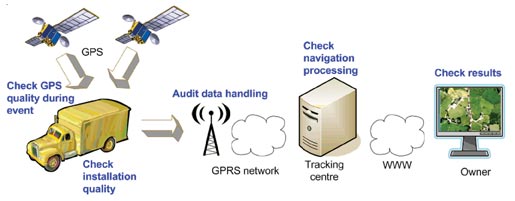
    In the overall proposal, the joint venture envisions updating the TIGER database to permit automated analysis of carrier routes and the production of carrier route maps for use by the USPS.  In the pilot study, the effort to improve and maintain the positional accuracy and completeness of the TIGER database involved the use of Global Positioning System (GPS) technology with receivers mounted on USPS-supplied vehicles.  In order to improve and update the geocoding capability of the TIGER system, the pilot study also updated the address ranges in the TIGER database and added ZIP+4 Codes and other USPS information.  The joint venture envisioned would extend similar geocoding improvements to all parts of the United States with city-style address systems.  The Census Bureau would provide the USPS with its technical and geographic expertise.

    Potential impediments.  Although this data-sharing scenario appears to satisfy the needs of both agencies, there are a number of organizational, behavioral, and institutional impediments that will need to be overcome.  Some of these impediments are specific to these two agencies while other are generic to any data-sharing milieu.  One specific impediment is that the USPS is not part of the FGDC.  The USPS also is a quasi-federal agency, which means that it must justify its participation in an agreement on a benefit/cost basis including expected revenue or savings from potential products.  There also are questions about what information will be shared and what will be the property of each organization.

    A more general institutional impediment is the difficult of building a single database to serve the needs of different agencies.  Federal agencies have worked independently of each other for a long period of time collecting and structuring their data according to geographic units based on their own unique criteria and naming conventions.  Data sharing presupposes a strong, long-term, funded commitment to reconcile what really constitutes different versions of the same reality.  In order to reach agreement, a shared database initially may involve compromises that could make it less effective than two separate databases.  Each agency has its own self-interest and mission that must be met first.  Short-term objectives may become more pronounced and inhibit progress.  The need to understand each other’s terminology, organizational structure, and needs represents another potential impediment.

    Another important issue, not only for the Census Bureau but for all potential data partners, is the potentially differing perception of the benefits from data sharing.  One agency may believe that it is giving up more than the other agency and is bearing an unfair burden, causing a negative effect on data-sharing plans.  Some groups within each agency may either be opposed to or less than committed to the idea of data sharing.  While this issue was always in the background during the joint Census Bureau/USGS Cooperative Mapping Project, it never came to the forefront as a major issue.

    Another potentially critical impediment common to bureaucracies is the inertia effect; that is, it is easier to stick with the tried and reasonably true methods than to try something new.  Change can be intimidating and can upset a delicate balance of power in an organization.

    OTHER ONGOING DATA-SHARING ACTIVITIES

    In a broad sense, the Census Bureau traditionally has been in the business of sharing geographic data and has a long history of partnerships with state and local governments.  The Census Bureau receives updated governmental unit boundaries from local officials on a periodic basis through its Boundary and Annexation Survey.  The Census Bureau also works with local Census Statistical Area Committees, composed of representatives of the public, private, and academic communities, in delineating the boundaries of census statistical areas such as census tracts, block groups, and census-designated places.

    The Census Bureau also has worked closely with state election officials to provide the information they need for redistricting and reapportionment; with the U.S. Department of Education to incorporate the boundaries of school districts as a means to produce data for school districts; and with metropolitan planning organizations to improve the quality of the Census Bureau’s address reference files, which improves the quality of the usefulness of the census journey-to-work and place-of-work data, and to define traffic analysis zones in terms of census blocks to facilitate the tabulation of decennial census data for those areas.  The Census Bureau has built its massive geographic database primarily from source materials acquired from state and local agencies.  In a new program based on 1990 census data, data users may independently aggregate census blocks to define their own statistical areas and receive maps and data profiles of these user-defined areas from the Census Bureau on a cost-reimbursable basis.

    In addition, the Census Bureau maintains and is constantly improving its huge, ongoing institutional data-sharing apparatus.  Each of the Census Bureau’s twelve regional offices supports information services and geographic programs that coordinate activities with state data centers and their affiliates throughout the United States.  The Census Bureau’s Data User Services Division combines educational functions (e.g., ongoing workshops on TIGER, census maps, and data products) with its data distribution functions.  The Census Bureau participates in the kindergarten through twelfth grade (K-12) geographic literacy campaign in the United States a means to address the important issues of access to new information technologies.  Public access issues (Emergency Planning and Community Right-to-Know Act 1986) also have provided the impetus for an ongoing cooperative project with the EPA and the National Oceanic and Atmospheric Administration (NOAA) that supports the development of public domain software that links and displays environmental, socioeconomic, and demographic data using an extract of the TIGER database.

    From a more global perspective, the Census Bureau shares its technological and statistical know-how with a number of participating countries through its in-house and overseas training programs.  The Census Bureau also is cooperating with Statistics Canada (Haythornthwaite 1992) and pursuing talks with Mexico’s statistical agency, Instituto Nacional de Estadistica, Geografia e Informatica, to create a North American Common Borders Database.  In summary, the Census Bureau maintains a huge ongoing apparatus that supports and complements its current efforts at spatial data interchange.

    CONCLUSIONS

    As the Census Bureau prepares for the 2000 census, change, once again, appears imminent.  According to a recent GAO report (1992,4), “the current approach to taking the census appears to have exhausted its potential for counting the population cost-effectively.”  Similar statements were made in reference to the Census Bureau’s geographic support program following the 1980 census (Tomasi 1990).  These statements have recurred with periodic frequency in the recent history of census-taking.  In large part, the innovations that followed were a response to intense public scrutiny, a result of a process that has significant and far-reaching political (reapportionment and redistricting) and economic (distribution of government funds) consequences.  Over the past fifty years, the Census Bureau has met not only the challenges brought about by massive social, demographic, and economic change, but has provided effective leadership in applying and diffusing a number of new technologies to both the governmental and non-governmental sectors.

    The application and use of new technologies on a vast scale by public organizations are reshaping the internal organization and relationships within the public sector as well as among the public and private sectors and the academic and research communities.  The dominant values of narrow, functionally separate governmental agencies and departments are increasingly being replaced by a system of greater complexity and interrelatedness and a growing trend toward public and private sector cooperation.  The Census Bureau’s TIGER system is an important example of this phenomenon and may be a primary motivator for such changes.

    The Census Bureau’s geographic and statistical products – inexpensive and ubiquitous spatial and attribute raw material – have helped transform GIS from a highly technical field dominated by large agencies, private firms, and universities, to one that is becoming increasingly accessible to many data users.  Advances in our technological infrastructure thus far have been the primary factor enabling institutions to develop and share digital geographic data.  Personal computers, workstations, CD-ROMS, and databases available for automation were relatively nonexistent until the 1980s.  The incipient use of new telecommunication technologies, such as the Internet, may have an equally profound effect on data sharing and online services in the latter part of this decade.

    As computer hardware and software continue to become less expensive and more powerful, the vast potential of GIS will depend increasingly on the behavioral, organization, and institutional issues acting as impediments and incentives to the sharing of geographic data.  The integration of various multi-media technologies and the growing capability to link a wide variety of public and private databases also raise a number of privacy issues.  Deriving the full benefits of GIS and related information systems will depend, to a significant degree, on how society approaches and resolves these issues (Onsrud 1992).

    Based on past experience, it will require extraordinary leadership, communication and flexibility among agencies to facilitate the process of spatial data interchange.  Data sharing will be most successful when such ventures can be justified by short-term results, verified cost reductions, improved operations, and minimal problems of data ownership.  Data sharing will be enhanced to the degree that these ventures can be built around joint development projects such as the Census Bureau/USPS and the Census Bureau/USGS experiences in the 1990s.  Awareness of the need for such coordination is growing and is best reflected in the increasing number of statewide GIS committees and partnerships between the federal and state communities.

    Geographic databases have been built thus far to support the mandates of single institutions or parts of an institution.  All who collect and manage data for activities related to their own responsibilities will need to understand and appreciate the value of those data to others and to collect and structure their data accordingly.  In order to take full advantage of the opportunities offered to these new technologies, business, government, and academic will need to develop, support, and fund data exchange on a systematic and ongoing basis as well as promote accessibility of GIS capabilities to all sectors of our society.


    REFERENCES

    Anderson, M.J. 1988. The American census: a social history. New Haven: Yale University Press.

    Boudriault, G. 1987. Topology in the TIGER file. Eighth International Symposium on Computer-Assisted Cartography, Proceedings. Baltimore, Maryland, 258-263.

    Broome, F.R. and D.B. Meixler. 1990. The TIGER database structure. Cartography and Geographic Information Systems 17, 1:39-47.

    Carbaugh, L.W. and R.W. Marx. 1990. The TIGER system: a Census Bureau innovation serving data analysts. Government Information Quarterly 7, 3:285-306.

    Cooke, D. 1995. Sharing street centerline spatial databases. In H.J. Onsrud and G. Rushton, eds., Sharing Geographic Information. New Brunswick, NJ: Center for Urban Policy Research, Rutgers University.

    Corbett, J.P. 1979. Topological principles in cartography. Technical Paper 48. U.S. Bureau of Census, Washington, D.C.

    Davis, B.A., J.R. George, and R. W. Marx. 1992. TIGER/SDTS: standardizing an innovation. Cartography and Geographic Information Systems 19, 5:321-327.

    Emergency Planning and Community Right-To-Know Act: Title 3 of the Superfund Amendments and Reauthorization Act of 1986. PL 99-499, 17 October 1986. United States Statuates at Large 100. pp. 1728-1758.

    Federal Geographic Data Committee. 1992. Multi-agency initiative to meet high priority requirements for base cartographic data. FGDC Subcommittee of Base Cartographic Data. Washington, D.C.

    Government Accounting Office. 1991. Geographic Information Systems: information on federal use and coordination. IMTEC 91-72-FS. Washington, D.C.

    ________. 1992. Decennial Census: 1990 results show need for fundamental reform. GAO/GGD-92-94. Washington, D.C.

    Haythornwaite, T. 1992. Development of the United States-Canada Common Border Database. The Operational Geographer 10, 1:28-30.

    Kinnear, C. 1987. The TIGER Structure. Eighth International Symposium on Computer-Assisted Cartography, Proceedings. Baltimore, Maryland, 249-257.

    Marx, R.W. 1986. The TIGER System: automating the geographic structure of the United States census. Government Publications Review 13, 181-201.

    ________. 1992. Building the National Spatial Data Infrastructure: the data integrity challenge. Paper presented at the Regional Surveying Engineering Conference, Hartford, Connecticut.

    McKenzie, B.Y., and R.A. LaMacchia. 1987. The U.S. Geological Survey-U.S. Bureau of Census Cooperative Digital Mapping Project: a unique success story. Paper presented at American Congress on Surveying and Mapping meeting, Reno, Nevada. Fall.

    Murakami, E., and K. Greenleaf. 1992. Multi-agency TIGER file updating. URISA Proceedings 2:25-35.

    Office of Management and Budget. 1990. Coordination of surveying, mapping, and related spatial data activities. OMB Circular A-16 (Revised). Washington, D.C.

    _______. 1992. Management of federal information resources. OMB Circular A-130. Washington, D.C.

    Onsrud, H. 1992. Privacy and spatial databases. Technical Program Abstracts., 27th International Geographical Congress, Washington, D.C., 480-481.

    Rhind, D.W. 1991. Counting the people: the role of GIS. In D.J. Maguire, M.F. Goodchild, and D.W. Rhind, eds., Geographic information systems: principles and applications. Longman Scientific and Technical, Essex, 2:127-137.

    Silver, J. 1977. The GBF/DIME system: development, design and use. Paper presented at 1977 Joint Annual Meeting of the American Society of Photogrammetry and the American Congress on Surveying and Mapping. U.S. Government Printing Office, 1977-240-869/1102.

    Sobel, J. 1978. GBF/DIME system – development and reference source problems. Applied Geography Conference, SUNY – University Center at Binghamton, 1:112:121.

    _______. 1986. Principal components of the Census Bureau’s TIGER file. Research in contemporary and applied geography: a discussion series. SUNY at Binghamton, 10, 3:1-17.

    Tomasi, S.G. 1990. Why the nation needs a TIGER system. Cartography and Geographic Information Systems 17, 1:21-26.

    Trainor, T.F. 1990. Fully automated cartography: a major transition at the Census Bureau. Cartography and Geographic Information Systems 17, 1:27-28.

    U.S. Bureau of Census. 1973. Census Use Study. International DIME Colloquium. Confernce Proceedings, Washington, D.C., August 27-29, 1972.

    White, M. 1984. Technical requirements and standards for a multipurpose geographic data system. The American Cartographer 11, 1:15-26.

  • TIGER Database Historical Perspective

    In my last two columns, I’ve made several references to geospatial data. Jon Sperling, Ph.D. GISP, wrote in and commented on the omission of the importance of TIGER data in the history of geospatial data development and commercialization. He made reference to a document he wrote that was published in 1995 regarding the development and maintenance of the TIGER database. I’ve decided to reprint his work, with his permission, as this week’s column. It gives keen insight into the early stages of TIGER. Albeit quite in-depth, it’s a fascinating read for gaining a historical perspective on geospatial data development.

    Keep in mind that this document was written in 1992 so there are references to initiatives, etc. that were subsequently developed and that you enjoy today.

    Sperling argues that our public investment in TIGER need not be just history but a pro-active means to leverage partnerships and new advances and innovations (e.g. synergistic links with national parcel data initiatives, local/state/federal data sharing and a national road network). Census still remains a pioneer in supporting and furthering geospatial science at all levels of our society for the betterment of our Nation’s communities.

    Dr. Sperling is currently a Senior Researcher of Geographic Information and Analysis at the Office of Policy, Development and Research for the U.S. Department of Housing and Urban Development. He has designed and led many innovative geospatial, addressing, and data integration efforts in coordination with local and state governments and the academic research community. Dr. Sperling was involved in the initial development of the Nation’s TIGER/Master Address File databases for the 1990 and 2000 Census, enabling digital spatial data sharing capabilities, and efforts to enhance its coordinate accuracy and data quality. Currently, he is working with university partners on a number of innovative research applications to enable sophisticated querying of unstructured text and tables using textual spatial references in the data.


    Jonathan Sperling, “Development and Maintenance of the TIGER Database: Experiences in Spatial Data Sharing at the U.S. Bureau of the Census,” in Harlan J. Onsrud and Gerard Rushton, eds., SHARING GEOGRAPHIC INFORMATION (New Brunswick, NJ: Center for Urban Policy Research). Copyright 1995 by Rutgers, The State University of New Jersey. Reprinted with permission.


    Development and Maintenance of the TIGER Database: Experiences in Spatial Data Sharing at the U.S. Bureau of the Census (1992)

    The U.S. Census Bureau has played, and will continue to play, a vital role in the development, maintenance, and sharing of spatial and attribute data for Geographic Information Systems (GISs) on the local, regional, national, and international levels. The Census Bureau’s development of shareable geographic data files, the GBF/DIME (Geographic Base File/Dual Independent Map Encoding) Files for the 1970 and 1980 censuses, and the TIGER (Topologically Integrated Geographic Encoding and Referencing) database for the 1990 census, have provided a major impetus to the rapid growth and diffusion of GIS technology. This chapter discusses the Census Bureau’s experiences in the spatial data sharing during these two file-building projects as well as from ongoing experiences in developing Memoranda of Understanding with federal and state agencies to update and improve the spatial and attribute data in TIGER. On the basis of these experiences, preliminary generalizations are made concerning the organizational issues that may facilitate or impede the future digital interchange of spatial data.

    Introduction

    The entrance and persistence of the nation’s lead statistical agency as a primary producer and user of both geographic and attribute data have grown out of practical but critical concerns (Tomasi 1990). The mandate to conduct a population and housing census of the entire nation and its territories every ten years, and then disseminate the resulting information  quickly and accurately, has led to the need to devise innovative ways of improving the collection, processing, and tabulation of data.  These improvements have aimed at four goals: increasing efficiency and timeliness, improving data quality, lowering costs, and providing new products for the data user.

    Over the past half century, the Census Bureau has pursued innovations and led the government and private sector in computerization, statistical sampling and interviewing techniques, data processing, quality control, and cartographic techniques, to name but a few (Anderson 1989).  The Census Bureau pioneered the first large-scale commercial user of the computer with UNIVAC 1 following the 1950 census and the development of the Film Optical Sensing Device for Input to Computers for the 1960 census.  The broad use of computer mapping by local governments and private firms was strongly influenced by the Census Bureau when it developed the GBF/DIME-Files for the 1970 and 1980 censuses and the TIGER System for the 1990 census.

    In addition to being one of the nation’s largest digital geographic databases — currently sixteen gigabytes — TIGER enables the automated spatial manipulation of census data for all legal and statistical entities in the United States and its territories.  Every state and local government now has the capability to create rudimentary GIS using small-area census data, publicly available extracts of the TIGER database – TIGER/Line  files – and the appropriate hardware and software.  More than 130 private vendors currently have the capability of processing TIGER/Line files, and the number is growing.

    In this respect, the development of the TIGER database may be the most important “data” file from the 1990 Census of Population and Housing.  The accessibility and widespread potential application of this innovation make it qualitatively different from earlier technological developments at the Census Bureau.  The TIGER database will be used not only internally to administer future censuses and surveys (see Marx 1986 for a basic rationale of the TIGER system) but externally to provide a major impetus to the development and sharing of integrated special information systems in the public and private sectors as well as the academic community.

    A common theme in the GIS literature, generated both within and outside the Census Bureau, has been the notion that although the Census Bureau developed its GBF/DIME-Files and TIGER database to meet internal Census Bureau needs, their existence has facilitated applications well beyond the scope of census-taking.  Perhaps analogous to the many commercial spin-offs that have been generated from wartime military innovations or the nation’s space program, the decennial census operation, conducted by the government’s largest non-military assemblage of people and resources, has been responsible for a number of innovations, some already outlined, that have had a major effect on the private sector and the academic research community.

    The Census Bureau’s recognition of these “consumer spin-offs” traditionally has never been well articulated or coordinated because most innovations have resulted from an internal production standpoint rather than a customer-oriented design.  Recent efforts toward building a national spatial data infrastructure and the Census Bureau’s adoption of the principles of Total Quality Management and Strategic Planning create the external and internal incentives, respectively, to stimulate a change in that design.  Paradoxically, however, the fiscal constraints of the 1990s and their impact on congressional funding, while often considered an incentive for data sharing, may also function as an impediment in the early developmental stages of new technologies.

    THE DEVELOPMENT OF SHAREABLE GEOGRAPHIC DATA FILES – GBF/DIME-File Development 1966-1982

    Many local agencies have been introduced to GIS by the Census Bureau through is various geographic base-building projects over the past twenty-five years.  The development of the Address Coding Guides (ACG) for the 1970 census and the GBF/DIME-Files for the final stages of the 1970 census and for large-scale use in the 1980 census were major steps toward full automation of the Census Bureau’s geographic support programs.  Althought the ACGs provided the building blocks for the later development of the GBF/DIME-Files, they lacked geographic coordinates and topological structure (Marx 1986).

    The design and development of these computer-readable files involved the active participation of federal, state, local, private and academic organizations.  The Census Use Study, a small-area data research group sponsored by the Census Bureau from 1966 to 1969, was instrumental in creating and diffusing knowledge about a system that represented map features numerically for processing by a computer to create a geographic base file (U.S. Bureau of the Census 1973).  The enhancement of this body of knowledge was of critical importance to the Census Bureau because it enabled the adoption of census-by-mail enumeration methodologies for the major urban centers of the United States.

    The change in enumeration procedures was a response to the increasing costs and difficulty of conducting a traditional door-to-door canvassing of the population, a growing and increasingly urban population living within areas having mail delivery by house-number/street-name address, and technical feasibility of linking such addresses with the geographic units used for data tabulations due to improvements in computer capabilities.  For the 1980 census, the GBF/DIME-Files were enhanced to cover 287 of the nation’s largest urban centers, representing more than 60 percent of the population but less than 2 percent of the nation’s land area (Carbaugh and Marx 1990).

    Data sharing during the 1970s.  The development of the ACGs and GBF/DIME-Files involved data sharing with more than 300 local planning agencies.  Sharing primarily took the form of converting analog data into a computer-readable format rather than digital exchange per se.  The long-term nature of these relationships provided the Census Bureau with intimate knowledge of the resources available to local agencies, the limitations of available data, and the willingess and ability of agencies to share data.  At the same time, local planning agencies and others, through their association with the Census Bureau, became increasingly aware of the potential computer mapping, automated address matching, and spatial data analysis to meet local needs (Sobel 1978).  These relationships played an important role in the later development of the TIGER system.

    Monetary and other incentives to the local agencies played a major role in the “data sharing” development of the ACGs and GBF/DIME-Files (Silver 1977).  In many cases, local agencies completed work under contract with the Census Bureau or with funding provided by the Department of Housing and Urban Development (HUD), and Federal Highway Administration (FHWA), and other federal, state, and local planning sources.  Sensitive to the fact that the development of the GBF/DIME-Files provided a practical solution to many needs of local governments, the Census Bureau offered to provide the computer programs, processing methodology, and clerical procedures for creating  and updating the file, as well as a free copy of the completed file, to each participating local agency.  The Census Bureau also offered to do the data keying and processing if agency resources were limited.  The promise of higher quality data when these files were used for taking and tabulating the 1970 and 1980 census provided a further incentive for data sharing.

    As a result of this process, the Census Bureau and local officials learned that the quality and currency of existing data used by planning agencies could not be taken for granted.  For example, many local communities relied on the knowledge of a few people for the location of dwellings, address-numbering systems often were not systematic, tax assessor sources sometimes did not meet the bureau’s quality standards, and data from different agencies often were inconsistent.  Because of these situations, the initial transition to address assignment via automated processes was difficult.

    The efforts of working with so many local agencies also challenged the Census Bureau.  During the file-building projects, there was turnover in project personnel and key decision makers in the local agencies as well as at the Census Bureau.  Some “champions” of the new methods were not reelected or moved on to other jobs.  The long-term benefits of building such files were not always apparent to public administrators.  Some administrators viewed the new computer technology as a threat to their role in the agency.  Also, during the 1970s, there was a general lack of understanding (personal computers had not yet been invented) and/or trust in the new computer technology and the ever-present fear of “big brother” mainframe computers held by a few large government agencies.  All these factors tended to hamper development activities and to result in considerable variation in the quality, time expended, and funds necessary to complete the GBF/DIME-Files.

    Data sharing during the 1980s.  Census Bureau funding of data collection and coding by local agencies to create the GBF/DIME-Files created precedents that would later affect the pre-1990 TIGER-building efforts.  The overall reductions in federal aid to cities and states during the 1980s provided an atmosphere of “less than cooperative initial attitudes” among many local agencies struggling with small staffs and fewer resources than they had in the 1970s.  Many agencies expected to be paid for their efforts.  These situations, and the perceived difficulties inherent in working with several hundred local agencies, contributed to the Census Bureau’s decision to do most of the map and address updates for the 1990 census in-house, albeit often based on materials supplied by local agencies.

    Changes in the original GBF/DIME-File format by local agencies exacerbated some early data-sharing efforts.  Many of the larger files that had been maintained by local agencies (e.g., New York City) had been adapted and enhanced to meet local planning and administrative needs.  Fiscal difficulties at the local level, time constraints on the Census Bureau, and the lack of additional programming staff in all agencies often precluded efforts to recreate the original file structure without losing the map and address updates.  In these cases, the feature and address range update work had to be redone manually by the Census Bureau from digital plots and databases.

    One of the general weaknesses of the GBF/DIME-Files was that they were limited geographically and, therefore, the ability to use the files on an ongoing basis was limited to large-scale users with on-line access to mainframe computers.  Relatively few of the original GBF/DIME-Files given to local governments were updated and maintained during the 1980’s. Even fewer of the locally updated files met Census Bureau standards for direct incorporation into the TIGER database. In practice, however, these updated GBF/DIME-Files provided the Census Bureau with its first challenge in the digital spatial data exchange at the local level.

    Digitized GBF/DIME-Files, attribute-rich but of mediocre
    coordinate accuracy, formed the cartographic base for 345 urban centers in the 1990 TIGER database. Absolute coordinate accuracy was not a primary concern in the development of the GBF/DIME-Files, as they were used primarily by the Census Bureau for geocoding rather than mapping purposes. Although their coordinate accuracy was well below that of the U.S. Geological Survey’s (USGS’s) Digital Line Graph (DLG) files derived from their 1:100,000-scale maps, these files represented features with all their respective feature names, address ranges, and 1980 geographic area codes in their correct relative location – sufficiently accurate for taking a census (Sobel 1986).

    Although the Census Bureau would have liked to provide an enhanced cartographic quality, the deadline pressures of an upcoming decennial census forced management to abandon initial plans to align this information to the USGS’s DLG files. Also, because of staff and time constraints, the files were sent to four private-sector contractors for digitizing of feature updates using Census Bureau-supplied updated 1980 census maps. The results from these arrangements were of mixed quality.

    TIGER Database Development, 1983-1990

    The institutional knowledge and experience gained from the development of the GBF/DIME-Files, further theoretical and conceptual advances in the field of mathematics (Corbett 1979 and White 1984), and the “enabling” availability of new and affordable technology, provided fertile ground for the Census Bureau’s next challenge: the development of the TIGER database for use in the 1990 census. Whereas the GBF/DIME-Files covered small noncontiguous portions of the United States and were developed initially without spatial or geographic references in their design, the TIGER database covered the entire nation and its territories and was grounded in a more rigorous conceptual model of topology and space (see Boundriault 1987; Kinnear 1987; Broome and Meixler 1990).

    Census Bureau/USGS cooperative agreement. In addition to data-sharing arrangements on the local level, the ability to complete the building of the TIGER database in time for the 1990 census was directly dependent on a landmark 1983 data-sharing agreement with the USGS. The USGS provided the Census Bureau with computer files of scanned versions of its 1:100,000-scale maps for the lower forty-eight states. In return, the Census Bureau assigned cartographic classification codes to the roads in these files. The resultant product formed the cartographic base for all areas outside the large urban centers covered by the GBF/DIME-Files, thereby enabling the Census Bureau to complete a coast-to-coast digital map base in time for the 1990 census (McKenzie and LaMacchia 1987).

    Interagency cooperation with the USGS was an experience that provided valuable lessons to the Census Bureau in particular, and a model for future cooperation between federal agencies in general. Following a successful Florida pilot project, high-level management in both agencies perceived that cooperation would result in a win-win situation. Each agency would be able to accelerate its individual map production programs and, in the process, they could develop the first “large-scale” digital map file of the United States. Early negotiations ensured that neither agency would feel it was bearing an unfair burden. A schedule of meetings on a regular basis ensured communications during all phases of the cooperative agreement. The challenge of meeting the Census Bureau’s decennial deadlines provided an added measure of incentive to “get the job done” and an ongoing requirement to measure progress.

    The U.S. Census Bureau/USGS cooperative agreement minimized duplication of effort in federal map automation activities and provided immediate short-term benefits to both agencies. The success of this cooperative venture demonstrated to the Department of Commerce, the Federal Office of Management and Budget (OMB), and the Congress that there were significant benefits to be derived from such activities. The success of this cooperative effort also resonated in the later development of the Federal Geographic Data Committee (FGDC) (OMB 1990), the growing impetus for further cooperative efforts in spatial data sharing, and the increasingly articulated vision of a national spatial data infrastructure (Marx 1992).

    Other success factors. The success of the TIGER System and the ability of the Census Bureau to overcome organizational inertia both within and outside the Census Bureau were due to a number of factors. There was a shared sense both within the Census Bureau and by the data-user public that change was needed in the geographic support process. A primary incentive for developing the TIGER database was the large number of inconsistencies between the statistical and geographic data products in the 1980 and earlier censuses, a product of the complex and clerically intensive preparation of maps, ACGs and GBF/DIME-Files, and geographic reference files (Marx 1986).

    The enormous political and economic ramifications of the decennial census made everyone a stakeholder in the process. The growing importance of the information sector of the economy and growing public demands for more accurate, cost-efficient, timely, and accessible data products helped to promote an environment receptive to the exchange of data, expertise, and experience with other governmental agencies at all levels, the private sector, and the academic community.

    Bureaucratic inertia was further overcome by staff commitment, expertise, and initiative with the Census Bureau’s Geography Division. The transition from traditional to automated mapping for the 1990 census required changes in the organization and planning of the Census Bureau’s mapping activities as well as in the requirements of staff in developing and incorporating new cartographic techniques and computer skills. Motivated by a decennial environment of schedules and fixed deadlines with no alternative to full automation for product delivery and a cooperative agreement with the USGS, the Census Bureau’s staff produced significant results in a relatively short time (Trainor 1990). The resources and skills gained from this experience, combined with a history of successful technical innovations at the Census Bureau, promoted a willingness to reach out and explore the potential for digital data sharing.

    Some criticisms. Countering these positive aspects are criticisms of the TIGER database, such as the relative poor coordinate accuracy of the roads in the major urban centers (the roads that came from the GBF/DIME-files used in lieu of USGS DLG file), lack of address range and ZIP Code improvements or expansion beyond the 345 GBF/DIME-File areas, and inconsistencies in the names and classifications of streets. Public complaints about the quality of the data in the TIGER database provided the Census Bureau and its parent agency, the Department of Commerce, with further verification of the wide applicability and importance of this database beyond the internal needs of the Census Bureau.

    Although valid, most of these situations were not critical for the taking of the 1990 census, the primary mission of the Census Bureau. In fact, many private consulting firms have taken advantage of these “problems” to repackage “new and improved” versions of the bureau’s publicly available extracts from the TIGER database: the TIGER/Line files. The Census Bureau is correcting many of these situations and will release future TIGER extract products with these updates and corrections.

    In general, the TIGER database continues the GBD/DIME-File tradition of being attribute-rich and current but with limited coordinate accuracy in the major urban centers. The USGS’s DLG files, on the other hand, have high “ground truth” accuracy for the features they show but have few attributes (DLG-Enhanced Files, once released, will improve on the latter). In addition, the DLG Files do not contain current information and the USGS has not been provided with the financial resources need to perform frequent, nationwide, and systematic updates. As stated previously, alternative methodologies for updating the files are being evaluated, including an initiative to accelerate the collection of base cartographic data using graphic or digital orthophoto quadrangles or aerial photography (FGDC 1992).

    ENHANCING THE TIGER DATABASE

    Since the completion of the TIGER database for the 1990 census, the Census Bureau has become increasingly aware of its vast potential as well as its current weaknesses. If viewed as a process rather than a product, the TIGER database provides an opportunity to improve statistical accuracy and data quality significantly. The updated address and geographic information systems in a growing number of public and private agencies and the databases of the U.S Postal Service (USPS) provide important means of enhancing the collection, processing, and tabulation of census data.

    The planned release of a new TIGER/Line extract by the Census Bureau containing extended address ranges and ZIP Codes for all areas with city-style mail delivery is significant, not only for the inherent value of the added data (there will be an increase in address range coverage from approximately 55 percent to 85 percent of all housing units in the United States), but because it represents new capabilities that never existed before. For the first time, the Census Bureau will be releasing value-added files for data users after the census that are not directly tied to the decennial statistical data products (however, they will be used for geocoding establishments in the intervening economic census). This precedent also is important in that it reflects a subtle change in the traditional once-a-decade data dissemination paradigm and opens new possibilities for future digital data exchanges. Perhaps, it also is indicative of the more customer-oriented approach mentioned earlier in this chapter.

    Because the Census Bureau was not intended to be the nation’s preeminent mapping agency, any data-sharing agreements to improve the TIGER database must be perceived by the overall organization as primarily benefitting the census-taking process. At this stage of planning for the 1992 and 1997 economic censuses and the 2000 decennial census, the Census Bureau has made an organizational commitment to the integration of the Census Bureau’s related Address Control File with the intercensal update and improvement of the TIGER database. This commitment, however, is dependent on the availability of resources.

    In the absence of a national updated map system, the U.S. Census Bureau has pursued a relatively high-cost mapping compilation strategy for the 1990 and previous censuses (Rhind 1991). Labor-intensive comparisons of reference sources, often of varying scale and quality, have been the primary means for updating census maps. In this respect, the Census Bureau has pursued and maintained close contacts and relationships with other federal agencies, state, regional, and local planning and transportation agencies, engineering firms, aerial survey companies, tax departments, utility firms, and a host of other public and private firms with current map and address reference source materials.

    The development of the TIGER System and other digital spatial and attribute databases, coupled with the proliferation of more powerful computer hardware and GIS software, allows data exchange to occur in a more sophisticated, more timely, and potentially more accurate and less costly manner. From a technical perspective, there appear to be few limits to the advance of this new mode of digital data exchange. According to Cooke (1995), the technical problems of data sharing have mostly been, or are in the process of being, solved. The non-technical components of data interchange may prove more daunting.

    Current Data-Sharing Plans

    Current data-sharing plans at the Census Bureau are twofold. On the one hand, the Census Bureau is investigating the possibility of national sources, predominantly federal agencies, that could provide the information to keep the feature and address-range information in the TIGER database up to date. Based on a report by the Government Accounting Office (GAO 1991), which stated that federal agencies increased their planned expenditures on GIS by about 60 percent between fiscal years 1990 and 1992, the likelihood of such exchanges is promising.

    At the national level, the Census Bureau has entered into or proposed data-sharing agreements with several large governmental or quasi-governmental agencies including the USGS, USPS, the Environmental Protection Agency (EPA), the Soil Conservation Service, the Federal Railroad Administration, the U.S. Army Corps. of Engineers, and the Federal Emergency Management Agency (FEMA). These efforts to improve the spatial and attribute data in the TIGER database are ongoing and likely will include several other agencies by mid-decade. As the coordination of GIS activities improves in the federal sector, bilateral agreements between agencies to improve the TIGER database will likely evolve into multi-agency agreements, as has already occurred at the state and local levels (see Murakami and Greenleaf 1992).

    The Census Bureau also is investigating possible mechanisms for the electronic interchange of updated geographic information with state, local, private, and academic organizations. The current preference of the Census Bureau is to coordinate these efforts and control quality at the state level rather than having to deal with conflicting data and different file formats from several thousand local governments, private agencies, universities, and other sources. Experience indicates, however, that this will not always be possible.

    Role of the FGDC in Data Sharing

    Increased GIS use by federal agencies as well as state and local agencies has led to renewed efforts to coordinate development, sharing, and dissemination of spatial data, primarily through the Federal Geographic Data Committee (FGDC). The FGDC, formed in late 1990 at the direction of the OMB in its Circular A-16 (OMB 1990), includes representatives of fourteen departments and independent agencies but has no direct authority, responsibility, or resources. Participation is voluntary, with decisions based on consensual agreement among its members. Given the current limits on availability of fiscal resources, several agencies have agreed to pursue cooperation in accelerating the 1:12,000-scale digital orthophoto program and the 1:24,000-scale digital quadrangle program. The Census Bureau is working on individual Memoranda of Understanding (MOU) with other federal agencies in the spirit of the FGDC and has agreed to cooperate with the USGS in devising a still more powerful data structure.

    In the long run, the FGDC may provide the vehicle necessary to transform institutional relationships within the federal government as well as with state and local governments, the private sector, and the academic community. The FGDC is making an increased effort to involve the non-federal community in its coordination work. Although the goals are lofty and the potential long-term benefits extraordinary, effective leadership at the highest levels and a concomitant commitment to the development of compatible standards will be necessary. In the absence of these developments, only significant short-term and real cost-saving benefits gained from data sharing by particular agencies will move the process forward toward a national digital spatial database.

    Significantly, in July 1992 the Census Bureau and the USGS signed an amendment to the original 1981 Memorandum of Understanding that commits both agencies to merging the current DLG and TIGER databases, including information resulting from partnerships with other agencies. The development of a shared database that combines the essential geographic information needed by both agencies to carry out their respective institutional mandates will have a profound effect in further stimulating the development of a national spatial data infrastructure in the United States.

    Intercensal Data-Sharing Projects, Post-1990

    Current data-sharing experiences at the Census Bureau have been exploratory, and the actual mechanisms and standards for digital data interchange are still in the process of being developed.  The Census Bureau is engaged in a number of activities to help promote digital data sharing during the 1990s.  These activities include conferences, participation in the FGDC initiative, MOUs with other federal, state, and local agencies, pilot projects, and the planning and imminent release of the prototype version of the TIGER/SDTS (Spatial Data Transfer Standard) file.

    Based on these forums and activities, the Census Bureau has begun to receive initial feedback on the non-technical impediments to and incentives for digital spatial data interchange.  The Census Bureau has provided its digital geographic and statistical data sets to the public at the cost of dissemination and as a public resource (OMB 1992).  Other public and private agencies, however, have different perspectives and regulations pertaining to their own data sets and on the updates they may perform.  Profit is a major concern of private companies, and public agencies also are looking to their products as a source of revenue.

    States and local agencies consistently have reported one or more of the following problems in trying to coordinate a GIS:

    •    Agencies wanting proprietary control of internal data

    •    Lack of resources in one department or institution affecting data requirements of another

    •    Archaic systems

    •    Managers and commissioner-level officials who know, or care, little about GIS

    •    Staff turnover

    •    Lack of commitment

    Once a state or local GIS is operational, the lack of overt incentives to expend the additional time and expense required to feed local updates into the TIGER/Line or SDTS formats for interchange become more apparent.  Ensuring the currency, accuracy, and quality of the TIGER database is an integral part of ensuring the accuracy and quality of the associated census data, which are used for reapportionment, redistricting, the distribution of federal funds, and innumerable planning and development programs – but this may be a long-term and nebulous consideration for some agencies.  The lack of a clearly defined formal process for data interchange by the Census Bureau could provide an even greater impediment to institutions willing to share data.

    The existence of multiple geographic data file formats also have inhibited the interchange of data.  Future geographic data files at the Census Bureau will be released in accordance with a recent Federal Information Processing Standard (FIPS) – the SDTS.  Adoption of the SDTS involved cooperation of federal, state, and local officials, the academy community, and private sector over an extended period of time.  The Census Bureau was an active participant in the development of this new federal standard for data exchange and, to that end, released its first prototype TIGER/SDTS file (Davis et al. 1992).  However, the effect of this rather complex format on data interchange is not yet clear.

    Each data-sharing agreement brings forth new possibilities, new arrangements between agencies, and the potential for new products.  Working with a variety of agencies and soliciting recommendations for improving TIGER, Census Bureau staff have noted similarities among the interests of many agencies.  For instance, conversations with the USPS and the U.S. Department of Transportation have revealed similar interests in enhancing attributes for streets (e.g., turn and directional restrictions).  In many cases, the Census Bureau would be able to use the enhancements needed by other agencies for improving the quality and cost-effectiveness of its own internal operations (e.g., routing of enumerators).

    Proposed Census/USPS cooperative program.  The USPS and the Census Bureau have been working together for more than thirty years in the delivery and return of questionnaires for the decennial, agriculture, and the economic censuses and surveys.  The increasing use of mail-out/mail-back procedures throughout the nation has made the USPS an indispensable partner in the Census Bureau’s data-collection activities.  The Census Bureau traditionally has paid the USPS to verify the completeness and accuracy of its decennial census address list, which was purchased from private vendors and enhanced through in-house programs, prior to the mailout of questionnaires.  The Census Bureau also worked with the USPS on the development of computer algorithms to match the ZIP+4 files to GBF/DIME-File records during the 1980s.  ZIP+4 files, also known as the Address Management System (AMS) Files, contain potential address ranges for all areas where the USPS delivers mail.

    In an effort to enhance this cooperation to the benefit of both agencies, the Census Bureau proposed a formal Memorandum of Understanding (MOU) with the USPS similar to the one it had with USGS in the 1980s. In 1990, the Census Bureau and the USPS, with the participation of the USGS, began cooperating on a pilot project to provide a better geographic database for all three agencies.  If signed, this MOU will have broad implications, not only for these three agencies, but for the GIS community as a whole during the 1990s.

    The Census Bureau’s proposal envisions a four-year file update/enhancement plan (fiscal years 1994-1997) and subsequent ongoing cooperative efforts to update a Post/TIGER database.  As with the earlier USGS agreement, the USPS/Census Bureau MOU would formalize a seemingly well-suited alliance between two agencies.  Cooperative database-building activities could reduce duplication of efforts, thereby reducing overall costs, as well as improve the geographic and attribute accuracy of the information available to each agency.

    The Census Bureau’s objectives for the proposed joint program during the intercensal years are (1) to obtain updated information on the location of streets with their names, address ranges, and ZIP codes as well as the location of group quarters, office building or other locations of economic activity, and (2) to improve the error-prone decennial census address lists development operations.  According to a recent GAO report (1992), enumerator follow-up to vacant and nonexistent units alone resulted in an added expenditure of approximately $317 million to the 1990 census operation.   Accomplishing the above objectives will enable the Census Bureau to reduce its critical dependence on a large, temporary clerical workforce before and during each decennial census, thereby reducing costs, and to improve the overall quality and consistency of decennial census data products.

    In the overall proposal, the joint venture envisions updating the TIGER database to permit automated analysis of carrier routes and the production of carrier route maps for use by the USPS.  In the pilot study, the effort to improve and maintain the positional accuracy and completeness of the TIGER database involved the use of Global Positioning System (GPS) technology with receivers mounted on USPS-supplied vehicles.  In order to improve and update the geocoding capability of the TIGER system, the pilot study also updated the address ranges in the TIGER database and added ZIP+4 Codes and other USPS information.  The joint venture envisioned would extend similar geocoding improvements to all parts of the United States with city-style address systems.  The Census Bureau would provide the USPS with its technical and geographic expertise.

    Potential impediments.  Although this data-sharing scenario appears to satisfy the needs of both agencies, there are a number of organizational, behavioral, and institutional impediments that will need to be overcome.  Some of these impediments are specific to these two agencies while other are generic to any data-sharing milieu.  One specific impediment is that the USPS is not part of the FGDC.  The USPS also is a quasi-federal agency, which means that it must justify its participation in an agreement on a benefit/cost basis including expected revenue or savings from potential products.  There also are questions about what information will be shared and what will be the property of each organization.

    A more general institutional impediment is the difficult of building a single database to serve the needs of different agencies.  Federal agencies have worked independently of each other for a long period of time collecting and structuring their data according to geographic units based on their own unique criteria and naming conventions.  Data sharing presupposes a strong, long-term, funded commitment to reconcile what really constitutes different versions of the same reality.  In order to reach agreement, a shared database initially may involve compromises that could make it less effective than two separate databases.  Each agency has its own self-interest and mission that must be met first.  Short-term objectives may become more pronounced and inhibit progress.  The need to understand each other’s terminology, organizational structure, and needs represents another potential impediment.

    Another important issue, not only for the Census Bureau but for all potential data partners, is the potentially differing perception of the benefits from data sharing.  One agency may believe that it is giving up more than the other agency and is bearing an unfair burden, causing a negative effect on data-sharing plans.  Some groups within each agency may either be opposed to or less than committed to the idea of data sharing.  While this issue was always in the background during the joint Census Bureau/USGS Cooperative Mapping Project, it never came to the forefront as a major issue.

    Another potentially critical impediment common to bureaucracies is the inertia effect; that is, it is easier to stick with the tried and reasonably true methods than to try something new.  Change can be intimidating and can upset a delicate balance of power in an organization.

    OTHER ONGOING DATA-SHARING ACTIVITIES

    In a broad sense, the Census Bureau traditionally has been in the business of sharing geographic data and has a long history of partnerships with state and local governments.  The Census Bureau receives updated governmental unit boundaries from local officials on a periodic basis through its Boundary and Annexation Survey.  The Census Bureau also works with local Census Statistical Area Committees, composed of representatives of the public, private, and academic communities, in delineating the boundaries of census statistical areas such as census tracts, block groups, and census-designated places.

    The Census Bureau also has worked closely with state election officials to provide the information they need for redistricting and reapportionment; with the U.S. Department of Education to incorporate the boundaries of school districts as a means to produce data for school districts; and with metropolitan planning organizations to improve the quality of the Census Bureau’s address reference files, which improves the quality of the usefulness of the census journey-to-work and place-of-work data, and to define traffic analysis zones in terms of census blocks to facilitate the tabulation of decennial census data for those areas.  The Census Bureau has built its massive geographic database primarily from source materials acquired from state and local agencies.  In a new program based on 1990 census data, data users may independently aggregate census blocks to define their own statistical areas and receive maps and data profiles of these user-defined areas from the Census Bureau on a cost-reimbursable basis.

    In addition, the Census Bureau maintains and is constantly improving its huge, ongoing institutional data-sharing apparatus.  Each of the Census Bureau’s twelve regional offices supports information services and geographic programs that coordinate activities with state data centers and their affiliates throughout the United States.  The Census Bureau’s Data User Services Division combines educational functions (e.g., ongoing workshops on TIGER, census maps, and data products) with its data distribution functions.  The Census Bureau participates in the kindergarten through twelfth grade (K-12) geographic literacy campaign in the United States a means to address the important issues of access to new information technologies.  Public access issues (Emergency Planning and Community Right-to-Know Act 1986) also have provided the impetus for an ongoing cooperative project with the EPA and the National Oceanic and Atmospheric Administration (NOAA) that supports the development of public domain software that links and displays environmental, socioeconomic, and demographic data using an extract of the TIGER database.

    From a more global perspective, the Census Bureau shares its technological and statistical know-how with a number of participating countries through its in-house and overseas training programs.  The Census Bureau also is cooperating with Statistics Canada (Haythornthwaite 1992) and pursuing talks with Mexico’s statistical agency, Instituto Nacional de Estadistica, Geografia e Informatica, to create a North American Common Borders Database.  In summary, the Census Bureau maintains a huge ongoing apparatus that supports and complements its current efforts at spatial data interchange.

    CONCLUSIONS

    As the Census Bureau prepares for the 2000 census, change, once again, appears imminent.  According to a recent GAO report (1992,4), “the current approach to taking the census appears to have exhausted its potential for counting the population cost-effectively.”  Similar statements were made in reference to the Census Bureau’s geographic support program following the 1980 census (Tomasi 1990).  These statements have recurred with periodic frequency in the recent history of census-taking.  In large part, the innovations that followed were a response to intense public scrutiny, a result of a process that has significant and far-reaching political (reapportionment and redistricting) and economic (distribution of government funds) consequences.  Over the past fifty years, the Census Bureau has met not only the challenges brought about by massive social, demographic, and economic change, but has provided effective leadership in applying and diffusing a number of new technologies to both the governmental and non-governmental sectors.

    The application and use of new technologies on a vast scale by public organizations are reshaping the internal organization and relationships within the public sector as well as among the public and private sectors and the academic and research communities.  The dominant values of narrow, functionally separate governmental agencies and departments are increasingly being replaced by a system of greater complexity and interrelatedness and a growing trend toward public and private sector cooperation.  The Census Bureau’s TIGER system is an important example of this phenomenon and may be a primary motivator for such changes.

    The Census Bureau’s geographic and statistical products – inexpensive and ubiquitous spatial and attribute raw material – have helped transform GIS from a highly technical field dominated by large agencies, private firms, and universities, to one that is becoming increasingly accessible to many data users.  Advances in our technological infrastructure thus far have been the primary factor enabling institutions to develop and share digital geographic data.  Personal computers, workstations, CD-ROMS, and databases available for automation were relatively nonexistent until the 1980s.  The incipient use of new telecommunication technologies, such as the Internet, may have an equally profound effect on data sharing and online services in the latter part of this decade.

    As computer hardware and software continue to become less expensive and more powerful, the vast potential of GIS will depend increasingly on the behavioral, organization, and institutional issues acting as impediments and incentives to the sharing of geographic data.  The integration of various multi-media technologies and the growing capability to link a wide variety of public and private databases also raise a number of privacy issues.  Deriving the full benefits of GIS and related information systems will depend, to a significant degree, on how society approaches and resolves these issues (Onsrud 1992).

    Based on past experience, it will require extraordinary leadership, communication and flexibility among agencies to facilitate the process of spatial data interchange.  Data sharing will be most successful when such ventures can be justified by short-term results, verified cost reductions, improved operations, and minimal problems of data ownership.  Data sharing will be enhanced to the degree that these ventures can be built around joint development projects such as the Census Bureau/USPS and the Census Bureau/USGS experiences in the 1990s.  Awareness of the need for such coordination is growing and is best reflected in the increasing number of statewide GIS committees and partnerships between the federal and state communities.

    Geographic databases have been built thus far to support the mandates of single institutions or parts of an institution.  All who collect and manage data for activities related to their own responsibilities will need to understand and appreciate the value of those data to others and to collect and structure their data accordingly.  In order to take full advantage of the opportunities offered to these new technologies, business, government, and academic will need to develop, support, and fund data exchange on a systematic and ongoing basis as well as promote accessibility of GIS capabilities to all sectors of our society.


    REFERENCES

    Anderson, M.J. 1988. The American census: a social history. New Haven: Yale University Press.

    Boudriault, G. 1987. Topology in the TIGER file. Eighth International Symposium on Computer-Assisted Cartography, Proceedings. Baltimore, Maryland, 258-263.

    Broome, F.R. and D.B. Meixler. 1990. The TIGER database structure. Cartography and Geographic Information Systems 17, 1:39-47.

    Carbaugh, L.W. and R.W. Marx. 1990. The TIGER system: a Census Bureau innovation serving data analysts. Government Information Quarterly 7, 3:285-306.

    Cooke, D. 1995. Sharing street centerline spatial databases. In H.J. Onsrud and G. Rushton, eds., Sharing Geographic Information. New Brunswick, NJ: Center for Urban Policy Research, Rutgers University.

    Corbett, J.P. 1979. Topological principles in cartography. Technical Paper 48. U.S. Bureau of Census, Washington, D.C.

    Davis, B.A., J.R. George, and R. W. Marx. 1992. TIGER/SDTS: standardizing an innovation. Cartography and Geographic Information Systems 19, 5:321-327.

    Emergency Planning and Community Right-To-Know Act: Title 3 of the Superfund Amendments and Reauthorization Act of 1986. PL 99-499, 17 October 1986. United States Statuates at Large 100. pp. 1728-1758.

    Federal Geographic Data Committee. 1992. Multi-agency initiative to meet high priority requirements for base cartographic data. FGDC Subcommittee of Base Cartographic Data. Washington, D.C.

    Government Accounting Office. 1991. Geographic Information Systems: information on federal use and coordination. IMTEC 91-72-FS. Washington, D.C.

    ________. 1992. Decennial Census: 1990 results show need for fundamental reform. GAO/GGD-92-94. Washington, D.C.

    Haythornwaite, T. 1992. Development of the United States-Canada Common Border Database. The Operational Geographer 10, 1:28-30.

    Kinnear, C. 1987. The TIGER Structure. Eighth International Symposium on Computer-Assisted Cartography, Proceedings. Baltimore, Maryland, 249-257.

    Marx, R.W. 1986. The TIGER System: automating the geographic structure of the United States census. Government Publications Review 13, 181-201.

    ________. 1992. Building the National Spatial Data Infrastructure: the data integrity challenge. Paper presented at the Regional Surveying Engineering Conference, Hartford, Connecticut.

    McKenzie, B.Y., and R.A. LaMacchia. 1987. The U.S. Geological Survey-U.S. Bureau of Census Cooperative Digital Mapping Project: a unique success story. Paper presented at American Congress on Surveying and Mapping meeting, Reno, Nevada. Fall.

    Murakami, E., and K. Greenleaf. 1992. Multi-agency TIGER file updating. URISA Proceedings 2:25-35.

    Office of Management and Budget. 1990. Coordination of surveying, mapping, and related spatial data activities. OMB Circular A-16 (Revised). Washington, D.C.

    _______. 1992. Management of federal information resources. OMB Circular A-130. Washington, D.C.

    Onsrud, H. 1992. Privacy and spatial databases. Technical Program Abstracts., 27th International Geographical Congress, Washington, D.C., 480-481.

    Rhind, D.W. 1991. Counting the people: the role of GIS. In D.J. Maguire, M.F. Goodchild, and D.W. Rhind, eds., Geographic information systems: principles and applications. Longman Scientific and Technical, Essex, 2:127-137.

    Silver, J. 1977. The GBF/DIME system: development, design and use. Paper presented at 1977 Joint Annual Meeting of the American Society of Photogrammetry and the American Congress on Surveying and Mapping. U.S. Government Printing Office, 1977-240-869/1102.

    Sobel, J. 1978. GBF/DIME system – development and reference source problems. Applied Geography Conference, SUNY – University Center at Binghamton, 1:112:121.

    _______. 1986. Principal components of the Census Bureau’s TIGER file. Research in contemporary and applied geography: a discussion series. SUNY at Binghamton, 10, 3:1-17.

    Tomasi, S.G. 1990. Why the nation needs a TIGER system. Cartography and Geographic Information Systems 17, 1:21-26.

    Trainor, T.F. 1990. Fully automated cartography: a major transition at the Census Bureau. Cartography and Geographic Information Systems 17, 1:27-28.

    U.S. Bureau of Census. 1973. Census Use Study. International DIME Colloquium. Confernce Proceedings, Washington, D.C., August 27-29, 1972.

    White, M. 1984. Technical requirements and standards for a multipurpose geographic data system. The American Cartographer 11, 1:15-26.

  • 3D Visualization Software and…Introducing a New Contributing Author

    A couple of weeks ago, I dedicated a column to discussing the emergence of 3D geospatial data. This week, I was navigating around the U.S. Army Geospatial Center’s (AGC) website, which was formerly known as the Engineer Research and Development Center’s Topographic Engineering Center (TEC). As of October 1, 2009, AGC is operating as a Major Subordinate Command Center under the U.S. Army Corps. of Engineers. Anyway, I was navigating the website and stumbled upon the most comprehensive list of commercial 3D visualization software programs I’ve ever seen.

    I’ve been involved with 3D visualization software (mostly on the data side) since about 2001. In my experience, it has always been a labor intensive process to develop high quality 3D visualizations. Still images are easier than animations, but still a chore to do if you desire high quality rendering in the images.

    Following are two images. One was rendered using medium quality resolution/textures vs. high quality resolution/textures:

    It’s a big step in time, both development time and rendering time, to upgrade from medium quality to high quality renderings. Most 3D visualization software programs work at the medium level or lower. This is primarily because they produce 3D visualizations that are “good enough” for the task at hand.

    3D visualizations have become much more common as compared to nearly a decade ago when I first started experimenting with them. Software has become more powerful and easier to use. Computing power has become exponentially more powerful. One of today’s computers can render as fast as small “server farm” back in the year 2000.

    Back to the AGC

    While surfing the AGC website, I found the most comprehensive listing of commercial 3D visualization software as I’ve seen anywhere. You can view it here. Be aware that some of the links might be obsolete, but certainly all of the 3D visualization softwares I’ve experienced are included in the listing.

    Introducing our new Contributing Author

    If you recall in my column a couple of weeks ago, I presented the many initiatives I plan for Geospatial Solutions in 2010. One of the initiatives was to enlist a number of industry specialists who could offer a different perspective from a very specific part of the geospatial industry. Well, I’m pleased to announce that Craig Greenwald is joining our team as our Contributing Author for Mobile GIS.

    Although I’ll ask him to formally introduce himself in his first contribution, I’ve known Craig for well over ten years. In the mid-90’s, he and I worked together at the same company…his first job out of graduate school at Oregon State University. Craig then spent a number of years at ESRI on the ArcPad Team, interrupted by a brief stint at Bradshaw Consulting. Many of you may have run into Craig at the ESRI User Conference where he conducted numerous basic and advanced ArcPad workshops and briefings. Craig is now a principal at the GIS firm GeoMobile Innovations.

    I’ll be publishing Craig’s first contribution in just a few weeks. I’ve asked him to provide us with a look forward into 2010 with respect to Mobile GIS. Will there be any disruptive technologies or will it just be the status quo? What kind of new productivity tools can we expect to see? What will be the trends in the industry?

    I look forward to his answers and I hope you do too.

    See you next week.

  • GPS Constellation Management: Playing Not to Lose

    In sports, there is a phenomenon that sometimes occurs when a team is leading towards the end of a game. It’s called “playing not to lose”.

    For example, there’s five minutes left in a basketball game and a team is leading by ten points. The leading team wants to run the clock down as much as possible and still maintain their lead. There are two basic strategies the leading team can take. One is to continue being aggressive and using the strategy that put them in a winning position to begin with. The other strategy is to try to “play it safe” until the time clock expires. The problem with the latter strategy is that the other team can sense the change in mentality and feed off of it. It’s called “playing not to lose” instead of “playing to win”. I’ve seen it happen over and over again in team sports and in business. Once an organization has achieved a level of success, they lose the edge that brought them their success.

    The reason you are seeing high HDOP warnings from the NAVCEN and GPS “brownouts” during the day when RTK (GPS-only) isn’t working is because the GPS satellite constellation is sub-optimal. The current design of the GPS constellation is not focused on “playing to win”, but rather “playing not to lose”.

    Even the original GPS Program Manager, Dr. Brad Parkinson, has voiced his concern about GPS brownouts and discussed possible solutions. You can read one of his presentations here. In 2006, noted GNSS consultant John W. Lavrakas published a GPS World article entitled Managing the GPS Constellation for Today’s Needs discussing the disparity between the professional user community needs and GPS constellation management.

    Today, there are 28 operational satellites. There were 30, but PRN08 is offline for maintenance and PRN24 was placed in active reserve after an “unusual failure”. The 31st one, PRN01/SVN49, never has been declared operational since its launch last March due to the issues discussed here before. The current GPS ground control infrastructure can only handle 30 or 31 satellites.

    Given these limitations, GPS looks grim for the GPS-only RTK user, right?

    Not necessarily.

    The GPS constellation is optimized for 24 satellites. When there are more than 24 satellites in orbit, like there has been for many years, the extras are not positioned to benefit the users but rather to be in a position to replace satellite failures. They are sometimes referred to as “paired orbits”. Simply put, the active spares are orbiting very near other satellites that are most likely to fail. This does very little for the user community.

    The current discussion is not whether to launch more satellites, but rather how to reconfigure the satellites that are in orbit. Launching more satellites is a complicated issue. It’s not just an US Air Force (the GPS stewards) technical issue, but a political one because it’s expensive (~$150M per GPS satellite launch). That leaves the Air Force with the option of adjusting the GPS constellation to benefit the user community. Doing this is not completely void of political implications I’m sure, but certainly not near the risk of launching a new satellite and certainly a better bang for your buck to the user community.

    For many years in the GPS scientific community, there have been open discussions in the past of GPS constellations designed for 27 or 30 satellites. The good news is that this is an active discussion within the US Air Force today. It’s quite an important discussion because GPS-only RTK users are increasingly being shut down during the day due to the lack of GPS satellite signals and/or high PDOP. Even a constellation designed for 27 satellites would be a significant gain for GPS-only RTK users.

    During my webinar a month ago, I submitted to the audience the following question:

    “Do you or your crews experience GPS “brownouts” where you have to wait for the GPS constellation to change before you can continue using your GPS system?”


    The following results speak for themselves:


    Email me your experiences so I can continue to raise awareness of the impact the current GPS constellation is having on GPS-only RTK users. Tell me about your productivity loses, extra mission planning and other time spent dealing with the GPS “brown outs”.

    I’m doing my best to make the Air Force aware of that the current constellation is causing GPS-only RTK users a significant loss in productivity. I have a feeling that the Air Force looks at the millions of consumer GPS users who are happy with their Garmins, TomToms, Magellans, etc. because those folks are able to navigate from Point A to Point B with few difficulties given the current constellation. What the Air Force doesn’t realize are that the GPS demands from the professional user community are much higher. We are the infrastructure people. Without our accurate measurements, the consumer GPS community wouldn’t enjoy the benefits they have.

    RTK users need at least six satellites above 12 degrees and a PDOP below 3.0 for a robust solution. Furthermore, we have to deal with obstructions such as trees, buildings and terrain that will take out, on average, a couple of those. I think the Air Force plugs in a five degree elevation mask back in the office, looks at the sat visibility graph and says “hey, what are these guys complaining about?” The reality is that satellite signals low on the horizon don’t work as well because the data is noisier and many times rejected by the receiver. Secondly, we don’t work in parking lots where we have an unobstructed view of the horizon. We have to deal with trees, buildings and terrain that block satellite signals.

    And the answer is…

    At this point, there is only one solution for RTK users who need better productivity…GLONASS. As much as the Russians have taken a beating in the past for having an unreliable constellation, they hold the key for RTK productivity at this point as the GPS constellation continues to deliver “brownouts” that hamper productivity. It could turn out to be a boon for RTK receiver manufacturers. Although a few include GLONASS as a standard, most RTK receiver manufacturers charge an upgrade fee of several thousand dollars to utilize GLONASS. Even worse for some RTK users, their receiver isn’t upgradeable to utilize GLONASS so they would need to purchase a new receiver(s).

    On a final note, I just spoke to a user in the field who was using a GPS/GLONASS RTK receiver. I asked him to recite to me how many GPS and GLONASS satellites he was tracking. I suppose I shouldn’t be surprised, but it did saddened me a bit. He was tracking more GLONASS satellites (6) than GPS satellites (5). Sigh…


  • Geospatial Data Accuracy – Better and Better

    Circa. 1995. I walked into the GIS office of a major forest products company in northern Arkansas (or was it northern Louisiana…not sure). At the time, I was a product manager for a GPS company and field testing one of our newer GPS mapping hand-held products.

    We decided to go out and map the perimeter of a timber tract they owned to compare the area (acres) that the GPS calculated vs. what was in their GIS. This was nothing new as I’d done it many times for other companies. We went to the tract (adjacent to a road) and walked the boundary (~40 acres). Afterwards, we returned to their office and I post-processed the GPS data.

    I forget what the final area calculation was, but it was believable and the company didn’t challenge the result. Also, the shape of the polygon seemed reasonable. However, when the GIS manager inserted the GPS data into his GIS, it was offset a significant amount. I forget exactly, but something on the order of 50-100 feet. I immediately began considering if my data was the problem, but concluded the chance was low. For GPS post-processing, I’d tied into a local US Forest Service GPS base station so my GPS data was referenced to NAD83/86 (if I recall correctly). In the end, we agreed that my data was most likely positioned correctly.

    “So what?”, he said, “Do you think I’m going to adjust my entire GIS because it doesn’t agree with your GPS?” (I’m paraphrasing based on my recollection). I understood that I had won the battle, but lost the war. It didn’t matter that I was right, at least at that moment in time. However, he did agree with me that eventually he was going to have to reconcile the difference because GPS was destined to be the technology that defined the national spatial framework.

    I had many more experiences similar to the above during the mid-90’s. People would swear by the accuracy of USGS 1:24,000 quad sheets because that’s what they were used to. If the GPS data didn’t agree with the quad sheet, they’d dismiss the accuracy of GPS because it didn’t fit. This was particular true with utility companies too, that were some of the early adopters of CAD for mapping.

    Fifteen years later, this problem is not going away. The accuracy of Geospatial data continues to get better and better. Think back fifteen years and ask yourself about the quality/availability/price of orthophotography back then. I remember we were ecstatic to have access to free 1-meter, black/white DOQQs. Today, I can easily find 1’ pixel resolution orthophotography, commonly find 6” and occasionally run into 3” pixel resolution orthophotos free of charge. This allows one to digitize manholes and other infrastructure without leaving the seat at your GIS workstation.

    During the same period, the cost of accurate GPS measurements has reduced considerably. Whereas fifteen years ago, achieving sub-meter accuracy with a $12,000 mapping receiver was on the bleeding edge of technology. Today, a $2,000 mapping receiver can give you sub-meter results and a $6,000 receiver can achieve sub-foot accuracy. Looking way forward, the cost and availability of GPS accuracy is going to change significantly in the next 10 years. Obtaining one foot accuracy will be achievable with a very inexpensive GPS receiver.

    We all know that data drives a GIS. The better quality data we have, the more accurately and precisely and completely the GIS can answer our queries. Along these lines, I think it’s worth mentioning again the outcome of the litigation in California involving Santa Clara County and the ownership of GIS data.

    Santa Clara County GIS lawsuit

    Santa Clara County (California) was charging significant fees (potentially several hundred thousand dollars) to organizations who wanted to utilitize its full suite of GIS data including orthophotography, parcel, planning, streets, boundary, etc. A lawsuit was filed in 2006 by the First Amendment Coalition arguing that the GIS data should be released under the California Public Records Act. Santa Clara County argued that the GIS data was sensitive enough to be excluded due to homeland security issues (eg. making known the locations of critical infrastructure such as utilities). Santa Clara County lost the argument and was ordered by the court to hand over the GIS data. The 6th District Court of Appeal gave the final word last February.

    The outcome of the court case establishes a significant precedent in the geospatial industry. For as long as I can remember, this issue has been solidly ambiguous among state and local governments. One entity would email (or make available via FTP) GIS data at a moment’s notice. Another entity would have you sign away your first-born child. Even another would not entertain the thought of releasing “our data” to anyone. I think the attorney for Santa Clara County was accurate in stating “It was one of those cases that needed to be tried and for which we needed guidance from the court”. Normally, I have an anti-litigious attitude, but I’m happy to see a precedent has been established and publicized.

    Go on…be a TIGER

    After last week’s column about Google’s step forward in using their own base map for Google Maps/Earth in the US, I was admonished by a reader, and rightfully so, in not mentioning the value of Census data as an important part of the history of base map evolution in the US.

    Jon Sperling, Ph.D., GISP wrote:

    “It is quite disconcerting, from an historical and current perspective, that your article made no mention of the “pre-internet” Census TIGER database, the first topologically integrated national digital street centerline for the US or even the newly updated and positionally accurate TIGER files (with an associated but confidential file of GPS address points collected for every housing unit in the Nation). These files, newly updated for the 2010 Census, are still a major source for accurate and easily accessible public domain street level data for every community in the US, including Puerto Rico, the Virgin Islands, and other territories. More importantly, it was the innovation that spurred the GIS revolution across government, private industry, and academia by enabling every local agency, entity and person in the United States to build their own geographic information system by combining census data with TIGER. Prior to this development, the Census was also a leader in the development of the GBF/DIME Files which enabled address geocoding, a capability that led to the later success of Mapquest, Google, and others. Like the development of the internet by DARPA and the Global Positioning System also by the federal government, the widespread development of intelligent national street level mapping was also led by the government.  GDT/TeleAtlas began as a company that offered “enhanced” TIGER files and Navteq often used TIGER for the more rural areas. Not only has the Census pioneered but it remains a key catalyst and building block for delivering a cost-effective and truly integrated national spatial data infrastructure.”

    Attached is an article I wrote back in 1992 on the history/development of TIGER as well as a 2002 proposal for creating a shared national road network (geometry and basic attributes such as address range to enable consistent and shareable geocoding across
    domains). OpenStreetMap is a nice expression of a way to move forward.”

    A copy of Jon Sperling’s 2002 proposal can be read here (scroll down to Page 16).

    Thanks and see you next week.

  • Intelligence on Demand (IOD)

    Oblique Imagery Online a Significant Game Changer for Federal Agencies

    By Art Kalinski, GISP

    A new technology service has just been initiated that may affect almost every federal employee who needs to view high resolution oblique imagery in the United States and key locations around the world. This service is a joint effort between Pictometry International and defense partners.

    First, in full disclosure, I’m a consultant for Pictometry. I debated if I should write this article, have someone else write it or leave it alone. Discussing it with my editor we decided that it was too timely and important not to cover and I was clearly the best person to do the article because of my first hand experience and knowledge of the topic. I’ll try my best not to sound like a commercial but I will present you with the facts as I know them.

    To put this article in context I want to share by background with those of you not familiar with it. I learned about GIS in the mid eighties when I was tasked to do a base closure study for the Navy including the desire to close 10-20 percent of the Naval Reserve Centers nation-wide. The reserve centers were the most challenging because each required a detailed analysis of reservist assignment, travel and per diem costs for centers that were closed. Congressional pressure to not close facilities in local districts was a significant issue. Time was very tight and traditional paper map analysis would have been impossible until I learned about GIS. GIS permitted me to do ring studies of over 100 reserve centers involving 30,000 reservists very quickly and very accurately.

    GIS proved to be such a powerful technology that I earned a Masters degree in GIS upon retirement from the Navy. I then joined the Atlanta Regional Commission as its GIS Manager for over 14 years. During my tenure we set up an ESRI ArcView Learning Center and taught over 1000 students during the 8 years of operation. One disappointment over those years is that even though we would occasionally get a police officer or firefighter through the class I never felt that GIS gained any strong traction with first responders. I got the feeling that it was just too hard and no one got proficient enough to use it in emergency situations.

    Then everything changed. In 2006 we were exposed to a new technology that provided high resolution oblique imagery that was geo-referenced and very accurately measurable. It was extremely easy to use, could be overlaid with our GIS data and provided a visual operational picture that was not matched by even high resolution ortho imagery. (See my GSS column “The Whys of Oblique Imagery” April 8, 2008 for a scientific explanation why oblique imagery has proved to be so effective compared to using only ortho imagery.)

    Police and firefighters took to it instantly. The technology was such an improvement over traditional GIS data with ortho imagery that we were seeing measureable improvements in the effectiveness of firefighters and other first responders.

    The technology was being used by firefighters to preplan their action on the way to fires. The common operational picture permitted them to view and measure all aspects of their attack on a fire including access to the site, measuring the lengths of needed fire hoses and even measuring the heights of buildings to determine the lengths of ladders that would be needed. It was so effective and easy to use that over the past two years of keeping statistics one large county determined that they have reduced the attack time on a typical fire by 60-90 seconds. Police SWAT teams and 911 Call Centers also experienced similar success and believe that they have saved lives in the process.

    The technology took root and soon most counties in the region were using it. It had an unprecedented impact on GIS. Most counties experienced a 10 to 20 fold increase in GIS usage in the more user friendly and understandable oblique environment.

    After two years of hands-on experience with Pictometry, I was approached by them to promote and manage military projects. I was surprised the technology was not already used by the military and jumped at the chance to help. The opportunity to put the technology in the hands of the military and first responders means much more to me than just a job. While I was still on active duty I had the painful task of presenting the Flag on three separate occasions to family members of sailors lost in the line of duty. I can tell you first hand that presenting the flag to parents or young family members is one of those life changing moments that you never forget. So when Pictometry presented me with the opportunity to perhaps in some small way minimize the potential loss of yet another service member I was thankful for the opportunity. I jumped at the opportunity and feel privileged to be able to contribute and help those that may be in harms way.

    What I soon learned is that the technology was very difficult for federal agencies to acquire. This difficulty stemmed from the business model used by Pictometry, flying and selling counties. In the early days, Pictometry would fly and sell imagery county by county. This worked extremely well for local governments, even those with limited budgets. The imagery was very cost effective and was a significant boon to tax assessors and first responders. So effective was this effort that their customer base includes 90% of the US Urban Areas. Overseas users have been equally impressed with partners operating in 137 countries and territories. Overseas users have been equally impressed with major cities in over 142 countries imaged.

    This business model had a serious limitation for state and federal customers since it was very difficult to scale up to state and federal levels. No one had budgets to buy hundreds of counties let alone the entire country. I remember an early visit to a national bureau that clearly highlighted the problem. Most agencies don’t have budgets to buy imagery of the entire country. They can never predict where the next security event or emergency will occur and have to respond anywhere instantly. What they needed was access to all the imagery on an as-needed basis. This is what IOD (Intelligence-on-Demand) provides.

    IOD is a service based on the successful online commercial service that Pictometry has been providing to the civilian sector for over a year, called Pictometry Online (POL). The POL service provides a variety of solutions, from real estate to engineering to golf. Large insurance companies use it as well as hundreds of roofing companies that can view and measure roofs and provide estimates to customers during their initial phone request.

    Below is an example of how the Pictometry imagery differs from other imagery sites that only show ortho imagery. Although the straight down view shows Big Ben, it’s really difficult to make it out in this “ortho view.” The IOD image shows a very recognizable oblique view of Big Ben and the users can view it from five directions, north, south, east, west and straight down. Additionally since all historic imagery is also on file many locations will have several years of imagery that can be selected to show changes over time.

    Big Ben ortho Big Ben oblique

    But these are not just “pretty pictures.” As the name Pictometry implies the images are metric – each pixel is fully geo-referenced. Users can easily overlay GIS data and perform rapid on-screen measurements of objects in the image with little to no training. Measurements such as length, area, ground elevation, lat/long, bearing, and locations can be made with the simple click of a mouse. And unique to oblique imagery, the height of objects can also be measured without the need to do stereo analysis – just click on the base of the object and drag upward to measure the height.

    Wisconsin Image Wisconsin-2

    Note that even thin vertical features such as whip antennas, guy wires, stanchions and even signal flag halyards are visible in this sample image of the USS Wisconsin on historic display in Norfolk, Virginia.

    The natural question is how IOD differs from the commercial access imagery sites. First, Bing Maps (previously Microsoft Virtual Earth), which uses Pictometry images, only has viewing capability — users cannot make measurements nor can they overlay GIS data layers or export annotated images. There are also limitations of image quality and coverage. Additionally, this system is accessed over non-secure HTML connections at a commercial site, meaning it is easy for a third party to view where a federal user may be paying special attention – a big issue for many federal customers.

    IOD was set up to address many of these limitations. The IOD team has installed 2-petabytes worth of secure server storage to provide the entire Pictometry image library to federal users via a trusted cloud through secure but unclassified (SBU) access. And since the data center is being built in a SCIF, it is possible to provide higher classification access via SIPRnet or JWICS, should a customer require it. The additional advantage of operating in a secure environment is that a federal customer could initiate a sensitive or secure image collection and make it available through the same system as all of the commercial data.

    The secure sites permit users to view all the imagery, overlay GIS data, perform accurate measurements, annotate images and export those annotated images to other users. This will be especially important in responding to natural disasters such as hurricanes since the Pictometry capture and processing technology is so rapid that Pictometry was able to provide geo-referenced imagery to FEMA a day after Hurricane Ike hit Galveston, Texas.

    galveston galveston after ike

    Pictometry is now testing a real time capability to download the geo-referenced imagery from aircraft directed from the ground.

    Another service that can be ordered online is the automated generation of reflective surface 3D models. These models have been used to help determine volume of debris fields to more sophisticated flight simulator databases that are not only photo-realistic but measurable and photo-accurate. This is an especially important factor for use in tactical planning and mission rehearsal.

    But the key decision factor is cost. This is where IOD solves several cost issues by charging an unusually low monthly per seat license. As a secure web service IOD answers several issues that have been important to many federal agencies including NGA. Since the secure servers house the imagery with remote back up, agencies eliminate the need for additional hardware and software. All users need is a URL. This imagery also satisfies the congressional mandate to save money by taking advantage of commercial off-the-shelf products (COP).

    Most important to me is that this entire effort has led to testing of Pictometry cameras in military aircraft. Hopefully this will put the technology in the hands of people who need it the most, troupes in-theater, domestic security planners and first responders. As the image libraries expand and are updated they will be instantly available to all designated federal users.

    The grand unveiling of IOD will be this month at GEOINT 2009 in San Antonio. To learn more see the Pictometry booth or contact Pictometry. My experience with this technology in the Atlanta region was an eye opener. Since it was very easy to use GIS usage jumped 10-20 fold and the most dramatic beneficiaries were first responders. If my Atlanta experience is any indicator, this technology will be a “game changer” for many Federal agencies. Most important, I know this service and technology is going to save lives.

  • “What Can GLONASS, GPS L2C, and GPS L5 Do for You?” Webinar Q&A Follow-up

    I hope you’ve enjoyed and benefited from the webinar series as much as I have. I think that given the limited travel budgets in this economy, they are one of the most powerful tools for collaborating. I consider it collaboration because I learn also. Your questions and comments make me think about topics I might not normally consider.

    I also have to give credit to our marketing folks in spreading the word about our webinars. I’ve spoken to others who conduct webinars and I don’t hear of anyone attract the attendance numbers that ours are do (if I may be so bold as to toot our horn). I didn’t see the final attendance numbers on the last webinar, but I think we had over 600 registered. By early next year, I think the number should reach 1,000 for each of the survey/construction/GIS webinars. Hopefully, in the next few months we’ll also start up a webinar series for GeoSpatial Solutions, which I started working on earlier this month.

    As I’ve been accustomed to doing, this newsletter addresses the questions you submitted during the Sept. 15 webinar entitled “What Can GLONASS, GPS L2C, and GPS L5 Do for You?”.

    There were some great questions during the webinar, and a lot of them. There were so many, in fact, that I’m going to break them up into a couple of different newsletter issues. Also, I need to update you on my trip to ION GNSS a couple of weeks ago. I might mix up the next newsletter with more Q&A as well as the ION GNSS update.

    Lastly, don’t feel the need to wait until the next webinar to send me your comments/questions. I can guarantee you that many others have the same questions that you do.


    Question #1: Recent Statement: GLONASS satellite signals are not used nearly as much as the GPS satellite signals (domestically) — is this true? If so, what is the percentage of GPS usage vs. GLONASS in the states?

    Gakstatter: The general statement is true. GLONASS is used predominately in high-precision RTK (real-time kinematic) applications that require centimeter-level accuracy. Even in that segment, I think only a minority of the existing survey receivers utilize GLONASS. But that’s considering legacy receivers that have been in operation for many years. You should remember that GLONASS only became a widely adopted technology in the last few years and it’s still an option on most survey receivers unless you purchase the top-of-the-line model. As recent as five years ago, several mainstream manufacturers still didn’t support GLONASS.

    Also, consider that the popular entry-level GPS L1 survey receivers such as the Magellan ProMark 3 line don’t support GLONASS at all.

    On the GIS front, GLONASS is just starting to make its way into mapping-grade receivers such as the Trimble GeoXH and Topcon GMS-2 Pro. But realize that correctors for GLONASS aren’t supported by real-time correction systems such as WAAS/EGNOS/MSAS or DGPS/NDGPS or OmniSTAR. GLONASS isn’t supported by OPUS or other online post-processing services either.

    But make no mistake about it, GLONASS usage is increasing substantially. This is mainly due to GPS “brownout” periods where there aren’t enough GPS satellites throughout the day to be productive. It’s simply too expensive for work crews to sit idle while waiting for the GPS constellation to improve during parts of the day.

    Lastly, next year the Russians are introducing a significant change with their new generation GLONASS-K satellites. They are going to begin supporting CDMA (vs. FDMA they support now). You can think of this like VHS vs. Beta VCRs of 20 years ago. Today, a GPS/GLONASS receiver is basically two receivers in one box, just like a VCR player that would support VHS and Beta formats. This makes a GPS/GLONASS receiver difficult to design, power hungry and generally inefficient. This is the reason you do not find GPS/GLONASS receivers in the consumer GPS market and rarely in GIS/GPS receivers. However, this is going to begin changing next year as Russia will begin to support CDMA signal structure. This will be the start of a new era in simplifying the design of GPS/GLONASS receivers. I believe it will mark the beginning of the wide-spread adoption of GLONASS. However, this is not an overnight process. It will be many, many years before enough operational GLONASS-K satellites are in orbit to support a CDMA GPS/GLONASS receiver. Of course, it’s also critical that the Russian space program stay focused (politically and financially) in order to achieve this.

    Question #2: Will current GLONASS receivers work with the new (GLONASS) “K” satellites?

    Gakstatter: It is my understanding that the GLONASS-K satellite will support legacy signals and signal structures. Essentially, they would be broadcasting FDMA and CDMA signals. So, the answer is yes. I will report back to you if I hear anything different as this is a critical issue given the large number of GPS/GLONASS receivers in use today.

    Question #3: What does the “k” stand for in RTK?

    Gakstatter: I apologize for “flinging around” acronyms so loosely.

    RTK is an acronym for Real-Time Kinematic. Essentially, it’s a GNSS technology that’s capable of providing centimeter-level positioning in real time while it is moving. RTK utilizes the message carrier (carrier phase) rather than the message itself.

    Question #4: Why will traditional GPS L1/L2 receivers become obsolete after Dec 31, 2020?

    Gakstatter: It’s probably best for you to read the article I wrote about this last year. I also conducted a webinar on the subject you can listen to here.

    It’s important to note that the Dec 31, 2020 date is not a date in which your legacy receiver will stop working. After that date, the US Department of Defense says they won’t guarantee support of semicodeless techniques. In other words, it may work and it may not. The risk is with the user.

    Question #5: What about the accuracy of L2C code? Is it like C/A or P code?

    Gakstatter: L2C provides a pilot carrier for L2. Before L2C, the architects of the original GPS never intended for the civil community to be able to utilize L2. But some very smart engineer/entrepreneurs figured out a way to track the L2 carrier in a “round-about” way via the semicodeless technique mentioned above. With L2C, the semicodeless technique isn’t required any longer so the L2C signal-to-noise (SNR) value is stronger.

    However, there aren’t enough satellites (only 7) in orbit broadcasting L2C at this point to make a significant difference.

    Secondly, L2C has a code similar to C/A code broadcast on L1, but much improved. However, this isn’t being broadcast on L2C at this point due to the ground control segment of GPS not being ready yet. Last indication I received was that it was about two years away from being ready.

    Question #6: If there is a black out in GPS in a GPS/GLONASS receiver, how will it affect? No Black out in GLONASS.

    Gakstatter: I’m assuming you are referring to a total black out of GPS signals. GLONASS isn’t at the point where you can rely on it as a stand-alone system. It lacks a sufficient number of satellites (17) and the quality/reliability of the measurements isn’t nearly as good as GPS.

    Question #7: Are certain frequencies more stable/reliable than others.

    Gakstatter: GPS sign
    als/frequencies (L1 C/A and L2C) are very stable and reliable. They are the most reliable satellite navigation signals in the world. I wouldn’t say that a single GPS signal or frequency is more stable or reliable than another. However, there are a limited number of satellites (seven) that broadcast L2C so it’s not as available as it will be when a full constellation of satellites will be broadcasting L2C (several years from now).

    Many users have GPS/GLONASS receivers. GLONASS, and Russia is very open about this, is not as stable or reliable as GPS yet. While not useful yet as a stand-alone system, GLONASS has proven to be very useful as an augmentation to GPS. This is the reason that GPS/GLONASS receivers have become so popular in recent years in high precision RTK systems.

    Russia has stated that their goal is to match GPS performance in the future.

    Question #8: How will the autonomous accuracy improve with L5 or L2C?

    Gakstatter: Multiple frequencies allow the receiver to directly mitigate the effects of the atmosphere which is the major source error in GPS positioning.

    I’ve heard it been discussed quite widely that decimeter accuracy without correction will be possible with a dual frequency receiver (L1/L5). Furthermore, since both L1 and L5 (and L2C) are open signals (unlike legacy L2), multiple frequency receivers will be widely available and a fraction of the cost of today’s dual frequency receivers.

    Question #9: Will any abilities of the L1/L2 w/ L2C be downgraded when semicodeless is disabled?

    Gakstatter: This is a very good question. The difference I can think of may be the number of satellites broadcasting L2C at that time. If there are still a number of legacy satellites that aren’t broadcasting L2C, one may lose the ability to utilize those satellites.

    Also, it’s important to understand that semicodeless isn’t necessarily going to stop working after December 31, 2020. The DoD merely states that they won’t guarantee it will work after that date. In other words, the DoD might choose to test or utilize a feature that might disrupt semicodeless receivers and they aren’t obligated to inform the civilian community that they are doing so.

    Looking into the future, I’m guessing that receiver manufacturers will create firmware in the receivers (L1 C/A, L2, L2C) that might be capable of detecting this scenario and react accordingly.

    Question #10: If you have a receiver supporting L1/L2/L2c/ glonass where you are tracking 16+ satellites has there been any though on a weighting system for satellites in your solution?

    Gakstatter: Another good question. I’m not sure how the receivers handle this. I will ask a couple of receiver designers I know. I am familiar with some receivers (mapping-grade receivers using code phase) that utilize signals from satellites for which there are no corrections available in order to improve the PDOP. For example, some satellites may not be visible by more than one SBAS reference station and therefore no correction would be issued for that satellite by the SBAS…but the range data from that satellite may still be used to improve the PDOP and position.

    Question #11: Are the ground stations shown in the WAAS slide (SBAS(2) I believe) all operational today?

    Gakstatter: Yes. There are currently 38 WAAS reference stations and all of them are operational today. Twelve were added in the last couple of years (red dots on the map below).

    Four were added in central/eastern Canada, four were added in Alaska and five were added in Mexico. This extended the WAAS service area significantly to the north and south into Canada and Mexico and significantly improved WAAS performance in Alaska.


    Question #12: What is the expected accuracy of WAAS in North America and can WAAS be received under canopy (forested) areas?

    Gakstatter: Well, like all questions about GPS accuracy, the answer is “it depends”.

    There are two major factors when considering the accuracy of WAAS.

    The first is the WAAS itself. Looking at the WAAS Performance Report published quarterly by the National Satellite Test Bed, WAAS accuracy throughout North America is well under a meter (horizontal).

    Secondly is the quality of the GPS receiver one is using. A standard consumer-grade GPS receiver using a SiRF (or other) GPS chipset or a GPS-enabled mobile phone is not going to deliver submeter accuracy. Those receivers simply weren’t designed with accuracy as a primary design criterion. On the other hand, there are several GPS receivers available that were designed with professional users in mind that are able to optimize WAAS accuracy and achieve submeter accuracy.

    Operation under tree canopy is even a trickier subject. Among GPS receivers designed for professional users, there is a subset that has been optimized to operate under tree canopy. First, let me be clear that GPS accuracy degrades under tree canopy for all GPS receivers. It’s just a matter of how much it degrades.

    There are two primary issues when operating GPS receivers under tree canopy: accuracy and tracking. Great accuracy is not worth anything if the receiver can’t track satellites. On the other hand, great satellite tracking does little for the professional user if the accuracy is horrible.

    Utilizing WAAS under tree canopy has the additional challenge of the GPS receiver needing to track one of the two WAAS broadcasting satellites (GEOs). Their signal is affected by trees just like GPS satellites. Some companies have developed technology that allows their GPS receivers to temporarily lose track on the WAAS GEO satellite for up to 30 minutes and still maintain WAAS accuracy (or close to it).

    Question #13: Is there a live web page that is good for survey planning, based on GPS satellite positions?

    Gakstatter: There are several GPS satellite planning software packages available as free downloads. Trimble, Topcon, and Leica Geosystems offer them. These require the user to install the software on their computer and update the almanac frequently.

    There is one on-line GPS satellite planning tool from NavCom Tech that’s very convenient for two reasons. First, you don’t have to install any software on your computer. Secondly, it updates the almanac automatically. It has a couple of drawbacks. The major one is that it doesn’t consider GLONASS or SBAS satellites. Secondly, one can’t adjust the elevation mask. Hopefully, NavCom will consider adding those features in the future.

    I wrote an article on this subject recently. You can view it here.

    Thanks and see you next time!

  • Innovation: It’s Not All Bad

    Innovation: It’s Not All Bad

    Understanding and Using GNSS Multipath

    By Andria Bilich and Kristine M. Larson

    Telltale signs of multipath are the fluctuations in the signal-to-noise ratios (SNRs) reported by some GNSS receivers. In this month’s column, the authors look at how an analysis of SNR values can be used to map the multipath environment surrounding an antenna so that models of multipath can be constructed to further minimize its effect. Also, although an annoyance for most GNSS users, it turns out that multipath has its positive points.

    INNOVATION INSIGHTS by Richard Langley
    INNOVATION INSIGHTS by Richard Langley

    CAST YOUR MIND BACK 30 OR 40 YEARS. (Sorry, students, this exercise is for the older folks.) What was one of the most striking features of the suburban landscape? Virtually every house was topped with a Yagi TV antenna. The only way to receive TV signals before cable and satellite TV was directly from the transmitter tower. And, unless you had one of those fancy antenna rotors, reception wasn’t always that great. Not only did we have to put up with weak signals, there was the problem of multipath. Besides a direct signal from the transmitter, the antenna could pick up a signal reflected off a nearby building, say, resulting in a delayed ghost image to the right of the main image on the TV screen. Even those out in the country weren’t immune from multipath as a fluttery image might be seen caused by reflections from passing aircraft.

    These days, with TV signals primarily delivered by cable and satellite, we don’t see multipath much anymore. But we do hear it in our cars, from time to time, while listening to FM radio. (Students can tune back in now.) Although the FM “capture effect” provides some margin against multipath, it is not uncommon to lose stereo reception or to experience fading out of the signal while driving in built-up areas as a result of reflections.

    This same multipath phenomenon also affects GNSS signals. Unlike satellite TV antennas, the antennas feeding our GNSS receivers are omnidirectional. So we have the possibility of not only receiving a direct, line-of-sight signal from a GNSS satellite but also any indirect signal from the satellite that gets reflected off nearby buildings or other objects or even the ground. GNSS antenna and receiver manufacturers have developed techniques to minimize the impact of multipath on the GNSS observables. Nevertheless, there is typically some residual multipath afflicting the pseudorange and carrier-phase observables that limits the precision and accuracy of position determinations.

    Telltale signs of multipath are the quasi-periodic fluctuations in the signal-to-noise ratios (SNRs) reported by some GNSS receivers, and in this month’s column, we learn how an analysis of SNR values can be used to map and better understand the multipath environment surrounding an antenna.

    And, although an annoyance for most GNSS users, it turns out that multipath is not all bad. By analyzing the SNR fluctuations due to multipath, characteristics of the reflector can be deduced. If the reflector is the ground, then the amount of moisture in the soil can be measured. GNSS for measuring soil moisture? Who would have thought?


    “Innovation” is a regular column that features discussions about recent advances in GPS technology and its applications as well as the fundamentals of GPS positioning. The column is coordinated by Richard Langley of the Department of Geodesy and Geomatics Engineering at the University of New Brunswick.


    We often hear “multipath” blamed as the last great source of unmodeled errors in GNSS observations, and therefore positions. But what is multipath? And what can we do about it? Can we remove multipath, or understand its temporal and spatial nature, or use it in new and novel ways? In this article, we address some of these outstanding multipath questions through the lens of the signal-to-noise ratio, or SNR. This article begins with background on the multipath phenomenon and discusses how carrier-phase multipath is related to SNR, an observable that is routinely collected by GNSS receivers but rarely used. The remainder of the article details a few new applications of SNR observations for multipath analysis. With this single observable type and a few assumptions about its relation to tracking loops and the environment surrounding the antenna, we can understand the multipath environment, remove multipath errors from carrier-phase measurements, and in some cases even transform this error into a new source of environmental information.

    Multipath is exactly what it sounds like — a signal that travels along more than one path. When GNSS radio waves propagate from the GNSS satellite toward the receiving antenna, it is possible for the incoming signal to travel more than one path via reflection, diffraction, scattering, or a combination of these. Although all these phenomena contribute to multipath, in this article we limit multipath to reflections of a specular nature. Specular reflections occur when an electromagnetic wave hits an object (such as the surface of the Earth, a building, or a car) that is smooth relative to the signal wavelength. Upon reflection from the smooth surface, the outgoing energy is coherent, discrete, and sent in a single direction. From this point forward, multipath is taken to mean specular reflections from a large object.

    When received by a GNSS antenna, this coherent reflected signal will disturb the tracking loops and distort the measured code and phase. The code and phase distortions occur because the GNSS receiver tracks a composite signal, which is the sum of the direct or line-of-sight signal and one or more multipath signals. The composite signal is biased from the direct signal simply because the multipath signal travels a longer path length than the desired direct signal. GNSS tracking and positioning rely upon the assumption of direct line-of-sight between satellite and receiver, thus tracking a composite signal will result in mismeasurement of the carrier and code ranges.

    Why is multipath still an unsolved problem with GNSS positioning? As discussed below, multipath is a site-specific phenomenon — each GNSS site or satellite or vehicle will have a unique multipath-generating environment. Multipath is also dynamic — errors evolve with motion of the GNSS satellites and change as the reflecting surfaces (such as growing vegetation, moving cars, dry or damp ground) around the receiving antenna also change. Multipath errors cannot be simply differenced away — multipath at one station will not cancel out upon differencing with observables from another station. Nor can multipath always be “averaged out” — with real-time or rapid static GNSS positioning, the spatial and temporal complexity of site-specific multipath environments can adversely affect position determination.

    Simplified Multipath Model

    On the most basic level, multipath errors are driven by the geometric relationships between the receiving point (the GNSS receiver antenna), the sending point (the GNSS satellite antenna), and the reflecting object. We illustrate these geometric relationships using simple ray tracing; for a more involved ray-tracing technique, see the paper “Development and Testing of a New Ray-Tracing Approach to GNSS Carrier-Phase Multipath Modelling” listed in Further Reading. The geometric relationships between the satellite, receiving antenna, and reflecting objects dictate the additional path length traveled by the multipath signal, and how this path length changes as the satellite moves.

    In an ideal, multipath-free world, this geometry is described only by the line-of-sight betwxeen satellite and receiver, which we describe via the azimuth and elevation angle of the satellite relative to the receiver. The geometry becomes more complicated when a reflecting/multipath object is introduced. TABLE 1 introduces some multipath terms and FIGURE 1 shows how these factors combine to create a forward-scatter multipath environment where a single reflected signal is received by the GNSS antenna. This illustration shows an antenna receiving two signals from one GNSS satellite, the desired direct ray and a second ray that reflects off a tilted, planar object before reception. For this example, we assume all angles are coplanar and disregard the third dimension.

    Table-1

    I-Fig1a

    I-Fig1b

    FIGURE 1. (a) Forward-scatter multipath geometry, where the red arrows indicate the longer path traveled by the multipath signal relative to the direct signal. See Table 1 for definition of terms. (b) Signal amplitudes after including antenna gain pattern (green line) effects and attenuation upon reflection at a surface; see Table 2 for definition of terms.


    Using the multipath terms listed in Table 1 and the geometric relationships depicted in Figure 1a, the additional distance traveled by the reflected/multipath signal relative to the direct one is the path delay. The phase of the multipath signal (again, relative to the direct signal) is the angular equivalent of path delay:

    Eq-1     [1]

    Already, we see that the path delay and multipath relative phase are a function of the antenna-reflector distance (h) and the angle of reflection from the surface (β), and that the same multipath object will result in different multipath phases for different GNSS signals due to the dependence on λ.

    As discussed below, the time-varying nature of multipath is key to understanding and mitigating its effects. Thus we examine the multipath frequency, that is, the rate of change of the multipath phase:

    Eq-2     [2]

    If we assume a single stationary reflecting object, the only time-varying factor in Figure 1 is the satellite — as the satellite moves relative to the receiving antenna, the reflection point also moves, changing the path delay and multipath relative phase. Substituting the angular relationships (see Figure 1a) between the satellite, receiver, and reflecting object into the previous equation makes this more obvious:

    Eq-3[3]

    But how is “multipath frequency” related to quantities measured by our GNSS receivers: the code range, carrier phase, and signal-to-noise ratio (SNR)? To answer that question, we must introduce another set of multipath quantities, which describe the dominant signal strength factors (TABLE 2) for the direct and multipath signals; we ignore thermal noise, cable losses, etc.

    Table-2

    The amplitude of the direct signal (Ad) is equivalent to the GNSS signal strength as it is received and is affected by the antenna gain pattern (Figure 1b). The multipath signal comes through the antenna gain pattern at a different angle; by design, most GNSS antennas will apply less gain at angles consistent with common multipath geometries, such as below the antenna horizon. The multipath signal will also experience some amount of attenuation upon reflection; the combination of attenuation and antenna gain yields the amplitude of the multipath signal (Am). Note that the broadcast GNSS signals are right-hand circularly polarized (RHCP), which are largely converted to left-hand polarization upon reflection. Thus the simplified “gain pattern” introduced here must incorporate both RHCP and LHCP patterns.

    Under the simplified model of GNSS receiver response to tracking direct plus short-delay (smaller than 1.5 code chips) reflected signals, the multipath relative phase and signal amplitudes describe both the code and carrier-phase multipath errors, respectively denoted ρMP and δφ:

    Eq-4        [4]

    Eq-5.      [5]

    These equations are derived from code and carrier tracking behavior in the presence of multipath. Look in Further Reading for precise derivations and additional background material.

    In addition to carrier phase and code observables, GNSS receivers routinely record SNR (or the related carrier-to-noise-density ratio — C/N0) for each satellite. As the term indicates, SNR is a ratio of signal power to the noise floor of the GNSS observation, and has conventionally been used only for comparison of signal strengths between channels and satellites or to assess interference. Like code and carrier-phase multipath errors, SNR is a function of multipath phase and signal strengths:

    Eq-6.      [6]

    If we remove the effects of the direct signal, the remaining SNR is due only to multipath and is reduced to a simple function of multipath signal amplitude, relative phase, and a time-invariant phase offset:

    Eq-7.      [7]

    Note that the equations for code multipath, carrier-phase multipath, and SNR contain the cosine or sine of the multipath relative phase, ψ. Therefore all three GNSS observables will have quasi-sinusoidal behavior driven by ω. To illustrate this, FIGURE 2 gives an example for a rising satellite reflecting off horizontal ground 1.0 meters below the antenna. All three GNSS observables oscillate at the same frequency; however, pseudorange error and SNR are in phase while carrier-phase error is 90 degrees out of phase.

     FIGURE 2. Simulated carrier-phase error, code error, and SNR (recorded direct-plus-multipath SNR in green; SNR due to multipath alone in blue in linear amplitude units for a horizontal surface 1.0 meters below the antenna, assuming Rs 5 0.2 reflection coefficient and a choke ring antenna gain pattern.
    FIGURE 2. Simulated carrier-phase error, code error, and SNR (recorded direct-plus-multipath SNR in green; SNR due to multipath alone in blue in linear amplitude units for a horizontal surface 1.0 meters below the antenna, assuming Rs 5 0.2 reflection coefficient and a choke ring antenna gain pattern.

    In this article, we use SNR observations to understand and quantify multipath effects. We choose SNR over the other observable types because multipath effects on SNR have the most unambiguous relationship to multipath. Typical levels of pseudorange noise will swamp all but the most extreme of multipath errors; carrier-phase data are more precise, but extracting multipath from these data requires first modeling clocks, orbits, and atmospheric delays. SNR data are directly related to carrier-phase multipath, are largely independent of the above effects, and are determined independently for individual satellites. Unfortunately, not all GNSS receivers provide SNR data with the requisite precision and accuracy to clearly observe the multipath relationships; see “Scientific Utility of the Signal-to-Noise Ratio (SNR) Reported by Geodetic GPS Receivers” in Further Reading for information on high-utility SNR. When SNR data are of sufficient quality, they can provide a unique and direct window on the multipath errors affecting the code and carrier observations.

    SNR Multipath Applications

    A number of new scientific applications of SNR data are evolving to exploit the above multipath relationships. In the following sections, we describe three different SNR-multipath applications and provide relevant (although not exhaustive) references. All of these applications draw upon the above relationships and require precise and accurate SNR data that conform to the simplified multipath model described above.

    Multipath Corrections. Recall that the multipath errors in GNSS observables are simply a function of signal amplitudes and the relative phase between direct and multipath signals. It stands to reason that if these amplitudes and phases can be estimated, we can model and remove multipath errors from our code and carrier observations. SNR data allow us to do just that. After extracting the direct signal (Ad) to reveal the SNR due only to multipath (SNRMP), this remaining time series depends only on Am and ψ. As shown in Figure 2 and Equation 7, SNR due to multipath oscillates with a constituent frequency ω, which is the time derivative of ψ, and has an amplitude envelope equivalent to Am. Therefore, from SNR due to multipath we can estimate multipath relative phase and multipath amplitude as a function of time.

    This idea of modeling SNR data to estimate multipath parameters as time-varying quantities was first explored in a multi-antenna differential environment. This concept was extended to undifferenced SNR data so that carrier-phase errors at single-antenna GPS stations could be modeled and removed. In our implementation, we used wavelet analysis to first separate the direct amplitude from the multipath signal, then estimated the frequency content ω(t) of SNRMP as a function of time. Using as the primary input to an adaptive least-squares algorithm, we then estimated multipath amplitude and relative phase as a function of time. Substituting these Ad, Am, and ψ estimates into Equation 5 for carrier-phase multipath yielded a multipath-error correction profile.

    A simple example from the Salar de Uyuni, a large salt flat in Bolivia, illustrates the process. For PRN8 observed during September 2002 with an antenna about 1.4 meters above the salt surface, the SNR due to multipath has very clear oscillations with a constituent frequency of approximately 0.0021 Hz (470 second period) (see FIGURE 3). Using frequency estimates as an input, the adaptive estimation algorithm estimates direct and multipath signal amplitudes as well as the multipath relative phase, which is approximately linear with time due to the relatively constant frequency estimate. Figure 3 shows that the modeled SNRMP closely matches the SNR data, and the carrier phase correction profile closely matches the phase errors.

    FIGURE 3. SNR modeling example from the Salar de Uyuni data set, PRN8, ascending arc, in seconds since the beginning of the satellite pass. Real data are given in black, while estimated quantities are colored lines; estimation uses SNR due only to multipath, i.e., after the direct signal has been removed, in linear amplitude units. The goal of SNR modeling is to generate a phase-multipath correction profile, shown in the bottom panel as a red line overlaying phase residuals.
    FIGURE 3. SNR modeling example from the Salar de Uyuni data set, PRN8, ascending arc, in seconds since the beginning of the satellite pass. Real data are given in black, while estimated quantities are colored lines; estimation uses SNR due only to multipath, i.e., after the direct signal has been removed, in linear amplitude units. The goal of SNR modeling is to generate a phase-multipath correction profile, shown in the bottom panel as a red line overlaying phase residuals.

    SNR-based phase-error estimation techniques show great promise for removing multipath errors from phase data. For the Salar de Uyuni test session, we derived SNR-based carrier-phase corrections for all satellites in view. By applying these corrections, we achieved a reduction in carrier-phase postfit residual root-mean-square error of up to 20 percent for static positioning, and 1–7 dB reduction in spectral power at multipath periods for kinematic positions.

    Power Spectral Maps. Sadly, the complex and time-varying nature of multipath error cannot always be removed. In those cases, a better understanding of the multipath environment (the direction of and distance to reflecting objects) may aid the GNSS analyst. With this information, an analyst could discern the effect of multipath on position solutions, or de-weight multipath-corrupted observations, or simply choose one solution strategy (static, real-time kinematic or RTK, long vs. short occupation, etc.) over another to minimize or avoid multipath effects. For example, short duration but high-frequency multipath errors would be unimportant to someone solving for a single position using 24 hours of data, but that same multipath source could wreak havoc in an RTK survey. A method to evaluate the multipath environment at different frequencies and with a sense or orientation is therefore of great value.

    As with the phase-error modeling example above, we accomplish multipath characterization via the frequency content of SNR oscillations, but this time backing out the distance, h (see Equation 3). This distance is directly related to the multipath frequency — nearby objects yield low-frequency errors, distant objects lead to high-frequency errors. By relating the distance, h, to angles (θ,γ) describing the direction and orientation of reflecting objects (Figure 1a), we can fully describe the multipath environment.

    In this application, dubbed power spectral mapping, a wavelet transform is applied to each satellite’s SNR time series to extract multipath power estimates over a range of frequencies or height values. The 3-D power vs. frequency vs. spatial coordinate data cube is then sliced into frequency bands of interest (i.e., height ranges), and all data contributing to a frequency band are combined. The signal power is assigned to the satellite’s location and projected onto a “sky plot.” This type of plot has four quadrants for north, south, east and west; concentric rings indicate satellite elevation angle; the center of the plot is the zenith while the outer ring is the horizon. This combination and projection process forms a map depicting the multipath characteristics of a GPS site.

    These maps can help the analyst determine the source of multipath errors. For example, at first glance the permanent International GNSS Service (IGS) GPS station MKEA (see PHOTO) on Mauna Kea volcano in Hawaii seems to be multipath-free as it is surrounded by nothing but jagged rocky ground — uneven ground (relative to the GNSS wavelength) should create a diffuse multipath signature.

    Mauna Kea GPS station MKEA, facing northwest
    Mauna Kea GPS station MKEA, facing northwest

    The SNR data tell a different story, with strong coherent oscillations (see FIGURE 4) over a range of frequencies. By conducting wavelet analysis for all satellites in view, the combined power spectral maps (see FIGURE 5) show very strong reflections coming from the south-southeast and northwest, the location of volcanic cinder cones. Although rocky, these cinder cones generate strong multipath reflections. The sloped hillsides can be broken into a set of discrete reflectors at different distances, creating multipath oscillations at different frequencies over each satellite pass. For a more in-depth discussion of MKEA multipath and other power spectral map examples, see “Mapping the GPS Multipath Environment Using the Signal-to-Noise Ratio (SNR),” listed in Further Reading.

     FIGURE 4. Example SNR profile from MKEA (top panel) as a function of time, in linear amplitude units after direct signal contributions have been removed. The bottom panels show wavelet power at different periods (colored lines), which are averaged together to form the wavelet power over 30–60 and 60–90 seconds-period bands of interest (heavy black lines).
    FIGURE 4. Example SNR profile from MKEA (top panel) as a function of time, in linear amplitude units after direct signal contributions have been removed. The bottom panels show wavelet power at different periods (colored lines), which are averaged together to form the wavelet power over 30–60 and 60–90 seconds-period bands of interest (heavy black lines).
     FIGURE 5. GPS L1 power spectral maps for MKEA SNR data for four different frequency bands (given as periods in upper right-hand corner of each plot). Figure is reproduced from “Mapping the GPS Multipath Environment Using the Signal-to-Noise Ratio (SNR).”
    FIGURE 5. GPS L1 power spectral maps for MKEA SNR data for four different frequency bands (given as periods in upper right-hand corner of each plot). Figure is reproduced from “Mapping the GPS Multipath Environment Using the Signal-to-Noise Ratio (SNR).”

    Soil Moisture. Manuel Martin-Neira is credited with introducing the idea, in 1993, that reflected GPS signals could be used for scientific studies. Since then, GPS reflection studies for ocean altimetry and winds, soil moisture, and snow sensing have all been discussed in the literature. These studies typically use an antenna pointed to optimize Earth reflections and specifically designed to track reflected (LHCP) signals. This means that antennas designed to suppress ground reflections, such as those used by the geophysical, geodetic, and surveying communities, are not used.

    Motivated by our studies showing that multipath effects could clearly be seen in geodetic-quality data collected with multipath-suppressing antennas, we proposed that these same GPS data could be used to extract a multipath parameter that would correlate with changes in the reflectance of the ground surface. In our initial study, we used data from an existing IGS GPS site in Tashkent, Uzbekistan, and concentrated on SNR reflectance changes caused by rain and subsequent drying of the soil. While the correlation between the SNR data and precipitation models was strong, we lacked proper ground instrumentation to demonstrate that we were measuring true soil moisture changes.

    Subsequently, together with other colleagues, we carried out an experiment designed to more rigorously demonstrate the link between GPS SNR and soil moisture. Specifically, we were interested in using GPS reflection parameters to determine the soil’s volumetric water content — the fraction of the total volume of soil that is occupied by water, an important input to climate and meteorological models. Traditional soil moisture sensors (water content reflectometers) were buried in the ground at multiple depths (2.5 and 7.5 centimeters) at a site just south of the University of Colorado in Boulder. Precipitation data were also collected. Using a fixed frequency, Equation 7 was used to model the SNR data and estimate an amplitude and phase offset on each day. FIGURE 6 shows phase estimates converted to water content for six satellites that pass over the same ground south of the GPS antenna. We specifically concentrated on these six satellites because they transmit the new L2C signal, which yields superior SNR data compared to the L1 C/A-code signal.

     FIGURE 6. Variation in volumetric water content (VWC) from multiple GPS satellites (colored dots) and water content reflectometers buried at 2.5-centimeter depth (data range given by grey shaded region). Daily precipitation totals in blue. Figure is reproduced from “Use of GPS Receivers as a Soil Moisture Network for Water Cycle Studies.”
    FIGURE 6. Variation in volumetric water content (VWC) from multiple GPS satellites (colored dots) and water content reflectometers buried at 2.5-centimeter depth (data range given by grey shaded region). Daily precipitation totals in blue. Figure is reproduced from “Use of GPS Receivers as a Soil Moisture Network for Water Cycle Studies.”

    Figure 6 shows excellent agreement between in situ sensors and the GPS multipath parameters. Soil moisture values rise within hours of a precipitation event, and then drop over approximately one week as the soil dries. It is important to note that the GPS SNR data are sensing much larger spatial regions (hundreds of square meters) whereas the soil probes measure values over a very small soil region (100 centimeters square). Climate scientists desire soil moisture measurements that have large footprints, and SNR data from some existing GPS stations are uniquely poised to provide this scale of soil moisture measurements.

    Conclusions

    Under the simplified multipath model discussed here, SNR data have a defined relationship to both carrier-phase and pseudorange multipath errors. Although SNR is traditionally used only as a measure of signal tracking, we have demonstrated some applications that use this common but underutilized observable to identify potential multipath sources, model and remove phase multipath errors, or retrieve soil moisture content from ground reflections. All of these applications are predicated upon accurate and precise SNR measurements, which conform to the simplified multipath model. Not all receivers are created equal in this respect, thus care must be taken in selecting reliable SNR data for analysis.

    Acknowledgments

    We acknowledge technical support from UNAVCO and funding from the National Science Foundation. We thank our colleagues Eric Small, John Braun, Ethan Gutmann, Valery Zavorotny, and Penina Axelrad.

    Manufacturers

    The Salar de Uyuni and Mauna Kea data sets were obtained from Ashtech (now Magellan Professional) Z-12 receivers using Allen Osborne Associates (acquired by ITT Communications Systems) AOAD/M_T element antennas while the soil moisture experiment data set was from a Trimble NetRS receiver fed by a model TRM29659.00 choke ring antenna with SCIT radome.


    ANDRIA BILICH is a geodesist with the National Geodetic Survey’s Geosciences Research Division in Boulder, Colorado. Her research interests include GPS multipath characterization, antenna calibration, and precision improvements to high-rate positioning for geoscience applications. She received her B.S. in geophysics in 1999 from the University of Texas and a Ph.D. in aerospace engineering in 2006 from the University of Colorado. Dr. Bilich was the recipient of the 2007 Parkinson Award from The Institute of Navigation for her dissertation titled Improving the Precision and Accuracy of Geodetic GPS: Applications to Multipath and Seismology.

    KRISTINE M. LARSON received a B.A. in engineering sciences from Harvard University in 1985 and a Ph.D. in geophysics from the Scripps Institution of Oceanography, University of California at San Diego, in 1990. Since 1990, she has been a faculty member in the Department of Aerospace Engineering Sciences at the University of Colorado at Boulder. The primary focus of her work is developing and improving GPS applications for measuring plate tectonics, episodic slip, volcanic deformation, ice-sheet motion, timing, seismic waves, soil moisture, and snow depth.


    Further Reading

    • Multipath Basics and Mitigation Techniques

    Introduction to Multipath: Why is Multipath Such a Problem for GNSS?” by A. Bilich in GPS World’s online Tech Talk, posted January 19, 2008.

    “GPS Receiver Architectures and Measurements” by M.S. Braasch and A.J. van Dierendonck in Proceedings of the IEEE, Vol. 87, No. 1, January 1999, pp. 48–64.

    “Conquering Multipath: The GPS Accuracy Battle” by L.R. Weill in GPS World, Vol. 8, No. 4, April 1997, pp. 59–66.

    “Multipath Effects” by M.S. Braasch in Global Positioning System: Theory and Applications, edited by B.W. Parkinson, J.J. Spilker Jr., P. Axelrad, and P. Enge, Vol. 1, Chp. 14, American Institute of Aeronautics and Astronautics, Washington, D.C., 1996.

    • Multipath Ray Tracing

    “Development and Testing of a New Ray-Tracing Approach to GNSS Carrier-Phase Multipath Modelling” by L. Lau and P.A. Cross in Journal of Geodesy, Vol. 81, No. 11, pp. 713–732, 2007 (d
    oi: 10.1007/s00190-007-0139-z).

    • Assessing and Modeling Multipath Using Signal-to-Noise Ratios

    “Mapping the GPS Multipath Environment Using the Signal-to-Noise Ratio (SNR)” by A. Bilich and K. M. Larson in Radio Science, Vol. 42, RS6003, 2007 (doi:10.1029/2007RS003652).

    “Scientific Utility of the Signal-to-Noise Ratio (SNR) Reported by Geodetic GPS Receivers” by A. Bilich, P. Axelrad, and K. M. Larson in Proceedings of ION GNSS 2007, the 20th International Technical Meeting of the Satellite Division of The Institute of Navigation, Fort Worth, Texas, September 26–28, 2007, pp 1999-2010.

    “Modeling GPS Phase Multipath with SNR: Case Study from Salar de Uyuni, Bolivia” by A. Bilich, K. M. Larson, and P. Axelrad in Journal of Geophysical Research, Vol. 113, B04401, 2008 (doi:10.1029/2007JB005194).

    • Using GPS to Estimate Soil Moisture

    “Using GPS Receivers to Measure Soil Moisture Fluctuations: Initial Results” by K.M. Larson, E. E. Small, E. Gutmann, A. Bilich, P. Axelrad, and J. Braun in GPS Solutions, Vol. 12, No. 3, pp. 173–177, 2008 (doi: 10.1007/s10291-007-0076-6).

    “Use of GPS Receivers as a Soil Moisture Network for Water Cycle Studies by K.M. Larson, E. E. Small, E. D. Gutmann, A. L. Bilich, J. J. Braun, and V. U. Zavorotny in Geophysical Research Letters, Vol. 35, L24405, 2008 (doi:10.1029/2008GL036013).

    • Measuring Reflected GPS Signals from Space

    “Reflecting on GPS: Sensing Land and Ice from Low Earth Orbit” by S.T. Gleason in GPS World, Vol. 18, No. 10, October 2007, pp. 44–49.

    “A Passive Reflectometry and Interferometry System (PARIS): Application to Ocean Altimetry” by M. Martin-Neira in ESA Journal, Vol. 17, No. 4, 1993, pp. 331–355.

  • The Struggles of a City GIS Manager

    This is real. The names have been omitted, but this is happening as I write at one city and I’m willing to bet many, many more cities around the world. The city is typical in the US. Its population is ~23,000. Geographic area is ~8 square miles. There are 430 acres of parkland, over 150 acres of designated openspace and 110 miles of sewer pipe pumping 2.3 million gallons per day.

    The issue at hand? These economic times are tight and the city is considering cutting back the GIS department.

    To me, an interesting fact is that this is not a city that’s behind the technology curve. In fact, I think they’re ahead of it. Has the GIS Manager (current and previous) done such a good job that they’ve worked their way out of a job? They’re using state-of-the-art GIS software products such as ArcGIS Server, ArcGIS desktop, ArcPad and even developed their own custom app using MapObjects that’s in use on 100+ computers throughout the city departments. They’re also using high performance GPS/GIS receivers to keep their GIS up-to-date.

    To give you an idea, following is a graphic illustrating the layout of their GIS:


    They serve up and make available data to the public much more than other municipalities that I’ve dealt with. In addition to their internal users, they serve this data up to the public 24/7 via an online, interactive web interface. Their data layers include:

    Utilities – Sewer, storm, water, streets, street signs.
    Land use – city-owned land, parks, open space.
    Environmental – Contours, slope, wetlands, streams.
    Planning – Zoning, comprehensive plan, buildable land.
    Parcel mapping – Taxlots, easements, property info, plat info.
    Boundaries – City limits, neighborhood assoc, special districts.
    Site Addresses – Master address file, geocoding.
    Digital imagery – Orthophotography, LiDAR, DEMs.

    They also develop and support applications for other city departments. Users of the custom mapping application developed in MapObjects include the police (in patrol cars on rugged laptop computers), EOC (Emergency Operations Center), public works, parks, planning, engineering in addition to managers and office staff who are able to print their own maps instead of relying on other city personnel.

    Earlier this year, the city conducted a survey to measure GIS usage. Following are the results:

    GIS as a business tool image
    How does this compare to your GIS user base?

    Do you know how many people are utilizing your GIS and understand what they are using it for?
    Does the city management/city council understand the benefits the GIS provides?

    In a conversation I had with the GIS Manager, I think it was summarized best in the following statement:

    “How do you put a price on instantaneous information?”

    An example was used regarding utility infrastructure. How would one, without a GIS, communicate the status of the utility infrastructure system for a maintenance or development project? It would involve finding, organizing and collating paper maps (probably from different departments and maybe from different agencies, including utility companies) in a manner that would effectively and efficiently serve the requestor. That process would take several “man-days” and painfully slow interdepartmental/interagency coordination. And, at the end of the day, the product would most likely be substandard to a GIS-derived product.

    I equate it to, if I may be so bold and over-simplistic, to maintaining ones vehicle. You can choose to spend the time and money to change the oil, maintain the brakes, change the transmission fluid, change the windshield wipers, wax the exterior, vacuum the interior, etc. and the vehicle will run smoothly and reliably and serve you well. On the other hand, if one does none of the above maintenance, there is a high probability that you’ll have several catastrophic vehicle failures that will consume time, money and add undue stress in dealing with ongoing problems. Dealing with emergency situations is always orders of magnitude more expensive than regular maintenance.

    To me, that’s the issue.

    So, while you’re focused on building your GIS, it’s easy to get caught up in the technology and forget about the economics behind it. Someone is paying the bills and those folks need to understand the benefits of maintaining an up-to-date GIS if you expect them to continue to provide funding.

    Thanks and see you next week.

  • The System: Glitches and Vulnerabilities

    A range of unrelated events in September show that GPS, the world’s preeminent GNSS, remains a work in progress.

    The first in a series of deviations from normal GPS signal broadcasts during September was noted by researches at the University of New Brunswick, among others around the globe, who found that normal signals from the L1 and L2 transmitters on the GPS satellite PRN01/SVN49 were unavailable for more than two hours on the morning of September 4.

    The satellite did not transmit useful signals on L1 and L2 from about 12:00 to 14:11 UTC, as reported by International GNSS Service stations in Europe. The L5 test signal continued to be tracked by some receivers but not others.

    One possible explanation for the inability to track PRN01 is that the satellite rejected an upload and automatically went into non-standard mode, resulting in GPS receivers being unable to track the L1 and L2 signals. In other words, the L1/L2 transmitters were still on but transmitting a non-standard signal.

    “It is not known for sure what actually happened with the satellite, but perhaps it is related to the ongoing issues with the signal reflections on the satellite and that the GPS Wing was conducting further tests,” said Richard Langley, GPS World’s Innovation editor and professor at the University of New Brunswick. “Luckily, the problem was short lived.” As to why some receivers continued to track the L5 signal but others did not, Langley speculates that some receivers may need to acquire and track the L1 signal before they can track the L5 test signal.

    HDOP Warning. On September 10, the U.S. Coast Guard Navigation Center (USCG NavCen) issued a high dilution of precision (DOP) warning for certain locations in the U.S., Asia, and Oceania, reporting that GPS users might experience a temporary degradation in GPS reception in parts of the southwest and central United States from 13:02 UTC to 13:23 UTC on September 11.

    “The warning is based on a best-four satellite scenario: what the DOPs would be if we only used the best four satellites (the combination providing the lowest DOP value) of all the satellites in view at a particular location,” said Langley.

    “However, most civil receivers these days track eight or 10 or all satellites in view. I contacted the Coast Guard about this, and they did another analysis and confirmed DOP spikes for all-in-view users too. Prompted by that, I did my own analyses and found that with PRN31 out of action for the delta-V and PRN01 not yet declared healthy, only five satellites above 5 degrees elevation angle (and almost colinear in the sky) will be visible at the stated locations and times, resulting in GDOP spikes approaching 100!

    “So, in this case, the warning is for all users in the affected areas, not just receivers with only four channels.”

    Although a window stretching from 00:30 to 15:00 UTC had been allocated for the PRN31 delta-V maneuver, prompting the high DOP alert, the GPS Wing avoided any problem to users by delaying the start of the operation until 01:27 UTC and completing it in little more than one hour. The satellite was back on line by 02:37 UTC.

    Sat Moves. After 22:00 UTC September 12, system operators began transitioning satellite SVN25 (PRN25) into the broadcast almanac for all satellites. Meanwhile, they moved satellite SVN24 (PRN24) out of the almanac.

    The current GPS operation control system (OCS), known as AEP, cannot handle 32 satellites. However, the recent move gave rise to speculation that the maximum number of operable satellites has now been reduced from 31 to 30, for some reason. Apparently, the military cannot allow more than 30 space vehicles to be in active service at any one time. So when a new SV is activated, one must be deactivated. SVN24 will be placed in caretaker status, ready to be brought back on line should the situation change or the 30 SV limit be overcome.

    Recent pronouncements by GPS Wing personnel on the benefits of the next operating system, OCX, have stated that it will be able to handle many more satellites, as many as 60. This figure now appears in doubt.

    Russian Vision. Grigory Stupak and Mark Shmulevich reported Russia’s plans to restore a full GLONASS constellation of 30 space vehicles, laying out a road map leading to full interoperability with GPS. They envisaged a world orbited by 117 navigation satellites, with GLONASS operating alongside GPS, Galileo, and China’s COMPASS, supported by a further 29 augmentation satellites. That would certainly mitigate many of the vulnerabilities of GNSS due to propagation effects — but not those from interference in the frequency bands they will all share.

    Solutions Sought to GNSS Vulnerabilities

    Baska conference report by David Last

    The second conference on GNSS Vulnerabilities and Solutions, September 2–5 in Baska, Croatia, focused on GNSS vulnerability to space weather, unintentional interference, jamming, and multipath propagation.

    The conference was a joint venture by the Royal Institute of Navigation, London, and Nottingham University’s Institute of Engineering Surveying and Space Geodesy. Sixty-four delegates, mostly European, came from 21 countries.

    Nearly half the papers focused on space weather and ionospheric and tropospheric propagation, taking in long-term and short-term solar effects, scintillation, signal attenuation, tropospheric delay variations, meteorological influences, and even gravity waves. The approach of the physicists was: Understand these things and maybe you can mitigate your vulnerability to them.

    GNSS vulnerability can threaten safety-critical and mission-critical systems, including navigation in the air, maritime automatic identification systems, and the transportation of nuclear waste and other dangerous materials on land. Mitigations include EGNOS (the European WAAS) and GBAS (ground-based augmentation systems.)

    Road Tolling. An unexpectedly hot topic was the enthusiasm of European governments to deploy road-user charging schemes based largely on GNSS technology. Some say road pricing is a rare and novel case of GNSS users who are hostile to the technology and seeking to exploit its vulnerability to the maximum. To enforce charges through the legal system may require levels of integrity approaching those of aircraft instrument-approach systems.

    Suggestions for jamming defenses came mostly from Germany: Ulrich Engel and Angelika Hirrle proposed exciting new mathematical techniques to help separate GNSS signals from noise and interference, while Michael Felux sought refuge in low-cost inertial systems.

    Hank Skalski of the U.S. Department of Transportation laid out U.S. government plans to detect and track down sources of GPS jamming. The SETS (Space Event Tracking System) will deploy aircraft, vans, fixed-base units, and trained technicians.

    See Last’s report on low-cost jammers in criminal employ in Expert Advice, October 2009.

    Smartpath Approved

    The U.S. Federal Aviation Administration (FAA) has certified Honeywell’s Smartpath precision-landing system for airport installations. As this magazine went to press, neither the FAA nor the Department of Transportation had issued an official release, but industry contacts were notified in mid-September.

    The ground-based augmentation system provides aircraft with precise navigation data for CAT I approaches and landings, enabling closely spaced parallel and curved path approaches to increase airport capacity. It asserts improved navigation accuracy over instrument landing systems (ILS), using differential GPS and broadcasting both pseudorange corrections for each satellite in view as well as approach path information in a digital broadcast.

    According to Honeywell, most current-production Airbus and Boeing aircraft now carry GBAS avionics or offer it as an option. Future Smarpath upgrades include the ability for CAT III approaches.

    Arctic Passage Traversed by Merchant Ships

    Two German merchant ships traversed the Northeast Passage from South Korea, leaving in late July, to Siberia, and plan to continue their journey to Rotterdam in the Netherlands.

    A sea lane traditionally blocked by heavy ice floes or solid sheet ice, this route has opened because of to global warming. In 2007, Arve Dimmen, director of maritime safety for Norway’s Coastal Administration, told the U.S. National Space-Based Positioning, Navigation, and Timing Advisory Board that disappearing ice across the Arctic poses potential threats: 25 percent of undiscovered oil resources lie in that region, and the route could now be used by supertankers and large container ships, as it is more economical and less time-consuming.

    Precision navigation faces more challenges north of the Artic Circle, from atmospheric affects in polar regions and the low elevation of SBAS satellites at those latitudes. A June 2009 study on GNSS use in the high Arctic by Richard Langley, however, found that conventional horizontal (marine) navigation works well north of the Arctic Circle. Still, others held that “this is another reason why eLoran is so important: someone at USCG/State/Commerce needs to use this as a wake-up call!”

     
    Created from nearly 200 Envisat scenes, this Arctic mosaic reveals that the most direct route of the Northwest Passage (the orange line) across northern Canada is fully navigable. The blue line traces the Northeast Passage along the Siberian coast, which is only partially obstructed by ice; see story, page 16. Envisat advanced synthetic aperture radar mosaic produced by the Danish National Space Center.
  • Expert Advice: GPS Forensics, Crime, and Jamming

    Professor Emeritus David Last.
    Professor Emeritus David Last.

    By David Last

    The most widely used of all GPS devices are in-car navigators. When vehicles carrying navigators are used for criminal purposes, records contained in the devices may be examined. Such investigations rely on newly developed forensic techniques that employ a combination of computer expertise and navigation knowledge, yielding valuable data for crime investigators.

    Evidence from GPS-based tracking systems now fitted to a wide range of vehicles can be of even greater value. These installations, many of them covert, provide a history of vehicle movements. Forensic analysis of such records can provide evidence of considerable value in crime detection.

    Whilst the principal purpose of vehicle-tracking systems is generally to provide real-time information for efficient fleet control, they also serve an important security function. By continuously displaying up-to-date location information and identifying vehicles that deviate from planned routes or cross specific boundaries, they help protect assets that include the vehicles themselves and their high-value contents. Vehicle-tracking systems now constitute one of the most important GPS applications for our society.

    The recent appearance of readily available, low-cost GPS jamming devices presents a real and immediate threat to all such tracking and security systems. Criminals now employ jammers that can block both GPS reception and GSM in Europe, and U.S. and other mobile phone systems throughout the world, rendering vulnerable the use of GPS in critical security applications. Other global satellite navigation systems (GNSS) in development will likely share that vulnerability. While not yet deployed for criminal purposes, spoofers that mimic GNSS signals will pose an even greater threat to vehicle security than jammers.

    Alternative technologies, including enhanced Loran (eLoran), for vehicle navigation and tracking are not vulnerable to these threats, and promise a degree of protection to vehicle-tracking and recovery systems. These solutions will likely play an increasing role as GNSS jamming and spoofing activity increases.

    Vehicle Navigators

    Vehicle navigators often contain large numbers of records created by their users. These may show where they have been, how they got there, and a great deal more of value to investigators.

    The destinations stored in car navigators can be extracted, listed, and plotted. It is now possible to do this for virtually all makes and models of device, whether after-market installations or built in by the manufacturer. Such examinations must be conducted with great care, to maintain high forensic standards so the evidence will stand up in court. It is also essential to preserve that evidence. This requires screening receivers from incoming satellite signals during the examination; this can be very difficult to achieve given the exceptionally high sensitivity of current GPS receivers!

    Some car navigators disclose a great deal of information: who owns them; multiple addresses; a home address plus favorite addresses; destinations visited most frequently or most recently; the language spoken by the user, and other preferences; whether the user travels abroad; and occasionally telephone calls made and received. Some units even contain a detailed record of journeys stretching back over months, each point timed and dated (see Figure 1). These can provide compelling evidence of criminal activity.

    Figure 1. Detailed tracks of routes travelled by a vehicle, each point dated and timed.
    Figure 1. Detailed tracks of routes travelled by a vehicle, each point dated and timed.

     Tracking systems

    Probably the most impressive forensic evidence involving GPS comes from the tracking systems now fitted to increasing numbers of trucks, trailers, delivery vans, and rental cars. Each vehicle carries a receiver that records its location and sends it at intervals to a tracking center via mobile phone data services. The tracking center may store, process, and display the data on a map, and raise an alarm if a high-value cargo deviates from its planned route or if a rental car is about to be exported illegally. Many of these tracking installations are covert and very difficult to discover.

    When the police seize a tracking record, a forensic expert must audit the data in various ways, shown in blue in Figure 2. These focus on the many parts of the system the tracking company does not control. Tracking companies generally do not check the quality and accuracy of GPS at the time, and in the place, of a crime. A navigation professional, accustomed to dealing with high-integrity safety-of-life systems, can bring valuable experience to examining tracking records.

    Figure 2. Vehicle tracking system with checks (in blue) to establish quality of evidence.
    Figure 2. Vehicle tracking system with checks (in blue) to establish quality of evidence.

    It is also often necessary to estimate the accuracy of GPS fixes. Doing so may require analysis of complex situations. An example would be the GPS receiver in a covert tracking system, with its antenna hidden deep inside the vehicle, perhaps behind the dashboard. The vehicle itself might be surrounded by tall buildings that block and reflect satellite signals. This is a novel and fascinating area where navigation and forensic science meet!

    GPS Jamming

    The use of GPS jammers, long foreseen in navigation circles, has become a reality as criminals employ them to overcome tracking systems and steal vehicles. These low-powered transmitters (see photo), readily available over the Internet for as little as $150, can block GPS reception in a vehicle’s vicinity.

    GNSS satellites transmit no more power than a car headlight, yet must illuminate nearly half the Earth’s surface from 20,000 kilometers above it. Signals reaching a receiver are easily swamped by even a thousandth of a watt of jamming signal radiated near by.

    Figure 3 shows the spectrum of the signal radiated by the low-power jammer in the photo above it, plotted across a 100 MHz frequency range centred on the GPS L1 frequency at 1575.42 MHz. The total power this jammer radiates is only about one tenth of a milliwatt, yet that is sufficient to block commercial GPS receivers over a few meters range — all the criminals need.

    Low-power GPS jammer.
    Low-power GPS jammer.
    Figure 3. Signal spectrum radiated by low-power jammer.
    Figure 3. Signal spectrum radiated by low-power jammer.

    GPS/Phone Jammers

    If a vehicle is to be completely screened from electronic tracking, not only must GPS be disabled in its vicinity, so must mobile phones as well. If not, they can be used to call for assistance; they can also be tracked using cell-site analysis methods. To prevent that, a jammer (see adjacent PHOTO) can block not only GPS reception but also that of all the mobile phone bands used in the area. The spectra of the jamming signals radiated by this device are designed to cover the frequency bands in which European 900 MHz, 1800 MHz, and 3G base stations transmit, so preventing mobiles from receiving them and establishing communications.

    Recently, much more powerful jammers have appeared on the market (see adjacent photo). These radiate approximately two watts on each frequency, a power level some 20,000 times greater than the low-power jammer — and more powerful than the transmitter employed recently in official UK tests of effects on shipping of jamming GPS over a sector of the North Sea up to 30 kilometers from the jammer. A two-watt jammer could interfere over a substantial area.

    Other GNSS

    The spectrum in Figure 3 of the jamming signal of the simple low-power device extends from approximately 1563 MHz to 1600 MHz. Towards the center of this band is the civil GPS signal, approximately 2 MHz wide. The jammer also covers the 20-MHz-wide military P/Y signal, the yellow block. The slightly wider blue block represents L1 signals planned for Galileo, so this device would serve as a Galileo jammer, too. Its spectrum covers only the low end of the (purple) GLONASS bands, but other similar devices on the market jam that as well.

    It is often argued that, since Galileo will use more than one frequency band, simply jamming L1 would not prevent Galileo reception. However, the bottom photo shows a jammer that has recently come onto the market, with two transmissions: one covering L1; the other, at a higher power, covering the L2 band. Adding L5 would be trivial. These are the frequency bands in which present and planned GNSS operate.

    The jammers presented here are relatively simple and crude, but highly effective in preventing the operation of civil GPS receivers. They are readily available and are certainly being sold and being used. They render our GNSS-based security systems vulnerable to attack.

    More seriously, I believe that it is now technically feasible, though apparently not yet within the capabilities of criminals, to spoof GPS. When that happens, it will allow criminals to hi-jack and divert a vehicle whilst the tracking system shows it still following its planned route — no alarm will be raised. Vehicles will also be able to avoid purely GNSS-based road-user pricing systems.

    Last-Pics
    From left: Jammer for GPS, GSM (900MHz), DCS (1800MHz), and 3G mobile bands; high-power jammer for GPS and mobile phone bands; L1 and L2 jammer.

    Mitigation

    All is not lost! In many countries, vehicle-tracking systems such as Datatrak are deployed that do not depend on GNSS. There are also vehicle recovery systems such as Tracker with its LoJack technology installed in police cars and helicopters. These systems are immune to GNSS jamming and spoofing. Of course, like all radio systems, they can be jammed. But they are orders of magnitude less vulnerable than GNSS, and jammers that targeted them would be easier to detect.

    Dead-reckoning can also mitigate GNSS jamming. Many cars with built-in navigators carry heading sensors and wheel-rotation counters to cope with loss of GPS in tunnels and urban canyons. They are immune to jamming, at least for short periods and distances. But they would not necessarily be immune to GNSS spoofing.
    Enhanced Loran, or eLoran, offers a complete alternative navigation technology. Built into a GNSS receiver, it can take over seamlessly when GNSS is jammed, and replace precise GPS timing that currently keeps most of our telecommunications systems and the Internet running. There is great interest in this cost-effective insurance policy worldwide.

    Conclusions

    Legal and forensic aspects of GNSS grow ever more important, and their role more vital and successful in reducing crime. We must plan our responses to the vulnerability of our current and future GNSS-based security systems, which are now under attack. We must recognize these threats and encourage open and full discussion of them and of solutions to the dangers they pose.


    DAVID LAST is the immediate past-president of the Royal Institute of Navigation, a consultant and expert witness on radio-navigation and communications systems to companies, governmental and international organizations, and criminal investigators.
  • Septentrio Launches Inertially Aided Receiver, Plus New AsteRx2eH

    Septentrio has launched two new products.

    The AsteRxi is the company’s first multi-sensor GNSS receiver. AsteRxi processes high-quality GNSS measurements with IMU-measurements to generate an enhanced integrated position.

    “Traditionally, professional receivers have been integrated with expensive fiber-optic gyroscopes or similar inertial sensors, making solutions prohibitively expensive for many applications,” said Peter Grognard, managing director of Septentrio. “With the integration of the high-quality MEMS Inertial Measurement Units (IMUs) such as the MTi from Xsens with the high-precision AsteRx receivers, the benefits of integrated inertial/GNSS systems become available for a host of new industrial applications.”

    Besides tracking GPS and GLONASS satellites, resulting in improved availability, the integration with IMU measurements allows AsteRxi to deliver precise position data in places where conventional GNSS receivers can’t. Additionally, the integrated solution provides position data at up to 50 Hz as well as attitude measurements, making it the ideal product for high-dynamic applications, delivering robust performance under obstructions, continuous operation under tree foliage, superior accuracy in urban canyons and much higher multipath rejection, the company said.

    To optimally address technical and economical requirements of a variety of applications, AsteRxi is designed with an interface that facilitates integration by Septentrio of different IMU-sensors, depending on the application requirements. AsteRxi is delivered standard with Xsens IMUs.

    AsteRx2eH Introduced. Septentrio also released the AsteRx2eH, a single-board dual-frequency GPS/GLONASS dual-antenna heading and position receiver designed for machine control, marine survey, photogrammetry, antenna pointing, and other demanding multi-antenna applications.

    Asterx2eH provides reliable heading measurements without being susceptible to magnetic interference, or requiring constant recalibration to maintain its accuracy, the company said, adding that its single-board multi-antenna architecture provides unequalled performance and robustness for GNSS-based heading applications.

    As member of the AsteRx-family of compact OEM and packaged GNSS receivers, AsteRx2eH is built around the same GNSS chipset and GPS and GLONASS tracking, and advanced signal processing and positioning algorithms for robust tracking and high-precision positioning, especially in challenging environments. Moreover, the electrical and communication interfaces are identical to those of other AsteRx series products, making integration of AsteRx2eH receivers easy, the company said.

    “With the evolution of GPS and GLONASS systems and the proliferation of our heading technology into increasingly demanding applications, the added navigation signals offered by the different GNSS systems increase our product’s reliability and accuracy in any application,” Grognard said. “AsteRx2eH is the successor to our popular PolaRx2eH receiver. The more compact form-factor, which requires less power to operate, incorporates the superior performance capabilities of our latest ASIC technology, and all the other innovations that our AsteRx2e product family brings.”