Blog

  • UK announces £155M investment in Timing Centre, eLoran, GNSS warning system

    UK announces £155M investment in Timing Centre, eLoran, GNSS warning system

    The United Kingdom is investing £155 million to safeguard positioning, navigation and timing (PNT) services.

    Research shows that just a 24-hour outage of satellite navigation services could cost the UK economy £1.4 billion. 

    In recent years, hostile actors have jammed or spoofed PNT services, demonstrating potential threats to key services. PNT can also be affected by natural events like solar flares from the sun.

    The £155 million funding was announced Wednesday by Science Minister Lord Vallance at the Royal Institute of Navigation’s annual PNT Leadership Seminar, which brings together researchers, innovators and business leaders from across the sector. 

    The investment includes initial work to provide PNT that is independent of signals from satellites, making it harder to jam or spoof; PNT resilience at the National Physical Laboratory; and a new system to proactively monitor for threats to the UK’s PNT services.

    The £155 million funding consists of: 

    • £71 million to begin work on a UK National Enhanced Long-Range Navigation (eLoran) program, providing PNT across land, air and sea independent of signals from satellites, and hard to jam or spoof.  
    • £68 million for further development of the National Timing Centre (NTC) program. The NTC is being delivered by the National Physical Laboratory to develop the UK’s first nationally distributed time infrastructure. As well as boosting resilience, it could help with innovative new uses of technologies like 5G, satellite communications, and self-driving vehicles. 
    • £13 million for work on a UK GNSS interference monitoring program, to deliver a world-leading capability for the UK to monitor and react to threats to PNT signals, like jamming and spoofing.  
    • £3 million for the Space-Based Time Transfer R&D program. This will develop the technology required to deliver global timing systems independent of GPS and other GNSS. 

    “Having resilient and enduring access to Position, Navigation and Timing Services is a critical part of life in today’s world, and a major plank in the UK’s national security,” Vallance said. “So many of the things we take for granted every day, from using our phones to planning a journey, simply couldn’t happen without it. The UK is a leader in this field, but in an uncertain world we cannot be complacent. The funding we are announcing today will ultimately help protect Britain from the risks posed to PNT, from both accidental outages and hostile acts, safeguarding everyone’s wealth and wellbeing.”

    “Strengthening the UK’s PNT capabilities will give direction to our growing PNT industry, supporting the wider economy and national renewal, whilst cementing the UK’s position as a global PNT leader,” Vallance said.  

    Today’s news comes after a substantial year of progress for UK PNT. The government agreed to closer work with both the US and France around PNT resilience, as part of September’s UK-US Technology Prosperity Deal and July’s UK-France Summit

    DSIT published a Call for Evidence on PNT growth in June, seeking views on the PNT market and R&D landscape in the UK, as well as the barriers to market entry, commercialisation, and user adoption. We will publish a summary of our findings later this year. 

  • Norbit to provide GNSS on-board units for European tolling

    Norbit to provide GNSS on-board units for European tolling

    Norbit’s Connectivity segment has received a new order for deliveries of GNSS on-board units to the European Electronic Toll Service (EETS) provider Toll4Europe. Norbit, based in Trondheim, Norway, is a global provider of tailored technology to selected applications. Its Connectivity segment provides tailored wireless solutions for identification, monitoring and tracking.

    Deliveries of the GNSS units are scheduled for first half of 2026. The total order is estimated at 160 million kroner.

    “We are proud to be given the trust from Europe’s leading tolling service provider,” said Per Jørgen Weisethaunet, CEO of Norbit. “This repeat order demonstrates the strength of our ability to deliver tailored technology and our strategy to act as a technology partner for our client.”

  • Red Cat proves drone software for GPS-denied navigation

    Red Cat proves drone software for GPS-denied navigation

    Red Cat Holdings, a U.S.-based provider of advanced all-domain drone and robotic solutions for defense and national security, has successfully flight tested its Black Widow drone equipped with Palantir Technologies Visual Navigation (VNav) Software.

    The test demonstrated that the Black Widow drone — part of the U.S. Army’s Short Range Reconnaissance (SRR) program of record — can navigate in GPS-denied conditions using Palantir’s visual-based navigation software. This marks the first known commercial demonstration of visual navigation software on a drone already accepted into a U.S. Army program.

    “This is a breakthrough moment not just for Red Cat, but for the tactical needs of the Department of War,” said Jeff Thompson, CEO of Red Cat. “Every battlefield is a GPS-denied environment, and this successful test shows that Red Cat and Palantir are delivering a software-driven solution the Army can rely on. It requires no new hardware, is ready to deploy today, and gives warfighters the edge in contested environments. It also signals our evolution into a full-stack defense technology platform, with expected margin expansion and strong revenue potential in 2026.”

    VNav uses edge-based sensor fusion to generate real-time position estimates from visual cues and inertial data, enabling navigation in denied or degraded environments. Over a multi-day series of tests, Red Cat and Palantir engineers evaluated VNav across nominal and GPS-denied conditions, including high-speed and low-altitude flights.

    Read more about how VNav works in this Palantir blog.

    The testing sequence validated:

    • Full integration of VNav with the Black Widow flight controller, including compatibility with GPS-assisted operation
    • Accurate navigation in simulated GPS-denied environments
    • Reliable operation at altitudes as low as 150 feet AGL and speeds up to 16 mph
    • Robust performance in twilight and extremely low-light conditions
    • A simulated reconnaissance mission with dynamic flight parameters, completed successfully without GPS or human input

    The results helped define a preliminary performance envelope for VNav on the Black Widow system. The final mission demonstrated VNav’s ability to navigate a complete ISR mission profile, including cruising to a target, descending for surveillance, flying local waypoints, and returning, all without GPS and with continuous positional awareness.

    Palantir engineers reported that VNav achieved a mean positional error of approximately 7 meters over a 2.7-kilometer route. No additional hardware was required for any of the flights, as VNav runs entirely on the Black Widow’s existing onboard sensors.

    “Palantir Visual Navigation performed well in real-world conditions,” said Akash Jain, president and CTO, Palantir USG. “This demonstrates our approach to visual navigation in disrupted environments –– delivering intelligent software that adapts, scales across platforms like Black Widow, and supports the Army’s integrated operating systems.”

    Red Cat and Palantir are working toward a formal Army demonstration and full productized VNav capability for all fielded Black Widow systems.

  • VIAVI wins US DOT award to advance complementary PNT for critical infrastructure

    VIAVI wins US DOT award to advance complementary PNT for critical infrastructure

    VIAVI Solutions has received an award from the U.S. Department of Transportation (DOT) through its Complementary Positioning, Navigation and Timing (CPNT) Action Plan Rapid Phase II.

    VIAVI will integrate and test its SecureTime altGNSS GEO-L service and SecurePNT 6200 resilient timing solution at the VIAVI Automated Lab-as-a-Service for Open RAN (VALOR) and the Open RAN Center for Integration and Deployment labs. VALOR and ORCID are funded by the National Telecommunications and Information Administration Public Wireless Supply Chain Innovation Fund.

    Incidents of GNSS signal interference, such as jamming and spoofing, have increased significantly in recent years, emphasizing the need for a resilient PNT ecosystem that can function in denied, degraded and disrupted space operational environments (D3SOE). Complementary to GPS and GNSS, VIAVI’s SecureTime GEO-L service and SecurePNT-6260 switch to a completely GPS-independent, GEO-L satellite-based time service and a precision holdover clock in the event of jamming or spoofing with no interruption perceived by the critical infrastructure system.

    The DOT action plan aims to test systems that augment or replace GPS and GNSS, providing accurate timing services to critical infrastructure ranging from data centers and financial systems to power grids and cellular networks. Data from the VALOR, ORCID and field trials will be used to support widespread adoption of complementary positioning, navigation and timing services to protect the nation’s critical infrastructure.

    “Integration and testing at the VALOR and ORCID labs demonstrate the technology’s readiness in an operational critical infrastructure environment. We look forward to partnering with DOT and NTIA to improve resilience for critical infrastructure and providing vital data to support widespread CPNT adoption,” said Doug Russell, senior vice president and general manager of aerospace and defense at VIAVI.

    In addition to integration and testing at the VALOR and ORCID labs, the VIAVI GEO-L service and user equipment will be tested at an upcoming government field test event that provides live-sky jamming and spoofing of GPS/GNSS.

  • Topcon’s autonomous steering package designed to help farmers

    Topcon’s autonomous steering package designed to help farmers

    1. AUTONOMOUS STEERING PACKAGE

    Allows upgrades of older machinery for smaller farms

    Topcon’s has created a Value Line Steering solution for farmers using mid-range tractors on small- to medium-sized farms. It makes autosteering technology — typically used on larger machinery — accessible to a broader range of farmers. Farmers with older or smaller machinery, or small specialty farms, can boost the value of their machinery with the autosteering technology. The integrated system is designed to work across a wide range of applications, machinery and brands. It includes compliance with ISOBUS-UT  to offer universal compatibility and ease of use. The package includes a GNSS receiver, electric steering wheel controller, touchscreen console and Horizon Lite software, compatible with front-wheel-steer tractors. Farmers can add local, satellite or RTK correction services such as Topcon’s Topnet Live for enhanced precision. 

    Topcon, topconpositioning.com 

  • infiniDome launches GNSS anti-jamming protection tech

    infiniDome launches GNSS anti-jamming protection tech

    infiniDome has introduced Aura, a new GNSS protection system built for platforms that cannot afford to lose their way. According to the company, this development comes at a time when GNSS interference incidents have surged by more than 400% across Europe and the Middle East over the past two years, making uninterrupted navigation a strategic necessity.

    Developed from years of field-proven operational experience, Aura is designed to redefine navigation resilience with smarter algorithms, faster interference response and a compact, rugged design capable of operating in contested environments.

    The system is available in two configurations: Aura, the enclosed version for rapid deployment, and AuraCore, the OEM module for integration. The system brings mission-grade protection to platforms ranging from small UAVs to large autonomous vehicles.

    Among several new capabilities, Aura features enhanced null-depth performance, enabling the system to withstand higher jamming power, and a new saving power mode that dynamically reduces energy consumption when no interference is present.

    “Aura isn’t just an upgrade; it’s a new philosophy,” said Omer Sharar, CEO of infiniDome. “It takes everything we’ve learned from real-world interference events and transforms it into a smarter, faster and more adaptive layer of defense. With Aura, we’re not just protecting GPS; we’re protecting autonomy itself.”

    Engineered for modern battlefields and complex environments, Aura introduces a new level of performance and resilience.

    Its adaptive algorithms ensure reliable navigation under evolving jamming conditions, while the optimized C-SWaP design keeps the system lightweight, low-power and mission-ready.

    Capable of mitigating interference from up to three directions per frequency simultaneously, Aura delivers protection that is powerful and efficient, tested and validated in live high-power jamming environments across multiple regions.

    These results position Aura as one of the most advanced and field-proven GNSS protection systems available.

    With Aura, infiniDome said it continues to advance its vision of navigation resiliency, ensuring that operators stay connected, coordinated and in control, even under severe electronic attack.

    Aura is available for early access evaluation and OEM integration, with full release scheduled for early 2026.

  • SandboxAQ, Defense Innovation Unit advance quantum navigation for GPS-denied operations

    SandboxAQ, Defense Innovation Unit advance quantum navigation for GPS-denied operations

    SandboxAQ has entered an agreement with the Defense Department’s Defense Innovation Unit (DIU) to join its Transition of Quantum Sensing (TQS) program, focusing on developing and testing advanced magnetic anomaly navigation technologies for the U.S. military’s autonomous systems.

    The program, managed under DIU’s Emerging Technologies portfolio, accelerates adoption of commercial quantum sensing technologies to ensure positioning, navigation and timing resilience in environments where Global Navigation Satellite Systems signals are unreliable or denied. SandboxAQ will deploy its dual-use AQNav software to enable robust navigation capabilities without reliance on external signals, demonstrating the technology’s utility in real-world scenarios and generating a comprehensive dataset to benchmark results against relevant Defense Department use cases.

    “AQNav represents a vital, non-GPS-reliant path for PNT and has proven its readiness for expanded military demonstrations and evaluation across mission-critical platforms,” said Luca Ferrara, general manager of AQNav at SandboxAQ. “We’re demonstrating AQNav’s performance capabilities across DIU-relevant use cases to empower the DOD to solve complex PNT challenges with best-in-class technologies at its disposal.”

    About the Transition of Quantum Sensing Program

    The program is a strategic effort to accelerate adoption of advanced quantum sensors from the laboratory into real-world military applications. Its primary goal is to address critical joint force needs, particularly for resilient positioning, navigation and timing in GPS-denied environments and for next-generation anomaly detection.

    More on Magnetic Navigation

    DIU is addressing the DOD’s urgent need for jam-resistant navigation for aerial platforms operating in challenging environments. The effort focuses on prototyping magnetic navigation systems, which use advanced quantum magnetic sensors to navigate using Earth’s natural geomagnetic variations. The technique provides a resilient source of position data even in GPS-denied scenarios, such as over-ocean operations, reduced visibility and electronic jamming.

  • UAE Space Center, Thales Alenia Space partner on LEO-PNT navigation system

    UAE Space Center, Thales Alenia Space partner on LEO-PNT navigation system

    The National Space Science and Technology Center (NSSTC) and Thales Alenia Space, a joint venture between Thales (67%) and Leonardo (33%), are cooperating to explore opportunities in low-Earth orbit (LEO) space navigation systems.

    The growing dependence of economies and daily lives on Global Navigation Satellite Systems is driving innovation and leading to technologies that deliver enhanced resilience and improved performance. At the forefront, low-Earth orbit positioning, navigation and timing (PNT) is emerging as a game-changer.

    The LEO-PNT satellites seek to provide guaranteed and sovereign centimeter location accuracy, robustness, resistance against jamming and spoofing, and low latency. LEO-PNT will serve emerging applications such as high-level autonomy cars, including persistent coverage in dense urban areas, unmanned aerial and maritime vehicles, and 5G/6G ground telecommunication network synchronization.

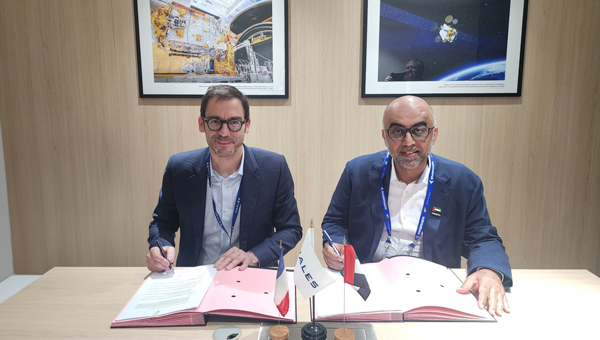
    Recognizing the strategic importance of LEO-PNT, the NSSTC is working with Thales Alenia Space to explore opportunities in this domain. The partnership was formalized through the signing of a memorandum of understanding at the Paris Air Show 2025, establishing a framework for cooperation. Building on that foundation, both parties signed an agreement marking the start of joint technical studies and engineering activities focused on regulatory protection and system design elements for LEO-PNT.

    The collaboration reflects a vision to explore pathways that can enhance the robustness and sovereignty of future navigation services while deepening international cooperation and knowledge exchange between the United Arab Emirates and Europe in the field of space technology.

    “This collaboration marks an important step toward building the UAE’s next-generation navigation capabilities,” said Ali Al Shehhi, director of NSSTC. “LEO-PNT will bring a new level of precision and resilience, and working with Thales Alenia Space allows us to accelerate our path toward a sovereign system that supports the UAE’s long-term strategic vision.”

    “LEO-PNT is a game changer in satellite navigation in terms of increased precision, resilience and signal penetration, enabling new applications and economic growth,” said Hervé Derrey, CEO of Thales Alenia Space. “We are proud to offer our expertise in satellite navigation to the NSSTC, thereby strengthening our collaboration with the United Arab Emirates in the space domain.”

  • Qatar hosts regional workshop on GNSS interference

    Qatar hosts regional workshop on GNSS interference

    The Qatar Civil Aviation Authority (QCAA) this week is hosting the Joint ICAO Europe and North Atlantic (EUR/NAT) and Middle East (MID) Workshop on GNSS Radio Frequency Interference, reports the Qatar News Agency.

    The workshop is organized jointly by the ICAO EUR/NAT and MID Regional Offices and is being held in Doha, Qatar, Nov.18-20.

    In the opening session, Mohamed bin Faleh Al Hajri, QCAA manager, reaffirmed Qatar’s commitment to enhancing aviation safety and efficiency through close collaboration with ICAO and regional partners.

    The workshop brings together countries and stakeholders from the EUR/NAT and MID regions to address the increasing threat that GNSS radio frequency interference poses to aviation safety and efficiency. Al Hajri emphasized the importance of active participation to exchange experiences, strengthen cooperation, and build sustainable partnerships that support GNSS resilience.

    He highlighted that hosting the workshop reflects joint efforts aimed at strengthening the robustness and reliability of GNSS — a core pillar in ensuring the safety and efficiency of international air navigation.

    Regional dialogue

    The workshop aims to:

    • facilitate regional dialogue on the operational impact of GNSS radio frequency interference
    • share experiences among participating States and stakeholders
    • explore measures to improve reporting mechanisms, enhance mitigation strategies, and strengthen the overall resilience of satellite-based navigation systems.

    It also seeks to reinforce cooperation between the EUR/NAT and MID Regions to safeguard the infrastructure and integrity of GNSS-based navigation systems.

  • Sinclair Technologies Unveils 5G GNSS antennas

    Sinclair Technologies Unveils 5G GNSS antennas

    Sinclair Technologies has launched its SM 5G Family Tier, featuring the SM714 and SM2601 series antennas. The next-generation, multi-band, multi-port transport antennas are engineered to deliver superior connectivity, reliability and versatility for GNSS, 5G, LTE, Wi-Fi and other mission-critical wireless applications.

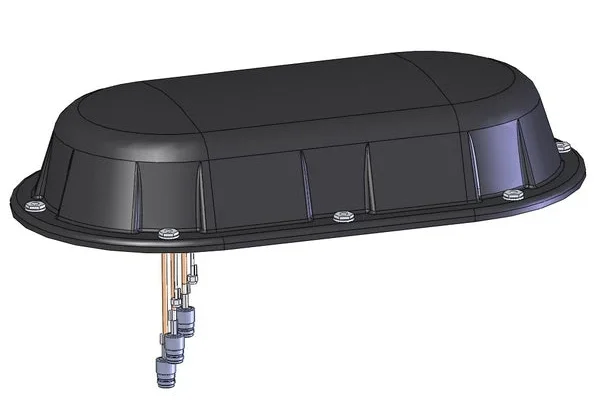
    The SM714 antenna. (Photo: Sinclair Technologies)
    The SM714 antenna. (Photo: Sinclair Technologies)

    The SM714 is a 4-in-1 low-profile customizable transit antenna that combines 5G/LTE, Wi-Fi and tri-band GNSS coverage in a single compact form. Supporting 617–5925 MHz, it enables seamless operation across all major 5G and LTE bands. The integrated high-gain tri-band GNSS module provides fast, accurate positioning, while the IP67-rated rugged housing ensures long-term durability. With its 2.6-inch ultra-low profile and single-hole mount, the SM714 is suitable for vehicles, fleet systems and connected mobility applications requiring a discreet, high-performance solution.

    The SM2601D is a 5-in-1 low-profile customizable antenna purpose-built for transportation, fleet and rail systems. It features five independent ports: one for PTC (219–223 MHz), one for Wi-Fi (2400–6000 MHz), one for GNSS, and two full-band cellular ports (694–2700 MHz) that support diversity and MIMO operation for multi-radio systems. This dual-cell configuration offers greater throughput, flexibility, and redundancy in complex communication environments. Housed in a fire-rated, weather-resistant black radome, the SM2601 ensures exceptional reliability in harsh operating conditions.

    Together, the SM 5G family ter delivers high performance and design flexibility for connected mobility, fleet tracking and smart infrastructure — extending Sinclair’s 75-year legacy of engineering excellence and innovation in RF antenna technology.

    “The launch of our SM 5G Family marks a bold step in redefining the boundaries of connectivity,” said Martine Cardozo, sales director, Sinclair Technologies. “By blending creativity with cutting-edge innovation, we aim to deliver highly reliable, all-in-one solutions that meet the evolving demands of a market in constant motion.”

    Key Benefits

    SM714 – Compact 5G / GNSS Transit Antenna

    • Wideband coverage: 617–5925 MHz across all major 5G/LTE bands
    • Tri-band GNSS (GPS, Galileo, GLONASS, BeiDou) for fast, precise positioning
    • Rugged IP67 housing ensures long-term reliability in harsh environments
    • Ultra-low 2.6 in. profile minimizes installation footprint and risk of damage
    • Ideal for vehicle rooftops, fleet applications, and mobile IoT systems

    SM2601 – Multi-Port Transport Antenna (Spec Sheet)

    • Five integrated ports: PTC, GNSS, Wi-Fi, and dual broadband 694–2700 MHz channels
    • Supports MIMO and multi-radio configurations for maximum system flexibility
    • Fire-rated, weather-resistant radome built for extreme operating conditions
    • High-gain GNSS with low-noise amplifier enhances accuracy and signal integrity
    • Optimized for rail, transit, and mission-critical fleet communications
  • Virtual vineyards created for self-driving tractors

    Virtual vineyards created for self-driving tractors

    While grapes are being harvested throughout Italy, the Politecnico di Milano is looking to the future of viticulture with an innovative approach that combines mechanics, IT and digital simulation.

    A team of researchers from the Departments of Mechanical Engineering and Electronics, Information and Bioengineering at the Politecnico di Milano has developed a system to test and optimize self-driving strategies for agricultural tractors in a virtual environment.

    The study, published in AgriEngineering (“Scenario Generation and Autonomous Control for High-Precision Vineyard Operations}, presents a complete methodology for creating realistic vineyard scenarios and evaluating control algorithms for autonomous driving. The goal is not simply to reduce the human presence, but to provide a high-fidelity digital environment in which to develop, verify and safely improve agricultural automation solutions based on sensors and predictive algorithms.

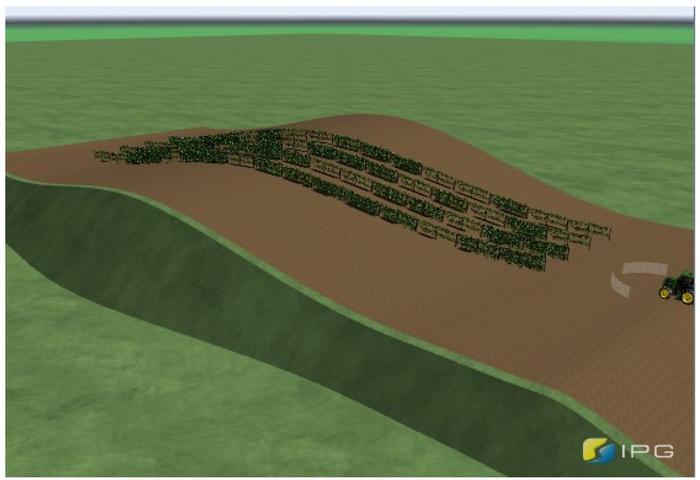
    The research has made it possible to create a digital twin of the vineyard, capable of reproducing slopes, soil irregularities and row layout. Tractors equipped with low-cost GNSS and inertial measurement systems (IMS) sensors and guided by advanced algorithms have been tested in this virtual environment, vehicles capable of moving autonomously between rows and of performing off-field turning manoeuvres with the utmost precision.

    The study explored new methodologies to simulate and independently control vineyard operations. (Credit: Politecnico di Milano, CC BY-SA).
    The study explored new methodologies to simulate and independently control vineyard operations. (Credit: Politecnico di Milano, CC BY-SA).

    “Our approach combines terrain modeling, advanced control and realistic sensors in a single simulation environment. This speeds up research and reduces the risks and costs of real field tests,” said Federico Cheli, professor at the Politecnico di Milano, Department of Mechanical Engineering, and project coordinator.

    According to the researchers, the use of realistic simulations not only reduces the risks and costs of field tests, but can also become a useful tool for operator training. It can accelerate the adoption of new agricultural technologies.

    The project stems from the partnership between researchers at the Politecnico di Milano and the company Soluzioni Ingegneria s.r.l. that develops software for dynamic vehicle simulation. It is part of a broader context of cooperation with industrial companies engaged in research on automation and sustainability in agriculture.

    Ruiz Mayo, C.; Cheli, F.; Arrigoni, S.; Paparazzo, F.; Mentasti, S.; Pezzola, M.E. Scenario Generation and Autonomous Control for High-Precision Vineyard OperationsAgriEngineering 2025, 7(2), 46. https://doi.org/10.3390/agriengineering7020046

  • UAV updates: DARPA advances UAVs, Area-51 RQ-170 investigation expands and more

    UAV updates: DARPA advances UAVs, Area-51 RQ-170 investigation expands and more

    Most people appear to be silently waiting for artificial intelligence (AI) to come up with a meaningful application beyond replicating jobs — one that actually helps people accomplish new tasks.

    Daily news reports show one of the so-called “Magnificent Seven” technology companies pouring another billion dollars or more into AI data centers or basic development. Well now, the Defense Advanced Research Projects Agency (DARPA) has found a smaller AI company to develop a novel application for UAVs.

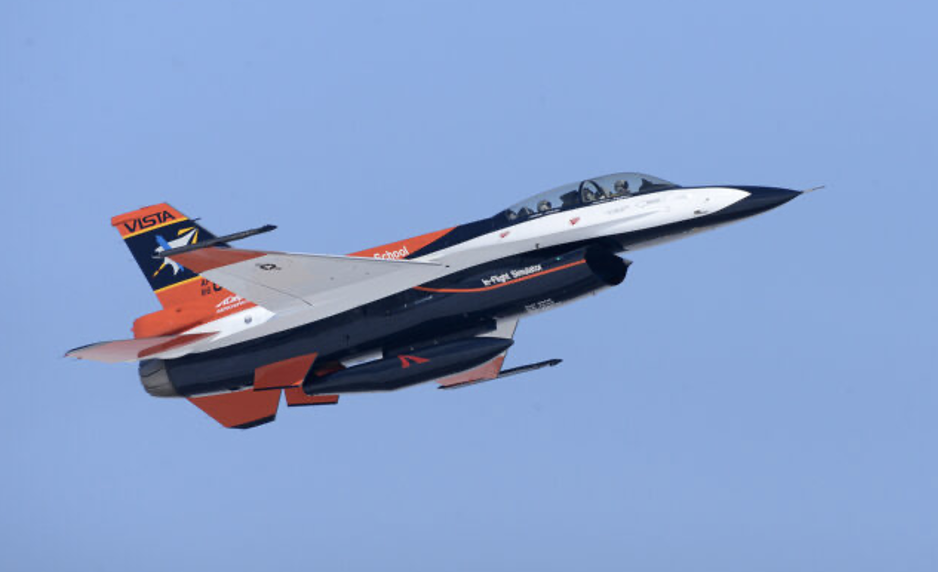
    VISTA X-62A autonomous aircraft (Photo: Alex Lloyd/USAir Force)
    VISTA X-62A autonomous aircraft (Photo: Alex Lloyd/U.S. Air Force)

    PhysicsAI has contributed AI “agents” to a highly modified F-16 for machine perception, intelligent behavior, control and adaptive learning to create an autonomous UAV, according to available information. The VISTA X-62A participated in a manned-unmanned dogfighting demonstration in September 2023, though the outcome has not been disclosed. Other platform enhancements include intelligent sensors through computer vision, EO/IR/RADAR sensor fusion and virtual reality simulations.

    DARPA has engaged PhysicsAI to enhance UAVs so they can extend range and mission length by “soaring” — the technique birds use to find thermals in the atmosphere to climb to higher altitudes. AI agents will be designed, trained and tested to evaluate dynamic wind conditions, optimize flight profiles and perform soaring maneuvers.

    DARPA intends to develop AI agents that will extend endurance by employing this bird-like soaring capability to reduce UAV onboard power usage and extend range and mission duration.


    There is nothing new to report on the apparent drone crash Sept. 25, 2025, near the secretive base in Nevada, known as Area 51. The aircraft was attached to the 432nd Wing/432nd Air Expeditionary Wing at Creech Air Force Base in Nevada, about 57 miles southwest of the crash site. The 432nd operates MQ-9 Reaper drones, but the 33rd and 44th Reconnaissance Squadrons are also known to operate out of Creech and may operate RQ-170 Sentinel stealth drones.

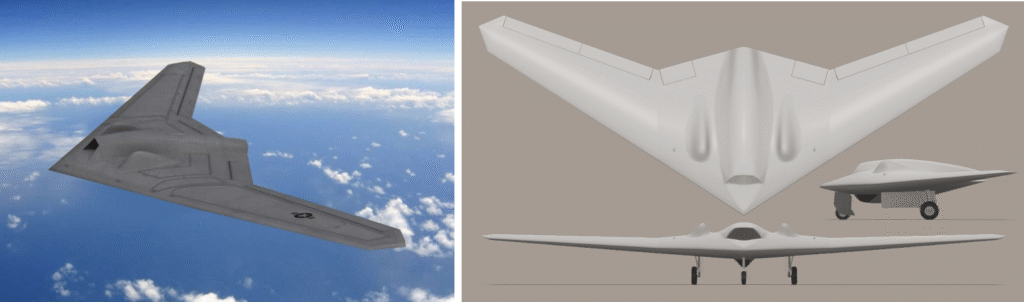
    RQ-170 Sentinel Stealth Drone thought to operate out of Cheech AFB Nevada (Photo: Lockheed Martin)
    RQ-170 Sentinel stealth drone thought to operate out of Cheech AFB Nevada (Photo: Lockheed Martin)

    Famous (or infamous) for a 2023 reconnaissance operations in Iran, where one aircraft was apparently captured by the Iranians, the RQ-170 has been around since 2021.

    The mystery surrounding the crash near Area-51 has grown somewhat since an inert training bomb and an aircraft panel were discovered at the crash site, but these items were not part of the damaged/destroyed crashed aircraft. In addition, the Air Force Office of Special Investigations (OSI) and the FBI have now been brought in to investigate. Enthusiasts who managed to get to the crash site recently found it cleaned completely, with no sign of spilt fuel or debris.


    Troops in the field need information most — where the enemy is, their capabilities and what they’re doing.

    One option: Launch a drone with video, infrared and radar, then use whichever works best depending on lighting, weather and whether the enemy jams signals. Better yet, call in a high-altitude surveillance drone like a GA-ASI Reaper that the enemy can’t see or hear. But that takes time, and one might not be available.

    A new concept builds on an old precept — climb a tree and look at the opposition. But trees can be hard to find, difficult to climb and not high enough.

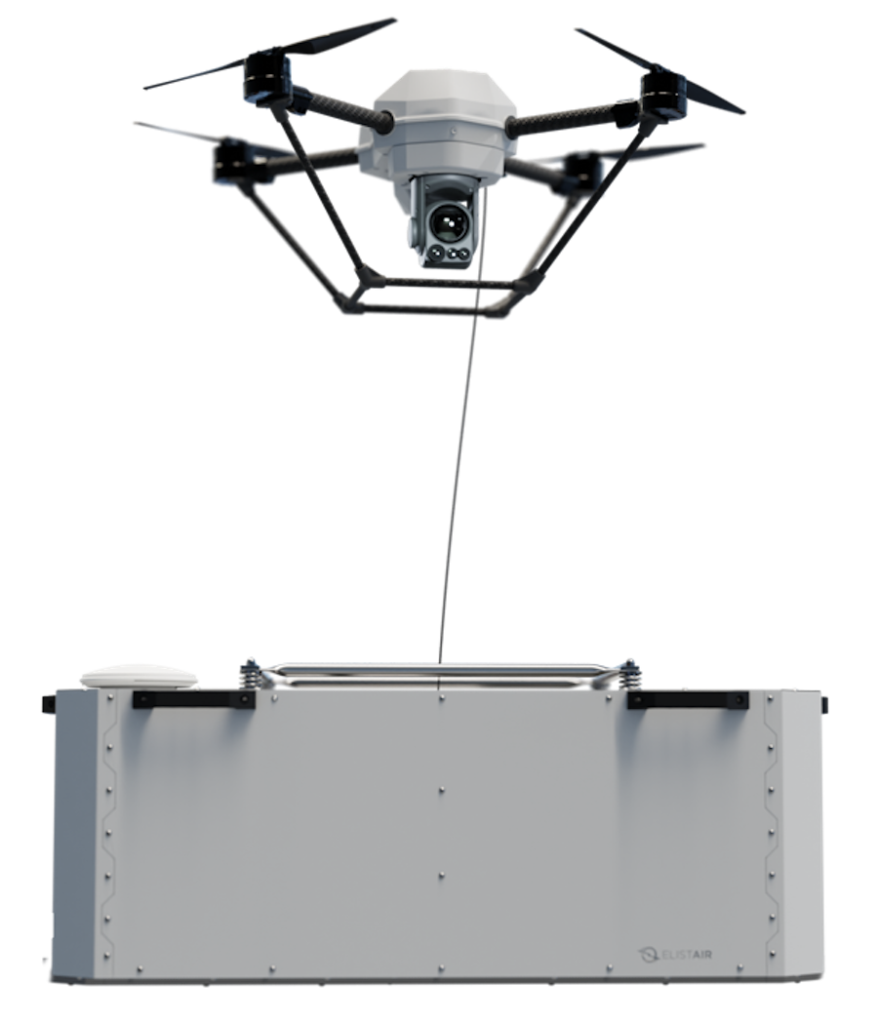
    The answer to jamming and observational altitude: a tethered drone that a squad can carry. If the squad has a truck or Humvee, it can launch a tethered drone with no time limits because power comes up the tether with driving instructions while visual data goes back down. If necessary, move the ground vehicle closer and the drone moves with it.

    Tethered drones serve any operation needing overview — rescue teams in disasters needing to see farther or a temporary communications hub, security operations searching for someone or something, monitoring or observing for infiltrators, initial surveys of difficult-to-access locations or military operations. Many other applications exist.

    Most commercial and first-responder operations favor commercial or heavy-lift multirotor drones. Companies using multirotor drones include Hoverfly, Zenith, Fotokite, USaS, Advexure, Elistair, Kratos and Volarious.

    Elistair Khronos Tethered DroneBox. (Photo: Elistair)
    Elistair Khronos Tethered DroneBox. (Photo: Elistair)
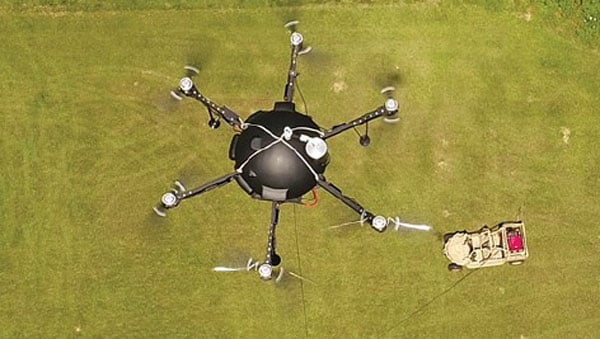
    Kratos Aethon	 Tethered Drone. (Photo: Kratos)
    Kratos Aethon Tethered Drone. (Photo: Kratos)

    If tethering drones to get really high, maybe use an aerostat that TCOM claims can operate from ground level to the stratosphere — pretty long tether needed! But applications also include anti-drone systems used to track and disrupt drone intruders.

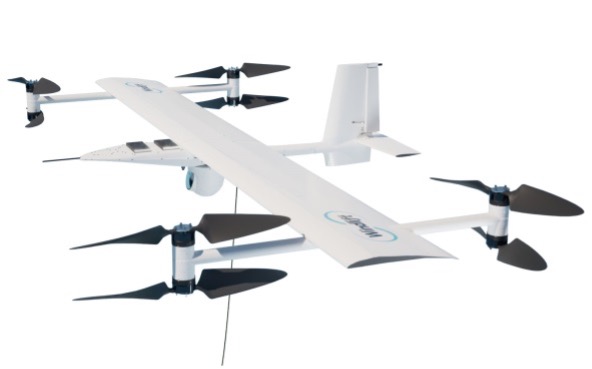
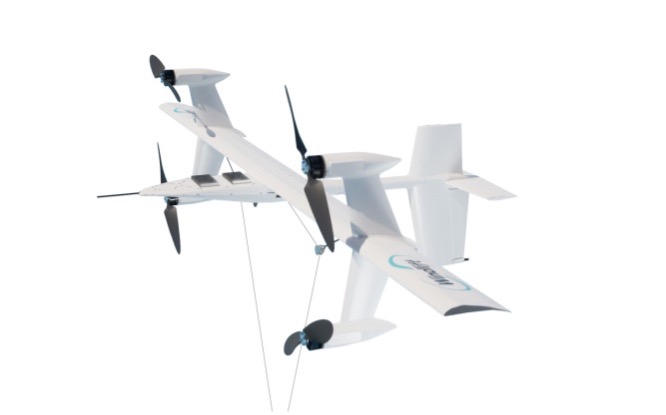
    Then a more recent entrant is Windlift who uses a fixed wing multi-prop drone on the end of a very long tether to gain altitude and to operate in the sort of wind conditions that might be found at times in many locations world-wide, on land or at sea — very windy to gale force winds, actually up to 55mph. Now this is pretty tough for any tether system, but Windlift has a variable cross section tether which mitigates wind-resistance. And their special application is to fly in a figure of eight pattern at high altitude — to generate electricity.

    Windlift surveillance drone(Photo: Windlift)
    Windlift surveillance drone (Photo: Windlift)
    Windlift power generator (Photo: Windlift)
    Windlift power generator (Photo: Windlift)

    This month brings a mixed bag of drone news, ranging from AI-driven “soaring” drones to an Area 51 drone crash mystery and an overview of tethered drones and their applications, including power generation. Who could have forecast these drone applications? Well, maybe the crashing part.