Blog

  • Apple Maps Another Foray, Still Needs Google

    Kevin Dennehy
    Kevin Dennehy

    By Kevin Dennehy

    Trying to shake off last year’s mapping debacle, Apple recently bought two companies, HopStop and Locationary.  The purchases, whose financial details were not disclosed, get Apple rooted once more in the location business; how firmly those roots prove to be, and how well they serve the company against arch-rival Google, time will tell.

    Apple has been stockpiling companies and mapping software since last year’s introduction of Apple Maps on iOS devices, which turned out to be a big fiasco. GPS World’s LBS Insider reported extensively on the problems Apple encountered with its mapping software. Some of these problems included sending drivers to a wrong location and direction.

    After the mapping software problems were made public, Apple CEO Tim Cook apologized for the mapping software’s problems and even suggested that users go to such competitors as Waze, MapQuest and Microsoft’s Bing. The fallout from the Maps debacle was swift.  Apple fired Richard Williamson, who oversaw the company’s Maps team, according to Bloomberg.  The company put pressure on Apple partner TomTom to update mapping data and consulting with third-party mapping experts.

    The fiasco proved how important maps and navigation are to users of mobile phones.  Industry experts noted two further points:

    • Maps are extremely hard to do, and
    • Maps are really important for a major platform to own, rather than rent from Google.

    Hopping Forward. The HopStop app provides directions to users in 600 urban areas, with an emphasis on mass transit — real-time transit maps and schedules —  as well as pedestrian- and bicycle-oriented guidance.

    HopStop’s purchase may be Apple’s answer to Google’s recent purchase of Waze.  HopStop traffic data, like Waze, is based on updates from people using the application; that is, crowd-sourced data.

    Staying With It. The Locationary acquisition constitutes a further measure to keep current, going beyond the pressure Apple put on partner TomTom.  Locationary checks on and seeks to eliminate out-of-date points of interest and business data with a platform that collects and verifies crowd-sourced and other data. It also checks the actual physical location of businesses and other places.

    Coming Inside. To top off the company’s location awareness, Apple is even getting into the hotly-contested indoor positioning and navigation space, spending $20 million for Silicon Valley start-up WiFiSLAM in late March. According to published reports, WiFiSLAM can pinpoint a user’s indoor location to within 8 feet, using Wi-Fi. Apple rival Google already has been in the indoor positioning and navigation market, mapping shopping malls, airports and sports venues in several countries.

    Google Maps Now Major Apple Feature

    Speaking of the strange bedfellows, Google recently rolled out an iOS version of Google Maps for use on the iPad. For the last nine months, iPad users who wanted to use Google Maps have been required to use one designed for the iPhone, according to published reports.  Google also updated the iPhone version of Google Maps.

    Both the iPhone and iPad mapping software feature live traffic updates during turn-by-turn navigation.  The app includes live incident reports, road closure information, construction sites, accident reports and other features.  Apparently, Apple users won’t get the rerouting capability that Android folks will get, according to published reports.

    Real Power. The cool factor, and one that industry experts believe is the real power of location-based services, is an “explore” function that both Apple and Android have with Google Maps. This proximity feature allows users to find nearby restaurants, shopping areas, gasoline and other sites. Google also introduced a rating system for the iOS application that allows users to rate restaurants and other businesses.

    The Google Maps for iOS also has turn-by-turn directions for bicyclists, featuring more than 330,000 miles of bike paths and trails worldwide.

    Previous versions of Google Maps, which were designed for the iPad, were removed by Apple last September.  Apple, to replace the version, brought out the infamous mapping software that featured many errors.


  • TomTom Traffic Powers Maps App in BlackBerry 10

    TomTom announced an updated agreement with BlackBerry to provide real-time traffic information for the maps app on BlackBerry 10.

    TomTom Traffic provides customers with more precise traffic information, enabling faster journeys, more accurate arrival times, and a smarter navigation experience.

    According to the announcement, BlackBerry 10 customers also have the option to anonymously help enhance the coverage and quality of TomTom’s world-class traffic information by sharing traffic data.

    “Having accurate and up-to-date traffic information integrated in BlackBerry Maps is an important feature for customers, and TomTom is a recognized leader that provides traffic data to many companies in the market,” said Adrian Gould, VP of Handheld Software Product Management at BlackBerry. “We are pleased to expand our relationship with TomTom in support of BlackBerry 10 customers.”

    “By integrating TomTom Traffic, BlackBerry’s smartphone customers will have access to the most accurate traffic information available,” said Charles Cautley, Managing Director of TomTom Automotive & Licensing. “We are proud to be supporting BlackBerry to deliver enhanced location-based services to its subscribers across the globe.”

  • USGS Needs Your Help: Add Your Community’s Landmarks and Buildings to National Mapping Effort

    The U.S. Geological Survey announced that advances in the technology of online map-based data collection platforms have made it possible for citizens of the U.S. to contribute to USGS topographic mapping efforts like never before.

    The USGS is currently seeking volunteers to aid in collecting data for The National Map (TNM), which comprises a variety of products and services that provide the Nation with geospatial information to describe the landscape of the United States and its territories. The National Map Corps (TNMCorps) aims to improve this topographic information by updating existing and gathering previously uncollected data via volunteered geographic information (VGI).

    tnm4
    Blue dots represent locations where citizen-mapping efforts are currently underway. Green states are currently available for editing with remaining states available around September

    The National Map includes hydrographic features such as streams and lakes, elevation contours, geographic names, land cover, and structures. To improve and update The National Map, the USGS is turning to volunteers to map the location of important community buildings – such as police stations, schools, hospitals, post offices, prisons, cemeteries, and fire stations. Adding and verifying the locations of buildings to existing TNM datasets makes significant additions to the USGS’s ability to provide accurate information to the public.

    After citizen input is peer-reviewed by fellow volunteers, the valid data are incorporated into The National Map databases. These databases are used to create many products, including US Topo maps – free and downloadable digital topographic maps that are released every three years.

    Currently, the USGS is in the process of expanding TNMCorps; 35 new states have been added to the volunteer database and need mapping support from volunteers. These states are: Alabama, Arizona, Arkansas, Alaska, California, Colorado, Connecticut, Delaware, Florida, Georgia, Idaho, Illinois, Louisiana, Maryland, Massachusetts, Michigan, Mississippi, Montana, Nebraska, Nevada, New Hampshire, North Dakota, New Jersey, New Mexico, Ohio, Oregon, Pennsylvania, Rhode Island, South Carolina, South Dakota, Utah, Vermont, Washington, West Virginia and Wyoming.

    1tnm
    Web Editor showing downtown Little Rock, AR. Red icons are structures that need to be checked or verified by volunteers. The green icon is an example of a structure that has been verified by a volunteer and which will be added to the National Map after it has gone through peer-review.

    Similar to the way Wikipedia or OpenSteetMap allows users to add and edit information on the site, The National Map Corps web editing interface allows users to easily contribute geographic data that will eventually become part of The National Map.

    A complete list of the types of buildings the USGS is looking to volunteers to verify throughout the country can be found here.

    “Because of a lack of publicly available national authoritative datasets for some municipal buildings and infrastructure throughout the country, we are looking for volunteers who can fill in this information quickly and keep it up to date,” said Volunteer Geographic Information Project Leader Elizabeth McCartney.

    In addition to adding previously unmapped community buildings and landmarks to The National Map database, volunteers are encouraged to remove structures that no longer exist, update existing buildings that have changed, and label correctly marked structures as correct.

    The current platform used by TNMCorps is a customized version of OpenStreetMap, an online platform that enables users to edit, add, and access geographic data.

    “The editor, like OpenStreet Map which has over a billion users worldwide, is meant to be accessible to non-professionals. Users don’t need to be professional scientists in order to contribute. Anyone who wants to volunteer can give it a go. There are a lot of people out there who love maps and are interested in improving information in their communities,” said McCartney.

    Volunteer participants are not required to live within the state they review — the mapping technology used for TNMCorps allows anyone to update geographic data from anywhere.

    Testing the feasibility of collecting VGI for the The National Map began in a series of pilot projects in January 2011. To test the viability of using volunteers to edit TNM map data, students at Colorado universities were asked to map structures in four topographic quadrangles around the Denver area. The results were impressive, as the structures mapped surpassed the quality standard maintained by the USGS. The success of the pilot projects confirmed that VGI is a viable source of data.

    Since its start in Colorado, the program has expanded to 35 states. The National Map Corps hopes to have all 50 states available for mapping by September 2013.

    Volunteer Recognition

    The USGS has created a social media presence to support this program and reach new volunteers. Using Twitter , with more than 2,080 followers, and the USGS Facebook page, volunteers who contribute to The National Map Corps are awarded badges are recognized based on the number of points edited.

    Each badge is represented by a different antique surveying instrument.

    Volunteers can earn each successive badge by contributing structures through the editing or peer review process.

  • OpenGeo Announces Support for QGIS

    OpenGeo announced their plans to support QGIS and the open source community behind it. According to the announcement, QGIS is the most widely available open source GIS tool with a proven track record and an extensive plug-in ecosystem. It is widely regarded to have achieved feature parity with proprietary tools while being more stable, easier to use.

    OpenGeo’s flagship product, the OpenGeo Suite, is a complete set of standards-based geospatial software that offers the fastest and easiest way to publish geospatial information on the web. The addition of QGIS incorporates a strong desktop tool into OpenGeo’s solid server offerings. Users of the OpenGeo Suite will now have a complete solution for creating, analyzing, publishing and consuming geospatial data and services without requiring any proprietary software.

    Juan Marin, OpenGeo’s CTO, outlined the following areas of development:

    • Improve integration between QGIS and the OpenGeo Suite
    • Provide services such as maintenance, technical support, training, etc for QGIS
    • Enhance existing documentation, tutorials, and examples to make QGIS even easier to learn and use.
    • Help users collaborate around geospatial data with GeoGit, a scalable distributed versioning system for geospatial information.

    Marin noted, “QGIS offers a truly open alternative that lowers barriers to entry and total cost of ownership. It’s also operating system agnostic and has no license fees. We feel it fits perfectly with our mission of extending the availability of geospatial open source software. But we’re not only impressed with the software, we respect the community that has built it and we look forward to supporting them however we can.”

  • Clarion Selects Averna for Testing In-Vehicle Infotainment Systems

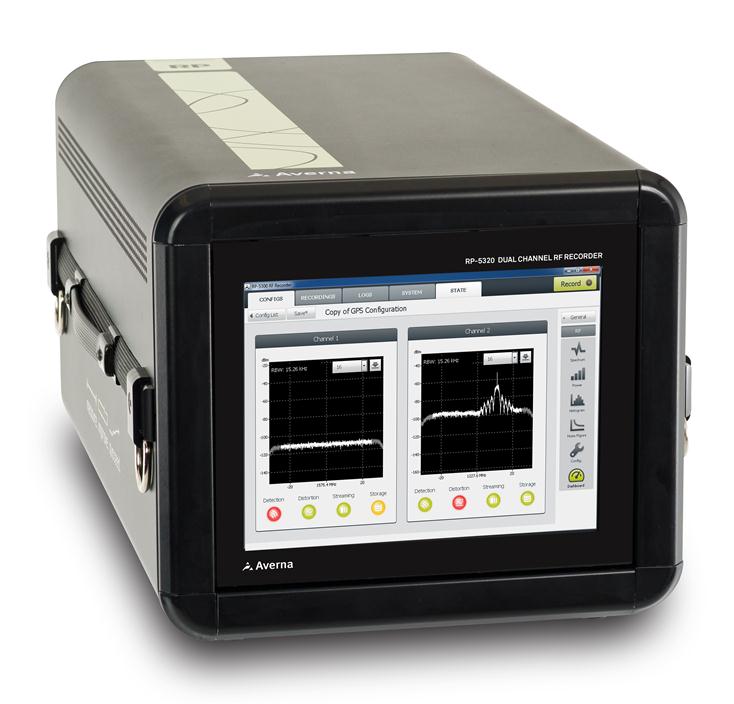
    Averna’s Record & Playback platform.
    Averna’s Record & Playback platform. Photo: Averna

    Averna, a developer of test solutions and services for communications and electronics device makers, announced today that Clarion has selected Averna’s Record & Playback solution to validate upcoming in-vehicle entertainment systems and certify that the devices perform well in real-world conditions. Clarion is a global manufacturer and seller of car navigation systems and in-vehicle equipment with a focus on car audio systems.

    The R&D Division, Experiment and Evaluation Team at Clarion will use Averna’s R&P platform to record radio signals such as AM, FM, HD Radio, and DAB from key locations around the world and replay them in the Tokyo-based lab where the design team is located.

    The R&P platform selected by Clarion features:

    • RP-5100, a compact 2-channel RF recorder designed to record live RF signals in the field
    • URT-5000, a software-defined RF Player and Signal Generator
    • RF Studio, high-performance RF record-and-playback software for RF product designers and researchers to facilitate recording, analysis and storage of RF signals
    • DriveView plug-in for synchronized recording/viewing of video, audio, and GPS positioning data

    The Averna RP-5100 RF Recorder is specifically designed to capture real-world RF signals, with impairments, for navigation as well as broadcast radio and video receiver validation, testing and support. The system has two 20-MHz wide channels that can be tuned on any frequencies from 250 kHz to 2.65 GHz. To address the challenges of validating the RF response with the physical environment, Averna has developed DriveView, a plug-in for the proprietary RF Studio software, offering visual verification by video-recording drive tests.

    “Clarion needed a platform to record live RF environments and reproduce them in a repeatable manner in their lab. Our R&P solution allows them to go through all the different use cases without having to go back in the field at each testing phase,” said Etienne Frenette, VP of Sales, Asia for Averna. “As receivers become more complex, it is imperative that real-world signals and conditions be recreated for thorough validation and testing in order to help enhance the user experience.”

    “We recognize and appreciate Averna’s unique expertise and advanced solutions in device performance testing,” commented the R&D Division, Experiment and Evaluation Team at Clarion. “Clarion is dedicated to delivering better products reaching the market faster and Averna is helping us achieve this goal.”

  • Telit Chosen as Representative of Italian Tech Industry for Galileo

    Telit Wireless Solutions has been selected among various applicant members of the Italian Technology Industry as one of the nation’s key representatives in the global roll-out of Europe’s Galileo satellite positioning system. The selection reflects the high degree of credibility demonstrated by the Italian government in the strategic plan proposed by Telit to accelerate global adoption of the Galileo technology, Telit said.

    Telit is a global enabler of machine-to-machine (M2M) communications providing cellular, short range and positioning module products. Telit’s positioning technology R&D center is an integral part of the company’s R&D function headquartered in Trieste, Italy.

    Telit also received a grant to execute its proposed strategic plan. The grant offers Telit the opportunity to accelerate its activities in development of projects for the positioning technology market. It bolsters human and financial resources required to enable Telit to quickly advance in this market area and achieve leadership in product performance with services to match. This achievement is likely not only to enhance the company’s competitiveness but is also provide measurable boost for the Italian economy, concretely contributing tangible progress in the strategic and very high growth segment of m2m.

    The inclusion of positioning expertise stems from the company’s mergers and acquisitions over the past few years, which have made it a leading designer and manufacturer of innovative GNSS solutions for OEM applications, from personal and asset tracking to automotive solutions. Telit has sold millions of high-performance GPS modules sold worldwide.

    Galileo is Europe’s global navigation satellite system, designed to provide a highly accurate, guaranteed global positioning service under civilian control. It is inter-operable with GPS and GLONASS, the U.S. and Russian global satellite navigation systems. By offering dual frequencies as standard, Galileo delivers real-time positioning accuracy down to the meter range. It ensures availability of the service under all but the most extreme circumstances and informs users within seconds of any satellite failure, making it suitable for safety-critical applications such as guiding cars, running trains and landing aircraft. A range of services will be extended as the system is built up from initial operational capacity (IOC) to reach the Full Operational Capability (FOC) by this decade’s end. The fully deployed Galileo system consists of 30 satellites (27 operational + 3 active spares), positioned in three circular Medium Earth Orbit (MEO) planes at 23 222 km altitude above the Earth, and at an inclination of the orbital planes of 56 degrees to the equator.

    “Achievement of a leading position in now in Galileo technology not only boosts Telit’s global stance and strength, and consequently that of the Italian technology industry but also extends the reach of our leadership in positioning which already includes two decades of pioneering work in GPS in the United States,” said Dominikus Hierl, chief marketing officer at Telit Wireless Solutions. “The planned work-force expansions in support of this new effort will create extraordinary value-add, not only in terms of project acceleration but also in innovation, vision and new relationships for Telit.”

  • Indian Regional Navigation Satellite Starts Signal Transmissions

    Indian Regional Navigation Satellite Starts Signal Transmissions

    By Richard B. Langley

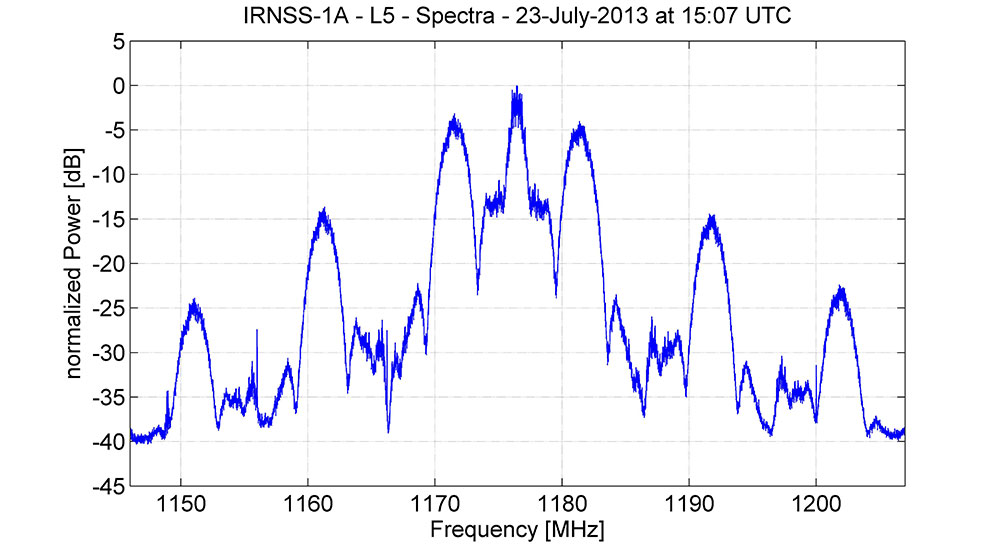
    Update (July 29, 2013): The spectrum recorded by the German Aerospace Center researchers appears to be consistent with a combination of BPSK(1) and BOC(5,2) modulation. This is the signal structure that ISRO announced would be used for IRNSS transmissions in the L-band:

    “The IRNSS signals consist of two special services namely Standard Positioning Service (SPS) and a Restricted Service (RS) [that] will be carried on L5 and S bands. The SPS will be modulated by a 1 MHz BPSK signal and RS will use BOC(5,2) modulation.”

    (“Spectral Compatibility of BOC(5,2) Modulation with Existing GNSS Signals” by S.B. Sekar, S. Sengupta, and K.Bandyopadhyay in Proceedings of IEEE/ION Position Location and Navigation Symposium (PLANS) 2012, Myrtle Beach, SC, April 23–26, 2012, pp.886–890, doi: 10.1109/PLANS.2012.6236831.)


    Scientists from the German Aerospace Center’s Institute of Communications and Navigation in Oberpfaffenhofen, Germany, have received signals from IRNSS-1A, the first satellite in the Indian Regional Navigation Satellite System.

    Launched on July 1, 2013, the satellite reached its designated inclined geosynchronous orbit by July 18 with an inclination of 27 degrees and an equator crossing of 55 degrees east longitude. Indian Space Research Organisation (ISRO) chairperson Dr. K. Radhakrishnan announced on July 18 that testing of the satellite’s navigation payload would begin within a week.

    On July 23, the German Aerospace Center scientists pointed their 30-meter dish antenna at Weilheim towards the satellite and found that it was already transmitting a signal in the L5 frequency band.

    FIGURE 1. Spectrum of IRNSS-1A L5 signal.
    FIGURE 1. Spectrum of IRNSS-1A L5 signal. Source: Richard B. Langley

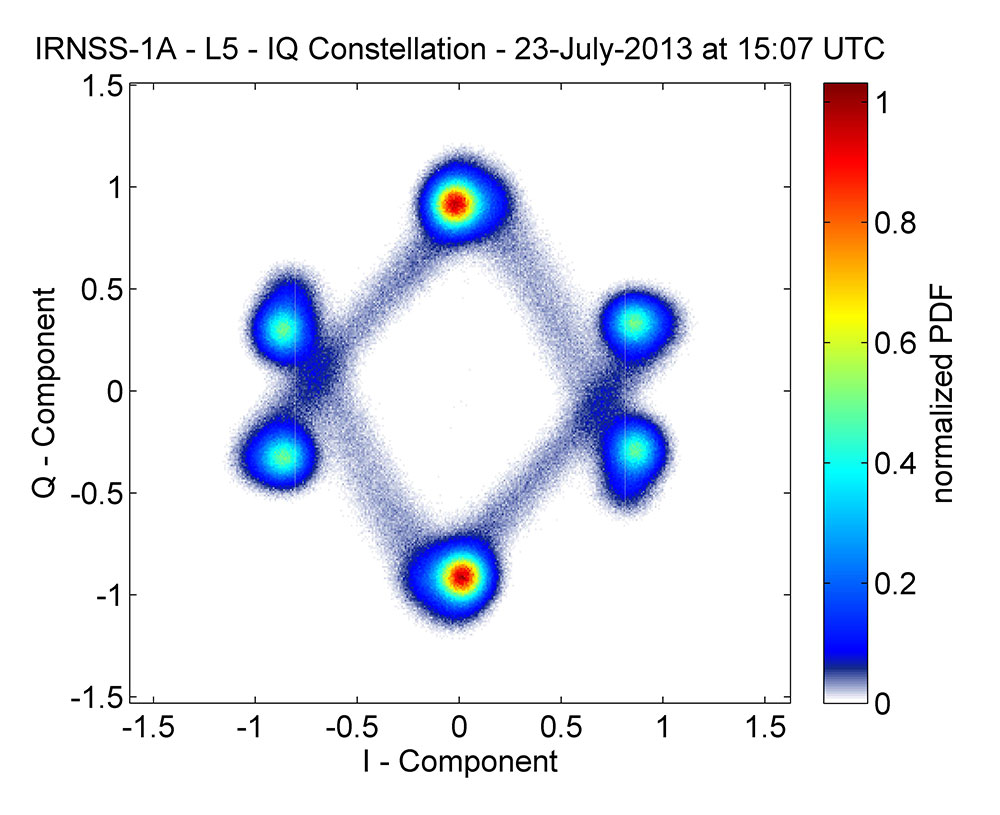
    Figure 1 shows the spectrum of the received signal. Centered at 1176.45 MHz, the signal has a single symmetrical main lobe and a number of side lobes characteristic of a spread-spectrum signal. The corresponding IQ constellation diagram is shown in Figure 2. The signal structure appears to be unlike those used by the GPS, GLONASS, Galileo, or BeiDou constellations. Further analysis will be required to sleuth the signal details as ISRO, so far, has not publicly released an IRNSS interface control document (ICD). ICDs characteristically describe a satellite system’s signal structure in detail.

    FIGURE 2. IQ constellation diagram of IRNSS-1A L5 signal.
    FIGURE 2. IQ constellation diagram of IRNSS-1A L5 signal. Source: Richard B. Langley

    The German scientists caution that “this is a very early snapshot of the current signal transmission and probably both the signal power and the signal quality will change and possibly improve during the in-orbit-testing phase of the satellite’s operation.”

  • IEEE/ION PLANS 2014 Issues Call for Abstracts

    Abstracts are now being accepted for the IEEE/Institute of Navigation (ION) Positioning, Location and Navigation Symposium (PLANS) 2014 to be held May 5-8 at the Hyatt Regency Monterey Hotel in Monterey, California. The deadline for submitting abstracts is November 1, 2013.

    Instructions on submitting your abstract can be found at www.plansconference.org.

    PLANS 2014 is the fifth biennial conference co-sponsored by the IEEE, AESS and the ION. The conference features researchers and engineers from around the globe who present their latest work in positioning and navigation technologies. Presentations range from fundamental research, to applications, to field test results with a particular emphasis on inertial navigation. Technical sessions cover a range of subjects for both beginners and seasoned professionals.

    IEEE/ION PLANS 2014 technical program will be centered around four technical tracks including Inertial Sensing and Technology, GNSS Technologies and Systems, Integrated Applications of Sensors and Technology and Systems Technology.

    Technical papers will be presented on current position, location and navigation issues:

    • High-Performance Inertial Sensor Technologies
    • Low-Cost Inertial Sensor Technologies
    • Multisensor Integrated Systems and Sensor Fusion Technologies
    • Sensor Manufacturing, Error Modeling & Testing
    • Emerging Atom-Based Sensor Technologies
    • Micro-technology for PNT
    • Receiver and Antenna Technology
    • High Assurance GNSS
    • Interference, Spectrum Issues and Robust Navigation
    • Precise Positioning, Weak Signal, and Advanced Processing
    • Algorithms
    • Modernized GNSS
    • GNSS Augmentation Systems
    • Indoor Personal and First-Responder Navigation
    • Urban Personal and Vehicular Navigation
    • Vision/Integrated Navigation Systems
    • Adaptable Navigation System Technology
    • Environmental Features and Novel Navigation Sensors
    • Terrestrial Radionavigation and RF-Positioning
    • Commercial Aviation Positioning and Navigation Applications
    • Small UAV Positioning and Navigation Applications
    • Consumer, Smartphone and Personal Navigation Applications
    • Marine Positioning and Navigation Applications
    • Terrestrial and Automotive Positioning and Navigation Applications
    • Robotic Guidance, Navigation and Control Applications

    In addition to a commercial exhibit, this year’s program includes half-day, pre-conference tutorials on:

    • Fundamentals of Inertial Navigation
    • Sensor Integration for Personal Navigation
    • Fundamentals of Kalman Filtering
    • Alternative Navigation Methods
    • NonLinear Kalman Filtering
    • Multi-constellation GNSS – Similarities/differences between GPS, Galileo, BDS, and GLONASS
    • Image-Aided Navigation

    The deadline for submitting abstracts is November 1, 2013. Submit your abstract today at www.plansconference.org.

  • Get Back, Loretta: DARPA Seeks to Eliminate GPS Dependence

    Get Back, Loretta: DARPA Seeks to Eliminate GPS Dependence

    By Alan Cameron

    Call it irony, poetic justice, or just the nature of the beast. The same impulse that led to the invention of GPS now has engendered a drive to beget non-GPS.

    In the 1970s, the U.S. military began putting together a program “to drop five bombs in the same hole.” The program office, to the wall of which that mission statement was tacked, went on to develop the first satellite navigation positioning system: GPS. In 2012, the U.S. Defense Advanced Research Projects Agency (DARPA) declared that this system no longer sufficed for reliable delivery of precision munitions under every circumstance.

    “More than 98 percent of the missiles currently in the U.S. arsenal have mission durations of less than 20 minutes, and today, almost all of these missions are critically dependent on GPS for achieving the required level of delivery accuracy,” a communiqué stated.

    Because of vulnerability to jamming, spoofing, and other intentional or unintentional modifications of position, orientation, and time information, the agency has put forth a new goal “to completely eliminate dependence on GPS or any other external signals during the mission and rely solely on self-contained solutions such as inertial navigation,” which is immune to such extrinsic actors.

    The Chip-Scale Combinatorial Atomic Navigator program has made 10 exploratory grants to investigate and develop this concept, to large corporations, a small start-up, national labs, and academic groups. Only one has been announced, by contracting agent Wright Patterson Air Force Base, to AOSense. DARPA wishes to emphasize that this is a sample of what is happening in C-SCAN, and should not been viewed by readers as the only technical approach paving the way.

    The company, located in Sunnyvale, California, has gotten busy building an experimental navigation-system-on-a-chip that combines traditional, solid-state, and atomic inertial guidance technology. Their goal: create a sensor on a chip that works reliably, without drift, over considerable distances for at least 20 minutes.

    AOSense is exploring how to shrink and fabricate atomic sensors together with high-performance solid-state inertial sensors. DARPA hopes the C-SCAN program will lead to a breed of inertial microsystems, with a wider range of operating conditions and greater immunity to the environment, reduced start-up time, increased sensitivity, and improved bias and scale factor stability. Oh, and not cost too awful much per piece.

    Another project at Northrop Grumman seeks to develop a  micro-gyro for personal and unmanned vehicle navigation.

    Despite impressive micro-PNT work to date, current mechanisms remain complex, bulky, power-hungry — and pricey. They have limited resolution and poor long-term stability. Alternative forms give excellent resolution and bias stability, but are limited in bandwidth and generally do not allow high-frequency measurements.

    Make no mistake, however. Yankee (and whatever other forms that can be brought to bear) ingenuity will, eventually, win the day. Where then will GNSS find itself?

  • Spectracom Teams with Geodetics For Rugged PNT Equipment

    Spectracom Teams with Geodetics For Rugged PNT Equipment

    Spectracom announced today a strategic partnership with Geodetics Incorporated of San Diego, California. The partnership includes a variety of initiatives to enhance each company’s customer reach, channels, products and technology.

    The partnership includes a distribution agreement for Geodetics’ Geo-iNAV inertial navigation products. Spectracom will offer Geo-iNAV alongside its portfolio of precision timing, test and simulation equipment. Geo-iNAV is a fully integrated GPS-aided inertial navigation system that provides real-time, high-precision positioning and navigation solutions for manned and unmanned air, sea and ground vehicles. It combines GPS and sensor fusion to achieve centimeter-level real-time positioning and navigation for dynamic platforms.

    “In line with our long heritage in delivering robust precision time and frequency products and services, we understand the challenges our customers face to adopt and adapt new and often disparate GPS and GNSS technologies,” said Spectracom President and CEO, Lisa Withers. “We believe our partnership with Geodetics will help to simplify the integration of complex positioning, navigation and timing technologies and provide our customers with a broad range of GPS and inertial navigation platforms readily suited for today’s dynamic and mobile environments.”

    Geodetics President and CEO Lydia Bock added, “Spectracom’s global reach immediately widens the playing field for our inertial navigation products and technology. They have a keen sense of customer’s needs for the convergence of PNT in both military and commercial applications.”

    As the GNSS eco-system expands to support mission critical applications, so must the prevalence of interoperability and signal fidelity, and ultimately PNT applications must be able to withstand the temporary loss of GPS due to factors such as signal obscuration, Spectracom said. As such, contemporary GNSS signal management solutions must be resilient to various GPS impairments as required of the application. Geo-iNAV delivers this capability through six configurations. It is available in commercial as well as SAASM GPS configurations as well as a choice of IMU depending on accuracy requirements. It offers a low SWaP (size, weight and power) profile for autonomous vehicles and payloads on manned vehicles to meet a wide range of applications.

    As a part of Spectracom’s broader initiative to provide a comprehensive portfolio of GNSS signal management products, systems and services, the Geo-iNAV is the first in a series of compact and rugged solutions specific to PNT applications. In addition to simplifying complexity for its customers with contemporary, modular platforms, Spectracom’s market reach, together with the technical strengths of their partners such as Geodetics will accelerate time to market and aggregate the resources necessary to support unique and changing needs for precision references, simulation and signal test and analysis.

  • Lockheed Martin Prototype to Help Prep for GPS III Launch

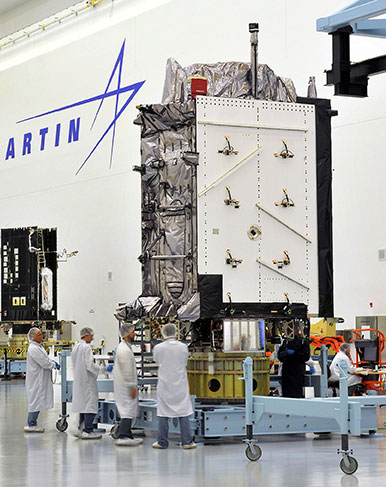
    The GPS III Non-Flight Satellite Testbed completed pathfinding activities at Lockheed Martin’s GPS III Processing Facility outside of Denver prior to it shipping to Cape Canaveral Air Force Station to test facilities and pre-launch processes there in advance of the arrival of the first GPS III flight satellite.
    The GPS III Non-Flight Satellite Testbed completed pathfinding activities at Lockheed Martin’s GPS III Processing Facility outside of Denver prior to it shipping to Cape Canaveral Air Force Station to test facilities and pre-launch processes there in advance of the arrival of the first GPS III flight satellite. Photo: Lockheed Martin

    Lockheed Martin has delivered a full-sized, functional prototype of the next-generation GPS satellite to Cape Canaveral Air Force Station to test facilities and pre-launch processes in advance of the arrival of the first GPS III flight satellite.

    The GPS III Non-Flight Satellite Testbed (GNST) arrived at the Cape on July 19 to begin to dry run launch-base space-vehicle processing activities and other testing that future flight GPS III satellites will undergo. The first flight GPS III satellite is expected to arrive at the Cape in 2014, ready for launch by the U.S. Air Force in 2015.

    The GNST arrived at the Cape by Air Force C-17 aircraft from Buckley Air Force Base near Lockheed Martin’s GPS III Processing Facility (GPF) in Denver, Colorado. Prior to shipment, the GNST was developed and then completed a series of high-fidelity activities to pathfind the integration, test and environmental checkout that all production GPS III satellites undergo at Lockheed Martin’s new satellite manufacturing facility.

    An innovative investment by the Air Force under the original GPS III development contract, the GNST has helped to identify and resolve development issues prior to integration and test of the first GPS III flight space vehicle (SV 01).  Following the Air Force’s rigorous “back-to-basics” acquisition approach, the GNST has gone through the development, test and production process for the GPS III program first, significantly reducing risk for the flight vehicles, improving production predictability, increasing mission assurance and lowering overall program costs.

    “We call the GNST a ‘pathfinder’ because it has truly blazed the trail for every one of our GPS III processes from initial development, production, integration and test, and now pre-launch activities,” explained Keoki Jackson, vice president for Lockheed Martin’s Navigation Systems mission area. “All future GPS III satellites will follow this same path, so the GNST was a smart initiative to help us discover and resolve any issues in advance, implement production efficiencies, and ultimately save a tremendous amount of time and money in the long run.”

    GPS III is a critically important program for the Air Force, affordably replacing aging GPS satellites in orbit, while improving capability to meet the evolving demands of military, commercial and civilian users. GPS III satellites will deliver three times better accuracy, include enhancements which extend spacecraft life 25 percent further than the prior GPS block, and a new civil signal designed to be interoperable with international global navigation satellite systems.

    Lockheed Martin is currently under contract for production of the first four GPS III satellites (SV 01-04), and has received advanced procurement funding for long-lead components for the fifth, sixth, seventh and eighth satellites (SV 05-08).

  • CMTINC Releases Deed Calls Pro Software for iPad

    CMTINC.COM announces the release of the Deed Calls Pro software application for the Apple iPad. This app expands on the popular Deed Calls – Area – Perimeter app from the same company. It will let the user easily create a land parcel by entering distances and angles, by importing data in Shapefile or DXF format, or by precise digitization over a background map. It will also create a deed plot from the angle and distance values stored in a text file. For an existing Line or Area Feature on the job map, the app can create a set of deed calls that can be saved into a text file or printed to a PDF file.

    Calls-H

    According to the announcement, Deed Calls Pro can display the acreage and perimeter of an area as well as label the line segments and corner angles with distance and angle values, respectively. It will let the users easily subdivide a land plot, or combine adjacent land plots into a larger area. Below are a few other highlights of this app:

    * Ability to rotate the deed plot to align with the background map.
    * Ability to select a coordinate system other than the Lat-Lon-Altitude system.
    * Ability to adjust the deed plot using the Compass Rule or the Transit Rule.
    * Ability to have multiple Features created on the map.
    * Ability to tag the Features with descriptions.
    * Ability to attach photos to a Feature to showcase a property.
    * Ability to export data in DXF format and send out data files via email.
    * Ability to make use of iCloud Storage.

    The Deed Calls Pro app is now available at the iTunes App Store.