Author: Allison Kral

  • GeoComm joins Amazon Web Services as tech partner

    Logo: GeoComm

    GeoComm is now a Select Technology Partner in the Amazon Web Services Partner Network (APN). The APN is a global program for technology and consulting customers who leverage Amazon Web Services to build solutions and services for customers.

    As an APN Select Technology Partner, GeoComm will leverage Amazon Web Services to bring benefits to its customers, including security to protect the infrastructure that runs GeoComm’s cloud-based public safety GIS solutions.

    In order to join the APN, GeoComm had to complete and satisfy several technical and business criteria for providing solutions and services in the APN.

    According to GeoComm, this partnership will heighten its capabilities to provide easy and secure customer GIS data uploading, as well as an increased speed of GIS data updates within its customers’ dispatch mapping applications.

    “Joining the APN to utilize AWS to protect the critical infrastructure of our customers mission critical solutions is a priority for GeoComm,” said Ryan Thomas, vice president of engineering and technology at GeoComm. “The APN designation exemplifies our desire to protect privacy and data security by providing cloud-based public safety GIS solutions with the highest standards.”

    Founded in 1995, GeoComm provides public safety GIS software and solutions. Its GIS Data Hub solution is currently listed in the Amazon Web Services Marketplace. A number of other GeoComm solutions are being built to utilize the advanced levels of security, reliability, and scalability AWS provides, GeoComm added.
  • NCDOT initiative uses drones for COVID-19 relief efforts

    NCDOT initiative uses drones for COVID-19 relief efforts

    Photo: Shutter2U/iStock / Getty Images Plus/Getty Images
    Photo: Shutter2U/iStock / Getty Images Plus/Getty Images

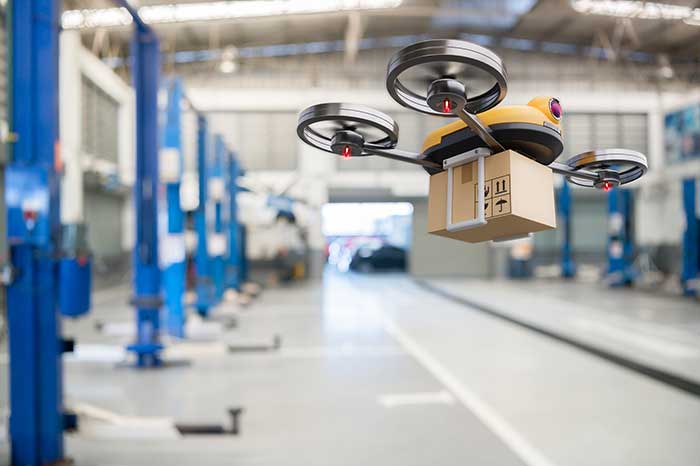
    The North Carolina Department of Transportation (NCDOT) is working with public and private partners to launch three projects using drones to aid in COVID-19 relief efforts. According to NCDOT, the initiative will be launched in May.

    For the first project, Novant Health and Zipline are proposing to deliver personal protective equipment and other medical equipment across Novant Health’s medical campuses in the Charlotte area.

    For the second project, UPS Flight Forward and Matternet are proposing to work with a Winston-Salem hospital on an operation to use drones to take healthcare equipment, medicine and personal protective equipment to medical providers. UPS Flight Forward, which earned the necessary federal certifications to operate a drone airline, has an ongoing drone delivery service at WakeMed’s main campus in Raleigh, NCDOT said.

    Finally, for the third project, Flytrex is proposing to deliver food from multiple restaurants in a shopping center to neighborhoods in the Holly Springs area.

    The first two programs are aimed at reducing the strain on medical supply chains, and the third will make it easier for people to follow the stay-at-home order. According to NCDOT, officials will use data collected during the project to determine how this technology can be used in other areas of the country.

    “North Carolina has been a leader in demonstrating how drones can help people in times of crisis,” said State Transportation Secretary Eric Boyette. “We look forward to putting this technology into productive use as we work to help citizens and medical professionals during the COVID-19 pandemic.”

    Funding for the individual drone missions is coming from private partners, while NCODT is coordinating the initiative.


    Read more of GPS World‘s coronavirus coverage here.

  • Inertial Labs releases 2-axis, 3-axis gyroscopes

    Inertial Labs releases 2-axis, 3-axis gyroscopes

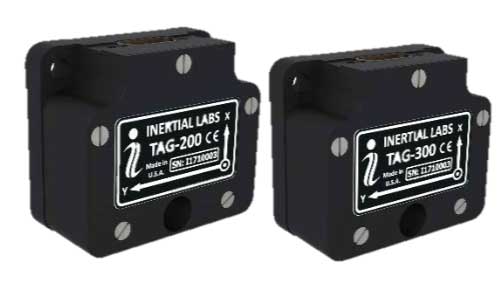
    Inertial Labs' TAG-200 two-axis and TAG-300 three-axis gyroscopes are designed for use in harsh environments. (Photo: Inertial Labs)
    Inertial Labs’ TAG-200 two-axis and TAG-300 three-axis gyroscopes are designed for use in harsh environments. (Photo: Inertial Labs)

    Inertial Labs has released its TAG-200 two-axis and TAG-300 three-axis gyroscopes, developed for electro-optical systems, gimbals, line-of-sight, and pan and tilt platforms for stabilization and pointing applications.

    According to the company, TAG-200 and TAG-300 utilize advanced performance, tactical-grade MEMS sensitive elements, of which size, power consumption, reliability and performance are ideal for accomplishing complex tasks requiring accurate stabilization of assorted platforms.

    The gyroscopes, designed for use in harsh environments, can withstand extreme shock and vibration in accordance with MIL-STD-810 ground mobile use, Inertial Labs added. In addition, they are fully digitized, include built-in test functionalities and have no moving parts.

    Key advantages of the dual TAG-200 and triple TAG-300 axis gyroscopes include low noise, low latency, wide bandwidth, high data rate, low bias drift, low VRE, high MTBF and ITAR-free, Inertial Labs said. The gyroscopes are factory calibrated over operational temperature range with low non-orthogonality and misalignment between sensitive elements. They’re also QA/QC tested and supplied with individual calibration and acceptance test certificates.

    Inertial Labs, based in Paeonian Springs, Virginia, manufactures orientation and navigation sensor solutions.

  • Horizon realizes benefits of WAAS; Delta lands GLS approach in Dominican Republic

    Horizon realizes benefits of WAAS

    More than a decade ago, Horizon Air, a regional affiliate of Alaska Airlines, decided to implement the Wide Area Augmentation System (WAAS) as a part of its overall solution.

    According to the Federal Aviation Administration’s (FAA) SatNav News winter 2020 newsletter, the airline has identified a number of benefits from implementing the WAAS, including pre-departure planning, enhanced safety and scheduled reliability.

    “Our schedule reliability has become the best in our route structure due to the lowest possible approach minimums at airports Horizon Air serves,” said Perry Solmonson, Horizon Q400 check airman/flight ops duty officer.

    Delta lands GLS approach in Dominican Republic

    On Oct. 16, 2019, Delta 737 pilots, Captain Jon Hensler and Captain C.E. “Noah” Flood, along with 737NG Technical Manager Mike Mannino, conducted a GBAS Landing System (GLS) approach in Punta Cana, Dominican Republic. According to the FAA SatNav News newsletter, the GLS landing was a first for a North American carrier operating a revenue flight into Latin America.

    The Punta Cana airport is the first Latin American airport with GLS capability. GLS approaches at this airport permit significantly lower operational weather minimums, allowing aircraft to safely operate into this airfield when they would otherwise need to divert.

    According to the newsletter, the approach was the beginning of a several month Delta trial for GLS approaches at the Punta Cana airport.

    Check out the full stories in the FAA SatNav News winter 2020 newsletter here.

  • AEC technology consultant completes Pointfuse training program

    Photo: Pointfuse
    Photo: Pointfuse

    U.S. CAD is working with Pointfuse to help shape the future of point cloud processing software. This collaboration began upon U.S. CAD completing Pointfuse’s authorized training program.

    U.S. CAD is an architecture, engineering and construction technology consultant that has 20 years’ experience in combining BIM content creation and 3D modeling with application development and configuration services. U.S. CAD is a Pointfuse distributor and has been working with Pointfuse to align Pointfuse’s software with its existing product and service portfolio, learn the full capabilities and ROI of the software, and discover product development functionality.

    Pointfuse software converts millions of individual measurements captured by laser scanning, photogrammetry and mobile mapping systems into useable 3D mesh models. Pointfuse is unique in automatically segmenting the mesh into discrete, selectable surfaces by identifying objects based on their geometry and assigning unique identifiers to them, the company said.

    “We already knew the addition of Pointfuse point cloud processing software to our market offering would release the power of laser scanning, photogrammetry and mobile mapping systems for a range of digital construction, facilities management and virtual design workflows,” said Jeff Rachel, president at U.S. CAD. “However, working with Pointfuse to complete the training program we now truly understand how to help and support our customers as they integrate these technologies within their organizations.”

  • Draganfly conducts pandemic drone tests in US

    Draganfly conducts pandemic drone tests in US

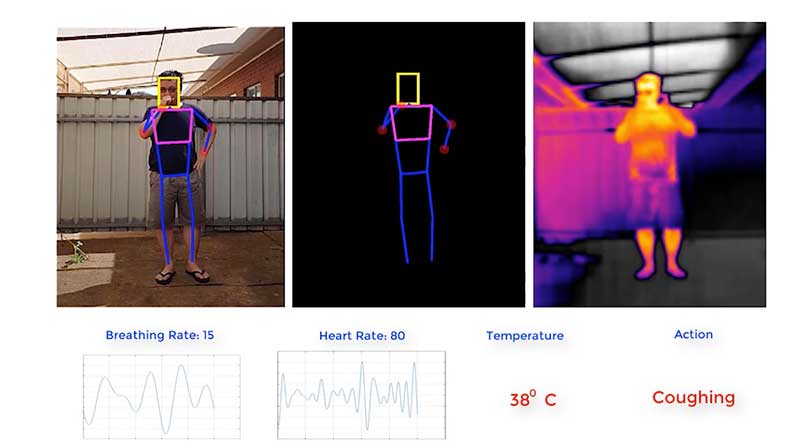
    Draganfly conducted its first series of U.S. pandemic drone test flights in Westport, Connecticut.

    Draganfly’s pandemic drone technology is being tested by the Westport Police Department as a new “Flatten the Curve Pilot Program.” According to Draganfly, this initiative is a collaboration of technologies developed by Draganfly, Vital Intelligence, a healthcare data services and deep learning company, and the University of South Australia.

    Westport is located in Fairfield County, which has more than 17,550 confirmed cases of COVID-19. Fairfield County is adjacent to New York City, which has the most confirmed cases of coronavirus in the United States.

    Image: Draganfly
    Image: Draganfly

    Westport is deploying the technology and data tools to enhance town services, advance public safety, promote the efficient use of taxpayer dollars, engage residents and encourage growth in the local economy.

    The pandemic drone will be equipped with a specialized sensor and computer vision systems that can display fever/temperature, heart and respiratory rates, as well as detect people sneezing and coughing in crowds, and wherever groups of people may work or congregate. The technology can accurately detect infectious conditions from a distance of 190 feet, as well as measure social distancing for proactive public safety practices, Draganfly said.

    Westport specifically plans to use the drone technology to help protect potential at-risk groups, crowds gathering at the town and state-owned beaches, train stations, parks and recreation areas, shopping centers and other areas where people tend to gather.

    “One of the major problems for cities and towns like Westport in managing and responding to a pandemic like the COVID-19 virus, is finding out who could be infected and how widespread the disease has spread,” said Jim Marpe, Westport first selectman. “One way to do this is to look for underlying symptoms. By teaming up with Draganfly and the UniSA team, led by Defence Chair of Sensor Systems Professor Javaan Chahl, we are able to remotely look at valuable lifesaving data and better manage current and future health emergencies.”

    Draganfly‘s pandemic drone software uses biometric readings in its analysis process. The software can be used to understand patterns within a population to allow users to react quicker to ongoing events or new potential health threats, Draganfly added.

    Draganfly manufactures UAVs and UAS, serving the public safety, agriculture, industrial inspections and mapping and surveying markets.


    Check out more of GPS World’s coronavirus coverage here.

  • 3 more conferences postponed due to COVID-19

    3 more conferences postponed due to COVID-19

    Three more conferences, including AIxSPACE, the European Navigation Conference and the Connected & Autonomous Vehicles Conference, have been rescheduled for the fall due to the coronavirus pandemic.

    AIxSPACE, originally scheduled for June 1, has been rescheduled to take place Nov. 2. The conference, formed by Euroconsult and Innovitech, will bring together stakeholders in space and artificial intelligence industries to allow everyone to obtain concrete information on these markets and connect with potential business partners. It will still be taking place in Montreal, Québec, Canada.

    The European Navigation Conference has been rescheduled for Nov. 22-25. According to show organizers, the conference will bring together scientists, engineers and international experts to discuss new ideas, latest research results, future developments and new applications. The European Navigation Conference event will still be taking place in Dresden, Germany.

    Finally, the Connected & Autonomous Vehicles Conference will now be taking place Aug. 10-13 at the San Jose Convention Center in San Jose, California. This conference will explore the latest industry developments. In addition, attendees will hear thought-provoking case study presentations from top automakers.

    Check out more show updates as a result of the coronavirus pandemic here.

  • 4 more organizations select Maptitude for Redistricting

    Four more organizations have selected Maptitude for Redistricting. The South Carolina Legislature, Massachusetts Secretary of State, NJ United, and the Mississippi Planning and Development District will all be using Maptitude for Redistricting for their redistricting activities this decade.

    Photo: Caliper
    Photo: Caliper

    Maptitude is a mapping software program created by Caliper Corp. that allows users to view, edit and integrate maps. Maptitude for Redistricting is the professional tool for political redistricting.

    According to Caliper, the ease-of-use, fitness-for-purpose and competitive pricing of Maptitude for Redistricting have made Maptitude the dominant product for political redistricting. Maptitude provides measures and reports, and the program features tools such as the Efficiency Gap Measure tool for exploring redistricting problems.

    Maptitude was used to democratize redistricting in California and is used by the majority of redistricters, from independent commissions, non-profits, and civil rights groups, to the courts and political parties, Caliper added.

  • Airbus to produce 3D-printed visors in fight against COVID-19

    Airbus to produce 3D-printed visors in fight against COVID-19

    Photo: Nenad Stojnev/E+/Getty Images
    Photo: Nenad Stojnev/E+/Getty Images

    Survey Copter, the tactical drones division of Airbus, will be starting production of medical protection visors using the 3D printers normally used to build drones.

    The parts produced with a 3D printer, using fused deposition modeling on an ABS type plastic base, account for up to 15% of the components of a drone built by Survey Copter, the company said. More than 20 printers are being used to produce the visors.

    The Survey Copter 3D printers take about 45 minutes to produce a visor. According to the company, they’re not certified from the outset as medical equipment but they nonetheless offer the required protection and, given the urgency, are being officially approved by the Montélimar Hospital in France.

    The challenge is to be able to produce a visor capable of withstanding the disinfection procedures used in a hospital environment at temperatures of up to 110 degrees Celsius, without deformation or opacity, the company added.

    “Providing our urgent assistance to the medical sector, faced as it is with the COVID-19 epidemic, is one of our priorities, both locally and internationally, and the reactivity of Nicolas Askamp and his teams at Survey Copter is a perfect illustration of this,” said Dirk Erat, head of communications at Airbus Defence and Space.

    In addition, Airbus in Germany joined the project. The Airbus Protospace Germany and the Airbus Composite Technology Centre in Stade, together with the 3D-printing network named “Mobility goes Additive,” are now supporting this project in Spain, also coordinating the collection and transport of visors to the Madrid region.

  • ION GNSS+ 2020 advanced conference program available online

    ION GNSS+ 2020 advanced conference program available online

    Illustration: ION

    The Institute of Navigation’s (ION) ION GNSS+ 2020 advance conference program is now available online.

    The show, which is the the 33rd International Technical Meeting of the Satellite Division of the Institute of Navigation, is slated to take place Sept. 21-25 in St. Louis.

    According to ION, the show will feature Commercial and Policy tracks and Research tracks with more than 36 technical sessions Sept. 23-25, in addition to a commercial exhibit.

    ION GNSS+ 2020 will offer short courses on pre-conference tutorials to provide in-depth learning of specific GNSS-related disciplines and will again facilitate the CGSIC meeting. These will take place Sept. 21-22. ION’s Satellite Division will also bring back complimentary short courses, taught by internationally recognized PNT experts and educators on Sept. 21.

    This year’s ION GNSS+ 2020 Plenary Session will feature two dynamic keynote addresses from Dr. Christine Darden, retired NASA program manager and one of the key researchers featured in the book Hidden Figures, and Dr. Bradford Parkinson, who will be presenting “Radio Navigation from Marconi to GNSS.”

    Finally, nominations are currently being accepted for ION’s Johannes Kepler Award, which honors an individual during their lifetime for sustained and significant contributions to the development of satellite navigation, as well as the Bradford W. Parkinson Award, which recognizes an outstanding graduate student in the field of GNSS. Nominations, along with required reference letters, are due June 30.


    Check out ION GNSS+ 2019 show coverage here.

  • Galileo Masters 2020 open for submissions

    Galileo Masters 2020 open for submissions

    Photo: voyata/iStock / Getty Images Plus/Getty Images
    Photo: voyata/iStock / Getty Images Plus/Getty Images

    The 2020 Galileo Masters are open for submissions. The competition is designed to award applications, services and new ideas that use Galileo and EGNOS, in synergy with other space programs, to respond to pressing needs facing business and society.

    The 2020 competition has three European GNSS Agency (GSA) challenges, themed “Space for Future Generations.”

    The first challenge, the “Space for our Planet Challenge,” aims to tackle climate change and environmental degradation. Services based on data from Galileo, EGNOS and Copernicus Earth observation can be used to mitigate this threat by supporting more environmentally-conscious life choices, resulting in a healthier planet, GSA said.

    The second challenge, the “Space for Being Safe and Healthy Challenge,” seeks out solutions that use downstream space data provided by Galileo, EGNOS and/or Copernicus as key enablers of innovative applications to help stem the spread of COVID-19 pandemic.

    The third challenge, the “Space for Fun Challenge,” targets solutions using data from Galileo and EGNOS in the gaming, sports, leisure and tourism markets, where GNSS enables the monitoring of user performance and helps make augmented reality games even more immersive.

    For all three challenges, there is a cash price of 10,000€, with another 10,000€ awarded to the overall Galileo Masters 2020 winner.

    Registration is free, and entries must be submitted by June 30.

  • Epson releases 3 SureColor T-Series printers

    The Epson SureColor T2170 is designed for personal workspaces and home-based high-tech offices. (Photo: Epson)
    The Epson SureColor T2170 is designed for personal workspaces and home-based high-tech offices. (Photo: Epson)

    Epson has released three new SureColor T-Series printers: the SureColor T2170, SureColor T3475 and SureColor T5475. According to the company, these printers are ideal for the architecture, construction, engineering, graphic design and education industries.

    The SureColor T2170, designed for personal workspaces and home-based high-tech offices, is a 24-in. desktop printer. It produces accurate A1/D-size prints in 43 seconds, and delivers precise blueprints, line drawings and posters up to 24 inches. The SureColor T2170 features a 4.3-in. color touchscreen and uses UltraChrome XD2 pigment inks to produce durable, instant-dry prints. In addition, the printer is integrated with wireless and Wi-Fi Direct connectivity, which allows users to print from tablets and smartphones.

    The 24-in. SureColor T3475 and 36-in. SureColor T5475 printers are designed for small- to mid-sized workgroup settings.

    The SureColor T3475 is a wide-format wireless printer that’s ideal for high-production printing of blueprints, line drawings and posters up to 24 inches. It delivers accurate, 1/D-size prints in as fast as 25 seconds, Epson said. It features a 4.3-in. color touchscreen and offers advanced network security and encryption designed to safeguard sensitive information. It uses UltraChrome XD2 pigment inks and includes the company’s PrecisionCore MicroTFP printhead.

    Finally, the SureColor T5475 is a wide-format wireless printer that’s ideal for high-production printing of blueprints, line drawings and posters up to 36 inches. According to Epson, it delivers accurate, A1/D-size prints in as fast as 22 seconds. The SureColor T5475 boasts a 4.3-in. color touchscreen and offers advanced network security and encryption designed to safeguard sensitive information. This printer also uses UltraChrome XD2 pigment inks and includes the company’s PrecisionCore MicroTFP printhead.