Author: Allison Kral

  • Esri supports John Hopkins COVID-19 Design Challenge

    Esri supports John Hopkins COVID-19 Design Challenge

    Photo: RomoloTavani/iStock / Getty Images Plus/Getty Images
    Photo: RomoloTavani/iStock / Getty Images Plus/Getty Images

    Esri is supporting the COVID-19 Design Challenge, hosted by the Johns Hopkins Center for Bioengineering Innovation & Design (CBID). The challenge is taking place March 26-30.

    The virtual, student-driven hackathon challenges teams to develop innovative solutions to the problems posed by the COVID-19 pandemic. Over the course of the event, teams will work on urgent problems and challenges that have been identified and validated by subject matter experts, said CBID. Solutions to these problems have the potential for timely impact in the fight against COVID-19.

    In addition, each team will have access to lectures and Q&A sessions with experts on the disease, as well as the design process.

    Esri is providing developer licenses and software guidance to participants, the company said. An Esri expert also will serve as a judge for the competition.

    Teams presenting the best ideas will be invited to work with CBID to secure resources and contacts to further develop their concepts. Monetary prizes may be awarded based on funding, but the spirit of the competition is to contribute to the global war against COVID-19, CBID added.


    Related: John Hopkins University created an Esri ArcGIS map that tracks global coronavirus cases. In addition, Esri is providing free technology, as well as maps, apps, data and other resources, to anyone impacted by the COVID-19 pandemic through its COVID-19 GIS Hub site.

  • Klau Geomatics debuts hybrid PPK PPP processing solution

    Klau Geomatics debuts hybrid PPK PPP processing solution

    Logo: Klau Geomatics

    Klau Geomatics has released processing that brings precise point positioning (PPP) and post processed kinematic (PPK) together in an optimized solution.

    The autonomous solution can work anywhere without any other user inputs, such as base station data and radio/GSM links, the company added.

    According to Klau Geomatics, the solution works on its own to achieve high accuracy, regardless of the location of the user. Accurate datum and tectonic plate motion corrections, specific to different countries and regions, are automatically applied to deliver the most accurate solutions.

    In addition, Klau Geomatics’ NRT technology gives users — specifically those in the drone inspection industry — the ability to attain absolute accuracy to analyze change over time on 3D assets, the company said. The precise corrections are applied to data from custom-tuned KlauPPK GNSS receivers in the KlauPPK post processing software to enable centimeter-level accuracy anywhere in the world without the need for RTK, CORS or local base station data.

    Finally, Klau Geomatics’ hybrid terrestrial multi station and PPP algorithm are offering even more refined accuracy in areas such as the U.S., Europe, Japan, New Zealand and Australia. Data from as many as 15 reliable long-range CORS stations, where available, are applied to the processing. The enhanced PPP solution achieves 1-3cm XYZ absolute accuracy in many parts of the world.

    The same KlauPPK software workflow applies, to synchronise camera events, apply lever arm corrections, manage coordinate systems and geoids, apply site localizations, capture ground points and more. Instead of choosing a base station, which should be within 20 miles of the site, or setting up an RTK radio link, users with an active KlauPPK subscription can process a high accuracy trajectory, anywhere, without any other inputs, Klau Geomatics said.

  • TerraGo Publisher for ArcGIS desktop and Server 7.7.0 now available

    Logo: TerraGo

    TerraGo Publisher for ArcGIS Desktop and Server 7.7.0 is now available, according to the company. It supports ArcGIS versions 10.4 to 10.7.1.

    TerraGo Publisher for ArcGIS is an extension to Esri ArcGIS that allows users to produce and consume GeoPDF documents with ArcMap. TerraGo Publisher for ArcGIS gives you unmatched capabilities for configuring and optimizing the PDF documents you create with ArcGIS, TerraGo said. In addition, the GeoPDF documents made with TerraGo Publisher for ArcGIS can be used with the TerraGo Toolbar. They also can be extended to Adobe Acrobat Reader to provide a host of GIS-lite capabilities. These capabilities include an Identify Tool, simultaneous display of multiple geographic coordinates, measurement and geospatial markup.

    Other release updates include support for ArcMAP 10.7.1, the addition of Publisher for Server Toolbox and expansive naming capabilities.

    Version 7.7.0 also includes a page insert feature, as well as support for Network Common Data Form data formats. It adds Python tools for creating and working with TerraGo GeoPDFs and now handles non-Roman characters in GeoPackage table names rather than replacing the characters with underscores.

  • GEO Business 2020 rescheduled amid coronavirus concerns

    GEO Business 2020 rescheduled amid coronavirus concerns

    Logo: GEO Business

    GEO Business 2020 organizer Diversified Communications U.K. has decided to change both the venue and date for the event. The event will now be taking place Sept. 24-25 at ExCeL London.

    According to show organizers, GEO Business is the U.K.’s largest geospatial event designed for those involved in the gathering, storing, processing and delivering of geospatial information.

    “GEO Business is one of the most important business events for the geospatial industry,” said Carsten Holm, managing director of Diversified Communications U.K. “A lot of companies rely on it to meet new and current customers, so this decision has not been taken lightly. However, the response to the outbreak is unprecedented and I think many would agree that it is not a climate in which we want to hold the show. The success, as well as the safety of our exhibitors and visitors, have always been our priority and this continues to be the case. We have been overwhelmed with support on the decision to move the show to new dates, including from our show partners AGI, CICES, TSA, ICE and RICS.”

    Portfolio Director Caroline Hobden also addressed the location change.

    “After six successful years at the Business Design Centre, we have taken the decision to move GEO Business to the new venue ExCeL London,” she said. “As the show has continued to grow, we have been looking to move to an alternative venue in 2021. However, the current situation presented an opportunity to make the move ahead of plan this year. Best of all, this new tenancy keeps the show in the heart of London.”

    Register for the show here.

  • Oxford University explores feasibility of coronavirus tracing mobile app

    Oxford University explores feasibility of coronavirus tracing mobile app

    Photo: stevanovicigor/iStock / Getty Images Plus/Getty Images
    Photo: stevanovicigor/iStock / Getty Images Plus/Getty Images

    A team of medical research and bioethics experts at Oxford University is supporting several European governments to explore the feasibility of a coronavirus (COVID-19) mobile app for instant contact tracing.

    According to Oxford, the team has provided European governments, including the U.K., with evidence to support the feasibility of developing a contact tracing mobile app that is instant, could be widely deployed and should be implemented with appropriate ethical considerations.

    “Coronavirus is unlike previous epidemics and requires multiple inter-dependent containment strategies,” said Professor Christophe Fraser from Oxford University’s Big Data Institute, Nuffield Department of Medicine. “Our analysis suggests that almost half of coronavirus transmissions occur in the very early phase of infection, before symptoms appear, so we need a fast and effective mobile app for alerting people who have been exposed. Our mathematical modeling suggests that traditional public health contact tracing methods are too slow to keep up with this virus.”

    Fraser’s team at Oxford University’s Big Data Institute are continuing to simulate performance of the application so it can be adjusted to include mobile app guided coronavirus testing, and/or provide targeted responses in areas with particularly high rates of transmission, the university said.

    “Current strategies are not working fast enough to intercept transmission of coronavirus,” Fraser said. “To effectively tackle this pandemic, we need to harness 21st century technology. Our research makes the case for a mobile application that accelerates our ability to trace infected people and provides vital information that keeps communities safe from this pandemic.”

  • NASA Langley opens registration for SAND Challenge

    NASA Langley opens registration for SAND Challenge

    Logo: NASA Langley SAND Challenge

    NASA Langley opened registration for its Safeguard with Autonomous Navigation Demonstration (SAND) Challenge, which will be held May 2020 in Hampton, Virginia. According to NASA Langley, the SAND Challenge will be an opportunity for small businesses to compete in an autonomous unmanned aerial vehicle (UAV) competition.

    The challenge will address some of the safety critical risks associated with flying UAVs in the national airspace system.

    NASA released the competition scenario, which reads:
    Hampton, Virginia, was hit by a large and devastating hurricane. The effect of the hurricane was to flood much of the area, knock down trees, damage houses/buildings, disrupt power lines and cause some injuries to residents. As part of the recovery effort, crews are working to locate incapacitated people, assess the damage to neighborhoods, look for downed power lines and determine the extend of the remaining flooding. To meet those objectives, both manned and unmanned aircraft are being leveraged to expedite the response. The Concept of Operations employed assumes UAS will remain within a specific volume of airspace to ensure the safety of unmanned aircraft operating in the vicinity, as well as the safety of first responders that are working in adjacent zones. UAS are assigned to specific areas to perform search and surveillance efforts. Safeguard provides range containment for vehicles independent of the UAS operator’s ability to monitor the vehicle, either by direct line of sight or through telemetered data. Its use for SAND is similar to beyond visual line of sight applications.

    NASA Langley’s patented Safeguard technology will be used to help small business competitors mitigate such risks while they complete a set of complex mission profiles. For this competition, it will be configured to warn competitors (and auto-pilots) of impending excursions (or violations) while also objectively measuring performance with respect to the rules of the competition. The challenge will follow the Federal Aviation Administration Part 107 Regulation Small Unmanned Aircraft Regulations.

    The winning team will receive a $20,000 grand prize. Register for the competition here.

  • Wingtra adds enhanced data capability with Trimble Business Center

    Wingtra adds enhanced data capability with Trimble Business Center

    Photo: Wingtra
    Photo: Wingtra

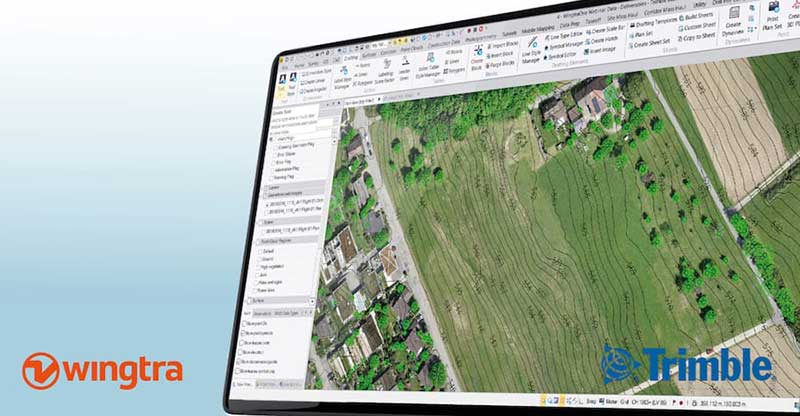
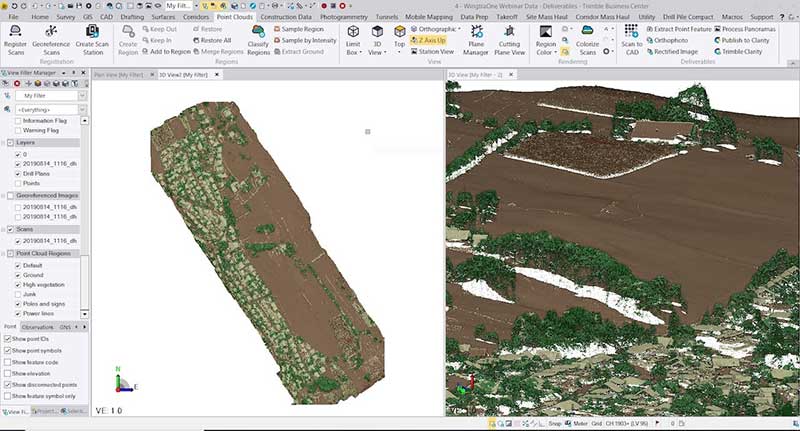
    With Wingtra’s latest software release, surveyors and geospatial professionals can now directly import WingtraOne drone data into the Trimble Business Center (TBC).

    According to Wingtra, the new integration seamlessly combines WingtraOne high-accuracy drone data within TBC, optimizing drone mapping workflows for survey and construction projects within a single software platform.

    The integration allows users to drag and drop data into the software suite. Automated point cloud tools, such as classification and feature extraction, can then be used to quickly generate surface models, topographic plans and as-built deliverables.

    Photo: Wingtra
    Photo: Wingtra

    “It’s a solid step forward to enable our data to work smoothly with Trimble Business Center,” said Francois Gervaix, Wingtra’s geospatial expert. “TBC is a reference software in the industry, because of its success as a data hub for construction and geospatial workflows. Optimizing the workflow lets TBC users smoothly integrate data from the fastest drone data capture platform on the market — WingtraOne.”

    This latest Wingtra software release that introduced JobXML (TBC file format) compatibility also brought various other product updates. Namely, high-altitude flight capabilities, longer flight times and more intuitive battery level readings in-flight, Wingtra added.

  • Esri ArcGIS map tracks global coronavirus cases

    Esri ArcGIS map tracks global coronavirus cases

    The Center for Systems Science and Engineering at Johns Hopkins University is tracking the coronavirus, COVID-19, via an Esri ArcGIS map.

    The map is updated in almost real time, and it includes a zoomable map identifying confirmed cases of the virus throughout the world. It also includes numerical data on how many cases have been confirmed in each country, as well as deaths and recoveries.

    “In response to this ongoing public health emergency, we developed an interactive web-based dashboard hosted by the Center for Systems Science and Engineering at Johns Hopkins University, to visualize and track reported cases in real-time,” John Hopkins stated on its website. “The dashboard, first shared publicly on Jan. 22, illustrates the location and number of confirmed COVID-19 cases, deaths and recoveries for all affected countries. It was developed to provide researchers, public health authorities and the general public with a user-friendly tool to track the outbreak as it unfolds.”

    Check out the map, titled “Coronavirus COVID-19 Global Cases by the Center for Systems Science and Engineering at Johns Hopkins University,” here.

  • Qualcomm makes progress on C-V2X introduction in Europe

    Qualcomm makes progress on C-V2X introduction in Europe

    Photo: Ficosa
    Photo: Ficosa

    Qualcomm Technologies’ 9150 C-V2X Platform, among several other products from automotive and infrastructure suppliers, has completed certification in accordance with the European Radio Equipment Directive (RED) Certification in Europe, a requirement for placing radio equipment on the market.

    This is a major step forward toward the commercial introduction of cellular vehicle-to-everything (C-V2X) in Europe, the company said. C-V2X is a global solution for vehicle-to-vehicle and V2X communication, designed to enhance road safety and facilitate smart transportation systems. C-V2X establishes the foundation to support safety use-cases with a path for integration into next generation 5G technologies, while tapping into the broader 3GPP ecosystem to drive wider adoption. With its evolution to 5G New Radio, C-V2X offers rich and differentiated experiences consumers continue to demand as we usher in the world of 5G and autonomy, the company added.

    A new European Standard defining the use of C-V2X as an access layer technology for Intelligent Transportation System (ITS) devices was recently approved through the European Telecommunication Standardization Institute (ETSI). According to Qualcomm, all the ETSI standards and specifications that define other ITS protocols above the access layer have been updated to support utilization of C-V2X as the underlying access layer. These standards and specifications have been included in the ETSI ITS Release 1 specification set and provide the basis for development of interoperable C-V2X ITS implementations and devices from multiple vendors.

    Several products, all of which feature the Qualcomm 9150 C-V2X chipset solution, have achieved RED certification, including the Commsignia On-Board Unit, Commsignia Roadside Unit, Ficosa OBU, Kapsch RSU, Savari MobiWAVE 2000 OBU, Savari StreetWAVE SW2000 RSU and WNC module.

    “By being one of the very first to achieve the OBU RED certification in June 2019, Ficosa continues its commitment to accelerating and expanding C-V2X as a path to 5G,” said Joan Palacin, business unit director of Ficosa Advanced Communications. “Not only in Europe but also China, USA and globally, we see C-V2X as a key technology to achieve automotive industry challenging safety goals by significantly reducing fatalities on our roads.”

    Qualcomm expects early product availability to accelerate adoption of the solution in the region.

  • TerraGo releases Publisher for Raster application

    TerraGo releases Publisher for Raster application

    Logo: TerraGo

    TerraGo unveiled Publisher for Raster, an application for publishing geospatial raster maps and imagery as GeoPDF documents for use with TerraGo Toolbar.

    According to TerraGo, information otherwise locked away in arcane geospatial raster formats can be made available to a much wider audience as GeoPDF documents that can be measured, analyzed and annotated with TerraGo Toolbar.

    The new release, version 7.1.0, features an improved output naming scheme when processing CADRG and other RPF formats with multiple images. It also reports the same application version number for the online help, processing data using the command prompt, using version, user interface and the installer. Finally, it now pulls the WKT from the GCP tag when the WKT is not listed in the standard
    tag.

    Version 7.0.4 adds support for Windows Server 2016 and Server 2019. It also addresses installation and license activation issues seen on some systems, TerraGo said.

  • Terra Drone Indonesia maps underground campus utilities with GPR drone

    Terra Drone Indonesia maps underground campus utilities with GPR drone

    Photo: Terra Drone Indonesia
    Photo: Terra Drone Indonesia

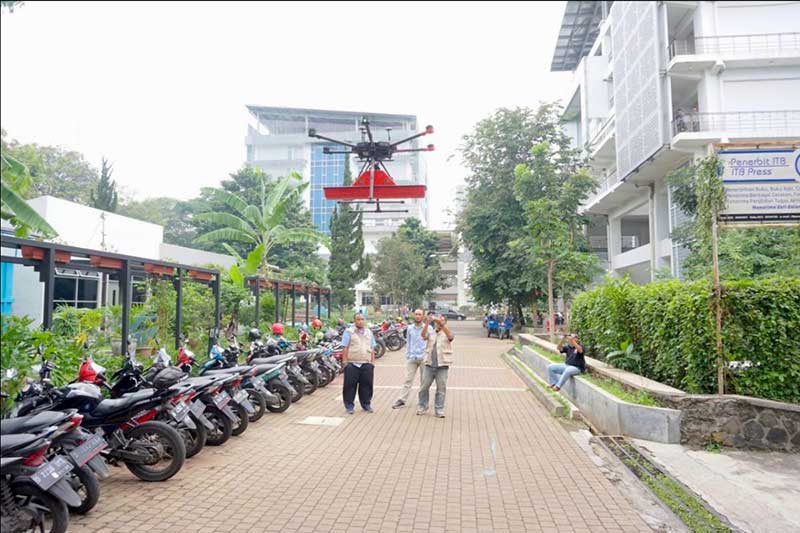
    Terra Drone Indonesia, a group company of Japan-based Terra Drone Corp., has successfully completed a pilot project at the Bandung Institute of Technology (ITB) in Indonesia. The project included flying a drone equipped with a Ground Penetrating Radar (GPR) system over the campus to map tunnels and underground utilities.

    The drone data was then processed and compared with the infrastructure records of the university by geophysicists, who determined the underground assets were accurately and precisely mapped, Terra Drone Indonesia said.

    According to Terra Drone Indonesia, the combination of GPR and drones opens up new potential for the use of unmanned technologies in areas that are traditionally challenging and unsafe, such as post-blast areas in open-pit mines. A GPR drone also could be used to locate underground pipes, map the conditions of the assets and detect hazards like pipeline leaks.

    “The conventional GPR method requires field personnel to go to the field and carry GPR tools to conduct surveys,” said Michael Wishnu Wardana, managing director at Terra Drone Indonesia. “But this method has its own dangers because not only are some areas unsafe and difficult to reach, but also because severe weather conditions in the field can hamper workers from carrying out their jobs diligently. GPR drones, in contrast, have emerged as a much safer and efficient surveying solution.”

    Terra Drone Indonesia worked on this project in collaboration with PT Airborne Geophysics Indonesia and the Geophysics Laboratory at ITB. TerraDrone Indonesia has worked with ITB in the past as well, validating Terra Lidar’s topographic mapping capabilities at ITB’s Jatinangor Campus.

  • Free license tier offered for Touch GIS fieldwork app

    Photo: Touch GIS
    Photo: Touch GIS

    Users can now install and test Touch GIS, a mobile field data mapping app, for as long as needed with a free license tier. Previously, users were able to install the app and sign up for a 14-day free trial period.

    “We realized some users needed more time to evaluate the many features of Touch GIS,” said Joe Wilson, head of product for Touch GIS.

    Touch GIS, a mobile app available on iPhones and iPads, can be used for geologic exploration, utility mapping, farming, real estate, search & rescue and other applications.

    Touch GIS features point, line and polygon drawing features; an offline workflow; WMS/WMTS support; customizable attribute forms; custom feature class creation; SHP, KML, KMZ, GeoJSON, GPX support; and more.

    “We’re really excited to be able to offer this new tier,” Wilson added. “We love working with our users to support their needs in the field. The free tier will allow us to do this better. We also hope this will encourage new users to jump in and really kick the tires. We’re proud of what we’ve built and are excited for more people from a variety of industries to discover the apps capabilities.”

    Users who wish to unlock offline map caching and exporting capabilities can purchase an annual or monthly license, the company said. In addition, discounts are available for educational institutions, qualified non-profits and credentialed U.S. federal government employees.