Author: Tracy Cozzens

  • Bad Elf GNSS receiver adopts Hemisphere Phantom module

    Bad Elf GNSS receiver adopts Hemisphere Phantom module

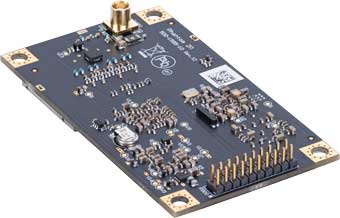
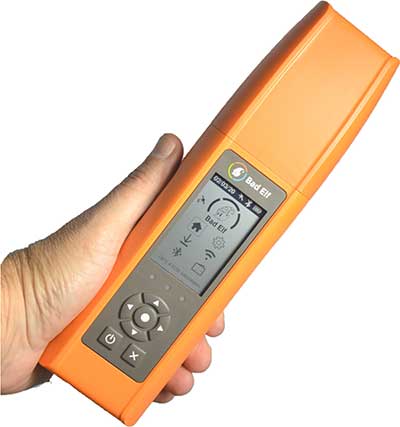
    Bad Elf LLC has completed transition of all Bad Elf Flex receivers to the Hemisphere GNSS Phantom OEM module.

    Photo: Bad Elf
    Photo: Bad Elf

    As one of the first partners to incorporate the Phantom, Bad Elf Flex offers significantly enhanced capabilities and further exemplifies the company’s commitment to future-ready GNSS designs.

    “We tested the Phantom OEM modules extensively, and confirmed they deliver the promised power savings and performance improvements when integrated with the Bad Elf Flex,” said Larry Fox, Bad Elf’s vice president of marketing and business development. “Hemisphere’s technology allows us to democratize GNSS through Bad Elf Flex.”

    The new Phantom modules deliver a 30% gain in battery life, superior performance and scalable access to every GNSS constellation and signal, including GPS, Galileo, GLONASS, BeiDou, QZSS, IRNSS, SBAS and Hemisphere’s Atlas L-band, Fox said.

    Photo: Hemisphere GNSS
    Photo: Hemisphere GNSS

    Bad Elf Flex is a scalable-accuracy GNSS receiver with a daily option to choose between L-band and real-time kinematic (RTK). In standard configuration, it achieves 30-60 cm accuracy in real-time for GIS use.

    Consuming a Bad Elf Flex Token unlocks a full RTK workflow for a 24-hour period to deliver 1-cm horizontal accuracy. Bad Elf Flex stores the tokens directly on the receiver, making them available for use anytime and anywhere. Customers requiring high accuracy at all times can purchase the Bad Elf Flex Extreme bundle, with RTK capabilities permanently unlocked, for a one-time upgrade fee.

    Surveyors and their crews now have a scalable-accuracy, survey-grade receiver. GIS managers can focus on flexible field choices for work crews with varying skill levels. Bad Elf Flex falls within most capital expense budgets, allowing businesses to obtain operational and financial efficiencies.

    “Bad Elf saw an opportunity to offer the GIS community a product lineup with better than 3-meter accuracy for under $3,000,” said John Cunningham, Bad Elf’s chief executive officer. “We began three years ago with our 2-meter ($300) and 1-meter ($600) mapping-grade product offerings. Our customers continued asking us to address the 50 cm, 10 cm and 1 cm requirements for their businesses. We worked hard over the past two years to build a platform, Bad Elf Flex ($3,000), that addresses these needs without breaking budgets. We have a solution that works today and provides a foundation to meet future customer requests. We love learning from our customers and look forward to continuing this conversation and extending high-accuracy GNSS for all.”

    “Hemisphere is excited that Bad Elf’s Flex series now features our latest generation GNSS receiver,” said Miles Ware, director of marketing at Hemisphere. “We believe the scalable accuracy option made possible by our high-performance Atlas L-band correction service will be a game-changer in their served markets.”

  • Eos Positioning announces new high-accuracy GNSS releases at 2020 Esri UC

    Eos Positioning announces new high-accuracy GNSS releases at 2020 Esri UC

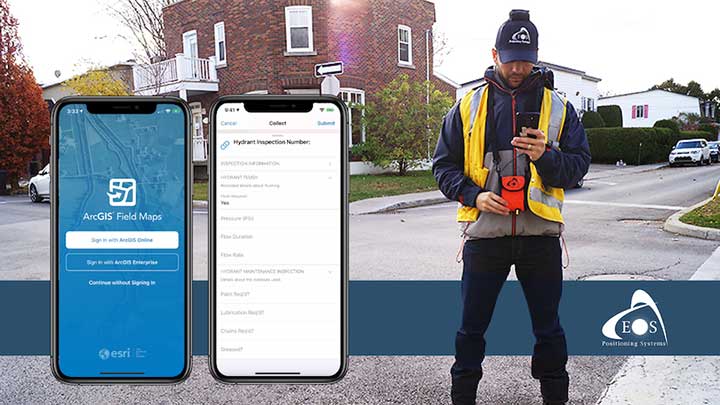
    Eos will announce compatibility of its Arrow GNSS receivers with the inaugural ArcGIS Field Maps beta release, the expansion of Eos Locate underground mapping locator-device compatibility, as well more exciting updates for users of high-accuracy GPS with ArcGIS apps.

    Eos Positioning Systems, manufacturer of the high-accuracy Arrow Series GNSS receivers for the GIS market, has announced several new releases ahead of the 2020 virtual Esri User Conference.

    The announcements include the expansion of the availability of the Eos Locate
    underground mapping solution, compatibility with the new ArcGIS Field Maps, the inaugural release of Eos Tools Pro for Windows, and a “special surprise” for virtual attendees of the 2020 Esri UC.

    Image: Eos Positioning
    Image: Eos Positioning

    Expansion of Eos Locate

    Eos Locate is a high-accuracy, real-time underground mapping solution for Esri
    ArcGIS apps users. It allows organizations to accurately map already-buried assets straight to ArcGIS Online via either ArcGIS Collector or ArcGIS Field Maps.
    Eos has expanded Eos Locate compatibility with additional models from Vivax-Metrotech, Subsite and Radiodetection.

    Compatibility with ArcGIS Field Maps beta

    ArcGIS Field Maps is the newest Esri mobile application, which combines the functionality of several existing Esri mobile applications, such as ArcGIS Collector, ArcGIS Explorer, and ArcGIS Tracker.

    The ArcGIS Field Maps beta release this month is already fully compatible with Arrow GNSS receivers (all models). This means organizations with Arrow GNSS receivers can immediately start taking advantage of survey-grade Arrow GNSS locations and metadata within ArcGIS Field Maps for data collection, markups, read-only routine field work (e.g., utility locates), GPS tracking, and more.

    In addition, two Eos solutions previously exclusive only to Collector also already work with ArcGIS Field Maps. These include:

    1. Eos Locate for underground asset mapping
    2. Eos laser mapping (laser offsets) for collecting assets from afar

    Inaugural release of Eos Tools Pro for Windows

    Eos Tools Pro is a free GNSS monitoring application for Arrow GNSS receivers. For the first time, this app is now available for Windows 10 users.

    Eos Tools Pro allows fieldworkers to:

    • Connect to an RTK network or base station via NTRIP
    • Get elevations in orthometric heights via geoid model conversions in real time, in the field (directly into an Esri app)
    • Apply a simple X, Y, Z datum shift to the current location to match any local datum
    • Set a vast number of audible alarms

    In addition, developers using Windows 10 will now be able to access the wide array of Arrow GNSS metadata while eliminating the task of parsing NMEA data.
    Finally, Eos Tools Pro features a built-in duo of virtual Com Port and TCP/IP server to output streams of standard NMEA sentences. This enables multiple apps to have simultaneous access to the Arrow GNSS location and metadata.

    Special surprise for eligible 2020 Esri UC attendees

    In support of the inaugural virtual Esri UC, Eos is offering a one-time-only chance to win an Arrow 100 submeter GNSS receiver. To enter to win, eligible attendees must both

    1. Complete a meeting with an authorized Eos representative during the 2020 Esri UC (July 13-16), which can be achieved by visiting the Eos virtual booth (V103), and
    2. Fill out a special contest contact form made available by that representative.
      Both the meeting and special contest contact form submission must be completed no later than July 16.

    The following people are not eligible to win: Employees of Eos and Eos distributors, employees of Esri and Esri distributors, employees of other exhibiting/sponsoring companies, employees of other GPS manufacturers or vendors, registered media, and others whom we deem to have a similar affiliation.

    Visit the Eos virtual booth (V103) to talk with sales, marketing, and technical support staff during the event expo hours.

  • ViaLite distributed GPS systems chosen for NASDAQ

    ViaLite distributed GPS systems chosen for NASDAQ

    ViaLite has been asked to supply distributed GPS equipment for the NASDAQ stock exchange in New York for the first time.

    Photo: ViaLite
    Photo: ViaLite

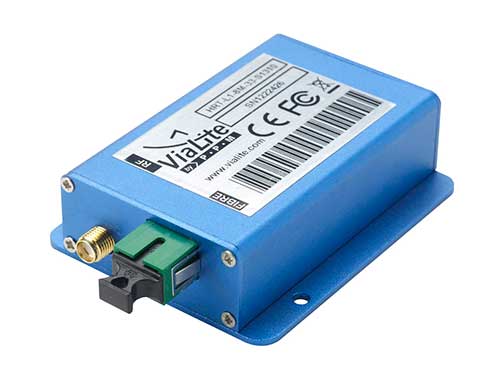
    ViaLite’s Distributed GPS System is being used to feed mission-critical timing and synchronization signals over optical fiber to multiple S650 GPS referenced NTP time servers.

    Stock exchanges need to offer their clients the fastest possible trading speeds and, for this, their IT systems need to be provided with highly accurate timing signals, which can be obtained from GPS/GNSS satellite networks.

    The equipment Vialite supplied included GPS lossless distributed multi-port fiber-optic links, supplied in OEM format to meet NASDAQ’s requirements.

    “ViaLite was chosen for its performance attributes that are not readily available elsewhere in the RF over fiber market, as well as for its best in class quality, reliability and support,” said ViaLite director of sales, Craig Somach.

    For more information on RF over fiber for data centers, stock exchanges and more, visit www.vialite.com.

    Photo: Shutterstock.com/Eviart
    Photo: Shutterstock.com/Eviart
  • GMV to help develop unmanned ground vehicle for European defense

    GMV to help develop unmanned ground vehicle for European defense

    GMV will take charge of the command and control and C4ISR interoperability system under the Integrated Modular Unmanned Ground System (iMUGS).

    The European Commission’s European Defence Industrial Development Programme (EDIDP) has assigned 30.6 million euros to the iMUGS project for the development of an unmanned ground system. This makes it one of the European Commission’s biggest defense investments to date.

    The Integrated Modular Unmanned Ground System (iMUGS) project will be carried out by a consortium primed by Milrem Robotics, with another 11 high-tech defense firms, including the technology multinational GMV.

    The common development of this vehicle will build from Milrem Robotics’s previous program called THEMis, with the addition of various mission systems and autonomy solutions.

    The aim is to develop a valid scalable architecture applicable to both manned and unmanned vehicles, with the idea of standardizing Europe’s ground and air systems and its command-and-control and communications systems, sensors, payloads and autonomy algorithms.

    The system will consist of a robust and modular ground vehicle fitted with an electronic-warfare-resistant command, control and communications system and secure autonomous mobility software to allow the operator to control many different ground and air platforms securely and simultaneously.

    iMUGS will include several components:

    • system cybersecurity
    • autonomous mobility
    • advanced communications systems and further driving-related developments
    • manned-unmanned teaming (MUT) including swarms.

    iMUGS will enable European countries to use unmanned vehicles with logistics and ISR functions, trimming the load and increasing troop security.

    With this joint initiative, the European Defence Fund meets member states’ requirements and draws on the skills of Europe’s industry to boost defense capabilities and strategic autonomy.

    European Defence Industrial Development Programme (EDIDP)

    The European Defence Industrial Development Programme (EDIDP) is the first initiative of the European Union’s 2019 and 2020 defense research window of capabilities. Announced on June 7, 2017, EDIDP can be considered the “preparatory action” of defense research to prove the feasibility of a joint defense-capability development and procurement program.

    EDIDP’s aim is to drive the European Union’s strategic autonomy and cooperation between member states, making it possible for armed forces to carry out high level operations, with special attention to intelligence, secure communications and cybernetics.

    Under the EDIDP 2019-2020 program, GMV is participating in the iMUGS, GEODE, ESC2 and PANDORA projects.

    GMV‘s iMUGS role

    GMV will be coordinator of the command and control and C4ISR interoperability subproject. GMV is bringing to the table experience in C2 ground systems and JISR (joint intelligence, surveillance and reconnaissance interoperability).

    The overall aim is to develop the C2ISR tactical component for planning and carrying out joint manned and unmanned systems operations, using and distributing sensor data from the unmanned ground vehicle.

    JISR interoperability synchronizes and integrates the planning and operation of all information-obtaining capacities with operation and processing capacities, sending on the resulting information to the assigned person at the right time in the right form and in direct support of present and future operations.

    The Boxer Mechanised Infantry Vehicle (MIV) is used by many allied forces. (Photo: UK Ministry of Defence
    The Boxer Mechanised Infantry Vehicle (MIV) is used by many allied forces. (Photo: U.K. Ministry of Defence)

    The C2 command and control subsystem will be fitted in a Boxer 8 x 8 vehicle for manned-unmanned teaming (MUT) coordination tests.

    GMV’s participation in iMUGS is based on its experience in C2 ground systems, dismounted soldier C2 systems and JISR interoperability, areas where GMV is one of the leading companies in Europe. GMV is a supplier of Artillery and Dismounted Soldier Command and Control Systems for the Spanish MoD.

    Since 2016 it has been responsible for maintenance and upgrading of the EUCCIS C2 system of the European External Action Service (EEAS).

  • Congress makes moves against FCC’s Ligado decision

    Congress makes moves against FCC’s Ligado decision

    At first it was a flurry of letters and public statements from U.S. senators and members of the house. Then there was a senate hearing on the topic, and the issue was discussed in several other hearings.

    The Federal Communications Commission’s (FCC) approval of a long-standing request by Ligado Networks continues to be controversial. The request was to make terrestrial broadcasts on a frequency near that used by GPS. Broadcasts which, according to analyses by the departments of Defense and Transportation, will interfere with GPS reception for many users.

    Now it looks as though Congress is ready to move beyond talk and enact one or more pieces of legislation. These would require an independent technical review of the FCC’s decision and place limits on the ability of Ligado Networks to use the license it was granted.

    Congressional interest has been fueled both by member concerns and a regular drumbeat of input from constituents. The recently formed Keep GPS Working Coalition is just one example. It was created from a larger group of more than 70 companies and organizations across a broad swath of industries that has gone on record against the decision and has been supporting congressional action.

    National Defense Authorization Act

    A primary vehicle for congressional action looks to be the National Defense Authorization Act (NDAA) for 2021. Unlike other “annual” legislation that often gets sidetracked or delayed during election years, Congress has passed an NDAA for each of the past 59 years. As such, it is a particularly powerful tool.

    This is doubly so in this case, as the member of Congress that has been the most outspoken critic of the FCC’s decision is Senator Jim Inhofe (R-OK). He chairs the Senate Armed Services Committee that has direct responsibility for the NDAA.

    The Senate version of the NDAA has several provisions that directly address the FCC’s decision.

    Responding to conflicting claims about the findings of government and private tests, the bill requires the Defense department to contract with the National Academies of Science, Engineering and Medicine for an independent technical review.

    Evaluating Potential Impact on GPS

    Among other things, the review will compare the different methods of evaluating the potential impact on GPS services from Ligado’s transmissions, and determine which of those was the most effective in guarding against any harm.

    The bill also prohibits the Defense Secretary from spending any money to comply with the FCC’s order until the Congress has been given an estimate of the total cost to the department of coping with Ligado’s transmissions.

    While the FCC order requires Ligado to modify or replace any government receivers impacted by its operations, the Defense department and others have said this is only a small fraction of the overall costs they would incur.

    The bill requires the Defense Department estimate to consider a much larger scope of costs including:

    • To upgrade, repair, or replace potentially affected receivers
    • To modify, repair, or replace equipment, pares, associated ancillary equipment, software, facilities, operating manuals, training, or compliance with regulations, including with regard to the underlying platform or system in which a capability of the Global Positioning System is embedded; and,
    • For personnel of the department to engineer, validate, and verify that any required remediation provides the Department with the same operational capability for the affected system prior to terrestrial operation in the 1525 to 1559 megahertz or 1626.5 to 1660.5 megahertz bands of electromagnetic spectrum.

    The House version of the NDAA also provides that:

    “The Secretary of Defense may not enter into a contract, or extend or renew a contract, with an entity that engages in commercial terrestrial operations using the 1525–1559 megahertz band or the 1626.5–1660.5 megahertz band unless the Secretary has certified to the congressional defense committees that such operations do not cause harmful interference to a Global Positioning System device of the Department of Defense.”

    RETAIN GPS and Satellite Communications Act

    Senator Inhofe has also announced he will introduce stand-alone legislation when Congress returns from summer recess. His “Recognizing and Ensuring Taxpayer Access to Infrastructure Necessary for GPS and Satellite Communications Act,” or “RETAIN GPS and Satellite Communications Act,” would require Ligado to modify or replace any receiver, including those used by private citizens, that would be impacted by Ligado’s operations.

    This modification would be required before the FCC’s order allowing them to transmit could come into force. Most observers opine that the number of impacted civil receivers in the U.S. is so great that this would effectively deny Ligado use of the frequency.

    Introduction of the RETAIN GPS and Satellite Communications Act was planned for before the summer recess. Its delay until after was likely to provide more time to recruit co-sponsors.

    GPS Interference a ‘Niche’ Issue

    One observer commented that “GPS and the FCC Ligado order are really niche issues. As time goes on, more and more members of Congress will hear about it from constituents and be appalled.”

    The delay will also allow time for the mammoth NDAA bill to clear Congress. RETAIN GPS would then have more chance for the spotlight.

    Many industry observers have opined that regardless of congressional action, Ligado will struggle to find a successful 5G or other business model that will generate a significant revenue stream from the spectrum.

    As public concern continues to grow and Congress responds with legislation, it may turn out that Ligado finally won the battle at the FCC but ended up losing the war.


    Photo of the U.S. Capitol/RNT Foundation.
  • Tallysman offers new GNSS helical antennas, splitters

    Tallysman offers new GNSS helical antennas, splitters

    Tallysman Wireless Inc. has added two new models to its line of GNSS helical antennas.

    Also new are two GNSS signal splitters.

    New Helical Antennas

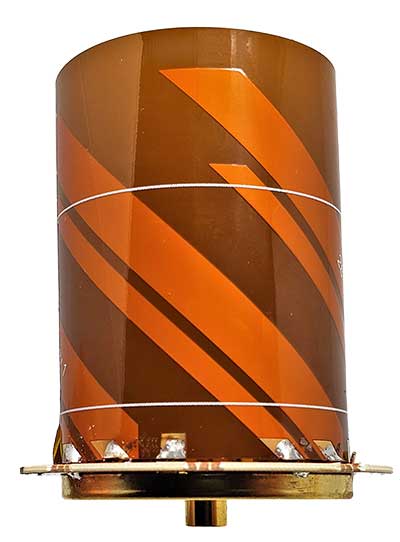
    HC976 triple-band helical antenna with L-band, embedded version. (Photo: Tallysman)
    HC976 triple-band helical antenna with L-band, embedded version. (Photo: Tallysman)

    The HC976 housed and HC976E embedded helical antennas are designed and crafted for high-accuracy positioning in a light and compact form factor, making them suitable for many applications:

    • autonomous vehicle navigation (land, sea and air)
    • handheld land survey devices
    • automotive positioning
    • GNSS timing

    Both models support GPS/QZSS-L1/L2/L6, GLONASS-G1/G2, Galileo-E1/E6, and BeiDou-B1/B3 frequency bands.

    Regional augmentation services supported include:

    • WAAS (North America)
    • EGNOS (Europe)
    • MSAS (Japan)
    • GAGAN (India)
    • high-precision L-band correction services

    The key feature of the HC976 and HC976E is the support of QZSS-L6, Galileo-E6 and BeiDou-B3.

    The HC976 is 44 millimeters (mm) wide and 62 mm tall, weighing only 42 grams.

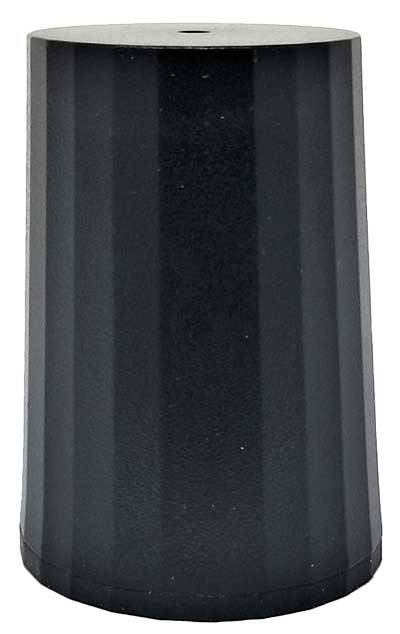
    HC976 triple-band helical antenna with L-band, housed version. (Photo: Tallysman)
    HC976 triple-band helical antenna with L-band, housed version. (Photo: Tallysman)

    It features a precision-tuned helical element that provides an excellent axial ratio and operates without the requirement of a ground plane, making it suitable for a wide variety of high-precision applications.

    The HC976 also features a low-current, low-noise amplifier (LNA) and pre-filter to prevent harmonic interference from high-amplitude signals, such as 700 MHz band LTE and other nearby in-band cellular signals.

    All Tallysman’s housed helical antennas are enclosed in a robust military-grade plastic enclosure. The antenna base has an integrated SMA connector, a waterproofing O-ring and three screw holes to enable secure attachment.

    Weighing only 12g and measuring 39mm wide and 50mm tall, the lightweight HC976E embedded antenna supports all the features of the HC976. To facilitate installation of the HC976E, Tallysman provides an optional embedded helical mounting ring, which traps the outer edge of the antenna circuit board to the host circuit board or to any flat surface.

    Tallysman also provides support for installation and integration of embedded helical antennas to enable successful implementation and to provide optimal antenna performance.

    New GNSS Splitters

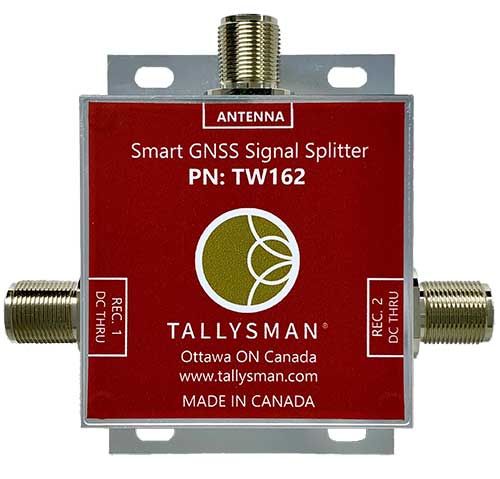
    Photo: Tallysman
    Photo: Tallysman

    Tallysman’s two new Smart Power GNSS signal splitters improve GNSS service reliability.

    GNSS is a critical component in safety, security, timing, and infrastructure applications, all of which require very high availability. Tallysman provides resilient, fault-tolerant Smart Power GNSS signal splitters that are essential to minimize service interruptions.

    The design of first-generation GNSS signal splitters suffered from a single point of failure: only one attached receiver powered the splitter and the antenna. If this receiver failed or was unplugged, all attached receivers also failed.

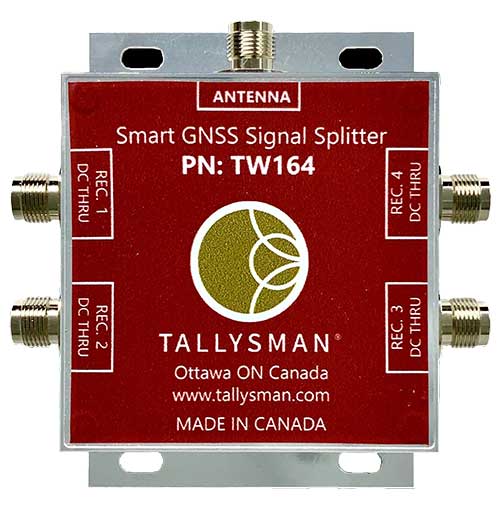
    Tallysman’s current-generation Smart Power GNSS signal splitters, TW162 (one antenna/two receivers) and TW164 (one antenna/four receivers), offer system redundancy and fail-over capability.

    Photo: Tallysman
    Photo: Tallysman

    First, the splitter accepts power from all attached GNSS receivers; if one receiver fails, the next attached receiver automatically provides power to the splitter and antenna.

    Second, if the antenna fails and does not draw current, it will provide the receiver powering the splitter with a current draw lower than 1 mA, indicating an antenna fault.

    The Tallysman TW162 and the TW164 are professional-grade GNSS signal splitters that support the full GNSS spectrum: GPS/QZSS-L1/L2/L5, QZSS-L6, GLONASS-G1/G2/G3, Galileo-E1/E5a/E5b/E6, BeiDou-B1/B2/B2a/B3 and L-band correction service frequency band.

    The TW162 and TW164 are packaged in a robust, compact, lightweight, and waterproof (IP67) corrosion-protected aluminum housing. They splitters are available with either TNC or type-N connectors. Two gain options are available: standard gain to compensate for signal-splitting loss and 10-dB gain.

  • Cohda Wireless partners with u-blox on next-generation V2X

    Cohda Wireless partners with u-blox on next-generation V2X

    Cohda Wireless has partnered with u-blox to produce an advanced V2X solution for the global Cooperative Intelligent Transport market. With the partnership, Cohda’s V2X software stack will support the u-blox UBX-P3 DSRC/802.11p V2X chip.

    Cohda Wireless and u-blox have a long-standing relationship and share a common vision of leveraging wireless technology to reduce the number of road accidents and fatalities across the globe.

    The u-blox chip enables wireless vehicle-to-vehicle (V2V) and vehicle-to-infrastructure (V2I) communication, now enhanced with Cohda’s hardware-agnostic software applications.

    Cohda said its software is widely deployed in the industry, providing 360° awareness and detecting hidden threats beyond anything a driver or on-board sensors can see.

    Cohda Wireless Chief Engineer Fabien Cure said that the partnership offers the market an advanced V2X solution that will be of particular interest to Tier 1 auto makers, OEMs and road authority suppliers.

    “In order to progress vehicle safety, OEMs need to produce vehicles that have embedded V2X wireless communication technology as a standard inclusion,” Cure explained. “Likewise, cities around the world are preparing for the introduction of wide scale cooperative intelligent transport systems.”

    Cohda’s V2X software is in production vehicles of GM and Volkswagen.

    “Connectedness is the key to safer roads and highways around the world and a technology solution of this calibre is an enabler of further trials and development in this sector that we warmly welcome,” added Mr Cure.

    “The porting of Cohda’s leading V2X onto our high-performance UBX-P3 chip is an important proof point that both our solutions are interoperable and enable a swift integration into automotive platforms,” said Herbert Blaser, senior director, Product Center Short Range Radio at u-blox.

    Cohda’s software products are applied in more than 60 percent of all V2X field trials in the world today in compliance with U.S. Federal Communications Commission and European Telecommunications Standards Institute (ETSI) standards.

    “When we connect vehicles to each other and to roadside infrastructure, we are creating an intelligent and integrated road transport system that has the potential to reduce road accidents simply because the technology is capable of things humans aren’t,” added Cure.

    Image: Cohda Wireless
    Image: Cohda Wireless
  • NSGIC issues guidance for states to strengthen address data programs

    NSGIC issues guidance for states to strengthen address data programs

    Guidance issued for states to strengthen address data programs complete and accurate data necessary for emergency response, other government services

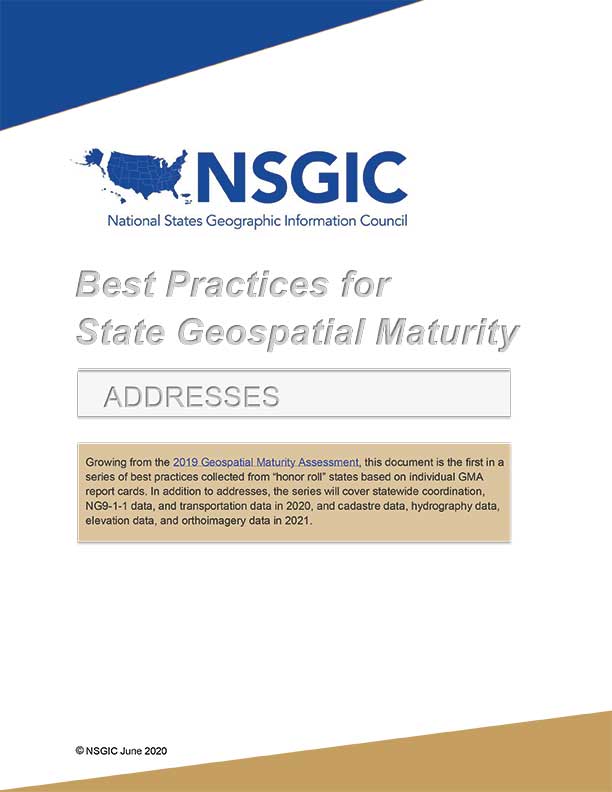
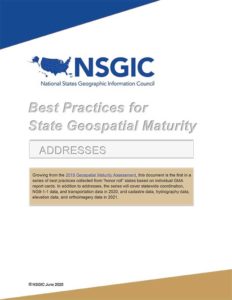
    Cover: NSGIC reportA report issued by the National States Geographic Information Council (NSGIC) targets a key dataset for state governments. “Best Practices for State Geospatial Maturity: Addresses” is available now.

    “Addresses are created by local address authorities in city, county, and tribal agencies,” explained NSGIC Executive Director Molly Schar. “The data support delivery of services like utilities and emergency response, so getting it right is absolutely critical. NSGIC advocates the process of rolling up local address point records to the state to aggregate and then to the national level to save lives, reduce costs, avoid duplication, increase revenues, improve service and foster efficient and effective government.”

    The roll-up process is at the heart of an effort led by the U.S. Department of Transportation and supported by NSGIC to develop a National Address Database. Only 23 states have provided statewide address data to the national database, with five states providing partial data, and three states in the queue.

    For this publication, NSGIC tapped state geospatial information officers in Kansas, Massachusetts, Minnesota, New Mexico, New York, Utah and Vermont to identify key factors to the successful organization and coordination necessary to create and maintain strong address programs. These honor roll states scored in the top of the country in the area of address data in NSGIC’s 2019 Geospatial Maturity Assessment (GMA).

    NSGIC recently finalized an interactive GMA geospatial web map application with dashboards customized for each data theme allows users to take a deeper dive into the 2019 results, interacting with individual state and collective national results to bring to life the visual patterns and trends in the data.

    Geospatial data dashboards have become much more familiar to the public in recent months as most states and municipalities have adopted the interactive platforms to transparently display coronavirus information.

    Launched in 2009 to document geospatial development practices and uses, the GMA has provided a biennial snapshot of each state’s geospatial maturity. Inspired by the National Spatial Data Infrastructure theme grading undertaken by the Coalition of Geospatial Organizations (of which NSGIC is a founding member), an entirely new process was developed for the 2019 GMA.

    Nine-grade “report cards” were produced for individual state spatial data infrastructures and state geospatial coordination, in addition to overall theme and topical analysis.

    Over the next 18 months, additional focused guidance will be issued in the areas of overall statewide coordination and the key datasets for next generation 9-1-1, transportation, parcels, hydrography, elevation, and orthoimagery.

    “Collaboration, transparency, and increased efficiency in government are hallmarks of mature state GIS programs,” Schar said. “Through the Geospatial Maturity Assessment research and products, NSGIC is helping states set goals, identify opportunities for collaboration, shine a light on areas requiring attention, and build resources.”

  • SMC awards 3 agreements for modernized GPS handheld

    SMC awards 3 agreements for modernized GPS handheld

    SMC awards multiple rapid prototyping agreements for joint modernized GPS handheld device; four demonstrations to be held

    The Defense Advanced GPS Receiver (DAGR) in use in 2011. (Photo: U.S. Army)
    The Defense Advanced GPS Receiver (DAGR) in use in 2011. (Photo: U.S. Army)

    On June 26, the United States Space Force’s Space and Missile Systems Center awarded three separate rapid prototyping agreements to Collins Aerospace, Raytheon Intelligence & Space and the Technology Advancement Group for a total of $41.1 million.

    The firm-fixed price agreements are for the development of a basic working prototype of the joint modernized GPS handheld device. The contract provides the government with innovative solutions demonstrated via hardware and software prototype development.

    The purpose of this rapid prototyping effort is to produce a joint modernized handheld smaller in size with low power consumption, increased military-code capability, and improved anti-jamming and anti-spoofing capabilities compared to the equipment now used by the military.

    4 demonstrations coming

    This is the second competitive objective under the current Phase I strategy and is the result of a down-select from five to three vendors. It builds off the first objective of Phase I, which focused on mock-ups and drawings.

    These agreements provide for four demonstrations to be held with Army and Marine Corps representatives. The demonstrations give the end users an early opportunity to provide feedback and the ability to influence the final design — ultimately making for a more seamless transition to operations.

    “This is the first major update to the military’s GPS handheld device in more than 15 years,” said Col. Clifford Sulham, User Products Division chief.  “The advanced capabilities of this device will allow our airmen, soldiers, sailors and Marines to conduct operations in GPS-challenged environments.”

  • ProStar joins Trimble’s GIS Business Partner Program

    ProStar joins Trimble’s GIS Business Partner Program

    Photo: Trimble
    Photo: Trimble

    Trimble GNSS integrates with PointMan field applications to identify, capture and record the precise geospatial location of utilities

    ProStar has joined Trimble’s GIS Business Partner Program. As part of the program, ProStar has implemented the Trimble Precision SDK (software developer kit) to integrate high-accuracy positioning capability in its PointMan mobile application running on smartphones and tablets using Trimble GNSS receivers.

    ProStar provides field crews with an easy-to-use mobile data collection solution designed to capture, record and provide real-time visualization of the precise locations of subsurface infrastructure, while utilizing a centralized database to permanently and securely store and share utility location records in the cloud.

    By adding the Trimble R Series and Trimble Catalyst receivers to the ProStar workflow, users can confidently access high-quality data and identify potential conflicts to avoid accidents, disruption of services and costly delays to infrastructure projects impacted by not knowing the precise locations of buried utilities.

    “Together, Trimble and ProStar are changing the way construction companies, engineering and surveying firms as well as government transportation agencies capture, store and utilize utility infrastructure data. By leveraging the power of geospatial technology, they are able to make more informed decisions in the field,” said Stephanie Michaud, strategic marketing manager, Trimble Survey & Mapping field solutions. “Through this collaboration with ProStar, we are committed to integrating Trimble technology into ProStar’s cloud and mobile solutions to enhance safety protocols on site, reduce project costs and make a safer work environment.”

    “We’re excited about this new collaboration and the integration of our PointMan software with Trimble’s high-accuracy GNSS receivers,” said Page Tucker, president & CEO of ProStar. “Creating a seamless integration with Trimble high-accuracy receivers and our PointMan software is a game-changer that will now provide one of the most comprehensive and precise field data collection solutions in the industry.”

    About ProStar

    ProStar specializes in the development of Precision Mapping Solutions. ProStar’s Solution is natively cloud and mobile and offered as Software as a Service.

    ProStar’s Solution is designed to improve the business operations of any industry that requires the precise location of sub-surface infrastructure including utility, oil & gas, construction, engineering & surveying, 811 and contract locating.

    ProStar’s Solution enables real-time access to precise location information including in the office and out in the field. Knowing the type, precise location and condition of what lies below the earth’s surface can significantly decrease liabilities and increase productivity during construction and maintenance activities.

  • Harxon and Fuyao Group partner to develop smart conformal antenna

    Harxon and Fuyao Group partner to develop smart conformal antenna

    Representatives from Fuyao Glass visited Harxon's Shenzhen, China, headquarters on July 1. (Photo: Harxon)
    Representatives from Fuyao Glass visited Harxon’s Shenzhen, China, headquarters on July 1. (Photo: Harxon)

    Fuyao Glass Industry Group Co. Ltd. and Harxon Corporation have established a partnership to develop an advanced smart conformal antenna with automotive glass. Representatives from Fuyao Glass visited Harxon’s Shenzhen, China, headquarters on July 1.

    According to the agreement, Harxon will specifically study the pass-through characteristics of high-frequency signals, and develop revolutionary automotive antennas based on the material and manufacturing craftsmanship of Fuyao Group automotive glass.

    Both parties will establish a joint innovation team to research and develop a smart, multi-band conformal automotive antenna that integrates radio services with Fuyao’s smart automotive glass technology.

    By combining the automotive glass and the antennas into one package, automakers capture immediate benefits of cost reduction, reduced installation complexity, and improved reliability.

    Founded in 2008, Harxon Corporation (a BDstar company) is a customer-focused enterprise carrying out innovative research, manufacturing and marketing in high-precision GNSS antennas, ultra-reliable wireless data transmission radio modems, and smart antennas. Applications include surveying, precision agriculture, UAVs and automotive vehicles.

    Fuyao Glass was founded in Fuzhou, China, in 1987. It is a multinational company specializing in the manufacture of automobile safety glass and industrial technical glass.

  • ION GNSS+ 2020 to be virtual-only show

    ION GNSS+ 2020 to be virtual-only show

    The annual ION GNSS+ 2020 Conference scheduled to take place Sept. 21-25 in St. Louis, Missouri, will now be held entirely virtually.

    The Institute of Navigation (ION) made the decision after careful consideration and in light of COVID-19 and the domestic and international travel restrictions that make it impossible for many speakers and participants to participate in person, the organization stated.

    “The virtual platform is the best way to deliver a meaningful technical program experience to all participants,” said Lisa Beaty, executive director.

    ION GNSS+ 2020 VIRTUAL will be held over the original dates, Sept. 21-25, in Central Daylight Time and will live stream the plenary and all panel keynote sessions, including the Civil GPS Service Committee meeting, through the virtual web platform. These sessions will also be recorded and uploaded for viewing at a later time. Interactive question and answer will take place virtually.

    Individual technical presentations will be pre-recorded and uploaded with slides to the ION GNSS+ 2020 VIRTUAL site each morning for viewing at a later time. Attendees will have the option to submit questions to each presenter. Details can be found in the online program.

    Recognizing that industry partners want to connect with ION GNSS+ 2020 VIRTUAL attendees, ION is providing an expanded online exhibitor profile that allows exhibitors to upload a complete company profile with sales information, upload their company logo and company brochures, and will include complete contact information that allows attendees to email an exhibitor directly to ask questions or set up a phone or virtual appointment.

    The Institute of Navigation is offering free conference registrations for ION GNSS+ first-time attendees (some restrictions apply) and a COVID-19 economic impact discounted virtual registration fee.

    For more information on ION GNSS+ 2020 VIRTUAL, go to www.ion.org/gnss.