Category: Autonomous

  • YellowScan launches long-range, multi-platform lidar Explorer

    YellowScan launches long-range, multi-platform lidar Explorer

    New flagship offering can be mounted on a light manned aircraft or switched to different types of UAV platforms
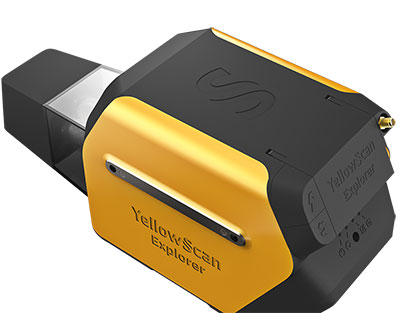
    Photo: YellowScan
    Photo: YellowScan

    YellowScan, a designer of UAV lidar solutions, has launched the YellowScan Explorer. The Explorer can be mounted on a light manned aircraft or switched to different types of UAV platforms. The compact, versatile, long-range platform allows users to tackle a wide range of projects and mission profiles.

    The Explorer’s high-power laser scanner can catch points up to 600 meters away, yet its low weight (2.3 Kg without battery) provides users with an integratable system. Combining Explorer with YellowScan’s full suite of software solutions to extract and process point cloud data provides users with a highly accurate set of tools for surveying, forestry, environmental research, archaeology, industrial inspection, civil engineering and mining.

    The Explorer comes with an Applanix APX-20 UAV GNSS/inertial solution, precision of 2.6 cm and accuracy of 2.2 cm. Flight operation speed is 5 m/s to 35 m/s and it is capable of above-ground-level (AGL) altitude up to 300 m. Designed to be mounted on fixed-wing UAV, multi-rotor UAV or manned aircraft (light plane and helicopter), Explorer can enable a large variety of mission profiles.

    YellowScan launched the Explorer during Commercial UAV Expo 2021 in Las Vegas, Sept. 7-9.

    “We have been working on Explorer for the last three years, building on everything we have learned and achieved to date from a hardware, software and component integration perspective,” said Nassim Doukkali, R&D project manager, YellowScan. “One of the elements we are most proud of is the laser scanner, which has been designed according our specific specifications. With a maximum range of 600 m, the Explorer has exceeded YellowScan’s initial expectations.”

    In 2017, YellowScan took part in a research project called FRELON (“French long range lidar”), funded by the European Regional Development Fund. The goal was to develop a new standard for long-range lidar by bringing together innovative specialists like YellowScan to collaborate directly with Airbus Defense and Space, Delair, M3 Systems and utility end-users EDF, RTE, Enedis and SNCF to develop the next-generation solution to meet their requirements.

    “We are proud to finally release Explorer,” said Tristan Allouis, CTO, YellowScan. “This is our answer to the market’s need for a single long-range, yet compact, lidar unit that can be mounted on light manned aircraft and various UAV platforms.”

  • GSA selects Hexagon US Federal as prime for ASTRO contract

    GSA selects Hexagon US Federal as prime for ASTRO contract

    GSA logoThe U.S. General Services Administration (GSA) has selected Hexagon US Federal as a prime contractor for ASTRO, a 10-year, indefinite-delivery/indefinite-quantity (IDIQ) contract with an estimated $90 billion value.

    The ASTRO contract is being administered by the Federal Systems Integration and Management Center (FEDSIM). Sponsored by the Department of Defense (DoD), ASTRO is comprised of 10 pools to deliver services related to manned, unmanned and optionally manned platforms and robotics.

    Hexagon was selected as one of multiple awardees for the Data Operations Pool, which includes all data collection, processing, exploitation, and dissemination activities associated with manned, unmanned, and optionally manned platforms and/or robotics supporting mission performance. The formal government kick-off is anticipated to take place in November 2021.

    Hexagon is a provider of digital reality solutions, combining sensor, software, and autonomous technologies, putting data to work to boost efficiency, productivity, quality and safety across industrial, manufacturing, infrastructure, public sector and mobility applications.

    Hexagon US Federal provides technology and professional services for C5ISR, installation security, GIS, and cyber security. Dedicated to the delivery of Hexagon technology and services to the U.S. government, including defense, intelligence, and civilian organizations, the company builds solutions that help its customers design, build, maintain, manage, operate, and protect.

  • AirData and UgCS partner

    AirData and UgCS partner

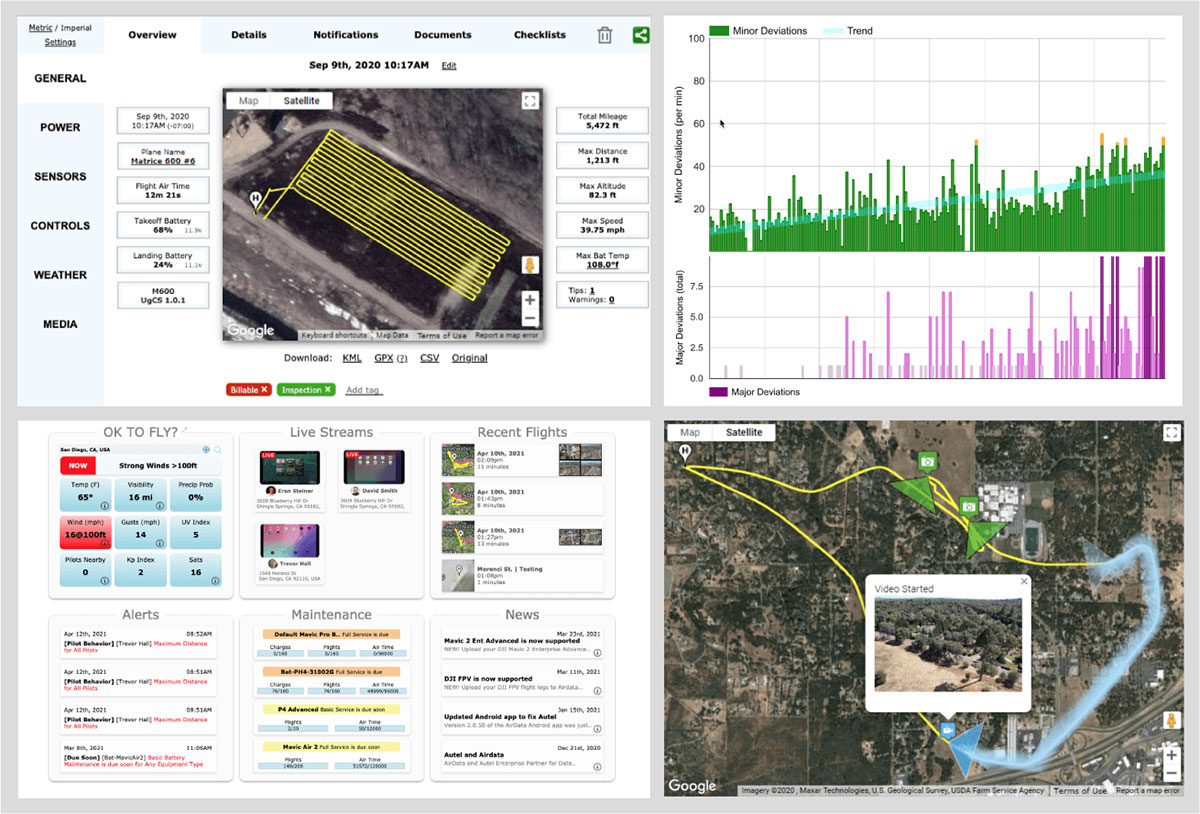
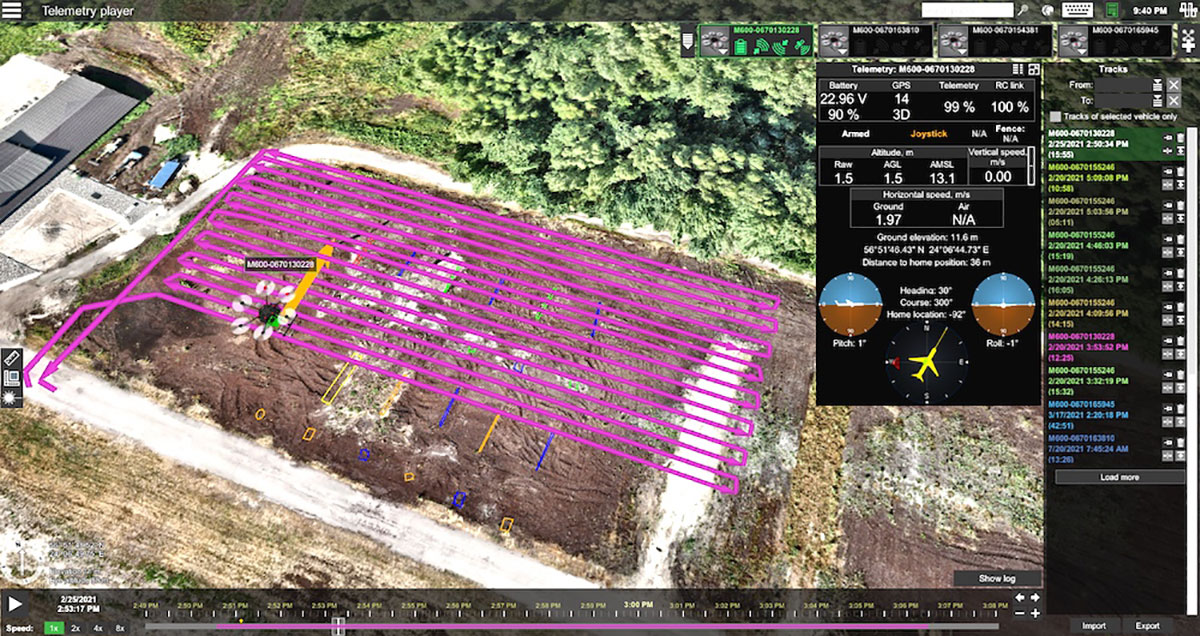
    Telemetry view of drone survey mission in UgCS. (Image: SPH Engineering)
    Telemetry view of drone survey mission in UgCS. (Image: SPH Engineering)

    SPH Engineering and AirData UAV have partnered to offer pilots a way to track and manage their fleets by automatically synchronizing flight data from SPH Engineering’s UgCS to AirData.

    SPH Engineering and AirData have worked closely to provide an automatic method to synchronize flight logs with AirData. The new integration will transmit detailed and comprehensive flight information from UgCS and will leverage AirData’s crash prevention algorithms, pilot and equipment alerting, as well as maintenance tracking with no manual steps required.

    UgCS by SPH Engineering is a tool for enhanced UAV mission planning and flight control software solution. Today, it is used in more than 150 countries in a wide range of areas including environmental, archeological, engineering and mining, agricultural and biological. The UgCS Educational program aims to support universities with a safe and efficient tool to test innovative ideas involving surveying and inspecting with a drone. SPH Engineering is a multiproduct drone software company and UAV integration services provider.

    AirData is an online drone fleet data management and real-time flight streaming platform, serving more than 200,000 users with 19 million flights uploaded to date, processing an average of 20,000 flights a day, with high-resolution data stored per each flight. It is used by large fleet operators around the world not only as a logbook, but also as a comprehensive flight safety data analysis and crash prevention platform, with advanced maintenance, pilot tracking and live streaming.

    Image: SPH Engineering
    Image: SPH Engineering
  • A2Z Drone Delivery launches commercial dual-payload UAV featuring its Freefall Delivery System

    A2Z Drone Delivery launches commercial dual-payload UAV featuring its Freefall Delivery System

    Photo: A2Z
    Photo: A2Z Drone Delivery

    A2Z Drone Delivery LLC, developer of a patented tethered freefall drone delivery mechanism, has launched its RDSX commercial delivery UAV.

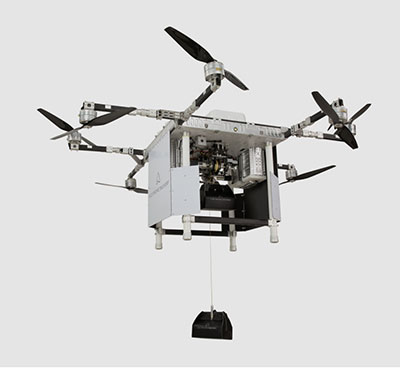
    The company delivered the UAV in collaboration with a global logistics provider to deliver dual payloads per flight, helping drone service providers streamline deliveries while mitigating consumer concerns with residential drone delivery. The RDSX integrates A2Z Drone Delivery’s proprietary tethered freefall Rapid Delivery System capable of quickly and safely delivering payloads from altitudes as high as 150 feet. By keeping spinning rotors far from people and property, the RDSX helps mitigate consumer concerns with drone deliveries—such as the potential for property damage and intrusive rotor noise—and assuages some of the privacy concerns with low-flying unmanned aerial vehicles.

    A2Z Drone Delivery will be showcasing the new RDSX at the Commercial UAV Expo (September 7-9, 2021 in Las Vegas, NV).

    The RDSX is a flexible drone delivery platform capable of carrying dual payloads each weighing up to two kilograms on a round trip of up to 18 kilometers. Alternatively, it can be configured with a single tether to expand its range out to 30 kilometers. The controlled-freefall delivery method it employs allows UAV service providers to reduce time-on-station to a minimum by delivering the package to the ground in seconds and eliminating the need for the drone to touch down. By maintaining its altitude throughout the delivery, the RDSX keeps spinning rotors away from people and property, mitigating consumer concerns and enabling it to deposit payloads into areas congested by trees, wires, or other dangerous obstructions.

    The integrated A2Z Drone Delivery app combines manual control system operations with an onboard computer and sensor array to manage the package’s controlled-freefall and gentle stop before the ground. With the package delivered, the RDSX’s Kevlar tether and auto-release mechanism releases the payload before being reeled back up for reuse.

    A2Z Drone Delivery’s freefall delivery technology has previously been leveraged for residential drone delivery trials, deployment and retrieval of ground sensors for energy exploration, as well as for shore-to-ship port delivery. The technology is equally applicable for first responders delivering life-saving medicine, for search and rescue professionals quickly deploying equipment to remote areas, or for rapidly collecting samples throughout an expansive mining facility.

    The RDSX leverages a proven UAV flight platform equipped with a pair of cameras allowing pilots to navigate beyond visual line of sight (BVLOS). Additionally, the system features an independent downward-facing LiDAR sensing system to stream continuous data to the onboard firmware which controls the payload’s rapid descent and allows the pilot to visually monitor payloads through flight and delivery. Featuring quick-swap bucket-style batteries to limit downtime between flights, the RDSX can operate in diverse conditions including temperatures ranging from -20 to 45 Celsius, in up to 95% humidity, and from elevations up to 4,800 feet. Additionally, the RDSX’s eight rotor arms, fitted with durable carbon fiber propellers, can fold away for easy transport of the drone.

    With its patented delivery system, A2Z Drone Delivery, LLC is developing innovative solutions to enable safe, accurate and low-noise drone deliveries. Its flagship delivery system, the RDS1 (Rapid Delivery System) enables payload delivery and retrieval to locations where most UAVs are unable to land, and its RDSX is a commercial multi-payload delivery system designed to meet the needs of the growing drone delivery industry. Based in Los Angeles, A2Z Drone Delivery originated as a drone delivery project at Brown University in 2016.

  • Auterion and Phase One partner to integrate open drone ecosystem

    Auterion and Phase One partner to integrate open drone ecosystem

    Photo: Phase One
    Photo: Phase One

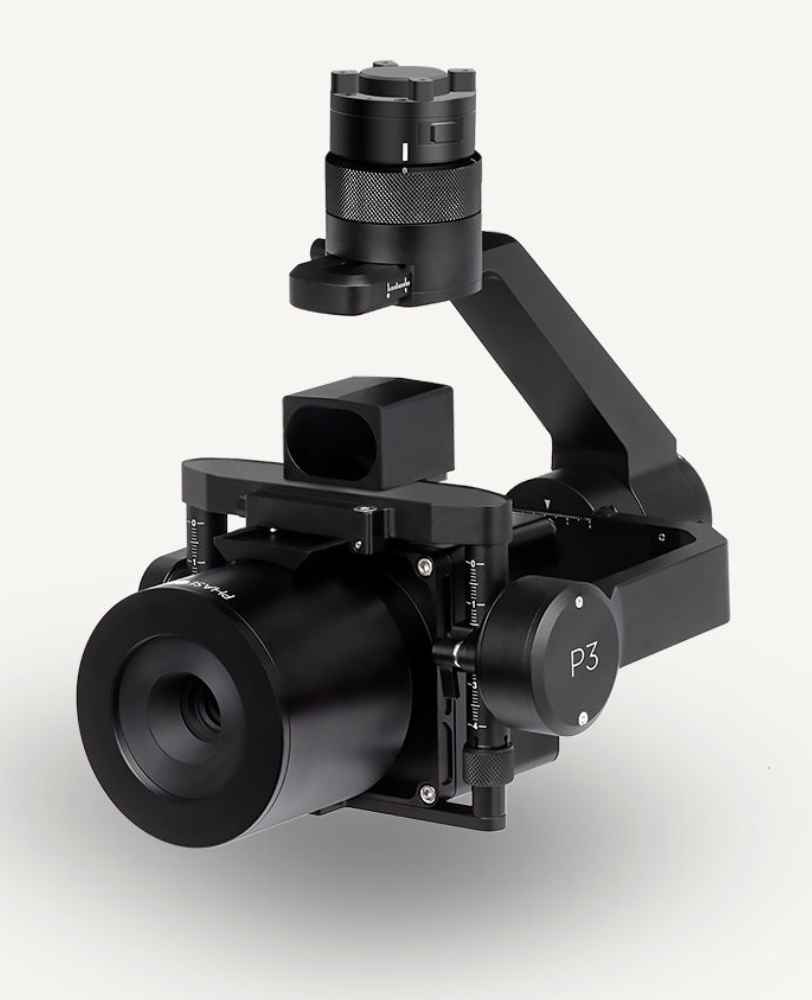
    Auterion, the company building an open and software-defined future for enterprise drone fleets, has partnered with Phase One, a developer and manufacturer of medium and large format aerial photography systems. The companies will make the Phase One P3 Payload lineup easily accessible, with a plug-and-play integration to Auterion’s open drone ecosystem.

    Enterprise inspections today are limited to periodic inspections of selected assets in a small geographic area. Enterprises are forced to use either internal drone operators or operators who are trained in the organization’s workflow to effectively collect pertinent data. Scaling the inspections from tens of assets to thousands of assets requires a platform-agnostic, end-to-end, streamlined workflow. This enables drone operators to conduct the inspections across a large region, lowering the cost and increasing the coverage.

    Known for its image quality in high-precision and time-critical inspections, Phase One’s P3 Payload consists of a high-resolution 100MP iXM camera—uniquely designed for UAVs—containing a BSI sensor with the highest dynamic range of 83dB, a rangefinder with smart focus, and a broad array of lenses including 35 mm, 80 mm and 150 mm. The partnership joins the P3 Payload’s inspection capabilities with the versatility native to Auterion’s ecosystem of software-defined and connected drones— enabling customers to integrate real-time inspection data into their existing applications and workflows. The P3 Payload is Phase One’s first payload compatible with the Auterion ecosystem.

    Drones leveraging the Phase One P3 Payload and the power and connectivity of Auterion’s Skynode and Suite are capable of dramatically scaling high-value, high-risk and time-critical inspections including those of wind turbine fields (on land and offshore), oil refineries and offshore rigs, power masts and utility lines, bridges, dams, nuclear facilities, large infrastructure projects and other use cases. The combination also benefits faster geospatial mapping, bringing world-renowned image quality with very high resolution, dynamic range, color fidelity and geometric accuracy to projects.

    Phase One A/S researches, develops, and manufactures medium format and large format digital cameras and imaging systems. Auterion provides enterprise and government with an ecosystem of software-defined drones, payloads, and third-party applications within a single, easy-to-use platform based on open-source standards.

  • UAV Navigation integrates avoidance system into autopilots

    UAV Navigation integrates avoidance system into autopilots

    Photo: UAV Navigation
    Photo: UAV Navigation

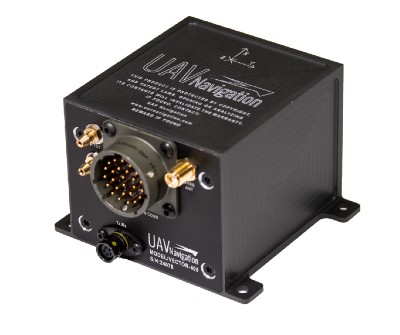
    Autopilot platform developer UAV Navigation is integrating Iris Automation’s detect-and-avoid Casia software into its advanced autopilot solution, Vector. UAVs equipped with Vector and Casia now can detect uncooperative crewed aircraft in their airspace and autonomously or manually take corrective action, avoiding potential collisions.

    The integration comes as Iris Automation releases Casia Software v2.2. The release also includes improvements to performance, track fusion and flight data uploads. Casia Software is embedded in all Casia systems and uses computer vision and artificial intelligence to detect and classify aircraft intruders, similar to human pilots.

    Vector autopilots are specifically designed to execute flight completely autonomously, even if the remote-control datalink becomes unavailable or fails. They are used by a wide range of commercial clients flying rotary wing, target drone, fixed wing, and VTOL uncrewed aerial vehicles, worldwide.

    UAV Navigation specializes in the design of guidance, navigation and control solutions for unmanned aerial vehicles (UAVs). Iris Automation is a safety avionics technology company pioneering detect-and-avoid (DAA) systems and aviation policy services that enable customers to build scalable operations for commercial drones.

  • Qualcomm launches 5G, AI-enabled drone platform

    Qualcomm launches 5G, AI-enabled drone platform

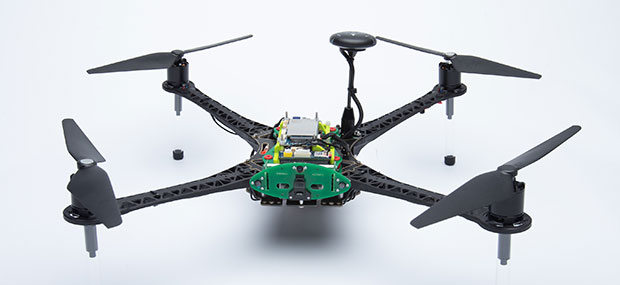
    The Qualcomm Flight RB5 5G platform accelerates and scales development for drone manufacturers to deliver powerful enterprise and industrial 5G drones

    Qualcomm Technologies has unveiled a drone platform and reference design that offers both 5G and artificial intelligence capabilities.

    The Qualcomm Flight RB5 5G platform is designed to accelerate development of commercial, enterprise and industrial drones. Powered by the Qualcomm QRB5165 processor, it builds upon Qualcomm Technologies’ latest offerings for the internet of things, delivering a solution that will drive the next generation of high-performance, low-power, 5G drones, the company said.

    As a primary driver of global 5G proliferation, Qualcomm Technologies has enabled 5G to scale for both the drone and robotics industries. The new 5G platform condenses multiple complex technologies into a tightly integrated drone system. Use cases include mapping, inspection, film and entertainment, defense, security and emergency response, and delivery.

    Photo: Qualcomm
    Photo: Qualcomm

    The Qualcomm Flight RB5 5G Platform’s high-performance and heterogeneous computing at ultra-low power consumption provides power efficient inferencing at the edge for AI and machine learning (ML), enabling fully autonomous drones, the company said. New camera capabilities deliver premium image capabilities and performance.

    With 5G and Wi-Fi 6 connectivity, this platform enhances critical flying abilities beyond visual line-of-sight (BVLOS) to support safer, more reliable flight. In addition, safety controls alone can no longer assure industrial and commercial drone safety, especially when scaling to Beyond Visual Line of Sight operations.

    The Qualcomm Flight RB5 5G platform is equipped with a Qualcomm Secure Processing Unit to support modern drone demands for cybersecurity protections as a key enabler of data-protection and safety requirements.

    Partners. Qualcomm Technologies is working with Verizon to complete network testing of the Qualcomm Flight RB5 5G Platform for the Verizon 5G network, and expects the platform, which is 5G mmWave capable, will be offered via the Verizon Thingspace Marketplace.

    The Qualcomm Flight RB5 5G drone reference design is available now for pre-sale through ModalAI. A development kit is expected to be available this year in the fourth quarter.

    “We have continued to engage many leading drone companies, enabling 200+ global robotics and drone ecosystem members in addition to consistently driving and promoting worldwide drone standardization and transformative 5G capabilities in organizations such as 3GPP, GSMA, the Global UTM Alliance, the Aerial Connectivity Joint Initiative (ACJA) and ASTM,” said Dev Singh, senior director, Qualcomm Technologies.

    In addition, global carriers and IoT ecosystem who have validated or expressed support for the drone platform include Asia Pacific Telecom, AT&T, China Unicom, Everguard.ai, FlightOps, Juganu, KT Corporation, LG Uplus, MITRE, ModalAI, Taiwan Mobile, TDK, Veea, Verizon Skyward and Zyter.

  • Sky Power and UAS Global Services present two new helicopters

    Sky Power and UAS Global Services present two new helicopters

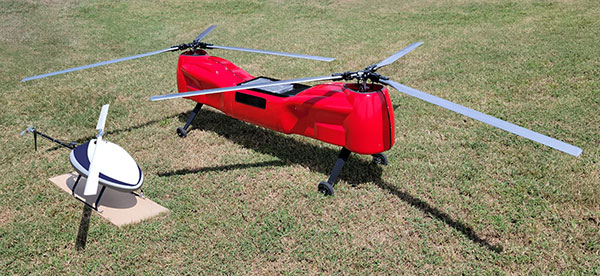
    The Sicura EG-1100 (left) and Anzen EG-1250 with Sky Power engines are being exhibited at AUVSI Xponential. (Photo: UAS Global Services)
    The Sicura EG-1100 (left) and Anzen EG-1250 with Sky Power engines are being exhibited at AUVSI Xponential. (Photo: UAS Global Services)

    German engine manufacturer Sky Power GmbH is presenting its UAV engines at this year’s AUVSI Xponential show in Atlanta, Georgia. Plus, new Sky Power customer UAS Global Services of Texas will present two new helicopters, which are powered by different engines from Sky Power.

    UAS Global Services will introduce its Anzen EG-1250 helicopter at the show. The Anzen EG-1250 is a heavy-lift, long-range, multi-purpose Group 3 platform. The helicopter will significantly expand UAS Global Services’ service as well as operational support offerings. Basic specifications include a maximum takeoff weight of 250 pounds (113 kg), a maximum flight time of up to 6 hours, a payload capacity of 75 pounds (34 kg), a cruising speed of 65 kts, and all-weather day and night capability.

    The “EG” in the Anzen EG-1250 designation stands for a dual engine configuration consisting of electric and internal combustion propulsion. The main engine is Sky Power’s SP-180 SRE Wankel engine, while the secondary engine is a NeuMotors 12030/5.5. This 30KW electric motor can power the aircraft or serve as a power amplifier in combination with the SP-180 SRE. In addition to the added power and safety provided by the two motors, the Anzen EG-1250 is autorotatable and offers an optional safety parachute system.

    UAS-GS was contracted by Ireland-based UAV Evolution Ltd. to develop the dual-rotor platform. After more than 5 years of development, the versatile design allows for a variety of engine, payload and operational options. The platform flexibility allows the Anzen EG-1250 to support a wide range of customers in the marine, agricultural, oil and gas, utility, cargo transport, security and other application sectors.

    UAS Global Service’s second helicopter is the Sicura EG-1100, which is the third generation of the internally developed single-rotor helicopter. This flight system has become the workhorse of the UAS Global Services fleet in recent years and is now available to external customers. Basic specifications include a maximum takeoff weight of 55 lbs (25 kg), a flight time of up to 3.5 hours using an internal combustion engine or a flight time of 1 hour in electric mode, a payload capacity of 15 lbs (7 kg), a cruise speed of 55 kts, and a takeoff wind speed of 25 kts.

    The EG-1100 is available with both electric and internal combustion engines. The combustion engine is Sky Power’s powerful and efficient SP-110 TS ROS two-stroke engine, which has been specially tuned and modified to the flight system. The result is competitive flight performance characterized by stable performance under severe environmental conditions, exceptionally stable flight, and immediate flight response during imaging and LiDAR operations.

    With the EG-1100’s considerable payload capacity, customers can implement various transportation tasks in one mission. Different sensor and camera systems can be integrated simultaneously in the Sicura EG-1100, enabling multiple data-acquisition applications in a single flight. This significantly increases the efficiency of the overall UAS mission and provides the customer with timely, cost-effective and high-quality results.

    For more information, visit UAS Global Services at the AUVSI show in Atlanta, booth 2498 or visit Sky Power at booth 2641.

  • Parrot, Verizon and Skyward bring 4G-connected drone to US

    Parrot, Verizon and Skyward bring 4G-connected drone to US

    Photo: Verizon
    Photo: Verizon

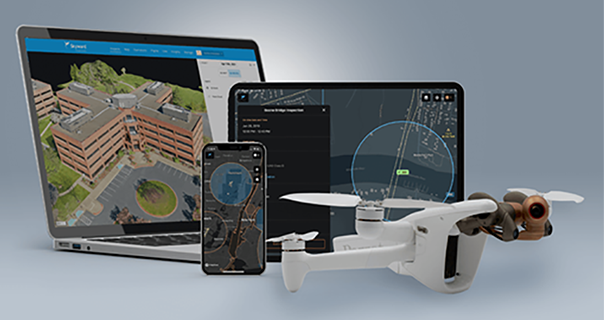
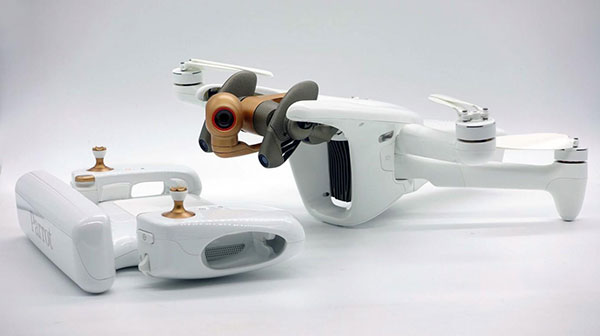
    The Parrot ANAFI Ai is powered by Verizon 4G LTE and integrated with Skyward software to pave the way for near real-time data transfer, remote deployment and beyond-visual-line-of-sight (BVLOS) flight operations.

    Verizon, Parrot and Skyward have entered a partnership to bring an out-of-the-box 4G LTE connected drone to the United States.

    The Parrot ANAFI Ai is an off-the-shelf drone that connects to Verizon’s 4G LTE network. Verizon 4G LTE connectivity is provided exclusively to Skyward subscribers at no additional cost. The Skyward Connected Drone Solution gives enterprises one complete experience for planning, flying, data transfer and processing data.

    The Parrot ANAFI Ai professional drone is open to developers with a full open-source app, autonomous one-click photogrammetry and new levels of cybersecurity. Combined with the Skyward Connected Drone Solution, the ANAFI Ai makes complex missions simpler, safer and quicker in photogrammetry, mapping, modeling in construction, infrastructure, inspection, surveying, public safety and enterprise.

    The drone features an omni-directional obstacle-avoidance system, 48 MP imaging accuracy, 4K 60 fps smooth videos, and up to 32 minutes of flight time in an airframe that weighs less than 2 pounds.

    Parrot ANAFI Ai’s embedded Secure Element secures the 4G LTE link between the drone and the user’s device. Parrot’s streaming software quickly optimizes the definition and frame rate for the connected 4G network.

    Parrot ANAFI Ai pilots can subscribe to a paid account or a free trial of the Skyward Connected Drone Solution to:

    • plan with Skyward’s airspace map and fleet management tools
    • obtain fast, automated access to controlled airspace from the Federal Aviation Administration with LAANC
    • fly over Verizon 4G LTE with the Skyward InFlight mobile app
    • process with Skyward Mapping & Modeling, powered by Pix4D
    • transfer data during flight over 4G LTE.

    Users can activate 4G LTE connectivity in a few taps exclusively in the Skyward InFlight mobile app. Once activated, the connectivity provides a seamless backup connection to the flight controller in case of interference or interruption. It paves the way for near real-time data transfer, remote deployment and BVLOS flight operations, allowed with a waiver from the FAA.

    “Enterprise drone programs are pushing the limits of technology available today and advanced operators are ready for a connected, trusted and capable drone to take their drone programs to the next level,” said Mariah Scott, Head of Verizon Robotics Business Technology. “Parrot ANAFI Ai connected to Verizon 4G LTE marks an industry milestone toward distributed, remote, persistent operations that lets users fly to anywhere from anywhere with near real-time data transfer.”

    “Cellular connectivity is the new communications standard for the professional drone industry and Parrot ANAFI Ai seeks to set new standards for drones at work” said Henri Seydoux, Founder and CEO of Parrot.  “We designed ANAFI Ai’s 4G LTE connectivity, which enables precise, robust and secure control at any distance with a 4G LTE connection that avoids obstacles. Advanced artificial intelligence, autonomous flights, best-in-class imaging, photogrammetry accuracy and reliable 4G LTE connectivity on the Verizon network, put powerful new tools in the hands of professionals like never before and we truly believe it is a game changer for the professional drone industry.”

    The Skyward Connected Drone Solution with Parrot ANAFI Ai on Verizon 4G LTE will be available in the second half of 2021 through Skyward.

  • Brazil approves SenseFly eBee X for BVLOS operations

    Brazil approves SenseFly eBee X for BVLOS operations

    Brazil’s Civil Aviation Authority approves  Flagship Fixed-wing Drone 

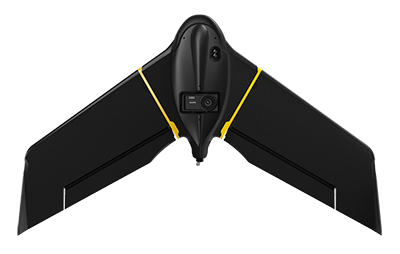
    The eBee X. (Photo: senseFly)
    The eBee X. (Photo: senseFly)

    The National Civil Aviation Agency (ANAC) of Brazil has approved beyond-visual-line-of-sight (BVLOS) flights using SenseFly‘s flagship eBee X fixed-wing drone.

    ANAC’s decision means that the senseFly eBee X is officially approved for use in future BVLOS missions carried out by Brazilian drone operators. The drone received approval by demonstrating the safety requirements of the ANAC RBAC-E 94 Regulation for Unmanned Aircraft, through detailed engineering analyses and in-depth flight testing. Sensefly worked in collaboration with drone engineering and consulting specialists AL Drones and geotechnology company Santiago & Cintra.

    Following the certification, senseFly eBee X operators in Brazil now only require a CAER (Special Airworthiness Certificate for RPA) waiver for the aircraft with Santiago & Cintra before flying BVLOS operations.

    “The commercial drone industry in Brazil has been growing at a phenomenal rate. and we’re excited that the senseFly eBee X is at the forefront of these regulatory developments,” said Pierre-Alain Marchand, regulatory compliance manager, senseFly. “BVLOS is becoming an important tool for operators as they start to explore the potential of more advanced drone operations, and we’re pleased that our technology continues to help define frameworks and legislation in the country. Historic approvals passed in recent years has shown us that Brazil is one of the countries to watch for drone commercialization, so continue to watch this space!”

    The authorization comes following approval of senseFly’s proprietary drone technology in 2017, where the use of drones for civil applications in Brazil were legislated as part of the RBAC-E94 regulation. SenseFly drones became the first and only in the country permitted to fly 400 feet in height with a 5 kilometer radius from a licensed pilot or observer, in contrast to previous VLOS operations that restricted use of drones to a 500-meter radius.

    “The authorization of senseFly’s eBee X for BVLOS operations is another step towards commercialization of the sector,” said André Arruda, co-founder of AL Drones. “After years of collective hard work and effort from all parties, this certification presents a real opportunity for operators in the future to expand their mapping operations and achieve a robust return-on-investment. We look forward to seeing what this means for BVLOS operations in Brazil in the coming years.”

    SenseFly’s eBee X fixed-wing drone is designed to suit a wide range of mapping jobs. At 1.6 kg (3.5 lbs.), eBee X is a lightweight, portable solution that is easy for a single person to operate. With an Endurance Extension option enabling a flight time of up to 90 minutes and single-flight coverage of up to 500 ha at 122 m (1,236 A at 400 ft.), the eBee X drone that offers users the high precision of on-demand RTK/PPK for achieving absolute accuracy down to 1.5 cm (0.6 in) without ground control points. This capability makes the eBee X suitable for BVLOS operations such as long corridor mapping missions for utility companies, expansive crop scouting in agriculture and by enterprise customers who desire a robust and professional drone fleet.

  • Parrot’s new ANAFI Ai UAV drone is 4G connected

    Parrot’s new ANAFI Ai UAV drone is 4G connected

    Photo: Parrot
    Photo: Parrot

    Drone-maker Parrot has released a new drone for professionals. The ANAFI Ai UAV uses 4G as its main data link between the drone and the operator, so that users will no longer experience transmission limitations.

    The 4G also enables precise control at any distance. For beyond-visual-line-of-sight (BVLOS) flights, it stays connected even behind obstacles.

    For the first time, ANAFI Ai embeds a secure element in the drone and in its Skycontroller 4. The 4G link between the drone and the user’s phone is encrypted. The secure element protects both the integrity of the software and the privacy of data transferred.

    Parrot’s piloting application is open source. Parrot offers developers a software development kit (SDK) to create custom code for the drone to execute during flight. The SDK gives access to all flight sensors, including obstacle-avoidance sensors, occupancy grid and internet access.

    ANAFI Ai’s obstacle-avoidance system detects obstacles in all directions, using stereo cameras to sense objects and automatically avoid them.

    ANAFI Ai incorporates a 48MP main camera and a powerfully stabilized 4K 60-fps/HDR 10 camera to capture finely detailed aerial images and smooth video footage.

    ANAFI Ai will be available in the second half of 2021 through Parrot Drone Enterprise Partners and Enterprise Drone Reseller Network.

  • StreetDrone releases autonomous vehicle safety report

    StreetDrone releases autonomous vehicle safety report

    Logo: StreetDrone
    Logo: StreetDrone

    StreetDrone published a report titled “Putting Safety First in Autonomous Vehicles.” The report is designed for anyone interested in the development of autonomous vehicle technologies, especially public transport and delivery companies, civic authorities and universities.

    According to StreetDrone, the report contributes to the connected and autonomous (CAV) industry safety debate, as well as adds perspective to conventional CAV safety wisdom.

    The purpose of the 30-page report is to make an experience-based contribution to the safety debate to enable the CAV industry to accelerate corporate, institutional and public confidence in self-driving technology, so the benefits of new autonomous services can be realized more quickly, StreetDrone said.

    The report is based on the company’s experience in operating autonomous vehicle trials in urban environments, including those with high population densities and complex infrastructures. It also covers other areas for the safe operation of autonomous vehicles, including the definition of a safe operating environment, minimum operating standards for safety drivers, and a set of open data protocols for effective error tracking and rectification.

    “While we’ve had to make some changes to our operations due to COVID-19, we’ve also had the opportunity to write our Safety Report based on the experience of building and running autonomous vehicles over the past three years of StreetDrone’s operations,” said Mike Potts, CEO of StreetDrone. “This experience spans the full stack of AV disciplines, from hardware and mechanical design through to AI and software, as well as a deep insight into city centre public highway trials. For an organization focused on ‘zone 1’ urban trials, we have necessarily been safety-led, so our report encapsulates much of this knowledge. We believe that industry collaboration and knowledge-sharing are essential prerequisites for CAV technology to achieve wide-scale adoption, and we’re therefore delighted to make our own contribution to this growing body of knowledge.”

    StreetDrone’s own hardware platforms range from the L7e class Renault Twizy heavy quadricycle to the flexible Nissan eNV200, which comes in taxi, delivery van or 7-seater passenger variants.

    Check out the report here.