Category: Applications

  • Iran develops its own software for GNSS corrections & processing

    Iran develops its own software for GNSS corrections & processing

    Researchers at the University of Tehran have developed indigenous software for providing real-time corrections for networks, precise positioning service and online processing of GNSS observations.

    According to various news reports, the software is a modern, secure, and intelligent platform for processing observations from global positioning satellites, including GPS, Galileo, BeiDou and GLONASS.

    Developed as a practical tool for surveyors, engineers, researchers and organizations in the field of satellite data monitoring, the software is intended to replace imported software and reduce dependence on foreign technologies. It has been tested by the network of permanent stations of the National Iranian South Oil Company.

    The system processes observations using static, PPK, PPP and SPP methods, as well as observation quality control and enables the implementation of various positioning methods and real-time monitoring of ionospheric and tropospheric effects.

    It supports all GNSS data types and can connect to reference stations in both client and server modes. It supports all existing and future GNSS signals and can handle at least 50 permanent stations and 200 users simultaneously. It also provides phase ambiguity resolution for baselines up to 70 kilometers.

    Other technical features include providing a relative planimetric accuracy of 2 cm and a height accuracy of 3 cm using the static method with a maximum setup time of 15 minutes, a relative planimetric accuracy of 4 cm and a height accuracy of 5 cm using PPK and NRTK methods, and delivering corrections with a maximum permissible latency of 0.5 seconds.

    The software has the capability to connect to reference stations through serial, TCP, and UDP ports, supports NTRIP protocol versions 1 and 2, displays an online map with a Google Map-like background, allows for viewing the location, status and information of CORS stations and active users, and enables generation of KML outputs.

  • JAVAD introduces US-built GNSS board for LEO applications

    JAVAD introduces US-built GNSS board for LEO applications

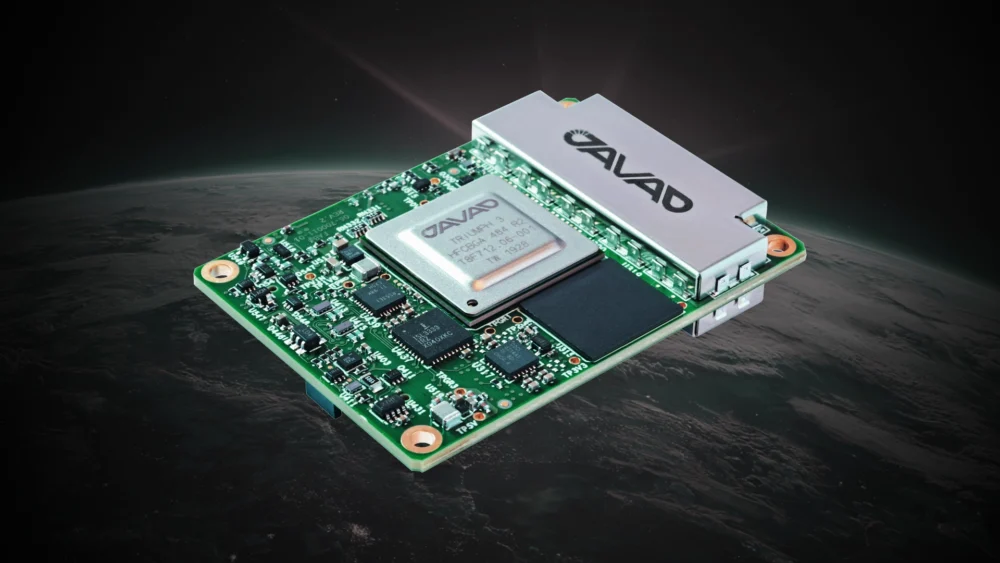
    JAVAD GNSS has announced the TR-2S LEO, a compact GNSS OEM board designed and manufactured at the company’s headquarters in San Jose, California. The TR-2S LEO delivers high-precision GNSS positioning for low Earth Orbit (LEO) missions.

    Developed for customers requiring high-integrity navigation performance under the demanding conditions of space, the TR-2S LEO integrates radiation-tolerant, space-hardened electronics with patented spoofing and jamming detection to support, secure and protect continuous GNSS operation. The board tracks 874 channels across all major GNSS constellations, enabling robust and real-time position, velocity, time and measurements (PVT) with multi-frequency resilience.

    JAVAD GNSS brings more than two decades of flight heritage, with OEM boards deployed on most commercial launch vehicles worldwide, including the Vega program of the European Space Agency (ESA). The company continues to build upon its experience, now with focused concentration on LEO-based applications with technologies like the TR-2S LEO and the SpaceAnt-G3T OEM GNSS antenna. The SpaceAnt-G3T features a stable phase center and is usable for single-, dual- and triple-frequency applications.

    “The TR-2S LEO reflects our commitment to delivering mission-critical GNSS solutions engineered and manufactured entirely in the United States,” said Tom Hunter, senior vice president, Aerospace and Defense Solutions at JAVAD GNSS. “As commercial space operations expand, our customers need a navigation platform they can trust — one built on proven flight heritage, radiation-hardened design, and the technical support to see their missions succeed. That’s what we deliver.”

    The TR-2S LEO is adaptable to a wide range of commercial launch vehicles, spacecraft and high-dynamic applications.

  • Jammer suspected as cause of Budva drone show disaster

    Jammer suspected as cause of Budva drone show disaster

    Drones planned for a New Year’s light show in Budva, Montenegro, were deliberately shot down, according to an analysis that Croatian company Mirnovec provided news outlet Vijesti.

    Mirnovec’s owner told Vijesti the culprit used an anti-drone jammer, a gun of the type used by security forces.

    The document “GNSS RF interference analysis: Incident during a drone show,” summarizes technical findings related to a loss of GNSS navigation during the show. About 15 seconds after the launch of 600 drones from the parking lot in front of the Port Authority began, they began to return. Some drones fell into the sea and some collided with drones taking off. After 40 seconds, the operator stopped the launch. The drones fell for another 20 seconds.

    Vijesti provides details of the incident and the data gathered and reported.

  • US Space Force cancels smallsat project for Resilient GPS program

    US Space Force cancels smallsat project for Resilient GPS program

    The U.S. Space Force has ended an exploratory effort to add smaller, lower-cost navigation satellites to strengthen the existing GPS constellation, reports Space News.

    The Space Force does not plan to move forward with on-orbit demonstrations of industy-designed smallsats under the Resilient GPS (R-GPS) program, which began in 2024. In September of that year, the Space Force selected Astranis, L3Harris Technologies and Sierra Space to develop concepts for small, cost-effective navigation satellites to increase GPS resilience, using an expedited “quick start” contract process.

    But funding for the next phase of the program was not included in the fiscal year 2026 budget because of higher Department of the Air Force priorities, according to the report.

    R-GPS was part of a broader push by the Pentagon to diversify satellite architectures amid concerns that spacecraft are vulnerable to interference or attack.

    The Space Force has not said whether it plans to pursue alternative positioning, navigation and timing (PNT) efforts in place of R-GPS.

    Lawmakers have repeatedly raised concerns about GPS vulnerability and have called for studies examining commercial low Earth orbit navigation services as potential complements or backups to GPS.

  • GNSS and PNT security employed at World Economic Forum

    GNSS and PNT security employed at World Economic Forum

    Dimetor is providing its NAVSentry airspace situational awareness system to the World Economic Forum annual meeting, in support of the Austrian Armed Forces. The meeting is taking place this week in Davos, Switzerland, close to the Austrian border.

    NAVSentry is an AI-powered platform for detecting GNSS disruptions in real time, combining different technology layers and securing position, navigation and timing (PNT) data across autonomous and crewed systems from multiple data sources.

    The system is providing insights into the integrity of GNSS signals to strengthen the Austrian Armed Forces’ ability to monitor, secure and protect the airspace against threats, including including jamming and spoofing attempts targeting the airspace and critical PNT infrastructure.

    The enhanced situational awareness strengthens the ability to detect anomalies, assess potential threats, and coordinate protective measures across both the physical and cyber domains.

    “It’s a compelling example of how modern defense increasingly also builds on trusted civilian–military technology partnerships to safeguard critical events,” said Brigadier-General Friedrich Teichmann, commander, Space Services, Austrian Armed Forces.

  • FAA warns pilots to ‘exercise caution’ over Pacific, Latin America

    FAA warns pilots to ‘exercise caution’ over Pacific, Latin America

    The Federal Aviation Administration on Jan. 16 issued a warning to pilots to “exercise caution” when flying over the Pacific Ocean in parts of Latin America due to potential military activities. Areas cited include the eastern Pacific Ocean near Mexico, Central America and parts of South America.

    A series of Notices to Airmen (NOTAMs) issued by the FAA state, “Potential risks exist for aircraft at all altitudes, including during overflight and the arrival and departure phases of flight.” The alerts are in effect for 60 days. NOTAMs are issued routinely in any region where there are hostilities nearby.

  • Garmin unveils Xero L60i laser rangefinder with GPS and onboard mapping

    Garmin unveils Xero L60i laser rangefinder with GPS and onboard mapping

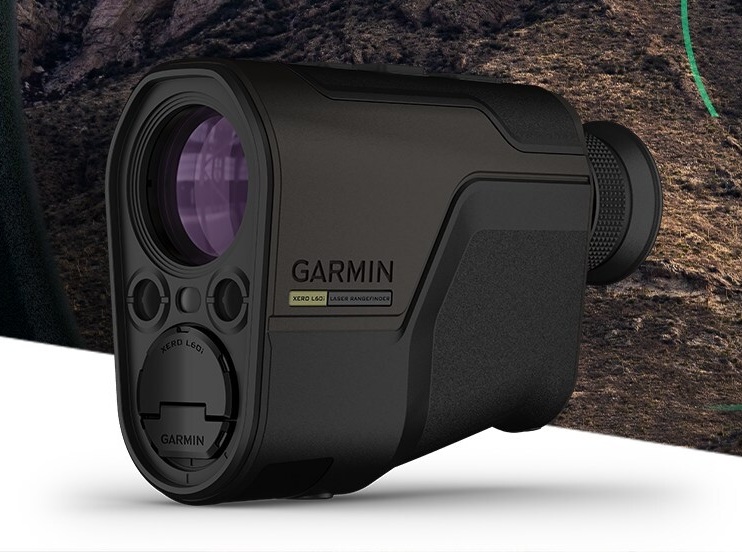
    Garmin has released the Xero L60i, a GNSS-enabled rangefinding monocular. The rangefinder’s optics providea sharp, bright view through augmented reality technology that overlays graphics in full color, including distance, maps and navigation and more — all while ranging targets out to 3600 meters through 7X magnification.

    Integrated navigation features include Laser Locate, Sensor Locate and Visual Recall, giving wildlife enthusiasts, researchers, search-and-rescue teams tools they can depend on, the company said.

    Xero L60i features

    • Digital mapping. View current and ranged locations marked on topographic mapping and use the Xero L60i to navigate to them.
    • Smart Integration. Waypoints can be shared to the Garmin Explore App on a compatible smartphone, then shared to a compatible Garmin handheld or wearable device using the Garmin Share functionality.
    • Laser Locate. Leverage the range taken, along with compass heading and GPS coordinates, to project a waypoint on the display, then navigate to the waypoint through directional cues.
    • Sensor Locate. When the desired object is too far to range, built-in GPS, compass, inclinometer and mapping can calculate and project a waypoint of the intended target, allowing estimated ranges to targets several miles away.
    • Visual Recall. When moving to a new vantage point after ranging, on-screen cues steer the visual field back to a previously marked waypoint.

    The rangefinder features fully multicoated, low-dispersion glass, which provides sharp optics with a flat field of view, accurate color fidelity, and superior light transmission. During dawn or dusk use, an ambient light sensor automatically controls display brightness, ensuring the visual scene remains clear.

    Range animals to 2,775 meters and trees to 3,600. In optimal low-light conditions, the Xero L60i makes it possible to reach as far as 7,000 meters to retro reflective objects while achieving accuracy of +/- .25 meters under 1,000 meters and +/- 1 meter out to maximum laser-ranged distances.

  • CHC Navigation releases Apache 6 USV for high-resolution marine surveying

    CHC Navigation releases Apache 6 USV for high-resolution marine surveying

    CHC Navigation (CHCNAV) has released the Apache 6–2026 Edition, an integrated unmanned surface vessel (USV) designed for high-resolution bathymetric and 3D mapping applications. Built to accommodate NORBIT multibeam echosounders, the Apache 6 delivers a comprehensive solution for underwater surveying, object positioning, and offshore construction support in varying aquatic conditions.

    The Apache 6 – 2026 Edition is optimized for seamless integration with the NORBIT iWBMS and WINGHEAD series of multibeam echosounders. An optional NORBIT iLiDAR can also be integrated, allowing for the simultaneous collection of marine and terrestrial 3D data in a single pass. This capability is particularly efficient for projects that require mapping both underwater topography and overhead structures, such as bridges and power lines, making it a comprehensive tool for harbor, river and infrastructure surveys.

    Automated Sound Velocity Profiling
    Accurate sound velocity measurement is fundamental to high-quality bathymetric data. The Apache 6 – 2026 Edition addresses this with an optional automated sound velocity profiler (SVP) kit. This system can be controlled directly from the remote controller, allowing the operator to perform SVP casts on-demand without interrupting the survey workflow. The kit is designed for rapid deployment — attachable or detachable in under a minute — ensuring that the multibeam echosounder data is continuously corrected with the most accurate sound speed information, which is critical for meeting stringent survey specifications.

    The USV combines a detachable triple-hull vessel design with smart rotating propeller technology to deliver both stability and agility in varied conditions. The robust hull configuration ensures reliable performance in strong currents, while removable side floats enable safe operations in shallow waters. Intelligent propeller control adjusts water flow direction to achieve a turning radius of approximately two meters, supporting effective navigation in confined or winding channels.

    Android-Based Control
    Survey operations are streamlined through an intelligent Android remote controller, which provides real-time access to vessel status and data without the need for a separate field computer.

    The interface allows for straightforward management of the survey workflow, while a multi-link communication system ensures reliable data transmission over long distances. This setup enables surveyors to maintain seamless control over the Apache 6 and monitor mission progress effectively from the shore.

  • ArkEdge Space signs international agreements to develop LEO PNT constellation

    ArkEdge Space signs international agreements to develop LEO PNT constellation

    Tokyo-based satellite company ArkEdge Space Inc. has signed letters of intent with three international organizations to develop a PNT satellite network in low-Earth orbit (LEO).

    The agreements with TrustPoint Inc., the Royal Institute of Navigation in the United Kingdom and FrontierSI aim to strengthen satellite-based PNT capabilities for civil, commercial and security applications.

    The collaboration represents an early phase in ArkEdge Space’s effort to build international partnerships for PNT infrastructure. The company, which designs and operates small satellite constellations, said the project will focus on improving resilience of positioning and timing systems that support critical infrastructure.

    The partners plan to examine policy frameworks and national PNT strategies as the project moves into a demonstration phase. ArkEdge Space said it will expand its network of international partners to support the development of space-based positioning systems.

    “By working together, this collaboration represents an important step as we accelerate the development of resilient, trusted PNT capabilities that support critical infrastructure and informed decision-making worldwide,” ArkEdge Space CEO Takayoshi Fukuyo said.

  • TrustPoint demonstrates GPS-independent navigation signals to orbit

    TrustPoint demonstrates GPS-independent navigation signals to orbit

    TrustPoint has transmitted its first Low-Earth Orbit Navigation System (LEONS) time-transfer and tracking signals from a ground node to spacecraft in orbit. The milestone advances the development of commercial navigation infrastructure independent of GPS.

    GNSS satellites require knowledge of their own time and orbital position to provide accurate data to Earth-based users. Most LEO spacecraft currently rely on GPS or medium-Earth orbit (MEO) signals for that information. Interference and jamming are increasingly affecting these LEO connections, degrading or blocking signals.

    LEONS provides GPS-independent time transfer and orbit tracking. Initially developed for TrustPoint’s planned constellation, the system can be adapted for other LEO operators requiring timing and navigation for their spacecraft. The ground-to-space infrastructure is designed to support a GPS-independent PNT layer in orbit.

    “With the pace of modern threats accelerating, the difference between concepts and capabilities matters,” said Nicole Hilliard, director of government programs at TrustPoint. “This milestone demonstrates that commercial partners can field resilient, GPS-independent PNT capabilities that strengthen national security architectures and justify continued investment in companies that deliver.”

    The demonstration supports TrustPoint’s participation in the SpaceWERX AltPNT Challenge, which awarded the company two contracts to develop alternative PNT capabilities. The program seeks to deploy new options for precise, dual-use PNT systems.

  • Arazim Navigation Systems secures new defense order for HPLS-2G navigation units

    Arazim Navigation Systems secures new defense order for HPLS-2G navigation units

    The nearly $1 million contract covers delivery of approximately 100 dual-antenna GPS/GNSS compasses for land-based applications.

    Arazim Navigation Systems, an Israeli manufacturer of inertial navigation systems, has received a new order valued at nearly $1 million from an Israeli defense customer. The order includes 100 units of the HPLS-2G GPS/GNSS compass, designed to provide heading and attitude information for static land-based systems using dual-antenna GPS technology.

    According to Arazim, the HPLS-2G NFS system is a rugged, MIL-STD-compliant device built to operate in harsh environmental conditions and hostile operational environments.

    “This continued trust represents more than another contract; it reflects confidence in the reliability, performance, and ongoing development of our navigation solutions,” Sason Noama, CEO and founder of Arazim Navigation Systems, said. “For years, our technology has supported critical operations where precision and resilience are essential. This order further underscores Arazim’s role as a trusted provider of advanced navigation and situational awareness systems for defense and security organizations.”

  • Trust Automation secures $490M contract from U.S. Air Force for counter-drone tech

    Trust Automation secures $490M contract from U.S. Air Force for counter-drone tech

    The U.S. Air Force has awarded Trust Automation a $490-million indefinite delivery, indefinite quantity (IDIQ) contract for the rapid research, development, prototyping, demonstration, evaluation, production and transition of unmanned and counterunmanned aircraft system (CUAS) capabilities.

    As Trust Automation looks ahead to 2026 and beyond, this program represents a pivotal step in addressing the evolving challenges of modern warfare. Work will be performed at Trust’s facility in San Luis Obispo, California, and is expected to be completed by Aug. 20, 2030.

    Image: Trust Automation
    Image: Trust Automation

    “We’re incredibly proud to have been selected for this critical C-UAS project,” said Ty Safreno, Trust’s chief executive officer. “This contract underscores our commitment to developing cutting-edge anti-drone technologies that address our most pressing security challenges, protect our armed forces and contribute to the safety of our nation.”

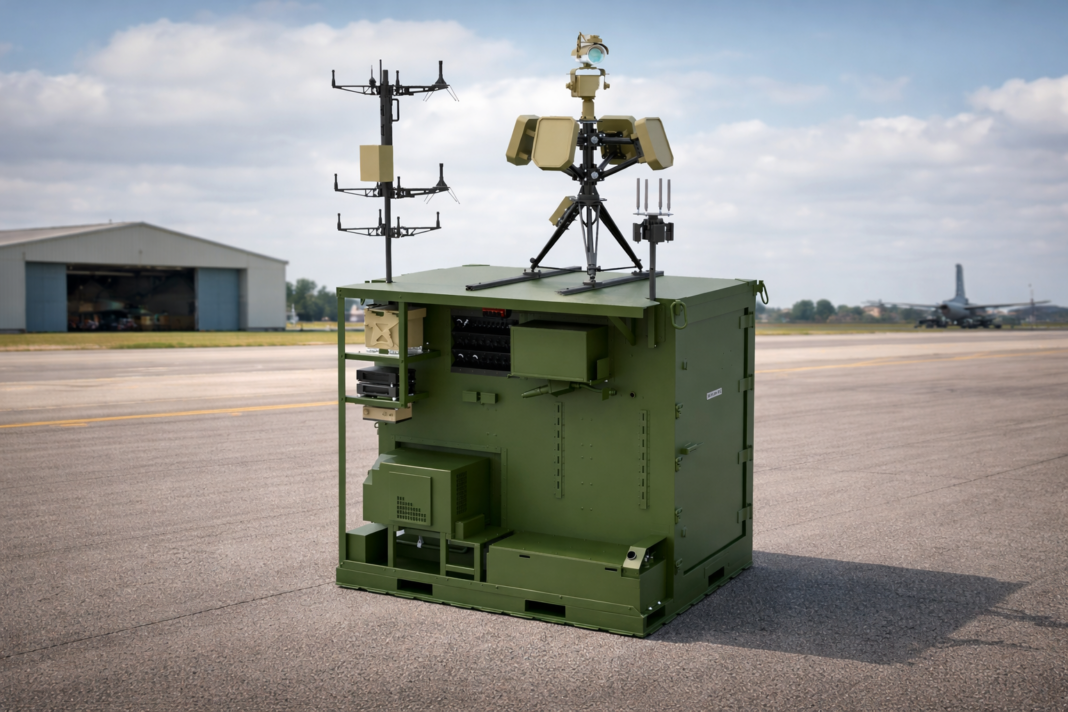
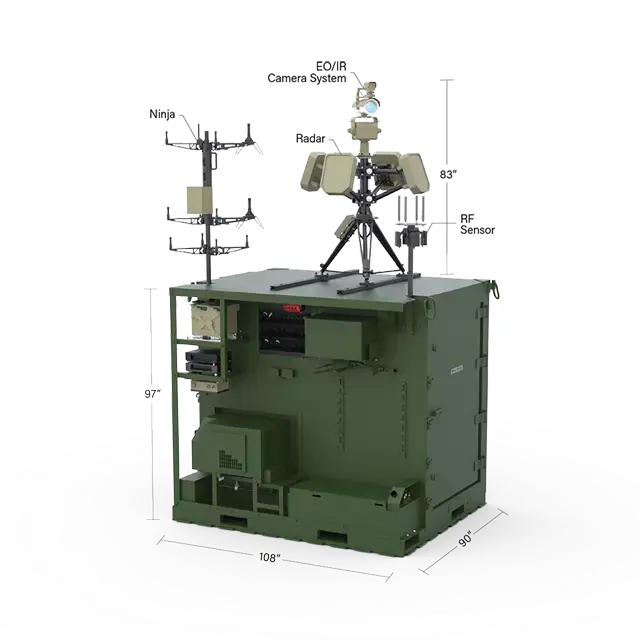
    Trust is a field-proven leader in defense and counter-small unmanned aircraft system (C-SUAS) technologies to directly counter UAS activity in C2 and GNSS bands. At the core of its product suite is the Small-Unmanned Air Defense System (SUADS), which delivers fixed-site, such as Air Force base defense operations centers (BDOC), and rapidly deployable protection for key facilities and units in combat zones. These systems provide layered defense with adaptable modular solutions to detect, track and defeat Group 1, 2 and 2+ aircraft threats.

    Complementing SUADS is the weapons-mountable GAT UAS Jammer, which enables personnel to directly counter UAS activity in GNSS bands. Together with a broader suite of radio frequency products, Trust equipes warfighters with scalable options to secure critical operations against evolving UAS threats.

    As Trust Automation rolls into 2026, the company remains dedicated to its mission to deliver innovative, reliable and mission-critical technologies that empower the U.S. Air Force and other defense partners to stay ahead of emerging threats.