Category: Applications

  • Baseband Technologies Granted Patent for Ultra Low-Power GPS Receiver

    Baseband Technologies Inc. has been issued a patent from the United States Patent and Trademark Office for its low-power satellite positioning innovation. U.S. Patent No. 9,116,234, titled “System, Method and Computer Program for a Low Power and Low Cost GNSS Receiver,” describes the technology and processes to significantly reduce the energy required to operate a GPS receiver.

    Baseband’s ultra low-power GPS receiver technology enables consumer electronics manufacturers to integrate its receiver into battery-powered wearable/Internet of Things (IoT) devices using hundreds of times less power than the traditional GPS chipsets.

    “With the wearable market projected to grow multiple times faster than smartphones and with GPS being one of the most requested features, there will be huge rewards for those manufacturers who can offer GPS functionality in their products without impacting the battery life or size,” said Francis Yuen, founder and CEO of Baseband. “For us, innovation is about connecting what is possible with what is valuable to our customers. This patent, in conjunction with others now pending, will enable Baseband to continue to offer ultra low-power positioning capabilities and customer-centric experiences across different market verticals.”

    “It is gratifying that the US Patent and Trademark Office has recognized both our invention and the intellectual property of this very promising technical advancement,” Yuen said. “This newly granted patent will certainly help in our current investment round as well as to fuel continued product development and innovation that will lead to even further advances in ultra low power positioning.”

  • 2015 Field Technology Conference Registration Opens

    The Western Forestry and Conservation Association (WFCA) has announced that registration for the Fifth Annual Field Technology Conference (FTC) is open. FTC 2015 is hosted by WFCA, Pacific Northwest Aquatic Monitoring Partnership (PNAMP) and StreamNet. The conference will be held Nov. 18-19 at the Holiday Inn Convention Center in Portland, Ore.

    The Field Technology Conference offers attendees an insightful look at trends in field data collection hardware (smartphones, handheld/tablet computers, GPS receivers, laser rangefinders, and other data collection instruments), remote sensing (UAVs, photogrammetry, lidar) and mapping software (data collection, data processing, map building) along with outdoor demonstrations and a field trip.

    “This will be our fifth conference. With the addition of the fisheries track and participation from the Civil GPS Interface Committee, we should have a significant attendance increase this year,” said moderator/co-organizer Eric Gakstatter. “We continue to attract speakers with strong expertise in their disciplines to present their work and thought leadership.”

    The conference offers three tracks:

    • Common field technology: Discussing field data collection technology used across all disciplines such as UAVs, GPS, and mobile devices.
    • Forestry: Forestry-specific technology presentations.
    • Fisheries: Fisheries-specific technology presentations.

    In addition to the three technical tracks, there will be outdoor technology demonstrations as well as a fisheries field trip to a local slough for a live demonstration of field data collection technology (space limited).

    On the second day of the two-day conference, there will be presentations from the Civil GPS Interface Service Committee (CGSIC). CGSIC is the only forum in which civilians have the opportunity to interact directly with US GPS authorities.

    FTC 2014 attendees included representatives from Federal/State/Local government, Fortune 1000 companies, Native American tribes, higher education and natural resource consultancies.

    The registration fee is $250 if registered by Nov. 5 and $295 if registered after that date. The government rate is $195 and $245 if registered after that date. Attendance to the CGSIC presentations on November 19 is free of charge and open to the public (lunch not included).

    The registration fee includes lunch on both days as well as refreshments during breaks. The conference room rate is $99/night plus tax. After Oct. 27, the reduced rate will be subject to availability.

    To register or learn more about the conference agenda, go to the conference website.

    Sponsorship opportunities are available. Please contact Richard Zabel [email protected], 503/226-4562.

  • Mapillary Partners with Esri to Provide Real-Time Street Photos

    Mapillary-O

    Mapillary, a community-based mapping photo app, is partnering with Esri to help governments and businesses see their cities evolve in real-time through the ArcGIS platform integration.

    Mapillary creates detailed maps that go beyond street view by instantly stitching together hundreds of thousands of crowd-sourced photos, giving cities the ability to gain insights immediately rather than weeks or months later. The ArcGIS integration provides governments and cities with a tool to help them manage inventory and city assets, monitor repairs, inspect pavement quality, assess sites for public transportation projects, and more.

    With ArcGIS support, Mapillary users will be able to:

    • Navigate photos in a web-based viewer
    • Load any ArcGIS data layer or base map
    • Use Mapillary street-level photos to edit and update their data
    • Automatically sync edits back to ArcGIS Online.

    Learn more at the Mapillary website.

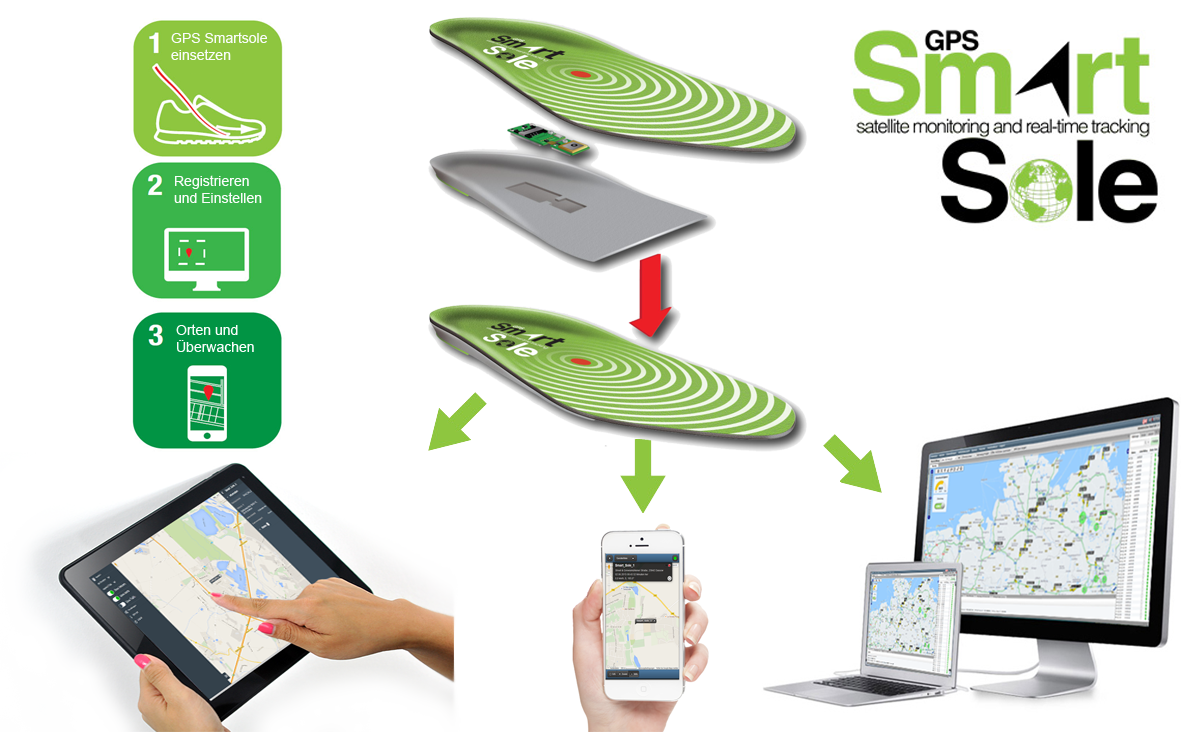
  • GPS SmartSole Launches in Germany for Alzheimer’s Monitoring

    GPS SmartSole Launches in Germany for Alzheimer’s Monitoring

    Photo: GPS SmartSole

    GTX Corp, an IoT platform in the personal location GPS wearable and wandering-assistive-technology business, has completed a successful SmartSole pilot program transitioning into a commercial launch in Germany. SmartSoles also launched this month in the United Kingdom.

    GTX Corp has signed a reseller distribution agreement with Way4Net, a solution provider in geo-locating and tracking monitoring services. Way4Net placed its first commercial order, with scheduled delivery dates beginning this month and continuing monthly over the next six months.

    GPS SmartSoles. GTX Corp’s flagship product, the GPS SmartSoles, are an unobtrusive monitoring and tracking solution for those who suffer from Alzheimer’s, dementia, autism, TBI and other memory disorders and have a tendency to wander.

    The SmartSoles are placed in the wearer’s shoes and contain a GPS tracking chip connected through a cellular network that sends a signal to GTX Corp’s proprietary IoT platform monitoring website or smartphone app, showing the exact location of the individual wearing them. They come in several trim to fit sizes for both men and women, are water resistant, made with the highest-quality electronic components and assembled in Rhode Island, U.S.A.

    The Dementia Problem. Germany has a population of 83 million people with approximately 1.6 million, or 2 percent of its population who are afflicted with dementia and Alzheimer’s. Just this week, German football legend Gerd Muller announced receiving treatment for Alzheimer’s disease. This disease is not limited only to the senior population — 24,000 people ages 45-65 are already diagnosed throughout Germany.

    Many people mistake dementia as a natural consequence of getting older, when it is actually the result of damage to brain cells that affect memory. Dementia affects close to 50 million people worldwide today with no cure for this syndrome on the horizon.

    “For us, the solution of GTX SmartSole is one of the best technologies to increase the quality of life of vulnerable people with the symptoms of dementia, Alzheimer’s, autism and other cognitive memory disorders,” said Eric Gnass, CEO of Way4Net. “We are very pleased to introduce this unique product on the German market.”

    Transition to Commercial Launch. “We are extremely pleased to have another successful pilot transition into a commercial launch and we are proud to partner with a well-entrenched company like Way4Net,” said Andrew Duncan, GTX Corp director of business development. “We are currently investing a lot of resources in Germany, which is where we design and manufacture our GPS and cellular chip, and have recently signed an M2M agreement with Telefonica Germany which will support our connectivity throughout Europe. Between our launch in Germany and launch last week in the U.K., I plan to stay in Europe for another two weeks working with our partners and chip manufactures on our next-gen SmartSole, expected out in early 2016.”

    The patented GPS SmartSoles, which were showcased in Munich at the Telefonica 2015 Innovation Conference Digital Innovation Day, were featured in AARP’s 2015 technology gear guide. They also came in second place — with Microsoft finishing first and Samsung taking third place — in the 2015 Wearables, Health, Fitness & Wellness category at CTIA’s Hot for the Holidays Awards competition.


  • SiTrack:One by Leica Geosystems Makes 3D Point Clouds without GNSS

    SiTrack:One by Leica Geosystems Makes 3D Point Clouds without GNSS

    Photo: Leica Geosystems

    Leica Geosystems has released SiTrack:One, a highly accurate rail track maintenance and refurbishment system incorporating the Leica ScanStation P40 to generate 3D point clouds. 

SiTrack:One by Leica Geosystems ensures complete coverage of an entire rail infrastructure surface without the need to receive GNSS signals for position information, the company said.

    With a new mounting design, the total solution for rail maintenance and refurbishment produces synchronized engineering, survey-grade 3D point clouds for accurate as-built drawings. 
The Leica ScanStation P40 can either be mounted vertically in the centre of the rails or inverted directly over the rail track. Rail bridge sleeper replacements can be measured quickly generating a numbered as-built replacement plan for each individual sleeper on a rail bridge.

    The sophisticated system is equipped with two powerful distance measurement instrument (DMI) or odometers that provide accurate positioning in GNSS-denied areas, such as underground railway tunnels or underground subway networks. The system’s on-site calibration process guarantees permanent alignment of the relative position between the sensors and its onboard inertial measurement unit, guaranteeing position accuracy.

    The German engineering firm Vermessungsbüro Riemenschneider GbR was the first to use the SiTrack:One by Leica Geosystems. When converting existing railway tracks in the course of track maintenance for the Deutsche Bahn AG, the firm required complete, accurate and consistent information on existing tracks, clear structure gauge, route topography and civil engineering works. With the SiTrack:One, Vermessungsbüro Riemenschneider GbR experienced significant workflow gains by leveraging the highly accurate point clouds directly into the engineering process.

    “The SiTrack:One by Leica Geosystems guaranteed  the complete survey of railway sidings with a minimum stay of surveying personnel in the danger zone of rail transport,” said Dipl.-Ing. Andreas Riemenschneider, principal of Vermessungsbüro Riemenschneider. “Thus, the costs of security measures were significantly reduced. The state-of-the-art system conforms efficiently to the demands for survey, visualisation, documentation, evaluation and approval of existing and new routes, all in accordance with rail transportation guidelines.”

    Developed from acquired knowledge 
SiTrack:One is the first solution to be released under Leica Geosystems from the acquisition of the former Technet-Rail 2010 GmbH. Leica Geosystems acquired the previous firm’s specialised knowledge of geospatial big data for rail transportation networks in May to increase its mobile mapping offerings for the rail industry.

    “One of our goals in obtaining this specific know-how was to provide users with a dedicated tool for passenger rail networks monitoring and maintenance, and with the development of SiTrack:One, we are taking the first step on this roadmap,” said Stuart Woods, Leica Geosystems Geospatial Solutions Division vice-president. “Professionals can now trust their measurements on rail are accurate even in the most difficult conditions.”

    SiTrack:One by Leica Geosystems includes software enabling data synchronization, post-processing and feature extraction. This solution is part of the SiRail Suite, which includes the SiRailScan and SiRailManager software solutions.

    SiRailScan allows for a complete extraction of the railway network with engineering accuracy level, while SiRailManager, the database management tool, creates a holistic view of an operator’s railway network from point cloud to geometry and signal layers. The combination of these solutions form the  SiControl platform, which conforms to the requirements of the  European Train Control System and produces complaint rail xml outputs for full train feedback control.

  • Trimble Placer/Spreader Machine Control Offers Improved Paving Productivity, Less Waste

    Trimble’s PCS900 Paving Control System version 2.20 is designed for GOMACO and Guntert & Zimmerman placer/spreader machines. The new version of PCS900 further automates the paving train by enabling contractors to use GNSS-based positioning, in conjunction with a base station, to steer the machine and control the machine’s elevation according to a 3D model. This can significantly improve paving productivity and reduce material waste on concrete road and airport surfaces.

    With the availability of GNSS-based 3D machine control for placer/spreaders, paving contractors can move their Trimble GCS900 Grade Control System display, radio, sensors and GNSS receivers between even more machines in their fleet. By using Trimble grade-control components on their placer/spreader, users can realize a faster return on their investment for Trimble technology, the company said.

    In addition, factory-fit integration between GOMACO and Guntert & Zimmerman placer/spreaders and the Trimble PCS900 system gives contractors an easy-to-learn, seamless paving control solution, Trimble said. Operators can make any necessary adjustments to machine guidance with the onboard 2D system they are familiar with, lowering the training time needed to learn a new system.

    Without machine control, a concrete placer/spreader is controlled manually or by two stringlines, one on each side of the lane being paved. Using the PCS900 system, time-consuming labor spent setting up these stringlines can be eliminated. The Trimble PCS900 uses GNSS-based positioning to keep the placer/spreader on the target alignment, design and slope so contractors can spread material faster and more efficiently while reducing labor costs.

    The Trimble PCS900 system version 2.20 is currently available for GOMACO placer/spreader machines with G22 or G+ machine controllers through GOMACO in North America. PCS900 version 2.20 for the Guntert & Zimmerman placer/spreader machines running the EGON machine control system is available through Trimble’s worldwide SITECH® Technology Dealer Channel.

  • Hexagon Takes Top Honors in the Wichmann Innovations Award

    Hexagon Takes Top Honors in the Wichmann Innovations Award

    The new Leica Geosystems Pegasus backpack wearable mobile mapping solution.
    The new Leica Geosystems Pegasus backpack wearable mobile mapping solution. (Leica Geosystems AG, Switzerland, 2015)

    The top Wichmann Innovations Award has been given to the Leica Geosystems Pegasus:Backpack, a wearable reality-capture technology that combines five high-dynamic cameras and two lidar profilers within an ultra-light and ergonomic carbon-fiber chassis. Leica Geosystems is a brand of Hexagon.

    Companies from around the globe submitted products and applications to participate in the awards, which were presented by publisher Wichmann Verlag at the INTERGEO trade show, held in Germany in September. From hundreds of submissions, a jury of industry leaders selected 10 products and applications to receive votes from the general public. The main criteria for the awards were innovation, user-friendliness and practicality. Wichmann Verlag is known for its expertise in professional magazines and specialist books for geodesy and geomatics.

    The Pegasus:Backpack is a mobile mapping solution that creates a 3D view indoors or outdoors for engineering or professional documentation at the highest level of authority while using SLAM (simultaneous localization and mapping) to determine position in GNSS-denied areas. With a focus on fast and efficient capture, calibrated images and point clouds are quickly generated for applications as diverse as BIM 6D to industrial training and disaster analysis, Leica said.

    “The mobile mapping team has put a lot of hard work into understanding the needs of today’s professionals, and the Leica Pegasus:Backpack ensures they are not limited in how, where or when they collect their data,” said Stuart Woods, vice president of Leica Geosystems Geospatial Solutions Division. “With this achievement, the concept of mobile reality capture has been substantiated at the highest level and ushers in a new era in perception surveying and actionable mobile content.”

    Watch a video about the backpack taken at INTERGEO:

    Second place was awarded to Intergraph Security, Government & Infrastructure’s Green GIS, featuring the patented ECW (Enhanced Compression Wavelet) data compression format and ERDAS APOLLO software. Through the use of Hexagon Geospatial technologies, Intergraph’s solution drastically reduces data volume and minimizes storage demands and energy costs, leading to more efficient and environmentally friendly data centers.

    “Software has a significant influence in terms of the enterprise carbon footprint. Our software-driven Green IT approach is absolutely new and pioneering, and effectively supplements previous environmental and climate protection efforts made by the information and communications technology sector,” said Maximilian Weber, senior vice president, Intergraph Security, Government & Infrastructure EMEA. “Our Green GIS can help lower carbon emissions of our customers’ IT processes.”

  • Lockheed Unveils ICARUS to Counter UAS Threats

    Lockheed Unveils ICARUS to Counter UAS Threats

    Photo: Lockheed Martin

    At this year’s Association of the United States Army (AUSA) Annual Meeting, Lockheed Martin unveiled a new capability that will allow users to detect and counter emerging threats from unmanned aerial systems (UAS). The solution, ICARUS, was designed to operate defensively in various threat environments. The AUSA meeting was held Oct. 12-14 in Washington, D.C.

    “The U.S. government is seeing an increase in the use of commercially available UAS platforms for surveillance and weaponization,” said Deon Viergutz, vice president of Cyber Solutions for Lockheed Martin. “What Lockheed Martin has developed in ICARUS is a system that can detect, recognize and counteract these systems with pinpoint accuracy.”

    Lockheed Martin’s Counter-UAS system has been field tested and demonstrated to several domestic and international customers over the past year. Those tests demonstrated the ability of ICARUS to identify and intercept commercially available unmanned aerial systems.

    The development of the ICARUS software system draws on Lockheed Martin’s history of innovations in electronic warfare, cybersecurity and countermeasures associated with sophisticated threats. It was developed through Lockheed Martin internal investment and combines advanced cyber and cyber electromagnetic activity experience with sensor technology and non-kinetic techniques.

  • Rockwell wins DARPA Contract for GPS Backup Tech

    Rockwell Collins has been selected by the Defense Advanced Research Projects Agency (DARPA) to develop technologies that could serve as a backup to GPS. The research, being conducted as part of DARPA’s Spatial, Temporal and Orientation Information in Contested Environments (STOIC) program, aims to reduce warfighter dependence on GPS for modern military operations.

    Under the terms of the agreement, Rockwell Collins will develop innovative architectures and techniques to enable communication systems that will support time transfer and positioning between moving platforms independent of GPS, with no impact on primary communications functionality.

    “STOIC technology could augment GPS, or it may act as a substitute for GPS in contested environments where GPS is degraded or denied,” said John Borghese, vice president of the Rockwell Collins Advanced Technology Center. “The time-transfer and ranging capabilities we are developing seek to enable distributed platforms to cooperatively locate targets, employ jamming in a surgical fashion, and serve as a backup to GPS for relative navigation.”

    Borghese added that the goal of the STOIC program is to develop positioning, navigation, and timing (PNT) systems that provide GPS-independent PNT, achieving timing that far surpasses GPS levels of performance. The program is comprised of three primary elements that, when integrated, have the potential to provide global PNT independent of GPS, including long-range robust reference signals, ultra-stable tactical clocks, and multifunctional systems that provide PNT information between cooperative users in contested environments.

    For this third technical element, Rockwell Collins is tasked with developing multifunction communication system solutions that yield DARPA STOIC objective picosecond-accurate time transfer and enable GPS-levels of relative positioning accuracy in contested environments.

    “Future applications of STOIC technology could include a variety of precision relative navigation operations, such as autonomous aerial refueling and cooperative navigation and collision avoidance within unmanned aerial vehicle swarms,” said Borghese. “It also could support precise time transfer for networking operations in contested environments.”

  • Magellan Integrates RoadMate with Position Logic Tracking Platform

    Magellan Integrates RoadMate with Position Logic Tracking Platform

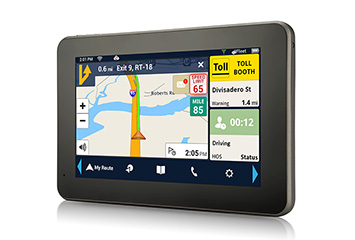
    The Magellan RoadMate RC9496T-LMB commercial navigator.
    The Magellan RoadMate RC9496T-LMB commercial navigator.

    Magellan is integrating its RoadMate RC9496T-LMB fleet navigation device with Position Logic’s advanced GPS tracking software solution. The partnership allows Position Logic service providers to leverage all Magellan RoadMate RC9496T-LMB devices.

    The RoadMate RC9496T-LMB, a 7-inch Android GPS fleet navigation device, is available now to current and prospective Magellan and Position Logic customers. Position Logic, a division of KORE, provides precision location-based services for business-to-business applications.

    The Magellan and Position Logic integration delivers a powerful and seamless end-to-end communication and navigation solution for fleets, the companies said. The solution includes the RC9496T-LMB, an active mobile terminal, allowing real-time two-way communication between driver and dispatch when paired with Position Logic’s GPS tracking software. Users can send and receive important information to immediately identify driver status including route-receipt, in-route or on-scene, and deliver real-time messages to improve driver productivity. The solution delivers critical information for field service fleets, emergency services, roadside assistance and many more applications.

    “Position Logic is an innovative technology leader in the location based services space. We are pleased to partner with them and offer the Magellan RC9496T-LMB to Position Logic customers,” said Stig Pedersen, associate vice president of product management for Magellan. “The combination of our two services delivers a highly efficient and flexible way for dispatchers to communicate with drivers in real-time, saving time, money and frustration.”

    The RC9496T-LMB is also connected to Magellan’s SmartGPS Eco cloud, providing drivers and fleet managers with customizable time and money saving content such as: real-time fuel price information, weather and truck speed limit warnings.

    “We are pleased to have the RoadMate RC9496T-LMB integrated. The Magellan integration further complements our Workflow/Dispatch module; improving communication between the dispatcher and driver and enhanced stop management,” said Felix Lluberes, executive vice president, advanced applications, KORE. “I am certain our service providers will be able to leverage the device and deliver more comprehensive services.”

    The Magellan RoadMate RC9496T-LMB is available now. It has an MSRP of $399.

  • Global Car GPS Industry Analyzed in New Market Report

    The Global Car GPS Industry 2015 Market Research Report is a professional and in-depth study on the current state of the car GPS market spread across 108 pages, profiling 21 companies and supported with 245 tables and figures. The report is divided into 13 major chapters that offer an overview of the current market, as well as forecasts for the car GPS industry.

    The report provides a basic overview of the car GPS industry, including definitions, classifications, applications and industry chain structure. Analysis is provided for the international markets, including development trends, competitive landscape analysis and key regions’ development status. Development policies and plans of the car GPS industry are discussed and analyzed, as well as manufacturing processes and cost structures. This report also states import/export consumption, supply and demand figures, cost, price, revenue and gross margins.

    The report focuses on major global players in the car GPS industry, providing information such as company profiles, product picture and specification, capacity, production, price, cost, revenue and contact information. Upstream raw materials and equipment and downstream demand analysis is also carried out. Industry development trends and marketing channels are analyzed. Finally, the feasibility of new investment projects are assessed and overall research conclusions offered.

    With 245 tables and figures supporting the car GPS industry analysis, the research provides key statistics on the state of the industry and is a source of guidance and direction for companies and individuals interested in the market. Companies profiled include Coagent Electronic S&T Co. Ltd. (Guangdong), Denso (Tianjin), Soling Industrial (Shenzhen), Rotiss Electronics (Huizhou), Shinco (Jiangsu), Skypine Electronics (Shenzhen), UniStrong (Beijing), RoadRover Technology (Shenzhen), Bosch (Shanghai), Newsmy (Beijing), Pioneer (Shanghai), Wanlida Group (Xiamen), BDStar Navigation (Beijing), FlyAudio (Guangzhou), ChanghongIT (Sichuan), Saige GPS (Shenzhen), Panasonic (Beijing), Link Create (Shenzhen), Clarion (Dongguan), Alpine (Beijing)  and Aisin (Tianjin).

    A related study titled “2015 Deep Research Report on Global Vehicle GPS Industry” provides a basic overview of the industry including definitions, classifications, applications and industry chain structure. The vehicle GPS market analysis is provided for the China markets including development trends, competitive landscape analysis, and key regions development status.

    With 147 tables and figures, the report provides key statistics on the state of the industry and is designed to be a valuable source of guidance and direction for companies and individuals interested in the market. The report focuses on China’s major leading industry players, providing information such as company profiles, product picture and specification, capacity, production, price, cost, revenue and contact information. Upstream raw materials and equipment and downstream demand analysis is also carried out.

    Vehicle GPS industry development trends and marketing channels are analyzed. Finall,y the feasibility of new investment projects are assessed and overall research conclusions offered. Companies such as Garmin, TomTom, Cobra, GlobalSat, Jensen, Deeper, Dragonpad, PUMPKIN, Pupug, Pyle, Rand McNally, Raymarine, Soundstream, Sourcingbay, Stouch, Uniden, YINUO, Generic  and Humminbird  are profiled.

  • Cobham Launches Two ‘Sailor’ Marine Receivers

    Cobham Launches Two ‘Sailor’ Marine Receivers

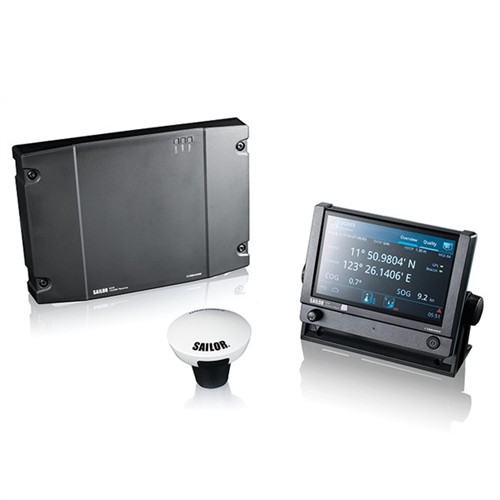
    SAILOR 6560 GNSS_500x500
    The Sailor 6560 GNSS System is delivered with the Sailor 6004 Control Panel and the corresponding Sailor 6285 GNSS Antenna or Sailor 6286 DGNSS Antenna.

    Cobham SATCOM has launched two new Sailor satellite navigation receivers. Both the Sailor 656X GNSS and new Sailor 657X DGNSS (Differential GNSS) are black-box products designed to be part of a system Cobham SATCOM refers to as its “multi-function universe.”

    The advanced touchscreen Sailor 6004 Control Panel at the heart of the Multi-Function Universe provides full control for all products connected to it from a single device. The Sailor 656X GNSS and Sailor 657X DGNSS join the Sailor 6391 Navtex and Sailor 628X AIS as new generation Sailor products designed to work with the Sailor 6004 Control Panel. Operation of all systems connected to the Sailor 6004 Control Panel is done by selecting the icon for the product on the touchscreen, providing access to set-up, functions and diagnostics.

    “The Multi-Function Universe approach means that a variety of products can all be accessed from a single screen on the bridge and anywhere else a repeater is needed, making installation far more flexible than with traditional products that all require their own screen. The approach also saves space on the bridge, and importantly, makes the life of maintenance engineers easier as they have a single point of entry to the network,” explains Claus Hornbech, Business Manager, Cobham SATCOM.

    The Sailor 656X GNSS and the Sailor 657X DGNSS collect satellite data from any available navigation satellites including GPS and GLONASS and distribute it to a variety of on board systems such as; ECDIS (Electronic Chart DISPlay System), INS (Integrated Navigation System), GMDSS (Global Maritime Distress & Safety System), SATCOM (Satellite Communication System), MCS (Master Clock Systems) and PABX (Telephone Exchanges).

    Cobham SATCOM offers four variants of its new satellite navigation products, all of which are designed 100% in house. The Sailor 6560 GNSS System and Sailor 6570 DGNSS System are delivered with the Sailor 6004 Control Panel and the corresponding Sailor 6285 GNSS Antenna or Sailor 6286 DGNSS Antenna, while the Sailor 6561 GNSS Basic and Sailor 6571 DGNSS Basic are delivered with the antennas only.

    All four variants use the same proprietary Sailor 6588 DGNSS Receiver, which provides highly accurate data, enhanced by means of Satellite Based Augmentation System (SBAS) from various areas including WAAS (Wide Area Augmentation System) for the United States, EGNOS (European Geostationary Navigation Overlay Service) in Europe, and systems from Japan, India and Russia. The Sailor 6285 GNSS Antenna and Sailor 6286 DGNSS Antenna are also both new, designed and manufactured according to Cobham SATCOM’s quality standards.

    “The accuracy and availability of satellite positioning and timing data is vital to vessel safety as so many critical navigation and communication systems rely on it to operate,” adds Jan Kragh Michelsen, VP Maritime Business Development, Cobham SATCOM. “All elements, from the black-box to the antennas, multi-function display and the user-interface of the systems are new and developed 100 percent in house at Cobham SATCOM, so customers can be confident in the reliability of our new GNSS and DGNSS products, in addition to our revolutionary Multi-Function Universe operating concept.”