Category: Applications

  • AFIT, Locata Partner on GPS Technology Development

    AFIT, Locata Partner on GPS Technology Development

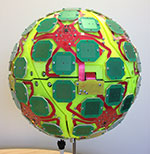
    Locata's new VRay Orb 80 switching antenna.
    Locata’s new VRay Orb 80 switching antenna.

    The Air Force Institute of Technology (AFIT) and Locata Corporation have signed a Co-operative Research & Development Agreement (CRADA) to build and demonstrate new Locata multipath mitigation technology for use in GPS receivers. This cooperation is expected to leverage many years of proprietary Locata ground-based technology development to bring completely new capabilities to satellite-based GPS receivers, AFIT said.

    The Air Force Institute of Technology, or AFIT, is the Air Force’s graduate school of engineering and management as well as its institution for technical professional continuing education.

    The CRADA is specifically directed to evaluate Locata’s patented correlator and switching antenna technologies for use in positioning receivers running at GPS frequencies. Locata’s engineers will transfer knowledge and experience they have gained with existing Locata commercial systems to help AFIT design and build an initial multi-element GPS-based switching antenna prototype which is based on Locata’s patents. This will ensure AFIT researchers and engineers can familiarize themselves with the new antenna’s characteristics, and provide AFIT with an essential platform to develop GPS-specific versions of Locata’s correlator and switching algorithms. When built, AFIT intends to use its GPS receiver and the prototype switching antenna to physically demonstrate the feasibility of using Locata technology to improve GPS receiver performance.

    An animation was created specifically to explain RF problems created by multipath and Locata’s VRay solution. The animation shows the first proof-of-concept 2D, 64-element antenna Locata’s engineers prototyped in 2011.

    After initial prototypes are built, AFIT plans to design and test several other GPS-based versions of Locata’s switching antenna array to assess how Locata’s commercial antennas can be adapted to use cases which are of particular interest to the military. Designs already discussed with Locata include stand-alone antennas, arrays conformal to a vehicle’s frame (such as a Humvee’s roof or aircraft fuselage), and a version built into helmets.

    As a first step in implementing this CRADA collaboration, AFIT personnel visited Locata’s head office the week of April 29 for a detailed, wide-ranging introduction to the design fundamentals for this new type of antenna. Locata hosted AFIT’s John Raquet, Peter Collins and Jason Barhorst (see picture) in multiple engineering meetings where Locata’s current production version antenna was revealed for the first time, and then closely analyzed. AFIT and Locata engineers then workshopped the modification and design choices required to integrate Locata design into a GPS form-factor.

    “If this CRADA is successful, Locata’s technology could enable a significantly improved technical performance and reduction in the cost of multiple-element GPS antennas,” said John Raquet, director, Advanced Navigation Technology Center, AFIT. “This will enable much wider adoption of the technology, resulting in more reliable GPS positioning for more users. We are excited to investigate this technology advance for the benefits it will potentially bring to American warfighters.”

    “We are incredibly proud to once again be involved in a CRADA with the Air Force Institute of Technology, developing on the cutting-edge of navigation technology,” said Nunzio Gambale, CEO and co-founder, Locata Corporation. “Our previous LocataNet partnership with Dr. Raquet and his world-class AFIT researchers quickly taught us why this team is renown throughout the industry. The AFIT engineers bring an exceptional skill base to this important integration of Locata technology into GPS receivers. I’m certain that our collaboration, along with access to the USAF’s unmatched prototyping and testing capabilities, will deliver ground-breaking functionality for future GPS devices.”

    AFIT expects at least one master’s degree to be awarded for the research tasks involved in the CRADA. Work against the approved CRADA project plan will commence immediately, and involve several other participants providing admin and lab support to AFIT and Locata. The final report produced by this CRADA will include results and measured performance of the Locata-enhanced GPS receiver and other design considerations gleaned from AFIT’s experience with the new Locata antenna and correlators.

     AFIT-Locata Kick-off Meeting. This is the first picture ever released by Locata which shows their radically new switching antenna, a design that AFIT will now modify for use with GPS receivers. Pictured (L-R): Dr. Steve Hewitson & Ian Sainsbery (Locata engineers); Jason Barhorst (AFIT); David Small (Locata technology inventor), Nunzio Gambale (Locata CEO), Dr. John Raquet (Director, Advanced Navigation Technology Center, AFIT), Dr. Peter Collins (AFIT), Dr. Trevor Hobbs (Locata Director of R&D).
    AFIT-Locata Kick-off Meeting: This is the first picture ever released by Locata which shows their radically new switching antenna, a design that AFIT will now modify for use with GPS receivers. Pictured (L-R): Dr. Steve Hewitson & Ian Sainsbery (Locata engineers); Jason Barhorst (AFIT); David Small (Locata technology inventor), Nunzio Gambale (Locata CEO), Dr. John Raquet (Director, Advanced Navigation Technology Center, AFIT), Dr. Peter Collins (AFIT), Dr. Trevor Hobbs (Locata Director of R&D).
  • Garmin’s New Sports Watches Feature Color Display

    Garmin’s New Sports Watches Feature Color Display

    Photo: Garmin International Inc
    Photo: Garmin International Inc

    Garmin International Inc., a unit of Garmin Ltd., the global leader in satellite navigation, is now offering the Forerunner 620 and Forerunner 220 GPS running watches, both of which have color displays. The Forerunner 620 offers advanced features like recovery advisor, race predictor and VO2 max (maximal oxygen uptake) estimate to help runners train and achieve race goals. When used with the new HRM-Run (heart rate) monitor, the 620 also provides feedback on running form.

    For indoor training, such as on a treadmill, the 620 and 220’s built-in accelerometer tracks distance and pace, so runners don’t need a separate sensor. Both models boast Garmin’s unique one-inch Chroma color display to easily interpret data.

    “Whether running indoors or out, Forerunner 620 and 220 will change the way runners look at training,” said Dan Bartel, Garmin vice president of worldwide sales. “Advanced features in the 620 such as recovery advisor, VO2 max estimate, race predictor and stats on running economy, combined with connected features and training plan options found in both the 620 and 220, make these watches must haves for runners of all levels. To keep runners motivated the watches also notice if runners hit any personal records on that run, like their fastest mile, 5k, 10k, half or full marathon or their longest run to date.”

    Regardless of a runner’s experience, motivation, or how far or fast they go, they likely want to know how they can improve and objectively measure their fitness. Forerunner 620 does just that by estimating runners’ VO2 max, which is a good indicator of athletic capability. Previously, the only way to accurately obtain VO2 max was by paying for a lab test.

    When used with a heart rate monitor, the 620 incorporates several pieces of data, like running speed, beats per minute and heart rate variability, into an advanced algorithm to estimate runners’ VO2 max. The number itself indicates the maximum volume of oxygen a runner can consume per minute, per kilogram of body weight at their max performance. Theoretically, the more oxygen runners can use during high-level exercise, the more energy they can produce. A color gauge on the watch display shows how a runner’s VO2 max data compares to other individuals of their gender and age range. Based on the VO2 max estimate, the 620 can predict a runner’s race time for several distances. This can give runners a time target for their next race, assuming they’ve completed proper training.

    When wearing HRM-Run, Forerunner 620’s recovery advisor and recovery check take the guesswork out when it comes to planning recovery time between hard workouts. Just like a coach, it learns the runner and their physiology based on heart rate data, so it factors this against their last workout and then shows how much time before they are fully recovered and ready for their next hard running workout. Color-coding on the high-resolution Chroma display gauge makes it easy to interpret — green means they are good to go. When runners see red on the display and a recovery time of more than three days, they might consider taking a rest day or just doing a light recovery run.

    HRM-Run also has an accelerometer in the module that measures torso movement in order to calculate 3 different running metrics:

    • Cadence — the number of steps per minute. It displays the total steps (right and left combined)
    • Vertical oscillation — the bounce in runners’ running motion. It displays the vertical motion of a runners’ torso, measured in centimeters.
    • Ground contact time — the amount of time in each step that you spend on the ground while running, measured in milliseconds.

    Thanks to their Bluetooth Smart wireless upload capabilities, Forerunner 620 and 220 can send runners’ run data to the Garmin online community, Garmin Connect, without being connected to a computer. It can transfer the data through the Garmin Connect Mobile app on their compatible smartphone. Additional connected features include live tracking, which allows runners’ friends and fans to follow along and see their stats in real-time. Runners must have their phone paired with their 620 or 220 throughout the run to use the LiveTrack feature. Victories, goals achieved and successes can be shared on runners’ social media sites by posting updates through the Garmin Connect Mobile app.

    With the growing popularity of the run/walk training method in the distance running community (example: a runner runs for five minutes, walks for one minute and repeats for the duration of the course), Garmin has included a run/walk alert. This alert allows Forerunner 620 and 220’s other features, such as, Auto Lap and Auto Pause, to remain active during a run/walk session.

    Both Forerunner 620 and 220 are water-resistant to 50m and can stand up to much more than rain, sweat and splashes. The Forerunner 620 has a touchscreen display responsive enough that it can be operated with running gloves, while the 220 is operated with easy to push buttons. Both models have rechargeable batteries lasting up to six weeks in watch mode and up to 10 hours in training mode.

  • Chronos Technology to Exhibit Anti-Jam Tech at ION GNSS+

    Chronos Technology, global timing and synchronization company, is exhibiting its anti-jamming technology at ION GNSS+ 2013 in Nashville, Tennessee, September 18-20.

    Exhibiting at Stand 723, Chronos will be demonstrating the Chronos Sentinel system, which enables a light-touch deployment of GPS jamming detection for a short period of time and allows a GPS jamming report to be created to enable management to assess the threat.

    The CTL3520 handheld GPS jamming detector by Chronos Technology.
    The CTL3520 handheld GPS jamming detector by Chronos Technology.

    Chronos will also be displaying various GPS products, including the new CTL3520 handheld GPS jamming detector and locator system aimed specifically at detecting GPS jammers hidden in vehicles.  The unit can pinpoint even the weakest jammer and identify the vehicle in which the jammer is hidden, even in a busy multi-storey car park. Other applications include detecting vehicles with jammers at ports, fleet depots, airport car parks and taxi ranks.

    In addition, Professor Charles Curry, managing director with Chronos Technology, is presenting a technical paper “GPS Jamming -Threat Scenarios” on Monday, September 16, at CGSIC, which precedes ION GNSS+ 2013.

    For more information about ION GNSS+ 2013, visit www.ion.org

  • Symmetricom to Participate in New Products Panel Session at ION GNSS+

    Symmetricom_logoSymmetricom will be participating in a new products panel at ION GNSS+, which will be held September 16-20 in Nashville, Tennessee.

    Phil Bourekas, Symmetricom executive vice president of marketing, will take part in “New Products Panel: Legacy and Expertise in GNSS Timing” on Thursday, September 19, 8:30 a.m. to 12:15 p.m. in Grand Ballroom East of the Nashville Convention Center, Nashville, Tennessee.

    The presentation will focus on Symmetricom’s suite of GNSS-applicable timing products, ranging from precision time protocols to atomic clocks, and how they can be used by the government, communications, power and enterprise verticals.

    Symmetricom is also a sponsor of the exhibitor-hosted reception. In its booth (#619), Symmetricom will exhibit and demonstrate the following products:

    • GPS Time & Frequency Receivers (XLi and XLi SAASM GB-GRAM models)
    • Cesium Frequency Standard 5071A
    • Rubidium Frequency Standard 8040C
    • Ruggedized Rubidium Oscillator 8200LN
    • SA.45s Chip-Scale Atomic Clock (CSAC)
    • Ovenized Quartz Master Oscillator 9500
    • GPS Disciplined Oscillator GPSDO 300
  • GPS III and OCX Satellite Launch, Early Orbit Ops Successfully Demonstrated

    GPS III and OCX Satellite Launch, Early Orbit Ops Successfully Demonstrated

    Artist's concept of the nextgen GPS III satellite (courtesy of the USAF).
    Artist’s concept of the nextgen GPS III satellite (courtesy of the USAF).

    Lockheed Martin and Raytheon Company successfully completed the third of five planned launch and early orbit exercises to demonstrate the launch readiness of the world’s most powerful and accurate Global Positioning System (GPS), the U.S. Air Force’s next-generation GPS III satellite and Operational Control System (OCX).

    Successful completion of Exercise 3, on August 1, was a key milestone demonstrating Raytheon’s OCX software meets mission requirements and is on track to support the launch of the first GPS III satellite, being produced by Lockheed Martin. Two additional readiness exercises and six 24/7 launch rehearsals are planned before launch of the first GPS III satellite in 2015.

    Using new installments of Raytheon’s OCX software and Lockheed Martin’s GPS III Launch and Checkout Capability (LCC), the Air Force Global Positioning System Directorate and the industry team completed a launch and early orbit exercise over a three-day period in late July. Exercise 3 demonstrated space-ground communications; first acquisition and transfer orbit sequences; orbit-raising maneuver planning and execution; and basic anomaly detection and resolution capabilities. In addition, the industry and customer teams jointly executed mission planning activities, such as orbit determination and the generation of upload command files.

    Exercise 3 expands on two previous exercises, with a longer mission timeline, and the introduction of simulated vehicle and ground anomalies to evaluate the combined response capabilities of the control segment, satellite and operations crew. “Successful completion of Exercise 3 clearly demonstrates that OCX is on track to support the first GPS III satellite launch,” stated Matt Gilligan, a vice president with Raytheon’s Intelligence, Information and Services business and Raytheon’s GPS OCX program manager. “The system responded as designed, and met all of the launch exercise success criteria and successfully demonstrated our anomaly response.”

    “Exercise 3 demonstrated that the cross-organizational operations team is on track to support successful GPS III launch and on-orbit checkout missions from our Newtown facility,” said Keoki Jackson, vice president of Lockheed Martin’s Navigation Systems mission area. “I look forward to the team’s continued success as they progress through the complex mission readiness program towards the first GPS III launch.”

    The Lockheed Martin-developed GPS III satellites and Raytheon‘s OCX are critical elements of the U.S. Air Force’s effort to modernize the GPS enterprise more affordably while improving capabilities to meet the evolving demands of military, commercial and civilian users worldwide.

    GPS III satellites will deliver three times better accuracy; provide up to eight times more powerful anti-jamming capabilities; and include enhancements which extend spacecraft life 25 percent further than the prior GPS block. The GPS III also will carry a new civil signal designed to be interoperable with other international global navigation satellite systems, enhancing civilian user connectivity.  The spacecraft bus and antenna assemblies for the first GPS III satellite have been delivered to Lockheed Martin’s GPS III Processing Facility and are in the integration and test flow leading to the planned space vehicle delivery in mid-2014.

    OCX is being developed in two Blocks using a commercial best practice iterative software development process, with seven iterations in Block 1 and one iteration in Block 2. Exercise 3 was conducted using the recently completed Iteration 1.4 software. Exercise 4, scheduled for early 2014, will use Iteration 1.5 software, which includes the Launch and Checkout System capability as well as all critical information assurance features needed to support launch of the first GPS III satellite.

    The GPS III team is led by the Global Positioning Systems Directorate at the U.S. Air Force Space and Missile Systems Center. Air Force Space Command’s 2nd Space Operations Squadron (2SOPS), based at Schriever Air Force Base, Colorado, manages and operates the GPS constellation for both civil and military users.

  • Astrium to Provide Satellite Imagery for Google Maps and Google Earth

    Astrium announced that it has entered into an agreement with Google Inc. to provide satellite imagery in support of Google Maps, Google Earth and other Google products and services. Under this agreement, Astrium Services will provide newly acquired imagery from its Pléiades and SPOT satellites.

    According to the announcement, Pléiades 1A and 1B are Europe’s first very high-resolution Earth-observation satellites, offering exceptional performance to support both commercial and government markets with 50cm resolution imagery products. The SPOT 6 and SPOT 7 constellation, operated in conjunction with Pléiades, offers 1.5m resolution imagery products and is uniquely capable of mapping continent-wide areas.

    Astrium reports that their four-satellite constellation makes Astrium Services the first satellite operator in the world to offer a complete range of Earth-observation data at different resolutions (from medium to very high-resolution), an image collection capacity of up to 6.5 million square kilometers each day and the ability to image every point of the globe on a daily basis.

  • Loctronix Offers Software-Defined Radio Module

    Loctronix Offers Software-Defined Radio Module

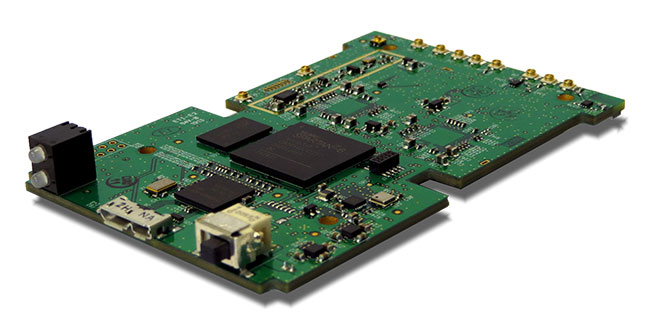
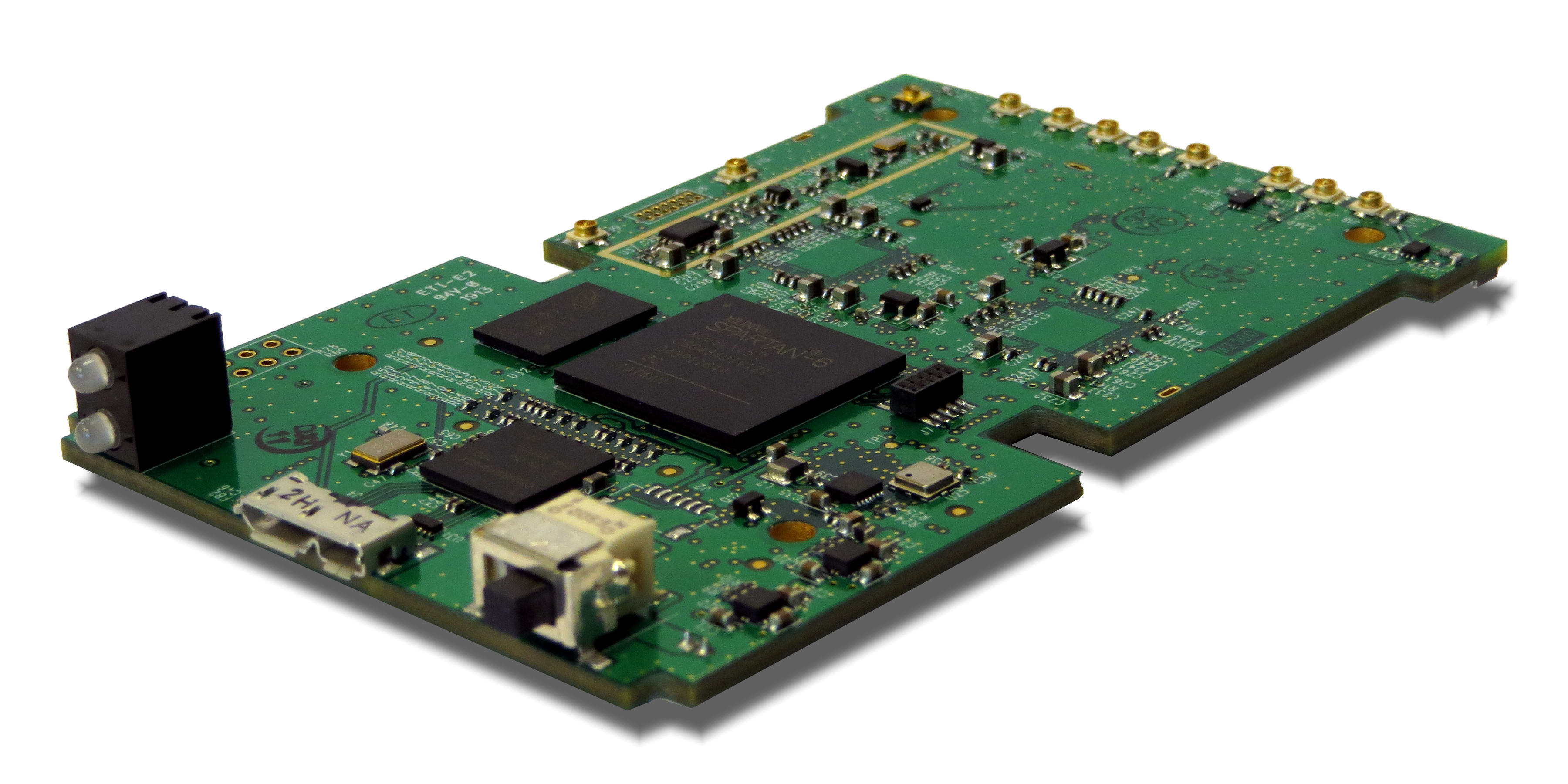
    Loctronix ASR-2300
    Loctronix ASR-2300

    Loctronix Corporation, a provider of unified positioning solutions for GNSS-challenged environments, is making available its new software-defined radio (SDR) module, the ASR-2300, for developing high-performance positioning, navigation and timing, and communication applications.

    The ASR-2300 will be on display September 16-19 at the Institute of Navigation annual meeting, ION GNSS+ 2013, in Nashville, Tennessee.

    “The ASR-2300 delivers advanced SDR capabilities in a small, mobile form-factor enabling developers to readily create and field complex SDR-based solutions. The module moves SDR out of the lab and into production, providing the critical piece for tapping advanced, multi-sensor/signals of opportunity for high-performance PNT,” stated Michael Mathews, Loctronix’ CEO and founder.

    According to Mathews, “The ASR-2300 is unique amongst the growing number of SDRs, having multiple, fully-integrated RF paths supporting reception of GNSS, cellular, ISM band, and UHF signals of opportunity. The ASR-2300 will benefit SDR developers working on demanding scientific, military, aerospace and commercial/industrial applications.”

    The ASR-2300 is a multiple-input and multiple-output (MIMO) transceiver module incorporating two wideband Field Programmable RF (FPRF) transceivers (300 MHz to 3.8 GHz) from Lime Microsystems, 10-axis accelerometer/gyro/compass/barometer sensors, and a large programmable FPGA capable of over 300 MiB/sec sustained communications with a host processor via USB 3.0 interface.  The module’s nine integrated RF path options and low size, weight, and power characteristics contribute to ease of integration and portability. Accommodating both internal 1 PPM TCXO or external frequency reference, multiple ASR-2300s can be inter-connected via an expansion port and/or UART interface, supporting real-time reception / transmission of 4, 6, 8 or more signals without the need for significant additional hardware.

    With on-board flash for storing developer customizable firmware and FPGA logic, the ASR-2300 can be configured to operate in a variety of different power profiles, maximizing battery life without requiring a host processor.  The modules will be factory-programmed with only the RF receiver capabilities enabled.  Developers can enable transmit functionality by modifying the firmware and waveforms.

    The A2300 Open Source Project at Myriad RF

    To encourage innovation in PNT and communications applications, Loctronix has partnered with Lime Microsystems to provide the source materials for the ASR-2300 module under open source licensing at the Myriad RF project.

    “The broad utility of the ASR-2300 makes it an ideal platform for prototyping and developing advanced applications in the communications and PNT markets. Developers can make their own boards using the documents and design database contained in the A2300 project and/or purchase hardware, development kits, support services, and licensed waveforms directly from Loctronix,” Mathews said.

    “Encouraging collaboration between the open source community and industry is a natural way to promote innovation and accelerate growth of SDR technology. We are delighted to partner with Loctronix to make their innovative ASR-2300 SDR design available to open source developers for creating advanced SDR applications,” said Lime Microsystems CEO Ebrahim Bushehri, Ph.D.

    The open-source software package includes basic drivers for Linux and Windows environments enabling both GNU Radio and embedded C/C++ developers to interface with the ASR-2300 module.  Developers can obtain source code and design documents for modifying the ASR-2300 to suit their own applications.

    The ASR-2300 will be available from Loctronix this November. Adaptors, antennas, and a housing kit will also be available that provide a variety of configuration options supporting bench-top testing to wearable, battery-operated field demonstrations.

  • AirPatrol Quantum Leaps Into Location-Based Services

    Moving to stake a claim in the burgeoning location-based services and applications market, mobile systems developer AirPatrol Corporation has announced a pair of new offerings designed to let organizations and 3rd software developers enable app and information delivery to mobile devices in zones as small as six feet across.

    The first product, ZoneAware, is a locationing and delivery platform made up of passive sensors and a software-based locationing engine that gives organizations the ability to identify both 802.11 Wi-Fi and 2G/3G/4G cellular devices and enable different applications, information delivery, and mobile services as the device moves through monitored zones within a facility. AirPatrol’s other new offering is third-party access to its AirPatrol Zone Engine, which will allow software developers to leverage AirPatrol’s device locationing technologies to enable mobile apps and information delivery based on zones up to 30 times more precise than other locationing tools.

    “We’re heading into a post-PC world where smartphones, tablets and wearable computing will be changing their behavior and the information they provide based on where the user is and what she is doing at the time,” said Cleve Adams, CEO of AirPatrol. “Most locationing technologies can provide a general area of where a device is — within 100 to 1,000 feet — which is fine for generalized activities like finding restaurants within a mile of you, but it’s not particularly useful when you want real precision. AirPatrol’s Zone technologies can notify the maître d’ to prepare a table when a VIP steps into the restaurant, tell an emergency responder exactly what floor and room an E911 caller is in, even securely deliver patient records to a doctor’s tablet when he enters the patient’s hospital room.”

    Key to AirPatrol’s Zone technologies are a combination of passive sensors that detect and identify radio signals emanating from devices on both cellular and WiFi networks, and a software platform that does the heavy work of measuring those signals and adjusting for obstructions like wood, metal, stone and glass, to deliver pinpoint locationing and the triggers to apps and information based on the zone through which the device is traveling.

    “The ability to provide precision locationing in all building types using cellular/Wi-Fi detection and not just WiFi is a major benefit of AirPatrol’s technology,” Adams said. “Wi-Fi coverage is notoriously difficult in indoor locations with lots of obstructions such as walls. Many people are also simply turning mobile’s Wi-Fi off to reduce security risks and, increasingly, because 4G cellular is faster and more reliable. Because we use both, AirPatrol’s Zone technology can provide far more consistent and accurate locationing no matter whether the device is moving or stationary, indoors or outdoors. In short, we’re detecting the other half of the cellular users no other Wi-Fi-only solution can see,” he said.

    AirPatrol’s locationing technologies were originally developed for government and military security applications where precision locationing and forensic tracking of all mobile devices was a requirement. In 2012, the company released an enterprise version of its ZoneDefense mobile security platform which augmented the device monitoring features with the ability to connect to and trigger 3rd party mobile device and application management tools (MDM/MAM), policy managers, network and endpoint security tools based on location. It was the 3rd party connectors that spawned AirPatrol’s new offerings.

    “The moment companies realized we could add a location-based component to all of the mobile apps and tools they were using we started getting inquiries about connecting healthcare applications, retail services, marketing tools, and a whole list of other non-security-related systems to our ZoneDefense platform,” Adams said. “Given how much people use and depend on their mobile devices for work, home and entertainment these days, it only made sense to open the platform up to other applications and developers.”

    AirPatrol’s ZoneAware platform will be available in early Q4 of 2013. Application developers, information providers and other third parties who would like to connect their products to the AirPatrol Zone Engine can apply to join the AirPatrol developer partners program via the AirPatrol website.

  • Lockheed Martin’s Paveway II with GPS/INS Successfully Employed In Navy Exercises

    Lockheed Martin’s paveway II Dual Mode Laser Guided Bomb (DMLGB) was successfully employed in recent U.S. Navy Tactics Development exercises at the Naval Strike and Air Warfare Center in Fallon, Nevada.

    During four missions over a two-day period, F/A-18C/D Hornets and F/A-18E/F Super Hornets released 36 GBU-12F/B bombs fitted with recently upgraded paveway II DMLGB guidance kits. The weapons were used in tactically representative engagements against fixed targets and met all mission success criteria, demonstrating the increased operational utility of the enhancements.

    By adding the GPS/Inertial Navigation System (INS) guidance to standard laser-guided paveway II weapons, the U.S. Navy and Marine Corps can execute precision-strike missions against stationary and relocatable targets in all weather conditions. The kits can operate in laser mode only, INS/GPS mode only or dual mode to provide pilots with the flexibility to engage various types of targets in a single mission. The most recent paveway II DMLGB upgrade to Block II Operational Flight Program software improves overall weapon performance and effectiveness in all three release modes.

    “We worked closely with our U.S. Navy and Marine Corps customers to develop the Block II Operational Flight Program software upgrade to the paveway II DMLGB guidance kits,” said Joe Serra, precision guided systems manager at Lockheed Martin Missiles and Fire Control. “Delivered to the fleet earlier this year, the enhanced fire-and-forget technology of our DMLGB kits provides naval warfighters with a mature and highly maneuverable all-weather direct-attack capability.”

    Aircrews from the Naval Strike and Air Warfare Center, along with Air Test and Evaluation Squadron Nine (VX-9) “Vampires” from Naval Air Weapons Station in China Lake, California, participated in the exercises.

    “The same company-wide discipline that provides customers with affordable single-mode LGB targeting capability is applied to our current and future dual-mode weapons to provide U.S. and international customers with the most affordable and reliable precision capability,” said Serra.

    Lockheed Martin has upgraded more than 7,000 paveway II LGB guidance kits with dual-mode, all-weather capability for the U.S. Navy. Additionally, the company has delivered more than 65,000 LGB kits and over 125,000 Enhanced Laser Guided Training Rounds to the U.S. Navy, Marine Corps, Air Force and international customers. Lockheed Martin is the sole-source developer and provider of the paveway II DMLGB kits to the U.S. Navy and U.S. Marine Corps.

    Lockheed Martin Missiles and Fire Control is a 2012 recipient of the U.S. Department of Commerce’s Malcolm Baldrige National Quality Award for performance excellence. The Malcolm Baldrige Award represents the highest honor that can be awarded to American companies for achievement in leadership, strategic planning, customer relations, measurement, analysis, workforce excellence, operations and business results.

    Headquartered in Bethesda, Maryland, Lockheed Martin is a global security and aerospace company that employs about 116,000 people worldwide and is principally engaged in the research, design, development, manufacture, integration and sustainment of advanced technology systems, products and services. The Corporation’s net sales for 2012 were $47.2 billion.

  • Raytheon UK Receives Order for GPS Anti-Jam Prototype

    Raytheon UK has taken its first order for a pre-production MiniGAS, the latest in GPS Anti-Jam technology, designed and manufactured by the company in the U.K. This contract, awarded by an undisclosed customer, requires Raytheon UK to produce demonstrator units for customer evaluation.

    MiniGAS is the latest in Raytheon’s GPS anti-jam family of products, and it aims to be the lightest and smallest GPS anti-jamming system produced by Raytheon UK. It will have flexible form factors, suited to land, unmanned aerial vehicles and missile platforms. Raytheon is also producing demonstration units of its Landshield high performance digital anti-jam product for customer evaluation.

    As well as developing new products, Raytheon has also received an order for a further 100 of its Advanced Digital Antenna Production (ADAP) systems with the U.S. government. To date, more than 500 ADAP systems and more than 6,600 GAS-1 systems have been delivered to the U.S. government and other international customers over the course of 15 years.

    “Raytheon UK is a world leader in the production and supply of GPS anti-jamming systems to the majority of the world’s military forces,” said Richard Daniel, defence director for Raytheon UK. “These contracts and milestones demonstrate that we continue to make advancements in new systems, ensuring that Raytheon’s systems continue to meet the latest platform requirements.”

    Raytheon continues to deliver GPS anti-jam systems to Northrop Grumman Italia to be used in the Eurofighter Typhoon aircraft, and the company has also delivered a significant number of systems for the Airbus Military A400M aircraft. The company also completed the delivery of its first order for its latest GPS Anti-Jam Land product to the UK Ministry of Defence within six months of contract award.

  • Veripos Introduces GNSS Mobile for Offshore Positioning

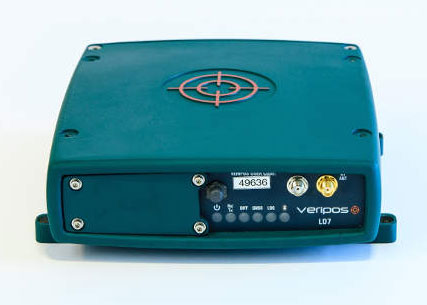
    LD7
    Veripos LD7

    Veripos, supplier of high-precision GNSS positioning services to the offshore industry, has extended its range of integrated mobile receiver units with introduction of a multi-frequency system featuring GNSS heading, L-band positioning and wireless communication capabilities, the LD7.

    Typical use is for the provision of high accuracy heading output combined with high accuracy positioning data for vessel systems.

    Compatible with both GPS and GLONASS networks, the fully ruggedized 272-channel system includes an additional processor for on-board configuration and customized applications separate from its GNSS engine. Integral wireless options include Bluetooth for simple configuration in addition to an optional full-band UHF radio modem for transmission and reception of RTCM or RTK corrections.

    With 2GB internal memory and provision for remote Ethernet access, the LD7 also features an extended range of interface facilities for data output, timing and event marks in addition to a second antenna port for GNSS heading.

  • When All Else Fails: Read the Manual, It May Save Your Life

    Audi-dash-GPS

    It was a dark and stormy night. The winds gusting to over 70 miles per hour drove the snow horizontally, straight into Lynn’s headlights, making it almost impossible to see the road. The outside temperature was -20 degrees Fahrenheit and the roads were treacherous. Lynn wondered for about the hundredth time what he was doing in the foothills of the Rocky Mountains in the middle of a blizzard.

    Certainly the day had started innocently enough with several key meetings in Washington, D.C, where Lynn had been for the entire week, and he could not wait to get home. After the last meeting, he made a dash to Reagan National Airport with visions of a quick three-hour flight to Denver and then a short trip south and home to the Rocky Mountains. That’s when things first went sour.

    Any seasoned traveler who routinely passes through the D.C. area knows that Reagan National is by far the most convenient airport, but the international Dulles airport is by far the most dependable. Unfortunately, Reagan shuts down for hours with the first raindrop or snowflake, and as luck would have it, a major winter storm slammed into Reagan about the time Lynn arrived, and the flight to Denver was delayed, incrementally of course, for over six hours.  The only upside was half the passengers gave up after a couple of hours of repeated 30-minute delays and decided that traveling on Saturday morning was the preferred option.

    But not Lynn — oh, no — having spent a great deal of time in airplane cockpits he managed to finagle a conversation with the stranded flight crew, and discovered that the aircraft in question “had” to be in Denver (DEN) before 0500 the next morning for a flight to Seattle, and then on to Anchorage later Saturday morning, so no matter what, the aircraft would eventually get to DEN. So he waited. Sure enough, the 6 p.m. Friday flight finally departed Reagan at 1:15 Saturday morning and arrived in DEN at 2:15 Mountain Standard time.

    By the time he woke up the car park personnel and convinced them, with an extra $20 bill, to brave the weather and transport him to the parking lot in Outer Mongolia, where his trusty Audi awaited, it was just after 3:00 a.m. Thus he began his journey south, in a raging blizzard. But he wasn’t concerned because wasn’t his new Audi Q7 Quattro the best four-wheel drive in the world, bar none? At least, that’s what the brochure at the dealership claimed, and Lynn had every confidence his trusty steed would find the barn. What he had not — and indeed could not — have predicted was the incredible knifing pain that struck at about 4:30 a.m. as he was just coming into North Colorado Springs. The sudden excruciating pain seared through Lynn’s leg, and he seriously thought for a moment that he might black out. Indeed, the sudden pain immediately brought back memories of a wound he had suffered in a godforsaken part of the world to the same leg many years before, but unless there was an invisible Viet Cong gunman in his passenger seat, this pain was from another source and it was, if possible, getting worse not better.

    So what do you do at 0430 on a Saturday morning in the middle of a blizzard, on a deserted highway, when you are in excruciating pain? Lynn’s first thought was to dial 911, and that was certainly a possibility, but how and when would someone locate him? Mile markers were obscured with snow and the odds were not good. Plus, if the source of the pain was a blood clot brought on by hours and hours of inactivity exacerbated by three hours of sitting in an uncomfortable airplane seat — then he might not have much time. Lynn had heard the occasional apocryphal story of blood clots on airline flights, and the outcome was not always a good one. Supposedly, once a blood clot breaks loose and reaches your heart, lungs or brain, you are pretty much toast. Great, Lynn thought, here I am in pain, slightly panicked by my own imaginings and still in the middle of a blizzard on a lonely highway in the Rockies at 0-dark-thirty with not a clue what to do.

    Then it came to him: GPS! He pushed the destination button on the Audi’s built-in GPS unit and dialed down to the “Emergency Locations” tab on the display, pushed the button again, and was immediately rewarded with the choice of the nearest:

    1. Hospital
    2. Emergency Room
    3. Service Station
    4. Fire Station
    5. Police Station

    Lynn frantically pushed number one. A female voice boomed forth and notified him that the nearest hospital was only three miles away, and he should take the next exit, which was just becoming visible through the blizzard. Lynn took that exit and within five minutes was in the emergency room of Memorial Hospital North. And since the GPS also gave him the phone number of the emergency room at the hospital and asked if he wanted to dial it, he did. He told the nurse who answered about his sudden leg pain and that he was only minutes out. Lynn was met in the emergency room parking area and placed in a wheel chair. An orderly took his car and parked it, and within about five minutes the excellent medical staff confirmed his worst fears and determined that he did indeed have a blood clot. Massive blood thinners were introduced into his system, and they obviously worked, as he is here today telling his dramatic life and death story to anyone at the Audi dealership who will listen. But it actually becomes a bit more melodramatic; the doctor on call was a cardiac specialist, pulling his emergency room rotation, and he informed Lynn that another ten minutes and it would probably have been too late. Indeed when the medical technicians first imaged the blood clot, it was already on the move, and they just managed to dissolve it before it reached something vital.

    The cardiac doc said the only other alternative would have been emergency surgery, which there was not time for, or threading a catheter through a major artery and hoping to find and grab or dissolve the clot before it did any major damage. Obviously, someone on high was looking after Lynn that night. But it also occurred to him as he lay in the emergency room and later in the ICU for follow-up treatment that most likely his GPS and his knowledge of its additional functions had saved his life. According to the doctor, it had certainly saved him from the consequences of a major stroke. All because he had taken the Audi dealer’s advice and spent a few minutes from time to time with the Audi Users Manual, learning about the integrated navigation system and exactly what it was capable of accomplishing when used properly.

    Like many advanced automobiles today, the navigation system in the Audi incorporates GPS and wheel sensors with the mapping system, POI (points of interest) database, Internet, Google Maps, 3D maps, Google Streets, radio for traffic and weather updates, and of course the telephone for automatic calls to restaurants to reserve a table or, as in Lynn’s case, to a hospital emergency room for life-saving information.

    Fast Forward to Today

    This story was brought to mind this Labor Day weekend by events that transpired as my wife and I journeyed south of Colorado to her adopted hometown in the southern part of New Mexico. Like Lynn, we were also in an Audi Q7, in my opinion one of the most comfortable cruising venues you can purchase today, when we came upon a familiar and much-needed service station in the middle of “nowhere” New Mexico, only to discover that while the bio break was possible, fueling the Audi was another matter entirely. It seems the modern-day pumping apparatus requires an Internet connection to validate credit cards, and that system was “temporarily” unavailable. And who carries around several hundred dollars in cash for gasoline purchases today, just in case? For those of you who know what “temporarily” means in New Mexico, you will understand why I immediately began to worry. Even if the pumps had started working at that moment in time, we would have been there for several hours just waiting our turn, and who knew how much gas was in the tanks at the service station and when the intermittent Internet connection might go down again? Our options were to backtrack 100+ miles, or press on and hope for another service station or drive at the most economical speed — for best miles per gallon — which my Audi info system dutifully informed me was 52 miles per hour, and just pray that the fuel quantity sensors were correct and we might just make it to our destination.

    However, in a flash of intuition I remembered Lynn’s dealership story. I pushed the “Emergency Services” button and selected the option for the “nearest service station.” Amazingly the system did not select the “out-of-service” station we had just departed, but another one 32 miles closer to our final destination that neither my wife nor I could ever remember seeing before in a tiny village of no more than 100 people. Faith springs eternal, and we were on our way. Sure enough, in about 25 minutes we were fueling the thirsty Audi at a brand-new Phillips station that I swear had not been there during any of our previous sojourns through the blink-and-you-miss-it village. Now, it may not have been a matter of life and death, but who wants to run out of gas in the middle of New Mexico on a 100+-degree day in an area with little if any cellular service? Certainly not yours truly.

    My purpose in relating these two vignettes, as humbling as they may be, is directed primarily at the macho types reading this article. Sure, you know who you are, the type that proudly boasts you have never read an instruction manual in your life. The kind of guy or gal that refuses to ask for directions. Well I am here to tell you that when it comes to your GPS — indeed, your hopefully integrated automotive navigation system — get out the book and read it and become intimately familiar with your PNT system, whatever type it may be. It could just save your life.

    And before you start that old yarn about, “If I have to read the manual, then it is not user friendly and I won’t use it,” consider the consequences of, friendly or not, being unable to use the system in a real emergency. Even the portable Garmin units that most of us cut our teeth on are integrated to an incredible extent today. It may only seem to plug into your cigarette lighter or, to be more politically correct, your auxiliary power port, but in truth the Garmin and many other portable PNT devices may well be connecting to your mobile phone and your radio for traffic and weather updates. Plus, most of the higher end Garmin units today have an incredibly detailed database with phone numbers and hours of operations for many businesses and, yes, they also have the “Emergency Locations” tab and will guide you to the nearest hospital, give you the phone number for the emergency room, possibly even dial the number, act as a speaker phone and even direct you to the next service station. There’s even a Garmin unit today that will project a heads-up display on your windscreen or windshield.

    And unlike your wife or significant other, your GPS will do so without saying, “You were supposed to turn left back there” or “I told you so!”


    Webinar: The Connected Vehicle

    All major international car-makers are installing telematics units, sending a signal that wireless information and connectivity is here to stay in the vehicle, and location will be a big part of the growth. To learn more about the rapid changes in the connected vehicle field, tune in to our September 19 webinar, hosted by Wireless LBS editor Janice Partyka. Registration is free.


    What Is Don Reading?

    This month I will quickly review two books that I hope you will find interesting.

    Sniper Elite CoverSniper Elite: One Way Trip
    A novel by Scott McEwen with Thomas Koloniar

    Obviously, this very technically correct book is about snipers, and that means it includes data on Seal Teams and Delta Force. But more importantly, this novel puts forth a warrior’s perspective of women in combat, and the actions taken by their fellow comrades in arms to keep them safe and rescue them if necessary. Indeed, the whole story revolves around Seal Team Six and Delta Force fighters that are deployed to free a captured female helicopter pilot from the 160th Special Operations Aviation Regiment (SOAR) — in other words, one of their own — who is being held, interrogated and brutalized by Taliban insurgents in Afghanistan. Throw in D.C. political intrigue and a president running for re-election who has his own opinions about women in combat and you have a real page-turner.

    GPS capabilities and units are mentioned throughout the book, and referred to when it is absolutely critical that warriors know exactly where they and their targets are located. It is clear that entire missions would be lost without the capabilities that GPS enables.

    It is a gripping read that grabs you from the first page, and again, it is tough to put down. It is even good enough that you might want to read it more than once. And yes, if this sounds familiar, both McEwen and Koliniar wrote the #1 New York Times bestseller American Sniper, which I also highly recommend.

    Ike's Spies CoverIke’s Spies: Eisenhower and the Espionage Establishment
    An historical biography by Dr. Stephen E. Ambrose with an introduction by Douglas Brinkley

    The historians among you should recognize Dr. Stephen Ambrose’s name and associate him with perhaps the most prolific chronicler of our day concerning the life and times of President (General) Dwight David Eisenhower.

    Dr. Ambrose, a renowned historian, authored more than 30 books in his lifetime and more than half of them concerned Dwight David Eisenhower during some key period of his life.

    The film rights to two of his more famous books were purchased by Steven Spielberg and Tom Hanks, who used Citizen Soldiers and Band of Brothers to make the 13-hour HBO mini-series Band of Brothers.

    Cover: Band of BrothersDr. Ambrose once described his writing style: “As I sit at my computer, or stand at the podium, I think of myself as sitting around the campfire after a day on the trail, telling stories that I hope will have the members of the audience, or the readers, leaning forward just a bit, wanting to know what happens next.” And this is just the style that makes this history a page-turner. Even though you may know the outcome of the historical event, it is the insider’s view that makes this book such a fine read.

    Until next time, happy navigating, and read a good book — but first get out your GPS device owner’s manual or look it up on your iPad or computer for video tutorials, and peruse them for awhile. It could save your life one day.