Category: GNSS

  • New DoD policy prohibits personal GPS tracking in deployed settings

    News by Jim Garamone, U.S. Department of Defense

    Deployed service members may have to ditch their fitness trackers in response to a new memo from Deputy Defense Secretary Patrick M. Shanahan prohibiting the use of GPS functions in deployed locations.

    This includes physical fitness aids, applications in phones that track locations, and other devices and apps that pinpoint and track the location of individuals.

    Pentagon spokesman Army Col. Robert Manning III announces the policy on geolocation devices at the Pentagon, Aug. 6, 2018. (Photo: DoD/Jim Garamone)
    Pentagon spokesman Army Col. Robert Manning III announces the policy on geolocation devices at the Pentagon, Aug. 6, 2018. (Photo: DoD/Jim Garamone)

    “Effective immediately, Defense Department personnel are prohibited from using geolocation features and functionality on government and nongovernment-issued devices, applications and services while in locations designated as operational areas,” Pentagon spokesman Army Col. Robert Manning III told Pentagon reporters on Aug. 6.

    Deployed personnel are in “operational areas,” and commanders will make a determination on other areas where this policy may apply.

    The market for these devices has exploded over the past few years, with many service members incorporating them into their workout routines. They use the devices and applications to track their pace, running routes, calories burned and more. These devices then store the information and upload it to central servers where it can be shared with third parties. That information can present enemies with information on military operations.

    Using GPS Devices Pose Risk

    Photo: Fitbit
    Photo: Fitbit

    “The rapidly evolving market of devices, applications and services with geolocation capabilities presents a significant risk to the Department of Defense personnel on and off duty, and to our military operations globally,” Manning said.

    The GPS capabilities can expose personal information, locations, routines and numbers of DoD personnel. Their use in overseas locations “potentially create unintended security consequences and increased risk to the joint force and mission,” Manning said.

    Personal phones and other portable devices also contain apps that rely on GPS technology, and they will be affected. Commanders will be responsible for implementing the policy, and they will be allowed to make exceptions only after conducting a thorough risk assessment.

    Security is at the heart of this guidance. DoD seeking a balanced way that allows for legitimate official and personal uses of geolocation technology that does not impact security.

    Manning said the department will continue to study the risk associated with these devices and change the policy as needed.

  • NovAtel launches TerraStar-C PRO correction service

    NovAtel launches TerraStar-C PRO correction service

    Image: NovAtel
    Image: NovAtel

    NovAtel Inc. has launched its TerraStar-C PRO correction service with multi-constellation support, including the GPS, GLONASS, Galileo and BeiDou constellations.

    Combined with NovAtel’s OEM7 positioning technology, TerraStar-C PRO cuts initial convergence times by nearly 60 percent and offers 40 percent better horizontal accuracy than the current TerraStar-C service, the company said.

    NovAtel’s TerraStar-C PRO offers a robust multi-constellation solution that provides greater positioning accuracy, availability and reliability than before, the company added. With the growing number of operational GNSS satellites, TerraStar-C PRO offers benefits in challenging signal conditions such as multipath, shading, interference and scintillation. High-rate TerraStar-C PRO corrections provide reconvergence in less than 60 seconds following brief GNSS signal interruptions.

    According to NovAtel, TerraStar-C PRO corrections are generated using TerraStar’s proprietary global network of more than 100 strategically located GNSS reference stations. The correction data is delivered worldwide through overlapping geostationary satellites directly to a NovAtel receiver or via cellular IP network.

    With OEM7 triple L-band support, TerraStar-C PRO correction signals from up to three satellites can be tracked and used simultaneously, providing continuous correction data reception when the primary satellite signal is blocked.

    “TerraStar-C PRO enables higher operational efficiency by allowing users to start operations sooner and continue to work through challenging conditions without interruptions,” said Sara Masterson, NovAtel’s positioning services segment manager. “We continue to build our TerraStar portfolio of services and with the addition of TerraStar-C PRO customers can trust that they have not only a highly-reliable precise positioning solution, but also services that immediately translate to increased productivity.”

    TerraStar-C PRO is available immediately as a termed subscription service for agriculture, unmanned, airborne and land applications, such as survey, mapping and GIS and supported on compatible OEM7 products with firmware version 7.05 and later.

  • Quectel releases quad-band GSM/GPRS/GNSS/Wi-Fi module

    Quectel releases quad-band GSM/GPRS/GNSS/Wi-Fi module

    Photo: Quectel Wireless Solutions
    Photo: Quectel Wireless Solutions

    Quectel Wireless Solutions has launched the MC90, a quad-band GSM/GPRS/GNSS/Wi-Fi module.

    According to the company, the module supports hybrid positioning technologies including GNSS, Cell ID and Wi-Fi aided positioning, and enables position tracking in both indoor and outdoor environments.

    Quectel’s MC90 integrates the multi-GNSS system, including GPS, GLONASS, Galileo and QZSS, which makes it suitable for urban areas with high-rise buildings and complex environments, the company added.

    The MC90 also adopts Wi-Fi hotspot positioning technology for blind spots and satellite coverage. It integrates multi-aiding positioning technologies to offer customers with optimized GNSS performance. It also supports EPO technology, which provides predicted Extended Prediction Orbit to speed up TTFF without the need of any extra server.

    The MC90 features a compact design, low power consumption and supports dual SIM single standby function. According to Quectel, it can be used for a wide range of internet of things applications, including bicycle sharing, student ID card, vehicle tracker, wearable device, pet tracker, asset tracker, driving recorder and more.

  • Opening presentations at ITSNT focus on PNT resilience

    Opening presentations at ITSNT focus on PNT resilience

    ITSNT logo

    Speakers and topics at the Nov. 13–16 International Technical Symposium on Navigation and Timing opening session have been announced.  They focus on comprehensive approaches for obtaining resilient PNT, supported by mega-constellations, and with new concepts to improve reliability.

    Logan Scott, a U.S. consultant specializing in radio frequency signal processing and waveform design, will speak on “Towards a Comprehensive Approach for Obtaining Resilient PNT.”

    As precise positioning and timing becomes ever more deeply embedded into worldwide critical infrastructure, numerous attacks have already been seen and the sophistication of attacks is growing. A layered defense with flexible responses provides the best hope for meeting the challenges of maintaining required navigation performance under adverse conditions.

    No single defense or offense, no matter how good, is capable of dealing with all threats.

    A comprehensive and integrated civil policy is needed that takes into account the nature of the threats, their motivations, their likely evolution, and the costs and approaches for mitigating them. This talk explores not only the technical countermeasures available to civil users but also the legal and social engineering approaches that can militate against jamming and spoofing. The importance of penetration testing is illustrated via real-world examples of what happens when receivers meet a threat for the first time. Effective strategies for civil applications are fundamentally different from those suitable for military applications. Specific and actionable recommendations at the policy, receiver and systems level will be made.

    Francis Soualle, a French engineer specializing in GNSS architectural concepts, orbit determination, signal design and receiver performances at Airbus Defense and Space, will address “Perspectives of PNT Services Supported by Mega-Constellations.”

    The development of so-called “Mega-Constellations” composed of several hundreds of spacecrafts, if not thousands, comprising low-Earth orbit (LEO)satellites among others, initially designed to provide communication services, could also support positioning, navigation and timing (PNT) applications.

    The architectural and technological specificities of LEO-based PNT systems could represent meaningful differentiators with regard to GNSSs and enhance their attractiveness. Hence, Doppler-based positioning techniques already proven in operational space systems, such as Argos or Cospas-Sarsat, shall strongly benefit of the geometry (i.e. velocity) and the large density of lines-of-sight. By combining range and range-rate positioning techniques, the availability for instantaneous and accurate positioning will thus be enhanced.

    The newly introduced Satellite Time & Location (STL) system, based on the Iridium constellation, and offering a global and resilient Timing and Position service will support this discussion.

    Finally, the main architectures for LEO-PNT systems will be described with special focus on the primary and ancillary payload units, but also on the supporting ground segment infrastructures.

    Karen van Dyke, director of PNT & Spectrum Management at the U.S. Dept. Of Transportation, will speak about “Resilient Positioning, Navigation, and Timing” and radiofrequency spectrum management services essential to critical infrastructure applications, including transportation for safety-of-life applications such as the Next Generation Air Transportation System (NextGen), Positive Train Control, and Intelligent Transportation Systems (ITS).

    Increasing occurrences of unintentional and intentional interference to GPS, including the spoofing of the signal have been observed. It is important to increase awareness of vulnerabilities of GPS, evaluate the impact, and to research complementary sources of PNT to increase resiliency and make intentional jamming and spoofing less desirable. Also, best practices should be adhered to for implementation and installation of GPS receivers in critical infrastructure applications.

    With an increased focus on autonomous vehicles for all modes of transportation, there is a need to focus on multi-sensor navigation technologies to ensure reliable operation of vehicles without a human in the loop. This research should be aligned with National PNT Architecture recommendations to overcome capability gaps predominantly resulting from the limitations of space-based PNT.

    As the civil lead for GPS, the U.S. Department of Transportation also has been conducting the GPS Adjacent Band Compatibility Assessment to understand the power levels that can be tolerated in the radiofrequency bands adjacent to GPS, given increasing demand for use of those adjacent frequency bands for non-space commercial applications. Van Dyke will address resilient PNT from the standpoint of both protecting GPS and GNSS from interference, as well as increasing resiliency by implementation of best practices and utilization of other PNT technologies.

    Matteo Paonni, scientific officer at the Joint Research Center of the European Commission in Italy, will deliver “New Concepts and Ideas to Improve the Reliability of PNT Services.”

    With early Galileo services already underway and full operational capability coming in 2020, a strong need for R&D activities in the field of navigation signal engineering has been identified by various programme stakeholders. Considering the long process required for introducing new signals and features in a system that is already deployed and finds itself in the exploitation phase, early R&D activities become essential to investigate potential evolutions and new concepts to improve the Galileo signals and services in the short, medium and long term.

    The presentation will provide some examples of recent R&D initiatives in this context. In particular, technical solutions developed in the context of the Future Navigation and Timing Evolved Signals (FUNTIMES) project will be presented. FUNTIMES is a European GNSS mission evolution study funded by the European Commission within the Horizon 2020 Framework for Research and Development. Main goals of the project was to identify, study and recommend mission evolution directions and to support the definition, design and implementation of the future generation of Galileo signals.

  • Taking a look at the rest of the Ligado story

    Taking a look at the rest of the Ligado story

    Alan Cameron
    Editor-in-Chief and Publisher, GPS World

    “All the News that Fits” can sometimes be a hard motto to live up to, and it has turned out so this month. I want to get more material into our pages for your perusal, and it just could not be crammed into the System of System pages in this issue. Therefore, I cede my “Out in Front” editorial to the 27 gentlepeople, executives across the commercial, scientific and government agency spectrum, who wrote to U.S. Federal Communications Commission (FCC) chair Ajit Pai on July 18.

    The core quotes from the letter appear here. However, there’s more meat on the bones and I want to present it here.

    “The undersigned organizations, representing entities that provide and rely upon critical GPS, satellite communications (“SATCOM”) services, and essential weather and other environmental data, write to inform you that the threat of harmful interference from Ligado’s proposed ancillary terrestrial component (“ATC”) service continues to pose a significant risk of harmful interference despite Ligado’s May 31, 2018, amendments to its license modification applications in the above-referenced file numbers. The record, augmented by recent government reports, makes clear that the interference will be particularly impactful to the countless government and commercial entities that rely on GPS and SATCOM services for aviation safety and other critical services and the many groups that receive and depend upon real-time weather and related environmental information from National Oceanic and Atmospheric Administration (“NOAA”) satellites…

    “We recognize the importance of ensuring that there is sufficient spectrum for mobile broadband, and the Commission has recently taken many steps to address that challenge. However, at a time in which the Administration has placed so much emphasis on the critical importance of space-based communications — through the revival of the National Space Council and other policy initiatives — the FCC should not undermine the nation’s critical space leadership.2 Granting Ligado’s request would harm the nation’s satellite industry and the broad sectors of the country that benefit from American space leadership every day in at least three ways. First, it would threaten the reliability of critical position, navigation and timing (“PNT”) services, including GPS and also an emerging satellite time and location (“STL”) capability augmenting GPS.

    “Second, it would undermine the investment-backed expectations of those who operate commercial satellite systems by fundamentally altering the interference environment decades after licensing.

    “And third, it would convert 40 MHz of increasingly rare satellite spectrum away from satellite use, rewarding a company for underutilizing its satellite spectrum rather than investing in new satellite technologies.”

    In addition to several organizations, the letter is signed by the Aircraft Owners and Pilots Association, the American Geophysical Union, American Weather and Climate Industry Association and the National Emergency Number Association.

  • Using GNSS, new service maps wind speed over oceans

    The first global GNSS-reflectometry ocean-wind data service has been launched by Surrey Satellite Technology Ltd. (SSTL) with the National Oceanography Centre (NOC), and with support from the European Space Agency.

    The online data service, dubbed MERRBYS (Measurement of Earth Reflected Radio-navigation signals By Satellite), is free.

    Users can access measurements of wind taken by a specially designed GNSS receiver hosted on SSTL’s TechDemoSat-1 satellite, which collects signals reflected off the surface of the ocean. The service offers monthly maps of wind speed over the oceans.

    TechDemoSat-1 is also collecting GNSS reflections off land and polar regions, opening the door for new applications of this technology, such as soil moisture and ice measurements.

    TechDemoSat-1 was launched in 2014 and carried eight payloads from different U.K. organizations. On successful completion of the satellite’s original mission, a life extension now allows the GNSS reflectometry payload to be operated continuously.

    Onboard processed GNSS-R data is relayed to SSTL’s ground station in the U.K. and inverted for geophysical parameters using NOC retrieval algorithms for the estimation of near-surface ocean wind speed.

    Users have access to data from the past three years, and new data is added daily with a latency of 30 days. Users can also register for a fast service allowing retrieval of data with a shorter delay — currently 48 hours, but with a target of less than 24 hours as the service matures.

    Pilot demonstration

    The current service is a pilot demonstration showing the potential for a new source of wind and wave measurements from in orbit using a small satellite. In the future, a constellation of low-cost small satellites carrying enhanced instruments could provide measurements in near-real time to support weather and wave forecasting.

    The TechDemoSat-1 satellite and payload were supported by U.K. Centre for Earth Observation Instrumentation and the U.K. Space Agency, and sponsorship from European Space Agency has allowed the release of data.

    More than 50 international journal papers have been published based on the use of the TechDemoSat-1 GNSS-R data. GPS World first discussed the technology in a 1999 Innovation column by GPS World Leadership Award Winner Attila Komjathy, “GPS, a new tool for ocean science.”

    This was followed in 2007 by “Reflecting on GPS: Sensing land and ice from low Earth orbit” by Scott Gleason, a University of Surrey graduate detecting land and ice from orbit using one of the SSTL satellites; then in 2010 by “Friendly reflections: Monitoring water level with GNSS,” by Alejandro Egido and Marco Caparrini, which dealt with using reflections from water surfaces observed with receivers on the ground.

    SSTL also provided the same GNSS reflectometry instrument to the NASA CYGNSS mission, where eight small satellites are using this technique to probe and analyze hurricanes.

  • 58th CGSIC meeting agenda features address by Brig. Gen. Shaw

    58th CGSIC meeting agenda features address by Brig. Gen. Shaw

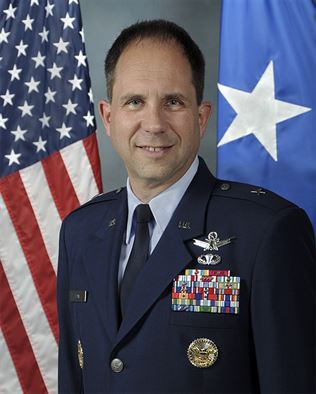
    Brig. Gen. John E. Shaw is Director of Strategic Plans, Programs, Requirements and Analysis, Headquarters Air Force Space Command, Peterson Air Force Base, Colorado. (Photo: USAF)
    Brig. Gen. John E. Shaw is Director of Strategic Plans, Programs, Requirements and Analysis, Headquarters Air Force Space Command, Peterson Air Force Base, Colorado. (Photo: USAF)

    The U.S. Department of Transportation and the Coast Guard Navigation Center are preparing for the 58th annual Civil GPS Service Interface Committee (CGSIC) meeting.

    The meeting will be conducted Sept. 24-25 at the Hyatt Regency Miami in Miami, Florida, in conjunction with the Institute of Navigation’s ION GNSS+ 2018 conference.

    CGSIC meetings are free and open to the public.

    Subcommittees of the CGSIC for Timing, International Information, and Survey, Mapping, and Geosciences will hold meetings Sept. 24, and a summary of these meetings will be presented to the CGSIC plenary session Sept. 25.

    The meeting includes important briefings on the status of ongoing GPS programs and a keynote address by Brig. Gen. John Shaw, director of strategic plans, programs, requirements and analysis for the Air Force Space Command.

    The CGSIC agenda in development can be found at gps.gov.

  • ITSNT to explore navigation and timing topics

    ITSNT to explore navigation and timing topics

    The International Technical Symposium on Navigation and Timing, also known as the ITSNT, will be held Nov. 13–16 in Toulouse, France.

    ITSNT is an annual event organized by the French space agency CNES and Ecole Nationale de l’Aviation Civile for professionals and researchers working with or interested in navigation and timing technologies and their use.

    The ITSNT preliminary program is now available, with experts discussing PNT resilience, multi-sensor navigation, autonomous/automated vehicles and much more. Also included are tutorials, exhibits and networking opportunities.

    For more information, visit www.itsnt.fr or email [email protected].

  • FreeFlight SBAS/GNSS receiver chosen for USAF helicopter fleet

    FreeFlight SBAS/GNSS receiver chosen for USAF helicopter fleet

    A FreeFlight Systems SBAS/GNSS receiver has been selected to provide ADS-B position source information as a part of an upcoming ADS-B modification and compliance program for the United States Air Force HH-60G helicopter fleet.

    Strategic Enterprise Solutions Corp. (SESC) of Warner Robins, Georgia, was awarded the modification program, which includes installation of the 1203C SBAS/GNSS receiver and the AN/APX-119 Mode S Extended Squitter transponder with Mode 5 capability to provide a complete ADS-B Out solution for more than 100 helicopters.

    An HH-60 Pave Hawk helicopter lands in Afghanistan; a UH-60 Blackhawk is in the background. (Photo: (U.S. Air Force photo/Senior Airman Brian Ferguson)
    An HH-60 Pave Hawk helicopter lands in Afghanistan; a UH-60 Blackhawk is in the background. (Photo: U.S. Air Force photo/Senior Airman Brian Ferguson)

    The FreeFlight Systems 1203C SBAS/GNSS receiver is a certified, high-integrity position source in a compact, lightweight package that was designed to be modular and able to be integrated with various other avionics.

    The 1203C pairs seamlessly with certified Mode S Extended Squitter transponders for a fully rule-compliant ADS-B Out system, FreeFlight said.

    More than a war hawk. The primary mission of the HH-60G Pave Hawk helicopter is to conduct day or night personnel recovery operations into hostile environments to recover isolated personnel during war.

    The HH-60G is also tasked to perform military operations other than war, including civil search and rescue, medical evacuation, disaster response, humanitarian assistance, security cooperation/aviation advisory, NASA space flight support, and rescue command and control.

    The 1203C in service. With several hundred 1203Cs in service across airline transport, military, business aviation and rotorcraft platforms, these receivers are known for their high performance, ease of installation, operational reliability and longevity, FreeFlight said.

    The 1203C SBAS/GNSS receiver and antenna (Photo: FreeFlight Systems)
    The 1203C SBAS/GNSS receiver and antenna (Photo: FreeFlight Systems)

    The 1203C can also serve as the approved position source for select manufacturers of TAWS/FMS, RNP and other NextGen applications, and allows customers to take advantage of the operational and safety benefits provided by the NextGen airspace transformation without the need for extensive and costly avionics upgrades.

    With the ADS-B mandate now only 17 months away, aircraft operators need to prioritize ADS-B installations.

    Significant portions of today’s airline, business, and military aircraft fleet will remain in service long after 2020, and in many cases an STC’d retrofit solution comprising of a transponder upgrade and the addition of a dedicated SBAS/GNSS receiver like the 1203C is the simplest and most cost-effective way to achieve mandate compliance, FreeFlight said.

  • QZSS satellites benefit Western Australia industries, study shows

    Curtin University researchers found the launch of new Japanese satellites has boosted satellite positioning capabilities in Western Australia (WA), offering huge potential benefits across numerous industries including mining, surveying and navigation.

    New research, published in the journal GPS Solutions, found signals from the recently launched Japanese QZSS satellites provide centimeter-level positioning accuracy, and thus significantly enhanced positioning capabilities in WA, thereby improving accuracy, reliability and availability.

    Lead researcher Professor Peter Teunissen, of Curtin’s School of Earth and Planetary Sciences, said these results will improve further when the QZSS signals are combined with those from other satellite systems such as the Indian NavIC system.

    Teunissen said the analyses done by Curtin’s GNSS Research Centre demonstrated the highly accurate centimeter-level positioning capabilities that can now be achieved.

    “Such improved positioning, accuracy and reliability would offer great benefits when applied in fields such as open-pit mining, surveying, hydrography, automated navigation, structural health monitoring, and subsidence and tectonic deformation monitoring used in the geospatial industry,” Teunissen said. “The benefits are not only restricted to positioning, but cover the whole range of satellite signal applications, including atmospheric sensing (ionosphere and troposphere) as used for climate change and space weather studies, and numerical weather prediction.”

    Teunissen said WA was in the fortunate and unique geographical position of being located beneath the flight paths of both the Japanese QZSS and the Indian NavIC regional satellite systems.

    “Using both satellite systems, QZSS and NavIC, offers huge benefits to users in Australia – and this is an opportunity to work on future developments with such technologies,” Professor Teunissen said.

    “The United States of America, for example, can’t use these signals the way we can in Australia, so this places us in a position of great advantage when it comes to the understanding, modelling and analyses of these satellite signals and their many practical applications.

    “The tracking and analyses were done using Javad GNSS receivers and Curtin’s theory of integer ambiguity resolution, which enables millimeter-level satellite ranging, and was achieved with the use of only the four currently available QZSS satellites.”

    The results bode well for the future, with the Japanese system being further developed from the current four-satellite system into a mature seven-satellite system that is expected to be operational by 2020.

    The report, “Australia-First High-Precision Positioning Results with New Japanese QZSS Regional Satellite System, is available online.

  • China launches new twin BeiDou-3 navigation satellites

    China launches new twin BeiDou-3 navigation satellites

    China has launched another pair of BeiDou-3 navigation satellites, reports Xinhua News Agency, China’s state-run press agency.

    A Long March-3B carrier rocket lifted off from Xichang Satellite Launch Center in southwest China’s Sichuan Province on July 29.

    The twin satellites are the 33rd and 34th of the BeiDou navigation system. They entered orbit more than three hours after the launch. After a series of tests, they will work together with eight BeiDou-3 satellites already in orbit, said the launch service provider.

    A basic system with 18 BeiDou-3 satellites orbiting will be in place by the end of 2018, and will serve countries participating in the China-proposed Belt and Road Initiative.

    Named after the Chinese term for the Big Dipper, the BeiDou system started serving China in 2000 and the Asia-Pacific region in 2012. It will the fourth global satellite navigation system after the U.S. GPS system, Russia’s GLONASS and the European Union’s Galileo.

    The satellites and the rocket for Sunday’s launch were developed by the China Academy of Space Technology and China Academy of Launch Vehicle Technology, respectively. This was the 281st mission of the Long March rocket series.

    China sends the 33rd and 34th BeiDou satellites into space on July 29. (Xinhua/Liang Keyan)
    China sends the 33rd and 34th BeiDou satellites into space on July 29. (Photo: Xinhua/Liang Keyan)
  • GMV and Tecnobit to tailor Skydel SDX GNSS simulator for Europe

    GMV and Tecnobit to tailor Skydel SDX GNSS simulator for Europe


    GMV, Tecnobit and Skydel are aiming to provide corporations, universities and research labs with a reliable, advanced simulation system that closely follows the latest Galileo capabilities.

    “Together with our partners at Tecnobit, and taking advantage of SDX’s unique software-defined architecture, we are currently working to add Public Regulated Service (PRS) support to Skydel SDX,” said Manuel Toledo, head of the GNSS Advanced User Segment Solutions Division at GMV. PRS provides position and timing data for sensitive applications that require the highest level of service continuity.

    Skydel and GMV are also joining efforts on developing SDX’s capabilities for signal authentication with Galileo Commercial Service and Open Service. The goal of such authentication is to increase the safety level of signals and to avert their falsification or fraud. It is currently a unique feature that only the Galileo constellation can provide, the companies said.

    Skydel and GMV are also collaborating on projects that aim to provide signal simulation solutions for Galileo’s second generation (G2G). Galileo’s second-generation satellites are scheduled to be launched in 2025 and beyond.

    “With Galileo’s full operational capabilities approaching soon, we must focus on the system’s upcoming G2G services,” said Pierre-Marie Le Véel, business development director at Skydel. “Skydel’s top priority for the European market is to provide simulation tools for the design of these next-generation GNSS devices.”

    The partnership among the three companies unites the unique strengths of each organization, GMV said. While GMV brings its expert knowledge of both the European market and the Galileo system and Tecnobit brings its expertise as developer of cryptographic systems, Skydel adds its versatile and extensible GNSS simulator, resulting in a solid technical and commercial synergy for establishing an improved GNSS service offering for Europe.