Category: GNSS

  • Honeywell demos alternative nav in GPS-denied environments

    Honeywell demos alternative nav in GPS-denied environments

    Stringent testing on both fixed-wing plane and helicopter proves reliability and performance

    Honeywell has successfully demonstrated several advanced alternative navigation technologies intended to help ensure seamless navigation, even when GPS signals are blocked, interrupted or unavailable.

    Testing took place on both an Embraer E170 aircraft and an AgustaWestland AW139 helicopter.

    Alternative navigation systems use sensors such as cameras, star trackers, radars and radios to augment and or aid inertial navigation systems. These systems correct inertial navigation systems in environments where GNSS are denied.

    “Our customers are seeing an increase in both intentional and unintentional navigational disruptions, including jamming for GNSS-based navigation,” said Matt Picchetti, vice president and general manager, Navigation and Sensors, Honeywell Aerospace. “There hasn’t been a single set of solutions that meet all our customers’ operational needs, so we decided to create one. Our modular and scalable alternative navigation technologies are setting a new benchmark in terms of reliability and performance in GNSS-denied environments compared with what is available in aviation today.”

    Alternative navigation technologies provide vital position, velocity and heading information in GNSS-denied environments. The successfully demonstrated technologies onboard the E170 and AW139 include:

    • Vision-Aided Navigation. Honeywell’s vision-aided navigation system achieved GPS-like performance on both the Embraer E170 and AW139 platforms during GPS-denied conditions. Additionally, the technology showed 67% improvement in GPS-denied performance compared with earlier testing in 2021. The system uses a live camera feed and compares it with maps to provide a passive, not jammable, and highly accurate absolute position.
    • Celestial-Aided Navigation. Honeywell’s celestial-aided navigation system on the Embraer E170 achieved an accuracy of 25 meters circular error probability of 50% (CEP50). This represented a 38% improvement in GPS-denied performance compared with tests in 2021. Most importantly, this is the first time a resident space objects-based (RSOs) navigation solution was demonstrated on an airborne platform, as most competing solutions rely only on star-based navigation. The system uses a star tracker to observe stars and RSOs to provide a passive, not jammable solution with GPS-like accuracy in GPS-denied or spoofed conditions.
    • Magnetic-Anomaly-Aided Navigation. Honeywell conducted  real-time magnetic-anomaly-aided navigation on the Embraer E170 airborne platform. This is a historic milestone, as almost all previous magnetic tests were done in special environments to mitigate electromagnetic noise. Honeywell demonstrated this passive, not jammable, all-weather 24/7 technology on an embedded platform, which measures Earth’s magnetic strength and compares it with magnetic maps to accurately identify the position of the vehicle.

    Photo: InifiDome
    Photo: InifiDome

    Additionally, Honeywell demonstrated that inertial navigation systems, when paired with the GPSDome (an anti-jamming device), showed significant improvement in position accuracy and integrity performance in the presence of GPS jamming. The ability of GPSDome to enable tracking of GPS satellites under more aggressive jamming environments reduces performance degradations that come with GNSS-denied conditions.

    Alternative navigation prototype systems will be available in 2022, with initial deliveries expected to start in 2023.


  • US bans anti-satellite weapon tests, seeks global agreement

    US bans anti-satellite weapon tests, seeks global agreement

    Vice President Kamala Harris speaks to media representatives alongside leadership from the U.S. Space Force and U.S. Space Command during her visit to the Combined Space Operations Center (CSpOC). (Photo: USSF)
    Vice President Kamala Harris speaks to media representatives alongside leadership from the U.S. Space Force and U.S. Space Command during her visit to the Combined Space Operations Center (CSpOC). (Photo: USSF)

    Updated April 20 with additional information.


    The United States government has committed to ending the practice of anti-satellite missile tests, Vice President Kamala Harris announced April 18 at Vandenberg Space Force Base. She also urged other nations to follow its lead.

    On Nov. 15, 2021, the Russian military destroyed a defunct satellite with its anti-satellite technology (ASAT), a test it followed with verbal threats to the U.S. GPS.

    The Russian test created thousands of pieces of debris in low Earth orbit, and sent astronauts on the International Space Station into shelter as it passed through the debris field.

    Image: janiecbros/iStock/Getty Images Plus/Getty Images
    Image: janiecbros/iStock/Getty Images Plus/Getty Images

    Harris made the announcement during an all-call in front of more than 200 members of the Space Force and Air Force.

    Harris, who chairs the National Space Council, called on other nations to make similar commitments and to work together in establishing this as a norm, saying such efforts benefit all nations. “It is clear there is strong interest among our international partners to develop these norms. We must write the new rules of the road, and we will lead by example,” she said.

    “The destruction of space objects through direct-ascent ASAT missile testing is reckless and irresponsible,” Harris said. “The long-lived debris created by these tests now threaten satellites and other space objects that are vital to all nations’ security, economic, and scientific interests, and increases risk to astronauts in space. Overall, these tests jeopardize the long-term sustainability of outer space and imperil the exploration and use of space by all nations.”

    In addition to making this announcement, Harris toured the Combined Space Operations Center (CSpOC) and met with U.S. Space Force Maj. Gen. DeAnna Burt, Combined Force Space Component Command commander, as well U.S. and coalition personnel who work in space operations, to learn about U.S. efforts in space and the dangers posed by anti-satellite missiles.

    The CSpOC is comprised of both U.S. and allied partners and operates 24 hours a day, seven days a week. It executes the operational command and control of space forces to achieve theater and global objectives. Additionally, the CSpOC hosts a Commercial Integration Cell representative to enhance cooperation with several commercial partners.

    This was the first vice presidential visit to the nation’s premier West Coast launch installation since it was redesignated in May 2021 from an Air Force base to a Space Force base. The department of the Air Force announced April 4 that the base is the possible future home of the U.S. Space Force’s training headquarters.

    While Harris toured the CSpOC, her husband, Second Gentleman Douglas Emhoff, met with military and civilian spouses to discuss employment, mental health programs and diversity and inclusion.

    Also in attendance at the all-call were Deputy Secretary of Defense Kathleen Hicks; Gen. James Dickinson, U.S. Space Command commander; Gen. John “Jay” Raymond, chief of space operations for U.S. Space Force; Sen. Alex Padilla, Rep. Salud Carbajal and Rep. Ted Lieu.

  • Loss of Galileo puts UK PNT at risk, expert claims

    Loss of Galileo puts UK PNT at risk, expert claims

    Graphic: GPS World
    Graphic: GPS World

    An expert has warned the government of the United Kingdom that the lack of an alternative to Galileo threatens to put critical infrastructure at risk, according to a report in Daily Express.

    Andy Proctor, formerly with the satellite and positioning, navigation and timing (PNT) cabinet office, submitted evidence of his concerns to the UK’s ministers.

    “Our critical infrastructure is at risk from the loss of PNT, space-based or otherwise,” he wrote. “We are currently critically dependent upon GPS; the loss of which will have a major impact in capability and economically.”

    Proctor is director of Rethink PNT, a consultancy firm.

    He pointed out that the government disinvested in the eLoran terrestrial system that could have provided a backup, although this is slowly reversing.

    “For 20 or so years there have been calls for action, yet the current status of inaction regarding the PNT strategy puts our systems at increasing risk, especially given the clear and present electronic-warfare systems being used in Europe today,” Proctor wrote.

    Britain was removed from the Galileo project following Brexit, and has since been looking for an alternative PNT system.

  • GNSS Research Center offers new version of PRIDE software

    GNSS Research Center offers new version of PRIDE software

    PRIDE logoThe latest version of the open-source PRIDE PPP-AR software is now available for GNSS researchers, students and professionals.

    “Based on the feedback of global users in the past two years, we have been improving the software to enhance its robustness and make it easy to use,” said Jianghui Geng, GNSS geodesy professor at the GNSS Research Center, Wuhan University.

    PRIDE PPP-AR V2.2 fully supports GPS, GLONASS, Galileo, BDS-2 and 3, and QZSS precise point positioning (PPP), as well as undifferenced ambiguity resolution (AR) for GPS, Galileo and BDS-2 and 3.

    Version 2.2 features improved high-precision GNSS data-processing capabilities. It supports kinematic positioning for mobile platforms such as aerial photogrammetry and ship-borne gravimetry.

    Other features include the following:

    • high-rate data up to 50 Hz can also be processed
    • the second-order ionospheric delays can be corrected
    • VMF3 for troposphere modeling is available
    • multi-day processing is allowed
    • satellite attitude quaternions are supported.

    Versions are available for the Linux, Windows and Mac operating systems to facilitate researchers and class teaching.

    The project is fully supported by the National Science Foundation of China (No. 42025401) and under the auspices of IAG Sub-Commission 4.4 “GNSS Integrity and Quality Control.” Direct questions to [email protected].

    An online training course will be held Sept. 19-23 through UNVACO.

  • Septentrio brings OSNMA anti-spoofing security to market

    Septentrio brings OSNMA anti-spoofing security to market

    Photo:Septentrio has released Open Service Navigation Message Authentication (OSNMA) functionality on its mosaic GNSS receiver modules. OSNMA offers end-to-end authentication on Galileo’s civilian signals, protecting receivers from OSNMA attacks.

    Spoofing is a malicious form of radio interference, where faulty positioning information is sent to a receiver. For the last two years Septentrio has been working closely with the European Space Agency (ESA) during the test phases of OSNMA deployment. The know-how gained during this period is what allowed Septentrio to be one of the first to market with this advanced security feature.

    OSNMA’s anti-spoofing capability complements Septentrio’s Advanced Interference Mitigation technology, AIM+, and further strengthens the overall security of Septentrio GNSS receivers, making them suitable for assured PNT solutions as well as critical infrastructure, such as 5G network synchronization.

    “We are excited to start offering the OSNMA anti-spoofing technology in our industrial GNSS receivers. Our close collaboration with ESA enabled us to get the expertise needed to implement and validate this functionality in a timely manner,” said François Freulon, head of Product Management at Septentrio. “The addition of OSNMA to Septentrio’s already strong anti-jamming and anti-spoofing technology takes our receivers to a new level as the market leader of resilient positioning and timing solutions for industrial applications and critical infrastructure.”

    OSNMA is now supported by the complete mosaic receiver family including GNSS RTK positioning modules, timing modules and heading receiver modules. It will also be rolled out on Septentrio’s latest generation of OEM receiver boards, AsteRx-m3, and subsequently on the ruggedized boxed receivers. Read more here.

  • Russia interfering with GPS in Ukraine, Pentagon says

    Russia interfering with GPS in Ukraine, Pentagon says

    General David Thompson at the Pentagon told NBC News that Russia is interfering with GPS signals in Ukraine.

    Russia has also reportedly jammed GPS along its borders with Finland, which has affected civilian aircraft.

    U.S. commanders say Russia has not yet attacked U.S. GPS satellites in orbit, but the U.S. Space Force continues to monitor the constellation.

  • More than 100 experiments planned for NTS-3

    More than 100 experiments planned for NTS-3

    More than 100 experiments will be conducted with the Navigation Technology Satellite-3 (NTS-3), set to launch next year, according to a U.S. Air Force official and reported by FedScoop.

    “We’re really excited to push the state of the art with more than 100 experiments on this little [NTS-3] spacecraft and we’re looking at ways that we can solve warfighters’ problems in the contested environment,” Maj. Gen. Heather Pringle, commander of AFRL, told reporters April 6 at the 37th Space Symposium in Colorado Springs.

    Maj. Gen. Heather Pringle
    Maj. Gen. Heather Pringle

    Set to launch in 2023, NTS-3 is designed to push the boundary of today’s position, navigation and timing (PNT) technology to pave the way for a more flexible, robust, and resilient architecture for satellite navigation technology.

    NTS-3 is a product of the Air Force Research Laboratory (AFRL) and industry, designed to test advanced techniques and technologies to detect and mitigate interference to PNT capabilities and increase system resiliency for military, civil, and commercial users.

    Unlike the GPS medium-Earth-orbit satellites, NTS-3 will operate for one year in geosynchronous Earth orbit. Ultimately, NTS-3 will identify key aspects for new GPS receivers that incorporate multiple signals and readily adapt to warfighter needs.

    The NTS-3 experiments will also involve ground equipment and terminals such as command and control stations and software-defined radios. Specific improvements to the ground segment will enable experimentation with automated “lights-out” operations, control station failover, and near-real time environment sensing and generation of error correction and tailored waveforms. Onboard systems will monitor clock accuracy and orbit parameters to mitigate errors and notify the user.

    NTS-3 will test a new digital signal generator that can be reprogrammed on-orbit, enabling it to broadcast new signals, improve performance by avoiding and defeating interference, and adding signatures to counter spoofing.

    AFRL also will explore antenna configurations to provide Earth coverage and steerable regional beams in multiple frequencies and signal codes. The NTS-3 satellite will be equipped with 110 antennas to help counter attempted GPS jamming.

    Ultimately, NTS-3 is expected to provide users with enhanced signal stability, availability, integrity and accuracy.

    L3Harris plans to deliver NTS-3 later this year. The company is assembling the satellite at its Palm Bay facility near Cape Canaveral, Florida. The plant was expanded in 2021 to accommodate the NTS-3 program.

    Image: Air Force Research Laboratory
    All images: Air Force Research Laboratory
  • Successor to original Michibiki satellite passes functional tests

    Successor to original Michibiki satellite passes functional tests

    Mitsubishi Electric Corp. has completed initial verification of the functions and performance of equipment aboard the orbiting QZS-1R satellite.

    QZS-1R was launched Oct. 26, 2021, from Tanegashima Island in Kagoshima Prefecture and is now in quasi-zenith orbit as the successor to the original Quasi-Zenith Satellite (QZS-1), nicknamed Michibiki.

    Logo and patch for the QZS-R1 satellite (Image: Miitsubishi Electric)
    Logo and patch for the QZS-R1 satellite (Image: Miitsubishi Electric).

    With Quasi-Zenith Satellite System services also having completed testing of related ground systems, the Cabinet Office will begin launching various positioning services via the QZS-1R today.

    Mitsubishi Electric built and delivered QZS-R1 to the Cabinet Office of Japan. In addition to supporting these services, Mitsubishi Electric will continue developing satellite systems for forthcoming satellites QZS-5 to QZS-7, which will support advanced, sustainable, high-precision positioning in Japan.

    Compared to the first Michibiki satellite, the QZS-1R has improved durability that is expected to extend the satellite’s design life by about five years compared to its predecessor. QZS-1R, together with QZS-2, 3 and 4 (all launched in 2017), will support positioning, high-precision positioning augmentation and other satellite services.

    Name QZS-1R
    Mass Dry mass (i.e., without propellant): approx. 1.6 tons; at launch: approx. 4.0 tons
    Dimensions Stowed: approx. 5.4m x 2.9m x 2.9m; wing span: approx. 19m
    Orbit Quasi-zenith orbit
    Design life More than 15 years


    Illustration of QZS-1R. (Mitsubishi Electric)
    Illustration of QZS-1R. (Mitsubishi Electric)
  • Satellites around the Moon take another step closer

    Satellites around the Moon take another step closer

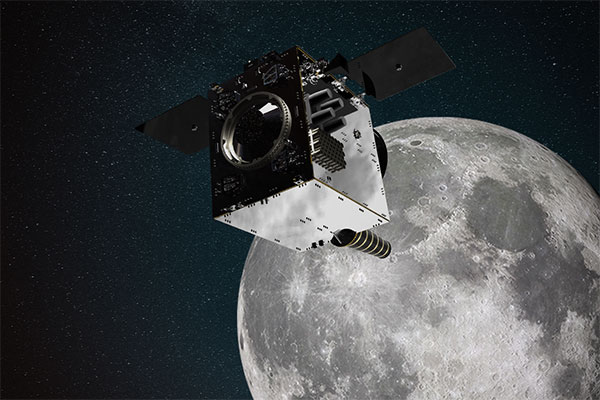
    Artist's rendering of the Lunar Pathfinder. (Image: SSTL)
    Artist’s impression of SSTL’s Lunar Pathfinder satellite that will provide communications services around the Moon. (Image: SSTL)

    News from the European Space Agency (ESA)

    ESA is going to the Moon — in collaboration with its international partners — and seeks to build a lasting lunar link to enable sustainable space exploration.

    The agency has now evaluated initial ideas to create a network of lunar telecommunications and navigation satellites.

    Creating a commercial telecommunications and navigation service for the Moon will allow many of the dozens of planned lunar missions to share the same infrastructure to communicate with Earth, as well as to find their way on the lunar surface.

    The service is needed because the planned missions are becoming regular trips to Earth’s natural satellite rather than one-off expeditions.

    Using a shared telecommunications and navigation service will reduce the design complexity and weight of individual missions, making them more cost-efficient.

    Lowering the ticket price to lunar exploration could also empower a wider group of ESA member states to launch their own national lunar missions, inspiring the next generation of scientists and engineers.

    Call for Ideas

    The call for ideas for how to use a lasting link with the Moon is open until April 30. People working for commercial companies, universities or governmental organizations are welcome to suggest how they would like to use a lunar communications and navigation service.

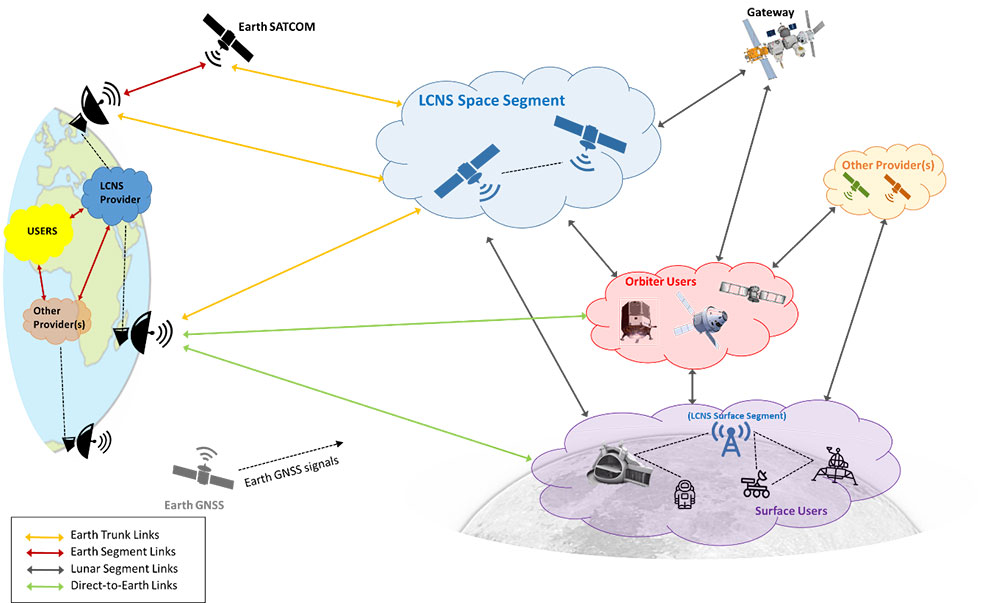
    This diagram presents a notional preliminary top-level system concept for a lunar communications and navigation service. (Image: ESA)
    This diagram presents a notional preliminary top-level system concept for a lunar communications and navigation service. (Image: ESA)

    Concept Reviews Completed

    Two consortia of companies have now completed their system concept reviews, which set out how to create the lunar constellation, under ESA’s Moonlight initiative to identify the best way to create a lasting link with the Moon. The reviews set out the business and technical analysis needed to identify and justify a number of feasible system concepts for creating the lunar network.

    The next step will be to define a detailed system architecture and identify the most suitable partnership models between private space companies and ESA.

    Telespazio leads the first consortium. The consortium includes:

    • satellite operators Inmarsat and Hispasat
    • manufacturing companies such as Thales Alenia Space Italy, OHB System in Germany and Canadian space technology company MDA
    • Italian Aerospace Logistics Technology Engineering Company (ALTEC)
    • small and medium-sized enterprises such as Nanoracks Europe and Argotec
    • universities and research centers such as SEE Lab, SDA Bocconi and Politecnico di Milano.

    The second consortium is spearheaded by Surrey Satellite Technology Limited, both in the service prime capacity through its lunar services brand SSTL Lunar and as the satellite manufacturer. The consortium includes:

    • satellite manufacturer Airbus
    • satellite network providers SES, based in Luxembourg, and Kongsberg Satellite Services, based in Norway
    • the Goonhilly Earth Station in the UK
    • British satellite navigation company GMV-NSL.

    Artemis Program and Pathfinder

    NASA’s Artemis program will use several of ESA’s service modules to return humans to the Moon, including the ESPRIT communications module for the lunar Gateway’s living quarters for astronauts. With its European industrial partner, ESA is helping to build the Lunar Pathfinder, showcasing lunar communications service provision by providing initial services to early lunar missions, including a complete lunar navigation in-orbit demonstration.

    The Moonlight initiative builds on both the ESPRIT communications module and the Lunar Pathfinder.

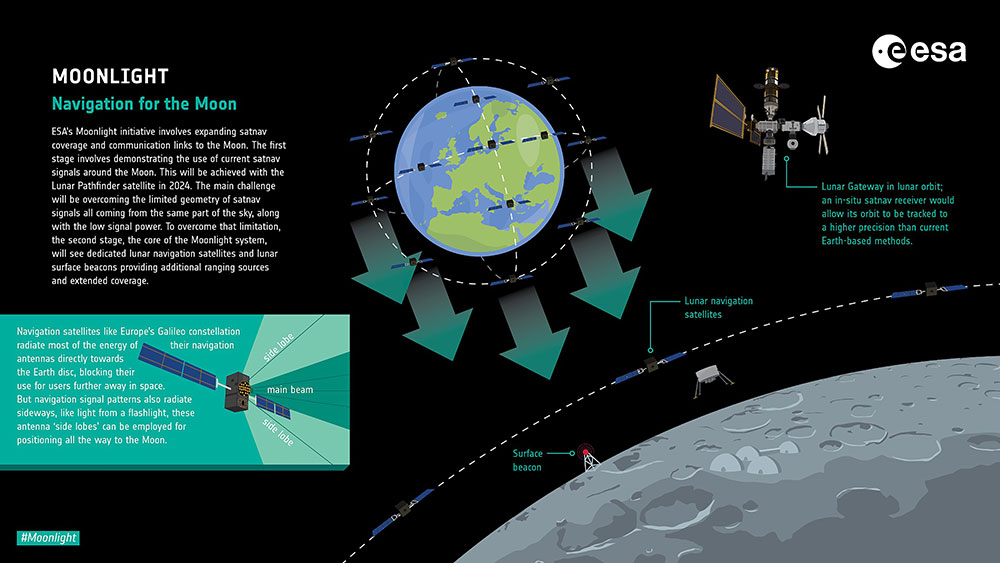
    Infographic: ESA
    Infographic: ESA
  • Spire constellation helps detect GPS jamming in space

    Spire constellation helps detect GPS jamming in space

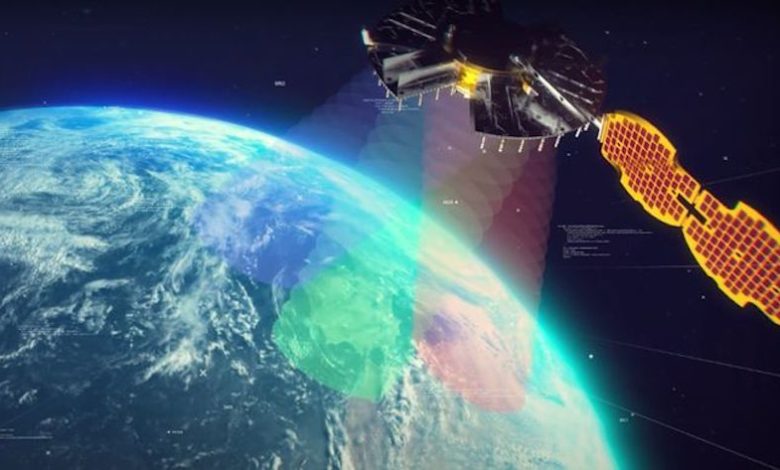
    Image: Spire Global
    Image: Spire Global

    Spire Global Inc., a provider of space-based data, analytics and space services, is using its constellation of about 40 geolocation satellites to detect GPS jamming. Spire is collecting data for use by the U.S. Space Force, a particularly important task in light of Russia’s invasion of Ukraine.

    “All of our fellow space companies… everyone is playing a vital role for humanity in this battle for freedom and democracy,” Spire CEO Peter Platzer told analysts March 9 in an earnings call, according to Space News.

    In September 2021, Spire won a contract to supply Slingshot Aerospace with GPS telemetry data. Slingshot’s pLEO Data Exploitation and Enhanced Processing (DEEP) prototype will automate manual data exploitation techniques to deliver intuitive, easily digestible data products at low latencies for military operations.

    The DEEP prototype contract is funded through the the Commercially Augmented Space Inter-Networked Operations (CASINO) program of the Space Systems Command (SSC), which develops and demonstrates the military utility of proliferated LEO satellite architectures.

    Identifying and mitigating ground-based radio-frequency (RF) and GPS interferences is a critical component of national security and U.S. Space Force operations. RF signals intercepted in open airspace are liabilities that directly threaten on-orbit space assets and military missions.

    Even in the absence of enemy interference and intentional jamming, RF signals from radio stations, cell phones, and various electronics cause interruptions and interferences — a problem exacerbated by the growth of modern communications technology.

    The DEEP prototype is an effort by the U.S. military to take advantage of existing commercial satellite telemetry data to readily identify these sources of interference and correct any potential problems before they become a threat.

    Spire’s cubesats use GPS radio occultation, a remote sensing technique that measures properties of the Earth’s atmosphere from space.

  • European agency warns of GNSS outages near ukraine

    GNSS jamming and possible spoofing has intensified in areas surrounding Ukraine, according to the European Union Aviation Safety Agency (EASA).

    The agency issued a bulletin on March 17 warning of a GNSS outage leading to navigation and surveillance degradation. According to the bulletin, which was directed at national aviation authorities and airlines, reports analyzed by EASA indicate that, since Feb. 24, GNSS spoofing and jamming has intensified in four key geographical areas:

    • the Kaliningrad region, surrounding Baltic Sea and neighboring states
    • Eastern Finland
    • the Black Sea
    • the Eastern Mediterranean area near Cyprus, Turkey, Lebanon, Syria and Israel, as well as Northern Iraq.

    “The effects of GNSS jamming and/ or possible spoofing were observed by aircraft in various phases of their flights,” the bulletin stated, “in certain cases leading to rerouting or even to change the destination due to the inability to perform a safe landing procedure.”

    Potential issues include:

    •  loss of ability to use GNSS for waypoint navigation
    • loss of area navigation (RNAV) approach capability
    • triggering of terrain warnings
    • inconsistent aircraft position on the navigation display
    • loss of ADS-B, wind shear, terrain and surface functionalities
    • failure or degradation of ATM/ANS/ CNS and aircraft systems that use GNSS as a time reference
    • airspace infringements and/or route deviations due to GNSS degradation.
  • Positioning system for subways begins construction in Beijing

    Positioning system for subways begins construction in Beijing

    Photo: dk1234/iStock/Getty Images Plus/Getty Images
    Photo: dk1234/iStock/Getty Images Plus/Getty Images

    A “BeiDou positioning system for subways” began construction March 20 on the Beijing subway capital airport express line. The project will cover a 30-kilometer-long section of the express line, including five stations.

    To provide positioning, the BeiDou Navigation Satellite System (BDS) will be combined with 5G for indoor positioning or in areas where the satellite signals are blocked.

    The system will improve the positioning accuracy in subways to less than two meters, making it available for vehicle dispatching, passenger transport organization and emergency response. In addition, it allows passengers to use their phones to navigate and position in complex environments in subway stations through three-dimensional navigation.

    “We will combine indoor and outdoor positioning in subways, that is, Beidou and its augmented reality technology will be used outdoors to achieve high-accuracy positioning, and indoor positioning technology integrated with 5G will be used to allow users to receive indoor positioning signals,” said Lin Luzhou, vice president of the GNSS and LBS Association of China.

    The project is the largest indoor space navigation and positioning system in China, according to ECSN.com, and is expected to be finished within this year.