Category: Receivers

  • FAA Warns Drone Hobbyist and YouTuber

    So, you know it’s illegal to fly drones in the United States for commercial purposes unless you have a Federal Aviation Administration (FAA) exemption and Certificate of Authorization and Waiver (CoA), right?

    That means you can’t fly drones if it’s related to business, no matter if you charge a fee or not. But, you can fly drones in the United States as a “hobbyist” as long as you adhere to certain rules (such as flying lower than 400 feet above the ground).

    In a new twist, the FAA has cracked down on at least one person who posted a drone video on YouTube because YouTube generates revenue, reports the website Motherboard. Even though it appears the drone was being flown by a hobbyist for recreational purposes, it smells to the FAA like a commercial use of drone. Even though the hobbyist isn’t generating revenue from it, Google is.

    Jason Hanes' Youtube Channel
    Jason Hanes’ YouTube channel.

    While it appears the U.S. drone community is going nuts using drones for all kinds of non-commercial and commercial purposes, despite the FAA rules, it appears there are too many violators for the FAA to chase after since enforcement notices sent by the FAA have been few and far between. In this case, safety concerns may have been the prompt. The FAA says it’s now looking further into how its safety inspectors send letters like this. Read more about the case at the Motherboard website.

    Geospatial Data Interest Crosses Political Party Lines

    Senator’s Mark Warner (D-Va.) and Orrin Hatch (R-Utah) introduced the Geospatial Reform Act, targeted at leveraging geospatial data acquired by the U.S. federal government. This bill argues that the federal government is the largest purchaser of geospatial data, yet agencies aren’t required to report details of geospatial data purchased. The bill aims to change that.

    “Geospatial data has endless possibilities for transforming both the private and public sectors — from helping local governments develop emergency preparedness plans to fueling the creation of apps that let you find parking spots, restaurants, and even homes for sale based on where you’re standing,” said Sen. Warner. “The federal government is the largest purchaser of geospatial data but some very basic questions about how and where agencies are already investing in this data can’t be answered. Our bill would bring transparency and accountability to the collection of this data and ensure that taxpayer dollars are not being wasted on duplicative efforts.”

    Sen. Warner and Hatch issued a joint statement about the bill.

    DigitalGlobe Offers Commercial 30-cm Resolution Satellite Imagery

    In what DigitalGlobe claims is a world’s first, the company began offering commercial 30-cm satellite imagery via its WorldView-3 satellite, which was launched August 13, 2014. DigitalGlobe announced that the imagery is available worldwide (with some restrictions). As part of its press release, DigitalGlobe offered the following quote from PhotoSat, a consumer of imagery.

    “DigitalGlobe’s WorldView-3 satellite data is the highest quality satellite photo data that PhotoSat has ever processed,” said Gerry Mitchell, President of PhotoSat, a leading satellite elevation mapping provider for energy, mining, and engineering firms. “In one test, an elevation mapping grid extracted from stereo WorldView-3 satellite photos matched a highly accurate LiDAR elevation grid to better than 15 cm in elevation. This result takes satellite elevation mapping into the engineering design and construction markets and directly competes with LiDAR and high resolution air photo mapping for applications like flood plain monitoring.”

    According to DigitalGlobe, WorldView-3 is the first and only commercial imaging satellite capable of collecting imagery with 30-cm ground sample distance, and claims it is five times the detail of the company’s nearest competitor. See a sample by clicking here.

    Satellite imagery is approaching aerial photogrammetry quality. I recall Lawrie Jordan, founder of ERDAS (sold to Leica) and now director of imagery at Esri, saying that eventually every square inch of the earth will be imaged constantly by satellite.

    Esri and Drone Data Up until now, you haven’t heard the words “Esri” and “drone” mentioned in the same sentence very often. Last week at the Esri Developer Summit in Palm Springs, Esri provided a live map-creation demo using a small quadcopter.

    Look for a follow-up article, data example and possibly a video of the event.

    Thanks, and see you next month.

    Follow me on Twitter at https://twitter.com/GPSGIS_Eric

  • DigitalGlobe Makes Available 30-cm Satellite Imagery to Customers

    DigitalGlobe-satellite-imagery-W

    DigitalGlobe is making available its 30-cm satellite imagery products. Access to the high-resolution commercial satellite imagery captured by DigitalGlobe’s WorldView-3 satellite will improve decision making, enable more efficient operations, and enhance a variety of applications for customers in the civil government, defense and intelligence, energy, mining and global development sectors.

    In addition, many customers who previously relied on aerial imagery can now benefit from the improved economics, global availability, and faster refresh rate that DigitalGlobe can provide with its 30-cm satellite imagery, the company said. Imagery of this resolution was previously only available from aerial platforms, which are difficult, costly, or impossible to access in many parts of the world.

    DigitalGlobe’s 30-cm imagery products are also a rapid and affordable alternative in locations where aerial imagery is readily available. New imagery orders can be delivered on timescales of days or weeks, as opposed to months, in many cases, and customers can also have access to a rapidly growing volume of available 30-cm archive imagery.

    The suitability of 30-cm satellite imagery for aerial imaging applications is confirmed by the National Imagery Interpretability Rating Scale (NIIRS), which is used by the imaging community to define and measure the quality of images and performance of imaging systems. DigitalGlobe’s 30-cm imagery achieves a rating of NIIRS 5.7, meaning it can resolve objects on the ground such as above-ground utility lines in a residential neighborhood, manhole covers, building vents, fire hydrants, and individual seams on locomotives.

    “DigitalGlobe’s WorldView-3 satellite data is the highest quality satellite photo data that PhotoSat has ever processed,” said Gerry Mitchell, president of PhotoSat, a satellite elevation mapping provider for energy, mining and engineering firms. “In one test, an elevation mapping grid extracted from stereo WorldView-3 satellite photos matched a highly accurate LiDAR elevation grid to better than 15 cm in elevation. This result takes satellite elevation mapping into the engineering design and construction markets and directly competes with LiDAR and high-resolution air photo mapping for applications like flood plain monitoring.”

    The DigitalGlobe’s WorldView-3 commercial imaging satellite is capable of collecting imagery with 30-cm ground sample distance — five times the detail of the company’s nearest competitor. The satellite also features unique shortwave infrared (SWIR) capabilities that will enable new applications such as seeing through smoke and haze, identifying minerals and manmade materials, and assessing the health of crops and vegetation.

    The SWIR imagery that the satellite collects has never before been available to commercial customers with this level of spatial and spectral resolution, and it will provide unique value to users in the energy and mining industries, as well as others, DigitalGlobe said. DigitalGlobe also launched a beta program for 7.5 m SWIR imagery, working with partners, customers and users to explore new uses for this capability.

    “Companies should be exploiting the competitive advantages of the WorldView-3 data to look for potential ore-related alteration that will have been missed by the previous satellites used for alteration mapping,” said Dan Taranik, managing director of Exploration Mapping Group, a service provider to the global mineral exploration industry. “Detailed inspection of remote areas on the peripheries of alluvium or younger volcanics would be a competitive advantage that could help reveal concealed deposits.”

  • Harris Offers Geiger-Mode Lidar Sensor

    Harris Corporation has developed a commercially available Geiger-mode lidar sensor. The Harris IntelliEarth Geospatial Solutions Geiger-Mode LiDAR sensor will provide customers with the ability to collect high-quality, wide-area elevation data faster and more affordably than before, Harris said.

    Additionally, the company’s fully automated, high-volume production capabilities allow for rapid processing of large amounts of raw sensor data and automates quality control. Thousands of square kilometers of data can be processed in a few hours.

    Harris is applying technology and processing methods it has perfected over the past 15 years in support of the U.S. Department of Defense to deliver superior, LiDAR-based data and derived products to commercial users at cost-effective prices, the company said.

    With 10 times the collection speed and resolution of today’s best traditional lidar sensors, the Geiger-Mode lidar sensor makes wide area collections affordable for the first time.

  • ASPRS Releases New Accuracy Standards for Digital Geospatial Data

    The American Society for Photogrammetry and Remote Sensing (ASPRS) has released new Positional Accuracy Standards for Digital Geospatial Data. The PDF is available here.

    The new ASPRS accuracy standards fill a critical need for map users and map makers alike. For centuries, map scale and contour interval have been used as an indication of map accuracy. Users want to know how accurately they can measure different things on a map, and map makers want to know how accurate maps need to be in order to satisfy user requirements. Those contracting for new maps depend on some form of map accuracy standard to evaluate the tradeoff between the accuracy required vs. how much time and expense are justified in achieving it, and then to describe the accuracy of the result in a uniform way that is reliable, defensible, and repeatable, ASPRS explains in a statement.

    The new ASPRS standards address recent innovations in digital imaging and non-imaging sensors, airborne GPS, inertial measurement units (IMU) and aerial triangulation (AT) technologies. Unlike prior standards, the new standards are independent of scale and contour interval, they address higher levels of accuracies achievable by the latest technologies (such as unmanned aerial systems and LiDAR mobile mapping systems), and they provide enough flexibility to be applicable to future technologies as they are developed. Finally, the new standards provide cross references to older standards, as well as detailed guidance for a wide range of potential applications.

    No prior U.S. accuracy standard comprehensively addresses the current state of mapping technology, which is why the new ASPRS standards were developed. The National Map Accuracy Standards (NMAS), developed in 1947, are still used because they are simple, but there is no scientific correlation between those standards and current mapping methodologies.

    The ASPRS 1990 Standards were an improvement over NMAS; however, they did not do well in representing the capabilities of LiDAR, orthoimagery, digital mapping cameras or other current technologies in wide-spread use today.

    The National Standard for Spatial Data Accuracy (NSSDA) is a reporting standard that references the old ASPRS 1990 standards and is cross-referenced in the new ASPRS standards.  NSSDA provides no accuracy thresholds and does not by itself provide any new or updated guidance on how to select or specify an appropriate accuracy for intended applications.

    The new ASPRS standards were developed by the ASPRS Map Accuracy Standards Working Group, a joint committee under the Photogrammetric Applications Division, Primary Data Acquisition Division and LiDAR Division, which was formed for the purpose of reviewing and updating ASPRS map accuracy standards to reflect current technologies. A subcommittee of this group, consisting of Qassim Abdullah, David Maune, Doug Smith, and Hans Karl Heidemann, was responsible for drafting the document.

    Draft versions of the standard underwent extensive review, both within ASPRS as well as through public review by other key geospatial mapping organizations, prior to final approval by the ASPRS Board of Directors on November 17, 2014.

  • Agency9 Brings WebGL Streaming of 3D Cities to iOS and Android

    Agency9-2

    Agency9, a provider of online 3D visualization, is extending its 3DMaps WebGL support to iOS and Android devices. Large, highly detailed 3D city models can now be streamed to web browsers on both tablets and smartphones with both high performance and visual quality, the company said.

    Mobile support substantially improves reach in GIS and planning applications, Agency9 said. Using WebGL and HTML5 improves usability with plugin-free viewing of 3D directly in a web browser, eliminating the need to download and install dedicated apps.

    Most WebGL 3D solutions on the market are pure “model viewers,” limited to show a CAD model and its closest surroundings or simple untextured LOD 1,2 models. Agency9 3DMaps is capable of smoothly visualizing large scale terrain and detailed textured building models on a national or global basis. For example, huge photorealistic 3D models created with tools such as Smart3DCapture by Acute3D, recently acquired by Bentley Systems, can now be published online using WebGL without limitation in size or resolution, the company said.

    Agency9 3DMaps supports common 3D scenery in common GIS formats (including ArcGIS and CityGML) and is also validated with output from tools as Smart3DCapture, PhotoScan from AgiSoft, and StreetFactory from Airbus Defence and Space, as well as LiDAR/imagery tools from TerraSolid.

    Agency9-1

    The Agency9 3DMaps developer platform enables the customization of portals as well as integration into existing applications to leverage ubiquitous support for streaming large 3D data to users across all formats including tablet, mobile, Windows and MacOS.

    Rendering substantial 3D data sets in the browser using 3DMaps with advanced gaming effects such as ambient occlusion, real time sun and shadows, and god rays ensures the finest realism and user experience, the company said. 3DMaps also supports integration of spatial data and databases for intelligent models and visualisation of statistics. Visit the 3DMaps developer portal at http://developer.agency9.com.

    Mobile support will also be available in Agency9 CityPlanner, the cloud service for creating and sharing 3D project information and citizen dialogues in urban development. Smart Cities can more easily reach citizens and stakeholders on the web with interactive visualisation of projects in 3D. An example of a large project model created in ESRI CityEngine and visualized in the huge photorealistic 3D scene above.

    Photos: Agency9

  • TerraGo Partners with RazorTek on TerraGo Edge

    TerraGo is partnering with RazorTek, a GIS and remote-sensing consulting firm specializing in design, development and automation of complex systems for spatial data display and analysis. RazorTek will deploy TerraGo Edge for customers looking to replace GPS handhelds with a mobile app that integrates directly with Esri’s ArcGIS.

    “We see a great opportunity to help our customers utilize TerraGo Edge for field data collection on their smartphones and tablets,” said Dan Rodriguez, CEO, RazorTek. “The nice thing about TerraGo Edge is that it replaces proprietary GPS handhelds with a simple mobile solution at a fraction of the cost, and it works seamlessly with Esri ArcGIS out of the box.”

    “RazorTek is an industry expert for deploying advanced remote sensing and GIS solutions,” said John Timar, vice president,  TerraGo. “TerraGo Edge gives the RazorTek team a cost-effective mobile solution that can deliver cm-level accuracy or whatever the RazorTek customer needs, while leveraging their existing ArcGIS investment.”

    RazorTek is an authorized reseller of TerraGo products and also offers a range of geospatial technology software and services including GIS services, aerial photography, satellite imagery and LiDAR.

  • Routescene Showcases 3D LiDAR at ILMF in Denver

    routescene-lidarpod-uav-fullThe Routescene LidarPod 3D mapper, a self-contained turnkey solution new to the market, is being showcased for the first time in the United States at the International Lidar Mapping Forum in Denver, Colo., Feb. 23-25. Routescene is based in Edinburgh, United Kingdom.

    The flexible LidarPod was developed for use on unmanned aerial vehicles, but can also be fitted onto any mobile platform such as a car or boat. The flexibility makes it attractive for many sectors and situations where accurate mapping is essential but difficult to achieve, enabling surveys to be conducted in areas that previously would not have been considered, Routescene said.

    routescene-uav-flightThe technology offers a non-intrusive method to obtain detailed and precise geo-referenced 3D datasets, Routescene said. LidarPod 3D can be used for 3D mapping; powerline inspection; scoping, planning and management of mines; forestry design, management and operation; large-scale topographic surveys; and city planning and management.

    Routescene LidarPod costs less than a vehicle-based mobile mapping system, Routescene said. The turnkey solution includes LidarViewer, specially developed software to turn the raw data into valuable business information. It enables users to convert, analyze and filter huge volumes of point cloud data to improve productivity and workflow. Powerful filters enable users to extract relevant data for use in third party software, such as GIS and CAD packages, which are unable to cope with such large data volumes.

    Routescene can be found at booth 65 at ILMF.

  • LizardTech Updates GeoViewer Imagery Viewer for Windows

    LizardTech, a provider of software solutions for managing and distributing geospatial content, has released an updated version of its GeoViewer and GeoViewer Pro for Windows application.

    The application allows users to view MrSID and JPEG 2000 imagery and includes broad file format support.

    GeoViewer is available as a free application enabling users to display raster imagery, LiDAR point clouds and vector overlays. New features include the ability to connect to online base maps, combine local data with web map service (WMS) and JPIP sources, export imagery, save projects, and includes advanced display options such as dynamic range adjustment.

    GeoViewer Pro is available for $50 and allows access to additional functionality, including support for printing, additional projection systems and advanced area measurement tools.

  • GPS World Unveils Industry-Exclusive Online Buyers Guide

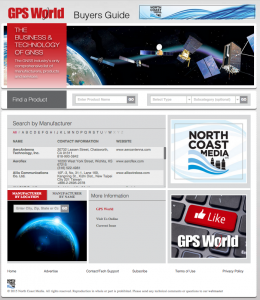
    gps_world_buyers_guideGPS World, the leading publication serving the GNSS Industry, is pleased to announce the industry’s first online buyers guide — gpsworldbuyersguide.com — featuring access to information on hundreds of manufacturers, products and services.
    “We’ve taken the GPS World Buyers Guide in print, which we’ve been publishing for 20+ years, to an entirely new level,” said Alan Cameron, editorial director and group publisher of GPS World. “Adding a robust online version offers many benefits to the industry.”

    Engineers, integrators, professional end-users and others in search of products and services will continue to have two resources available to them — the print Buyers Guide publishing in June — and the cutting-edge, robust version accessible 24/7 at: gpsworldbuyersguide.com.

    Visitors can search for manufacturers by name or location. Products and services are searchable by name or via the following categories:

    • Accessories
    • Antennas
    • Differential GPS
    • Digital compasses
    • Electronic charts/maps
    • GLONASS hardware/software
    • Integrated navigation equipment
    • Integrated instrumentation with GPS
    • Mapping
    • Photgrammetry/GPS integrated systems
    • Precise ephemeris information
    • Publications, guides, videos, training software
    • Receive components
    • Receiver-performance analysis
    • Receivers
    • Satellite signal simulators/pseudolites
    • Security code decryption devices
    • Seminars/training
    • Software
    • Surveying-related equipment
    • System design/integration
    • Timing
    • Tracking services (mobile assets, roadside assistance, E-911, etc.)
    • Vehicle location/tracing workstations and systems (computer-aided dispatch)

    These categories are also searchable by sub-categories.

    Manufacturers and suppliers are now in control of their listings year-round by having the ability to make listing updates in real time. Listings are free and numerous upgrades are available. Listings found at gpsworldbuyersguide.com will automatically be used to create the print version of the directory.

    GPS World’s new online product offers many economical ways for a manufacturer or supplier to enhance their exposure,” said Steve Copley, GPS World publisher. “We’re excited to offer an online element to our print product and provide a positive experience for users.”

    Manufacturers and suppliers are encouraged to review their current listings by using the search functionality found on the directory’s home page. Manufacturers and suppliers not listed in directory are encouraged to create a new listing. All questions relating to the online directory should be directed to Chloe Kalin, Buyers Guide Marketing & Sales Manager, at 216-363-7929.

  • Maxtena Announces New L1 L2 GPS GLONASS Active Antenna

    Maxtena Announces New L1 L2 GPS GLONASS Active Antenna

    The Maxtena M1227HCT-A-SMA helix antenna.
    The Maxtena M1227HCT-A-SMA helix antenna.

    Antenna maker Maxtena has launched an L1 L2 GPS/GLONASS active helix antenna for GNSS satellite applications. The new  antenna M1227HCT-A2-SMA antenna will replace its predecessor the M1227HCT-A-SMA antenna, which made its debut in 2010.The new antenna has been mechanically upgraded. It is packaged in a high-quality, durable IP67/68 sealed radome housing and terminated with a gold-plated SMA connector for RF feed/input and DC bias/power typically powered from the applications’ GNSS RF module.

     The M1227HCT-A2-SMA active helix design features Maxtena’s patented compact and light-weight Helicore Quadrifilar antenna technology and a built-in dual-stage low noise amplifier (LNA) and filtering, offering up to 30-dB gain for GNSS applications that use GLONASS and GPS in one radome housing with a single 50-Ohm SMA connector.

    The tiny antenna is designed for applications across various markets such as UAVs, GIS and wearable GNSS.

  • PCTEL Offers Two New Fleet Management Antennas

    PCTEL Offers Two New Fleet Management Antennas

    PCTEL-antennas-fleets

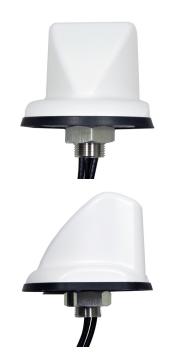
    PCTEL has introduced two new fleet-management antennas intended to make high-speed data communications easier. The high-performance antennas include LTE, Wi-Fi, and GPS capabilities in a single low-profile housing.

    The first new antenna is a magnetic-mount version of PCTEL’s 5-port multiband fleet management antenna, designed to support temporary installations such as rental vehicle fleets. The 5-port GPS and communications antenna provides outstanding performance for critical fleet management applications, PCTEL said.

    LTE MIMO, GPS Multiband Antenna with Magnetic Base
    LTE MIMO, GPS Multiband Antenna with Magnetic Base

    Features of the LTE MIMO, GPS Multiband Antenna with Magnetic Base include:

    • Optimal 4G LTE MIMO and dual-band 802.11n Wi-Fi
    • High rejection GPS LNA assembly
    • Low-profile housing in white or black
    • An IP67-compliant design
    • High-performance, low loss cable and high-quality connectors
    • Rare earth magnets for outstanding pull force resistance

    The second new antenna is a sleeker, more aerodynamic fleet-management antenna designed for public safety or other vehicular applications requiring a smaller footprint, making it PCTEL’s most compact multiband GPS and communications option.

    LTE, Dual 802.11n, GPS Multiband Antenna
    LTE, Dual 802.11n, GPS Multiband Antenna

    Features of the LTE, Dual 802.11n, GPS Multiband Antenna include:

    • Optimal 4G LTE and dual-band 802.11n Wi-Fi
    • High Rejection GPS LNA assembly
    • Aerodynamic, compact, UV-resistant housing in white or black
    • IP67 compliant design
    • High-performance, low loss cable and high-quality connectors

    Both new magnetic-mount antennas are now available for shipment. New smaller footprint antennas will be available in March.

  • Tallysman Wraps Antennas in Armored Cable for Precision Ag, M2M

    Tallysman Wraps Antennas in Armored Cable for Precision Ag, M2M

    This photo shows the corrugated conduit covering the RG174 cable with Tallysman’s TW2410 antenna.
    This photo shows the corrugated conduit covering the RG174 cable with Tallysman’s TW2410 antenna.

    Tallysman’s enclosed antennas now come with optional armored corrugated cable. The standard RG174 cable is encased in a corrugated conduit of tough plastic, which maintains its functionality between the temperatures of -40 to +150C.

    The extra protection increases the resilience of the antenna for use in precision agriculture, machine-to-machine, and other rugged applications.

    Tallysman is a manufacturer of high-performance, high-quality products for a wide range of GNSS applications.