Category: Uncategorized

  • Hemisphere GNSS Offers RTK-Capable Compass Antenna

    Hemisphere GNSS Offers RTK-Capable Compass Antenna

    The Hemisphere GNSS V320 GNSS compass.
    The Hemisphere GNSS V320 GNSS compass.

    Hemisphere GNSS is offering a new RTK-enabled Vector V320 GNSS compass. The Vector V320 smart antenna supports multi-frequency GPS, GLONASS, Galileo (future firmware upgrade required) and BeiDou, and Hemisphere GNSS says it’s “the first of its kind.”

    Designed for the professional marine and marine survey markets, the Vector V320 is the a multi-frequency, multi-GNSS, all-in-one smart antenna capable of both RTK-level positioning accuracy and better than 0.2-degree heading accuracy in a simple-to-install package.

    “The Vector V320 combines our expertise in GNSS and smart antenna design,” said Lyle Geck, senior manager, Product Marketing, at Hemisphere GNSS. “With RTK performance that competes with current industry leaders, extremely accurate accelerometer-aided GNSS heading, and the simplicity of install offered by the smart antenna design, it is an incredible product.”

    The Vector V320 is the latest in a line of GPS/GNSS compasses, including the multi-frequency, multi-GNSS Vector VS330 receiver as well as the Vector V102, Vector V103 and Vector V104 compass smart antennas.

    “There has been a void in the market. Our customers have been looking for a product that provides RTK accuracy together with precision heading in an easy-to-install package,” said Andy Smith, managing director of Saderet Ltd. “The Vector V320 delivers.”

    The Vector V320 GNSS compass is being featured by Hemisphere GNSS at Ocean Business in Southampton, UK, April 14-16, at stand K12.

  • Rohde & Schwarz Used to Test ERA-GLONASS Systems

    The Rohde & Schwarz CMW500 is being used to test the ERA-GLONASS system.
    The Rohde & Schwarz CMW500 is being used to test the ERA-GLONASS system.

    The Certification Center Svyaz-Certificate in Russia is now using the R&S CMW500 to certify ERA-GLONASS systems in line with the TR CU 018/2011 technical guideline. The independent Russian test lab is currently the only test lab in Russia accredited to certify these systems. The R&S CMW500 is a wideband radio communication tester.

    Equipped with the R&S CMW-KA095 application software, the R&S CMW500 meets all requirements for testing ERA-GLONASS systems and provides reliable, reproducible tests in line with the Russian GOST R 55530 specification, Rohde & Scwarz said. In addition, the R&S CMWrun sequencer software (R&S CMW-KT110) makes the test solution fully automated and user-friendly.

    Effective January 1, 2015, all new car models introduced to the Russian market must be equipped with an automatic ERA-GLONASS emergency call system. 

  • DJI Unveils Phantom 3 UAV with Indoor Positioning

    DJI Unveils Phantom 3 UAV with Indoor Positioning

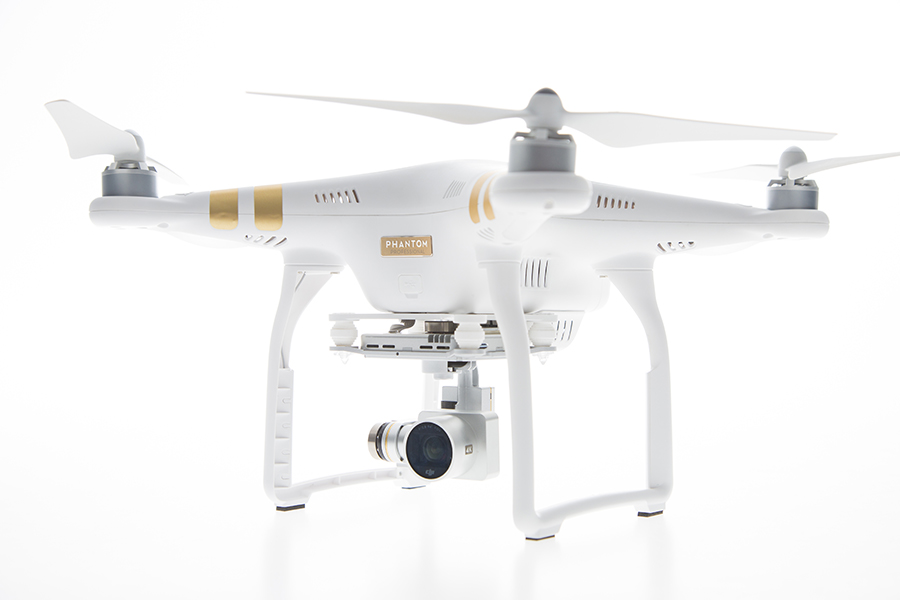
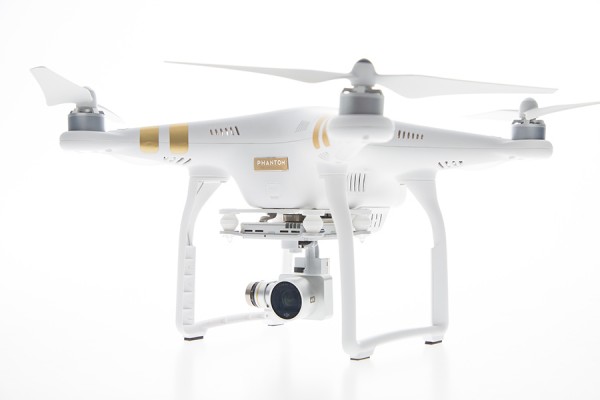
    The Phantom 3 in flight at a press event.
    The Phantom 3 in flight at a press event.

    DJI has launched a new drone in its Phantom series. The Phantom 3 comes in two variations, Professional and Advanced, both of which provide greater control and creative options than the popular Phantom 2. On April 8, DJI held three simultaneous events in London, Munich, and New York to mark the release of the Phantom 3.

    Both Phantom 3 versions feature the strongest professional control features DJI has developed so far. Using DJI’s Visual Positioning system, the Phantom 3 can hold its positioning indoors without GPS and can easily take off and land with the push of a button. With Vision Positioning technology, visual and ultrasonic sensors scan the ground beneath the Phantom 3 for patterns, enabling it to identify its position and move accurately.

    DJI’s Lightbridge technology is also integrated, enabling control at up to 1.2 miles (2 km) away and a live HD video stream from the camera with almost no latency.

    “In developing the next generation Phantom, DJI remained committed to providing a top-tier flight experience in one easy-to-use platform,” said DJI CEO Frank Wang. “We pride ourselves in creating a flying camera that fits in a backpack and can be ready to take professional quality videos from the sky in less than a minute.”

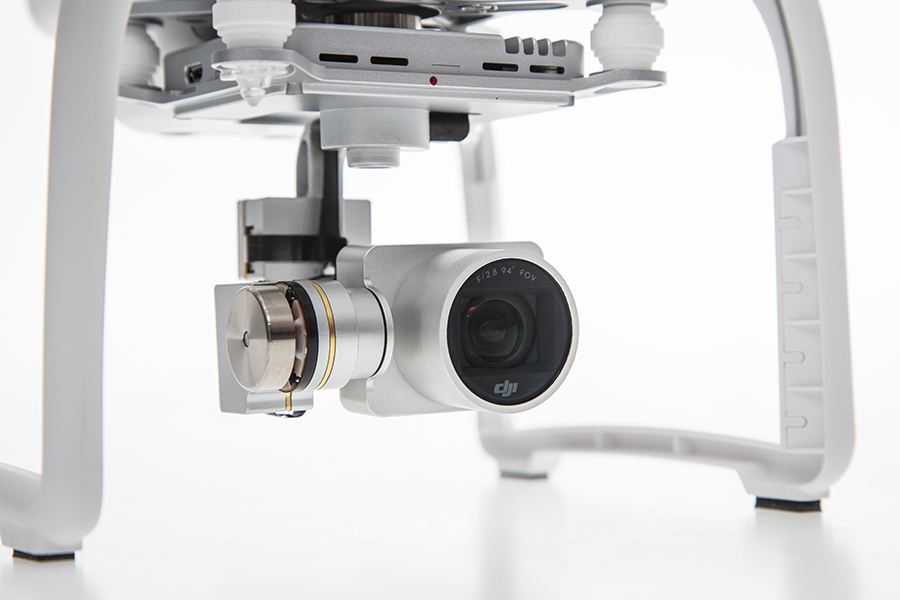
    The Phantom 3 Professional is capable of shooting 4K video at up to 30 frames per second, while the Phantom 3 Advanced records at resolutions up to 1080p at 60 frames per second. These cameras are stabilized using 3-axis gimbals to keep the video smooth regardless of flight or wind conditions.

    Both models shoot 12-megapixel photos using a 94-degree FOV, distortion-free lens, and a high-quality, 1/2.3-inch sensor that is more sensitive to light than the sensor in previous Phantom 2 Vision models.

    All camera settings — including ISO, shutter speed and exposure compensation — can be set using both the DJI Pilot app and the physical controls on the remote controllers. The DJI Pilot app also features a Phantom 3 flight simulator for virtually practicing aerial maneuvers, and a Director feature, which automatically edits the best shots from flights into short videos that can be shared immediately after landing. The upgraded app also allows pilots to livestream their flights to YouTube.

    “Pilots, whether they are journalists, extreme athletes, or global travelers — will not just be able to share aerial videos of where they were, but will also be able to send a YouTube link to their friends and colleagues to show them the aerial perspectives of where they are right now,” said DJI’s San Francisco General Manager Eric Cheng. “This has tremendous potential for changing the way we share experiences with one another.”

    The Phantom 3 by DJI
    The Phantom 3 by DJI

    Photo: The Phantom 3

  • DJI Unveils Phantom 3 UAV with Improved Imagery

    The Phantom 3 in flight at a press event.
    The Phantom 3 in flight at a press event.

    DJI has launched a new drone in its Phantom series. The Phantom 3 comes in two variations, Professional and Advanced, both of which provide greater control and creative options than the popular Phantom 2. On April 8, DJI held three simultaneous events in London, Munich, and New York to mark the release of the Phantom 3.

    Both Phantom 3 versions feature the strongest professional control features DJI has developed so far. Using DJI’s Visual Positioning system, the Phantom 3 can hold its positioning indoors without GPS and can easily take off and land with the push of a button. With Vision Positioning technology, visual and ultrasonic sensors scan the ground beneath the Phantom 3 for patterns, enabling it to identify its position and move accurately.

    DJI’s Lightbridge technology is also integrated, enabling control at up to 1.2 miles (2 km) away and a live HD video stream from the camera with almost no latency.

    “In developing the next generation Phantom, DJI remained committed to providing a top-tier flight experience in one easy-to-use platform,” said DJI CEO Frank Wang. “We pride ourselves in creating a flying camera that fits in a backpack and can be ready to take professional quality videos from the sky in less than a minute.”

    The Phantom 3 Professional is capable of shooting 4K video at up to 30 frames per second, while the Phantom 3 Advanced records at resolutions up to 1080p at 60 frames per second. These cameras are stabilized using 3-axis gimbals to keep the video smooth regardless of flight or wind conditions.

    Both models shoot 12-megapixel photos using a 94-degree FOV, distortion-free lens, and a high-quality, 1/2.3-inch sensor that is more sensitive to light than the sensor in previous Phantom 2 Vision models.

    All camera settings — including ISO, shutter speed and exposure compensation — can be set using both the DJI Pilot app and the physical controls on the remote controllers. The DJI Pilot app also features a Phantom 3 flight simulator for virtually practicing aerial maneuvers, and a Director feature, which automatically edits the best shots from flights into short videos that can be shared immediately after landing. The upgraded app also allows pilots to livestream their flights to YouTube.

    “Pilots, whether they are journalists, extreme athletes, or global travelers — will not just be able to share aerial videos of where they were, but will also be able to send a YouTube link to their friends and colleagues to show them the aerial perspectives of where they are right now,” said DJI’s San Francisco General Manager Eric Cheng. “This has tremendous potential for changing the way we share experiences with one another.”

    Phantom-3

    Phantom-3

  • Hexagon Geosystems Releases More Airborne Imagery

    Hexagon-imagery

    The Hexagon Imagery Program, or HxIP, has released captured airborne imagery for approximately 25 percent of the U.S. with various regions of Canada and Europe. As more content partners join the HxIP in 2015, program coverage is rapidly increasing with full coverage of the coterminous U.S. expected by the end of the year.

    Launched in June 2014, the HxIP streams valuable geospatial content and delivers professional-grade airborne images captured with Leica Geosystems’ airborne sensors, including enhanced-resolution, four-band orthos, streamable and rasterised point clouds, and stereo imagery, through two service categories:

    • Basemap offers cached background maps of current 30 centimeter orthorectified imagery that will be updated on a regular basis.
    • Multispectral Imagery supports image analysis and exploration activities with 30-centimeter, four-band orthorectified imagery and related digital surface models (DSM).

    Imagery for a full 11 states plus portions of six other states in the U.S. have been provided in the HxIP as part of its airborne imagery offerings from the 2014 flying season. Portions of Canada and Europe are also available in the recent release.

    “We’re pleased to have met our 2014 program goal, providing access to quality and consistent airborne imagery for thousands of clients around the globe,” said John Welter, president of Leica Geosystems Geospatial Solutions Division and director of the HxIP. “We are well on our way of realizing our 2015 goals with collection currently underway in Europe and North America.” 

    The HxIP airborne imagery content is available through the cloud via multiple content service providers:

    Through a distribution partnership with Esri in February, the 2014 collection is now available to even more users on Esri’s ArcGIS Marketplace.   

    “Serving HxIP via Esri’s ArcGIS Marketplace gives geospatial professionals another choice in accessing the most current and accurate geospatial imagery available,” said Juergen Dold, president of Hexagon Geosystems. “The focus of our new partnership is to provide imagery in a simple and efficient way across a wide array of professional consumers.”

    This vision was reinforced by Esri Director of Imagery Lawrie Jordan. “Leica Geosystems is recognized globally as providing the highest quality and most accurate airborne imagery available, and Esri is delighted to offer this content to GIS professionals through our ArcGIS Marketplace,” Jordan said.

  • University of Stuttgart Job Listing


  • CycloMedia Launches Street Smart Application for ArcGIS

    CycloMedia

    CycloMedia Technology and Esri have expanded their business relationship to deliver high-definition, street-view imagery via ArcGIS Marketplace.

    In efforts to leverage each other’s expertise in government, transportation and utilities markets, CycloMedia developed the Street Smart web application. Customers who have purchased CycloMedia’s HDstreet level imagery can utilize an ArcGIS-compatible application for viewing and analysis. Users can now visualize and edit their data from a street-view perspective with the goal of enhancing their GIS database while reducing costly field-based collection practices, CycloMedia said.

    CycloMedia began capturing its 100-megapixel HD-Cycloramas for customers in January 2015. With Street Smart, users can overlay their own GIS data layers, precisely capture location, record dimension measurements and edit attributes all from within a street-view perspective. Links to “information-tagged” images can be shared among ArcGIS Online subscribers within the enterprise and pictures shared with the wider community.

    “CycloMedia’s Street Smart app allows customers to visualize and share information about the built environment from a new perspective,” said Joe Astroth, CEO of CycloMedia USA. “Street-level imagery adds a new dimension to a GIS database by enabling the overlay and measurement of geographic features directly inside our HD Cycloramas.”

    Through Esri’sArcGIS Marketplace, geospatial professionals can learn about CycloMedia’s products and services, request new data collection and add comments and feedback to help improve the user experience.

  • Averna Partners with Investor Tandem Expansion

    Tandem Expansion Fund, a Canadian growth-equity investor, has acquired a majority interest in Averna, a developer of test solutions and services for communications and electronics device-makers, according to a news release from Averna. The transaction provides Averna with the financial resources to “accelerate organic and strategic growth as well as to expand its international presence,” the release said.

    Founded in 1999, Averna is a test engineering company that provides test expertise and solutions for tier-one clients in wide-ranging industries around the world, including aerospace and defense, telecom infrastructures, automotive and transportation, consumer electronics and life sciences. Averna has more than 300 employees and offices in 5 countries.

    “This is a new chapter for Averna and we are proud to have the support of these strategic and respected partners who share our vision and values,” said André Gareau, Averna’s president and CEO. “Averna is a Montreal-based success story and it is important for us to continue hiring the best local talents. This investment will help us extend our leadership position in each of our key industries as well as continue growing the company locally and internationally.”

    “Averna’s unique expertise in test, growing base of customers across the globe, excellent management team and portfolio of solutions position the company at the forefront of the electronic test and quality market,” said André Gauthier, managing partner at Tandem Expansion Fund. “With this investment, Tandem is providing solid support to Averna in the next phase of its development.”

    Averna has offices around the world as well as a network of partners such as JOT Automation, Keysight Technologies, and National Instruments. Incorporated in 1999, Averna is a Best in Test award winner and has been honored as one of the Deloitte Fast 500 fastest-growing technology companies in North America.

  • Spectracom Adds India’s IRNSS, Japan’s QZSS to Simulator Capabilities

    Spectracom Adds India’s IRNSS, Japan’s QZSS to Simulator Capabilities

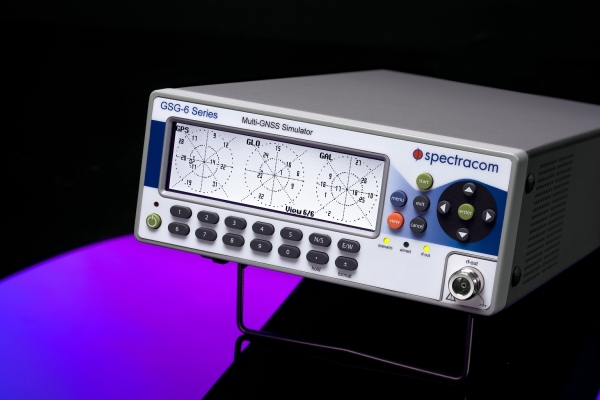
    Spectracom’s GSG-6 Series multi-frequency GNSS signal simulator. Photo: Spectracom
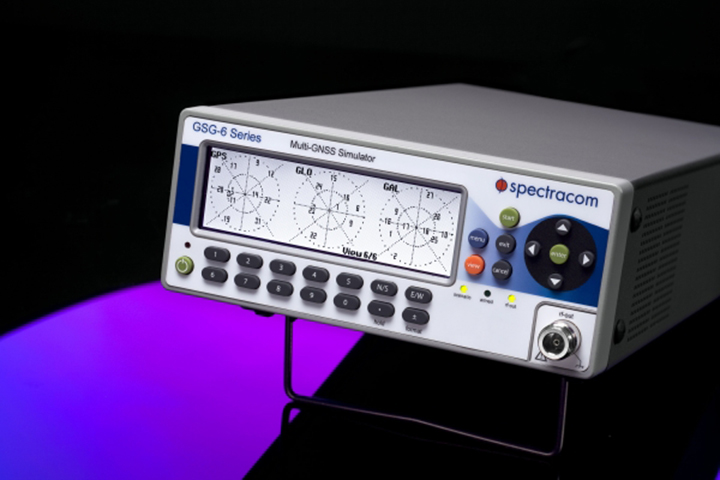
    Spectracom’s GSG-6 Series multi-frequency GNSS signal simulator. Photo: Spectracom

    Spectracom has added capability to simulate India’s global navigation satellite system, IRNSS, and Japan’s regional satellite system, QZSS, to its GSG-6 Series multi-frequency GNSS signal simulator. The simulator is designed to be field upgradeable to simulate all current and future GNSS constellations so current customers can benefit from these features without the need for a factory return in most cases.

    “Spectracom understands the need for system developers and integrators to be compatible with various GNSS systems. Support for multiple constellations is a requirement in many markets and additional satellites add signal diversity for improved reliability,” said Spectracom Global Sales and Marketing Vice President Rohit Braggs. “Our easy-to-use, compact and affordable GNSS simulator can now be configured with IRNSS and QZSS capability in addition to the big four: GPS, GLONASS, BeiDou and Galileo. Our customers can buy what they need now and easily upgrade in the future, often times without a hardware upgrade.”

    In anticipation of the deployment of new GNSS systems, Spectracom ensures that every GSG simulator that leaves the factory is tested for compliance with all L-band signal frequency and modulation specifications as defined in their ICDs, the company said.

    The Series 6 multi-frequency simulator is fully capable of all four bands of any system: L1 / E1 / B1; L2 / L2C; L5 / E5 / B2; and E6 / B3.

    “As we have seen with our recent roll-out of Beidou and Galileo signal compatibility, when the need for new signals arise, we will offer those capabilities with a simple upgrade path,” Braggs said. “This ensures our customer’s investment is always protected.”

  • The Business — April 2015

    The Business section from the April 2015 issue. Download the PDF.

    Includes: Mobile World Congress Report; Rohde & Schwarz Adds Testing; FAA Seeks Comments on UAS; and more

  • Esri Releases Nighttime Flow Analysis Solution for Water Loss

    NightTimeFlowImage2
    A view of Esri’s Nighttime Flow Analysis shows a sub-district metered area outside Naperville, Illinois. The viewer helps decision makers compare flow in expected and actual gallons per minute to help identify leaks.

    Esri has released its Nighttime Flow Analysis solution. The COTS (commercial off-the-shelf) configuration of Esri’s ArcGIS platform helps water utilities identify areas with underground leaks and other sources of non-revenue water loss.

    “This solution really highlights how ArcGIS can be used in a holistic workflow at a utility,” said Michael Miller, Esri solutions manager. “Utilities can quickly show a return on investment from managing an accurate asset database.”

    Esri says the return on investment from Nighttime Flow Analysis comes from utilities finding and fixing underground leaks and other sources of water loss that could go undetected, sometimes for months.

    “Over the long term, Nighttime Flow Analysis improves the utility’s operations and capital planning through narrowing down the areas of high water loss,” Miller said. “This can cut repairs from months to weeks or even days, and it can even prevent service disasters.”

    Nighttime Flow Analysis works by using an optimal time to analyze for leaks, which typically at night when household water consumption is significantly low. At the lowest point, the observed GPM from the area is entered into the solution. By comparing this observation to the expected flow, the utility can iterate through different Sub-DMA configurations without creating permanent DMA’s to determine potential nonrevenue water loss, or water that flows somewhere but isn’t reaching a meter.

    Learn more about Esri’s ArcGIS for Water Utilities here.

  • Geofeedia and IDV Solutions Form Technical Partnership

    idvsolutions_visual_command_center
    IDV Solutions’ Visual Command Center is a physical security and risk visualization (PSRV) software that unites data from external sources, enterprise systems and internal devices into a real-time, common operating picture of risk and security.

    IDV Solutions, a corporation that specializes in business intelligence, physical security and risk visualization software, has formed a technical partnership with Geofeedia, producer of a cloud-based social media monitoring platform. Through the partnership, Geofeedia’s location-based social media monitoring data will now be integrated into IDV Solutions’ Visual Command Center Enterprise Risk Visualization (ERV) software.

    The companies say the combination of the two technologies enables security, supply chain and business continuity teams to gain instant intelligence from multiple social media networks for a myriad of risk events — from a political demonstration to a natural disaster. The location-based visualization filters out excess noise to show important social media posts in the context of locations of interest, such as facilities, employee locations, supply routes or traveling executives.

    “Companies are looking for ways to efficiently gain actionable intelligence from social media,” said Ian Clemens, chief technology officer and co-founder of IDV Solutions. “The immediacy of social media combined with the alerting and locational context offered by Visual Command Center enables organizations to make more effective use of social media to protect employees, facilities and business continuity.”

    The Visual Command Center provides a real-time, common operating picture of assets, personnel and operations in relation to potential threats to those assets. It unites information on global sources of risk — such as weather, terrorism and natural disasters — with data from internal data stores and physical security systems on an interactive map and timeline. When a risk is detected near an asset or employee location, the Visual Command Center automatically generates an alert and provides tools to assess whether the risk is a threat and take immediate action to mitigate the impact of the threat.

    The Geofeedia integration complements the Visual Command Center’s Twitter Visualization and Alerting Module by providing information from more social media networks and visualizing all posts within a selected area.

    Geofeedia enables organizations to filter and analyze social media content by location in real time across multiple sources. Users search for a city, address or location name, draw a virtual perimeter around the specific area of interest,and access geo-tagged social media content from within those boundaries.

    “Location resolves the challenge of monitoring the massive amounts of cluttered data to identify meaningful, real-time on-the-ground intelligence when and where it matters most,” said Phil Harris, CEO and co-founder of Geofeedia. “We are thrilled to be able to help more organizations take advantage of our real-time, geotagged social media data to prevent, protect and respond to valuable intelligence.”