Category: Uncategorized

  • GE and ikeGPS Offer Mobile MapSight Device for Utility Workers

    GE and ikeGPS Offer Mobile MapSight Device for Utility Workers

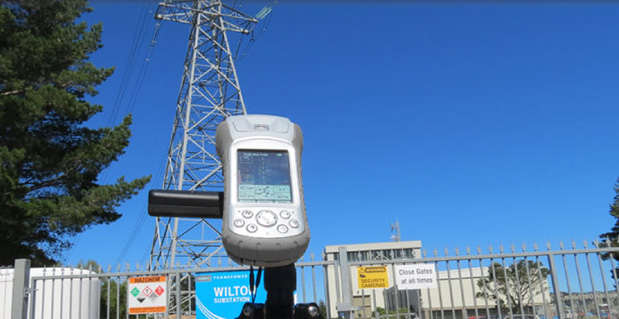
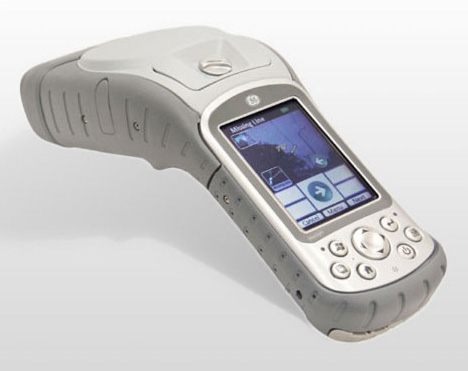
    GE MapSight combines GPS, laser rangefinder, digital camera, and a digital compass into an all­-in-one field data collection device.
    GE MapSight combines GPS, laser rangefinder, digital camera, and a digital compass into an all­-in-one field data collection device.

    GE’s Digital Energy business is branding ikeGPS’ field measurement product as MapSight. The product integrates laser, camera and GPS technologies, enabling utilities to quickly and accurately collect measurement and location data on any of their joint-use utility poles or field assets, ikeGPS said in a statement announcing the partnership.

    The MapSight solution addresses many complexities of field data collection, the company said. It dramatically reduces the time required and cost incurred to collect joint-use pole data such as wire heights, widths, clearances, attachment points, diameters and span heights. The MapSight solution — which provides front-end remote measurement and data collection for utility assets — works seamlessly with GE’s SmallWorld Electric Office to provide an end-to-end data collection solution for utility workers. Once collected, the MapSight device can feed data directly into GE’s FieldSmart mobile applications and SmallWorld technology suite. Using the device, utility workers can greatly improve field data collection efficiency, typically reducing the time required to collect utility asset data by more than 50 percent, ikeGPS said.

    The MapSight handheld.
    The MapSight handheld.

    “ikeGPS is proud to announce that our solutions to the electric utilities segment have been integrated with GE’s software and branded as MapSight,” said Glenn Milnes, CEO, ikeGPS. “This agreement further validates the one-of-a-kind measurement capabilities that our solution offers GE and its utility customers.”

    MapSight enables field utility workers to remotely capture the location of their utility assets and every necessary measurement from a single photograph. This ability enables utility workers to measure the height of a span, the height of an object when the base is not visible and the distance between any two poles or points in the field and in real time. The geo-located photo provided by MapSight allows for further measurements to also be performed in the field. Another advantage of MapSight is that the unit provides field workers with consistent data, taking the guesswork out of measuring utility poles and assets. With the unit’s ability to geo-locate and time stamp photos, utility workers can easily verify when and where a measurement was made.

    “Together, GE and ikeGPS have created an end-to-end solution set for field utility data collection and analyzation,” said Bryan Friehauf, product line leader–software solutions, GE’s Digital Energy business. “Previously, data had to be collected manually using analog tools such as hot sticks, measuring wheels and a pen and paper. Our MapSight device streamlines the data collection and analyzation processes for field utility workers by enabling the collection of joint-use utility pole data quickly, digitally and remotely on a single, easy-to-use platform.”

  • CoreLogic Releases Annual Natural Hazard Risk Summary and Analysis

    CoreLogic2013Hur

    CoreLogic released its annual Natural Hazard Risk Summary and Analysis detailing the most significant natural disasters that struck the United States in 2013. The report provides an analysis of the impact of hurricane, flood, tornado, wildfire and sinkhole events over the course of the year, as well as a summary of potential risk from natural hazards in 2014.

    Compiled by CoreLogic hazard scientists, the report summarizes the property and structure, geographic and financial impact of natural disasters across the U.S. over the course of the year.

    “Many predicted that 2013 would be a record year of catastrophic destruction, but the number of natural disasters that typically cause widespread destruction, mainly hurricanes, wildfires and tornadoes, were far less than anticipated and in comparison to last year’s record-setting hazard seasons,” said Dr. Thomas Jeffery, senior principal scientist for CoreLogic. “Interestingly, one natural hazard that tends to receive very little attention took center stage in 2013 as three separate sinkhole catastrophes took place in Florida. Though massive damage and loss of life from sinkholes is uncommon, this year’s events were large enough disasters to draw significant media coverage, raising public awareness of the true risk associated with this often-overlooked hazard.”
    Among key findings, the CoreLogic 2013 Natural Hazard Risk Summary and Analysis notes:

    Hurricane
    • There was little hurricane activity in 2013. With only 13 named storms, just two reached hurricane classification and hurricane totals were both lower than pre-season predictions and disproportionately lower than previous hurricane seasons dating back to 2003.
    • None of the storms in 2013 had a direct impact on the U.S., and as such, there was relatively minor damage related to Atlantic storms.
    • The first official hurricane of the year, Hurricane Humberto, formed on September 11, just three hours short of setting the record for the latest formation of the season’s first hurricane.

    Flood
    • Flooding in the U.S. was moderate compared with recent years, partly due to the low number of Atlantic storms and the related coastal flooding. National flood losses for 2013 are expected to total approximately $2 billion.
    • The most significant flooding event of the year was a September storm in Boulder, Colorado, which caused the damage or destruction of more than 19,000 homes and resulted in record-setting levels of precipitation and flooding affecting 17 Colorado counties.
    • To identify the metropolitan areas located in transitional areas between high and low elevations and therefore at risk for catastrophic flood events, CoreLogic developed the first National Catchment Slope Map in 2013, illustrating the structural hydrology of the U.S. landscape.

    Tornado
    • Total tornado activity in 2013 was at a historic low, with 229 fewer tornadoes than any year in the past decade as of October 25. Nonetheless, the severity of numerous Oklahoma storms and an unusually violent wave of late-season storms affecting 12 states in the Midwest were no less catastrophic.
    • Following three days of storms with numerous tornado sightings, on May 20 an EF5 tornado swept a 17-mile path through Moore, Oklahoma, killing 23 people, injuring 377 others, and causing an estimated $2 billion in damage.
    • The widest tornado ever recorded, 2.6 miles at its widest point, struck El Reno, Oklahoma in early June, resulting in eight fatalities and nearly $40 million in damage.

    Wildfire
    • The number of wildfires and total acreage burned in 2013 were lower than both the 2012 season and the 10-year average. Excluding California, Colorado, Idaho and Washington, which perpetuated their 10-year average in terms of acreage affected, the Western states saw dramatically lower wildfire activity than in recent years.
    • Several individual fires caused massive destruction, including Arizona’s Yarnell Hill Fire, which destroyed 8,400 acres and 129 homes, and Colorado’s Black Forest Fire, which burned 14,000 acres and destroyed or damaged over 500 homes and resulted in a total property loss expected to exceed $300 million.
    • The Rim Fire, on the outskirts of several densely populated communities approximately 100 miles east of San Francisco, was the third largest fire in California state history, destroying only 11 homes but burning over 257,000 acres, including much of the Stanislaus National Forest and Yosemite National Park.
    • Probable increase in fuel load in wildfire areas, as well as persisting drought conditions in California, Nevada, Arizona, New Mexico, Texas, Utah and Colorado, indicate potential for increased wildfire risk in 2014.

    Sinkhole
    • Three unusually severe examples of sinkhole activity in Florida captured public attention in 2013. A sinkhole in Seffner, Florida caused a tragic death in March when it formed underneath a man’s home. A tourist villa was heavily damaged when a 100-foot sinkhole formed near Clermont, Florida, and a 90-foot wide by 50-foot deep sinkhole resulted in the collapse of two homes in Dunedin.
    • The CoreLogic sinkhole database currently recognizes 23,000 identified sinkholes, suggesting that sinkhole activity and subsequent property damage will continue to be a substantial risk across the nation and for Florida residents in particular.

    “Though there have been fewer billion-dollar catastrophes over the course of 2013, history has demonstrated time and time again that a temporary reprieve from natural disasters cannot and should not be expected to continue into the future,” said Jeffery. “Going into 2014, it’s important to remember that hazard-driven property damage and loss can and does occur each year, and with the cyclical nature of some of these events, this year should be considered fair warning that next year will likely see a return to the higher average numbers of damaging natural disasters.”

    According to the announcement, CoreLogic generated findings for the Natural Hazard Risk Summary and Analysis using the company’s comprehensive parcel database and natural hazard risk analytics, as well as data from reputable sources, such as the National Climatic Data Center, NIFC, EQECAT, Inc. and the National Weather Service.

    For a copy of the 2013 CoreLogic Natural Hazard Risk Summary and Analysis, which includes maps, charts and images, click here.
  • Broadcom Offers GNSS Location Chip with BeiDou Support

    Broadcom Offers GNSS Location Chip with BeiDou Support

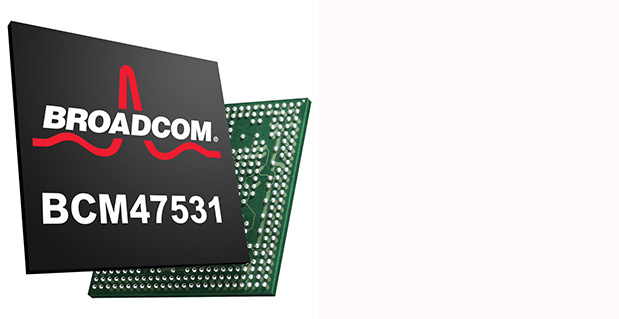
    The Broadcom BCM47531 GNSS chip generates positioning data from five satellite constellations simultaneously, including BeiDou.
    The Broadcom BCM47531 GNSS chip generates positioning data from five satellite constellations simultaneously, including BeiDou.

    Broadcom Corporation has introduced the BCM47531, a GNSS chip that generates positioning data from five satellite constellations simultaneously — GPS, GLONASS, QZSS, SBAS and BeiDou. The newly added BeiDou constellation increases the number of satellites available to a smartphone, enhancing navigation accuracy, particularly in urban settings where buildings and obstructions can affect performance.

    More than 226 million mobile phones were sold to end users in Asia in the first quarter of 2013, increasing the region’s share of global mobile phones to 53.1 percent, according to Gartner (“Market Share Analysis: Mobile Phones, Worldwide,” 1Q13). As smartphone adoption continues to accelerate, users continue to identify location and mapping as a top requirement. Broadcom’s new GNSS system-on-chip (SoC) is based on its widely deployed architecture that reduces the time to first fix and allows smartphones to quickly establish location and rapidly deliver mapping data. The SoC also features a tri-band tuner that enables smartphones to receive signals from all major navigation bands (GPS, GLONASS, QZSS, SBAS, and BeiDou) simultaneously. By allowing use of any combination of satellites, users experience more accurate and consistent location performance in Asia and throughout the world.

    “Broadcom’s new GNSS chip with BeiDou support provides OEMs with a cost-effective, low-power solution to deliver enhanced positioning capabilities for challenging city environments,” said Charles Abraham, Broadcom vice president & general manager, GPS. “Drawing on Broadcom’s long history of GNSS innovation, our new platform improves the navigation experience of smartphone users in most regions of the world and unlocks new location-aware applications.”

    The BCM47531 platform is available with Broadcom’s location-based services (LBS) technology that delivers satellite assistance data to the device and provides an initial fix time within seconds, instead of the minutes that may be required to receive orbit data from the satellites themselves.

    Key Features and Benefits:

    • Simultaneous support of five constellations (GPS, GLONASS, QZSS,SBAS and BeiDou) allows for position calculations based on measurements from any of 88 satellites.
    • Broadcom’s tri-band tuner brings the ability to receive all navigation bands, GPS (which includes QZSS and SBAS), GLONASS and BeiDou simultaneously to the commercial GNSS market without having to reconfigure and hop between bands.
    • Utilizes BeiDou signals for up to 2x improved positioning accuracy.
    • Best-in-class Assisted GNSS (AGNSS) data available worldwide from Broadcom’s hosted reference network.
    • Allows a device to interchangeably use the best signal from any satellite regardless of the constellation, ensuring better accuracy in urban and mountainous environments.
    • Features advanced digital signal processing for interference rejection that enables satellite signal search and tracking during LTE transmission.
    • Leverages Broadcom’s connectivity solutions including Wi-Fi, Bluetooth
    • Smart, Near Field Communications (NFC), Instant Messaging System (IMES) and handset inertial sensor data for best indoor/outdoor location.

    The BCM47531 is now sampling.

  • Leica Geosystems Launches BIM Field Trip Solutions for Contractors

    LeicaBIM

    Leica Geosystems Inc. announced new BIM Field Trip solutions to help contractors extend the value of building information modeling (BIM) into the field and connect field information back to the model in the office.

    Tailored to fit any stage of BIM adoption in concrete layout, MEP layout, quality assurance, renovation/retrofit, and operations/maintenance as-builting applications, BIM Field Trip includes customized packages of hardware and software that make it easy to move from 2D to 3D workflows to achieve common BIM goals such as reduced rework, increased predictability and higher profitability, the company said.

    According to the announcement, the new BIM Field Trip solutions take full advantage of Leica Geosystems’ established precision measurement technologies, such as the trusted iCON robot 50 robotic total station and popular 3D Disto laser measurement tool, as well as the latest innovations. For example, the revolutionary “BIM One Box” Leica Nova MS50 MultiStation, introduced in June 2013, offers full-featured total station layout capabilities that can handle BIM layout points from Revit, AutoCAD or virtually any other BIM or CAD program with ease, while also integrating real-time delta reporting for quality assurance checks and high definition laser scanning capabilities for capturing as-built point clouds to be compared with the as-designed model.

    The BIM Field Trip solutions are available in three basic levels to help companies bridge the gaps in their BIM processes.

    BIM 101 is the simplest way to get started with digital layout using paper or CAD files as a starting point. Easy-to-use, highly accurate tools such as the 3D Disto, iCON robot 50, and DISTO handheld laser measuring devices combined with intelligent, intuitive field and office software create an easy on-ramp to BIM for preconstruction as-builting, concrete layout, MEP layout, preconstruction as-builting and quality assurance. (Learn the basics of digital layout in the BIM Learning Center.)

    BIM 102 provides an intermediate-level solution to help contractors improve their BIM workflows. For preconstruction as-builting, industry-leading ScanStation high definition laser scanners capture existing building conditions in the form of near photorealistic, highly accurate point clouds that can be used directly in Revit for faster and more accurate modeling. For digital layout, high-precision iCON robot 50 robotic total stations combined with intuitive field software creates a “paint-by-numbers” installation in the field that reduces errors and provides a higher level of predictability of project outcomes. For MEP and interior BIM applications, the 3D Disto combined with specialized MEP software further simplifies and streamlines interior layout. And for preconstruction as-builting, layout and quality assurance, the innovative new “BIM One Box” Nova MS50 MultiStation performs robotic layout with ease while the field software tracks the layout locations. When quality control checks are performed, any deviations are identified in real-time with a BIM delta report and can be easily scanned with the same device, producing point clouds that are automatically oriented and positioned so they flow back into the model perfectly aligned. This substantially reduces post-processing so teams can focus on comparing field data with model data to avoid rework in the field.

    BIM 103 is for contractors that are experienced in BIM and want to take their capabilities to the next level. Hardware solutions such as the innovative multistation, ultrafast high-definition laser scanners and high-precision robotic total stations are combined with full featured field and office software to create advanced 3D workflows that streamline and optimize preconstruction as-builting, construction layout, and quality assurance as-builting. What’s more, the innovative “BIM One Box” multistation introduces a new era of versatility in BIM workflows with the ability to use a single instrument for preconstruction as-built point cloud data capture, replicating highly accurate BIM layout points in the field, and then high-definition laser scanning for quality assurance as-builts for comparing with as-designed models to create a complete 3D BIM lifecycle.

    At each level of the BIM Field Trip, hardware and software selections are tailored to the needs of the contractor and are easily scalable from one level to the next to provide practical solutions to common BIM challenges.

    “For many project teams, the benefits of BIM stop in the office; there simply hasn’t been a total solution for BIM as-builting and construction layout that connects all the dots from the model to a real-world jobsite and then from the jobsite back into the model,” said Cathi Hayes, BIM Business Manager for Leica Geosystems. “The new BIM Field Trip solutions from Leica Geosystems close the gaps by connecting the digital world to the real world. This allows companies at any stage of BIM adoption to take advantage of improved workflows.”

  • Amazon Demonstrates Drone Delivery Service


    Amazon has unveiled its plans for a new Prime Air service that uses drone helicopters to deliver customers’ orders in as little as 30 minutes.

    Amazon CEO Jeff Bezos said in an interview on 60 Minutes on Sunday that the drones would be ready to take flight in four to five years. But an Amazon spokesperson pointed to an updated post on the company’s website promising aerial deliveries as soon as federal rules change, which could be as soon as 2015.

    In his November column, Professional OEM Editor Tony Murfin discusses the need for FAA rule changes that would allow commercial use of drones. Survey Scene Editor Eric Gakstatter also discusses the issue here.

  • Trimble Introduces ThingMagic Mercury xPRESS Platform to Simplify Integration of Embedded RFID

    Trimble announced the ThingMagic Mercury xPRESS Platform, a flexible development platform designed to simplify the process of bringing application specific RFID readers and embedded RFID solutions to market. ThingMagic_xPRESS_PlatformMercury xPRESS provides market-leading embedded RFID technology with an integrated software development environment and a range of transport interfaces and communication plug-ins in a single platform. Delivered as an extensible development environment with reference design files, the platform also reduces the need for developers to have significant RFID domain expertise, facilitating the rapid integration of RFID with a variety of products and complementary wireless communication technologies.

    “Simplifying the incorporation of RFID into existing and new solutions is important to the ongoing growth of our industry,” said Tom Grant, general manager of Trimble’s ThingMagic Division. “Our goal with the Mercury xPRESS Platform is to allow our customers to incorporate RFID into their applications and solutions in a timely and cost effective way. The value of RFID is becoming clearer; we need to complement that growing interest with a set of tools that make its application straight forward. That’s exactly what the Mercury xPRESS Platform provides.”

    Leveraging over 10 years of RFID technology advancements and development expertise, the Mercury xPRESS Platform combines a microcontroller-based motherboard with the industry-leading ThingMagic Mercury6e Series of RFID modules and an integrated software development environment built on the ThingMagic Mercury C API. With the platform, developers can bring up a fully functional RFID reader in minutes; testing and proof of concept using sample applications from the software library can start almost immediately. Reference design files allow developers to select the elements needed for their solution and advance rapidly to application specific end product design and development. The Mercury xPRESS Platform has been screened for regulatory compliance, reducing cost and time to secure end product certifications.

    Key components of the Mercury xPRESS Platform are:

    -Hardware kit with microcontroller-based motherboard, including:

    • Integrated ThingMagic UHF RFID module (Micro, Micro-LTE, or M6e)
    • USB interface
    • Ports for up to 2 additional plug-in data transport interface modules

    -MCU preloaded with sample keyboard wedge application
    -An optional Bluetooth plug-in module (sold separately)
    -Software toolkit and SDK (downloadable)
    -Reference design files including schematics, layout files, Gerber files, bill of material, component data sheets (downloadable)

    “ThingMagic is a valued technology partner of MEPS Real-Time. The introduction of the ThingMagic Mercury xPRESS Platform provides our Engineering and Marketing departments with the opportunity to offer new and innovative solutions through our Intelliguard product line,” said Shariq Hussain, president and CEO, MEPS Real-Time, Inc. “We see growth in the healthcare industry that will require smaller, faster and more capable RFID technology. With the Mercury xPRESS Platform, combined with our intellectual property, we are positioned to bring solutions to our customers that deliver world class performance and capabilities.”

    The Mercury xPRESS Platform represents an alternative to using expensive general purpose readers in RFID solution designs. Lack of time, skills or resources to develop application specific readers can be much less of a barrier, resulting in unit cost savings, deployments with a stronger ROI and an overall positive bottom line impact in many deployments.

    To support ongoing innovation, the integrated development tools, device drivers and application software of the Mercury xPRESS Platform may be enhanced with updates that expand capabilities and enable development of a wider range of end products. In this release, the xPRESS Platform supports USB and Bluetooth transport interface applications. Support for Wi-Fi, POE and other interfaces such as GPRS, GPS, 4G/LTE may be included in future releases at Trimble�s discretion. Mercury xPRESS is also designed to support a library of sample applications. A native keyboard wedge is available today while other sample applications may be included in future releases.

  • The Business — December 2013

    The Business section and the Product Showcase from the December 2013 issue (Download the PDF).

    Includes: NovAtel Launches CORRECT OEM Positioning; Applanix Airborne Mapping Products Given Trimble CenterPoint Service; Volvo, Mercedes-Benz Drive Roll out of ADAS as Standard Equipment in Cars; Kinexon Named Galileo Master for Athlete Tracking Analysis; Altus Launches Juniper Archer 2; and more.

  • u-blox Launches EVA-7M Standalone GNSS Module

    u-blox Launches EVA-7M Standalone GNSS Module

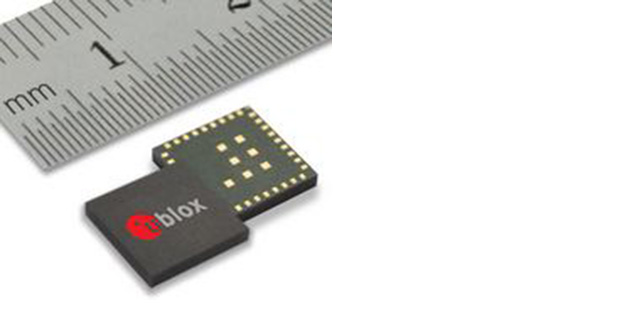
    u-blox EVA-7M.
    u-blox EVA-7M.

    Swiss-based u‑blox has introduced its smallest standalone GNSS positioning module, the EVA-7M. Designed for cost and space sensitive applications, the highly integrated 7 x 7 x 1.1 mm LGA module comprises all necessary components, including crystal and passives: only an  antenna is needed for global positioning capability.

    The module supports GPS, GLONASS, QZSS, and all SBAS augmentation systems. Based on u-blox’ advanced GNSS technology u‑blox 7, the module achieves -160 dBm sensitivity when tracking GPS satellites (-158 dBm with GLONASS satellites), fast acquisition time and the lowest power of any u-blox 7 module (16.5 mA at 3 V), thanks to an innovative high-efficiency power converter.

    The EVA-7M eases implementation in end-products because RF and digital domains are kept well separated, and the LGA pads are configured in single rows. EVA is a standalone GNSS receiver which provides a position without the need for host integration or extra RF components. It is optimized for keeping eBOM and system costs to an absolute minimum.

    “The EVA-7M brings embedded satellite positioning to the next level of portability. The module has been developed with ease-of-manufacturing as a high priority. Its QFN-like footprint with connections along four sides and high-level of component integration makes it a perfect solution for medium and high volume production runs. This ensures high first-pass production yield, crucial criteria especially for cost-sensitive, high-volume industrial and consumer applications,” said Thomas Nigg, VP Product Marketing at u-blox.

    A UART, USB, SPI and I2C interface provide flexible connections to a host processor. EVA-7M can also communicate directly with u‑blox’ SARA 2G, LISA 3G and TOBY LTE cellular modules to support advanced tracking and location-aware applications.

    The module is suitable for consumer, industrial, and after-market vehicle applications. First samples will be available in Q1 2014.

  • Esri Publishes Interactive Track Map of Typhoon Haiyan

    Esri published an interactive track map of Typhoon Haiyan, likely one of the strongest storms in recorded history.

    According to Esri, users can see the real-time effects of the storm via social media posts. To change the search terms, go to the Social menu, click the settings icon, and update the keyword.

    http://www.esri.com/services/disaster-response/hurricanes/latest-news-map
    Chart: Esri, http://www.esri.com/services/disaster-response/hurricanes/latest-news-map
  • Trimble Introduces Geo7X Handheld With Integrated Laser Rangefinder, Full GNSS

    Trimble introduced the next generation of its Trimble GeoExplorer data collection solution. The new Geo 7X includes an integrated laser rangefinder module, extended GNSS capabilities and improved hardware  Geo7xperformance. Together with robust field and office software, the new Trimble Geo 7X handheld can enhance productivity in difficult physical conditions and challenging GNSS environments.

    According to the announcement, when faced with either obstructed satellites or inaccessible locations, GIS professionals now have the geospatial data collection tools they need—in a single package. For times when occupying a position is simply not possible, users can take advantage of Trimble’s new Flightwave technology. With Flightwave technology, users can easily capture offset measurements from the Geo 7X’s rangefinder module for direct integration with Trimble data collection software. Users can simply point and shoot to log the position, avoiding dangerous conditions or right-of-way challenges. In addition, Trimble’s field-proven Floodlight technology enhances field productivity when heavy overhead cover obstructs satellite signals.

    The Geo 7X is compatible with existing and planned GNSS satellite systems—including GPS, GLONASS, Galileo, QZSS and now BeiDou—to maximize productivity with additional satellites and ranging signals.

    Featuring a new 1 GHz processor and 4 GB of memory running Microsoft Windows 6.5 Professional operating system, the Geo 7X offers enhanced computing performance. Other standard features include a 4.2 inch sunlight readable LED touch display and a 5 MP camera for geo-tagging assets. For wireless connectivity, the integrated modem allows users to send and receive data via GSM networks as well as Verizon’s CDMA network in the U.S. And with its IP65 rating, the rugged handheld GNSS receiver is sealed against water and dust.

    With the introduction of the Geo 7X, Trimble also delivers updates to its field and office software portfolio to extend Trimble’s end-to-end data collection solutions with new software workflows and compatibility. In addition to the field-proven Trimble TerraSync and Positions software, the Geo 7X now supports the customizable data collection workflows of Trimble TerraFlex software. Consisting of mobile software and Cloud services, TerraFlex offers a fast and efficient way to collect, process and manage data. Field data is automatically synced with a central server to streamline office operations and drive higher productivity.

    “We believe that true productivity is being able to map assets—the first time, every time and anywhere. We’ve built upon our productivity-enabling Floodlight technology and pushed it forward several steps,” said Alain Samaha, business area director of GIS and geospatial software solutions for Trimble’s Geospatial Division. “Users now can position themselves in the optimal location and accurately measure assets remotely with a single, integrated device together with simple software workflows. The Trimble Geo 7X allows mobile GIS users to be productive wherever they need to work.”

  • The Business — November 2013

    The Business section of the November 2013 issue of GPS World (Download the PDF).

    Focus on Timing

    Includes: Orolia to Supply Atomic Clocks for Galileo Satellites; Symmetricom Expands SyncWorld Program to Power Utilities; Product Showcase. Plus: NextNav and Broadcom Partner for Indoor Accuracy; Events.

    Also: Show reports from ION GNSS and Intergeo.

  • Hexagon Will Propose to Acquire Veripos in Public Voluntary Offer

    Hexagon has announced it will offer NOK 28 in cash per share in positioning company Veripos in a public voluntary offer: Hexagon_logo

    • Hexagon will make a voluntary offer of NOK 28 in cash per share of Veripos, a company listed on the Oslo Stock Exchange
    • The voluntary offer represents a premium of 44 per cent to Veripos’ volume weighed average stock price during the three month period up to and including 11 October 2013
    • The offer will require acceptance from shareholders representing a minimum of 90 per cent of the Veripos share capital and voting rights, and certain other customary conditions for public voluntary offers
    • A five=week offer acceptance period will start shortly following the approval of an offer document by the Oslo Stock Exchange

    According to the announcement, the Board of Directors of Hexagon AB has decided that Hexagon, directly or through a wholly owned subsidiary, will present to the shareholders of Veripos Inc., a voluntary offer of NOK 28 in cash per share for all outstanding shares of Veripos.

    The offer price represents a premium of 21.7 per cent to the last traded price for Veripos of NOK 23, and a premium of 28.1 per cent, 43.6 per cent, 47.8 per cent and 46.3 per cent to the volume weighted average share prices (source: Bloomberg) for the one, three, six and twelve month periods, respectively, that ended on October 11.

    On September 30, Hexagon contacted the Board of Directors of Veripos with a proposal of Hexagon making a voluntary offer of NOK 28 for all of the outstanding shares of Veripos, subject to due diligence and certain other conditions. On October 4, Veripos and Hexagon entered into a due diligence agreement where Hexagon was granted access to conduct a limited due diligence review on an exclusive basis. Such due diligence was concluded to Hexagon’s satisfaction on October 12.

    Ola Rollén, President and Chief Executive Officer of Hexagon, said, “It is a good strategic fit between Hexagon and Veripos where Hexagon will provide, state of the art, positioning technology to Veripos as well as future growth via Hexagon’s onshore markets. Veripos has, in turn, built up a strong position in the offshore market and has world class infrastructure that Hexagon can leverage on immediately after an acquisition rather than building such infrastructure in-house.”

    The offer will not be subject to any financing conditions. Hexagon’s preliminary assessment is that the offer will not be subject to any competition approval. The complete details of the offer, including all terms and conditions, will be contained in an offer document pursuant to chapter 6 of the Norwegian Securities Trading Act.

    Hexagon has filed the offer document for review and approval with the Oslo Stock Exchange and the offer document will be sent to Veripos’ shareholders as soon as it has been approved. The acceptance period for the pffer will be five weeks from the date of the offer document being released, unless extended by Hexagon. The acceptance period may be extended, one or several times, provided however that the maximum acceptance period may not exceed 10 weeks.

    As will be further detailed and specified in the offer document, the completion of the offer will be subject to the following conditions being satisfied or waived by Hexagon:

    • The offer has been accepted by shareholders representing more than 90 per cent on a fully diluted basis of the share capital and voting rights to which the offer relates;
    • Approvals from public authorities;
    • No material adverse change up until the settlement of the offer;
    • Conduct of business in the ordinary course and in accordance with applicable laws, regulations and decisions of any governmental body; and
    • Other customary conditions to be specified in the offer document.

    While the offer will be subject to a completion condition of more than 90 per cent acceptance, Hexagon will retain its full right to amend or waive such condition, and hereunder also to make a compulsory acquisition of any remaining shares, subsequently to the offer, through the implementation of a so called “long-form merger” under the Cayman Company Act should the acceptance of the Offer be equivalent to more than two-thirds of the outstanding share capital and voting rights on a fully diluted basis.

    The Offer will not be made in any jurisdiction in which the making of the Offer would not be in compliance with the laws of such jurisdiction. The Offer will be made to U.S. shareholders in Veripos. This notification does not in itself constitute an offer. The Offer will only be made on the basis of the Offer Document and can only be accepted pursuant to the terms of such document.