Category: Uncategorized

  • ION GNSS+ 2018 plenary keys in on Emergency Location Service in Android

    ION GNSS+ 2018 plenary keys in on Emergency Location Service in Android

    Reflecting the dramatic changes and advances that have taken place in the applications of positioning technology over the last decade, the plenary session of the 37th meeting of the Institute of Navigation’s Satellite Division did not discuss satellites at all. Instead, two keynote speakers elaborated upon the application of positioning to emergency response services and to airborne mapping with lidar technology.


    Emergency Location Service (ELS) in Android

    Steve Malkos, technical program manager at Google, told the audience of approximately 800 that the new emergency location service “is our passion project at Google. Just last week we announced the expansion of ELS into the U.S. It’s here and it’s ready today. But the work isn’t done yet because of various challenges.” Google’s goal is 1-meter location accuracy for all 911 calls placed on cell phones. The algorithms discussed at ION this week, Malkos said, are part of what is driving Fused Location Provider (FLP)
    toward this future.

    In FLP, locations are computed directly on the handset as opposed to the older method, which computes on the carrier’s cell network. Google’s indoor solution consists of wi-fi augmented by network information.

    Recently released statistics show emergency call usage has flipped from what it was only a decade ago. Now, only 20 percent of emergency calls are placed on landlines. Eighty percent are placed on wireless devices.

    Malkos replayed audio from a call made recently, prior to activation of ELS, that generated a location on Miami’s emergency services of 500 meters away from the basement ballroom of the conference hotel.

    Domino’s Pizza, Uber ride service and Facebook all now use the hybrid derived location from cell phones, while emergency services typically use the location computed on the carriers’ network, and relying on cell-tower positioning. Cells range from 100s of meters to kilometers in size.

    ELS has been live in the U.K. since June 2017. Since its activation, British Telecom’s mean radius accuracy on emergency calls went from 2 kilometers to 43 meters 85 percent of timeION20.

    Malkos discussed the challenges of privacy, altitude (Z-axis) and the related difficulties in the urban high-rise landscape of floor determination and infering floor labels.

    Overall, he said, statistics show that each 1 minute sooner of arrival of emergency services translates to 10,000 saved lives.

    A Lidar History

    Paul LaRocque, vice president of special projects at Teledyne Optech gave an overview of light detection and ranging (lidar) development through the lens of a one-company centric history, that of Teledyne.

    Lidar got started in 1969, within a decade of the invention of the first laser. It began with early work in marine mapping and bathymetry from onboard ships. Airborne lidars developed in the late 1970s, looking at icefields in the Arctic, and was done at first with no absolute positioning to aid in analyzing the results..

    Early on, developers discovered that airborne lidar can get to the bare earth, penetrating under forest canopy. This eventually led to the recent dramatic discoveries of long lost Mayan cities, covered by jungle.

    In the early 1990s, GPS and inertial technologies converged, with some miniaturization, to enable building of integrated technology systems that added absolute positioning to the lidar toolbox.

    LaRocque provided a quick look at the National Geographic story, based on data from a three-wavelength Teledyne Optech Titan, one of several current machines that are generating data at millions of shots per second. Increasingly, it’s the software processing that brings out the accuracy, for example, centimeter accuracy surveyed from a kilometer up in the air.

    Challenges enumberated:

    • the speed of light is not fast enough.
    • the Earth is not flat enough.

    Teledyne developed PulseTRAK technology to cope with the “blind zones” generated by these two challenges, so as to not lose data in any gaps.

    The new frontier is spaceborne lidars. Teledyne is involved in a project tenerating lidar data from the surface of Mars on a Canadian space agency mission. This led previously to the discovery of snow in the atmosphere of Mars. The OSIRIES-Rex mission now on its years-long voyage to a very-far off asteroid represents the furthest adventure of lidar in space. The project will collect data on the asteroid’s surface and beam it back to Earth, as well as eventually returning some core samples.


  • Polynesian Exploration offers integrated GNSS+ INS navigation system

    Polynesian Exploration offers integrated GNSS+ INS navigation system

    Polynesian Exploration Inc. has introduced its PolyNav 2000P, a high-accuracy navigation solution for emerging applications such as autonomous driving and UAVs.

    According to the company, PolyNav 2000P is designed to fully utilize the advantages of both GNSS and inertial navigation systems to provide centimeter-level position and velocity accuracy with dual-frequency real-time kinematic technology, with simultaneously accurate attitude information (roll, pitch and heading).

    Polynesian Exploration demonstrated the PolyNav 2000P at ION GNSS+, which was held Sept. 24-28 in Miami.

    The PolyNav 2000P system is ultra-stable in terms of short-time satellite signal outages and capable of providing highly accurate heading information no matter whether the system is static or moving, the company said. It is also packaged with a rugged and waterproof enclosure for applications in severe environment conditions.

    Options are available to meet various customer requirements, which include, but are not limited to, up to 100-Hz position, velocity, attitude outputs, and meters to centimeter-level position accuracy. They can also be operational in all weather conditions and will be available globally.

    The company is able to integrate special sensors such as lidar and cameras for each unique application as requested by customers.

  • Centum Solutions demonstrates NO JAM ZONE interference detector at ION GNSS+

    Centum Solutions demonstrates NO JAM ZONE interference detector at ION GNSS+

    Photo: DJI
    Photo: DJI

    Centum Solutions of Madrid, Spain, introduced its NO JAM ZONE interference detector ION GNSS+ in Miami.

    NO JAM ZONE is Centum’s solution for GPS interferences detection and location.

    Centum will have a booth in the ION GNSS+ exhibit hall to showcase NO JAM ZONE, as well as and a GNSS simulator to show the process of detection and location of different sources of interference.

    Critical infrastructures need to ensure the proper functioning of their radio frequency systems. A good example of this is airports. NO JAM ZONE is a GNSS spectrum monitoring system, capable of detecting interferences that affect the proper functioning of these systems.

    NO JAM ZONE works with the most-used GNSS frequencies. Because of its distributed network of beacons, the system is able to give, in real time, the position of a source of interference.

    NO JAM ZONE  can detect the following types of interference:

    • Service interruption (jamming)
    • Spoofing interference
    • Induced electromagnetic emissions whose power exceeds a certain harmful threshold

    Centum also offers the NO FLY ZRONE drone and remotely piloted aircraft system (RPAS) detection and protection system. The active defense system is capable of detecting threats and creating a shield of electronic countermeasures preventing the intrusion of drones in protected areas and diverting them to safe catch areas.

    NO FLY ZRONE is effective against the vast majority of drones and RPAS, whether radio-controlled by an operator or by autonomous guidance through GPS. It detects drones and discriminates against those that constitute potential threats.

    Once the threat has been classified, NO FLY ZRONE neutralizes the drone control system by taking control of it and driving it to a safe area for its descent and capture; it can also geolocate the operator of the drone.


  • BlueSky GNSS firewall from Microsemi provides secure, continuous timing integrity

    The signals transmitted from GPS and other GNSS constellations can be a threat vector that, if disrupted, could harm key critical infrastructure sectors including telecommunications, energy, transportation, emergency services and data centers.

    The susceptibilities of the GPS signal to attack, whether intentional or not, are viewed similarly as a cybersecurity threat.

    In recent months, there has been a dramatic increase in the number of reported GPS incidents, causing critical infrastructure providers to evaluate the security, reliability and resiliency of their GPS-based PNT dependency.

    The new BlueSky GNSS Firewall from Microsemi Corporation, a wholly owned subsidiary of Microchip Technology Inc., enables critical infrastructure providers to harden the security of their operations from GPS threats and deliver a more reliable and secure service, the company said.

    The security-hardened system provides protection against GPS threats such as jamming, spoofing and complete outage. It also supports a range of precision timing technologies, including atomic clocks, to enable continuous operation when GPS may be completely denied for extended periods.

    In addition, Microsemi is expanding the GNSS portfolio with the introduction of a BlueSky option to its TimePictra software management suite, providing centralized control and visibility of GPS reception across regional, national and global geographic areas.

    “At last year’s ION GNSS+ show we launched the BlueSky GPS Firewall Evaluation Kit to help customers understand GNSS vulnerabilities and how a firewall approach could provide protection,” said Randy Brudzinski, vice president and manager of Microsemi’s Frequency and Timing business unit. “We received valuable feedback from customers as a result of those evaluations and have incorporated new features in our second-generation BlueSky GNSS Firewall. In addition to expanded monitoring and reporting capabilities, this robust, future-proof platform is now equipped with atomic clock technology to provide security-hardened resiliency, including the ability to operate in a GNSS-denied environment for more than 30 days.”

    Microsemi has applied the same principles of a firewall used for network security to defend against GPS threats coming from the sky. Within the new BlueSky GNSS Firewall, the incoming GPS signal is analyzed in real time to detect a wide range of threats before connected GPS receivers and related systems are affected.

    The BlueSky GNSS Firewall incorporates an optional internal rubidium miniature atomic clock (MAC) enabling continuous output of the GPS signal to the downstream GPS receiver in case of complete loss of live-sky GPS reception.

    Alternatively, Microsemi’s cesium clocks, such as the 5071A or TimeCesium 4400/4500, can be connected to the device, enabling UTC traceable time for more than 30 days.

    BlueSky GPS Firewall platform features optional BlueSky software incorporated into its TimePictra management system.

    To ensure the BlueSky GNSS Firewall is equipped to defend against an ever-evolving threat, Microsemi updates and continuously tracks GPS signal manipulation, spoofing threats, jamming attacks, multipath signal interference, atmospheric activity and many other issues which can create GPS signal anomalies, disruptions and outages.

    These updates are available through a BlueSky subscription service. To learn more about Microsemi’s GPS threat protection and security solutions, including videos demonstrating how the product provides secure and resilient protection, visit the website.

  • Averna announces software toolkits for advanced satnav applications

    Averna announces software toolkits for advanced satnav applications

    Photo: Averna
    The RP-6500 platform. (Photo: Averna)

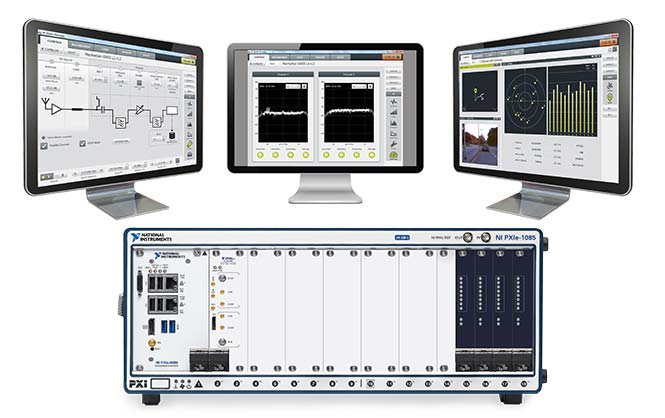
    Averna, a global test and quality solutions provider, announced that through existing partnerships, real-time GNSS simulation and satcom signal generator toolkits will be available for the RP-6500 RF record and playback platform, making the RP-6500 an all-in-one solution to support advanced satellite navigation applications.

    Averna is exhibiting at Booth #518 during ION GNSS, Sept 26-27, at in Miami, where the company will be demonstrating the RP-6500 Wideband Record & Playback system.

    The RP-6500 platform can record and playback up to 500 MHz of RF spectrum from 9 kHz to 6 GHz, as well as simulate all common GNSS signals (BeiDou, Galileo, GLONASS, GPS, and QZSS). The system can also generate Satellite communications signals (DVB-S and DVB-S2).

    The robust system fits into a car trunk for driving/recording applications, and syncs with both a GPS and Averna’s DriveView software, for synchronized location and video capture that is time-aligned with your data, the company said. Preloaded with RF Studio, powerful RF record/playback software for capturing real-world RF spectrum, including GNSS, radio, video & location data. A state-of-the-art workflow tool, the RP-6500 Series lets you quickly set up your recordings, add contextual data, visualize weak signals, and analyze your collected RF environments to validate and fine-tune your designs and products.

    To learn more about the RP-6500 wideband RF Record and Playback, visit www.averna.com/RP-6500

    “We’re extremely happy to add new testing capabilities to our RP-6500, an advanced solution for the design validation of Satellite Navigation systems,” commented Jean-Lévy Beaudoin, vice-president, Platforms & Innovation, R&D for Averna. “The RP-6500 is a complete RF Record and Playback platform–it’s been designed and built from the ground up to be all-in-one.”

    Key features and benefits

    • easy-to-use RF Studio user interface
    • 500 MHz-wide instantaneous bandwidth
    • covers most common wireless protocols from 9 kHz to 6 GHz
    • multi-constellation and multifrequency GNSS Simulator
    • supports SATCOM protocols for Satellite Set-Top Box testing
    • high dynamic range (14 bits, >80 dB)
    • form factor allows rack mounting or car trunk portability.
  • Imagery works for growing city

    Image: Nearmap
    Image: Nearmap

    Location content provider Nearmap has partnered with the City of Durham, North Carolina, Public Works Department to upgrade its imagery on numerous projects.

    Using real-time imagery from Nearmap in the field, the department streamlines data collection and saves time and money.

    The department manages all infrastructure data for the city, including mapping the impervious area (structures that resist water infiltration) for the city’s $16 million a year Stormwater Utility Fee fund. “That is half a billion square feet of impervious area that we manage through digitization and review daily,” said Edward Cherry, city GIS administrator.

    After using several satellite imagery systems with low resolution and infrequent captures, Cherry and his 14-member GIS staff determined the city needed far superior quality in their mapping imagery to accommodate the city’s explosive growth.

    Captured every six months at a 2.8-inch ground sample distance, Nearmap now supplies Durham with up-to-date images accessible through web-based cloud servers.

    With Nearmap, the Durham Public Works Department has achieved better monitoring of pavement conditions; time savings and documentation of road repairs; more detailed maps of city riparian zones; and accurate and detailed customer billing.

    “With Nearmap, we’ve been able to update development processes and policies to support the revitalization of the downtown district as well as rapid city growth,” Cherry said.

  • GNSS module from STMicroelectronics leverages Teseo III chip

    STMicroelectronics (ST) is making its Teseo III satellite navigation receiver accessible to a wider designer community by introducing the Teseo-LIV3F module, which integrates essential features to speed application development and also adds up to 16 MB of Flash memory for firmware updating or data logging without a backup battery.

    Used by automotive and industrial sectors, ST’s Teseo III multi-constellation receiver combines high accuracy with fast response time and low power consumption, the company said.

    The Teseo-LIV3F module now enables makers and small engineering teams without extensive in-house RF expertise to leverage the Teseo III advantages in creating new products in the industrial and consumer market segments such as vehicle trackers, drones, anti-theft devices and pet locators, and systems for services such as fleet-management, tolling, vehicle sharing or public transportation.

    The 18-pin, 9.7 x 10.1 millimeter module contains the Teseo III receiver with on-chip power management, UART and I2C interfaces, alongside the Flash memory, an ultra-stable temperature-controlled crystal oscillator (TCXO), and 32kHz real-time clock (RTC).

    The documentation and tools delivered with the module contain all the C code needed to drive the module using the STM32 microcontroller, including the use of data-logging, odometer and geofencing to aid development of value-added functionality.

    While simplifying application development, Teseo-LIV3F delivers high performance, including -163 dBm tracking sensitivity and 1.5m positioning accuracy (CEP Circular Error Probability) and low-power operation (17µW in standby mode and 75mW when tracking). FCC and CE certifications streamline product testing and accelerates time to market.

    Multi-constellation flexibility ensures robust, failure-resistant navigation worldwide, with access to the GPS, GLONASS, Galileo and BeiDou constellations, as well as the Pacific-region Quasi-Zenith Satellite System (QZSS).

    The module supports assisted modes — including autonomous ST Assisted GPS (STAGPS) and server-based assisted-GNSS with free server access — to retrieve ephemeris data if satellites are unavailable for fast time to first fix (TTFF). The module also supports standardized augmentation systems to enhance accuracy, including the U.S., European, Japanese/South-East Asia, and Indian Satellite-Based Augmentation Systems (SBAS), and the Radio Technical Commission for Maritime Services (RTCM) differential GPS.

    The Teseo-LIV3F module is available now as an 18-pin LLC device.

  • Racelogic updates Labsat’s SatGen software to simulate L2C and L5

    Racelogic updates Labsat’s SatGen software to simulate L2C and L5

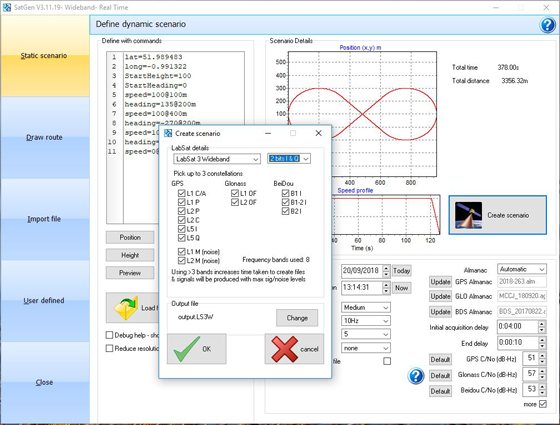
    Racelogic has announced a major update to its SatGen simulation software for use with the LabSat 3 Wideband simulator.

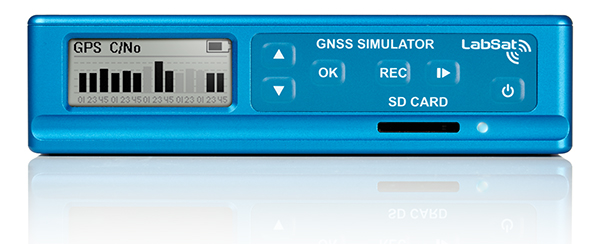
    The LabSat 3 GNSS simulator. (Photo: Racelogic)
    The LabSat 3 GNSS simulator. (Photo: Racelogic)

    The software now includes simulation of the L2C and L5 GPS signals, meaning that SatGen V3 can be used to create one scenario containing all 13 signals from GPS, GLONASS and BeiDou constellations, the company said.

    The simulation accuracy has also been improved — for example, most of the GPS pseudorange residuals are now sub-meter.

    Signals that can be simulated simultaneously with SatGen V3 Wideband include:

    • GPS:​ L1, L1P, L2C, L2P, L5I, L5Q, L1M, L2M (noise only)
    • GLONASS: L1 OF, L2 OF
    • BeiDou: B1I, B1-2I, B2I


    SatGen software allows users to create a GNSS RF I&Q or IF data file that can be replayed on a LabSat, which is based on a user-generated trajectory file. This allows simulators of almost any kind of test, at a set time and date, anywhere in the world.

    SatGen complements the LabSat range of GNSS simulators, and is available in single, dual, triple and multi-frequency/multi-constellation versions.

    LabSat showcased the upgrade at the ION GNSS+ conference, which took place Sept. 24-28 in Miami.

    Screenshot from SatGen v3. (Image: Racelogic)
    Screenshot from SatGen v3. (Image: Racelogic)
  • Esri cosponsors HACKtheMACHINE for U.S. Navy

    Esri cosponsored HACKtheMACHINE, the United States Navy’s Digital Experience presented by the Naval Sea Systems Command, which took place Sept. 21–23 in Seattle.

    The Naval Sea Systems Command hosted the event to drive the development of innovative digital capabilities that will help the navy protect the sea, air, space and subsurface domains in the 21st century.

    The Seattle event connected developers to the needs of our nation’s navy and provided developers with access to Esri APIs and software developer kits. This will allow developers to bring context to maritime security situations through access to location data and spatial analytics tools.

    Computers, data and digital communications underpin the global economy and delivery of the world’s life-sustaining services like food, power and clean water.

    “HACKtheMACHINE is looking to reach out to a new generation and engage them in meaningful conversations about maritime security,” said Zac Staples, Fathom5 CEO, who founded the event while serving as the director of the Naval Postgraduate School Center for Cyber Warfare. “It is designed to create opportunities to innovate, solve problems, and change the world for the better.”

    “Esri is honored to be chosen as one of the sponsors for this event,” said Curt Hammill, navy account executive at Esri. “Our location intelligence solutions are used by all American military branches, and sponsoring HACKtheMACHINE gives us the opportunity to continue our proven history of supporting our armed services in their most critical missions.”

    HACKtheMACHINE is composed of three tracks, and Esri participated in two of them. Track 2: Data Science & the Seven Seas, used data from ships under way on the high seas to develop algorithms to assist the navy with preventing collisions of human-operated and autonomous vessels.

    Esri is also a solution provider for Track 3: Hack for the Oceans, in which teams put themselves in the position of the first responders after Hurricane Katrina. Each team will deploy applications to a similar environment to the navy’s Consolidated Afloat Networking and Enterprise Services (CANES) Agile Core Services system, emulating what value a first responder DevOps team could add in such a scenario.

    Creative developers also had a chance to win an annual ArcGIS Developer Subscription for innovative use of the ArcGIS platform. Other prizes were awarded from other cosponsors.

    HACKtheMACHINE was organized by Fathom5 and Booz Allen Hamilton, on behalf of the United States Navy.

  • Airbus, Orbital Insight partner on OneAtlas analytics platform

    Europe-based Airbus Defence and Space has entered into a partnership with Orbital Insight, a U.S.-based geospatial analytics company, to build a suite of geospatial analytics services and tools.

    The agreement will provide Orbital Insight with access to Pleiades and SPOT satellite imagery at scale, and provide Airbus with analytics services, making Orbital Insight the first analytics partner for the Airbus Digital Platform OneAtlas.

    The OneAtlas Platform is a collaborative environment enabling users to easily access constantly updated satellite imagery, perform large-scale image processing, extract industry-specific insights, and benefit from Airbus assets to develop tailored solutions for a wide range of markets in both commercial and government sectors, the company said.

    “Under this agreement, we will offer premium analytics capabilities to a large range of users, powered by Orbital Insight’s services and tools,” said François Lombard, director of the Intelligence Business at Airbus Defence and Space. “The OneAtlas Platform is definitively the cornerstone to leverage both Airbus and partner assets to support our customers’ business development and growth.”

    “We’re proud to be Airbus’ first geospatial analytics partner on the OneAtlas Platform,” said James Crawford, Orbital Insight’s CEO and founder. “Along with our new satellite imagery agreement, this partnership drives customer value for those looking to better understand what’s happening on and to Earth.”

  • City emergency support improved with Nearmap imagery

    Nearmap aerial imagery in ArcMap. (Screenshot: Nearmap)
    Nearmap aerial imagery in ArcMap. (Screenshot: Nearmap)

    The Shelby County, Tennessee, Emergency Communications District has implemented Nearmap high-resolution aerial imagery to geocode and plot new addresses and developments into its 911 mapping systems.

    The mapping systems help fire and rescue, emergency medical services and law enforcement get instant access to updated maps needed to get to the right locations as soon as possible.

    The Emergency Communications District is responsible for establishing local emergency telephone service, providing the network call-handling equipment, and updating the geographic information systems (GIS) data for each Public Safety Answering Point within Shelby County.

    Nearmap provides frequently updated, high-quality aerial captures to ensure that the district’s GIS data, geocoding and the 911 mapping systems are up to date, providing public safety and law enforcement the most accurate information, the company said.

    Benefits of Nearmap aerial imagery for the Emergency Communications District include:

      • The imagery is delivered through the cloud as a subscription service, making it accessible to all team members via mobile and desktop.
      • Nearmap imagery is taken at least twice a year, both leaf-on and leaf-off to provide different views of locations in different seasons.
      • Aerial captures integrate directly into Esri ArcMap, ArcPro and ArcGIS Online applications, so GIS information can overlay directly onto the high-resolution imagery.

    Before Nearmap, Shelby County’s aerial image process required a contracted flight to photograph the county areas. Because of the high cost of capturing those images, the county purchased images once every two years, after pooling resources from various county entities.

    “With our old aerial imagery provider, there were issues with mosaicking separate images together, and since the imagery was taken every two years, many rural and unincorporated areas were out of date,” said Timothy Zimmer, GIS administrator for Shelby County’s Emergency Communications District.

    With out of date images, the county had to develop alternate methods to locate addresses for the 911 systems. Now, the combined impact of data services, base maps, Nearmap imagery and third-party data are improving all aspects of public safety, including law enforcement, fire and emergency medical services, Nearmap said. Even other agencies are using the district’s imagery and GIS data.

    “There’s a certain context and currency you can get from Nearmap imagery that you simply can’t get from any other imagery products,” Zimmer said. “Other agencies, such as the County Clerk and the Utility Company, are using our addressing data because Nearmap has helped enable us to be much more current.”

  • Rohde & Schwarz adds GPS L5 and Galileo E5 to SMW200A GNSS simulator

    Rohde & Schwarz adds GPS L5 and Galileo E5 to SMW200A GNSS simulator

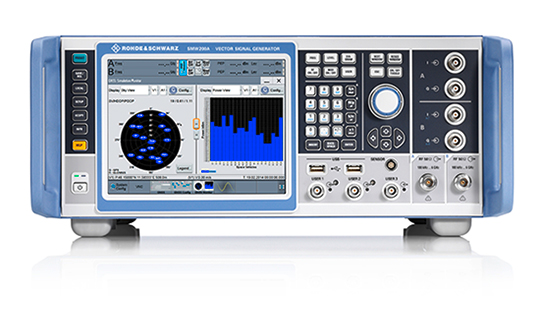
    Rohde & Schwarz has added GPS L5 and Galileo E5 simulation capabilities to its R&S SMW200A GNSS simulator.

    The R&S SMW200A GNSS simulator is designed for efficient test and characterization of multi-constellation and multi-frequency GNSS receivers. With its additional simulation capabilities for GPS L5 and Galileo E5, the R&S SMW200A enables generation of complex and highly realistic test scenarios with up to 144 channels in the GNSS frequency bands L1, L2 and L5, the company said.

    In addition to GPS (L1/L2/L5), GLONASS (L1/L2), Galileo (E1/E5) and BeiDou (L1/L2), the R&S SMW200A also supports signal generation for QZSS and SBAS on L1. The available channels can be routed to up to four RF outputs, so that even multi-antenna systems can be tested.

    Apart from its new GNSS simulation capabilities, the R&S SMW200A can generate complex coexistence and interference scenarios with multiple interferers. GNSS signals, noise and all interference signals are generated directly in the instrument. Additional signal sources for external generation of interference signals are not required, resulting in small, compact and simple test setups.

    Launched in 2017, the R&S SMW200A can be turned into a high-end GNSS simulator and is able to internally simulate complex interference environments in parallel with GNSS signals.

    An increasing number of GNSS receivers are capable of receiving signals on multiple different frequencies, such as L1, L2 and L5. Although this multi-frequency capability, as well as having to process signals from diverse navigation systems such as GPS, GLONASS, Galileo or BeiDou, make the receiver design more complex, they ensure a better quality of service for the end user.

    According to the company, multi-frequency and multi-constellation processing not only improves positioning accuracy, service availability and robustness, it also makes the positioning process less vulnerable to interference, jamming or spoofing attacks.

    The R&S SMW200A with its new GNSS simulation capabilities will be showcased at the ION GNSS+ 2018 trade show in Miami.