Tag: autonomous vehicles

  • New u-blox module aimed at lane accuracy in urban areas

    New u-blox module aimed at lane accuracy in urban areas

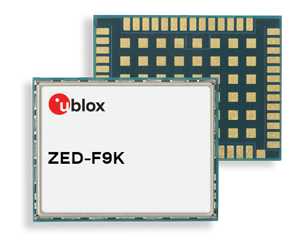
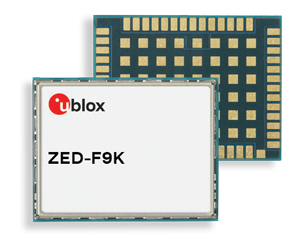
    The ZED-F9K module is designed to keep cars in their lanes. (Photo: u-blox)
    The ZED-F9K module is designed to keep cars in their lanes. (Photo: u-blox)

    The new u‑blox ZED-F9K GNSS and dead-reckoning module is designed to bring continuous lane accurate positioning to challenging urban environments.

    The module offers both high-precision multi-band GNSS and inertial sensors. It combines the latest generation of GNSS receiver technology, signal processing algorithms and correction services to deliver down to decimeter-level accuracy within seconds, addressing the evolving needs of advanced driver-assistance systems (ADAS) and automated driving markets.

    The ZED-F9K builds on the u‑blox F9 technology platform. Compatibility with GNSS correction services further improves positioning accuracy by compensating ionospheric and other errors.

    The real-time kinematic (RTK) receiver module receives GNSS signals from all orbiting GNSS constellations. The greater number of visible satellites improves positioning performance in partially obstructed conditions, while increased satellite signals delivers faster convergence times when signals are interrupted.

    Inertial sensors integrated into the module constantly monitor changes in the moving vehicle’s trajectory and continue to deliver lane accurate positioning when satellite signals are partially or completely obstructed, as is the case when the vehicle is in parking garages, tunnels, urban canyons or forested areas.

    When satellite signals become available again, the module combines inertial sensor data with GNSS signals to deliver fast convergence times and high availability of the decimeter-level solution.

    The result of this combination of the latest developments in GNSS technology, correction services and inertial sensing is a tenfold increase in positioning performance over standard precision solutions, according to u-blox.

    By robustly providing lane accurate position information, the ZED‑F9K meets the needs of ADAS and autonomous driving applications, as well as head units and advanced navigation systems. The module’s accuracy and low latency also makes it suitable for automotive OEMs and Tier 1 automakers developing V2X (vehicle-to-everything) communication systems. By continuously sharing their location with other traffic participants, V2X systems contribute to increasing overall road safety and reducing traffic congestion.

    “We designed the ZED-F9K to be a turnkey high-precision GNSS solution that caters to the needs of today’s and tomorrow’s connected cars,” said Alex Ngi, product manager, product strategy for dead reckoning, u‑blox. “The ZED-F9K is unique in that it integrates a multitude of technologies, from the GNSS receiver to the inertial measurement unit and relevant dead reckoning algorithms into a single device for which we can ensure performance throughout the customer product development cycle.”

    Samples will be available upon request by July.
  • DroneShield releases body-worn drone detector

    DroneShield releases body-worn drone detector

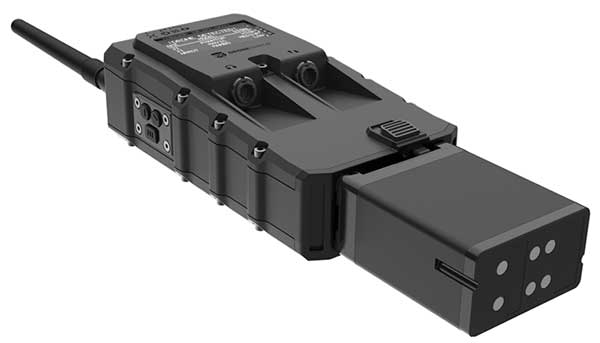
    RfPatrol. (Photo: DroneShield)
    RfPatrol. (Photo: DroneShield)

    DroneShield Ltd. has released a body-worn drone detection product, RfPatrol. Weighing under 1 kilogram, the mobile unit is expected to be of significant interest to a range of DroneShield’s customer base globally, across military, law enforcement, security and VIP markets.

    DroneShield made the announcement at AUVSI Exponential 2019, being held this week in Chicago.

    RfPatrol is a passive (non-emitting) product, which substantially broadens the range of customers to whom the product is lawfully available. It was developed in response to customer interest.

    Already, a small quantity of the RfPatrol units has been ordered by a western country’s defense department, for evaluation with a potential larger order in the future.

    “We are excited to launch RfPatrol,” said DroneShield CEO Oleg Vornik. “Due to its miniaturized/body-worn nature, substantially larger customer universe due to its non-emitting nature, and a relatively lower price point compared to fixed-site products, we expect it to have substantial appeal. In addition to being able to be used as a stand-alone, it is a perfect companion to our DroneGun product.”

  • Harxon GNSS antennas ready for UAVs and UAV base stations

    Harxon GNSS antennas ready for UAVs and UAV base stations

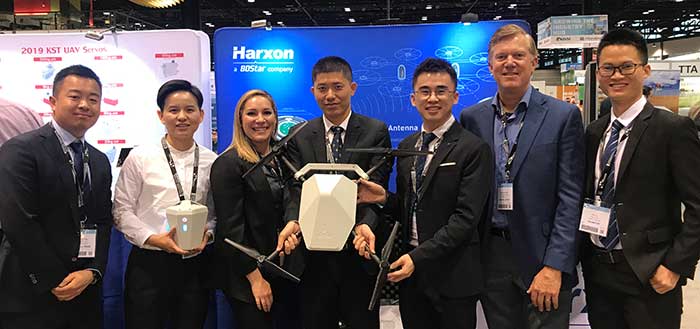
    The Harxon team at AUVSI Xponential. (Photo: Harxon)
    The Harxon team at AUVSI Xponential. (Photo: Harxon)

    Harxon showcased its full range of UAV antennas and technologies for various UAV applications —  especially for UAV base stations — at AUVSI Xponential, which took place April 30-May 2 in Chicago.

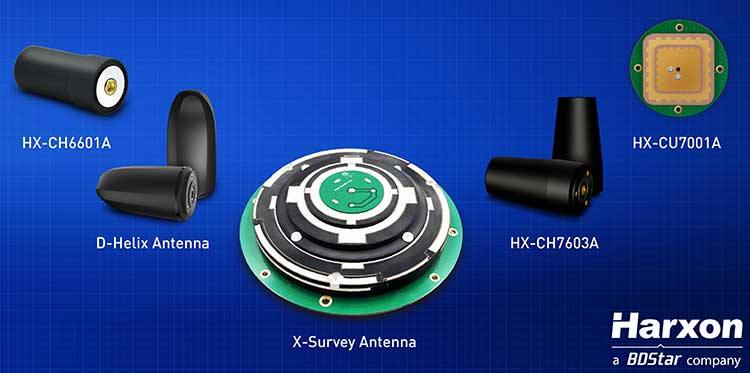
    Harxon’s newly launched X-Survey antenna offers a 4-in-1 design for multi-constellation GNSS signal reception. It integrates Wi-Fi, Bluetooth and 4G modules for easy integration into real-time kinematic (RTK) systems.

    It also ensures centimeter accuracy for precision positioning of UAVs, and stability of signal transmission, which provides the navigation and communication performance required by UAV base stations.

    Additional UAV antenna products and technologies on display at booth #2218 include the HX-CH7011A and HX-CU7001A, new OEM antennas with small size and low weight, but with high gain and a stable phase center. Other available antennas include HX-CH7603A, HX-CH6601A, HX-CH7603A and HX-CSX601A for UAV and surveying applications.

    Image: Harxon
    Image: Harxon

    Skycatch collaboration. Harxon has established strategic relationships with many industrial enterprises, such as Skycatch. Skycatch is an industrial data-collection and analytics company that focuses on indexing and extracting critical information. It provides combination GNSS base station and drone data-processing solutions that deliver high accuracy maps and point clouds in the 30 minutes or less.


    Harxon — which specializes in GNSS positioning and navigation — is collaborating with Skycatch to give customers the opportunity to improve their UAV base station mapping solutions, and to maximize UAV operation efficiency and reliability.

    High-precision GNSS solutions. The UAV industry, driven by new technologies, is one of the most dynamic growth sectors in the construction industry. The next phase of the drone revolution is flying towards standardization with precision solutions.

    Harxon’s high-precision GNSS positioning technologies have been widely used in UAV-related applications, including UAV base stations, UAV power patrols, plant protection and machine control.

  • Xsens launches MTi 600 series of inertial sensors at AUVSI show

    Xsens launches MTi 600 series of inertial sensors at AUVSI show

    Photo: Allison Barwacz
    Photo: Allison Barwacz

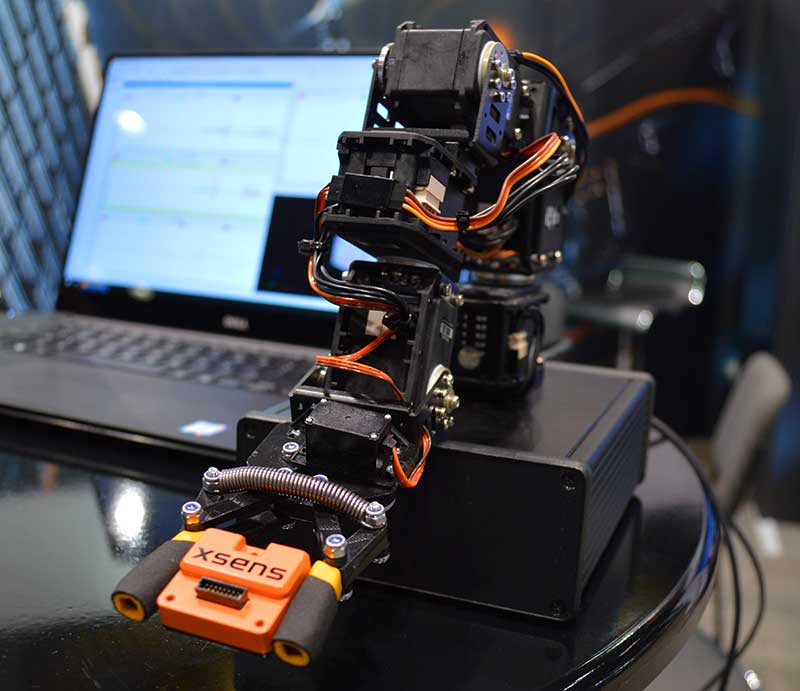
    New MTi 600-series with flexible interfacing options is backed by software development suite for easy integration into space-restricted host systems such as drones, Xsens said.

    The MTi 600-series is a generation of inertial motion sensors which set a new standard in the market for their small size, industrial-grade performance and competitive pricing, Xsens added.

    The new MTi 600-series of inertial sensors, supplied in a 31.5mm x 28.0mm x 13.0mm IP51-rated case, produce roll and pitch readings accurate to ±0.2 degrees. GNSS-assisted heading (yaw) measurements are accurate to ±1.0°. Among the products’ new features are a CAN bus interface and NMEA compatibility.


    To achieve this performance, Xsens has applied numerous innovations in its latest sensor fusion algorithms, which optimize the output from new accelerometer, gyroscope and magnetometer components.

    Photo: xsens
    Photo: Xsens

    The MTi 600-series modules are the first from Xsens to include an NMEA-compatible interface for GNSS receivers. This means that users can choose any GNSS receiver chip, module or system to work alongside the MTi-670, a GNSS/INS device that supplements the pitch, roll and yaw outputs available from other MTi 600-series products with global positioning information.

    Xsens is demonstrating the high performance of the new modules at its stand 2627 at AUVSI Xponential, taking place in Chicago this week.

    The MTi 600-series modules are available for sampling on request to Xsens. Volume production is expected to begin in July.

  • Live from AUVSI’s Xponential 2019

    Live from AUVSI’s Xponential 2019

    Logo: Xponential 2019The GPS World and Geospatial Solutions staff are reporting live from the Association for Unmanned Vehicle Systems International’s (AUVSI’s) Xponential 2019 April 29-May 2 in Chicago.

    The event convenes the global community of commercial and defense leaders in intelligent robotics, drones and unmanned systems. Check out news, photos and videos from the show.

    NEWS

    VIDEOS

    Click the icon in the top left hand corner to choose the video you’d like to watch.

  • 3DR and Wingtra partner on aerial surveying solution

    Wingtra and 3DR, producer of the Site Scan drone data platform, have signed a partnership agreement to benefit the mining and surveying industries.

    Wingtra’s VTOL drone WingtraOne and Site Scan form a complete aerial surveying solution, including highly efficient aerial data collection, post-processing and analysis. Through the partnership, 3DR now endorses the WingtraOne as the preferred fixed-wing drone for its Site Scan platform.

    Wingtra and 3DR will distribute the complementary solution across a range of industries, focusing particularly on mining and surveying teams. 3DR will sell Wingtra products through its existing distribution partnerships across North America, Europe and Australia, and Wingtra will sell Site Scan worldwide.

    “We’re thrilled to officially partner with Wingtra and make a fixed-wing VTOL drone available to our customer base,” said Chris Anderson, 3DR CEO. “We’re looking forward to deepening this partnership and continue making Site Scan and Wingtra the go-to drone solutions for mining teams across the world.”

    Mining and surveying professionals are turning to fixed-wing vertical take-off and landing (VTOL) drones because of their ability to take off and land vertically as a multicopter but fly as fast a fixed-wing craft.

    The WingtraOne VTOL drone offers safe launch and land, as well as high resolution and broad coverage in a single flight with absolute accuracy down to 1 centimeter (0.4 inches).

    Users can upload photos collected with the WingtraOne into the Site Scan cloud-based web application to process them into high-resolution maps and 3D models.

    Site Scan users include mining firms such as Newmont, Newcrest and Gerdau. Site Scan offers an all-in-one software program for analyzing drone-captured data with a suite of measurement tools, securely sharing them with teammates and stakeholders, and exporting them for use in CAD, mine planning and geological software.

    “Our partnership with 3DR lets our customers analyze high-precision aerial data directly in Site Scan — in a lot of cases without any additional tools,” said Basil Weibel, founder of Wingtra. “Together, WingtraOne and Site Scan make up a complete solution and we are very excited to offer this bundle to the industry.”

  • AUVSI, Airports Council announce UAS mitigation task force

    AUVSI, Airports Council announce UAS mitigation task force

    The Association for Unmanned Vehicle Systems International (AUVSI) and Airports Council International-North America (ACI-NA) are forming a Blue Ribbon Task Force on Unmanned Aircraft System (UAS) Mitigation at Airports.

    The task force brings together a cross-section of stakeholders representing the airport, UAS and manned aviation communities to refine procedural practices and provide a policy framework to address the timely and critical issue of incursions by unauthorized UAS at airports and how best to mitigate this threat.

    The task force begins work on May 2 during a keynote session at AUVSI Xponential 2019 with a panel discussion featuring Huerta and a representative from the airport industry.

    “UAS interfering with manned aviation is a serious issue, and it requires serious solutions. That is why we are bringing together the best and brightest minds to recommend a plan to keep our skies safe for the flying public,” said Brian Wynne, president and CEO of AUVSI during a news conference at Xponential 2019.

    “While UAS hold tremendous societal and economic benefits, occasional bad actors threaten to undermine the great progress we have made and even put responsible, legal UAS operations in a negative light,” Wynne said.

    Serious concerns regarding unauthorized and unsafe drone operations near airports have been highlighted by the major disruption such activity caused at London Gatwick Airport in December 2018 and Newark Liberty International Airport in January 2019.

    Task Force members will examine and develop recommendations around two main areas:

    1. They will generate expert-led dialogue to refine procedural practices for airports, law enforcement and other stakeholders to ensure efficient and seamless responses to future UAS incidents.
    2. They will develop a longer term policy framework based on the experience from the initial efforts to deter incursions and emerging technologies.

    The goal is for the task force’s work to lead to and inform future conversations about UAS mitigation at other facilities, such as national landmarks, stadiums, prisons and military bases.

    “One of ACI-NA’s highest priorities is ensuring unauthorized and unsafe drone operations do not adversely affect the safety or security of U.S. and Canadian airports,” said Kevin Burke, president and CEO of ACI-NA, at the news conference. “With more and more drones flying in the airspace, we have found ourselves in a new situation with no clear playbook. By bringing together this exceptional group of experts, we are hopeful we can make significant progress in developing best practices that will help airports respond better.”

    The Blue Ribbon Task Force will be comprised of former government officials, security professionals and aviation executives, including:

    • Michael Huerta, Former Administrator, Federal Aviation Administration (Co-Chair)
    • Deborah Flint, CEO, Los Angeles World Airports (Co-Chair)
    • Scott Brockman, President and Chief Executive Officer, Memphis-Shelby County Airport Authority
    • Rich Davis, Former Managing Director of Global Security, United Airlines
    • Trish Gilbert, Executive Vice President, National Air Traffic Controllers Association
    • Cathy Lanier, Senior Vice President of Security, National Football League
    • Huntley A. Lawrence, Director of Aviation, Port Authority of New York and New Jersey
    • Chad Makovsky, EVP of Operations, Dallas Fort Worth International Airport
    • Marily Mora, President/CEO of the Reno Tahoe Airport Authority (RTAA)
    • John Pistole, Former Administrator, Transportation Security Administration, and Former Deputy Director, Federal Bureau of Investigation
    • Jamie Rhee, Commissioner, Chicago Department of Aviation (CDA)

    Expert advice and comments sought. As part of its work, the task force will meet with experts in UAS technology, national security and defense, law enforcement, government, and those working in the National Air Space, including UAS operators, commercial and general aviation pilots, air traffic controllers, and airline and airport leadership.

    The task force will solicit comments on its website from the public and will explore holding a limited series of in-person and virtual public meetings on UAS mitigation. It anticipates releasing findings over the summer.

    “The industry is working with our government partners on remote identification and tracking standards, but we understand that more needs to be done and at faster pace than the regulatory process allows,” Wynne said. “That’s why the industry is stepping up to explore near-term solutions before remote ID regulations are finalized and published.”


    Featured photo: Federal Aviation Administration

  • Winners announced for AUVSI XCELLENCE Awards

    The awards are presented to companies, organizations and individuals demonstrating achievement in the unmanned systems field.

    Winners for the second annual XCELLENCE Awards by the Association for Unmanned Vehicles Systems International (AUVSI) were named during an awards ceremony at AUVSI Xponential 2019 at McCormick Place in Chicago.

    Recipients represent the accomplishments by companies, organizations and individuals across the unmanned systems community.

    “The rapid growth of the unmanned systems industry is reshaping our future by expanding business markets, providing consumers with innovative solutions and even saving lives,” said Brian Wynne, president and CEO of AUVSI. “The XCELLENCE awards recognize companies and individuals who are achieving remarkable results with unmanned systems technology to benefit our communities.”

    The AUVSI XCELLENCE Awards honor innovators with a demonstrated commitment to advancing technology, leading and promoting safe operations and developing programs that use unmanned systems to improve the human conditions. These are the winners in each category:

    TECHNOLOGY INNOVATION

    Commercial/Enterprise Operation

    First Place: GBA, Eyes in the Sky Perform Bridge Delamination Assessment
    Second Place: Impossible Aerospace, Impossible US-1
    Third Place: Propeller, Propeller Software Platform

    Communication or Data Connection Solutions

    First Place: Persistent Systems LLC, Wave Relay® Mobile Ad Hoc Network
    Second Place: Simulyze, Inc., Mission InsightTM
    Third Place: MilSource, MILTECH 907

    Detect & Avoid Solutions

    First Place: Buffalo Automation, AutoMate
    Second Place: NASA, Independent Configurable Architecture for Reliable Operations of Unmanned Systems (ICAROUS)
    Third Place: Auterion, Auterion PX4 Avoidance

    Fleet Management Software & Solutions

    First Place: Kittyhawk IO, Kittyhawk Drone Operations for Enterprise
    Second Place: Auterion, Auterion Insights
    Third Place: AutonomouStuff, Platform Fleet

    Power Solutions

    First Place: SolidEnergy Systems, Lithium Metal Batteries
    Second Place: Global Energy Transmission Co., GET Air 12 Kilowatt Power Cloud and In-Air Drone Charging System
    Third Place: Unmanned Systems and Solutions, LLC, Long Endurance Aerial Platform (LEAP)

    Safety Solutions

    First Place: Fluidity Technologies, FT Aviator Drone Flight Controller
    Second Place: ParaZero, SafeAir Systems
    Third Place: UASidekick, UASidekick

    UAS Mitigation & Security

    First Place: WhiteFox Defense Technologies, Inc., DroneFox Mobile
    Second Place: Ascent Vision Technologies, XMADIS
    Third Place: Airspace, Galaxy

    Vision/Camera Systems & Components

    First Place: Xsens, Xsens MTi 600-series
    Second Place: Velodyne Lidar, Alpha Puck
    Third Place: Arbe, Phoenix Radar System

    XCELLENCE in Innovation

    First Place: WhiteFox Defense Technologies, Inc., WISDM
    Second Place: Fortem Technologies, Fortem SkyDome
    Third Place: Cepton Technologies, Inc., SORA 200

    OPERATIONS & SAFETY

    Operations & Safety Organization

    First Place: NASA, NASA Langley UAS Operations Office
    Second Place: Kansas Department of Transportation, KDOT UAS Safety Risk Management Program
    Third Place: AES Corporation, Striving for Safety Excellence with Global Drone Program

    TRAINING & EDUCATION

    Training & Education Organization

    First Place: Embry-Riddle Aeronautical University – Worldwide, ERAU-W UAS Program
    Second Place: Kansas State University Polytechnic Campus UAS, Kansas State University Polytechnic Campus UAS Program
    Third Place: Embry-Riddle Aeronautical University, Gaetz Aerospace Institute

    Training and Education Professional

    Winner: Barry J. Brennan, President & Founder, Flying Lion, Inc.

  • Tallysman releases new UAV helical GNSS antennas

    Tallysman releases new UAV helical GNSS antennas

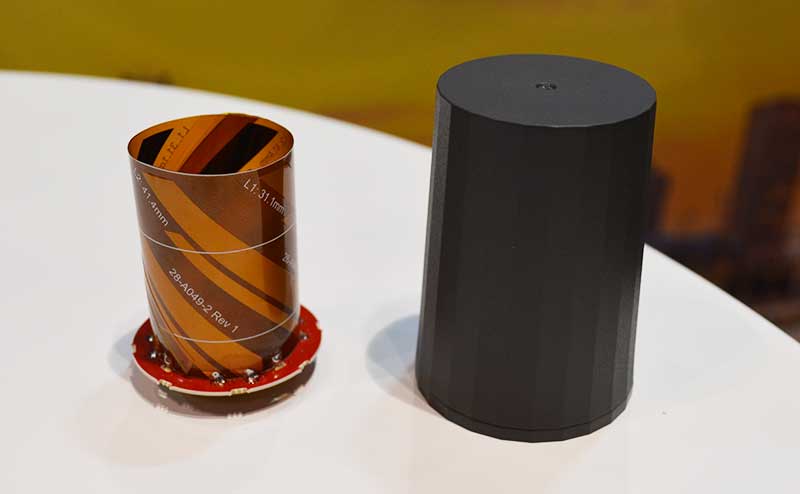
    The new helical antenna in both housed (right) and unhoused form. (Photo: Allison Barwacz)
    The new helical antenna in both housed (right) and unhoused form. (Photo: Allison Barwacz)

    Tallysman, a manufacturer of high-performance GNSS and iridium antennas, launched the first three products of a new range of helical antennas. Additional models will be announced in the third quarter of 2019 and onward.

    Tallysman exhibited at booth 3739 at AUVSI Xponential 2019, which took place April 29 to May 2 in Chicago.

    The first three models of the Tallysman helical family are:

    • HC871 (25g) – A housed, dual band, active GNSS antenna, supporting GPS L1/L2,
      GLONASS G1/G2, Galileo E1, and BeiDou B1.
    • HC872 (36g) – A housed, dual band, active GNSS antenna, supporting GPS L1/L2,
      GLONASS G1/G2, Galileo E1, BeiDou B1, and L-Band services.
    • HC600 (18g) – A housed, passive Iridium antenna.


    The active GNSS helical antennas feature a low-current, low-noise amplifier (LNA), and include integrated low-loss pre-filters, to protect against harmonic interference from high amplitude interfering signals, such as 700-MHz band LTE and other near in-band cellular signals.

    Available in both housed and embedded OEM versions, the lightweight Tallysman helical antennas have excellent axial ratios, making them ideal for a variety of high-precision unmanned aerial vehicle (UAV) applications, the company said.

    The housed Tallysman helical antenna models feature a robust, military-grade plastic case, while the embedded Tallysman helical antenna models can be custom-tuned for any application and configured with a variety of cables and connectors.

    “We think — if anything — the price-performance ratio is the biggest benefit,” Allen Crawford, director of key accounts at Tallysman, told GPS World. “The pre-filter is also unique to us; the robustness of the enclosure is unique to us; and also the shortness, which is important to a lot of aerodynamic vehicles.”

    Patents have been applied for with respect to several aspects of these new products.

    “There is a clear requirement for lightweight, high performance antennas for the rapidly growing UAV market,” said Tallysman President and CTO Gyles Panther. “These new patented helical products are an extension to our existing range of superlight L1/L2 patch antennas, and will provide customers with a wider choice of antenna formats to suit their specific application requirements. These are the first of a number of new products we plan to introduce for this application to support our already wide customer base for UAV antennas.”

  • System downs multiple drones in U.S. Air Force exercise

    System downs multiple drones in U.S. Air Force exercise

    Speed-of-light technologies will protect ground troops.

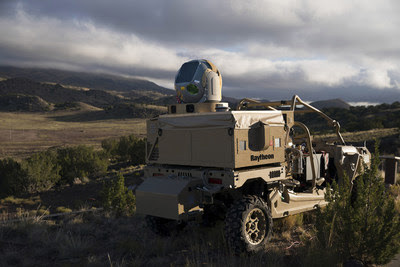
    Raytheon's high-energy laser (HEL). (iPhoto: Raytheon)
    Raytheon’s high-energy laser (HEL). (iPhoto: Raytheon)

    Raytheon Company‘s advanced high-power microwave and mobile high-energy laser systems engaged and defeated multiple unmanned aerial system targets during a U.S. Air Force demonstration. The mature HPM and HEL technologies offer an affordable solution to the growing UAS threat, the company said.

    Raytheon made the announcement at AUVSI Xponential, taking place this week in Chicago.

    Raytheon’s mobile high energy laser looks out into a wide-open sky. The company’s advanced high-power microwave and high-energy laser engaged and defeated dozens of unmanned aerial system targets in a recent U.S. Air Force demonstration.

    The HEL system, paired with Raytheon’s Multi-Spectral Targeting System, uses invisible beams of light to defeat hostile UASs. Mounted on a Polaris MRZR all-terrain vehicle, the system detects, identifies, tracks and engages drones.

    “Countering the drone threat requires diverse solutions,” said Stefan Baur, Raytheon Electronic Warfare Systems vice president. “HEL and HPM give frontline operators options for protecting critical infrastructure, convoys and personnel.”

    Raytheon’s HPM uses microwave energy to disrupt drone guidance systems. High-power microwave operators can focus the beam to target and instantly defeat drone swarms. With a consistent power supply, an HPM system can provide virtually unlimited protection.

    “After decades of research and investment, we believe these advanced directed energy applications will soon be ready for the battlefield to help protect people, assets and infrastructure,” said Thomas Bussing, Raytheon Advanced Missile Systems vice president.

    Raytheon’s HEL and HPM were the only directed energy systems that participated in this Air Force experimentation demonstration. The event expanded on previous directed energy demonstrations such as a U.S. Army directed energy exercise held in 2017.

  • GE Aviation brings advanced avionics computing to unmanned vehicles

    GE Aviation has introduced a new advanced avionics computer specifically built for military and commercial unmanned vehicles. This new computer provides an open architecture design that integrates vehicle management and advanced mission processing into a compact, lightweight design.

    GE Aviation made the announcement at AUVSI Xponential, taking place April 29-May 2 in Chicago.

    “Our customers have told us that they require an integrated vehicle and mission processing solution that is secure, rugged, low size, weight and power and capable of meeting the needs of demanding autonomous platforms,” said Alan Caslavka, president of avionics for GE Aviation. “This new system hits it out of the park in this regard and then builds from there in terms of bringing new capabilities to the next generation of unmanned systems.”

    This new system incorporates the processing power required for mission functions such as sensor processing at the edge and hosting autonomy enabling algorithms and then also embeds an inertial/GPS package, software defined radio, datalink and an optional solid-state storage device.

    Caslavka added, “The new system incorporates diverse processing that’s capable of performing safety critical and non-critical functions while bringing a new level of security to legacy and future platforms.”

    The system integrates the functionality traditionally provided by up to six separate electronic units into a single package which drives out weight, power, and cost while meeting the security, exportability, ruggedness and processing needs of our customers.

    GE’s advanced avionics computer has undergone flight testing and is in use by a number of military and civil customers. The computer incorporates a hardware and software open architecture approach that offers flexibility and scalability. This design also provides the capability to host GE, customer and third-party software applications to maximize its versatility.

  • Robotic Research provides navigation system for GPS-denied areas

    Robotic Research provides navigation system for GPS-denied areas

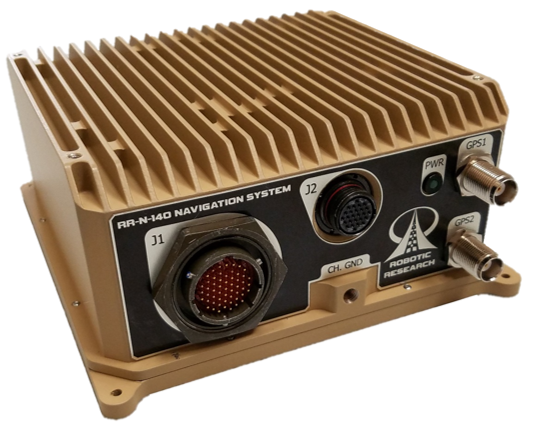
    Photo: Robotic Research
    Photo: Robotic Research

    Robotic Research will showcase its RR-N-140 navigation system at Booth #407 at AUVSI Xponential 2019, which takes place April 29-May 2 in Chicago.

    The system provides accurate, absolute and relative 3D (six-degrees-of-freedom, or 6 DOF) localization information for ground vehicles of all sizes.

    The device delivers exceptional localization performance in GPS‐denied or compromised areas. It is designed specifically for use on unmanned ground vehicles and is heavily customizable to incorporate a wide variety of sensor inputs into the navigation solution.

    Robotic Research develops and deploys autonomous vehicle innovations for both commercial and government customers.

    Features of the RR-N-140 include:

    • Accurate, real-time navigation/localization solution for wheeled or tracked ground vehicles
    • Adaptable for use on surface vessels
    • Exceptional localization performance in GPS-denied or compromised areas
    • Dual antenna GNSS for zero-speed heading detection and redundancy
    • Rugged IP67 Construction designed to meet shock and vibration environments typical of military vehicles
    • Up to 4X configurable vehicle speed / encoder inputs
    • Configurable GNSS and IMU options allow tailored solutions for all levels of performance
    • Customizable to directly interface with and process a variety of sensor inputs (e.g. LADAR, Stereo and Monocular Cameras, Ultra-Wideband Ranging Radios)
    • Easy integration with the Robotic Research Warfighter Localization family of systems (WarLoc)
    • Web interface for user-level diagnostics and configuration
    • Ethernet, CANbus, and RS-232 Serial Data Interfaces
    • Independent Ethernet ports for separation of navigation solution and sensor processing data
    • Robust Built-in-test (BIT) error reporting during runtime
    • Redundant IMU and GNSS options available for fault-tolerance
    • NTP Server and GPS PPS signals for time synchronization
    • Low SWAP
    • 7.2”L x 6.4” W x 2.9” H
    • 4.0 lbs
    • 22W at 9.5-36 VDC