Tag: COVID-19

  • An overview of GPS/GNSS shows canceled or postponed because of COVID-19

    GPS/GNSS-related trade shows and conferences have been canceled or postponed because of the coronavirus pandemic. Below is an overview of these shows so far, starting with the most recent updates.


    AUVSI Xponential 2020: Virtual

    AUVSI Xponential 2020 logo

    The Association for Unmanned Vehicle Systems International (AUVSI) decided to convert AUVSI Xponential 2020 to a virtual event. It will still take place Oct. 5-8.

    Xponential 2020 was originally scheduled to take place May 4-7 at the Boston Convention and Exhibition Center. It was then rescheduled to take place Oct. 5-8 at the Kay Bailey Hutchison Convention Center in Dallas.

    “While we are disappointed to not be convening in person this year, the health and safety of Xponential exhibitors and attendees is our utmost priority,” Wynne said. “It may not look like the Xponential we are used to, but we look forward to offering attendees the opportunity to virtually network, learn from and collaborate with one another just as they have in years past.”


    Logo: ION JNC

    ION 2020 Joint Navigation Conference: Canceled

    The Institute of Navigation (ION) canceled its 2020 Joint Navigation Conference, which was scheduled to take place Sept. 8-11 in Covington, Kentucky/Cincinnati, Ohio.

    According to show organizers, the decision was made because of COVID-19 and the current U.S. Department of Defense and government travel restrictions that are limiting travel.

    ION JNC 2021 will be held June 7-10 at the Northern Kentucky Convention Center in Covington, Kentucky/Cincinnati, Ohio, with the classified session hosted at the Air Force Institute of Technology.


    Logo: ITSF Online

    ITSF 2020: Virtual

    The International Timing and Sync Forum (ITSF) is a time and synchronization conference and exhibition showcasing solutions for 4G/5G, finance, broadcast, automotive, smart grids, IoT, distributed datacenters, transport and defense. The 2020 event will be held virtually Nov. 3-5.

    “In the light of the current global situation, we are please to announce that ITSF 2020 will now be a fully virtual event — #ITSFOnline,” show organizers said.


    TU-Automotive: Virtual

    TU-Automotive will be held Aug. 18-20 in a virtual format.

    “After continuously reviewing the best ways to serve the Automotive community, we are thrilled to announce the launch of the Virtual edition of TU-Automotive Detroit, ADAS & Autonomous Vehicles, WardsAuto Interiors Conference and WardsAuto UX Conference,” show organizers said.

    The virtual event will feature keynotes, conference tracks, workshops, roundtables and working groups.


    Logo: Commercial UAV Expo Americas

    Commercial UAV Expos (America and Europe): Virtual

    Commercial UAV Expo Americas 2020 is going virtual, according to event organizer Diversified Communications. The event is slated to take place Sept. 15-17.

    “Due to ongoing health and safety concerns stemming from the COVID-19 pandemic, members of the commercial drone community we serve have made it clear that it would be impossible to hold the live event as originally planned. In the interests of ensuring our community still has an opportunity learn from and connect with each other, we have reimagined Commercial UAV Expo Americas as a fully virtual event taking place September 15-17, 2020,” said Lisa Murray, group director at Diversified Communications, organizer of Commercial UAV Expo Americas.

    Commercial UAV Expo Europe also will take place as a virtual event Dec. 1-3.

    “Due to ongoing concerns caused by the COVID-19 pandemic, and for the health and safety of the members of the commercial drone community we serve, we have made the decision to reimagine Commercial UAV Expo Europe as a fully virtual event this year which will take place as part of a hybrid live-virtual Amsterdam Drone Week 1-3 December, 2020,” Murray added.


    Logo: Intergeo 2020

    Intergeo 2020: Virtual

    Intergeo 2020, originally slated to take place Oct. 13-15 in Berlin, Germany, will now take place entirely virtually. Organizers announced in early June that the show would take place partially in person and partially virtually, but made the decision in early July to move the entire show to a digital platform.


    Logo: GEO Business

    GEO Business 2020: Postponed

    The venue and date have both been changed for GEO Business 2020. The show, organized by Diversified Communications U.K., will now take place May 19-20, 2021 at ExCel London. This event aims to connect those involved in the gathering, storing, processing and delivery of geospatial information.

    Read more about the conference here.


    5th annual FAA UAS Symposium: Virtual conference

    Logo: FAA UAS SymposiumThe Federal Aviation Administration (FAA) and the Association for Unmanned Vehicle Systems International (AUVSI) will host the 5th annual FAA UAS Symposium virtually, rather than in-person in Baltimore. The event will take place June 16-18.

    The FAA and AUVSI also will be hosting a series of virtual events that will address the content already planned for this year’s program. The fist will take place in early summer and will focus on UTM and international UAS integration. The second will take place in late summer with a focus on updates to the Integration Pilot Program and public safety operations.

    Learn more about the show here.


    AUVSI Xponential: Postponed

    AUVSI Xponential 2020 logoThe AUVSI Xponential trade show, originally scheduled to take place May 4-7 in Boston, has been rescheduled to take place Oct. 5-8 in Dallas.

    Because of the rescheduled conference, AUVSI will be hosting Xponential Virtual Sessions, a week-long webinar series, May 4-8. Find out how you can participate here.

    Read more about the conference here.


    Logo: Trimble Dimensions 2020

    Trimble Dimensions 2020: Canceled

    Trimble Dimensions 2020, which was scheduled to take place Nov. 2-4 at the Gaylord Opryland Resort and Convention Center in Nashville, Tennessee, has been canceled.

    “Unfortunately, the overwhelming concerns and ongoing impact of COVID-19 inhibit our ability to deliver a conference that meets the high standards of safety and excellence our attendees expect and deserve,” Trimble said in a press release.

    Read more about the show here.


    Logo: IAC 2020

    International Astronautical Congress 2020: Virtual conference

    The 71st International Astronautical Congress (IAC): The CyberSpace Edition will take place virtually Oct. 12-14. The show, originally scheduled to take place in Dubai, brings together stakeholders from space agencies and institutions around the world to exchange information and ideas, share developments and advancements, and swap insights and rising trends.

    According to show organizers, the IAC is a one-of-a-kind assemblage, unmatched in scale and in scope, unequalled in its reach and its attendance.

    Read more about the virtual conference here.


    Esri User Conference: Virtual conference

    Logo: Esri

    The Esri User Conference, which typically takes place every July in San Diego, will be held virtually July 13-15. The plenary session, technical workshops and Esri Showcase will be virtual, featuring demonstrations and live discussions during the conference.

    Read more about the virtual conference here.


    AIxSPACE: Postponed

    AIxSPACE will now be taking place Nov. 2 in Montreal, Québec, Canada. According to show organizers, AIxSPACE brings together stakeholders in space and artificial intelligence industries to allow everyone to obtain concrete information on these markets and connect with potential business partners.

    Read more about the conference here.


    ENC logo

    European Navigation Conference: Postponed

    The European Navigation Conference has been rescheduled to take place Nov. 22-25 at the Maritim Hotel & Internationales Congress Center in Dresden, Germany. The conference, hosted by the German Society for Positioning and Navigation, brings together scientists, engineers and international experts to discuss new ideas, latest research results, future developments and new applications.

    Read more about the conference here.


    Connected & Autonomous Vehicles Conference: Postponed

    The Connected & Autonomous Vehicles Conference has been postponed and will now be taking place Aug. 10-13 at the San Jose Convention Center in California. The conference aims to highlight the latest automotive industry developments, as well as allow participants to engage with experts and form strategic alliances.

    Read more about the conference here.


    Logo: ION

    ION Joint Navigation Conference: Postponed

    The Institute of Navigation’s (ION) Joint Navigation Conference (JNC) has been rescheduled for Sept. 8-11 at the Northern Kentucky Convention Center. JNC is a U.S. military positioning, navigation and timing conference with joint service and government participation. According to ION, the rescheduled conference will host the original program, which was scheduled to take place in June.

    Read more about the conference here.


    36th Space Symposium: Postponed

    The 36th Space Symposium will now take place Oct. 31 to Nov. 2 at The Broadmoor in Colorado Springs. According to the Space Foundation, the 36th Space Symposium will gather leaders, innovators and entrepreneurs from the civil, commercial, military, research and international sectors to share, explore and partner on efforts that will impact our lives beyond Earth and upon it.

    Read more about the conference here.


    IEEE/ION PLANS Conference: Canceled

    The IEEE/ION PLANS Conference, originally scheduled to take place April 20-23 in Portland, Oregon, was canceled.

    Read more about the cancellation here.


    Munich Satellite Navigation Summit: Canceled

    Logo: Munich Satellite Navigation Summit

    The Munich Satellite Navigation Summit, originally scheduled to take place March 16-18, was canceled.

    “In light of the current situation caused by the coronavirus as well as related travel restrictions and resulting cancellations we unfortunately are forced to cancel the Munich Satellite Navigation Summit 2020 as we are no longer able to provide a well-ordered and appropriate program,” show organizers said in a press release.

    Read more about the cancellation here.


    Logo: Mobile World Congress 2020

    Mobile World Congress: Canceled

    Mobile World Congress, which was slated to take place Feb. 24-27 in Barcelona, Spain, was canceled.

    “With due regard to the safe and healthy environment in Barcelona and the host country today, the GSMA has cancelled MWC Barcelona 2020 because the global concern regarding the coronavirus outbreak, travel concern and other circumstances, make it impossible for the GSMA to hold the event,” said GSMA CEO John Hoffman in a statement.

    Read more about the cancellation here.


    Read more of GPS World‘s coronavirus coverage here.


    Featured image: rclassenlayouts/iStock / Getty Images Plus/Getty Images
  • ION cancels 2020 Joint Navigation Conference

    ION cancels 2020 Joint Navigation Conference

    Logo: ION JNC

    The Institute of Navigation (ION) has canceled its 2020 Joint Navigation Conference, which was scheduled to take place Sept. 8-11 in Covington, Kentucky/Cincinnati, Ohio.

    According to show organizers, the decision was made because of COVID-19 and the current U.S. Department of Defense and government travel restrictions that are limiting travel.

    The restricted nature of the JNC conference does not make a virtual experience possible, show organizers added.

    Attendees who made hotel reservations through the ION JNC website will have reservations canceled for them, and they will receive emails confirming the cancellations. Those who booked their hotel rooms using other methods will need to contact their hotels directly to cancel room reservations.

    ION JNC 2021 will be held June 7-10 at the Northern Kentucky Convention Center in Covington, Kentucky/Cincinnati, Ohio, with the classified session hosted at the Air Force Institute of Technology.

  • GMV leads development of ESA COVID-19 Space Hunting Platform

    GMV leads development of ESA COVID-19 Space Hunting Platform

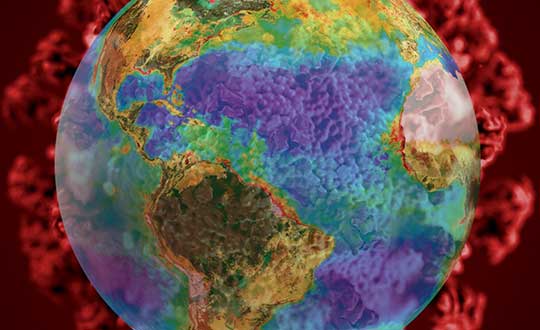
    GMV will search using artificial intelligence for any correlations between COVID-19 spread and environmental parameters.

    Image: ESA
    Image: ESA

    The European Space Agency (ESA) has launched an internal initiative to cull ideas for supporting its member states in the study and analysis of the COVID-19 pandemic. Under this initiative, an idea from the Galileo Navigation Science Office has been selected.

    The COVID-19 Space Hunting Platform is designed to facilitate access to and processing of existing COVID-19 databases for epidemiological studies, topping them up with data from ESA’s Earth observation satellites.

    The project will use artificial intelligence to look for correlations between COVID-19 spread and environmental parameters, such as humidity and temperature.

    The aim is to help researchers generate products and statistics that might be useful for decision-making purposes in terms of protection measures and lockdown, while also vetting the efficiency of the measures taken.

    Development of the COVID-19 Space Hunting Platform will be primed by the technology multinational GMV. The Universidad Politécnica de Valencia will also be taking part, with support for processing, data analysis and interaction with diverse epidemiological research groups. The university has defined a mathematical COVID-19 transmission model and has been publishing periodical updates and forecasts of its trend in Spain.

    In the medium term, the COVID-19 Space Hunting Platform could help in setting up a collaborative COVID-19 website for scientists to analyze existing data more efficiently, benefiting also from ESA’s data-processing software packages.

    The GSSC team will lead the program. (Photo: ESA)
    The GSSC team will lead the program. (Photo: ESA)

    The project will be carried out around the GNSS Science Support Centre (GSSC) platform, which hosts and indexes COVID-19 data. The three-month process will analyze public COVID-19 data and make this information available to the science community. This will lead to a first version with basic pandemic-propagation algorithms, updated thereafter to ensure the information is always precise and up to date.

  • National Governors Association, Esri release updated COVID-19 map

    Photo: MyImages_Micha/iStock / Getty Images Plus/Getty Images
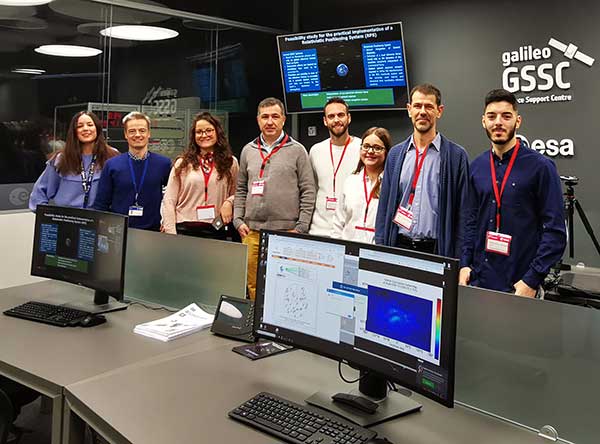
    Photo: MyImages_Micha/iStock / Getty Images Plus/Getty Images

    The National Governors Association has partnered with Esri to publish a comprehensive update to its interactive COVID-19 State and Territory Action Tracker.

    According to the association, the interactive mapping-based app shows how jurisdictions have taken actions to reopen certain business sectors by issuing statewide orders. It also shows how jurisdictions are undertaking regional-based approaches or implementing statewide orders with authorization for localities to place additional restrictions.

    The map also allows users to explore public health actions governors have taken during the pandemic, including statewide stay-at-home orders, limits on gatherings, state employee travel restrictions, quarantine orders for interstate travel and more.

    The map, which is updated on a daily basis, features data collected from states and territories. The data is based on an evaluation of state executive orders, directives, guidance, legal and non-legal documents, and news sources, the National Governors Association said.

  • ION GNSS+ 2020 to be virtual-only show

    ION GNSS+ 2020 to be virtual-only show

    The annual ION GNSS+ 2020 Conference scheduled to take place Sept. 21-25 in St. Louis, Missouri, will now be held entirely virtually.

    The Institute of Navigation (ION) made the decision after careful consideration and in light of COVID-19 and the domestic and international travel restrictions that make it impossible for many speakers and participants to participate in person, the organization stated.

    “The virtual platform is the best way to deliver a meaningful technical program experience to all participants,” said Lisa Beaty, executive director.

    ION GNSS+ 2020 VIRTUAL will be held over the original dates, Sept. 21-25, in Central Daylight Time and will live stream the plenary and all panel keynote sessions, including the Civil GPS Service Committee meeting, through the virtual web platform. These sessions will also be recorded and uploaded for viewing at a later time. Interactive question and answer will take place virtually.

    Individual technical presentations will be pre-recorded and uploaded with slides to the ION GNSS+ 2020 VIRTUAL site each morning for viewing at a later time. Attendees will have the option to submit questions to each presenter. Details can be found in the online program.

    Recognizing that industry partners want to connect with ION GNSS+ 2020 VIRTUAL attendees, ION is providing an expanded online exhibitor profile that allows exhibitors to upload a complete company profile with sales information, upload their company logo and company brochures, and will include complete contact information that allows attendees to email an exhibitor directly to ask questions or set up a phone or virtual appointment.

    The Institute of Navigation is offering free conference registrations for ION GNSS+ first-time attendees (some restrictions apply) and a COVID-19 economic impact discounted virtual registration fee.

    For more information on ION GNSS+ 2020 VIRTUAL, go to www.ion.org/gnss.

  • Intergeo 2020 to take place virtually only

    Intergeo 2020 to take place virtually only

    Logo: Intergeo 2020

    Intergeo 2020, originally slated to take place Oct. 13-15 in Berlin, Germany, will now take place entirely virtually. Organizers announced in early June that the show would take place partially in person and partially virtually.

    “Due to international travel restrictions, the protection of risk groups and the limited possibilities of people coming together in enclosed spaces, the Intergeo 2020 in its diversity and size is not feasible under the usual circumstances,” organizers said in an email to registrants.

    Berlin recently reduced the number of participants of indoor events to 1,000 people, making the show — which attracted more than 20,000 participants in 2019 — unfeasible.

    Now called INTERGEO 2020 Digital, the conference will facilitate the transfer of knowledge and exchange of ideas as well as providing “accessibility and opportunity to drop in at the exhibitors.”

  • Seen & Heard: Speed traps and rescuing koalas

    Seen & Heard: Speed traps and rescuing koalas

    “Seen & Heard” is a monthly feature of GPS World magazine, traveling the world to capture interesting and unusual news stories involving the GNSS/PNT industry. 


    Photo: Drazen Zigic/iStock/Getty Images/Getty Images Plus
    Photo: Drazen Zigic/iStock/Getty Images/Getty Images Plus

    Where’s the Beef?

    A new mapping app is helping Los Angeles County residents find more than 2,000 food resources, during and after the COVID-19 pandemic. Sponsored by the non-profit 211 LA County, the LA FoodFinder is powered by Slingshot Earth, which aggregates food resources and service data from multiple public and private sources. The app enables residents to find resources for child nutrition, meal services, groceries/food pantries, senior food needs and government food benefits programs. Since the COVID-19 outbreak, 211 LA County has experienced a 10-fold increase in website traffic for food needs.


    Photo: Symbiont/iStock/Getty Images Plus
    Photo: Symbiont/iStock/Getty Images Plus

    Use that app in Germany? No Waze!

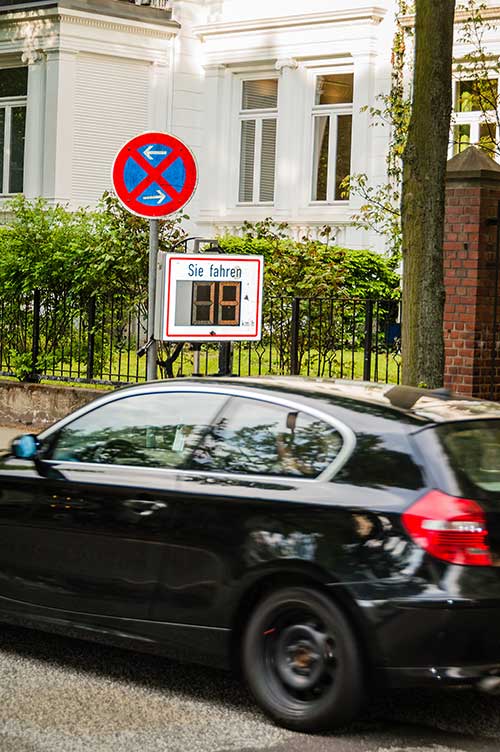
    The German government has amended its road traffic regulations to outlaw apps that alert drivers to speed cameras. The law makes it clear that any app used for traffic-monitoring alerts is forbidden, whether it runs on a phone, tablet or a GPS navigation system. Violating the traffic laws and using speed camera apps inside a car could result in a fine of up to €75 (about $83). Both Garmin and TomTom have emailed registered users alerting them to the news.


    Photo: Geoffrey Blewitt/Debra Vigil
    Photo: Geoffrey Blewitt/Debra Vigil

    Making the most of GPS data

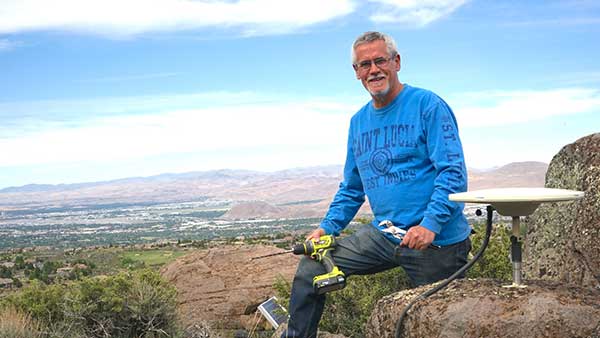
    University of Nevada 2020 Outstanding Researcher Geoffrey Blewitt has made the most of GPS data to study changes in Earth’s crust, from the Ice Age to today. Nevada Today outlines his significant discoveries, including that GPS data may hold a key to detecting dark matter. Other discoveries: Nevada is the fastest growing state, geologically speaking, as it spreads apart. Drought in the western U.S. is causing the Sierra Nevada to lift, and the melting of ice sheets in Greenland is changing the shape of Earth.


    Photo: iStock/Getty Images Plus/Getty Images
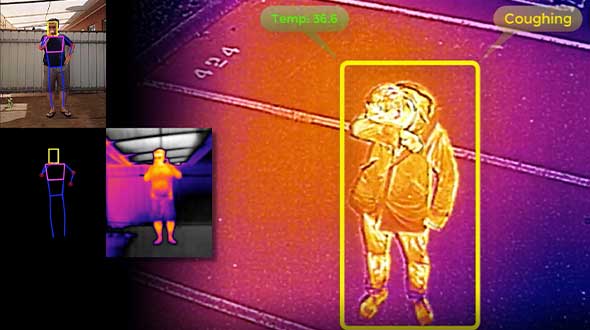
    Photo: iStock/Getty Images Plus/Getty Images

    Koala care

    Drones equipped with FLIR thermal-imaging cameras helped save koalas injured in this summer’s Australia bushfires. In a search-and-rescue operation, Victoria wildlife experts and police used DJI Mavic 2 Enterprise Dual drones to scan the forest for injured koalas, many found clinging to scorched eucalyptus trees. The images were relayed to a ground station in a nearby van for closer inspection. When a koala was located, the experts stepped in to assess the animal, and if needed, provide healthcare and relocate it. The team used cherry pickers to retrieve the little animals.

  • GNSS helps fight coronavirus while companies adapt

    GNSS helps fight coronavirus while companies adapt

    As part of the effort to combat the spread of COVID-19 in the United States, UAV company Draganfly has partnered with Australia’s Department of Defense (DOD), the University of South Australia (UniSA) and Vital Intelligence, a company that collects and analyzes healthcare data, to remotely detect and monitor people with infectious and respiratory conditions.

    Draganfly’s UAVs will be fitted with a specialized sensor and computer vision system that can monitor people’s temperature, heart rate, and respiratory rate, as well as detect people sneezing and coughing in crowds. The collaboration, called The Vital Intelligence Project, utilizes technology developed with help from the DOD’s Science and Technology Group. Draganfly was selected as the exclusive integration partner on March 25, with an initial budget of up to $1.5 million to commercialize and deploy the technology.

    The UAV uses u-blox LEA-M8S GNSS modules integrated into the company’s own interface printed circuit boards.

    In late January, recalled Draganfly’s CEO Cameron Chell, the company began to consider what kinds of health data it could collect and analyze that could help public officials and private-sector managers flatten the pandemic’s curve. It then contacted Javaan Chahl, a UniSA researcher who had been a customer for 20 years, to discuss the use of UAVs for this mission.

    The technology was originally designed to be deployed on helicopters in disaster relief operations, to measure the vital signs of survivors. It was then adapted to measure the health of wildlife populations, such as herds migrating or threatened by drought or fire, and in hospital neonatal wards to monitor the vital signs of newborns.

    To provide core temperature readings as well as measurements of heart rate and respiratory rate, the technology uses RGB and thermal cameras, both fixed and mounted on UAVs. “The public sector and the private sector are both interested in this technology, but are approaching it very differently,” Chell said.

    The system’s capabilities include detecting people who are coughing, not wearing masks, or clustering in violation of social-distancing rules. The objective is to provide population health information to public agencies to help them make better decisions by measuring the effectiveness of their COVID-19 policies in real time, rather than react to past information. The system, Chell stressed, does not record data on individuals but reports such figures as “84% of the people are socially distancing 24% of the time.”

    “Based on what I see unfolding with the measurement and data industry as it relates to health technology,” Chell said, “six or eight months from now you are likely to see health measurement reports the same way that you see weather reports. Eventually, it will be broadcast to the consumer. That is our objective.” People, he predicts, will use these reports to make decisions about where and when to travel.

    To obtain accurate core temperatures, Draganfly’s thermal sensor needs to be about 20 feet away from its subject, and uses software to zoom in on the tear ducts. To obtain heart and respiratory rates requires about 25 seconds of footage with at least a 4K camera, magnification to detect body micromovements, and machine vision to detect skin tone biometric measurements. The system also picks up movements — such as of the shoulders, lumbar area and upper torso — that indicate coughing, Chell points out. “The results certainly have been promising in terms of having real quantitative data,” he said.

    The scenario is somewhat different in the private sector, which typically relies more on fixed-based cameras for entranceways — for example, to monitor workers entering a warehouse, a factory or a shipyard to guard against people who are infectious or have a respiratory disease. “We have seen several announcements by companies that they are using thermal cameras to do this,” Chell said. People pass through the company’s fixed system, which uses both thermal and RGB cameras, in less than three seconds, according to Chell, which is good for such facilities as parks, office buildings and convention centers. Private organizations can then ask people who exhibit certain symptoms to consent to a secondary screening in exchange for access.

    Additionally, Draganfly will provide UAV services for disinfecting outdoor facilities.


    Find out how more companies are helping fight COVID-19.


    Featured photo: Draganfly

  • Using location data in the fight against COVID-19

    Using location data in the fight against COVID-19

    San Francisco, captured by HERE’s 3D mapping technology. (Image: HERE)
    San Francisco, captured by HERE’s 3D mapping technology. (Image: HERE)

    In 1854, English physician John Snow mapped the London cholera epidemic to determine the exact location of a contaminated water pump on Broad Street, pioneering the use of location mapping and data to manage public health crises.

    Today, governments and public health officials are utilizing location data to help fight the COVID-19 global pandemic. Location data and maps are at the frontlines to aid emergency responders and healthcare providers, while GIS professionals, data scientists and many others rely on maps and location data to allocate supplies, manpower and assets where they are needed most.

    Data as a source of truth

    Location data has been one of the most valuable tools to guide crisis response. By referencing professionally managed, comprehensive geospatial databases, public health officials are able to precisely locate key medical and emergency resources, including hospitals, medical centers, medical and emergency services, pharmacies, and food and water distribution centers.

    For example, the HERE location platform continually validates the freshness and features of its map through thousands of data sources. This includes field-collected data, third-party data from government sources, and crowdsourced data from expert communities. Taken together, the process rapidly delivers clear, timely location information to end-users such as key medical stakeholders.

    It is critical that all levels of government — local, state and federal — have access to these types of valuable datasets during times of emergency. In response to the pandemic, we have seen incredible agility from facilities that have been converted to provide critical medical services.

    For example, the Javits Center in New York City has been used as a field hospital, a sports facility has been converted into a drive-through testing center, and schools are being used to distribute food. By tracking these updates, authorities have real-time awareness of these facilities and their availability to provide services.

    Use Case #1

    Social distancing efficacy

    At this stage of the pandemic, the Federal Emergency Management Agency has tapped into location data to track the efficacy of social distancing policies and the spread of the virus. It’s valuable to map the virus’s spread for many reasons, but a few key reasons include:

    • Predicting the movement of COVID-19. By mapping the spread, we can proactively align the medical supply chain behind these predictions.
    • Understanding the effectiveness of social distancing. Social distancing is one of the most powerful ways to stop the spread of the virus. By tracking the efficacy of these measures and regulations and ensuring that citizens are complying with shelter in place, we’re able to predict how we are able to slow or flatten the spread.
    • Predicting the economic impact. As we consider reopening America for business, it’s important to understand where the virus is most prevalent, and the timeline for recovery.

    Use Case #2

    The strained medical supply chain

    The coronavirus has caused strain across most industry supply chains, but most notably, the medical supply chain. Medical resources, including hospital beds, masks and life-saving ventilators have become scarce and unevenly distributed.

    In times of crisis, with thousands of lives at stake and the potential for further economic fallout, it’s critical that public health officials are equipped with authoritative, comprehensive datasets to guide decision-making. When organizations are equipped with this valuable data, they can harness the power of location data for good and follow in the footsteps of the location data pioneer John Snow.

  • TopXGun Robotics uses drones to fight COVID-19 from above

    TopXGun Robotics uses drones to fight COVID-19 from above

    Photo: TopXGun/Septentrio
    Photo: TopXGun/Septentrio

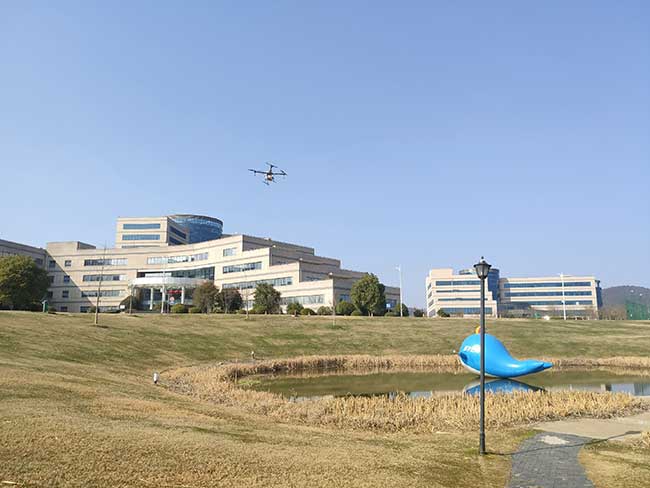
    In early February, TopXGun Robotics — based in Shanghai, China — started to use 10L drones for spraying disinfectant to help fight COVID-19. Six volunteers provided free disinfectant spraying service to more than 10 large companies, factories and universities, covering about 800,000 square meters in the Shanghai area.

    TopXGun outlined the advantage drones have over manual spraying.

    Safety. Using a UAV means no wokers inhale disinfectant. Pilots stay distant, and no one enters a sprayed building until it is safe.

    Effectiveness. By spraying from above, drones can reach difficult locations, such as a landfill or a roof. Reportedly, the spray can kill the virus in the air.

    Cost-savings. Only one pilot and one assistant are required to operate, reducing labor costs.

    The 10L drones are equipped with Septentrio’s high-precision GNSS, which provides robust anti-spoofing and anti-jamming capabilities, important in urban areas.

    Before spraying, TopXGun used a XC-05 vertical-takeoff-and-landing (VTOL) drone to survey the area. With reliable real-time kinematic (RTK) technology from the Septentrio receiver, the survey drone accurately generated a map of the operation area, marking the flight route. In this way, the spraying drone could fly and spray automatically in most cases. If the operation area is in an irregular shape or has obstacles in the middle — such as poles or trees — the mapping pilot can use markers to indicate these obstacles so the spraying drone will avoid it.

  • Taking to the field during the coronavirus pandemic

    Taking to the field during the coronavirus pandemic

    City officials in Sarasota, Florida, kept their staff actively working during COVID-19 social distancing mandates by training and tasking them with mapping utility data in the field.

    The city’s plan to rebuild its GIS database had an estimated five-year timeline. GIS Coordinator William Rockwell suggested to city manager Tom Barwin that those unable to work from home be trained to collect the data. Rockwell worked with Sarasota IT Director Herminio Rodriguez to calculate the cost of acquiring enough GNSS receivers for the idle staff to use, and discovered a substantial cost savings.

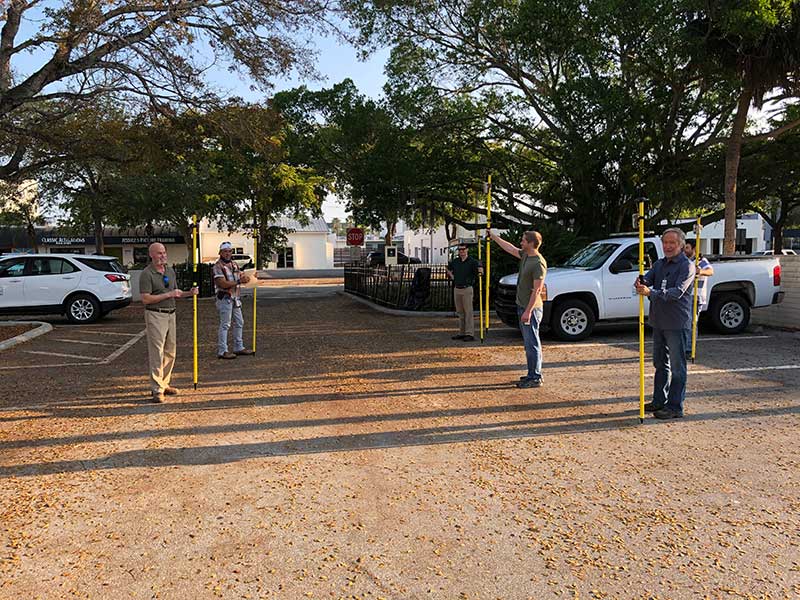
    Hands-on training took place in the Sarasota City Hall parking lot, with trainees practicing social distancing. (Photo: Eos Positioning)
    Hands-on training took place in the Sarasota City Hall parking lot, with trainees practicing social distancing. (Photo: Eos Positioning)

    “By implementing this project, we not only keep city staff productive, but we’ll also be collecting data that would otherwise cost hundreds of thousands of dollars if we outsourced the work,” Rockwell said.

    Training from a Distance. Rockwell obtained affordable Arrow 100 GNSS receivers from an Eos Positioning distributor and hosted small-group training sessions in the city hall parking lot. Employees from a multitude of different departments were trained, such as a parking enforcement officer and a transportation planner.

    All employees were carefully kept six feet apart. From a maintained distance, Rockwell explained the basic concept of data collection using high-accuracy Arrow 100 receivers with ArcGIS Collector.

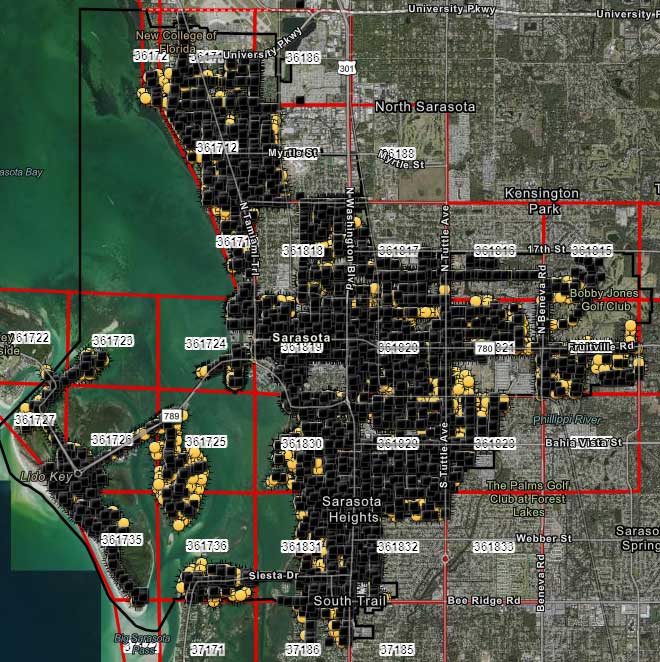
    The new team mapped 93% of street lights and road signs in one month. (Photo: Eos Positioning)
    The new team mapped 93% of street lights and road signs in one month. (Photo: Eos Positioning)

    The employees took turns collecting sample data so Rockwell could address any initial concerns. He also gave each of them a printed map series, created in ArcGIS Pro, that showed the city divided into 28 grids. This allowed the team members to easily mark off where they collected data each day.

    At the end of each day, the workers synced their data, collected by the Arrow 100s, to ArcGIS Online, which allowed Rockwell to monitor progress.

    To date, 14 field workers have collected 93% of the city’s 6,000 street lights and 16,000 road signs. Although the 30-day project pilot has finished, the city plans to collect the remaining lights and signs, as well as the city’s 35,000 trees, later this year. High-accuracy GIS data collection has received encouraging feedback from management.

    “I’m thrilled the city is supporting this initiative,” Rodriguez said. “To be able to take employees doing very, very different jobs and put them in the field — this wouldn’t have been possible in a normal environment. We are excited that everyone is chipping in.”

  • GMV creates mobile app to for safe return to work

    GMV creates mobile app to for safe return to work

    GMV logoTechnology multinational GMV has launched Covclear, a mobile app to ensure a safer and more efficient return to work after the COVID-19 lockdown.

    The application helps to make sure offices will be a safe workplace while minimizing the risk posed to the health of employees or other persons who are working in open workplaces in an environment of maximum safety and protection.

    The app is collaborative and relies on a principle of co-responsibility between the company and its employees to protect their own health and the health of their relatives and workmates.

    Covclear integrates all the following in a single platform: a daily medical health check of all employees; recording of trips to restricted sites; contact tracing within the firm; control of office access by means of temperature readings; quarantine management; and control of site occupancy. It also publishes the company’s healthcare crisis rules.

    First and foremost, it offers a self-check prepared by clinicians to assess the state of people and pinpoint any contagion risk before they commute to work. On the basis of employees’ daily responses, the app determines their risk level on their own phone, generating a workplace accessing QR color code.

    A red code would trigger automatic three-day contract tracing, giving all these contacts instant and anonymous warning so they can act accordingly. All this is conducive to the ongoing safety of all work colleagues.

    Covclear also allows for management of site occupancy, assigning days of on-site working to employees and thereby ensuring maintenance of optimum occupancy levels in places with a large number of workstations.

    The app developed by GMV has been designed to protect information at source, thereby guaranteeing data-protection compliance at all times. The company will have access only to the QR code color for carrying out the corresponding access control and to gain an overview of the company’s state of health.

    Covclear, which is already successfully up and running in some company offices, springs from the company’s own safety needs. It has been set up in only a few weeks thanks to the company’s wealth of expertise in the development of technology and mobile apps.

    At the same time, and mindful that it could be useful for third parties, GMV is also making this app available to its clients and suppliers and to any other firm that might be in need of such safe going-back-to-work services.

    Covclear includes four applications: iOS and Android user apps, an Android personnel access control app, and an administration web tool for the company. The data is kept in totally dependable, GDPR-compliant cloud servers.