
Tag: digital edition

  • Innovation: A look back at 35 Years of ‘Innovation’

    Innovation: A look back at 35 Years of ‘Innovation’

    Innovation Insights with Richard Langley
    Innovation Insights with Richard Langley

    Click to read the full Innovation Insights column, Innovation Insights: It starts with the physics”

    This is my 300th and last “Innovation” column in GPS World. I have mixed feelings about stopping the column. I’ve really enjoyed doing it for the past 35 years, but editorial deadlines can be difficult to meet sometimes, especially when I’ve got other things to get done or if they come in the middle of a vacation.

    To rephrase the old adage, editorial deadlines wait for no one. Looking back, I don’t know how I managed to initially produce six and then 10 columns each year, along with all my other duties as a university professor. Mind you, as I’ll soon discuss, most of the articles in the columns were authored by others. My job mostly was to edit the articles to help the authors tell their stories in a particular GPS World style and sometimes to improve their submitted figures. Additionally, in 2006, I started to write a sidebar called “Insights” to provide some basic background material about each column’s topic. A few years ago, I became editor-in-chief of the Institute of Navigation’s journal NAVIGATION, which takes up a bit of my time, along with lecturing and managing a research team. So, at 75, I thought it might be a good time to lessen the load a little bit.

    In this last column, I’m going to tell the story of how “Innovation” came to be and review some of the column’s developments over the years.

    How it all began

    In the fall of 1989, GPS World’s founding editor, Glen Gibbons, approached Dave Wells, Ph.D., a fellow faculty member in the then Department of Surveying Engineering at the University of New Brunswick (UNB) – about assisting with a “technology/product development column” in the magazine he was about to start. Glen wanted it to provide “an analysis and commentary on the research, development, product issues and needs of the GPS community.” And, since GPS World readers would have marked differences in their knowledge and expertise in the GPS area, “the column should deal with issues that have broad application and interest and are presented in terms that are accessible to as wide a range of readers as possible,” Glen said in a letter to Dave.

    Glen had heard about Dave’s (and UNB’s) early involvement with GPS. When I came to UNB in 1981, UNB was already carrying out some of the first theoretical studies on how GPS could be used by surveyors and geodesists for precise positioning. Shortly afterwards, UNB participated in some of the first surveys using the Macrometer V-1000 and Texas Instruments TI 4100 receivers and developed software to process the resulting data. In 1983, Dr. Gerhard Beutler from the Astronomical Institute of the University of Bern came to UNB on a sabbatical and began developing his own GPS data processing software that would eventually become the Bernese GNSS Software or just “Bernese” to those in the know. Somehow, in between our GPS algorithm and software development, teaching, mentoring graduate students and other duties, we managed to self-publish the first textbook on GPS, Guide to GPS Positioning. With a publication date of December 31, 1986, it went on to sell more than 12,000 copies in the English version alone. It was also translated into Chinese, Spanish and Vietnamese. So, perhaps it is not surprising that Glen came to knock on UNB’s door when he was starting up his magazine.

    Getting back to Glen’s letter, he went on to say, “It would be possible to handle the preparation or presentation of the column in one of several ways: We could identify a single person who would have primary responsibility for writing all the columns and whose byline would appear on them; we could have a person act as the coordinating editor responsible for obtaining suitable contributions from various authors; or we could establish a collective or institutional editorship with column responsibilities shared among a pool of contributors.”

    The letter arrived in early November 1989, and Dave, I and Alfred Kleusberg, Ph.D., who was a research fellow in the department (and subsequently a professor), began to discuss whether we wanted to take on the responsibility for the column and, if so, how we would manage it. I shortly departed to the University of Bern, where I would spend the better part of two months during my first sabbatical. Communication had to take place using e-mail, although phone, telefax and telex were also possible. Universities had e-mail before most other organizations thanks to BITNET (known initially in Europe as the European Academic and Research Network or EARN), a computer network that predated the Internet. My BITNET e-mail address was lang@unb or [email protected]. As I recall, the personal part of the address was limited to at most four characters. So, when UNB joined the Internet, I basically kept the same e-mail address: [email protected]. I talked about GPS and the Internet in the November 1995 edition of the column. But I’m getting ahead of myself.

    FIGURE 1: First page of Dave Wells’ notes from December 31, 1989 on how UNB would manage the “Innovation” column. (Photo: GPS World archives)
    FIGURE 1: First page of Dave Wells’ notes from December 31, 1989 on how UNB would manage the “Innovation” column. (Photo: GPS World archives)

    That December, the three of us more or less agreed that we would handle the column in some form. From Switzerland, I sent Dave a list of 12 possible topics for the column, but I added the rider: “Note that I am not necessarily volunteering to write any of the articles.” As we know, things turned out a little differently. During the university’s Christmas break, after I returned to Fredericton, we met at Dave’s house to discuss how we would manage the column in more detail. We met on New Year’s Eve — a Sunday afternoon — and decided that Alfred Kleusberg and I would manage the column as co-editors, with Dave serving as one of the inaugural members of the magazine’s Editorial Advisory Board. The column editorship was to be a blend of the second and third of Glen’s suggestions. The task wasn’t supposed to be too onerous. After all, the magazine was to be published bimonthly. Lots of time to get someone to write an article and for Alfred and I to edit it. Or so we thought. And the column was to be called, simply, “Innovation.” I don’t recall who came up with the name — whether it was one of the three of us or Glen, but the notes from that Sunday afternoon meeting have “Innovation” written at the top of the first page (see FIGURE 1). Ideally, as per Glen’s suggested guidelines, column articles were to be tutorial in style or written in a way that they could be understood, for the most part, by non-experts in the field.

    At that Sunday afternoon meeting, we decided that Dave and Alfred would write the article for the first column. It was an introduction to GPS and some possible applications titled “GPS: A Multipurpose System.” With a couple of iterations of the article back and forth with Glen via fax (GPS World didn’t have e-mail until a few years later) and a figure delivery by FedEx, the column debuted in GPS World, Volume 1, Issue 1, January/February 1990.

    It used three different positioning scenarios to explain how GPS could provide positioning accuracies from a Selective Availability-constrained 100 meters down to the sub-centimeter level. It also outlined GPS’s ability to determine platform attitude with multiple antennas and its use for accurate time transfer.
    There was a brief introductory couple of paragraphs, which would be a column standard (later extended to a sidebar). That first introduction went as follows:

    “‘Innovation’ will be a regular column in GPS World and will comment on GPS technology, product development, and other issues and needs of the GPS community. Coordinating editors are Alfred Kleusberg, Ph.D. and Richard Langley, Ph.D. both of the Department of Surveying Engineering at the University of New Brunswick in Fredericton, New Brunswick, Canada, as is David Wells, Ph.D., co-author of this initial column.

    “The first few columns will introduce GPS World readers to GPS technology. This first column focuses on the many capabilities of GPS. The next column will look at the flip side — what are the limitations of GPS? ‘Innovation’ will discuss some intriguing questions in future columns: Why is the GPS signal so complicated? How have surveyors been able to use it to get such accurate results? How serious is selective availability? We will also devote columns to exploring in depth some of the issues raised in this column: GPS and electronic charts, GPS and geographical information systems and prospects for using GPS and GLONASS together. We welcome readers’ comments and topic suggestions for future columns.”

    That introduction listed the topics for the first year of “Innovation.” They were written by Alfred, me, both of us, or other researchers at UNB and, in one case, by colleagues at the Canadian Hydrographic Service. We had a very positive response to our first few column articles, so Glen kept us on, but at some point in 1990, he told us the magazine was going to 10 issues a year. There were just too many GPS-related developments to be covered in just six issues. So now there would be a monthly column except for the July/August and November/December issues.

    In the second year, Alfred and I continued to write some tutorial articles for the column, but we started to invite others to submit articles, which we would then edit for style and space, and that became the tradition. Over the years, we have had hundreds of leaders in GNSS technology development and applications pen articles. In the second and third years of the column, for example, we featured articles by Stephen DeLoach on precise real-time dredge positioning, Jack Klobuchar on ionospheric effects on GPS, Edward Krakiwsky on GPS vehicle location and navigation, Yehuda Bock on continuous monitoring of crustal deformation, Keith D. McDonald on GPS in civil aviation, David Coco on GPS as satellites of opportunity for ionospheric monitoring, Derrick Peyton on using GPS and remotely-operated vehicles to map the ocean, Oscar Colombo and Mary Peters on precision long-range DGPS for airborne surveys, Adam Freedman on measuring the Earth’s rotation and orientation with GPS, Christian Rocken and Thomas Kelecy on high-accuracy GPS marine positioning for scientific applications, Marvin May on measuring velocity using GPS, Thomas Yunck describing a new chapter in precise orbit determination, and Gregory Leger on using GPS-equipped drift buoys for search and rescue operations. And the list goes on and on.

    As I mentioned, in the second year of GPS World, there were 10 issues. That changed in 1993, when the magazine went to 12 issues a year, but the September and December issues were “Showcase” issues featuring more industrial news and announcements of new products. It was also to include “The Almanac” — an update on the GNSS constellations, which I also looked after. Eventually, the “Showcase” issues became regular issues but with “Innovation” replaced by “The Almanac” at the “back of the book.”
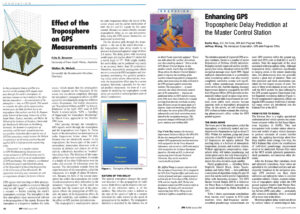
    Figure 2A Different eras of “Innovation” throughout the years; the January 1993 edition (left) and the January 2000 edition (right). (Photo: GPS World archives)
    Figure 2A Different eras of “Innovation” throughout the years; the January 1993 edition (left) and the January 2000 edition (right). (Photo: GPS World archives)

    The column look changed a few times over the years, typically coinciding with magazine makeovers, with the logo changing from the original 3D terrain graphic to a logo of people with stuff in their hands starting in January 1999, to a “bits” logo from January 2001, to a somewhat plain format from September 2003, with the “Insights” sidebar and my photo from April 2006, to a circle photo from November 2015, and with a new photo from January 2016. FIGURES 2A, 2B and 2C show representative column snapshots for each era.
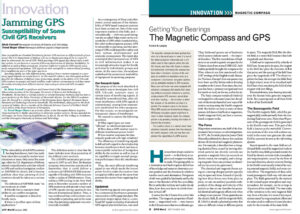
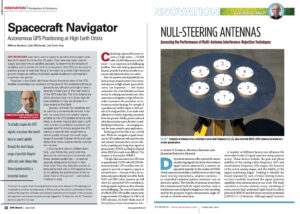
    Figure 2B Different eras of “Innovation” throughout the years; the January 2003 edition (left) and the September 2003 edition (right). (Photo: GPS World archives)
    Figure 2B Different eras of “Innovation” throughout the years; the January 2003 edition (left) and the September 2003 edition (right). (Photo: GPS World archives)


    FIGURE 2c  Different eras of “Innovation” throughout the years; the April 2006 edition (left) and the February 2016 edition (right). (Photo: GPS World archives)
    FIGURE 2c Different eras of “Innovation” throughout the years; the April 2006 edition (left) and the February 2016 edition (right). (Photo: GPS World archives)

    The tutorials

    As I mentioned earlier, right from the beginning of “Innovation,” we decided to have essentially two types of articles in the column: discussions of recent advances in GPS (and later GNSS) applications and related technology written by guest authors and tutorials explaining the fundamentals of GNSS including how the three main components of GNSS work: the satellites, the control segment and the user equipment. Here is a list of some of the tutorials written by the UNB team (mostly me) that were featured in “Innovation”:

    • GPS: A Multipurpose System (January/February 1990)
    • The Limitations of GPS (March/April 1990)
    • Why is the GPS Signal So Complex? (May/June 1990)
    • The Issue of Selective Availability (Sept./Oct. 1990)
    • Comparing GPS and GLONASS (Nov./Dec. 1990)
    • The GPS Receiver: An Introduction (Jan. 1991)
    • The Orbits of GPS Satellites (March 1991)
    • The Mathematics of GPS (July/August 1991)
    • Time, Clocks, and GPS (Nov./Dec. 1991)
    • Basic Geodesy for GPS (February 1992)
    • The Federal Radionavigation Plan (March 1992)
    • Precise Differential Positioning and Surveying (July 1992)
    • The GPS Observables (April 1993)
    • Communication Links for GPS (May 1993)
    • GPS and the Measurement of gravity (Oct. 1993)
    • RTCM SC-104 DGPS Standards (May 1994)
    • NMEA 0183: A GPS Receiver Interface Standard (July 1995)
    • Mathematics of Attitude Determination with GPS (Sept. 1995)
    • A GPS Glossary (Oct. 1995)
    • GPS and the Internet (Nov. 1995)
    • The GPS User’s Bookshelf (Jan. 1996)
    • Coordinates and Datums and Maps! Oh My! (with Will Featherstone; Jan. 1997)
    • The GPS Error Budget (March 1997)
    • GPS Receiver System Noise (June 1997)
    • GLONASS: Review and Update (July 1997)
    • The UTM Grid System (Feb. 1998)
    • A Primer on GPS Antennas (July 1998)
    • RTK GPS (September 1998)
    • The GPS End-of-Week Rollover (Nov. 1998)
    • The Integrity of GPS (March 1999)
    • Dilution of Precision (May 1999)
    • GPS, the Ionosphere, and the Solar Maximum (July 2000)
    • Navigation 101: Basic Navigation with a GPS Receiver (October 2000)
    • Getting Your Bearings: The Magnetic Compass and GPS (Sept. 2003)
    • GPS by the Numbers: A Sideways Look at How the Global Positioning System Works (April 2010); this was the 200th “Innovation” column.

    As you can see, the tutorials became fewer as the years went by. As my research career expanded, I just didn’t have the additional time to write more tutorials. I had taken over sole responsibility for the column in 1997, shortly after Alfred Kleusberg left UNB to pursue a career opportunity in Germany.

    However, the tutorial columns were (and still are) popular judging by the comments sent to GPS World and the number of citations for some reported by Google Scholar. For example, the one on dilution of precision has been cited in papers, theses, and reports 837 times to date. While not as many as a paper on an important medical breakthrough, it’s not a bad record for an article on a navigation topic.

    Changes at the top

    The column has seen four changes of editorial leadership at GPS World. Glen Gibbons, the founding editor, stepped down as editor-in-chief in July 2005 and shortly afterward started up his own publishing company to produce the magazine Inside GNSS. Alan Cameron took over the job in 2006, and subsequently became the magazine’s publisher and editor-at-large. Tracy Cozzens became the senior editor in 2019 with responsibility for “Innovation,” and then Matteo Luccio became editor-in-chief of the magazine in May 2021. I’m happy to say I got along well with all of these “bosses,” and they continued to put up with me even when I got the column in at the last moment. Additionally, the magazine’s various art directors over the years have always made the column look good.

    However, after I took over sole responsibility for the column, there were no changes at the bottom. So, I’ve ended up being the longest serving GNSS rapporteur or editor, with Glen and Alan and Tracy having retired at different epochs during the past decade. In addition to the column, I have contributed a number of shorter articles to the magazine and the GPS World website over the years, sometimes joined by colleagues from different organizations, in particular the German Aerospace Center.

    A bit of my own history

    I wasn’t going to bother with an “Insights” sidebar for this last column. The column isn’t about a single topic that needs any background information. But you might be wondering how I got this gig as the “Innovation” editor (apart from what I’ve already told you) or got my job at UNB for that matter. So, I’m repurposing the “Insights” sidebar from the February 2016 issue of GPS World, in which I talk a bit about antenna arrays and my own radio tinkering. It doesn’t mention that after getting my Ph.D., I spent two years at MIT as a postdoctoral fellow working under the famous physicist Irwin Shapiro on analyzing lunar laser ranging data to uncover subtle changes in Earth’s rotation due to the fluctuating winds of its atmosphere. Even as a graduate student, I was involved with satellite navigation and helped to uncover a bias in the coordinate system used by the U.S. Navy Navigation Satellite System, commonly known as Transit, by comparing station coordinates with those I obtained in my very long baseline interferometry research. I’ve always been a radio nerd both in my day job and as an avid shortwave radio hobbyist. So, it is not too surprising that I got involved with GPS and then GNSS (including ionospheric studies) and established a GNSS research group at UNB with some stellar graduates over the years.

    The archives

    I would like to report that all 300 “Innovation” columns are available for download on the Internet. Unfortunately, that is not the case — yet. Perhaps that’s something that could be done when I actually do retire. However, the first two years of the column are available here: gauss.gge.unb.ca/gpsworld/innovation.html. Hopefully, we can continue to keep that URL alive for a few years. If it should disappear, just Google it or consult the “Wayback Machine” at archive.org. The columns since June 2008 (with a few more before that) are available here. Full digital versions of each issue of the magazine since January 2009, including the “Innovation” column, are available here.

    The end

    And there you have it. It only remains for me to thank all of the authors who have shared their research and understanding of the many facets of GNSS in the column over the past three-and-a-half decades, the staff at GPS World for getting the column into the print and later the electronic editions on the Web, the readers whose positive feedback encouraged me to keep the column going, and to my wife, Marg, who let me spend the long hours on the column when I should have been attending to things around the house. So, now, to paraphrase a much better journalist than I: Goodbye, and good luck.


    The November 2024 issue of GPS World features Professor Richard Langley’s 300th and final “Innovation” column. His first one appeared in the January/February 1990 issue, the magazine’s very first. In celebration of Richard’s decades-long contribution to GPS / GNSS / PNT, we are publishing a selection of testimonials and photos from some of his colleagues and friends, gathered by his former students Sunil Bisnath and Attila Komjathy. Click here to read the testimonials.
  • BeiDou Navigation Satellite System in 2024

    BeiDou Navigation Satellite System in 2024

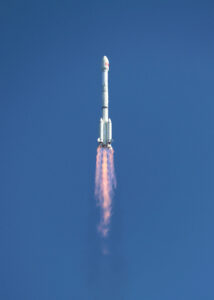
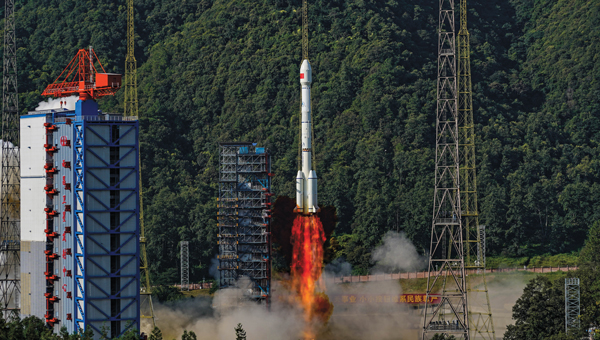
    Successful launch of the 59th and 60th BDS satellites on Sept. 19, 2024. (Photo: International Cooperation Center of China Satellite Navigation Office)
    Successful launch of the 59th and 60th BDS satellites on Sept. 19, 2024. (Photo: International Cooperation Center of China Satellite Navigation Office)

    Upholding the principles of “superior construction, excellent management, and substantial development,” the BeiDou Navigation Satellite System (BDS) implements multifaceted strategies to ensure uninterrupted and stable system operations and services, with its backup satellites launched into orbit as per the scheduled plan in 2024. Concurrently, research on next-generation BDS technology upgrades and related technological trials for integration with low-Earth orbit (LEO) positioning, navigation and timing (PNT) systems are vigorously promoted, further enhancing international collaboration and propelling the continuous advancement of BDS in the new era.

    1. System operation and services

    All figures provided by the author.
    All figures provided by the author.

    BDS currently consists of 45 operational satellites in orbit, delivering services through 15 BDS-2 and 30 BDS-3 satellites. Since May 2023, five BDS-3 backup satellites have been launched to bolster system resilience.

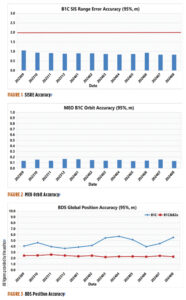
    According to the monitoring data from the International GNSS Monitoring and Assessment System (iGMAS) and the International GNSS Service (IGS) in 2024, BDS achieves a service availability of 100% and exhibits a single satellite signal continuity of 99.991% per hour, with signal-in-space accuracy surpassing 0.9 meters (95%), broadcast ephemeris accuracy surpassing 0.2 m (95%), single frequency three-dimensional positioning accuracy of the B1C signal better than 6 m (95%, global average), and the B1C/B2a dual-frequency three-dimensional positioning accuracy superior to 3 m (95%). The timing accuracy is noted to be better than 10 ns (95%). The performance of the BDS PNT service has consistently met all performance requirements.

    Figure 1 illustrates the spatial signal accuracy of the BDS B1C signal. Figure 2 presents the broadcast orbit accuracy of the BDS B1C signal. Figure 3 showcases BDS’ global positioning accuracy for both single-frequency and dual-frequency.

    Through the BeiDou Satellite-Based Augmentation System B1C (BDSBAS-B1C) and the BeiDou Satellite-Based Augmentation System B2a (BDSBAS-B2a) signals, BDS offers single-frequency BDSBAS service that meets APV-I requirements and a dual-frequency multi-constellation service that meets CAT-I requirements for China and surrounding regions. The ionospheric grid model has been persistently refined to enhance the performance of the satellite-based augmentation services at the peripheries. Evaluation results reveal that the BDSBAS service attains a single-frequency positioning accuracy of 1.29 m (95%) horizontally and 1.99 m (95%) vertically, and a dual-frequency positioning accuracy of 0.77 meters (95%) horizontally and 1.41 m (95%) vertically.

    BDS disseminates precise orbit and clock difference corrections and inter-code biases via the precise point positioning (PPP)-B2b signal, providing PPP services to China and surrounding areas. Evaluation results indicate that the BDS-only precise point positioning accuracy is 0.16 m (95%) horizontally and 0.22 m (95%) vertically, with a convergence time of less than 20 minutes.

    In 2024, building upon its PNT services, BDS actively offers diversified specialized services, including regional short message communication, global short messaging, and international search and rescue. The number of user terminals for regional short message communications continues to grow. Based on inter-satellite links, global short messaging services can provide users with global random-access capabilities. These services have been applied in projects such as the Einstein Probe mission, the SVOM satellite in collaboration with France, and gravitational wave detection satellites, achieving instant return of global detection data. While six medium-Earth orbit (MEO) satellites are equipped with international maritime search and rescue payloads, the BDS return link enables transmission with a communication delay of less than 12 seconds, and a success rate of 96.82%, suitable for distress alert feedback, disaster information broadcasting and other multi-application scenarios.

    The stable BDS operation ensures the consistent and rapid improvement of application industries and the expansion of application scenarios. In 2023, the total output value of China’s satellite navigation and location-based service industries reached more than RMB 530 billion, marking a growth of more than 7% compared to 2022.

    2. System construction and development

    In May 2023, a backup geostationary orbit (GEO) satellite was launched, followed by two additional MEO backup satellites launched in December 2023, featuring upgraded global short message communication capacity and enhanced intelligent payload technologies. These backup satellites have successfully completed in-orbit testing and are now ready to provide services as needed. In September 2024, another pair of MEO backup satellites, equipped with innovative atomic clocks and a new type of inter-satellite links, were deployed. These backup satellites improve system reliability and service performance and facilitate experimental validation for next-generation satellite technology upgrades.

    To continuously enhance system service performance, BDS has developed precision and stability enhancement plans for both the ground control system and the in-orbit satellite support system. Efforts include intensifying satellite-based and ground-based multi-source data fusion analysis, conducting regular assessments of constellation and ground system statuses, and improving fault automatic diagnosis, response efficiency, and intelligence capacity.

    China is actively promoting the integrated development and experimental validation of BDS and LEO satellite navigation augmentation systems. Leveraging several test satellites within the under-construction LEO constellation, experiments including GNSS+LEO FPPP have been conducted. Results demonstrate that GNSS orbit determination accuracy is better than 5 cm (1σ), and clock error determination accuracy is superior to 0.15 nss (1σ). With signal enhancement from two to three LEO satellites, PPP positioning accuracy reaches 0.3 m with a convergence time at the minute level, thereby enhancing high-precision service performance and reducing PPP convergence time.

    In May 2023, China succesfully launched the first BDS-3 GEO backup satellite. (Photo: International Cooperation Center of China Satellite Navigation Office)
    In May 2023, China successfully launched the first BDS-3 GEO backup satellite. (Photo: International Cooperation Center of China Satellite Navigation Office)

    3. International coordination and cooperation

    China has been deeply involved in international satellite navigation. Since 2023, China has actively participated in a series of events under the United Nations framework, including the ICG-17 and the United Nations Workshop on the Application of Global Navigation Satellite Systems, contributing to the global advancement of satellite navigation. China has engaged in deep collaboration with system providers from the United States, Russia and the European Union to facilitate compatibility and interoperability, covering navigation signal structures, time systems, coordinate frameworks, test and assessment. Meanwhile, discussions are held with regional navigation satellite systems and emerging systems on topics of mutual interest, such as high-precision services and emergency alert services. In 2024, the BDS timing service was officially included in the Time Bulletin by the Bureau International des Poids et Mesures (BIPM), signifying international recognition of the ability to provide precise and reliable standard time services globally.

    China continues to expand its international partnership with BDS. In recent years, events including the BDS/GNSS Global Partner Forum, the China-Africa BDS Cooperation Forums, the China-Arab States BDS Cooperation Forums, the China-Central Asia BDS Cooperation Forums, the International Training Workshop on BDS Technologies and Applications in the Belt and Road Countries and Regions and the International Summit on BDS Applications have been held to share the benefits of BDS/GNSS applications globally.

    BDS will continue to uphold the vision of “a first-class navigation satellite system developed by China and dedicated to the world.” It will make every effort to ensure the stable operation, steady upgrades, and advancements of the system, as well as in-depth research in technologies such as low-orbit PNT and lunar PNT, furthering the commercialization, industrialization, and internationalization of BDS applications

  • Highlights and insights from ION GNSS+ 2024

    Highlights and insights from ION GNSS+ 2024

    The GPS World team participated in ION GNSS+ 2024, held at the Hilton Baltimore Inner Harbor, Baltimore, from Sept. 16-20.

    The event showcased more than 400 technical presentations spanning six sectors, addressing commercial and policy dimensions and research advancements. GPS World had the opportunity to engage in a series of discussions and panels, including a plenary session full of stories of space, and of circumnavigating the globe in a sailboat using only paper charts, a compass, and a sextant to navigate.

    (Photo courtesy of ION)
    (Photo courtesy of ION)

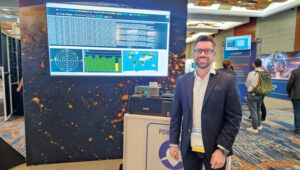
    Bob Addiss, senior software engineer at CAST Navigation, demonstrated CAST’s latest GNSS simulation systems. CAST GNSS systems can be configured to simultaneously provide multiple constellation types on each antenna element, such as GPS (including Y-Code, SAASM, M-Code AES and MNSA), BeiDou and GLONASS.

    (Photo courtesy of ION)
    (Photo courtesy of ION)

    Joshua Morales, StarNav CEO, led a demonstration of cold start positioning and timing using a StarNav receiver and simulated Xona PULSAR signals. The receiver tracked up to 13 PULSAR satellites simultaneously, producing real-time signal tracking and PNT data with a Safran GSG-8 simulator. This demonstration showcased StarNav’s receiver capabilities for LEO satellite-based PNT.

    (Photo courtesy of ION)
    (Photo courtesy of ION)

    More than 1,000 in-person attendees explored the show floor, visiting 44 exhibits. They had the opportunity to network, engage with exhibitors and dive deeper into the latest products and trends in the industry.

  • Location-based services are unseen guides

    Location-based services are unseen guides

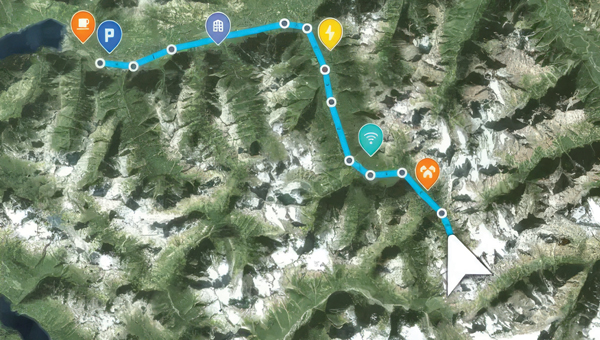
    HERE Mapmaking allows users to create detailed interactive maps of private sites, outdoors and indoors. This includes sites not covered by public maps, such as warehouses, yards, farms, mines and ports. (Photo: HERE Technologies)
    HERE Mapmaking allows users to create detailed interactive maps of private sites, outdoors and indoors. This includes sites not covered by public maps, such as warehouses, yards, farms, mines and ports. (Photo: HERE Technologies)

    Location-based services (LBS) are software services that allow apps to function as intended by collecting geodata and providing users with pertinent information based on their location. Examples include search, navigation, transportation, entertainment, social networking, marketing, shopping, remote health monitoring, parental control and asset tracking. These services rely on mobile networks to transmit and receive data and connect to analytics software operating on a remote server to process and send relevant data to the user.

    They have existed since the early 1990s but only gained traction after May 2000, when the U.S. government stopped degrading the civil GPS signal (a policy known as Selective Availability). This increased GPS accuracy by an order of magnitude overnight, making many more civilian applications possible. Since then, software engineers and developers have been designing LBS and building location-aware apps to deliver contextually relevant experiences to end users.

    Adoption of LBS has been extensive because these services produce quality geodata with personal, spatial and temporal dimensions. Although most people think of GPS when they think of geolocation, LBS is the unsung hero powering location-based online activities.

    LBS combines various positioning solutions — including GNSS, and trilateration from cell towers, Wi-Fi hotspots and other signals of opportunity — to collect the most accurate location data possible outdoors and indoors.

    LBS capitalizes on cell tower signals and Wi-Fi networks to gather geolocation when satellite reception is poor or entirely blocked, such as in urban canyons and underground parking lots. Although these alternative positioning systems are not as accurate as GNSS, the approximate location information they provide is generally sufficient for the purpose of the services — such as to find a store in a mall or a grader on a construction site.

    Monetizing LBS

    The advent of Web 2.0 and the mobile revolution have empowered Internet users to interact with their immediate physical world digitally. Suddenly, finding the shortest route in a new city, choosing from numerous restaurants for lunch, searching for the nearest gas station, consuming relevant stories on social media and snagging limited-time coupons and discounts are all possible at the tap of a button.

    Physical location has become instrumental in personalized online experiences, hence the need for location-aware apps. Software vendors have embedded seamless data collection capability into electronic devices, creating a business ecosystem surrounding people’s location details.

    Geodata collection is effortless but permission-based. While laws governing LBS vary by jurisdiction, they generally require users to accept an LBS-supported app’s privacy policy, which spells out what it does with location data. Additional steps include running the app and activating the device’s location service in the settings or approving on-screen permission request prompts before tracking can begin. Such a process helps ensure that users are aware of geodata collection and understand its inherent risks.

    In the early days of LBS, tech pundits argued that marketers would capitalize on the technology to bombard consumers with ads. Those were prophetic words — many heavily used apps today use LBS. The tech companies behind them leverage geodata to create valuable products and sell advertising space through their platforms.

    Although it is challenging to count the number of ads populating sites and apps, rough estimates say that average Internet users see thousands daily. It does not feel this way because in-your-face ads are no longer the norm in cyberspace — the discrete ones are, and they work. Experts predict that the $96 billion location-based advertising market will expand at a compound annual growth rate of 15.1% from 2023 to 2030.
    Unsurprisingly, tech titans enjoy the lion’s share of digital advertising revenue. In the United States, Google, Meta and Amazon collectively accounted for about 62% of the pie in 2023.

    Other corporate models exist to monetize geodata. The LBS-based game Pokémon Go is free to play, so it can grow a massive user base quickly and earn profits through in-game purchases. In addition to living off ad revenue, Tinder uses freemium pricing for its geographic matchmaking business and simplifies socialization and dating for paying subscribers.

    Moreover, Uber, Lyft and Airbnb swell their coffers through commissions, earning a cut for every transaction on their platforms. Big box store Target blends indoor mapping, beacon technology and geofencing to enable shoppers to pick up their orders at the nearest store’s entrance when they arrive. Aside from mostly Silicon Valley titans that have developed and gainfully used LBS for themselves to increase their valuations, others have decided to help non-tech enterprises innovate by integrating location-based technology into their operations.

    Democratizing Mapmaking

    Disrupting cartography is a low-hanging fruit. Humans have been drawing maps for millennia, yet many areas remain unmapped. Public maps usually exclude private locations. When they are part of the picture, these areas lack meaningful details to aid navigators.

    Solutions such as HERE Mapmaking aim to address these challenges. By combining GNSS positioning with satellite imagery, location data from cellular networks and Wi-Fi hotspots, and signals from a variety of sensors, HERE enables automotive and mass-market devices to map areas and features with sub-meter accuracy. To deliver a faster time-to-first-fix and display the positions of navigation devices correctly, this provider of digital mapping and location data leverages a full positioning technology stack, including power-efficient sensors and map tiles.

    Built on the HERE platform, this mapmaking solution primarily caters to automakers, transportation and logistics enterprises, e-commerce brands, public agencies and more. However, the company ensures its solution is powerful enough for developers by providing CLIs and APIs. At the same time, the platform remains intuitive for casual or less-technical users, such as students and data journalists, thanks to HERE XYZ — an interoperable, real-time, open location data management service.

    “Various elements of HERE XYZ are now embedded within HERE Mapmaking,” said Alex Gevrenov, senior director of product management at HERE Technologies. “This is where users can create unique (owned / proprietary), routing-capable maps that can be used at scale using simply our developer tools and HERE location services and SDKs.”

    The inclusion of HERE XYZ gives users live access to uploaded data and more flexibility in using rendering tools to pinpoint the precise whereabouts of devices and assets in indoor and outdoor settings. It also enables them to instantly share location data via the cloud. These capabilities are helpful when building offline and online interactive maps with spatial intelligence for location-aware apps with no or little code.

    Customization and responsiveness are crucial in interactive cartography. HERE XYZ complements the platform’s routing, geocoding and search functionalities.

    Furthermore, Gevrenov explains that with the rollout of UniMap — a new automated mapping system — interactive maps built on the HERE platform can now detect and reflect changes in the physical environment within 24 hours. “We are now externalizing these cutting-edge capabilities to make mapping at scale easy for our customers and partners.”

  • EAB Q&A: Promising approaches to non-GNSS PNT and modernizing the system

    EAB Q&A: Promising approaches to non-GNSS PNT and modernizing the system

    Question (Illustration: sumkinn/iStock/Getty Images Plus/Getty Images)
    (Illustration: sumkinn/iStock/Getty Images Plus/Getty Images)

    Question: What are currently the most promising approaches to non-GNSS PNT for applications that do not require high accuracy?

    Answer: The DOD PNT strategy posits use of space-based, regional and local sources of information to ensure PNT resilience if GPS is disrupted. Resilience does not require GPS-quality accuracy but must enable service continuity for operations while GPS is unavailable. Local sources are viable for limited areas; however, regional sources are necessary for broader coverage. Enhanced Loran (eLoran) can be a viable and affordable backup to GPS. It broadcasts at a much higher power and at a different frequency than GPS, is virtually un-jammable over wide areas, is receivable underwater, and offers a communications channel. eLoran has been recommended as a critical infrastructure backup to GPS by the National PNT Advisory Board and directed by the U.S. Congress. Yet, lacking federal interest or resources, its infrastructure is heedlessly being dismantled — while Russia, China and Iran invest in their own Loran-based backups. What do they know that the United States does not?

    Q: What reforms in GPS governance would help accelerate the modernization of the system?

    A: Today, modernized GPS is not enough, though it remains the cornerstone of the national PNT Enterprise. Attention to the entire Enterprise is urgently needed. With GPS, the United States enjoyed a dominant GNSS position for nearly three decades. Absent PNT attacks or mishaps, a sense of ‘business-as-usual’ lethargy impedes GPS improvements and the adoption of complements. Leadership watches GPS modernization slide to the right while its complements and needed domestic critical infrastructure backups languish. Within DoD, GPS is no longer a discrete program, and there is no other joint program to command resources and bring urgency and coherence to resilient PNT efforts. Structural changes and experienced, competent acquisition managers are necessary to focus resources and deliver capabilities, and committed leadership is essential for continuity. They must acknowledge PNT as vital to our national security and economy — while our adversaries and competitors leverage its value and can exploit any unaddressed vulnerabilities.

  • Precision agriculture is transforming farming and the US economy

    Precision agriculture is transforming farming and the US economy

    Photo:
    Photo: Daniel Balakov / E+/ Getty Images

    Many of us mindlessly shop for food, fuel, clothing, home goods and more without thinking much about where it all comes from, forgetting that in most cases it all started on a farm. Most people are unaware that a key component of agriculture production, besides the soil beneath our feet, is the use of critical technologies such as GPS and other GNSS contstellations. When fully leveraged, technology can be a part of the solution to many of the challenges farmers face today and be a tool in feeding a growing global population.

    With technology at their fingertips, farmers across the globe can enhance their productivity through precision agriculture — a practice that uses GNSS technology to maximize agricultural outputs, while reducing farmer inputs and improving sustainability. Precision agriculture is used to till, plant and harvest crops such as corn, soybeans, cotton, peanuts, wheat, tubers and alfalfa. For example, techniques including yield mapping for fertilizer application have been used on fields across the country for more than three decades.

    Social and Economic Benefits of Precision Agriculture

    According to the U.S. Department of Agriculture (USDA), total U.S. farm output tripled from 1948 to 2021 largely due to advancements in technology — even as farm labor, land and other inputs declined. Farmers needed 8 million fewer acres to produce the same wheat yields in 2018 as in 1990, according to an American Farm Bureau Federation report.

    A closer look at four crops commonly tilled, planted and harvested using precision agriculture techniques highlight technology’s economic benefits:

    • Sweet Corn: The United States is the largest producer of sweet corn at roughly 315 million tons per year, accounting for 34% of global production. There are more than 316,000 U.S. corn farms, 95% of which are family-owned. In 2021, Florida was the largest producer of sweet corn, followed by California, Washington and Michigan. The United States exports 69 million tons of sweet corn annually, yielding a value totaling $9.2 billion. China is the largest buyer of U.S. sweet corn, purchasing 31% of all U.S. exports.
    • Peanuts: In 2023, the United States produced roughly $1.6 billion in peanuts, led by Georgia — with 55% of total U.S. peanut production — followed by Texas (10%), Alabama (10%), and Florida (9%). In 2023, the United States exported more than $889.5 million worth of peanuts, with Mexico and Canada as top destinations. With new techniques to adjust digger conveyor speeds, yield continues to improve.
    • Cotton: The United States produces roughly 15 million bales of cotton each year, contributing to a $21 billion industry. Texas boasts the highest number of planted acres with 40% of the U.S. supply (6 million bales), followed by Georgia at about 2.5 million bales. The United States is the world’s leading exporter of cotton, totaling 35% of the total global supply. Farmers are increasingly using autosteer technology to help grow and harvest cotton — with the adoption of precision agriculture equipment jumping from 46% in 2008 to 86% in 2023, according to a survey conducted by Cotton Grower.
    • Wheat: The United States produces roughly 7% of the global wheat supply — accounting for roughly $12.7 billion — with Kansas, North Dakota, Montana, Texas and Oklahoma producing the most wheat across the country.

    Precision agriculture also helps farmers work toward important conservation goals. Auto guidance capabilities and seeding sensors increase tractor and seeding efficiencies, reducing herbicide use by 9% and fossil fuel use by 6%. These small but important changes contribute to a wider effort to employ more sustainable agriculture practices, with precision agriculture and GPS technology sitting front and center.

    Through it all, GNSS remains at the forefront of a strong, efficient agriculture system. Whether it’s auto-steering tractor technology or strengthened hydrology practices, new precision agriculture technologies are released every year. If broader adoption of precision agriculture technologies continues, the United States can increase its national crop production by 6%, bolstering the agriculture economy even further.

    Photo: VR_Studio / iStock Editorial / Getty Images Plus / Getty Images
    Photo: VR_Studio / iStock Editorial / Getty Images Plus / Getty Images

    GPS and GPSIA in the Field

    GPS Innovation Alliance (GPSIA) members Deere & Company and Trimble are at the forefront of advancing precision agriculture techniques globally, creating more opportunities for farmers to boost their productivity and reduce crop loss with innovative GPS and GNSS technologies.

    Deere & Company offers several receivers that use GNSS technology to plant crops with accuracy down to the centimeter and coupled with the sensors and computer vision, allow farmers to plant at quicker speeds without damaging crops — including its fully autonomous 8R tractor unveiled in 2022. While Deere & Company had been developing new GNSS receivers for years, a critical partnership with NASA’s Jet Propulsion Laboratory (JPL) in 2004 was groundbreaking. Deere & Company modified its GNSS receivers to tap into the agency’s network of ground stations and incorporated JPL’s software. The innovation allowed them to introduce autonomous tractors worldwide, revolutionizing precision agriculture and leading to a wider acceptance of autonomous tractor technology.

    Trimble has brought innovative solutions to precision agriculture since the company first began producing its agricultural GPS receivers in 1997. Since then, the company has unveiled state-of-the-art technologies to support farmers, including RTX technology which uses precise point positioning (PPP) to allow farmers to plant seeds and farm with sub-inch GNSS accuracy. Trimble also has announced several partnerships that strengthen the company’s precision agriculture capabilities from CNH and CLAAS (2011) to Horsch (2021) to AGCO (2023).

    In 2022, Trimble deepened its partnership with agricultural machinery manufacturer CLAAS to integrate Trimble’s GPS PILOT system and SAT 900 GNSS receiver with CLAAS’ CEMIS 1200 display, providing farmers greater accuracy when tilling, seeding, spraying, or harvesting their fields. In April 2024, Trimble created a joint venture with AGCO to accelerate the pace of innovation and increase farmer’s access to precision agriculture technology.

    Critical Role of Broadband in Precision Agriculture

    Reliable broadband connectivity goes hand-in-hand with GNSS technologies and allows full use of agriculture technology and its resulting benefits. According to the USDA, more than 20% of rural households and farms do not have reliable access to broadband, limiting access to new technologies that would enhance efficiency and help farmers grow their businesses.

    Industry leaders are working to ensure that farms across the country can reliably access the Internet. For example, Deere & Company, in partnership with SpaceX, is working to close the connectivity gap among farmers with satellite communications (SATCOM) services. Later this year, Deere & Company will begin to offer Starlink satellite communications technology to farmers across the United States and Brazil.

    Beyond industry investment, the USDA’s Rural Development Broadband ReConnect Program provides grants and loans to strengthen broadband infrastructure and equipment in eligible rural areas. In addition, the National Telecommunications and Information Administration is overseeing the $42.5 billion Broadband Equity, Access, and Deployment program, intended to expand high-speed Internet access for communities across the country with little to no Internet connectivity. Establishing tech-neutral policies within these and similar programs as well as focusing on delivering coverage to uncovered agriculture lands to the last acre is key to improving efficient agriculture production.

    Precision Ag on the Hill

    Precision agriculture is also making its way into policy conversations at all levels of government as awareness around agriculture technology and its benefits are realized.

    The 2018 Farm Bill established the Task Force for Reviewing the Connectivity and Technology Needs of Precision Agriculture in the United States (“Precision Ag Connectivity Task Force”) within the Federal Communications Commission. The Task Force is currently completing its third and final term this year and will have produced three comprehensive reports with related recommendations for policymakers.

    The 2018 Farm Bill expired on Sept. 30, 2023, but was extended for one year to allow the U.S. Congress additional time to come to agreement on the next five-year reauthorization bill. The Farm Bill presents a key bipartisan legislative opportunity to include incentives for agriculture technology adoption. Lawmakers should consider previously introduced standalone legislation, including the PRECISE Act and the PAL Act, to accomplish this goal. Together, these bills would expand existing USDA programs to include precision agriculture technologies and create a new loan program.

    Small family farms account for roughly 88% of all farms in the United States but make up less than 20% of all U.S. agricultural products sold. To increase yields and better compete with large-scale farms, farmers are increasingly turning to precision agriculture technologies — though availability remains a challenge. Understanding these statistics, efforts to promote equal access to precision agriculture enjoy bipartisan support from both chambers of Congress.

    Reflection

    GNSS technology’s role in precision agriculture continues to save farmers time and money, while simultaneously providing conservation-oriented solutions for farmers, consumers and the planet. GPSIA members Deere & Company and Trimble have contributed innovative solutions to precision agriculture technology for decades, enhancing efficiencies through groundbreaking partnerships and expanding opportunities for farmers to use the technology. These innovations, coupled with recent rural broadband expansion efforts, ensure farmers can access the most cutting-edge technology and continue to innovate. The focus on precision agriculture on Capitol Hill is an important reminder of the wider implications of GNSS in our everyday lives and how GNSS systems fit into the U.S. agriculture industry. GPSIA is proud to support its members as they continue to promote the use of innovative GNSS technologies in agriculture.

  • Lidar helps unlock secrets in Amelia Earhart mystery

    Lidar helps unlock secrets in Amelia Earhart mystery

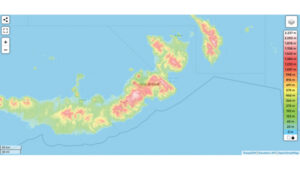
    Elevation map of New Britain, Papua New Guinea. (Photo: topographic-map. com)
    Elevation map of New Britain, Papua New Guinea. (Photo: topographic-map.com)

    The Discovery Channel’s recently released “Finding Amelia” documentary explores the latest expedition aimed to uncover Amelia Earhart’s mysterious fate, featuring the participation of SPH Engineering. The film investigates the theory that Earhart and her navigator, Fred Noonan, may have crashed in Papua New Guinea during their 1937 attempt to circumnavigate the globe.

    SPH Engineering joined the search nearly two years before the expedition, leveraging its experience from successful UAV operations in Greenland. The team’s mission focused on the dense jungles of New Britain, an island in Papua New Guinea, where they employed UAV technology to search for Earhart’s aircraft.

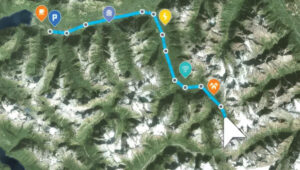
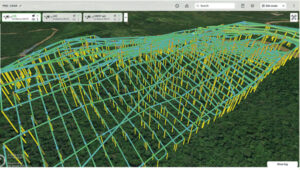
    Planned routes for lidar scans in SPH Engineering’s UgCS flight planning software. (Photo: SPH Engineering)
    Planned routes for lidar scans in SPH Engineering’s UgCS flight planning software. (Photo: SPH Engineering)

    Technology and challenges

    The documentary follows the testing for the mission, which began in February 2021. The team conducted experimental detection of aircraft engines using UAV-mounted magnetometers. These experiments led the team to request satellite imagery and elevation maps of where the expedition was planned. This map was essential for studying the terrain and preparing for the mission. According to the analysis, the average expected vegetation height of 10 to 15 m allowed for the detection of aircraft engines using a magnetometer.

    The SPH Engineering team arrived on-site with a suite of UAVs equipped with magnetometer, lidar and photogrammetry tools.

    During the search, a small UAV equipped with a camera was first used to create precise maps of the search area. These maps were essential for planning subsequent flights. The team then conducted lidar scanning from a safe altitude to build digital surface models (DSM) and digital terrain models (DTM) to plan magnetic surveys.

    The next step was to conduct the survey using a UAV-based magnetometer. The team found that while the average height of trees allowed for the detection of aircraft engines using a magnetometer, the presence of extremely tall trees made magnetic flight planning difficult.

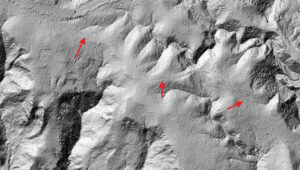
    Processed lidar data showing potential Japanese troop trails. (Photo: SPH Engineering)
    Processed lidar data showing potential Japanese troop trails. (Photo: SPH Engineering)

    Janis Kuze, director of special projects for SPH Engineering explains the challenge. “In contrast to what we saw in satellite data available before the expedition, the average height of the trees was a bit greater, but the main problem was real ‘skyscrapers’ towering up to 60 m. These extremely high trees were totally missed in satellite elevation data. Despite the challenges, we had relative success detecting magnetic anomalies over the B-17 bomber crash site.”

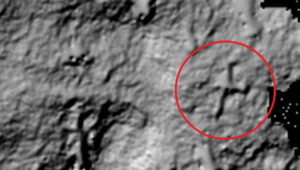
    Processed LiDAR data showing the object resembling the shape and size of Amelia Earhart’s aircraft. (Photo: SPH Engineering)
    Processed lidar data showing the object resembling the shape and size of Amelia Earhart’s aircraft. (Photo: SPH Engineering)

    Operation and results

    Due to the high trees and the limited amount of magnetic ferrous metal in airplane engines, reliable detection using magnetometers proved difficult. The team then decided to switch back to lidar. Dozens of low-altitude lidar flights were conducted, using previous scans for flight planning, to build a detailed map of the ground surface beneath the trees.

    The results revealed what is believed to be hidden Japanese troop trails and something resembling the shape and size of Amelia Earhart’s aircraft, the Lockheed Electra.

  • Mobile solutions: Higher accuracy blurs the lines between old product classes

    Mobile solutions: Higher accuracy blurs the lines between old product classes

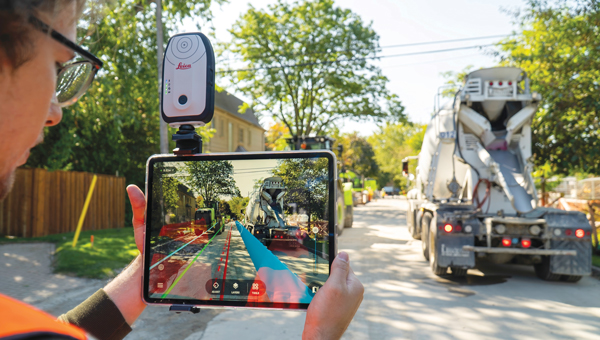
    Photo: Leica Geosystems
    Photo: Leica Geosystems

    Do you remember the free-standing car navigation devices that were popular for a while, such as those made by Garmin and Magellan? Few people use them anymore because to find our way when driving, most of us use our smartphones instead.

    Smartphones now have a plethora of sensors, including inclinometers, accelerometers, magnetometers, barometers and light sensors. However, cost and size constraints (the insides of those small devices are so crowded!) limit the accuracy of smartphones’ GNSS receivers.

    Therefore, to accomplish professional mapping tasks, it is now increasingly common to pair a smartphone — which provides computing power, a display, motion sensors, a camera and Internet connectivity — with an external GNSS receiver and antenna.

    This and other changes in the industry make product categories long in use obsolete or, at least, less compelling. What is a mobile GNSS solution? Are the terms “mapping grade” and “resource grade” still useful? Who is using which devices for which tasks?

    I discussed these issues with Bernhard Richter, VP Geomatics at Leica Geosystems, which is part of Hexagon, and with Igor Vereninov, CEO of Emlid.

    — Matteo Luccio, Editor-in-Chief

    Leica Geosystems: Conversation with Bernhard Richter, VP Geomatics at Leica Geosystems, part of Hexagon

    We used to divide GNSS receivers into consumer grade, resource grade (for GIS data collection) and survey grade.

    Those lines don’t exist anymore to the same extent. Some of the lower-cost chipsets — which were originally built for mobile phones and Garmin devices and lower-accuracy stuff — can now provide higher accuracy. We call them industrial-grade chipsets. The need for UAVs, e-scooters, e-bikes, automotive applications, etc., triggered their development. They are coming closer to the premium boards — let’s call them the multi-frequency, multi-constellation receivers that were always built for real-time kinematic (RTK)-type applications.

    So, it’s the bottom that’s coming up.

    There is still a need for single frequency code-only chips on the one hand for the mass market and, on the other hand, for premium devices from companies such as NovAtel (part of Hexagon), Trimble, Hemisphere and Septentrio. There is a new tier, which we call industrial grade, from companies such as u-blox and Unicore, which come a bit closer to the premium segment.

    I’ve always thought of location-based services (LBS) as using consumers’ locations to connect them with retail and services. People use their smartphones to find the nearest coffeeshop, but what has not happened is coffeeshops saying, “Hey, I see that you are within 500 feet of our store. You should come in, because we’ll give you a discount.”

    In our field, we make money by providing decimeter- or centimeter-level solutions to our users for surveying, machine control, GIS, etc. When it comes to needing locations for other applications, such as retail, everything is already nicely integrated in smartphones, and consumers just utilize what is there.
    In order to get a better precision than the one provided by the cellphone, you need a small, extra GNSS device connected to the cell. Then, instead of using the position provided by the phone, the application will use that much better position. That trend will go on for quite a while. This is the change to what was standard in the last decade, when we built dedicated handheld controllers with fairly high-cost chipsets to enable GIS applications. These GIS devices seem to be disappearing. It’s either an Android or iOS-based phone or tablet, and now you add a hockey puck-type GNSS antenna. Then, you override or mock the position that is coming from the internal chipset on the phone, and the app uses that more precise position. That is the new standard for GIS, so to speak.

    Analogously, for a decade we had dedicated car navigation devices. They disappeared because our phones now do that.

    Exactly. Where we can really add is in providing that extra bit — not only hardware, but also software and services. Decades ago, we developed the HxGN SmartNet RTK service. Now, we also have HxGN SmartNetGlobal, which is both a terrestrial-based service and augmented by a satellite-based precise point positioning (PPP)-type service. Simple car navigation devices such as those by Garmin or dedicated GIS controllers have almost vanished. It’s always a smartphone or a tablet plus, if a centimeter-level solution is needed, an additional device.

    It does not make a lot of sense to fully integrate high-precision GNSS into these mobile devices, because the customer group who really needs a centimeter-type solution is too small, and it would put an extra burden on the engineering for the tablet or the smartphone. Nobody complains if you attach a device that weighs a few hundred grams. I also think that you shouldn’t integrate things that don’t belong together. The different components have different life cycles. A smartphone today is old when it’s 18 months old, right? But, with the volume that’s sold to customers needing high precision, we cannot renew the equipment every year.

    Are you talking about a smart antenna?

    Today, a GNSS chipset can be as small as a two-Euro coin. However, if you want to do high-precision GNSS, you still need a decent-sized antenna. So, you cannot go to a fingernail size with the antenna element. If you need a good amount of multi-pass mitigation in the analogue way, you need a beer coaster-sized ground plane. Now, typically, you also put in a MEMS-based inertial measurement unit (IMU), so that you do more than just the pure GNSS position — pitch, roll and yaw are important as well.

    Phones already have IMUs.

    It’s always a matter of what you want. Do you want five meters or one meter or sub-decimeter repeatable at high reliability? Then you need to add more, higher-value components, right? Also, if you just take what’s in an iPhone, it’s not so easy to calibrate those MEMS. Engineers could probably solve the problem, but precision is never the primary goal for a smartphone and would increase complexity.

    In addition, in an iPhone, you don’t really worry about aging of the components or whether they can survive a fall from 1.5 m. So, we look at the application and the environment in which the customers are using it, then we select the best components to really add value to, let’s say, the existing iPhone’s position.

    In September, we released a high-grade antenna about the size of an ice hockey puck with a very small and tightly integrated GNSS chipset and inertial measurement unit (IMU). Then, of course, we have our own processor to run our positioning engine. It brings in all the corrections that we can provide with our SmartNet service. So, we provide a centimeter solution and pitch, roll and yaw in the most compact form.

    Then the phone becomes just the interface.

    Yeah, the phone position gets mocked by the position, for example, from a FLX100 plus, and the app takes the better position.

    The app is the user’s interface with the puck.

    Yes, but the survey device — the “GNSS puck” together with the phone running the app — is only one element of what a typical GIS user needs. Most important are the data themselves and the cloud system that hosts them. The data are the key enablers. If you think of Esri, for example, their value is hosting the data, having the geospatial relationship between the data and enabling decision-making.

    The geospatial acquisition part became really easy and can even be done in a tilt-compensated way, so you don’t even need to level your survey pole. The surveyed points are typically automatically synchronized or uploaded to the cloud system. So, if you say that the phone is just the user interface, I kind of disagree.

    A utility technician using the Leica GS05 GNSS receiver for the surveying and utility industries, which Leica released in September. (Photo: Leica Geosystems)
    A utility technician using the Leica GS05 GNSS receiver for the surveying and utility industries, which Leica released in September. (Photo: Leica Geosystems)

    You’re collecting data and feeding them to the cloud, but they are also on the device to display.

    The data themselves are only stored inside the app or in the cloud and can be displayed. The GNSS device itself keeps streaming the position but nothing gets stored there.

    How much do you collaborate with ESRI, in terms of their application and the data?

    Jack Dangermond [Esri’s co-founder and president] once said, “portal to portal is key these days.” At Hexagon, we have our applications, our industries and our focus areas, and ESRI has its. To me, the way to be successful is to have systems that are compatible and portals that can talk to each other. So, to me, portal to portal is and will be key.

    You mean the portals in the cloud?

    Yes, they have an API interface and they can talk to each other. I’ll give you one concrete example. We have a product called the FLX100. It is a little puck, has a helix antenna, a receiver engine, but does not have a cellular phone integrated. We’re using the cellular connection of the user’s mobile phone. So, you connect the mobile phone to the FLX100.

    We have software called Zeno Mobile One that has an Esri interface. So, we can immediately synchronize everything we measure with ArcGIS Online and ArcEnterprise. This is how we developed our GIS asset collection software. We need an accurate position, of course, which we provide through the hardware that we sell with the FLX100 plus. It can also connect to any RTK service — but, ideally, we connect to our own SmartNet service. As soon as we collect an asset — such as a pipe, a fire hydrant or a manhole — the operator annotates it, “This is a manhole, this is a gas pipe, this is a water pipe,” whatever. Then, the data can be uploaded immediately, already in the right file structure, e.g. into an Esri environment.

    We can also run an Esri product, such as ArcGIS Field Maps, on the smartphone and still talk to our hardware. This is very interchangeable these days. If you’re not doing this, I think you limit yourself too much when it comes to data collection. We understand the whole workflow much better than in the past and can be open to certain services, such as Web Map Service (WMS) or Web Feature Services (WFS). You can download the map of your town, then download, let’s say, the entire public water system and load it into this map. Then you can make changes, add new pipes, etc. So, there are many services that enable you to add to an existing map.

    So, you’re using Esri’s APIs like anybody else.

    Theoretically, you’re right; we use those published interfaces. However, we are Esri Gold Partners, so we really work with Esri to make this happen. There are also open-source products, such as QGIS.

    What do you mean by “industrial-grade” receivers?

    UAVs doing high precision photogrammetry are one of the biggest market for RTK positioning. However, the highest-end boards from the likes of NovAtel (part of Hexagon) and Trimble are less often used in these applications nowadays. So, UAV manufacturers and operators switched to smaller, lower-cost chipsets. This is one area where this field developed. We are talking about hundreds of thousands of UAVs. So, it became a significant market.

    Also, today lawn mowers do not just follow random patterns on lawns. They start integrating those more high-precision chipsets. These days, they are more and more multi-frequency, multi-constellation.

    Who’s using something like the puck that you were describing earlier? It’s neither average consumers nor surveyors.

    It’s a very good question. We still need to differentiate between the high-precision geodetic market or the scientific market where highest reliability is needed and the GIS market where reliability is of lesser priority. In many cases, such as high multipath, foliage coverage and jamming — there are typically no anti-jamming tools on these lower-cost chipsets — there is a strong need for highest end GNSS cards and a significant difference. Nevertheless, the GIS market is still of significant market size.

    Every fiberoptic cable that’s being put underground these days in countries such as Germany, Austria and Italy must be mapped on the open trench. It would be quite costly for those companies who put the fiber optic cables into the ground to call a surveyor each time. So, they train their own technicians to do the job and need many handheld units. We have customers who need 100 crews equipped with the same GNSS equipment. That is the kind of customer group that needs this mid-tier of products.

    There are other markets for the mid-tier products, such as photogrammetry, which is coming back because of the improvements in digital cameras and the power of the processors in the field, and then everything with augmented reality. This customer group still needs some control points or RTK positions, but they typically don’t want to spend too much on highest precision equipment.

    What is new about the FLX100 plus?

    We integrate it into the world of mobile devices in a new way. It is a change from an integrated handheld controller to something that’s separated from the tablet or the smartphone. From an accuracy point of view — if we’re not talking about very challenging cases such as heavy foliage or multipath and 50 km baselines — the FLX100 plus is really good. I think we are at the level where we were with the highest-grade GNSS equipment in 2005 or 2010.

    At GPS World, we have used the term “mobile solutions” for a long time but, as the technology changes, it’s hard to use the same categories.

    The mid-tier and high-end premium will increasingly blur. So, there isn’t such a clear line anymore. The distinction will disappear, not the equipment itself, for those who want the highest reliability — such as surveyors, who typically earn their living by putting their stamp on a map or a plan and are liable for errors. These customers want the best possible also under very difficult conditions.

    Emlid: Conversation with Igor Vereninov, CEO at Emlid

    What does Emlid do? How large is it? Where is it based?

    We build high-precision RTK receivers and software for them. We are based in Budapest, Hungary, and we also have development offices in Belgrade, Serbia, as well as in Lisbon, Portugal. We are more than 100 people now. We are a diverse bunch, developing everything inhouse — including electronics, embedded software, mobile applications, cloud services and beautifully designed enclosures.

    Why did you start the company?

    I started the company with my co-founder out of my kitchen, 10 years ago. We started with the idea of making RTK more affordable. Back then, survey gear was very complicated, required a lot of training and was super expensive. We were maybe a bit arrogant, being just out of university, and we thought, “Yeah, we should definitely try to disrupt that.” We built super-affordable receivers, completely crowdfunded on Indiegogo, without any outside capital. Our personal money was very limited, so all the money we had in the company came from our future users.

    At that time, our receiver was just a board, but from there we saw so much interest and the orders started to flow. We realized, “Okay, this is going to be big, so we better build a fully recognized and waterproof device that surveyors can use in the field and is not just for DIY hackers and geeks.” That’s how it started.

    What came next?

    We first had the Reach receiver, which was the board, then the Reach RS, the Reach RS+, the Reach RS2 and the Reach RS2+. Now, we have our Reach RS3, which is super-popular worldwide. We’re now widely known, and our receivers are still very affordable, robust, easy to use and as accurate as any other receiver out there.

    To me, the term “mobile solutions” refers mostly to data collection for GIS, but these categories are very subjective. What are the key trends you see in the industry?

    A big industry trend is that more and more people inside companies are interacting with centimeter accuracy and with RTK. Previously, it was only surveyors, but now we are seeing that an increasing number of people in the field will have access to accuracy. We play a large part in this story because we democratized RTK and brought it to other professionals outside of surveying.

    Traditionally, we had RTK accuracy at one end of the spectrum, a GPS receiver inside your iPad or iPhone at the other end of the spectrum, and in between sub-meter devices, which traditionally occupied the GIS space. Now, customers and potential customers tell me that the sub-meter category is becoming less and less present and attractive. As the RTK technology becomes super accessible and affordable, all the consumers from the sub-meter space are shifting toward centimeter accuracy. Maybe they don’t really need it in the field, but they feel like …

    They might as well have it!

    Yes, why not just have it, right? It’s the same cost, so why not equip our field crews with centimeter accuracy? We now have easily accessible and affordable, or even free, correction networks. The devices themselves now cost less than $2,000 and are easy to use.

    That’s the kind of conversation we are having regularly with customers and potential customers. They’re saying, “Why not have it?” They want to upgrade the accuracy of their mobile mapping device — typically, an iPad. It’s not enough to be able to tell, for example, on which side of the pipeline the valve or junction box is. They really would be fine with 10 or 20 cm of accuracy, but then why not go to that 1 cm level?

    Another trend is using iPhones and high-precision GPS for site documentation. We now have deployments of hundreds of units in the field using a combination of an RTK GPS receiver with lidar and camera sensors inside consumer-grade devices, such as iPads or iPhone Pros, to document such things as accidents and construction progress — especially for large infrastructure projects, such as fiberoptic networks.

    Your Reach RX, for example, is an external device that talks to a tablet, right?

    Yes. We’re seeing the use of our receivers in combination with the sensors inside an iPhone to document objects with very high accuracy and with absolutely no training by the person doing the job. You really don’t need a trained person to do it. For example, an excavator operator — who is not typically doing any kind of mapping but is a professional in a different space — would be able to grab an iPhone with an external RTK receiver and map things with centimeter accuracy for reporting purposes.

    I find it very exciting that we’re able to use this mix of consumer-grade technology with RTK that is rapidly becoming very affordable. Together, they give us a platform that allows us to document things super-efficiently and bring it into the hands of more professionals. We are seeing more and more startups in that space as well.

    All your receivers are GNSS receivers, correct?

    Yes, everything that we make is all-constellation and multi-frequency GNSS.

    A surveyor using an Emlid mobile RTK network rover, a Reach RX, in an urban environment. (Photo: Emlid)
    A surveyor using an Emlid mobile RTK network rover, a Reach RX, in an urban environment. (Photo: Emlid)

    What are the main end-user applications for your devices?

    We sell a lot to land surveyors and to drone pilots. Many drone pilots are increasingly becoming surveyors, and many surveyors are increasingly becoming drone pilots. So, those two groups of people are moving toward each other, and we are happy to serve both. Our devices are very popular and are the standard for drone workflows. This is a big market for us. Also, construction and mobile scanning.

    What about utility companies mapping their assets?

    Yes, we work with businesses that need to manage some kind of infrastructure or a large collection of assets. Water companies are very big users. They have many undocumented areas and a lot of people working in the field. For them, it’s crucial to have an affordable system that they can put in the hands of untrained people. Also, fiber optic networks, gas pipelines and agricultural companies have similar demands.

    Today, a traditional RTK GNSS receiver costs at least $20,000. Our Reach RX is $2,000; our Reach RS3 with tilt compensation is $3,000. This completely changes the game. So, we are opening this field for professionals, for architects, for landscape designers, for agricultural applications. We’re seeing archeologists use it. These guys would have never bought a system for $20,000 or $30,000. Now that it’s $2,000 or $3,000, it’s a different story.

    What do you make specifically for GIS?

    We recently introduced the Reach RX MFI, which is certified for use with Apple devices. This Reach RX integrates natively with Esri’s ArcGIS Field Maps, the most common platform for GIS data collection workflows. It required certain hardware modifications to connect to iPhones natively and some integration work with Esri. It is another way in which our Reach RX receiver can be used. Every one of our Reach RX is now a Reach RX MFI.

    Tell me about the Pix4D.

    We have a kit that consists of two parts. The hardware part is our Reach RX centimeter-grade, survey RTK receiver. The software part is the PIX4Dcatch mobile app on an iPhone Pro or Pro Max, which has a lidar sensor and a very good camera. As a part of the kit, you receive a bracket to mount everything together, forming a unique system that is easy to use, accurate and affordable. It uses the lidar for scanning.

    And the sensors in the phone to determine its attitude …

    Yes, and the huge photogrammetry experience that Pix4D has. They’re using their full photogrammetry engine to process the pictures, along with the lidar from the iPhone and highly accurate GNSS, which allows them to stitch together essentially survey-grade models just using this simple set of equipment.
    I’m very excited about this technology being so accessible and easy to use.

  • First Fix: Spoofing’s insidious threat to airliners

    First Fix: Spoofing’s insidious threat to airliners

    On Sept. 1, 1983, Korean Air Lines flight KAL007, with 269 people on board, went 360 miles off course and strayed into prohibited airspace over one of the Soviet Union’s most sensitive military installations. The pilots, who had missed some radio calls and warning shots, were unaware. Then an air-to-air missile hit the plane.

    This tragic Cold War episode helped GPS technology spread from military to civilian use because President Ronald Reagan’s deputy press secretary, Larry Speakes, said that to help prevent a repeat of the tragedy, “the President has determined that the United States is prepared to make available to civilian aircraft the facilities of its Global Positioning System when it becomes operational in 1988.” Civilian use of GPS had been envisioned from the program’s beginning, but Reagan’s announcement now guaranteed the future availability of GPS to civilians. That, and later smartphones, spawned the development of the commercial and consumer GPS industry.

    More than 40 years later, however, civilian airliners are increasingly at risk of being shot down, as well as many other equally disastrous outcomes, due to spoofing and its percolating effects on many aircraft systems. GPS Spoofing: Final Report of the GPS Spoofing Workgroup, released on Sept. 6, reports a 500% increase in spoofing this year compared to last year, with an average now of 1,500 flights spoofed per day. Among the many dangers this poses, the report states that it has led to “aircraft entering other Flight Information Regions without clearance or authorization, which creates risk of misidentification and, in the extreme case, interception or shootdown.”

    The report, based in part on a questionnaire returned by nearly 2,000 pilots — 56% of them working for airlines and 72% captains — found that more than 90% of all crew members rated their concern as moderate or higher. The three most insidious aspects of spoofing for aircraft are that pilots may not be aware of it; that GNSS receivers may continue to yield incorrect positions long after the aircraft leaves the spoofing area; and that bad data from the GNSS receiver has “severe and cascading effects” on many other systems, including the flight management system, the Ground Proximity Warning System, Hybrid IRS, the aircraft clock, weather radar, CPDLC, ADS-B and ADS-C. Spoofing also affects air traffic control, which is inundated with requests for radar vectoring during and after spoofing.

    The report finds “an overall sense of complacency and muted interest across a broad section of the aviation industry.” Two of its many recommendations to mitigate the problem jumped out at me: synching a mechanical watch to a known source at dispatch “in preparation for aircraft clock failure” and positioning a handheld GPS receiver “low down in the cockpit such that it only has a direct line of sight to the highest elevation satellites,” which makes it possible “that it may not get jammed and spoofed as easily as the externally mounted antennas.”

    Why has it come to this? What will we do about it? You can read the report here.

  • Seen & Heard: Free autonomous shuttle service launches in Detroit, Maui’s wildfire recovery and more

    Seen & Heard: Free autonomous shuttle service launches in Detroit, Maui’s wildfire recovery and more

    “Seen & Heard” is a monthly feature of GPS World magazine, traveling the world to capture interesting and unusual news stories involving the GNSS/PNT industry.


    FAA Greenlights Life-Saving UAV BVLOS Operations

    Photo: photovs / iStock / Getty Images Plus / Getty Images
    Photo: photovs / iStock / Getty Images Plus / Getty Images

    The Northern Plains UAS Test Site (NPUASTS) has assisted the Grand Forks, North Dakota, Fire Department in obtaining a Tactical Beyond Visual Line of Sight waiver from the Federal Aviation Administration, allowing first responders to operate unmanned aircraft systems (UAS) beyond visual line of sight (BVLOS) in extreme emergencies. This capability can be used to assess large fires, conduct aerial searches and locate missing persons. The NPUASTS team trained 11 first responders in UAS operations and flight protocols.

    Free Autonomous Shuttle Service Launches in Detroit

    Photo: Detroit
    Photo: Detroit

    A free autonomous shuttle program has launched in Detroit, Michigan. The four electric, wheelchair-accessible “Connect” shuttles will operate every 10 to 15 minutes during peak hours along a 10.8-mile route from Michigan Central to Bedrock’s 200 Walker Street on the East Jefferson Riverfront. Initially, the shuttles will be manually operated to allow for route adjustments and ensure smooth operation of autonomous features. Full autonomous driving is expected later this year.

    Maui Recovers One Year After Deadly Wildfires

    Photo: Maxar Technologies
    Photo: Maxar Technologies

    New satellite images from Maxar Technologies reveal the extent of damage in Lahaina, Maui, nearly a year after the catastrophic wildfires on Aug. 8, 2023, which resulted in more than 3,900 properties being destroyed and 100 fatalities. Despite the devastation, the satellite image shows signs of recovery, with debris removal progressing and new temporary housing being constructed for displaced residents. The images show cleared lots and returning greenery.

    Sea Lions on a Mission

    Photo: Nathan Angelakis
    Photo: Nathan Angelakis

    Researchers have attached lightweight video cameras to sea lions to explore previously uncharted areas of the ocean off the south coast of Australia. The footage, combined with a machine learning model, produced detailed maps of the ocean floor, revealing the distribution of different habitats and species. This method allows scientists to access deep and remote habitats that are unreachable by traditional hydrographic surveys. The study, published in Frontiers in Marine Science, highlights the potential of using animal-borne cameras for marine exploration and conservation efforts.

  • Surveyors join forces to complete two geodetic leveling projects

    Surveyors join forces to complete two geodetic leveling projects

    (Photo courtesy of Bob Kunes and Jeff Olsen)
    (Photo courtesy of Bob Kunes and Jeff Olsen)

    This is the story of two surveyors who met after retirement to accomplish two geodetic leveling projects in Maine and New Hampshire. Independent of each other, we had vacationed in those states, skiing and hiking. The idea of doing some geodetic leveling in that area appealed to us.

    We first re-leveled parts of a 1942 Coast & Geodetic Survey (C&GS) line between North Conway, New Hampshire, and Gilead, Maine, to honor the surveyors of World War II. During summer trips, we looked for the benchmarks along the line, NGS archive L9971, and figured out which ones were missing. We set new marks as needed. Leveling took place between September 9 and 22, 2013, archived by NGS as L28096, Second Order Class II.

    We used K&E Lovar yard rods — nice light wood rods with rod level, such as the U.S. Geological Survey (USGS) is believed to have used leveling up Mount Washington in 1925 — and a Zeiss Ni-2 level with 1:33 stadia interval (to convert yards to feet distance). Leveling up and over Hurricane Mountain Road NE of North Conway was a precursor to leveling up Mount Washington in 2014. We used a handheld GPS receiver to obtain the coordinates for marks that did not already have good accuracy. We obtained Online Positioning User Service (OPUS) coordinates for the reference marks on top of the mountain.

    Leveling through the Mount Washington “cow pasture.” In the inset, MAC 100, one of the USGS benchmarks along the Auto Road. (Photo: Mike Pelchat, NH DNCR)
    Leveling through the Mount Washington “cow pasture.” In the inset, MAC 100, one of the USGS benchmarks along the Auto Road. (Photo: Mike Pelchat, NH DNCR)

    After completing the 2013 releveling of the 1942 C&GS line, we wondered about releveling the 1925 USGS line up Mount Washington. We approached the general manager of the Mount Washington Auto Road, Howie “Weems” Wemyss, explained what we proposed to do, and asked for his buy-in. He approved the project enthusiastically, allowing us full access to the road for the project. On May 12, we began the level run from first-order benchmarks in Gorham, New Hampshire, and finished on June 8.

    Until this 2014 project, the elevations of Mount Washington were referenced to the National Vertical Datum of 1929 (NGVD 29) and were only available on paper from USGS. The professional purposes of the project were to connect Mount Washington to the North American Vertical Datum of 1988 (NAVD 88) and make the benchmark data available online from the National Geodic Survey (NGS). Two personal purposes were to continue enjoying the natural area and meet the challenges of the topography and weather.

    Deciding where to place each level setup on the steep terrain involved a compromise between time spent trying to read at the very top of the rod and a quicker setup decision that usually sacrificed 1.0-1.7 ft of the rod. The maximum vertical gain on the 10-ft rod was typically about 7.5 ft per setup, sighting high on the lower rod while sighting on the upper rod above the yard equivalent of 0.5 m — thereby reducing refraction errors per recommended procedures. Sight lengths on the Auto Road were as short as 10 ft, averaging 30 ft. Along the less steep terrain of Route 16 between Gorham and the Auto Road, leveling between marks set by NHDOT, sight lengths ranged around 150 ft. Temporary benchmarks on boulders were selected between the MAC marks on the Auto Road to keep the number of setups in a section below 30. That way, if the forward and backward runnings of a section misclosed, it was not a hopeless number of setups to rerun and isolate the error. The grade between MAC marks was 14% in two cases, otherwise around 10%. To eliminate 1-yd reading errors, 1-ft markings were painted on the side of the rod and read to x.1 ft before the 3-yd readings (top, middle and bottom wires), then the foot and yard readings were compared. The typical elevation difference between a MAC mark and a TBM or between TBMs was 150 ft. The typical time per setup was 4.5 minutes, depending on how far apart the turning points were.

    Project Diagram, 2014 Mount Washington leveling. ~8 miles SW along NH 16 from Gorham, 7.6 miles up the Auto Road. (Photo: Google Earth)
    Project Diagram, 2014 Mount Washington leveling. ~8 miles SW along NH 16 from Gorham, 7.6 miles up the Auto Road. (Photo: Google Earth)

    One bit of unwanted excitement occurred while the road crew was doing the annual rebuild of the 1-mile gravel section above Mile Post 5. The road workers pulled out the flagging at MAC 102, which is a bit hidden by vegetation. Evidently, it conflicted with the orange flagging they were also using. Leveling continued right past the disk for five setups until Bob noticed green paint on a boulder used as a turning point in the prior run. We had to reverse back to the mark. Fortunately, the section closed even with the extra setups.

    There are some beautiful small waterfalls along the road that are easier to admire when you are walking by, not trying to keep your vehicle on the road. One day, we spotted a momma bear and two cubs. One man stopped to reminisce about his time working with Brad Washburn while Brad was doing extensive surveying and mapping on the mountain.

    The USGS benchmarks are designated MAC 97 to MAC 104, “MAC” being the initials of the USGS party chief followed by a sequential number as the party progressed along the level line. There are lower numbered ones away from the Auto Road, and there used to be some higher numbered ones, which have since been destroyed.

    The project data was accepted, adjusted and published by NGS as archive L28128. The elevation of the highest and most visited summit mark, Mount Wash Reset (DP4904), by the cairn and the brown park sign, dropped 0.77 ft, referenced to NAVD 88 compared to its elevation referenced to NGVD 29. The NGVD 29 elevation published by USGS (solely in feet), based on the 1925 leveling, was 6,288.176 ft (divided by 3.2808333 ft/m to obtain 1,916.634 m). These values were rounded off to 6,288 ft and 1,917 m, respectively, for display on the summit sign.

    Jeff Olsen (on the left) and Bob Kunes in front of the observatory.
    Jeff Olsen (on the left) and Bob Kunes in front of the observatory.

    The NAVD 88 elevation for Mount Wash Reset, published by NGS based on this 2014 leveling, is 6,287.41 ft or 1,916.406 m. These values would round down to the next lower whole unit, changing the elevations that could be displayed on the park sign and making the mountain’s elevation lower. Since re-determining the mountain’s elevation was not a priority of this project, and a different elevation than the 6,288 ft that had been used for years would mean changing all those mugs, T-shirts and other tourist paraphernalia, we are not suggesting changing the elevation with which the public is familiar.

    All the differences of elevation observed between the various USGS benchmarks agreed within Second Order Class II limits with the previous 1925 work. At that level of precision (section closures less than or equal to 8 mm multiplied by the square root of the distance in km), the 2014 leveling did not reveal or detect vertical motion on the mountain, after an interval of 89 years. The project could always be re-run with first-order equipment and procedures, cutting the section closure error budget in half to 4 mm multiplied by the square root of the distance. Various marks could be observed in a regional high-precision geoid modeling campaign.

  • First Fix: So many questions

    First Fix: So many questions

    (Photo: Adam Smigielski/iStock / Getty Images Plus/Getty Images)
    (Photo: Adam Smigielski/iStock / Getty Images Plus/Getty Images)

    One of my favorite parts of this job — and, more generally, one of my favorite things to do in life — is to ask questions.

    Matteo Luccio
    Matteo Luccio

    For this magazine and to stay on top of the latest issues and trends in our industry, I ask questions to the members of our Editorial Advisory Board (EAB) for our EAB Q&A section, to representatives of GNSS/PNT companies for our cover stories, and to participants at conferences and trade shows.

    In my personal life, I ask questions to people I invite on sailing trips, to dinner parties and on hikes. When I am traveling or just about town, if I overhear somebody knowledgeable speak about an interesting topic — from quantum mechanics to French politics to Baroque music — chances are that I will say, “Excuse me. May I ask you a question?”

    So, here are a few of my current questions about GPS/GNSS/PNT. To make it clear that they are not in order of importance, I put them in alphabetical order.

    • How do the other three GNSS constellations benefit GPS users?
    • How is GPS faring in Congress? (On June 17, Dana Goward reported that Congress had refused the U.S. Space Force’s request to fund a program to make GPS more resilient by building and deploying small GPS satellites. Please note: I am looking for a knowledgeable “Washington correspondent” for GPS World, who could keep our readers updated on relevant developments in Congress and the executive branch.)
    • If the QZSS or NavIC regional systems became global, would that significantly improve GNSS? If so, how?
    • What are currently the most promising approaches to non-GNSS PNT for applications that do not require high accuracy?
    • What are the benefits of adding signals from even a few low-Earth orbit (LEO) satellites to a PNT solution?
    • What are the latest advancements in the scientific uses of GNSS signals, such as to develop models of the ionosphere or to test theories in fundamental physics, such as relativistic positioning?
    • What are the most promising approaches to pinpointing GNSS interference from LEO satellites?
    • What is the most promising approach to high-precision positioning with smartphones?
    • What is the status of the Chimera enhancement to the L1C signal? What benefits will it deliver?
    • What reforms in GPS governance would help accelerate modernization of the system?
    • When will M-code GPS user equipment be widely deployed to U.S. armed forces?
    • When will the Next Generation Operational Control System (OCX — the future version of the GPS control segment) become operational? What’s missing? What’s the holdup? (According to GPS.gov, the U.S. Space Force completed all 17 planned monitor station installations in July 2021.)
    • Which GNSS signals are cellphones in the U.S. legally allowed to use?

    I will pose some of these questions to our EAB over the next few months. If anybody else out there would like to chime in, please let me know.