Tag: mapping

  • Trimble Makes RTX Coverage Announcement at Trimble Dimensions

    Trimble has expanded coverage of its satellite-delivered Trimble RTX technology for surveyors to most of the world. Trimble has also introduced post-processing capability for its CenterPoint RTX positioning service for farmers. Both announcements were made at the Trimble Dimensions 2012 conference being held in Las Vegas this week.

    RTX technology enables Trimble xFill, a new technique in RTK and VRS surveying that allows surveyors to continue working in the event the primary RTK or VRS correction stream is not available.

    Trimble RTX technology, first introduced in 2011, combines real-time data and positioning algorithms to deliver centimeter accuracy around the world. While RTX technology is available worldwide via IP and cellular delivery methods, Trimble RTX has been available via satellite L-Band only in North and South America. Now, the expanded satellite coverage includes most of Europe, Russia, and the Commonwealth of Independent States (CIS), Africa, Asia, and Australasia.

    Powered by Trimble RTX technology, Trimble xFill, a feature integrated into the new Trimble R10 GNSS Receiver, enables a new and innovative technique in RTK surveying, according to Trimble. It seamlessly “fills in” for RTK or VRS corrections for up to five minutes in the event of a temporary connection outage with the primary correction source. Minimizing downtime, Trimble xFill enables higher productivity for field survey crews, allowing them to continue working until radio or cellular connectivity is restored, Trimble said.

    “The expanded coverage of satellite-delivered Trimble RTX technology further extends our commitment to providing different ways of realizing high accuracy positioning solutions,” said Patricia Boothe, general manager of Trimble’s Positioning Services Division. “The power of RTX is proven. Trimble RTX is the backbone of Trimble’s latest positioning innovations including the Trimble CenterPoint RTX service for farmers, the Trimble Pivot RTX App, and Trimble Pivot RTX-PP App infrastructure solutions and now, the Trimble xFill feature for surveyors.”

    Trimble xFill feature allows satellite corrections to be delivered directly to the receiver with no need for additional equipment such as radios and antennas. With its built-in capability, the Trimble R10 automatically tracks these corrections and will use them when needed. Trimble xFill across the expanded satellite coverage area is expected to be available by late November 2012.

    CenterPoint RTX Positioning Services. Enabled by Trimble RTX technology, CenterPoint RTX provides centimeter level positions in real time via satellite L-band and IP/cellular. The new post-processing capability delivers better than one-centimeter accuracy and is available worldwide.

    Trimble CenterPoint RTX post-processing is a cloud-based service accessed through www.TrimbleRTX.com, allowing users around the globe to upload static GNSS observation data and receive positioning corrections calculated in the well-defined ITRF 2008 reference frame. The post-processed solution can be transformed to a variety of regional reference frames by selecting a coordinate system and tectonic plate.

    “With the introduction of post-processing capability to the CenterPoint RTX portfolio, we continue to extend the breadth of the service,” said Patricia Boothe, general manager of Trimble’s Positioning Services Division. “CenterPoint RTX post-processing gives geospatial professionals another tool for their toolbox, utilizing Trimble’s globally available RTX technology to enable higher-accuracy positioning solutions.”

    The open service allows any user to post process 10 data sessions per month.
  • Trimble’s Yuma 2 Rugged Tablet Provides Full Office Capabilities

    Logo: Trimble
    Logo: Trimble

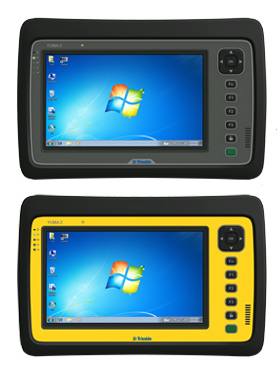
    Trimble introduced today the Yuma 2 rugged tablet computer, which it says is a powerful mobile computing solution that provides full office capabilities in the field for construction, transportation, public safety, field service, forestry, utilities, mapping, insurance and any other outdoor or service-related industry.

    The Yuma 2 offers a seven-inch capacitive multi-touchscreen in an easy-to-hold form factor that measures 6.3 x 9.6 inches, and weighs less than three pounds. Featuring new display technology for clearer readability in direct sunlight, the Yuma 2 can be used by mobile workers in the brightest outdoor conditions. The 3.75G dual-mode cellular data capability enables connectivity anywhere GSM or CDMA cellular networks are available.

    Featuring the Microsoft Windows 7 Professional operating system, the Yuma 2 is a fully functional field computer with a 1.6-GHz Intel Atom dual-core processor, 4 GB of DDR3 DRAM, a 64-GB solid state drive (SSD), and a dual battery with eight hours of typical run-time. Optional features include a 128-GB SSD, 3.75G cellular data connectivity and an extended battery set that provides up to 16 hours of operation.

    With the multi-touch capacitive touchscreen, users can type with fingers, stylus, or capacitive gloves and can control the size of the keyboard on the display for ease of use. Controlled zoom can optimize the user experience with maps and detailed information. The display supports use in landscape or portrait mode and is configurable to hold the orientation or to alter it in response to the accelerometer. The 5-megapixel camera provides video and photo capture with geotagging. The GPS receiver provides 2 to 4 meter accuracy, and is designed for data collection in applications such as distributed asset management, work order management, fleet logistics and more.

    “Ruggedness and connectivity in the field are vital for mobile workers — and Trimble has a history of providing innovative computing solutions to the market,” said Jim Sheldon, general manager of Trimble’s Mobile Computing Solutions Division. “Today, users demand solutions that are even tougher, faster, more reliable and easier to use, so they can be more efficient and productive. With new features and functionality, the Yuma 2 is an ideal solution that provides even more computing power to mobile professionals — more memory, computing speed, drive capacity, connectivity options and better display readability.”

    As with other Trimble rugged mobile computers, the Yuma 2 meets stringent MIL-STD-810G military standards for drops, vibration and humidity; and with an IP65 rating, it is protected against dust and water.

    Four different configurations are available to provide the tablet that meets the right need at the right price. Options include a larger SSD and 3.75G GSM and CDMA cellular data capability, as well as three different color schemes.

    The Trimble Yuma 2 tablet computer is expected to be available early in the fourth quarter of 2012.

  • CoreLogic: Top 25 Zip Codes in NYC at Risk of Property Damage from Hurricane Sandy


    Note to Readers: The CoreLogic storm-surge analysis provided below was developed based on the projected path of Hurricane Sandy as of 12:30 p.m. ET Monday, October 29.

    CoreLogic has released data showing the top 25 zip codes in New York City-Northern New Jersey-Long Island that are at risk of exposure to residential property damage from hurricane-driven storm-surge flooding when Hurricane Sandy hits the Atlantic coast later today. Massapequa, located on the South Shore of Long Island, holds the top spot with more than $4.6 billion in total structure value at risk.

    In a report issued Saturday, CoreLogic also provided an estimate of the total number of residential properties at risk among the coastal Mid-Atlantic states, assuming Sandy hits the coast as a Category 1 hurricane. Within that seven-state region, nearly 284,000 total residential properties valued at almost $88 billion stand at risk:

    According to CoreLogic, the number of residential properties in eight major metro areas and their respective potential exposure to damage are as follows:

    CoreLogic reports that hurricane-driven storm-surge flooding can cause significant property damage when high winds and low pressure causes water to amass inside the storm, releasing a powerful rush over land when the hurricane moves on shore. The CoreLogic analysis measures damage from storm surge and does not include potential damage from wind and rain associated with hurricanes.

    To view a map showing hurricane-driven storm-surge risk through Google Earth, visit here. To download the map as a KML file, visit here. Static maps depicting storm surge in the Northeast are available upon request.

    For more information on CoreLogic storm-surge methodology, data and analysis, download a copy of the more in-depth 2012 CoreLogic Storm Surge report at http://cl.internal.cvic.com/corelogic/url.php?cin=2d2e1y1w2c2c.

  • Leica CS25 Tablet Offers Integrated GNSS for Asset Management

    Leica Geosystems has launched the Leica Zeno CS25 GNSS, a tablet computer with GNSS functionality and a large screen. The CS25 GNSS doesn’t require a backpack or a pole mount or additional batteries. A compact L1/L2 antenna is attached, but for high-accuracy data collection, it can connect with an external GNSS antenna mounted on a pole.

    The rugged Leica CS25 GNSS integrates an upgradable GNSS board and an attachable helix antenna. The new handheld rover is designed to combine the power of high-accuracy GNSS with the benefit of a large-screen tablet and the Windows 7 environment. With its large seven-inch display, the Leica CS25 GNSS is designed to make it easy to read and operate, even in brightest sunlight. The CS25 GNSS provides accurate and reliable results to deliver higher productivity for field crews.

    “Our customers can scale the CS25 GNSS to fit any accuracy needs, by offering a range of options, including meter, sub-meter or sub-decimeter accuracy all through a simple license model,” said GIS Business Development Manager Mauricio Jaimes. “They can also connect an external antenna to the CS25 GNSS to achieve centimeter accuracy. This flexibility, combined with the choice of Leica Zeno Field, Leica MobileMatriX or 3rd party partner software, offers versatile solutions to provide the right fit for any GIS data collection job.”

    The direct integration of GNSS into a tablet computer gives users full flexibility for efficient field data capture and benefits including:

    • Tablet computer, GNSS, and modem in one device that is light enough to carry in one hand
    • Large screen tablet with integrated GNSS RTK receiver, no backpack or pole required
    • One single charging unit for batteries, tablet computer and GNSS receiver
    • No external mobile phones are required to receive RTK corrections
    • User upgradable accuracy levels
      • Differential GNSS (GPS and optionally GLONASS): 50-cm accuracy
      • L1/L2 GNSS (GPS and optionally GLONASS) extension: <10-cm accuracy, with external antenna up to cm-accuracy
    • DGNSS, Real-time or post-processed GIS workflows, fully integrated into ArcGIS from Esri
    • Open support of third-party software applications via Leica Zeno Connect
    • Reliable components that have been engineered to operate in the most demanding work environments

    The CS25 GNSS provides an all-day battery life and IP65 rating, to ensure reliable operation, even after continued work in extreme environments with continuous exposure to water and dust. It is designed to be easily held in one hand and provides the largest GNSS data collection screen on the market.

    Mauricio Jaimes states, ”Shortly after the release of the entry-level GPS handheld Zeno 5 and the GG03 SmartAntenna, the CS25 GNSS is another unique product making the Zeno GIS series the most versatile product basket available for the GIS data collection.”

    The new Leica CS25 GNSS is expected to be available from late October 2012 onwards.

  • Indoor Location Tests Ahead, Mapping under Scrutiny

    Janice Partyka
    Janice Partyka

    October was a month of shows, rumors and announcements. Testing of competing indoor location positioning technologies is being planned by the FCC; prospects for some companies will ride on the public results. Apple may be turning to TomTom to save it from its mapping inaccuracy issues, dubbed Mapplegate. This month’s CTIA show was flat; attendees were wondering if it was the last chapter of the fall show. Interesting industry tidbits were heard at the MforMobile Location Business Summit. New Google Ad Word rates may be created that are also based on the distance between the handset and advertiser’s location. History can be harsh, remembering an unfortunate calculation by a location industry giant. Marketers continue to be frustrated by the mobile industry’s continued difficulty to completely measure ad results.

    The FCC sees indoor location as a critical safety concern for E911 emergency response. The commission has tasked an advisory committee to evaluate indoor location positioning technologies. TechnoCom has been chosen to conduct the independent testing as a neutral third party. The test bed is in about 20 structures of various types, in locations that range from highly dense urban to sparse landscape. The following companies are submitting technology for the testing: Qualcomm (AGPS/AFLT/Cell ID), NextNav (GPS-like terrestrial beacons), Boeing (LEO satellites using the Iridium constellation), and Polaris (RF fingerprinting). Additional companies submitted technology, but later withdrew. Test results should be made public in March of 2013. A public workshop on this testing is being held at the FCC on October 24 and can be watched online at www.fcc.gov/live.

    Indoor Mapping. At the Location Business Summit, it was clear that the retail and hospitality industries is anxious to start exploring indoor marketing based on real-time location. They seem to expect it will start out working flawlessly. It won’t. In addition to the indoor positioning being early stage, mapping quality is uneven. The gold bar of quality assurance for outdoor mapping is aerial fly-overs and street driving. In some situations crowd sourcing works. For indoor maps, it’s the Wild West. Currently there are no standards for vetting indoor mapping. Maps are being created of greatly varying quality, sometimes by way of rough diagrams found on the Internet that are then shoe-horned into the outlines of buildings.

    TomTom to the Rescue?  Shares in TomTom, maker of personal navigation devices (PNDs) and mapping, jumped to a three-week high on speculation that it may be taken private by its founders with the help of Apple. In turn, Apple could buy TomTom’s maps database to correct its mapping problems. TomTom’s founders own 47 percent of the company, but may be held back by the uptick in share value.

    Paying for Location. Reportedly, Google has location-based AdWords in beta. Advertising rates go up the closer the targeted user is to the venue being promoted. A restaurant ad is more relevant, and more likely to draw a person who is one mile away than 20 miles. Some travelers will park near a string of hotels and use a site like hotels.com to find the most competitively priced room for that evening. An ad for a hotel on the other side of town is of lesser value and would be cheaper.

    Comments Heard at the Location Business Summit by MforMobile this Month:

    “We need to build ambient intelligence into devices. Nobody needs more information, more apps, ads, logins or devices. It isn’t sustainable.”

    “Location data on the consumer side is often junky because phones are trying to conserve battery, and won’t invoke GPS.”

    “You can get better locations from the carrier network, but it is too expensive a proposition for advertisers.”

    “We find that hyper-local ad targeting leaves us with too few people to address.”

    Can I Turn Back the Clock? In an interview for Forbes in 2003, Min Kao, CEO of Garmin, puts a stake in the ground. He says he does not seek to compete in navigation with the mobile phone, the likes of Nokia and Motorola, as that is the kind of commodity business Garmin would like to avoid. The PND vendors continue to be squeezed between the OEM embedded equipment and the smartphone. It is hard to be optimistic about the PND market, commented John Canali of Strategy Analytics at the Location Business Summit. Heavy discounting has led to plummeting revenues. “The PND companies are hardware focused in a market whose foundation is software. It will be very difficult to transform PND companies,” says Canali. “They will struggle.” In 2009, Google announced that all Android phones built on OS 1.6 or higher would have free turn-by-turn directions. Nokia followed shortly after. So it began.

    A Little Slow. CTIA drew more than 5,000 people to attend MobileCon, its fall show with a new brand name. You may remember it as CTIA Enterprise and Applications. This was a significant decline from last year when 10,000 to 15,000 conference-goers attended. Activity was slow and the exhibit floor was smaller. Conference sessions were held on the exhibit floor.

    Still Can’t Close the Loop. The industry continues to be unable to provide advertisers with metrics of how many pizzas a mobile ad sold. Papa John’s Pizza will know if someone has clicked to call or clicked to map, but Papa John’s won’t know if those actions resulted in a purchase. Without this fundamental metric, advertisers complain that it is hard to build a business case for mobile advertising. The click rates that they can track aren’t always representative because of user errors that include fat fingers, fraudulent clicks and pocket dialing.

  • Leica Geosystems SmartNet Adjusted to National Spatial Reference System

    On September 29, North America’s largest real-time GNSS network, Leica Geosystems’ SmartNet, became the first network to adopt the draft NGS RTN Guidelines across multiple states, and can now provide an accurate tie to the new NAD83 (NA2011) National Spatial Reference System. For the first time, SmartNet users throughout the U.S. are working within a common frame of reference.

    The Leica Geosystems SmartNet, which provides real-time positioning to more than 2,000 subscribers in 17 U.S. states and four Canadian provinces, became the first network to adopt the draft National Geodetic Service’s (NGS) RTN guidelines across its entire network. “This is huge for our subscribers,” said Director, Reference Station Operations Wendy Watson, “We are now providing centimeter-level accuracy, on a common frame of reference, everywhere in our network. That’s never been done before, and we’re proud to be first.”

    The adjustment was a significant technical challenge, and will require some adaptations by current SmartNet subscribers. “It’s critical for subscriber and all their field crews to understand the effects of this adjustment in the field,” said Watson, “It affects all SmartNet users and all SmartNet stations. For most of the US subscribers there will be minor shifts in their positional data but in some areas like California the shift is greater.  To compensate for these changes in the field, users will need to perform a transformation, localization, or calibration, and tie to existing control. We’ve provided webinars on this, which are archived at our site, and SmartNet representatives are happy to answer any and all questions. And also, we have a complete suite of online tools to assist users at http://adjustment.smartnetna.com.”

    The SmartNet Adjustment Launch commenced on Saturday, September 29, at 9:00 p.m. ET and the SmartNet network was only down for the weekend—service resumed without a hitch on Monday, October 1, at 12:00 a.m.

    “All SmartNet stations are now positioned to ensure an unprecedented level of internal precision and consistency between themselves, while at the same time providing an accurate tie to the new NAD83 (NA2011) National Spatial Reference System,” Watson explained, “By implementing the draft NGS RTN Guidelines, we positioned all of our stations to provide the requisite 2 cm horizontal and 4-cm vertical accuracy to the NSRS, while at the same time achieving the 1 cm level internal consistency needed to provide the high-precision and high-quality network corrections our users have come to expect. While we understand this change may have its challenges short term for some of our users, getting our entire network on the same, NGS-approved basis will improve the quality and consistency of everyone’s work.”

  • Geneq Introduces Palm-Sized GPS/GLONASS Receiver that Uses OmniSTAR’s 10-cm Service

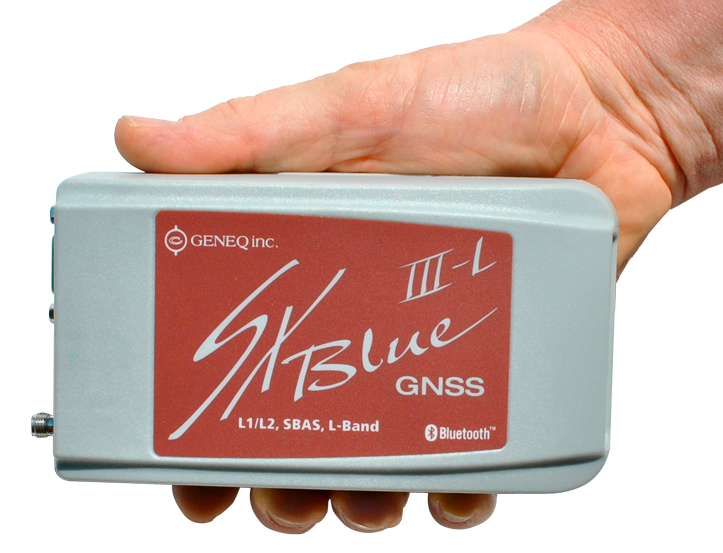
    Geneq Inc. has introduced the SXBlue III-L GNSS, a palm-sized L1/L2/GLONASS GNSS receiver that is designed to use OmniSTAR’s G2 or HP service to attain realtime 10-cm accuracy in all regions of the world, including North/South America, Australia, Asia, Africa, Europe, and the Middle East. The SXBlue III-L GNSS connects wirelessly to smartphones, handhelds, tablet or notebook computer that are bluetooth-compliant. Optionally, the SXBlue III-L GNSS receiver is fully RTK capable (1cm real-time accuracy) when using an RTK network or other RTK reference station.

    Photo: Geneq
    Photo: Geneq


    According to the announcement,  the SXBlue III-L GNSS is designed to use OmniSTAR’s G2 service, which supports GPS and GLONASS satellites, to provide 10cm accuracy in real-time in most parts of the world. The ability to track both GPS (31 satellites) and GLONASS (24 satellites) significantly increases the number of satellites in view, making the SXBlue III-L GNSS more productive in areas where trees, terrain or buildings block satellite visibility. It also outputs raw observation data that can be used for post-processing using free, online processing software services such as OPUS.

    “We’ve set a new standard for world-wide, real-time high-precision mapping using OmniSTAR’s G2 service,” said product engineer Jean-Yves Lauture. “The affordable price and flexibility of the SXBlue III-L GNSS makes worldwide, dual frequency, dual constellation 10cm real-time accuracy available to a wide number of users.”

    In addition to the OmniSTAR service, the SXBlue III-L GNSS also supports RTK GNSS. “If you want 1cm real-time accuracy, the RTK option lets the user connect to an RTK Network or a single RTK base station using standard RTCM and common industry formats,” said Lauture. “And, in that case, the RTK network or RTK reference station doesn’t need to support GLONASS for the SXBlue III-L GNSS to fully utilize the benefits of GLONASS.”

    The company reports the SXBlue III-L GNSS measures 14.cm (5.57”) x 8.0cm (3.15”) x 5.6cm (2.22”) and weighs slightly over a pound (1.14lbs, 517g) including battery. The SXBlue III-L GNSS is the smallest and lightest GNSS L1/L2 OmniSTAR receiver being produced in the world today.

    The SXBlue III-L GNSS is compact and rugged for optimal field use, requiring no backpack or external batteries. It was designed to meet the IP-67 rating, and can survive accidental immersion in water. The SXBlue III-L GNSS comes with a small, hermetically-sealed antenna that receives GPS, GLONASS, SBAS and OmniSTAR signals.

    The SXBlue III-L GNSS is targeted at high-precision users in industries such as surveying, GIS, utilities, construction, agriculture, engineering and other natural resource industries in addition to local, state and federal government users.

  • Applanix Introduces POS LV 120 for Improving Land Mobile Mapping Productivity

    Photo: Applanix
    Photo: Applanix

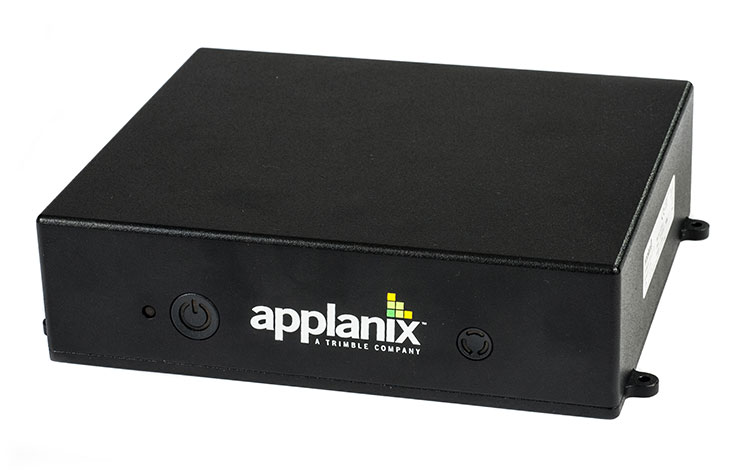
    Applanix has introduced the POS LV 120, the latest version of its positioning and orientation systems for land vehicles. Using commercial Micro-Electro-Mechanical (MEMS) inertial measurement unit (IMU) technology, the Applanix POS LV 120 is a small, lightweight system and provides an economical solution for any continuous positioning and orientation application.

    POS LV 120 is a fully integrated, turnkey position and orientation system, using integrated inertial technology to generate stable, reliable and repeatable positioning solutions for land-based vehicle applications, Applanix said. Redesigned to be smaller and lighter, it maintains identical data interfaces and software compatibility with the established POS LV line of products.

    “With a MEMS IMU and a 220 channel, dual-antenna GNSS receiver integrated into a single enclosure, the POS LV 120 is a cost-effective GNSS-Inertial solution designed to support many types of land-based mobile mapping projects,” said Kevin Andrews, product manager for Land Products at Applanix.  “The integrated system is smaller than the standard POS LV computer system (PCS), making it ideal for use in lightweight applications such as robotics, autonomous vehicles, centerline mapping, asset mapping and short-range direct georeferencing.”

    POS LV 120 is available now through the Applanix sales network.

  • Septentrio Announces First GNSS Receiver with Full Support of TerraStar Services

    Septentrio announces the full support of TERRASTAR wide-area differential and Precise Point Positioning (PPP) capabilities in some of its receivers. The Septentrio AsteRx2eL is an all-in-view dual-frequency GPS/GLONASS receiver, featuring an integrated L-band modem to receive TERRASTAR data transmitted by satellite and field-proven dm-accurate positioning using this data. AsteRx2eL also features GNSS+ technology, a unique combination of industrial grade performance algorithms, to better serve high-precision positioning needs even in the most severe conditions, Septentrio said.

    Support of TERRASTAR-M and TERRASTAR-D allows precise position calculation anywhere on the globe, Septentrio said. TERRASTAR services achieve accuracy levels down to 10 cm without the use of extra communication such as radio or mobile. Powered by TERRASTAR services, AsteRx2eL provides a high level of flexibility for consistent dm-level accuracy everywhere on earth and cm-level where local RTK corrections are available. Septentrio multi-constellation receivers will provide position accuracy and high-availability independently of local infrastructure for the various applications in any of the markets that they traditionally serve:

    • Land and aerial survey and mapping
    • Machine control for agriculture, construction and mining
    • Precise navigation for land, sea and air

    ‘The introduction of support for TERRASTAR offers our customers an important additional option for accurate positioning, notably in the absence of local infrastructure,” Peter Grognard, founder and CEO of Septentrio Satellite Navigation, said. “It has been a pleasure for us at Septentrio to closely collaborate with the great team at TERRASTAR to develop and deliver a strong new value proposition with robust industrial performance everywhere on the globe.”

  • InterGeo Starts Today

    The enormous importance of geoinformation for the energy revolution, cloud computing, open data and enterprise applications based on Microsoft Bing Maps — these are just some of the many fascinating issues that will take center stage at INTERGEO in Hanover, Germany, October 9-11. Host DVW e.V. — the German Society for Geodesy, Geoinformation and Land Management — is pooling issues relevant to its specialist areas at the trade fair and conference and is set to welcome some 16,000 visitors, including 1,200 conference delegates. The international meeting takes place in a different German city each year, with about 520 international companies,  40 percent of which are based outside Germany.

    GPS World’s Editor-in-Chief Alan Cameron, International Account Executive Chris Litton, and Contributing Editor for Survey/GIS Eric Gakstatter are in attendance.

    On the first day of the fair, Cornelia Rogall-Grothe, state secretary at the German Federal Ministry of the Interior, is launching the first national INSPIRE Conference with a speech on “INSPIRE: the driving force behind the national geodata infrastructure.”

    This year, for the first time, INTERGEO will incorporate the conference of the Council of European Geodetic Surveyors (CLGE), which will take place Thursday. The third conference of its type brings together surveyors from 36 member countries in Hanover.

    The Navigation Conference is also being held as part of INTERGEO for the second time. Once again, the event will seek to utilize synergies between navigation, IT and geoinformation.

    The conference is focusing on the latest topics and many technical solutions for capturing up-to-date geoinformation. Cutting-edge sensor technology will be presented along with the latest systems solutions.

  • GSAT-10 Satellite Placed in Geosynchronous Orbit

    The Indian Space Research Organization has announced that the orbit-raising maneuvers of GSAT-10 satellite have been successfully completed from ISRO’s Master Control Facility, Hassan. GSAT-10 was launched September 30. The third and final orbit-raising maneuvers was performed October 3 to place the GSAT-10 in an orbit with 35,734 km apogee (farthest point to earth), 35,585 km perigee (nearest point to earth), and an inclination of 0.172 degree with respect to the equator. Currently, the orbital period of GSAT-10 is 23 hours 50 minutes.

    According to the announcement from the Indian Space Research Organization, the two solar panels and the two dual gridded reflector antennas were also deployed later in the day. Currently, the satellite is in final orbital configuration at 70.18 degree East longitude. In the coming days, the satellite will be moved towards its designated location of 83 degree East and in-orbit testing of its communication and navigations payloads will be performed.

    As is often the case, NORAD/JSpOC has temporarily “lost” the satellite following one of its orbital maneuvers. The last published two-line orbital element set for the satellite is dated September 30.

  • Hemisphere GPS Offers Vector Compass Products for Marine Applications

    Photo: Hemisphere
    Photo: Hemisphere

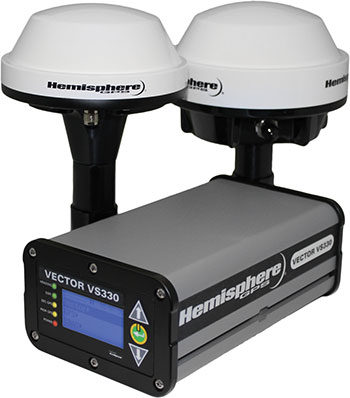
    Today, Hemisphere GPS introduces the Vector VS330 and Vector VS131 GPS compass products that provide high performance heading, position, heave, and attitude data. The new Vector products are designed for professional marine applications such as hydrographic and bathymetric surveys, dredging, oil platform positioning, and buoys that demand a high level of 3D positioning accuracies.

    Based on Hemisphere GPS’ Eclipse GNSS technology, Vector VS330 uses the most accurate differential corrections including RTK, L-band, SBAS, and beacon. The smart intelligence from our MFA firmware  provides differential solutions by automatically switching to the next best differential source if the original source is no longer available, Hemisphere GPS said.

    Vector VS330 is Hemisphere GPS’ flagship receiver and computes heading information with better than 0.01 degrees accuracy when using a 10-meter antenna separation. Positioning accuracy is better than one centimeter in RTK mode or four centimeters when using OmniSTAR HP corrections. Vector VS330 also provides five-centimeter RTK heave and 0.01 degree pitch and roll accuracies.

    Combining Hemisphere GPS’ Crescent Vector and LX-2 receivers with two separate antennas, the Vector VS131 computes heading information with better than 0.03 degrees accuracy when using a five-meter antenna separation and better than 50 centimeter position accuracy when using L-band, SBAS, or beacon corrections. Vector VS131 accepts most differential correction signals for unparalleled flexibility to obtain sub-meter positioning in all regions.

    The ruggedness of the new Vector enclosure also makes it suitable for more harsh environment installations like machine-control applications, including agriculture, heavy construction equipment, mining equipment, unmanned vehicles, cranes, and other machinery or industries that require very accurate heading and positioning solutions. The Vector’s versatility for providing heading, position, heave, and motion makes it directly compatible with the most popular hydrographic and side scan survey packages. Vector VS330 and VS131 include an intuitive and easy-to-follow user interface to facilitate fast installations.

    “Vector VS330 and Vector VS131 are premium additions to Hemisphere GPS’ Vector series product line,” said Phil Gabriel, vice president and general manager, Precision Products, for Hemisphere GPS. “As the demand for more rugged and precise GPS equipment increases, we are meeting this demand by exceeding the accuracy of competitors’ products while being significantly more affordable.”

    Vector VS330 and Vector VS131 will be featured by Hemisphere GPS in hall 9, stand B.62 at the INTERGEO Conference and Trade Fair in Hanover, Germany, from October 9-11. Both products will be available for shipping in November through the Hemisphere GPS Precision Products global dealer network.