Tag: mapping

  • Hemisphere GPS Announces RTK Network-Compatible S320 Survey System


    Today, Hemisphere GPS announced the new S320 network rover and XF2 handheld data collector. With support for network RTK corrections, the S320 network rover is an integrated solution that simplifies land surveying applications by eliminating the need for a base station and radio modem, the company said.

    A variety of public and private organizations post RTK network corrections on the Internet. The S320 GSM cellular communication connects users to Internet-based corrections and processes the data to achieve centimeter-level positioning performance. As a result, users do not need to purchase and operate their own RTK base station and radio modem connection. Users also have the option of using satellite-based L-band corrections for high-precision mapping jobs.

    Hemisphere GPS’ XF2 next-generation data collector combined with Carlson SurvCE software provides a familiar and proven interface to the S320. The two products communicate through a Bluetooth wireless connection and attach to a standard survey pole making the system portable and simple to operate, Hemisphere GPS said.

    “Hemisphere GPS’ S320 network rover and new XF2 provide a very powerful and cost-effective surveying and mapping solution,” says Phil Gabriel, vice president and general manager of Precision Products for Hemisphere GPS. “The rugged design and versatile performance of our S320 makes it a great fit for a variety of applications.”

    Launched one year ago, S320 combines the advanced GNSS receiver performance of Hemisphere GPS’ Eclipse technology, precise geodetic antenna, wireless communication and batteries in a portable, rugged unit. Compatible with a variety of existing surveying equipment, S320 is a  multi-GNSS positioning system designed for applications in GIS, mining, construction, mapping, land, and marine surveying.

    The S320 network rover and XF2 will be featured by Hemisphere GPS in hall 9, stand B62 at the INTERGEO Conference and Trade Fair in Hanover, Germany from October 9-11. The products are available through the Hemisphere GPS Precision Products global dealer network.

  • Apple CEO Apologizes for Faulty Maps App

    After the September 12 launch of the Apple iPhone 5, which comes equipped with Apple’s own Maps application, users soon found their efforts to navigate thwarted by mislabeled cities, misplaced landmarks, lack of’ transit directions, and strange satellite imagery.

    Today, Apple Inc. Chief Executive Tim Cook apologized to customers for the flaws in the Maps app in a letter posted on Apple’s website. The Maps app replaced Google Maps as the standard iPhone mapping application, but Cook is now suggesting customers use the online Google Maps or download other mapping applications while Apple works to fix its application. Google Maps was standard on previous versions of the iPhone. Apple’s newest mobile operating system, iOS 6 doesn’t support Google Maps, so users would have to use that application through the Internet.

    Here is the text of Cook’s letter:

    To our customers,

    At Apple, we strive to make world-class products that deliver the best experience possible to our customers. With the launch of our new Maps last week, we fell short on this commitment. We are extremely sorry for the frustration this has caused our customers and we are doing everything we can to make Maps better.

    We launched Maps initially with the first version of iOS. As time progressed, we wanted to provide our customers with even better Maps including features such as turn-by-turn directions, voice integration, Flyover and vector-based maps. In order to do this, we had to create a new version of Maps from the ground up.

    There are already more than 100 million iOS devices using the new Apple Maps, with more and more joining us every day. In just over a week, iOS users with the new Maps have already searched for nearly half a billion locations. The more our customers use our Maps the better it will get and we greatly appreciate all of the feedback we have received from you.

    While we’re improving Maps, you can try alternatives by downloading map apps from the App Store like Bing, MapQuest and Waze, or use Google or Nokia maps by going to their websites and creating an icon on your home screen to their web app.

    Everything we do at Apple is aimed at making our products the best in the world. We know that you expect that from us, and we will keep working non-stop until Maps lives up to the same incredibly high standard.

    Tim Cook
    Apple’s CEO

  • TomTom, Telenav Extend Mapping Partnership

    TomTom, global supplier of location and navigation products and services, is extending its partnership with Telenav. TomTom will provide mapping data for Scout, Telenav’s daily personal navigator. Additionally, TomTom will remain the provider of map content for Telenav-powered Sprint applications.

    Scout, currently available on the iPhone, provides personalized information that includes navigation directions, optimal departure time and things to do at the destination. Together, Telenav and TomTom will provide up-to-date map content to Scout customers. All Sprint customers will also continue to have access to TomTom maps via Scout.

    “We believe the new contract with Telenav is an endorsement of our high quality maps,” said Anders Truelsen of TomTom. “We are pleased that Scout users will be able to experience the added value of our rich map content.”

    “Our goal is to always provide a reliable and easy-to-use service for our customers,” said Hassan Wahla of Telenav. “We are pleased to extend our agreement with TomTom because of its parallel focus and commitment to high-quality map content.”


  • OGC Hires Lew Leinenweber and Bart de Lathouwer to Fill Key Technical Positions


    The Open Geospatial Consortium (OGC) announced it has appointed both Lew Leinenweber and Bart de Lathouwer to the position of Director, Interoperability Programs. These are key technical positions in the OGC Interoperability Program.

    "OGC members will benefit greatly from the leadership that Lew and Bart will bring to OGC Interoperability Program (IP) initiatives," said George Percivall, Chief Architect and Executive Director, OGC Interoperability Program. "Lew brings a wealth of experience from leading prior OGC initiatives, including the fourth OGC Web Services Testbed (OWS-4) and the Geo-Decision Support Services (GeoDSS) activity. As the first member of the OGC IP Staff in Europe, Bart begins what we anticipate will be an exciting and broad-ranging program of OGC projects focused in Europe."

    OGC announced that Lew will begin by leading the OGC Climatology-Hydrology Information Sharing Pilot, Phase 1 (CHISP-1) that will advance hydrology services using open standards in an operational, cross-border setting, creating a model for use around the world.  Lew brings exceptional experience with the OASIS Emergency Data Exchange Language (EDXL) and NIEM (National Information Exchange Model). His experience will be a critical asset as the OGC works to advance open geospatial standards in the area of information sharing for intelligence and homeland security applications.  

    Further, OGC announced that Bart will lead the OGC element of the COBWEB ("Citizen OBservatory WEB") project recently awarded by the European Commission. COBWEB focuses on crowdsourcing of geospatial environmental information, addressing privacy and security elements.  Bart will also represent OGC in the EO2HEAVEN (Earth Observation and Environmental Modelling for the Mitigation of Health Risks) project and the GEOSS (Global Earth Observation System of Systems) Architecture Implementation Pilot. He leads project development in Europe on many fronts, with particular emphasis on Building Information based on his successful service at Autodesk. This work will support adoption of the OGC CityGML standard for storage and exchange of virtual 3D city models.

  • Topcon Releases High-Accuracy RTK system, HiPer SR

    HiPer_SR_Topcon_

    Topcon Positioning Systems has unveiled the HiPer SR — an advanced GNSS RTK receiver that Topcon describes as having “the most compact and lightweight design of any fully integrated precision receiver — ever.”

    With the HiPer SR, Topcon is expanding the delivery of high-accuracy RTK technology to a variety of users — surveyors who need a tool for small boundary or stakeout work, non-traditional users such as landscape architects who need a low-cost mapping solution, and law enforcement or any others requiring high-accuracy 3D positioning.

    Cable-free and weighing under 2 pounds, the rugged and fully integrated design delivers a 1,000-foot working radius through Topcon’s new LongLink technology. The LongLink wireless data link was developed specifically for the HiPer SR, and provides reliable and interference-free RTK base-to-rover communications that don’t require an FCC license to operate, Topcon said. Base and rover units can be used interchangeably.

    The HiPer SR can also be a dedicated network rover. All standard RTK correction formats and network protocols are supported, and a comprehensive range of field workflows are realized with the Magnet family of cloud-enabled software solutions.

    The HiPer SR’s 226-channel Vanguard GNSS chip provides precision measurement and advanced multipath rejection, offers support for all modernized GNSS constellations, and incorporates Topcon’s patented Universal Tracking Channel technology whereby any channel can track any available signal, reducing power consumption and system weight. As more GNSS signals come online, this flexibility enables the 226-channel Vanguard design to scale up and track more signals than other GNSS systems.

    Additional features of the HiPer SR include:

    • Quartz Lock Loop technology. Designed by Topcon engineers for superior GNSS tracking in high-vibration environments, such as on a four wheeler;
    • Capable of simultaneous LongLink operation with multiple rovers;
    • Sealed battery pack provides more than 15 hours of operation;
    • Lightweight and shock-resistant magnesium alloy housing, allowing the HiPer SR to take a 6 ft. (2m) pole drop onto concrete
  • Walgreens Gets Mapped

    Walgreens, the largest U.S. drugstore chain, announced a partnership with in-store mapping and search startup aisle411. As a result of this partnership shoppers can use their iPhone or Android smartphones to view maps of any of the 7,907 Walgreens stores and locate products down to a particular section of each aisle. Walgreens is said to be the first U.S. national retailer with all of its stores mapped in a mobile application.

  • Trimble Expands Positions Software to Streamline Esri Workflows

    Trimble has introduced the Trimble Positions Mobile extension, a streamlined choice for integrating Trimble’s GNSS professional field solutions and data verification into the Esri ArcGIS for Windows Mobile environment.

    The Trimble Positions software was first introduced as a development kit to Trimble’s GIS developer community in late 2011. Today, the software suite has expanded to provide a streamlined option for users who wish to work directly with Esri’s ArcGIS for Windows Mobile technology.

    “Now, common Trimble and Esri users have a streamlined workflow between their Trimble devices and the Esri mobile software environment,” said Daniel Wallace of Trimble’s GIS Data Collection Division. “Because all data is verified and validated before it reaches Esri’s Enterprise GIS, each update adds value, making the geo-database more reliable and more useful.”

    Using Trimble GNSS receivers, field workers can collect GNSS data for all feature geometries while leveraging the performance features of Trimble handhelds for improved productivity in tough GNSS environments. Data can be automatically posted to the enterprise server from the field where Trimble Positions Desktop add-in is used to process and validate the data coming in from field crews. Office administrators can check for new sessions, differentially correct the data, and verify that the data meets accuracy requirements before updating the enterprise database.

    This release adds real time and postprocessed corrections support for Trimble’s GNSS receivers, including the Trimble GeoExplorer, Juno, Nomad, and Pro series receivers.

  • On the Edge: Mapping the Delta

    By Tracy Cozzens

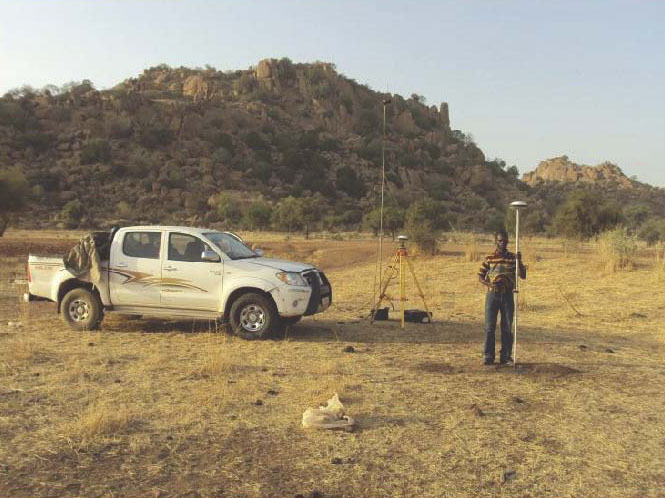
     Surveyors install and configure a base and rover for a 13,000-hectare survey of the Plains Kogoni in Mali.
    Surveyors install and configure a base and rover for a 13,000-hectare survey of the Plains Kogoni in Mali.

    In the heart of landlocked Mali, between the Atlantic Ocean 800 miles to the south and the Sahara desert to the north, lays the extraordinary Inner Niger River Delta, also known as the Macina, a 1.8 million hectare oasis of lakes and floodplains with a vast potential for hydro agriculture.

    CIRA, a major West African consulting engineering firm, working on behalf of the Office du Niger, a quasi-governmental Mali company charged with managing more than100,000 hectares of irrigated delta land, has completed surveying an additional 25,000 hectares for hydro-agriculture development.

    map

    Created in 1991, CIRA is an engineering and applied research consulting firm working in transportation, hydraulics, civil engineering and the environment. Based in Bamako, Mali, the firm works in more than 15 African countries, primarily in West Africa, Central Africa and East Africa.

    In the course of two months during the dry season, two CIRA survey teams, each equipped with three Spectra Precision ProMark 500s, a base station, and two rovers connected via UHF, completed the entire 25,000 hectare survey collecting four points in x, y, and z per hectare to produce a digital model. The model enabled the production of rough pre-study with all plans and a detailed pre-project CAD drawings for drainage, irrigation canals, and related infrastructures.

    A very short eight-month contractual time set to complete the different studies meant that the land survey study would have to be completed as quickly as possible. The first thought was to use aerial photography combined with LIDAR, but setting this up would have taken too long, according to a CIRA spokesperson. Instead, CIRCA chose to employ differential GNSS, using base and rovers working in real-time kinematic. CIRA’s experience suggested the firm would achieve reliable results much quicker using only optical total stations. CIRA elected to use Ashtech ProMark 500 GNSS receivers for the project. From experience, they knew the models were easy to set up and use, lightweight, offered long battery life in the field, and field to office data transfer would be easy. Their expectations were met, and the job was completed within two months and on time.

    The ProMark 500 RTK survey system provides short time to fix, long-range RTK and solution reliability. Its BLADE technology provides multi-constellation signal processing with the use of SBAS and GLONASS ranging signals to strenghten the GPS solution.

    Trimble acquired Ashtech in 2011, making it part of Spectra Precision.

     Setting up bitter points for calibration of satellite images on the corridor Sarh - Abeche in Chad (800km).
    Setting up bitter points for calibration of satellite images on the corridor Sarh – Abeche in Chad (800km).
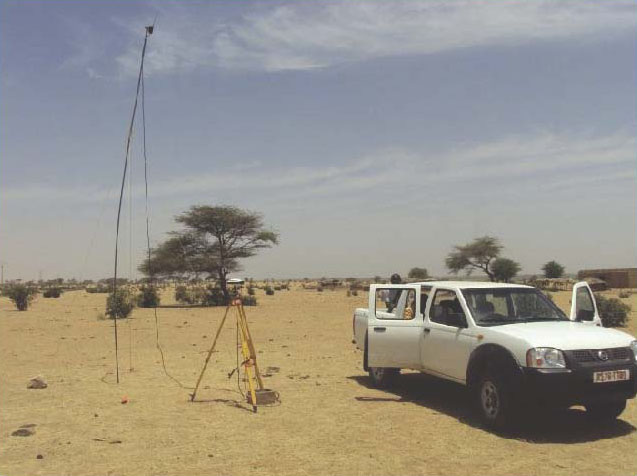
     Reference station during the survey topo Richard Toll road - N Dioum (120 miles) in Senegal.
    Reference station during the survey topo Richard Toll road – N Dioum (120 miles) in Senegal.
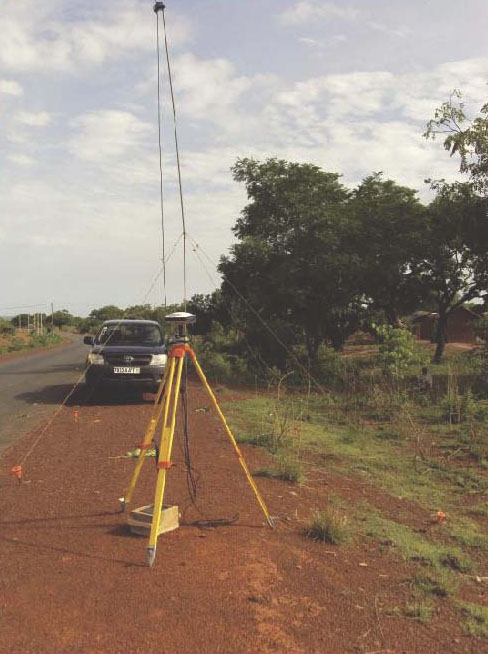
     A reference station during the survey topo Zégoua Sikasso road (95 km) in Mali.
    A reference station during the survey topo Zégoua Sikasso road (95 km) in Mali.
  • DeLorme Introduces ArcSync

    DeLorme announced the introduction of ArcSync, a software engine that allows customers to transfer field data edits to Esri repositories and synchronize field databases with the internal GIS database.


    ArcSync automates the process of defining and scheduling tasks, providing automatic data flow and keeping field and office databases in sync.

    “The ArcSync engine is an automated tool that streamlines the synchronization between field data collection and the ArcGIS database at headquarters,” said John Auble, DeLorme vice president, data products and HA/DR programs. “It is the ideal solution for organizations with a

    need to collect and distribute GIS data to field personnel in a disconnected format. It creates disconnected GIS layers from ArcGIS feature classes and maintains synchronization as changes are made via DeLorme, ArcMap or other Esri tools.”

    Auble noted that ArcSync permits the GIS Admin to ensure data viewed in the field is current for both the connected and disconnected GIS user, pushing work tickets to field personnel in an automated fashion so that critical data can be collected in a timely manner. It also allows for a scheduled automated process to run in order to make sure that all databases are in sync, eliminating the need for GIS Admin to spend time processing files manually to keep the field database and internal GIS database synchronized.

  • Esri and Microsoft to Provide Online Maps and Applications During Disasters

    Esri announced a strategic alliance with Microsoft to assist public and private agencies and communities around the world during disasters. Microsoft will display Esri public information maps on its cloud-based Disaster Response Incident Portal, as well as point citizens to the maps via its online outlets, such as MSN and Bing. Esri's ArcGIS integration within a number of Microsoft's disaster response management solutions will provide governments and leading aid organizations with a more comprehensive set of tools to address key challenges.

    Esri and Microsoft unveiled the alliance during the Esri International User Conference at the San Diego Convention Center in California.

    "Esri is excited to work with Microsoft because of its world-leading software and services," says Russ Johnson, global director of disaster response for Esri. "This alliance leverages the strengths of both companies. The first phase involves using our technologies to support affected organizations and provide public information faster and in a more intuitive web map format during crises."

    "The ability to include Esri intelligent, interactive web maps with Microsoft's suite of disaster response offerings increases our ability to assist government agencies and private citizens," says Harmony Mabrey, senior operations manager, Microsoft Disaster Response. "Both responders and citizens will have access to a more detailed level of knowledge about the impacts of a disaster, enabling them to make more informed decisions."                        

    Accordinging to the announcement, these growing efforts will exponentially increase situational awareness and information sharing during disasters.

    Benefits include the following:

    • Rapid data dissemination to targeted audiences and the general public during a disaster
    • Better situational awareness through Esri and Microsoft technologies for critical decision support
    • More information management resource availability for governments and leading response organizations through the combined efforts of Esri and Microsoft
  • GIS Cloud Launches Apps and its Enterprise Geo 2.0 Platform

    GIS Cloud is pleased to announce the launch of its Enterprise Geo 2.0 Platform.


    According to the announcement, the Enterprise Geo 2.0 Platform is being introduced with a number of applications and previews that demonstrate the power and flexibility of the platform, and address the diverse needs of segments ranging from transportation, utilities, municipal and local government, as well as other owners of geo-located assets.

    GIS Cloud reports that traditional client-server GIS applications have evolved over the years to support a diverse set of industries and vertical segments, often through the use and deployment of 3rd party and custom applications. But these applications, and more importantly the data created by these applications, are locked into desktop and workgroup server environments, and are not accessible to the larger enterprise user base that needs access.  The GIS Cloud Enterprise Geo 2.0 Platform is designed to fully leverage the power of Cloud computing to overcome these limitations and provide access to all enterprise users who need it.

    For the end-users this means very easy web access to apps solving their particular challenges. All apps are instantly available and a user can get started with them in a matter of seconds. No more IT, no more CD installations, no more desktop & server software.

    For the launch of our platform, we’ve prepared 7 enterprise geo apps to demonstrate the power of the platform:

    • Map Editor: full featured GIS Cloud map creation, editing and publishing
    • Map Viewer: easy map viewing optimized for non-professionals
    • Asset Data Collection and Management: enables organizations to effortlessly collect, track and manage their assets in real time
    • Roadwork Management and Coordination: enables organizations to track and coordinate their current and planned roadwork projects
    • Fleet Management: improve fleet and business efficiency with more than just a fleet tracking system
    • Mobile Data Collection: a simple and easy solution for real-time field location, multimedia and attribute data collection

    According to the announcement, Publisher for Esri ArcMap: a single click solution to get your maps and data from the most popular desktop GIS straight into GIS Cloud Map Viewer and Map Editor apps are now available in two flavors: free use for non-commercial users and a premium user-based subscription for commercial use. Other apps are launched as previews and therefore can be used free of charge.


  • Geneq Bluetooth GNSS Receiver Uses both GPS and GLONASS with SBAS

    Geneq Inc. has announced the SXBlue II GNSS, a GNSS receiver that uses both GPS and GLONASS with SBAS (WAAS/EGNOS/MSAS/GAGAN) to attain 30-cm/1-foot (RMS) accuracy in real-time using free SBAS corrections. It connects wirelessly to any smartphone, handheld, tablet computer, or notebook computer that is Bluetooth-compliant.

    For years, the SXBlue GPS product line has lead the market in squeezing the most out of SBAS for high-precision mapping and surveying users. New technology used in the SXBlue II GNSS allows it to utilize both GPS and GLONASS with SBAS, enabling it to track and use nearly twice as many satellites compared to typical SBAS receiver technology.

    “More satellites means more accurate positioning in tougher environments, such as under tree canopy and near buildings,” said Jean-Yves Lauture, product engineer. “GLONASS has proven itself valuable for RTK, and now we are bringing GLONASS to SBAS, with impressive accuracy and tracking results.”

    The SXBlue II GNSS builds on the success of the proven SXBlue II GPS that was designed to optimize SBAS performance under tree canopy and in rugged terrain. With the ability to track 55 satellites (31 operational GPS, 24 operational GLONASS), the SXBlue II GNSS uses between 12 and 19 satellites in view at any time, providing superior performance when working under and around tree canopy, buildings, and rugged terrain, Geneq said.

    The next-generation SXBlue II GNSS is the same, small, palm-sized unit as the SXBlue II GPS and uses a small 2.7-inch diameter GNSS antenna. The unit is completely waterproof (submersible), dustproof, and ruggedized, with an IP-67 rating. Its Class 1 long-range Bluetooth 2.0 has a typical range of 250 meters. The internal, rechargeable, field replaceable Li-Ion battery has on-board LEDs let the user know how much battery life is left. The operating temperature range of the SXBlue II GNSS is -40°C (-40°F) to 85°C (185°F).

    In addition to the built-in long-range Bluetooth transceiver, the SXBlue II GNSS has a standard DE-9 RS-232 port and a USB Type B port with outputs fully programmable up to 10-Hz standard, with a 20-Hz option. Other optional features are L1 RTK for <2-cm real-time accuracy and base station RTCM output.

    There is no need for post-processing or other sources of differential corrections as the SXBlue II GNSS uses WAAS (North America), EGNOS (Europe), MSAS (Japan), and GAGAN (India) satellite corrections. Users receive real-time, 30-cm/1-foot positioning all day long, Geneq said.

    The SXBlue II GNSS is targeted at GPS/GIS mapping professionals in industries such as forestry, utility, agriculture, and other natural resource industries in addition to local, state, and federal government users.

    Geneq will be showing the SXBlue II GNSS at the Esri International User Conference July 24-26 in San Diego, California, booth #1203.