Tag: product showcase

  • Launchpad: Cyber attack prevention, autonomous vans

    A roundup of recent products in the GNSS and inertial positioning industry from the August 2018 issue of  GPS World magazine.

    OEM

    IP Solution

    With multi-constellation GNSS for internet of things (IOT) devices

    The Dragonfly NB2 is a highly integrated and modular IP (internet protocol) solution optimized for Cat-NB2 (3GPP Release 14 eNB-IoT) that can seamlessly be incorporated into chips and modules by the multitude of companies looking to address the large and fast-growing cellular IoT space. GNSS hardware package. For customers developing NB-IoT products that also require GNSS capabilities, Ceva-Dragonfly NB2 includes a new power-optimized GNSS hardware package, with GNSS RF receiver and multi-constellation digital front-end. The GNSS package speeds up both acquisition and tracking tasks by up to 8 times compared to Ceva-Dragonfly NB1, enabling a host of popular NB-IoT use cases, including people, livestock and asset tracking and geofencing.

    CEVA, ceva-dsp.com

    Time clock system

    Provides timing accuracy and stability when GNSS signal is lost
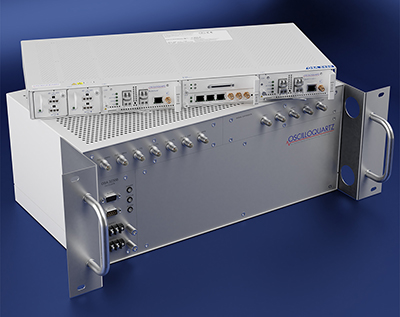
    Photo: Oscilloquartz
    Photo: Oscilloquartz

    Oscilloquartz has launched its enhanced primary reference time clock (ePRTC) system to enable a high level of timing accuracy and stability, even when the GNSS signal is lost. The system provides a timing source for mission-critical transport systems, such as utility networks, government infrastructure and radio access networks, and provides the strict synchronization needed for LTE-A and 5G applications. Featuring the OSA 3230B ePRC atomic cesium clock connected to an Oscilloquartz clock combiner and grandmaster, the new solution offers the extremely stable frequency of a cesium clock with the UTC-traceable signal provided by GNSS. When combined with the OSA 5430, the OSA ePRTC system provides full hardware redundancy and multiple fan-out options including PTP over 10 Gbit/s.

    Oscilloquartz, oscilloquartz.com

    Antenna receiver modules

    compatible with GPS, GLONASS, Beidou and Galileo
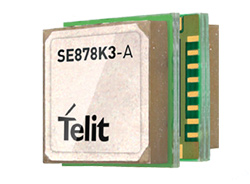
    Photo: Telit
    Photo: Telit

    The SE878Kx-A series of GPS and GNSS integrated antenna receiver modules offer high performance, maximum reliability and low power consumption for consumer and business applications. The SE878K3-A and SE878K7-A are compatible with GPS, GLONASS, Beidou and Galileo and also enable device vendors to develop quickly and cost-effectively location-based IoT solutions for use in virtually any country worldwide. The SE878Kx-A series supports dual internal-external antennas to ensure connectivity when one is broken or compromised, along with a SAW filter to maximize jamming immunity. The modules are designed for mission-critical applications and other use cases where reliability is key, such as alarms, stolen cars or high-end asset tracking. The series also provides seamless integration with Telit’s cellular modules, including eCall/ERA-GLONASS compliant solutions.

    Telit, telit.com

    IoT Board

    Has Built-in GNSS Receiver
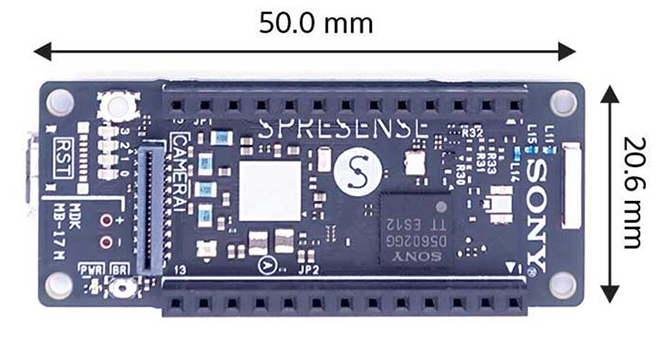
    The Spresence main board by Sony. (Image: Sony)
    The Spresence main board by Sony. (Image: Sony)

    The Spresence main and extension boards are designed for internet of things (IoT) applications. The main board uses a multi-CPU structure equipped with Sony’s GNSS receiver (GPS+GLONASS) and high-resolution audio codec. A variety of systems for applications such as drones and other IoT devices can be built by combining the boards and developing the relevant applications. The boards’ software and hardware is available via open platform, allowing for a wide range of developmental possibilities. The main board can be used to control a drone using GPS positioning and a high-performance processor, voice-controlled smart speakers and low-power consumption sensing cameras. It also can be combined with sensors for use in systems that detect errors in production lines on the factory floor.

    Sony Corporation, sony.net

    SURVEY & MAPPING

    Field controller

    Designed for geopositioning, construction and mapping
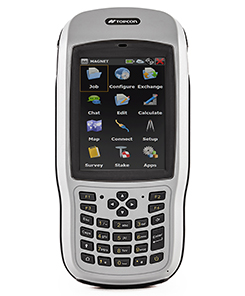
    Photo: Topcon
    Photo: Topcon

    The T-18 handheld controller has a 3.7-inch sunlight-readable display, a 1-GHz processor and 1 GB of internal storage. For field data collection using Topcon’s MAGNET software, the T-18 offers a durable ergonomic solution with fast processing, excellent connectivity and a long (10-hour) battery life. It has a 3.5G cellular modem for connectivity with Topcon MAGNET solutions for sending and receiving data to the cloud company account. The modem also can be used for real-time kinematic (RTK) correction services. Other features include Bluetooth and an IP65 rating for dust and water protection in demanding job-site conditions.

    Topcon Positioning Group, global.topcon.com

    Android application

    Created for SXblue receivers
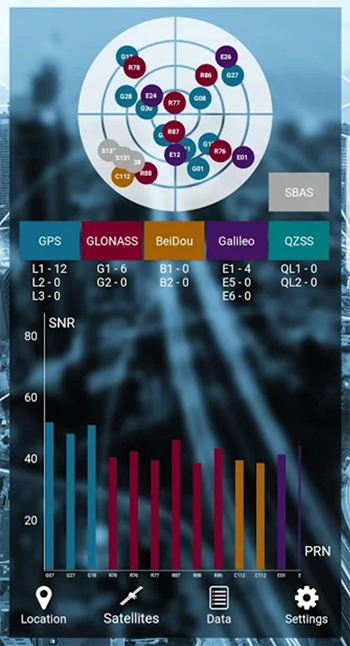
    Image: SXblue
    Image: SXblue

    The SXblue ToolBox is an Android application for SXblue GNSS receivers, enabling users to view and analyze the position data and metadata related to its location. The user can send commands that enable or disable some features, including systems in use, mask angle or differential angle, and constellation in use, including GPS, GLONASS, Galileo, BeiDou and SBAS. The SXblue ToolBox is also an NTRIP client capable of connecting to a NTRIP server for real-time kinematic (RTK) corrections, allowing the receiver to issue very accurate location information. The application can record, save and transfer raw data from the GNSS receiver, allowing post-processing on computers for surveying and geomatics professionals.The toolbox has been developed with special consideration for modern mobile devices and attention to user and dealer feedback. It includes a series of configurable audible and visual alarms for determining the thresholds of the information provided by the SXblue GNSS receiver.

    SXblue, sxbluegps.com

    Laser scanner

    Creates 3D models in the field
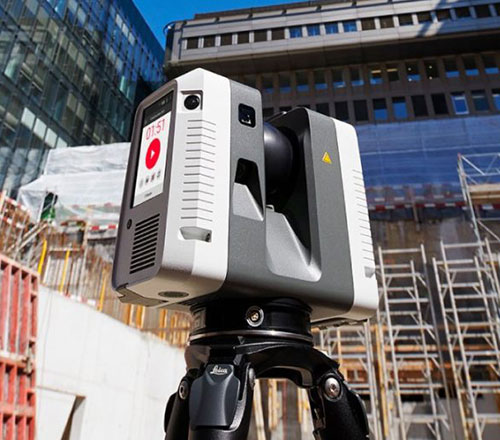
    Leica RTC360 laser scanner. (Photo: Hexagon)
    Leica RTC360 laser scanner. (Photo: Hexagon)

    The Leica RTC360 laser scanner is equipped with edge computing technology to enable fast and accurate creation of 3D models in the field. It combines high-performance laser scanning, edge computing and mobile app technologies to preregister captured scans quickly and accurately. With the push of a button, two million points per second of high dynamic range imagery can be captured to create a full-dome scan in under two minutes. It features a visual inertial system that automatically tracks movements between setup positions. The scans captured can be combined and preregistered on a mobile device, where they can be viewed and augmented with information tags.

    Hexagon, hexagon.com

    Indoor software

    Location technology allows users to see rooms, gates and offices
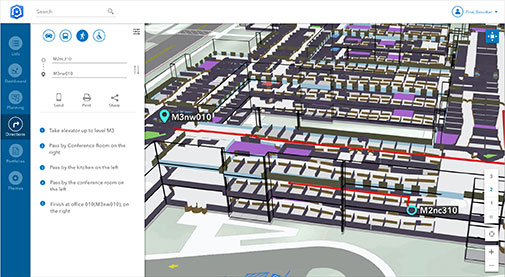
    Screenshot: Esri
    Screenshot: Esri

    ArcGIS Indoors is designed to enable interactive indoor mapping of corporate facilities, retail and commercial locations, airports, hospitals, event venues, universities and more. The solution applies the latest location technology to allow users to see and share where assets, rooms, departure gates and offices are located. It uses data streams, real-time processing and location intelligence tools to help businesses and other organizations understand how to better coordinate space and other resources with their facilities and campuses. Insights from sensor networks deliver real-time information to managers and executives through interactive dashboards, while visitors and employees can find useful information about the buildings they occupy. The solution also allows users to quickly access and explore critical business information, such as the location and status of fire extinguishers and their last inspection dates.

    Esri, esri.com

    TRANSPORTATION

    Automotive-grade inertial sensor

    Meets demands for continuous, accurate vehicle location
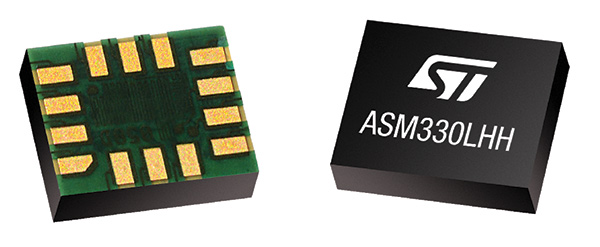
    The ASM330LHH module. (Photo: STMicroelectronics)
    The ASM330LHH module. (Photo: STMicroelectronics)

    The automotive-grade ASM330LHH six-axis inertial sensor is designed for super-high-resolution motion tracking in advanced vehicle navigation and telematics applications. It lets advanced dead-reckoning algorithms calculate precise position from sensor data if satellite signals are blocked, such as in urban canyons, tunnels, covered roadways, parking garages or dense forests. Its advanced, low-noise, temperature-stable design enables dependable telematics services such as e-tolling, tele-diagnostics and e-Call assistance. Precision inertial data in six axes also meets the needs of advanced automated-driving systems. Automotive component manufacturer Magneti Marelli has selected the ASM330LHH for advanced telematics systems, to be fitted as original equipment by global automotive groups in upcoming vehicle ranges.

    STMicroelectronics, st.com

    Traffic alerts app

    Near real-time data for smarter cities
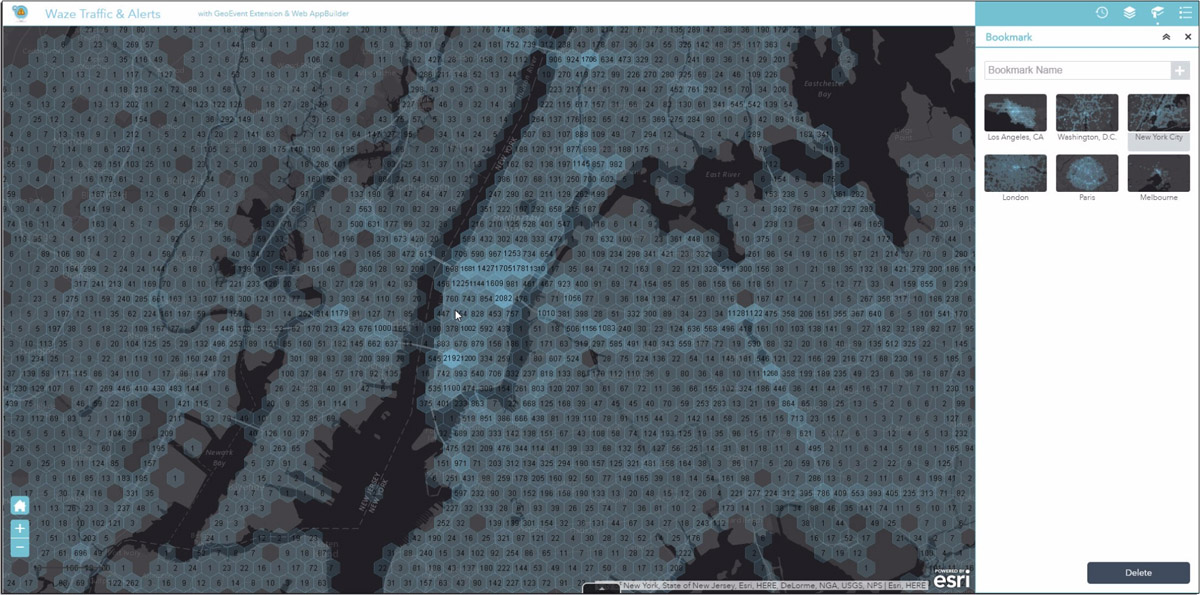
    Esri and Waze smart cities partnership grows. (Image: Esri)
    Esri and Waze smart cities partnership grows. (Image: Esri)

    The free crowdsourced traffic and navigation app Waze is now fully supported by ArcGIS Online, where its live feed of mapped traffic alerts and other information, such as accidents, congestion and street damage, can be used in applications in minutes. Waze Live Alerts, available in ArcGIS Marketplace, is free to members of the Waze Connected Citizens Program. The program, a two-way sharing of publicly available traffic and road condition information, offers governments a stream of data, constantly updated in real time. This enables personnel to make data-driven infrastructure decisions and improves the efficiency of incident response.
    Traffic engineers can use the data to analyze problems on the road and create targeted solutions.

    Waze, waze.com; Esri, esri.com

    Connected car software

    Open-source platform for autonomous delivery and other iot

    The AGL platform provides Mercedes-Benz Vans with the ability to create autonomous delivery robots. (Image: Daimler)
    The AGL platform provides Mercedes-Benz Vans with the ability to create autonomous delivery robots. (Image: Daimler)

    Automotive Grade Linux (AGL) is a collaborative cross-industry effort to develop an open platform for the connected car. Mercedes-Benz vans are using AGL as a foundation for a new onboard operating system for its commercial vehicles. The Mercedes-Benz “adVANce” initiative focuses on connectivity and internet of things (IoT) applications, innovative hardware solutions, new on-demand mobility and rental concepts, and fleet management solutions. The AGL platform provides Mercedes-Benz Vans with the flexibility to rapidly create tailored solutions for customers, including adding and connecting any kind of IoT component to the vehicle, such as sensors, automation controls and actuators. The new AGL-based operating system will debut on various Mercedes-Benz Vans prototype projects later this year.

    Linux Foundation, linuxfoundation.org; Mercedes-Benz, daimler.com

    Vehicle security

    Protects against ransomware

    Image: iStock/hanibaram
    Image: iStock/hanibaram

    eCyber is an integrated hardware-software product that protects vehicles against ransomware and other cyber-attacks. It can be installed in a vehicle by authorized parties, such as vehicle importers and fleet managers, in the aftermarket stage after the vehicle has left the factory, as well as by the OEM itself during manufacture. eCyber, a combined hardware and software solution in a compact box, is installed between the vehicle’s external communications device and the vehicle’s CAN (Controller Area Network) bus. It provides a secure gateway for outside communications to the CAN bus, allowing only communications with predefined parameters and values to go through. It blocks any unrecognized communications to and from the CAN bus, so no malicious digital communications can disrupt vehicle function.

    ERM Advanced Telematics, ermtelematics.com

    UAV

    Aerial camera

    With fast medium-format imaging sensor
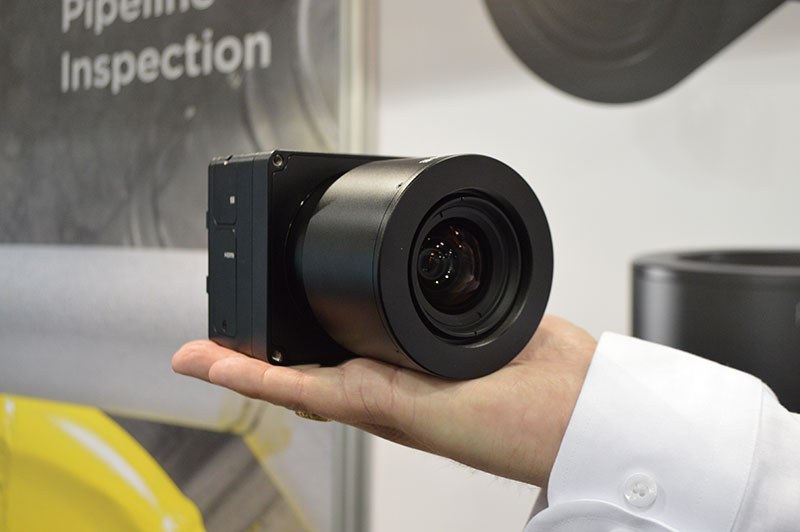
    Photo: GPS World
    Photo: GPS World

    Engineered for UAV-imaging missions, the iXM 100MP is a high-productivity metric camera with a range of high-resolution lenses. It is ready for integration with various UAV platforms, including Phase One’s DJI Matrice 600 Pro. The camera incorporates a medium-format sensor with backside-illumination technology, enabling high light sensitivity and extended dynamic range. Phase One also offers four new RSM lenses — with focal lengths ranging from 35mm to 150mm — to fit the new sensor’s 3.76 μm pixel size and 33 x 44 mm frame size. The lenses are available with either fixed-focus or motorized-focus functionality. The fixed-focus 35mm and 80mm lenses are especially suitable for surveying applications.

    Phase One Industrial, industrial.phaseone.com

    Authorization platform

    For quick approval of flights over controlled airspace
    Screenshot: Skyward
    Screenshot: Skyward

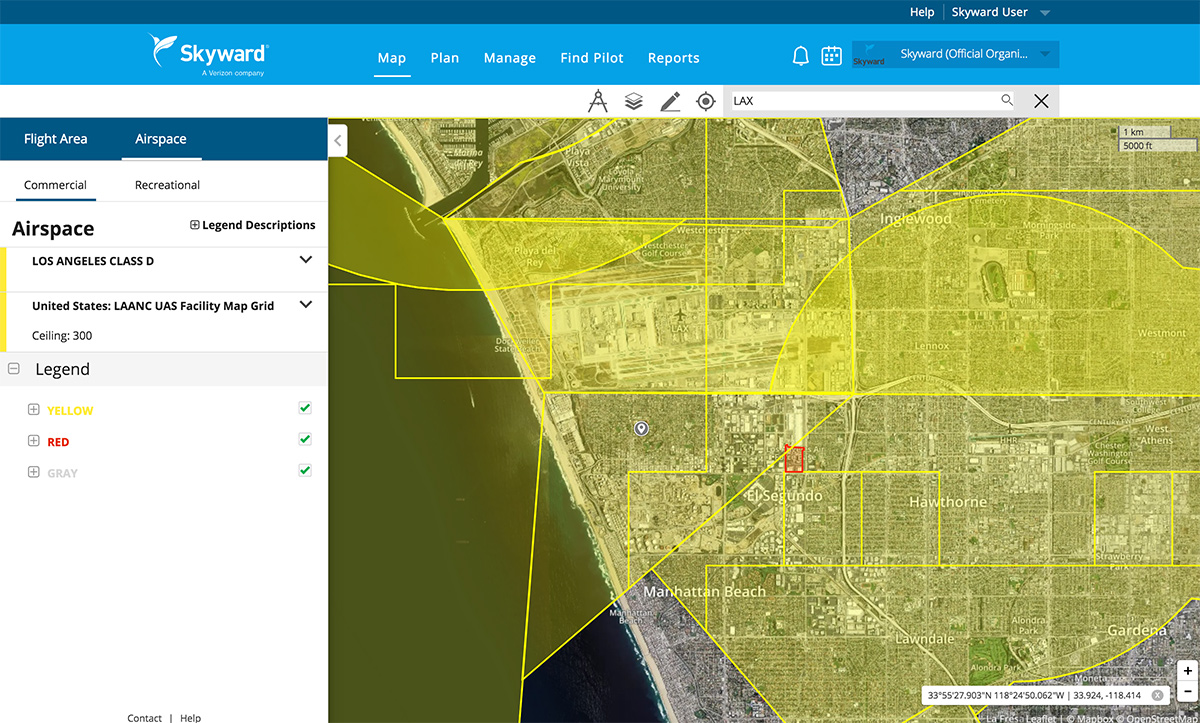
    Commercial drone operators in California and Hawaii — as well as a few areas in Nevada, Utah and Arizona — can get quickly authorized to fly in controlled airspace using the LAANC (Low Altitude Airspace Notification Capability) platform. Skyward is an FAA-approved airspace vendor. With Skyward, pilots with a Part 107 license can get permission to fly in regulated airspace in seconds compared to manual authorizations that can take months. This makes it significantly easier for businesses of all sizes, particularly in the construction and warehousing industries, to manage a fleet of drones to access valuable, cost-saving data. Skyward’s LAANC expansion includes airspace in the busy metro areas of Los Angeles, the Bay Area, San Diego, Las Vegas and more than 50 smaller air markets.

    Skyward, skyward.io
  • Persistent Systems provides drone tracking for battlefields

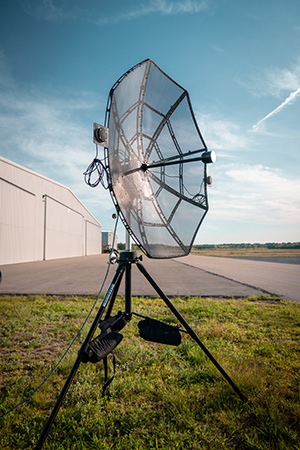
    Persistent Systems LLC has introduced the Auto-Tracking Antenna System, a new portable ground-to-air antenna that operates on the Wave Relay mobile ad hoc network (MANET).

    Designed to incorporate aircraft into the MANET, the Auto-Tracking Antenna System is a complete portable ground-to-air system for tracking aircraft, including drones. Army, Navy and foreign customers can use it for better airborne communications relay and full-motion video camera/sensor data transmission, Persistent said.

    Photo: Persistent Systems
    Photo: Persistent Systems

    “The Auto-Tracking Antenna System represents a major step towards achieving the vision of a truly networked battlefield,” said Herb Rubens, CEO of Persistent Systems. “The tracking antenna rotates to follow air assets, keeping them connected to the MANET. “The air platforms orbit over our users on the ground, extending the MANET bubble and keeping soldiers connected to the enterprise. High throughput, low latency connectivity empowers the warfighter and decreases the dependence on SATCOM, which both reduces cost and increases network availability.”

    Designed for ease-of-use, quick assembly and portability, the Auto-Tracking Antenna System can be assembled and deployed in less than 15 minutes, the company added.

    The portable and lightweight design is completely collapsible, with the main five-foot parabolic dish breaking down into eight individual petals.

    The entire system fits into most standard-sized SUVs for easy transport and compact storage.

    Photo: Persistent Systems

    Mimicking the MPU5’s modular RF structure, the Auto-Tracking Antenna System has interchangeable S-band, L-band and C-band MIMO feeds that allow it to cover all frequencies where Persistent’s five radio modules operate.

    The antenna feeds twist-lock into place for quick and simple installation. An Automatic Heading System enables the tracking antenna to self-calibrate prior to operation for greater precision and less than one-degree pointing accuracy.

    “Our customers require a system that is simple to put together, turn on, and works,” said Louis Sutherland, vice president of business development at Persistent Systems. “They want to extend the Wave Relay MANET out to aircraft and achieve high data-rates and reliable HD video transmission. The Auto-Tracking Antenna System truly delivers.”

    The large parabolic dish enables video streaming out to distances of 130 miles (over 200 kilometers) while maintaining high throughput and strong signal strength.

    Photo: Persistent Systems
    Photo: Persistent Systems

    Combining the precisely aimed tracking system with the MPU5 radio and Wave Relay MANET achieves optimal connectivity and reliable communications for manned and unmanned aircraft to communicate further than ever before.

    The antenna is IP67 rated and built to endure harsh environments and weather, so it can be setup and left out for as long as the mission requires.

  • EOS Platform provides toolbox for processing Earth observations

    Most image analysis tasks that required ENVI or Erdas Imagine software are now available online with EOS Platform, a new cloud service launched by Earth Observing System (EOS). It provides GIS professionals with a one-stop solution for search, analysis, storing and visualization of large amounts of geospatial data.

    EOS Platform is an ecosystem of four mutually integrated EOS products, which together provide a powerful toolset for geospatial analysts, according to the company. Image data obtained from LandViewer or uploaded from a user’s computer is stored in cloud-based EOS Storage and is instantly available for remote sensing analysis or image processing.

    EOS Processing offers 16 processing workflows that run online, including raster tools (merge, reprojection, pansharpening), remote sensing analytics, photogrammetry and proprietary feature extraction algorithms designed by EOS engineers and data scientists to address the main challenges of agriculture, forestry, oil, gas, retail, city planning, defense and other industries. Such pre-processing tasks as cloud detection or radiometric calibration refine raw data for further analysis. Images can be corrected for atmospheric effects to obtain the real ground radiance or reflectance values.

    Users can also use the cartographic features of EOS Vision for vector data visualization and analysis (analysis coming soon). Other features in upcoming updates include lidar analysis and 3D modeling.

    Data agnostic platform

    Users can work with a variety of satellite and airborne raster datasets in EOS Processing, EOS Storage and LandViewer, which enables quick and intuitive search of images within collections of Sentinel-1 and 2, Landsat 8 and 7, MODIS, NAIP, CBERS-4, Landsat 4 and 5. Besides downloading images from public datasets, users can also upload their own GeoTiff, JPEG, JPEG 2000 files and apply GIS data-processing algorithms via API or from the web interface. EOS Vision is a tool for vector data operations with multiple format support (ESRI Shapefile, GeoJSON, KML, KMZ).

    Object detection, change detection and classification

    The convolutional neural networks, pre-trained by EOS to extract features from imagery, allow users to apply state-of-art methods to detect objects and track changes from space.

    • Having only a set of multi-temporal images and change detection workflow, users can track how illegal deforestation progresses over time.
    • Edge detection can show the exact boundaries of agricultural lands down to the last pixel.
    • It is possible to estimate the parking lot traffic of the largest shopping centers with a car detection algorithm.

    Products within EOS Platform support almost all remote sensor types. Users can choose from numerous spectral indices to calculate on the fly.

    Aside from the complete set of vegetation indices (Normalized Difference Vegetation Index, NDVI; Red-Edge Chlorophyll Index, ReCI; etc.), there are also indices to outline landscape features (Normalized Difference Water Index, NDWI; Normalized Difference Snow Index, NDSI) and burned areas (Normalized Burn Ratio, NBR).

    One of the most useful features is the ability to experiment with spectral bands: users can create custom band combinations and indexes on top of the default ones.

    The user-friendly interface of EOS Processing makes it easy to manage processing workflows depending on the user’s business needs. Users can set the parameters for processing and repeatedly use customized workflows to automate high-frequency analytical tasks. Coming updates will add an ability to create custom algorithms from the available data-processing operations.

    Agriculture, forestry, oil and gas and more industries

    A tandem of EOS products form a comprehensive toolbox both for general use and for industry-specific cases, the company said. With vegetation indices and crop classification feature, agronomists can continuously monitor crop conditions to detect plant diseases, pests and droughts. Forestry specialists can classify forest types, assess fire damage, monitor forest health, and track and enforce logging restrictions.

    EOS Platform can also be used for regional and urban planning. It helps users identify land cover classes to generate a vegetation map and can also make a complete list of urban features such as buildings, roads or other major features in the region.

    The platform can tackle disaster management by measuring flood extent and finding fire boundaries. When it comes to oil and gas, it is capable of identifying oil rigs and assessing the environmental impact.

  • Launchpad: RTK modules, inertial sensors

    Launchpad: RTK modules, inertial sensors

    OEM

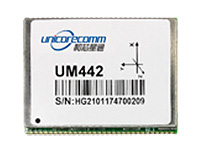
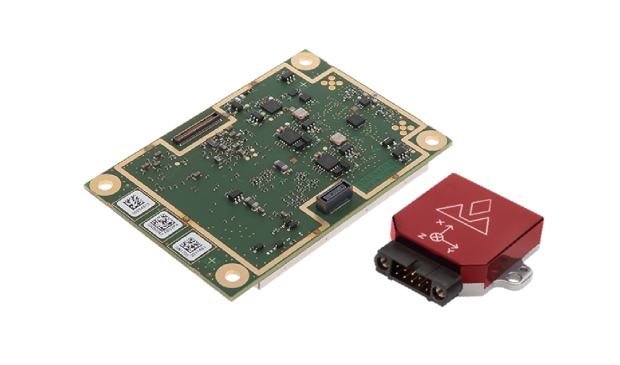
    RTK and Heading Module

    Positioning and attitude determination

    Image: Unicore
    Image: Unicore

    The UM442 can simultaneously track GPS, BDS, GLONASS and Galileo. It also supports SBAS and QZSS. It uses Uncore’s new-generation Nebulas II chip and UGypsophila real-time kinematic (RTK) algorithm. Based on high-performance data-sharing technology and the simplified operation system of the Nebulas II chip, the UGypsophila RTK algorithm dramatically optimizes matrix processing, enabling the UM442 to track more satellites and shorten the initialization time to 5 seconds.

    Unicore Communications, www.unicorecomm.com

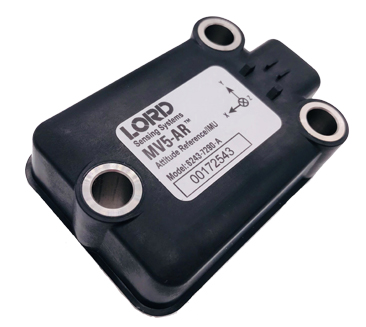
    Inertial sensors

    Designed for dynamic inclination and positioning

    Image: Lord Sensing
    Image: Lord Sensing

    The MV5-AR inertial sensors are designed for off-highway and military vehicles, marine and mobile robot applications, and the autonomous vehicle market. The rugged, compact sensors use LORD’s fifth-generation high-performance industrial-grade solid-state six-degrees-of-freedom (6-DOF) micro-electromechanical accelerometer and gyro inertial sensor technology. Successfully deployed on ground robots and heavy machinery, applications also include autosteer and terrain compensation; dynamic incline detection (roll, pitch, rotation); vehicle stability and leveling; platform control, alignment and stabilization; operator feedback; and precision navigation. The compact and rugged reinforced housing is fully sealed for immersion and pressure wash. Each sensor is calibrated and temperature compensated.

    LORD Sensing Microstrain, microstrain.com

    BeiDou upgrade

    GNSS simulators ready for 2020

    Spirent's GSS7000 test system. (Image: Spirent)
    Spirent’s GSS7000 test system. (Image: Spirent)

    BeiDou Phase 3 signals are now available on Spirent GNSS RF constellation simulators GSS7000 and GSS9000 — existing users can obtain the software upgrade by contacting Spirent. Phase 3 of the Chinese BeiDou system will extend its coverage from Asia to the entire world, providing receiver developers and integrators with additional GNSS signals to make positioning, navigation and timing systems more accurate, and help to support new applications, such as autonomous vehicles. Customers can test their designs before the system is fully operational in 2020.

    Spirent Communications, www.spirent.com

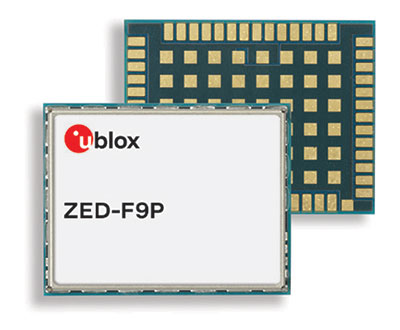
    High-precision module

    Based on u-blox F9 technology

    Image: u-blox
    Image: u-blox

    The ZED-F9P multi-band GNSS module has integrated multi-band real-time kinematic (RTK) technology for machine control, ground robotic vehicles and high-precision unmanned aerial vehicles applications. It measures 22 x 17 x 2.4 millimeters and uses technology from the u‑blox F9 platform to deliver robust high-precision positioning performance in seconds. The ZED-F9P is a mass-market multi-band receiver that concurrently uses GNSS signals from all four GNSS constellations (GPS, GLONASS, Galileo and BeiDou). Combining GNSS signals from multiple frequency bands (L1/L2/L5) and RTK technology lets the ZED‑F9P achieve centimeter-level accuracy in seconds.

    u-blox, u-blox.com

    Chip-scale atomic clock

    Ready for space

    Image: Microsemi
    Image: Microsemi

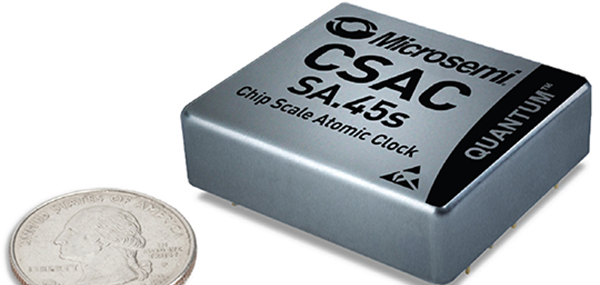
    The SA.45s Commercial Space Chip-Scale Atomic Clock (CSAC) is a commercially available radiation-tolerant CSAC suitable for low Earth orbit (LEO) applications. The device provides the accuracy and stability of atomic clock technology while achieving significant breakthroughs in reduced size, weight and power consumption. It provides excellent drift performance and built-in 1 pulse per second (PPS) input for GPS disciplining, making the device well-suited for holdover applications. Commercial and research space applications include satellite timing and frequency control; satellite cross linking; assured position, navigation and timing; and Earth observation.

    Microsemi, microsemi.com


    SURVEY & MAPPING

    Radio modem

    For heavy-duty RTK applications

    Image: Harxon
    Image: Harxon

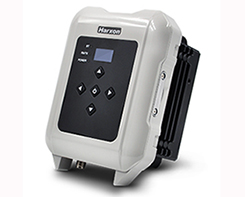
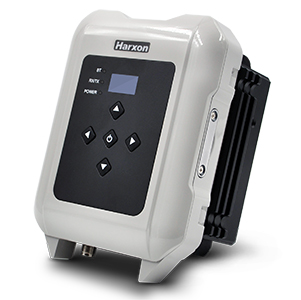
    The long-range, power-efficient eRadio is designed to support high-precision GNSS real-time kinematic (RTK) applications in surveying and precision agriculture. It is enabled with intelligent serial baud rate identification for different RTK devices. It can automatically identify RTK serial baud rate with a radio data cable and provide a plug-and-play form for easy connection between the eRadio and RTK. With its high transmitting power (5-35 Watts), transmission data can be up to 19200 bps/s over a connection distance of 50–80 kilometers. It can work as either a base or repeater with other Harxon radio modems in challenging environments.

    Harxon, harxon.com

    GNSS receiver

    Wireless communication with any Android or Windows terminal

    Image: SXblue/Geneq
    Image: SXblue/Geneq

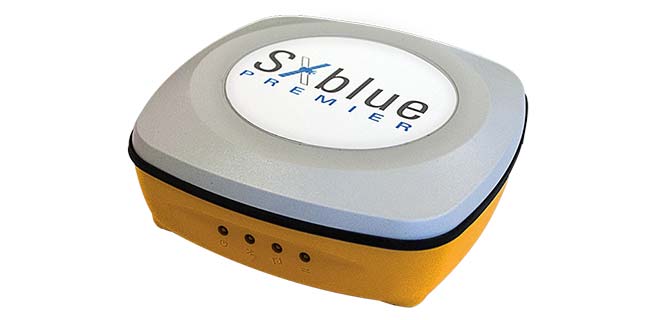
    The SXblue Premier GNSS receiver is available in a submetric version (GNSS) or centimetric version (RTK). It is equipped with Pacific Crest Maxwell 6 Trimble technology with BD910 (GNSS version) and BD930 (RTK version) OEM boards, delivering 220 channels to acquire and track GNSS signals from all constellations in view. It makes effective use of GPS, GLONASS, Galileo, BeiDou, QZSS and SBAS signals for precise positioning.

    SXblue, www.sxbluegps.com

    Smart antennas

    With integrated Atlas L-band

    Image: Hemisphere GNSS
    Image: Hemisphere GNSS

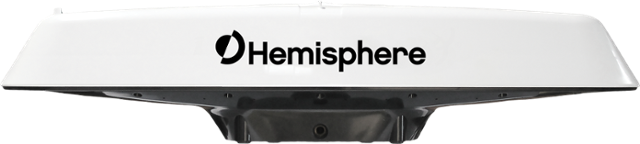
    The single-frequency, multi-GNSS Vector V123 and V133 all-in-one smart antennas are multi-GNSS compass systems using GPS, GLONASS, BeiDou, Galileo and QZSS for simultaneous tracking for heading, position, heave, pitch and roll. Both support NMEA 0183 and NMEA 2000. The V123 and V133 thrive in radar/ARPA, AIS, ECDIS, side-scan survey, multi- and single-beam surveys, dredging and general navigation applications.

    Hemisphere GNSS, hemispheregnss.com


    TRANSPORTATION

    Mobile GPS tracker

    For tracking vehicles, assets and people

    Images: Trak4
    Images: Trak4

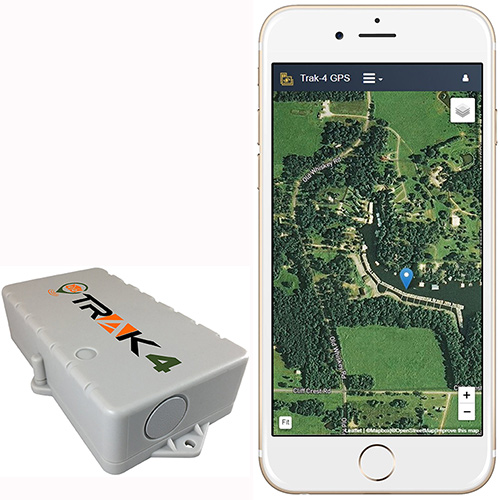
    The Trak4 provides GPS tracking with cell-trilateration fallback. Ping rates can be selected from every two minutes to once a day, with email and text alerts provided for geozone entry and exit or if the high-capacity rechargable battery is low (the battery runs up to 12 months on a single charge.) The Trak4 is designed for tracking vehicles, assets and inventory; it can also be used to track people such as the elderly. Indoor/outdoor weatherproofing allows “anywhere” mounting.

    Trak-4, trak-4.com

    Multi-GNSS antennas

    For positive train control

    Image: PCTEL
    Image: PCTEL

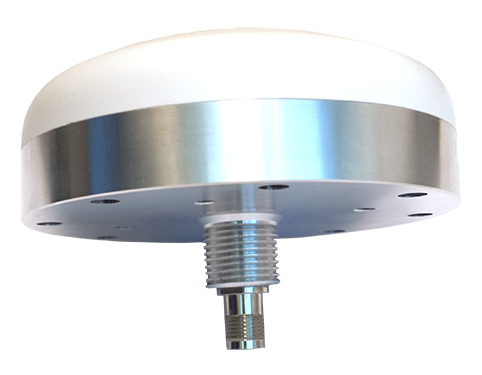
    PCTEL’s multi-GNSS L1/L2/L5 antennas combine aerospace-level precision with global satellite compatibility in a highly durable package. They enable critical applications including vehicular automation, 5G network timing synchronization and Positive Train Control (PTC) systems. The antennas increase the accuracy of timing and location information by providing simultaneous access to multiple GNSS signals across multiple frequency bands. The antennas support all relevant GPS, GLONASS, BeiDou and Galileo frequencies with excellent multipath mitigation and high out-of-band rejection for greater signal clarity. Their robust AAR and IP67-compliant design makes them suitable for years of use on railways and in other harsh real-world environments.

    PCTEL, pctel.com

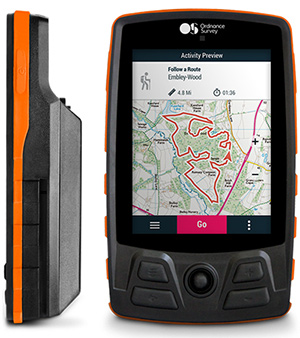
    Off-Road GPS

    New range for walking and cycling

    Image: Ordnance Survey
    Image: Ordnance Survey

    Four new GPS handhelds are designed for off-road use, with safety in mind. All four of the OS GPS models have a built-in SIM card with access to the SeeMe subscription-based service and its safety features. With I.C.E (In Case of Emergency), users can send emergency alerts with exact coordinates to family and friends directly from the OS GPS. Live Tracking enables the user to be locatable at all times, sharing location and performance data with up to 20 friends in real time. Aventura, the most advanced navigation device, can be used in all weather conditions.

    Ordnance Survey, ordnancesurvey.co.uk

    Fleet management

    Real-time GPS fleet tracking

    Image: Zubie
    Image: Zubie

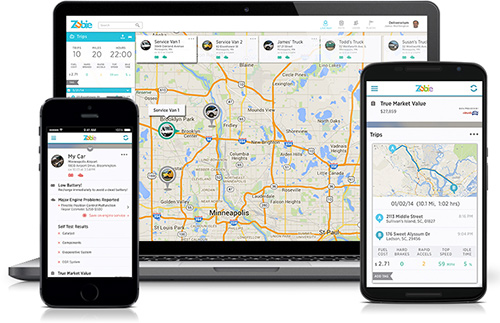
    Zubie Fleet Connect provides real-time GPS fleet tracking, driver check-in and performance reports, and vehicle health alerts. The monitoring and reporting service lets managers of fleets from 2 to 5,000 vehicles optimize business on the road. Wi-Fi connection to the cloud delivers important information about the health and performance of the vehicle, enhancing driver safety. Zubie also works with large enterprises to develop custom data flows and access driving data that can be used to analyze driving patterns, spot geographical trends in activity, or improve fleet asset management based on vehicle wear and tear.

    Zubie, zubie.com

    Multi-sensor payload

    Utility inspections with manned helicopters

    Image: Sharper Shape
    Image: Sharper Shape

    The Heliscope 2.0 provides onboard data collection with speed, efficiency and productivity improvements for the utility inspection industry. It provides a solution for operations over greater distances or in harsher environments than drones can accommodate The system integrates multiple sensor systems into a single, lightweight helicopter payload, capable of simultaneously collecting a range of data types required for utility maintenance and vegetation management inspections. Deployment enables optimized inspection and maintenance schedules, offering potential cost savings in those operational activities by as much as 50 percent. The Heliscope 2.0 has flexible mounting configurations and the ability to adapt for mounting on many different helicopter types.

    Sharper Shape, sharpershape.com


    UAV

    Survey system

    Accurate, quick aerial surveys

    Image: Aibot
    Image: Aibot

    Based on DJI’s M600 Pro platform, the Leica Aibot system is designed to rapidly and autonomously enable digitizing of critical infrastructure. It enables users to get a complete data set quickly with a user-friendly interface. Using Leica Infinity for point-cloud, digital surface model and orthophoto generation enables surveyors to process and visualize aerial data. For construction projects, Aibot provides access to critical information to perform volume calculations and monitor site progress. Users can see high-definition imagery and 3D mapping of the site and document progress. The UAV data can be combined with other survey technologies such as GPS for a more complete set of information.

    Leica Geosystems, leica-geosystems.com

    UAV antenna

    GPS L1/L2 + GLONASS G1/G2

    Image: Tallysman
    Image: Tallysman

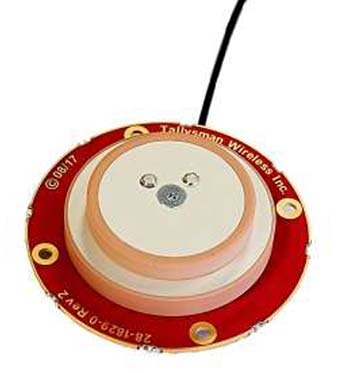
    Two lightweight, compact antennas are designed for UAVs with a low aerodynamic profile. Antenna model TW1829 is for original equipment manufacturers (OEMs), and model TW8829 is a housed version. Accutenna technology provides high-level rejection of multipath signals, a phase linear response and tight phase-center variations. Pre-filters prevent saturation of the front-end low noise amplifier by strong near frequency and harmonic signals.

    Tallysman, www.tallysman.com

    GNSS Antenna

    Multi-GNSS, multi-frequency four-heliX UAV antenna

    Image: Hemisphere GNSS
    Image: Hemisphere GNSS

    The HA32 high-performance antenna supports GPS, GLONASS, Galileo, BeiDou and Hemisphere’s Atlas L-band correction service. It is designed for UAVs, geographic information systems (GIS), surveying, real-time kinematic (RTK) and other applications requiring high-precision positioning and navigation. The HA32 is built on a proprietary four-helix antenna technology that provides superior filtering and anti-jamming performance with features such as a low noise figure of 2.0 dB (typical) and up to 30-dB gain (typical). Suitable for most outdoor and harsh operating environments, the HA32 antenna is sealed in a durable and ruggedized IP67-rated. The lightweight (40 g, typical), compact form factor (40 x 75 mm) makes it resistant to wind when on UAVs.

    Hemisphere GNSS, hemispheregnss.com

  • Harxon launches smart eRadio for RTK applications

    Harxon has introduced the smart eRadio, a member of its radio modem series. The eRadio is a long-range and power-efficient solution designed to support high-precision GNSS real-time kinematic (RTK) applications in surveying and precision agriculture.

    Harxon eRadio is enabled with intelligent serial baud rate identification for different RTK devices. It can automatically identify RTK serial baud rate with a radio data cable and provide a plug-and-play form for easy connection between the eRadio and RTK, the company said.

    Photo: Harxon
    Photo: Harxon

    Due to its high transmitting power (5-35 Watts), transmission data can be up to 19200 bps/s over a connection distance of 50-80 kilometers, depending on the environment.

    The eRadio offers surveyors an easy-to-use radio modem that provides dependable performance as either a base or repeater working with other Harxon radio modems in challenging environments. In the store and forward operating mode, eRadio receives messages, buffers the received data and transmits further to another substation.

    The user programmable eRadio also supports the Bluetooth of APP to configure data and update radio status. Its diagnostic reporting software can realize the built-in reliability monitoring, such as internal temperature, environment status and battery level and channel inspection. According to the company, these features allow users to both anticipate and deal with potential issues efficiently.

    In addition to compatibility with radio protocols by Trimble and Satel, eRadio is equipped with its unique ETALK communication protocol, which uses Harxon’s exclusive algorithms and advanced processors. Under the same conditions, ETALK protocol can significantly reduce the bit error rate of weak signals and the communication distance can be increased by 20 percent.

    The compact, rugged eRadio is particularly well suited for heavy-duty outdoor use. It is designed for easy mobile use with an organic light-emitting diode display screen for demanding field conditions. The IP67 full metal cover provides dust and water resistance that keeps surveyors working with confidence and efficiency.

  • SXblue offers Toolbox application for GNSS receivers

    SXblue offers Toolbox application for GNSS receivers

    Image: SXblue
    Image: SXblue

    SXblue, also known as Geneq, has introduced its SXblue ToolBox, an Android application for SXblue GNSS receivers.

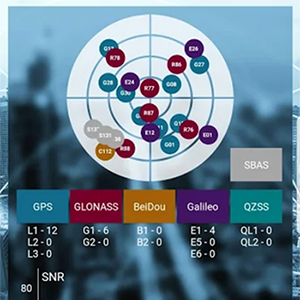
    Using the SXblue ToolBox, receiver users can view and analyze the position data provided by the SXblue receiver and metadata related to its location. The user can send commands that enable or disable some features, including systems in use, mask angle or differential angle, and constellation in use, including GPS, GLONASS, Galileo, BeiDou and SBAS.

    The SXblue ToolBox is also an NTRIP client capable of connecting to a NTRIP server for real-time kinematic (RTK) corrections and thus allow the receiver to issue very accurate location information. The application is able to record, save and transfer the raw data from the GNSS receiver, allowing post-processing activities on computers for surveying and geomatics professionals.

    The application has been developed with special consideration for modern mobile device development and attention to user and dealer feedback, the company said.

    The application includes a series of audible and visual alarms configurable by the user to determine the thresholds of the information provided by the SXblue GNSS receiver.

    Main features of the SXblue ToolBox include:

    • Display of location information and quality of the position data
    • Skyplot of all-in-view constellations: GPS, GLONASS, Galileo, BeiDou, QZSS, SBAS
    • Log raw data
    • NTRIP/DIP client for receiving RTK corrections
    • Terminal to send commands and view the output data of the SXblue device
    • Audible and visual alarms
    • Activation of options and licenses via the application.
  • MicroPilot, Trimble integrate GNSS into UAV autopilot

    MicroPilot, Trimble integrate GNSS into UAV autopilot

    MicroPilot Inc. has teamed with Trimble to integrate high-precision GNSS technology as part of its autopilot for guidance and control of unmanned aerial vehicles (UAVs).

    With centimeter-level, real-time kinematic (RTK) positioning capabilities, Trimble’s multi-constellation GNSS receivers are capable of tracking signals from GPS, GLONASS, Galileo and BeiDou, the company said. Trimble GNSS receivers are used in a wide variety of applications ranging from port automation and robotics to autonomous vehicle guidance.

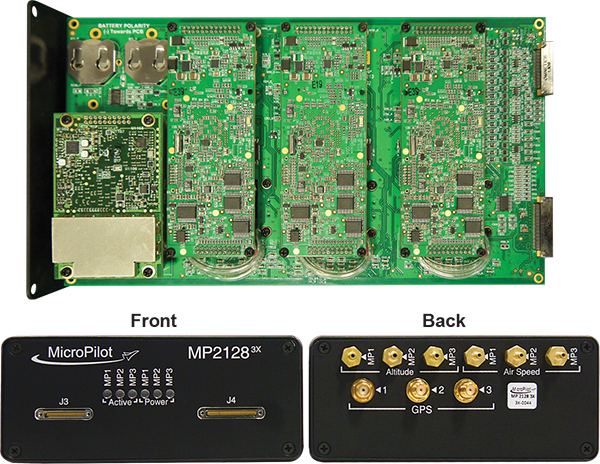
    MicroPilot develops and manufactures autopilots for UAVs, including the triple-redundant MP21283X. The company also provides support products that enable customers to use their development time as efficiently as possible and bring their products to market faster. These products include the trueHWIL2 UAV autopilot simulator and the XTENDERmp software development kit.

    The MP21283X UAV autopilot. (Image: Micropilot)

    Working closely with Trimble gives MicroPilot the ability to better leverage Trimble’s GNSS technologies. This access improves the ability of MicroPilot’s support team to assist customers with their product development, testing and operations. Trimble will benefit from MicroPilot’s extensive experience integrating guidance, navigation and control systems for a wide variety of UAV platforms, the companies said.

    “Reliable, robust and innovative GNSS solutions as well as strong technical support is key to bringing any UAV to market and our relationship with Trimble will allow MicroPilot to improve on our already industry-leading support,” said MicroPilot president Howard Loewen.

    “We are very pleased to be working closely with MicroPilot to provide high-precision GNSS for its UAV autopilot solutions,” said Joseph Carey, director of strategic initiatives for Trimble’s Integrated Technologies Division. “MicroPilot autopilot’s simple installation, configuration and customization capabilities allow UAV manufacturers to easily integrate reliable, state-of-the-art, professional guidance, navigation and controls to their aerial platforms.”

  • Launchpad: Rugged handhelds, aerial pollinator

    Launchpad: Rugged handhelds, aerial pollinator

    A roundup of recent products in the GNSS and inertial positioning industry from the May 2018 issue of GPS World magazine.

    SURVEY & MAPPING

    Rugged handhelds

    Operate in harsh environments

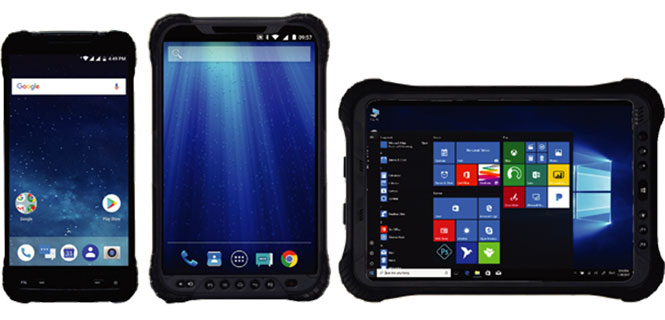
    The UT series of GNSS-capable rugged handheld devices support industries such as construction, survey, GIS, mapping, asset/logistics management, public safety, utilities and military. The UT10 6-inch rugged phone and UT30 8-inch rugged tablet both feature Android 8.0 operating systems with Qualcomm octa-core 2.2 GHz processors, 4 GB of RAM and 32GB onboard storage.The UT50 10.1-inch full-rugged tablet features the Windows 10 operating system with an Intel Core Skylake i5 processor up to 2.8 GHz, 8 GB RAM and 128 GB of onboard storage. All three new UT models provide the latest high-resolution, capacitive touchscreen and direct sunlight-readable display technology for ease of visibility in all situations. The UT50 also has a 10-finger multi-touchscreen and supports wet hands and gloves operation. The devices have dual built-in cameras. They are designed to be drop-resistant from heights of 1.2 meters (1.5 meters for the UT10), are rated at IP67 (IP68 for UT50), and are certified to both MIL-STD-810G and MIL-STD-461F military standards to ensure durability in most outdoor or challenging environments.

    Hemisphere GNSS, hemispheregnss.com

    Controller and apps

    For GNSS or total station operations

    Trimble TSC7 controller.

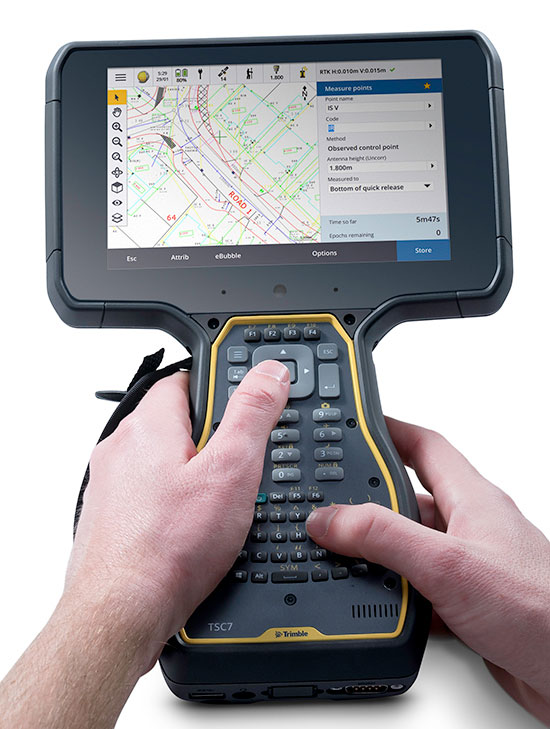
    The Trimble TSC7 controller is a new field solution for land and civil construction surveyors. Equipped with GPS, it provides a tablet experience with a physical keyboard and a sunlight-readable 7-inch touchscreen that supports pinch, tap and slide gestures. Front- and rear-facing cameras allow users to video conference their office from the field for on-the-job support, and capture high-definition videos and images that provide valuable context to their data and clients. The TSC7 uses Windows 10 Professional with an Intel Pentium 64-bit quad-core processor. The processor and operating system make it easy to process data in spreadsheets and run office software programs. An ergonomic form factor, IP68-certified rugged design and optional, user-interchangeable modules make the TSC7 a flexible solution for all surveying applications.

    Trimble, www.trimble.com


    UAV

    OEM GNSS/IMU Module

    Enhances light UAVs

    The AsteRx-i combines a multi-frequency multi-constellation GNSS engine with an external industrial-grade MEMS-based inertial measurement unit (IMU) to deliver positioning to the centimeter level as well as full 3D attitude at high update rates and low latency. The AsteRx-i is suitable for optical inspection and photogrammetry. Accompanied by a UAS-tailored carrier board, it integrates seamlessly into light UAVs. It also features Septentrio’s AIM+ interference monitoring and mitigation system.

    Septentrio, septentrio.com

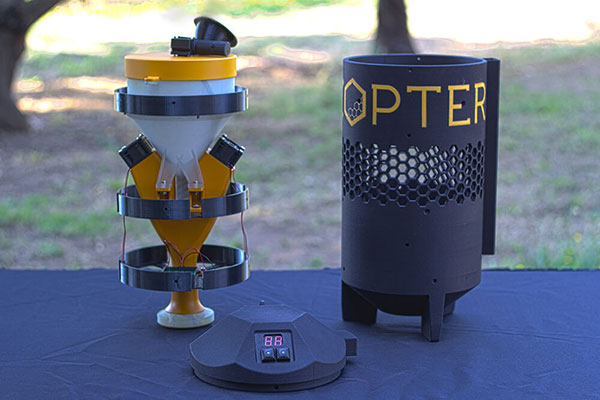
    Aerial pollinator

    Aids fruit tree growers

    DropCopter’s pollen distribution system.

    UAS startup DropCopter has initiated a drone pollination service that uses multi-rotor drones to dust almonds, pistachios and cherries, boosting crops by up to 15 percent. Dropcopter’s patent-pending Worker-Bee pollinator helps growers overcome environmental factors like bee shortages, as well as wind, cold, and night time that would prevent honeybee activity. The company is partnered with GENIUS NY and The NUAIR Alliance.

    DropCopter, dropcopter.com

    Drone Camera

    Sensor Optimized for Drone Applications (S.O.D.A.)

    Photo: sensefly
    Photo: senseFly

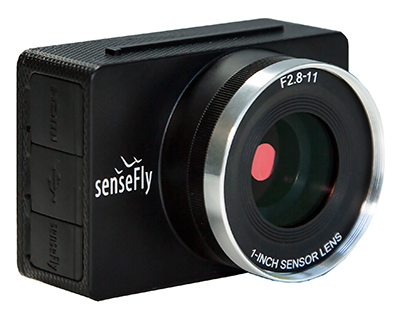
    The senseFly S.O.D.A. camera is built for professional drone photogrammetry work. It captures sharp aerial images across a range of light conditions, allowing users to produce detailed, vivid orthomosaics and ultra-accurate 3D digital surface models. It has a 1-inch 20 megapixel RGB sensor that provides ground resolution of 2.9 centimeters per pixel flying at 400 feet (122 meters) above ground level. It has built-in dust and shock protection, enabling mapping across challenging terrain.

    senseFly, www.sensefly.com

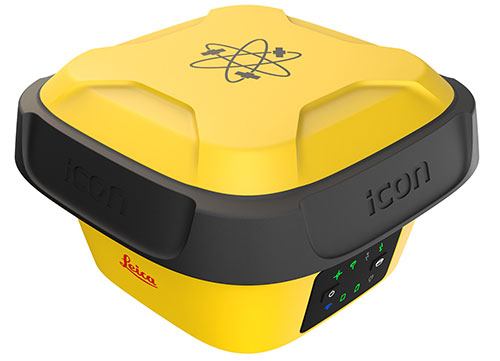
  • Leica smart antenna features tilt compensation, magnetic field resistance

    Leica Geosystems has introduced the Leica iCON gps 70 T smart antenna as part of its Leica iCON gps 70 series for reliable and easy stake-out jobs on any construction site.

    Measurement results become quicker and more accurate with the gps 70 T’s permanent tilt compensation, resistance to magnetic interferences and calibration-free usage.

    With the iCON gps 70 T, construction professionals can measure and stake out points without having to keep the pole vertical to level the bubble. According to the company, it allows the user to look at the immediate environment — for other people, machines, excavations, motor vehicles and structures — rather than on the bubble.

    The combination of the latest GNSS technology and inertial measurement unit (IMU) equips the gps 70 T with its true tilt compensation. The tilt compensation extends the measurement possibilities, improves quality and accuracy of the collected data, and reduces errors.

    The iCON gps 70 series is seamlessly integrated into the version 4.0 of the iCON field software. By keeping the core central interface, users will benefit from the simple-to-use workflows that require less training and avoid costly downtime.

  • u-blox high-precision GNSS module based on its F9 technology

    u-blox, a global provider of leading positioning and wireless communication technologies, has released the ZED-F9P multi-band GNSS module with integrated multi-band real-time kinematics (RTK) technology for machine control, ground robotic vehicles and high-precision unmanned aerial vehicles (UAV) applications.

    The ZED‑F9P measures 22 x 17 x 2.4 millimeters and uses technology from the recently announced u‑blox F9 platform to deliver robust high-precision positioning performance in seconds.

    The u-blox ZED-F9P is a mass market multi-band receiver that concurrently uses GNSS signals from all four GNSS constellations (GPS, GLONASS, Galileo and BeiDou). Combining GNSS signals from multiple frequency bands (L1/L2/L5) and RTK technology lets the ZED‑F9P achieve centimeter-level accuracy in seconds, the company said.

    Receiving more satellite signals at any given time maximizes the availability of centimeter-level accuracy even in challenging environments such as in cities.

    With its high update rate, the ZED‑F9P is suitable for highly dynamic applications such as UAVs. Featuring on-chip integration of advanced multi-band RTK algorithms, it requires no additional hardware or third-party RTK libraries. Ready to use on delivery and easy to integrate, it helps product developers quickly bring their ideas to the market.

    ZED-F9P is fully geared to clearing the three main hurdles that have kept centimeter-level positioning accuracy from breaking into mass-market applications: cost, size and power consumption. Significantly smaller and more energy efficient than existing solutions, and as a cost efficient alternative, the ZED-F9P will enable new high-precision positioning applications for the mass market.

    “The new ZED-F9P GNSS receiver builds on the success of our NEO-M8P high-precision GNSS module, but takes performance to another level by leveraging all the available GNSS signals,” said Mårten Ström, senior principal product management, product center positioning at u‑blox. “By making robust and affordable high-precision positioning technology more accessible, we hope to fuel innovation and enable a new generation of high-precision GNSS navigation applications.”

    Engineering samples will be available at the end of July.

  • Hemisphere offers three new handhelds

    Hemisphere offers three new handhelds

    Hemisphere GNSS has launched a new UT series of GNSS-capable rugged handheld devices to support industries such as construction, survey, GIS, mapping, asset/logistics management, public safety, utilities and military.

    The UT handheld devices are designed to work in the harshest environments imaginable and offer impressive and powerful feature sets.

    Hemisphere made the announcement at Intermat Paris 2018, where it is exhibiting at stand 6 J 027.

    The UT10 6-inch rugged phone and UT30 8-inch rugged tablet both feature Android 8.0 operating systems with Qualcomm octa-core 2.2 GHz processors, 4 GB of RAM, and 32 GB onboard storage.

    The UT50 10.1-inch full-rugged tablet features the Windows 10 operating system with an Intel Core Skylake i5 processor up to  2.8 GHz, 8 GB RAM, and 128 GB of onboard storage.

    According to the company, all three new UT models provide the latest high-resolution, capacitive touchscreen and direct sunlight-readable display technology for ease of visibility in all situations. The UT50 also has a 10-finger multi-touchscreen and supports wet hands and gloves operation.

    The devices have dual built-in cameras. The UT10 and UT30 handhelds feature 13 MP rear and 5 MP front cameras.

    The devices are designed to be drop-resistant from heights of 1.2 meters (1.5 meters for the UT10), are rated at IP67 (IP68 for UT50), and are certified to both MIL-STD-810G and MIL-STD-461F military standards to ensure durability in most outdoor or challenging environments.

    The UT10 and UT30 are powered by single 8,000m Ah and 8,200 mAh batteries with Qualcomm Quick Charge 3.0 technology, while the UT50 offers dual hot-swappable batteries at 2,900 mAh each so users can continue working in the field without powering down.

    “With varying specifications and options between these devices, mobile workers are sure to find them suitable to fit their demanding work environments,” said Miles Ware, director of marketing with Hemisphere GNSS. “These powerful machines reflect the latest in hardware standards and are exceptional complimentary additions to our product portfolio.”


    Photo: Hemisphere GNSS

  • Teledyne Optech to showcase survey systems at GEOINT 2018

    Teledyne Optech will exhibit at the United States Geospatial Intelligence Foundation’s GEOINT Symposium April 23-25 in Tampa, Florida.

    Technology partners from Teledyne Scientific & Imaging, Teledyne DALSA and Teledyne CARIS will exhibit together as part of Teledyne Imaging – Space & Defense in booth 1148.

    At GEOINT 2018, visitors can discover the advanced capabilities of the Optech Galaxy PRIME, the latest model of Teledyne’s Galaxy airborne laser terrain mapper, with enhanced range performance, collection efficiency, vegetation penetration and low-reflectance target detection.

    The Polaris Terrestrial Laser Scanner (TLS) will be on hand so that visitors can experience its highly automated and user-friendly interface and see its performance at ranges from 1.5 to more than 2,000 meters.

    In addition, attendees can learn about the Optech Maverick, the company’s first wearable mobile-mapping system that fits on a backpack.

    The Teledyne Imaging – Space & Defense initiative brings together the experience and capabilities of Teledyne Optech, Teledyne Scientific and Imaging, Teledyne DALSA, Teledyne e2V and Teledyne CARIS to expand the breadth of Teledyne Imaging solutions for geospatial intelligence. Representatives of end-user agencies, integrators or original equipment manufacturers (OEM) can visit booth #1148 to learn about a range of new developments and offerings.