Tag: product showcase

  • Airbus Launches WorldDEM Digital Terrain Model

    Airbus Defence and Space has launched its WorldDEM Digital Terrain Model (DTM), a highly accurate standardized representation of bare Earth elevation that can be made available for any point on the globe. This addition completes the WorldDEM portfolio, enabling Airbus Defence and Space to provide both surface and terrain elevation information in support of global customer projects.

    WorldDEM DTM can be delivered for more than 90 Million km² of the Earth’s landmass.

    The WorldDEM DTM is derived from the WorldDEM product (Digital Surface Model) by removing all man-made features and vegetation. The quality of the original WorldDEM product combined with a sophisticated editing process guarantees highly precise and consistent terrain information, Airbus said. While surface features (such as built-up areas and vegetation) are reliably removed, characteristic terrain features such as ridge lines or mountain crests are preserved.

    DTM-DSM-Airbus

    The WorldDEM DTM provides an excellent foundation layer for a wide range of applications such as civil engineering (road design, earthwork calculation), the management of natural resources (such as flood modeling), mapping (such as derivation of contour lines) as well as military mission planning (vehicle trafficability analysis, 3D terrain visualization).

     WorldDEM is based on data acquired by the high-resolution radar satellites TerraSAR-X and TanDEM-X, which started synchronous data acquisition in December 2010 and completed coverage of the Earth’s entire landmass twice over in mid-2013. The satellites covered more complex terrain areas with a third and fourth acquisition campaign to ensure consistent high quality and accuracy of the final product. WorldDEM provides the first global, single-source, high-precision Digital Surface Model and has established a new standard of global elevation models.

  • Epson Unveils 17-Inch Wide Professional Printer

    The Epson SureColor P800 printer.
    The Epson SureColor P800 printer.

    Epson has announced the SureColor P800 printer, which it says represents a new benchmark in photographic print quality. Designed for professional use, the SureColor P800 is a full 17-inch wide borderless printer with Epson MicroPiezo AMC printhead technology. Leveraging an all-new Epson UltraChrome HD eight-color pigment ink set, the SureColor P800 is capable of producing the next generation of color and black-and-white prints, Epson said.

    “We understand how important it is for our printers to produce exceptional output that not only accurately conveys a photographer’s vision, but also delivers on the promise of longevity,” said Larry Kaufman, product manager, Professional Imaging, Epson America. “The SureColor P800 redefines the 17-inch photographic printing market, providing robust photo, fine art and canvas media handling capabilities, all focused on delivering stunning exhibition-quality prints that stand the test of time.”

    The SureColor P800 features advanced media handling, including a sheet feeder for photo or matte media, and a front-in and front-out paper path for printing on thicker fine art papers and poster board. An optional 17-inch wide roll paper adapter is ideal for canvas and longer print lengths of up to 10 feet for creating panoramas. Along with individual 80 ml high-capacity ink cartridges, the SureColor P800 is designed for professional use at home or in the studio.

    Details on the SureColor P800
    The SureColor P800 offers these features:

    • UltraChrome HD Ink: Pigment ink technology delivers outstanding color with improved black density and print permanence.
    • Professional Features: Advanced black-and-white print mode for professional-level neutral or toned black-and-white prints.
    • True Productivity with High-Capacity Ink Cartridges: Nine 80 ml ink cartridges with auto-switching photo and matte black ink.
    • Advanced Media Handling up to 17-Inches Wide: Print on fine art and roll papers and create panoramas more than 10 feet long; front-in and front-out paper path for media and poster board up to 1.5 mm thick and optional rear-mounted 2 or 3-inch core roll feeders.
    • Modern Case Design: Professional look and feel; compact printer design optimized for desktop placement.
    • Connectivity: USB 2.0, Ethernet, Wireless N, Wi-Fi Direct, Apple AirPrint and Google Cloud Print support.

    The SureColor P800 will be available for purchase in June through authorized resellers; pricing follows:

    Epson SureColor P800

    $1,295.00 MSRP

    Optional Roll Paper Adapter

    $199.95 MSRP

    UltraChrome HD 80 ml Ink Cartridge

    $59.95 MSRP

    The printer is supported by a one-year, whole-unit-exchange, limited warranty plan, and specialized technical support staff.


  • Telit GNSS Module Enables High-Performance Position Reporting

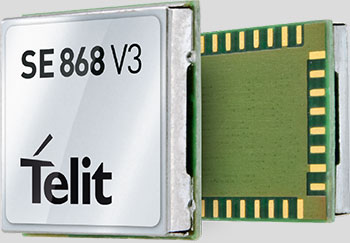
    Telit's Jupiter SE868-V3 module.
    Telit’s Jupiter SE868-V3 module.

    Telit Wireless Solutions has released a new GNSS module, the SE868-V3. The positioning module combines GPS, GLONASS, Beidou, Galileo and SBAS, which enables the creation of high-performance position reporting and navigation solutions.

    The SE868-V3 can navigate to -162 dBm and track to -166 dBm, providing improved performance in harsh environments. It is pin-to-pin compatible with the former SE868-V2 as well as the JF2. This advanced GNSS module can track GPS and GLONASS or GPS and Beidou constellations simultaneously and it is Galileo-ready.

    The 11 x 11 mm QFN package contains a powerful baseband processor, SQI Flash memory and GNSS chip with integrated low noise amplifier (LNA). The ultra-sensitive RF front-end enables multi-GNSS indoor fix and high-quality navigation in challenging outdoor scenarios such as dense urban areas, Telit said.

    In addition, the SE868-V3 supports ephemeris file injection (A-GPS) as well as Satellite-Based Augmentation System (SBAS) to increase position accuracy. Its onboard software engine is able to locally predict short-term ephemeris starting from data broadcast by GNSS satellites received by the module and stored in the internal Flash memory.

    “The SE868-V3 is yet another addition to our positioning product portfolio, which is the result of over 20 years of experience in GNSS applications,” said Felix Marchal, chief product officer, Telit. “Our products are compatible with the GPS constellation as well as its Russian counterpart GLONASS and China’s Beidou.”

  • Hemisphere GNSS Offers RTK-Capable Compass Antenna

    Hemisphere GNSS Offers RTK-Capable Compass Antenna

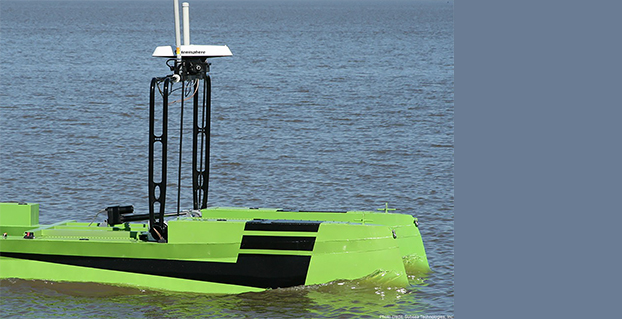
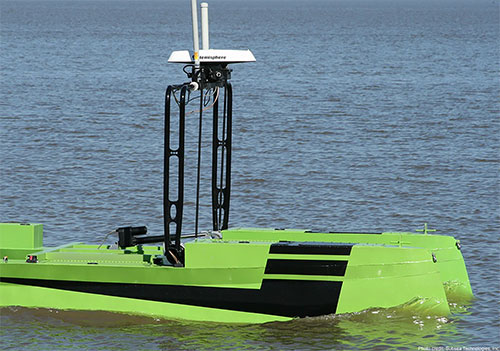
    The Hemisphere GNSS V320 GNSS compass.
    The Hemisphere GNSS V320 GNSS compass.

    Hemisphere GNSS is offering a new RTK-enabled Vector V320 GNSS compass. The Vector V320 smart antenna supports multi-frequency GPS, GLONASS, Galileo (future firmware upgrade required) and BeiDou, and Hemisphere GNSS says it’s “the first of its kind.”

    Designed for the professional marine and marine survey markets, the Vector V320 is the a multi-frequency, multi-GNSS, all-in-one smart antenna capable of both RTK-level positioning accuracy and better than 0.2-degree heading accuracy in a simple-to-install package.

    “The Vector V320 combines our expertise in GNSS and smart antenna design,” said Lyle Geck, senior manager, Product Marketing, at Hemisphere GNSS. “With RTK performance that competes with current industry leaders, extremely accurate accelerometer-aided GNSS heading, and the simplicity of install offered by the smart antenna design, it is an incredible product.”

    The Vector V320 is the latest in a line of GPS/GNSS compasses, including the multi-frequency, multi-GNSS Vector VS330 receiver as well as the Vector V102, Vector V103 and Vector V104 compass smart antennas.

    “There has been a void in the market. Our customers have been looking for a product that provides RTK accuracy together with precision heading in an easy-to-install package,” said Andy Smith, managing director of Saderet Ltd. “The Vector V320 delivers.”

    The Vector V320 GNSS compass is being featured by Hemisphere GNSS at Ocean Business in Southampton, UK, April 14-16, at stand K12.

  • DJI Unveils Phantom 3 UAV with Indoor Positioning

    DJI Unveils Phantom 3 UAV with Indoor Positioning

    The Phantom 3 in flight at a press event.
    The Phantom 3 in flight at a press event.

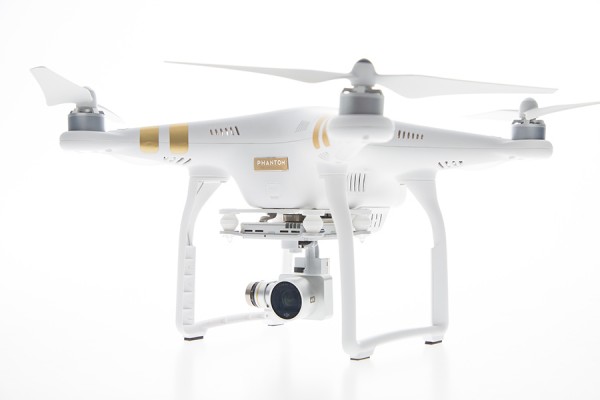
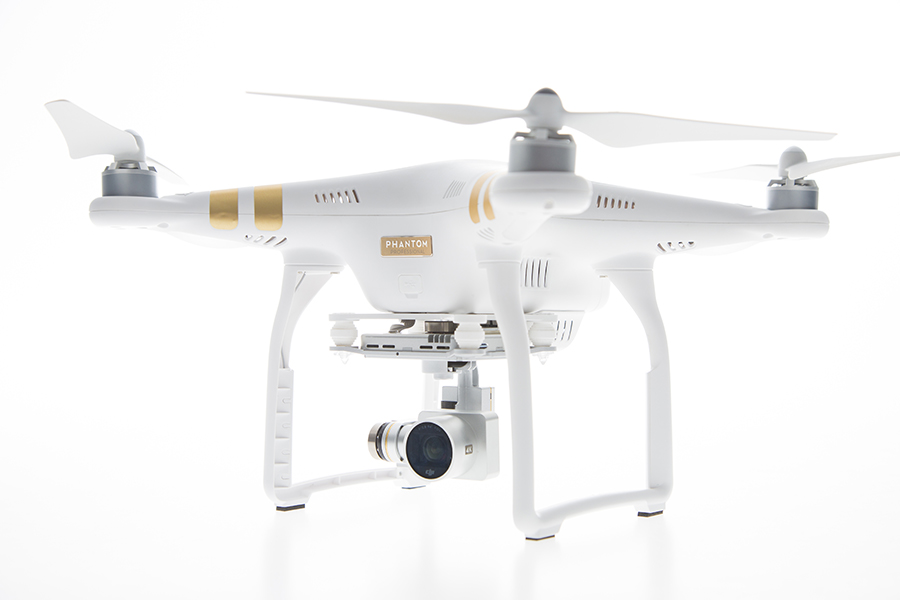
    DJI has launched a new drone in its Phantom series. The Phantom 3 comes in two variations, Professional and Advanced, both of which provide greater control and creative options than the popular Phantom 2. On April 8, DJI held three simultaneous events in London, Munich, and New York to mark the release of the Phantom 3.

    Both Phantom 3 versions feature the strongest professional control features DJI has developed so far. Using DJI’s Visual Positioning system, the Phantom 3 can hold its positioning indoors without GPS and can easily take off and land with the push of a button. With Vision Positioning technology, visual and ultrasonic sensors scan the ground beneath the Phantom 3 for patterns, enabling it to identify its position and move accurately.

    DJI’s Lightbridge technology is also integrated, enabling control at up to 1.2 miles (2 km) away and a live HD video stream from the camera with almost no latency.

    “In developing the next generation Phantom, DJI remained committed to providing a top-tier flight experience in one easy-to-use platform,” said DJI CEO Frank Wang. “We pride ourselves in creating a flying camera that fits in a backpack and can be ready to take professional quality videos from the sky in less than a minute.”

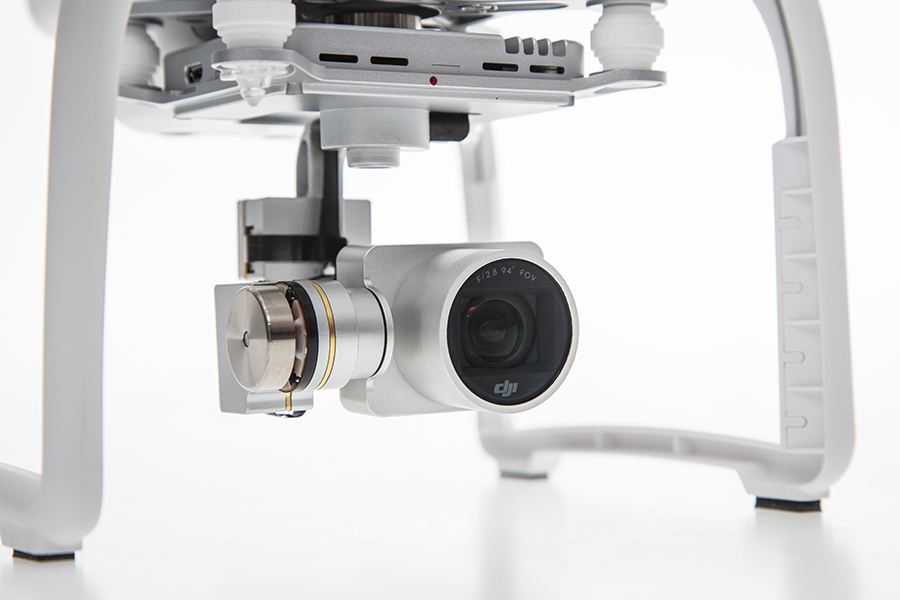
    The Phantom 3 Professional is capable of shooting 4K video at up to 30 frames per second, while the Phantom 3 Advanced records at resolutions up to 1080p at 60 frames per second. These cameras are stabilized using 3-axis gimbals to keep the video smooth regardless of flight or wind conditions.

    Both models shoot 12-megapixel photos using a 94-degree FOV, distortion-free lens, and a high-quality, 1/2.3-inch sensor that is more sensitive to light than the sensor in previous Phantom 2 Vision models.

    All camera settings — including ISO, shutter speed and exposure compensation — can be set using both the DJI Pilot app and the physical controls on the remote controllers. The DJI Pilot app also features a Phantom 3 flight simulator for virtually practicing aerial maneuvers, and a Director feature, which automatically edits the best shots from flights into short videos that can be shared immediately after landing. The upgraded app also allows pilots to livestream their flights to YouTube.

    “Pilots, whether they are journalists, extreme athletes, or global travelers — will not just be able to share aerial videos of where they were, but will also be able to send a YouTube link to their friends and colleagues to show them the aerial perspectives of where they are right now,” said DJI’s San Francisco General Manager Eric Cheng. “This has tremendous potential for changing the way we share experiences with one another.”

    The Phantom 3 by DJI
    The Phantom 3 by DJI

    Photo: The Phantom 3

  • DJI Unveils Phantom 3 UAV with Improved Imagery

    The Phantom 3 in flight at a press event.
    The Phantom 3 in flight at a press event.

    DJI has launched a new drone in its Phantom series. The Phantom 3 comes in two variations, Professional and Advanced, both of which provide greater control and creative options than the popular Phantom 2. On April 8, DJI held three simultaneous events in London, Munich, and New York to mark the release of the Phantom 3.

    Both Phantom 3 versions feature the strongest professional control features DJI has developed so far. Using DJI’s Visual Positioning system, the Phantom 3 can hold its positioning indoors without GPS and can easily take off and land with the push of a button. With Vision Positioning technology, visual and ultrasonic sensors scan the ground beneath the Phantom 3 for patterns, enabling it to identify its position and move accurately.

    DJI’s Lightbridge technology is also integrated, enabling control at up to 1.2 miles (2 km) away and a live HD video stream from the camera with almost no latency.

    “In developing the next generation Phantom, DJI remained committed to providing a top-tier flight experience in one easy-to-use platform,” said DJI CEO Frank Wang. “We pride ourselves in creating a flying camera that fits in a backpack and can be ready to take professional quality videos from the sky in less than a minute.”

    The Phantom 3 Professional is capable of shooting 4K video at up to 30 frames per second, while the Phantom 3 Advanced records at resolutions up to 1080p at 60 frames per second. These cameras are stabilized using 3-axis gimbals to keep the video smooth regardless of flight or wind conditions.

    Both models shoot 12-megapixel photos using a 94-degree FOV, distortion-free lens, and a high-quality, 1/2.3-inch sensor that is more sensitive to light than the sensor in previous Phantom 2 Vision models.

    All camera settings — including ISO, shutter speed and exposure compensation — can be set using both the DJI Pilot app and the physical controls on the remote controllers. The DJI Pilot app also features a Phantom 3 flight simulator for virtually practicing aerial maneuvers, and a Director feature, which automatically edits the best shots from flights into short videos that can be shared immediately after landing. The upgraded app also allows pilots to livestream their flights to YouTube.

    “Pilots, whether they are journalists, extreme athletes, or global travelers — will not just be able to share aerial videos of where they were, but will also be able to send a YouTube link to their friends and colleagues to show them the aerial perspectives of where they are right now,” said DJI’s San Francisco General Manager Eric Cheng. “This has tremendous potential for changing the way we share experiences with one another.”

    Phantom-3

    Phantom-3

  • TeeJet Offers GNSS Guidance System for Precision Ag

    Teejet-Matrix430The TeeJet Matrix 430 is a low-cost GNSS guidance system featuring a graphical, touchscreen user interface that allows for fast setup and intuitive operation. The system is designed for a wide range of field applications including spraying, spreading, tillage and solid seeding.

    The Matrix 430 features a 4.3-inch/110-mm high-contrast, full-color display for excellent visibility, even in bright light conditions, TeeJet said. It contains an integral GNSS receiver that supports both GPS and GLONASS signals with a choice of two available antennas for enhanced performance in a wide range of geographies.

    Other features include: return-to-point, coverage mapping, field area measurement, applied area alert, elapsed time counter, simple job reporting, and a choice of four guidance modes: Straight AB, Curved AB, Center Pivot, and Last Pass.

    Teejet-Matrix430-2“The Matrix 430 builds upon our highly successful and proven CenterLine 220 guidance product while providing an enhanced user interface and expanded capabilities,” said Tim Stuenkel, global marketing manager with TeeJet Technologies. “This product is designed for the grower who wants a simple, affordable guidance system — whether they are a first time buyer or experienced user of GNSS guidance products.”

    TeeJet Technologies manufactures a comprehensive line of products including agricultural spray nozzles for various pesticide/fertilizer applications, boom components, valves/manifolds, strainers, and spray guns, as well as GPS guidance systems, sprayer control systems, ISOBUS job computers, assisted steering systems and other precision farming products. In addition, TeeJet Technologies continues to invest in research and development to advance precision application and control technology.

  • Hexagon Geosystems Releases More Airborne Imagery

    Hexagon-imagery

    The Hexagon Imagery Program, or HxIP, has released captured airborne imagery for approximately 25 percent of the U.S. with various regions of Canada and Europe. As more content partners join the HxIP in 2015, program coverage is rapidly increasing with full coverage of the coterminous U.S. expected by the end of the year.

    Launched in June 2014, the HxIP streams valuable geospatial content and delivers professional-grade airborne images captured with Leica Geosystems’ airborne sensors, including enhanced-resolution, four-band orthos, streamable and rasterised point clouds, and stereo imagery, through two service categories:

    • Basemap offers cached background maps of current 30 centimeter orthorectified imagery that will be updated on a regular basis.
    • Multispectral Imagery supports image analysis and exploration activities with 30-centimeter, four-band orthorectified imagery and related digital surface models (DSM).

    Imagery for a full 11 states plus portions of six other states in the U.S. have been provided in the HxIP as part of its airborne imagery offerings from the 2014 flying season. Portions of Canada and Europe are also available in the recent release.

    “We’re pleased to have met our 2014 program goal, providing access to quality and consistent airborne imagery for thousands of clients around the globe,” said John Welter, president of Leica Geosystems Geospatial Solutions Division and director of the HxIP. “We are well on our way of realizing our 2015 goals with collection currently underway in Europe and North America.” 

    The HxIP airborne imagery content is available through the cloud via multiple content service providers:

    Through a distribution partnership with Esri in February, the 2014 collection is now available to even more users on Esri’s ArcGIS Marketplace.   

    “Serving HxIP via Esri’s ArcGIS Marketplace gives geospatial professionals another choice in accessing the most current and accurate geospatial imagery available,” said Juergen Dold, president of Hexagon Geosystems. “The focus of our new partnership is to provide imagery in a simple and efficient way across a wide array of professional consumers.”

    This vision was reinforced by Esri Director of Imagery Lawrie Jordan. “Leica Geosystems is recognized globally as providing the highest quality and most accurate airborne imagery available, and Esri is delighted to offer this content to GIS professionals through our ArcGIS Marketplace,” Jordan said.

  • NovAtel Offers Relay RTK Radio Module for GNSS Receiver

    NovAtel Offers Relay RTK Radio Module for GNSS Receiver

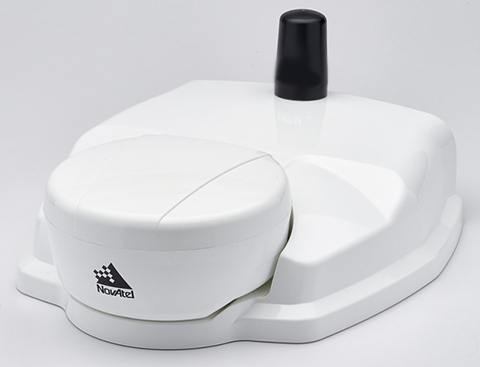
    NovAtel’s SMART6-L attaches to the Relay RTK radio module to create a single unit for easy system integration.
    NovAtel’s SMART6-L attaches to the Relay RTK radio module to create a single unit for easy system integration.

    NovAtel Inc. has launched the Relay RTK radio module, a docking station that provides radio connectivity for its SMART6-L L-band capable GNSS receiver.

    The Relay RTK module combined with NovAtel’s SMART6-L receiver creates a compact, easy to integrate positioning solution, NovAtel said. It is available in four radio versions: 400 MHz UHF licensed band; 900 MHz UHF unlicensed band; HSPA (3G) cellular; and CDMA (1xRTT/EV-DO) cellular. The CDMA version is approved for use on the Verizon cellular network.

    The 400 MHz and 900 MHz versions support both base and rover configurations. The base station is configured via the integrated web-server/Wi-Fi access point using the web browser on any compatible personal computer, tablet or smartphone. The cellular radio versions support the reception of NTRIP and RTK corrections over the cellular network.

    SMART6-L customers can connect to the Relay using their existing SMART6-L interface cables. Relay has support for both screw and magnetic mounting; optional mounting plates are available for roof and pole mounting. NovAtel’s SMART6-L with Relay provides the same level of performance as a standalone SMART6-L unit with the added convenience of radio connectivity to support RTK and NTRIP corrections.


  • Leica Offers New ScanStation, Software for 3D Laser Scanning

    Leica-scan-station_p40-p30-p16_07-W

    Leica Geosystems has announced a group of six major new products for terrestrial laser scanning: three new laser scanners and three new point cloud software products. Together, thes products raise the industry’s bar for laser scanning data quality and productivity, both in the field and the office, Leica said.

    Leica ScanStation P40, P30 and P16 Laser Scanners. Leica ScanStations P40, P30 and P16 feature advances in LIDAR and digital imaging as the eighth-generation of Leica Geosystems’ high-performance laser scanners. These new, ultra-high-speed scanners increase field and office productivity, while simultaneously grabbing users’ attention with strikingly sharper, crisper scans and HDR true color images — even under many conditions traditionally difficult for scanning, the company said.

    Users will be able to capture more useful data from a single set-up, which translates into fewer instrument setups and greater productivity. Three models meet different user needs: the Leica ScanStation P40 and P30 add survey functionality, longer range capabilities (to 270m for P40), and advanced scanner controls for additional versatility and productivity while the Leica ScanStation P16 is a short-range introductory model.

    Point Cloud Software. In addition to the major new software releases Leica JetStream and TruView Global products, Leica Geosystems is now offering Leica CloudWorx for Navisworks — a popular design review application from Autodesk — as its newest family member of CloudWorx plug-ins for CAD and VR applications.

    leica-cloudworx

    JetStream is a combined project data vault and high-performance data streaming server that takes Cyclone data and serves it up in a high-performance format that enables a CloudWorx user to be up to 40 percent more productive when working with point clouds. Much of that gain comes from instantaneous loading and navigation of point clouds — eliminating traditional “waiting times” long associated with point cloud office work.

    Lastly, TruView Global greatly increases anyone’s access to TruViews — Leica Geosystems’ application for viewing and measuring scans. Shaking free from prior constraints, TruViews will be accessible within any Internet browser on any mobile device or computer, with no app or plug-in to install.

    Taken together, advances in the new scanners and software elevate laser scanning to a new performance and data quality level, Leica said. The new scanners are all ultra-high speed (up to 1 million points/sec) and can capture more useful data from a scene. In addition, increased user access to TruViews plus good HDR digital images will encourage users to publish TruViews even more frequently.

    All of these factors drive users to create more dense scans and larger data sets. With the complementary Leica JetStream software, users have the ability to handle these larger data sets with astonishing ease.

    The Leica ScanStation P40, P30 and P16 are immediately available. Leica JetStream, Leica TruVeiw Global and Leica CloudWorx for Navisworks are planned for release Q2 2015.

    Photos: Leica Geosystems

  • Caliper Offers Congressional Districts, Census Data for Use with Maptitude

    maptitude-congressional-districts-income-map

    GIS software company Caliper is offering 114th Congressional Districts data for the United States for its Mapitude software. The data package is aimed at corporate legislative affairs departments, lobbyists, political consultants, political parties, and anyone else involved in political affairs.

    The 114th Congressional Districts data contains a nationwide area database with boundaries of the 114th (January 2015-January 2017) Congressional Districts. It also includes demographic data from the 2010 Census and from the 2013 American Community Survey (ACS) five-year estimates.

    Country Packages

    Also available are eight new 2015 Country Packages for Maptitude. The 2015 Country Packages include fourth-quarter 2014 map content. Updated map layers, such as refreshed streets and landmarks are provided for each country. In addition, postal boundaries, postcode points, and demographics are included where available. For detailed information on each Package, including those for countries not mentioned here, visit the Maptitude Included Data page.

  • DT Research Rolls out Mapping and GIS Tablets

    The DT391GS tablet.
    The DT391GS tablet.

    DT Research Inc. has launched a new line of rugged tablets with the GNSS modules for surveying and mapping applications. The DT391GS, DT395GS and DT307GS rugged tablets feature integrated high-accuracy GNSS receiver modules with built-in antenna for seamless data capture, the company said.

    Built to travel and provide reliable operations in the real world, the tablets are designed for field work in mapping, geographic information systems (GIS), and accurate synchronization, tracking and networking.

    The DT391GS combines a 9-inch sunlight-readable, capacitive touch display with an energy-efficient Intel dual-core processor in a compact, durable package. With the high-accuracy GNSS module options (Hemisphere or Trimble), the foldable antenna, and Windows or Android operating system. The DT391GS also offers protection in demanding environments with IP65 and MIL-STD-810G ratings for dust and water, and shock and vibration resistance.

    The DT395GS tablet.
    The DT395GS tablet.

    The DT395GS offers a 9-inch sunlight-readable capacitive touch screen, an energy efficient Intel dual-core processor, and a choice of Windows or Android operating systems. The GNSS positioning module has u-blox GNSS module. The IP65 rating, and military-standard MILSTD-810G and MIL-STD-461F ratings, as well as wide temperature range, make the DT395GS reliable even in harsh, mission-critical environments.

    The DT307GS GNSS tablet features a brilliant 7-inch capacitive touch screen and a quad-core, energy efficient processor with a built-in, high-accuracy u-blox GNSS module. The size and weight of the DT307GS make this tablet portable for long-term handling in the field, DT Research said.

    The DT307GS tablet
    The DT307GS tablet

    All of the DT Research Rugged GS Tablets offer hot-swappable batteries for continuous operation, enabling real-time project efficiency between staff in the field and in the office. With wireless support for Bluetooth, 802.11, WCDMA and HSPA+ connectivity and optional GSM networking, the tablets keep staff connected from any location.

    The DT391GS and DT395GS have Trusted Processing Module (TPM) encryption for security support, and a choice of Microsoft Windows Embedded Standard 7 or 7 Professional, or Android operating system making these tablets flexible to integrate with existing applications.

    An optional 5-megapixel camera offers another data capture tool to record visual information, and an optional 3G cellular data module provides data connectivity for navigation and real-time data transfer, DT Research said.

    The DT391GS, DT395GS, and DT307GS are available now, form more information, contact DT Research at [email protected].