Tag: product showcase

  • SXgeoCloud Application Offered to India GIS Professionals

    India-based GNSS device maker Stesalit has introduced a SXgeoCloud mobile mapping application. SXgeoCloud provides a full GIS data collection suite with active sync to leading enterprise GIS systems through a mobile and cloud architecture. SXgeoCloud will be available with the Sxtreo series of GPS/GNSS devices from Stesalit and is now available only to customers in India.

    SXgeoCloud is compatible with all the SXtreo rugged GNSS field computers and other field GNSS devices. SXgeo is the offline mobile GIS software suite from Stesalit.

    The Android-based mobile mapping system of SXgeoCloud supports over 50 OGC compliant formats and background raster Web Mapping Services. It allows users to acquire geospatial data including points, lines and polygons, along with their attributes with the advantage of creating new objects in the field. It supports all editing features and is flexible for users to work on offline and online basis with active sync to the SXgeoClould Server.

    The cloud server of SXgeoCloud combines project creation, data-collection management, active sync, and archival. Data sets acquired or new objects created in the field are automatically updated in the cloud GIS server in real time, and can be actively synced with the user’s enterprise GIS in real time. Users can customize the data-capture properties, attributes, and forms to match their own enterprise database requirements. With SXgeoCloud, integration with industry-leading GIS server systems is seamless.

    SXgeoCloud ensures consistently high-quality data import and export in a variety of GIS and CAD formats, increasing field work efficiency, productivity and the accuracy of GNSS data.

    For more information about the SXgeoCloud, visit www.sxtreo.com, or E-mail to [email protected].

  • Trimble Positions Optimizes Data Integrity for GIS Professionals

    The Trimble Positions software workflow.
    The Trimble Positions software workflow.

    Trimble announced today a new version of its Trimble Positions software suite. This new version includes automated workflows to streamline data collection and increase productivity for GIS professionals in a variety of industries such as utility companies, environmental management agencies and municipalities.

    With Trimble Positions, GIS professionals benefit from increased productivity through a streamlined and integrated workflow for managing GNSS data collection. Trimble Positions is a collection of Esri software extensions that provide high-accuracy capabilities on the Trimble GeoExplorer, Juno, and Yuma series of field handheld computers, and on Trimble Pro series receivers. Positions software enables high-accuracy GNSS collection on Trimble devices while using familiar Esri workflows to ensure data integrity. New automated workflows in the software further simplify data processing and management, Trimble said.

    TrimblePositionsOverviewThe latest version of Trimble Positions includes:

    • Automated Session Processor: Optimizes easier, faster GNSS session data processing with a stand-alone tool to perform automated check-in, postprocessing and feature updates.
    • Project Wizard: Saves time and avoids errors by guiding users through a step-by-step project set-up featuring streamlined administration screens.
    • ArcGIS Online Hosted Features Services: Gives users the ability to select ArcGIS Online hosted feature services as a data source allowing them to directly pull their project data from ArcGIS Online into their field collection projects.
    • Trimble Enhanced GPS Device Support: Positions software is now compatible with the Trimble Juno 5 enhanced GPS handheld and Yuma 2 enhanced GPS rugged tablet for increased choice of device and accuracy level that can be achieved.
    • Mean Sea Level Heights: Provides greater flexibility by including an option to utilize a geoid model for measuring heights, in addition to the existing ellipsoid model option.
    • Integration with TerraFlex Software: Saves time by streamlining data transfer between TerraFlex mobile data collection software and ArcGIS for Desktop. This feature integrates the TerraFlex Desktop add-in with the Trimble Positions Desktop add-in to remove the need for separate installations. In addition, fast and easy interoperability is enabled through TerraFlex projects support in the Positions project wizard.
    • Support for Trimble RTX technology-enabled Geo 7X handhelds: Provides autonomous, real-time submeter positioning in cellular environments with access to Trimble RTX services for Geo 7X users.

    “Our customers expect high-quality data, and we need to give them the most efficient means of collecting and managing that data too,” said Alain Samaha, business area director of GIS and Software for Trimble’s Geospatial Division. “Trimble Positions software was specifically developed to meet the needs of our customer that utilize Trimble GNSS devices and Esri workflows. We understand our customers have different requirements and the Trimble Positions solution delivers to meet their needs.”

    The Trimble Positions Desktop Add-In, Mobile Extension, Mobile Project Center and Session Processor are available now through Trimble’s authorized GIS Distribution Channel. The Trimble Positions ArcPad Extension is expected to be available in mid-January 2015.

  • Trimble Unveils Suite of GNSS Timing Products for LTE Market

    Trimble Unveils Suite of GNSS Timing Products for LTE Market

    ICM-chip_keyboard
    Photo: Trimble

    Trimble has introduced a new portfolio of time and frequency products to address the synchronization needs of the growing LTE small cell market.

    The products are designed for a wide range of small cell synchronization applications. The products provide increased holdover capabilities and more robust signals with multi-constellation GNSS technology to sync wireless networks more efficiently, Trimble said.

    Regardless of whether a network is using 3G, 4G LTE, LTE-Advanced wireless technologies or a combination, synchronization and syntonization are essential for mobile networks. The new LTE-Advanced features — such as Enhanced Inter-Cell Interference Coordination (eICIC), Coordinated Multipoint Transmission (CoMP), Carrier Aggregation (CA) and Multi-Media Broadcast over a Single Frequency Network (MBSFN) — require an even higher degree of precision. Carriers are making significant investments in small cells, LTE-A and Heterogeneous networks to increase capacity and coverage. Network synchronization is a must to achieve both objectives, Trimble said.

    The Mini-T GG Disciplined Clock is a multi-GNSS (GPS and GLONASS) embedded module, optimized to generate precise 10MHz output and pulse per second. It utilizes the latest in GNSS technology, combined with a precision ovenized oscillator for near-atomic-clock precision timing. The Mini-T GG provides 24-hour holdover capability and is suitable for pico and microcells.

    The Trimble 360 multi-GNSS receiver is designed to cover the full spectrum of small cells — residential femtocell to rural microcell. The Trimble 360 timing products support GPS, GLONASS and BeiDou systems, and are Galileo-ready. In addition to full constellations, the 360 products support Satellite-Based Augmentation Systems (SBAS) and the Asian Pacific Quasi-Zenith Satellite System (QZSS).

    The compact, surface-mount ICM SMT 360 timing module, measuring 19 x 19 mm, generates a precise 10MHz reference clock for synchronization of residential and enterprise femtocell networks. It provides holdover capability, which allows the module to extend the availability of reference timing outputs. The Resolution SMT 360 is available in the same 19 x 19 mm form factor, and provides a pulse per second that provides nanosecond accuracy to any application requiring precision time reference such as wireless networks, utilities and digital broadcasting.

    The Trimble Mini-T GG disciplined clock, ICM-SMT 360 module and Resolution SMT 360 timing module and starter kit are available now. The Trimble 360 multi-GNSS receiver is expected to be available in January 2015.

  • MicroSurvey CAD 2015 Update Released

    MicroSurvey has released MicroSurvey CAD 2015, a major update to its desktop survey and design program for land surveyors and civil engineers.

    The latest release is powered by the all-new IntelliCAD 8 engine and is the first 64-bit version of MicroSurvey CAD. According to Brian Sloman, development manager at MicroSurvey, “The 64-bit architecture allows MicroSurvey CAD 2015 to access and use more system resources, and in a more efficient manner, unlocking the incredible potential of a modern workstation. With the 64-bit version of MicroSurvey CAD 2015, users will experience faster and smoother drafting and calculation operations, and can work with larger drawings and more points.”

    MicroSurvey CAD 2015 can read and write the latest .dwg files for compatibility with AutoCAD 2015 and has improved object enablers for drawings from Civil 3D. It also includes several new capabilities driven by requests submitted by users through MicroSurvey’s online feature request system. For example,  layer filters and layer states have been integrated directly into the IntelliCAD Explorer; a dynamic licensing system makes it easy to switch product levels; the AutoMAP Library, which controls how points and figures are presented, has been enhanced with new capabilities; bearings and azimuths of lines can now be instantly viewed in alternate reference systems; the point clusters tool lets you draw exaggerated error vectors for visually comparing coordinate changes between design and as-built points or during deformation studies; additional point cloud data formats are supported; and much more. (Watch the videos here.)

    MicroSurvey CAD is compatible with field data from all major total stations and data collectors and is fully compatible with AutoCAD. It includes complete survey drafting, COGO, DTM, traversing, volumes, contouring, point cloud manipulation and data collection interfacing. No plug-ins or modules are necessary. In addition to the 64-bit version, a 32-bit version of the software is also available.

    To learn more or download a free demo, visit www.microsurvey.com.

  • SkyTraq GNSS Receiver Module Provides Indoor/Outdoor Positioning

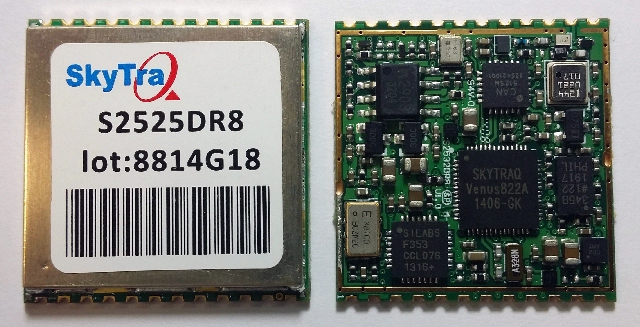
    SkyTraq S2525DR8 Photo: SkyTraq Technology
    Photo: SkyTraq Technology

    SkyTraq Technology, Inc., a fabless GNSS positioning technology company, has introduced an all-in-one S2525DR8 GNSS dead-reckoning module, with integrating MEMS sensor and interface logic on-board. The module is designed for road vehicles requiring high accuracy 100 percent positioning availability.

    The S2525DR8 offers accuracy for both indoor and outdoor positioning. It is based on SkyTraq’s Venus 8 multi-GNSS platform and uses a high-performance automotive-grade XV-8100CB analog output gyroscope and 16-bit differential ADC. A 3D option adds a barometric pressure sensor on-board, offering improved accuracy for altitude reading and altitude change detection over an accelerometer-based scheme in 3D dead reckoning.

    Another monitoring option adds an accelerometer on-board, offering high-accuracy vehicle acceleration monitoring for driver behavior characterization, accident reconstruction analysis, or trigger event recording. The S2525DR8 is compact at 25 x 25 millimeters. It contains a level shifter on board, capable of direct interface to a vehicle odometer and forward/reverse signals ranging from 3V to 30V.

    The SPI interface pins on the module allow autonomous data logging to an external SPI Flash memory device. For high-performance vehicle navigation systems, S2525DR8 provides continuous navigation inside tunnels and underground parking lots without signals; highly accurate barometric altitude enables identification of which level the vehicle is on in a stacked multi-level high-way or a multi-story car park. For automatic vehicle locating or fleet management systems, location can be identified immediately after power on, whether the vehicle is outdoors or indoors under a signal-denied environment.

    The S2525DR8 provides reliable, uninterrupted position, speed and heading information in challenging environments; it is suitable for demanding vehicle navigation and tracking applications requiring the highest accuracy and availability, SkyTraq said. The S2525DR8 is now being manufactured in ISO/TS 16949 automotive-certified factories; an evaluation kit, sample, datasheet, and reference design are available now. A 3D option with barometric sensor and a vehicle-dynamics monitoring option with accelerometer will be available in the first quarter of 2015.

  • Leica’s GNSS Unlimited Allows Upgrades for Reference Receivers

    Leica Geosystems has extended its Spider product family with the new GNSS Unlimited for the Leica GR10 and GR25 GNSS receiver series, allowing receivers to be upgraded to the latest technology standards at any time. Both receivers are designed for Continuously Operating Reference Stations (CORS) infrastructure and monitoring applications, supporting GPS, GLONASS, Galileo, BeiDou and QZSS.

    Also, the classic Leica GRX1200+GNSS has been enhanced to support the Chinese BeiDou navigation system.

    The Leica GR10 and GR25 Unlimited are scalable reference receiver and server solutions designed for permanent and semi-permanent GNSS network installations and monitoring applications such as RTK and static networks, single base stations, field campaigns, structural monitoring, atmospheric and seismic studies and offshore positioning.

    One customer, the Michigan Department of Transportation (MDOT), took advantage of the future proof concept to provide cost-efficient and reliable data products for all its CORS users. MDOT has been working with Leica Geosystems since the beginning of 2000.

    “Leica Geosystems’ customer commitment and promise of future proof hardware guarantee has always ensured our investment remains current,” said Shawn Roy, statewide survey equipment development manager at MDOT. “Their promise has allowed MDOT to upgrade, modernize, and expand our network from the early GRX1200’s (GPS-only) in 2005 to the latest GRX1200+GNSS. The company’s continuous development for hardware and software on our GRX1200 family of devices has helped MDOT over the past 10 years to provide cost-efficient and reliable data products for all the users of the Michigan Spatial Reference Network and other affiliated partners, such as NGS and its data products.”

    GNSS Unlimited. High-precision GNSS users are faced with an ever-changing GNSS space segment, due to its modernization. According to Leica, the GR10 and GR25 receivers provide a safe and long-term investment for CORS operators and fully support the Chinese BeiDou and Japanese QZSS systems, as well as GPS, GLONASS, and Galileo. The GNSS Unlimited series includes an upgrade to more than 500 channels that will serve the users’ needs well beyond 2020.

    Both receivers allow an upgrade of all key hardware parts, such as tracking, memory, power and communications. This enables customers to always keep up with the latest technology advances at minimum cost and only when really needed. The GNSS reference receivers act just like a data center server that satisfies all needs for a reliable operation, such as backup power supplies, redundant data communications, secured access and an easy way to monitor all the servers’ activities.

    GRX1200+GNSS. First introduced a decade ago, the GRX1200 series is an example of Leica’s future-proof design with a newly released option to track the signals of the Chines BeiDou navigation system. Since 2004, customers have relied on the sensor’s innovation, allowing them to maintain and increase the value of their initial investment, Leica said.

  • u-blox GNSS Timing Modules Designed for Upgrades

    u-blox GNSS Timing Modules Designed for Upgrades

    ublox-NEO-LEA-M8T-W
    Photo: u-blox

    u‑blox has announced the NEO-M8T and LEA-M8T precision timing modules, which are able to generate a precise reference clock with <20 ns accuracy. The receivers offer high sensitivity (-157 dBm signal acquisition with assisted GNSS) that allows quick start-up inside structures with limited sky view. The precise reference clock is derived from multi-GNSS including GPS, GLONASS, and BeiDou.

    The LEA-M8T module is footprint compatible with existing LEA-5T/6T designs, facilitating easy upgrade. The NEO-M8T is optimized for timing applications requiring low power consumption and long battery life such as geophones used for seismic field measurements. Both compact, surface-mount modules meet stringent requirements for reliability, accuracy and low power consumption.

    “These new modules are the industry’s highest performance GNSS timing modules in terms of accuracy, reliability and power consumption,” said Thomas Nigg, Vice President of Product Marketing at u-blox, “The new modules are perfect solutions for mission-critical infrastructure systems including mobile communication networks, power generation and distribution systems and seismic measurements.”

    The NEO and LEA-M8T modules are multi-GNSS, pin-compatible successors to u-blox’ existing PPS timing modules and complements the previously announced GNSS disciplined frequency reference module, LEA‑M8F.

    Measuring 12.2 x 16.0 mm (NEO-M8T) and 17.0 x 22.4 mm (LEA-M8T), the modules deliver high integrity and reliability with RAIM (Receiver Autonomous Integrity Monitoring) and alarms, which are crucial features for extremely reliable operation. Two time-pulse outputs are available, configurable from once per minute up to 10 MHz. The modules also output multi-GNSS RAW data including carrier phase, code phase and pseudo-ranges.

    The modules can deliver time according to any international standard including calibration of inter-constellation offsets. Survey-in and single satellite timing features increase timing accuracy and timing availability with as few as one single satellite in view. Support for low duty cycle operation reduces power consumption for battery-powered applications which results in cost savings as smaller batteries can be used.

    The M8T timing modules are delivered in u-blox’ established LEA and NEO form-factors with standardized pin-out, allowing ready migration from previous product generations. u-blox timing products can make optional use of u-blox AssistNow or industry standard aiding data. This reduces the time to first fix and delivers exceptional acquisition sensitivity, even on first installation before precise location or time is known.

  • Is Severe Weather Coming Your Way? Check Out Esri’s Map

    Esri-severe-weather-map-W

    Esri is offering a Severe Weather Public Information Map that charts instances of severe weather throughout the United States and Canada. Weather events tracked include snowstorms, tornadoes, floods, hail storms, wind storms, and short-term weather warnings issued by the National Oceanic and Atmospheric Administration (NOAA).

    The map features live feed layers. Users can click on reports and warnings to receive information about the specific location and read a short description about the issue. Radar is provided by AccuWeather and Environment Canada as part of the Esri Disaster Response Program.

  • Interactive Senate Maps Seek to Explain International Issues

    The U.S. Senate Foreign Relations Committee is offering a new webpage with a varietof interactive international maps using GIS technology.

    From showcasing maps reflecting worldwide GDP growth rates and unemployment rates, to highlighting Freedom House’s annual countrybycountry report on political rights and civil liberties, thnewly launched feature on the Senate Foreign Relations Committee website helps visually tell important global stories and trends, the committee said.

    As chairman of the Senate Foreign Relations Committee, I want to find different ways to engage the public in keforeign policy issues, and the use oGIS technology is one way to do that,” said Chairman MenendezThese dynamic maps help bring a new dimension to understanding international issues in a quick and visual way. From relaunching the committee’s website, to establishing a committee twitterfeed, and now utilizing this mapping technology, the Senate Foreign RelationCommittee is reaching out to broader anmore diverse audiences to increase engagement on international issues.”

    The chairman’s maps were created using Esri’s Senate Analytical Mapping System, a product providefreeofcharge to congressional offices to conduct research and showcase trends using geospatial data visualizations.

    A screengrab of the new map feature on the Senate Foreign Relations Committee website.
    A screengrab of the new map feature on the Senate Foreign Relations Committee website.

  • Sensors in Motion Launches MEMS-Based Inertial Nav System

    Sensors in Motion Launches MEMS-Based Inertial Nav System

    SIM-MEMs-based-Inertial-Navigation-System-W
    Photo: SIM

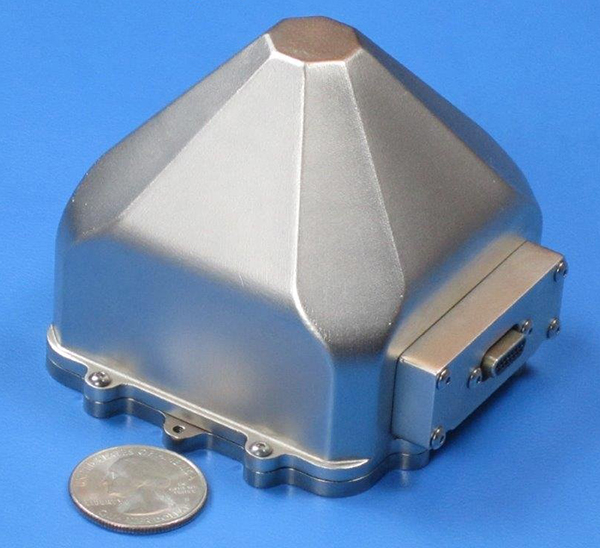
    Sensors in Motion (SIM) has introduced  a MEMS (micro-electro-mechanical) navigation-grade inertial system (INS) that it says could transform the $8 billion/year inertial market with new products by offering price and performance specifications better than those currently available.

    The first INS devices have been delivered to the Army CERDEC Night Vision Electronic Sensors Directorate (NVESD).

    SIM, a spinout from NASA’s Jet Propulsion Laboratory and California Institute of Technology, is developing a family of high-accuracy MEMS gyroscopes, accelerometers and inertial measurement unit ( IMU) solutions. It says it has perfected unique MEMS structures using volume silicon wafer processing techniques to produce gyroscopes having ARW (angle random walk) less than 0.0035 degree/root-hour and bias instability less than 0.01 degree/hour with extraordinary vibration and temperature immunity, a performance comparable to ring laser (RLG) and fiber optic (FOG) gyros that are 20 times larger and 100 times more expensive.

    These features are mandatory for numerous applications where location is not available from GPS or vehicle position accuracy is required including autonomous vehicles, drones, mining asset tracking, dead reckoning, agricultural seed placement, oil and gas directional drilling, self-driving autos, firefighter navigation, optical image stabilization, industrial equipment azimuth, aerospace and defense products and most GPS-denied environments, in addition to new applications.

    Current devices would have a vehicle position off as much as 1 foot per second at 45 miles per hour.

    “We see this technology opening an additional $2B sensor market needing size, weight, power, cost and performance that does not exist today. “ said David Smukowski, CEO of SIM.

    With adequate resources the company says further performance gains are possible, even while shrinking the devices smaller for better economics.

  • Spectracom Offers Master Clock/GPS/Inertial Module for Intelligence

    Spectracom Offers Master Clock/GPS/Inertial Module for Intelligence

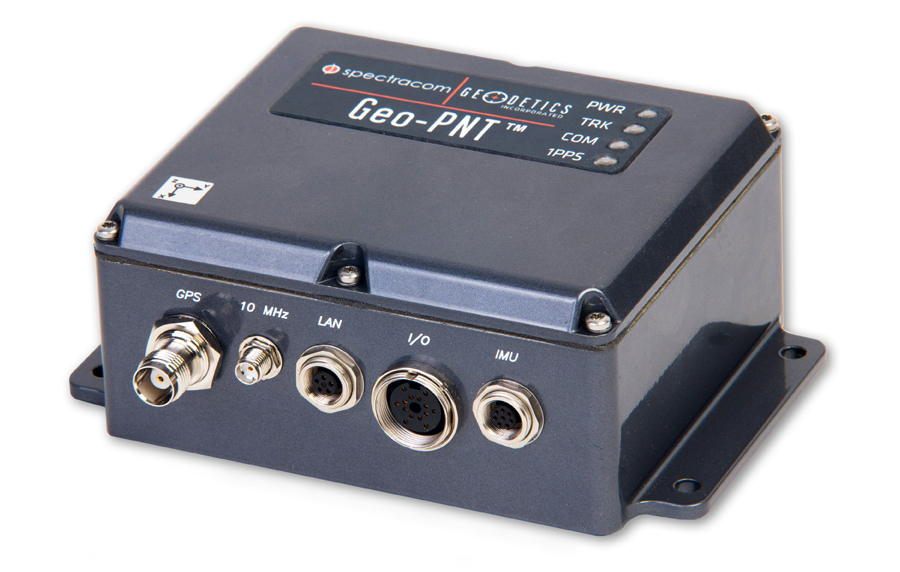
    Spectracom's Geo-PNT Photo: Spectracom
    Spectracom’s Geo-PNT integrates precision references for position, attitude, and timing. Photo: Spectracom

    A new combination master clock and GPS-aided inertial navigation system is now available from Spectracom to reduce redundant subsystems in mobile applications. The Geo-PNT integrates precision references for position, attitude, and timing all in one box. Applications include radar, optoelectronic sensing, electronic warfare, satcom on the move, and mobile test platforms.

    Geo-PNT benefits any mobile intelligence, surveillance, and reconnaissance (ISR) platform because signal/electronic intelligence applications require precision positioning, navigation, and timing references. Electro-optic sensors and other imaging technologies, antenna steering, and encrypted communications always need a combination of precision motion compensation, geolocation, time stamping, and frequency reference.

    The high degree of integration within the Geo-PNT supports the goals of low size, weight and power (SWaP) and cost optimization while achieving a high level of performance for ISR platforms and mobile communications systems. A single subsystem for all PNT functions in a volume of about 40 cubic inches is about three times less than the traditional approach of deploying dedicated devices.

    The Geo-PNT is a highly configurable platform to provide the capabilities needed for the mission:

    • Single-box solution combining precision local oscillator, inertial motion unit (IMU), and GPS receiver.
    • Configurable output interfaces for timing and navigation.
    • Standalone or RTK/differential GPS, commercial (non-ITAR) or SAASM GPS receiver.
    • Choose from a variety of IMUs to meet performance specifications.
    • NTP server, precision 1PPS, 10 MHz with low phase noise.
    • Rugged and tested to MIL-STD-810G.
    • Low SWaP (< 0.7 liters, <0.8 Kg, <10 watts).

    “Our time and frequency technology, combined with geodetics positioning and navigation capability in the same module, provides an opportunity for platform designers to lower SWaP requirements while staying within the limits of today’s demanding system specifications,” said Rohit Braggs, Spectracom’s sales and marketing VP.

    Geo-PNT is the latest example of Spectracom’s flexible configure-to-COTS approach. The use of commercial technology reduces lead time and offers the lowest cost of ownership for both standard and semi-custom configurations. Hardware and software can be adapted to meet the needs of the application.

  • TomTom MultiNet-R Speeds Maps to the Market

    TomTom is making available MultiNet-R, a new map format for business customers. MultiNet-R offers TomTom customers accurate and up-to-date maps that can be quickly integrated into their products, the company said.

    “With MultiNet-R, we leverage the strength of our new transactional mapmaking platform to bring customers the next generation in maps: real-time maps,” said Charles Cautley, managing director of TomTom Maps. “TomTom can now deliver high-quality map updates faster than any other mapmaker on the market. This combination of speed and quality ensures the best end user experience.”

    MultiNet-R delivers rich content and coverage in a database model that features stable IDs and seamed content layers for easy compilation, according to TomTom. Additionally, MultiNet-R can power incremental map updates, enabling maps to be kept up-to-date without the need to install a full map update.  The global, full-feature MultiNet-R will be released monthly in 2015 and weekly in 2016.

    TomTom said it has perfected a highly efficient hybrid approach to mapmaking that optimizes professional methods with community input from hundreds of millions of users who actively share map changes, resulting in a map that is accurate and up-to-date.

    For more information, visit www.tomtom.com.