Tag: product showcase

  • Alps Electric Develops Multi-GNSS Module for Automotive Use


    Alps Electric has developed the UMSZ2 Series multi-GNSS module for automotive use, providing support for multiple satellite positioning systems with a single module. Samples will be made available starting in April.

    The module can receive signals from multiple GNSS, allowing simultaneous reception of signals from multiple positioning systems with the single unit. It is a surface mount module with dimensions of 25.0 × 20.0 × 2.6 mm. Also equipped with an internal antenna status detection circuit, as required for GNSS signal reception, the module helps to reduce the customer’s workload in designing and installing such circuits.

    Alps Electric harnessed RF circuit and software design technologies built up over the years to optimize the UMSZ2 Series’ circuitry and create a single-package multi GNSS module. The time taken to acquire a position fix after turning on the system was also shortened, realizing the industry’s fastest time to first fix.

    Furthermore, the UMSZ2 Series can operate off a single 3.3V power supply despite simultaneously receiving signals from multiple GNSS. Eliminating the need for a multiple power supply contributes to greater freedom in system design.

    A dead-reckoning function for updating position information inside tunnels or in other areas where a signal is unavailable will also be added as an option.

  • Spirent Launches Advanced Simulator for Multi-GNSS Testing

    Spirent Launches Advanced Simulator for Multi-GNSS Testing

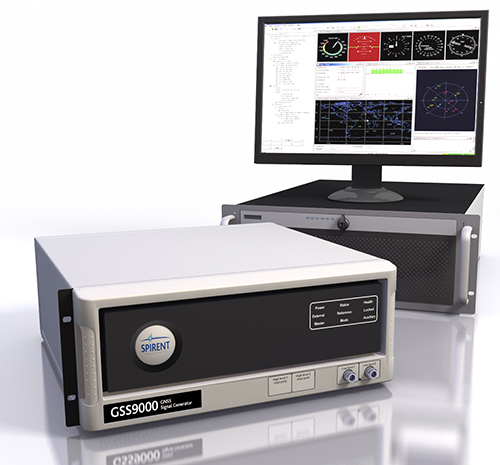
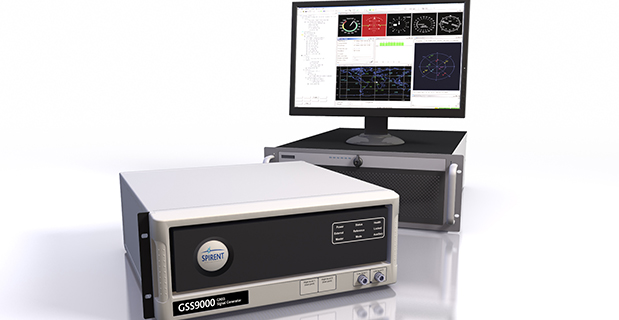
    Spirent's GSS9000 constellation simulator.
    Spirent’s GSS9000 constellation simulator.

    Spirent Communications, provider of testing solutions for positioning and navigations systems, has introduced the Spirent GSS9000 Multi-Frequency, Multi-GNSS RF Constellation Simulator. The GSS9000 offers a new benchmark in performance, capability and flexibility that includes the ability to simulate signals from all GNSS and regional navigation systems.

    The GSS9000 offers new levels of performance, enabled by a four-fold increase in RF signal iteration rate (SIR) over Spirent’s current GSS8000 product. The GSS9000 SIR is 1000Hz (1ms), enabling higher dynamic simulations with even more accuracy and fidelity, Spirent said. It also includes support for restricted and classified signals from the GPS and Galileo systems as well as advanced capabilities for ultra-high dynamics. The GSS9000 can evaluate resilience of navigation systems to interference and spoofing attacks.

    GSS9000 has the flexibility to reconfigure constellations, channels and frequencies, between test runs or test cases. In addition, the GSS9000 has been designed to be backward compatible, enabling the use of existing test cases and remote control/motion from existing Spirent simulators. Hardware changes can now be done in the field, supported by the new on-board calibrator module.

    “The GSS9000 raises the performance bar and addresses the future challenges of improving accuracy and resilience for end users of GNSS technology,” said Martin Foulger, managing director of Spirent’s Positioning division. “The GSS9000 solution is a result of almost thirty years of unrivalled expertise, innovation and leadership.”

    The GSS9000 is extensible and can support the widest range of carriers, ranging codes and data streams for the GPS, GLONASS, Galileo and BeiDou GNSS systems as well as regional/augmentation systems. Multi-antenna/multi-vehicle simulation, for differential-GNSS and attitude determination, and interference/jamming and spoofing testing are also supported.

  • Galileo Product Showcase

    System Design & Test

    Galileo Test Bed

    Over the past few years, GATE has become well known for being a top-level Galileo test and development range worldwide. It is operated by IFEN GmbH under contract of the owner DLR (German Aerospace Center). The GATE test bed offers a wide range of possibilities for navigation test scenarios with realistic Galileo signals on three frequencies simultaneously in an outdoor environment. Although the test range is, of course, a ground-based infrastructure in the Berchtesgaden Alps, the certified GATE system is able to transmit the original navigation signals from eight “virtual” Galileo satellites. This also includes the simulation of natural influences such as ionosphere or troposphere delays, the adaptation of other signal characteristics, as well as effects of signal strength. Furthermore, GATE includes the capability to induce dedicated “Feared Events” and alerts for one or several satellites of the simulated Galileo constellations.

    IFEN
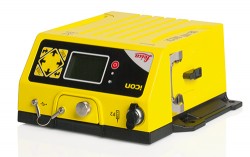

    Leica-iconMachine Control

    Machine Receiver

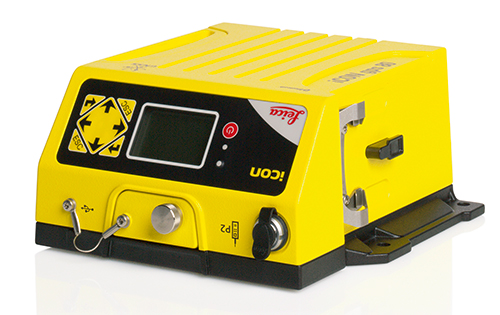
    The Leica iCON gps 80 GNSS machine receiver offers features and benefits for system integrators looking for powerful, reliable, and future-proof GNSS machine receivers. It increases the overall performance of the iCON machine control system, allowing users to work more productively. Besides Galileo, signals tracked include GPS, GLONASS, and BeiDou. The iCON gps 80 increases the overall performance of the system, so that the uptime of dozers, excavators, drilling and dredging machines, wheel loaders, graders, and pavers is maximized with fast, reliable 3D positioning and productive operation by a perfectly tuned machine control system.

    xRTK allows machine guidance in difficult environments, increasing machine productivity. Leica iCON telematics provides remote access to the machine computer for fast data transfer and support.

    Leica Geosysems
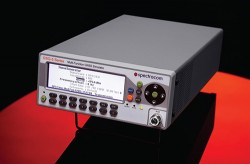

    GSG-51-GNSS-Signal-Generator-WSimulation

    GNSS Signal Generator

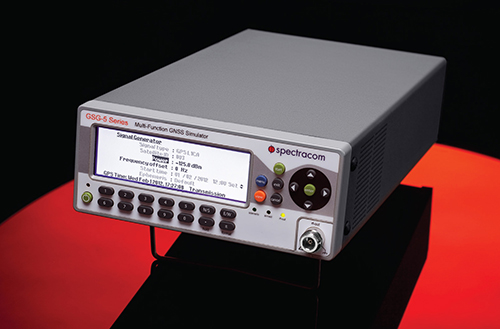
    The GSG-51 GNSS signal generator provides a fast and cost-effective solution for production testing for Galileo and other GNSS. It emulates a single GNSS signal and can be upgraded for Galileo, as well as to increase the channel count, add receiver trajectory control, and add advanced features such as SBAS (WAAS, EGNOS,MSAS, or GAGAN), white noise generation, or multipath simulation. Its main application is a simple but very fast manufacturing test, to assure that the assembly is correct, that the antenna is properly connected, and that the receiver can receive and identify a satellite signal, for instance, in mobile phones with integrated GNSS receivers.

    With a wide RF level range from –65 to –160 dBm, the sensitivity of all types of GNSS receivers can be verified with a minimum of delay. The 60-dB of extra power from normal test scenarios allows for splitting the signal many times.

    Spectracom
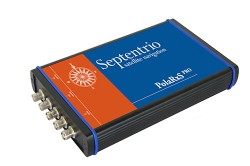

    Septentrio-PolaRxSSpace Weather Monitoring

    Multi-Constellation Receiver

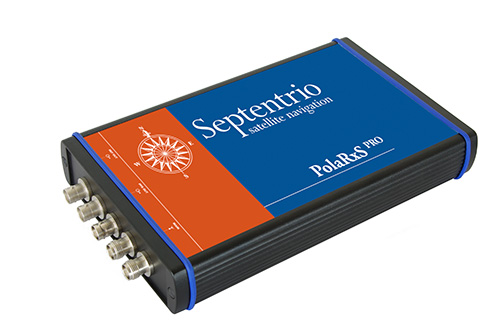
    The PolaRxS is a multi-frequency, multi-constellation receiver dedicated to ionospheric monitoring and space weather applications. It features simultaneous high-quality tracking of all visible signals (L1, L2, L5, E5ab/AltBOC GPS/GLONASS/Galileo/Beidou/SBAS) at low noise levels. The receiver outputs an extensive set of GNSS measurements, including signal phase and intensity at up to 100 Hz, with a phase noise standard deviation (phi60) as low as 0.03 rad.

    The A Posteriori Multipath Estimator (APME+) tackles short-delay multipath to enhance the measurement quality, while LOCK+ tracking guarantees robust tracking of rapid signal dynamics during scintillation events. Included tools provide continuous total electron content (TEC) and scintillation indices logging for space weather and ionosphere monitoring.

    Septentrio
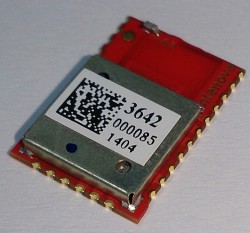

    A3-angle-view-WPersonal Tracking

    Multi-GNSS Antenna Module for Wireless

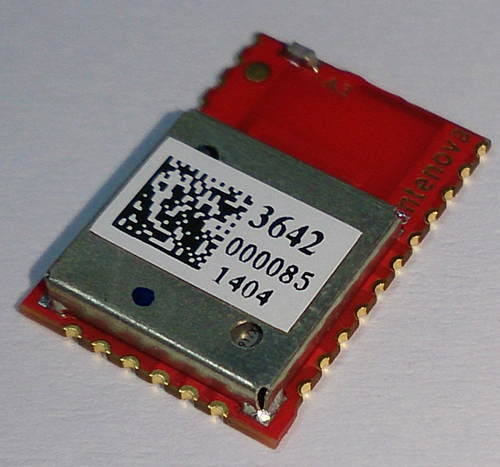
    The M2M Radionova M10478-A3 antenna module combines a full receiver and antenna on the same ultra-compact module. The highly integrated multi-GNSS RF antenna module is based on the Mediatek MT3333 architecture combined with Antenova’s antenna technology, receiving Galileo as well as GPS, GLONASS, BeiDou, QZSS, and SBAS signals. Using patented external matching means this module is suitable to applications from small watches to smartphones and asset trackers. All front-end and receiver components are contained in a single package laminate base module, providing a complete GNSS receiver for optimum performance.

    Antenova


    Location-Based Services / Wireless

    Software Receiver

    A software-based GNSS receiver from Galileo Satellite Navigation (GSN) is available on Tensilica ConnX digital signal processor (DSP) cores, for wireless mobile applications. The GSN GNSS receiver running on a Cadence ConnX BBE16 DSP consumes as little as 10 mW of power on a 40-nm process and has the ability to work in lower rates, or snapshots, for ultra-low-power mobile scenarios. It delivers high-sensitivity tracking, offering a seamless GNSS experience in challenging environments. This provides customers with the ability to upgrade their designs to include future satellite systems, including Galileo. With no additional silicon costs and a low cost of deployment, this software-based solution offers a way to implement satellite navigation functionality in many products where it otherwise might be impractical.

    Cadence; Galileo Satellite Navigation


    Ulys-Ex2-20217100-detouree-WAsset Tracking

    Hazardous Goods Surveillance

    The Ulys-Ex2 beacon is a standalone tracking unit providing worldwide location-based alerts for up to seven years, for monitoring of unpowered mobile assets in potentially explosive atmospheres.

    With a Galileo-ready u-blox receiver, it provides monitoring data for tank containers and tank-trailer transport operations, increasing the level of security and safety of explosion-sensitive shipments. The beacon is part of a turnkey, real-time dangerous goods monitoring solution adapted to risk environments, guaranteeing global visibility on routing from the production site to the customer delivery point. It is ATEX Zone 1 certified for Europe — Zone 1 is an atmosphere where a mixture of air and flammable substances in the form of gas, vapor, or mist is likely to occur in normal operating circumstances.

    Saphymo
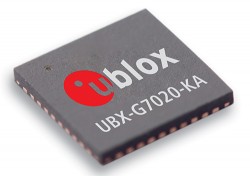

    ubx-m8030-WConsumer OEM

    Galileo-Ready Module

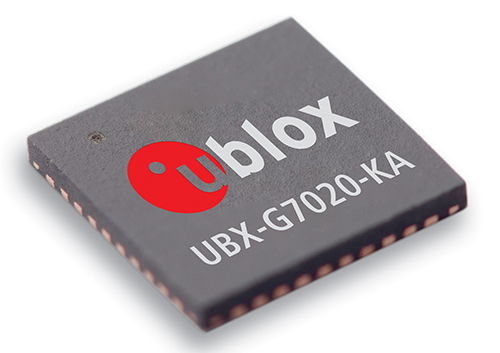
    The Galileo-ready NEO-M8 series of standalone concurrent GNSS modules is built on the u-blox M8 GNSS (GPS, GLONASS, Galileo, BeiDou, QZSS, and SBAS) engine in the NEO form factor. The NEO-M8 series provides high sensitivity and minimal acquisition times while maintaining low system power. It is optimized for cost-sensitive applications, with the NEO-M8N and NEO-M8Q providing high performance and easier RF integration. Sophisticated RF-architecture and interference suppression ensure maximum performance even in GNSS-hostile environments. The NEO-M8 combines a high level of robustness and integration capability with flexible connectivity options. The future-proof NEO-M8N includes an internal Flash that allows simple firmware upgrades for supporting additional GNSS systems, making the NEO-M8 suitable for industrial and automotive applications.

    u-blox
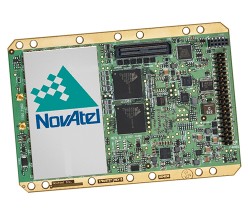

    Novatel-OEM638-WProfessional OEM

    High-Precision Receiver Card

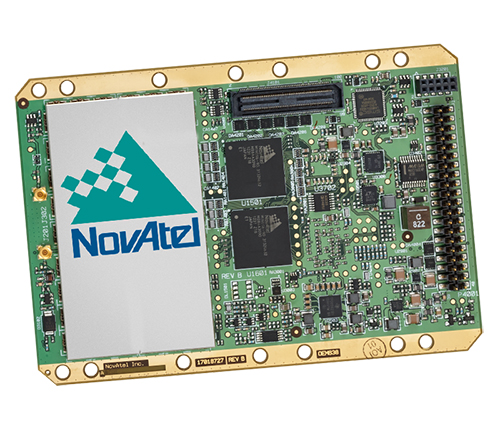
    The OEM638 high-precision receiver card tracks all existing and planned constellations including Galileo, GPS, BeiDou, GLONASS, and QZSS. By providing flexible positioning options, from standalone meter-level to AdVanceRTK centimeter-level accuracy, the OEM638 offers the flexibility to meet a wide range of positioning requirements. A powerful API, 4-GB on-board data storage, wide input voltage, and a host of interface options simplifies integration, decreasing time to market and overall system costs. With 240 channels and comprehensive tracking and positioning with all current and planned GNSS signals, the OEM638 is field upgradeable. It offers user configurability for reference station, timing, and other precision positioning applications.

    NovAtel


    Consumer OEM
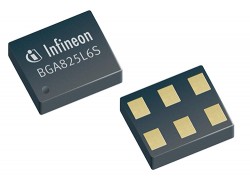
    Infineon-WLow-Noise Amplifier

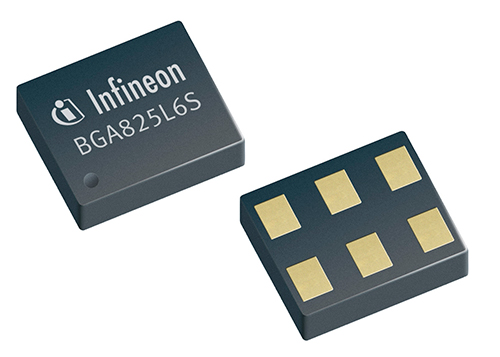
    The BGA825L6S is a cost-effective low noise amplifier (LNA) for Galileo and other GNSS. It features an ultra-low noise figure, high linearity, high gain, and low current consumption over a wide range of supply voltages from 3.6V to 1.5V. It is designed for GNSS LNA, as it improves sensitivity, provides greater immunity against out-of-band jammer signals, and reduces filtering requirements, which lowers the overall cost of the receiver. The low noise figure of 0.6 dB is a key parameter for GNSS systems as it directly influences the sensitivity of the system, as well as the time-to-first-fix and time-to-subsequent-fix. LNAs with a lower noise figure enable mobile phones with faster GNSS signal fix and higher end-user satisfaction.

    Infineon Technologies AG
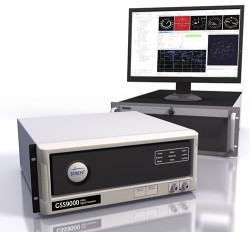

    GSS9000-WSimulation

    RF Constellation Simulator

    The newly released Spirent GSS9000 Multi-Frequency, Multi-GNSS RF Constellation Simulator can simulate signals from all GNSS and regional navigation systems, including Galileo. The GSS9000 offers a four-fold increase in RF signal iteration rate (SIR) over Spirent’s GSS8000 simulator. The GSS9000 SIR is 1000 Hz (1ms), enabling higher dynamic simulations with more accuracy and fidelity. It includes support for restricted and classified signals from the Galileo and GPS systems, as well as advanced capabilities for ultra-high dynamics. It can evaluate resilience of navigation systems to interference and spoofing attacks, and has the flexibility to reconfigure constellations, channels, and frequencies between test runs or test cases.

    Hardware changes can be done in the field, supported by the new on-board calibrator module. The GSS9000 is extensible and can support the widest range of carriers, ranging codes, and data streams for the Galileo, GPS, GLONASS, and BeiDou systems, as well as regional/augmentation systems. Multi-antenna/multi-vehicle simulation, for differential-GNSS and attitude determination, and interference/jamming and spoofing testing are also supported.

    Spirent
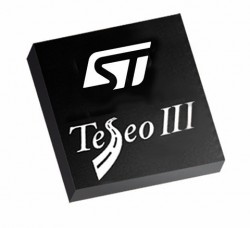

    Teseo_III_p3509-WTransportation

    eCall-Ready Positioning Chip

    The Teseo II (STA8088 series) is a single-chip positioning device capable of receiving signals from multiple satellite navigation systems, including Galileo, GPS, GLONASS, and QZSS. The Teseo II combines high-positioning accuracy and indoor sensitivity performance with powerful processing capabilities and design flexibility, making Teseo II suitable for eCall, ERA-GLONASS, telematics, handheld, consumer, portable navigation devices, marine, and in-car navigation systems. The Teseo II is being tested by the European Space Agency and the European Commission Joint Research Center for eCall approval. The testing campaign is coordinated by the European GNSS Agency as part of its effort to accelerate Galileo adoption.

    While the Teseo II Ihas always had the capability to be Galileo-ready, ST is enabling a firmware update from Galileo that benefits consumers and doesn’t require a hardware modification. The Teseo II chips can simultaneously use signals from multiple satellite navigation systems, including the currently available Galileo satellites, and progressively, as future satellites are launched, the full satellite constellation.

    STMicroelectronics
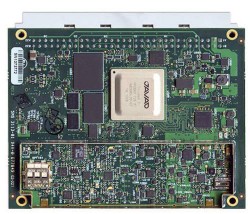

    JAVAD_TRE-3Professional OEM

    High-Precision Receiver

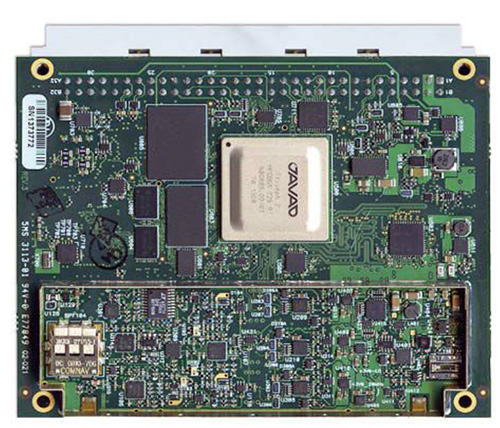
    The 864-channel TRE-3 receiver can simultaneously access all current GNSS signals, with room to spare for multiple-channel tracking of select signals. The new product offers three ultra wide-band (100 MHz) fast sampling and processing, programmable digital filters, and superior dynamic range. After 12-bit digital conversion, nine separate digital filters are shaped for each of the nine bands: GPS L1/Galileo  E1, GPS L2, GPS L5/Galileo E5A, GLONASS L1, GLONASS L2, Galileo E5B/BeiDou B2/GLONASS L3, Galileo altBoc, Galilee E6/BeiDouB3/QZSS LEX, and BeiDou B1.

    JAVAD GNSS
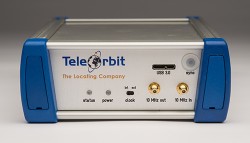

    TeleOrbitInterference Monitoring

    Modular RF Front-End

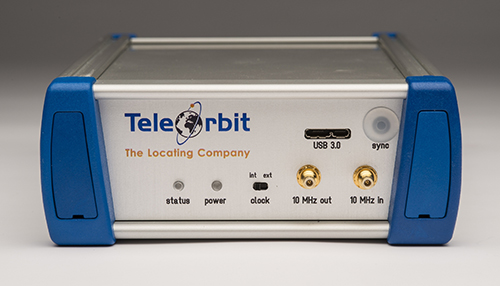
    The GTEC-RFFE is a flexible, portable, and affordable ultra-wideband recording solution that can be adapted to the reception of all GNSS bands available, including Galileo, supporting up to 80 MHz of RF bandwidth. Because of its modular concept, the GTEC-RFFE not only supports a set of pre-selected configurations, it can be set up for multi-antenna inputs, user selectable bandwidth, intermediate frequencies, and customized ADC sampling rates and resolutions. It is designed for development of software-defined radios and receivers, GNSS multi-system signal analysis and comparison, analysis of atmospheric effects such as ionospheric and tropospheric irregularities and scintillation, and interference monitoring for protecting critical operations and infrastructures.

    TeleOrbit
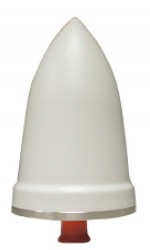

    PCTEL-GNSS1-TMG-26N-WTiming

    GNSS Timing Reference Antenna

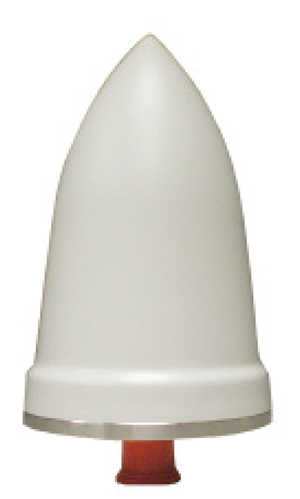
    The GNSS1-TMG-26N is a fixed-mount network timing antenna covering Galileo L1, as well as GPS, GLONASS, and Beidou frequencies. It is designed for long-lasting, trouble-free deployments in congested cell-site applications. The low-noise, high-gain amplifier is suited to address attenuation issues associated with applications requiring longer cable runs. The proprietary quadrifiliar helix design, coupled with multistage filtering, provides superior out-of-band rejection and lower elevation pattern performance than traditional patch antennas.

    PCTEL
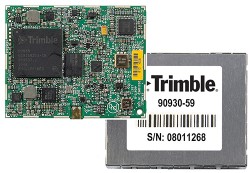

    Trimble-BD930-WProfessional OEM

    Positioning and Heading System

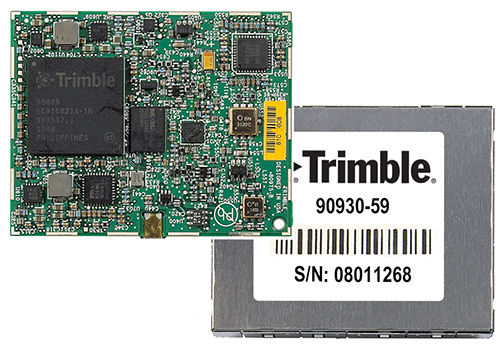
    The Trimble BD930 supports both triple frequency from the GPS and GLONASS constellations, plus dual frequency from Galileo and BeiDou. As the number of satellites in the constellations grows, the BD930 is ready to take advantage of the additional signals to deliver fast and reliable RTK initializations for 1–2 centimeter positioning. Different receiver configurations are available, including autonomous GPS L1 to four-constellation triple-frequency RTK.

    Trimble
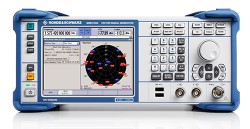

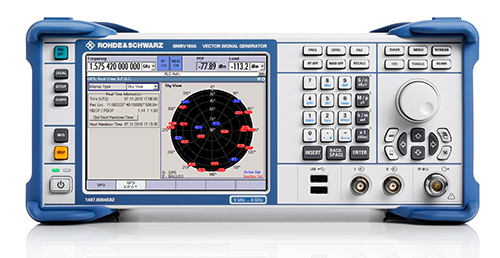
    SMBV100A_GNSS_front-WSimulation

    Vector Signal Generator

    The R&S SMBV100A vector signal generator can generate Galileo, GPS, and GLONASS signals for up to 24 satellites in realtime. With the SMBV-K107 option, the simulator covers the BeiDou standard as well.

    The R&S SMBV-K101 option allows developers in the automotive and wireless communications industries to test GNSS receivers for specific effects such as obscuration and multipath propagation. If the GNSS receiver of a navigation instrument or smartphone is located inside a vehicle, testing must also take into account the obscuring effect of the vehicle’s metal body. The R&S SMBV-K102 option can simulate this obscuration and, if required, the additional antenna pattern.

    In addition to test scenarios for A-GPS, smartphone developers have the Assisted Galileo (R&S SMBV-K67) and Assisted GLONASS (R&S SMBV-K95) options at their disposal.

    Rohde & Schwarz


    GPS30-blue-WSignal Amplification

    Antenna Amplifier

    The GPS35-BNC is an inline antenna amplifier for both the L1 and L2 frequencies of the Galileo, GPS, and GLONASS satellite systems. When connected between the GPS receiver and the GPS antenna, power from the GPS receiver that normally powers the active antenna powers both the active antenna and the GPS-BNC, so no extra power supply is needed. The GPS35-BNC can be used with either active or passive GPS antennas by selecting internal jumpers. The GPS35-BNC provides a gain of 35 dB between 1200 and 1607 MHz. With the GPS35-BNC installed, extra lengths of cable can be used between the antenna and the GPS receiver itself. If low-loss cable is used, cable lengths over 350 meters (1,150 feet) can be used without any degradation to the GPS signal.
    The noise figure of the GPS35-BNC is less than 3 dB, and signals in the cellular or mobile frequency bands are rejected by more than 35 dB.

    Precision Test Systems
     

  • Applied EM Offers Anti-Jam Antenna

    Applied EM’s anti-jam GPS antenna, AJGPS045, has achieved a four-channel Controlled Radiation Pattern Antenna (CRPA) in a very small size, weight and power (SWAP) particularly suitable for airborne platforms. Its footprint is the same as a standard GPS Fixed Radiation Pattern Antenna (FRPA), the FRPA-3.

    This is a key enabler to bringing greatly improved anti-jam performance to smaller platforms and to GPS-equipped platforms that have inadequate anti-jam capability.

    When integrated with appropriate four-channel antenna electronics and a military GPS receiver, the AJGPS045 enables L1 and L2 anti-jam performance of typically >80 dB. This is achieved with a passive compact antenna (.7” x 4.6” x 4.6”) that weighs 9 oz.

  • Latest US Topo Maps for Utah Feature Road Data

    March 2014 US Topo map of the Moab, Utah area, 1:24,000 scale. Orthoimage layer is turned on, contour and woodland layers turned off.
    March 2014 US Topo map of the Moab, Utah area, 1:24,000 scale. Orthoimage layer is turned on, contour and woodland layers turned off. Map: USGS

    Newly released US Topo maps  for Utah now feature a new commercial road data provider. The latest highway, road and street data from HERE has been added to the 1,476 revised US Topo quadrangles for the state.

    “HERE, a Nokia business, is proud to provide fresh, robust and comprehensive map content to the State of Utah and the US Topo Maps program,” said Roy Kolstad, VP Sales Enterprise Americas, HERE. “We are excited for users to experience the benefits HERE brings with our more than 25 years of experience in cartography, drawing on more than 80,000 sources of data.”

    The new maps also include Public Land Survey System (PLSS). These data are added to the growing list of states west of the Mississippi River. PLSS is a way of subdividing and describing land in the United States. All lands in the public domain are subject to subdivision by this rectangular system of surveys, which is regulated by the U.S. Department of the Interior. Other selected states will begin getting PLSS map data during the next respective revision cycle.

    The new design for US Topo maps improves readability of maps for online and printed use, while retaining the look and feel of the traditional USGS topographic map. Map symbols are easy to read when the digital aerial photograph layer imagery is turned on.

    Other re-design enhancements and new features:

    • New shaded relief layer for enhanced view of the terrain
    • Military installation boundaries, post offices and cemeteries
    • New road classification
    • A slight screening (transparency) has been applied to some features to enhance visibility of multiple competing layers
    • New PDF legend attachment
    • Metadata formatted to support multiple browsers
    1885 historical USGS map of the Moab, Utah area, 1:250,000 scale.
    1885 historical USGS map of the Moab, Utah area, 1:250,000 scale. Map: USGS

    US Topo maps are created from geographic datasets in The National Map, and deliver visible content such as high-resolution aerial photography, which was not available on older paper-based topographic maps. The new US Topo maps provide modern technical advantages that support wider and faster public distribution and on-screen geographic analysis tools for users.

    The new digital topographic maps are PDF documents with geospatial extensions (GeoPDF) image software format and may be viewed using Adobe Reader, available as a no-cost download.

    US Topo maps are updated every three years. The initial round of the 48 conterminous state coverage was completed in September of 2012.  Hawaii and Puerto Rico maps have recently been added. More than 400 new US Topo maps for Alaska have been added to the USGS Map Locator & Downloader, but will take several years to complete the vast state.

    Download US Topo maps here.

  • Pitney Bowes, IBM Collaborate on Hybrid Cloud Location Services

    Pitney Bowes, Inc., and IBM have announced a collaboration on IBM’s codename “BlueMix” platform-as-a-service to develop new hybrid cloud location services that help businesses unearth deeper connections between their customers, their geography, and their networks to deliver more personalized services and contextually relevant experiences.

    IBM’s BlueMix is a new development environment that helps clients and developers speed the adoption of hybrid clouds. The initiative combines the strength of IBM software, third-party and open technologies. BlueMix provides DevOps in the cloud — an open, integrated development experience that scales to any level. Pitney Bowes is among the first third-party solutions now available to developers and companies on the new IBM BlueMix Platform-as-a-Service (PaaS).

    More than 1.2 billion people around the world today use Pitney Bowes location intelligence solutions when they check in or use location-sharing features on major social media platforms. Pitney Bowes’ location intelligence suite of products offers comprehensive capabilities to provide businesses with the ability to visualize spatial data and understand relationships between specific locations. Using advanced, hyper-accurate location data, insurers can improve underwriting decisions, telecommunications providers can better analyze network coverage, and retailers can deliver more targeted promotions to consumers based on when and where they are most likely to buy.

    For Pitney Bowes, the partnership provides the opportunity to expose key solutions, such as location-based services, e-commerce fulfillment, Internet postage, and parcel management, through IBM’s API Management to an extended ecosystem of innovators and developers. It also speeds the availability of new services from Pitney Bowes to vast new markets globally.

    “Together, IBM and Pitney Bowes are developing a powerful lineup of cloud services around mobile application development and location intelligence,” said Steve Robinson, General Manager, IBM Cloud Platform Services. “This open-platform collaboration will inspire development that accelerates innovation and fosters growth.”

    “Companies need tools and expertise to manage and integrate APIs, leverage location intelligence and customer data, and then seamlessly extend their services to reach their customers via the cloud and mobile devices,” said Roger Pilc, chief innovation officer for Pitney Bowes. “We look forward to delivering Pitney Bowes digital commerce solutions on IBM’s BlueMix.”

  • Topcon MAGNET Field GIS Software Offers Cloud Capability

    Topcon Positioning Group has released the MAGNET Field GIS software kit designed for efficient data collection, navigation and maintenance tasks.

    “MAGNET Field GIS is field data collection software with extremely useful data sharing capabilities,” said Jason Hooten, national sales manager, GIS products. “Utilizing the cloud, MAGNET Field GIS can send and receive data via a company’s MAGNET Enterprise account, allowing professionals in the field greater productivity and less time wasted driving to and from an office to deliver collected data.

    “MAGNET Field GIS is powerful and intuitive — built to easily recognize and adapt to a user’s surroundings,” said Hooten. “Whether in an urban area within a GNSS network or in a rural setting with a DGPS connection, MAGNET Field GIS provides a modern data collection solution.”

    The software package also includes features such as Microsoft Bing Maps for real-time background imaging, popular GIS file-format compatibility and a customizable interface.

  • Esri Updates Collector and Operations Dashboard Apps

    The Collector for ArcGISapp can be used offline to collect and edit maps and data regardless of network availability.
    The Collector for ArcGIS app can be used offline to collect and edit maps and data regardless of network availability.

    Esri has released new versions of Collector for ArcGIS and Operations Dashboard for ArcGIS. The Collector app now includes the ability to download maps to your smartphone or tablet device to collect and edit data when working offline. Operations Dashboard has added support for browsers so users can view operations on their iPad, Android tablet, or from their desktop. Both apps are available at no cost to ArcGIS Online subscribers and Portal for ArcGIS customers.

    Collector for ArcGIS is a configurable field data collection app for iOS and Android devices. With the latest release, maps can be used anywhere regardless of network availability. Users can take map areas offline and work with them in remote locations where network availability is either nonexistent or unreliable. Users can download Esri basemaps as well as their own basemaps managed within their ArcGIS organization.

    Operations Dashboard for ArcGIS provides a common operational picture for monitoring, tracking, and reporting events within your organization. The new version of Operations Dashboard now supports web browsers. That means you can have the same real-time view of operations on your tablet that you see on your Windows desktop.

    Data sources inside Operations Dashboard have also been improved in the 10.2.2 version of the app. Users can now power operation views using dynamic map services as well as feature services, and other types of layers including real-time weather, traffic, and social media feeds.

    Collector for ArcGIS can be downloaded from the Apple App Store and Google Play. Operations Dashboard is available through ArcGIS Online. Portal for ArcGIS users can access the Operations Dashboard app from the Customer Care portal.

  • Leica MultiStation Provides Exact 3D Scan of Mont Blanc Ice Cap

    Chartered Land Surveyors from the Upper Savoy region in France set up a Leica Nova MS50 MultiStation to take a 3D scan of the Mont Blanc ice cap and also a Leica Viva GS14 GNSS antenna to measure the mountain’s elevation.
    Chartered Land Surveyors from the Upper Savoy region in France set up a Leica Nova MS50 MultiStation to take a 3D scan of the Mont Blanc ice cap and also a Leica Viva GS14 GNSS antenna to measure the mountain’s elevation.

    Reaching the top of Mont Blanc, Europe’s highest peak, is a formidable challenge even to the most experienced alpinists — not only because of its elevation, but also because of its weather conditions. Strong winds and snowfall at the summit constantly cause altitude changes to the summit’s ice and snow cap. Such changes motivate expert surveyors to try out the latest in measurement technology, like the Chartered Land Surveyors located in the Upper Savoy region in France as well as two surveyors from Leica Geosystems France. For their seventh expedition, they decided to make the first ever 3D laser scan of the shape and volume of this legendary glacier using the Leica Nova MS50 MultiStation.

    Toward the end of 2013, surveyors braved temperatures of -10⁰ C and winds of over 50 km/h, and set up a Leica Viva GS14 GNSS antenna to measure the height and also take roughly 100 point measurements of the ice cap. The Leica MS50 MultiStation scanned the ice cap at an altitude of over 4,800 meters under extreme conditions and recorded thousands of points in a matter of minutes.

    The 2013 expedition proved that the current elevation of Mont Blanc is 4,810.02 meters, which is 42 centimeters less than in 2011. The actual rock summit has an altitude of 4792 meters; however, the snow covering the peak may vary the actual summit’s altitude anywhere from 15 to 20 meters. Expedition partner Géomédia calculated the volume of the ice cap covering the rocky summit at 20,213 m³ and produced a 3D animation from the scan data as well. In the future, these results will help researchers determine possible changes to the ice cap caused by global warming.

    “Using the Leica Nova MS50 MultiStation to make a 3D model of the biannual Mont Blanc summit expedition was a challenging exercise that resulted in highly accurate data,” said Philippe Borrel, owner of the surveying company Cabinet Borrel and an experienced member of the expedition team. “Collecting data under such extreme conditions quickly and efficiently is extremely important. This time, we were able to reduce time expenditure needed to complete the task. The MultiStation was surprisingly easy to carry in a backpack, considering the rocky terrain, steep slopes and windy ridges we had to climb.”

    Click below to watch the short film on this exciting expedition:
    http://www.leica-geosystems.com/ms50_montblanc_shortfilm


  • Topcon Unveils New Features for MAGNET Enterprise

    MAGNET Enterprise - tablet_Topcon

    Topcon Positioning Group announces two new updates for MAGNET Enterprise — the cloud-based solution for managing field and office data in a web browser environment.  New to the system is the introduction of MAGNET Enterprise Mobile, an application for mobile devices, as well as new project management functions.

    MAGNET Enterprise Mobile is designed to allow users to take the central hub of the MAGNET system of solutions with them on the go. Oscar Cantu, Topcon software marketing manager, said, “The MAGNET Enterprise Mobile app takes the powerful software solution for exchanging data between the office and field through a cloud-based Company Account and puts it in the pocket of the user for easy access wherever they travel.” The app is available on the Apple App Store for iPhones and iPads.

    Another addition for both the full web browser solution, as well as the mobile version of MAGNET Enterprise, is the introduction of new project manager extensions.  Customers will have new functions for coordinating and overseeing their projects including: an overview dashboard for all active projects, a proposal writing and task-creation operation, task assignments, a project-specific dashboard, project calendar, project status reports, and user schedule and timecard applications.

    “MAGNET Enterprise has proven itself as an ideal solution for project managers overseeing the progression of multiple projects, managing company assets, safely storing and retrieving project related files and orchestrating daily efforts within their secure cloud-based Company Account.  Now, with the addition of these tools, MAGNET customers will meet deadlines, gain productivity and collaborate like never before,” said Cantu.

    “The project management oriented functionality, coupled with the introduction of the MAGNET Enterprise Mobile app is another step forward in the MAGNET system of solutions that brings together all facets of a company for unmatched collaboration.”

  • MicroSurvey Releases 2014 Survey Drafting Software

    MicroSurvey embeddedCAD 2014.
    MicroSurvey embeddedCAD 2014.

    MicroSurvey announces the release of MicroSurvey inCAD 2014 and MicroSurvey embeddedCAD 2014.

    MicroSurvey inCAD 2014 is a plugin that transforms AutoCAD into a survey and design powerhouse, MicroSroSurvey said. It adds the MicroSurvey feature set to the latest Autodesk software — including AutoCAD 2014, AutoCAD Civil 3D 2014, and AutoCAD Map 3D 2014 — to offer a complete survey drafting toolkit, including COGO, DTM, traversing, adjustments, volumes, contouring and more.

    MicroSurvey embeddedCAD 2014 is a standalone application powered with Autodesk technology that includes the latest AutoCAD OEM 2014 enhanced with the suite of MicroSurvey tools. Like inCAD 2014, it incorporates the full suite of survey drafting tools. MicroSurvey embeddedCAD 2014 includes a licensed copy of AutoCAD OEM 2014, and it opens and saves AutoCAD 2014 drawing files, so implementing it in existing AutoCAD environments is without conflicts.

    Both releases are built specifically for the demanding needs of land surveyors, contractors and civil engineers, and include many new features requested directly from customers. “Several years ago we implemented a transparent and easy to use online feedback forum where our customers could submit their ideas and suggestions for improvements to our products,” said Darcy Detlor, president of MicroSurvey. “The feedback system lets our users propose their feature requests and allows them to cast votes on any request that has been submitted. Requests with the most votes are given the highest priority and get our attention, ensuring that we are working on features that our customers really want.”

    MicroSurvey focused its development efforts on adding several new geodetic tools, hundreds of new coordinate systems, and geoid files. Users can now store and edit points using their latitude and longitude values, view combined scale factors and convergence angles at any point in their drawing or project database, and transform between ellipsoidal and orthometric elevations using geoid files. Other powerful new productivity tools include a 2D draw mode for creating a 2D drawing while maintaining 3D elevation data, as well as rescaling tools for changing the base drawing unit of an entire drawing or specific text.

    Both MicroSurvey inCAD 2014 and MicroSurvey embeddedCAD 2014 are available in two feature levels — Premium and Standard — giving users the choice between two tiers of features to ensure they are getting precisely what they need.

    Free trial versions of the software can be downloaded from the MicroSurvey website.

  • Trimble Launches Online Platform for Geospatial Professionals

    Trimble-InSphere-O

    Trimble has introduced the InSphere platform for geospatial information management, a cloud-based software platform for central management of geospatial applications, data and services. Trimble says InSphere offers an innovative approach for central management of geospatial operations to improve workflow, maximize efficiency and transform the way geospatial professionals work and access critical operational information.

    The framework provides access to multiple applications, including three productivity apps: Trimble InSphere Data Manager, Trimble InSphere Equipment Manager and Trimble TerraFlex to simplify field data collection. In addition, Trimble Access Services provide a seamless data connection between surveyors in the field and managers in the office, the company said. InSphere allows organizations to manage everything in one place, accessible anytime and virtually anywhere.

    Geospatial customers in a range of industries — including surveying and engineering, natural resources management and mapping — now have easy access to productivity-enhancing applications. The secure, cloud-based system is easy to deploy and configure to meet the needs of any organization, Trimble said.

    “The centralized management, streamlined access and tailored toolsets of Trimble InSphere are designed to boost overall operating efficiency,” said Alain Samaha, business area director of software for Trimble’s Geospatial Division. “Because geospatial information has the potential to transform organizations, we are simplifying access so the benefits of this information can be shared more readily with those who need it.”

    InSphere Data Manager. The Trimble InSphere Data Manager application improves access to geospatial information for the whole organization. Accessible anytime and anywhere through a desktop or mobile device, Data Manager allows organizations to manage geospatial data in one place, for easy access to previous project information and time saved in project management.

    The Trimble InSphere Data Manager can be used on a desktop, laptop, or mobile device.
    The Trimble InSphere Data Manager can be used on a desktop, laptop, or mobile device.

    InSphere Equipment Manager. The Trimble InSphere Equipment Manager application allows organizations to centrally manage their field devices. At a glance, surveying and mapping companies, can track equipment location, and view the current status of warranty, firmware and software for their fleet of field equipment.

    Trimble TerraFlex. Trimble TerraFlex is a scalable cloud-based solution for everyday mobile field data collection. TerraFlex addresses a wide variety of field requirements including attribute-rich GIS data collection on a variety of common field devices. With an online data repository and streamlined toolset for creating custom digital form templates, TerraFlex keeps the data flow standardized and streamlined for effective project organization.

    Trimble Access Services. The perfect complement to Trimble Access field software and Trimble Business Center desktop software, Trimble Access services assist users with day-to-day workflows. Users can wirelessly transfer survey files between the field and office to ensure access to the most up-to-date data.