Tag: satellite launch

  • All GNSS Attend, But Galileo Gets the Spotlight

    Tim Reynolds
    Tim Reynolds

    First and foremost, let’s give a big hand to Adam and Anastasia, the two Galileo FOC satellites that were successfully launched on March 27. Following the not-so-successful Galileo launch in August, it was imperative that this go smoothly.

    Although the Double-A launch occurred after the conclusion of this year’s Munich Satellite Navigation Summit, anticipation of the event set the context for the entire convocation. The summit is a fixture on the European and global GNSS calendar. It is always intense, often spectacular and sometimes leaves one with contradictory feelings. This year it took place March 24-26 and sought to determine the future of PNT, encouraging delegates to look into the crystal ball and predict developments.

    If we go by the number of times these words were repeated during the three days of the summit, the future will hinge around compatibility and interoperability. The multi-constellation GNSS is already here. The elephant in the room remains, as always, interference, but here integration of alternative sensors and signals should hold the key to continuous and possibly resilient operations.

    As usual the summit kicked off with a high-level plenary in the imposing Allerheiligen-Hofkirche (Court Church of All Saints) in the Residenz München, the Bavarian royal palace. The welcoming speeches and presentations were interspersed with some pleasant jazz, and the atmosphere was relaxed.

    Into the Crystal Ball

    Matthias Petschke, director of EU Satellite Navigation Programmes at the European Commission, admitted that 2014 had been difficult, but he was looking forward to 2015. Clearly the deployment of the Galileo infrastructure — especially the space segment — was critical, and the March 27 launch was very much on his mind. However, he expressed confidence that the launch would be fine and that satellite production was, and would remain, on schedule. In the long view, he stated: “We will make it for 2020,” signifying full operational capability (FOC).

    He also talked about stimulating global markets to foster uptake of Galileo and EGNOS, and this was discussed by Carlo des Dorides, executive director of the European GNSS Agency (GSA). The ground infrastructure is very much in place and preparing for the Galileo exploitation phase. A significant milestone in that process would be finding the right partner to lead Galileo operations for the next ten years. A tender was now in process to find that organization or consortium. Des Dorides described the process as a competitive dialogue with the emphasis on finding a partner who can inspire new ideas and provide innovative solutions. The contract is big, worth around 1 billion euros.
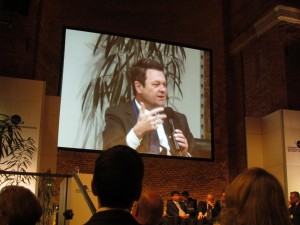
    Carlo des Dorides, Executive Director of the European GNSS Agency (GSA), discusses the 1 billion euro tender, now in process to find the organization or consortium to lead Galileo operations for the next ten years. Photo: GSA
    Carlo des Dorides, Executive Director of the European GNSS Agency (GSA), discusses the 1 billion euro tender, now in process to find the organization or consortium to lead Galileo operations for the next ten years. Photo: GSA

    He also emphasized the successes for EGNOS in the year. Almost 180 airports now benefit from EGNOS-enabled approaches and more than 70 percent of “GNSS-enabled” farmers in EU use the EU’s SBAS.

    Johann-Dietrich Wörner, chairman of the German Aerospace Centre (DLR) — and the nominated next Director-General of ESA – highlighted the growing dependence of critical services on GNSS. In this context multiple systems were not a question of competition; it was all about redundancy and safety. Multi-GNSS improves availability, accuracy and reliability.

    The view from the United States was given by Harold “Stormy” Martin, Director, National Coordination Office for Space-Based Positioning, Navigation, and Timing in Washington, D.C. The GPS fleet was now 30 strong in orbit including four successful launches in 2014 and he stated the 2014 averaged user range error to be 70 cms — the best ever — and improving year on year.

    One major upcoming trend is a realization that there’s a need to establish a U.S.-wide backup coverage for GPS outage due to natural or man-made interference. The U.S. is currently assessing alternatives with a decision likely in summer 2015.

    There was a particularly warm welcome from the audience for Michael Khailov, deputy head of Roscosmos and co-ordinator for GLONASS. Last year the Russians were conspicuous by their absence at the Munich Summit, but for 2015, despite the intervening local difficulty in Ukraine, they were back in force. Khailov claimed that the sustainable development of the world depends on GNSS. On more esoteric ground he stated that GLONASS had maintained stable operations in 2014 and three more satellites had bene launched. Further launches would depend on operational circumstances. The user domains for GLONASS were continuously expanding. Continuing the summit text he said that it was better [working] together than separately — in fact separately often doesn’t work at all and therefore we must continue to promote interoperability and the Munich Satellite Summit is a good forum for this.

    Jianyun Chen of the China Satellite Navigation bureau also took up the theme of all GNSS together. Sixteen Beidou (pronounced — for the avoidance of doubt — as ‘bay-doe’) had been launched since 2007 and the Chinese had been in discussion with Russia to ensure full interoperability with GLONASS. This process will be repeated with GPS and Galileo.

    GNSS Updates

    One of the idiosyncrasies of the Munich Summit is its very discreet signage. If you don’t know where it is — and specifically the correct side door that brings you up two floors to the main Max Joseph Saal venue — it is highly likely you’ll miss it! But once you are in it is two full-on days of updates on systems and discussions on a vast range of topics that impinge on the development and implementation of GNSS around the world.
    Discreet signage. Photo: GSA
    Discreet signage. Photo: GSA

    The first two session of the summit proper gave updates on the GNSS systems in operation and under development as well as the regional and augmentation systems. Much of the material was slightly more detailed versions of presentations at the plenary but a few news snippet emerged.

    “Stormy” Martin said that a modified battery charge control had been implemented that would extend operational life for some of the fleet by one or two years. He also reiterated the improving accuracy performance of GPS which was now much better that its published standards. He predicted that the first GPS III would be available for launch in 2016 and said that GPS was improving every day.

    Eric Chatre from the European Commission reiterated that Galileo was still expecting to start early services in 2016 with full operational capability in 2020. He expected 18 satellites to be launched by 2018. The new Ariane 5 launcher will enable the launch of four satellites at one time and the first launch with this system would be in 2016. In terms of the ground segment only one station in the Pacific was yet to be established.

    Sergey Karutin of Roscosmos talked about a four-fold accuracy improvement for GLONASS with the use of new clocks and the introduction of new CDMA signals that will improve accuracy and access. According to Dongfeng Yu of the China Satellite Navigation Office the BeiDou constellation is moving from “regional to global, active to passive” and is aiming for global coverage by 2020.

    U.S. SBAS developments were covered by Deborah Lawrence of the Federal Aviation Administration (FAA). The Wide Area Augmentation System (WAAS) now has 100 percent coverage for LPV200 in CONUS. More than 41,000 runway ends are now included, and she predicted full completion in 2016.

    Jean-Marc Pieplu of the GSA talked about EGNOS status. The next system release (2.4.1) should be published in Q3 2015 and will include a significant input on ionospheric corrections. Further service evolution includes a plan to declare LPV 200 in Q4 this year and EGNOS coverage will be extended to 72 deg North and ensure full coverage of the 28 EU member states.

    The Russian Augmentation system SDCM performs at 0.8 metre accuracy according to Grigory Stupak of JSC / Russian Space Systems. He noted new validated SDCM ground stations had been established in Antarctica and Brazil and stated that global exploitation was a key objective for SDCM as its satellite coverage was very wide. GLONASS and GPS together could ensure complete coverage. He also indicated that work was in hand for SDCM SBAS service certification for LPV 200 and he called for providers of all WAAS to work closely together.

    2020 Vision

    After lunch we were offered the chance to hear some expert views on the future of GNSS and PNT with Prof Vidal Ashkenazi of Nottingham Scientific Limited asking for their vision of GNSS in 2020. By that year there should be 100-120 GNSS satellites in orbit, multi-constellation receivers would be the norm, but what would be the new applications and what were the challenges?

    Jamming and spoofing would still be issues. Pierre Bouniol of Thales thought that in civil aircraft receivers would probably incorporate jamming indicators by 2020 to inform users when signals may be compromised. For Stuart Riley of Trimble the key was integration of other sensor signals to bridge any GNSS signal outage. Gang Mao of Unicore Communications Inc. in China considered multiple frequencies to be a big help in reducing the threat of jamming. Nigel Davies of QinetiQ agreed saying there were a host of technical solutions but key for success would be solutions that use low power, are low cost and feature high usability. He also noted that safety certification of receivers for use in driverless vehicles would be required and this challenging application would need the provision of robust continuous navigation — and sub-metre accuracy.

    The future market for GNSS was also discussed in a session that unveiled the GSA’s 4th Issue of its comprehensive GNSS Market Report. With almost four billion GNSS devices used worldwide and all regions experiencing growth, GNSS represents an unprecedented business opportunity. Over the past 15 months the GSA’s team of market monitoring experts has taken a close look at all aspects of the GNSS marketplace with analysis of both hardware and software market opportunities, technology trends and future developments.
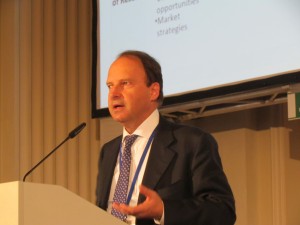
    Gian-Gherardo Calini, Head of Market Development at GSA, gives highlights of the comprehensive GNSS Global Market report. He will deliver this information in an April 16 webinar hosted by GPS World. Photo: GSA
    Gian-Gherardo Calini, Head of Market Development at GSA, gives highlights of the comprehensive GNSS Global Market report. He will deliver this information in an April 16 webinar hosted by GPS World. Photo: GSA

    The top-line results were presented by Gian-Gherardo Calini, Head of Market Development at GSA. GNSS is one of the few growing markets in the world showing 12.7 percent CAGR. It is a very attractive market with volumes and revenues driven by mass market segments: the dominant two being Location-based services and transport applications. This latest edition includes information a new market segment: Timing and Synchronisation. One area that is not included is security and government applications. Mr Calini indicated that this information has been collected by the GSA team but as it is essentially for users of the Public Restricted Service (PRS) it was not included in the open report.

    Although the report is very much “Galileo flavored,” its findings are of great importance and value to whole GNSS community and will be the subject of a GPS World webinar with Mr Calini and myself on 16 April. You can register — free — for this informative global perspective now.

    A panel discussion followed and covered a range of topics and applications from aviation to agriculture. Again the consensus was that chips would become multi-constellation and quickly. Philippe Prats of STMicroelectronic outlined automotive applications from insurance applications to advanced driver assistance systems (ADAS).

    The role of government mandates in establishing markets was seen as positive. The e911 mandate in the states had provided the seed for GPS integration into smartphones. Similarly authentication was also seem as a significant future market driver.

    Multi frequency was also showing on industry’s radar and in a couple of years will be a reality thought Philippe Prats with the main motivation being better accuracy. Frank van Diggelen of Broadcom highlighted the recent GPS World feature demonstrating cm accuracy on a smartphone.

    Legal Issues

    A dedicated session on legal issues was not the best attended part of the conference, which is a shame as it had some serious points to raise and highlighted a gap that is opening up between our technical abilities in GNSS and the legal basis for its use. The Munich Summit is to be commended for its commitment to providing a platform for these issues every year; they are often ignored elsewhere.

    Oliver Heinrichs, a partner at BHO Legal in Cologne, emphasised the need to establish a firm regulatory framework and to ensure that any decisions did not cross World Trade Organisation (WTO) provisions and the General Agreement on Tariffs and Trade (GATT). In particular the idea of mandating a specific GNSS for applications such as emergency response systems in cars may well be incompatible with WTO rules.

    Amedeo Arena of Universitá degli Studi di Napoli Federico II in Naples noted that all GNSS players were members of the WTO and considered that GNSS services and their trade was definitely “caught by the GATTs” so no favouritism for ‘home’ systems should be allowed.

    Another area of controversy is automated vehicles. In discussion after the session I learnt that current international conventions governing the use of motorised vehicles require a human supervisory role at all times. There will need to be some fundamental legal groundwork done before the first driverless vehicles will be allowed out on the road for real.

    These are legally complex issues and certainty will only come from test cases. Talking of complexity Aleksey Bolkunov of the Russian Federal Space Agency revealed that the legal, regulatory and standardisation measures governing GLONASS and GNSS in Russia consisted of more than 900 documents originating at various different levels of the state. This clearly gave great scope for “regulatory collisions” and he is involved in work to develop a single regulatory framework that should eliminate the remaining barriers to GNSS use in Russia.

    Emerging Applications

    Peter Grognard of Galileo Services chaired a final session of the day on emerging applications. Bruno Bougard of Septentrio saw dependable accuracy as key to emerging markets. He thought high precision driven by surveying was becoming more and more mainstream. For autonomous driving the challenge was to provide cost-effective, dependable accuracy at 10-30cm that was safe, reliable, and always available. This would require multi GNSS, multiple signals, highly integrated sensors and transparent and open augmentation.

    For Neil Gerein of Novatel the mantra is “Accuracy, availability, assurance.” Users needed availability to their PNT solutions at all times. He also saw future applications integrating GNSS with inertial sensors and correction systems for high accuracy without the need for a base station.
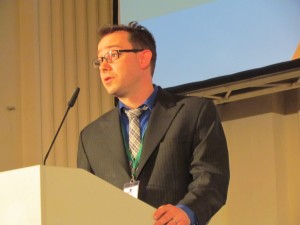
    or Neil Gerein of Novatel the mantra is “Accuracy, availability, assurance." Photo: GSA
    or Neil Gerein of Novatel the mantra is “Accuracy, availability, assurance.” Photo: GSA

    Lionel Garin of Qualcomm Inc talked about ADAS. Safety was paramount and he foresaw the need for rigorous design and certification procedures similar to that required for the aviation market. Fortunately the industry has lots of expertise here. Philip Mattos of u-blox UK argued that a volume market is in femtocell and small cell synchronisation in mobile networks where GNSS is the lowest cost solution.

    Tom Stansell praised geometry as the most important and unique ingredient supplied by multi constellation GNSS. And the second most important ingredient was interoperability. He doubted users would care where their signals originated and devices would still be generically described as ‘GPS’ into the future. Application growth will be stimulated by the better geometry supplied by multi-GNSS constellations. When the E6 signal became available he predicted that 10cm accuracy would enable reliable lane keeping for ADAS.

    And Galileo will supply E6 for free said Ignacio Fernandez Hernandez from the European Commission. Ignacio works on the Galileo Commercial Service design and outlined some significant differentiators of the European system including its broad signal for high accuracy and better multipath resilience, more stable clocks and improved ionospheric modelling compared to GPS.

    Lionel Garin sounded a note of caution at the end of the session when he noted that multi constellation ability was good, but he was not sure what was actually gained beyond two, or perhaps three, constellations.

    GNSS for Weather

    The final day of the conference saw a few fragile heads courtesy of the previous evening’s Summit Space Night 2015 sponsored by Airbus Defence & Space, which took place at the Filmcasino am Hofgarten close to the conference venue. And the first session, chaired by Oliver Montenbruck from the DLR, certainly required a clear focus as we were taken through the use of GNSS in space geodesy, space navigation and reflectometry.

    Roland Pail from the Technical University, Munich described results from the satellite gravity missions GRACE and GOCE that looked at mass transport processes on our dynamic Earth. A particularly sobering animation showed the extent of ice mass loss from Greenland over the past decade. But what is role of gnss here? The ability to give precise positioning of the satellites and the fact that the satellite orbits carry information on the gravity field.

    Atmosphere sounding using GNSS radio occultation allows precise atmospheric profiles with global coverage in all-weathers. Jens Wickert of the Helmholtz Centre Potsdam said that since 2006 these high vertical resolution profiles had been making a significant impact on the world’s weather forecasting including improved hurricane forecasts. It was also a bias free technique for observing global temperature change. With a multi-GNSS future new missions could be planned as more signals would reduce noise. Combining GNSS and reflectometry could enable accurate tsunami detection from space. Similarly Prof Antonio Rius from Barcelona was using reflected GNSS signals to determine data on the surface of the sea such as surface roughness, extent of sea ice and early warning of a tsunami.

    Stefan Sassen of Airbus Defence & Space described the LION GNSS navigation receiver for MEO and LEO platforms. The unit was qualified since 2014 and now 50 were on order. LION is highly flexible with multi-frequency, multi-constellation and multi-antennae configurations possible. It was accurate enough for autonomous orbit raising (a few kms) and or station keeping (to within 100cm).

    Finally Manfred Sust of RUAG Space GmbH said that space borne gnss receivers were true enabling technologies for Earth Observation missions as precise orbit determination was key to capturing sharper images.

    Alternatives

    The second session of the day returned to the practical issues around possible alternative or complementary PNT (APNT) systems. As GNSS becomes ubiquitous many terrestrial PNT systems are being decommissioned (LORAN, VOR), but the potential vulnerability of GNSS signals to interference is highlighting the need for backup. The challenge being to balance functionality and cost in the search for “plan ‘B’ for GNSS” as chairman Michael Meurer from DLR described it.

    The FAA’s Deborah Lawrence reiterated her plans for scoping and implementing a backup system to cope with a GPS outage in the US. The FAA is currently engaging with stakeholders to define what the minimum operational target for a GPS outage should be to set the basis for procurement activity. The timeline for a final investment decision was now December 2018.

    For Europe Gerhard Berz of Eurocontrol thought there were many potential APNT in place and the topic was in the SESAR 2020 research programme. He thought existing DME could potentially do the job in Europe as it had good coverage, but the challenge is to get good geometry and coverage at low altitudes, in remoter areas and over water.

    Prof Per Enge of Stanford University “put the moose on the table” and pointed to the 978 and 1030 ranging frequencies as an existing system that could be used for positioning. But how accurate was it? Airborne experiments had shown good agreement with GPS positioning with an accuracy of around 100m and in turns 300m, which was good enough in an emergency. Further tests using a UAV at spider infested Camp Rogers had demonstrated APNT in flight with 50m error. The UAV itself was specifically developed to navigate using APNT while looking for GNSS jammers.

    Wouter Pelgrum of Ohio University discussed the relative merits of eLORAN, which has high power – and therefore difficult to jam – and beyond line of site accuracy of less than 10m, and alternatives such as collocation of pseudolites with mobile phone cell towers. This could also enable high accuracy indoors positioning applications. He believed that APNT will need to be context specific and there was no single solution.

    Belabbas Boubeker of the DLR discussed modular APNT concepts while Nick Ward of the UK’s General Lighthouse Authorities indicated there was no coordinated policy on resilient PNT in the European maritime sector at present but his authority and others were exploring the possibility of using eLORAN as a commercial enterprise. Nine transmitters were operational in Europe and the service had been declared in 2014.

    Michael Hoppe of Fachstelle der WSV für Verkehrstechniken said resilient PNT was a core element of e-navigation for waterways. A combination of techniques such as medium frequency RF, AIS and eLoran could give good accuracy in areas of highest traffic. First results of trials were encouraging.

    Processing Power

    The final session of the Summit to grab my full attention was chaired by Frank van Diggelen of Broadcom. He led a wide ranging debate on GNSS receiver architecture trends and more generally the future of chip design and fabrication: are we approaching the end of Moore’s law and if so — what next?

    Recently “The balance of power has moved back onto the GNSS chip” to enable lower device power use. To highlight current developments Frank described a couple of Broadcom products: the Broadcom 4773 “location hub” that is at the heart of the Samsung Galaxy 6 “super smart phone” and the 4774 that can access signals from all four GNSS constellations and will be shipping in early 2016 on new smartphones.

    In fact earlier this year the 4774 was used to make a first fix using signals from four different GNSS constellations (with signals from one each of GPS, GLONASS, Galileo and BEIDOU satellites) and a significant event in terms of our multi-constellation future.

    Greg Turetzky of Intel talked about the benefits and challenges for GNSS in advanced silicon processes. He noted that Intel is now shipping 14nm technology and plans were in hand for the next two generations (10nm and 7nm). Moore’s law has been a great enabler for modern society. If automobiles had taken a similar development in the same timeframe we would all be driving cars with a maximum speed of some 300 000 km/hour that cost us around 4 cents to buy!

    The big challenge for GNSS architecture was to take advantage of the smaller geometries while greatly reducing standby power. The integration of multiple radio sources to provide a single location solution was key giving ubiquitous location capability that will improve the experience of every mobile product.

    Looking into his crystal ball, Peter Anderson of Integrated Navigation Systems in the UK saw that integrating signals from complimentary technologies and sensors would be important but would lead to a greater demand for digital processing. He predicted that multiband receivers would become standard in consumer devices. He also pointed out that the worst potential source of GNSS jamming for a smartphone was the phone itself! The move to dual frequency would be helpful here.

    An overview of the Chinese XIHE system for seamless outdoor and indoor location was given by Dongkai Yang of Beihang University. This Beidou Innovative application provides a LBS system based on gnss and mobile communication networks to give a “fusion of communication and positioning for indoor positioning”. The system is being demonstrated in four areas in China in shopping malls. The target for positioning accuracy in the system is for less than 3 metres indoors and less than 1 metre outdoors.

    Franz Kreupl of Munich Technical University gave a sobering view of “life after silicon” – essentially it looks like there isn’t one. He outlined the limits to silicon technology such as tunnelling current and predicted some further progress could be made in reducing interconnect sizes and via circuit design. But new candidate materials for semiconductor electronics from carbon nanotubes to widely hailed 2-D materials graphene and MoS2 all suffer major issues that seem to make them non-starters.

    But do we need to keep on miniaturizing? Norbert Schuhmann of Fraunhofer IIS in Nuremberg thought that technology downscaling would have an end in terms of the physics, but especially in terms of reasonable cost. He thought 7nm and 2020 was the end point for the physics but that in fact 28nm should be seen as the actual last node in Moore’s law as from then scaling has no longer also been the path for cost reduction. He saw silicon on insulator technology and monolithic 3-D integration as possible paths forward, but the technology sweet spot — and well suited for GNSS — was 55nm and a format that was already extensively used in automotive applications.
  • Two Galileo Satellites Launched for Europe’s Navigation Constellation

    Two Galileo Satellites Launched for Europe’s Navigation Constellation

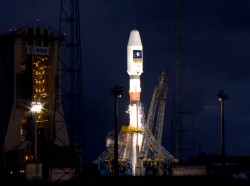
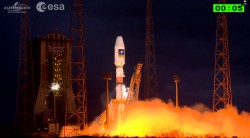
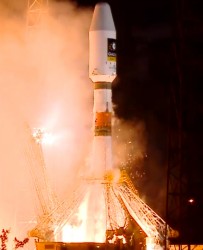
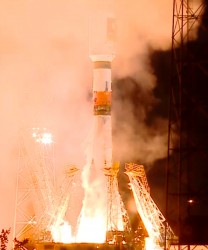
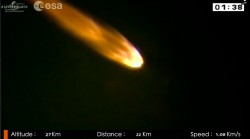
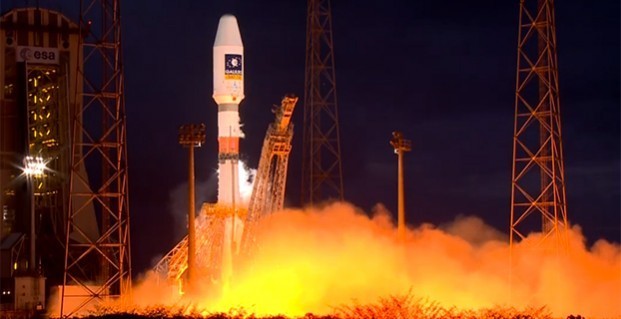
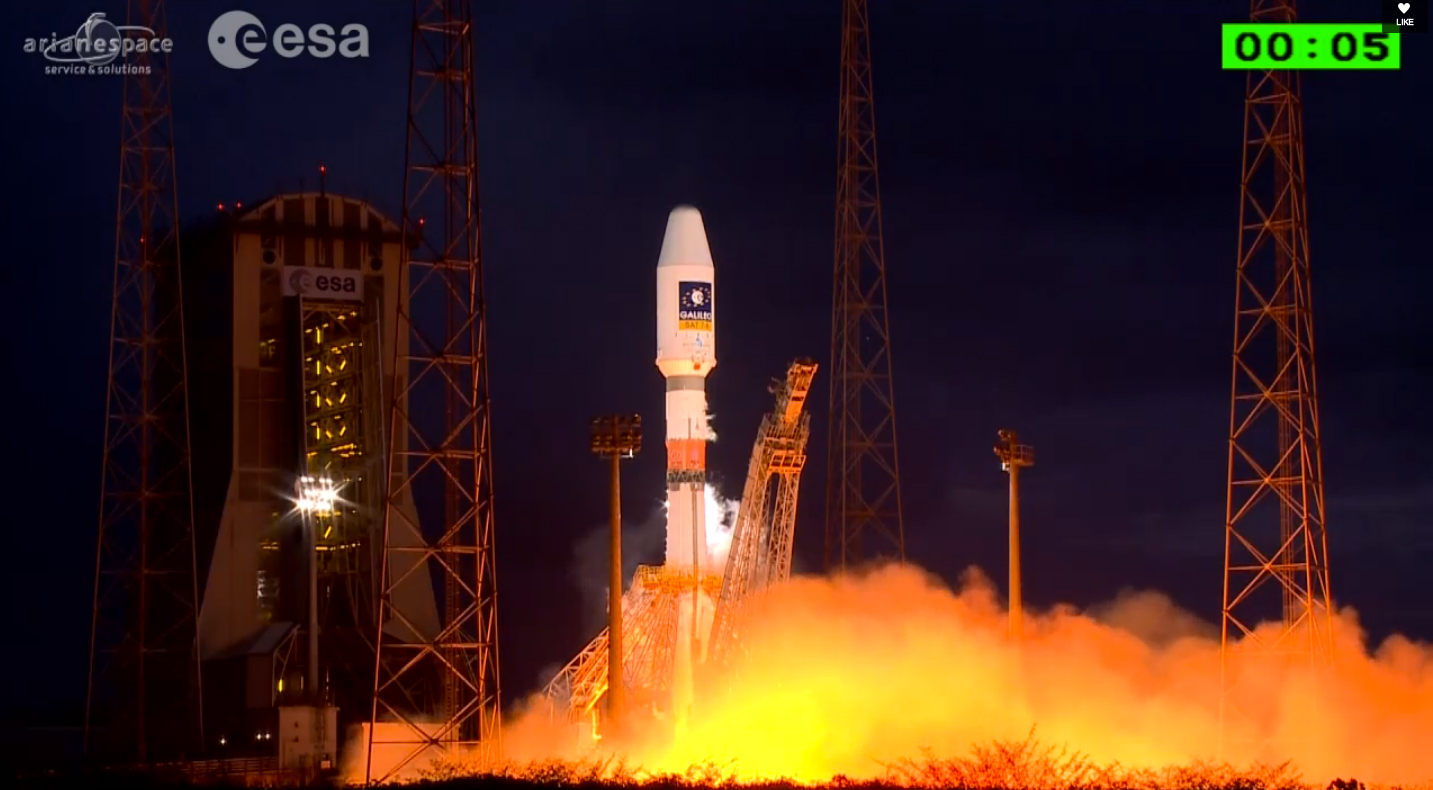
    Galileo 7 and 8 were launched into orbit on time today. (Screenshot of ESA/Arianespace livestream feed.)
    Galileo 7 and 8 were launched into orbit on time today. (Screenshot of ESA/Arianespace livestream feed.)

    UPDATE: The two Galileo satellites are confirmed separated from their Soyuz Fregat upper stage into 22,522 altitude orbit right on schedule, according to ESA. Both are in their planned orbits.


    Two more Galileo satellites were successfully launched today from Europe’s Spaceport in French Guiana. The seventh and eighth Galileo satellites were lifted aloft on time at 21:46:18 GMT (22:46:18 CET) atop a Soyuz ST-B rocket.

    The first three stages of the Soyuz rocket are delivering the Galileo satellites and their Fregat upper stage into low orbit. Then the reignitable Fregat, as much a spacecraft as a rocket stage, will take over the task of hauling the satellites higher through a pair of burns. The satellites will be released in opposite directions by their dispenser once they reach their set 22,522 kilometer-altitude orbit 3 hours, 47 minutes, 57 seconds after launch.

    The launch is designated VS11 in Arianespace’s numbering system. Flight VS11’s passengers — built by OHB System, with Surrey Satellite Technology Ltd. supplying the navigation payloads — are the third and fourth Full Operational Capability (FOC) satellites in the Galileo program, which is creating a European-operated space-based navigation system.

    The European Commission is managing and funding Galileo’s FOC phase, during which the network’s complete operational and ground infrastructure will be deployed. The European Space Agency has been delegated as the design and procurement agent on the commission’s behalf.

    Watch a replay of the launch here:

  • Salvage in Space: Galileo Satellites Recovered

    In August 2014, they were considered lost: Two Galileo satellites ended in the wrong orbit after their launch by a Soyuz from Kourou, French Guiana. Now the two satellites have been recovered and should be able to fulfill, at least partially, their mission, according to the ESA (the European Space Agency) — a situation made possible by the extended Galileo team, ESA and agency partners.

  • BeiDou Launch Expected Monday

    News courtesy of the CANSPACE Listserv.

    The launch of the next BeiDou satellite is predicted to occur at about 13:45 UTC on Monday, March 30.

    The new BeiDou satellite would be the fifth GNSS satellite planned for launch by the end of the month, joining GPS Block IIF-9 (launched Wednesday), Galileo 7 and 8 (planned for launch Friday) and IRNSS-D (planned for launch Saturday, March 28).

  • Watch Friday’s Launch of Galileo 7 and 8

    Watch Friday’s Launch of Galileo 7 and 8

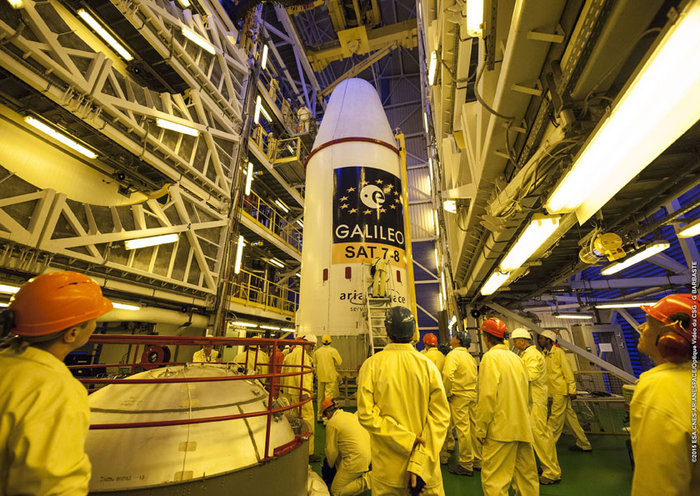
    The upper composite containing the seventh and eighth Galileo satellites attached to their dispenser atop the Fregat upper stage inside the launcher fairing was hauled up the mobile launch tower then attached to the first three stages of its Soyuz ST-B launcher on March 24. (Photo courtesy of ESA)
    The upper composite containing the seventh and eighth Galileo satellites attached to their dispenser atop the Fregat upper stage inside the launcher fairing was hauled up the mobile launch tower then attached to the first three stages of its Soyuz ST-B launcher on March 24. (Photo courtesy of ESA)

    The seventh and eighth Galileo satellites are scheduled for launch Friday, March 27, at 21:46:18 GMT (22:46:18 CET) atop a Soyuz ST-B rocket from Europe’s Spaceport in French Guiana. Streaming starts at 21:24 GMT (22:24 CET) at the European Space Agency website.

    The first three stages of the Soyuz rocket will take the Galileo satellites and their Fregat upper stage into low orbit. Then the reignitable Fregat, as much a spacecraft as a rocket stage, will take over the task of hauling the satellites higher through a pair of burns. The satellites will be released in opposite directions by their dispenser once they reach their set 22,522 kilometer-altitude orbit 3 hours, 47 minutes, 57 seconds after launch.

    The webstream will cover the launch and orbital insertion in two parts. The first part begins at 21:24 GMT (22:24 CET) and ends at 22:19 GMT (23:24 CET). The second part begins at 01:22 GMT (02:22 CET) and ends at 02:17 GMT (03:17 CET).

  • GPS IIF-9 Successfully Lifts Off from Cape Canaveral

    GPS IIF-9 Successfully Lifts Off from Cape Canaveral

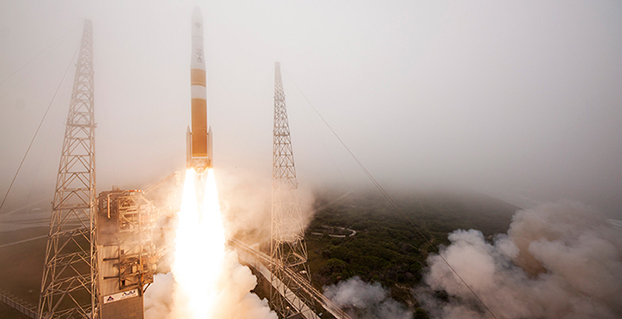
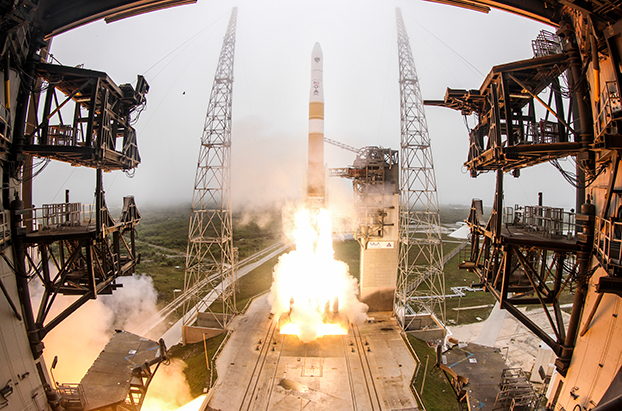
    Photo credit: ULA.
    Photo credit: ULA.

    UPDATE: The GPS satellite has been deployed by the Delta IV rocket, completing today’s launch. The deployment occcurred as scheduled about 3 hours after launch.


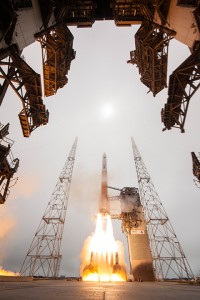
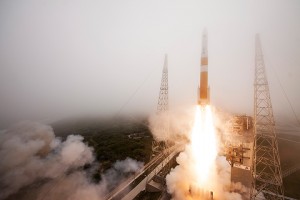
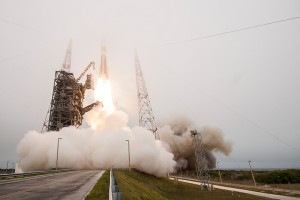
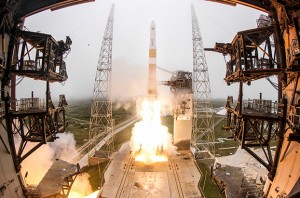
    The U.S. Air Force’s ninth GPS Block IIF satellite (GPS IIF-9) launched on time Wednesday at 2:36 p.m. EDT (1836 GMT) from Space Launch Complex 37 at Cape Canaveral Air Force Station, Fla.

    The GPS IIF-9 rode aboard a United Launch Alliance (ULA) Delta IV rocket, which has been the workhorse of the GPS fleet for successful launches.

    GPS IIF-9 is one of the next-generation GPS satellites, incorporating various improvements to provide greater accuracy, increased signals, and enhanced performance for users.

    The Air Force and the 45th Space Wing supported the successful launch of the ULA rocket. This launch is the fourth ULA launch this year and the 95th launch since the company was formed in December 2006.

    GPS IIF-9 launched aboard a Delta IV Medium-plus (4,2) Evolved Expendable Launch Vehicle, using a single ULA common booster core powered by an Aerojet Rocketdyne RS-68 main engine, along with two ATK GEM 60 solid rocket motors. The upper stage was powered by an Aerojet Rocketdyne RL10B-2 engine with the satellite encapsulated in a four-meter diameter composite payload fairing.

    GPS Launch Workhorse. The launch marks the 29th Delta IV launch and the 57th operational GPS satellite to launch on a ULA or heritage launch vehicle. Delta IV has delivered numerous satellites for the National Reconnaissance Office (NRO), as well as GPS satellites for the Air Force and weather satellites for NASA, according to a ULA media release.

    “Many thought the Delta IV and GPS days were long gone, but the recent questions concerning reliable and proven launch vehicles have brought them back online, so to speak, for GPS,” said GPS World Defense Editor Don Jewell. The upcoming (April 27) 20-year milestone for GPS space vehicles on orbit translates to approximately 500 orbital years just for the IIR and IIF constellations alone,” Jewell said. “The IIAs may account for that many orbital hours as well. Quite a record, and something of which the U.S. Air Force (USAF) and all the companies involved should be very proud.”

    Yet Another USAF Success. Jewell points out that this is another successful government launch in a long string of successive launches, without a failure. “It is by far the most successful launch record ever put together by any nation or government. No other space-faring nation even comes close. The U.S. Air Force and all the players should be proud of all these records and more, plus we have one more GPS asset on orbit, providing GPS signals to the world and all they enable, courtesy of the USAF.”

    “I’m elated with today’s successful launch, the GPS constellation remains healthy, strong and robust and in over 20 years since initial operational capability, GPS has never failed to deliver on its global positioning, navigation, and timing commitments,” said Brig. Gen. Cooley, director of Space and Missile Systems Center’s Global Positioning Systems Directorate.

    “Each new generation of GPS satellites provides enhanced capability over the prior generations, and has delivered reliable performance demonstrating our commitment that GPS remain the Gold Standard space-based positioning, navigation, and timing service for the future,” Cooley said. “Thanks to the men and women of SMC, the 45th, 50th 310th Space Wings, Boeing, United Launch Alliance, the Aerospace Corporation, GPS IIF and Delta IV launch teams, the GPS IIF program continues to meet GPS enterprise needs.”

    45th Space Wing. Once again, the 45th Space Wing team of military personnel, government civilians, and contractors provided support to the ULA launch of the Air Force Space Command mission, including weather forecasts, launch and range operations, security, safety, and public affairs.

    The 45th Space Wing commander was both proud and pleased with the team she works with on the Eastern Range. “First, let me offer my heartiest congratulations to ULA, Boeing, Space and Missile Systems Center, the Launch Systems Directorate, the Global Positioning Systems Directorate, and all the mission partners who made this happen,” said Brig. Gen. Nina Armagno, 45th Space Wing commander, who also served as the Launch Decision Authority.

    “What a treat — and an honor — it is to know that we have played such a significant part in something that we will celebrate two decades of helping people all around the world,” Armagno said. “Every GPS satellite since the program’s inception has been launched right here from Cape Canaveral Air Force Station safely and reliably by members of the 45th Space Wing.

    “And that’s because we continue to take a ‘one launch at a time’ mentality and focus on our number one priority — 100 percent Mission Success. I am so very proud to be part of Team Patrick-Cape.”

    Constellation Changes. The Air Force Second Space Operations Squadron (2 SOPS) indicates that IIF-9, SVN-71/PRN-26, will replace SVN-35 (currently being operated in Launch, Anomaly Resolution and Disposal Operations [LADO]) in the B plane slot 1F. SVN-35 is a GPS 2A-22 satellite originally launched aboard Delta 222 on August 30, 1993. It was decommissioned from active service in 2009, remained in orbit as a spare, then was set usable again in 2011. The satellite was declared unusable in 2013 and decommissioned a second time, reports Spaceflight Now. It was tested again in 2014.

    SVN-38/PRN-08 will be taken out of the operational constellation prior to SVN-71 payload initialization and sent to LADO. PRN-08 will be assigned to SVN-49 in May and set to test, but is tentatively scheduled for assignment to IIF-10 to launch June 16.

    SVN-35, launched on August 30, 1993, has been in a residual status since March 2013 in an expanded node slot in the B plane and successfully served 21.5 years, 14.0 years beyond its designed service life, due to the diligent efforts of the men and women of the U.S. Air Force.

    SVN-51 is still in a re-phase journey from E1 (GLAN=146 °) to an auxiliary node at E7 (GLAN=60.7 °) scheduled to arrive sometime this summer.

  • Galileo Satellites Enclosed for Friday’s Launch

    Galileo Satellites Enclosed for Friday’s Launch

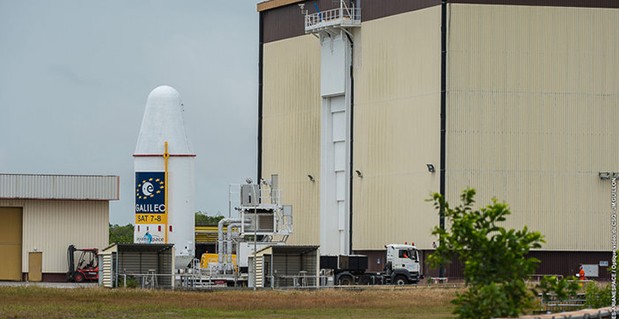
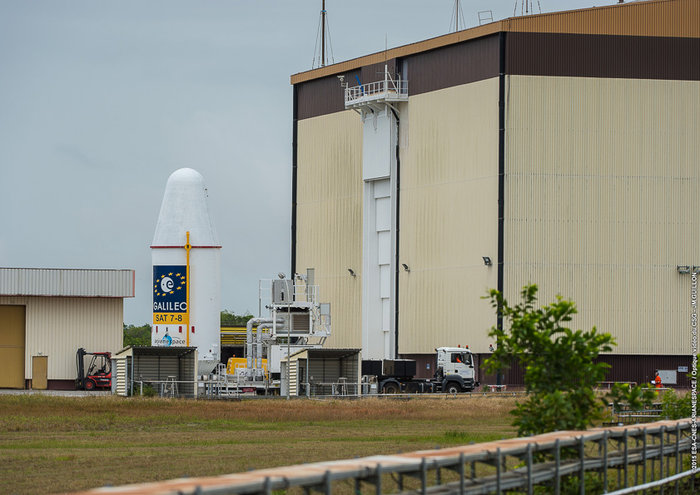
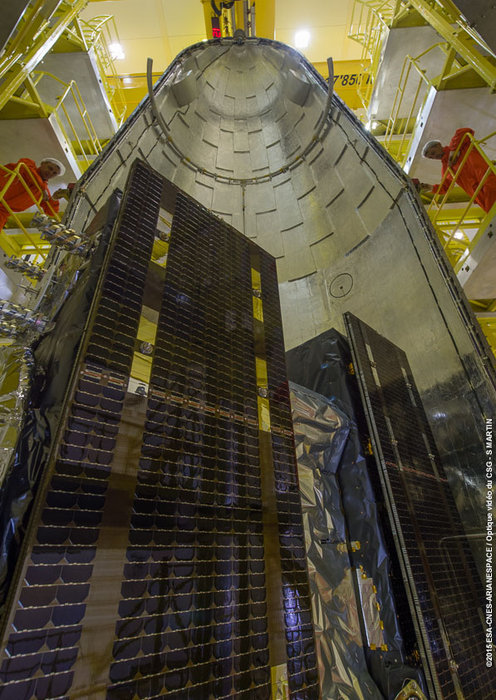
    The upper composite, containing the seventh and eighth Galileo satellites attached to their dispenser atop the Fregat upper stage inside the launcher fairing, being moved from the S3B building to the Soyuz launch site of Europe’s Spaceport on March 24. Photo: European Space Agency
    The upper composite, containing the seventh and eighth Galileo satellites attached to their dispenser atop the Fregat upper stage inside the launcher fairing, being moved from the S3B building to the Soyuz launch site of Europe’s Spaceport on March 24. Photo: European Space Agency

    By the European Space Agency

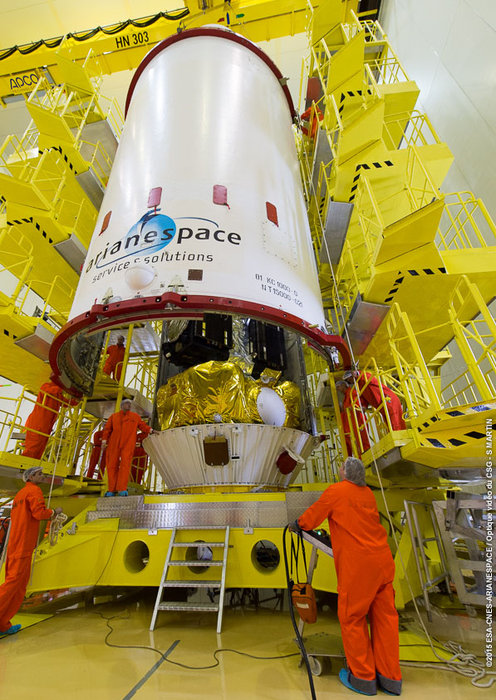
    The seventh and eighth Galileo satellites attached to their dispenser atop the Fregat upper stage being enclosed within their Soyuz launcher fairing on March 20. Photo: European Space Agency
    The seventh and eighth Galileo satellites attached to their dispenser atop the Fregat upper stage being enclosed within their Soyuz launcher fairing on March 20. Photo: European Space Agency

    Thousands of engineers have worked on the seventh and eighth navigation satellites of Europe’s Galileo constellation in recent years, but last Friday marked the very last time the spacecraft were glimpsed by human eyes.

    The team from ESA and builders OHB in the S3B building of Europe’s Spaceport in French Guiana looked on as the focus of their work disappeared from view.

    The pair of satellites — already resting atop their Fregat upper stage and attached to their dispenser — was enclosed within the halves of the Soyuz rocket’s protective fairing.

    This unit was moved yesterday to the launch site, where it will be lifted atop the first three stages of the Soyuz ST-B to complete the vehicle for Friday’s launch.

    Last week saw the two satellites being fuelled in the Spaceport’s S5A preparation hall and then brought together atop the dispenser that will support them during the rigours of ascent.

    The dispenser’s final task is to release them in opposite directions once their 22 522 km-altitude orbit is reached. The satellites themselves will then gradually lower themselves to their working 22 322 km orbit.

    After fueling, the satellites plus dispenser were moved to the S3B processing building, where their Fregat was already fueled and waiting.

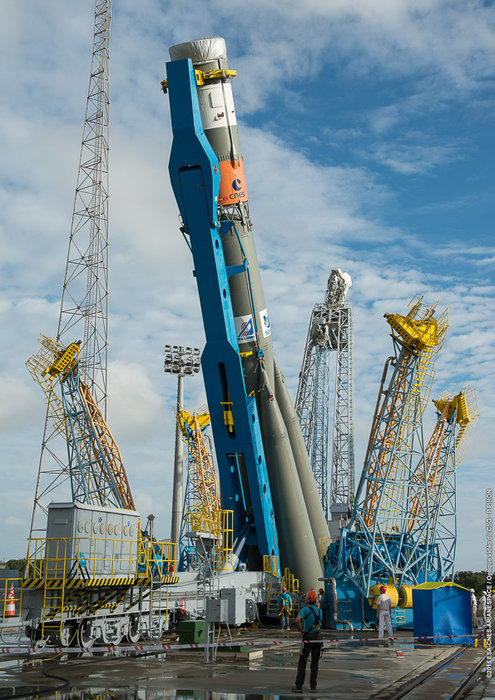
    The first three stages of the seventh and eighth Galileo satellites’ Soyuz ST-B rocket being raised to the vertical on the launch pad at Europe’s Spaceport in French Guiana, awaiting the addition of the ‘upper composite’ containing the Galileo satellites plus the Fregat upper stage enclosed within the Soyuz fairing. Photo: European Space Agency
    The first three stages of the seventh and eighth Galileo satellites’ Soyuz ST-B rocket being raised to the vertical on the launch pad at Europe’s Spaceport in French Guiana, awaiting the addition of the ‘upper composite’ containing the Galileo satellites plus the Fregat upper stage enclosed within the Soyuz fairing. Photo: European Space Agency

    The reignitable Fregat is as much a spacecraft as a rocket stage. Once the Soyuz reaches low orbit, Fregat will take over the task of hauling the satellites higher through a pair of burns.

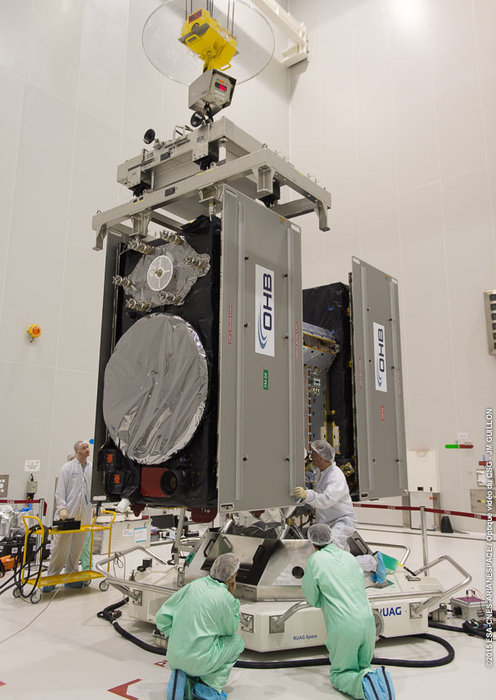
    The two Galileos and their dispenser altogether weigh more than one and a half tonnes, so the attachment operation took place with great care and precision.

    Then the fairing halves were slowly slid into place around them and closed. Enclosed in this way, the satellites will be protected from the harsh slipstream and vibration of the first few moments of launch, when the Soyuz is still travelling through the thickest layers of atmosphere.

    The fairing is due to be ejected 3 min 29 sec after liftoff. Until liftoff, the satellites remain connected to the outside world via power and data links, allowing ESA’s Galileo team keep a check on their battery charging and the health of their atomic clocks.

    The satellites stay switched off during launch, and will be activated automatically on separation from the dispenser.

    Launch is due at 21:46:18 GMT (22:46:18 CET, 18:46:18 local time) on 27 March. The satellites are scheduled for release upon reaching their set orbit 3 h 47 min 57 sec after launch.

    The seventh and eighth Galileo satellites were enclosed within their protective Soyuz fairing on Friday, 20 March 2015, ahead of their launch a week later. Photo: European Space Agency
    The seventh and eighth Galileo satellites were enclosed within their protective Soyuz fairing on Friday, 20 March 2015, ahead of their launch a week later. Photo: European Space Agency
  • Soyuz in the Launch Zone for March 27 Galileo Launch

    The seventh and eighth Galileo satellites being fitted together onto the dispenser, March 16-17. (Photo courtesy of ESA)
    The seventh and eighth Galileo satellites being fitted together onto the dispenser, March 16-17. (Photo courtesy of ESA)

    The Soyuz for Arianespace’s next medium-lift mission is in the launch zone at French Guiana, where it stands ready to receive the two spacecraft passengers that will join Europe’s Galileo global navigation satellite system.

    Applying procedures that have been followed since the workhorse Soyuz launcher inaugurated the Space Age, the basic three-stage vehicle for Arianespace’s March 27 flight emerged today from its MIK integration building in the Spaceport’s northwestern sector.

    Riding horizontally on a transporter/erector rail car, Soyuz was transferred to the ELS launch zone — which was followed by its erection to the vertical orientation and positioning over the launch pad, suspended in place by four large support arms.

    With this step completed, all was ready for the purpose-built 53-meter-tall mobile gantry to be moved into position around the launcher — a phase of the processing in French Guiana that differs from Soyuz operations at Baikonur Cosmodrome in Kazakhstan and Plesetsk Cosmodrome in Russia.  The gantry provides a protected environment for installation of the “upper composite,” which consists of the two Galileo spacecraft, the Soyuz’ Fregat upper stage and a two-piece protective payload fairing.

    The March 27 launch — designed VS11 in Arianespace’s numbering system — is scheduled to lift off at precisely 6:46:18 p.m. local time in French Guiana, with its Galileo satellite passengers to be deployed during a flight lasting approximately 3 hrs., 47 min. Total payload lift performance is estimated at 1,597 kg., which includes a combined mass of some 1,428 kg. for the two spacecraft.

    Flight VS11’s passengers — built by OHB System, with Surrey Satellite Technology Ltd. supplying their navigation payloads — are the third and fourth Full Operational Capability (FOC) satellites in the Galileo program, which is creating a European-operated space-based navigation system.

    The European Commission is managing and funding Galileo’s FOC phase, during which the network’s complete operational and ground infrastructure will be deployed. The European Space Agency has been delegated as the design and procurement agent on the Commission’s behalf.

    Follow Arianespace’s launch activity at: www.arianespace.com.

  • Launch of IRNSS-1D Now Set for Saturday

    The launch of India’s fourth Navigation Satellite, IRNSS-1D, is now scheduled for 17:19 IST (11:49 UTC) on Saturday, March 28, from Satish Dhawan Space Centre, Sriharikota.

    The launch was previously scheduled for March 9, then postponed until March 29 to replace a faulty telemetry transmitter on the satellite, according to the Indian Space Research Organization.

    IRNSS-1D will be fourth in the seven-spacecraft Indian Regional Navigation Satellite System constellation. It will be flown into space in the Indian Polar Satellite Launch Vehicle-XL.

    The space segment of the IRNSS consists of seven satellites: three  in geostationary orbit and four in inclined geosynchronous orbit. The ground segment consists of infrastructure for controlling, tracking and other facilities. The entire IRNSS constellation of seven satellites is planned to be completed by 2015.

    Both IRNSS-1A and 1B are functioning satisfactorily from their designated geosynchronous orbital positions. The first three satellites in the IRNSS series were launched from Sriharikota on July 1, 2013, April 4, 2014, and October 16, 2014. IRNSS-1E and IRNSS-1F satellites are expected to be launched before year end.
    IRNSS is an independent regional navigation satellite system designed to provide position information in the Indian region and 1,500 kilometers around the Indian mainland. IRNSS will provide two types of service: Standard Positioning Services (SPS) — provided to all users — and Restricted Services (RS), provided to authorized users.
     

  • GPS IIF-9 Launches Wednesday

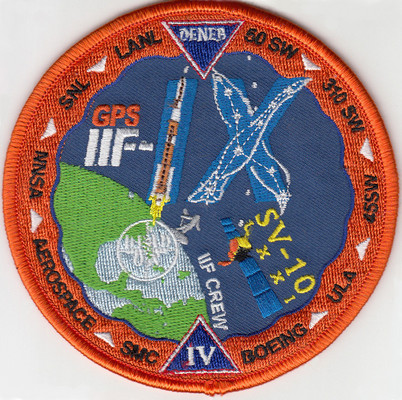
    A patch for the upcoming GPS satellite launch shows a stylized GPS IIF-IX formed by the Delta 4 rocket and the constellation Cygnus (Latinized Greek word for swan). The satellite is nicknamed Deneb, the brightest star in the constellation and one of the 57 stars used in celestial navigation. The patch also indicates that the satellite is SV-10 and 73. The SV-10 identifier may indicate that it is the 10th satellite off the IIF assembly line.
    A patch for the upcoming GPS satellite launch shows a stylized GPS IIF-IX formed by the Delta 4 rocket and the constellation Cygnus (Latinized Greek word for swan). The satellite is nicknamed Deneb, the brightest star in the constellation and one of the 57 stars used in celestial navigation. The patch also indicates that the satellite is SV-10 and 71. The SV-10 identifier may indicate that it is the 10th satellite off the IIF assembly line. Photo: US Air Force

    The U.S. Air Force’s ninth GPS Block IIF satellite (GPS IIF-9) is set to launch Wednesday at 2:36 p.m. EDT (1836 GMT)  from Space Launch Complex 37 at Cape Canaveral Air Force Station, Fla.

    The GPS IIF-9 will ride aboard a United Launch Alliance (ULA) Delta IV rocket, marking the 29th Delta IV launch and the 57th operational GPS satellite to launch on a ULA or heritage launch vehicle.

    To follow the launch countdown, dial the ULA launch hotline at 1-877-852-4321 or join the conversation on Facebook, Twitter or Instagram. A Delta IV GPS IIF-9 Mission Overview Brochure is available here. See images of the launch preparations here.

    GPS IIF-9 is one of the next-generation GPS satellites, incorporating various improvements to provide greater accuracy, increased signals, and enhanced performance for users.

    UPDATE (April 17, 2015): The USCG Navigation Center has confirmed that SV-10 was launched instead of SV-9. The Air Force discovered a problem with SV-9, so it was pulled from the launch and SV-10 was sent into orbit in its place. SV-9 will be used in a future launch.

    Constellation Changes. The Air Force Second Space Operations Squadron (2 SOPS) indicates that IIF-9, SVN-71/PRN-26, will replace SVN-35 (currently being operated in Launch, Anomaly Resolution and Disposal Operations [LADO]) in the B plane slot 1F. SVN-38/PRN-08 will be taken out of the operational constellation prior to SVN-71 payload initialization and sent to LADO. PRN-08 will be assigned to SVN-49 in May and set to test, but is tentatively scheduled for assignment to IIF-10 to launch June 16. SVN-35, launched on August 30, 1993, has been in a residual status since March 2013 in an expanded node slot in the B plane and successfully served 21.5 years, 14.0 years beyond its designed service life, due to the diligent efforts of the men and women of the U.S. Air Force. SVN-51 is still in a re-phase journey from E1 (GLAN=146 °) to an auxiliary node at E7 (GLAN=60.7 °) scheduled to arrive sometime this summer.  

  • BeiDou Launch May Take Place This Month

    BeiDou Launch May Take Place This Month

    News courtesy of the CANSPACE Listserv.


    The first satellite in the BeiDou Phase 3 expansion could be launched by the end of March. Apparently, a BeiDou satellite has been shipped to the Xichang launch site, and tracking ships have left port for the open ocean.

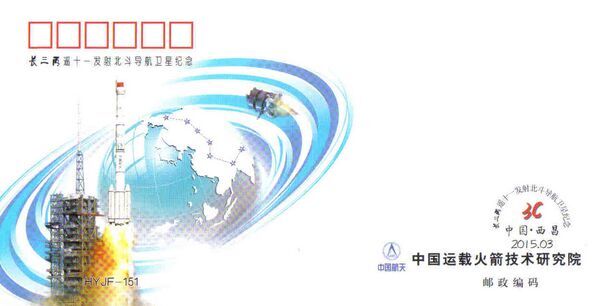
    Also, a philatelic first-day cover for the launch (a common Chinese practice) has been issued with a March 2015 inscription. This is likely a launch of a medium Earth orbit (MEO) satellite.

    The new BeiDou satellite would be the fifth GNSS satellite planned for launch by the end of the month, joining GPS Block IIF-9 (March 25), Galileo 7 and 8 (March 27) and IRNSS-D (March 29).

    Below is the first-day cover.

    BDS-3_M1_launch_cover.jpg
    First-day stamp cover for BeiDou commemorates an upcoming MEO launch. Photo: BeiDou


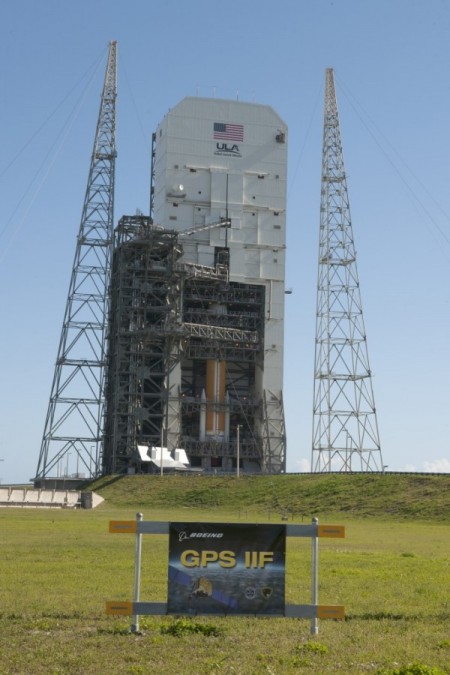
  • GPS IIF-9 Prepped for March 25 Launch

    GPS IIF-9 Prepped for March 25 Launch

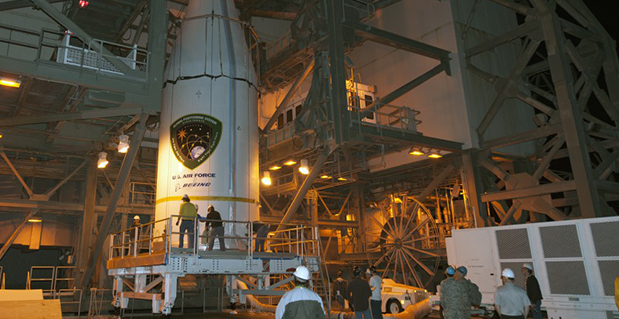
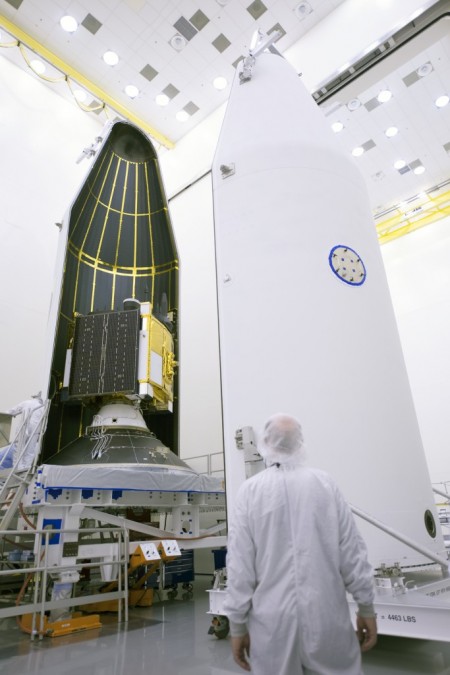
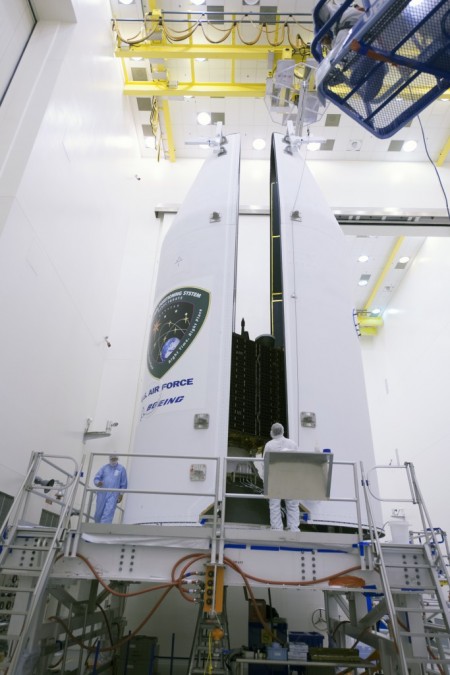
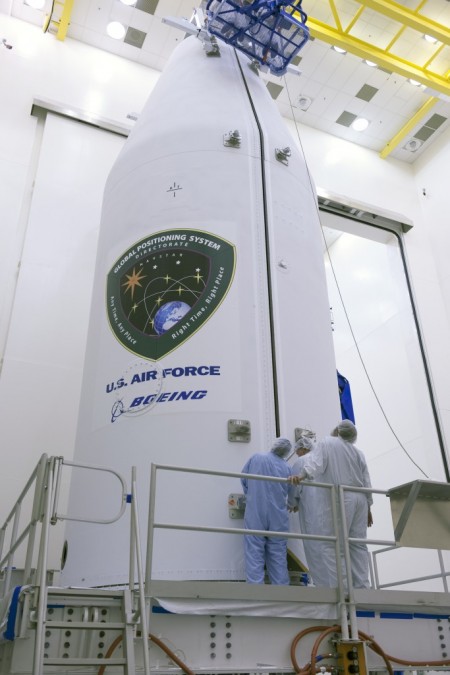
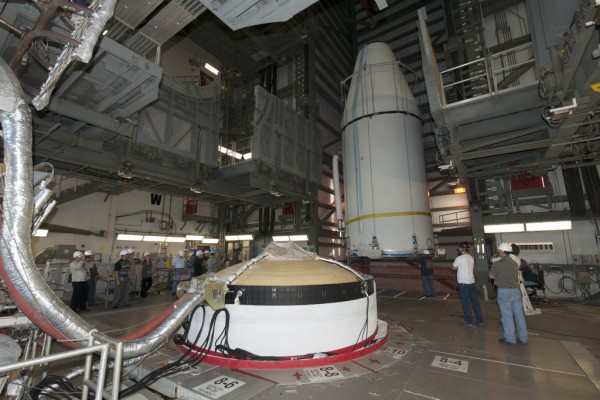
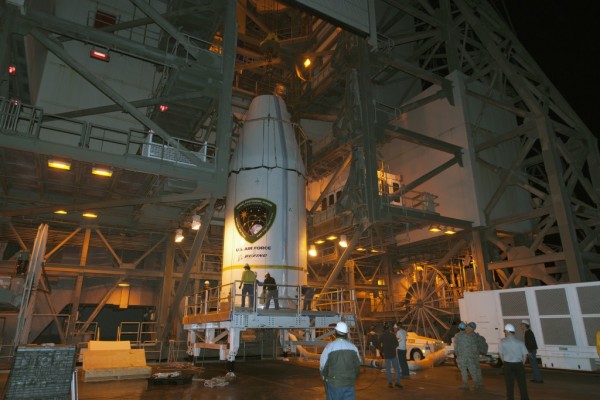
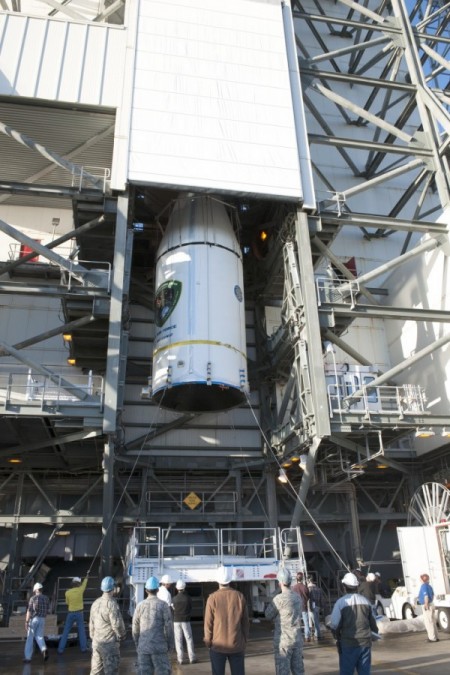
    The U.S. Air Force’s ninth GPS Block IIF satellite (GPS IIF-9) has been encapsulated in the Delta IV rocket’s four-meter-diameter nose cone at a processing facility, and moved to the launch pad at Space Launch Complex 37 for mating to its booster inside the mobile service tower.

    Launch is scheduled for March 25 at 2:36 p.m. EDT (1836 GMT) from Space Launch Complex 37 at Cape Canaveral Air Force Station, Fla. GPS IIF-9 marks the 29th Delta IV launch and the 57th operational GPS satellite to launch on a ULA or heritage launch vehicle.

    To follow the launch countdown, dial the ULA launch hotline at 1-877-852-4321 or join the conversation on Facebook, Twitter or Instagram.

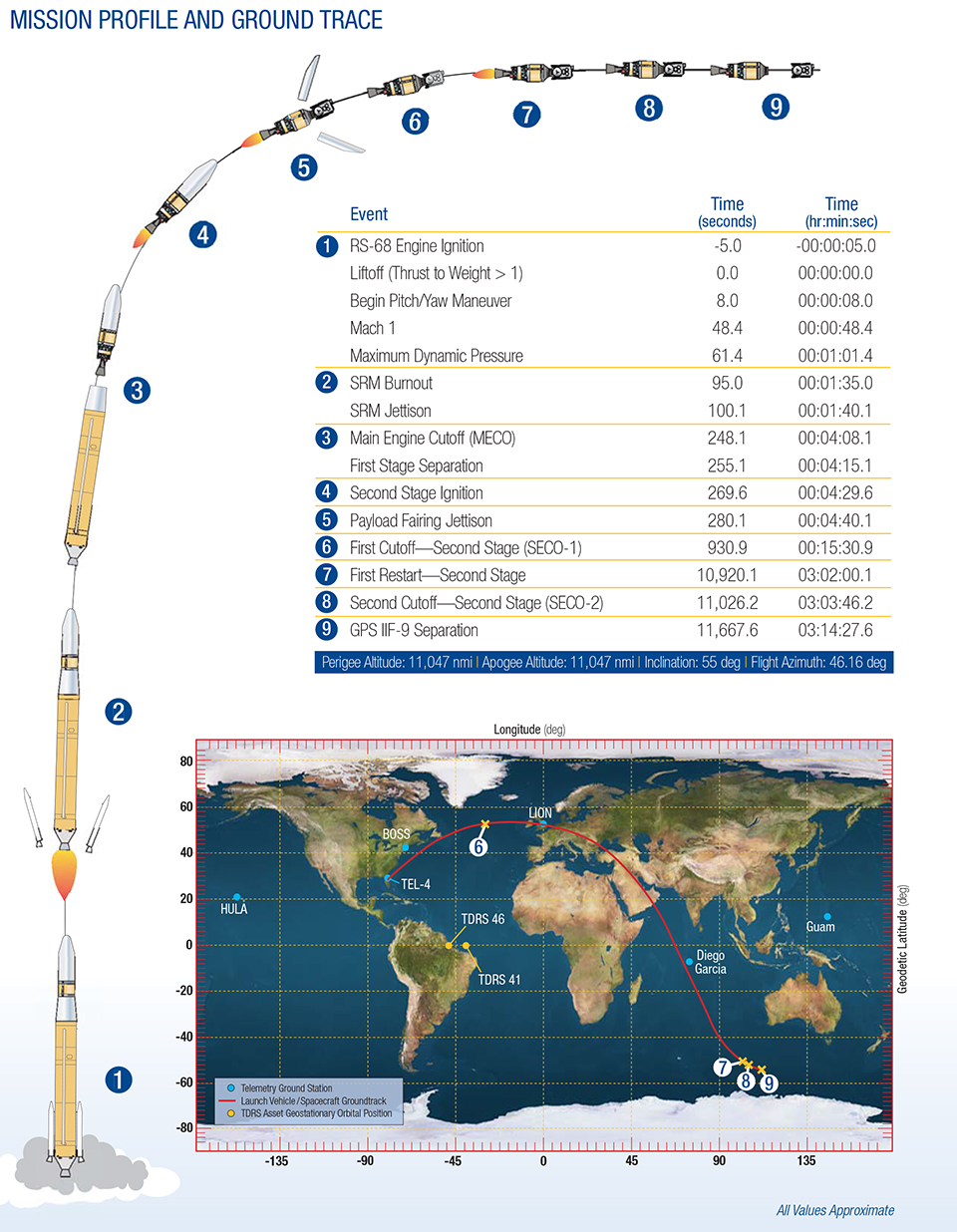
    GPS IIF-9 Mission profile and ground trace. (courtesy of ULA)
    The planned GPS IIF-9 launch trajectory, event times, and ground trace. (courtesy of ULA)

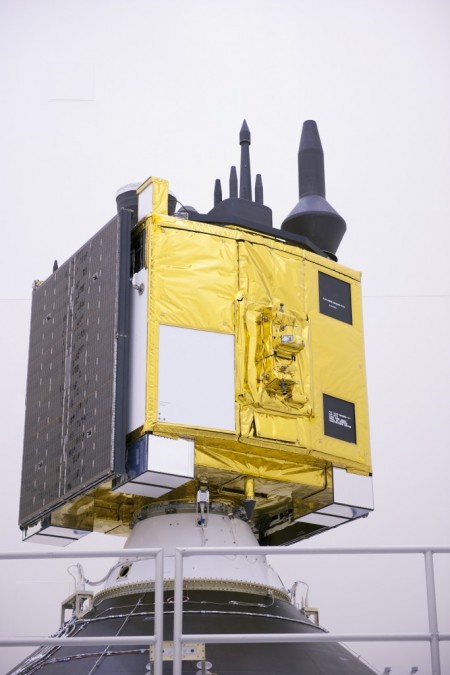
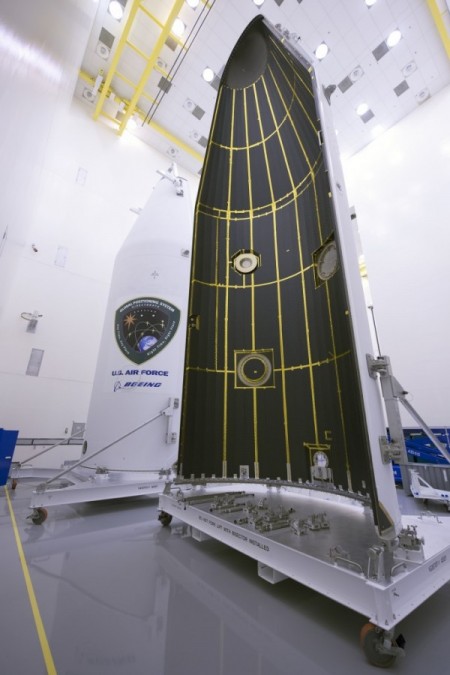
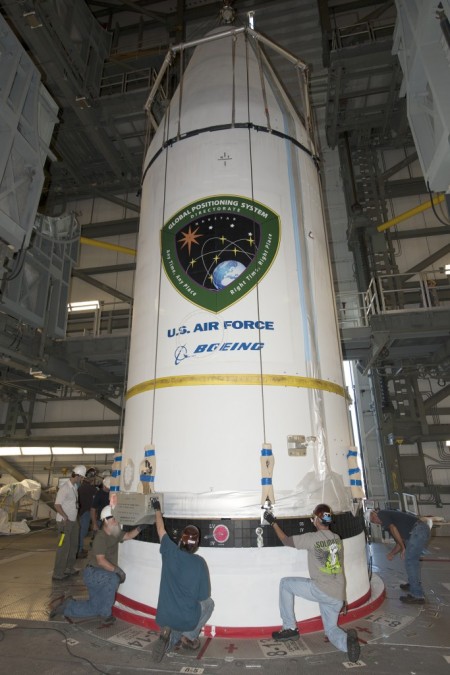
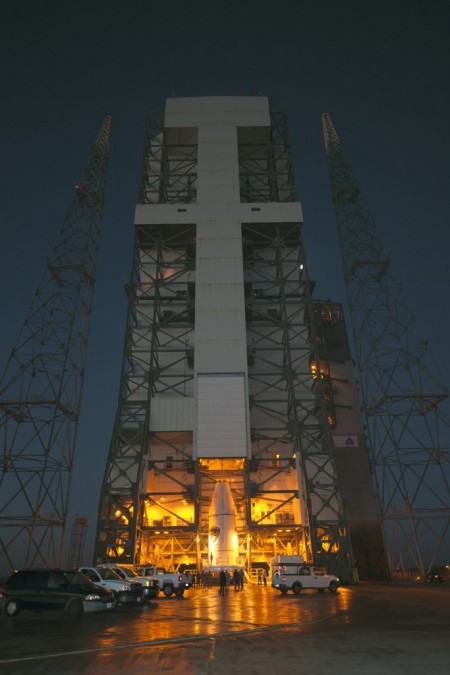
    Below are photos from the United Launch Alliance, which supplies the Delta IV rocket and serves as the launch provider for the GPS Directorate.