Tag: satellite launch

  • India preps for navigation satellite launch

    India preps for navigation satellite launch

    Another navigation satellite is scheduled to join India’s NavIC constellation this week. IRNSS-1I is on the launchpad, with launch set for Thursday, April 12, at 04:04 (IST), according to the India Space Research Organization (ISRO).

    The 32-hour countdown activity began at 20:04 IST on Tuesday. Follow the launch here.

    All three rubidium atomic clocks on IRNSS-1A have failed. A replacement satellite, IRNSS-1H, was launched on Aug. 31, 2017, but was not successfully deployed. This satellite, IRNSS-1I, is also a replacement satellite for IRNSS-1A.

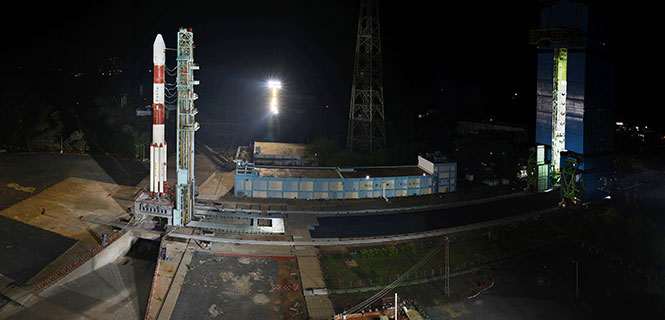
    Satellite IRNSS-1I will be the eighth satellite to join the NavIC constellation (formerly IRNSS). The satellite will be launched from First Launch Pad (FLP) of SDSC SHAR, Sriharikota, using India’s Polar Satellite Launch Vehicle (PSLV), in its 43rd flight (PSLV-C41) in XL configuration. The XL configuration is being used for the 20th time.

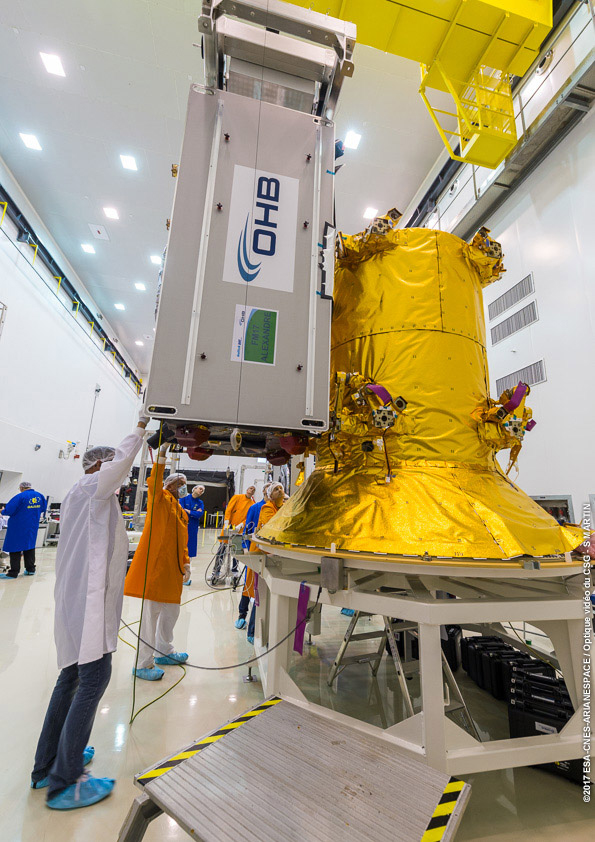
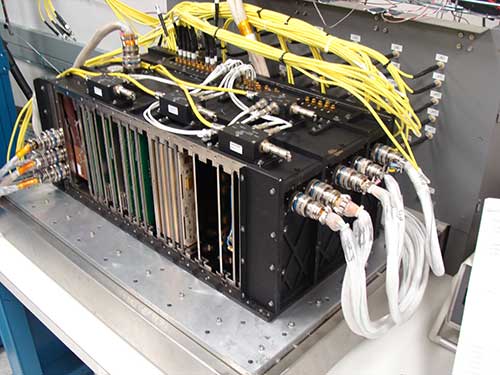
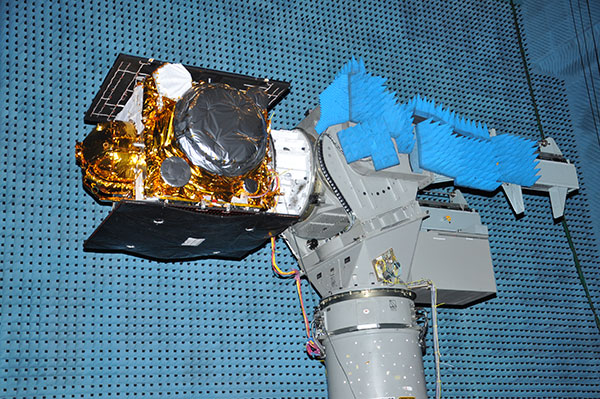
    IRNSS-1I undergoes testing at the Compact Antenna Test Facility. (Photo: ISRO)

    IRNSS-1I’s predecessors — IRNSS-1A, 1B, 1C, 1D, 1E, 1F and 1G — were launched by PSLV-C22, PSLV-C24, PSLV-C26, PSLV-C27, PSLV-C31, PSLV-C32 and PSLV-C33 in July 2013, April 2014, October 2014, March 2015, January 2016, March 2016 and April 2016 respectively. See the GPS World Almanac for details on the constellation.

    Like all other IRNSS satellites, IRNSS-1I also has a lift-off mass of 1425 kilograms. The configuration of IRNSS-1I is similar to IRNSS-1A, 1B, 1C, 1D, 1E, 1F and 1G.

    Like its IRNSS predecessors, IRNSS-1I also carries two types of payloads — navigation and ranging. The navigation payload of IRNSS-1I transmits signals for the determination of position, velocity and time. This payload is operating in L5-band and S-band. Rubidium atomic clocks are part of the navigation payload of the satellite.

    The ranging payload of IRNSS-1I consists of a C-band transponder, which facilitates accurate determination of the range of the satellite. It also carries Corner Cube Retro Reflectors for LASER Ranging.

  • Two more BeiDou-3 satellites launched for global coverage by 2020

    Two more BeiDou-3 satellites launched for global coverage by 2020

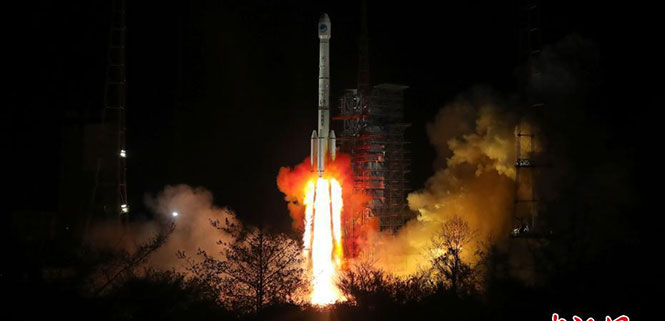
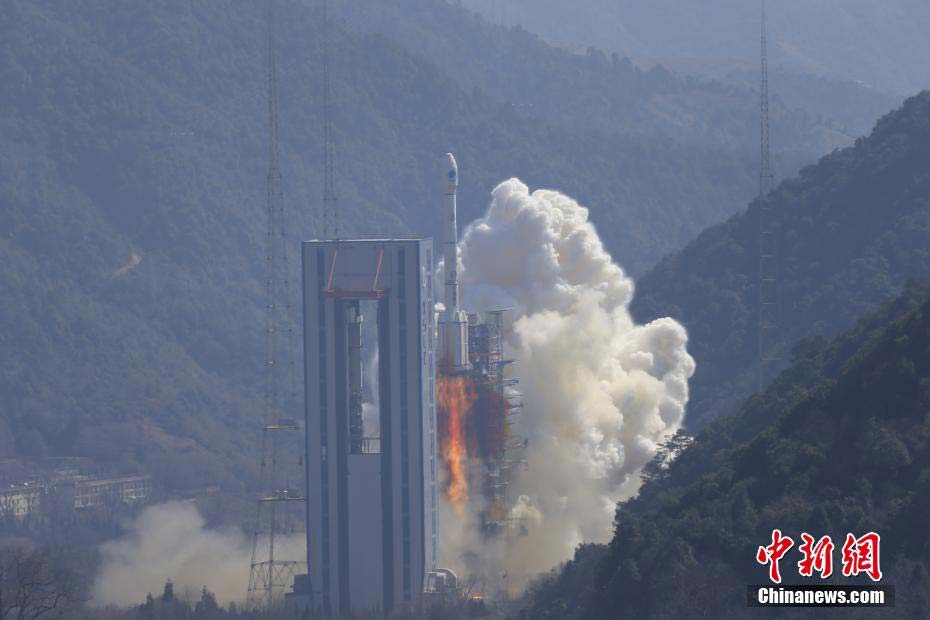
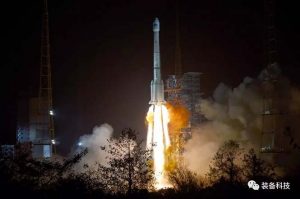
    China launched two more Beidou-3 satellites March 30, the seventh and eighth of the third phase of the Beidou system.

    Launch via Long March 3B rocket took place at 01:56 Beijing time Friday (17:56 UTC Thursday) from the Xichang Satellite Launch Centre, reports gbtimes.com.

    The satellites join six others orbiting at 21,000 kilometers above the Earth. BeiDou-3 is designed to expand Beidou navigation, positioning and timing services from regional to global coverage by 2020.

    The satellites were inserted into medium Earth orbits by a Yuanzheng-1 upper stage more than three hours after launch, with CASC, China’s main aerospace contractor, then confirming success.

    The satellites were developed by the Innovation Academy for Microsatellites at the Chinese Academy of Sciences (CAS), while the China Academy of Launch Vehicle Technology (CALT) under CASC provided the Long March 3B launch vehicle.

    A Long March rocket carries a pair of BeiDou-3 satellites to medium Earth orbit on March 30, 2018. (Photo: Liang Keyan/Xinhua)
  • The System: Accuracy from LEO birds improves

    The System: Accuracy from LEO birds improves

    Accuracy from LEO Birds Improves

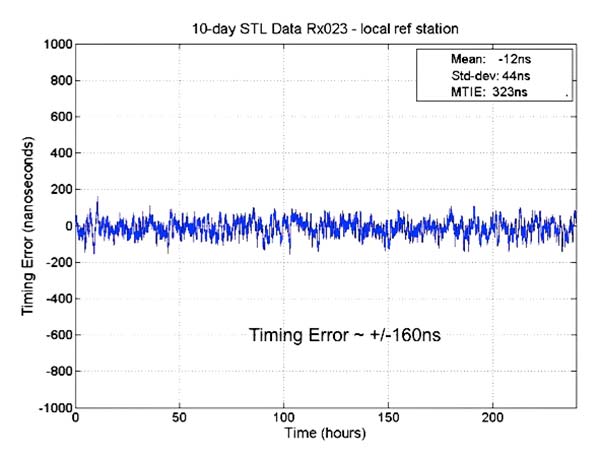
    Results from new tests of the Satellite Time and Location (STL) service, using equipment configurations with a differential source and with a more accurate OCXO clock, show timing accuracy of 160 nanoseconds.

    The STL service uses a signal from the low-Earth orbit (LEO) Iridium constellation.

    In 2016, Satelles demonstrated sub-microsecond timing using a stand-alone TCXO-based receiver (see “Innovation: Navigation from LEO,” July 2017 GPS World).

    New testing employed three different configurations of equipment, services and environment, including a Stanford Research Systems (SRS) rubidium vapor frequency reference, based on the PRS10 module, and a Satelles Evaluation Kit (EVK2) STL receiver, comprising a Maxim RF chip, Xylinx Spartan-3 FPGA, TI dual-core DSP chip, and internal OCXO (oven-controlled crystal oscillator) or external clock.

    Parameters and equipment for the three tests are:

    1. Optimal. Outdoor antenna, Rubidium clock powered on for months prior to data collection, receiver configured in static mode with a known location, and high-quality antenna.
    2. Sub-optimal. Indoor antenna, Rubidium clock powered on six hours prior to data collection, receiver configured in static mode with an unknown location, and low-quality antenna.
    3. Three independent receivers collecting data, receiver on-board OCXO, indoor antenna, receiver configured in static mode with an unknown location, low-quality antenna. Tests performed: 10 days with no local reference station running; 10 days with local reference station, 20-kilometers away from test receivers, providing timing corrections to STL ground segment.

    See Figure 1 for more extensive test results. Also see a previous article.

    FIGURE 1. OCXO timing result with base station.

    The 66-satellite Iridium LEO constellation transmits overlapping spot beams, which provide location-specific data that changes every few seconds.


    Air Force Issues GPS III Follow-on Contract

    The U.S. Air Force Space Command released its request for proposals to build 22 new GPS III satellites, called the GPS III Follow-On Phase 2 contract.

    The contract will be awarded to a single bidder, and has an estimated dollar value of $10 billion including all options.

    Phase 2 is planned as a single, predominantly fixed-price incentive-type contract awarded via full and open competition for production of 22 GPS III satellites. Deadline for proposals is April 16. Delivery of the first satellite is to be in 2026.

    Phase 1 contracts awarded in May 2016 to Boeing, Northrop Grumman and Lockheed Martin (builder of the first 10 GPS III satellites) “determined that viable, low-risk, high-confidence sources exist to conduct a full and open competition for Phase 2, the production of 22 GPS III SVs [space vehicles] starting in the FY19 timeframe.”


    BeiDou’s Long March

    On Feb. 12, BeiDou-3 28 and 29 were launched into medium-Earth orbits, following the launch of a pair of BeiDou satellites on Jan. 11. The satellites form part of a third phase of BeiDou deployment, taking BeiDou coverage from regional to covering the countries along the Belt and Road initiative by the end of 2018, and global by 2020.

    Stay up-to-date with GPS World’s “Upcoming GNSS Satellite Launches” table.

  • China launches another pair of BeiDou-3 satellites

    China launches another pair of BeiDou-3 satellites

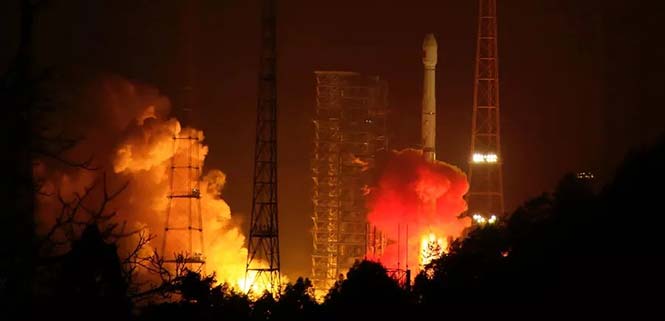
    China continues to update the BeiDou navigation satellite system. On Feb. 12, two more navigation and positioning satellites were launched into medium Earth orbits, following the successful launch of a pair of BeiDou satellites on Jan. 11.

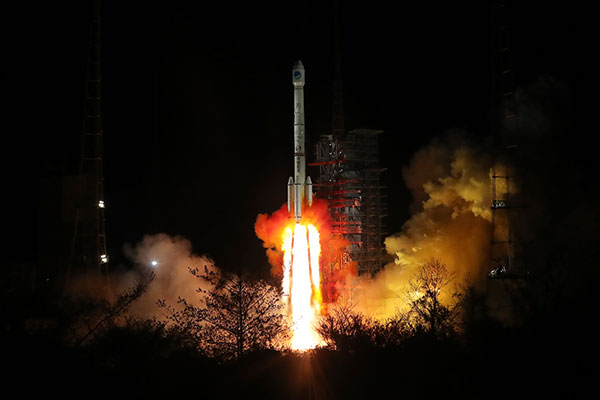
    A Long March 3B rocket with a Yuanzheng-1 upper stage lifted off from the Xichang Satellite Launch Center, Sichuan Province, at 13:03 local time (05:03 UTC), according to gbtimes.com.


    Stay up-to-date with our Upcoming GNSS Satellite Launches table, maintained by Richard Langley.


    The launch had been set for the same window on Feb. 10, but was delayed by the visit of Chinese president Xi Jinping to the launch site.

    Success of the mission was confirmed four hours after launch, following insertion of the satellites into their intended orbits, around 21,000 kilometers above the Earth.

    The newly launched pair are BeiDou-3 28 and 29. The satellites are part of a third phase of Beidou deployment, which will take Beidou coverage from regional to covering the countries along the Belt and Road initiative by the end of 2018, and global by 2020.

    According to Nasaspaceflight.com, the satellites are using a new bus featuring a phased array antenna for navigation signals and a laser retroreflector, with a launch mass of 1,014 kg.

    The accuracy, stability and signal strength of the Beidou-3 satellites is improved over previous versions by developments in atomic clocks, laser communications and inter-satellite links.

    The Long March 3B/YZ-1 carrying Beidou satellites 28 and 29 lifts off from Xichang Satellite Launch Centre at 13:03 local time on Feb. 12. (Photo: CNS)
  • The System: China launches BeiDou-3 twins

    China launches BeiDou-3 twins

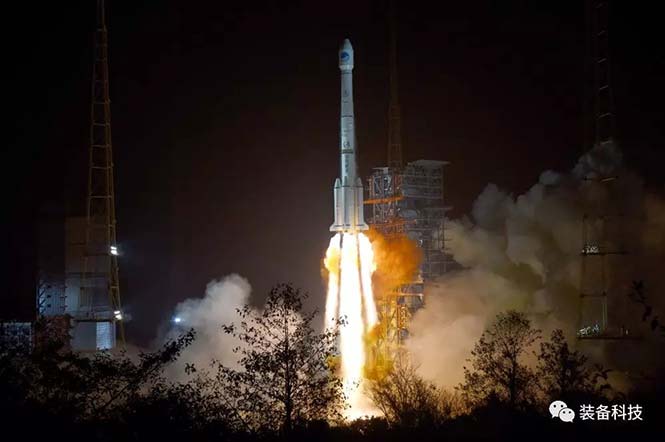
    China launched two BeiDou-3 navigation satellites into space on Jan. 12 as part of efforts to enable its BeiDou system to provide navigation and positioning services to countries along the Belt and Road by the end of 2018. The Belt and Road Initiative aims to create the world’s largest platform for economic cooperation, encompassing China, Southeast Asia, South Asia, Central and Western Asia, Middle East and Africa, and Central and Eastern Europe.
    The twin satellites are coded MEO-7 and MEO-8, the 26th and 27th satellites in the BeiDou Navigation Satellite System. They are based on a newly developed dedicated satellite bus that features a phased-array antenna for navigation signals and a laser retro-reflector. They each weigh about one metric ton, and both have two deployable solar arrays; their design life is 12 years. This was the first BeiDou launch in 2018, which will see an intensive further launch schedule throughout the year.

    In his December 2017 “Directions” article in GPS World, Changfeng Yang, chief BeiDou system architect, wrote that “Eighteen BD-3 MEO satellites and one BD-3 GEO satellite will be launched by around the end of 2018. Upon the deployment of those 19 satellites, BD-3 will possess the initial operational capability and serve the countries along the Belt and Road.”

    This would bring the constellation to an initial operational capability before the end of this year. China targets completion of the fully operational global system in 2020.

    B1C, B2A Control Document. On the Chinese part of the BeiDou website, there is now an English version of the Test ICD for the B1C and B2a signals. The link to the website item is www.beidou.gov.cn/icdb1cb2abeta.html, and the actual document is at www.beidou.gov.cn/attach/beidou/2333234155.pdf.


    More interference potential from another tower set

    Satellite operator Iridium asked the Federal Communications Commission (FCC) in April 2017 to modify its license to add a new class of ground stations called Certus for expanded terrestrial, maritime and aeronautical operations.

    Iridium’s 66-satellite constellation provides, in addition to mobile communications signals, the Satelles time and location service: microsecond timing accuracy and 20- to 50-meter unaided position accuracy worldwide (see the “Innovation” column, July 2017 GPS World).

    GPSIA. The GPS Innovation Alliance (GPSIA) commented in September, “GPSIA seeks to ensure that radio navigation satellite service (RNSS) receivers operating in the 1559–1610 MHz band are adequately protected from out-of-band emissions (OOBE) generated from the new Certus mobile Earth station (MES) terminals that will operate on the second-generation Iridium satellite system.

    “GPSIA and Iridium are actively engaged in constructive discussions regarding the adequacy of that protection, but no final resolution has yet been reached. [….]

    “In the unlikely event that GPSIA is unable to reach an agreement with Iridium, it asks the commission to impose limitations on the operation of Certus terminal devices to protect GPS/RNSS operations in the 1559–1610 MHz band at a level equivalent to what terrestrial terminals in the same and other frequency ranges provide at –95 dBW/MHz.”

    Hexagon. Hexagon, the parent company of GPS manufacturer NovAtel, commented on Jan. 8, “Certain statements in the modification application regarding output power and amount of terminals to be deployed cause great concern regarding the unimpeded operation of radio navigation satellite service (RNSS) receivers. The application does not include enough information to simulate the impact properly.

    “Hexagon politely requests that the FCC will exercise the same due diligence [as] during previous modification applications close to the RNSS bands (for example docket 11-109) and establish a technical working group or a similar testing process that ensures unimpeded coexistence of the modified Iridium terminals with the established RNSS systems.”

    Documents related to the case can be found here, on the FCC International Bureau website.


    Galileo security center moves to Spain

    The Galileo Security Monitoring Centre (GSMC) for the European Union’s Galileo satellite system will move from the United Kingdom to Madrid, Spain, as a result of Brexit.

    The center, not yet fully operational, is expected to grow to a staff of as many as 30. It controls access to the satellite system and provides around-the-clock monitoring when the main security center near Paris is offline.

    The GSMC is operated by the European GNSS Agency. It is one of a number of EU institutions leaving the UK as a result of the 2016 referendum vote.

    Spain has another of the fundamental centers of the program, the Loyola de Palacio GNSS Service Center, also in Madrid.
  • China launches twin BeiDou-3 navigation satellites

    China launches twin BeiDou-3 navigation satellites

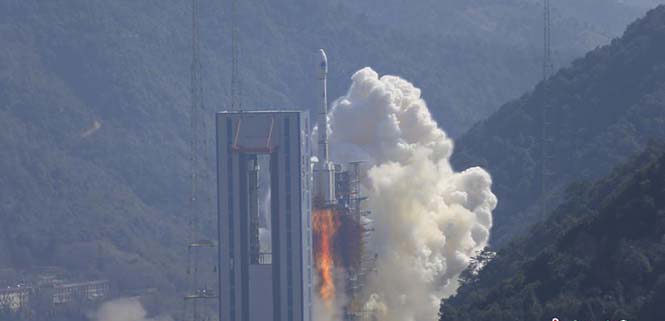
    China launched twin BeiDou-3 navigation satellites into space on Jan. 12 as part of efforts to enable its BeiDou system to provide navigation and positioning services to countries along the Belt and Road by the end of 2018, reports XinhuaNet.

    China’s Belt and Road Initiative aims to create the world’s largest platform for economic cooperation.

    The pair of satellites was launched at 7:18 a.m. local time aboard a Long March-3B carrier rocket from Xichang Satellite Launch Center in southwest China’s Sichuan Province. The twin satellites are coded the 26th and 27th satellites in the BeiDou Navigation Satellite System.

    This is the first launch of the BeiDou satellites in 2018, which will see intensive launches throughout the year.

    The twin satellites are coded MEO-7 and MEO-8, the 26th and 27th satellites in the BeiDou Navigation Satellite System.

  • ComNav Technology tracks third-generation Beidou signals

    Following the successful launch of the third-generation BeiDou satellites, ComNav Technology has been tracking and decoding the BD-3 satellite signals to provide better high-precision positioning services in the near future.

    As the world’s fourth navigation satellite system, the construction of BeiDou satellite navigation network consists of three steps: experimental period from 2000 to 2003, regional coverage by 2012, and global reach by 2020.

    On Nov. 5, 2017, the launch of two third-generation BeiDou satellites indicates that China has begun to upgrade its BeiDou Navigation Satellite System with global-coverage capabilities, according to the China Satellite Navigation Office.

    The new-generation BeiDou satellites feature better accuracy, stability and signal clarity, thanks to improvements in laser communication devices, intersatellite links and atomic clocks.

    Moreover, 18 third-generation BeiDou satellites will be launched by the end of 2018 to cover all nations involved in the Belt and Road Initiative. By the end of 2020, worldwide high-precision GNSS users are able to benefit from global reach of the third-generation Beidou system.

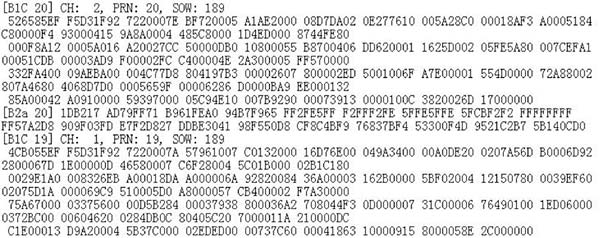
    ComNav Technology has tracked and decoded the latest format BD-3 satellite signals: B1C and B2a from satellites Beidou-19 and Beidou-20.

    The following figure shows the BD-3 No. 20 signal tracked with the SinoGNSS K708 GNSS OEM board.

    Chart: ComNav
    Chart: ComNav

    According to ComNav, with its strong R&D capability in high-precision GNSS, ComNav Technology plans to grow with the third-generation BeiDou navigation system to bring better positioning services all the time.

  • Four more Galileo satellites launched into orbit

    Four more Galileo satellites launched into orbit

    Updated with additional details and reaction.

    Liftoff of Ariane 5 Flight VA240 from Europe’s Spaceport in Kourou took place at 18:36 UTC on Dec. 12, 2017, carrying Galileo satellites 19–22. (Photo: ESA)

    On Dec. 12, four more Galileo satellites headed into space to join the navigation constellation. Galileos 19–22 lifted off aboard an Ariane 5 rocket from Europe’s Spaceport in Kourou, French Guiana, at 18:36 UTC (19:36 CET, 15:36 local time).

    After today’s successful launch, only one more launch remains before the Galileo constellation is complete and delivering global coverage.

    Separation of the upper stage occurred about nine minutes after liftoff, followed by the first firing of the upper stage.

    The first pair of 715-kg satellites was released almost 3 hours 36 minutes after liftoff, while the second pair separated 20 minutes later.

    They were released into their target 22,922 km-altitude orbit by the dispenser atop the Ariane 5 upper stage. In the coming days, this quartet will be steered into their final working orbits. There, they will begin around six months of tests — performed by the European Global Navigation Satellite System Agency (GSA) — to check they are ready to join the working Galileo constellation.

    This mission brings the Galileo system to 22 satellites. Initial Services began almost a year ago, on Dec. 15, 2016.

    “Today’s launch is another great achievement, taking us within one step of completing the constellation,” remarked Jan Wörner, ESA’s director general.

    “It is a great achievement of our industrial partners OHB (DE) and SSTL (GB) for the satellites, as well as Thales-Alenia-Space (FR, IT) and Airbus Defense and Space (GB, FR) for the ground segment and all their subcontractors throughout Europe, that Europe now has a formidable global satellite navigation system with remarkable performance.”

    Paul Verhoef, ESA’s director of navigation, added, “ESA is the design agent, system engineer and procurement agent of Galileo on behalf of the European Commission. Galileo is now an operating reality, so, in July, operational oversight of the system was passed to the GSA.

    “Accordingly, GSA took control of these satellites as soon as they separated from their launcher, with ESA maintaining an advisory role. This productive partnership will continue with the next Galileo launch, by Ariane 5 in mid-2018.

    “Meanwhile, ESA is also working with the European Commission and GSA on dedicated research and development efforts and system design to begin the procurement of the Galileo Second Generation, along with other future navigation technologies.”

    Next year’s launch of another quartet will bring the 24‑satellite Galileo constellation to the point of completion, plus two orbital spares.

    Keep up to date here.

  • Galileo satellites atop rocket for Dec. 12 flight

    News from the European Space Agency

    Europe’s next four Galileo navigation satellites are in place atop the Ariane 5, ready to be launched Dec. 12.

    Liftoff from Europe’s Spaceport in Kourou, French Guiana is scheduled for 18:36 GMT (19:36 CET, 15:36 local time), carrying Galileo satellites 19–22.

    Four Galileo satellites seen before being encapsulated by the protective payload fairing on Dec. 7, completing the Ariane 5 for flight VA240, scheduled for Dec. 12.

    Completion of Galileo’s Ariane 5 rocket took place in the Spaceport’s Final Assembly Building, following the arrival there of the quartet of satellites, already attached to the dispenser that will hold them in position during launch, then release them into their target 22 922 km-altitude orbit

    Next, the satellites plus dispenser were placed atop the Ariane 5’s upper stage, after which the 14 m-long protective fairing was lowered over the Galileos — the last time they will be seen by human eyes. This fairing will protect them from the onrushing atmosphere during ascent.

    The next step will be Monday’s rollout to the launch zone.

    This mission will bring the Galileo system to 22 satellites. Initial Services began almost a year ago, on Dec. 15, 2016.

    Next year’s launch of another quartet will bring the constellation of 24 satellites to completion, plus two orbital spares.

    Galileo is Europe’s civil global satellite navigation system. It will allow users worldwide to know their exact position in time and space with great precision and reliability.

  • System of Systems: GPS III update, Galileo launch

    System of Systems: GPS III update, Galileo launch

    GPS III 11+

    The fully digital Mission Data Unit (MDU) will create precise civil and military timing navigation signals for GPS III satellites 11 and beyond. Pictured here is the advanced MDU on navigation payloads being delivered for GPS III Space Vehicles 1-10. (Photo: Harris)
    The fully digital Mission Data Unit (MDU) will create precise civil and military timing navigation signals for GPS III satellites 11 and beyond. Pictured here is the advanced MDU on navigation payloads being delivered for GPS III Space Vehicles 1-10. (Photo: Harris)

    Harris Corporation has completed development of its fully digital Mission Data Unit (MDU), which is at the heart of its navigation payload for Lockheed Martin’s GPS III satellites 11 and beyond.

    Harris has already provided MDUs and payloads for the first 10 GPS III satellites, one of which has been declared “available for launch” and the second of which is completing its testing. The other eight are in various stages of production assembly.

    Payloads for the satellites 11 and beyond bring further signal transmit capabilities, providing more powerful signals and built-in flexibility to adapt to advances in GPS technology, as well as future changes in mission needs.

    The new MDU that will eventually go aboard satellites 11+ “can be upgraded incrementally over its mission life due to built-in adaptability,” according to a Harris spokesperson.

    GPS OCX

    The U.S. Air Force Space and Missile Systems Center has accepted delivery of the GPS Next Generation Operational Control System (GPS OCX) Launch and Checkout System (LCS) baseline from Raytheon Intelligence and Information Systems. Also known as Block 0, LCS demonstrated conformance through test and analysis with all contractual requirements. OCX Block 0 is the foundation for Raytheon’s future Block 1 and 2 delivery, slated for 2022.

    LCS is a fully modernized cyber-secure ground system complete with the computing hardware, operations center workstations, and mission application software necessary to launch the first GPS III satellite into orbit and perform initial on-orbit testing.

    Mission operators are now using LCS in the GPS III Mission Readiness Campaign. The ground system is performing as expected during the rehearsals and space vehicle checkout.

    Galileo Launch

    A Galileo satellite undergoes its fit-check validation at the Spaceport. Flight VA240. (Photo: ESA/Arianespace)
    A Galileo satellite undergoes its fit-check validation at the Spaceport. Flight VA240. (Photo: ESA/Arianespace)

    As this magazine goes to press, final preparations are underway for Galileo’s quadruple launch on Dec. 12. The Ariane 5 rocket has completed its build-up at the spaceport in French Guiana and is moving toward payload integration and rollout to the launch zone.

    The four 700-kilo (1,543-pound) Full Operational Capability (FOC) Galileo satellites have completed checkout and one-by-one verification of their interfaces with the payload dispenser that will release them once aloft in mid-Earth orbit.

    They will soon take on fuel for their long space life.

    The satellites will bring the Galileo operating constellation to 22, and, according to the European Space Agency, this will provide availability to users anywhere in the world for a high-quality position solution — defined as position dilution of precision (PDOP) less than 5 — 99.8% of the time.

  • Ariane 5 with Galileo satellites ready for Dec. 12 mission

    The Ariane 5 for Arianespace’s Dec. 12 year-ending flight for 2017 has completed its initial build-up at the Spaceport in French Guiana — where preparations also are moving ahead with four satellite passengers that will further expand Europe’s Galileo global navigation system once in their final orbit.

    During activity in the Spaceport’s Launcher Integration Building, the heavy-lift vehicle for Arianespace Flight VA240 underwent the assembly process that began by mating its two solid propellant strap-on boosters with the main cryogenic stage.

    The next step was integration of Ariane 5’s vehicle equipment bay, which serves as the launch vehicle’s “brain,” providing autonomous control during the various mission phases.

    It was followed by installation of the EPS storable propellant stage, powered by a reignitable engine that operates with MMH and N2O4 propellants. This differentiates the Ariane 5 ES configuration from Arianespace’s Ariane 5 ECA version, which has a cryogenic upper stage and typically is used on Arianespace missions with telecommunications satellites to geostationary transfer orbits.

    Inside the Spaceport’s Launcher Integration Building, Ariane 5’s vehicle equipment bay is lowered atop the core cryogenic stage on Flight VA240’s Ariane 5 ES launcher version (left and center). This cleared the way for installation of the launch vehicle’s EPS storable propellant upper stage (right). (Photo: Arianespace)

    After completion of verifications and systems checkout by production prime contractor ArianeGroup, the Ariane 5 ES launch vehicle will be moved to the Spaceport’s Final Assembly Building for payload integration and readiness for rollout to the launch zone.

    The mission’s ongoing payload preparations — including checkout and fit-check procedure for each of the four Galileo satellites — took place inside the Spaceport’s S1A processing facility. This involved a one-by-one verification of the spacecraft’s interface with the payload dispenser that will release them into circular orbit during the mission.

    After the fit-check procedure in the S1A facility, the four satellites were readied for transfer to the S5 payload preparation center for fueling.

    For Ariane 5’s Dec. 12 mission, the heavy-lift vehicle will carry its quartet of Galileo satellites (weighing 700 kg. each) and their dispenser system for a medium-Earth orbit deployment.

    A Galileo satellite undergoes its fit-check validation at the Spaceport. Flight VA240. (Photo: Arianespace)

    Galileo is the European initiative to develop a global satellite navigation system. Under civilian control, it will offer a guaranteed, high-precision positioning service. As a European Union-funded program, the Galileo constellation will comprise 24 operational satellites, along with spares.

    Overall responsibility for Galileo’s management and implementation is held by the European Commission, with the European Space Agency assigned design and development of the new generation of systems and infrastructure.

    Ariane 5’s mission with the four Galileo spacecraft will close out a busy year of launch activity for Arianespace, which has performed 10 missions from French Guiana so far in 2017 — all of which were successful. The flights to date involved five launches of the heavy-lift Ariane 5, two with the medium Soyuz and three with the lightweight Vega.

  • Galileo satellites readied for Dec. 12 launch

    Galileo satellites readied for Dec. 12 launch

    News from the European Space Agency

    Three of the four Galileo satellites 19-22 undergoing fit check with the dispenser that will support them during their Dec. 12 flight into orbit. (Photo: ESA)

    Europe’s next four Galileo navigation satellites and the Ariane 5 rocket due to lift them into orbit are being readied for their Dec. 12 launch from Europe’s Spaceport in Kourou, French Guiana.

    On Nov. 21, Galileo satellites 19–22 were declared ready for flight, along with their Ariane. Combined activities are now under way, culminating in the satellites meeting their rocket in the Final Assembly Building.

    The satellites were flown in pairs to French Guiana last month. Once safely unboxed in the Spaceport’s cleanroom environment, they were tested to ensure they had suffered no damage during their transatlantic flights.

    The four Galileo satellites mounted on top of a customised Ariane 5 rocket inside the aerodynamic fairing. (Image: ESA)

    Next came their fit check, when they were mechanically and electrically linked one by one to the dispenser that will carry them during their ascent to the target 23,500 km-altitude orbit, before releasing them into space.

    Last Friday saw the satellites filled with enough fuel to fine-tune their orbits and orientation during their projected 12-year working lives. Next, they will be attached to their dispenser together for the final time.

    In parallel, their customised Ariane 5 is being assembled. Two solid-propellant boosters were mated with its main cryogenic stage before the addition of the interstage that carries the electronics to control the vehicle.

    Next came the addition of the storable propellant stage, powered by a reignitable engine, which will deliver the quartet to their target orbit.

    Once fully checked, the Ariane will be moved to the final building for the addition of the satellites atop their dispenser, sealed within their protective fairing.

    This launch will bring the total Galileo constellation to 22, boosting the global availability of navigation signals. Galileo began Initial Services just under a year ago, the first step before full operations, on Dec. 15.

    Galileo’s Ariane 5’s vehicle equipment bay is lowered for installation within the Final Assembly Building of Europe’s Spaceport in French Guiana. Flight VA240 carrying Galileo satellites 19–22 into orbit is scheduled for Dec. 12. (Photo: ESA)