Tag: Septentrio

  • Septentrio to spotlight drone solutions at Esri UC 

    Septentrio-PinPoint-GIS

    Septentrio will showcase its latest GNSS systems and software solutions for GIS professionals at the 2016 Esri User Conference in San Diego, June 28-30, with a special focus on the rapidly growing market for drone-based aerial survey.

    At center stage will be Septentrio’s suite of products designed specifically for aerial surveys. They include the compact AsteRx-m UAS onboard GNSS receiver and GeoTagZ high-accuracy drone positioning software, which is optimized for automatic interface with Esri ARCGis and Drone2Map platforms.

    “Demand for drone imagery is booming in the GIS marketplace as a fast and efficient alternative to ground-based surveys for applications such as mapping, photogrammetry, infrastructure inspection and natural disaster monitoring,” said Neil Vancans, vice president of Septentrio Americas. “To meet that demand, we are bringing to market a range of hardware and software solutions that will make it easier than ever for Esri users to capture, georeference, process and visualize drone-captured imagery.”

    Septentrio is also introducing new firmware for its versatile NR2 GNSS receivers and the PinPoint-GIS utility software for terrestrial applications. NR2 V1.2.0 offers a host of new connectivity features, including direct dial-up, dynamic DNS, base-rover Wi-Fi point-to-point connection and other new features that will streamline field work. PinPoint-GIS has also been enhanced to provide seamless integration with Esri’s Collector for ArcGIS.

    “Septentrio is pioneering the way by which Esri users collect data,” said Gustavo Lopez, product manager at Septentrio. “GeoTagZ and PinPoint-GIS bring more accuracy and flexibility into the field by combining the power of Septentrio’s GNSS products with the user-friendly interface of Collector for ArcGIS. From the air to your own device, you are guaranteed accuracy and reliability in your GNSS positioning by using GeoTagZ to georeference aerial photos and PinPoint-GIS to harness the power of GIS data.”

    Esri User Conference attendees are invited to visit Booth 2633 for a first-hand look at Septentrio’s solutions for the full range of aerial and ground-based GNSS solutions for GIS, including the new-generation APS-3G multi-constellation RTK receiver, which was just introduced to the market.
  • Septentrio expands in Europe by signing new partnership with Innovelec

    Septentrio expands in Europe by signing new partnership with Innovelec

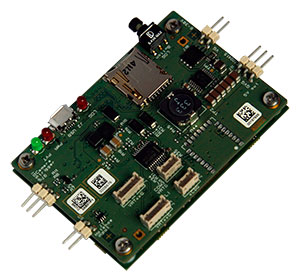
    The AsteRx-m UAS by Septentrio.
    The AsteRx-m UAS by Septentrio.

    Septentrio, a designer and manufacturer of GNSS solutions, has selected Innovelec as an authorized partner for GNSS positioning solutions in the United Kingdom and Europe. The new partnership will enable Septentrio’s products such as AsteRx-m UAS to meet the needs of unmanned aerial systems (UAS) customers in the European market, the company said.

    Based in Hemel Hempstead in Hertfordshire, Innovelec will work directly with Septentrio to offer high-quality strategic services and technical expertise necessary to meet the current and future requirements of GNSS customers in the United Kingdom and UAS customers across Europe to develop new business opportunities in the market.

    Since last year, Septentrio has introduced a new set of products that achieve a new benchmark for accuracy and reliably in GNSS solutions. Innovelec will supply the AsteRx product line — renowned for providing consistent and robust centimeter-level positioning under challenging interference and multipath environments.

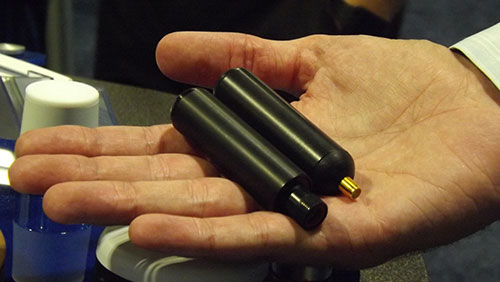
    The AsteRx-m UAS OEM is compact and lightweight module which offers the lowest power consumption on the market at 600 mW. Another product, the AsteRx4, is a robust dual-antenna receiver ready for rapid and straightforward integration into existing workflows or hardware.

    “Septentrio’s AsteRx product line offer unbeatable performance, accuracy and reliability in the most challenging conditions,” said Koen Gutscoven, director of Sales at Septentrio. “Innovelec complement Septentrio’s skills to aid further growth in the UK and European market.”

    “Septentrio presents an exciting opportunity for Innovelec to further develop its significant business within the GNSS market. Flexibility and support in conjunction with our partners have helped Innovelec to grow and it remains a benchmark of our operations,” said Martin Newman, sales director of Innovelec. “Septentrio bring a lot of expertise of the GNSS market to help us develop new sales opportunities and loyal clients for accurate and reliable positioning across the European market. “

  • Septentrio Introduces ‘future proof’ GNSS RTK technology for surveyors

    Septentrio Introduces ‘future proof’ GNSS RTK technology for surveyors

    Image_Altus_APS3G_external_use-W

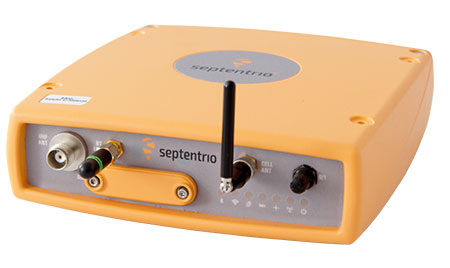
    Septentrio has introduced its next-generation high-precision Altus APS3G real-time kinematic (RTK) receiver, which brings technology only previously available in scientific receivers into the field for professional surveyors.

    The new multi-constellation APS3G addresses major concerns about compatibility with new satellite constellations, as well as interference and jamming, according to Neil Vancans, vice president of Septentrio Americas.

    Built on Septentrio’s AsteRx4 engine, the APS3G tracks all-in-view GPS, GLONASS, BeiDou, IRNSS, SBAS, Galileo and QZSS, including E6/L6, and all other signals known to be available in the medium term.

    The APS3G incorporates Septentrio’s AIM technology with three notch filters for in-band jamming and chirp jammer resistance, ensuring the highest possible levels of accuracy and resilience under all conditions. This technology is proven in Septentrio’s reference station and scientific products, which are acknowledged as technology leaders and deployed by major research institutions all over the world.

    With two hot-swappable batteries, the APS3G provides up to 14 hours of operation without recharging, the longest endurance of any high-precision GNSS receiver in the surveying industry, maximizing uptime in the field.

    The APS3G provides optimum GSM signal reception, as well as a built-in advanced UHF receiver for reliable performance on longer baselines, yielding real-time 25 Hz RTK. It also supports TERRASTAR L-band corrections for sub decimeter-level accuracy.

    The flexible APS3G receiver can function as either a rover or base station, providing maximum versatility in the field.

    “The Altus APS3G with embedded AsteRx4 technology brings what has previously been available only in high-priced scientific GNSS receivers to the workplace of the average surveyor,” said Vancans.

    “With 544 channels capable of tracking all known and foreseen satellite signals and bands, the all-in-one unit is future proof, and Septentrio’s open architecture makes the APS3G compatible with most other hardware and software solutions, driving down the lifetime cost of ownership. In addition, with its extremely low power consumption, no other survey receiver on the market gives as much battery life, saving time and money on the job.”

  • Septentrio features AsteRx-m UAS receiver at AUVSI’s Xponential 2016

    Septentrio featured its AsteRx-m UAS receiver for mapping with drones at the Association of Unmanned Vehicles International‘s Xpontential 2016 show, held May 2-5 in New Orleans.

    Jan Leyssens, product manager at Septentrio, gives details on the low-power AsteRx-m UAS, which offers centimeter-level accurate geotagging of images, stabilized VTOL hovering and solid interference mitigation.

  • Expert Opinions: Apps for drones, UAV market sector and new regulations

    Q: What is the “killer app” for professional use of drones? What UAV market sector will most powerfully drive adoption and influence new regulations?


    Jan Leyssens Product Manager, Septentrio
    Jan Leyssens
    Product Manager, Septentrio
    A: The mapping market is opening up. On construction and mining sites, surveyors walk between dozers and dump trucks to create digital terrain models, a time-consuming and dangerous job, which drones can do more efficiently and safely. These jobs are performed in non-public areas, without significant risks or privacy concerns, facilitating public acceptance. Subsequently the potentially larger inspection market will open up. Drones provide an easy, safe way to inspect wind turbines or other installations that are difficult or dangerous to reach.


    Tony Murfin Contributing Editor, Professional OEM & UAV, GPS World
    Tony Murfin
    Contributing Editor, Professional OEM & UAV, GPS World
    A: The agriculture industry seeks even greater Improvements in crop yields. GNSS systems in the cabs of combines/harvesters have already helped significantly, but drone use for crop-growth monitoring, data collection and pesticide-prescription application is the big breakthrough — once rules for large-scale low-level drone flight over farmland are approved. Ag will push for published rules just as hard as the movies, real-estate and all types of aerial survey for construction and utilities.


    Eric Gakstatter Contributing Editor, GIS & UAV, Geospatial Solutions
    Eric Gakstatter
    Contributing Editor, GIS & UAV, Geospatial Solutions
    A: Amateur photographers and hobbyists are where the volume is. The world’s largest UAV manufacturer now exceeds $1B annual revenue. Its growth is being driven by the hobby market. Commercial use of UAVs is a very small piece of the worldwide UAV market. The UAV market will be very similar to the GPS receiver market, just not at the same scale. The volume in the UAV consumer market will drive the technology (sensors, motors, software) that will benefit commercial UAV manufacturers.

  • Septentrio offers multi-constellation CORS for DOTs

    Septentrio offers multi-constellation CORS for DOTs

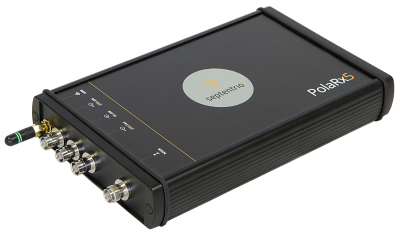
    A new PolaRx5 Continuously Operating Reference Station (CORS) platform, offered by Septentrio Americas, is optimized for state departments of transportation (DOTs) and other real-time-kinematic (RTK) network operators.

    The Septentrio PolaRx5 GNSS receiver.
    The Septentrio PolaRx5 GNSS receiver.

    The PolaRx5 CORS receivers can be purchased at special pricing by UNAVCO member organizations and affiliates. Septentrio has been selected by UNAVCO as the preferred vendor of CORS receivers under a multi-year agreement.

    The PolaRx5 is powered by Septentrio’s AsteRx4 next-generation multi-frequency engine. It offers 544 hardware channels and supports all major satellite signals including GPS, GLONASS, Galileo and BeiDou, as well as regional satellite systems such as QZSS and IRNSS.

    Septentrio’s Advanced Interference Mitigation (AIM+) technology enables the PolaRx5 to filter out both intentional and unintentional sources of radio interference, from narrowband signals over high-powered pulsed signals to chirp jammers and Iridium transmitters.

    In addition, Septentrio’s patented APME+ multipath mitigation technology guarantees superior measurement quality by eliminating short-delay multipath errors without introduction of bias, the company said.

    The PolaRx5 leverages Septentrio’s web interface and built-in Wi-Fi and Bluetooth interfaces to give users complete control and visibility of the receiver. The user interface integrates into existing network management systems. The web browser provides secure access to all receiver settings and status, data storage and firmware upgrades, as well as a built-in spectrum analyzer for system monitoring.

    “The multi-constellation PolaRx5, with its powerful interference and multipath mitigation and new Web interface, is the ideal solution for DOTs to modernize their aging CORS installations to the newest GNSS technology,” said Neil Vancans, vice president of Septentrio Americas.

  • Septentrio Americas delivers machine control receivers for world’s largest iron ore mine

    Septentrio Americas delivers machine control receivers for world’s largest iron ore mine

    The Vale S11D mine is the largest iron ore mine in the world.
    The Vale S11D mine is the largest iron ore mine in the world.

    Vale’s new S11D mine is the largest iron ore project in the world. It will produce more than 90 million tons of iron ore annually when it becomes operational in the second half of 2016. Vale is leveraging technology from Septentrio and other mining companies to implement a highly automated truckless transport system that will substantially reduce fuel consumption and emissions, as well as saving water.

    The Vale S11D machine control project is being managed from Septentrio Americas in Torrance, California.

    Septentrio GNSS receivers and antennas will be deployed across a range of machines to provide highly accurate and reliable position and orientation. The AsteRx-U receiver family features built-in jamming detection and countermeasures, multipath rejection and fast acquisition.

    With more than 500 channels to track all available constellations (GPS, GLONASS, Galileo, Beidou, IRNSS and QZSS), the receivers offer a built-in L-band receiver for PPP corrections as well as centimeter-level RTK positioning accuracy.

    The AsteRx-U family also incorporates proprietary Septentrio algorithms, including LOCK+ technology to maintain tracking during heavy vibration from the machine and IONO+ technology to assure the accuracy of the position even in regions of elevated ionospheric activity. The receiver is configurable from any device with a web browser, and includes advanced capabilities such as a built-in spectrum analyzer.

    “Septentrio has been a leader in multi-constellation and multi-frequency machine control GNSS receivers for the past decade,” said Neil Vancans, vice president of Septentrio Americas. “The selection of AsteRx-U receivers for Vale’s S11D project is a strong validation of Septentrio’s rugged design and high performance in challenging environmental conditions.”

  • Septentrio reference station receivers now shipping to UNAVCO

    Septentrio reference station receivers now shipping to UNAVCO

    Septentrio has started shipments to UNAVCO of its all new multi-frequency PolaRx5 reference receiver. This follows the 2015 announcement by UNAVCO that Septentrio was selected at the Geodesy Advancing Geosciences EarthScope (GAGE) Facility preferred vendor for next-generation GNSS reference station products.

    The Septentrio PolaRx5 GNSS receiver.
    The Septentrio PolaRx5 GNSS receiver.

    The PolaRx5 incorporates Septentrio’s most advanced multi-frequency GNSS engine, with support for all major satellite signals including GPS, GLONASS, Galileo and BeiDou, as well as the regional QZSS and IRNSS satellite systems.

    According to the UNAVCO GNSS Receiver Preferred Vendor RFP Evaluation Report, Septentrio consistently ranks highest in many areas of measurement quality and interference mitigation of the instruments tested. Moreover, the PolaRx5 offers low power consumption for its multi-constellation, multi-frequency GNSS reference receiver, operating on less than 2 Watts when receiving GPS and GLONASS satellite signals.

    “At UNAVCO, we are excited about the selection of the PolaRx5 for enhancement of the EarthScope Plate Boundary Observatory, the international standard for geodetic networks,” said M. Meghan Miller, president of UNAVCO. “We will work with Septentrio to modernize UNAVCO GPS networks, and explore the science innovation and broader applications that are possible in the rapidly evolving GNSS era.”

    UNAVCO is a non-profit university-governed consortium that facilitates geosciences research and education using geodesy. UNAVCO operates the GAGE Facility for the National Science Foundation with additional core support from NASA. The GAGE Facility includes more than 2,000 continuously operating GPS/GNSS reference stations around the world.

    UNAVCO-supported networks include EarthScope’s Plate Boundary Observatory (PBO), the Continuously Operating Caribbean GPS Observational Network (COCONet), the Trans-Boundary Land and Atmosphere Long-Term Observational and Collaboration Network (TLALOCNet) and the Polar Earth Observational Network (POLENet).

    Septentrio’s close cooperation with UNAVCO continues a tradition of partnering with leading scientific institutions and agencies that require high-performance GNSS technology in challenging environments. Septentrio partners include the European Space Agency (ESA) and the European GNSS Agency (GSA).

    “These deliveries mark a huge step in the modernization program for UNAVCO and UNAVCO partner networks around the globe,” said Neil Vancans, vice president of Septentrio Americas. “The use of new satellite technology will be the foundation for greater understanding of our planet. The entire Septentrio team is proud to be a part of this pivotal program.”

  • Septentrio’s PinPoint-GIS available on ArcGIS Marketplace


    GNSS receiver maker Septentrio has announced the availability of its geographical information systems (GIS) PinPoint-GIS on the ArcGIS Marketplace.

    PinPoint-GIS was developed to enable straightforward GIS data collection without the need for expensive additional software linking a GNSS receiver with the Esri ArcGIS Platform

    PinPoint-GIS helps ArcGIS users make informed and timely decisions, Septentrio said. It turns GNSS data collected by Septentrio’s receivers such as the Altus NR2, Altus GeoPod and the AsteRx-U into actionable GIS data. Height and other project parameters are available directly in the ArcGIS workflow without any additional steps by the user.

    Pinpoint GIS makes ArcGIS easily accessible through existing hardware — consumer commercial and ruggedized device, tablet or even smartphone — regardless of operating system. PinPoint-GIS Web makes ArcGIS available from a standard web browser or from an Android app, downloadable from Google Play.

    The Android app works with Esri’s Collector for ArcGIS and provides an accuracy widget which confirms horizontal and vertical accuracy in a highly visible way. This brings the user the immediate security that the captured data meets the required accuracy in both the horizontal and vertical.

    “Integrating ArcGIS functionality into PinPoint-GIS empowers ArcGIS Online users,” said Gustavo Lopez, PinPoint-GIS Product Manager. “With the click of a button, a PinPoint-GIS user can turn accurate and reliable GIS data collected from their Septentrio GNSS receiver into actionable data needed for smarter decisions, effective analysis and customized maps all within the easy-to-use ArcGIS.”

  • ION GNSS+ 2015: Septentrio notes achievement for next generation reference stations

    Jan Van Hees, director of marketing and business development for Septentrio, discusses Septentrio’s latest news and products at ION GNSS+ 2015.

  • ION GNSS+ Product Showcase

    Skydel-gnss-simulator-W
    Skydel Solutions’ GNSS simulator.
    The Averna RP-6100 record-and-playback solution.
    The Averna RP-6100 record-and-playback solution.

    Record & Playback

    The Averna RP-6100 Multi-Channel RF Record & Playback for RF application testing allows users to tecord real-world signals such as GNSS, HD Radio, LTE and Wi-Fi — plus impairments — to significantly advance projects and harden product designs. Skydel Solutions’ GNSS simulator is an entirely software driven innovative and cost-effective simulator that works with the RP-6100, enabling users to test corner cases and future events with a real-time GNSS solution.

    Averna, www.averna.com; Skydel Solutions, www.skydelsolutions.com

    PCTEL's GEO-GNSS antennas.
    PCTEL’s GEO-GNSS antennas.

    Helix Antennas

    PCTEL’s GPS/GLONASS high-performance asset tracking and synchronization helix antennas are now available commercially. The antennas capture the frequencies needed for GPS, Galileo and GLONASS satellite reception. This cross-compatibility allows global OEMs to use one standard platform to serve both European and U.S. markets.

    PCTEL uses its proprietary filtering design to allow wideband coverage while achieving superior out-of-band rejection. With an IP67 rating, the small form-factor helix antennas will withstand harsh environments.

    PCTEL, www.pctel.com

    AsteRx-U dual antenna receiver
    AsteRx-U dual antenna receiver.

    Multi-Constellation Dual-Antenna Receivers

    AsteRx-U and AsteRx-U Marine multi-constellation dual-antenna receivers incorporate the latest GNSS tracking and positioning algorithms and interference mitigation. Machine-control users in the agricultural, construction, marine and mining industries benefit from a complete system with integrated UHF radio, Wi-Fi, USB, Bluetooth and cellular connectivity and a spectrum analyzer. All configurations can be done via the on-board web interface.

    The AsteRx-U has decimeter- and centimeter-level RTK positioning including TerraStar. The AsteRx-U Marine also supports Veripos PPP augmentation services.

    Septentrio, www.septentrio.com

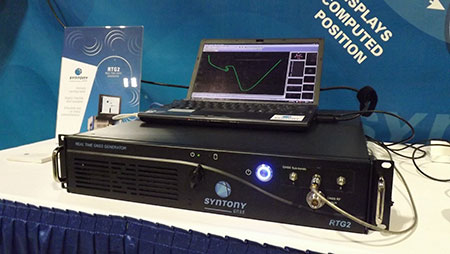
    Syntony-RTG2-W
    The RTG2 constellation simulator by Syntony.

    Constellation Simulator

    The RTG2 is a GNSS constellation simulator that generates realistic GNSS RF signals, taking into account current and future GNSS constellations. RTG2 is able to entirely simulate one or many constellations (GPS, Galileo, etc.) including satellite-based augmentation systems such as WAAS and EGNOS.

    The generator is entirely configurable (troposphere and ionosphere effects, simulated receiver trajectory, etc.) through a user-friendly interface accessible on a separate PC through Ethernet. RTG2 is highly flexible and scalable, offering hardware and software upgrades for capability extensions.

    Syntony GNSS, www.syntony.fr

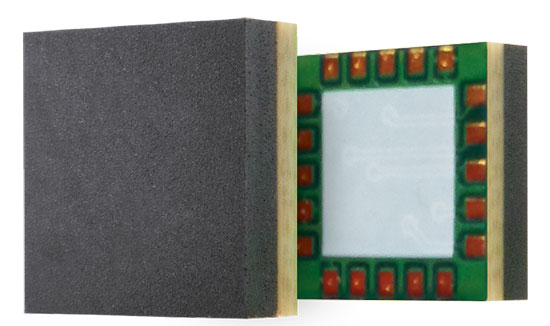
    Telit's Jupiter SE873 GNSS receiver with flash memory.
    Telit’s Jupiter SE873 GNSS receiver with flash memory.

    GNSS Receiver with Flash Memory

    The Jupiter SE873 GNSS receiver is a complete multi-constellation position, velocity and time engine that delivers versatile performance in harsh environments. The 7 x 7 x 1.85 mm module has serial quad I/O flash memory, an integrated low noise amplifier, SAW filter, TXCO and real-time clock. The Jupiter SE873 supports Assisted GPS (both autonomous and server-based) plus SBAS, which improve time-to-first-fix and position accuracy. AGPS data is stored in flash memory and is available even after all power has been removed and then restored. This is especially important for battery-operated equipment.

    The SE873 supports the entire GNSS spectrum: GPS, GLONASS and BeiDou, and it is Galileo ready. It delivers simultaneous low-power tracking of GPS and GLONASS or GPS and BeiDou.

    Telit, www.telit.com

  • UNAVCO Names Septentrio Preferred Vendor for GNSS Reference Stations

    UNAVCO-Septentrio-W
    UNAVCO’s GAGE Facility includes more than 2,000 continuously operating GPS/GNSS reference stations around the world.

    UNAVCO has selected Septentrio to be the preferred vendor of next-generation GNSS reference stations for the Geodesy Advancing Geosciences and EarthScope (GAGE) Facility. The Preferred Vendor status is valid through the duration of the GAGE Facility Cooperative Agreement with the National Science Foundation (NSF).

    The selection of Septentrio was made following a rigorous competitive selection process. Under the agreement, Septentrio will supply GNSS reference stations to upgrade and expand the continuous GNSS reference station networks operated by UNAVCO.

    UNAVCO is a non-profit university-governed consortium that facilitates geosciences research and education using geodesy.  UNAVCO’s GAGE Facility includes more than 2,000 continuously operating GPS/GNSS reference stations around the world. UNAVCO-supported networks include EarthScope’s Plate Boundary Observatory (PBO), the Continuously Operating Caribbean GPS Observational Network (COCONet), the Trans-Boundary Land and Atmosphere Long-Term Observational and Collaboration Network (TLALOCNet) and the Polar Earth Observational Network (POLENet).

    UNAVCO staff from Boulder, Colo., with three Septentrio staff near Septentrio’s headquarters in Torrance, Calif. Back row from left to right: Mo Kapila, Director of OEM Sales, Septentrio; Henry Berglund, Engineer, Development and Testing; Chuck Meertens, Director of Geodetic Data Services; Dave Mencin, Real Time GPS Manager; James Downing, Contracts and Permitting Manager; Jim Normandeau, Manager of Principal Investigator Project Support, Equipment, and Repairs; Warren Gallaher, Engineer, Development and Testing; and Neil Vancans, Vice President, Septentrio Americas. Front row from left to right: Freddy Blume, Manager, Development and Testing and Francesca Clemente, Manager, Technical Support, Septentrio. (Credit: Septentrio)
    UNAVCO staff from Boulder, Colo., with three Septentrio staff near Septentrio’s headquarters in Torrance, Calif. Back row from left to right: Mo Kapila, Director of OEM Sales, Septentrio; Henry Berglund, Engineer, Development and Testing; Chuck Meertens, Director of Geodetic Data Services; Dave Mencin, Real Time GPS Manager; James Downing, Contracts and Permitting Manager; Jim Normandeau, Manager of Principal Investigator Project Support, Equipment, and Repairs; Warren Gallaher, Engineer, Development and Testing; and Neil Vancans, Vice President, Septentrio Americas. Front row from left to right: Freddy Blume, Manager, Development and Testing and Francesca Clemente, Manager, Technical Support, Septentrio. (Credit: Septentrio)

    “This decision, following a highly competitive technical evaluation, is an important validation of Septentrio’s family of high-performance GNSS receivers,” said Neil Vancans, vice president, of Septentrio Americas. “Septentrio is firmly established as the preferred choice of receivers within the scientific and academic community for ionospheric observations, timing and other demanding applications, due to their superior multipath mitigation, resistance to ionospheric disturbance and in-band jamming. We look forward to working closely with UNAVCO to support its important mission of advancing geodetic science.”

    “The critical technology in the new generation of reference station receivers is available in the Asterx 4 OEM boards, which also provide low and scalable power options. This technology is being extended across the full line of Septentrio products,” added Vancans.

    “This Preferred Vendor relationship gives UNAVCO a unique opportunity to provide technical input during the ongoing development process of Septentrio’s next-generation PolaRx-series GNSS receivers,” said Frederick Blume, senior project manager for Development and Testing at UNAVCO.

    Septentrio made the announcement during ION GNSS+, being held this week in Tampa, Fla.