Tag: Trimble

  • Trimble Makes RTX Coverage Announcement at Trimble Dimensions

    Trimble has expanded coverage of its satellite-delivered Trimble RTX technology for surveyors to most of the world. Trimble has also introduced post-processing capability for its CenterPoint RTX positioning service for farmers. Both announcements were made at the Trimble Dimensions 2012 conference being held in Las Vegas this week.

    RTX technology enables Trimble xFill, a new technique in RTK and VRS surveying that allows surveyors to continue working in the event the primary RTK or VRS correction stream is not available.

    Trimble RTX technology, first introduced in 2011, combines real-time data and positioning algorithms to deliver centimeter accuracy around the world. While RTX technology is available worldwide via IP and cellular delivery methods, Trimble RTX has been available via satellite L-Band only in North and South America. Now, the expanded satellite coverage includes most of Europe, Russia, and the Commonwealth of Independent States (CIS), Africa, Asia, and Australasia.

    Powered by Trimble RTX technology, Trimble xFill, a feature integrated into the new Trimble R10 GNSS Receiver, enables a new and innovative technique in RTK surveying, according to Trimble. It seamlessly “fills in” for RTK or VRS corrections for up to five minutes in the event of a temporary connection outage with the primary correction source. Minimizing downtime, Trimble xFill enables higher productivity for field survey crews, allowing them to continue working until radio or cellular connectivity is restored, Trimble said.

    “The expanded coverage of satellite-delivered Trimble RTX technology further extends our commitment to providing different ways of realizing high accuracy positioning solutions,” said Patricia Boothe, general manager of Trimble’s Positioning Services Division. “The power of RTX is proven. Trimble RTX is the backbone of Trimble’s latest positioning innovations including the Trimble CenterPoint RTX service for farmers, the Trimble Pivot RTX App, and Trimble Pivot RTX-PP App infrastructure solutions and now, the Trimble xFill feature for surveyors.”

    Trimble xFill feature allows satellite corrections to be delivered directly to the receiver with no need for additional equipment such as radios and antennas. With its built-in capability, the Trimble R10 automatically tracks these corrections and will use them when needed. Trimble xFill across the expanded satellite coverage area is expected to be available by late November 2012.

    CenterPoint RTX Positioning Services. Enabled by Trimble RTX technology, CenterPoint RTX provides centimeter level positions in real time via satellite L-band and IP/cellular. The new post-processing capability delivers better than one-centimeter accuracy and is available worldwide.

    Trimble CenterPoint RTX post-processing is a cloud-based service accessed through www.TrimbleRTX.com, allowing users around the globe to upload static GNSS observation data and receive positioning corrections calculated in the well-defined ITRF 2008 reference frame. The post-processed solution can be transformed to a variety of regional reference frames by selecting a coordinate system and tectonic plate.

    “With the introduction of post-processing capability to the CenterPoint RTX portfolio, we continue to extend the breadth of the service,” said Patricia Boothe, general manager of Trimble’s Positioning Services Division. “CenterPoint RTX post-processing gives geospatial professionals another tool for their toolbox, utilizing Trimble’s globally available RTX technology to enable higher-accuracy positioning solutions.”

    The open service allows any user to post process 10 data sessions per month.
  • Trimble Introduces R10 GNSS Surveying Solution

    Photo: Trimble
    Photo: Trimble


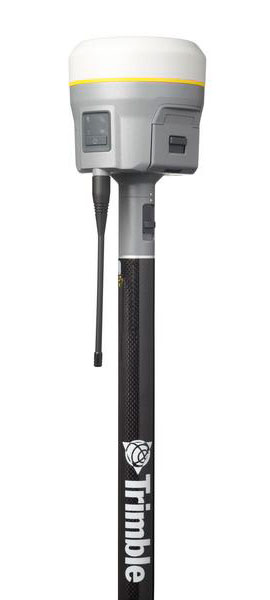
    Trimble introduced today its next-generation GNSS surveying solution — the Trimble R10 — at the INTERGEO 2012 conference on geodesy, geoinformatics and land management.

    As the smallest and lightest receiver in its class, the Trimble R10 combines powerful features and groundbreaking technologies including Trimble HD-GNSS, Trimble SurePoint, Trimble 360, and Trimble xFill to provide surveyors increased productivity, the company said. User-friendly features such as a quick-release adaptor and the ability to configure the receiver from a smartphone make it easy to deploy and use as a base station or rover, Trimble said.

    Trimble also released new versions of its field and office software — Trimble Access 2012.20 and Trimble Business Center 2.80 — to extend Trimble’s Connected Site survey solution, which enables surveyors to collect and process reliable data more efficiently.

    “Faster results, better reliability and improved overall performance are what our customers have come to expect,” said Anders Rhodin, general manager of Trimble’s Survey Division. “With the introduction of the Trimble R10, Trimble is delivering next-generation capabilities in a smaller, lighter and feature-packed system that is unmatched in the industry today.”

    The Trimble HD-GNSS processing engine integrated in the Trimble R10 is a new generation of core positioning technology, Trimble said. Trimble HD-GNSS surpasses traditional fixed/float techniques to provide a more accurate assessment of error estimates than traditional GNSS processing engines. Measurements collected with Trimble HD-GNSS are precision-based so surveyors can confidently collect data in challenging environments where they may have been unable to collect data before. Reduced convergence times and instantaneous point measurements allow surveyors to start measuring sooner and up to 60 percent faster.

    Supporting 440 channels with two built-in Trimble Maxwell 6 chips, the Trimble R10’s integrated Trimble 360 technology allows consistent and reliable tracking of available GNSS satellite signals for existing and currently planned GNSS constellations and augmentations.

    Trimble has extended its Trimble SurePoint technology, a cornerstone of the S-Series total stations, to the new GNSS surveying system. The incorporation of this technology simplifies the survey data collection workflow by providing faster measurements, increased accuracy and greater quality control. The Trimble R10 includes an electronic bubble that appears on the controller display so that all measurement information is displayed in one place. Trimble SurePoint constantly monitors the pole tilt and protects surveyors from collecting erroneous data by only allowing data to be stored when the survey pole is plumb. Simultaneously, pole tilt angle values are stored for every point collected to ensure data traceability.

    Powered by Trimble RTX technology, new Trimble xFill leverages a worldwide network of Trimble GNSS reference stations to deliver position information via geostationary satellites. xFill seamlessly “fills in” for RTK or VRS corrections in the event of a temporary connection outage such as a radio black spot so users experience less downtime in the field.

    Designed for ease of use and durability, the Trimble R10 offers the ruggedness and reliability. Additional features include multiple connectivity capabilities such as Wi-Fi and 3G cellular connectivity, a lithium-ion battery, an integrated GNSS antenna, 4 GB internal memory, and an internal 2 Watt radio.

    Trimble Access is a field solution that enables wireless connectivity between the project team members to expedite data collection, processing, analysis, and project information delivery through improved workflows, collaboration and control. The complete solution speeds both typical and specialized surveying tasks, and enables easy and fast two-way information sharing between the field survey crew and the office. Surveys can be completed faster with less time spent traveling back and forth to the office. Management and field crews can closely collaborate by viewing the same information in near real-time.

    Trimble Access version 2012.20 offers new functionality compatible with the Trimble R10, including:

    • Tilt auto-measure: Topo point or Rapid point measurements can now be automatically started when the pole is plumbed to within a predefined tilt tolerance. Coupled with auto store, hundreds of points can be measured with only one tap on Measure.
    • Tilt warnings: Users are now notified if the pole moves outside a predefined tilt tolerance during point measurement.
    • Tilt distances: Measurements collected with the Trimble R10 can now have an associated tilt distance providing additional quality control information. Use the QC Graph for a quick visual check to see the range of tilt distance errors for any particular job.
    • eBubble display: An electronic bubble can be used instead of a traditional pole bubble. The eBubble enables a clearer, easier and more accessible display of the bubble providing the surveyor just one place to focus when leveling and measuring.
    • In the Office – Trimble Business Center 2.80

    Trimble Business Center office software is a complete surveying office suite designed to manage, analyze and process all field survey data, including data from optical instruments (total stations and levels), GPS/GNSS and spatial stations (imaging and 3D scanning data).

    Version 2.80 advances the capabilities of surveying offices with key new functionality, including:

    • Trimble R10 support: Users can import RTK and PPK tilt magnitude and quality data from a Trimble Access Job or JobXML file and also export this data using the Custom Exporter. The new version also has the capability to Import Trimble Access Job or Job XML files containing xFill observations.
    • Ribbon menu layout: A new ribbon menu layout and quick access toolbar help users quickly locate commands required to complete a task for an improved user experience.
    • Microsoft Windows 8 support: Version 2.80 is compatible with the Microsoft Windows 8 Operating System.
    • Station View field-of-vision indicator: Users can view which Station Views are open and in which direction they are facing. The indicators improve workflows for measuring points photogrammetrically with images from Trimble VISION instruments.

    The Trimble R10 GNSS System can be ordered beginning mid October 2012. Shipping is expected to begin during the latter part of the fourth quarter in 2012. Trimble Access software version 2012.20 and Trimble Business Center Software version 2.80 are available now through Trimble’s Survey Distribution Channel.

    Trimble’s Connected Site solutions for surveyors create seamless working relationships among Trimble products, technologies and services. Through the Connected Site, Trimble is focused on providing solutions that address the customers’ full work processes. By carefully combining technology innovation with a deep understanding of the users’ workflows, data integration and maintenance across the lifecycle of projects, Trimble helps surveyors reach new levels of productivity for their businesses.

  • Trimble Adds Two Handhelds to GIS Data Collection Portfolio

    Trimble introduced today the Trimble Geo 5 and Juno 5 handheld GNSS devices, further extending Trimble’s portfolio for data collection, maintenance and inspection applications. The Geo 5 and Juno 5 series are both optimized for GIS field workflows, including Trimble’s TerraSync field software available on all Trimble GIS platforms.

    Since 1994, the Trimble GeoExplorer line of GNSS handhelds has been used for professional GIS data-collection applications. While the GeoExplorer 6000 series is the most capable Trimble handheld for GIS data collection, not all customers require the larger screen and innovative Floodlight technology of the 6000 series. The Geo 5 provides the essential functions for all day, submeter productivity in a smaller package, Trimble said.

    The Trimble Juno product line is used worldwide for maintenance, inspections and asset management applications. With the addition of the Juno 5 series, Trimble is providing a rugged handheld that delivers the capabilities and convenience of a smartphone, Trimble said. The Juno 5’s slim, ergonomic design is thinner and lighter than other rugged computing products in its class today and provides a more advanced feature set than the Juno 3 series.

    “Whether users are engaged in initial data-collection tasks or inspection of assets, it is critical they have a complete solution they trust,” said Daniel Wallace, general manager of Trimble’s GIS Data Collection Division. “Now with two platforms in both the Geo and Juno families, customers can confidently choose a handheld that best fits their needs. Trimble TerraSync software is the unifying workflow that brings these choices together, so customers can always trust the quality of their data throughout the complete lifecycle of a field management project.”

    Complete with wireless communications options, integrated cameras and bright, sunlight-readable screens, both devices are built for work in the field and rugged enough to withstand shock, vibration, water and dust.

  • Trimble Introduces Compact Receiver for Mobile Positioning Applications


    Trimble has introduced at the ION GNSS Conference in Nashville the Trimble BD920-W3G receiver and communication module. As part of Trimble’s GNSS OEM portfolio, the new compact module features centimeter-level, real-time kinematic (RTK) positioning capabilities coupled with Wi-Fi, Bluetooth and cellular that deliver flexible communication options for precise, mobile positioning. The BD920-W3G module’s connectivity and configuration ease allow system integrators and OEMs to easily add GNSS centimeter-level positioning to specialized or custom hardware solutions, Trimble said.

    “The OEM and system integrator communities demand high performance, reliability and support for their positioning solutions,” said Dale Hermann, director of marketing and sales. “The Trimble BD920-W3G delivers the latest in GNSS and communication technology in an easy-to-integrate form factor for demanding conditions and applications such as field computing, port automation, and lightweight robotic or unmanned vehicles.”

    The Trimble BD920-W3G module has been designed for applications requiring centimeter accuracy in a compact package. By integrating wireless communications on the same module, the task of receiving and transmitting data such as RTK corrections is greatly simplified. A single intuitive Web interface allows a variety of use cases to be supported. In addition to GNSS base and rover setups with Wi-Fi or UMTS modem, the module also allows simultaneous customer access to the Internet.

    The dual-frequency GPS/GLONASS BD920-W3G provides customers with a more integrated product that can reduce their integration effort and time to market. Wireless communications and Ethernet connectivity are available on the module to allow high-speed data transfer and configuration via standard Web browsers. USB and RS232 are also supported. By tightly integrating communications and GNSS receiver, integrators can reduce costs and integration complexity, the company said.

    The Trimble BD920-W3G is expected to be available in the first quarter of 2013 through Trimble’s Precision GNSS + Inertial sales channel worldwide. The BD920-W3G can be viewed in 3D on Trimble’s 3D Warehouse by SketchUp. OEMs and integrators can also download a 3D model into their applications. For more information, visit www.trimble.com/gnss-inertial.

  • Trimble GIS at the ESRI International Users Conference

    GPS World magazine interviews at the ESRI International User Conference 2012, talking with Dan Wallace of Trimble Navigation.

  • Trimble Expands Functionality of ThingMagic RFID Readers

    Trimble announced the availability of a number of new capabilities for its ThingMagic Mercury 6e (M6e) embedded UHF RFID module and Mercury 6 (M6) finished UHF RFID reader. Available through a firmware upgrade, the added functionality helps users develop and deploy reliable, high-performance RFID-enabled solutions for a broad range of traditional and innovative applications. Trimble also introduced a redesign of its Universal Reader Assistant, a graphical user interface developed to simplify the use and deployment of ThingMagic RFID readers.

    According to the announcement, this upgrade delivers significant enhancements including an increase in tag read rate of up to 75 percent and greater data acquisition rates with every tag read. Several application-specific features designed to read RFID tags in diverse and challenging conditions have also been introduced, including:

    • A new “fast search” tag reading mode
    • The ability to obtain up to 128 bytes of data with every tag read
    • ISO 18000-6B performance enhancements
    • Support for IDS Micro SL900A Gen2 Class 3 Sensor Tags

    Driven by increased demand for RFID-enabled solutions in the transportation, supply chain, retail and healthcare markets, Trimble reports these new features offer several application specific improvements:

    The ThingMagic M6e embedded module now includes a ‘fast search’ algorithm which forces tags to respond rapidly and repeatedly for optimal read performance across diverse use cases. This feature supports applications such as tolling, vehicle management and race timing where fast moving tags need to be distinguished from each other with a high degree of accuracy. Operational up to 200 kilometers per hour, ‘fast search’ supports both Gen2 and ISO 18000-6B tags.

    Superior receive sensitivity, higher tag read rates, and better adaptation to changing tag populations enhance the ability of the ThingMagic M6e and M6 readers to read RFID tags in varied environments and on more items. For example, in a retail supply chain, manufacturers can track high volumes of items on densely packed pallets across multiple distribution points and retailers can inventory tagged items rapidly and with predictable accuracy. In addition, the ability to read more data from every tag supports emerging retail uses such as anti-counterfeiting, brand protection and other security-sensitive applications, without impacting the performance of tag inventory or tag encoding activities.

    This upgrade also adds support for the full cool-Log command set for IDS SL900A sensor tags, addressing increased demand for temperature and state monitoring within utilities, food/cold-chain, healthcare and other markets. The IDS 900A is an EPC global Class 3 tag IC which can be operated in either semi-passive or passive mode.

    “This release represents a significant step in optimizing our portfolio of high-performance embedded RFID modules and finished RFID readers for use across industries,” said Tom Grant, general manager of Trimble’s ThingMagic Division. “Superior performance and versatility continue to be primary differentiators for our products. Equally important are advancements in ease of use which are fundamental to the growth of RFID-enabled solutions and driving better business results across a growing number of connected enterprise applications.”

    With a key goal of driving the barriers for deploying RFID technology as low as possible, this update improves the out-of-the-box experience for solution developers and end users of ThingMagic M6 readers. An improved Web interface includes a reorganization of configuration and management screens, new performance tuning settings, and enhanced tag data access and displays. Enhancements also include zero configuration support for automating network connectivity, Web-based device discovery and management and advanced testing capabilities.

    Trimble reports that a redesign of the ThingMagic Universal Reader Assistant is also available. Supported by all ThingMagic readers, this utility is used to initialize readers and perform common tasks, including selecting application specific performance settings. With a focus on ease-of-use, this redesign meets the needs of an expanding customer base by reducing complexity for novice users while permitting low-level control for advanced users.

  • Trimble Brings Smartphone Look and Feel to a Rugged Handheld Computer

    Trimble has introduced the Juno T41 handheld computer, bringing a smartphone-inspired option to industries demanding a rugged field computer for data collection and mobile workforce management. The Juno T41 handheld is a developer-friendly computing device for real-world field conditions, with either Windows Embedded Handheld or Android operating systems, Trimble said.

    “With the release of the Juno T41, we are providing a rugged handheld that delivers the capabilities and convenience of a smartphone,” said Jim Sheldon, general manager of Trimble’s Mobile Computing Solutions Division. “It’s slim, ergonomic design is thinner and lighter than other rugged computing products in its class today. Powerful, connected, compact and easy-to-use, the Juno T41 handheld computer is ideal for any mobile professional or demanding consumer.”

    The initial launch of the Trimble Juno T41 computer features:

    • Windows Embedded Handheld 6.5 or Android 2.3.4 “Gingerbread” operating system in choice of 10 languages
    • Multi-touch user interface with capacitive stylus compatibility
    • 8 MP camera with dual LED flash and geo-tagging
    • 3.75G cellular data, SMS text and voice capability option 
    • Bluetooth and Wi-Fi® b/g/n
    • 4.3-inch WVGA sunlight-readable Gorilla® Glass display
    • GPS receiver with typical 2-4 meter accuracy
    • Accelerometer and Electronic Compass
    • Fully rugged design with IP65 or IP68 rating
    • 800MHz or 1 GHz processor with up to 512MB RAM
    • Up to 16 GB non-volatile onboard flash storage, plus microSD card slot
    • Built-in rechargeable 3300 mAh lithium-ion battery

    The Trimble Juno T41 is available for order now with shipments beginning in September.

  • Trimble Expands Positions Software to Streamline Esri Workflows

    Trimble has introduced the Trimble Positions Mobile extension, a streamlined choice for integrating Trimble’s GNSS professional field solutions and data verification into the Esri ArcGIS for Windows Mobile environment.

    The Trimble Positions software was first introduced as a development kit to Trimble’s GIS developer community in late 2011. Today, the software suite has expanded to provide a streamlined option for users who wish to work directly with Esri’s ArcGIS for Windows Mobile technology.

    “Now, common Trimble and Esri users have a streamlined workflow between their Trimble devices and the Esri mobile software environment,” said Daniel Wallace of Trimble’s GIS Data Collection Division. “Because all data is verified and validated before it reaches Esri’s Enterprise GIS, each update adds value, making the geo-database more reliable and more useful.”

    Using Trimble GNSS receivers, field workers can collect GNSS data for all feature geometries while leveraging the performance features of Trimble handhelds for improved productivity in tough GNSS environments. Data can be automatically posted to the enterprise server from the field where Trimble Positions Desktop add-in is used to process and validate the data coming in from field crews. Office administrators can check for new sessions, differentially correct the data, and verify that the data meets accuracy requirements before updating the enterprise database.

    This release adds real time and postprocessed corrections support for Trimble’s GNSS receivers, including the Trimble GeoExplorer, Juno, Nomad, and Pro series receivers.

  • Trimble Adds RFID to its AllTrak Asset and Tool Management System

    Trimble introduced a new version of its Trimble AllTrak Asset and Tool Management System that includes an RFID scanner for its Trimble Nomad outdoor rugged handheld computer running the Microsoft Windows Mobile operating system. With RFID capabilities, the AllTrak System allows building construction contractors to more easily track and manage their jobsite assets and tools. In addition, the system increases return on investment by improving asset utilization and monitoring equipment to avoid losses.

    According to the announcement, using the Trimble Nomad with the new RFID scanner, contractors can perform a variety of functions such as asset check-in, check-out, transfers and inventory validation much faster than traditional bar code scanning by interfacing with small passive RFID tags fixed to the assets. With an effective range of 3 to 4 feet, RFID technology does not require line of sight for the tag to be read, making it an ideal technology for reading the tags of multiple assets that are in a pickup, service truck or tool crib. Users can also attach the ThingMagic USB RFID Reader to a desktop or laptop when a portable solution is not required.

    Trimble reports that by utilizing the popular RFID tag protocols “UHF EPC Gen2” or “ISO18000-6C”, the new Trimble AllTrak System is specifically designed for general contractors, as well as concrete, steel, mechanical, electrical, plumbing and site prep subcontractors who use tools with embedded or attached RFID tags that support these protocols. Trimble AllTrak distributors can also provide RFID tags that can be attached to assets.

    “With the acquisition of ThingMagic, we were able to bring their experience in RFID technology to existing platforms within the Trimble Building Construction portfolio of hardware and software solutions,” said Pat Bohle, general manager of Trimble’s Building Construction Division. “We chose the Trimble AllTrak System as the first product in the portfolio due to the logical affinity of delivering increased productivity to the process of tracking the physical whereabouts of tools and jobsite assets.”

    Trimble AllTrak with RFID support is available now through Trimble’s Authorized Distributors of layout solutions for MEP and Structures contractors.

  • Trimble Launches AP20-C GNSS Inertial OEM Module with MEMS Inertial Sensors

    Trimble AP series module

    Trimble has introduced the AP20-C, the latest addition to its AP Series of embedded GNSS-Inertial OEM boards plus Inertial Measurement Unit (IMU). Using a compact, custom-built IMU based on commercial Micro Electromechanical Machined (MEMS) inertial sensors, the AP20-C enables system integrators to achieve high-rate position and orientation measurements with exceptional accuracy, Trimble said.

    The announcement was made at AUVSI’s Unmanned Systems North America 2012 Conference and Exhibition being held this week in Las Vegas.

    Featuring proven Applanix IN-Fusion GNSS-Inertial integration technology, the AP20-C is an embedded GNSS-Inertial OEM board set plus IMU designed for continuous mobile positioning in poor signal environments and high-accuracy direct georeferencing of imaging sensors. The AP20-C delivers full, high-rate position and orientation measurements at 200 Hz, ensuring it can be used in the most demanding mobile environments without sacrificing performance. It is fully compatible with the industry-leading Applanix POSPac MMS office software for enhanced accuracy using network differential GNSS.

    “Compact in form and low in power consumption, the AP20-C can provide cost-effective, accurate, reliable and robust position and orientation measurements suitable for a broad range of survey and mapping applications, including airborne, terrestrial, and marine mapping as well as guidance for unmanned vehicle applications,” said Joe Hutton, director of Inertial Technology and Airborne Products at Applanix, a Trimble Company.

  • Trimble Marine GNSS Receivers Support Marinestar Corrections for Offshore Dredging

    Trimble has announced that its latest generation of GNSS receivers for marine construction and hydrographic survey now support Fugro's Marinestar positioning services. Using satellite-delivered Marinestar corrections with Trimble SPS855 and SPS555H GNSS receivers, contractors can conduct dredging work up to 20 miles offshore, without relying on land-based infrastructure such as reference stations and radio networks. The Fugro Marinestar positioning service expands the operating environment for contractors using the Trimble marine construction GNSS receivers and enables decimeter accuracy for precise placement of dredging equipment and dredged materials.

    The Trimble SPS855 GNSS Modular Receiver provides accurate water level information and tidal height for a construction or dredging location, which is significantly more cost-effective than with conventional methods. Its modular design means the contractor can place the receiver inside the vessel cabin for maximum security and protection from the environment while mounting the GNSS antenna outside for optimized signal strength. The Trimble SPS555H Heading Add-on Receiver provides exact heading information for projects that require precise orientation of a dredging vessel.

    The Marinestar positioning service from Fugro offers two options:  Marinestar GPS — a high-performance, high-accuracy GPS augmentation service; and Marinestar GNSS — a high-performance augmentation service for both the GPS and GLONASS.

    The new Trimble SPS855 GNSS Modular Receiver and SPS555H Heading Add-on Receiver are available now through the Trimble Marine Construction distribution network. Subscription to the Marinestar GPS and Marinestar GNSS service is available for dredging and other marine construction applications through Fugro.
     

  • New Version of Trimble GCSFlex Offers GPS Machine Guidance via Wi-Fi

    Trimble has announced that the Trimble GCSFlex Grade Control System for Excavators now offers highly accurate GPS machine guidance via Wi-Fi. By serving GPS corrections over a Wi-Fi connection from a local base station, Trimble has eliminated the need for a radio network on the construction site and made it easier than ever to deploy GPS for a broad range of excavation work, the company said.

    Trimble introduced GCSFlex Grade Control System for Excavators in 2011 as an affordable, easy-to-use machine control system for owner operators and small to mid-sized contractors who want to increase their productivity and competitiveness. With several system configuration options available, contractors can select the sensor options that fit their job site needs at a price point that fits their budget.

    The new configuration of GCSFlex is deployed with the innovative Trimble SPS985 GNSS Smart Antenna as a local base station for transmitting GPS corrections to the excavator. The operator needs only to position the Trimble SPS985 base station and power it on to automatically establish a Wi-Fi connection and begin broadcasting corrections to the machine. With simplified daily setup and operation, Trimble has made the highly powerful GCSFlex system easy to deploy and use, even for excavator operators with little or no experience with machine control.

    GCSFlex with GPS Guidance also offers the benefit of using in-field design templates created directly from the cab on the Trimble CB450 Control Box. This allows the excavator operator to very accurately dig to a desired depth, slope or alignment without creating a digital design in the office.