Blog

  • Solar Storm may impact GPS

    Solar Storm may impact GPS

    A geomagnetic storm expected today and tomorrow has been upgraded to G4 (severe) by the National Oceanic and Atmospheric Administration (NOAA). Solar storms can disrupt GPS and GNSS signals before they arrive on Earth.

    According to NOAA, a powerful coronal mass ejection (CME) erupted from the Sun the evening of May 30. Confidence in an Earth-directed component is good, but the CME arrival timing is more uncertain due to the current state of the solar wind. It could arrive as early as late morning EDT, to as late as Sunday evening EDT June 1.

    Conditions will likely intensify as CME progression continues and G4 levels remain possible on Monday, June 2.

    The center of the bulk CME material is anticipated to be just north of Earth. However, Earth will still likely undergo passage of much of the CME material. Arrival will likely lead to immediate geomagnetic disturbances with the potential for G4.

    Conditions will likely intensify as CME progression continues and G4 levels remain possible on Monday, June 2.

    Geomagnetic storm levels will likely begin subsiding by Tuesday with G1-G2 (Minor-Moderate) still possible.

    Visit the NOAA website for the latest information and updates.

  • 3D scan of Titanic reveals new details of shipwreck

    3D scan of Titanic reveals new details of shipwreck

    In 2022, deep-sea mapping company Magellan undertook the largest underwater 3D scanning project of its kind to create the first full-size digital scan of the Titanic. The luxury passenger liner sank in the North Atlantic Ocean on April 15, 1912, after striking an iceberg, and now rests 12,500 ft below the surface.

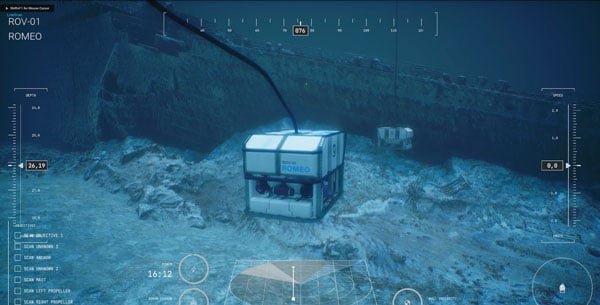
    Over three weeks, the Magellan team worked around the clock to capture the luxury vessel in unparalleled detail. They used two remotely operated vehicles (ROVs) — dubbed Romeo and Juliet — to systematically canvass the site. In total, the ROVs collected 715,000 photos, 4K footage and millions of laser measurements — a total of 16 terabytes of data.

    The scan itself was only the beginning. The Magellan team then processed the collected data into a smooth, comprehensive 3D point cloud. Applying new processing techniques to the original Magellan IP and raw data sets provided a new data set with 35% better resolution and accuracy. Each point in the dense point cloud used to generate the model has its unique set of Cartesian coordinates(X,Y, Z), time stamp and texture.

    A National Geographic documentary
about the project, “Titanic: The Digital
Resurrection,” is now streaming on
Disney+ and Hulu. The 90-minute
documentary was produced by Atlantic
Productions for National Geographic. (Photo: Magellan Limited/Atlantic Productions)
    A National Geographic documentary about the project, “Titanic: The Digital Resurrection,” is now streaming on Disney+ and Hulu. The 90-minute documentary was produced by Atlantic Productions for National Geographic. (Photo: Magellan Limited/Atlantic Productions)

    Titanic analyst Parks Stephenson has visited the actual Titanic wreck twice, but the virtual scan revealed
    details he never saw before. Aboard a submersible, with its six-inch viewport and limited camera views, details are easily missed. “It’s like being in a dark room and you have a flashlight that’s not very
    powerful,” Stephenson told National Geographic. The digital twin gave him an unobstructed, 360° view of every nook and cranny.

    The digital twin reconstructs Titanic’s structural collapse in forensic detail. A video rendering of it can be projected to life-size in a warehouse, allowing experts to walk through its final moments. For instance, an open steam valve in the boiler room validates eyewitness accounts that the ship’s engineers remained at their posts for more than two hours after impact, keeping the electricity on and allowing wireless distress signals to be sent. The 35 men may have saved hundreds of lives while sacrificing their own.

    Photo: Magellan Limited/Atlantic Productions
    Photo: Magellan Limited/Atlantic Productions

    The digital scan also helps exonerate First Officer Murdoch, long accused of abandoning his post. The position of a lifeboat davit suggests his crew was preparing a launch moments before the starboard side was engulfed, corroborating Second Officer Charles Lightoller’s testimony that Murdoch was swept away by the sea.

    The scans reveal the wreck’s alarming deterioration, with iconic areas collapsing. But the mapping project means the ship is now digitally preserved, along with similar models of historic sites around the world.

    Magellan has launched an app built on
the Titanic’s scans, available in Early
Access on the Steam platform. “vROVpilot:
TITANIC” puts users in the pilot seat of
a virtual ROV to explore the wreck and
complete missions to scan its key features.
The experience comprises an accurate
ROV user interface, along with realistic
underwater condition visual effects and
comprehensive sound effects, according to
the developer.
So far, the app is using only the data
on the bow, which is less than 35% of the
full data set. The stern is expected to be
added next, followed by the 15-squaremile debris field, which shows personal
effects such as pocket watches, purses,
gold coins, hair combs, shoes and a
Megalodon-tooth necklace.
    Magellan has launched an app built on
    the Titanic’s scans, available in Early
    Access on the Steam platform. “vROVpilot:
    TITANIC” puts users in the pilot seat of
    a virtual ROV to explore the wreck and
    complete missions to scan its key features.
    The experience comprises an accurate
    ROV user interface, along with realistic
    underwater condition visual effects and
    comprehensive sound effects, according to
    the developer.
    So far, the app is using only the data
    on the bow, which is less than 35% of the
    full data set. The stern is expected to be
    added next, followed by the 15-squaremile debris field, which shows personal
    effects such as pocket watches, purses,
    gold coins, hair combs, shoes and a
    Megalodon-tooth necklace. (Photo: Magellan Limited/Atlantic Productions)
  • GNSS receivers show how earthquake sound waves move

    GNSS receivers show how earthquake sound waves move

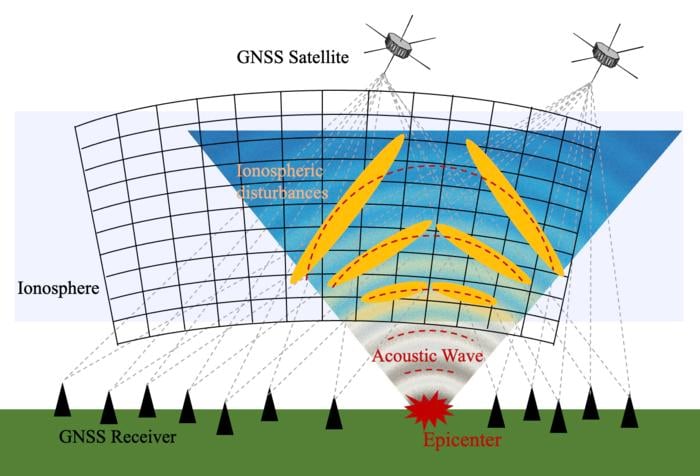
    Scientists at Japan’s Nagoya University have used Japan’s extensive network of GNSS receivers to create the first 3D images of atmospheric disturbances caused by the 2024 Noto Peninsula Earthquake. Their results show sound wave disturbance patterns in unique 3D detail and provide new insights into how earthquakes generate these waves.

    The team published the results in the journal Earth, Planets and Space (May 29, DOI 10.1186/s40623-025-02211-y).

    Japan has one of the densest GNSS networks in the world, with more than 4,500 receivers spread across the country. The network helps with precise location tracking and can also detect changes in the ionosphere.

    A research team led by Dr. Weizheng Fu and Professor Yuichi Otsuka from Nagoya University’s Institute for Space-Earth Environmental Research (ISEE) has captured the detailed 3D structure of electron density changes in the ionosphere after the 7.5 magnitude Noto Peninsula Earthquake that occurred on January 1, 2024, in Ishikawa Prefecture, Japan. 

    When satellite signals travel through the ionosphere, they slow down because the radio waves interact with electrically charged particles. By measuring how much the signals slow down, scientists can calculate how many electrons are in the signals’ path and map the total electron content. Mapping these electrons allows them to effectively probe and monitor the state of the ionosphere. 

    About 10 minutes after the earthquake, the sound waves it generated traveled upward through the atmosphere and reached the ionosphere (60-1000 km above Earth). This created ripple disturbances similar to throwing a stone in a pond. 

    To build a 3D model of wave patterns, the researchers used a technique called “tomography” — similar to how CT scans create 3D images of the human body. They collected data on electron numbers from thousands of receivers tracking signals from satellites at different angles. By tracking their 3D models at different times after the earthquake, they created a time series of how electron density changed.  

    Sound waves generated from entire fault lines, not single points 

    South of the epicenter, the researchers observed a tilted sound wave pattern that gradually became more vertical over time. When an earthquake creates sound waves that travel upward through the atmosphere, the upper parts of the waves move faster than the lower parts. This makes the wave front lean or tilt as it moves. Over time, the tilted pattern gradually straightens into a more vertical alignment.  

    The researchers produced the first detailed 3D visualization of how the tilt angle changes over time during a seismic event. They tracked how the tilted wave patterns gradually straightened in unprecedented detail.

    Earthquakes do not create atmospheric waves from just one spot, but rather from multiple points along the entire fault as different sections rupture over time. This explains why the atmospheric disturbances observed, such as tilted waves, were more complex than previous simpler models had predicted. 

    Previous models assumed all sound waves came from a single point at the earthquake’s center. While this matched some of their observations, it could not explain the complex, uneven wave patterns they saw in their 3D images.  

    To understand this, they included data from multiple wave sources along the fault line in their model, assuming that some parts of the fault generated waves about 30 seconds after the initial rupture. The results better matched their real-world observations and showed that earthquakes do not create atmospheric waves from just one spot, but rather from multiple points along the entire fault as different sections rupture over time. This explains why the atmospheric disturbances observed, such as tilted waves, were more complex than previous simpler models had predicted. 

    “By including multiple distributed sources and time delays, our improved modeling provides a more accurate representation of how these waves propagate through the upper atmosphere,” Professor Otsuka said. 

    “Disturbances in the ionosphere can interfere with satellite communications and location accuracy. If we understand these patterns better, we could improve our ability to protect sensitive technologies during and after earthquakes and enhance early warning systems for similar natural events,” lead author Weizheng Fu added. 

    Moving forward, the researchers are working on applying their model to other natural events such as volcanic eruptions, tsunamis, and severe weather events.

  • Taoglas Thunder enclosures simplify router installations

    Taoglas Thunder enclosures simplify router installations

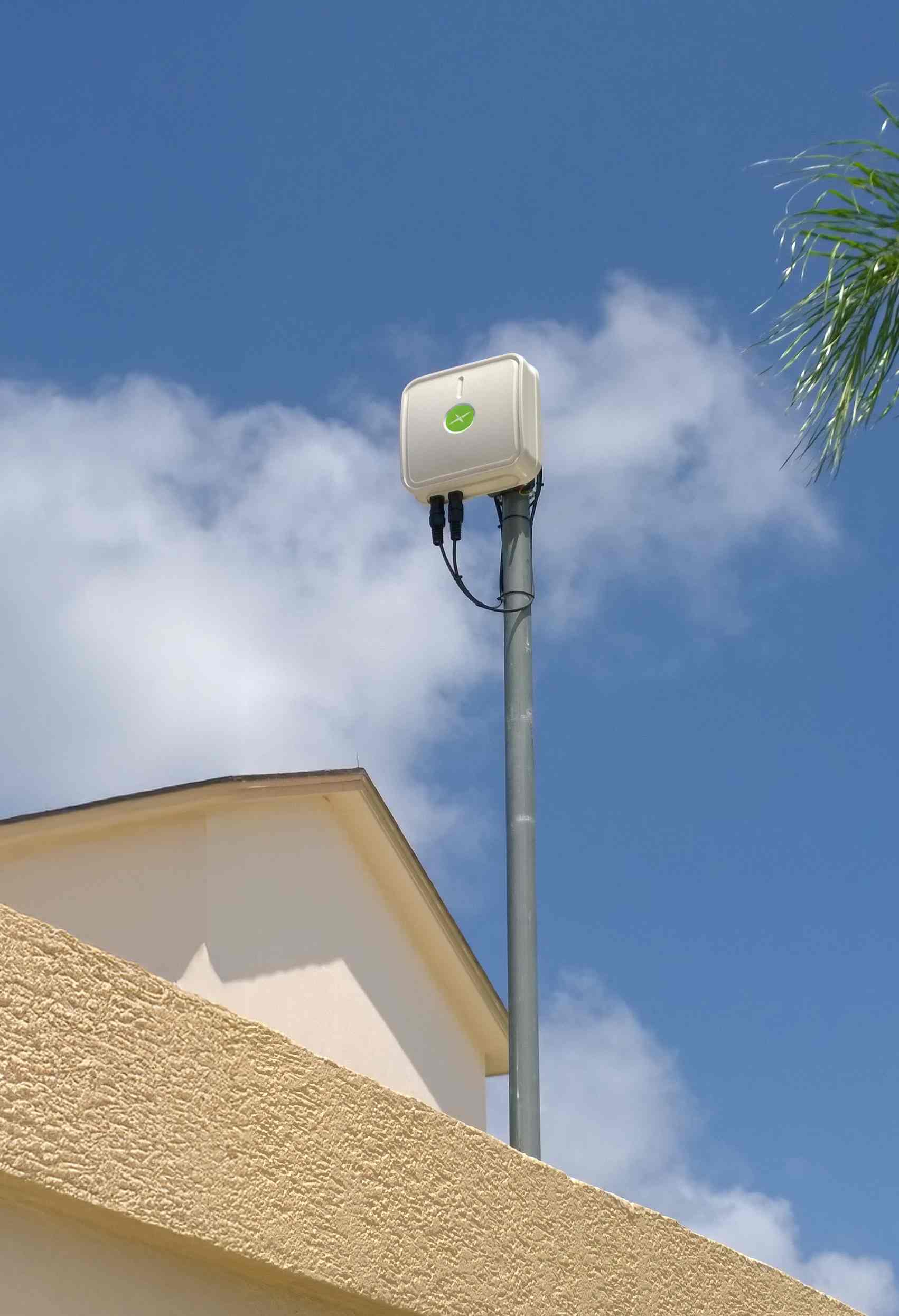
    Taoglas has launched its new Thunder Series — a high-performance outdoor antenna enclosure platform engineered to support direct integration and installation of industrial routers within the antenna package. Designed for demanding outdoor environments, the series helps engineers optimize installations, reduce signal loss, and significantly lower deployment costs.

    Purpose-built for widely deployed routers from Digi, Ericsson and Semtech, the Thunder Series combines Taoglas’ wideband antenna technology with a rugged enclosure that allows the router to be installed directly inside the housing. This significantly reduces the need for long RF cables – cutting tens of meters per deployment – while minimizing signal loss, installation time, and the material and labor costs typically associated with separate device installations.

    Thunder is being deployed in number plate recognition systems, powered directly from streetlight DC infrastructure – reducing cabling requirements and enabling discreet, efficient installation in urban environments.

    Operating across a broad 600–6000 MHz frequency range, the Thunder Series supports 5G/4G, Wi-Fi, GNSS and Bluetooth. This wide coverage enables support for low-band cellular, mid-band 5G, and Wi-Fi 6/6E frequencies. The solution provides quality communication by locating the router and the antenna in the same enclosure to minimize cable loss and reduce installation costs while simplifying implementation and deployment. This ensures long-range performance and reliable high- or low-speed data connectivity. The addition of the POE splitter makes powering the router less complicated.

    The Thunder Series is available in directional and omnidirectional versions, with IP67-rated ABS enclosures protecting against water ingress, dust and vibration. It is well-suited for harsh outdoor conditions and mission-critical deployments across transportation, mining, agriculture, smart cities and industrial automation. In one such application, Thunder is being deployed in number plate recognition systems, powered directly from streetlight DC infrastructure – reducing cabling requirements and enabling discreet, efficient installation in urban environments.

    To support flexible deployment, the Thunder Series can be powered in several ways depending on the router in use. These include dedicated power inputs or Power over Ethernet (PoE), with Taoglas providing detailed guidance to ensure safe, standards-compliant installation.

    The Thunder Series is available now via the Taoglas website and through the company’s authorized distribution network.

  • Thank you for registering

    Thank you for registering for the upcoming webinar, “Power-efficient GNSS: Optimizing location platforms for longevity and accuracy” sponsored by Quectel.

    A link to the live event will be sent to you two hours before the event. Your personalized event URL will be automatically generated by the ON24 system. To ensure receipt of the email, please whitelist this email address by adding it to your contacts: [email protected].

    This presentation will begin at 1 p.m. EDT on Thursday, June 26. A recording will also be sent to you the following day so you can watch it on-demand.

    Audience members may arrive 15 minutes prior to live time. If you have any questions, please contact event producer Halle Reid at [email protected].

  • VIAVI unveils second-generation RSR Transcoder for reliable PNT in GPS-denied environments

    VIAVI unveils second-generation RSR Transcoder for reliable PNT in GPS-denied environments

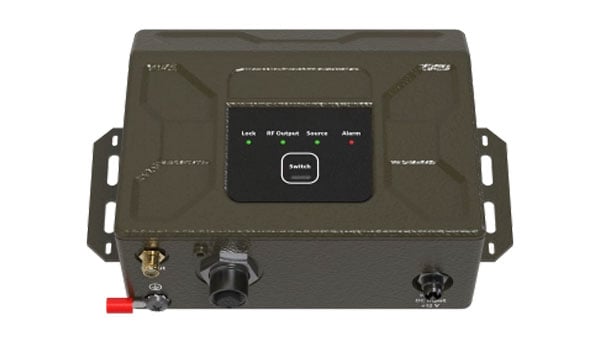
    VIAVI Solutions Inc. has introduced its second-generation RSR Transcoder, engineered to maintain operational capability in GPS/GNSS-denied, degraded or disrupted space operational environments.

    This development comes amid a global increase in GPS and GNSS jamming and spoofing, which have become standard tactics in electronic warfare. These hostile activities, while primarily aimed at military operations, also threaten sectors that depend on precise timing and geolocation, such as aviation, communications and emergency services.

    The new RSR Transcoder is designed to deliver assured positioning, navigation and timing (PNT) in a wide range of outputs to upgrade legacy systems. The device features a GPS full constellation simulator and employs a patented algorithm to rapidly convert assured inputs — including M-Code, SAASM, IMU/INS, and other signals of opportunity — into universal GPS L1 and L2 signals with both C/A-code and P-code outputs. This capability allows for the straightforward enhancement of older GPS systems, providing them with modern, resilient PNT functionality.

    The RSR Transcoder is housed in ruggedized IP68 enclosures suitable for deployment on land, sea and air platforms. It is capable of covert, lights-out operation and offers a 100 Hz output rate with an ICD-GPS-153 interface. The device is available with holdover oscillator options of 4, 8 and 24 hours, supporting continued operation during signal loss.

    On Display at the Joint Navigation Conference

    The RSR Transcoder will be demonstrated at the 2025 Joint Navigation Conference, which is held June 2-5 in the Greater Cincinnati Area and jointly hosted by the Departments of Defense and Homeland Security. It will be on display at VIAVI’s booth #406. VIAVI’s Inertial Labs division will also demonstrate recent breakthroughs in D3SOE navigation at booth #430. 

    VIAVI and its Inertial Labs division will also give three presentations: 

    • “3D Vision-Based Positioning for Autonomous Aerial Platform Navigation and Human-in-the-Loop Reconnaissance Mission”: Monday, June 2 at 1:50 PM ET
    • “Anti-Jam/Spoof Phased Array Antenna”: Wednesday, June 4 at 10:50 AM ET
    • “Retrofitting At-Risk GPS Defense Equipment with a Multi-Orbit LEO and GEO Clock System for Resilient PNT Services”: Wednesday, June 4 at 11:30 AM ET
  • oneNav debuts L5-direct ASIC receiver with advanced jamming resilience

    oneNav debuts L5-direct ASIC receiver with advanced jamming resilience

    oneNav has developed an L5-direct GNSS receiver ASIC, a breakthrough that enables devices to directly acquire and track L5-band satellite signals without relying on the older, more vulnerable L1 signals. The L5-direct receiver was rapidly designed and brought to market using the GlobalFoundries 22-nanometer FDX platform, which offers advanced mixed-signal integration and ultra-low power performance for both radio frequency and digital functions.

    The new receiver features a unique processor architecture, described as a “GPU for GNSS,” that eliminates dependence on L1 signals. This approach is designed to address critical vulnerabilities in aviation, defense and consumer navigation applications, where L1 signals are increasingly susceptible to jamming and spoofing. According to oneNav, the L5-direct technology is completely immune to L1 jamming and offers six to seven times greater resilience to interference and jamming in the L5 band compared to legacy solutions. It also delivers a tenfold improvement in measurement precision, faster initial location acquisition, enhanced accuracy in dense urban environments and reduced power consumption compared to L1-dependent receivers.

    L5-direct can be deployed across defense, national security, industrial and consumer markets, offering a significant boost in jamming resistance for GPS-based positioning and timing applications.

    “The need for ultra-low power consumption with high jamming resilience is acute in the rapidly growing unmanned vehicle segment, including drones,” said oneNav CEO Steve Poizner.

    Earlier this year, oneNav partnered with three military agencies to evaluate L5-direct in terrestrial, maritime and aerial environments under simulated electronic warfare conditions. The trials confirmed the technology’s immunity to L1 interference and demonstrated its superior resilience to L5 jamming.

    Key features of the GlobalFoundries 22FDX+ platform that enabled this innovation include optimized power-performance balance, advanced mixed-signal integration, ultra-low power consumption and enhanced RF performance, supporting a wide range of applications.

    The L5-direct technology is now available as licensable intellectual property and can be customized for use in a range of applications, from consumer wearables to unmanned aerial vehicles. It can also complement military-grade M-Code solutions for applications requiring high resilience, low power and rapid signal acquisition.

  • Ukraine’s Ruta missile to get EW-immune navigation system

    Ukraine’s Ruta missile to get EW-immune navigation system

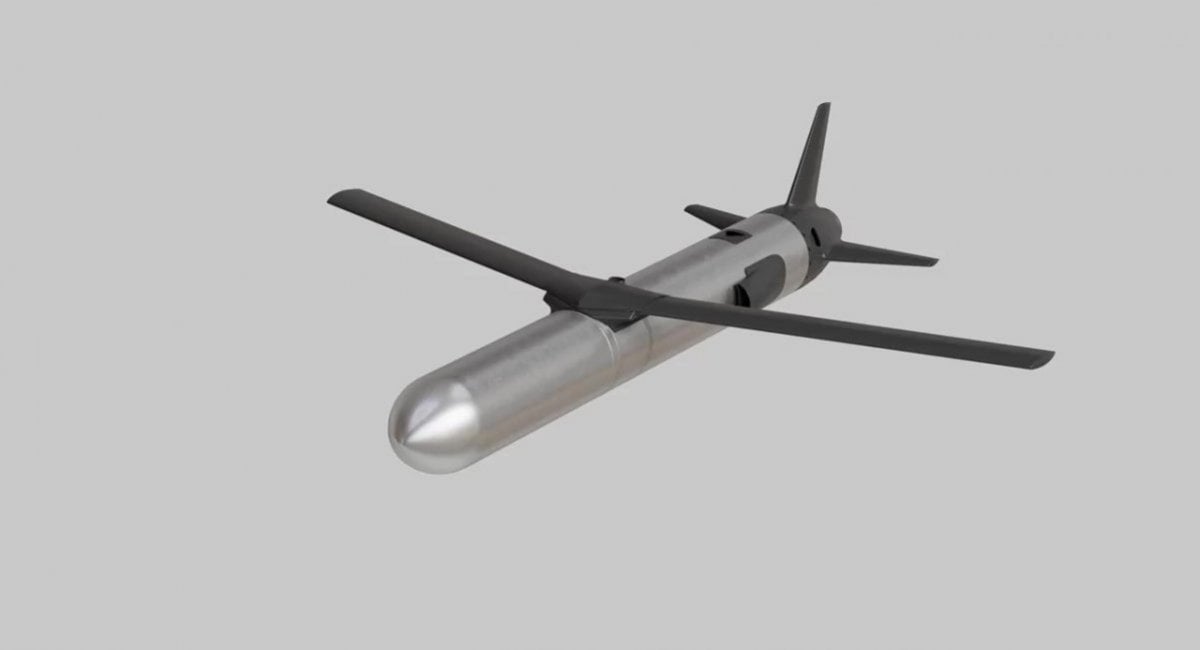
    The Ruta OWA drone — actively used by Ukrainian forces for strikes at ranges up to 300 km — is being improved with a new visual navigation system, tested in combat conditions.

    The Ruta, manufactured by Destinus, is essentially a miniature cruise missile. It is often referred to as a “missile drone.” It will receive a new navigation system enabling high-precision strikes in GPS-denied contested environments, especially those from enemy electronic warfare (EW) countermeasures.

    The new navigation and guidance system will be provided by Spanish company UAV Navigation, part of Grupo Oesía, which entered an agreement with the Ukrainian Destinus on May 13.

    The agreement will focus on Ruta in its first phase. Ruta is the first low-cost missile (LCM) drone developed by Destinus designed to operate in highly contested scenarios. The system incorporates an advanced guidance, navigation and control system, developed by UAV Navigation-Grupo Oesía, which has been validated in real-world combat conditions, including GNSS-denied environments or under jamming and spoofing attacks.

    Ruta offers autonomous flight capabilities, target-referenced navigation, terminal optical guidance, and coordinated swarm operations, enabling the execution of complex synchronized attack maneuvers to saturate or deceive defense systems. The platform flies at a cruising speed of Mach 0.8, has a range of up to 500 km, and a terminal impact accuracy of 15 square meters.

  • Hi-Target and GMV sign strategic alliance on high-precision positioning solutions

    Hi-Target and GMV sign strategic alliance on high-precision positioning solutions

    Hi-Target, a Chinese high-precision positioning enterprise and manufacturer of high-end GNSS equipment, and GMV, a global technology group specializing in advanced navigation solutions, have established a strategic alliance to jointly develop integrated differential service solutions.

    Through this partnership, Hi-Target and GMV support a wide range of automation-driven positioning applications — ADAS, robotics, UAVs, precision agriculture, smart infrastructure and intelligent mobility systems.

    As industries progressively adopt automated technologies, precise and reliable positioning has become a foundational requirement across application domains. From today’s L2 and L2+ driver assistance systems (ADAS) in vehicles to autonomous UAV operations, robotic platforms, and the emerging needs of Level 3+ mobility solutions, the demand for scalable and high-accuracy positioning continues to grow.

    The strategic alliance between the two companies leverages Hi-Target’s strengths in high-precision satellite navigation and user-grade GNSS systems, along with GMV’s extensive global expertise in precise navigation algorithms and satellite-based augmentation services. The result will be a high-availability, low-latency positioning service with global reach.

    By combining their complementary technologies, including user-grade GNSS hardware, correction services, and augmentation infrastructure, Hi-Target and GMV will facilitate the adoption of high-precision positioning across various industries and geographic regions.

    Their collaboration will support system integrators, OEMs, and solution providers in accelerating the development and deployment of automation in sectors with increasing levels of autonomy.

  • India’s UAV progress threatened by GNSS jamming; infiniDome offers solutions

    India’s UAV progress threatened by GNSS jamming; infiniDome offers solutions

    India continues to make significant progress in developing indigenous unmanned aerial vehicles, loitering munitions and autonomous systems. However, many of these platforms face a critical vulnerability: their reliance on unprotected satellite navigation. This threat is no longer theoretical.

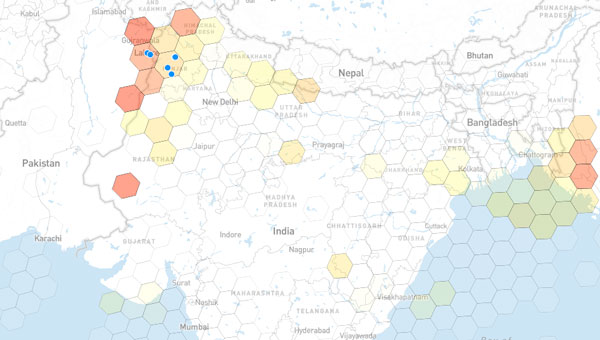
    Recent escalations with Pakistan, including drone incursions, cyber operations and suspected GPS interference near sensitive border areas, have underscored the growing use of low-cost, easily concealed GNSS jamming tools. Such devices can disrupt UAV operations, sever navigation links and compromise mission success, regardless of how sophisticated the system may be.

    Without robust GNSS protection, even the most advanced unmanned systems are at risk of operational failure, loss of control and diminished national security capabilities.

    One countermeasure comes from infiniDome, a global provider of GNSS protection technology. The company develops lightweight, easily integrable anti-jamming solutions that are already deployed by leading defense forces to ensure continuous operation in contested electromagnetic environments.

    InfiniDome has extensive operational experience in active conflict zones and a strategic focus on compact, cost-effective systems. These solutions are well suited to India’s growing demand for scalable, lightweight UAVs and autonomous platforms, according to the company.

  • Seen & Heard: Google’s scammer takedown, Harvard’s free navigation history course and more

    Seen & Heard: Google’s scammer takedown, Harvard’s free navigation history course and more

    “Seen & Heard” is a monthly feature of GPS World magazine, traveling the world to capture interesting and unusual news stories involving the GNSS/PNT industry.


    Free navigation history course

    Photo: Harvard University
    Photo: Harvard University

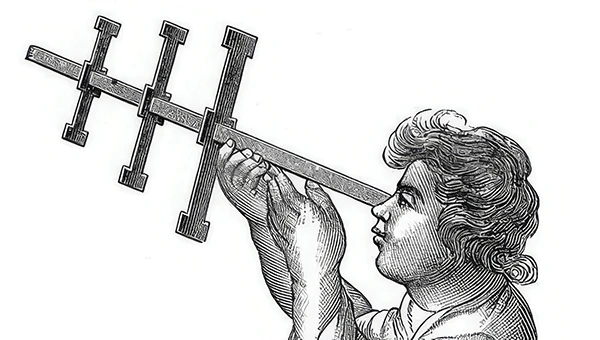
    Harvard University offers PredictionX: Lost Without Longitude, a free online course that examines the evolution of navigation from ancient methods to modern technologies. The program explores the science and history of navigation, focusing on the challenges of determining longitude before GPS existed. It highlights key advancements, such as John Harrison’s marine chronometer and the Longitude Prize. Through multimedia content — including videos, infographics and Worldwide Telescope tours — the course is designed to demonstrate how centuries of advancement in navigation enabled humanity to achieve milestones such as landing on the moon.

    Self-driving cars collect geospatial data

    Photo: Finnish Geospatial Research Institute
    Photo: Finnish Geospatial Research Institute

    In Finland, self-driving cars are being used to collect geospatial data to address urban challenges. The ARVO autonomous vehicle from the Finnish Geospatial Research Institute is equipped with high-precision sensors that map its environment in real-time, collecting information on road conditions, urban vegetation as carbon sinks and factors influencing flood risks. In partnership with Aalto University and funded by the European Regional Development Fund, this initiative seeks to explore various uses of this data, such as city planning, environmental monitoring and infrastructure management.

    Stopping scammers

    Photo: Carlos Alvarez / iStock Editorial / Getty Images Plus / Getty Image
    Photo: Carlos Alvarez / iStock Editorial / Getty Images Plus / Getty Image

    Google has taken legal action against a network of scammers responsible for creating more than 10,000 fake business listings on Google Maps. The scammers fabricated profiles targeting urgent service industries and bolstered them with fake reviews to appear credible. Victims were misled into contacting these fake businesses, which then sold their personal information as “leads” to legitimate service providers without consent. Google has removed the fake listings and is suing individuals involved in the scheme, CBS News reported.

    Mapping Uganda’s disappearing tropical glaciers

    Photo: guenterguni / E+ / Getty Image
    Photo: guenterguni / E+ / Getty Image

    Project Pressure, in collaboration with UNESCO and the Uganda Wildlife Authority, conducted an expedition to the Rwenzori Mountains to map the region’s disappearing tropical glaciers. The team created the first 3D model of Mt. Stanley’s glaciers and installed monitoring equipment, revealing that Mt. Speke and Mt. Baker have lost their glaciers entirely, while the Stanley Plateau Glacier has shrunk by 29.5 percent since 2020 and is heavily fragmented. The project aims to continue monitoring the glacial retreat, develop mitigation strategies and engage the local community in ongoing research.

  • GNSS under attack: Recognizing and mitigating jamming and spoofing threats

    GNSS under attack: Recognizing and mitigating jamming and spoofing threats

    In today’s hyper-connected world, GNSS signals face unprecedented threats from jamming and spoofing attacks. As these signals traverse 20,000 km from satellites to Earth, they become vulnerable to interference that can degrade positioning accuracy or eliminate position availability altogether. Understanding how to recognize these attacks and implement protective measures has become critical for industries depending on precise positioning.

    Two Distinct Threats

    Jamming occurs when signals are disrupted or denied, making it difficult or impossible for receivers to interpret information correctly. In contrast, spoofing involves malicious transmission of fake signals that mimic real ones, tricking receivers into delivering inaccurate location data. Spoofing is basically someone trying to pretend they’re a real satellite.

    While jamming focuses on disruption through noise and interference, spoofing relies on deception, sending false signals that systems accept as legitimate. Both pose serious challenges, but their differences require unique detection and prevention strategies.

    When jamming occurs — whether it be noise (chirp) jamming, tone jamming or pulsed jamming, devices may experience significant signal degradation resulting in interrupted communication and loss of both data and situational awareness. By contrast, spoofing — be it meaconing, coherent or signal overlay — can subtly alter data, leading to false readings and misguided actions.

    How to Know If Your Signal is Under Attack

    With the surge in electronic devices in today’s IoT-rich world, interference from radio frequencies — whether intentional or situational — is common. This is partly because multiple sensors are often situated close to each other on equipment, vehicles, drones and more. So how do you know if your system is under attack? GNSS interference typically manifests through several telltale indicators, including erratic or unstable device performance, frequent signal interruptions or a marked decline in data precision. Deception often reveals itself via red flags such as unusual location data inconsistencies, abrupt and unexplained shifts in data patterns, signal quality degradation (e.g., drop in carrier-to-noise ratio or high noise floor), sudden position drifts, frequent re-acquiring of signals, large discrepancies detected by Kalman filters or unexpected signal peaks.

    With jamming, the first step is to recognize you’re being jammed by using a receiver as a jamming detector and utilize an onboard spectrum analyzer to identify interfering frequencies. Not only is this valuable for external jamming, but it is hugely helpful for companies as many accidentally self-jam with other components on the device.

    Identifying these signs promptly is crucial for preserving system functionality and preventing potentially catastrophic consequences.

    Industry Impact: Beyond Navigation

    Beyond the military and cybersecurity, public safety, transportation, marine, construction, agriculture and utilities are highly susceptible, posing a significant threat.

    Autonomous vehicle systems face the greatest risk, as they depend heavily on GNSS data for navigation accuracy and split-second decisions. Jamming can cause vehicles to struggle with lane-keeping, misinterpret traffic signals, or stop without warning, while spoofing presents a more subtle, yet still dangerous threat by potentially diverting vehicles from intended routes with harmful intentions, increasing the likelihood of collisions with obstacles, other vehicles or people.

    Interruptions in key transportation networks can also lead to vehicles being misdirected, potentially leading to collisions, and even becoming targets for malicious actions like cargo theft. Railway systems have emerged as major targets, with “ransomware attacks becoming the most prominent threat against the rail sector” across the EU, according to Marianthi Theocharidou of the European Union Agency for Cybersecurity (ENISA). In the Baltic region alone, 46,000 aircraft exhibited possible jamming signs between August 2023 and March 2024.

    In ag, precision farming technologies requiring reliable data for optimizing planting, watering and harvesting schedules face major disruptions that translate directly into resource waste and profit drain.

    Navigation systems critical for safety and cargo protection are particularly vulnerable in maritime and logistics. Recent incidents include the hijacking of trucks carrying over $1 million worth of Santo tequila in Texas, where investigations suspect spoofing made the vehicles appear in the right location when they weren’t.

    The Growing Accessibility of Attacks

    Where skilled hackers once dominated the scene, inexpensive jammers now flood the market. Despite being illegal in most countries, these devices — often disguised as USB sticks or car chargers — have become increasingly accessible. One tiny 10mW chirp jammer plugged into a car socket can knock out GNSS signals within several miles.

    Spoofing, once a complex task, is now achievable using open-source software or low-cost components, making robust countermeasures essential for systems across all industries.

    Trimble’s Multi-Layered Defense

    When looking for ways to mitigate these risks, it’s important to look for technology with embedded security features designed to combat both jamming and spoofing via cutting-edge innovation in radio frequency and processing technologies. Trimble’ GNSS receivers incorporate Maxwell technology, including:

    • Digital Signal Processing (DSP) – rejection of spoofed signals through sophisticated tracking algorithms to detect multiple signals.
    • Satellite Data Verification – historical logging of orbital parameters to detect unexpected changes or deviations from reasonable bounds, enhancing reliability.
    • Autonomous integrity monitoring (RAIM) for identifying and rejecting potentially spoofed satellite data, a practice well-established in the aviation industry.
    • Real-time monitoring with position sanity checks, limited satellite search windows and worldwide testing to stay ahead of the curve in developing further protection technologies.

    Trimble solutions monitor and analyze the signals received in each of the GNSS frequency bands using the receiver’s ProPoint positioning engine. Trimble ProPoint GNSS technology allows for flexible signal management, which helps mitigate the effects of signal degradation and provides a GNSS constellation-agnostic operation. For example, when individual frequencies and constellations are spoofed or jammed, the receiver continues to provide positioning using available measurements. The onboard spectrum analyzer feature helps users identify interference on the bench or post-mission and take steps to remove.

    In the past year, Trimble has added support for Galileo Open Service Navigation Message Authentication (OSNMA).This helps safeguards receivers by verifying the authenticity of Galileo navigation data, effectively mitigating data-level spoofing threats and bolstering overall system security. ProPoint receivers also have the ability to verify GPS and BeiDou-3 broadcast ephemeris via RTX NMA. This uses Trimble’s global network of reference stations with validity flags sent over MSS and IP links.

    The Path Forward

    With spoofing incidents expected to rise, the time for vigilance is now. Organizations must conduct risk assessments to identify vulnerabilities, implement multi-layered defense strategies and stay informed about emerging threats.

    Through participation in global test programs like the JammerTest in Norway and the DHS’s GET-CI, Trimble has demonstrated the importance of continuous innovation in protection technology. During the JammerTest in September 2024, Trimble engineers joined the world’s largest GNSS jamming and spoofing exercise, testing the resilience of its positioning technology. The team drove a van packed with receivers and raw radio frequency (RF) data recorders from Munich to Norway. On the way they collected data through various terrains and conditions, including tunnels, ferries and bridges. On location, they participated in intense jamming, spoofing and meaconing tests across multiple sites, gathering data on various Trimble receivers, and also observing the performance of Trimble IonoGuard technology in the high ionospheric activity of northern latitudes. The event provided critical insights into GNSS interference detection and protection from jamming and spoofing, ultimately shaping the future development of Trimble Positioning Services and the industry.

    As GNSS signals become increasingly critical for autonomous systems, smart cities and precision applications, protecting their integrity isn’t just about maintaining accuracy—it’s about safeguarding lives, preserving economic interests and ensuring the reliable operation of essential infrastructure.

    The question isn’t whether GNSS interference will affect your systems, but when. By recognizing the warning signs, understanding the risks, and implementing robust protection measures, organizations can stay ahead of evolving threats and maintain the precision their operations demand.