Author: Jesse Khalil

  • Inside the new NSRS beta tools and a journey through geodetic history

    Inside the new NSRS beta tools and a journey through geodetic history

    This newsletter is going to highlight some history of the Coast and Geodetic Survey and provide the latest information on the National Geodetic Survey (NGS) new National Spatial Reference System (NSRS). First, every year my brother and I get together and travel to visit friends and relatives. He lives in Montana, and I live in North Carolina, so our yearly trips are typically 10 to 14 days long. As in all trips, I look for geodetic marks along the way. This year we traveled to coastal Maine to visit lighthouses and of course eat lobster rolls. We visited 12 Lighthouses along the Maine Coast. Lighthouses have both historical and navigational importance. The lighthouses were essential in guiding sailors through rocky shores. Portland Head Light commissioned by George Washington in 1791 is Maine’s oldest lighthouse and still guides vessels into Portland Harbor. We found NOS benchmark 841 8031 B 1979 on the grounds of this lighthouse. Pemaquid Point Lighthouse is managed by the Friends of Pemaquid Point Lighthouse, a chapter of the American Lighthouse Foundation, and remains an active aid to navigation under the ownership of the U.S. Coast Guard. We could climb up the Pemaquid Point Lighthouse, so I took a photo of the view from the top.

    Portland Head Light (Credit: Dave Zilkoski)
    Portland Head Light (Credit: Dave Zilkoski)

    One of my brother’s requests was to visit the first place in the continental United States to see the sunrise. However, the location of the first place in the continental United States to witness the sunrise depends on the time of year. As indicated in the box titled “First Places to See the Sunrise in the Continental U.S.” Mars Hill is the first place to witness the sunrise in June.


    Mark located on grounds of Portland Head Light. (Credit: Dave Zilkoski)
    841 8031 B 1979 — Mark located on grounds of Portland Head Light. (Credit: Dave Zilkoski)
    Pemaquid Point Lighthouse (Credit: Dave Zilkoski)
    Pemaquid Point Lighthouse (Credit: Dave Zilkoski)
    View from Pemaquid Point Lighthouse (Credit: Dave Zilkoski)
    View from Pemaquid Point Lighthouse (Credit: Dave Zilkoski)

    First Places to See the Sunrise in the Continental U.S.

    • October 7 to March 6: During these months, Cadillac Mountain in Acadia National Park, Maine, holds the distinction of being the first place in the continental U.S. to see the sunrise. Its elevation of 1,530 feet and eastern location make it ideal for early morning views. reddit.com+10nps.gov+10acadiamagic.com+10
    • March 25 to September 18: In the spring and summer, Mars Hill in Aroostook County, Maine, takes the title. Its northeastern position allows it to catch the first rays of sunlight during this period. newengland.com+2en.wikipedia.org+2aa.usno.navy.mil+2

    Around the Equinoxes: Approximately during the weeks surrounding the spring and fall equinoxes, West Quoddy Head in Lubec, Maine—the easternmost point of the contiguous U.S.—experiences the nation’s first sunrise. reddit.com+2en.wikipedia.org+2en.wikipedia.org+2


    That said, when we travel together, we always recover geodetic marks, so we chose to visit Cadillac Mountain even though in June the first place is located on Mars Hill in Aroostook County.  

    As many of you know, I worked for NGS for 35 years so reconning monuments is exciting to me. We found six marks in a radius of about two hundred meters on Cadillac Mountain. We will talk about them in a minute.

    Cadillac Mountain was important to me because from 1833 to 1898, the Coast and Geodetic Survey performed a triangulation project that extended from Calias, Maine, to New Orleans, Louisiana. The project was published as the Eastern Oblique Arc of the United States. The station Mount Desert 1856 that was located on Cadillac Mountain was part of this project. A report published in 1902 describes the Eastern Oblique Arc project and can be downloaded here.
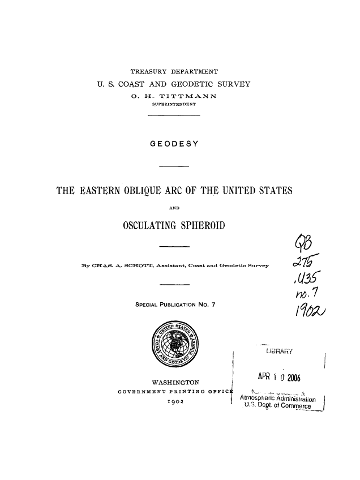
    USCGS Special Publication Number 7. (Credit: USGS)
    USCGS Special Publication Number 7. (Credit: USGS)

    According to the 1902 report, horizontal observations at station Mount Desert 1856 were acquired by Alexander Dallas Bache. That may not mean much to most people, but Mr. Bache was the second superintendent of the Coast Survey and was particularly important to the advancement of geodesy in the United States. As a side note, the Coast Survey was renamed the Coast and Geodetic Survey in 1878. The change reflected the agency’s expanded mission beyond coastal charting to include geodetic surveys of the nation’s interior, prompted by the growing importance of geodesy in its work.


    Bache’s leadership of the U.S. Coast Survey

    In 1843, Bache was appointed superintendent of the United States Coast Survey, succeeding Ferdinand Rudolph Hassler. Under his leadership, the Coast Survey expanded its missions to include hydrography, geodesy, topography, and the printing arts. He initiated geomagnetic studies, directed tide observers to make meteorological observations, and developed mathematical techniques for tide predictions and adjusting triangulation networks. Bache’s administrative skills transformed the Coast Survey into one of the foremost scientific organizations globally, providing critical data for navigation and commerce.
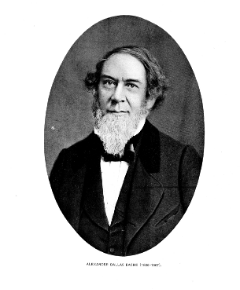
    Alexander Dallas Bache.
    Alexander Dallas Bache

    According to the description of Mount Desert in the 1902 USCGS report, the station was marked by a copper bolt in a ledge (see the box titled “1856 Description of Mount Desert”). The 1902 description of the station on the NGS Datasheet stated that it was a hole drilled in a rock (see the box titled “1902 Description of Mount Desert”). I’m not sure why there is a discrepancy between the two descriptions but in 1931 the Maine Geodetic Survey found the drill hole, and based on measured references to other drill holes in the area that were documented in the original description decided that it was the location of the original station (see the box titled “1931 Description of Mount Desert”).  At that time, a Coast and Geodetic Survey Disk with Reference Marks were installed by the Maine Geodetic Survey.

    A description of Mount Desert from 1856. (Photo: NGS)
    A description of Mount Desert from 1856. (Photo: NGS)
    A Description of Mount Desert from 1902
    A description of Mount Desert from 1902.
    A description of Mount Desert from 1931.
    A description of Mount Desert from 1931.
    A description of Mount Desert from 1931.
    A description of Mount Desert from 1931.

    As I previously stated, we found six marks in the area. The boxes titled “Photos of Mount Desert 1856 and Reference Marks” and “Photos of Other Marks on Cadillac Mountain” provide photos of the monuments we found on Cadillac Mountain.  One may note that the reference mark 2 monument is in worse shape than the reference mark 1 and the Mount Desert monument. The 1944 recovery note stated that reference mark 2 was covered with roadway stone. There was not any stone covering reference mark 2 when I found it. Reference mark 1 is located behind some trees and out of sight of the path.

    When I arrived at the site, there were a group of people looking at reference mark 2. I held a little lecture on the importance of geodetic monuments and how this site was first occupied in 1856; and, of course, I highlighted the importance of geodesy.

    Photos of Mount Desert 1856 and reference marks. (Credit: Dave Zilkoski)
    Photos of Mount Desert 1856 and reference marks. (Credit: Dave Zilkoski)

    I was thrilled to stand in the very spot where Alexander Dallas Bache took geodetic measurements in 1856. [I know—people joke that I need to get a life, all because I get so fired up over geodetic monuments.]

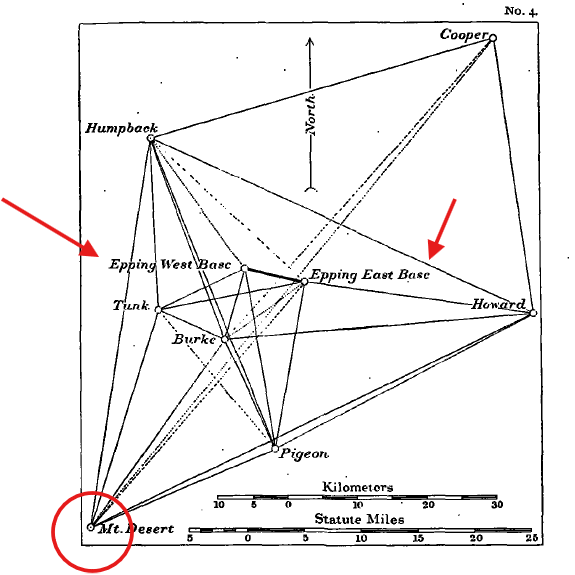
    The box titled “Abstract of Observations at Mount Desert” provides a summary of the directions from Mount Desert to the stations involved in this phase of the project. The box also includes a photo of an instrument, a 75 cm theodolite, which was used to perform the observations. The box titled “Diagram of Network Depicting Epping Base Line” provides a diagram that was included in the 1902 USCGS report.

    As a side note: during the 1970s as a NGS employee, I personally coded abstracts similar to this one to convert archival data into computer-readable form in support of the North American Datum of 1983 (NAD83) project. Once all data were in computer-readable form, they were reviewed for correctness and combined in an adjustment resulting in what is known as NAD 83 (1986).  See the NGS report for some details of the NAD 83 (1986) here.

    Abstract of Observations at Mount Desert (Credit: NGS)
    Abstract of Observations at Mount Desert (Credit: NGS)

    Diagram of network depicting Epping Base Line. (Credit: NGS)
    Diagram of network depicting Epping Base Line. (Credit: NGS)

    The other marks we found on Cadillac Mountain included a US Geological Survey Benchmark – K 24 1934, a bent pipe denoted as Cadillac Ground, and a Department of Interior Geological Mark – Cadillac 1975. All these marks are within a 200-meter radius of each other. My understanding is that Cadillac Ground was established because Mount Desert was obstructed by trees. I have provided weblinks for those that would like more information on these marks.

    Photos of other marks on Cadillac Mountain. From left to right, K 24 1934, Cadillac Ground and Cadillac 1975. (Credit: Dave Zilkoski)
    Photos of other marks on Cadillac Mountain. From left to right, K 24 1934, Cadillac Ground and Cadillac 1975. (Credit: Dave Zilkoski)

    After visiting more lighthouses along the Maine Coast, we traveled back to Boston and visited Waldon Pond and Thoreau’s family home. Why Thoreau you ask? In 2018, the Surveyors Historical Society and NSPS Foundation recognized Thoreau for his work as a surveyor by establishing a commemorative monument at Thoreau’s family farm.

    Thoreau described surveying as a “noble employment” that kept him close to nature: “Surveying … brings you within hearing of [the birds]” – https://www.heritagesurveys.com/famous-surveyors. Surveying and geodesy are indeed noble professions; they provide the foundation for all geospatial products and services.

    Photo of Commemorative Mark at Thoreau’s House. From left to right, Thoreau – A Surveyor, Thoreau Monument and drawing lines. (Credit: Dave Zilkoski)
    Photo of Commemorative Mark at Thoreau’s House. From left to right, Thoreau – A Surveyor, Thoreau Monument and drawing lines. (Credit: Dave Zilkoski)

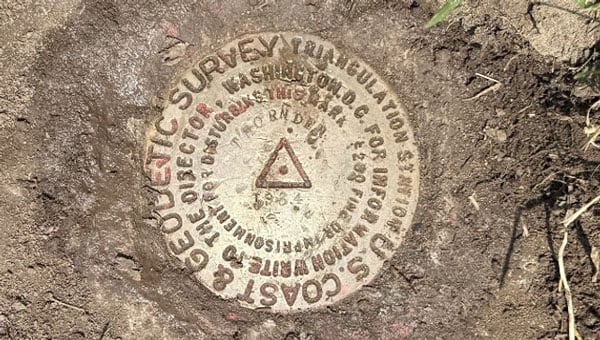
    Finally, we left Boston for Syracuse to visit my younger brother and sister. I attended the SUNY College of Environmental Science and Forestry (SUNY ESF) which is immediately adjacent to Syracuse University campus. Both of my brothers attended Syracuse University, so we like to walk around campus whenever we visit Syracuse. During our trip to the University, we recovered the monument Thornden 1934. Thornden 1934 was significant to me because I recovered this monument over 50 years ago, as part of a special project that I performed for my geodesy class.

    Thornden 1934 (Credit: Dave Zilkoski)
    Thornden 1934 (Credit: Dave Zilkoski)

    I hope this was not too boring for you, but I real enjoy history and especially the history of the geodetic network of the United States. Today, you can use modern surveying technology to obtain a more accurate coordinate in seconds where it took days to months in the past. That is amazing!


    Now, what is the latest with the modernization of the National Spatial Reference System? On June 17, NGS announced that they incorporated four groups of NSRS modernization products to the NGS beta website.

    Multiple NSRS Modernization Products Published to Beta

    NGS has released the following four groups of products to the NGS beta website to solicit review and feedback from stakeholders as part of the modernization of the National Spatial Reference System (NSRS): (Note: These products are not final and should not be used for anything other than review and testing.)

    North American-Pacific Geopotential Datum of 2022 (NAPGD2022). This datum will replace the North American Vertical Datum of 1988 (NAVD 88) and all other vertical datums for islands in the United States. It will serve as a foundational component of the modernized National Spatial Reference System (NSRS), providing precise definitions for orthometric height (elevation). The release includes the defining grids that collectively make up the datum along with a number of supporting products to visualize the datum.

    Products. All NAPGD2022 products are provided as grids for the following: GEOID2022, DEFLEC2022, GRAV2022.

    Example coordinates. Coordinates and product values are computed for numerous example points throughout NAPGD2022 and provided in a table. NAPGD2022 Experience. Interactive online maps showing NAPGD2022 products for all regions that can be used on a computer or mobile device to query any location.

    Maps of NAPGD2022 products. Static map images of NAPGD2022 products for all regions.New Terrestrial Reference Frames of 2022 for North America (NATRF2022), Pacific (PATRF2022), Caribbean (CATRF2022), and Mariana (MATRF2022) plates. These four geodetic reference frames will replace the North American Datum of 1983 (NAD 83). They will serve as a foundational component of the modernized NSRS, providing precise definitions for geodetic latitude, longitude, and ellipsoidal height.

    Euler Pole Parameters of 2022. All of the new terrestrial reference frames are defined by transformation from the International Terrestrial Reference Frame of 2020 (ITRF2020) using Euler Pole Parameters (EPPs) that model tectonic plate rotation.

    State Plane Coordinate System of 2022 (SPCS2022). A system of map projections for accessing the modernized NSRS. Zone designs have been incorporated into the following beta products and services:

    Zone information tables. SPCS2022 zone definitions, example coordinate computation results, minimum and maximum coordinate values, and minimum coordinate differences with overlapping SPCS2022 zones and with other coordinate systems, provided as interactive tables that can be sorted and filtered.

    SPCS2022 Experience. Interactive online maps showing distortion for all SPCS2022 zones that can be used on a computer or mobile device to get distortion at any location or to view zone definitions.

    Maps of SPCS2022 zones and distortion. Static map images of SPCS2022 zone layers, number of zones, and distortion with performance statistics.

    NGS Coordinate Conversion and Transformation Tool (NCAT). This version can be used to perform SPCS2022 coordinate conversions at any location for all SPCS2022 zones. Later beta versions will include the ability to transform between reference frames and vertical datums.

    Products found on the NGS beta website are preliminary releases that are for testing and evaluation only; they are not final products nor do they contain any authoritative NGS data or tools. To provide feedback on any of the content on this site, please email [email protected].


    Everyone should review these products and provide their feedback to NGS. That said, my April 2025 newsletter highlighted the NAPGD2022 Alpha product that was moved to the Beta site. The Beta product is like the Alpha product, but it does not have an option for an interactive computation. The Interactive Computation Option provided essential information about NAPGD2022 and would be helpful to geospatial users for obtaining a better understanding of the differences between NADGP2022 orthometric heights and NAVD 88, and GEOID2022 geoid heights and hybrid GEOID18 geoid heights. My April 2025 newsletter highlighted the interactive computation option.
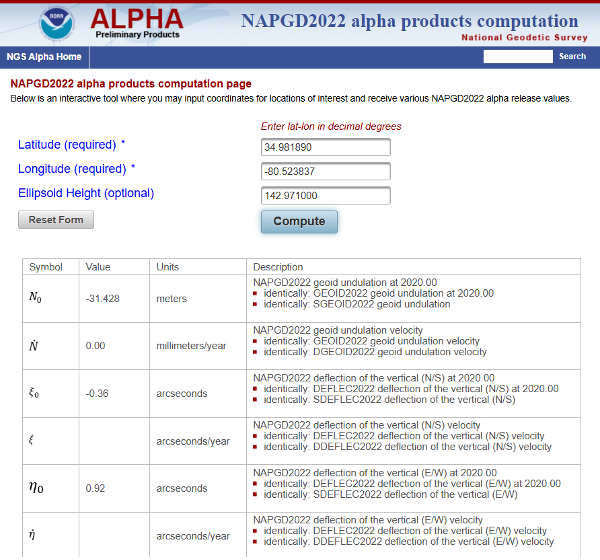
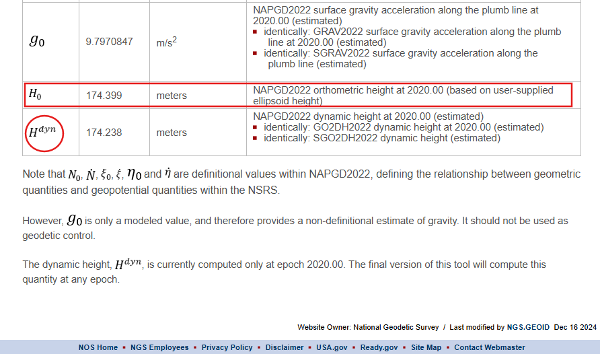
    Alpha interactive computation page (Credit: NGS)
    Alpha interactive computation page (Credit: NGS)
    Alpha interactive computation page (Credit: NGS)

    As noted in my April 2025 newsletter, I downloaded the data and created my own maps to better highlight local variations. Although users can still view the original via the interactive online map, this personalized version offers clearer insights.

    Here are several of my comments on the Beta products based on my preliminary review:

    • The NAPGD2022 difference map (NAPGD2022 minus Historical in meters) uses 25 cm intervals, which are too coarse to reveal the finer local variations between published benchmarks accurately.
    • The NAPGD2022 Difference map should have an overlay of the marks used in the creation of the difference map. This would allow users to identify marks in their region of interest. Clicking on a mark should link to the NGS datasheet and Passive Mark Page.
    • The beta page for NATRF2022, PATRF2022, CATRF2022, and MATRF2022 is not particularly helpful for everyday geospatial users. There should be an Interactive Computation Option to enter NAD83 (2011), epoch 2010 coordinates where the routine transforms the coordinates into ITRF 2020, epoch 2020, as well as estimates in the new terrestrial reference frames – NATRF2022, CATRF2022, PATRF2022, and MATR2022.
    • Both the State Plane Coordinate System of 2022 (SPCS2022) and The NGS Coordinate Conversion and Transformation Tool (NCAT) are good tools for users to obtain an understanding of the differences and changes in the SPCS especially for their State. That said, like above, there should be an option to enter NAD83 (2011), epoch 2010 coordinates where the routine will transform the coordinates into ITRF 2020, epoch 2020, as well as estimates in the new terrestrial reference frames – NATRF2022, CATRF2022, PATRF2022, and MATR2022. The routine does have a note that states users can transform their coordinates using HTDP, but NGS should incorporate this process in the NCAT beta product.
      • Note from Beta NCAT product: This beta version of NCAT supports beta State Plane Coordinate System of 2022 (SPCS2022) but not transformations between reference frames or geopotential datums. NAD 83 latitude and longitude can be used as input, but the output coordinates will differ horizontally from actual SPCS2022 by up to a few meters, depending on location (likewise for UTM and USNG). If NAD 83 ellipsoid heights are used, the linear distortion and combined factor will differ from SPCS2022 values by a small amount, within ±0.3 parts per million (ppm). To reduce these differences, NAD83 epoch 2010.0 coordinates can first be transformed to ITRF2020 epoch 2020.0 using the Horizontal Time-Dependent Positioning (HTDP) tool.

    I plan to provide these comments to NGS through their feedback email process. Everyone should take time to review these products and provide your feedback to NGS. Remember, NGS placed these four groups of products on the NGS beta website to solicit review and feedback from stakeholders as part of the modernization of the National Spatial Reference System (NSRS) process. Users should review these Beta products and consider two questions:

    1. Do these products provide sufficient information and detail for documenting how I will deliver my products and services under the new NSRS?

    2. Do I need additional information or tools from the NGS to better understand the changes and impacts of the new NSRS?

    Your feedback will help NGS improve the Beta products.

  • BKZS: Türkiye’s regional GNSS system takes shape

    BKZS: Türkiye’s regional GNSS system takes shape

    Türkiye is laying the groundwork for its own satellite navigation system, the Bölgesel Konumlama ve Zamanlama Sistemi (BKZS), or Regional Positioning and Timing System. As a key pillar of Türkiye’s 2030 Industry and Technology Strategy, BKZS reflects the country’s ambition to gain strategic autonomy in satellite-based positioning, navigation and timing (PNT), moving away from dependence on foreign systems such as GPS.

    Strategic imperatives and security concerns

    BKZS was established as one of the ten flagship goals of Türkiye’s National Space Program, introduced in 2021. It directly addresses growing national security concerns: in times of geopolitical conflict, GNSS signals can be jammed or disabled — leaving nations vulnerable if reliant on foreign services. President Erdoğan’s 2030 roadmap emphasizes preparing for “a new era of challenges,” where technological independence is seen as vital to national sovereignty.

    Building the foundation: Atomic clocks and CubeSats

    At the core of BKZS development is innovative timing technology. The TUBITAK National Metrology Institute has designed Türkiye’s first domestically produced rubidium-based atomic clock for use in positioning satellites. Developed in collaboration with the Turkish Space Agency, the prototype is undergoing qualification testing. Considering that atomic clocks are among the most expensive and sensitive components of a GNSS system, their in-house development not only reduces reliance on foreign suppliers but also delivers significant cost savings and strengthens national expertise. The strategic plan involves an initial technology demonstration phase using a 6U CubeSat, a miniaturized satellite based on the CubeSat standard. This satellite — currently in production — will test the atomic clock in orbit and gather critical performance data, helping to validate system components and gain operational experience ahead of full deployment.

    Regional scope with global ambitions

    BKZS is being designed as a regional system focused on Türkiye and its surrounding geography. Preliminary architecture envisions an eight-satellite constellation with an estimated cost of $2.8 billion. While this figure underscores the program’s scale, it also reflects the strategic priority attached to securing sovereign PNT capabilities. Military users stand to gain the most immediate benefits, with access to secure, independent timing and positioning data. However, the system is also intended for broad civilian use, including smart transportation systems, precision agriculture, emergency response and disaster management.

    Integrated into a broader space strategy

    BKZS is not being developed in isolation. It is part of Türkiye’s wider National Space Program, which includes lunar exploration and autonomous launch capabilities. The Turkish Space Agency oversees coordination, while the Presidency of Defense Industries provides funding and logistical support. This ecosystem approach is designed to foster technological self-reliance across the entire space value chain. Notably, the private sector is also playing a role. Baykar’s space subsidiary, Fergani, is developing a complementary Turkish GNSS constellation with an ambitious plan to launch 100 satellites. Two of these satellites have already been built, with the first scheduled for launch in 2024, demonstrating multiple pathways toward achieving full domestic capability.

    Economic impact and industrial development

    BKZS also supports Türkiye’s economic goals. The 2030 Strategy includes a target to triple high-tech exports to $30 billion. Space technology is expected to contribute significantly to this goal by generating new opportunities for Turkish firms in satellite design, navigation electronics and advanced manufacturing.

    By fostering domestic expertise, BKZS strengthens the foundation for a sustainable, self-sufficient aerospace sector, one capable of supporting both defense and commercial applications.

    Aligning with a global trend

    Türkiye’s efforts echo a growing global trend: building regional or national GNSS systems to reduce reliance on global services. Reflecting this shift, India’s NavIC is a fully operational regional GNSS; Japan’s QZSS, also operational, functions primarily as a GPS augmentation system over the Asia-Pacific; South Korea’s KPS is currently under development to provide independent PNT services across the Korean Peninsula. China’s BeiDou system also began as a regional constellation focused on the Asia-Pacific before expanding to become a global navigation system. Türkiye’s geographic position — at the crossroads of Europe, Asia and the Middle East — positions it uniquely as a potential regional hub for satellite navigation services. While the project is rooted in national objectives, it also opens the door to international cooperation. Italy has emerged as a prospective partner, particularly in advancing space-qualified technologies, offering mutual benefits for both countries.

    Looking ahead

    Beyond 2030, TTürkiye envisions BKZS as a stepping stone toward a broader space infrastructure. This initiative signifies a strategic commitment to establishing a sustained and autonomous presence in space.

    Of course, the success of BKZS will depend on more than ambition. Sustained political commitment, reliable funding, and continued advances in core technologies like atomic clocks and satellite systems will be essential. If these conditions are met, BKZS has the potential not only to enhance Türkiye’s strategic autonomy but also to establish the country as a key contributor to regional — and potentially global — GNSS capability.

  • Rocket Lab to launch ESA’s first LEO-PNT navigation satellites

    Rocket Lab to launch ESA’s first LEO-PNT navigation satellites

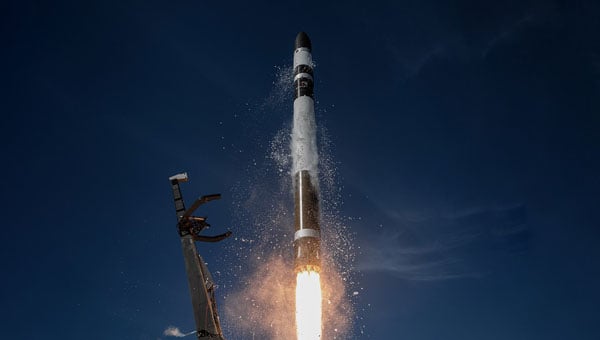
    The European Space Agency (ESA) has selected Rocket Lab Corporation to launch a dedicated Electron mission, marking the first time the company will deploy satellites for ESA’s next-generation navigation constellation, low-Earth orbit positioning, navigation and timing (LEO-PNT). Thales Alenia Space and GMV, two European satellite prime contractors, are providing the “Pathfinder A” spacecraft for the mission. Rocket Lab plans to launch the satellites from Launch Complex 1 no earlier than December 2025.

    The mission will place the two satellites in a 510 km LEO to test a new method of delivering location, direction and timing services from satellites in low orbit, known as LEO-PNT. ESA will use this demonstration to evaluate how a low Earth orbit satellite fleet can work with the Galileo and EGNOS constellations, which provide Europe’s global navigation system from higher orbits.

    This contract highlights Rocket Lab’s growing role as a launch provider for European constellation operators and demonstrates the Electron rocket’s strong reputation. Earlier this year, Rocket Lab deployed a full constellation of IoT satellites for French operator Kinéis and launched a global wildfire detection mission for Germany-based OroraTech. Since 2021, Rocket Lab has supported European satellite operators with Electron missions

  • SatLab unveils USV system for 3D hydrographic surveys

    SatLab unveils USV system for 3D hydrographic surveys

    SatLab has introduced the HydroBoat 1200MB, a compact uncrewed surface vehicle (USV) system engineered for 3D hydrographic surveying in inland and nearshore waters. The system integrates SatLab’s autonomous vessel platform with the HydroBeam M2 multibeam echosounder, providing a portable solution intended to streamline data collection in shallow or confined environments.

    The HydroBoat 1200MB is developed as a fully integrated unit, combining navigation, sonar data acquisition, real-time visualization and data management. According to the company, it is designed to assist small teams in conducting geospatial reconnaissance and hydrographic assessments with minimal setup and reduced operational complexity.

    SatLab reports that the system supports a seamless workflow, from survey planning through to the delivery of final results. The vessel features an integrated inertial navigation system that delivers roll, pitch and yaw measurements without requiring field calibration. Its real-time data visualization capabilities allow users to view high-resolution 3D point clouds, bathymetric profiles and sidescan imagery across multiple devices, which allows for immediate quality control and decision-making in the field.

    The HydroBoat 1200MB incorporates SatLab’s proprietary sound speed profile inversion technology, which enables real-time sound velocity correction without the need for separate sound velocity profilers. The system is designed for operational efficiency, with deployment possible in under five minutes and control managed through an Android-based interface.

    Equipped with a multibeam configuration offering 512 beams and a swath coverage of 30 to 150 degrees, the HydroBoat 1200MB is intended to allow users to survey larger areas compared to singlebeam alternatives. According to SatLab, this configuration can result in up to a 7.5-fold increase in survey efficiency and potential cost reductions of up to 50%, due to the elimination of auxiliary equipment and simplified field operations.

    The HydroBoat 1200MB can be used in a variety of applications, including river and reservoir surveys, bank mapping, structural inspections, sediment transport monitoring and infrastructure assessment. It is designed to meet data quality standards set by the International Hydrographic Organization, the Canadian Hydrographic Service and the U.S. Army Corps of Engineers.

  • TrustPoint launches third low-Earth orbit satellite

    TrustPoint launches third low-Earth orbit satellite

    TrustPoint, a company specializing in next-generation space-based positioning and navigation solutions, launched and made initial contact with its third free-flying satellite, Time Flies. The satellite was launched June 23 aboard a rideshare mission from Vandenberg Space Force Base. This achievement marks another step forward in TrustPoint’s efforts to provide positioning, navigation and timing (PNT) services from low-Earth orbit (LEO).

    Time Flies is TrustPoint’s third satellite launch in two years and incorporates significant technological improvements, including increased power and autonomy. These advancements enhance the company’s compact C-band payload, which is designed to support demonstrations and further field testing of TrustPoint-enabled receivers. These receivers are currently being developed in collaboration with the company’s expanding group of product partners.

    “With the successful launch and first contact of Time Flies, TrustPoint continues to prove that a commercial GPS alternative from LEO is not only possible, it’s here,” said Patrick Shannon, founder and CEO of TrustPoint. “As global demand for alternative and complementary PNT systems accelerates, TrustPoint is uniquely positioned to unlock significant market potential.”

    The Time Flies mission builds on the company’s previous launches, It’s About Time and Time We’ll Tell, and highlights TrustPoint’s continued focus on performance and autonomy to meet both commercial and national security requirements. The mission is supported by an all-U.S. team, reflecting the collaboration and expertise behind TrustPoint’s ongoing initiatives.

  • SparkFun launches compact multi-band GNSS timing breakout 

    SparkFun launches compact multi-band GNSS timing breakout 

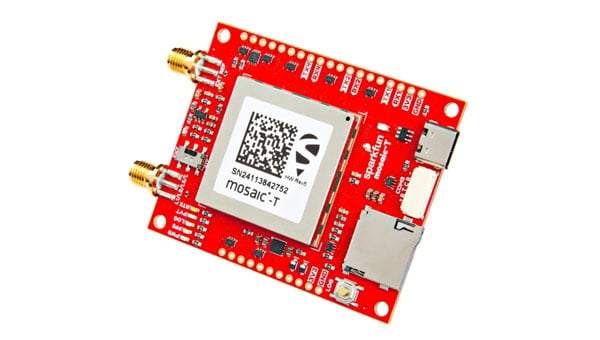
    Sparkfun Electronics has released the SparkFun Timing GNSS Breakout – mosaic-T, a compact, multi-band, multi-constellation GNSS timing receiver designed for precise time synchronization applications. At its core is the Septentrio mosaic-T module, which offers timing precision of 5 ns and can achieve accuracy better than 1 ns with an optional Fugro AtomiChron L-band timing service subscription. Event timing accuracy is better than 20 ns.

    The mosaic-T module is engineered for ultra-low power consumption and supports multiple satellite constellations. It features AIM+ technology for interference mitigation and anti-spoofing, designed to improve reliability and accuracy in challenging environments.

    The breakout board is designed for integration into projects requiring high-precision timing. It provides standard interfaces for connectivity and is suitable for applications in telecommunications, data centers, and scientific research that demand precise time references.

  • TDK expands MEMS sensor portfolio 

    TDK expands MEMS sensor portfolio 

    TDK Corporation has introduced the Tronics AXO315T0, a high-temperature MEMS accelerometer designed for measurement while drilling (MWD) applications in the energy sector. The new sensor features a ±14 g input range and a digital interface, expanding TDK’s MEMS inertial sensor portfolio.

    The AXO315T0 uses TDK’s closed-loop architecture, which delivers advanced vibration rectification and resistance to operational shocks. The device maintains a bias residual error of 0.8 mg across its operating temperature range of minus 30°C to 150°C, enabling precise and continuous inclination measurements for directional drilling tools exposed to high temperatures.

    To meet the demanding reliability requirements of complex drilling operations in harsh environments, TDK qualified the AXO315T0 through more than 1,000 hours of powered life testing at 165 degrees Celsius, temperature cycling from minus 55 degrees Celsius to 165 degrees Celsius, and high-temperature vibration tests at 20 g RMS random vibration combined with a 50 g sine sweep.

    The AXO315T0 offers a typical bias drift of less than 1 mg without recalibration after 1,000 hours at high temperature, providing a digital, low size, weight and power (SWaP) alternative to traditional quartz accelerometers. This advancement supports a new generation of MWD tools capable of long-term operation at elevated temperatures without compromising performance.

    AXO315T0 sensors and evaluation boards are available for sampling and customer evaluation. TDK plans to further expand its MEMS portfolio for the energy market with a new accelerometer capable of operating at temperatures up to 175 °C.

    Main applications:

    • Measurement while drilling (MWD)
    • Logging while drilling (LWD)
    • Directional drilling
    • Wireline

    Key features and benefits:

    • ±14 g input range, single-axis accelerometer
    • Operating temperature range: minus 30 °C to 150 °C
    • Bias residual error: 0.8 mg
    • Powered lifetime: more than 1,000 hours at 150 °C
    • Vibration rejection: 20 μg/g²
    • Noise density: 10 μg/√Hz
  • Safran’s Skylight GNSS receiver enhances PNT resilience with Galileo PRS and M-code

    Safran’s Skylight GNSS receiver enhances PNT resilience with Galileo PRS and M-code

    Safran Electronics & Defense has launched Skylight, a multi-mode military GNSS receiver designed to withstand electronic warfare threats. The company unveiled the new receiver at the Paris Air Show, describing it as a compact and resilient GNSS solution with high integrity.

    Skylight is notable for being the first GNSS receiver to be flight-tested with compatibility for Galileo Public Regulated Service (PRS). Its performance was validated during flight trials aboard a combat aircraft. The receiver delivers encrypted, spoofing-resistant PRS signals, designed to enhance security for operations in contested environments.

    The device is also compatible with M-code, ensuring interoperability with U.S. and allied military systems. Additionally, Skylight features a certified civil GPS channel, enabling navigation in civil airspace when necessary. According to Safran, this feature eliminates the need for a separate civil GPS receiver, resulting in weight and cost savings for platform integrators.

    Skyligh also incorporates advanced anti-jamming and anti-spoofing algorithms that have been proven through more than 16,000 operational cases. The receiver is designed to operate with anti-jamming antennas and is fully compatible with the SkyNaute inertial navigation system, allowing for integration into resilient positioning, navigation and timing (PNT) architectures.

    Alexandre Ziegler, executive vice president for the Defense Global Business Unit at Safran Electronics & Defense, said the company already counts two leading aerospace manufacturers among the first adopters of Skylight, including Airbus Helicopters, which has selected the H225M platform to be equipped with the receiver.

    “In an era where PNT resilience is critical, Skylight delivers agility, precision and reliability with a standalone, multi-constellation GNSS receiver whose robustness is strengthened by our expertise in defensive Navwar,” Ziegler said.

  • GPS World launches new digital opportunities and printing schedule

    GPS World launches new digital opportunities and printing schedule

    As GPS World marks its 35th anniversary, we continue to evolve to meet the needs of our valued subscribers and marketing partners. This month, we unveil strategic refinements to our magazine publishing schedule and our expanding digital content and solutions portfolio plans. 

    Tod McCloskey
    Tod McCloskey

    To better align with buying cycles and industry events, GPS World is transitioning from a monthly print and digital edition cadence to a six-times-per-year magazine frequency. Remaining 2025 issues are set for September and October. Beginning in 2026, GPS World issues will publish in February, March, May, June, September and October.

    Each GPS World issue will continue to deliver exclusive technical content and market insights. 

    In tandem with our magazine’s evolution, GPS World is significantly expanding its digital content and media solutions offerings, including:

    • Expanding GPSWorld.com: We will feature more exclusive content, delving deeper into today’s hottest trends in GNSS’ and complementary PNT’s top segments: autonomous solutions, defense, mobile, machine control/precision ag, simulators, surveying, mapping and transportation
    • New Custom Media Solutions: Leading technology suppliers now have an arsenal of platforms and offerings to educate our audiences on trends and advancements
    • Expanding Enews: Navigate Weekly!, Survey Scene, Autonomous Arena and Defense PNT e-newsletters: We will deliver even beefier segment news to your inbox each week 

    GPS World’s audiences are highly engaged confirmed buyers/specifiers. We promise to continue to evolve our integrated media offerings to meet readers’ and marketers’ changing preferences — because you are, and always have been, at the center of our information constellation.

  • Safran Electronics & Defense debuts resilient PNT system

    Safran Electronics & Defense debuts resilient PNT system

    Safran Electronics & Defense has introduced BlackNaute, a new autonomous positioning, navigation and timing (PNT) system. The system integrates Safran’s HRG Dual Core inertial navigation technology, the Skylight multi-mode GNSS receiver board and an atomic clock to offer navigation resilience in challenging electronic warfare environments.

    BlackNaute’s built-in atomic clock is designed to maintain precise timing, which is essential for secure communications and collaborative combat operations. The system features advanced anti-jamming and anti-spoofing algorithms, which have been validated in more than 16,000 operational cases. These capabilities allow BlackNaute to detect compromised signals and automatically switch to autonomous and trusted navigation and timing sources to ensure continuity of operations.

    Its modular design allows it to be adapted across a variety of platforms. Airbus Helicopters has selected the NH90 to be equipped with this new Embedded GNSS and Time INS (EGTI).

    “What we are offering today is not just a new solution — it’s an operational guarantee, designed to meet the challenges of electromagnetic warfare,” said Alexandre Ziegler, Executive Vice President, Defense Global Business Unit at Safran Electronics & Defense. “It is a concentration of innovation combining precision, versatility, and security to ensure positioning, navigation and timing — anywhere, under any circumstances.”

  • Launchpad: dual-band antennas, mobile clocks, UAV upgrades and more

    Launchpad: dual-band antennas, mobile clocks, UAV upgrades and more

    Read a roundup of recent products in the GNSS and inertial positioning industry from the June 2025 issue of GPS World magazine.


    MOBILE

    Photo: SiTime

    Mobile Clock Generators
    With an integrated MEMS resonator

    SiTime’s Symphonic is a mobile clock generator built around the SiT30100, which integrates a MEMS resonator and a temperature sensor in a compact 2.22 mm² chip. Designed for 5G and GNSS chipsets, Symphonic delivers precise, resilient clock signals while supporting efficient power consumption in mobile and IoT devices, including smartphones, tablets, laptops and asset trackers.

    The integrated temperature sensor feeds data to compensation algorithms, providing frequency stability as low as ±0.5 parts per million to enhance GPS accuracy and shorten lock times, which is critical for reliable performance in challenging environments. The device operates across a -30°C to 90°C temperature range and is engineered for dynamic stability and power optimization, helping to mitigate electromagnetic interference. Symphonic features four configurable clock outputs, each capable of delivering 76.8 MHz, 38.4 MHz or 19.2 MHz, suitable for baseband, radio frequency and GNSS applications. The single-chip design eliminates the need for external resonators.

    SiTime, sitime.com

    Photo: Calian GNSS

    Dual-Band L1/L5 Antenna
    For critical positioning and timing applications

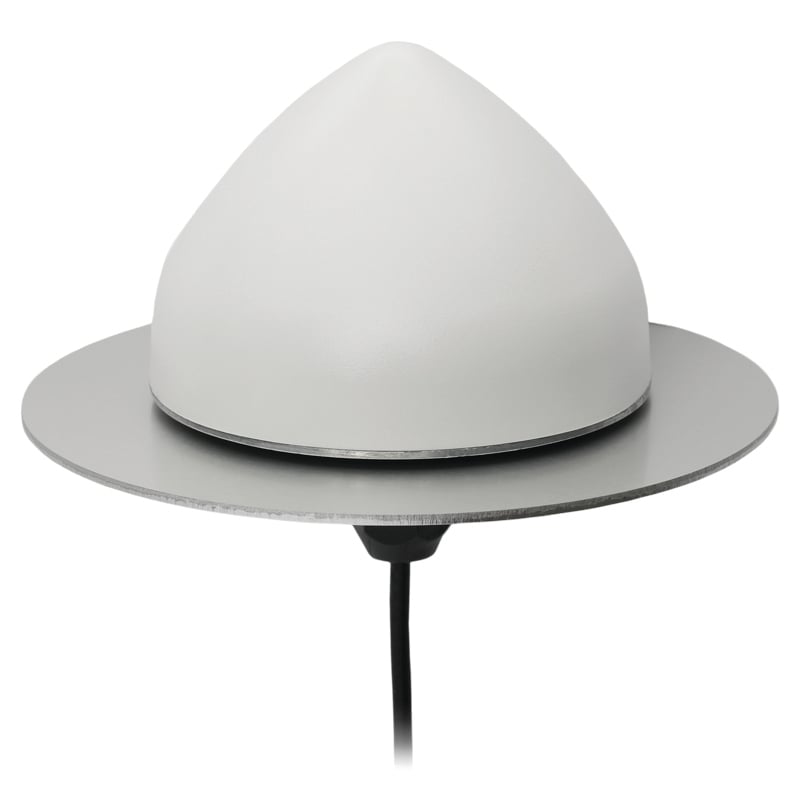
    The TW3885TL is a dual-band GNSS antenna engineered to deliver reliable, interference-free signal reception for critical positioning and timing applications. Supporting both L1 and L5 frequency bands, the antenna is compatible with a wide range of global navigation satellite systems, including GPS, QZSS, Galileo, BeiDou, GLONASS and NavIC, as well as regional satellite-based augmentation systems.
    The TW3885TL incorporates advanced filtering technology designed to reduce interference from crowded radio frequency environments. It features a low-noise preamplifier, with a typical noise figure of less than 2.5 dB, and offers high gain, typically around 40 dB. The antenna maintains a low axial ratio, under 2.0 dB, and exhibits tight phase center variation, which contributes to precise timing and superior signal quality. Constructed with a weatherproof enclosure rated to IP69K, the TW3885TL is suitable for permanent outdoor installations and can be mounted through-hole, with optional accessories available to support various mounting configurations.

    Calian GNSS, calian.com


    UAV

    Photo: AgEagle Aerial Systems

    Software Upgrades
    Enable positioning in GNSS-denied environments

    eBee VISION application software now includes a suite of updates for UAV navigation in environments where GNSS signals are compromised or unavailable. The latest software enables autonomous position updates with map referencing, allowing for precise navigation even when satellite signals are jammed, spoofed or blocked. This product is suitable for defense personnel, public safety agencies, and industrial teams working in high-stakes environments where GNSS signals are unavailable (densely populated urban areas, near critical infrastructure, or in contested zones with active interference). The update introduces optical flow stabilization for target lock, which uses visual cues to keep the camera centered on a point of interest during zoom-ins or drone movement. The software allows for adaptive behavior after GNSS recovery or visual repositioning. Additional enhancements include real-time mission duration and return-to-home estimates, optimized cruise speed in windy conditions, high-precision landings using lidar-based altitude calibration, a gimbal auto-recovery mechanism to clear obstructions mid-flight, and smart motor speed reduction to prevent overheating during extreme conditions.

    AgEagle Aerial Systems, ageagle.com

    Photo: Inertial Labs

    IMU
    For unmanned commercial and defense applications

    The IMU-H100 is a micro-electromechanical systems inertial measurement unit (IMU) designed to improve tactical guidance and navigation for UAVs, short-range missiles, precision-guided munitions, and a range of commercial applications.
    The tactical-grade unit features accelerometers and gyroscopes on all three axes. It offers a gyro bias of 1° per hour and an accelerometer bias of 1 mg. The unit measures 5 in³ and weighs 160 g. The IMU-H100 surpasses comparable products in data rate, measurement range, stability and repeatability, even under challenging conditions such as vibration, shock, high acceleration, spinning, temperature changes and acoustic noise.

    Inertial Labs, a VIAVI Solutions company, inertiallabs.com

  • IATA and EASA release joint strategy to counter GNSS interference risks

    IATA and EASA release joint strategy to counter GNSS interference risks

    The International Air Transport Association (IATA) and the European Union Aviation Safety Agency (EASA) have published a comprehensive plan to mitigate risks stemming from GNSS interference. The plan was part of the conclusions from a jointly hosted workshop on the topic of GNSS interference.

    With incidents of GNSS signal jamming and spoofing rising, especially in Eastern Europe and the Middle East, the workshop called for a broader, more coordinated response. The plan focuses on four areas: improving information gathering, strengthening prevention and mitigation, making better use of infrastructure and airspace management, and enhancing coordination among agencies.

    “GNSS disruptions are evolving in both frequency and complexity. We are no longer just containing GNSS interference — we must build resilience,” said Jesper Rasmussen, EASA Flight Standards Director. “Through collaboration with partners in the European Union and IATA and by supporting the International Civil Aviation Organization, we are committed to keeping aviation safe, secure, and navigable.”

    According to IATA, the number of GPS signal loss events increased by 220% between 2021 and 2024. “With continued geopolitical tensions, it is difficult to see this trend reversing in the near term,” said Nick Careen, IATA senior vice president for operations, safety, and security. “The next step is for ICAO to move these solutions forward with global alignment on standards, guidance, and reporting. This must command a high priority at the ICAO Assembly later this year.”

    Detailed Workshop Outcomes

    The workshop concluded that four workstreams are critical:

    1. Enhanced Reporting and Monitoring

    • Agree on standard radio calls for reporting GNSS interference and standardized notice to airmen (NOTAM) coding, i.e. Q codes.
    • Define and implement monitoring and warning procedures, including real-time airspace monitoring.
    • Ensure dissemination of information without delays to relevant parties for formal reporting.

    2. Prevention and Mitigation

    • Tighten controls (including export and licensing restrictions) on jamming devices.
    • Support the development of technical solutions to:
      • reduce false terrain warnings;
      • improve situational interference with portable spoofing detectors; and
      • ensure rapid and reliable GPS equipment recovery after signal loss or interference.

    3. Infrastructure and Airspace Management

    • Maintain a backup for GNSS with aminimum operational network of traditional navigation aids.
    • Better utilize military air traffic management (ATM) capabilities,including tactical air navigation networks and real-time airspace GNSS incident monitoring.
    • Enhance procedures for airspace contingency and reversion planning so that aircraft can navigate safely even in the event of interference.

    4. Coordination and Preparedness

    • Improve civil-military coordination, including the sharing of GNSS radio frequency interference (RFI) event data.
    • Prepare for evolving threat capabilities, including those related to drones.

    The workshop was held May 22-23 at EASA headquarters in Cologne, Germany, and included more than 120 experts from the aviation industry, research organizations, government and international bodies