Author: Jesse Khalil

  • Launchpad: New solutions for surveying, OEM, machine control and more

    Launchpad: New solutions for surveying, OEM, machine control and more

    Read a roundup of recent products in the GNSS and inertial positioning industry from the May 2025 issue of GPS World magazine.


    SURVEYING

    Integrated Navigation Solution
    Ideal for inspection and survey applications
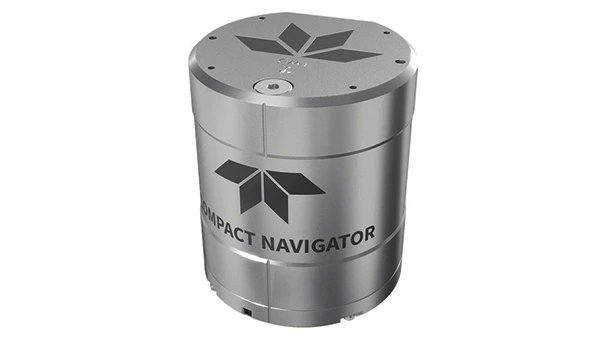
    Teledyne's compact navigator
    Photo: Teledyne

    Teledyne Compact Navigator is an ultra-compact autonomous integrated navigation system engineered for subsea and surface vehicles. It is ideal for small vehicles, enabling inspection and survey operations on compact platforms. The system is offered in two depth-rated models, one capable of operating at 4,000 m and another at 300 m. The Compact Navigator consumes less than 7 watts of power, extending mission duration by conserving energy. The system operates fully autonomously, eliminating the need for external aiding or operator intervention. Advanced phased array Doppler Velocity Log technology enhances performance while allowing the device to be mounted on an autonomous underwater vehicle or ship hull.

    The Compact Navigator supports a broad range of applications, including autonomus underwater vehicles, shallow water surface navigation, operations in GNSS-denied environments and dynamic positioning for surface vehicles. The system provides true North-seeking gyrocompass-grade performance, and its web-based user interface supports integration, operation and troubleshooting. It is factory-calibrated and offers a battery backup option for reliability in demanding conditions. The system operates independently of satellite signals, making it resistant to jamming or signal loss. This capability is significant for shallow water navigation, where GNSS-based systems may be unreliable.

    Teledyne Marine

    3D Reality Capture Solution
    Can be used across various industries
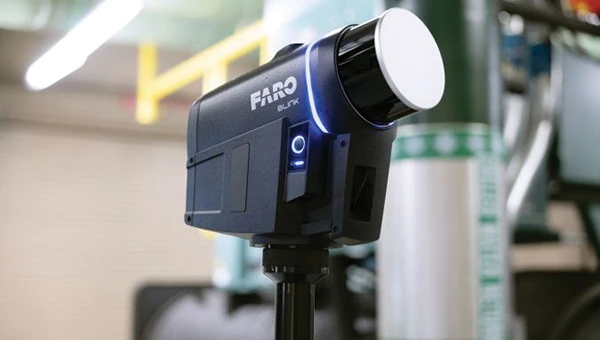
    Faro's 3D Reality Capture Solution.
    Photo: Faro

    FARO Blink, a new 3D reality capture solution, is designed to make collecting and utilizing 3D data more accessible and efficient. It centers on software-driven technology integrating advanced visualization and automated workflows through the FARO Sphere XG Digital Reality Platform. This integration aims to simplify operations and deliver faster, more actionable insights for users across various industries.

    FARO Blink is tailored for professionals in fields such as surveying and construction. It offers high-quality visualization and can streamline workflows, allowing teams to efficiently capture, view and share 3D data, thereby enhancing project progress and collaboration.

    Faro

    Multibeam Echosounder
    For bathymetric surveying
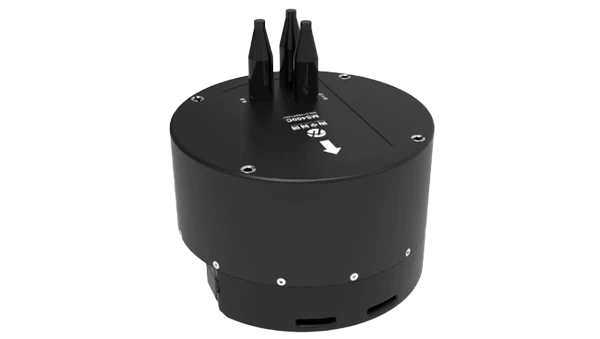
    Hydro-Techmarine's multibeam echosounder
    Photo: Hydro-Techmarine

    The MS400C is a fully integrated multibeam echosounder designed for uncrewed surface vessels. The new system combines sonar processing, inertial navigation, GNSS positioning and sound velocity sensing into a single unit.

    The MS400C seeks to address deployment challenges faced by USV operators during hydrographic surveying. Its compact, lightweight design allows direct mounting on small platforms. Installation involves connecting a few cables to the IPC and power supply and to the primary and secondary GNSS antennas. With preconfigured spatial relationships, operators can deploy and start surveying quickly, reducing configuration errors and ensuring consistent data quality.

    Equipped with Auto Survey functionality, the system calibrates parameters based on water conditions, which streamlines pre-survey procedures. Real-time roll compensation and attitude data from the internal measurement unit, combined with sound velocity profiling, ensure high-fidelity depth measurements, even in dynamic conditions. Designed for autonomous and remotely operated survey platforms, the MS400C supports data collection in confined waterways.

    Hyrdo-Techmarine

    RTK/PPK GNSS System
    With tilt compensation
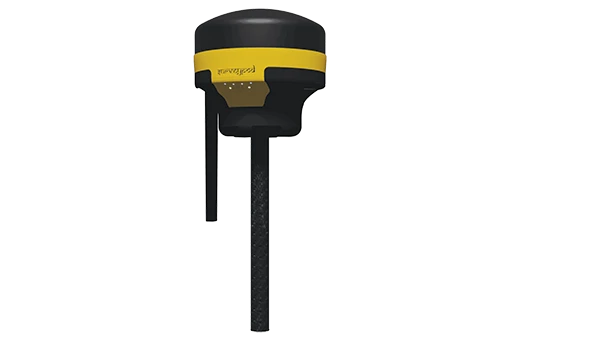
    Surveyann's RTK/PNK GNSS System
    Photo: Surveyann

    The SurveyPod RTK/PPK GNSS system is built for professionals in surveying, agriculture, mining and construction. The system integrates GPS, GLONASS, Galileo and BeiDou signals for improved satellite visibility and accuracy, even in harsh environments.

    Powered by a CORS Network, SurveyPod offers real-time, centimeter-level positioning ideal for high-precision applications. The device supports tilt compensation for reliable data collection at angles and boasts up to 16 hours of battery life, making it ideal for extended field operations. With this launch, Nibrus Technologies is expanding its survey equipment portfolio, offering a Made-in-India GNSS solution to the global market.

    Surveyann

    OEM

    North-Seeking IMU
    Operates independently of GNSS
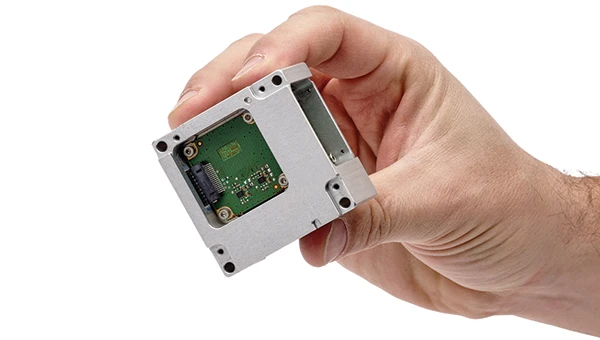
    SBG Systems' North-Seeking IMU
    Photo: SBG Systems

    This MEMS-based north-seeking inertial measurement unit (IMU) operates independently of GNSS. It can achieve a heading accuracy greater than 1° secant latitude without GNSS assistance. When integrated with GNSS and SBG Systems’ navigation algorithms, it can achieve INS heading accuracy greater than 0.01°.

    Measuring 52 x 52 x 36 mm and weighing less than 150 g, it consumes only 2 watts of power. It offers long-term reliability in demanding conditions, and its ITAR-free status allows unrestricted global deployment. SBG Systems also has developed a new pure north-finding algorithm capable of rapid initialization in both static and dynamic conditions within one minute, as well as an advanced GNSS/INS fusion algorithm that delivers exceptional single-antenna heading accuracy even in low-dynamic environments.

    The IMU is particularly suited for subsea applications, including remotely operated vehicles and autonomous underwater vehicles, as well as geospatial and marine surveying tasks requiring precise single antenna heading accuracy.

    The first off-the-shelf solutions are expected to be available by early 2026.
    SBG Systems

    Post-Processing Software
    With upgraded features
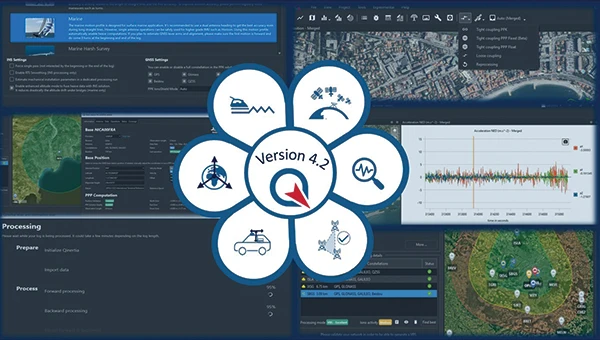
    Post-Processing Software from SBG Systems
    Photo: SBG Systems

    Qinertia 4.2 is an updated version of SBG Systems’ post-processing software for GNSS and INS data. One of the notable additions is the beta version of Precise Point Positioning Fixed Ambiguity, which offers centimeter-level accuracy processing without the need for a base station. The update also includes a new RTS smoothing option, the Trajectory Smoother, which enhances INS processing by removing artifacts while maintaining precision. Another feature is the standalone Lever Arm Estimation Tool, now available as a separate application with a simplified interface. The Advanced Virtual Base Station Network Creation has been enhanced with improved base station quality indicators to increase reliability.

    It is compatible with the New Ellipse series and supports Teledyne Intrepid INS. The software now offers faster processing speeds, enhanced geodesy functionalities such as base station velocity analysis, and updated tools for assessing processing quality through new status plots. It also supports the latest firmware versions of Ekinox, Apogee, Navsight and Quanta systems.
    SBG Systems

    MACHINE CONTROL

    GNSS Receiver and INS System
    For machine guidance
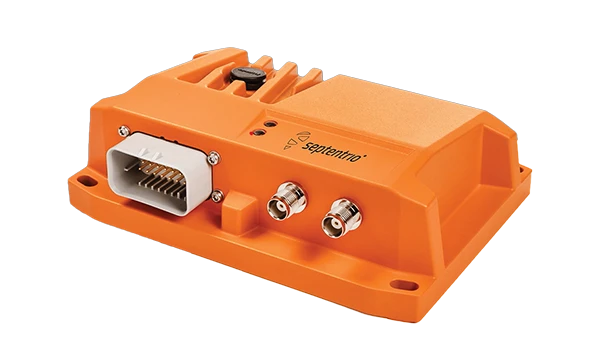
    Septentrio's GNSS Receiver and INS System
    Photo: Septentrio

    The AsteRx RB3 GNSS receiver and the AsteRx RBi3 GNSS/INS system are designed to operate in extreme environments. They feature IP69K-rated housings and components that have undergone ISO-standard testing.

    The technology offers durability under heavy shocks, vibrations and challenging environmental conditions, making it suitable for demanding applications such as construction, mining and port automation.

    The AsteRx RB3 and RBi3 utilize multi-frequency GNSS technology to deliver precise, centimeter-level positioning even in environments where GNSS signals are typically difficult to maintain. The receivers can be mounted externally on heavy machinery or integrated into chassis systems, offering flexibility in placement and simplifying installation.

    The AsteRx RBi3 incorporates FUSE+ technology, which combines a high-performance GNSS engine with an industrial-grade inertial sensor. This integration provides accurate orientation data, such as heading, pitch and roll, alongside reliable positioning. In dual-antenna configurations, the receivers deliver sub-degree GNSS heading accuracy immediately upon initialization. The AsteRx RB3 and RBi3 are ideal for machine guidance in industries requiring rugged equipment to maintain precision under extreme conditions.

    Septentrio

    Handheld Reality Capture Solution
    For maximum mobility 
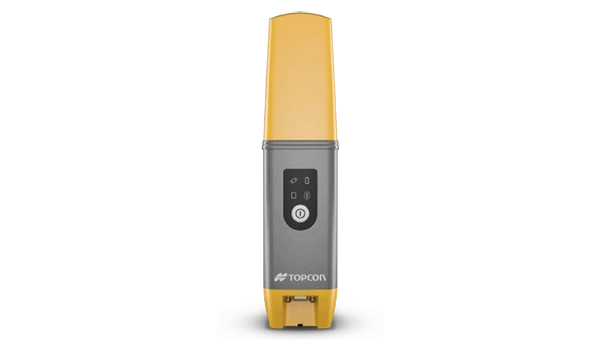
    Topcon Positioning's Handheld Reality Capture Solution
    Photo: Topcon Positioning

    Designed for mass data solutions, the CR-H1 utilizes PIX4Dcatch, a specialized application with integrated lidar that runs on iPhone devices. It collects images and employs photogrammetry to create detailed, full-color 3D point clouds. The iPhone connects to Topcon’s HiPer CR receiver, enabling the application to collect georeferenced images. The receiver and iPhone are mounted on a specialized handle designed and manufactured by Topcon so that users can capture point clouds without a tripod.

    The CR-H1 can be used for utilities and subsurface mapping, construction verification and earthworks, civil engineering and site verification, land surveying and forensics and 3D data capture. Topnet Live subscriptions are available for the CR-H1, providing real-time GNSS corrections that deliver higher-quality point clouds. 

    Topcon Positioning

    MOBILE

    Handheld GPS Device
    Can provide up to 200 hours of GPS navigation on a single charge
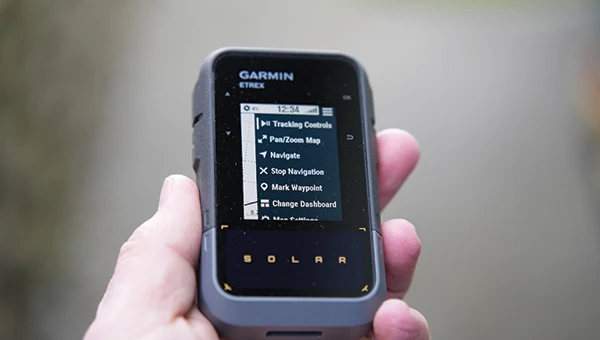
    Garmin's Handheld GPS Device
    Photo: Garmin

    The Garmin eTrex Solar is a handheld GPS device with a built-in solar charging feature. This feature allows for potentially unlimited battery life in optimal sunlight conditions. Even without direct solar input, the device can provide up to 200 hours of GPS navigation on a single charge, making it suitable for extended trips with limited access to power.

    The device supports GPS, GLONASS, Galileo, QZSS, IRNSS and Beidou. It features a rugged design, an IPX7 water resistance rating, and a compact, lightweight body that can be attached to a backpack or worn around the neck. Users can import GPX files and navigate to waypoints, courses and geocaches. It also includes a three-axis compass and can store up to a thousand waypoints, 50 courses and 200 activities.

    Users can connect the eTrex Solar to their smartphones through the Garmin Explore app, which enables additional features such as geocaching details, weather updates, software updates, trip planning, and cloud storage syncing.

    Garmin

    New Product Offerings
    Now featuring marine GNSS antennas
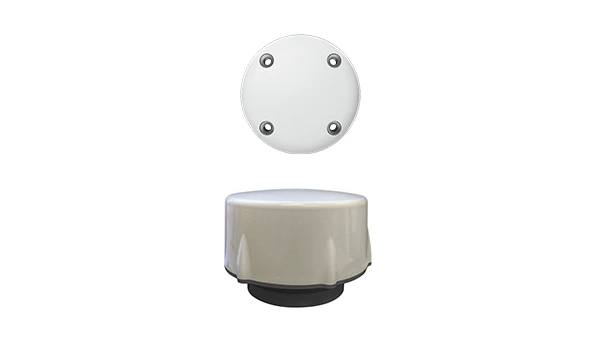
    New product offerings the now feature marine GNSS antennas from Geo-matching.
    Photo: Geo-matching

    Geo-matching has expanded its product database to include GNSS antennas. The initial marine GNSS antennas featured in this new category are the VP6300 from Calian GNSS, formerly Tallysman, and the AV34 from Trimble.

    Geo-matching features detailed information on more than 1,300 products across 63 categories for surveying, navigation and machine guidance. The website is designed to guide users through complex product specifications, offering access to brochures, case studies, product videos and professional reviews. Among the many categories available on Geo-matching.com are hydrographic processing software, GNSS receivers, GIS software, inertial navigation systems, total stations, UAVs, sidescan sonars, imaging sonar and more. The platform encourages users to browse its extensive catalog, upload new products, leave reviews and register their companies to add products to the database.

    Geo-matching

    UAV

    Mapping UAV
    With a new “Smart Return-to-Home” feature
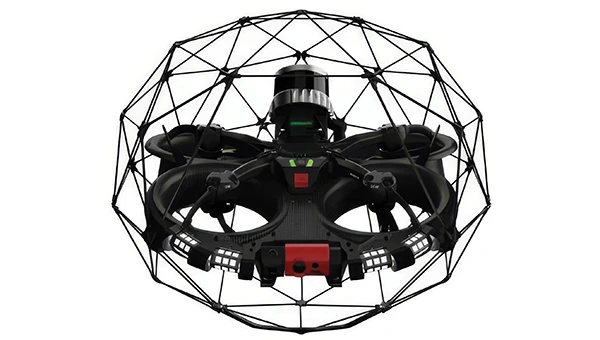
    Mapping UAV with "smart  return to home" feature from Flyability
    Photo: Flyability

    Flyability has introduced a “Smart Return-to-Home” (RTH) feature for its Elios 3 UAV, designed to enhance its autonomous capabilities. This feature allows the UAV to return to its take-off point using the shortest available path while avoiding obstacles in real time.

    During flight, Smart RTH monitors battery levels through a new flight management gauge, notifying the pilot when it is time to return. The feature is activated via Flyability’s Cockpit flight app, and pilots can take manual control at any point. By automating the return process, the system helps pilots focus on inspections without concerns about battery management or navigation in complex environments. Smart RTH uses lidar scans to generate a flight plan that the UAV executes independently.

    Flyability

    Drone Detection Software
    FAA compliant
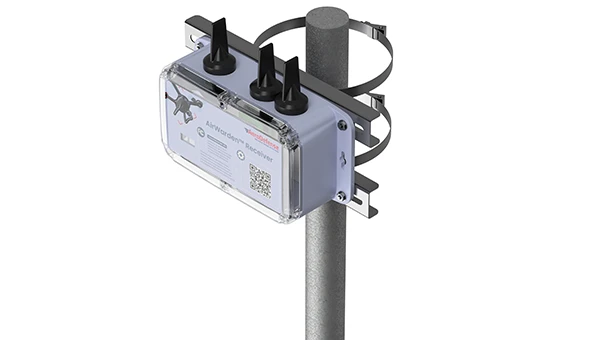
    New drone detection software from Aerodefense
    Photo: Aerodefense

    The AirWarden Remote ID Receiver detects and decodes Remote ID signals broadcast by UAVs. It is designed for organizations and authorities that need to monitor UAV activity for safety, security and compliance with regulations.

    It decodes the information transmitted by UAVs in accordance with FAA and other regulatory standards. The data it captures includes the UAV’s identification number, its precise location (latitude, longitude and altitude), the takeoff location, operator location if available, timestamps, and other relevant metadata.

    The AirWarden can be deployed as a standalone unit or integrated into larger security and monitoring systems. Users interact with the system through a web-based or software interface that facilitates live monitoring, alert management, and data analysis.

    Additionally, the AirWarden can integrate seamlessly with other security infrastructure, such as video surveillance and access control systems. This integration seeks to improve how security teams automate responses and coordinate actions when unauthorized or suspicious drone operations are identified.

    Aerodefense

  • ESA selects SpacePNT GNSS receiver for Genesis Mission

    ESA selects SpacePNT GNSS receiver for Genesis Mission

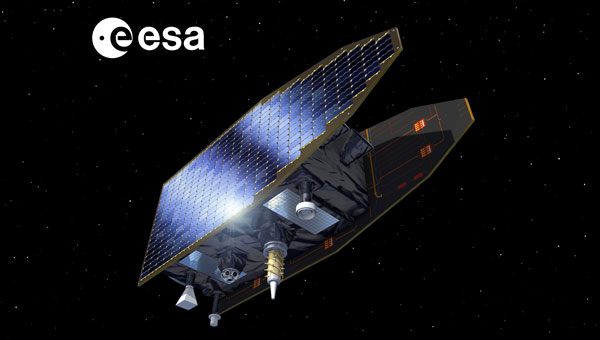
    SpacePNT has joined the European Space Agency’s Genesis mission, a navigation satellite project that will be the first to carry all four space-based geodetic techniques on board: GNSS, Satellite Laser Ranging (SLR), Very Large Baseline Interferometry (VLBI) and Doppler Orbitography and Radio-positioning Integrated by Satellite (DORIS).

    SpacePNT’s NaviLEO spaceborne GNSS receiver technology was selected for the mission’s critical satellite navigation ranging instrument. Although NaviLEO has flight heritage in low-Earth orbit, it will be adapted for Genesis to operate in medium-Earth orbit at 6,000 km. The system will use a dual-antenna configuration to receive GNSS satellite signals from both zenith- and nadir-looking antennas.

    The Genesis mission aims to update the International Terrestrial Reference Frame (ITRF), a global Earth model, targeting an accuracy of 1 mm and long-term stability of 0.1 mm per year. This will provide a precise coordinate system for advanced navigation applications.

  • u-blox launches PointPerfect Global, completing GNSS correction portfolio with worldwide coverage

    u-blox launches PointPerfect Global, completing GNSS correction portfolio with worldwide coverage

    u-blox has introduced PointPerfect Global, its new high-precision GNSS correction service designed for applications that require sub-decimeter positioning accuracy, such as precision agriculture, UAV-based mapping and autonomous outdoor robotics. The service offers global coverage, including remote areas, through both internet and L-band satellite broadcast.

    PointPerfect Global is engineered to provide convergence times under two minutes and accuracy of less than 10 cm. It uses Precise Point Positioning with Ambiguity Resolution (PPP-AR) corrections and is optimized for products built on the X20 platform. The u-blox ZED-X20P GNSS receiver will be the first device to support the new service, offering integrated L-band support for use in areas without cellular connectivity.

    PointPerfect Global expands the u-blox PointPerfect portfolio, which also includes PointPerfect Live, a regional nRTK service for the most demanding applications, and PointPerfect Flex, the original PPP-RTK service designed for flexible IoT deployments. Together, these services provide scalable, high-performance positioning solutions tailored to a range of technical and commercial requirements.

    The broadcast-based architecture of PointPerfect Global allows for scalable deployment across continents without the need for complex regional integration. This approach is intended to simplify logistics and operational complexity for OEMs and solution providers, supporting a variety of sectors including agriculture, robotics, UAVs, industrial automation, and automotive. The service is designed to deliver reliable performance with minimal infrastructure dependency, which is critical for mass-market autonomy and global scalability.

    Early access to PointPerfect Global is scheduled for late 2025, with general availability expected in the first half of 2026.

  • XPONENTIAL 2025 set to begin in Houston next week

    XPONENTIAL 2025 set to begin in Houston next week

    GPS World staff will be attending XPONENTIAL 2025, taking place May 19–22 at the George R. Brown Convention Center in Houston, Texas. The event is co-hosted by the Association for Uncrewed Vehicle Systems International (AUVSI) and Messe Düsseldorf North America (MDNA). Organizers expect participation from thousands of professionals representing defense, commercial and public sectors, amid ongoing changes in federal investment and policy related to autonomous technologies.

    Keynote Speakers and Programming

    The conference will feature keynote addresses from leaders in government, industry and academia.

    Speakers include:

    • Chris Rocheleau, acting administrator of the Federal Aviation Administration
    • Lt. Gen. Francis L. Donovan, vice commander of U.S. Special Operations Command
    • Sue Gordon, former principal deputy director of National Intelligence
    • Matt Ocko, co-founder of DCVC
    • Jim VandeHei, co-founder and CEO of Axios
    • Maj. Gen. Michelle Link, commanding general of the 75th Innovation Command, U.S. Army Reserve
    • Ryan Tseng, CEO and co-founder of Shield AI. 

    These speakers are expected to address topics ranging from national security to advancements in logistics and the deployment of autonomous systems worldwide.

    Educational Sessions and Industry Trends

    XPONENTIAL 2025 will offer more than 150 sessions led by more than 400 experts, covering topics such as infrastructure readiness, advanced research and development, artificial intelligence integration, cybersecurity, and regulatory trends. The educational program is designed to address the rapid growth and evolving policy landscape in robotics and autonomous systems.

    Defense-Focused Programming

    The event includes AUVSI Defense, a dedicated track examining the integration of uncrewed and autonomous technologies in military and national security applications. Scheduled sessions include the U.S.-Taiwan Autonomous Systems Cooperation Forum, a SOCOM Townhall on special operations and a panel on defense technology trends observed on the Ukraine battlefield.

    Exhibition Hall

    Attendees will have opportunities for hands-on demonstrations with equipment such as drones, electric vertical takeoff and landing aircraft (eVTOLs), uncrewed vehicles and robotic platforms. XPONENTIAL 2025 is positioned as a major annual gathering for stakeholders in the uncrewed systems industry, offering a platform for collaboration, education and technology demonstration.

  • GMV shares LUPIN lunar navigation test results

    GMV shares LUPIN lunar navigation test results

    GMV has presented the latest results from its Enabling High-Performance PNT in the Lunar Environment (LUPIN) project, following a series of field tests conducted from April 27 to May 8 in La Oliva, on the Spanish island of Fuerteventura. The LUPIN initiative, developed in collaboration with the European Space Agency (ESA), aims to create a prototype navigation system that simulates the signals lunar surface rovers are expected to receive in the future. The goal is to establish a navigation system for the Moon similar to GPS on Earth, enabling more precise and reliable positioning for lunar missions.

    As renewed interest in lunar exploration grows, the need for advanced technologies to support rovers, landers and potential human activities on the Moon has become a strategic priority for the space sector. ESA is pursuing this project under its Navigation Innovation and Support Program (NAVISP), seeking to test new positioning, navigation and timing (PNT) technologies. These technologies will integrate current planetary navigation approaches with distance measurement signals from the future Lunar Communication Navigation System (LCNS), a network of satellites orbiting the Moon that will provide GPS-like signals to the lunar surface. The system is being designed to serve specific lunar regions, including the south pole, the far side and permanently shadowed areas.

    Navigation on the Moon currently faces significant challenges. Unlike Earth, the Moon lacks a satellite infrastructure like GPS, forcing spacecraft and rovers to rely on internal calculations and data relayed from Earth, which limits real-time location accuracy. The LUPIN prototype aims to address these limitations by reducing dependence on complex onboard algorithms and optimizing the performance of lunar exploration vehicles. Over the next decade, this technology is expected to transform how astronauts and vehicles operate on the lunar surface, enabling faster and more efficient route planning and reducing the computational burden required for navigation. This advancement means rover speeds will be limited only by lunar surface conditions, not technical constraints, potentially ushering in a new era of automated lunar exploration.

    During the recent test campaign in Fuerteventura, the LUPIN system’s real-time navigation capabilities were successfully verified and validated. The tests simulated the LCNS positioning signals that future lunar rovers will use to determine their exact location. Steven Kay, GMV’s manager for the LUPIN project, explained the field tests performed and the corresponding details.

    “We were able to successfully compile data over the course of 7 km of travel, and at various speeds, from the conventional 0.2 m per second, up to much faster speeds of 1.0 meters per second, which are the speeds of the future. In addition, we were able to simulate a whole range of lunar conditions and types of environments. This included tests performed at night, using a combination of simulated sunlight to emulate the illumination conditions found on the Moon, as well as tests performed in total darkness, using only the rover’s onboard lighting system to navigate,” Kay said.

    The LUPIN project is part of broader efforts by ESA and its partners to develop lunar communication and navigation services, which are seen as essential for future scientific, commercial and human activities on the Moon

  • SiFly launches long-range electric drones 

    SiFly launches long-range electric drones 

    SiFly, a Silicon Valley-based startup, has introduced a new line of long-range electric drones designed to expand industrial capabilities. The company’s flagship Q12 platform delivers more than two hours of continuous hover and up to three hours in forward flight, enabling a 90-mile operational range while carrying payloads of up to 10 lbs. According to the company, this can lead to new possibilities for Beyond Visual Line-of-Sight (BVLOS) missions that were previously unattainable. SiFly plans to begin deliveries of the Q12 in the fourth quarter of 2025.

    SiFly also unveiled the Q250, a heavy-lift drone capable of transporting 200-lbs payloads with a 100-minute endurance. This capability allows the Q250 to serve as a direct replacement for expensive helicopter operations in fire suppression, commercial and military cargo transport, and agricultural spraying.

    SiFly is currently demonstrating its technology for public and private sector organizations across the United States and plans to announce multiple strategic industry partnerships in the coming months.

  • NextNav proposes a GPS complement and backup in the lower 900 MHz band

    NextNav proposes a GPS complement and backup in the lower 900 MHz band

    A year after NextNav shared a new vision for the Lower 900 MHz band, the Federal Communications Commission (FCC) collected additional comments seeking to bolster positioning, navigation and timing (PNT) resilience by exploring terrestrial and space-based technologies, including NextNav’s, that could complement and back up GPS. The FCC’s PNT Notice of Inquiry (NOI) is a level set on PNT issues, and seeks to engage stakeholders across government and industry to advance a “whole-of-government approach” to building resiliency to safeguard America’s critical infrastructure, national security and public safety.

    We caught up with NextNav’s Vice President of Regulatory Affairs, Renee Gregory, to hear more about how the company is thinking about a terrestrial complement and backup to GPS. Its technology is one of the solutions being discussed within the FCC and the broader industry.

    Why is it important to create a complement and backup to GPS? 

    Renee Gregory: GPS is an incredible technology that underpins national security, public safety and American commerce. However, GPS signals have physical limitations indoors and in urban canyons (i.e. big cities), plus the signals are vulnerable to intentional spoofing, jamming and unintentional interference. With GPS contributing more than $1 trillion to the U.S. economy since its inception, and a potential outage costing $1.6 billion per day, relying on a single system leaves us exposed. As Rear Admiral USN (ret.) David Simpson recently wrote, “If GPS goes down, critical infrastructure fails and our nation plunges into chaos.”

    What is the Federal Government doing about the problem?

    Gregory: Leaders, from President Donald Trump to Chairman Ted Cruz and Senator Ed Markey, have all advocated for the government to take action to ensure that a resilient PNT system of systems is in place. During President Trump’s first term, he signed an Executive Order establishing a comprehensive national policy to promote the responsible use of PNT services to strengthen critical infrastructure resilience. Earlier this year, the FCC adopted a NOI to promote the development of PNT technologies and solutions. It marked an important acknowledgment by the FCC of the seriousness of GPS vulnerabilities and limitations. It also reinforced the need for a system-of-systems approach that includes terrestrial PNT.

    What should our readers know about the NOI?

    Gregory: NextNav fully supports the FCC’s focus on resilient PNT. The FCC’s stated goal in the NOI is to build a record on specific actions the FCC can take to incentivize and support industry efforts to develop resilient and secure PNT technologies and solutions. The FCC intends to focus its efforts on utilizing its authority over non-Federal use of spectrum to rapidly support PNT solutions that could serve as complements or backups to GPS. NextNav has urged the FCC to enable at least one future-proof option that relies on market forces to deliver a terrestrial, wide-scale PNT solution that is broadly available to critical infrastructure, public safety, and consumers, and has a clear path to incorporation in consumer devices, like the smartphones we all use every day.

    What is the solution NextNav is proposing?

    Gregory: NextNav has a proven track record of providing accurate, reliable vertical location information to support first responders. Building on that legacy, NextNav’s next-generation 5G-based 3D PNT solution will leverage preexisting 5G networks and network capabilities, as well as the established and vibrant 5G device ecosystem, to enable a broadly available, widescale terrestrial complement and backup to GPS in partnership with one or more mobile network operators with experience in deploying newly-available spectrum and services within a relatively short period of time. This partnership model will rely on market forces and not taxpayer funding. NextNav brings not only its expertise in PNT technology but also its extensive spectrum licenses in the Lower 900 MHz band to address the critical need for resilient PNT.

    What are other technologies under consideration in the NOI?

    Gregory: The FCC is considering a range of terrestrial and space-based technologies as part of a system-of-systems approach to resilient PNT. Because different technologies and deployment models bring different strengths — and different weaknesses — truly resilient PNT requires multiple layers of redundancy and both space and terrestrial-based technologies. There is no single solution. We need an all-of-the-above approach.

    Is NextNav trying to replace GPS? 

    Gregory: No. NextNav’s efforts to develop a complement and backup to GPS will not diminish the role of GPS, which will remain vital to national and economic security.

    Is NextNav asking for new spectrum to enable its terrestrial PNT solution?

    Gregory: Some opponents have suggested that NextNav is asking the FCC to give it 15 megahertz of spectrum, but that’s simply not true. After acquiring extensive spectrum licenses at auction and in the secondary market, NextNav is the largest licensee in the lower 900 MHz band and is one of only two active geographic license holders in that band, which is today dedicated to terrestrial positioning services. In 2024, NextNav reached a commercial agreement to acquire the remainder of the licenses from the only other active geographic licensee in the band.

    NextNav is suggesting a reconfiguration of the existing licensing scheme to ensure that the lower 900 MHz band can support next-generation 5G-based 3D PNT solutions that require multiple 5 MHz blocks of spectrum, for a total of one more megahertz than the amount of spectrum currently dedicated for geographically-licensed terrestrial positioning services. To enable this band configuration, and the availability of a terrestrial PNT complement and backup, NextNav has proposed a “swap” in which NextNav will return all its current and pending license holdings in exchange for a 15 MHz nationwide license, consistent with the technical characteristics of 5G networks.

    How much does this plan cost?

    Gregory: The market-based NextNav solution will not require any taxpayer funding or legislation.

    What about those opposed to NextNav’s proposal? 

    Gregory: NextNav is focused on solving an urgent national security problem by enabling a complement and backup to GPS to advance resilient PNT. While some parties have raised objections based on claims of interference to current uses of the Lower 900 MHz band, they have not provided detailed technical analyses to support their claims that NextNav would interfere with their operations, or offered solutions beyond suggesting that the FCC reject NextNav’s proposal. Simply opposing one proposal without offering credible, fact-based solutions undermines the FCC’s goal of building a resilient, system-of-systems approach. 

    As a leader in PNT innovation, NextNav is looking forward to working closely with the Chairman, Commissioners and broader stakeholder community to accelerate the deployment of resilient PNT, building important redundancies into a system we rely on every day. 

  • LabSat launches scalable solutions for GNSS signal testing

    LabSat launches scalable solutions for GNSS signal testing

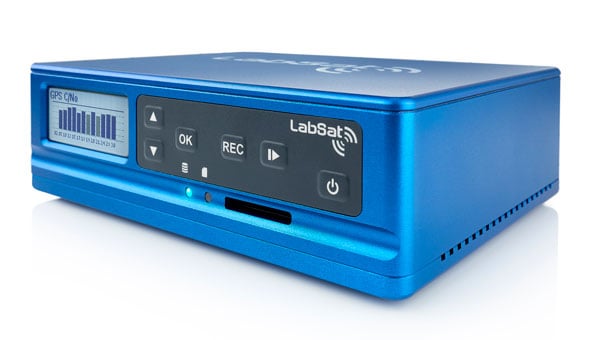
    LabSat has expanded its GNSS signal record, replay and simulation portfolio with the introduction of three new LabSat 4 variants: LabSat 4, LabSat 4 Core and LabSat 4 Lite. LabSat seeks to provide engineers and developers with scalable solutions tailored to a wide range of testing requirements and budgets.

    LabSat 4 delivers advanced capabilities, including up to 12-bit I&Q quantization and support for recording and replaying external data such as CAN-FD, RS232, and digital inputs. This model is designed for demanding GNSS signal testing, offering high precision and extensive customization to address complex modern testing scenarios.

    LabSat 4 Core offers the same features as the original LabSat 4, except it is limited to a maximum of 4-bit I&Q quantization. This makes it a cost-effective choice for applications where the highest signal capture resolution is not necessary, while still providing a comprehensive feature set.

    LabSat 4 Lite is optimized for affordability, featuring streamlined 2-bit I&Q quantization and omitting external data recording and replay. It is well-suited for production line testing and other scenarios where quantization depth is not a critical factor.

    All LabSat 4 variants include three RF channels with selectable bandwidths up to 60 MHz, adjustable quantization options depending on the model, manual gain control, multi-unit synchronization, and full backward compatibility with LabSat 3 Wideband file formats. The series is compact, portable, and designed for efficient use in both field and laboratory environments.

    A key benefit of the LabSat 4 range is the ability to upgrade between models via a license file, allowing users to start with LabSat 4 Lite and move to Core or the full LabSat 4 as their testing needs evolve, without replacing hardware. Customers can also select between Replay-Only and Record-and-Replay configurations across all variants.

  • Sierra Space demonstrates resilient GPS technology for US Space Force

    Sierra Space demonstrates resilient GPS technology for US Space Force

    Sierra Space, a commercial space and defense technology company, has successfully completed another demonstration of its resilient GPS (R-GPS) technology for the U.S. Space Force. This achievement marks the third major milestone for the program, which is designed to enhance the resilience of GPS infrastructure against threats such as jamming and spoofing. The recent demonstration included early integration of R-GPS satellite technology using FlatSat flight software and hardware subsystem testing, as well as successful communication with ground software systems.

    The R-GPS effort is part of a broader initiative by the U.S. Space Force’s Space Systems Command to develop smaller, more cost-effective GPS satellites. Sierra Space was awarded a Quick Start contract in September 2024 to produce design concepts for these satellites, aiming to rapidly bring advanced technology to the national security space sector. The company’s progress comes just six months after the program’s inception, highlighting its ability to accelerate technology development in response to evolving defense needs.

    GPS technology is integral to both civilian life and military operations, supporting applications that range from smartphone navigation to critical defense activities. As adversarial threats become more sophisticated, the need for resilient GPS systems has grown. The R-GPS program addresses this by planning to augment the existing GPS architecture with a network of smaller satellites, which would provide additional layers of security and rapid deployment capabilities.

    The latest testing milestone demonstrated the flow of commands and telemetry between Sierra Space’s ground software and a ground stations service provider, establishing that the technology can operate effectively between orbit and ground-based facilities. The FlatSat testing format, where satellite components are evaluated while laid out flat, allowed for early integration of flight software and hardware subsystems.

  • SiTime unveils mobile clock generator with embedded MEMS

    SiTime unveils mobile clock generator with embedded MEMS

    SiTime Corporation has introduced Symphonic, its first mobile clock generator featuring its integrated MEMS resonator, the SiT30100. The device is designed to deliver precise and resilient clock signals for 5G and GNSS chipsets, supporting efficient power consumption in mobile and IoT devices, including smartphones, tablets, laptops and asset trackers. According to SiTime, the Symphonic clock generator combines the functions of up to four separate timing devices, which helps simplify system design and reduces circuit board space requirements.

    The integrated temperature sensor in the SiT30100 provides accurate data to compensation algorithms, enabling improved frequency stability. This results in improved GPS accuracy and faster lock times, which are critical for maintaining stable performance in challenging environmental conditions. The device operates within a temperature range of -30°C to 90°C and is engineered for dynamic stability and power optimization, helping to mitigate electromagnetic interference.

    Symphonic offers four clock outputs, each capable of delivering 76.8 MHz, 38.4 MHz or 19.2 MHz, suitable for baseband, radio frequency and GNSS applications. The integrated MEMS resonator eliminates the need for an external resonator, resulting in a compact, single-chip solution with an area of 2.22 mm². The device also features a high-precision temperature-to-digital converter with a single-wire UART interface, supporting frequency stability as low as plus or minus 0.5 parts per million.

  • First all-Canadian Antarctic expedition creates underwater maps using GNSS technology

    First all-Canadian Antarctic expedition creates underwater maps using GNSS technology

    Canadian scientists recently led their first Antarctic research expedition, using Montreal-made Arrow Gold+ GNSS technology for precise location data in remote and challenging conditions. The mission, which departed in early March 2025 aboard HMCS Margaret Brooke, included experts from multiple Canadian universities and government agencies. Researchers conducted water, sediment, air, and sea-ice sampling to study climate change, glacial retreat and pollution such as mercury and microplastics.

    The month-long journey around the South Shetland Islands and the northern Antarctic Peninsula yielded surveys of coastal and oceanic sites. The crew relied on a small, unmanned surface vessel (USV) carrying various equipment for bathymetric surveys including an onboard computer, IMU and multibeam sonar.

    In order to find the USV’s precise position in an environment with no land-based RTK infrastructure, the team relied on the Arrow Gold+ GNSS receiver, designed and manufactured by Canadian-based Eos Positioning Systems. The Arrow Gold+ utilized Galileo High Accuracy Service (GalHAS), a free satellite-based PPP correction available worldwide from the European Union’s Galileo Programme.

    “There aren’t any RTK networks in Antarctica,” said Kevin Wilcox, Ocean Mapping Group research scientist, who piloted the USV. “That sent us looking for the Arrow Gold+ and GalHAS corrections. When we found these, we realized we had a possible solution.”

    While using GalHAS corrections, the Arrow Gold+ provided estimated accuracies of about 10 cm horizontal and 15 vertical to 20 vertical.

    “The vertical accuracy was especially important for our bathymetric work,” Wilcox said. “Any vertical error would directly add error to our depth.”

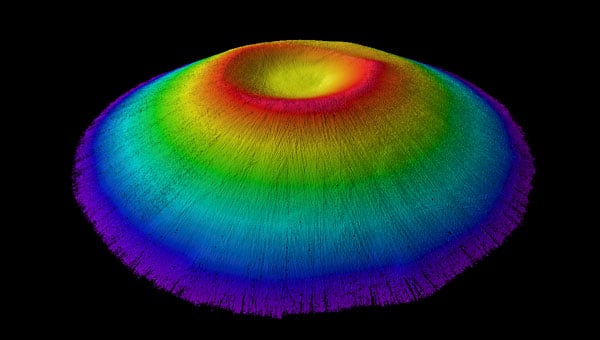
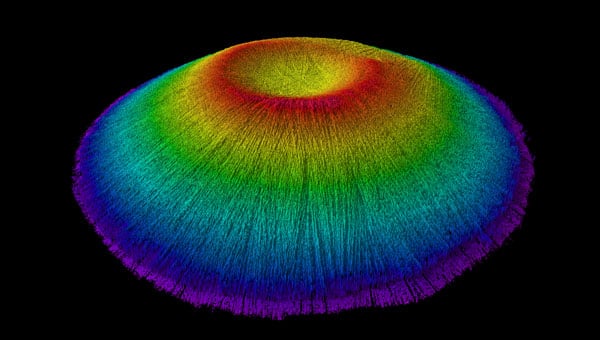
    Sites surveyed include Admiralty Bay, Livingston Island and Deception Island, which includes an active, flooded volcano caldera. The resulting, high-accuracy maps will support further scientific and oceanographic research, environmental monitoring, and improvements to marine charts.

    By adding high-accuracy locations with an average accuracy of 10 cm to 20 cm horizontal and vertical, the team was able to accurately georeference and further refine the detail of the bathymetry for their map inside the underwater Deception Island caldera. (Photo: Eos Positioning Systems)
    By adding high-accuracy locations with an average accuracy of 10 cm to 20 cm horizontal and vertical, the team was able to accurately georeference and further refine the detail of the bathymetry for their map inside the underwater Deception Island caldera. (Photo: Eos Positioning Systems)
  • AAGS launches geodetic surveying certificate: Key updates from joint NGS/NSPS/AAGS meeting

    AAGS launches geodetic surveying certificate: Key updates from joint NGS/NSPS/AAGS meeting

    As president-elect of the American Association for Geodetic Surveying (AAGS), I participated in a joint quarterly meeting with the National Geodetic Survey (NGS), the National Society of Professional Surveyors (NSPS) and AAGS on April 25.

    I invite you to visit the AAGS website and consider joining our monthly board meetings, which are held on the second Tuesday of each month. All are welcome to attend. If you are interested, email me at [email protected] to be added to the attendee list.

    Now, for some updates from the joint quarterly meeting.

    During the meeting, I provided an update on the Certificate for Geodetic Surveying program, which has been under development by AAGS and is expected to be available by the end of the year. The program is designed to meet the needs of surveyors and others that perform spatial analyses and computations using geodetic methods.

    Tim Burch, executive director of the National Society of NSPS, wrote the following in an April 23, 2025, xyHt article:

    “To the average professional surveyor, the term “geodesy” does not exist in their everyday conversations about the business. While the use of state plane coordinates has expanded greatly with the development of GPS/GNSS receivers and RTK/RTN connectivity, the mathematics and “black magic” of geodesy remains an enigma to most of the profession.

    However, the ongoing progression of technology within surveying instruments has expanded the need for understanding how geodesy works. Our practitioners are faced with expanding their knowledge and expertise of geodesy and thus have put a new challenge on them to find teachers and/or mentors to provide training on the datums and techniques.”

    This is exactly what AAGS is attempting to do with the Certificate for Geodetic Surveying program. The information below includes the program description and content. AAGS has developed a set of questions that will determine if an individual has demonstrated a minimum competence in understanding and applying geodetic surveying concepts. AAGS is working with NSPS, who will be administrating the program for AAGS. The status and updates of this program are provided at the AAGS Monthly Board meetings. Come join us to hear more about the program and other AAGS activities.


    Certification for Geodetic Surveying

    Program description and content. Certification for Geodetic Surveying is official recognition that a person has demonstrated to the satisfaction of the Certification for Geodetic Surveying Board that he or she is minimally competent to perform spatial analyses and computations using geodetic methods.  It is not intended to certify scientists performing research in geodesy.  Rather, it is for individuals who use geodetic concepts and techniques to solve practical problems as a part of performing their work.  Typical practitioners include geodetic surveyors, geodetic/geomatics engineers, geospatial software developers, geographic information systems (GIS) professionals, and geospatial data managers.  The focus is more on the use of applied geodetic methods than with a particular field.  A person who has obtained the Certification for Geodetic Surveying is one who has demonstrated minimum competence.  In this context, “minimum competence” is a combination of working knowledge and familiarity with geodetic concepts that shows the ability to understand and solve applied practical geodetic problems as normally encountered in modern geospatial practice.  Importantly, this includes an understanding of one’s limitations in solving such problems. 

    The Certification for Geodetic Surveying Board will identify the depth of knowledge required to achieve minimum competence for Geodetic Certification in the following areas:

    • Geometric geodesy
      •  Reference frames, reference systems, geometric datums, and realization strategies
      • Characteristics of modern reference systems, including NAD 83, WGS 84, ITRF, and IGS
      • Transformations between datums, both modern and historic
      • Geodetic, projected, and local geodetic horizon coordinate systems
        • Direct and inverse problems for geodesics and map projections
        • Reference ellipsoids, radii of curvature, and types of geodetic and projected distances
        • Reductions, conversions, and relationships between coordinate systems
        • Transformations used to create “localization/calibration” coordinate systems
    • Physical geodesy
      • Gravity, “the” geoid, gravimetric and “hybrid” geoid models, physical height systems, deflection of the vertical
      • Vertical geodetic datum definitions and transformations
      • Types of heights and their relationships; conversions between the various types
      • Terrestrial methods for vertical, horizontal, and 3-D positioning
        • Geodetic leveling and height determination; leveling instrumentation and corrections
        • Modern 3-D terrestrial methods and instruments, including total stations and scanners
        • Familiarity with historical methods such as triangulation, trilateration, and geodetic astronomy
    • Accuracy and error
      • Positional error estimation and uncertainty propagation; statistics and probability theory
      • Characterization using network and local accuracies, error ellipses, and confidence levels
    • Temporal aspects
      • Plate tectonics (both steady-state and episodic); plate-fixed versus no-net rotation reference systems; subsidence; isostatic adjustment; tidal deformation
      • Time-dependent transformations between reference systems
    • Global Navigation Satellite Systems (GNSS)
      • Instrumentation; system architecture; signal structure; error budget
      • Methods for position determination, including by pseudorange, differential correction, carrier-phase differencing, and precise point positioning
    • Geodetic survey networks
      • Design, adjustment, and analysis of GNSS and terrestrial geodetic survey networks
      • Formulation and solution of least-squares network adjustments
    • Standards and guidelines
      • Official standards, specifications, and guidelines for geodetic control, positioning, and accuracy
      • The US National Spatial Reference System and similar systems elsewhere

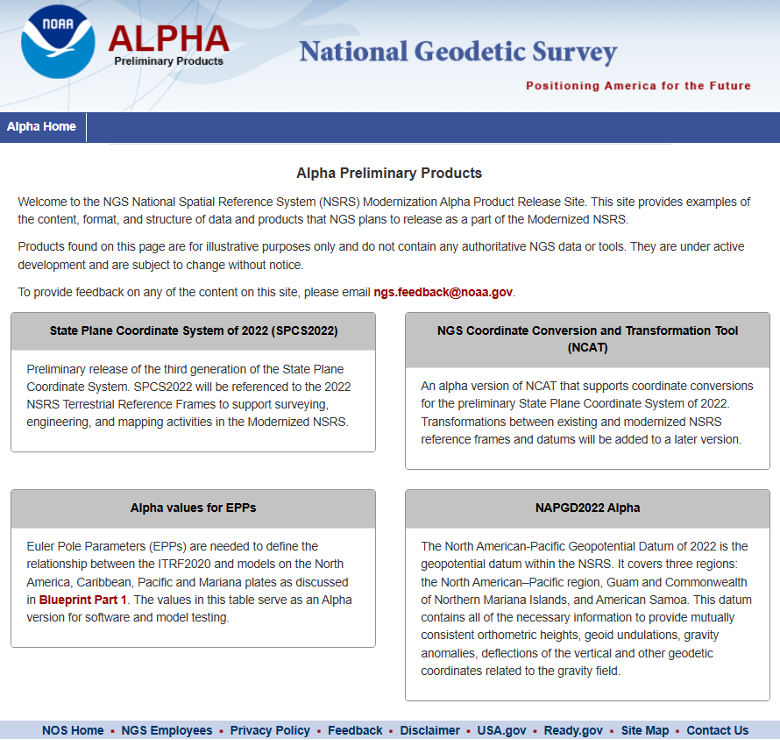
    Many of you are probably aware of the actions taken by the current administration to reduce the size of the U.S. federal workforce, these actions may affect all users of U.S. geospatial products and services.  NGS is not exempt from these actions; recently, they have lost many employees either though leaving service voluntarily, retiring earlier than planned, or having been terminated because they were still in the probation period of their employment. NGS leadership did not provide any details on changes in personnel; only time will tell what the loss of personnel will have with the agency in the future. That said, NGS’s plans still include transitioning the modernized NSRS Alpha Site to a Beta Site this year. The current alpha site has four products — State Plane Coordinate System. SPCS2022, NGS Coordinate Conversion and Transformation Tool (NCAT), Euler Pole Parameters (EPPs) and The North American-Pacific Geopotential Datum of 2022. My understanding is that all four of these alpha products will be transitioned to beta products sometime in 2025. Some may have limited options in the beginning. 

    During this period, the beta site will provide the content, format and structure of data and products that should not change much from the final product. There could be minor changes detected during the beta phase, but users should not anticipate large significant changes. That said, that is why you have a beta phase before production. It is important for users to access the beta products and identify any issues or concerns and provide feedback to NGS. Future newsletters will highlight the beta products as they are released.

    NGS Alpha Site (Photo: NGS website)
    NGS Alpha Site (Photo: NGS website)

    Finally, I would like to highlight a NGS webinar held on April 25, “Design of Networks Using NOS NGS 92.”  Dave Zenk, NGS Northern Plains Regional Advisory, gave a good presentation outlining the tables that users need to be familiar with using OPUS Projects to process and submit GNSS projects to NGS for publications. The webinar provided a few examples to explain the concepts.  Users can download the webinar from NGS webinar website.

    Design of networks using NOS NGS 92. (Photo: NGS website)
    Design of networks using NOS NGS 92. (Photo: NGS website)

    I found the webinar to be very informative, and I would encourage all users of OPUS Projects to download the presentation.  During the webinar, Dave briefly mentioned three items that I believe deserve more explanation for anyone using OPUS Project. I will address the following topics in more detail in future newsletters:

    • The mark’s classification — primary, secondary, and local – will not be included on the NGS datasheet but the local and network accuracy from the project will be provided on the datasheet.  What does this mean to someone that’s using the mark in their project?
    • OPUS Project uses the F statistic test to determine if the appropriate constraints were imposed during the horizontally and vertically constrained adjustments.  Why does OPUS Project use this statistic?
    • The Constraint Ratio (CR) test computed by OPUS Projects provides a way of identifying which coordinates should be constrained and which should not be considered for constraints in the final horizontally and vertically constrained adjustments. What’s the best way to use this table?

    Again, I would like to invite you to check out the AAGS website and consider participating in AAGS monthly Board meetings. If you are interested in attending the meeting, send an email to me at [email protected]

    Finally, users should continue to check NGS’s website for the announcement of the transition from the alpha site to the beta site. Future newsletters will highlight the beta products as they are released.