Author: Matteo Luccio

  • EAB Q&A: What are the key challenges and promising trends for GNSS/PNT?

    EAB Q&A: What are the key challenges and promising trends for GNSS/PNT?

    What are the key challenges and promising trends for GNSS/PNT over the next three to five years?


    Headshot: Bernard Gruber
    Bernard Gruber

    “In 2023, the GPS program celebrated its 50th anniversary. It has had untold positive impacts on the world. I strongly believe this trend will continue through GNSS and complementary PNT systems for the next 50 years! That said, continuing challenges faced in the era of great power competition — specifically, to disrupt, deny, and destroy PNT capabilities — pose a clear and present danger. Ingenuity, competition, and strong coalitions will drive how we think and how we utilize our incredible resources – human and system – to persevere.

    Unfortunately, challenges will always exist. Since the beginning, the GNSS community has had to deal with jamming threats, such as pervasive black market ‘cigarette lighter’ jammers, militarily sophisticated ones, or brute force high powered systems. This challenge will not go away. The burgeoning of artificial intelligence and machine-to-machine computations offers an opportunity and poses a threat: as commercial and government entities embrace these technologies, they exponentially increase the need to adapt.

    Several promising trends will continue. Through the hard work of countless governmental organizations supporting the National Coordination Office, periodicals such as GPS World, academic papers, conferences and symposiums, marketing and communications, the public is now aware of how vital GNSS and PNT systems are. Second, buyers, operators, and users will demand that robustness be built into systems by anticipating needs such as increased cybersecurity, assured access, and tiered defense schema.

    Third, innovative technical trends will drive increased processing power, cybersecurity/encryption toughness, signal diversity, adaptive antennas, and network augmentations, while an ever-increasing focus on model-based engineering and digital twins will allow us to field and learn faster. Additionally, as signal diversity grows, the opportunity for software-defined radios that utilize authenticated and available signals while ignoring others automatically will mature; programs such as the NTS-3 demonstration will at minimum force the decision of how we adapt.”

    — Bernard Gruber
    Northrop Grumman


    Headshot: Jules McNeff
    Jules McNeff

    “Trends have emerged and evolved over the last three decades — since GPS became operational — that addressed earlier challenges and yet have created new, and possibly more daunting, ones. Early issues with awareness and acceptance of the need for continuous, precise positioning, navigation and timing (PNT) have been overcome, and the markets and governments have responded with a proliferation of PNT services — both space-based and other.

    I’ll leave the market trends and opportunities to our industry colleagues and focus more closely on some remaining challenges that are particularly vexing to me. That requires stepping outside the comfortable GNSS/PNT-as-a-technology engineering and science bubble full of topics for collegial international cooperation. Instead, one must look at GNSS/PNT as an incredibly valuable tool for public safety, political and economic advantage, and military dominance, all separate, but closely interrelated and so as a tool to be protected. Other nations, some unfriendly to the United States, recognize the political/economic reality and are deploying PNT services to compete with GPS and erode international public confidence.

    The U.S. government appears complacent and naively unwilling to accept that changes are necessary in its approach to international economic competition in PNT technology over the immediate future. Similarly, in the public safety arena, most of U.S. critical infrastructure (CI), an area of federal government responsibility, is well-known to be vitally dependent on GPS to function. However, the government agencies responsible for CI have been beyond reluctant to implement needed resilience measures, specifically regarding the terrestrial enhanced Loran (eLoran) system, which would provide substantial resilience if GPS service were lost or disrupted. This is despite multiple requests over the last decade from Congress and the National PNT Advisory Board to recapitalize eLoran.

    At the same time, friendly and hostile foreign nations invest in their own eLoran systems to bolster PNT resilience within their sovereign territories. Knowing this, the United States cannot be happy with a situation that threatens economic and national security, yet it persists. Finally, and also important to public safety, we need to get serious about how PNT positions (geoaddresses) are reported to the public – important for economic purposes and specifically for incident/accident location and emergency response operations of all kinds. Continuing reliance on lat/lon as a default or on unique proprietary methods is both ineffective and dangerous given the ready availability of the U.S. National Grid as a public resource, as identified in the U.S. Federal Radionavigation Plan. As with eLoran above, the public safety challenge is to save lives and livelihoods and not allow them to remain at risk.

    — Jules McNeff
    Overlook Systems Technologies 


    Jean-Marie Sleewaegen
    Jean-Marie Sleewaegen

    Recent years have seen a spectacular boost in the number of global navigation satellite systems (GNSS) satellites and signals. The launch pace has now slowed down, which does not mean the end of GNSS innovation. On the contrary, now comes the time to exploit and get the best out of all these new signals and services.

    One of the first benefits of signal diversity is improved resilience: the more signals, the more fallback options in case of jamming or spoofing. Designing the optimal blend of all the constellations and signals into a precise and resilient PNT solution is and will remain a major innovation challenge in the industry. The recent introduction of Galileo OSNMA and the announcement of authentication services by other systems will play a key role in this evolution.

    Having many types of signals also means that there are many ways of dealing with them. This is particularly visible in the current PPP-RTK offerings. Various service providers use different correction formats as well as protocols and this complexity is still too exposed to users. A key challenge will be the standardization and consolidation of the correction environment in a multi-constellation and multi-signal context. At the receiver side, this involves evolving from a vendor-specific to a correction-agnostic approach.

    In the next few years, the focus will also expand beyond classical GNSS, with the announcement of the first low-Earth orbit (LEO) LEO PNT constellations, promising improved precision, resilience, and security compared to traditional medium-Earth-orbit (MEO) GNSS. The promises and challenges of  LEO PNT constellations and their interoperability with GNSS will undoubtedly foster major innovations in the PNT industry.

    — Jean-Marie Sleewaegen 
    Septentrio 


    F. Michael Swiek
    Michael Swiek

    A basic question for the next three to five years is how will we be receiving PNT, or P, N, and/or T individually or in combination and from where? We have become accustomed to receiving reliable PNT from government-operated MEO satellite constellations. However, new options appear to provide PNT or P, N, or T from LEO constellations, terrestrial beacons, etc., from both government and private sector providers. These options can help address vulnerabilities in traditional GNSS services and provide options for new applications. The question becomes one of coordination and integration of diverse solutions. The challenge is managing the technical, market and regulatory elements while not undermining existing stable infrastructure or future innovation.

    — Michael Swiek 
    GPS Alliance

  • The rearview camera and the head-up display

    The rearview camera and the head-up display

    Matteo Luccio
    Matteo Luccio

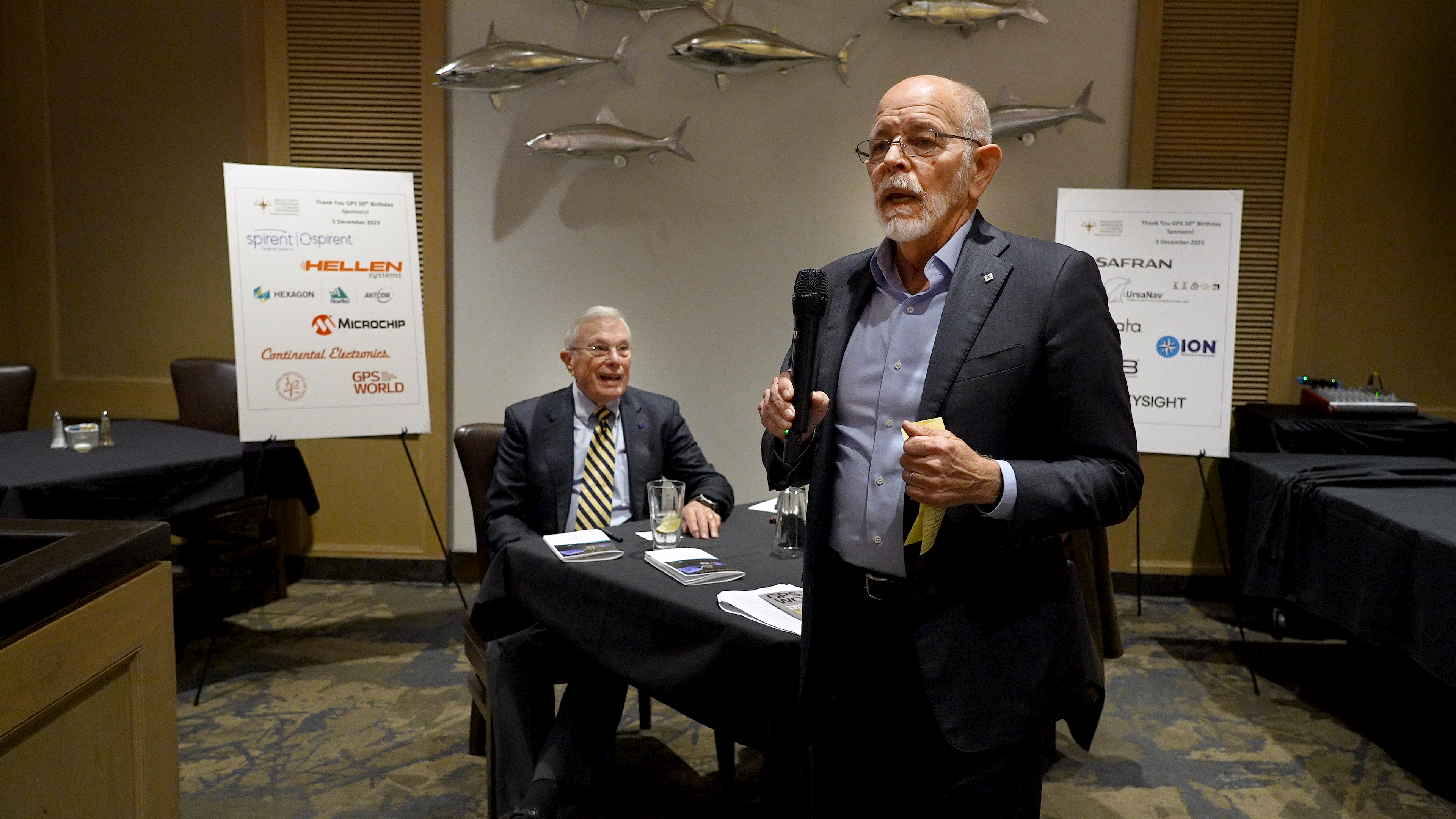
    On December 5, in Houston, at a reception hosted by the Resilient Navigation and Timing Foundation to celebrate GPS’ 50th anniversary, I had the honor of publicly interviewing Dr. Bradford Parkinson for 45 minutes. When I asked him how GPS today differs from the design that emerged from the Lonely Halls meeting he chaired 50 years ago this past September, he replied, proudly, that “there is no fundamental difference.” Recently, he recalled, he pulled out for the first time in 20 years a handheld Trimble EnsignGPS — “It was one of those little devices that got shipped to the Iraq War,” he noted —, cleaned its contacts, changed its batteries, turned it on, and was immediately able to navigate. “The point of the story,” Parkinson said, “is that evidently it still works.”

    When I asked him what he considered to be the most significant impact of GPS on society, he said it was “also probably the most perilous: kids today just take it for granted. They know where they are.”

    Taking GPS for granted, however, is not limited to kids today. It is a pervasive attitude throughout our society, including sectors of the federal government that ought to know better. That is why a recurrent theme throughout the 29th meeting of the National Space-Based Positioning, Navigation, and Timing Advisory Board, on December 6 and 7, which I attended, was raising the alarm about the fact that GPS is falling behind Galileo and BeiDou.

    “We must attack this mindset [that GPS is] the Gold Standard and everything is OK. It is not OK,” said Admiral Thad Allan, a former Commandant of the U.S. Coast Guard, who chairs the PNT Advisory Board. Perhaps, he suggested, it is time to declare that GPS is only meeting “the Pewter Standard” for GNSS. “That will get the attention of somebody who does not understand this.”

    Parkinson, in emphasizing the urgency of the problem, said that he currently counts eight areas in which GPS is falling behind its GNSS counterparts, including:

    • L5, the go-to signal particularly for civilian aviation, is not yet activated and will not be until the next three satellites are activated, which will likely not happen for at least another year.
    • The Next Generation Operational Control System (OCX), the future version of the GPS control segment, is not yet operational.
    • GPS does not have a satellite-based high-accuracy service (HAS). On this, he said, “Everyone is moving out except us.”
    • GPS lacks anti-spoofing authentication, which Galileo has.

    Additionally, “every one of these things has an enormous lead time,” Parkinson warned.

    “As an advisory group, we are only as effective as the willingness of the system that we are advising to act on what we say,” Allan pointed out. The Advisory Board spent the final portion of its meeting discussing how to structure the agenda and products of its next couple of meetings to get these issues with GPS the attention they deserve and require. Stay tuned.

    Click to watch the full interview 

    Matteo Luccio | Editor-in-Chief

    [email protected]

  • Installing a GNSS receiver without an engineering degree

    Installing a GNSS receiver without an engineering degree

    Photo:
    Seirrowon concentrates on the orchards and fixed crop market using u-blox RTK and sensor fusion receivers. (Image: Seirrowon)

    I asked Jason O’Flanagan, co-founder and CEO of Seirrowon Labs — which specializes in robotic vehicle control, electronics hardware and firmware development — about the company’s collaboration with u-blox on precision agriculture. Here are a few excerpts from our conversation. Click here for the full version.

    I know you’re working with u-blox.

    We’re using both hardware and services products from u-blox. We’re using both their normal RTK receiver and their sensor fusion GNSS receiver. We started looking at u-blox, NovAtel, Trimble and Septentrio. However, we settled on u-blox as its mix of services and hardware were best suited to our business model. They provide a fully unlocked, fully functional receiver out of the gate.

    In the fixed crop, orchard situation, having as many satellites as possible really helps with your position. So, from a hardware standpoint, it was a perfect solution for us. It allowed us to track up to 85 satellites at a time (two channels each) in adverse conditions. Their sensor fusion version, which is their ZED-F9R, allowed us to fill in the gaps when the GNSS became unusable under the tree foliage. The SL LITE is a generic RTK receiver, the SL LITE-R includes sensor fusion, and the SL Pro uses their L band receiver with the sensor fusion module.

    What value do you add to u-blox’s modules?

    All they give us is the raw GNSS. We add some IP functionality and support. U-blox outputs its data in a certain format, which is not applicable to the ag industry. So, we map out the data to get it in the right format that will work for a lot of the equipment that’s in the marketplace.

    Second, we added a support server to it so that it backs up its settings to a remote server. So, if customers go down, we can flash their replacement receivers and overnight them back to them. The customers are also able to turn on remote support where we can see the data from the receiver and diagnose issues remotely. Our dealers have the same access.

    We’ve added a support mechanism into our hardware that allows for better remote support without having to wait hours for someone to get to the field or diagnose an issue. We’ve also added remote updating for support and software. So, the customer can update and add new features remotely without us having to send someone out to do that.

    What is involved in installing your equipment on tractors, combines, sprayers and so forth? What kind of support do you provide? I assume you’re brand-agnostic.
    We designed our receiver so that anyone can install it. We took a lot of the complications out of it. We use industry standard Deutsch connectors and our device’s user interface is HTML. So, you can use any smartphone or a laptop or any device that has WiFi in it to set up the device. There’s no special software required, there are no special cables; you just connect to it as if it were a hotspot. You can set it up completely from there.

    We’ve simplified everything to make sure that users don’t need a degree in GNSS or in engineering to install the receiver. It’s very straightforward. It has several pre-configured profiles within it that allow you to take a generic setup and say, “Hey, I’m putting you here,” so it will default to all the correct settings. We really want to make it as simple and straightforward as possible.

    What is the typical use case for your technology?

    We have a generalized solution that would be equivalent to, say, a SMART7 from NovAtel. It’s designed for row crop work out in the field and functionality within the standard operations that you get for GNSS receivers within agriculture. Our offering includes the LITE, which is a generic RTK receiver and the LITE-R and PRO, which use active sensor fusion to allow us to function better in orchards and fixed crops that have obstructions to the sky.
    I’m concentrating on the orchards and fixed crop market because none of the main OEMs that are out there doing GNSS are taking any time with that market, so that’s where we see our niche.

  • Seirrowon full interview

    Seirrowon full interview

    Image: Seirrowon
    Image: Seirrowon

    I asked Jason O’Flanagan, co-founder and CEO of Seirrowon Labs — which specializes in robotic vehicle control, electronics hardware and firmware development — about the company’s collaboration with u-blox on precision agriculture.

    What is your background and your company’s origin story?

    I’ve been doing precision agriculture for 25 years. I started with Beeline, which was the first company to do automated steering of agricultural equipment, late in the last millennium. I worked for many of the big OEMs, including Kubota and AGCO. I saw an opportunity for GNSS solutions and products. Obviously, there’s a lot of competition there, but we wanted to focus on fixed row crops and orchards because GNSS does not work well in an urban canyon-type scenario. So, there was a niche there for us to jump on.

    Were you the company’s co-founder?

    Yes, I am one of the company’s co-founders. The company’s name, Seirrowon, is actually “no worries” spelled backward.

    I know that you’re working with u-blox.

    We’re using both hardware and services products from u-blox. We’re using both their normal RTK receiver and their sensor fusion GNSS receiver. We started looking at u-blox, NovAtel, Trimble and Septentrio. However, we settled on u-blox as its mix of services and hardware were the best suited to our business model. They provide a fully unlocked, fully functional receiver out of the gate.

    In the fixed crop, orchard situation, having as many satellites as possible really helps with your position. So, from a hardware standpoint, it was a perfect solution for us. It allowed us to track up to 85 satellites (two channels each) at a time in adverse conditions. Their sensor fusion version, which is their ZED-F9R, allowed us to fill in the gaps when the GNSS became unusable under the tree foliage. The SL LITE is a generic RTK receiver and the SL LITE-R includes sensor fusion and the SL Pro uses their L band receiver with the sensor fusion module.

    What value do you add to u-blox’s modules?

    All they give us is the raw GNSS. We add some IP functionality and support. U-blox outputs its data in a certain format, which is not really applicable to the ag industry. So, we map out the data to get it in the right format that will work for a lot of the equipment that’s in the marketplace.
    Second, we added a support server to it so that it backs up its settings to a remote server. So, if customers go down, we can flash their replacement receiver and overnight them back to them. The customers are also able to turn on remote support where we can see the data from the receiver and diagnose issues remotely. Our dealers have the same access.

    We’ve added a support mechanism into our hardware that allows for better remote support without having to wait hours for someone to get to the field or diagnose an issue. We’ve also added remote updating for support and software. So, the customer can update and add new features remotely without us having to send someone out to do that.

    Basically, what ag uses violates several of the NMEA conventions. For example, NMEA limits the number of satellite outputs to show 12, but in the ag world all GNSS receivers output the actual number of satellites, using the correction in the NMEA 183 message.

    How does the NMEA data format differ from what’s need in agriculture?

    Raw GNSS is not sufficient for an active moving solution. Regardless of what GNSS supplier we ultimately chose, the solution provided in GNSS via raw NMEA was not suitable for autonomous or mapping applications by itself. We spent a great deal of time tweaking our output to be best solution possible. This included adjusting for time, terrain and movement. Senor Fusion introduced its own unique issues that we worked through to create the best working solutions. I have spoken to several companies that tried to implement GNSS solutions expecting the raw modules and boards to work out of the box and have been left with a bad taste in their mouth.

    In general terms the NMEA 0183 Standards for GGA and VTG don’t have the accuracy required for RTK/PPP performance without violating the length of string limit. We added some additional information to the GGA message to help diagnose issues with performance without needing extra logs and data to see performance. While this does not meet the NMEA 0183 spec it is mostly ignored by Ag equipment downstream. We are currently working with the AgGateway Organization to better use the NMEA spec for use in agricultural applications.

    Who stores, aggregates and analyzes the data collected?

    We’re not actually taking any position data. We’re just taking GNSS performance information, and the customer must opt in for that. So, it’s defaulted off; if the customer turns it on, it means that we get a complete set of their settings backed up to a server that we own. We have a server with a backup server. So, it comes to our server, and it’s just a just a general setting information that we’re using, and some performance information on satellite tracking, and other things that help us diagnose issues with the receiver. It’s not performance information as far as their location or how they use the receiver. It’s more diagnostic information only.

    What is involved in installing your equipment on tractors, combines, sprayers, and so forth? What kind of support do you provide? I assume that you’re brand-agnostic.

    We designed our receiver so that anyone can install it. We took a lot of the complications out of it. We use industry standard Deutsch connectors and our device’s user interface is HTML. So, you can use any smartphone or laptop or any device that has WiFi in it to set up the device. There’s no special software required, there are no special cables; you just connect to it as if were a hotspot. You can actually set it up completely from there.
    We’ve simplified everything to make sure that users don’t need a degree in GNSS or in engineering to install the receiver. It’s very straightforward. It has several pre-configured profiles within it that allow you to take a generic setup and say, “Hey, I’m putting you here,” so it will default to all the correct settings. We really want to make it as simple and straightforward as possible.

    How does it interface with the machine’s steering control?

    To interface with the vehicle, we use standard NMEA 0183. We have all the hardware for NMEA 2000 CANBUS but that will come in early 2024.

    So, typically, growers just buy the device and have one of their team members put it on?

    We normally sell through dealers and OEMs. They incorporate it into their solution. For example one of our dealers uses a system called Weedit. Basically, the distributor incorporates that receiver into each scenario that they have. They must record all that information for EPA in California, so they know exactly what chemicals they put where. So, GPS becomes incredibly important within those orchards to know exactly where the chemical was applied, because they must submit that information.

    So, the dealer does the integration onto the machine?

    The OEM. However, it is available as a drop-in replacement for any of the old legacy receivers such as Raven receivers that fail over time and some of the other older equipment. So, a general customer that uses Raven equipment can put our receiver in to replace it. I’m just using Raven in this example because it’s a US company that has basically disappeared.

    So, it’s not factory-installed and it’s not usually installed by the user, but the dealership put it onto a machine before selling it?

    We have dealers and distributors, but it can be installed by an end user as a replacement for a failed old piece of equipment.

    Is any of our equipment factory-installed?

    No. Not with the big guys anyway. They’re all tied up with their own GNSS at the moment. AGCO is in a pending joint venture with Trimble, CNH Industrial has bought Hemisphere GNSS and Deere has its own offering. So, the big guys all have their own GNSS solutions for now.
    The consolidation in the industry is very interesting. I find it curious that in some of the mergers and joint ventures are combinations where both parties already have similar offerings.

    Perhaps it’s still evolving.

    It sounds like it’s still in the early phases of agreement.

    What is the typical use case for your technology?

    We have a generalized solution, that would be equivalent to, say, a SMART7 from NovAtel. It’s designed for row crop work out in the field and functionality within the standard operations that you get for GNSS receivers within agriculture. Our offering includes the LITE, which is a generic RTK receiver, and the LITE-R and PRO, which use active sensor fusion to allow us to function better in orchards and fixed crops that have obstructions to the sky.

    I’m concentrating on the orchards and fixed crop market because none of the main OEMs that are out there doing GNSS are taking any time with that market, so that’s where we see our niche.

    I looked after all the North American support and product direction when I was at AGCO and there was nothing more frustrating than having a product that was complicated to use, difficult to set up, and required multiple people to touch it to make it work. With that in mind, we developed our products to be very simple, very straightforward, able to diagnose most of their problems by themselves, and as functional as possible without having to have someone go out and spend time on diagnosing issues. Our devices are intelligent enough to do that. While generating our product, and putting it into the marketplace, we have spent a lot of time thinking about how to support our customers by avoiding complications and downstream issues.

    What else differentiates your company from your competitors?

    We have PPP correction services from both satellites from the Internet — similar to services provided by Trimble and NovAtel. However, the industry standard is to only offer a three-month or 12-month subscription, while we offer it monthly. So, you can actually activate it with a phone on the device, purchase a one-month subscription and just use it in the months that you need it. So, a farmer who needs it for only two months in the spring and three months in the fall can pay for only those months instead of having to pay for the whole year. We’re trying to make it as usable and as targeted toward farmers as possible. Through Pointperfect from Ublox. We sell this under our brand name of Flat Earth PPP. (We thought this was a funny name that makes fun of the flat earther movement given that GNSS works because the world is a sphere.)

    What else distinguishes your products?

    Our receivers are completely unlocked and ready to go out of the gate, without nickel and diming customers or holding features back from them. When they pay for the system, they get everything. If you are going to unlock a feature on a NovAtel or Trimble receiver, you have to get back to the dealership, they then have to use some e-commerce system to purchase that Auth code, then they either give the customer this huge, 64-character code, or someone has to come out and make that change. We don’t have to do any of that. Everything’s unlocked and ready to go.
    Our use case is focused on a low profile, a small footprint, and a ruggedized enclosure. We came up with a unique design of antenna that resulted in reduced size without losing any performance. As a result, our receiver is only 35mm tall, 100mm wide and 180mm long. We have filed a patent on this unique design. We also designed it for most agricultural environments by having protection on all IO and the ability to be powered from 9-36V to meet the requirements of both US and European agricultural applications.

    Because of the low-profile requirement, we needed a receiver module that is mounted to the board directly instead of a separate receiver board that would have made the enclosure taller.

  • Auto-steering helps to plant corn, soybeans and rice

    Auto-steering helps to plant corn, soybeans and rice

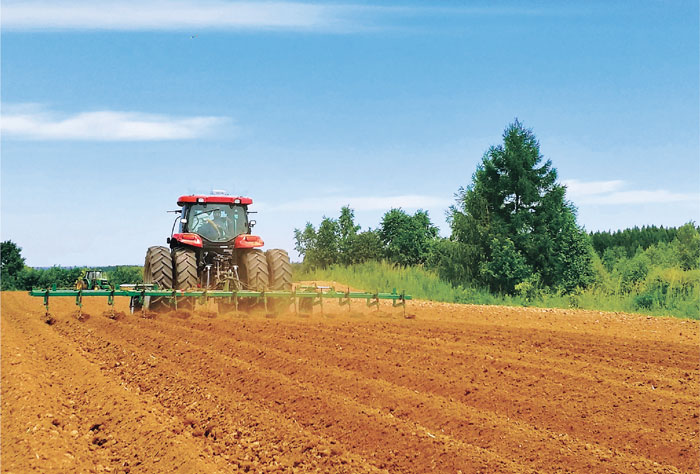
    CHCNav's NX510 SE GNSS RTK auto-steering system helps growers achieve the precision required for specialized planting operations. (Image: CHCNAV)
    CHCNav’s NX510 SE GNSS RTK auto-steering system helps growers achieve the precision required for specialized planting operations. (Image: CHCNAV)

    CHC Navigation’s NX510 SE GNSS RTK auto-steering system helps growers around the world achieve the precision required for specialized planting operations.

    Intercropping. Growing two or more crops together in the same field, known as intercropping, is a sustainable and effective agricultural practice that is being adopted worldwide to increase yields. It is a bit counter-intuitive because it forces the different crops to compete for water, light, and nutrients. However, if the plants are carefully selected, their seeds are correctly spaced, and their growth is properly managed, it can be a recipe for success. For example, legumes, such as soybeans, which are good at nitrogen-fixing, can provide nitrogen to corn, thereby reducing the need for additional nitrogen fertilizer and the concomitant risk of chemical runoff. Mixing these two plant species also increases biodiversity and ecological stability. However, if the seeding is not planned carefully and executed precisely, the corn’s tall stalks will shade the soybeans’ short stems and reduce their yields.

    Mr. Chen, a farmer and president of Agricultural Machinery in Anhui, China, co-crops corn and soybeans in the same field. To seed them precisely, he relies on CHCNAV’s NX510, which has a pass-to-pass accuracy of ±2.5 cm. Prior to using an automated steering system, his yields suffered because his seed rows were not straight. The system makes planting a simple task: the operator sets the row spacing for crops and the tractor automatically maintains it. Operators can also share those patterns among multiple farm machines, greatly increasing efficiency.

    Growing rice. About half of the world’s population — especially in Asia, South America, and sub-Saharan Africa — relies on rice as its staple food. China is consistently ranked among the top 10 rice-producing countries due to its ability to cultivate it during two to three rice-growing seasons per year. Rice farmers around the world share challenges, including resource depletion due to soil degradation, urbanization, the effects of climate change, and a shrinking labor force, especially skilled labor.
    Every rice planting season is a race against time and requires optimizing efficiency, including executing precise, straight-line planting operations to accurately align the new rice crop with previously established rows of seedlings. Any inaccuracy can sharply reduce rice yields. This is a key concern in China, which has only 0.02 hectares of rice land per capita. It is also vital to achieve sustainability and minimize environmental impact.

    In a recent application, the NX510 has been successfully integrated into rice transplanters used to plant rice seedlings in swampy soils in China. It ensured that rice seedlings were planted at consistent depths and in the correct vertical and horizontal positions, promoting adequate ventilation and optimal light exposure for their subsequent growth.

    NX510 SE. The NX510 SE utilizes five satellite constellations — GPS, GLONASS, Galileo, BeiDou and QZSS — and multiple correction sources, including 4G RTK networks and UHF RTK stations. Its built-in 4G and UHF modem connects to all industry-standard DGPS and RTK corrections and its terrain compensation technology maintains high accuracy even in challenging environments and terrain. The receiver’s 10.1-inch industrial display, operating on the AgNav multilingual software, supports multiple guidelines patterns, including AB line, A+ line, circle line, irregular curve and headland turn, to handle all common farming operations.

    The NX510 autosteering system delivers significant productivity gains at a cost accessible to nearly every farm, making it suitable for retrofitting old and new farm vehicles. An additional advantage of autosteering is that it enables growers to maintain the same high level of accuracy when operating at night, which is often required to escape the oppressive daytime heat or to meet tight schedules.

  • Joint venture promises to better serve farmers

    Joint venture promises to better serve farmers

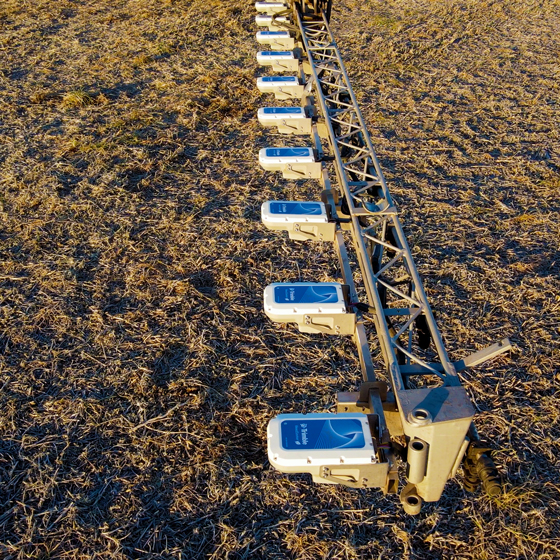
    Trimble's WeedSeeker 2 automatic spot spray system uses advanced optics and processing power to detect and eliminate resistant weeds. (Image: Trimble)
    Trimble’s WeedSeeker 2 automatic spot spray system uses advanced optics and processing power to detect and eliminate resistant weeds. (Image: Trimble)

    In September 2023, Trimble announced an agreement to form a joint venture (JV) with AGCO “to better serve farmers with factory fit and aftermarket applications in the mixed fleet precision agriculture market.” I discussed the announcement with David Britton, vice president of product management, Trimble Agriculture.

    Your press release says “Trimble and AGCO’s shared vision is to create a global leader in mixed fleet, smart farming, and autonomy solutions.” What does mixed fleet mean in this context?

    That’s focused on the farmers’ ability to use any brand of tractor or implement together. As you can imagine, there are multiple OEMs in the market. One of the beliefs that Trimble’s had, and that AGCO shares, and why this JV makes sense, is that the farmers’ decisions around what technology they use and the way that their farms operate shouldn’t be inextricably tied to the brand of tractor that they use.

    So, they could use an AGCO tractor, but with a GNSS receiver that’s not from Trimble or vice versa?

    More so that on their farm they could have equipment from AGCO and other OEMs. In many cases, they’ll have more than one tractor and multiple different implements.

    Those machines can talk to each other and share the data.

    Ideally, yes.

    Image: Trimble
    Image: Trimble

    What will be the division of labor between Trimble and AGCO? How will the interface work?

    The JV will not be involved with any of the tractor manufacturing, which will stay within AGCO. We’re going to be focused on the precision ag technology that will go into the tractor, help manage the implements, and complete the work, as well as the data systems that underpin that.

    Currently, Trimble Ag has capabilities on embedded display software that are used to help manage activities in the field and steer the vehicle. We also have cloud software that allows farmers to manage their information and data and work with other people in their ecosystem, as well as many other things. That’s all going into the JV. Trimble will supply GNSS technology to the JV, which is a foundation to enable geolocating the information in the activities.

    Then you have JCA Industries [which AGCO acquired in 2022] that has been focused on implement control and autonomy. So, the two businesses are complementary. They are coming together to focus on higher technology components and then work with both AGCO as well as other manufacturers and the aftermarket to deliver smart farming and autonomy solutions into the farm to help farmers run their businesses and farms more efficiently.

    Tell me more about the aftermarket.

    One of the key things that we’ve seen historically, and we expect the trend to continue, is that you’ll see innovation happen in the aftermarket first, because it gives a chance to rapidly iterate and learn before you go through the process of putting it into the factory. We expect that we’ll have a very healthy aftermarket business, as well as a portion of the business where our technology will be factory-fit into machines from both AGCO and other manufacturers, because that’s been an important part of the Trimble business. Being able to work with other OEMs to provide important technologies will be a part of that story.

    Are you still expecting the deal to close in the first half of 2024?

    That’s still the target.

    Will the JV sell anything or will it be totally transparent to the user?

    The JV will have its own channel to the aftermarket, as well as people working with OEMs from a sales perspective. In terms of branding, that’s something that’s being evaluated right now. Ultimately, the JV will have a channel to the aftermarket and we also have our own relationships with OEMs through which we will continue to sell. So, the end customers should be aware that they’re purchasing technology that has been built by the JV.

    Under a name or branding that is still to be determined?

    Yes.

    Over time, the JV will become the main way for Trimble to sell its precision ag equipment.

    Correct. Trimble will go into the ag market primarily through the JV.

    Will Trimble also continue to sell to other OEMs other than AGCO?

    Trimble will sell ag equipment to other ag OEMs via the JV.

    Image: Trimble
    Image: Trimble

    Does that mean that AGCO, through the JV, will sell equipment to some of its competitors?

    My understanding is they already have businesses that do that currently. Their Precision Planting business works with other OEMs as well as other businesses that they’ve brought into the AGCO family. So, it’s not new for AGCO to have a part of the business that is selling to OEMs in some ways. Trimble has some experience with that as well.

    We recognize that it’ll be important for our customers to trust that their data is being managed appropriately. That said, it’s a great way for other OEMs to have access to scale. As we talk about what needs to happen for precision ag to realize the opportunity that comes with technology, scale is going to become increasingly important, which I think is a part of why this JV is so exciting for both Trimble and AGCO. Ultimately, it should be exciting for farmers as well because it’s going to create a very well scaled business that can help provide technology very effectively.

    Who will collect, aggregate, analyze, and control the data? How will farmers access it?

    We’ll continue to work with the end customers and to find ways that we can ensure that they have the right access to and ownership of their data, while also looking for ways that we can use anonymized data to enhance product functionality.

    Is that an opt in or an opt out?

    The JV’s policy on that has not been determined yet.

    For which crops or scenarios do you expect the greatest adoption of the JV’s technology?

    There are places where you see the adoption of precision ag technology more than others, in terms of larger scale farms and high value crops. Ultimately, we take pride in being a global business, which means that we’re thinking about all areas of the globe, as well as multiple crop types. So, every region has crops that are particularly important to it. We try very much to build solutions that fit those local markets, while also leveraging what we can from a scale perspective. There isn’t one particular crop type or one particular region that dominates our thinking at this point.

    Trimble has its RTX correction service. Does AGCO have its own?

    Trimble will keep RTX but also make it available to the JV and to AGCO, which does not have its own solution. So, RTX is a very good fit. That’s one of the benefits you see in the JV. We’ve already been working with them from an RTX perspective on receivers that we’ve provided. So, we’re more excited to continue that through the JV.

    Will the JV come up with any new tiers for corrections?

    The JV will work with Trimble to come up with what’s right for the market. As you’ve seen RTX evolve over the years, we’ll continue that process working with Trimble to figure out the right tiers and the right solution for what the farmers need.

  • GNSS in the field: Precision agriculture increases yields and reduces inputs

    GNSS in the field: Precision agriculture increases yields and reduces inputs

    Image: CHC Navigation
    Image: CHC Navigation

    Precision agriculture — which enables growers to reduce inputs of water, fertilizers and pesticides by matching them to variations in soil conditions, thereby reducing environmental impacts, increasing yields and productivity, and reducing fuel consumption — is a prime use case for global navigation satellite systems (GNSS). While the typical open sky conditions in the fields minimize concerns about signal occultation and multipath, the accuracy requirements for this practice, particularly for certain crops and planting techniques, can be very high. Challenges for receivers often include severe roll and pitch due to bumpy terrain, the requirement to maintain exact heading at very low speeds, and the need to receive corrections over very large areas.

    Precision agriculture began more than 30 years ago — GPS World published a few issues of a special supplement on the subject about 25 years ago — and now all tractors from major manufacturers come equipped with a GNSS-based guidance system. Adoption has increased hand-in-hand with improvements in enabling technologies. These include satellite-based and ground-based sensors, UAVs, geographic information systems (GIS), and a plethora of GNSS corrections services (see “Corrections Services Abound” in our January 2023 issue and “Understanding GNSS Correction Methods” on p. 28 of our January 2024 issue).

    In this cover story, we present three recent developments in precision agriculture. Click below to read more about:

  • Celebrating 50 years of GPS: An evening with the father of GPS

    Celebrating 50 years of GPS: An evening with the father of GPS

    PhotDana Goward, President of the Resilient Navigation and Timing Foundation, introducing Brad Parkinson and Matteo Luccio, GPS World EIC. (Image: GPS World staff)
    Dana Goward, President of the Resilient Navigation and Timing Foundation, introducing Brad Parkinson and Matteo Luccio, GPS World EIC. (Image: RNTF)

    On December 5, in Houston, Texas, at a gala event to celebrate the 50th anniversary of GPS hosted by the Resilient Navigation and Timing Foundation, Matteo Luccio, Editor-in-Chief of GPS World, interviewed Brad Parkinson.

    Here are two excerpts from the interview:

    How does GPS today differ from the design that came out of the Lonely Halls meeting 50 years ago this past September?

    Well, I’m very proud of what happened because, to my knowledge, there is no fundamental difference. Basically, that fundamental design has held up. … As a matter of fact, I still have one of the old Trimble handhelds, it’s called an EnsignGPS. It was one of those little devices that got shipped to the Iraq War. The other day, I pulled it out, batteries were kind of crummy, I got those squared away and went out, sure enough and navigated. I probably hadn’t pulled it out in at least 20 years. The point of the story is that evidently it still works.

    What do you consider the most significant impact of GPS on society?

    Well, the most significant impact is also probably the most perilous: kids today just take it for granted. They know where they are.

    Watch the full interview below. 

  • Lighthouses on land and in the sky

    Lighthouses on land and in the sky

    Matteo Luccio
    Matteo Luccio

    When Boston Light — an 89 ft-high, white lighthouse on Little Brewster Island in Boston’s outer harbor — opened in September 1716, it was the first one in the Thirteen Colonies. Sally Snowman, who has been its keeper for most of the past two decades, is the last official lighthouse keeper in the United States. Contemplating the horrible trips across the Atlantic on merchants’ galleons, when many gale-tossed passengers despaired of ever setting foot on land again, she recently commented: “Imagine what they felt when they spotted the light.” See Dorothy Wickenden’s article “Last Watch” in the November 6, issue of my favorite magazine, The New Yorker. Of the roughly 850 lighthouses currently in the United States, Wickenden reported, only about half serve as active aids to navigation and the U.S. Coast Guard has automated all of them. “The rest,” Wickenden wrote, “have been made obsolete by GPS.” Yet, she pointed out, even hardheaded ship captains and pilots say that “lighthouses still have a place.”

    When Snowman retires at the end of this month, it will mark the end of an era that lasted more than three centuries. This month also marks the 50th anniversary of the approval of Navstar GPS (as it was originally called) by the Defense Systems Acquisition Review Council (DSARC) of the U.S. Department of Defense. Three months earlier, at the meeting now remembered as Lonely Halls (see my editorial in the September issue), Brad Parkinson and his team had made the key decisions about the system’s architecture, including the number of satellites, their orbits, and what kinds of signals to use.

    In this month’s issue, we revisit how, after initial opposition, the U.S. armed forces adopted GPS; how the civilian/commercial GPS (now GNSS) industry was born; and how surveyors reacted to this disruptive new technology.

    To answer the first question, I asked Gaylord Green, who was on Parkinson’s team and later led the GPS Joint Program Office, to write his recollections on the subject. I also interviewed Marty Faga, whose long and distinguished career included four years as both Director, National Reconnaissance Office and Assistant Secretary for Space, U.S. Air Force. Faga passed away on October 19. To answer the second question, I turned to Charlie Trimble, who in 1978 co-founded the company named after him and was its CEO until 1998. To answer the third question, I chose Dave Zilkoski, who earned a master’s degree in geodetic science in 1979, the year after the first GPS satellite was deployed, while working for the National Geodetic Survey, of which he was later the director for about three years. Many readers of this magazine also know Zilkoski as the regular contributor to one of our four digital newsletters, Survey Scene.

    This issue’s cover story also focuses, in part, on the 50th anniversary of GPS, as seen by three large players in the aerospace industry: Spirent, BAE Systems, and Northrop Grumman.

    Matteo Luccio | Editor-in-Chief
    [email protected]

  • Origin stories: Champions of GPS share beginnings, breakthroughs and what’s next

    Origin stories: Champions of GPS share beginnings, breakthroughs and what’s next

    Image: Defense Visual Information Center
    Image: Defense Visual Information Center

    As part of our celebration of the 50th anniversary of the Global Positioning System, three long-time players in the industry share their “GPS origin story,” recent breakthroughs, and their view on the next 50 years of positioning, navigation and timing (PNT). All three began their involvement with GPS between the late 1970s and the late 1980s, before the system was completed. All three are continuously making GPS more resilient and resistant to jamming and spoofing or augmenting it with layered multi-orbit architectures of complementary PNT.

    Read the origin stories, recent breakthroughs, and more insights from the following companies:

    BAE Systems: Pioneering military GPS technology

    Northrop Grumman: Integrating and developing GPS technology

    Spirent: From testing GPS to assuring PNT

  • Integrating and developing GPS technology

    Integrating and developing GPS technology

    Image: Northrop Grumman
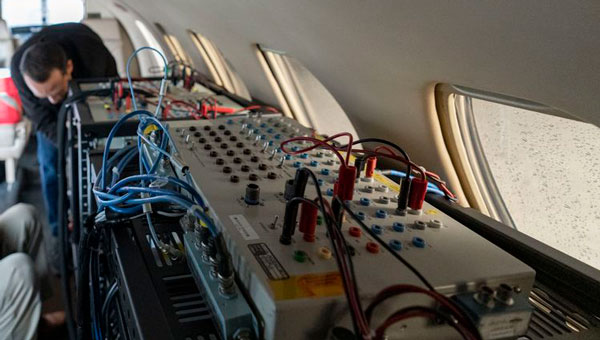
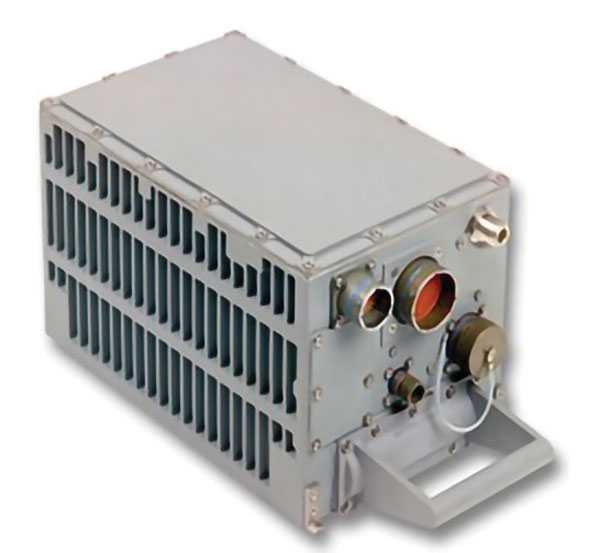
    A flight test of Northrop Grumman’s airborne navigation solution, embedded GPS/INS modernization, EGI-M (Image: Northrop Grumman)

    What was Northrop Grumman’s GPS Origin Story?

    Northrop Grumman’s involvement with GPS has its origins during the mid-1980s, when we became an early adopter. We applied our prior decades of technical expertise in defense and commercial navigation solutions to recognize the significance of GPS as an emerging technology to optimize our inertial navigation products. The first GPS receiver was integrated with the LN-33, our main product for military aircraft, in 1987.

    Around the same time, our engineers began to develop an indigenous civil GPS receiver to complement our inertial navigator for use in commercial airliners. This resulted in the certification and fielding of the LTN-2001 product, an eight channel C/A Code GPS receiver. This receiver, in concert with our Autonomous Integrity Monitored Extrapolation (AIME) algorithm, provided our customers a first-ever sole means navigation system using GPS/inertial for non-precision approach.

    By the early 1990s, advancements in the semiconductor industry facilitated the reduction of the GPS receiver from a 1,000 cu in stand-alone box to a roughly 6-in by 6-in circuit card. This critical milestone allowed GPS to be embedded into an inertial navigation system (INS) without a significant increase in its size or power consumption and thereby the ubiquitous Embedded GPS INS (EGI) was born. Our first inertial navigation system with embedded military GPS capability was the LN-100G in 1991. This standard form factor was produced across the industry with installations on virtually all the front-line tactical aircraft and rotorcraft for the U.S. Department of Defense (DOD) and many of our allies.

    Can you share a breakthrough?

    Inspired by accomplishments in the survey community, our team conducted early location accuracy experiments to demonstrate a few decimeters of accuracy between our Woodland Hills, California, location and a facility in San Jose, California, about 500 km away. Leveraging this experience and the same signal processing, our teams became a broader solution provider for adjacent mission applications including precise formation flying for in-flight automated refueling, precision approach and landing, and decimeter-level positioning for the intelligence, surveillance and reconnaissance (ISR) community.

    LN-100G. (Image: Northrop Grumman)
    LN-100G. (Image: Northrop Grumman)

    In parallel with these developments, Northrop Grumman, in partnership with the Defense Advanced Research Projects Agency (DARPA), improved the resilience of embedded GPS receivers with a more intimate coupling of INS and GPS. The DARPA GPS Guidance Package (GGP) program demonstrated a Navigation Grade Fiber Optic Gyro (FOG), greatly improved GPS tracking performance under extreme vehicle dynamics, and the ability to track at lower signal-to-noise levels. Our success on this program reinforced our reputation as a GPS integration leader and led to the introduction of Northrop Grumman’s current LN-251 product line, which is broadly used in tactical military aircraft.

    In the early 2000s, Northrop Grumman initiated research into the feasibility of a Global Navigation Satellite System (GNSS) software-defined radio and started development of what we now call SERGEANT (Software Enabled Reconfigurable GNSS Embedded Architecture for Navigation and Timing). The company used Spirent signal simulators to evaluate proper GPS M-code tracking over a wide range of test cases in a controlled laboratory environment. Together with the Air Force Research Laboratory (AFRL), Northrop Grumman demonstrated advanced receiver capabilities using SERGEANT starting in 2010. In 2018, AFRL used SERGEANT for the first real-time flight demonstration of a GPS M-code SDR.

    How is your company preparing for the next 50 years of PNT with GPS and beyond?

    SERGEANT Flight Test SDR. (Image: Northrop Grumman)
    SERGEANT Flight Test SDR. (Image: Northrop Grumman)

    Northrop Grumman foresees the world of GNSS being dramatically influenced by the emergence of alternative radio navigation sources as augmentations to traditional GNSS constellations to provide additional robustness and resilience. Our PNT SDR technology is a foundational tool to integrate these emerging radio navigation signals quickly and accelerate deployment to our customers.

    Northrop Grumman has led medium-Earth orbit (MEO) and low-Earth orbit (LEO) PNT technology studies through the DARPA Blackjack proliferated LEO (pLEO) program, starting in 2017. Northrop Grumman’s SERGEANT SDR transceiver is currently being integrated for use in emerging pLEO constellations. We anticipate that these capabilities, as well as emerging cooperative radio navigation signals, will become a critical part of the next 50 years of PNT with GPS.

  • The early days of GPS: How it was adopted by the US military and surveyors

    The early days of GPS: How it was adopted by the US military and surveyors

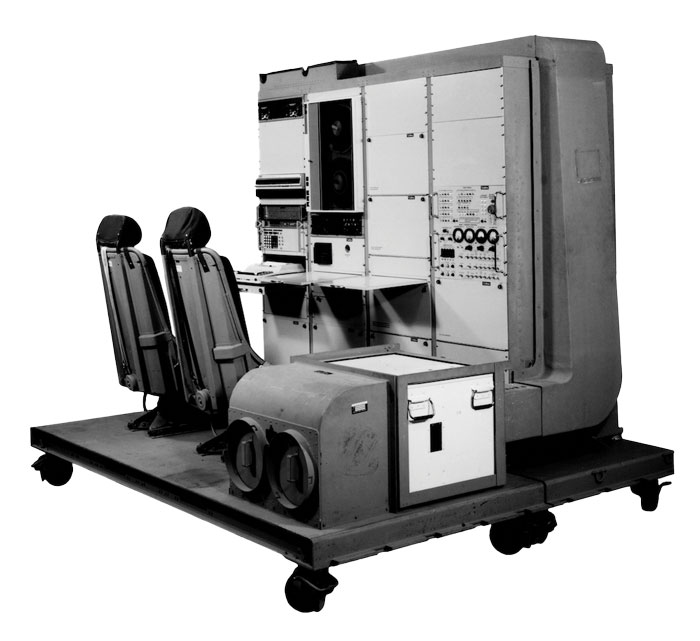
    1976: The first military GPS five-channel receiver built in one of several programs that studied the feasibility of GPS. The receiver weighed more than 270 pounds and had seats for two operators. (Image: Rockwell Collins/Smithsonian)
    1976: The first military GPS five-channel receiver built in one of several programs that studied the feasibility of GPS. The receiver weighed more than 270 pounds and had seats for two operators. (Image: Rockwell Collins/Smithsonian)

    Half a century ago, on December 22, 1973, Deputy Secretary of Defense William P. Clements, on the recommendation of the Defense Systems Acquisition and Review Council, directed the entire Department of Defense — through the Navstar GPS Joint Program Office, under the spectacular leadership of  Col. Bradford Parkinson — to proceed with the GPS program. While this magazine mostly focuses on the present and the future, we occasionally pause to remember how it all began.

    In the following articles, we are lucky to benefit from the long memories of four gentlemen who were there. Read the full articles.

    “Lost in the desert, they demanded GPS” by Gaylord Green

    “From ‘We don’t need it’ to ‘We can’t live without it’” by Martin Faga

    “They used GPS even before it was fully built” by Dave Zilkoski

    “GPS: The birth of the commercial GPS industry and how it changed the world” by Charles R. Trimble